Check 2026 Urasa bus operating dates and returns before planning a car-free visit. Compare the Okutadami circular cruise with the one-way Ginzan-daira boat, plus the slope car, electricity museum, Silver Line drive and seasonal Shiori Pass road conditions.
- Region & Focus
- ChubuSide trips
- Reading Scope
- 32 min read · 17 chapters · 5 Q&As
- Official Verification
- 15 official sources checkedUpdated 9 November 2026
- Key Topics
- ItinerariesRail travelSeasons
Chapter Route Map (tap any stop)
- Check that buses run before choosing your mountain day
- Save three separate places: Urasa, Okutadami and Ginzan-daira
- Reading the 2026 Urasa timetable: a short visit or the longer autumn option
- Prepare fares, bus stops and Shinkansen connections separately
- The car park is 50 metres below the dam area
- For a lake outing, choose the circular Okutadami cruise
- Autumn fares and family budgets: price the two rides you will use
- The Ginzan-daira boat changes your location: plan what follows
- Choose Ginzan-daira according to the purpose of your visit
- Driving the Okutadami Silver Line: check vehicle limits and road notices
- Shiori Pass is another mountain road, not an automatic Silver Line alternative
- Visit the electricity museum after the boat, then look back at the dam
- Lunch location changes how much fits in the afternoon
- Main car-free route: early bus up, autumn 16:00 return to Urasa
- Driving alternative: morning cruise, then return the same way in the afternoon
- Wheelchairs, pushchairs and knees: ask about the actual boarding stage
- Sailing cancellations, rain and season-end changes: use the day’s status
- Quick Q&A
Choose transport before choosing a boat at Okutadami Lake. The seasonal Urasa bus runs only on specified Saturdays, Sundays, public holidays and Obon dates in 2026, with a return timetable change in late autumn. For a first visit, the circular cruise returning to its original landing is easiest to combine with a dam walk, the electricity museum and lunch. For the one-way Ginzan-daira boat, arrange transport at the other end before deciding which direction to sail.
Check that buses run before choosing your mountain day
Minami-Echigo Kanko Bus’s 2026 timetable runs the seasonal Urasa–Okutadami Dam service between 1 June and 3 November, but only on Saturdays, Sundays, public holidays and 13–16 August. An ordinary weekday within that date range still has no bus. For example, the check date of 27 October 2026 is a Tuesday: boats may run, but this Urasa bus does not. Taking the Shinkansen to Urasa after checking only that boats are operating leaves the final mountain leg unresolved.
For late October 2026, public-transport travellers can first compare 31 October, 1 November or 3 November and select a return at the same time. If your holiday falls only on weekdays, driving or prearranged return transfers provide a complete route. If you do not want mountain-road arrangements, use the day for a town accessible by rail. Choose transport before foliage conditions: however attractive the lake, you need a way back to that night’s accommodation.
The boats, bus and museum have separate season-end dates. The current circular cruise is listed until 8 November, the scheduled Ginzan-daira service until 6 November and the Urasa bus until 3 November. J-POWER announces the electricity museum’s winter closure from 9 November. For a circular cruise on 7 or 8 November, arrange other road transport rather than using the previous weekend’s bus plan just because these dates also fall at a weekend.
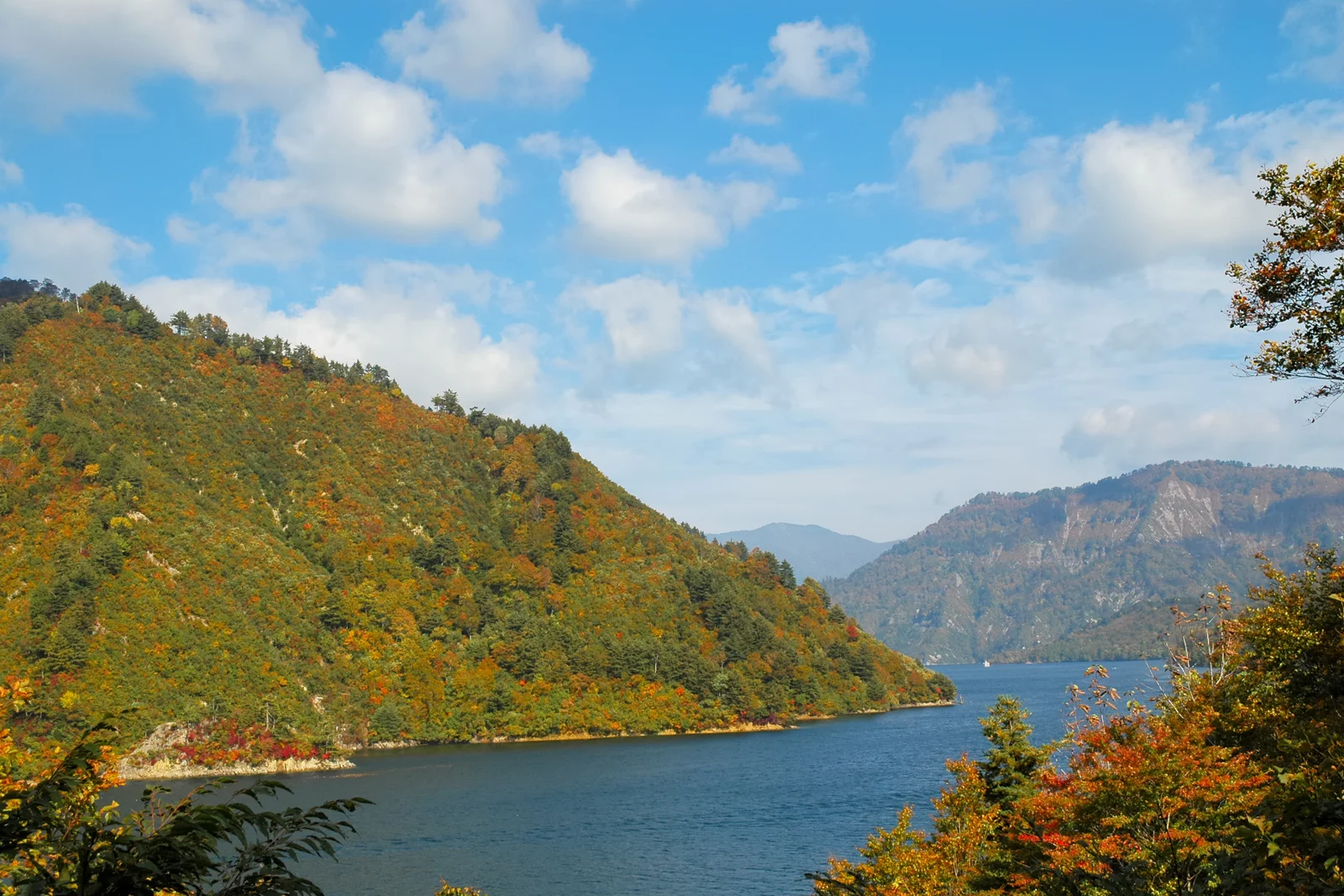
Check 2026 Urasa bus operating dates and returns before planning a car-free visit. Compare the Okutadami circular cruise with the one-way Ginzan-daira boat, plus the slope car, electricity museum, Silver Line drive and seasonal Shiori Pass road conditions.
Save three separate places: Urasa, Okutadami and Ginzan-daira
For the Joetsu Shinkansen from Tokyo or Niigata, Urasa Station is the public-transport gateway. Urasa is in Minamiuonuma; Okutadami Dam is in the mountains of Uonuma. Bandai and Furumachi in Niigata City, and Yahiko, belong to a different travel area. You can travel south by Shinkansen from Niigata City, but this day still needs the mountain bus. Do not leave in the afternoon as if taking a city stroll. Save Urasa Station (浦佐駅), Okutadami Dam (奥只見ダム) and Ginzan-daira landing (銀山平船着場) separately. The bus ends near Okutadami’s municipal car park, while the boat boards higher up on the lake side. Ginzan-daira is the other end of the route and has its own road entrance. Saving only “Okutadami Lake” can send navigation to different places across the large lake area. Give the full landing name and planned boarding direction when arranging a transfer or taxi.
The Tadami Line runs through Aizu and Uonuma with attractive scenery, but trains do not reach the Okutadami Dam landing. If you plan to ride it, separate the railway day and lake day so you can handle train intervals and seasonal mountain transport individually. Tadami Station, Tagokura and Okutadami have similar names on the map but different public-transport gateways.
Echigo-Yuzawa can be a base for the nights before and after, but you still need to reach Urasa and take this seasonal bus on lake day. Winter GALA or Naeba shuttles cannot serve an autumn Okutadami visit. If Yuzawa is your main focus, keep Yuzawa base transport and accommodation choices for another day. Handling one lake area is easier than combining two kinds of mountain transport in one day.
Reading the 2026 Urasa timetable: a short visit or the longer autumn option
The current outward timetable leaves Urasa Station’s east exit at 07:45 and reaches Okutadami Dam at 09:00. The afternoon bus leaves at 13:40 and arrives at 15:00. These are not frequent shuttles: missing the morning bus loses the whole morning rather than merely delaying you until the next one. For a morning Shinkansen from Tokyo or Niigata, choose an arrival allowing time before 07:45 to exit, find the east-exit stop and use the toilet. If the connection is very close, stay near Urasa the night before.
The morning return leaves Okutadami at 11:35 and reaches Urasa at 12:55. From 17 October to 3 November 2026, an autumn service leaves at 16:00 and arrives at 17:20, still subject to the weekend/public-holiday operating rule. Another column lists 17:10–18:30, but this runs only until 12 October. Read outward columns, return columns and notes together to avoid waiting in late October for an evening bus whose season has ended.
Arrival at 09:00 and departure at 11:35 give two hours and 35 minutes at the dam. This short version can fit the circular cruise and a brief dam walk. Tickets, boat waits and boarding movements mean the museum becomes optional. On days with the autumn 16:00 return, seven hours allow the boat, museum, lunch and rest. This suits early risers wanting an unhurried dam visit.
Leaving Urasa at 13:40, arriving at 15:00 and returning at 16:00 leaves only an hour, including the climb from the car park to the landing and the return to the stop. I do not recommend relying on this combination for a first car-free circular cruise. Choose an early arrival with either the 11:35 or 16:00 return for a clear visit length. For an afternoon arrival, prioritise driving, arranged transfers or another day.
| Direction | Departure | Arrival | Applicable dates |
|---|---|---|---|
| Urasa → dam | 07:45 | 09:00 | Specified Saturdays, Sundays and public holidays, 1 June–3 November, plus 13–16 August |
| Urasa → dam | 13:40 | 15:00 | As above |
| Dam → Urasa | 11:35 | 12:55 | As above |
| Dam → Urasa | 16:00 | 17:20 | Specified Saturdays, Sundays and public holidays, 17 October–3 November |
| Dam → Urasa | 17:10 | 18:30 | Specified operating dates, 1 June–12 October |
Prepare fares, bus stops and Shinkansen connections separately
The official bus fare table lists adult one-way fares of ¥1,500 from Urasa to Okutadami Dam, ¥1,200 from Urasa to Ginzan-daira and ¥500 from Ginzan-daira to the dam. A normal adult return to the dam therefore starts with ¥3,000 for buses, plus the boat and slope car. This road section has its own fare; adding only Shinkansen and boat tickets misses it.
Board at Urasa’s east exit. Save the operator’s PDF and both ends’ times on your phone the night before. Confirm “奥只見ダム” as the destination at the stop. The current PDF lists contactless payment including Visa, Mastercard and JCB, with a tap both on boarding and leaving. Use the same supported card or device at both ends, and carry yen as an alternative. Tell the driver about children or special fares first. Do not assume a city-bus day pass covers this mountain route.
A 17:20 arrival at Urasa is the scheduled bus arrival, not the moment you reach the Shinkansen platform. Allow time to enter the station, find the platform, collect stored bags and perhaps buy dinner. If that night has an international flight, performance or final long-distance connection you cannot miss, place Okutadami earlier in the wider trip. Mountain-road delays are difficult to recover by adding a walk.
The car park is 50 metres below the dam area
Arriving by bus or parking your car does not put you at the boarding point. Okutadami Kanko’s area guide gives about 12 minutes on foot from the municipal car park to the boat landing. The car park is about 50 metres below the dam plaza. A paid slope car (スロープカー) covers that ascent in about four minutes one way. Chinese itineraries often shorten this to “cable car”; keep the Japanese name to find signs directly on site.
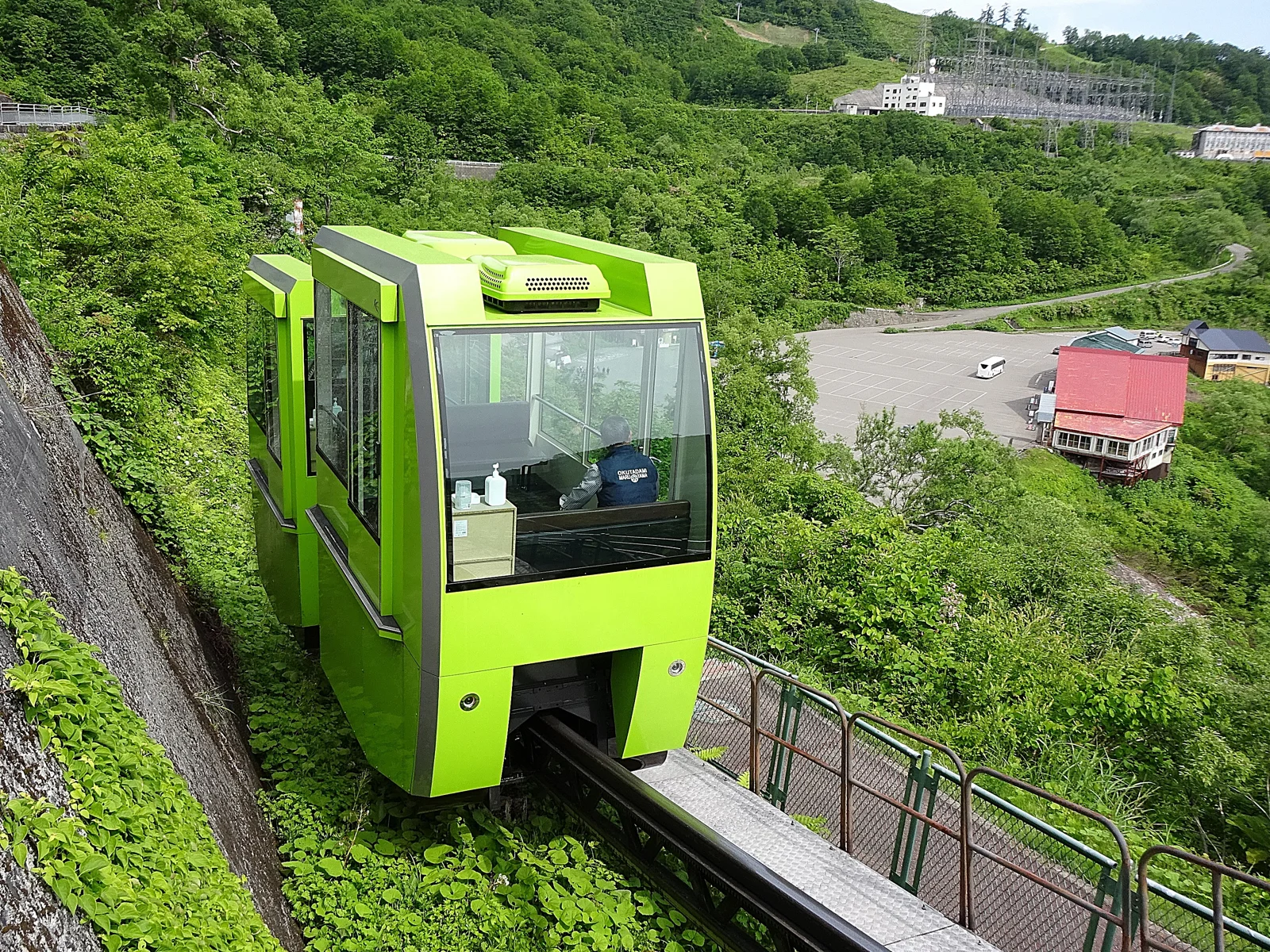
The slope car costs ¥200 one way for adults and ¥100 for primary-school children, with capacity for 40. Riding up saves climbing effort. Decide whether to walk down according to knees, weather and time. If riding both ways, budget ¥400 per adult. Four minutes is the moving time, excluding queues, boarding, leaving and the walk from the upper station to the landing. A 09:00 bus arrival cannot also mean being aboard the boat at 09:00.
The upper slope-car station is by the dam plaza; the boat is lower down on the lake side. Wheelchair guidance still gives about 300 metres, or five minutes on foot, from the upper station to Okutadami landing. The connection to the boat includes steps and sections needing assistance. With a pushchair, organise boarding supplies into a small bag before reaching queues or steps, rather than searching a large bag while holding a child.
After sailing, you also need to return to the plaza and descend to the car park. Record arrival back at the landing and arrival back at the bus stop as two separate times. Otherwise you may watch the 16:00 bus time from the boat and forget disembarking and the descent. On the short version, finish the boat first and use remaining time for other stops. The return bus stop is the final destination.
For a lake outing, choose the circular Okutadami cruise
The circular Okutadami cruise leaves and returns to Okutadami landing. It best suits travellers whose car and luggage remain at the dam or who use the bus both ways. The current website lists operation from 20 May to 8 November. From 20 May to 15 October, trips last about 40 minutes, leaving hourly from 09:30 to the final 15:30 departure. To eat before a chosen sailing, work backwards from departure through waiting and reaching the landing.
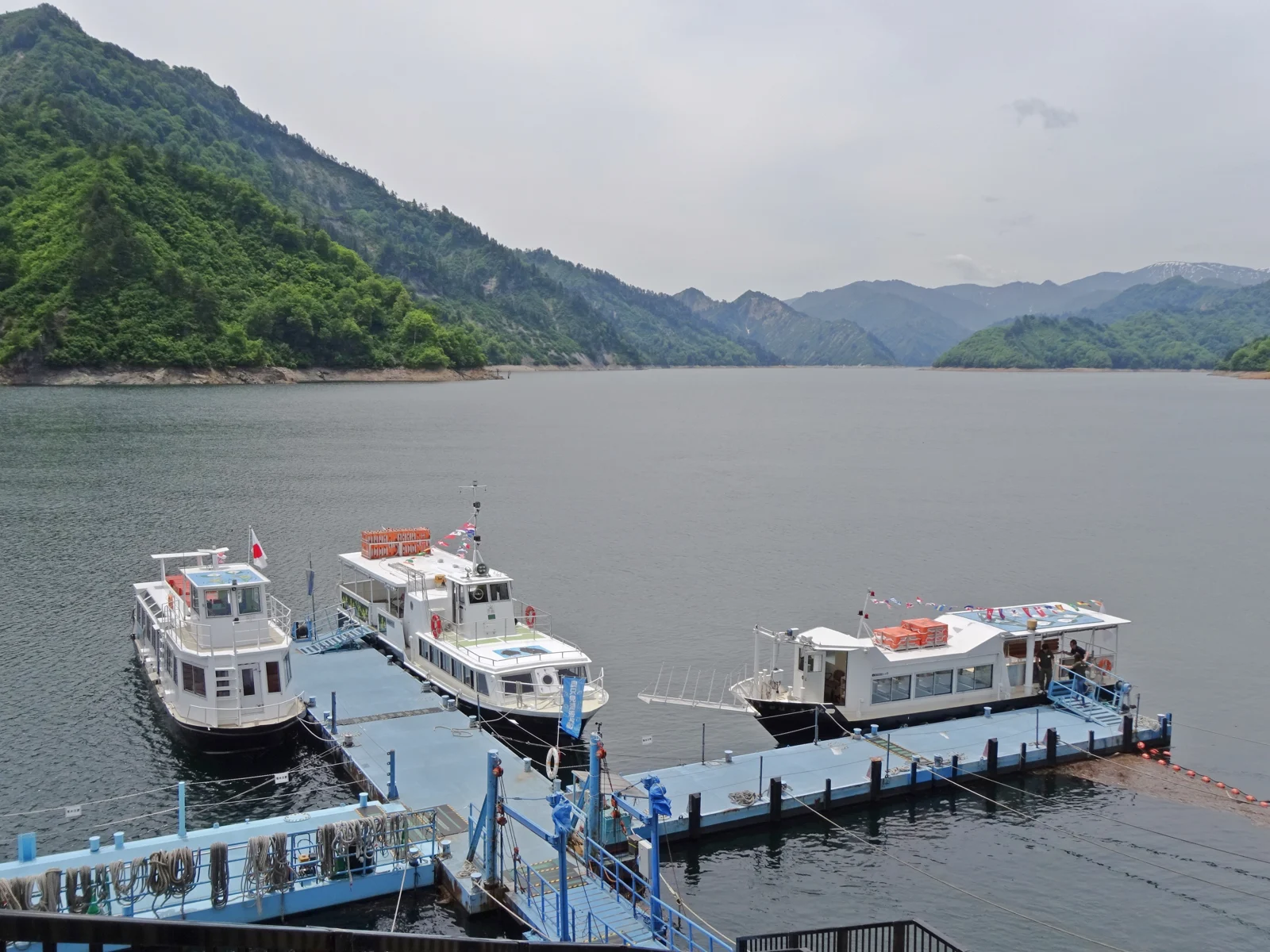
From 16 October to 6 November, the autumn trip takes about 30 minutes. Boats leave as demand requires from the morning to around 16:00, at most three times per hour. Go directly to the counter; reservations are not accepted. Three per hour is an operating maximum, not a fixed 20-minute interval. Ask about available departures and queues on arrival, then choose whether to visit the museum after the boat or take a short dam walk first.
On 7 and 8 November, listed departures resume at 09:30, 10:30, 11:30, 12:30, 13:30, 14:30 and 15:30, for about 30 minutes. These dates are beyond the Urasa bus season. Drivers can plan parking and the ascent around the boat times; car-free visitors need complete transfers first. Record the last two boat days separately from the last bus day to avoid treating nearby dates as one operating schedule.
Vessels change with daily operation. The autumn circular-cruise page lists Shiori-maru and Shin-Hassaki-maru. Choose the route and available time for lake views rather than promising a particular deck or seats based on a photograph of a large ship. Follow crew instructions for seats, aisles and decks, and leave passage space when taking photographs.
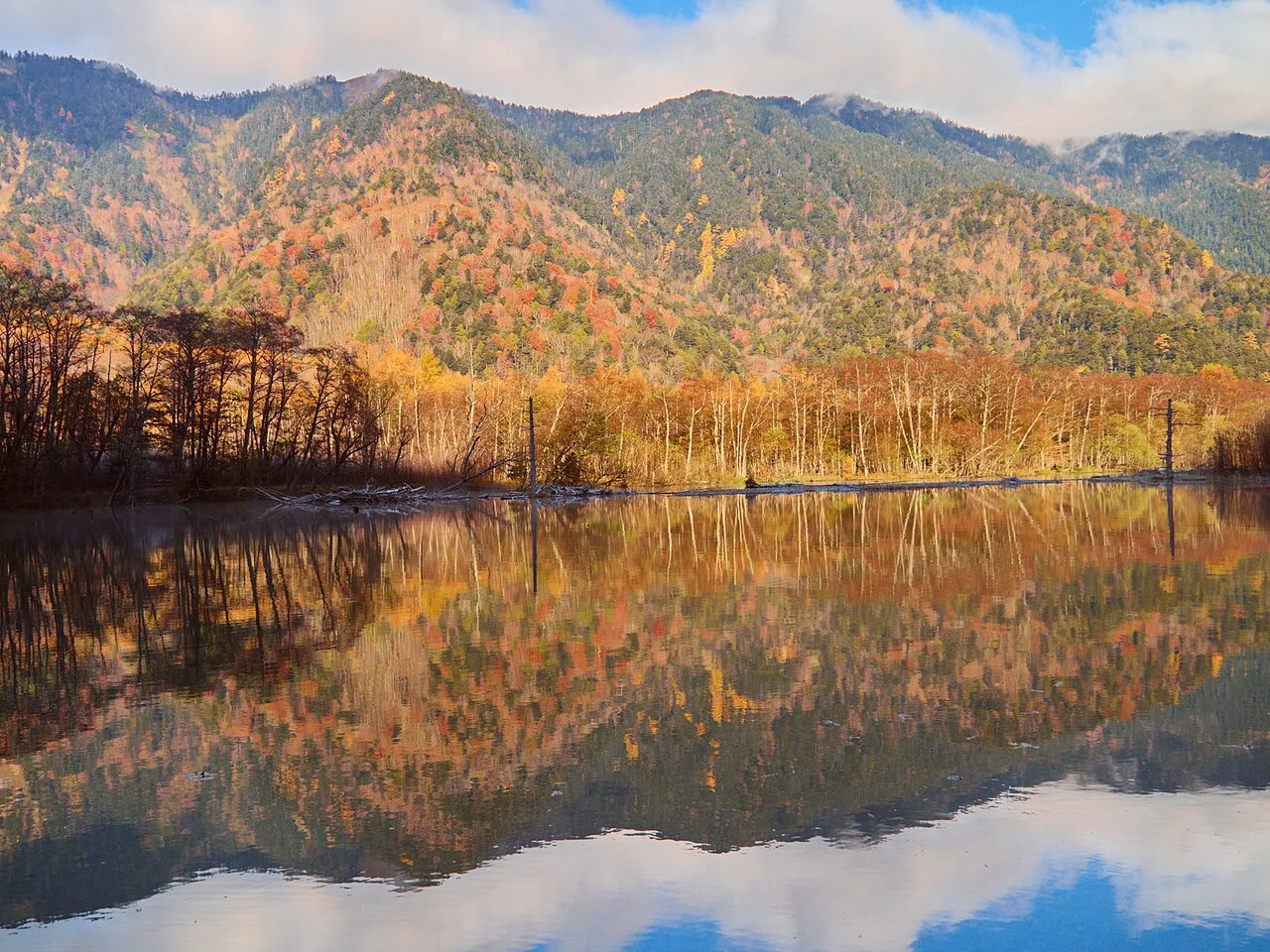
Sightseeing boats, mist on the lake and autumn leaves along the shore show Okutadami Lake in autumn.
Autumn fares and family budgets: price the two rides you will use
The circular cruise costs ¥1,300 for adults and ¥650 for primary-school children from 20 May to 30 September, rising to ¥1,500 and ¥750 from 1 October to 8 November. The boat company classifies junior-high-school pupils and older as adults and primary-school pupils as children. Younger children follow its separate number-based rules. Write down school stages for family pricing, separately from Shinkansen and bus child categories. Two adults pay ¥3,000 for the autumn cruise; both using the slope car return adds ¥800, giving ¥3,800 for these two dam-area activities. Add a primary-school child’s ¥750 boat ticket and ¥200 return slope-car ticket for a three-person total of ¥4,750. These figures cover only the boat and slope car. List Urasa buses, Shinkansen and food separately to compare whole-day driving and car-free costs.
For one adult making an autumn return from Urasa without a car, buses at ¥3,000, cruise at ¥1,500 and return slope car at ¥400 give ¥4,900. Riding up and walking down saves ¥200, but do not strain knees or rush for a bus to save it. Group driving replaces bus costs with car hire and fuel but also adds driving time and fatigue. Compare the group total and road conditions you can accept.
The website has disability discounts and certificate-presentation rules, applied separately to boat and slope-car tickets. Ask the operator about your document type, accompanying people and ticket category, then have one person explain at the counter. Keep tickets in an easy-to-reach pouch for the return ride or ticket questions.
The Ginzan-daira boat changes your location: plan what follows
The Ginzan-daira route links Okutadami and Ginzan-daira in about 40 minutes one way. It offers a different shore, but takes you to another landing. If your car is at Okutadami, it remains there after a one-way crossing. If you came by bus from Urasa, you need to reconnect with station transport after disembarking. Write down where you go next, how and when before deciding on a one-way ticket. From 20 May to 30 September, the Ginzan-daira route operates only by full reservation for groups of at least ten, requested one week before use, as a non-scheduled service. For two or three people travelling in early summer, choose the circular cruise for a product you can plan directly. From 1–15 October, Ginzan-daira departures are 10:00, 12:00 and 14:00; Okutadami departures are 11:00, 13:00 and 15:00. Each direction has its own timetable.
From 16 October to 6 November, both ends list hourly departures on the hour from 09:00 to 16:00. Leaving Okutadami at 11:00 means a scheduled arrival around 11:40 at Ginzan-daira, leaving only about 20 minutes to disembark and wait for the 12:00 return. This mainly provides boat travel, without room for a proper meal or nearby walk. For time at Ginzan-daira, take a later return and retain time at Okutadami to descend, collect the car or catch the bus.
Autumn adult fares are ¥1,800 one way or ¥3,240 return; primary-school fares are ¥900 and ¥1,620. Two one-way tickets for one adult total ¥3,600, ¥360 more than a return. Compare the return product if you will collect a car at the original landing. For lake scenery with only a little over two morning hours, the circular cruise fits better. Leave a Ginzan-daira return for those able to spend longer sailing.
| Route | Destination | Sailing time | Adult fare |
|---|---|---|---|
| Okutadami circular cruise | Original landing | About 30 minutes, 16 October–8 November | ¥1,500 |
| Ginzan-daira one way | Landing at the other end | About 40 minutes | ¥1,800 |
| Ginzan-daira return | Return sailing needed to reach original landing | About 40 minutes each way, plus waiting | ¥3,240 |
Choose Ginzan-daira according to the purpose of your visit
For an understanding of Okutadami through the dam, power-generation displays and lake, stay in the dam area all day. Include Ginzan-daira when you want time at that shore or to start from a different bank. Both are within one lake area, but ground transport follows roads into separate entrances. Treating Ginzan-daira as a short walk beside the landing can distort estimates for lunch, car collection and the station return together.
With older relatives, children or people who simply want a scenic boat ride, choose a circular cruise back to the starting point first. Compare a Ginzan-daira return when companions want a longer sailing and can fit both ends’ times. If someone will not sail and is willing to drive to the other end, a one-way trip is possible to investigate. Agree the full landing name, collection time and waiting arrangement first. Nearby shores on a map do not mean the driver can get there immediately.
Driving the Okutadami Silver Line: check vehicle limits and road notices
The Okutadami Silver Line (奥只見シルバーライン) is officially the Koide–Okutadami major local road. The boat company gives about 35 kilometres and 50 minutes from Uonuma Interchange to the dam. Add car-hire formalities, supplies, rest and the climb after parking. For a first drive, entering in the morning and returning in daylight is more comfortable than delaying departure until just before the afternoon’s last boat.
The Silver Line is known for consecutive tunnels. Official restrictions prohibit two-wheeled vehicles and pedestrians, with a 3.7-metre height limit. Motorcyclists cannot follow a car-navigation route through it, and walkers cannot use its tunnels to reach another bus stop. For campervans, roof loads or other tall vehicles, check the actual total height, including racks and rooftop equipment.
Uonuma City’s current notice states that the Silver Line became passable all day when overnight closure ended at 18:00 on 17 April 2026. After winter closure first ended in March, there had been a phase closed from 18:00 to 06:00. Distinguish notice dates and past information when reading older posts. Use the current road page in autumn, and recheck reopening and night restrictions in winter and spring rather than treating one year’s opening date as a fixed calendar.
Refuel, get water and use the toilet before climbing. Concentrate on driving on the mountain road. Tunnel lighting, wet surfaces and passing traffic demand attention; take photographs only after reaching a safe parking place. For travel sickness, eat a suitable breakfast early and prepare usual supplies. Let the driver rest at the dam before deciding on another mountain road.
Shiori Pass is another mountain road, not an automatic Silver Line alternative
National Route 352 over Shiori Pass leads to Ginzan-daira and is a different road from the Silver Line. Uonuma City’s 2026 notice records the Komanoyu entrance–Shiori Pass section closed for road-disaster repairs until 15:00 on 9 October. This annual change can make earlier itineraries differ from late-autumn conditions. Check the latest notice for the same section before choosing the pass route.
At the 27 October check, the Silver Line was passable. Niigata Prefecture announces winter closure from 09:00 on 4 November for two Route 352 sections: Komanoyu entrance–Ishidaki Bridge at Ginzan-daira, and Ginzan-daira landing–Kinsen Bridge on the Fukushima border. This interrupts the Shiori Pass route and travel across the prefectural border. The Silver Line has its own notices. Check the actual road used to reach and leave the dam rather than applying Route 352’s closure date to it.
For a first lake visit by car, I recommend the Silver Line both ways, leaving Shiori Pass for people familiar with mountain roads whose purpose is the pass scenery. Dawn photographs of cascading cloud also involve weather, driving before sunrise, parking and walking. Do not add them to a boat plan worked backwards from Urasa’s early bus. With only one driver, dawn at the pass, daytime cruising and a long evening return all fall on the same person.
Visit the electricity museum after the boat, then look back at the dam
Okutadami Electricity Museum stands high in the dam area. J-POWER’s access page gives about five minutes on foot beyond the dam crest. See the lake from the boat first, then read about generation and dam construction inside for a clear connection between the two. If engineering, architecture or energy interests you, replace a second boat route with the museum rather than rushing in for a few minutes after both cruises. The operator announced opening on 20 May 2026, hours of 09:00–16:50, and a planned winter closure from 9 November to mid-May 2027. The tourism association lists free admission. For the late-October 16:00 bus, visit after the morning boat or lunch. Leave time to return to the plaza, take the slope car and reach the car park. The museum closes later than the bus, but that does not let you finish the visit at 16:00.
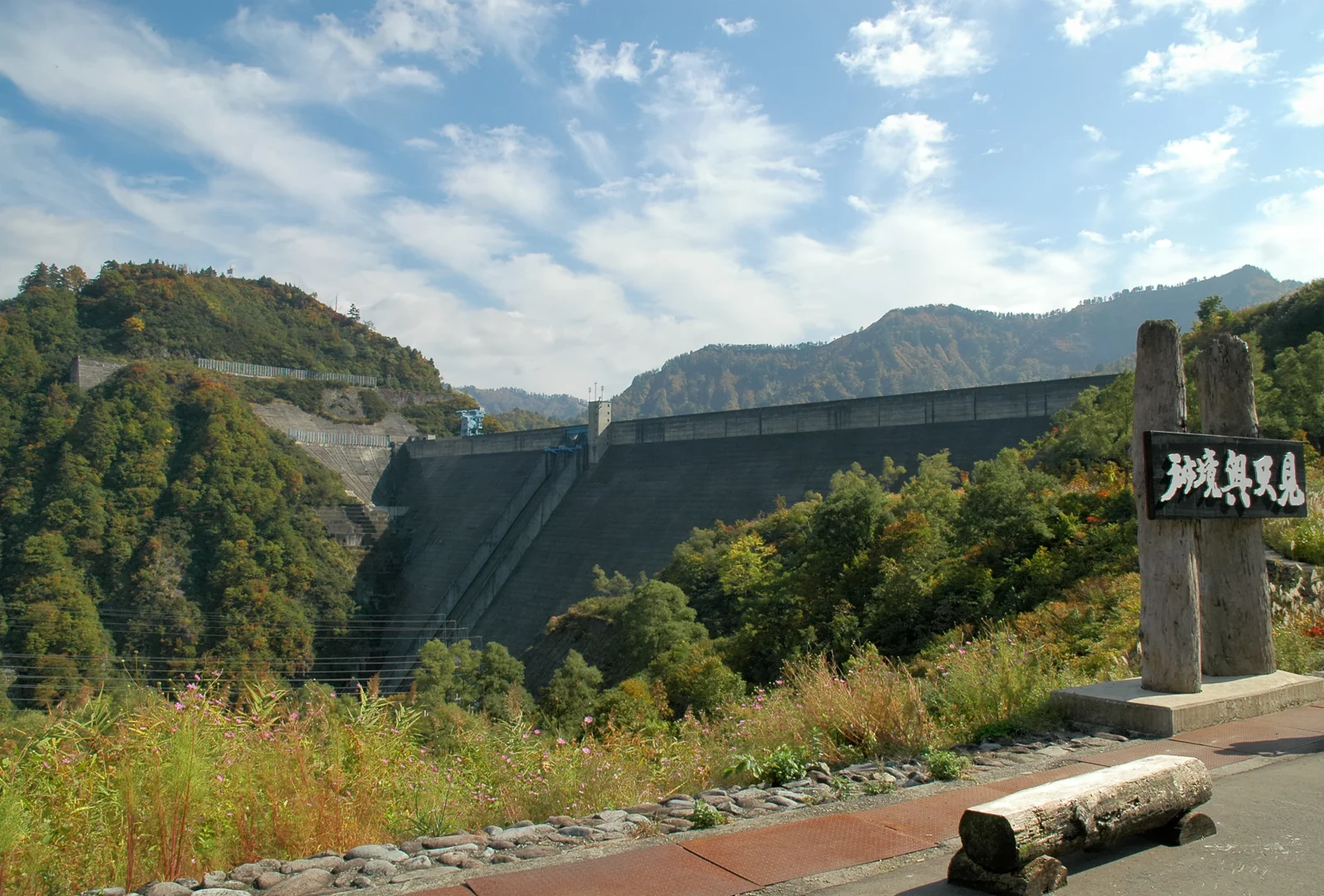
The ground floor has hydropower and electricity displays. The tourism association describes six large LED screens showing the seasons and construction history. The first floor has construction footage from the Showa 30s and material related to the film Whiteout (ホワイトアウト). With children, start with how water becomes electricity and how the dam was built; stay longer if they engage. If you only want a card or exterior photograph, make a shorter stop and reserve full visit time for displays you want to see.
The museum is an indoor stop within a mountain itinerary, but getting there still involves slopes and outdoor travel. Keeping it on a rainy day does not make the whole route sheltered. Shorten outdoor walks if clothes are wet or footing is difficult. If roads are closed or boats suspended, change to a lower-altitude itinerary before setting off instead of making a long mountain journey solely because one indoor building exists.
Lunch location changes how much fits in the afternoon
Drive-in restaurants around Okutadami municipal car park offer food, rest and souvenirs. Lunch below works before climbing again for the museum or dam view. For the short 11:35 return version, eat breakfast, bring water and simple backup food, and have the main lunch after descending. A little over two hours cannot comfortably cover boat waits and a long meal together. The longer autumn version provides room to sit down for lunch.
With allergies or dietary restrictions, prepare suitable food early and rest where eating is permitted. Whether boats follow set times or an on-site queue, establish the sailing arrangement first, then choose to sail before or after eating. Avoid discovering that your boat is leaving just as the food arrives.
Drivers can put the main meal before entering or after leaving the mountains and keep only water and snacks at the dam. Uonuma Tourism Association lists Miyuki-no-Sato, the local-products centre at Roadside Station Yunotani, at Yoshida 1148, Uonuma, about five minutes by car from Uonuma Interchange. It has a dining area and shopping below the mountains. Treat it as a separate parking stop and decide about entering the mountains after the meal. It is not a food area within walking distance of the boat.
Main car-free route: early bus up, autumn 16:00 return to Urasa
This longer version uses Saturdays, Sundays and public holidays with buses between 17 October and 3 November 2026. Board at Urasa’s east exit at 07:45 and arrive at the dam at 09:00. Identify the return stop, use the toilet, then take the slope car or walk to the ticket office. Autumn circular cruises leave as required. Ask about the queue and complete a roughly 30-minute cruise in the morning. With a long queue, take only a nearby walk from which you can return, rather than leaving for another landing.
After the boat, view the dam and lake, then visit the museum. Start with a suggested 45–60 minutes inside and extend it if you want to read engineering material. This is suggested visit time, separate from the five-minute access walk. Go down for lunch and a seated rest at noon. In the afternoon, choose another dam view or return to displays you liked. There is no need to add a second boat route to fill seven hours.
Aim to finish upper-area activities around 15:15 and reach the bus waiting area before 15:40, allowing for the descent, toilets and packing. These are itinerary suggestions. Go down earlier for long queues, rain or slower companions. Leave at 16:00 and reach Urasa at 17:20, then use your chosen train to Niigata, Yuzawa or Tokyo. Dinner after reaching the station is easier to adjust if the road journey is delayed.
For a half-day, return at 11:35 and shorten the sequence to ascent, circular cruise, dam view and descent, omitting the museum and lunch. This returns you to the railway area in the afternoon without a long wait for 16:00. Choose one version before booking the Shinkansen. Companions’ interest in exhibits and lengthy outdoor time determines comfort better than the number of sights.
Driving alternative: morning cruise, then return the same way in the afternoon
For driving, use Uonuma Interchange as the lower gateway. Stop where supplies are available, then follow the Silver Line to Okutadami municipal car park. Arrive in the morning, leave the car in one place, take the circular cruise, visit the museum, eat and rest, then return the same way. This version has its own return transport even without a Urasa bus, making it suitable for ordinary weekdays. Allow a suggested 30–60 minutes from parking to boarding for toilets, walking or the slope car, tickets and waiting. Extend this in crowds and shorten later extras. Autumn operation at up to three departures per hour offers flexibility but is affected by queues. Do not set car return at the last possible moment and assume tickets and boat waits will take ten minutes.
For a little afternoon variety, rest or shop below the mountains and leave Shiori Pass for another visit. After consecutive tunnels, another narrow mountain road after lunch can fatigue the driver more than the passengers. After the group has taken photographs, ask whether the driver needs rest. Set the descent by road conditions and energy. Finishing unfamiliar mountain sections before dark makes the rest of the day easier.
If time in Ginzan-daira is confirmed, create a separate one-way transfer plan with two schedules: the collecting vehicle and the boat passengers. A car cannot follow the boat, and a first-time driver should not rush to meet a disembarkation time. If transfers cannot align, use the circular cruise back to the original landing and retain lake scenery plus a full dam-area visit.
Wheelchairs, pushchairs and knees: ask about the actual boarding stage
Wheelchairs can use the slope car, but the boat landing has separate conditions. The company’s wheelchair guidance restricts boat access to manual wheelchairs because of passageways and boarding equipment. Power-wheelchair users need to transfer to an operator-provided manual wheelchair with staff assistance. Steps beside the boat require staff to carry the wheelchair on and off, rather than providing an independently usable step-free route.
If assistance is needed, call Okutadami Kanko on 025-795-2750 before travelling. State the wheelchair type, transfer ability, number of helpers and desired route. Ask separately about the car park, slope car, upper station to landing and actual boarding, then confirm the same for the return. If carrying or transfers are unsuitable, centre the visit on dam views and accessible museum areas, checking your route with each facility.
Official guidance states there is no accessible toilet at Okutadami landing or aboard the boats. Prepare at the municipal car park’s public toilets first. Public toilets are separately listed near Ginzan-daira landing. Parents can also take children before ascending, so the boat trip does not revolve around finding toilets. Divide baby supplies into a small boat bag and a large bag left in the car, making wind and rain easier to manage.
Sailing cancellations, rain and season-end changes: use the day’s status
Lake operation is affected by water levels and weather. The operator’s published safety information gives cancellation thresholds including wind of at least 12 metres per second at departure, waves of at least 0.5 metres, visibility of 300 metres or less, or water levels reaching its specified suspension limits. Use the website’s daily status and crew decisions rather than deciding that a boat should run from city weather or one wind figure on a phone.
Before leaving, check the boat homepage’s daily operation, then Minami-Echigo Bus and road notices. If boats run but buses do not, solve the road-transport leg. If roads are closed, cancel the mountain journey first. If you reach the dam and boats stop, use open museum areas and dam views while retaining the original return. Each service has different reasons and procedures for stopping. Identify the affected leg first rather than improvising a harder route in the mountains.
In light rain, bring packable rainwear, non-slip shoes and a wind-resistant outer layer, and photograph from safe stopping places. The wind on the lake differs from the car park below. Bring an extra layer for children and older people. Shorten outdoor time if clothes get wet or someone feels unwell. After disembarking, rest or return downhill instead of rushing to complete every exhibit and walk on the schedule.
The sequence of season-end dates is the main late-autumn change. Remove the seasonal Urasa bus after 3 November and the scheduled Ginzan-daira route after 6 November. On 7 and 8 November, combine only the current circular cruise with arranged road transport. Do not reuse the autumn plan in winter. The Silver Line, museum, boats and mountain area each have winter arrangements; start again from new announcements the following spring.
A few useful answers
Can I take a weekday bus from Urasa to Okutadami in 2026?
The seasonal route runs only on Saturdays, Sundays, public holidays and 13–16 August within 1 June–3 November. Ordinary weekdays have no service, including Tuesday 27 October 2026.
Can I return to Urasa at 17:10 in late October?
The 2026 timetable’s 17:10 return runs only until 12 October. On operating dates from 17 October to 3 November, the autumn afternoon return leaves at 16:00 and reaches Urasa at 17:20.
How do the circular cruise and Ginzan-daira boat differ?
The circular cruise returns to the same Okutadami landing. The Ginzan-daira boat takes about 40 minutes one way to the other end. With your car at the original landing, arrange a return boat or transfer.
Does the slope car remove all walking to the boat?
It links the car park and dam plaza. You still need to reach the landing and negotiate steps. Wheelchair travellers should arrange manual-wheelchair use, transfers and staff assistance under the operator’s guidance.
Can motorcycles use the Okutadami Silver Line?
No. Two-wheeled vehicles and pedestrians are prohibited, and the height limit is 3.7 metres. Check current section-specific conditions separately for the Route 352 Shiori Pass route.
Official information and references
Sources used in this guide.
- Okutadami Kanko | Daily operation and free autumn shuttle
- Okutadami Kanko | Ginzan-daira boat fares and departures
- Okutadami Kanko | Circular cruise fares and departures
- Okutadami Kanko | Slope car and landing terrain
- Okutadami Kanko | Wheelchair boarding guide
- Okutadami Kanko | Sailing suspension safety information
- Minami-Echigo Bus | 2026 Urasa–Okutadami timetable and operating dates
- Minami-Echigo Bus | Urasa–Okutadami fares
- Niigata Prefecture | 2026 Route 352 winter closure
- Uonuma City | Silver Line and Shiori Pass road notices
- J-POWER | 2026 Okutadami Electricity Museum opening hours
- Uonuma Tourism Association | Okutadami Electricity Museum exhibits
- Uonuma Tourism Association | Rainy-day facilities and dining below the mountains
- Okutadami Kanko | Sightseeing boats and official autumn film
- Yahiko Village official website | Village office address