Compare the Hokuriku Arch Pass with single tickets for a seven-day Tokyo, Toyama, Kanazawa, Tsuruga and Kansai route. Covers validity, reserved seats and transfers.
- Region & Focus
- ChubuTransport and passes
- Reading Scope
- 22 min read · 14 chapters · 4 Q&As
- Official Verification
- 15 official sources checkedUpdated 22 November 2026
- Key Topics
- Rail travelTravel budgetBooking
Chapter Route Map (tap any stop)
- Plan seven days first and identify the journeys covered
- Start with a ¥22,600 example and see what fills the gap
- A one-way route with three moves carrying large luggage
- Adding Shirakawa-go or Takayama: price the uncovered leg first
- From Tokyo: Hokuriku Shinkansen to Toyama, Kanazawa and Tsuruga
- Changing at Tsuruga: Hokuriku Shinkansen to Thunderbird
- Hokuriku conventional lines: read all conditions for three exceptions
- Kansai Airport, Kyoto and Osaka
- Arch Pass, Kansai-Hokuriku or Hokuriku Area Pass?
- Tickets for children: age first, then a separate seat
- Buying, collecting and reserving seats
- From airport collection to your first seat reservation
- Seats, supplements and service changes after purchase
- Use the price difference to decide your hotel order
- Quick Q&A
If arriving in Tokyo and leaving from Osaka, with stops in Toyama, Kanazawa or Fukui, include the Hokuriku Arch Pass in your cost comparison. It covers the Hokuriku Shinkansen from Tokyo to Tsuruga, the Thunderbird limited express from Tsuruga to Kyoto and Osaka, and some airport and city railways within its area. As of 27 October 2026, JR West's page lists the seven-day pass at ¥35,000 for adults and ¥17,500 for children, with information dated 28 January 2026. It is valid for seven consecutive calendar days after activation. Before buying, list each leg, add the separate fares for covered journeys, subtract ¥35,000, then budget for buses, private railways and subways outside the pass. For a direct Tokyo–Osaka journey without a Hokuriku stop, start with single fares and departures on the Tokaido Shinkansen. The Arch Pass follows Tokyo–Nagano–Toyama–Kanazawa–Tsuruga–Kyoto–Osaka, changing trains at Tsuruga. It does not cover the Tokaido Shinkansen from Tokyo to Shin-Osaka. Its value comes from the Hokuriku stops and other eligible journeys you already want, rather than the two endpoints alone.
Plan seven days first and identify the journeys covered
Mark arrival in Japan, departure and every change of accommodation on a calendar. Suppose you land in Tokyo on day 1, stay two nights, travel to Toyama on day 3, Kanazawa on day 4 and Kyoto on day 6, then leave from Kansai Airport on day 8. Compare two start dates: activation on day 1 covers days 1–7, with day 8's airport journey paid separately; activation on day 2 covers days 2–8, with arrival-day airport transport paid separately. The better value depends on your airport, route and actual fares for those dates.
Validity follows Japanese calendar dates, not 168 hours from first entering a station. Starting on day 2 makes day 8 the last day; even a first ride that evening uses day 2. For journeys crossing midnight, JR states conditions for expiry while on board on the final day: the base-fare portion remains valid into the next day if you do not exit the station, while the limited-express or similar portion requires you to stay on the same train. Include movement within the station when planning late connections.
List each planned train in a table: date, departure and arrival stations, train type, separate ordinary-class fare, pass coverage and any section requiring extra payment. Count only journeys you already intend to make. A detour just to get your money's worth also costs time and possibly another hotel night. Arriving in Tokyo and leaving from Osaka with city stays and one Hokuriku stop still warrants a single-ticket comparison. If adding Hokuriku return trips or suitable airport journeys, see whether those extra covered fares take you past ¥35,000.
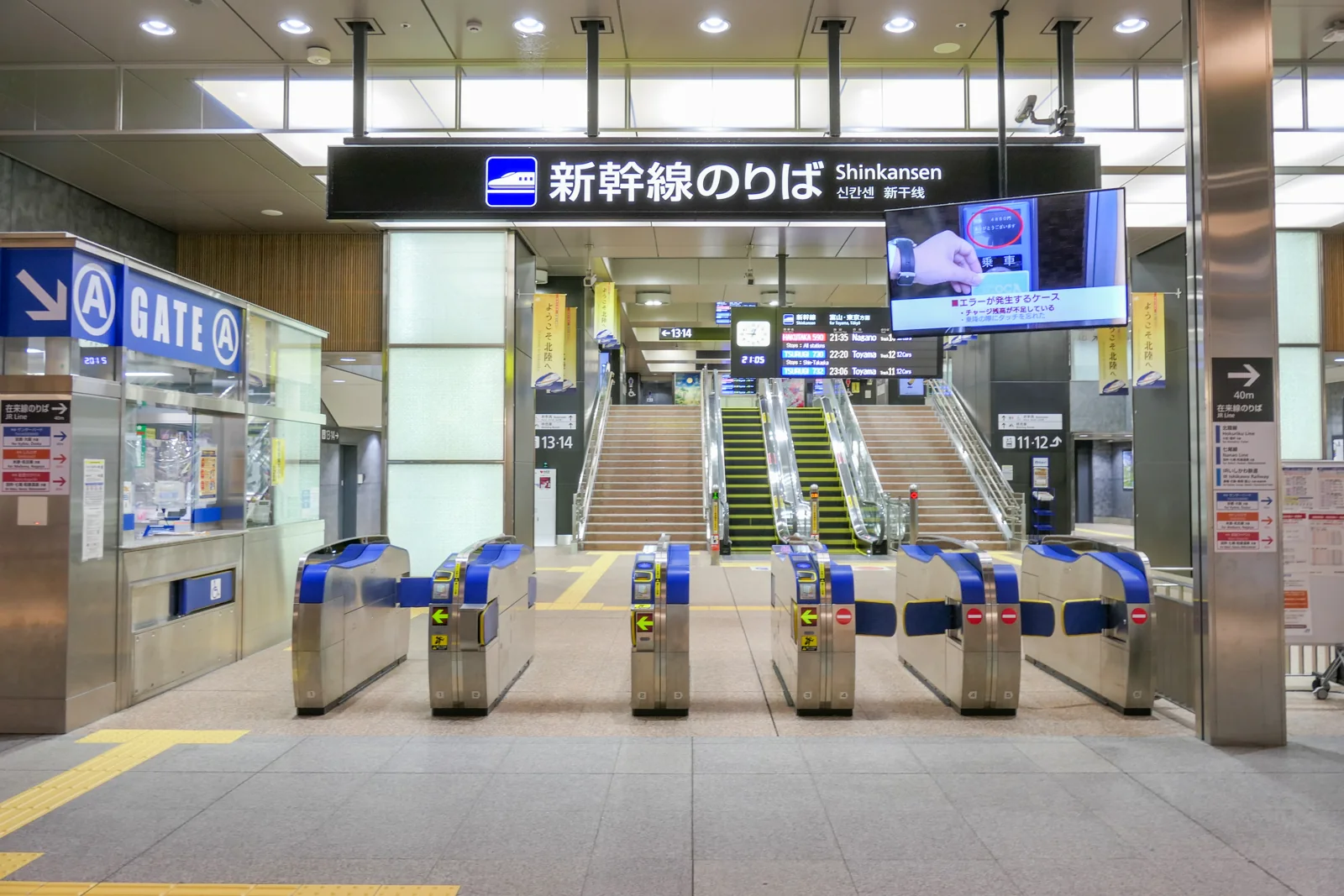
Compare the Hokuriku Arch Pass with single tickets for a seven-day Tokyo, Toyama, Kanazawa, Tsuruga and Kansai route. Covers validity, reserved seats and transfers.
Start with a ¥22,600 example and see what fills the gap
If the plan is simply Tokyo to Kanazawa, a few nights there and then Osaka, start with two single tickets. JR East's FACT BOOK 2026 uses ordinary-class reserved-seat single fares for the normal season from the March 2026 timetable, listing Tokyo–Kanazawa at ¥14,600. JR West lists its Hokuriku One-way Ticket between Osaka City and Kanazawa at ¥8,000 for adults. Together these reference prices total ¥22,600, a ¥12,400 gap from the ¥35,000 Arch Pass. This calculation combines two published prices from different dates. Recheck actual fares for your travel day and purchase channel; both legs have their own purchase and use conditions.
The ¥8,000 Hokuriku One-way Ticket includes ordinary-class reserved seats on the Thunderbird and Hokuriku Shinkansen within its specified area, with a connecting transfer at Tsuruga. It does not permit leaving the gates to sightsee at an intermediate station and then continuing. Buy this discounted ticket from a designated overseas travel agency; it is unavailable for purchase in Japan. Exchange requires a passport, and users must hold a foreign-government passport and Temporary Visitor status. JR's listed price information is dated 5 February 2025. Check current availability, price and eligible Osaka City stations with the selling agency before travel. For a night in Fukui, price two separate travel legs rather than dividing this Kanazawa–Osaka ticket over two days.
The gap in this example is ¥12,400. Next add other eligible journeys. For an extra return between Kanazawa and Toyama, look up both tickets for the actual dates. Add eligible airport and city JR fares too. Only if their sum exceeds the gap could the pass be cheaper using these prices. For a one-way itinerary, first calculate how much transport outside the pass the single-ticket savings would pay for. Agency prices, validity periods and actual tickets affect the result; replace the example figures with current fares if available.
| Item | Reference price | Conditions |
|---|---|---|
| Tokyo → Kanazawa | ¥14,600 | JR East FACT BOOK 2026: March 2026 normal-season reserved-seat single fare |
| Kanazawa → Osaka City | ¥8,000 | JR West discounted Hokuriku One-way Ticket from designated overseas agencies; invalid for continuation after an intermediate exit |
| Two single tickets | ¥22,600 | Sum of the two published reference prices |
| Seven-day adult Arch Pass | ¥35,000 | Seven consecutive Japanese calendar days |
| Difference | ¥12,400 | Other eligible journeys must exceed this gap to change the comparison using these figures |
A one-way route with three moves carrying large luggage
Stay in Tokyo on day 1. On day 2, take your booked Hokuriku Shinkansen to Toyama and leave bags at the hotel or luggage storage. Use Toyama as a base on day 3: choose the destination first, then check its transport operator, journey time and final return service. List local trams and other private rail fares separately. On day 4, travel from Toyama to Kanazawa and leave bags before exploring. Concentrating each move in one morning or afternoon avoids dragging large cases around the whole city that day.
A Toyama base day can include the Glass Art Museum. From Toyama Station, take a city tram towards Minami-Toyama-ekimae for about 12 minutes to Nishicho, then walk about one minute. TOYAMA Kirari's exterior reflects light through glass, aluminium and stone. Inside, Toyama cedar boards, glass and mirrors surround a diagonal atrium; as you go upstairs, look at how light enters the building.
The ¥200 permanent-exhibition ticket for adults and university students covers the fourth-floor collection exhibition and sixth-floor Glass Art Garden, the latter displaying glass installations by Dale Chihuly. The fourth-floor exhibition 'Weaving Glass, Weaving the Heart' runs until 29 November 2026; start by looking at the glass lines and woven forms.
From 31 October 2026 to 24 January 2027, floors two and three will host an exhibition on Finnish sauna culture, including a recreation of a sauna designed by Alvar Aalto and everyday objects. This is a cultural exhibition, with no sauna bathing on site. Standard admission of ¥1,200 includes the permanent displays on floors four and six. For glass works alone, choose the ¥200 ticket. Hours are 09:30–18:00, with last admission at 17:30, and closure on the first and third Wednesdays each month. The sauna exhibition also closes from 29 December to 3 January.
Spend day 5 in Kanazawa. On day 6, take the Hokuriku Shinkansen to Tsuruga and connect to the Thunderbird for Kyoto. Spend day 7 in Kyoto or Osaka and arrange your final ride by your departure date. If day 1 in Tokyo only involves city travel, starting the Arch Pass on day 2 gives seven days through day 8. If day 8 has no eligible long-distance or airport journey either, this start date is possible but still needs a total-cost comparison with separate tickets.
Reverse the route if useful: arrive at Kansai Airport, stay in Kyoto, then travel via Tsuruga and Kanazawa to Toyama and Tokyo. Decide nights at each stop before booking accommodation. For two days around Toyama, reduce Kanazawa to one night if preferred, but allow for luggage moves taking part of the day. With older companions or children, two nights in each of two cities usually leaves more room for rests and meals than changing hotels daily.
For a Fukui stop on day 6, search Kanazawa → Fukui, Fukui → Tsuruga and Tsuruga → Kyoto separately. Send luggage to that night's accommodation or use storage near Fukui Station to reduce carrying. These are individual journeys within the Arch Pass's valid days, with seats reserved on each train. This differs from the previous section's discounted Hokuriku One-way Ticket, which prohibits intermediate exits; the ¥22,600 example cannot be applied directly to a stopover itinerary.
Adding Shirakawa-go or Takayama: price the uncovered leg first
Check the operator, departures, reservations and fares separately for buses linking Kanazawa or Toyama with Shirakawa-go, and Shirakawa-go with Takayama. The Arch Pass lists specified railways and Tokyo Monorail; inter-area Shirakawa-go buses require separate tickets. Before travelling Kanazawa → Shirakawa-go → Takayama, check seats on both buses, luggage storage and accommodation changes, then choose the rail pass start date.
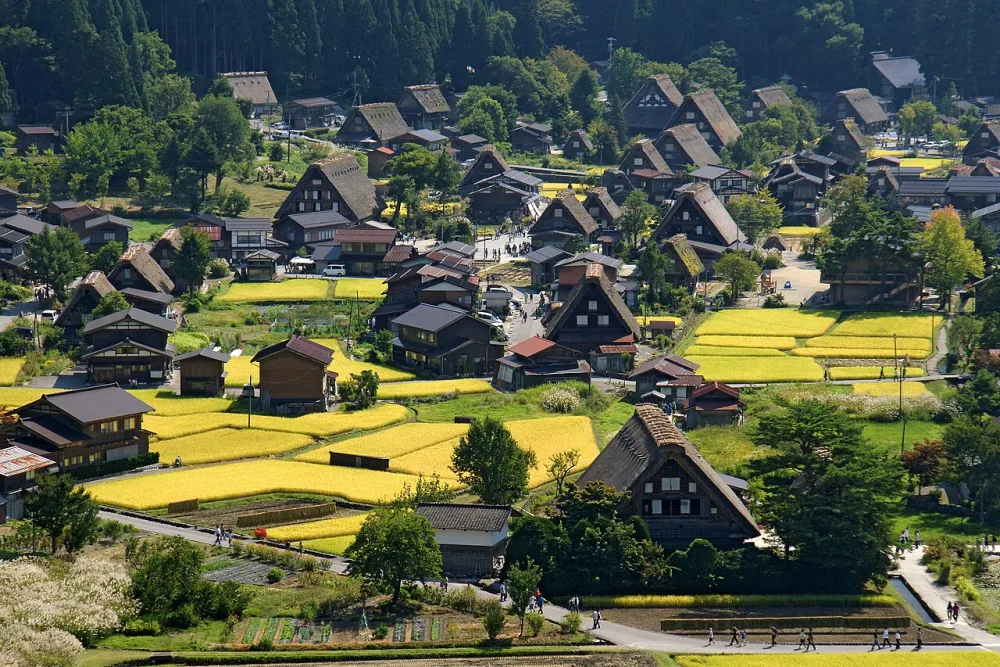
If Shirakawa-go is central to the trip and Nagoya is also an endpoint, compare the Takayama-Hokuriku Area Tourist Pass. It is a separate product: consult its official site for coverage, validity and bus reservation rules, and calculate Tokyo-side travel separately. If Shirakawa-go is only a day trip from Kanazawa, first total the return bus and main JR journeys. A destination appearing in a pass description is not by itself a reason to buy it.
Without buses, for a return day between Toyama and Kanazawa, compare actual Hokuriku Shinkansen departures and fares. It makes the intercity journey faster, but stops and seat arrangements vary by train; reserve designated seats first. To stop at stations along the way, check conventional-line fares and the limited through-travel conditions for Ainokaze Toyama Railway. Do not treat an exception requiring a complete journey between two endpoints as unlimited intermediate travel.
From Tokyo: Hokuriku Shinkansen to Toyama, Kanazawa and Tsuruga
The Hokuriku Shinkansen runs from Tokyo towards Nagano, Toyama, Kanazawa and Tsuruga. The pass covers ordinary-class reserved seats between Tokyo and Tsuruga; reserve before boarding. Search by actual travel date and stations because stopping patterns differ. For Toyama, choose a train that stops there. For a stay in Kanazawa before Fukui, reserve the two journeys separately.
A Tokyo day often mixes subways, private railways and JR. The pass covers specified JR routes within its area and Tokyo Monorail; subways, other operators and travel outside the area cost extra. For airport travel, search by actual terminal and hotel station, listing the operator for each leg. Two endpoints being in Tokyo does not mean every transfer in the search results is covered.
For long journeys from Tokyo or Toyama, settle seat reservations alongside accommodation changes where possible. For a group sitting together, choose acceptable departure times first, then trains and seats. If peak services have scattered seats, try an earlier or later train or split the group. Check the date, service, carriage and seat after reserving, then compare with the platform display. With large luggage, allow walking and floor changes in the station; a train's departure time is not your hotel departure time.
Changing at Tsuruga: Hokuriku Shinkansen to Thunderbird
From Tokyo, Toyama or Kanazawa towards Kyoto and Osaka, change from the Hokuriku Shinkansen to the conventional-line Thunderbird limited express at Tsuruga. From Osaka or Kyoto, transfer there from Thunderbird to the Shinkansen. Record both trains when searching, especially when companions reserve separately, so everyone uses the same connection.
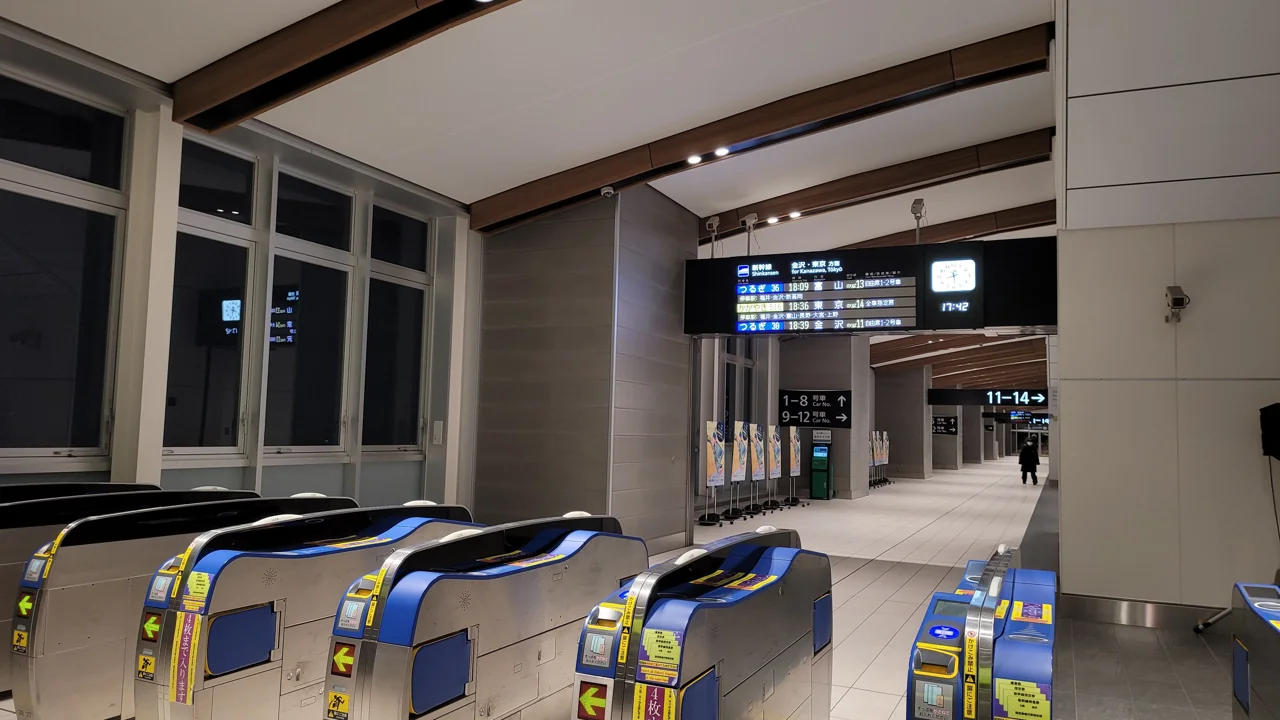
The Tsuruga transfer changes floors and passes through gates between Shinkansen and conventional lines. Follow station signs. With paper tickets, insert the tickets required for that journey together as JR instructs, then collect them after passing through. With four or more tickets, use the staffed passage. For pushchairs, wheelchairs or large luggage, check the lift route and allow a longer connection. If you miss a reserved service, ask station staff about the next arrangements. JR West's Tsuruga transfer guide has route videos in both directions to watch before travelling.
Keep the dates, trains, carriages, seats and connection time for Kanazawa → Tsuruga and Tsuruga → Osaka together on one itinerary and share it with each companion. The paper pass states its validity period; reserved-seat tickets state the train and seat. Keep both together. Passengers getting off at Kyoto use the same Tsuruga transfer. For an Osaka hotel, choose Osaka, Shin-Osaka or another suitable station and onward transport by the hotel's address.
JR West demonstrates the route from the Hokuriku Shinkansen to conventional-line limited express trains. Look at the transfer gates and floors before departure, then follow signs for your own train's platform at Tsuruga.
Hokuriku conventional lines: read all conditions for three exceptions
The pass permits limited through travel on some third-sector railways. For IR Ishikawa Railway between Kanazawa and Tsubata, take a local or limited-express train over the complete section. Getting off at another intermediate station or extending beyond the section falls outside this exception. Its purpose is connection towards Tsubata, not free boarding and alighting across the whole IR Ishikawa Railway.
The Ainokaze Toyama Railway exception between Toyama and Takaoka is limited to local trains covering the whole section. Intermediate stops where you get off, or extensions beyond it, are outside the exception. Budget a separate ticket if leaving at a station between the two. Takaoka and Shin-Takaoka are similarly named but separate: the first is on Ainokaze Toyama Railway, while the second has the Hokuriku Shinkansen. Use full station names when finding hotels or connections.
The Hapi-Line Fukui exception covers only local trains between Echizen-Hanando and Fukui, not beyond those stations. Each exception has different train and section conditions. Connected lines on a map do not establish unlimited boarding throughout. List every station where you want to enter or leave and compare with JR West's official coverage guidance.
For example, for the Ichijodani museum from Fukui, check JR Etsumi-Hoku Line departures to Ichijodani. The museum's access page gives about 15 minutes by train and three minutes on foot. This route connects with the limited through section between Fukui and Echizen-Hanando; it differs from taking Hapi-Line to other towns along that line. Keifuku route 62 from Fukui Station west exit or the Direct bus from the east exit needs a separate fare. The JR pass is not a bus ticket. Ichijodani museum access
Kansai Airport, Kyoto and Osaka
The pass covers HARUKA limited express and JR journeys within its area, so include eligible Kansai Airport–Osaka or Kyoto travel in the calculation. Your hotel determines the station and transfers. For a stay near Kyoto Station, search the airport journey there, then compare walking, bus or subway onward. In Osaka too, check where the train stops and its distance from your hotel rather than relying on the word 'Osaka'.
For a late flight, include ticket collection, finding the platform and seat reservations after immigration and baggage collection. Do not reserve a train based only on the flight's scheduled landing. For flight or immigration changes, handle seat reservations under the purchase channel's rules. If the Kansai Airport journey falls outside pass validity, price it separately and compare start dates again. Do not sacrifice a higher-value inter-area journey just to cover airport transport.
Kyoto and Osaka have JR, subways and other private railways. Compare the whole route from the station nearest your accommodation. JR may be covered, but paying a subway fare could save walking and time if JR requires several transfers. Keep separate columns for covered journeys and transport outside the pass. For families, multiply by the actual number paying to compare the group total.
Arch Pass, Kansai-Hokuriku or Hokuriku Area Pass?
For one-way travel between Tokyo and Kansai via Hokuriku, the Arch Pass connects both ends. If the itinerary is mainly Kansai and Hokuriku with no Tokyo leg, first compare the Kansai-Hokuriku Area Pass. JR West lists seven days at ¥19,000 for adults, covering the Hokuriku Shinkansen from Tsuruga to Joetsumyoko, Thunderbird within its area and services including the Sanyo Shinkansen from Shin-Osaka to Okayama. It does not cover the whole Hokuriku Shinkansen to Tokyo. Check each pass's routes and other railway conditions separately.
If already in Hokuriku for a few local days, consider the Hokuriku Area Pass. The official adult price is ¥7,000 for four days. Its Hokuriku Shinkansen coverage is ordinary-class non-reserved seats from Tsuruga to Kurobe-Unazukionsen; check separate purchase conditions for all-reserved trains. This is another product with its own area and rules. Its name does not give it every train covered by the Arch Pass. Check fares before and after the area, connection points and days, then compare the total journey cost.
Durations differ: the Arch and Kansai-Hokuriku passes each cover seven consecutive days, while the Hokuriku Area Pass covers four. For a longer Tokyo stay before continuing through Hokuriku to Kansai, the Arch Pass may need a later start. With no Tokyo travel, compare Kansai-Hokuriku and separate tickets first. Add uncovered buses and private railways to the budget for all three.
Tickets for children: age first, then a separate seat
JR West prices the Arch Pass by age at exchange or purchase: adult from 12, child from six to 11. Each adult or child pass holder may bring up to two children aged one to five free; each additional young child needs a child ticket. Babies under one travel free. A young child using a reserved seat alone or travelling alone needs a child pass. For two young children each needing their own reserved seat, arrange tickets for their seating needs first, then reserve adult and child seats together.
Do not calculate a family budget by multiplying the adult price by everyone. At the official prices, two adults and a seven-year-old cost ¥35,000 + ¥35,000 + ¥17,500 = ¥87,500. For the same group using single tickets, check adult and child prices separately. With younger children, also decide who will hold a child, whether carers can sit nearby, and how to divide pushchairs and luggage during transfers.
Save each traveller's trains and seats together. If one companion finishes in Kyoto while others continue to Osaka, search and reserve to each person's actual destination. Passengers needing more boarding time can choose an accessible position and arrive at the platform early. Check luggage arrangements and carriage facilities for the actual train type and operator.
Buying, collecting and reserving seats
Arch Pass users must hold a foreign-government passport and enter Japan under Temporary Visitor status. Japanese nationals are ineligible. Show the passport when collecting tickets and carry it while travelling for staff checks. Each passenger uses their own pass. Lost or stolen passes cannot be reissued.
JR West Online Train Reservation opens at 10:00 Japan time one month before travel. The official payment method is advance credit-card payment, with conditions excluding virtual cards and cards without a card number. After arriving, collect at a designated station using the reservation number, your chosen four-digit identification number, the original payment card and passport, following the official process. Machine collection requires an IC-chip passport; without one, use a ticket counter. Overseas agency exchange orders have separate exchange deadlines; follow the order and official rules.
Reserve ordinary-class seats at ticket machines or station counters. Passes bought through JR West Online Train Reservation also have an online seat option. The official rules state that for passes allowing unlimited reserved-seat bookings, the seventh and subsequent reservations must be made at a JR ticket office. If plans change after reserving, follow the purchase and reservation channel's rules rather than leaving held seats unused. All-reserved trains require advance reservations; do not board expecting to find a non-reserved seat.
After exchange, the start date, duration and pass type cannot be changed. Refunds are unavailable after validity begins or expires. Refund procedures before use depend on the purchase channel and whether exchange has occurred. JR lists designated counters in Japan for exchanged passes, with a fee of 10% of the sale price and a minimum ¥220 per pass; online reservations have their own conditions. Set the start date once your travel dates are settled and save reservation and collection details.
From airport collection to your first seat reservation
JR West lists designated collection stations, with the method depending on ticket type and purchase channel. An electronic exchange order from an overseas agency uses that order's exchange details, not the credit-card online reservation collection process. Compare your purchase confirmation with the designated exchange locations, then choose a convenient counter or machine that will still be operating when you arrive.
If your first covered journey is the next day and the airport collection queue is long, pay for airport transport separately, collect at another designated location and activate on your inter-area travel day. This adds an out-of-pocket fare that day but may cover a long journey on the final day of the seven. Compare total costs for both start dates. If travelling straight to Hokuriku on arrival, arrange collection and the first reserved seat before entering the gates, with room for flight and immigration timing changes.
At JR West's green ticket machines, the official seat-reservation process starts by inserting the ticket without a seat reservation into the slot marked 'Ticket・Commuter Pass', then choosing the date, time, departure and arrival stations, and train. The screen guides seat selection and prints reserved-seat tickets. Check passenger count, date, direction, train and seats. For a large group, assistance or the seventh and later reservations, a counter makes it easier to explain needs together. If already reserved online, follow that system's ticket collection instructions; a phone screen does not always replace physical tickets that must be collected.
From Haneda Airport, check Tokyo Monorail to Hamamatsucho and onward JR, then compare by your hotel station and the pass area. The airport–Hamamatsucho monorail is included, but assess onward transport leg by leg. From Narita, first identify your terminal, JR station and actual train, then check the official coverage map. A subway from your hotel to Tokyo Station needs a separate fare.
Seats, supplements and service changes after purchase
The Arch Pass covers ordinary-class reserved seats within its area. Green Car travel needs a separate Green Car ticket and limited-express ticket; GranClass also requires the relevant extra tickets. Do not simply add the difference between seat prices to the pass. Ask a JR counter or the official reservation system for the actual amount payable. The Tokaido and Sanyo Shinkansen are excluded. A last-minute switch to the Tokaido Shinkansen from Tokyo to Shin-Osaka requires separate tickets for that journey.
JR West also lists conditions for some Tohoku and Yamagata Shinkansen travel between Tokyo and Omiya and Joetsu Shinkansen travel between Tokyo and Takasaki. HAYABUSA on the Tohoku/Hokkaido Shinkansen and KOMACHI on the Akita Shinkansen require a separate limited-express ticket. These short-section rules can help for stays or intermediate travel along those routes, but do not extend coverage across all Tohoku or Hokkaido lines. Check train type and boarding and alighting stations against the official table before deciding on extra tickets.
After reserving, keep the pass and seat details together. If you find a wrong date or direction before entering the gates, visit a counter rather than boarding with the wrong reservation. During cancellations or delays, use that day's station notices and staff instructions to adjust connections. JR West states that cancellations or delays do not extend pass validity or entitle you to a pass refund. If flying the same day as a connection, allow enough time for transfers and airport check-in when choosing trains.
Use the price difference to decide your hotel order
For the same Tokyo arrival and Osaka departure, staying in Toyama before Kanazawa can cost differently and require a different number of hotel changes from staying in Kanazawa and making a Toyama return trip. The first places journeys on hotel-change days; the second avoids one packing session but adds a return leg. Compare actual train fares alongside the second hotel's price. Staying put means fewer check-ins and check-outs for a short trip; separate stays make dinners easier if you want evenings in both cities.
If travelling Tokyo → Kanazawa → Osaka without leaving Kanazawa in between, keep the difference between the ¥22,600 reference combination and ¥35,000 Arch Pass in your budget comparison. Changing to Tokyo → Toyama → Kanazawa → Fukui → Kyoto makes four legs. The original Tokyo–Kanazawa reference fare and Kanazawa–Osaka discount ticket no longer directly represent the total. For each added overnight stop outside the gates, recheck the new station combinations rather than adding one Shinkansen fare to the old formula.
After buying, keep a simple record: purchase platform, each person's pass, start and end dates, where collection details are stored, and reserved trains. Before reaching Kanazawa, check the next reservation; before Tsuruga, check the connecting Thunderbird or Shinkansen. Budget separately for city transport, attraction admission and meals.
A few useful answers
How much is the Hokuriku Arch Pass, and when do the seven days start?
As of 27 October 2026, JR West listed the seven-day pass at ¥35,000 for adults and ¥17,500 for children. It covers seven consecutive calendar days in Japan, and your start date counts even if you catch your first train that evening.
Where do I change for Kyoto or Osaka when travelling from Tokyo on the Hokuriku Arch Pass?
Change at Tsuruga station from the Hokuriku Shinkansen to the Thunderbird limited express for Kyoto or Osaka. The pass covers reserved seats in ordinary carriages on both trains. You'll need a separate ticket for the direct Tokaido Shinkansen from Tokyo to Shin-Osaka.
Is the Hokuriku Arch Pass cheaper than singles if I only stop in Kanazawa between Tokyo and Osaka?
In the example, two adult singles come to ¥22,600, ¥12,400 less than the pass. The total combines a ¥14,600 regular-season reserved seat from Tokyo to Kanazawa and the ¥8,000 Hokuriku One-way Ticket to Osaka, sold by designated travel agents outside Japan.
How do I book seats with the Hokuriku Arch Pass?
Book reserved seats in ordinary carriages at a ticket machine or station ticket office. If you bought the pass on JR West’s online booking service, you can also book seats there. From your seventh reservation, book at a JR ticket office.
Official information and references
Sources used in this guide.
- JR West: Hokuriku Arch Pass
- JR East FACT BOOK 2026, page 19
- JR West: Hokuriku One-way Ticket
- JR West: Tsuruga Station transfers
- JR West: Kansai-Hokuriku Area Pass
- JR West: Hokuriku Area Pass
- JR West: ticket exchange locations
- JR West: using ticket machines
- Takayama-Hokuriku Area Tourist Pass
- Ichijodani museum: rail and bus access
- Toyama Glass Art Museum: permanent exhibitions and admission
- Toyama Glass Art Museum: TOYAMA Kirari architectural concept
- Toyama Glass Art Museum: hours, closures and access
- Toyama Glass Art Museum: Weaving Glass, Weaving the Heart, 6 June–29 November 2026
- Toyama Glass Art Museum: Finnish sauna culture exhibition, 31 October 2026–24 January 2027