Visit Fuji Safari Park in Susono, Shizuoka to feed lions and bears from a wire-mesh Jungle Bus or spot giraffes along a forest trail. Covers regular and Super Jungle Bus ages, reservations, family ticket pricing, and bus schedules from Mishima and Gotemba.
- Region & Focus
- Chubu
- Reading Scope
- 17 min read · 8 chapters · 6 Q&As
- Official Verification
- 24 official sources checkedUpdated November 22, 2026
- Key Topics
- ItinerariesBookingSeasons
Chapter Route Map (tap any stop)
- What Does Admission Cover? Budget First by Age
- How Close Is the Jungle Bus? Side Views vs. Overhead Mesh
- Buying Tickets on MySAFARI: Match Bus Arrivals to Booking Times
- Self-Drive Through Seven Zones, or Walk 2.5 km Along the Forest Fence
- Step Off for Capybaras, Kangaroos, and Ponies—Then Duck Into the Indoor Houses
- Arriving Without a Car: Shinkansen to Mishima or Local Bus from Gotemba
- Half-Day or Full Day? Keep Your Final Stop Flexible Before the Bus
- Night Safari Is Summer-to-Autumn Only: Plan Separate Return Transport
- Quick Q&A
As the Jungle Bus rolls into the lion zone, a massive, shaggy head presses right up to the feeding tongs on the other side of the steel mesh. According to the park, when the animals approach, only about 20 centimeters separate you. On this roughly 50-minute ride at Fuji Safari Park in Susono, Shizuoka Prefecture, you can also spot bears, tigers, and Bactrian camels along the route. For families visiting with kids for the first time, start with a bus loop, then head to the Interaction Farm to see the capybaras. If you want to watch giraffes at an unhurried pace in the woods, set aside another half-day for the Walking Safari. If you are taking the bus from Mishima or Gotemba, pick your return departure before leaving home and plan your park itinerary around it.
What Does Admission Cover? Budget First by Age
The park is divided into the drive-through Safari Zone and the walk-around Interaction Zone (Fureai Zone). A standard daytime admission ticket gets you into the Interaction Farm and Animal Village, and also covers driving your own car through the Safari Zone. The Jungle Bus, the outer forest Walking Safari trail, and experiences like pony rides or the cat, dog, and rabbit houses are ticketed separately. Families planning to feed lions from the bus will have two park line items—admission and bus tickets—plus a third expense if taking a Fujikyu bus to the gate.
Regular daytime admission is ¥3,200 for high school students and older, ¥2,000 for ages 4 through junior high, and free for ages 3 and under. Seniors aged 65 and over pay ¥2,500 with valid proof of age shown when buying tickets on-site. Through the park's free MySAFARI membership, digital admission tickets drop to ¥2,700 for adults and ¥1,700 for children, while seniors remain ¥2,500. Member tickets must be purchased before arrival; pull up the ticket screen on your phone as instructed by staff at the tollgate.
For two adults and one 8-year-old, MySAFARI admission totals ¥7,100, plus ¥4,500 for three regular Jungle Bus seats, coming to ¥11,600. Upgrading all three to the Super Jungle Bus brings the bus portion to ¥6,300, for a combined total of ¥13,400. Adding the forest trail costs another ¥1,800 for the three of you. All of these figures start at the park gate, so budget separately for the Fujikyu bus fare from the station.
Age 3 is the easiest threshold to miscalculate. Three-year-olds enter the park for free, yet they still need a ¥1,500 ticket for the regular Jungle Bus, while the Walking Safari remains free for them. If your group includes both a 2-year-old and an 8-year-old, taking the regular Jungle Bus lets the whole family ride into the Safari Zone together: children under 3 may ride free on an adult's lap (one child per adult). The Super Jungle Bus is restricted to elementary school students and older, so families with preschoolers will need to split up for that option.
Keep an eye on seasonal admission cutoff times. Standard entry hours run 9:00–16:30 from March 11 to October 31, 9:00–15:30 in November, and 10:00–15:30 from December 1 through March 10. The park calendar shows daily openings from November through December 6, 2026, with earlier opening hours on select weekends and national holidays. Winter schedules shorten the entry window, and individual activities carry their own registration cutoffs. Temporary closures appear on the park's operating calendar, and road advisories are posted on the homepage during snow.
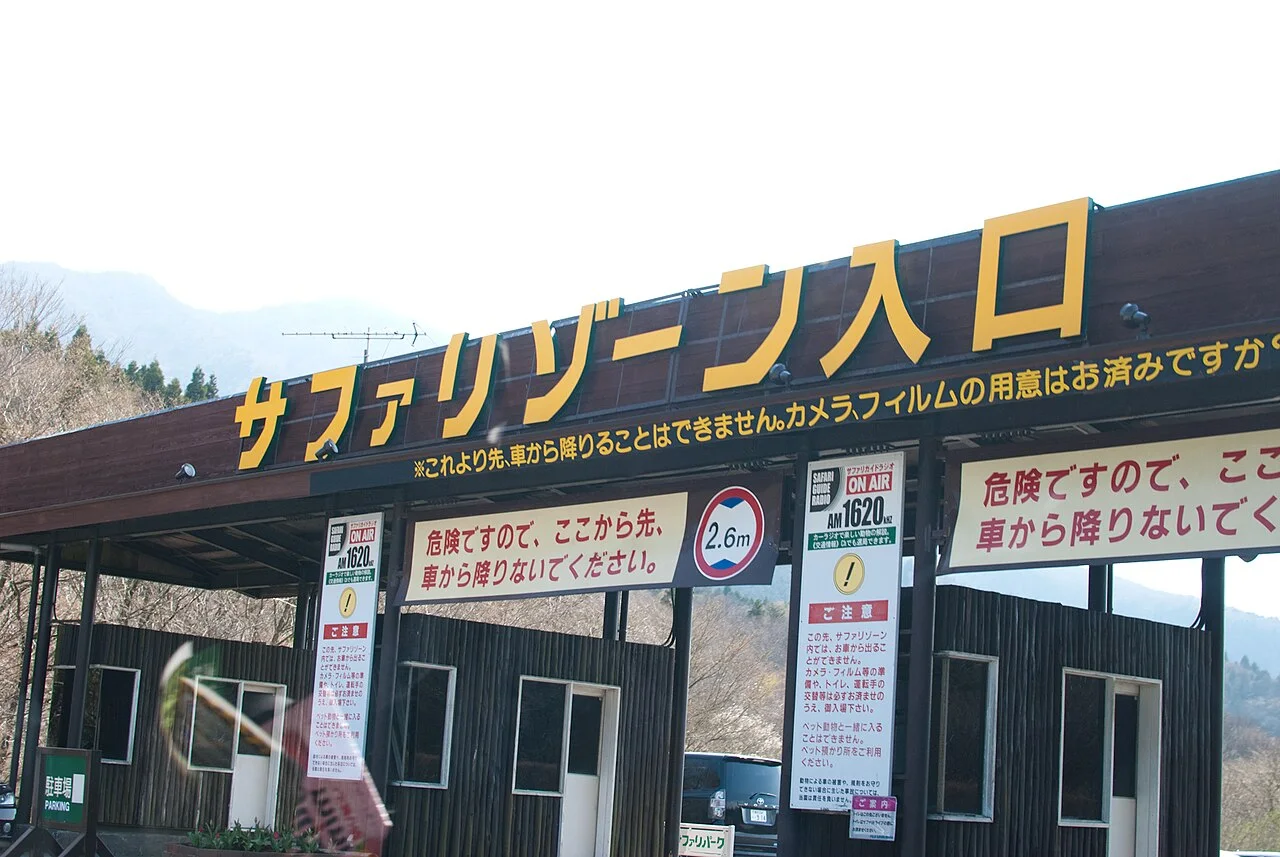
Drivers check in at the entrance tollgate, where parking is free. Visitors arriving by bus or taxi should head to the Information Desk right beside the tollgate to buy or validate admission before walking to the bus boarding area and Interaction Zone. Because the main gate consists of vehicle lanes, pedestrians must use the Information Desk side. A daytime ticket allows single entry; if you plan to eat lunch without leaving your itinerary behind, dine inside the park or use the designated picnic rest areas.
| Ticket | Eligibility | Price |
|---|---|---|
| Adult Admission | High school and older | Regular ¥3,200 / MySAFARI ¥2,700 |
| Child Admission | Age 4 to junior high | Regular ¥2,000 / MySAFARI ¥1,700 |
| Toddler / Senior Admission | Age 3 and under / Age 65+ | Free / ¥2,500 |
| Regular Jungle Bus | Paid from age 3 | ¥1,500 per person |
| Super Jungle Bus | Elementary school and older only | ¥2,100 per person |
| Walking Safari | Paid from age 4 | ¥600 per person |
Visit Fuji Safari Park in Susono, Shizuoka to feed lions and bears from a wire-mesh Jungle Bus or spot giraffes along a forest trail. Covers regular and Super Jungle Bus ages, reservations, family ticket pricing, and bus schedules from Mishima and Gotemba.
How Close Is the Jungle Bus? Side Views vs. Overhead Mesh
The regular Jungle Bus features wire-mesh side windows and a body painted to look like a lion, tiger, or other wild animal. After passing the Safari Zone gate, the bus enters the bear zone first, followed by the lion zone. The driver narrates along the way and stops at designated feeding points. Kids naturally focus on the tip of the tongs, watching how lions clamp down on meat while camels curl their lips to pull food away—comparing the two makes the difference between carnivores and herbivores immediately clear.
The regular loop takes about 50 minutes, with official feeding stops for bears, lions, and camels. The Super Jungle Bus runs roughly 60 minutes and adds wire mesh across the ceiling as well as the sides, so big cats or bears may climb right overhead. Its feeding stops include bears, lions, elephants, llamas, and camels. If feeding lions is your main goal, the regular bus already includes that stop; the extra ¥600 for the Super Jungle Bus buys the overhead perspective and expanded feeding lineup.
When big predators walk up, you can hear them breathing, and kids seeing a lion this close for the first time may prefer just to watch. Agree ahead of time that an adult will handle the tongs while your child watches whether the animal twitches its ears, turns its head, or looks straight into the cabin before approaching. Once the bus moves on, scan the next zone together. Save photos for the second viewpoint—watching an elephant's trunk tip with your own eyes beats hunting for focus on a phone screen.
Buses and private cars follow the exact same Safari Zone loop. Past the bears and lions come tigers, cheetahs, and elephants, followed by the General Herbivore Zone and the Mountain Herbivore Zone. Split up spotting duties inside the bus: one person scans tree shade and high ledges while another watches for silhouettes in the grass. Spot a zebra, then see if you can pick out the same coat pattern in the next herd. Kids fascinated by big cats can also compare where a tiger's stripes and a cheetah's spots fall along their bodies.
On weekends, if your kids are set on seeing a cheetah sprint, look for the Cheetah Run Plus tour. It takes the regular Jungle Bus feeding route and adds a cheetah running demonstration. According to the park, it departs at 13:20 on weekends and Japanese national holidays, lasts about 70 minutes, costs ¥2,000 for ages 3 and up, and is sold on the day of your visit via MySAFARI or the Information Desk after entering. If you book this tour, aim for the 16:30 bus back to Mishima so you have time to finish the loop and walk to the stop.
Air blows freely through the side mesh, and the bus travels over unpaved dirt tracks. Tours still run in light rain, when droplets can splash in through the open sides; umbrellas are not allowed inside, so bring raincoats instead (the park sells ponchos for ¥200). Pack an extra windproof jacket in winter. Since the Super Jungle Bus also has an open mesh roof, animal hair, saliva, or dust can drop into the cabin—wear clothes that are easy to wash. Families with strollers can park them in the stroller area beside the Information Desk before boarding.
The regular Jungle Bus works best for toddlers and first-time visitors trying close-up feeding. If a child in your group suffers from severe motion sickness, or if you want the flexibility to snack and nap in your own space, driving your own car makes pacing easier while saving walking energy for the Interaction Farm. Use the restroom before boarding, as everyone stays on the bus for the entire loop. Both bus types require at least one adult guardian to accompany elementary and junior high school children.
| Option | Duration | Viewing Style |
|---|---|---|
| Self-Drive | Approx. 50–60 min | View all seven zones from inside your car; additional loops allowed per park traffic rules |
| Regular Jungle Bus | Approx. 50 min | Close-up feeding for bears, lions, and camels through side wire mesh |
| Super Jungle Bus | Approx. 60 min | Elementary school+; adds overhead wire mesh and extra feeding stops |
| Walking Safari | Approx. 90–120 min | 2.5 km forest trail outside the fences with observation decks |
Buying Tickets on MySAFARI: Match Bus Arrivals to Booking Times
To lock in a bus departure in advance, start by registering a MySAFARI account. After logging in, open the ticket purchase menu and choose either the regular Jungle Bus or the mesh-roofed Super Jungle Bus, then select your date, departure time, and party size and pay by credit card. Advance sales for both buses open on the 1st of the previous month and close at noon JST the day before your ride. The park announced that January 2027 tickets for both buses will go on sale on December 1, 2026, at 12:00 JST.
Only about 10% of regular Jungle Bus seats are released in advance, with roughly 90% held back for same-day sales after you enter the park. If your preferred slot is sold out online, arriving early gives you a solid shot at choosing your time on-site. The Super Jungle Bus also splits inventory between advance and same-day tickets, though it runs fewer departures and follows different weekday and weekend timetables. If your whole group wants the Super Jungle Bus, pick a day you can arrive on time and buy as soon as sales open—the 90% same-day pool applies only to the regular bus.
Visitors holding MySAFARI digital admission tickets can log in and buy same-day bus seats as soon as their entry pass is scanned at the gate. If you paid on-site or hold a different admission ticket, scan the QR code provided at the entrance and follow the prompts to log in and purchase. If mobile reception is spotty or you prefer staff assistance, head straight to the Information Desk next to the tollgate. Handle bus tickets right after entering so you do not wander into the Animal Village only to realize your preferred departure has already left.
Keep the external public bus timetable open while booking. For example, the 10:10 bus from Mishima Station is scheduled to arrive at 10:58, leaving almost no margin for an 11:00 Safari Zone bus. For the Super Jungle Bus, build in extra check-in time at the Information Desk. Official Super Jungle Bus instructions call for checking in at the Information Desk 30 minutes before departure, and both buses require gathering at the boarding area 10 minutes ahead of departure. Use that buffer for restrooms, rain gear, and pulling up your digital tickets.
Advance bus tickets cannot be canceled or refunded by the buyer more than one hour after purchase. Before finalizing a slot, factor in travel time from the station, gate check-in, and walking with kids to the boarding area. Even if you are driving early in the morning, leave wiggle room for mountain roads, entrance queues, and parking. If a single delayed public bus would wreck your schedule, book a later Safari bus or spend your first hour after arrival at the Interaction Farm.
Once inside, hold onto your entrance receipt and keep your mobile data connection handy. For the regular bus, you can walk over to spot the Jungle Bus boarding sign first and wait nearby rather than passing digital tickets around to family members who are resting. Because staff scan timed tickets directly on the buyer's phone screen, having the purchaser lead the group to the boarding area is easiest. If your group splits between the two buses, text the check-in time and lunch meeting spot to the other group as soon as tickets are booked.
When checking schedules, look up the park's daily event schedule page, which lists in-park events, ticket purchase methods for each activity, and same-day availability. Circle the activities everyone in your group can join first, then fill the gaps with add-ons. If only afternoon bus departures remain on arrival, go see the capybaras or eat lunch first instead of waiting by the bus stop all morning.
Self-Drive Through Seven Zones, or Walk 2.5 km Along the Forest Fence
Families driving their own cars start at the Safari Zone gate and complete the loop in roughly 50–60 minutes. Sitting lower than a Jungle Bus lets you watch animals' legs, paws, and tails as they cross right beside your lane. The driver stays focused on the car ahead and staff directions while passengers spot wildlife and take photos. Keep all windows, doors, and sunroofs closed before passing the gates, remain inside the vehicle at all times, and make sure everyone uses the restroom before entering.
Convertibles, soft-top vehicles, trucks, motorcycles, and cars with ground clearance of 10 centimeters or less are prohibited in the Safari Zone. Roof-mounted or rear-mounted cargo must be removed beforehand; luggage that does not fit inside the cabin can be stored at the Information Desk. Eligible vehicles can tour the Safari Zone on a standard admission ticket and re-enter for additional loops during admission hours, though repeat loops may be restricted on crowded days. Use the first lap to learn the layout and the second to linger in zones you missed—drivers can also swap seats with family members so everyone gets a clear view.
In winter, the park gate and the drive-through Safari Zone run on slightly different clocks. From December through March 10, regular park admission typically opens at 10:00, while the self-drive Safari Zone opens at 10:30. If you arrive early, park, visit the restrooms, and decide which side of the back seat each person will watch from. Approaching the herbivore zones, look for giraffes and zebras in the General Herbivore Zone, then switch to spotting American bison in the Mountain Herbivore Zone. Have the kids guess which animal stands taller than the car window before looking up as you pass.
The Walking Safari runs just outside the animal fences; its entrance sits on the left about 100 meters past the tollgate. The forested mountain trail stretches roughly 2.5 kilometers, usually taking 90 to 120 minutes, and costs ¥600 per person from age 4. Along the way you will encounter slopes, unpaved dirt paths, observation decks, and tunnels. The park places animal skeletons and educational plaques along the trail so kids can guess which animal each bone belongs to while scanning the enclosures. Shifting from looking up through forest canopy to peering out across open pasture gives the park a completely different pace than watching through a car window.
About 700 meters from the trailhead sits the lion feeding point, and around the 1.5-kilometer mark you reach the Giraffe Terrace—a 4-meter-high wooden deck that puts you near eye level with the giraffes. Giraffe feeding is offered on weekends and Japanese national holidays; if you want to catch it, ask at the Walking Safari entrance for the day's feeding times and work backward to time your start. Watching a giraffe curl out its long tongue from the elevated terrace makes it far easier to see how it grabs food than rushing along the path below.
There are no restrooms along the Walking Safari trail, and strollers and wheelchairs are not permitted on the uneven forest path. Pack drinking water, wear grippy sneakers, and visit the restroom near the entrance before setting off. Children aged 3 and under can walk for free, though parents should gauge their stamina. If you need a stroller-friendly walk, stick to the flat paths in the Interaction Zone or swap the trail for a Jungle Bus ride. Do not start the two-hour walk right before your return bus departure.
The 2026 Walking Safari season opens on March 14 and runs through November 30. In late autumn, trail entry typically closes at 14:30, with start times listed on the daily schedule. Through November 30, 2026, a bundled admission-plus-Walking-Safari ticket is offered via MySAFARI at ¥3,000 for adults, ¥2,000 for children, and ¥2,800 for seniors. Daytime self-drive and Jungle Bus tours continue on winter hours, when you can trade those two walking hours for the Animal Village and indoor animal houses.
Step Off for Capybaras, Kangaroos, and Ponies—Then Duck Into the Indoor Houses
After exiting the Safari Zone vehicle route, follow the park map to the Interaction Farm (Fureai Farm). Here you can see red kangaroos, Bennett's wallabies, capybaras, ponies, meerkats, and red pandas. When a kangaroo pauses, you can clearly see how its thick tail props up its body; wait a moment for its next hop to watch which foot lands first. Capybaras and Patagonian maras are close enough to compare side by side—let kids spot the differences in their ears, feet, and sitting posture. Standard park admission covers this entire area.
Scheduled feeding sessions are held for several species—the official site lists red kangaroos, capybaras, chipmunks, and porcupines, with feed typically priced at ¥100 per cup. Only feed the park-supplied food, and follow the posted hand gestures and standing lines at each enclosure. If your kids just want a closer look without feeding, stand where they can watch the animal's front paws and mouth as it stops to eat. When a capybara steps out of the water, point out how droplets cling to its coarse coat; to tell kangaroos apart, compare the silhouettes on the signboards with the animals in front of you.
For pony rides, head to the Pony Ride area, priced at ¥600 per ride for riders from first grade up to 60 kilograms. If kids want to ride together, look for the Miniature Horse Cart, which costs ¥600 for one rider or ¥1,000 for two. Both experiences post daily registration windows—walk past the entrance first so kids can see the horses and decide whether they prefer riding in the saddle or watching a miniature horse pull the cart from up front.
Walk from the farm to the Animal Village to see hippos, striped hyenas, porcupines, and ring-tailed lemurs. When a hippo surfaces, point out how its eyes, ears, and nostrils sit high on its head so it can keep almost its whole body submerged. The park also sells limited-quantity special feeding tickets for hippos and other animals; if you are interested, check the daily schedule page for hippo slots and make sure the timing fits around your bus ride. The Animal Village paths have slopes and stairs, so tired members of your group can walk a short stretch and meet back at the plaza.
Three indoor animal houses charge separate admission: ¥700 for the Dog House, and ¥600 each for the Cat House and Rabbit House, all paid from age 3. Only visitors aged 3 and older may enter the Dog House and Cat House. Families with younger toddlers can center their visit around the open-air Interaction Farm while older kids or parents pop into the indoor houses. Moving indoors from outdoor enclosures, take a moment to watch how each animal reacts before reaching out, and wait for staff guidance or for the animal to approach.
Nursing rooms are located by Parking Lot 1, and the park's baby FAQ lists which restrooms include diaper-changing stations. Strollers can be rented at the Safari Shop for ¥1,000 each. Build your schedule around nap times by picking one headline activity for everyone before lunch or a nap break. If everyone still has energy afterward, circle back to see whether that resting kangaroo has moved, or stop by the park's marked Mount Fuji viewpoints before heading out.
Arriving Without a Car: Shinkansen to Mishima or Local Bus from Gotemba
Travelers riding the Tokaido Shinkansen to Mishima Station should walk to Bus Stop 2 at the Mishima Station South Exit in the morning and catch Fujikyu City Bus's express Fugaku Liner. Because the Shinkansen gates sit on the North Exit side, allow time to cross over to the South Exit before departure. For the September 11, 2026 to April 4, 2027 timetable, only two direct Fugaku Liner departures leave Mishima South Exit for the park, at 9:10 and 10:10. The 48-minute ride arrives at 9:58 and 10:58 respectively; get off at Fuji Safari Park (winter buses may display Yeti on the front destination sign).
Return express buses leave the park at 13:30 and 16:30, stopping at Mishima North Exit before continuing to the South Exit. The 16:30 departure reaches the North Exit at 17:20 and the South Exit at 17:30, making the North Exit ideal for catching the Tokaido Shinkansen. If you arrive at 10:58 and take the 13:30 bus back, you only have about two and a half hours inside—enough for a Jungle Bus loop and a short stroll in the Interaction Farm. To combine the full Walking Safari trail with a Safari Zone bus, aim for the 10:58 arrival and 16:30 return. Leave extra minutes to walk back to the bus stop, and schedule your last feeding session well before departure.
There is also a later 18:20 express local bus from the park to Mishima Station South Exit via Susono Station, arriving at 19:15. Keep it in mind as a backup—note that transferring to the Shinkansen from this bus requires entering through the South Exit. If you switch buses on the spot, check that day's Route E timetable and verify whether your existing ticket is valid. During peak summer (July 10 to September 10, 2026), the seasonal Fugaku Liner schedule also added a 15:00 return trip, which applies only to those dates.
During the standard timetable period, the Fugaku Liner operates on a capacity-limited, first-come, first-served seating basis, with tickets available via the Hassha All Right Net link on the official page. From July 10 to September 10, 2026, it shifts to advance seat reservations, so always check the rules for your exact travel date. One-way express fares are ¥1,500 for adults and ¥750 for children (toddlers also pay the child fare). Fujikyu's Mishima round-trip bus plus park admission combo is listed at ¥5,000 for adults, ¥3,500 for junior high students, and ¥3,000 for elementary students, sold same-day at the South Exit ticket window or in advance via Fujikyu Travel.
If transferring at Gotemba Station, head to Bus Stop 4 at the Fujisan Exit and board a Fujikyu Mobility local bus bound for Jurigi, Grinpa, or Yeti that stops at the park. The park's timetable lists Gotemba departures at 8:30, 9:00, 11:00, 12:30, 13:55, and 15:00, taking roughly 34 minutes. The 8:30 and 9:00 buses give you the best shot at same-day Jungle Bus tickets. The 11:00 bus puts you near lunchtime, ideal for starting with a meal or the Interaction Farm, while the 15:00 bus arrives at 15:34—too late during the November through March 10 season when regular admission closes at 15:30.
Return buses to Gotemba Station are listed at 10:39, 12:04, 13:39, 15:04, 16:44, and 18:49. The 16:44 departure arrives at Gotemba Station at 17:18, making it a practical target for a full daytime visit. The standard adult one-way fare is ¥880, rising to ¥1,030 between Gotemba Station and the park starting December 1, 2026, per Fujikyu Mobility's fare revision notice. A round-trip bus plus admission set ticket is priced at ¥4,200 for adults, ¥3,100 for junior high students, and ¥2,600 for elementary students, sold at the Fujisan Exit ticket counter or online via Fujiyama Connect.
Both Mishima and Gotemba combo tickets already include daytime park admission, so skip buying a separate MySAFARI entry pass if you choose one. Jungle Bus tickets remain a separate purchase; finalize your bookings in order of return bus, outbound bus, then in-park bus. Coming from central Tokyo, taking the Shinkansen to Mishima connects smoothly if you are staying along the Tokaido corridor, whereas travelers based in or passing through Gotemba get far more frequent departures from the Fujisan Exit. Both routes climb mountain roads, so never book an onward Shinkansen or limited express train for the exact minute your bus is scheduled to arrive.
| Origin Stop | Sample Outbound | Key Return Times | Adult One-Way Fare |
|---|---|---|---|
| Mishima Station South Exit Stop 2 | 9:10 to 9:58, 10:10 to 10:58 | Fugaku Liner departs park at 13:30 and 16:30 (North Exit first) | Express ¥1,500 |
| Gotemba Station Fujisan Exit Stop 4 | 8:30 to 9:04, 9:00 to 9:34, 11:00 to 11:34 | Includes 15:04 to 15:38, 16:44 to 17:18 | ¥880 (¥1,030 from Dec 1, 2026) |
Half-Day or Full Day? Keep Your Final Stop Flexible Before the Bus
First-time visitors traveling by public transit do best by pairing one timed block with one untimed block. Ride your reserved Jungle Bus in the morning, then wander over to the Interaction Farm. If catching the 13:30 return to Mishima, fit in lunch and restroom stops well ahead of boarding. With a 16:30 return, let kids finish the Animal Village and choose between the Rabbit House or Miniature Horse Cart based on your remaining time. Putting an easy-to-wrap-up stop last ensures you will not miss the bus even if you linger watching the hippos.
If the Walking Safari is your main priority and you are driving, tackle the forest trail earlier in the day to avoid rushing downhill in the afternoon, then return to your car for the Safari Zone loop. Kids handle a 90-minute hike best in the morning and can rest during the afternoon drive. If you want both a bus ride and the walking trail, put lunch in between so nobody goes straight from a bumpy bus onto a hilly dirt path. If your bus reservation is in the afternoon, walk the forest trail in the morning and eat before heading to the boarding area.
To save time at midday, pack bento boxes and eat at the park's open rest areas, plaza benches, or lawn spaces. Restaurant seating is reserved for paying diners, while free indoor rest shelters are available on rainy days if you bring your own food. If buying lunch on-site, locate the Safari Restaurant or takeout stands on the map before starting the forest trail so you can eat nearby afterward. The plaza in front of the restaurant is also listed on the Mount Fuji viewpoint map, letting you combine lunch and mountain views without backtracking.
Families with a stroller-age toddler can split up briefly: one adult takes older kids along the longer forest trail while the other explores the Interaction Farm and indoor houses, then everyone regroups at the plaza for lunch. If the whole family wants to ride together, pick the regular Jungle Bus and park the stroller at the Information Desk until you return. For the Super Jungle Bus, elementary-age kids and their accompanying adult can board while the preschooler group visits the ponies or capybaras.
On rainy days, pairing a self-drive Safari Zone loop with the indoor animal houses keeps everyone's shoes and socks dry. If you take the Jungle Bus in raincoats, keep a warm layer within reach in case a drizzle picks up. Located on the mountain slopes of Susono, the park estimates a 15-minute drive from the Tomei Expressway Susono IC and about 30 minutes from the Shin-Tomei Shin-Fuji IC. Before driving up in winter, check the homepage road and snow advisories to decide whether you need winter tires or should take the bus instead. When anti-slip controls are in effect in the Safari Zone, only vehicles with winter tires or tire chains are admitted; cars on summer tires must switch to a paid park bus.
Let the kids pick the final moment of the visit. If they have already seen plenty of lions from the bus, loop back to watch the capybaras wade into the water. Storytellers in the group can pick one detail from the day—an animal footprint, coat pattern, or the way a camel grabs food—to share on the ride home. If Mount Fuji is out, route your walk back toward the entrance past one of the park's marked viewpoints; if clouds hide the peak, spend those extra minutes at the Interaction Farm instead.
Night Safari Is Summer-to-Autumn Only: Plan Separate Return Transport
The park runs Night Safari as a separately ticketed seasonal event. In 2026, it ran nightly from July 25 to August 30 and on weekends and Japanese national holidays from September 5 to 27; that season has now concluded. To plan for a 2027 night session, watch the News section on the official website for ticket release dates before locking in your hotel and return ride.
On a daytime drive through the lion zone, you mostly notice where the lions are lounging. At night, everything outside the floodlights drops into shadow—you wait for animals to pace into the lit areas, catching their silhouettes first before picking out eyes and manes. During the 2026 night season, dated tickets covered either a self-drive loop or a guided Night Safari observation bus, alongside separately ticketed night tours into the Animal Village to see hippos or leopards.
Under the late September 2026 pricing, Night Safari admission was ¥1,700 for high schoolers and older and ¥1,200 for ages 4 through junior high. The guided night bus cost an additional ¥1,000 per person from age 3 and ran about 50 minutes. That season, 3-year-olds entered the night park for free while still needing a bus ticket. Secure your dated entry ticket first, then select your bus departure slot.
In the late September 2026 schedule, Night Safari entry ran 17:30–19:30, with some guided buses departing as late as 20:00. Daytime return buses to Mishima and Gotemba end too early to cover a full night session. Families relying solely on public transit are better off sticking to daytime hours, where buses and meals align easily. If you do attend Night Safari, arrange a rental car or pre-booked taxi back to your accommodation timed to when the night program wraps up.
If you plan to visit both day and night, give each session its own focus. Take a daytime Jungle Bus to study the lions' ears and manes up close, then return after dark to see where they patrol and how other animals react. Daytime and night sessions each require their own admission ticket. Families with preschoolers can take an afternoon break at their hotel or nearby before coming back for the evening.
A few useful answers
Does a 3-year-old need a ticket for the Jungle Bus?
Yes. Park admission is free at age 3, but the regular Jungle Bus costs ¥1,500 per person starting at age 3. Children under 3 may ride free on an adult's lap (one child per adult).
Can an 8-year-old ride the Super Jungle Bus?
Yes. The Super Jungle Bus is open to elementary school students and older at ¥2,100 per person. Elementary and junior high school children must be accompanied by at least one adult guardian.
If advance Jungle Bus tickets sell out, are any seats left?
Yes—about 90% of regular Jungle Bus seats are held for same-day purchase. Complete your park entry first, then buy seats through MySAFARI or at the Information Desk next to the tollgate.
How do I enter the park after arriving on the Fugaku Liner from Mishima?
Get off at the Fuji Safari Park bus stop and check in at the Information Desk beside the entrance tollgate. Afterward, walk to the separate Jungle Bus boarding area.
Can I bring a stroller on the Walking Safari trail?
No. The Walking Safari is an unpaved mountain forest trail where strollers are not permitted, and the full loop takes roughly 90 to 120 minutes. Bring strollers to the flatter Interaction Farm instead.
If I drive my own car, do I still need a Jungle Bus ticket?
Not necessarily—eligible vehicles can drive through the Safari Zone using just your daytime admission ticket. Buy a regular or Super Jungle Bus ticket only if you want to ride the wire-mesh bus and feed animals at designated stops.
Official information and references
Sources used in this guide.
- Fuji Safari Park Daytime Admission & Entry Guide
- Fuji Safari Park Operating Calendar
- Fuji Safari Park Admission Hours Notice (From November 2026)
- Regular Jungle Bus Tickets, Feeding Stops & Boarding Guide
- Super Jungle Bus Age Rules, Advance Sales & Check-In
- Self-Drive Safari Zone Rules & Guide
- Walking Safari Route, Feeding Points & Fees
- 2026 Walking Safari Opening Date & Giraffe Terrace
- Admission + Walking Safari Combo Ticket (Through Nov 30, 2026)
- Interaction Farm, Indoor Animal Houses & Pony Rides
- Interaction Zone Animal List
- Fuji Safari Park Strollers, Nursing Rooms & Diaper-Changing Guide
- Fuji Safari Park Road & Station Access Guide
- Official Gotemba & Mishima Bus Timetables
- Fujikyu Mobility Gotemba Line Bus Schedule
- Fujikyu Mobility Fare Revision Notice (Effective Dec 1, 2026)
- Fujikyu City Bus Fugaku Liner North/South Exit Timetable & Fares
- Fujikyu Bus Round-Trip + Admission Combo Tickets
- 2026 Night Safari Dates & Ticket Types
- Fuji Safari Park Daily Event Schedule & Same-Day Tickets
- Fujikyu City Bus Express Local Schedule via Susono to Mishima South Exit
- Fuji Safari Park Outside Food & Picnic Rest Areas FAQ
- Fuji Safari Park Mount Fuji Viewpoints Map
- Cheetah Run Plus Special Tour