How to plan a cherry blossom trip to Takato Castle Site Park: timing your visit with recent bloom logs, riding the bus from Ina to Ounkyo Bridge and the Honmaru, plus 2026 festival fares, parking, and evening return buses.
- Region & Focus
- Chubu
- Reading Scope
- 24 min read · 11 chapters · 5 Q&As
- Official Verification
- 20 official sources checkedUpdated November 22, 2026
- Key Topics
- SeasonsItinerariesChubu & Hokuriku
Chapter Route Map (tap any stop)
- Timing Your 2027 Trip Around Takato's Own Bloom Calendar
- Festival Admission Fees and Day-to-Night Re-Entry Rules
- Trains from Tokyo vs. Highway Buses from Shinjuku and Nagoya
- Distances Between Inashi Station, Takato Station, and the Park
- Walking Route: North Gate to Ounkyo Bridge, the Honmaru, and South Gate
- Splitting Up Around Takatokaku Pavilion for Different Interests
- Catching the Last Downhill Bus After Night Illuminations
- Highway Exits and Weekend Parking When Driving
- Where to Stay: Central Ina, Takato Castle Town, or Lake Takato
- Backup Plans for Rain, Early Petal Drop, or Missed Buses
- Two Ready-to-Use Schedules: Half-Day Trip vs. Overnight for Lights
- Quick Q&A
Cherry blossoms in Takato usually peak from early to mid-April. In 2026, an early warm spell pushed peak bloom to April 3-8, according to Ina City Tourism Association records. For 2027, keep two swappable daytime slots open and pick your day up the hill once Takato Castle Site Park's daily bloom photos update. The main rail-to-bus corridor runs from JR Iida Line Inashi Station to Ina Bus Terminal and JR Bus Takato Station, followed by an uphill walk. If you only have half a day, entering via the North Gate for Takatokaku Pavilion, Ounkyo Bridge, and the Honmaru is plenty. Planning to stay for night illuminations? Check the light-up dates and the last downhill bus on the same timetable before booking your room.
Timing Your 2027 Trip Around Takato's Own Bloom Calendar
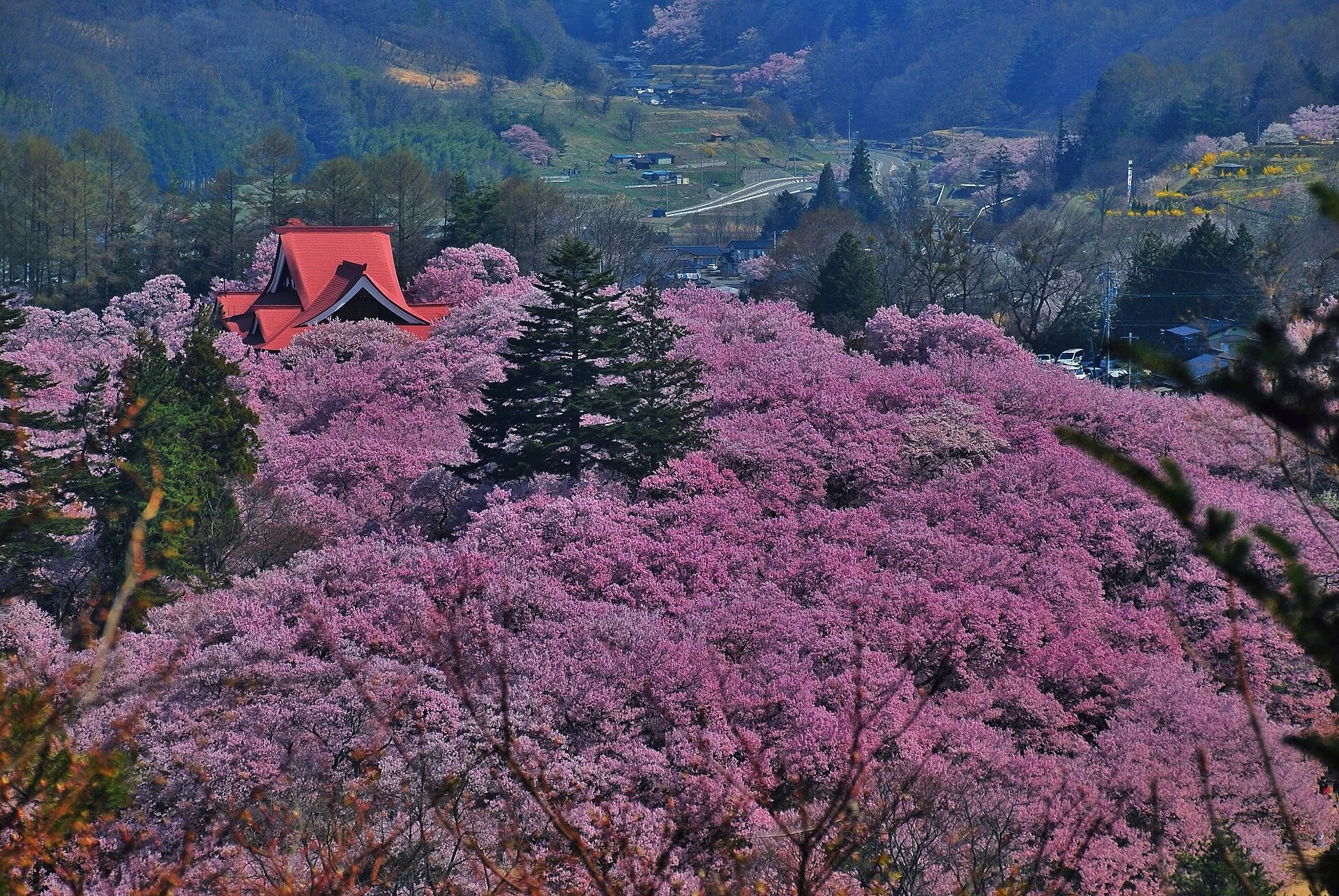
According to the Ina City Tourism Association, the park's Takato Kohigan-zakura trees have averaged an opening date around April 2 over the past decade, reaching peak bloom roughly a week later. About 1,500 cherry trees grow across the grounds, bearing smaller, deeper pink petals than standard Somei Yoshino. Looking up from the castle trails reveals dense clusters of blossoms, while higher vantage points show the undulating tiers of the canopy. Treat early to mid-April as your target window for 2027; if you have to lock in transit and lodging early, choose flexible, date-changeable bookings when rates are comparable.
You can easily watch petals fall in Tokyo one week and still catch full bloom in Takato. Rely on Takato Castle Site Park's official bloom updates, specifically the dated photo log showing actual blossom progress. In 2025, opening was declared on April 4, with peak to full bloom from April 11 to 15. In 2026, trees opened on March 28, hit roughly 50% bloom on April 1, reached peak viewing by April 3, and began shedding petals on April 9. Locking into the exact same calendar weekend every year risks arriving at first buds or past peak.
When the update reads 'just starting to bloom' (sakihajime), check where those photos were shot. Even with only a few trees open, you can frame close-ups outside Takatokaku Pavilion or beside Ounkyo Bridge, though hillside-wide color calls for waiting until 'peak viewing' (migoro). A '50% bloom' (gobu-zaki) update is well worth the trip, especially if your schedule is pinned between two fixed dates. Once 'petals starting to fall' (chirihajime) arrives, look for floating petals on the moat, along walkways, and drifting in backlit gusts. Check that morning's photos of the Honmaru, Ninomaru, and Ounkyo Bridge before deciding whether to detour solely for full canopies.
Keep your swappable days anchored to a single base. Staying two nights in Ina lets you dedicate one daytime slot to Takato and the other to central Ina, trading them depending on the weather and bloom log. If Suwa is already on your route, save lakeside walks for overcast or rainy days and keep clear skies for the Honmaru, where distant mountain ridges frame the blossoms. Travelers holding tight train tickets or catching a flight home should leave an earlier exit buffer rather than sacrificing the next day's travel margin for one night illumination.
How to plan a cherry blossom trip to Takato Castle Site Park: timing your visit with recent bloom logs, riding the bus from Ina to Ounkyo Bridge and the Honmaru, plus 2026 festival fares, parking, and evening return buses.
Festival Admission Fees and Day-to-Night Re-Entry Rules
As of November 22, 2026, the Ina City Tourism Association's festival page still reflects 2026 figures, and 2027 dates and ticket prices have not yet been announced. The 2026 festival ran from the March 28 bloom declaration through April 13, with paid entry starting the day after opening was declared. Standard individual admission was ¥600 for high school students and adults, and ¥300 for elementary and junior high students. On April 4 and 5, adult admission rose to ¥1,000 before returning to ¥600 on the following weekend, April 11 and 12. Tally park tickets, route buses, and temporary shuttles together before weighing transit against driving.
In 2026, entry ran through the North Gate, South Gate, and Ground Gate. Paper tickets were sold at the gates with cash or PayPay. Digital tickets linked through LINE were also offered that season, with sales closing on April 9; anyone planning to use mobile tickets should verify current sales windows and activation steps first. Cash is also required on the Takato bus line, so keep exact change and small bills ready before boarding in Ina instead of scrambling at the stop. If your group arrives via different gates, agree to meet in an open area like the Honmaru or outside Takatokaku Pavilion.
In 2026, a same-day park ticket allowed re-entry. Hold onto your stub if you want to cross Ounkyo Bridge in daylight, head into the castle town for a meal, and return after dark for illuminations. To visit the nearby Takato Town Historical Museum, that year's park ticket covered entry to the adjacent Ejima's Residence of Confinement (Ejima Kakomi Yashiki), though the museum galleries had separate admission rules. During the 2026 paid festival window, showing a same-day park ticket gave half off general museum admission and a ¥100 discount at the Shinshu Takato Museum of Art. Visit indoor venues before illuminations begin, as both museums close early.
Park hours can shift mid-festival. Before April 1, 2026, hours were posted as 8:00 to 17:00, expanded to 6:00 to 21:00 during peak bloom, and shifted back to an 8:00 opening from April 10 onward. Photographers aiming for early light should confirm the posted opening time for their exact date. If you are staying in Ina and catching the first Takato bus, line up the bus arrival with the gate ticket booth opening.
Trains from Tokyo vs. Highway Buses from Shinjuku and Nagoya
From Shinjuku, board the JR Chuo Main Line Limited Express Azusa on a departure that stops at Okaya, then transfer to the Iida Line for Inashi. Check the Okaya connection and the onward Ina bus schedule together before buying express seats. Leaving Tokyo 15 minutes earlier can catch an earlier Iida Line train and save your entire morning at the transfer. Ordinary car reserved seats on the Chuo Line can be booked in advance. Buy a paper base-fare ticket all the way to Inashi at your departure station to skip buying another ticket in Okaya. Inashi Station does not accept Suica or PASMO; if you tapped an IC card onto the Chuo Line, exit through the gates at Okaya to settle the fare, then buy a paper ticket to Inashi. Even with a ticketless limited express surcharge, you still need a separate paper base-fare ticket. Groups carrying large suitcases should store bags in Ina before heading up the hill with daypacks.
Tokyo's other option is the highway bus from Shinjuku Expressway Bus Terminal (Busta Shinjuku) bound for Ina and Komagane, picking a service that stops at Ina Bus Terminal. Highway buses and the local Takato bus share that terminal, cutting out a transfer if you have kids or luggage. On spring weekends, take an early morning bus down so you still have cushion for a later Takato bus, and target a local return bus at least one departure earlier than your booked highway bus back. Highway buses slow down when the Chuo Expressway backs up, so rail is easier to adjust piecemeal if you have dinner reservations or an onward train in Tokyo.
From Nagoya, take the Ina Bus Nagoya Line from Meitetsu Bus Center, choosing a Minowa/Ina service stopping at Ina Bus Terminal. Nagoya-to-Iida highway buses also exist, so enter 'Ina Bus Terminal' directly as your arrival stop when booking to avoid backtracking north from Iida. By rail, look at the JR Chuo West Line to Shiojiri and onward via Okaya to the Iida Line—a natural fit if you are already stopping along the Kiso Valley or in Shiojiri. Arriving at Chubu Centrair International Airport in the morning? Spend the night in Ina and visit the park fresh the next day rather than rushing up for late-afternoon light or night illuminations.
Visitors staying in Matsumoto, Kami-Suwa, or Okaya can treat the Okaya transfer to the Iida Line as their baseline route. In 2026, a temporary direct bus also ran from Chino Station to Takato Station from April 4 to 13 at ¥1,490 one-way for adults and ¥750 for children, cash only and no reservations. If using Chino as a gateway, verify service on your travel date and match it to a return Chuo Line train. When daylight is tight, confirm bus coverage at both ends before committing. Going up via Chino and coming down to Ina also requires matching your lodging and luggage storage to the different exit.
Distances Between Inashi Station, Takato Station, and the Park
JR Inashi Station and the Ina Bus Terminal sit about a two-minute walk apart, measured from the station ticket gate. Walk straight to the terminal and check the JR Bus Kanto Takato Line timetable, making sure to read the right column for weekdays versus weekends and holidays. Board buses bound for Takato Station on the way out and Ina on the way back. You can also catch the bus outside unmanned Ina-Kita Station. Saving both Ina Bus Terminal and Takato Station in Japanese on your phone makes transfers smoother. If a timetable lists 'Ina-Kita Station West' (Inakita-eki Nishi), follow the stop map carefully instead of assuming every bus stops on the same side of the tracks.
In 2026, the standard fare between Ina Bus Terminal and Takato Station was ¥590 for adults and ¥300 for children, payable in cash only (no Suica or PASMO). The ride takes roughly 25 minutes on the highway segment. From Takato Station, expect about a 20-minute uphill walk through the former castle town to the park, though traffic lights, foot traffic, and your pace can stretch that time. Only select school-commute departures continue to 'Castle Site Park Entrance' (Joshikoen Iriguchi), so plan around Takato Station unless you are transferring to a loop bus or taxi for wheelchair access or knee comfort.
The 2026 Cherry Blossom Loop Bus (Ohanami Junkan Bus) started and ended at Takato Station, costing ¥300 cash per ride for elementary school age and older. It circulates solely along Takato's blossom viewing route. Check timetables separately for the Takato Line from Ina and the parking shuttle buses serving satellite lots. Anyone holding a round-trip ticket from Ina must still return to Takato Station for the ride down. In 2026, organizers asked wheelchair users to call the JR Bus Kanto Ina Branch (0265-73-7171) in advance to coordinate loop bus boarding.
Keep your on-the-ground transit plan simple. Before leaving Ina, save two return bus times—one target departure and one backup. Head back toward Takato Station while factoring in daylight and tired legs; if the loop bus has finished for the day, walk the same downhill route back, and only rely on taxis during hours dispatch can realistically answer. Because timetables serve both Ina Bus Terminal and Ina-Kita Station, pick your transfer point based on where your hotel is or how your Iida Line train connects. Choose Ina Bus Terminal for seamless transfers if you are catching a highway bus back to Tokyo or Nagoya.
| Station / Stop Name (Romaji) | Where You Transfer |
|---|---|
| Inashi Station (Inashi-eki) | JR Iida Line rail stop. Walk about two minutes to Ina Bus Terminal to catch the bus. |
| Ina Bus Terminal (Ina Basutaminaru) | Shared hub for Ina Bus highway coaches and the JR Bus Kanto Takato Line. |
| JR Bus Takato Station (JR Bus Takato-eki) | Town-center bus stop. About a 20-minute uphill walk to the park, or transfer to the seasonal loop bus. |
Walking Route: North Gate to Ounkyo Bridge, the Honmaru, and South Gate
The broad red roof of Takatokaku Pavilion anchors the North Gate area. Built in 1936 as an assembly hall and traveler rest house, it remains the easiest landmark for orienting yourself inside the park. Enter past Takatokaku Pavilion, pause where its eaves meet the cherry branches, and then continue toward Ounkyo Bridge and Tonyamon Gate. During past festivals, the pavilion's second floor opened as a paid lounge for window views over the canopy. Treat the exterior as your main stop and go upstairs only if the lounge is open and seats are available.
Ounkyo Bridge arches across the former dry moat. Standing on the bridge puts you at eye level with the branches, while stepping along the moat bank lets you frame the arched span beneath flowering trees. Follow open paths down to the water level for pond reflections. At peak bloom, a light breeze can shrink clear reflections to a small patch—walking a few steps farther along the bank often yields a cleaner composition than crowding the bridgehead. Yield to steady pedestrian traffic on the span, cross over, and shoot back from wider walkways before clearing space for the next group.
Tonyamon Gate marks the approach to the Honmaru inner bailey, relocated from the former castle town below. From the bridge side, the gateway frames silhouettes of blossoms and visitors. Inside the Honmaru, snow-dusted peaks of the Central Alps can rise behind the upper branches on clear days. Arrive on a sunny morning and head straight through the gate for mountain views; under gray skies, spend your time closer to the bridge and moat. History buffs can trace the earthen ramparts, moats, and Taiko-yagura turret along the Honmaru perimeter, where the old castle's elevation changes remain easy to read.
With about 90 minutes, cover Takatokaku Pavilion's exterior, Ounkyo Bridge, and the Honmaru, then loop back via internal paths or retrace your steps to your chosen exit. Add another hour to wander toward the Ninomaru and South Gate for different canopy angles, or to visit the historical museum outside the grounds. On crowded spring days, skip trying to check off every corner of the park map—especially if you are catching a bus back from Takato Station. If you walk out the South Gate, check whether the downhill streets lead smoothly toward your bus stop or if turning back along familiar lanes is easier.
If anyone in your group uses a stroller or walks at a slower pace, agree on a flat, recognizable meeting spot just inside the North Gate—such as outside Takatokaku Pavilion—so faster walkers can dip into the moat and rejoin later. When slopes turn slick or narrow paths jam with strollers, stick to the upper-level loop and save your energy for a rest stop. For wide floral vistas, stick to open viewpoints on the main grounds and respect roped-off slopes, lawn edges, and exposed tree roots.
Splitting Up Around Takatokaku Pavilion for Different Interests
Families needing a break can note that the 2026 festival service guide listed free nursing and diaper-changing spaces on Takatokaku Pavilion's ground floor, with the paid lounge upstairs. In 2026, lounge admission was ¥200 per person for elementary school age and older, open 9:00 to 17:00 (last entry 16:00). During night illuminations, it stayed open until 21:00 (last entry 20:00), requiring advance reservations by the day before for entry after 17:00. If rain hits, families can decide right inside the North Gate whether to go upstairs and sort out rain gear before setting off. Outside food and drinks are permitted, as none are sold inside the pavilion; pick up snacks beforehand and pack out your trash.
Castle enthusiasts should stop by the tourist information desk beside Takatokaku Pavilion. In 2026, volunteer guides ran roughly 30-minute tours for groups of around five at ¥500 cash per group, accepting on-site sign-ups from 9:30 to 14:30. If part of your group just wants flower photos, let the history fans take the tour while the rest head to the Honmaru and regroup outside Takatokaku Pavilion 30 minutes later. Exploring solo? Trace the visible moats, baileys, and gates first. Walking from the central moat to the outer edge of the Honmaru shows why the terrain drops the way it does far better than staring at a flat map.
Food stalls typically set up around the Ninomaru and Minami-kuruwa during the festival, with additional vendors outside the North Gate, outside the South Gate, and in the San-nomaru. Carry drinking water before entering and save snack hunting for the afternoon. When buying Takato manju buns or souvenirs in the Ninomaru, send one person into the line while others wait along the perimeter rather than weaving through crowds with young children. Dogs are allowed on short leashes, though indoor facilities and loop buses set their own rules; the 2026 loop bus required pets inside closed carriers and barred large dogs. Crowds can rattle pets, so a short circuit near the North Gate is often enough.
Collectors chasing Japan's Top 100 Castles stamp can start at the Takato Town Historical Museum. Note that the official '100 Castles stamp' and the decorative 'gojoin' castle seal sold by shops are separate items. Standard gojoin editions were sold at both the Takato-machi Tourist Information Center and the Takato Town Historical Museum, with the 2026 service page noting the museum stocked only the two regular designs. Anyone hunting specific editions should place the tourist center right after getting off the bus or before boarding for the return; if sightseeing runs late, prioritize making your bus at Takato Station over climbing back up for souvenirs.
Catching the Last Downhill Bus After Night Illuminations
In 2026, official illuminations ran from 18:00 to 21:00, concluding on April 11. Lights sweep both up into the flowering branches and across the stone walkways. Walk the Ounkyo Bridge area before dusk so you know the downhill path by heart and can move straight to your viewing spot once the lights switch on. Give yourself an extra half hour along the paths during twilight rather than waiting on the bridge for total darkness—the shifting contrast is half the show. Hold onto your daytime park ticket if you plan to re-enter, and double-check evening gate hours and ticket desk cutoffs.
On April 4, 2026, only two special night-blossom buses ran back down to Ina Bus Terminal, departing Takato Station at 19:30 and 20:20 (arriving 19:54 and 20:44). Meanwhile, the town's nighttime loop bus kept running until 21:00—meaning its final loop ended after the last bus to Ina had already pulled out. When planning 2027 night viewing, read the Night Blossom Loop Bus (Yozakura Junkan Bus) and Special Night Blossom Viewing Bus (Yozakura Kan-o Rinji Bus) schedules separately: the loop bus stays within Takato, while only the special coach goes back to Ina. Staying overnight in Ina removes the stress of catching the last limited express train, though you still need a clear plan off the hill.
If relying on buses for night blossoms, keep your evening loop short: stay near Ounkyo Bridge or above the moat and head down early. Walking uphill earlier in the day helps you remember every turn on the way back in the dark. Staying until lights-out at 21:00 works best by car in a legal walkable lot, or with pre-arranged hotel or taxi pickup at a clear street corner your driver can actually reach. Walking alone at night? Save phone battery and dim your screen enough to read maps without blinding yourself. Standing still for photos on a spring evening gets chilly fast—dress in layers you can peel off on a warm, crowded bus.
Save wide tree silhouettes and castle ramparts for late-afternoon sun, then switch to tighter close-ups after dark. Wait for brief gaps in bridge foot traffic to take your shot, and leave bulky tripods and oversized camera bags behind. With young children, factor in dry shoes and how long it will take to sit down for dinner after leaving the park—heading out right after the first wave of lights turns on is often the sweet spot. If someone in your group wants to linger longer, agree to meet back at Takato Station, or stick strictly to the pickup time if a driver is waiting.
Highway Exits and Weekend Parking When Driving
Check the organizer's traffic restriction and parking maps before setting off. Coming from Tokyo via Suwa, leave the Chuo Expressway at Suwa IC and follow the approach toward Takato. From Matsumoto or Nagoya on the Chuo Expressway, Ina IC connects via Route 361 in roughly 30 minutes to the park. Suwa IC via Route 152 takes around 50 minutes, and Ogurogawa Smart IC takes roughly 25 minutes. Those are normal driving times—add buffer for cherry blossom queues and lot waits. Navigation apps may try routing around jams onto narrow lanes, so follow on-site traffic signs instead. Passengers sensitive to winding mountain roads can take a break in central Ina before tackling the main road up. Enter the designated parking lot name or address into your GPS rather than the park gate, which can have a separate traffic flow.
In 2026, municipal lot P7 sat on the park's east side and P8 was the Hanabatake lot, both charging ¥1,000 per entry for standard and kei cars. Nearby lot P5 was reserved for visitors with disabilities. General spaces filled first-come, first-served, with the P1 General Sports Ground lot serving as overflow about a 20-minute walk from the park. On April 4 and 5, an Ina City Hall park-and-ride shuttle ran until 17:00 (last outbound shuttle at 15:00) at ¥500 round-trip for elementary school age and older. The Takato Junior High School shuttle charged ¥200 and suspended operations whenever the schoolyard was unavailable. If parking at a satellite lot, schedule the return shuttle ride back to your car—and never assume a daytime shuttle still runs after evening illuminations.
Traveling with kids, older relatives, or bulky gear changes which lot makes sense. If getting back to the car reliably is top priority, pick a distant lot while its shuttle is still operating. Need accessible parking? Plan directly around the official map's designated lots. If dropping family curbside before parking, use a safe, legal pull-off outside the gate and set a meeting spot on the pedestrian-friendly side of the entrance. At closing time, walk back to the car in smaller groups rather than having everyone bottleneck at the gate waiting for one vehicle.
You can also compare exact costs directly. Using 2026 standard adult rates, two travelers riding the Takato bus round-trip from Ina plus park admission spent ¥3,560 combined—or ¥4,160 if each took one loop bus ride. Drivers need to add rental fees, expressway tolls, gas, and parking. For larger groups, driving can lower the per-person cost, yet if Takato is your only non-rail stop on a train-based spring trip, transit spares you rental pickup and drop-off time. Anyone planning to stay after dark should check return feasibility before comparing prices.
Where to Stay: Central Ina, Takato Castle Town, or Lake Takato
To connect smoothly with Shinjuku or Nagoya highway buses, prioritize hotels within walking distance of JR Inashi Station and Ina Bus Terminal. Look closely at practical details: post-checkout luggage storage, the walk back to your room at night, and whether you can catch the first morning bus. Drivers can pick properties with easy main-road access, while bus travelers relying on hotel shuttles should build shuttle windows into their schedule. Staying in central Ina is especially handy for groups of two or more who want to split up between daytime viewing and night illuminations without coordinating a single ride back.
Set on staying right in Takato? Split your search between the castle town near Takato Station and the Lake Takato lakeside area. Lodging near Takato Station gives you straightforward access to Ina-bound buses, though reaching the park still means an uphill walk. Along the lake, Takato Sakura Hotel (217 Katsuma, Takato-machi) lists Takato Bus Station as its transfer stop on its access page. Ask ahead about luggage shuttle hours and pickup areas, and check the elevation gain if you plan to walk to and from the park. Staying locally lets you spend late afternoon in the castle town and skips an extra nighttime transfer back to central Ina.
Already booking hot spring stays in Kami-Suwa? Takato makes an easy day trip if you set your hotel dinner or check-in deadline as your hard cutoff off the hill, leaving comfortable cushion for the Iida Line transfer at Okaya. Want night blossoms in Takato plus an early start to Matsumoto the next morning? Spend the night in Ina instead of Takato, return down the hill after dark, and catch an early northbound train. If splitting nights across two towns, drop big bags at your final stop so you aren't hauling them back mid-bloom.
Where you sleep shapes when you eat. Booked a ryokan dinner? Pad your downhill walk and bus buffer generously. Staying in central Ina gives you freedom to eat Takato soba in the castle town at lunch. Takato soba is famous for 'karatsuyu,' a dipping broth made with spicy grated radish juice and roasted miso—that radish bite is sharper than it looks, so adults should taste it before handing a cup to kids. Use the Ina City Tourism Association's soba map to separate 'Takato & Hase' shops from 'Central Ina' spots, saving one side for lunch and the other for dinner. Festival stalls cover quick snacks, while a proper sit-down meal calls for a midday gap with wait-time cushion.
Backup Plans for Rain, Early Petal Drop, or Missed Buses
The Takato Town Historical Museum is the most fitting rainy-day pivot. Standard hours run 9:00 to 17:00 (last entry 16:30), with admission at ¥400 for adults and free for high schoolers and anyone under 18. It closes Mondays and the day after national holidays (remaining open when a holiday falls on Monday), plus occasional exhibit-change closures. Sitting near the park's South Gate, it pairs cleanly with a quick clockwise loop from the North Gate so you can step indoors as rain picks up instead of backtracking to the bridge in wet clothes.
Pair the museum with Ejima's Residence of Confinement (Ejima Kakomi Yashiki) right next door. Inside the galleries, orient yourself to how Takato Castle sat across these ridges—the hill gates, moats, and town below—and look back at the terrain as you exit south. Nearby on the park's southern side, the Shinshu Takato Museum of Art offers another indoor stop. If hoping to hit both museums, visit your top priority first and hold the second for heavier downpours. Need lunch before boarding at Takato Station? Rank your stops by walking distance and closing times.
In light rain, wear grippy shoes along the wider paths to Takatokaku Pavilion and the Honmaru to photograph rain-beaded blossoms at eye level. Skip slick stone steps and deep moat paths if visibility drops, keeping to the upper ridge. When time or weather only permits a short outing, stick near the North Gate and step out to the Honmaru for mountain views only if the sky clears. Pack lightweight rain ponchos for kids so everyone keeps both hands free for railings, and keep dry socks waiting back at your hotel.
If most petals have blown off or high winds hit, decide whether climbing to the park is still worth it. Already based in Ina? Eat lunch in the castle town first and check that morning's park photos before heading up. Still staying in Suwa without pre-bought local tickets? Pivot to Lake Suwa or Kami-Suwa Onsen instead and save two local bus rides plus the climb. History lovers can still enjoy the castle grounds out of peak bloom—walking the Honmaru, moats, and Tonyamon Gate for the terrain alongside the historical museum—and take an earlier bus back to Ina.
Two Ready-to-Use Schedules: Half-Day Trip vs. Overnight for Lights
Suppose you want a 15:00 bus from Takato Station. With a 20-minute uphill walk in and a slower 30-to-40-minute buffer for the crowded walk out, target leaving the park between 14:20 and 14:30. Entering the North Gate at noon leaves well over an hour to cover Takatokaku Pavilion, Ounkyo Bridge, and the Honmaru, plus time outside the gates for lunch or snacks. If bridge crowds crawl, drop the Ninomaru and indoor museums from that afternoon. Shift these timestamps back or forward to match your chosen departure.
For an overnight stay in Ina, dedicate day one to daytime blossoms and a meal in the castle town. If illuminations and a matching return bus are running, stay until the first lights come on and eat dinner back in Ina; if no late bus fits, head down before dusk. Keep the next morning for any museum you skipped on day one, or catch the Iida Line straight north. If day one only covered the northern loop, re-enter from the South Gate on day two for the Ninomaru and Minami-kuruwa. Catching an early train the next morning? Prep your return transit tickets and luggage transfer the first night so day one wraps straight back at your hotel.
A few useful answers
When do Takato cherry blossoms usually reach full bloom?
Takato Castle Site Park typically peaks from early to mid-April. Official Ina City Tourism Association records show peak to full bloom on April 3-8 in 2026 and April 11-15 in 2025. Use the park's daily bloom log and dated photos to lock in your visit.
How do I get from Inashi Station to Takato Castle Site Park?
Walk about two minutes from the JR Inashi Station ticket gate to Ina Bus Terminal, take the JR Bus Kanto Takato Line to Takato Station (about 25 minutes), and walk uphill for roughly 20 minutes. In 2026, the bus fare was ¥590 one-way for adults and ¥300 for children, cash only.
How much are Takato Cherry Blossom Festival tickets, and is same-day re-entry allowed?
In 2026, standard admission was ¥600 for adults and high schoolers, and ¥300 for elementary and junior high students, with adult admission rising to ¥1,000 on April 4 and 5. Same-day re-entry was permitted with your ticket. Dates and prices for 2027 have not yet been announced.
Can I take a bus back to Ina after seeing night blossoms in April?
On April 4, 2026, two special night-blossom buses ran from Takato Station back to Ina, operating on a separate schedule from the nighttime loop bus that circulates only within Takato. When planning for 2027, verify a Takato-to-Ina return bus first and work backward to set your park exit time.
Where can I go if it rains at Takato Castle Site Park?
The Takato Town Historical Museum sits near the park's South Gate and normally opens 9:00 to 17:00 (last entry 16:30), closing Mondays and the day after national holidays (open on holidays). In light rain, shorten your outdoor walk to the North Gate, Takatokaku Pavilion, and the Honmaru.
Official information and references
Sources used in this guide.
- Ina City Tourism Association | Takato Cherry Blossom Bloom Records
- Ina City Tourism Association | Takato Kohigan-zakura Trees
- Ina City Tourism Association | 2026 Takato Cherry Blossom Festival, Admission & Re-Entry Rules
- Ina City Tourism Association | 2026 Spring Park Hours Adjustments
- Ina City Tourism Association | Opening, Closing & Shuttle Updates
- Ina City Tourism Association | Access, Loop Bus & Shuttle Fares
- Ina City Tourism Association | JR Iida Line, IC Cards & Temporary Chino Bus
- Ina City Tourism Association | Boarding Stops at Inashi and Ina-Kita Stations
- JR Bus Kanto | Takato Line Timetable (Revised April 1, 2026)
- Ina Bus | Shinjuku Highway Line
- Ina Bus | Nagoya Highway Line
- Ina City Tourism Association | Viewing Spots: Ounkyo Bridge, Takatokaku Pavilion & Honmaru
- Ina City Tourism Association | History of Takato Castle Site Park
- Ina City Tourism Association | Night Illuminations & Special Return Buses
- Ina City Tourism Association | Festival Parking Lots
- Ina City Tourism Association | Takatokaku Pavilion, Volunteer Guides & Park Services
- Ina City | Takato Castle Site Park & Expressway Exits
- Ina City | Takato Town Historical Museum Visitor Guide
- Takato Sakura Hotel | Address & Access
- Ina City Tourism Association | Takato Soba & Restaurant Map