Compare Nagaoka Fireworks riverbanks, group boxes, chair seats and accessible seating. Plan around overseas ticket lotteries, parking, child tickets and weather-related refunds.
- Region & Focus
- ChubuFestivals and fireworks
- Reading Scope
- 30 min read · 15 chapters · 4 Q&As
- Official Verification
- 9 official sources checkedUpdated November 22, 2026
- Key Topics
- SeasonsChubu & Hokuriku
Chapter Route Map (tap any stop)
- Choose a riverbank, then locate your ticketed entrance
- Group boxes: calculate the full price and consider how you will sit
- Individual chairs, tables and the seating changes in 2026
- Set a budget per person, then compare areas and assigned seats
- Wheelchair and disability seating: companions, documents and parking
- Eligibility for overseas applications and official resale
- Child tickets, purchaser names and separate entry
- Rail travel: connect the train home to your actual seat
- Driving: the parking lottery comes after the viewing ticket
- Where to stay: Nagaoka, Tsubame-Sanjo or Niigata
- 2026 traffic controls: bridges, entrances and bus connections
- Weather changes: postponement and cancellation in 2026
- Remembrance, recovery and peace behind Nagaoka Fireworks
- Outside summer, visit Nagaoka Fireworks Museum and its theater
- On the day, plan to sit comfortably until the end
- Quick Q&A
Choose your date, riverbank and seat for Nagaoka Fireworks before arranging accommodation and transport. Venue A is on the right bank, on the Nagaoka Station side, so rail passengers can start there. Venue B is on the left bank, on the Nagaoka Interchange side; drivers should compare parking and seating together. A couple wanting chairs, a family of six sharing a box and a wheelchair user needing companions and parking will each have a different shortlist. The Nagaoka Festival Grand Fireworks Show takes place on August 2 and 3 each year. The prices and booking conditions below refer to the completed 2026 event.
Choose a riverbank, then locate your ticketed entrance
Find Nagaoka Station and the Shinano River on the official venue map. Venue A is labeled as the Nagaoka Station side (right bank); Venue B is the Nagaoka Interchange side (left bank). Chosei Bridge and Ote Bridge help you identify the banks. When choosing a hotel or parking lot, first check its bank, then trace the route to your ticketed seating area. An address within Nagaoka city can still be far from the venue, so check the actual location before booking.
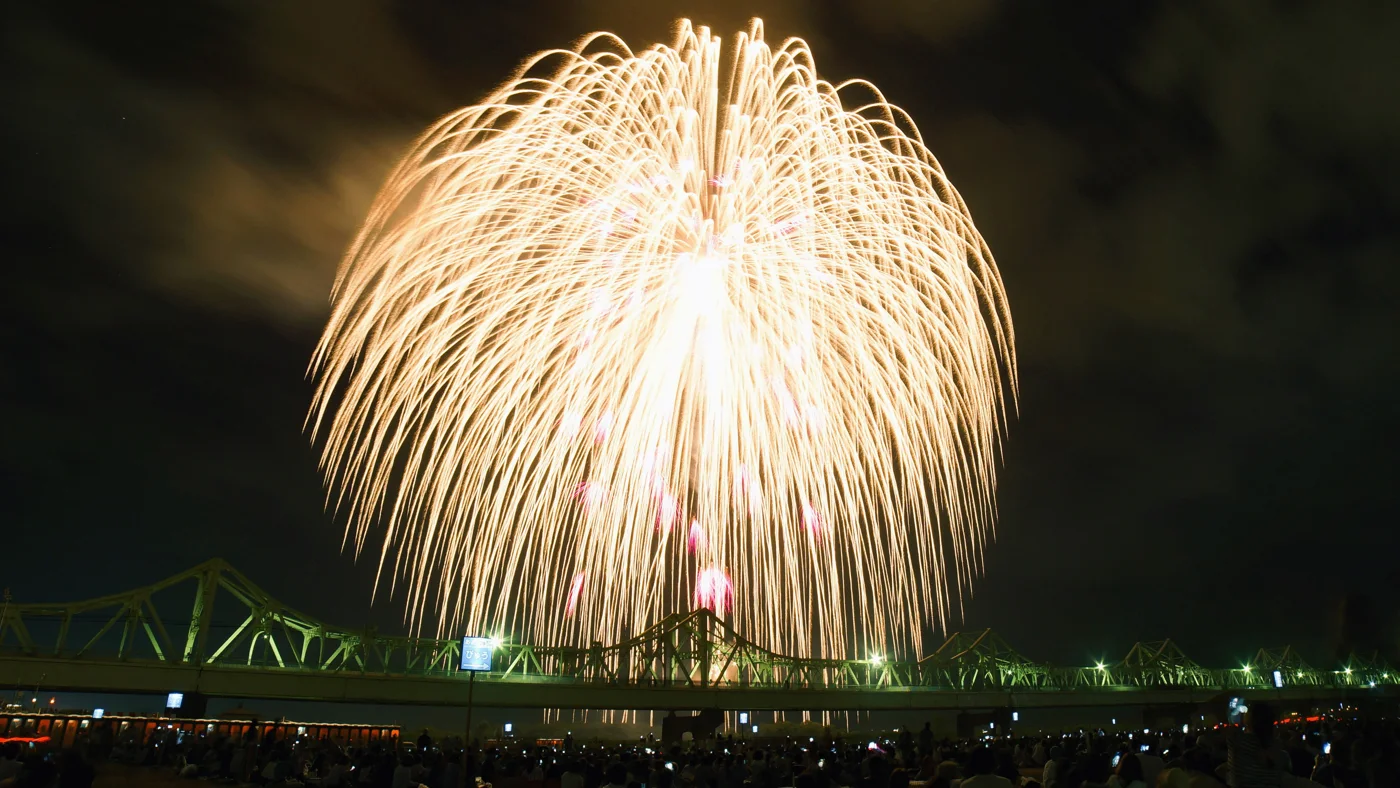
Nagaoka City’s transport guidance gives a walk of about 30 minutes from JR Nagaoka Station to the right-bank seating at Venue A. You still need to find the entrance, pass ticket checks and walk to your seat. For children, older travelers or anyone needing assistance, mark the station, entrance, toilets and seats on one map before setting a meeting time.
The route from Nagaoka Station to Venue B also includes crossing the river and reaching the left-bank seating area. If prices are similar, rail passengers can compare Venue A seats first. If you already plan to use left-bank parking or a shuttle, start with Venue B. Measure the walk to your ticketed area, rather than stopping at the river’s edge.
If some people arrive by train and others by car, agree whether to enter together or separately. Entering together needs a shared meeting point. For separate entry, each group needs the necessary tickets, the purchaser’s name and a way to contact the purchaser. A named building or exit is easier to find than a meeting point described only as “by the bridge.”
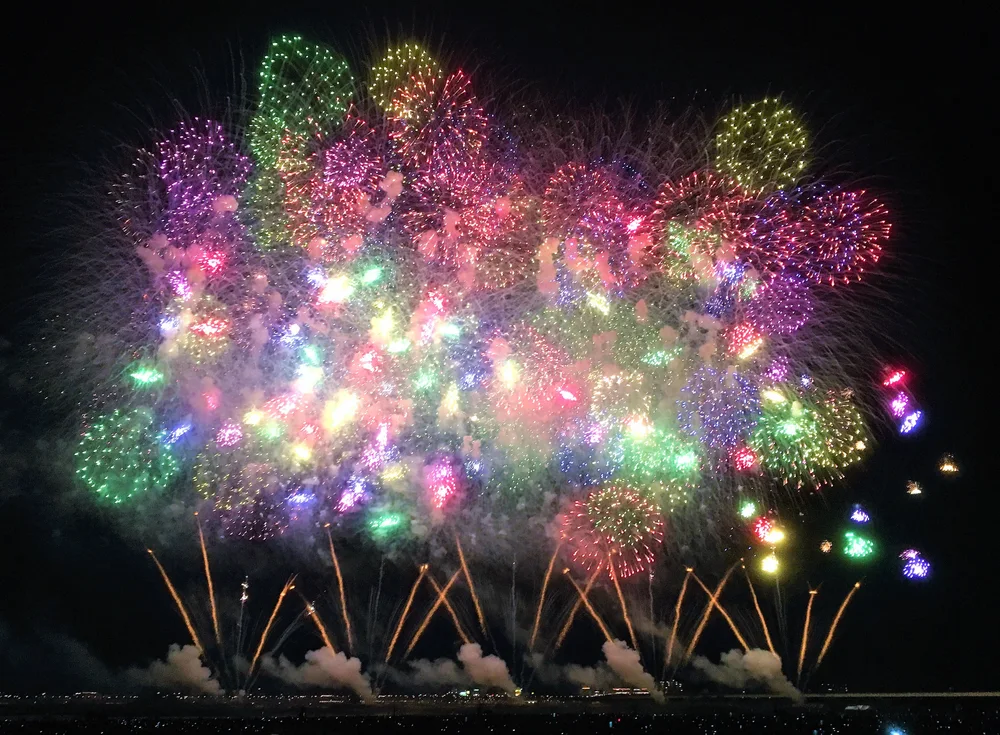
Compare Nagaoka Fireworks riverbanks, group boxes, chair seats and accessible seating. Plan around overseas ticket lotteries, parking, child tickets and weather-related refunds.
Group boxes: calculate the full price and consider how you will sit
In 2026, Venue A’s masu seats were board-floored boxes on the river terrace, each for up to six people. The organizer recommended four people for more space. The general-sale price was ¥32,000 per box. These suit a fixed group whose members can sit on the floor. Two people can use a box, but must pay the full box price. Before a group applies, agree who will enter the lottery and pay, so a change in numbers does not become a surprise after winning.
Venue A also had wooden bench-style boxes for eight people, priced at ¥48,000 in the 2026 general sale. Separate bench seats on the embankment slope cost ¥5,000 per person. Both names use “bench,” but one is a group box and the other an individual seat. Check the capacity before applying. Separately booked individual seats may not be next to each other.
At Venue B, the six-person river-terrace boxes were on either dirt or grass; buyers could not choose the surface. Embankment-top boxes were a separate type. Both cost ¥30,000 per box in the 2026 general sale, with a maximum of six people and an official recommendation of four for more room. Compare the surface, seat location and your arrival and departure routes when choosing the left bank.
A ¥32,000 six-person box at Venue A works out at about ¥5,333 each when all six places are used, or ¥8,000 each for four people. This divides the box price by the number attending; transport, accommodation and booking fees are separate. For a small group, comparing individual chairs directly is often easier than choosing a box first and then finding people to share it.
A box keeps the family together, but first check whether everyone can sit low down and stand up again. A child needing rest, an older person with knee problems and someone photographing the whole show have different needs. Ask how long each person can sit on the ground, then choose a box, bench or individual chair. A group ticket’s capacity is only its maximum headcount.
Individual chairs, tables and the seating changes in 2026
In 2026, standard chair seats at both venues were folding chairs on the river terrace, costing ¥5,000 per person in the general sale. The official description marked them as suitable for wheelchair viewing. Venue B also had chairs on the athletics field for ¥4,000. Check whether your seat is beside the river or on the field. Standard table seats at A and B included a table and chair, cost ¥10,000 per person and were also marked as suitable for wheelchair viewing.
Venue A’s Phoenix zone had area seating, chairs, table seats and individually assigned ground seats. In 2026, Phoenix chair seats cost ¥5,000 in the general sale, with 45 cm between chairs; Phoenix table seats cost ¥7,000. Although all belong to the Phoenix zone, their sitting positions, tables and layouts differ. Read the description for the specific type.
In 2026, the organizer changed the former block-assigned seating to individually assigned ground seats. The viewing area per person stayed the same. Blue tarpaulins cover these seats, with each place assigned within a marked block; the organizer recommended bringing a cushion. When reading a 2025 trip report, distinguish its block arrangements from the individual assignments used in 2026.
Unreserved seating within a designated area means finding a place inside the area on your ticket. Several 2026 area-seat types allowed approximately 1.5 square meters per person at most. At Venue B, North Areas 1 and 2 did not allow movement between them. If your group buys separately, check that all tickets are for the same area. Arriving early cannot combine two ticket areas. This distinction determines whether you can sit together.
Set a budget per person, then compare areas and assigned seats
For lower ticket prices, start with Venue B’s paid unreserved areas. In the 2026 general sale, North Areas 1 and 2 and the Tekuteku Area each cost ¥2,000 per person; the West and South Areas cost ¥4,000. The West Area is near Ote Bridge, and the South Area near Chosei Bridge. Choose the location and area first, then compare the ground surfaces you are willing to sit on. Equal prices can still mean different arrival and departure routes.
At Venue A in 2026, Phoenix Area seats cost ¥4,000 in the general sale and were unreserved within a designated area. Phoenix individually assigned ground seats also cost ¥4,000 and were on the embankment top and slope. With the first type, you choose a place within the area; with the second, you use an assigned place. Read the name alongside the ticket arrangement. A couple wanting less discussion after entry can compare assigned seats first. A group choosing area seating must all obtain tickets for the same area.
Calculate the whole group’s seating cost. Two standard chair tickets at the 2026 price of ¥5,000 total ¥10,000; six total ¥30,000. Venue A’s six-person box cost ¥32,000. The totals are close, but the chairs give everyone a separate chair while the box provides a shared board-floored space. Choose according to sitting needs and whether you want a shared box, rather than treating every group ticket as a discount.
Each type also had an application limit. In 2026, a single application could request up to five standard chairs, six table seats or two six-person boxes. Some area types, including the North Areas, allowed up to ten tickets. If six adults all want standard chairs, read the limits and same-address restrictions for the relevant sales channel before selecting a feasible type. Put the question of whether the whole group fits in one application beside the price, before you start filling in the form.
Wheelchair and disability seating: companions, documents and parking
In 2026, Venue A’s wheelchair spaces were on top of the embankment; Venue B’s were on the athletics field. Each box allowed up to three people: one wheelchair user and up to two companions. The general-sale price was ¥10,000. The official conditions required no physical disability certificate and provided two folding chairs for companions, but no dedicated parking space. The whole group could not use the box if no wheelchair user attended that day.
Disability seating had different conditions. It was for a disability certificate holder who needed help moving, with at least one companion. In 2026, each four-person box included one parking space, four folding chairs and access to an accessible toilet, for a general-sale price of ¥10,000. Venue A’s boxes were on the embankment upstream of Chosei Bridge; Venue B’s were on the Nagaoka Lyric Hall grounds. The certificate holder had to attend that day.
List your documents, companion numbers and parking needs, then compare these two types. Someone needing wheelchair space has different priorities from someone needing dedicated parking to shorten the route. A standard chair seat marked suitable for wheelchair viewing does not automatically include the companion arrangements or parking of a dedicated space.
The ticket center describes dirt and gravel surfaces on the river terrace. Before buying, share the entrance-to-seat, toilet and exit routes with the traveler needing assistance, and ask the ticket center about the required route. For a manual wheelchair, companions should also assess the effort of pushing and negotiating slopes. A wheelchair-viewing symbol alone is not enough to plan the whole journey.
Eligibility for overseas applications and official resale
Overseas visitors had a separate application channel in 2026. The first lottery ran from noon on May 25 to 17:00 on June 8, Japan time. After the general lottery sold out, the planned second lottery was canceled. The international visitors page also stated that tickets had sold out and no additional tickets would be offered. Decide which dates and seat types you can accept, then compare the lottery results date with your hotel cancellation deadline.
Official resale in 2026 was limited to residents of Japan. Visitors living abroad could not treat it as an available fallback after losing the lottery. Both the international page and the general resale page listed this eligibility rule. When reading information for another year, use the page that matches your residence status.
The general lottery page also required Rakuten membership, allowed only one application per address and permitted a second choice for each of August 2 and 3. Winning applications were charged immediately to the credit card registered with the membership, with no cancellation. Cancellation was also unavailable after the application deadline. These were the general application page’s rules. Read the products and payment process separately in the overseas channel.
If some group members live in Japan and others abroad, the person applying should first choose the appropriate channel, then tell everyone the name, ticket count, payment and handover arrangements. Avoid separate applications using the same address, duplicate applications for the same group or leaving payment responsibility undecided until after winning. Agree before submission which dates and seat types the group can accept.
If you have not won tickets, check the hotel’s cancellation deadline and record when fees begin. If the lottery results come after free hotel cancellation ends, decide whether you would still visit Nagaoka without tickets. Flights from your home country, accommodation and domestic transport can each have different rules. Keep their deadlines in one list, alongside the show time.
Child tickets, purchaser names and separate entry
Under the 2026 general lottery rules, elementary-school-age children and older needed tickets. Preschool children could watch on a guardian’s lap, but needed a ticket for their own seat. With two children, first decide who needs a separate space, then calculate the group’s ticket count. Caring for children and storing bags also take room. Age alone does not determine whether everyone can sit comfortably for the whole show.
Tickets carry the purchaser’s name, and identity checks may take place at entry. The organizer required people entering separately from the purchaser to arrange a way to contact that person in advance. Security staff could check tickets again inside. Entering together when everyone has arrived is simplest. For late arrivals, agree who will hold the tickets and how to stay in contact.
The organizer requires tickets to remain displayed around the neck. Take yours when leaving your seat for drinks or the toilet. Do not keep every group ticket in one person’s bag, leaving someone who walks away unable to show theirs. Distribute tickets according to the format actually supplied.
The organizer prohibits paid transfers without consent. Tickets confirmed as improperly resold become invalid, with entry refused and no ticket refund. The international page also states that people without tickets cannot enter the viewing areas, or watch from aisles, paths or vacant spaces inside. If you do not win tickets, change the trip plan instead of relying on space around the venue as a last-minute viewing area.
Rail travel: connect the train home to your actual seat
Nagaoka is on the Joetsu Shinkansen. You can arrive by Shinkansen from Tokyo, or by Shinkansen or a suitable conventional rail route from Niigata. Extra trains may run on fireworks days; check JR’s announcements for that year for services and reservation requirements. Nagaoka City announced show times of 19:20–21:10 for 2026. Use the finish time when comparing your exit route with the journey home.
The city’s estimate of about 30 minutes from Nagaoka Station to Venue A is a starting point for daytime planning. After the show, you must leave your seat, follow the exit instructions, walk to the station and queue to enter. Venue B visitors must also account for crossing the river. Work backward from your ticketed area to determine which train you can catch after the full show.
Compare calling points, departure times, seat reservation requirements and group size together. Tsubame-Sanjo and Niigata are in the same direction from Nagaoka; Tokyo is in the opposite direction. A late train in the timetable may not serve your destination. If your group needs adjacent seats, reserve them before deciding where to spend the day. If leaving early is unacceptable, consider staying in Nagaoka or along the rail line.
Arriving early gives you time for more than waiting at the riverbank. Leave luggage at your accommodation, eat, buy water and use your tickets to confirm the meeting point. For people arriving from different places, a named building or station exit is easier to find than “the river.” The venue stretches a long way, and both bridge ends can be crowded. A charged phone, contact details and a paper or offline map make meeting after the show easier.
Driving: the parking lottery comes after the viewing ticket
All official parking in 2026 was paid, reservation-only parking allocated by lottery to holders of paid viewing tickets. There was no free first-come parking. Applications required a code supplied to successful ticket buyers, with at most one vehicle per viewing-ticket purchase. Winning fireworks tickets leaves a separate parking booking to arrange.
That year’s parking lottery ran June 19–24 through Ticket Pass, which required membership registration in advance. Parking tickets were electronic and used on a smartphone or tablet. Results were announced July 1, with further lotteries for unsold lots from July 2. Check that you have the application code and a suitable device, then incorporate the result into your driving plan.
For residents’ advance-sale buyers, the code appeared on the winning postcard; buyers from the general sale onward received it by email. Parking resale applications also needed the code. Give the code, payment result and electronic-ticket login arrangements to the actual driver after receiving them. Avoid reaching the parking lot while another group member has to search their email remotely.
The city warned of congestion at Nagaoka Interchange and neighboring interchanges. It recommended leaving the expressway at an earlier interchange and using park-and-ride. First locate your reserved lot on that year’s traffic map, then check the bank served, drop-off point and ticketed entrance. List driving time, shuttle waiting and walking separately to compare them with rail travel.
If you lose the parking lottery, check whether your booked hotel includes parking and whether you can switch to rail before deciding to keep driving. Base parking plans on a space you are entitled to use. If someone will drive after the show, arrange dinner and rest in advance rather than deciding on a long drive at the last minute.
Where to stay: Nagaoka, Tsubame-Sanjo or Niigata
Staying in Nagaoka removes the need to rush for a long-distance train after the final firework. Demand is concentrated on popular dates, however, and a hotel within the city can still be far from the station or seats. Before booking, trace the hotel’s routes to your venue, station and reception desk. Check the latest check-in time and luggage storage. For companions checking in separately, confirm guest names and the procedure directly with the property.
With a hotel in Niigata or Tsubame-Sanjo, you can spend the day in Nagaoka and leave by rail at night. The hotel must match a train you can actually take. Booking far from Niigata Station because extra trains run toward Niigata may simply move the final transport problem to another city. Calculate the full route from your seat to Nagaoka Station, onward by train and then to the hotel. Resolve any late check-in restrictions before booking.
Returning to Tokyo that night suits travelers who accept a long late journey and have a specific train arranged. Families with children or slower walkers still face the riverbank walk and station crowds after the show, so an overnight stay may help. Compare the cost of another night with the strain of late transfers for the whole family. If catching a train requires leaving early, accept that you will miss the later program and plan the exit from your seating area. Do not expect to reach the platform as soon as the fireworks end.
To see both nights, stay two nights or move between Nagaoka and a nearby city, arranging each day’s tickets, transport and check-in separately. Avoid packing the second morning with distant sightseeing: your arrival time at the hotel the night before affects when you can comfortably leave. Keeping the afternoon before the show for travel and food is especially useful on a first visit.
2026 traffic controls: bridges, entrances and bus connections
Page 7 of the city’s 2026 Nagaoka Festival special issue listed closures on August 2 and 3. Ote Bridge closed to pedestrians 18:30–22:15 and vehicles 18:30–22:45. Chosei Bridge closed to pedestrians 20:00–20:45 and vehicles 20:00–22:15. The bridges have different locations and closure times. If you arrive at Nagaoka Station with Venue B tickets, mark the seating area on the map before choosing which bridge to cross and when.
To cross Ote Bridge before the show in 2026, you needed to pass before the 18:30 closure; 19:20 was the show’s start, not a target arrival time at the bridge. Switching to Chosei Bridge also changes the riverside walk to your seat. People viewing on opposite banks cannot rely on meeting across the river during the show because of closures. Choose a meeting point on the same bank.
The same map gave a 15:00 opening for paid viewing areas, 16:00 for some seat types and 17:00 for disability seating. Check your ticket type before planning the crossing and entry. Early arrival at the river still means waiting for the relevant entrance to open. The map also warned that traffic conditions could bring closures forward; follow staff directions on site.
Nagaoka Station’s Ote Sky Deck closed to pedestrians 20:30–23:30 on both 2026 event days. After 20:00, the city instructed people going from the Ote Exit side to the East Exit to use the underpass, rather than pass through the JR station. If your hotel, shuttle or bus is on the east side, route your exit toward the underpass entrance.
For Echigo Kotsu local buses departing after 20:00, the 2026 traffic map listed all departures from Nagaoka Station’s East Exit, with some services suspended or turned back. City local buses used holiday timetables on both days. In-prefecture express buses used the holiday timetable on August 2 and the weekday timetable on August 3. Check each date separately if attending both nights. Do not carry the first night’s boarding point and service assumptions into the second.
Weather changes: postponement and cancellation in 2026
The 2026 ticket center guidance said the show would proceed in light rain. Flooding at the launch site or strong winds could cause postponement or cancellation. If August 2 was postponed to August 16, or August 3 to August 17, the original tickets remained valid. A visitor unable to attend the postponed date could not obtain a refund for that reason. This affects whether you are willing to prebook noncancelable long-distance transport and accommodation.
For cancellation that year, ticket refunds were capped at 50%, excluding all handling fees. If the show was canceled after it began, no refund applied. Record the ticket center’s postponement and cancellation rules separately from hotel and rail rules to calculate the actual financial exposure from weather changes.
Using a 2026 standard chair ticket of ¥5,000 as an example, a full cancellation with the maximum 50% refund would return at most ¥2,500 of the ticket price, with handling fees separate. Cancellation after the start would return no ticket payment. Couples, families and groups can calculate their own ticket totals before deciding how much to commit to bookings. Rooms and trains remain subject to their own purchase conditions.
Save the ticket center’s announcements, accommodation contact details and return reservations on your phone before departure. If the event changes, first read the organizer’s decision, then deal with rail tickets and rooms. For people traveling separately, agree who will check announcements and notify the others, so separate rebookings do not break the meeting plan.
Remembrance, recovery and peace behind Nagaoka Fireworks
Nagaoka City’s official web publication records that the August 1, 1945 air raid devastated the city. The Nagaoka Recovery Festival held on August 1, 1946 preceded today’s festival, and fireworks returned in 1947. In 1948, August 1 was designated for remembrance of the war dead, with fireworks on August 2 and 3. The festival took the name Nagaoka Matsuri in 1951.
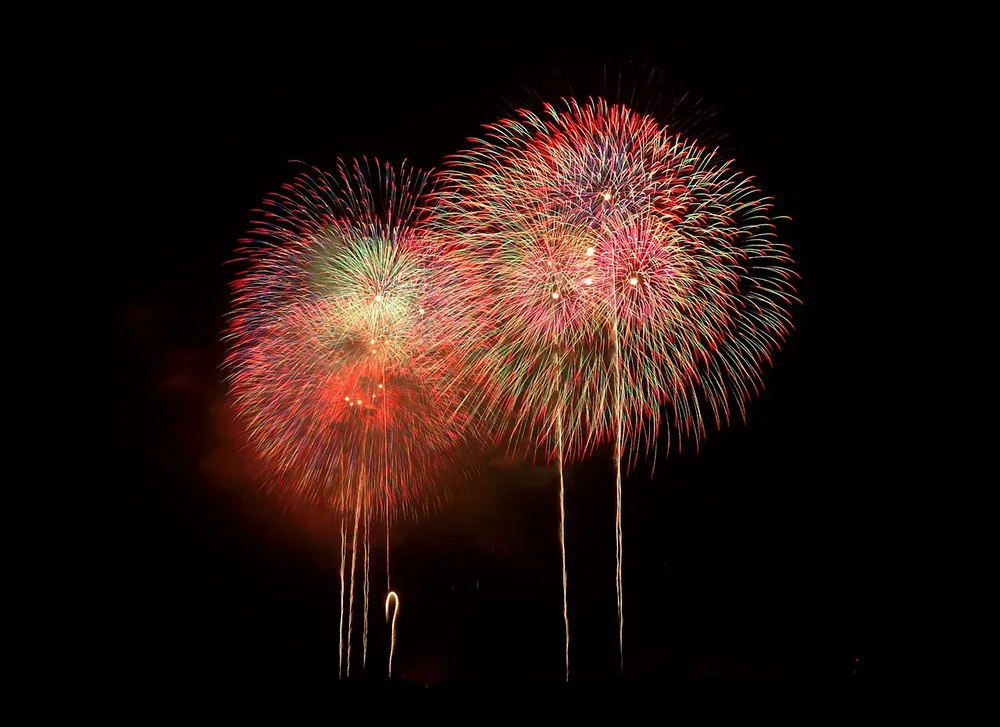
After the 2004 Chuetsu earthquake, the Nagaoka Junior Chamber and others promoted fireworks to pray for recovery. Phoenix first launched on August 2, 2005. It represents recovery after the disaster and brings local participants’ hopes into the performance. Knowing the name’s origin helps connect the program with Nagaoka’s history.
You can put your phone away for part of the music, then choose the passages you want to photograph. Some people want a complete recording; others want to sit and watch. Agree beforehand without requiring everyone to do the same. For tripod photography, dedicated photographer spaces were another official ticket type: in 2026, A spaces were on the embankment slope and B spaces in the athletics stadium stands. Each box was for two people, one of whom had to bring a tripod and camera. The general-sale price was ¥12,000.
The official Nagaoka Fireworks video of the 2019 Phoenix recovery display shows fireworks spreading horizontally along the riverbank.
Outside summer, visit Nagaoka Fireworks Museum and its theater
Michi-no-Eki Nagaoka Hanabikan, at 707 Kitamachi, Nagaoka, has a fireworks museum, dome theater, dining and local products. The city lists museum hours as 10:00–17:30. Individual dome-theater admission is ¥600 for high school students and older, and ¥300 for elementary and junior high school students. Preschool children, disability certificate holders and one companion of each certificate holder enter free.
The whole facility closes December 31–January 2 and for two irregular equipment inspections each year. The museum also closes on Wednesdays from December through February, or the following day if Wednesday is a public holiday. Match a winter visit to these closure dates, particularly for midweek arrivals, so a day when you merely drive past does not become your only chance to visit.
The city’s access page lists a roughly 20-minute bus ride toward Nagaoka Hanabikan from stop 2 at Nagaoka Station’s Ote Exit. This route operates only on Saturdays, Sundays and national holidays. A taxi takes about 15 minutes. Weekday public-transport travelers can compare taxi costs with moving the visit to a weekend. By car, it is about three minutes from Nagaoka Interchange via National Route 8, entering at the Kita-Higashi intersection.
Hanabikan fits a daytime arrival in Nagaoka or a visit outside the fireworks season. Choose the museum and theater first, then place food and shopping around them. If combining it with the August riverside show, calculate the journey back to the station or ticketed area separately, leaving afternoon time to enter.
On the day, plan to sit comfortably until the end
The site includes dirt and gravel. Wear familiar walking shoes and bring a cushion, water and light rainwear to suit your seat type. Keep large luggage out of crowded seating areas. Use hotel storage or your planned luggage service during the day, carrying only tickets, phone, power supply and what you need.
Take photographs from your own viewing position and keep belongings within your ticketed space. Paths and open areas are for passage. Bring a cushion for boxes or assigned ground seats. With folding chairs, store your bag within the chair space so it does not extend into a neighboring seat or aisle.
A few useful answers
Which side of the river should I book for Nagaoka Fireworks if I’m taking the train?
Start with Venue A on the right bank of the Shinano River, about a 30-minute walk from JR Nagaoka Station. Leave time to find the entrance marked on your ticket. If you book Venue B on the left bank, you’ll also need to cross the river.
Can visitors who live overseas enter the Nagaoka Fireworks ticket lottery?
In 2026, visitors living abroad had their own ticket lottery portal. Tickets sold out and the organizers canceled the planned second round. Official resale that year was open only to residents of Japan.
Do children need their own tickets for Nagaoka Fireworks?
Under the 2026 general lottery rules, children in elementary school or older needed tickets. Preschoolers could watch from a parent or guardian’s lap and also needed a ticket if they wanted their own seat.
How do wheelchair spaces and designated disability seating differ at Nagaoka Fireworks?
In 2026, a wheelchair space held one wheelchair user and up to two companions, with no certificate requirement or dedicated parking. A disability seating box held four, included one parking space, and required a disability certificate holder who needed help getting around and at least one companion.
Official information and references
Sources used in this guide.
- Nagaoka Fireworks Ticket Center: 2026 seating types and venue map
- Nagaoka Fireworks Ticket Center: international visitors
- Nagaoka Fireworks Ticket Center: general lottery and official resale
- Nagaoka Fireworks Ticket Center: tickets, parking and weather conditions
- Nagaoka City: travel to Nagaoka Fireworks
- Nagaoka City official web publication: the history of the fireworks and Phoenix
- Nagaoka City: Michi-no-Eki Nagaoka Hanabikan
- Nagaoka City: the 2026 festival and special issue
- Nagaoka City: 2026 fireworks traffic restrictions, page 7