Compare the two riverbanks, group plots, chairs and accessible seating at Nagaoka Fireworks. Plan around overseas ticket lotteries, parking, child tickets, weather terms and the journey back.
- Region & Focus
- ChubuFestivals and fireworks
- Reading Scope
- 30 min read · 15 chapters · 4 Q&As
- Official Verification
- 9 official sources checkedUpdated 22 November 2026
- Key Topics
- SeasonsChubu & Hokuriku
Chapter Route Map (tap any stop)
- Choose the riverbank, then find the entrance on your ticket
- Group plots: work out the total price and how you will sit
- Individual chairs, tables and seating changes in 2026
- Set a budget per person, then compare areas and reserved seats
- Wheelchair and disability seating: companions, documents and parking
- Overseas applications and eligibility for official resale
- Child tickets, purchaser names and separate entry
- Rail travel: connect the return train to your actual seat
- Driving: a parking lottery follows the viewing-ticket lottery
- Staying in Nagaoka, Tsubame-Sanjo or Niigata
- 2026 traffic controls: bridges, entry and bus connections
- Weather changes: postponement and cancellation terms in 2026
- Remembrance, recovery and peace at Nagaoka Fireworks
- Outside summer, visit Nagaoka Hanabikan for exhibits and films
- Keep the day comfortable through to the exit
- Quick Q&A
Choose your date, riverbank and seating for Nagaoka Fireworks before booking accommodation and transport. Venue A is on the right bank, on the Nagaoka Station side, so rail travellers can start there. Venue B is on the left bank, on the Nagaoka Interchange side; drivers should compare parking and seating together. A couple who want chairs, a family of six sharing a plot, and a wheelchair user needing companions and parking will need different ticket options. The Nagaoka Festival Grand Fireworks Show takes place on 2 and 3 August each year. Prices and booking conditions here refer to the completed 2026 event.
Choose the riverbank, then find the entrance on your ticket
Find Nagaoka Station and the Shinano River on the official venue map. Venue A is labelled “Nagaoka Station side (right bank)”; Venue B is “Nagaoka Interchange side (left bank)”. Chosei Bridge and Ote Bridge help you identify the banks. When choosing a hotel or car park, first locate its bank, then connect it to your ticketed seating area. Addresses within Nagaoka can still be far from the venue, so check the actual location before booking.
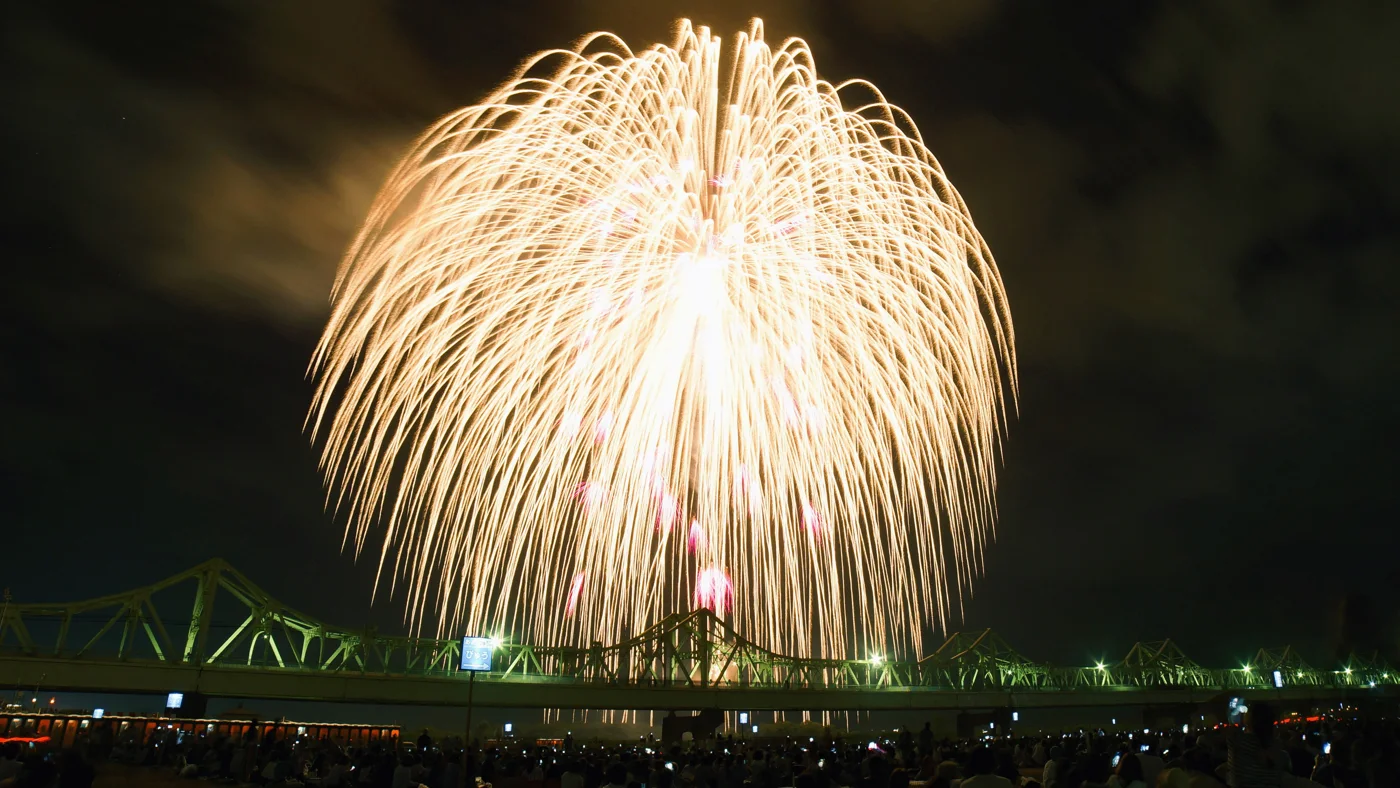
Nagaoka City’s transport guidance gives a walk of about 30 minutes from JR Nagaoka Station to the right-bank seating at Venue A. Reaching your own seat also involves finding the entrance, ticket checks and walking inside. With children, older relatives or anyone needing assistance, mark the station, entrance, toilets and seats on one map before setting a meeting time.
From Nagaoka Station to Venue B, add the river crossing and the walk to the left-bank seating area. If prices on both banks are similar, rail travellers can compare Venue A first. If you already plan to use left-bank parking or a shuttle, start with Venue B. Measure the walk to the area printed on your ticket, rather than only from the station to the river.
If some companions arrive by train and others by car, agree whether to enter together or separately. Entering together needs a shared meeting point. For separate entry, each group needs the required tickets, the purchaser’s name and a way to contact that person. A named building or exit is easier to find than “by the bridge”.
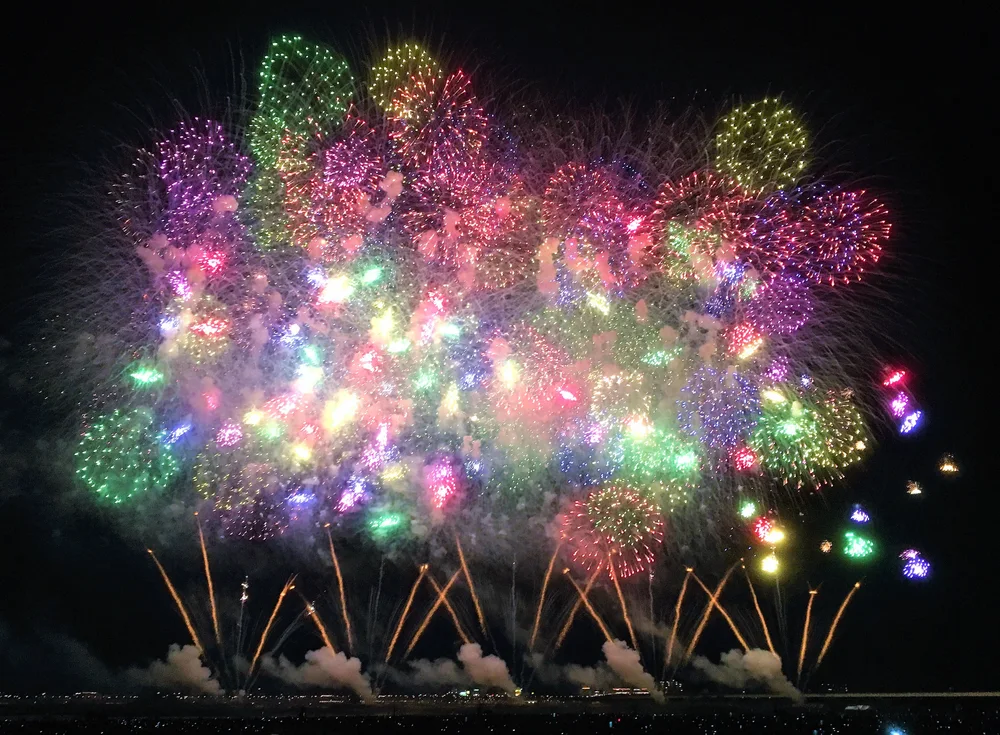
Compare the two riverbanks, group plots, chairs and accessible seating at Nagaoka Fireworks. Plan around overseas ticket lotteries, parking, child tickets, weather terms and the journey back.
Group plots: work out the total price and how you will sit
In 2026, Venue A’s masu seating consisted of boarded plots on the riverbed, each for up to six people. The organiser recommended four people for more space. The general-sale price was ¥32,000 per plot. This suits a fixed group who can sit at ground level. Two people can use a plot, but must budget for the whole plot. Before a group applies, agree who will enter the lottery and pay, so a change in numbers does not become a surprise after winning.
Venue A also had boarded bench-style masu plots for eight people, priced at ¥48,000 in the 2026 general sale. Its boarded bench seats on the embankment slope were sold individually for ¥5,000. Both names include “bench”, but one is a group plot and the other an individual seat. Check capacity before applying. Separate applications for individual seats do not ensure that your group will sit together.
Venue B’s six-person masu plots were on either soil or grass on the riverbed; buyers could not choose the surface. Its embankment-top masu plots were on top of the embankment. Both cost ¥30,000 per plot in the 2026 general sale, held up to six people, and carried the same recommendation of four for more space. Compare the surface, location and final approach and exit when choosing the left bank.
At full capacity, a ¥32,000 Venue A plot works out at about ¥5,333 each for six people, or ¥8,000 each for four. These calculations divide the same plot price by the group size. Transport, accommodation and handling fees are extra. For a small group, comparing individual chairs directly can be easier than choosing a plot first and finding people to share it.
A plot keeps a family together, but check that everyone can sit low down and get up again. Children needing rest, older people with knee problems and anyone planning to photograph throughout will have different needs. Ask how long each person can sit at ground level before choosing a plot, bench or individual chair. The group-ticket capacity is simply the maximum number of people.
Individual chairs, tables and seating changes in 2026
In 2026, standard chair seats at both venues were folding chairs on the riverbed, sold individually for ¥5,000 in the general sale and marked as suitable for wheelchair viewing. Venue B also had chair seats on the athletics stadium field for ¥4,000. Check whether your choice is by the river or in the stadium. Standard table seats at Venues A and B included a chair and table space, cost ¥10,000 per person, and were also marked as suitable for wheelchair viewing.
Venue A’s Phoenix zone offered area seating, chairs, tables and reserved ground spaces. In 2026, Phoenix chair seats cost ¥5,000 in the general sale, with 45 cm between chairs; Phoenix table seats cost ¥7,000. These options share the Phoenix name, but differ in posture, table provision and layout. Choose using the seating descriptions.
In 2026, the organiser replaced “block-reserved seating” with individually reserved ground spaces, while keeping each person’s viewing area the same size. These spaces have blue tarpaulins within designated plots, and the organiser recommends bringing a cushion. Read accounts of 2025 block arrangements separately from the individual reservations used in 2026.
Unreserved seating within a designated area lets you find a place inside the area on your ticket. Several 2026 area tickets limited space to about 1.5 square metres per person. Venue B’s North Areas 1 and 2 did not allow movement between them. If companions buy separately, check that everyone has the same area. Arriving early cannot combine two different areas into one. This affects whether you can sit together more directly than the word “unreserved”.
Set a budget per person, then compare areas and reserved seats
For lower prices, compare Venue B’s paid unreserved areas. In the 2026 general sale, North Area 1, North Area 2 and the Tekuteku Area each cost ¥2,000 per person. The West and South Areas each cost ¥4,000. The West Area is near Ote Bridge; the South Area is near Chosei Bridge. Choose the location and area first, then compare the surfaces you are willing to sit on. Equal prices can still mean different approach and exit routes.
Venue A’s Phoenix Area cost ¥4,000 in the 2026 general sale and offered unreserved places within a designated area. Phoenix reserved ground spaces also cost ¥4,000 and were on the embankment top and slope. The first lets you choose a place within an area; the second assigns your place. Read the name with the ticket layout. A couple wanting less discussion about where to sit after entry can start with reserved spaces. A group choosing area seating needs tickets for the same area for everyone.
Calculate the whole group’s seating cost. Two standard chair seats at the 2026 price of ¥5,000 total ¥10,000; six total ¥30,000. A six-person Venue A plot cost ¥32,000. The totals are close, but one option gives each person a chair and the other a shared boarded plot. Choose by posture and whether you want a shared plot, rather than assuming every group ticket is cheaper.
Application limits also vary by seat type. In 2026, a standard chair application allowed up to five seats, a table application six seats, a six-person masu application two plots, and some areas including the North Areas up to ten tickets. If six adults all want standard chairs, first read the limits and same-address rules for the application channel you can use. Check whether the whole group can fit in one application alongside the price, before you reach the form.
Wheelchair and disability seating: companions, documents and parking
In 2026, Venue A’s wheelchair seating was on top of the embankment; Venue B’s was on the athletics stadium field. Each plot held up to three people: one wheelchair user and up to two companions. The general-sale price was ¥10,000. The organiser required no physical disability certificate, supplied two folding chairs for companions, and provided no dedicated parking. The whole group could not use the plot without a wheelchair user attending that day.
Disability seating had different conditions. It was for a disability certificate holder needing help to move, with at least one companion. A 2026 plot held four people and included one parking space, four folding chairs and access to an accessible toilet, for ¥10,000 in the general sale. Venue A’s plots were on the embankment upstream of Chosei Bridge; Venue B’s were on the Nagaoka Lyric Hall grounds. A certificate holder had to attend that day.
List the documents you hold, number of companions and parking needs, then compare these two options. Someone needing wheelchair space and someone relying on dedicated parking to shorten the route have different priorities. Standard chair seating suitable for wheelchair viewing does not automatically include the companion arrangements or parking of a dedicated plot.
The ticket centre describes soil and gravel surfaces on the riverbed. Before buying, share the entrance-to-seat, toilet and exit routes with the person needing help, and ask the ticket centre about the route required. With a manual wheelchair, companions also need to assess the effort of pushing and using slopes. The wheelchair-viewing symbol alone is insufficient to plan the whole journey.
Overseas applications and eligibility for official resale
Overseas visitors had a separate application route in 2026. The first lottery ran from 12:00 on 25 May to 17:00 on 8 June, Japan time. After the general lottery sold out, the planned second lottery was cancelled. The international visitor page also stated that tickets were sold out with no further sales. Decide which dates and seat types you can accept, then compare the lottery result date with your accommodation cancellation deadline.
The 2026 official resale was restricted to residents of Japan. Visitors living overseas could not list it as an available fallback after losing the lottery. Both the international and general resale pages stated this restriction. For another year, use the page that applies to your place of residence.
The general lottery page also required Rakuten membership, allowed only one application per address, and permitted a second choice for each of 2 and 3 August. Successful applicants were charged immediately to the credit card set in their membership account. Cancellation was not allowed after winning or after the application deadline. These were the general application rules; read the products and payment steps separately within the overseas application route.
If your group includes residents of Japan and people living overseas, the applicant should first choose the applicable route and tell everyone the name, ticket quantity, payment and ticket handover arrangements. Avoid duplicate applications from the same address for the same group of seats, or waiting until a successful result to discuss payment. Agree before submission which date and seat types everyone can accept.
If you have not secured tickets, check the accommodation cancellation deadline and note when fees begin. If the lottery result comes after the free cancellation deadline, decide whether you would still visit Nagaoka without fireworks tickets. Flights from your departure country, accommodation and transport within Japan can each have different rules. Put the deadlines on one list so the start time of the fireworks is not the only time you remember.
Child tickets, purchaser names and separate entry
The 2026 general lottery rules required tickets for primary-school-age children and above. Preschool children could watch on a guardian’s lap, but needed a ticket for a separate seat. With two children, decide who needs their own space before calculating the group’s ticket count. Caring for children and carrying their belongings also takes space. Age alone does not show whether everyone can watch comfortably until the end.
Tickets carry the purchaser’s name, and identification may be checked on entry. The organiser required anyone entering separately from the purchaser to prepare a way to contact them. Security staff could check tickets again inside. Entering together is simplest; if someone will arrive late, agree in advance who holds the tickets and how to make contact.
The organiser requires tickets to be worn around the neck and kept on display. Take yours when leaving the seating area for a drink or the toilet. Keeping the entire group’s tickets in one bag can leave someone who walks away unable to show theirs. Distribute them according to the format of the tickets you receive.
The organiser prohibits paid transfers without permission. Tickets confirmed as improperly resold become invalid, with entry refused and no refund. The international page also states that people without tickets cannot enter the viewing area or watch from its aisles, passageways or open spaces. If you do not secure tickets, change the trip rather than treating the surroundings as a viewing area where you can find a last-minute place.
Rail travel: connect the return train to your actual seat
Nagaoka is on the Joetsu Shinkansen. You can arrive by Shinkansen from Tokyo, or by Shinkansen or conventional services, depending on the route, from Niigata. Extra services may run on fireworks days; use JR’s announcement for that year for trains and reservation requirements. Nagaoka City listed the 2026 show as 19:20–21:10. Start with that finishing time when planning the evening journey home.
The city’s estimate of about 30 minutes from Nagaoka Station to Venue A is a starting point for daytime planning. After the show, you must leave your seat, follow the exit route, walk to the station and queue to enter. Venue B visitors also need to cross the river. Work backwards from your ticketed area and intended departure from the seat to decide which trains you can catch after the full show.
Check calling points, departure time, reservation requirements and group size together. Tsubame-Sanjo and Niigata lie in the same direction from Nagaoka; Tokyo is in the opposite direction. Do not book simply because the timetable shows a late train. If companions need adjacent seats, arrange reservations before planning where to spend the day. If you cannot accept leaving early, consider accommodation in Nagaoka or along the railway.
Arriving early gives you time to leave bags at your accommodation, eat and buy water before using your tickets to confirm a meeting point. If people enter the city from different places, name a building or station exit rather than “the river”. The venue stretches a long way, and both ends of a bridge can be crowded. A charged phone, companions’ contact details and a paper or offline map help you meet again after the show.
Driving: a parking lottery follows the viewing-ticket lottery
All official car parks in 2026 were paid, advance-reservation lotteries available to holders of paid viewing tickets. There were no free first-come, first-served car parks. Applicants needed the code given to successful viewing-ticket buyers, with up to one vehicle application per viewing-ticket purchase. Securing fireworks tickets still left a separate parking reservation to arrange.
That year’s parking lottery ran from 19 to 24 June through Ticket Pass, which required advance membership registration. Parking tickets were electronic and used a smartphone or tablet. Results were announced on 1 July; car parks with unsold spaces continued lotteries from 2 July. Check that you have the code and a suitable device, then include the parking result in your driving plan.
Resident advance-sale buyers received their code on the winning notification postcard; buyers from the general sale onwards received it by email. Parking resale applications also needed the code. Give the actual driver the code, payment result and electronic-ticket login details, so another companion does not have to search for an email remotely when the car reaches the car park.
The city warns of congestion at Nagaoka Interchange and nearby interchanges. It recommends leaving at an earlier interchange to spread traffic and using park and ride. Locate your reserved car park on that year’s traffic map, then check which bank it serves, the drop-off point and your ticketed entrance. Separate driving time, shuttle waiting and walking when comparing it with rail travel.
If you lose the parking lottery, check whether your accommodation includes parking and whether you can enter the city by rail before retaining the driving plan. Base parking arrangements on a space you are entitled to use. If someone must drive after the show, arrange dinner and rest in advance rather than deciding on a long drive at the last minute.
Staying in Nagaoka, Tsubame-Sanjo or Niigata
Staying in Nagaoka avoids rushing for a long-distance train after the final firework. Popular dates concentrate demand, and an address within the city can still be far from the station or your seat. Before booking, locate the hotel in relation to your venue, station and check-in desk. Check the latest arrival time and luggage storage. If late-arriving companions need to check in separately, ask the property directly about guest names and the process.
Staying in Niigata or Tsubame-Sanjo lets you spend the day in Nagaoka and leave by rail at night, but the hotel must match a train you can actually catch. Booking a hotel far from Niigata Station merely because extra Niigata-bound trains run can move the last-leg problem to Niigata. Calculate the full route from your fireworks seat to Nagaoka Station, your destination station and the hotel. Resolve any late check-in limit before booking.
Returning to Tokyo that night suits travellers who accept a long late journey and have arranged a specific train. Families with children or slower-moving relatives still face the riverside walk and station crowds after the show, so consider staying overnight. Compare the saved room cost with the burden of late transfers for everyone. If catching a train requires an early exit, accept that you will miss the later programme and plan from your seating area’s exit route. Do not expect to reach the platform as soon as the show ends.
To watch both nights, stay two nights or move between Nagaoka and a nearby city, but arrange tickets, transport and check-in separately for each day. Avoid packing the second morning with distant sights: your arrival time at the hotel the night before affects how comfortably you can start. Keeping the afternoon before the fireworks for travel and food is especially useful on a first visit.
2026 traffic controls: bridges, entry and bus connections
Page 7 of the city’s Nagaoka Festival 2026 special issue listed Ote Bridge pedestrian closures on 2 and 3 August from 18:30 to 22:15, and vehicle closures from 18:30 to 22:45. Chosei Bridge closed to pedestrians from 20:00 to 20:45 and vehicles from 20:00 to 22:15. The bridges have different locations and closure times. If arriving at Nagaoka Station for Venue B, put your seating area on the map before choosing a bridge and crossing time.
To cross Ote Bridge before the show in 2026, you needed to pass before the 18:30 closure. The 19:20 show start was too late as a target arrival at the bridge. Using Chosei Bridge changed the riverside walk from the bridge to the seats. Companions watching on opposite banks who planned to cross during the performance faced closures; choose a meeting point on the same bank.
The same map listed paid seating opening at 15:00, some seat types at 16:00, and disability seating at 17:00. Check your own ticket type before arranging the crossing and entry. An early riverside arrival still means waiting for the relevant entrance to open. The map also said traffic conditions could bring closures forward. Follow security staff’s directions on site.
Nagaoka Station’s Ote Sky Deck was closed to pedestrians from 20:30 to 23:30 on both 2026 dates. After 20:00, the city directed people travelling from the Ote Exit side to the East Exit through the underpass, rather than through the JR station. If your hotel, shuttle or bus is on the east side, plan the exit route to the underpass entrance.
The 2026 traffic map listed all Echigo Kotsu route buses departing after 20:00 as leaving from Nagaoka Station’s East Exit, with some services suspended or turning back early. City buses used holiday timetables on both days. Intra-prefectural express buses used a holiday timetable on 2 August and a weekday timetable on 3 August. Check each date separately if attending both nights; do not carry the first night’s boarding point and services straight over to the second.
Weather changes: postponement and cancellation terms in 2026
The ticket centre said the 2026 show would proceed in light rain, but flooding at the launch site or strong winds could cause postponement or cancellation. If the 2 August show moved to 16 August, or the 3 August show to 17 August, the original tickets remained valid. No refund was available if you personally could not attend the postponed date. This directly affects whether you are willing to book non-refundable long-distance transport and accommodation.
For cancellation that year, refunds were capped at 50% of the ticket price, excluding all handling fees. No refund applied if the show was cancelled after it had started. Record the ticket centre’s postponement and cancellation terms separately from hotel and rail conditions to calculate the actual loss if weather changes the event.
Using a 2026 standard chair ticket at ¥5,000 as an example, a full cancellation with the maximum 50% refund would return at most ¥2,500, with handling fees excluded from the refund. Cancellation partway through would return no ticket payment. Couples, families and larger groups can calculate their own exposure before choosing how much to commit to bookings. Rooms and trains remain subject to their own booking terms.
Before departure, save the ticket centre announcements, accommodation contact details and return reservations on your phone. If the event changes, read the organiser’s decision first, then handle train and room bookings. If companions travel separately, agree who will check announcements and how they will notify everyone, so individual ticket changes do not disrupt the meeting plan.
Remembrance, recovery and peace at Nagaoka Fireworks
Nagaoka City’s official web publication records that the air raid of 1 August 1945 devastated the city. The Nagaoka Recovery Festival held on 1 August 1946 preceded today’s festival; fireworks returned in 1947. In 1948, 1 August became the day of remembrance for war victims, with fireworks on 2 and 3 August. The event took the name Nagaoka Matsuri in 1951.
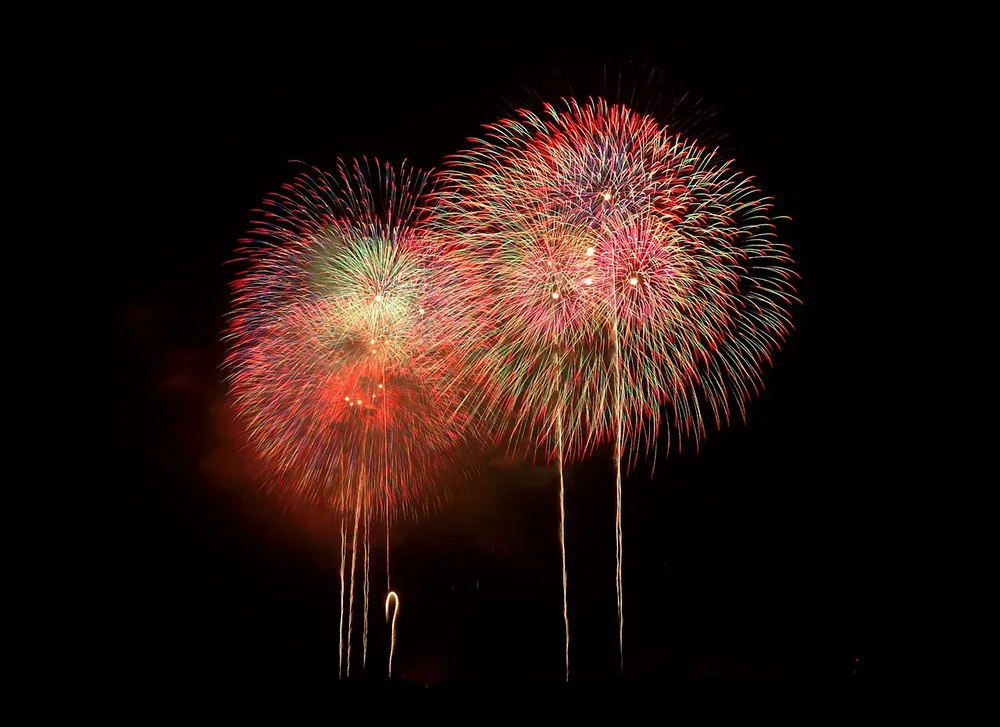
After the 2004 Chuetsu earthquake, Nagaoka Junior Chamber and others promoted fireworks for recovery. Phoenix was first launched on 2 August 2005. It represents recovery after disaster and brings local participants’ hopes into the performance. Knowing the name’s origin while reading the programme connects the display with Nagaoka’s history.
You might put away your phone for a piece of music, then choose the passages you want to photograph. Some companions want a full recording; others want to sit and watch. Discuss this beforehand. For tripod photography, the organiser offers photographer plots: in 2026, Venue A’s were on the embankment slope and Venue B’s in the stadium stands. Each held two people, one of whom had to bring a tripod and camera, at a general-sale price of ¥12,000.
The official Nagaoka Fireworks film of the 2019 Phoenix recovery prayer fireworks, showing the display spreading across the riverbank.
Outside summer, visit Nagaoka Hanabikan for exhibits and films
Michi-no-Eki Nagaoka Hanabikan, at 707 Kitamachi, Nagaoka, has a fireworks museum, dome theatre, dining and local products. The city lists museum hours of 10:00–17:30. Individual dome-theatre tickets cost ¥600 for high-school-age visitors and above, and ¥300 for primary and junior-high pupils. Preschool children, disability certificate holders and one companion are admitted free.
The whole facility closes from 31 December to 2 January and for two irregular equipment inspections each year. The museum also closes on Wednesdays from December to February, or the following day if Wednesday is a public holiday. Check closures before choosing a winter date, especially for a midweek arrival, so a drive past does not become your only chance to visit.
The city’s transport page lists a route bus from stop 2 at Nagaoka Station’s Ote Exit to Nagaoka Hanabikan, taking about 20 minutes. It runs only on Saturdays, Sundays and national holidays. A taxi takes about 15 minutes. Weekday public-transport visitors can compare a taxi with moving the visit to a weekend. By car, it is about three minutes from Nagaoka Interchange via Route 8, entering at the Kita-higashi junction.
Hanabikan fits a daytime arrival in Nagaoka or a visit outside fireworks season. Choose the museum and theatre first, then add food and shopping around them. To visit on the same day as the August riverside show, calculate the journey back to the station or seating area separately, leaving time for afternoon entry.
Keep the day comfortable through to the exit
The site includes soil and gravel. Wear familiar shoes, and prepare a cushion, water and light rainwear to suit your seat. Leave large luggage with your accommodation or a planned storage service during the day. Carry your ticket, phone, power supply and items you need in the busy seating area.
Take photographs from your own viewing position and keep belongings inside your allocated space. Passageways and open spaces are for movement. Bring a cushion for masu or reserved ground seating. With folding chairs, pack bags within the chair space so they do not extend into neighbouring seats or aisles.
A few useful answers
Which bank should I book for Nagaoka Fireworks if I’m coming by train?
Look for tickets for Venue A on the right bank of the Shinano River. The viewing area is about a 30-minute walk from JR Nagaoka Station, plus time to find the entrance on your ticket. Venue B is on the left bank, so you’ll also need to cross the river.
Was there a Nagaoka Fireworks ticket ballot for visitors from overseas?
In 2026, visitors living abroad had a separate ticket ballot portal. Tickets sold out and the organisers cancelled the planned second round. Official resale that year was open only to residents of Japan.
Do children need a ticket to watch Nagaoka Fireworks?
Under the 2026 general ballot rules, children needed a ticket from primary school onwards. Children who hadn’t started school could sit on a parent or guardian’s lap and needed a ticket if they wanted a seat of their own.
What’s the difference between wheelchair spaces and designated disability seating at Nagaoka Fireworks?
In 2026, a wheelchair space held one wheelchair user and up to two companions, with no certificate requirement or dedicated parking. A disability seating box held four, included one parking space, and required a disability certificate holder who needed help getting around and at least one companion.
Official information and references
Sources used in this guide.
- Nagaoka Fireworks Ticket Centre: 2026 seating and venue map
- Nagaoka Fireworks Ticket Centre: international visitors
- Nagaoka Fireworks Ticket Centre: general lottery and official resale
- Nagaoka Fireworks Ticket Centre: ticket, parking and weather conditions
- Nagaoka City: transport to Nagaoka Fireworks
- Nagaoka City official web publication: the history of Nagaoka Fireworks and Phoenix
- Nagaoka City: Michi-no-Eki Nagaoka Hanabikan
- Nagaoka City: 2026 festival and special issue
- Nagaoka City: 2026 fireworks traffic control map, page 7