How to plan cherry blossom viewing at Takato Castle Ruins Park: use recent bloom records to time your dates, transfer by bus from Ina to walk Ounkyo Bridge and the Honmaru, plus 2026 festival fares, parking, and night illumination return buses.
- Region & Focus
- Chubu
- Reading Scope
- 24 min read · 11 chapters · 5 Q&As
- Official Verification
- 20 official sources checkedUpdated 22 November 2026
- Key Topics
- SeasonsItinerariesChubu & Hokuriku
Chapter Route Map (tap any stop)
- Picking Your 2027 Window by Takato's Own Bloom Dates
- Festival Tickets, Pricing Tiers, and Day-to-Night Re-entry
- Train from Tokyo vs Direct Express Coaches from Nagoya
- Distances Between Ina-shi Station, Takato Station, and the Park
- North Gate Loop: Ounkyo Bridge, Honmaru, and South Gate Descent
- Splitting Up Around Takatokaku for Different Interests
- Catching the Last Bus Down After Night Illuminations
- Driving: Which Interchange to Use and Weekend Parking Lots
- Where to Stay: Central Ina, the Castle Town, or Takato Lakeside
- What to Do If It Rains, Blooms Early, or Connections Slip
- Building a Half-Day Plan Around One Bus or Staying Overnight for Lights
- Quick Q&A
Takato's cherry blossoms are normally at their finest from early to mid-April. Blooms arrived early in 2026, with the Ina City Tourism Association recording peak to full bloom from 3 to 8 April. For 2027, keep two interchangeable daytime slots free so you can check updated photo reports from Takato Castle Ruins Park before heading up the hill. By rail and bus, the main spine runs through JR Iida Line Ina-shi Station, Ina Bus Terminal, and JR Bus Takato Station, followed by an uphill walk. If you only have half a day, enter via the North Gate for Takatokaku, Ounkyo Bridge, and the Honmaru. For night illuminations, check lighting dates and downhill return buses on the same timetable before booking your room.
Picking Your 2027 Window by Takato's Own Bloom Dates
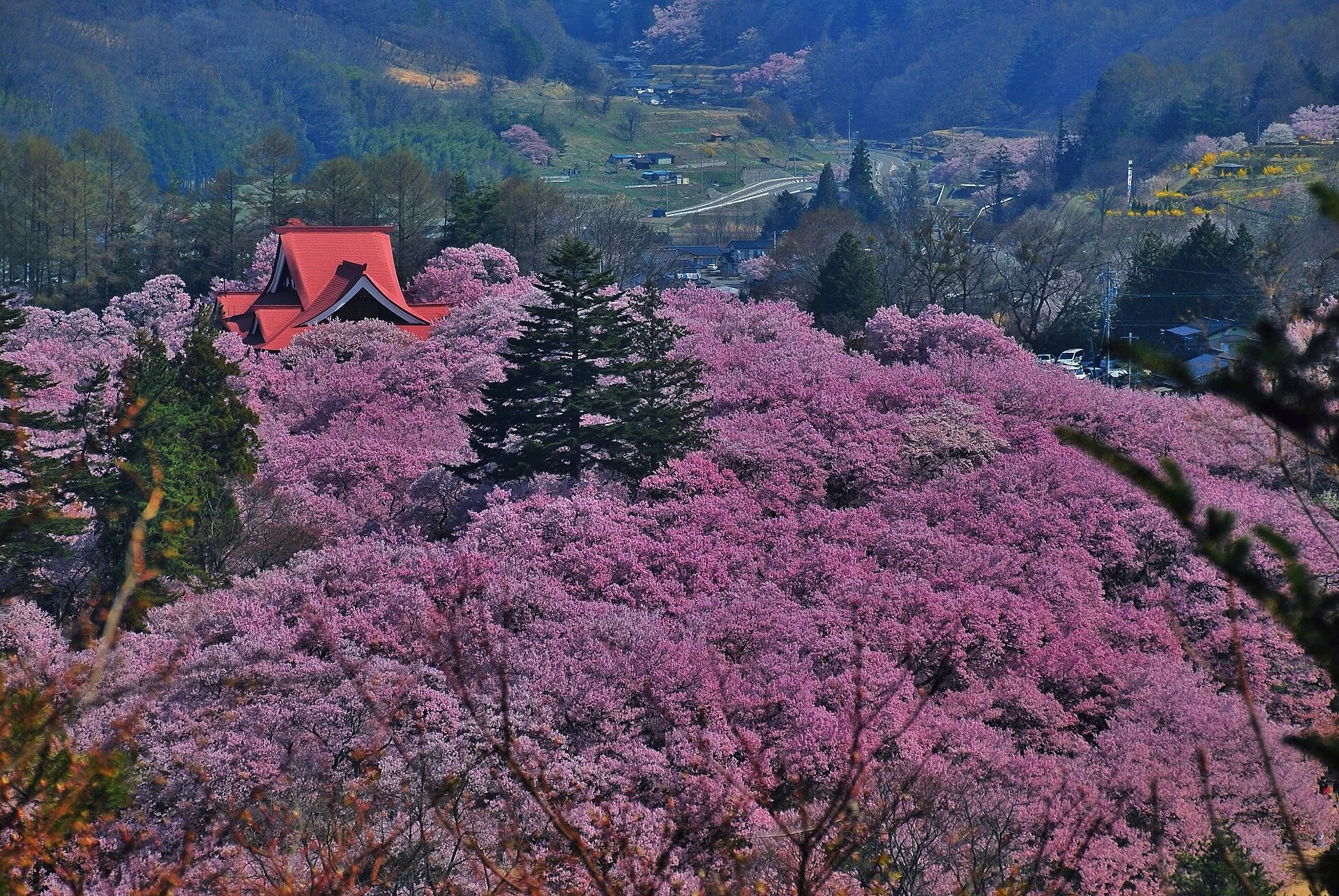
Figures from the Ina City Tourism Association show that the park's Takato Kohigan-zakura trees have averaged an opening date around 2 April over the past decade, reaching peak bloom roughly a week later. Around 1,500 cherry trees grow across the grounds, bearing deeper pink petals than standard Somei-Yoshino. Looking up from the castle paths reveals dense clusters of small pink blooms, whereas higher vantage points show the stepped layers across the canopy. Treat early to mid-April as your target window for 2027, and if you must lock in transport and lodging early at similar rates, choose flexible bookings whose dates you can swap.
Even when petals are already scattering in Tokyo during the same week, you can still catch the season in Takato. Check the park's official blooming report, especially the dated photo log showing actual blossom progress. In 2025, first bloom fell on 4 April, with peak to full bloom from 11 to 15 April. In 2026, trees opened on 28 March, reached around half bloom on 1 April, hit peak bloom by 3 April, and began shedding petals on 9 April. Locking the exact same weekend every year risks arriving at barely opened buds or late-stage petal fall.
When the update reads early bloom, check where the photos were taken first. With only a few trees open, you can still frame close-ups around Takatokaku or beside Ounkyo Bridge, though sweeping hillside colour is best saved for peak bloom. Half bloom already rewards a full visit, particularly if your trip is pinned between two fixed dates. Once petals start falling, the focus shifts to floating blossoms on the moat, petal-strewn paths, and backlit flurries in the breeze; review same-day photos of the Honmaru, Ninomaru, and Ounkyo Bridge before making a special detour for full canopy views.
Anchor flexible days around a single base. A two-night stay in Ina lets you dedicate one daytime slot to Takato and the other to Ina town, swapping them as the forecast shifts. If you are already passing through Suwa, save lakeside strolls for overcast or rainy weather and keep clear skies for Takato's Honmaru and its distant mountain backdrop. Travellers on tight rail tickets with a flight to catch should plan an early descent rather than squeezing the next morning's transfer for one extra night of illuminations.
How to plan cherry blossom viewing at Takato Castle Ruins Park: use recent bloom records to time your dates, transfer by bus from Ina to walk Ounkyo Bridge and the Honmaru, plus 2026 festival fares, parking, and night illumination return buses.
Festival Tickets, Pricing Tiers, and Day-to-Night Re-entry
As of 22 November 2026, the Ina City Tourism Association festival page still carries 2026 records, with 2027 dates and prices yet to be released. In 2026, the festival ran from the first-bloom declaration on 28 March until 13 April, with paid admission starting the day after first bloom. Standard individual tickets were ¥600 for high-school students and adults, and ¥300 for elementary and junior high pupils. Adult admission rose to ¥1,000 on 4 and 5 April before returning to ¥600 on the following weekend of 11 and 12 April. Estimate your spring outing budget by totalling park entry, local buses, and temporary shuttles before comparing public transport against driving.
In 2026, visitors entered via the North Gate, South Gate, or Ground Gate. Paper tickets were sold at the gates for cash or PayPay. Digital tickets linked through LINE were also offered that year, ending sales on 9 April, so check current sales windows and activation steps if you plan to use a mobile pass. Because the Takato Line bus only accepts cash, prepare exact fare and small yen notes before leaving Ina rather than sorting money out at the kerb. If members of your group arrive via different gates, agree to meet in an open spot at the Honmaru or outside Takatokaku.
A single 2026 park ticket allowed same-day re-entry upon presentation at the gate. That lets you cross Ounkyo Bridge by daylight, head down to the castle town for lunch, and return for the evening lights without paying twice. During the 2026 paid season, the park ticket also covered entry to the Ejima Kakomi Yashiki beside the Takato-machi History Museum, though the museum galleries had separate entry rules: showing a same-day park ticket gave half-price general admission to the museum and a ¥100 discount at the Shinshu Takato Art Museum. Visit both museums before dusk, as last entry closes early.
Opening hours can shift mid-festival as well. Before 1 April 2026, advertised hours were 08:00 to 17:00, extending to 06:00 to 21:00 at peak bloom before reverting to an 08:00 opening from 10 April. Photographers in particular should verify that day's posted opening-hours notice by date. If you are staying in Ina and catching the first Takato Line bus, cross-check when the gate ticket booths actually open.
Train from Tokyo vs Direct Express Coaches from Nagoya
From Shinjuku, ride a JR Chuo Main Line Azusa limited express that stops at Okaya and change onto the Iida Line for Ina-shi. Before buying limited express seats, line up the Okaya connection alongside local bus departures from Ina on the same sheet; leaving Tokyo just ten minutes earlier can sometimes catch an earlier Iida Line train and save waiting all morning at the park. Ordinary-car reserved seats on the Chuo Line can be booked in advance, and buying a through paper base-fare ticket to Ina-shi at your starting station spares you re-ticketing at Okaya. Suica and PASMO do not work at Ina-shi Station: if you tap in with an IC card on the Chuo Line, exit and settle the fare at Okaya before buying a paper ticket onwards to Ina-shi, and remember that e-tickets for limited express seats still require a separate base-fare ticket. With heavy luggage, arrange left-luggage storage in Ina first and carry only day essentials up the hill.
The alternative from Tokyo is an express coach from Shinjuku Expressway Bus Terminal (Busta Shinjuku) bound for Ina and Komagane, choosing a service that calls at Ina Bus Terminal. Because express coaches and the local Takato Line share this terminal, families with children or bags save an extra transfer. On spring weekends, take an early coach out so you still have margin for a later Takato Line departure, and catch a local bus back one service ahead of your booked return coach. Heavy traffic on the Chuo Expressway delays highway buses too, so rail gives you easier flexibility if you have dinner bookings or onward long-distance trains back in Tokyo.
From Nagoya, take the Ina Bus Nagoya Line from Meitetsu Bus Center on a Minowa-Ina service stopping at Ina Bus Terminal. Coaches also run between Nagoya and Iida, so enter Ina Bus Terminal specifically as your arrival stop when booking seats to avoid a long backtrack from Iida. By rail, connect via the JR Chuo West Line to Shiojiri and onwards through Okaya to the Iida Line, an option best suited to itineraries already pausing in the Kiso Valley or Shiojiri. If you are landing at Chubu Centrair in the morning, spend the night in Ina and visit the park the following day rather than racing dusk or late-bloom hours on arrival day.
Travellers based in Matsumoto, Kami-Suwa, or Okaya can rely on the Okaya rail transfer onto the Iida Line. In 2026, a temporary direct bus also ran from outside Chino Station to Takato Station from 4 to 13 April, charging ¥1,490 for adults and ¥750 for children one way, non-reserved and cash only. If entering via Chino, check first that the service operates on your dates and verify which bus connects back to the Chuo Main Line, especially when daylight is short. Should you arrive from Chino and depart towards Ina, align your room and luggage plan with the opposite downhill exit.
Distances Between Ina-shi Station, Takato Station, and the Park
Ina-shi Station on the railway and the Ina Bus Terminal road hub stand roughly a two-minute walk apart from the station ticket gates. Walk straight to the terminal and check the JR Bus Kanto Takato Line timetable, making sure to read the right column for weekdays or weekends and holidays. Board services signed for Takato Station outbound and Ina on the return; you can also board outside the unmanned Inakita Station gates. The handiest note to keep on your phone is the Japanese spelling of both terminals and Takato Station, and if a timetable lists Inakita-eki Nishi, check the exact stop marker rather than guessing which side of the tracks the bus uses.
In 2026, the official standard fare between Ina Bus Terminal and Takato Station was ¥590 for adults and ¥300 for children, payable in cash only as Suica and PASMO are not accepted. The bus ride takes roughly 25 minutes for the road leg alone. From Takato Station, expect about a 20-minute uphill walk through the former castle town to the park, easily stretched by road crossings, crowds, and walking pace. Only selected school-route buses continue to the Castle Park Entrance stop, so most able-bodied visitors should time their trip from Takato Station, while wheelchair users or anyone sparing their knees can switch there to the loop bus or a taxi.
The 2026 Cherry Blossom Loop Bus operated out of Takato Station for ¥300 per ride (charged from elementary school age upwards, cash only), serving the sightseeing circuit inside Takato-machi itself. Keep the Takato Line from Ina, the town loop bus, and the temporary car-park shuttle distinct when reading schedules, as return ticket holders heading back to Ina must still travel back via Takato Station. In 2026, organisers also asked wheelchair users to telephone the JR Bus Kanto Ina Branch (0265-73-7171) in advance to arrange boarding on the loop bus.
Keep the day simple on the ground by noting two return buses to Ina before you head up—one target departure and one backup. Check remaining daylight and energy levels before walking back to Takato Station: if the loop bus has finished, follow your uphill route back down, or rely on taxis only during hours when dispatch is reachable. Timetables serve both Ina Bus Terminal and Inakita Station, so your pick depends on where you are staying and your Iida Line train; if catching an express coach back to Tokyo or Nagoya, stick with Ina Bus Terminal for a same-site transfer.
| Japanese Station Name | Where to Change |
|---|---|
| Ina-shi Station (Ina-shi Eki) | JR Iida Line station. Walk to Ina Bus Terminal to change for the bus. |
| Ina Bus Terminal (Ina Bus Terminal) | Shared interchange for Ina Bus express coaches and the JR Bus Kanto Takato Line. |
| JR Bus Takato Station (JR Bus Takato Eki) | Bus station in Takato-machi. Roughly a 20-minute uphill walk, or connect to the loop bus during the festival. |
North Gate Loop: Ounkyo Bridge, Honmaru, and South Gate Descent
Takatokaku's broad red roof marks the North Gate area. Completed in 1936 as both an assembly hall and visitor rest house, it remains the easiest landmark inside the grounds. Entering past Takatokaku, pause first between the eaves and low cherry boughs before continuing towards Ounkyo Bridge and Tonyamon Gate. During past festivals, the second floor of Takatokaku has opened as a paid rest room for window views over the blossoms; treat the exterior as your main stop and head upstairs only if it is open and seats are free.
Ounkyo Bridge spans the old dry moat. On the bridge itself, your eyeline sits level with the blossom boughs, while stepping onto the moat bank frames the wooden arch alongside waterside trees. Follow accessible paths down towards the water for reflections, though wind at full bloom often leaves only small pockets of clear mirror surface—taking a few steps back usually yields a cleaner shot than crowding the bridgehead. Let foot traffic clear at bottlenecks, cross to a wider path to shoot back towards the arch, and step aside promptly for the next group.
Tonyamon Gate stands at the entrance to the Honmaru inner bailey, relocated here from the castle town below. Viewed from the bridge side, its gateway frames layers of branches and passing visitors. Inside the Honmaru, clear days reveal the snow-streaked ridge of the Central Alps rising above the blossoms. On a bright morning, head straight through the gate for the mountain view; under flat grey skies, spend more time along the bridge and moat on tighter compositions. Castle enthusiasts can trace the Honmaru perimeter for surviving earthworks, trenches, and the Taiko-yagura drum tower, which still outline Takato Castle's steep contours.
With around 90 minutes, cover the Takatokaku exterior, Ounkyo Bridge, and the Honmaru before looping back to your chosen gate. An extra hour lets you wander towards the Ninomaru and South Gate for fresh canopy angles or pair the walk with the history museum outside. When spring crowds thicken, resist ticking off every corner on the park map, particularly if your bus leaves from Takato Station; if you reach the South Gate before checking your next step, verify whether the downhill road leads cleanly towards your bus stop or retrace the familiar route.
Groups with pushchairs or mixed walking speeds should pick a flat, unmistakable meeting point right inside the entrance, such as outside Takatokaku, so keen walkers can dip down into the moat briefly without losing the group. If slopes turn slick or paths feel too tight for a pushchair to pass, stay on the upper terrace loop and trade low-angle moat shots for unhurried breaks. For sweeping canopy photos, stick to open upper viewpoints and stay clear of cordoned slopes, lawn edges, and exposed tree roots.
Splitting Up Around Takatokaku for Different Interests
For families needing a breather, the 2026 festival services page noted free nursing and baby-changing facilities on the ground floor of Takatokaku, with the paid rest lounge upstairs. That year the second-floor lounge cost ¥200 per person from elementary school age upwards, open 09:00 to 17:00 (last entry 16:00) during the day, and until 21:00 (last entry 20:00) only on illumination nights, with advance booking by the previous day required for entry after 17:00. If rain sets in, decide at the North Gate whether to go upstairs and sort out wet coats before walking on; outside food and drink are permitted inside as none are sold on site, so pack snacks beforehand and carry out all rubbish.
History fans can check the tourist information desk beside Takatokaku. In 2026, volunteer guides ran roughly 30-minute walks for groups of around five at ¥500 in cash, with on-the-day sign-ups from 09:30 to 14:30. If part of your group just wants flower photos, let those interested stay for the castle tour while the others head to the Honmaru and reunite outside Takatokaku half an hour later. Exploring solo, focus on the surviving moats, baileys, and gates: walking from the central moat to the Honmaru rim makes the site's natural defensive slopes far clearer than reading a flat map.
During the festival, stalls normally cluster around the Ninomaru and Minami-kuruwa, with vendors also outside the North Gate, South Gate, and Sannomaru. Bring drinking water before entering and save snacks for the afternoon. When buying Takato manju buns or souvenirs in the Ninomaru, send one person into the queue while everyone else waits off to the side rather than threading prams or small children through stall crowds. Dogs are allowed in the park on short leads, though buildings and loop buses set their own rules: in 2026, pets on the loop bus had to be enclosed in a carrier bag, excluding large dogs. Crowds easily unsettle dogs, so consider sticking to the North Gate area or an outer path before turning back.
Collectors chasing the 100 Fine Castles of Japan stamp should start around the history museum. Note that the official 100 Castles stamp and commercially sold goshuin castle seals are separate items: standard commercial seals were sold at the Takato-machi Tourist Information Centre and the Takato-machi History Museum, with the museum's 2026 service page listing only two regular designs. If you are after a specific edition, visit the tourist information centre right after getting off the bus or on the way back, and always anchor your turnaround to your Takato Station bus time rather than climbing back up just for souvenirs.
Catching the Last Bus Down After Night Illuminations
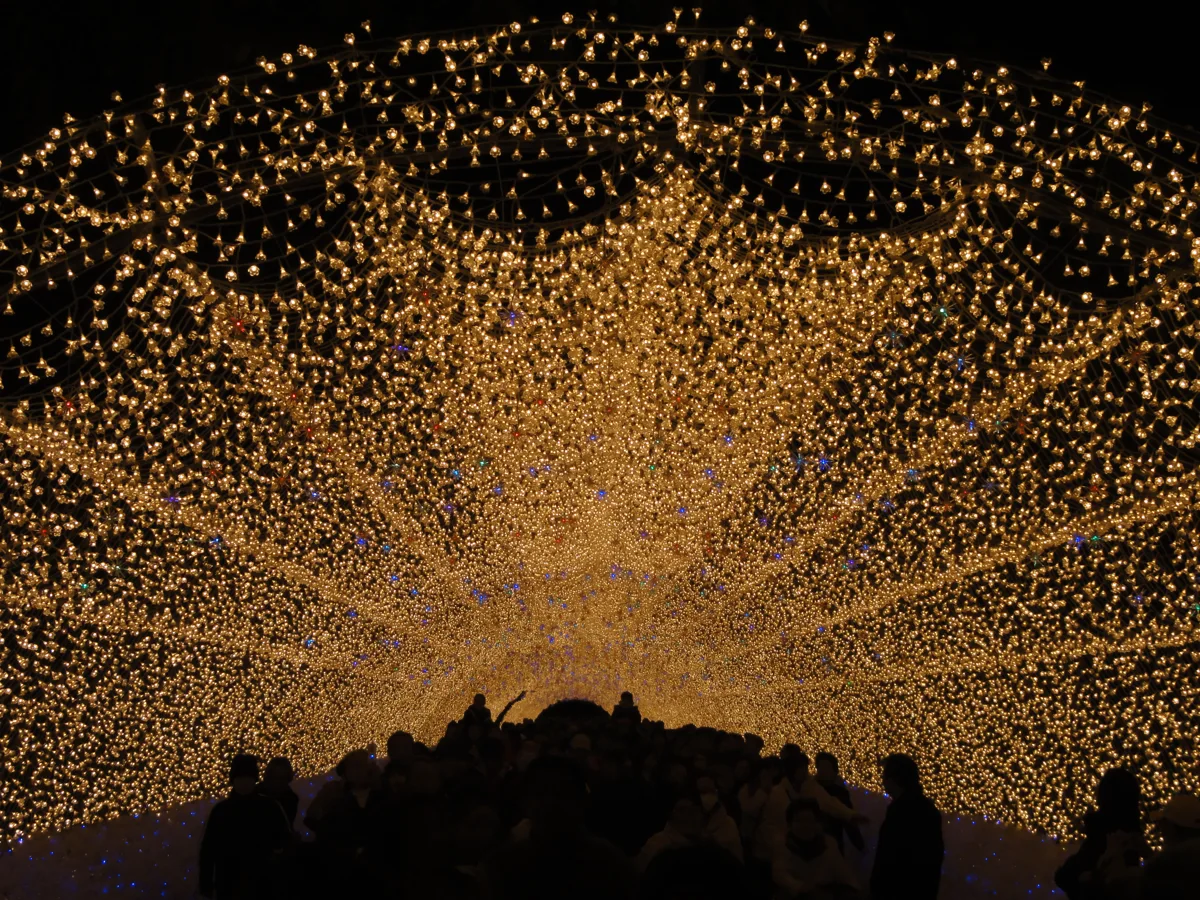
In 2026, official illuminations ran from 18:00 to 21:00, ending on the night of 11 April. After dark, floodlights pick out the cherry branches while patterned light projects onto the walkways. Walk the Ounkyo Bridge area before dusk so you already know the downhill exit, then move directly to your viewing spot once the lights come on. Giving yourself an extra half hour on the paths as twilight shifts reveals far more depth than standing at the bridge waiting for pitch black. Keep your daytime ticket handy if you plan to re-enter, and double-check gate opening and ticket-desk hours.
In 2026, two special night-blossom return buses ran on 4 April only, departing Takato Station at 19:30 and 20:20 to reach Ina Bus Terminal at 19:54 and 20:44. On that same night, the local evening loop bus inside Takato-machi operated until 21:00, meaning riding the final loop could leave you too late for the Ina connection. For 2027, read the evening town loop bus and the special night-viewing return bus as separate schedules: one stays within Takato-machi, while only the other takes you back to Ina. Staying overnight in Ina spares you chasing the last limited express train, though you still need a clear plan off the hill.
The simplest public-transport approach to night blossoms is taking one short loop after dusk—viewing from Ounkyo Bridge or above the moat—and heading down straight away. Having walked up earlier helps you recognise every junction in the dark. If staying until lights-out at 21:00, driving and parking in a legal lot within walking distance works best, or confirm an exact street pick-up point and vehicle access with your hotel or taxi beforehand. Walkers heading down alone should save phone battery with a dimmed screen for maps, and dress in warm layers: standing still for photos on a spring evening gets noticeably colder than walking, while layers pack away cleanly on a crowded late bus.
Shoot tree silhouettes and castle outlines while afternoon light lingers, then pick a single close-up composition after nightfall. Wait for a brief gap in pedestrian flow near the bridge, and skip tripods or bulky bags that block narrow paths. When travelling with children, weigh damp shoes and how soon everyone can sit down for dinner—often leaving shortly after the first lights switch on works best. If one person wants to linger, agree to meet back at Takato Station, or stick strictly to the pick-up clock if you have booked transport.
Driving: Which Interchange to Use and Weekend Parking Lots
Check the organiser's traffic control and car-park map before setting off. Drivers approaching from Tokyo via Suwa can leave the Chuo Expressway at Suwa IC for the road towards Takato. From Matsumoto or Nagoya along the Chuo Expressway, Ina IC connects onto Route 361—around 30 minutes from Ina city to the park under normal conditions, compared with roughly 50 minutes via Route 152 from Suwa IC or 25 minutes from Ogurogawa Smart IC. Those estimates assume clear roads and exclude queues for spaces; follow on-site marshals and festival signage rather than letting sat-nav divert you down narrow lanes. Passengers sensitive to winding mountain roads can take a break in central Ina before joining the main approach, and set sat-nav directly to an official car park's name or address rather than the park gate, which sits off separate access roads.
In 2026, municipal car park P7 lay on the park's east side and P8 served as the Hanabatake lot, charging ¥1,000 per entry for standard and kei cars, while nearby P5 was reserved for visitors with disabilities. General bays filled on a first-come basis, with P1 General Sports Ground acting as overflow roughly a 20-minute walk away. On 4 and 5 April, a park-and-ride shuttle ran from Ina City Hall for ¥500 return from elementary school age upwards until 17:00, with the last outbound shuttle leaving City Hall at 15:00; a separate Takato Junior High School shuttle charged ¥200 when the school grounds were available. If using a distant lot, factor the return shuttle ride into your schedule and never confuse daytime shuttle cut-offs with evening illumination closing times.
Children, older relatives, and luggage change where you ought to park. If getting everyone in smoothly matters most, a distant lot with an active shuttle often beats circling near the gates; drivers needing accessible bays should plot the designated P5 lot on the official map in advance. If dropping family kerbside before parking alone, pick a safe, legal drop-off outside the restricted zone and agree on a walkable meeting point beside an entrance, then walk back out in staggered groups rather than clustering everyone at the gate waiting for one car.
The cost comparison is straightforward. Using 2026 standard adult rates, two visitors taking the Takato Line return from Ina plus park admission spent ¥3,560 combined, or ¥4,160 if each also took one loop bus ride. Renting a car adds hire fees, motorway tolls, fuel, and parking. Larger groups can bring the per-person cost down by driving, yet if Takato is your sole spring stop before another rail-side town, trains and buses skip car-return logistics altogether; anyone hoping to stay late should settle the return leg first, then weigh the cost.
Where to Stay: Central Ina, the Castle Town, or Takato Lakeside
For straightforward connections with Shinjuku or Nagoya express coaches, look first within walking distance of Ina-shi Station and Ina Bus Terminal. Compare places on practical details: whether they hold bags after check-out, how well-lit the walk back is at night, and whether you can catch the first morning departure easily. Drivers can pick hotels with easy in-and-out access on the edge of town, while bus travellers should factor any inn shuttle schedule into transfer times. For groups of two or more, staying in central Ina also makes it easy for people to split daytime and night-blossom return times.
If you specifically want to wake up in Takato, weigh the castle town around Takato Station against the lakeside. Staying near Takato Station keeps Ina-bound buses close, though walking to the park still climbs uphill. By the lake, Takato Sakura Hotel sits at 217 Katsuma, Takato-machi, Ina, listing Takato Bus Station as its public-transport hub on its access page—confirm shuttle coverage and hours if carrying bags, and check elevation changes if planning to walk. Staying locally frees up your afternoon for the castle town and spares you a late-night trip back to Ina.
Trips already including Kami-Suwa Onsen work well as a day excursion, using your ryokan's check-in and dinner cut-off as the hard limit for leaving Takato and keeping slack for the Iida Line transfer at Okaya. Travellers pairing Takato's night illuminations with an early start for Matsumoto can stay in Ina instead, riding back down for the night before heading north at dawn. Across consecutive one-night stays, leave large suitcases at your final night's hotel so you never backtrack mid-blossom just to collect bags.
Your choice of stay shapes meal times too. Half-board ryokan dinners require generous buffer for buses and the downhill walk, whereas staying in town lets you enjoy Takato soba in the castle town by day. Takato soba is famous for karatsuyu, a dipping broth made with pungent grated radish juice and grilled miso—the radish bite is sharper than it looks, so let adults taste it before handing a bowl to children. Use the Ina City Tourism Association's soba map to separate Takato and Hase spots from central Ina restaurants, saving one side for lunch and the other for dinner on the way back; festival stalls cover quick snacks, while sit-down meals call for an unhurried midday slot with queue time built in.
What to Do If It Rains, Blooms Early, or Connections Slip
The Takato-machi History Museum is the most fitting wet-weather backup. Standard hours run 09:00 to 17:00 (last entry 16:30), with admission at ¥400 for adults and free entry for high-school students and under-18s. It closes on Mondays and the day after national holidays (opening if the holiday falls on a scheduled closing day), alongside occasional exhibition-changeover closures. Because the museum sits close to the South Gate, start from the North Gate to loop the park once and step inside at the south end if rain picks up, rather than trudging wet all the way back to the bridge.
Combine the museum with the adjacent Ejima Kakomi Yashiki on the same stop. Inside the galleries, orient the old castle against its hillside setting—matching gates, moats, and the former castle town below—then look back across the terrain as you step out along the south flank. The Shinshu Takato Art Museum also sits on the park's south side, giving you a second indoor stop; if you want both, tackle your priority museum first and keep the other in reserve for heavier downpours, letting walking distance and closing times decide whether you fit lunch in before your Takato Station bus.
In light rain, wear grippy shoes along the wider paths to Takatokaku and the Honmaru for close-ups of rain-beaded blossoms, staying off slick stone steps and deep moat paths if visibility drops. If you only have one outdoor stretch, stick around the North Gate and step out to the Honmaru if the clouds break towards the distant peaks. Light raincoats beat umbrellas for families with children, keeping hands free for handrails and little hands, with dry socks and shoes waiting back at your hotel.
If winds strip the trees or blooms are nearly over, weigh whether the final climb is still worth it. Guests already in Ina can head to the castle town for lunch and judge same-day photos before walking up; anyone staying in Suwa without pre-booked buses can pivot to Lake Suwa or Kami-Suwa and skip two local bus rides and the hill altogether. History-minded travellers can still enjoy the Honmaru, old moats, and Tonyamon Gate outside peak bloom—shifting focus to castle earthworks and the history museum before catching an earlier bus back to Ina.
Building a Half-Day Plan Around One Bus or Staying Overnight for Lights
Suppose you want the 15:00 bus from Takato Station: allow 20 minutes on the way up, budget 30 to 40 minutes coming back down, and aim to leave the park between 14:20 and 14:30. Entering the North Gate at noon gives you well over an hour for Takatokaku, Ounkyo Bridge, and the Honmaru, plus time outside the gates for lunch or snacks; if bottlenecks slow Ounkyo Bridge to a crawl, drop the Ninomaru or indoor museums for the day. Treat these times as a working template you can shift cleanly to match whichever departure you pick.
With a night in Ina, treat day one as daytime blossoms plus lunch in the castle town. Stay for the first wave of evening lights if a return bus lines up before finding dinner back in Ina; otherwise, descend before dark. Leave the next morning for whichever museum you skipped or catch an early Iida Line train north, and if you only walked the northern half on day one, enter from the south on day two to take in the Ninomaru and Minami-kuruwa. Anyone catching a dawn train should prep tickets and transfer notes the first evening so day two starts straight from your hotel.
A few useful answers
When do the cherry blossoms at Takato usually reach full bloom?
Takato Castle Ruins Park is usually at its best from early to mid-April. Official 2026 records put peak to full bloom at 3 to 8 April, while 2025 peaked from 11 to 15 April. Use the park's daily bloom updates and dated photos to pick your departure day.
How do I get from Ina-shi Station to Takato Castle Ruins Park?
Walk roughly two minutes from the JR Ina-shi Station ticket gates to Ina Bus Terminal, then take the JR Bus Kanto Takato Line to Takato Station (around 25 minutes), followed by a 20-minute uphill walk. In 2026, the local bus fare was ¥590 for adults and ¥300 for children one way, cash only.
How much is entry for the Takato Cherry Blossom Festival, and is re-entry allowed?
In 2026, standard admission was ¥600 for adults and ¥300 for elementary and junior high pupils, rising to ¥1,000 for adults on 4 and 5 April. Same-day re-entry was permitted with your ticket. Dates and prices for 2027 have not yet been announced.
Can I take a bus back to Ina after viewing the April night illuminations?
In 2026, two special night-blossom buses ran from Takato Station back to Ina on 4 April only, separate from the town's internal evening loop bus. When planning for 2027, check return services from Takato Station to Ina first and work backwards to set your park departure time.
Where can I go if it rains at Takato Castle Ruins Park?
Takato-machi History Museum sits near the park's South Gate and generally opens 09:00 to 17:00 (last entry 16:30), closing on Mondays and the day after national holidays unless that falls on a holiday. In light rain, shorten the outdoor walk to the North Gate, Takatokaku, and the Honmaru.
Official information and references
Sources used in this guide.
- Ina City Tourism Association: Takato Cherry Blossom Bloom Records
- Ina City Tourism Association: Takato Kohigan-zakura
- Ina City Tourism Association: 2026 Takato Cherry Blossom Festival, Admission & Re-entry Rules
- Ina City Tourism Association: 2026 Spring Opening Hours Adjustments
- Ina City Tourism Association: Opening, Closing & Shuttle Change Notices
- Ina City Tourism Association: Access, Loop Bus & Shuttle Fares
- Ina City Tourism Association: JR Iida Line, IC Cards & Chino Temporary Bus
- Ina City Tourism Association: Boarding Locations at Ina-shi & Inakita Stations
- JR Bus Kanto: Takato Line Timetable (Revised 1 April 2026)
- Ina Bus: Shinjuku Express Line
- Ina Bus: Nagoya Express Line
- Ina City Tourism Association: Viewing Spots at Ounkyo Bridge, Takatokaku & Honmaru
- Ina City Tourism Association: History of Takato Castle Ruins Park
- Ina City Tourism Association: Night Illuminations & Return Temporary Buses
- Ina City Tourism Association: Festival Car Parks
- Ina City Tourism Association: Takatokaku, Volunteer Guides & Park Services
- Ina City: Takato Castle Ruins Park & Motorway Interchanges
- Ina City: Takato-machi History Museum Visitor Information
- Takato Sakura Hotel: Address & Access
- Ina City Tourism Association: Takato Soba & Restaurant Map