Gujo Odori in Gujo Hachiman usually starts at 8 pm, with the venue changing according to the date. During Obon, you can stay and dance until morning.
- Region & Focus
- ChubuFestivals and fireworks
- Reading Scope
- 28 min read · 17 chapters · 2 Q&As
- Official Verification
- 11 official sources checkedUpdated 22 November 2026
- Key Topics
- SeasonsChubu & Hokuriku
Chapter Route Map (tap any stop)
- An ordinary evening or an all-night dance?
- The four all-night dances: places and hours
- How to join the dance circle
- Do you need a yukata and wooden clogs?
- What is a dance certificate?
- Regular classes: three sessions, same-day tickets and afternoon plans
- All-night facilities: storage, changing and rest on the transport map
- Gujo Odori history: local Bon dancing in summer streets
- Transport: Gujo Hachiman Station is outside the town centre
- Driving and temporary all-night transport
- Where to stay: start with your departure time
- Gujo Hachiman Hakurankan: see a daytime demonstration
- A half-day introduction or a full night: dividing your time
- Walk the castle town by day, return to the dance at night
- Listening to the ten dances
- Recognising gestures: Harukoma, Neko no Ko and the closing Matsusaka
- Choose a date by the type of dance evening
- Quick Q&A
Gujo Odori welcomes visitors into the dance circle. On a first visit, follow the people ahead to learn. Start by choosing a date and that evening's venue: dance locations change around Gujo Hachiman in Gifu Prefecture. Ordinary evenings start at about 20:00, while Obon brings all-night dances lasting until morning. Stay in the town centre if you want to return to your room for a break. For only the first half of an evening, work backwards from your return transport to set a departure time. You can leave the circle when tired; an all-night event does not mean dancing without a break until dawn.
An ordinary evening or an all-night dance?
The 2026 season has finished. It ran for 30 nights from the opening festival on 11 July to the closing dance on 5 September, not every night between those dates. Normal weekday and Sunday hours were 20:00–22:30; normal Saturdays were 20:00–23:00. On competition nights, competitors used the dance area first, with others joining roughly after the contest ended. For your next visit, check the Gujo Hachiman Tourism Association schedule, find the venue and hours for your date, then book accommodation and transport.
- Ordinary evenings: for beginners, families and visitors wanting daytime in the castle town. Arrive in the afternoon, eat dinner and go to that evening's venue. Most end at 22:30 or 23:00.
- Obon all-night dances: for the late-night circle or more learning time. Arrange accommodation or return transport and leave room for breaks. You need not stay in the circle all night.
- Outside the season: for visitors unable to match dance dates who want to learn music and steps. See a daytime Hakurankan demonstration or attend an Old Government Building Memorial Hall class on a teaching day.
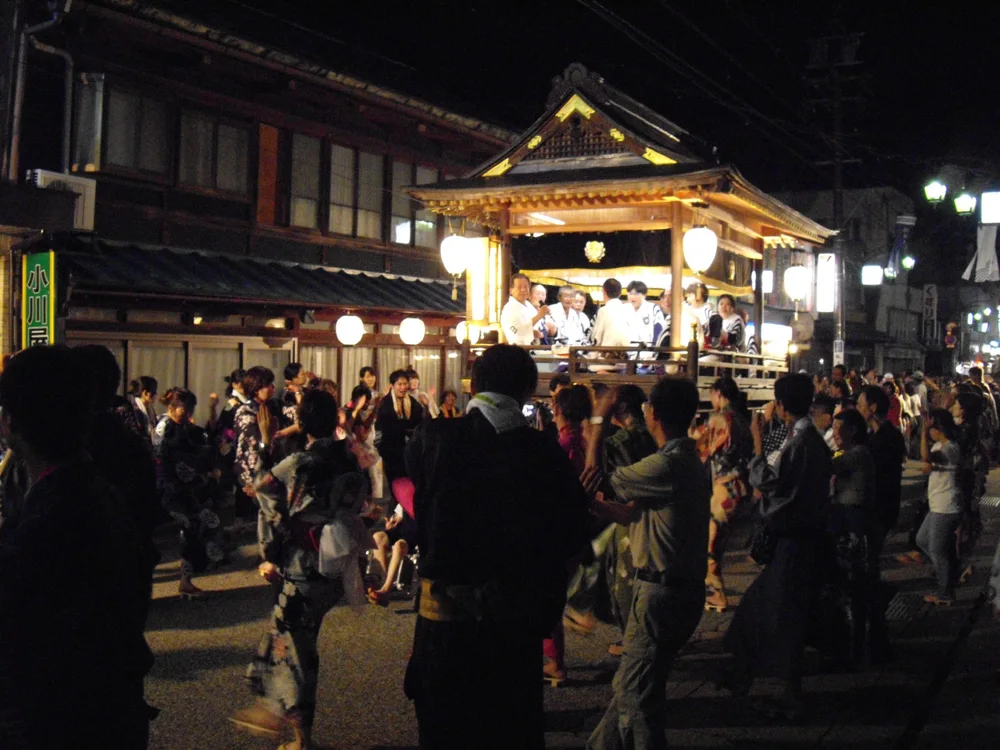
Gujo Odori in Gujo Hachiman usually starts at 8 pm, with the venue changing according to the date. During Obon, you can stay and dance until morning.
The four all-night dances: places and hours
The four all-night dances in 2026 had the following venues and hours, showing how each evening differed:
All four were Obon events, with the final night moving to Honmachi. Dancing generally goes ahead in rain, but evacuation information, weather warnings and similar conditions may lead to cancellation. Read the organiser's notice for the day before going out.
- 13 August: Hashimotocho to Shinmachi; 20:00–04:00 the next day.
- 14 August: Shinmachi to Hashimotocho; 20:00–05:00 the next day.
- 15 August: Hashimotocho to Shinmachi; 20:00–05:00 the next day.
- 16 August: Honmachi; 20:00–04:00 the next day.
How to join the dance circle
Singers and musicians perform on the central hayashi-yatai platform, with dancers moving around it. Watch from the side first, noting direction, steps and when people clap. Join in the same direction through a gap that does not obstruct others. Gujo Hachiman Tourism Association describes it as a dance to take part in: residents and visitors dance together, with no dress requirement.
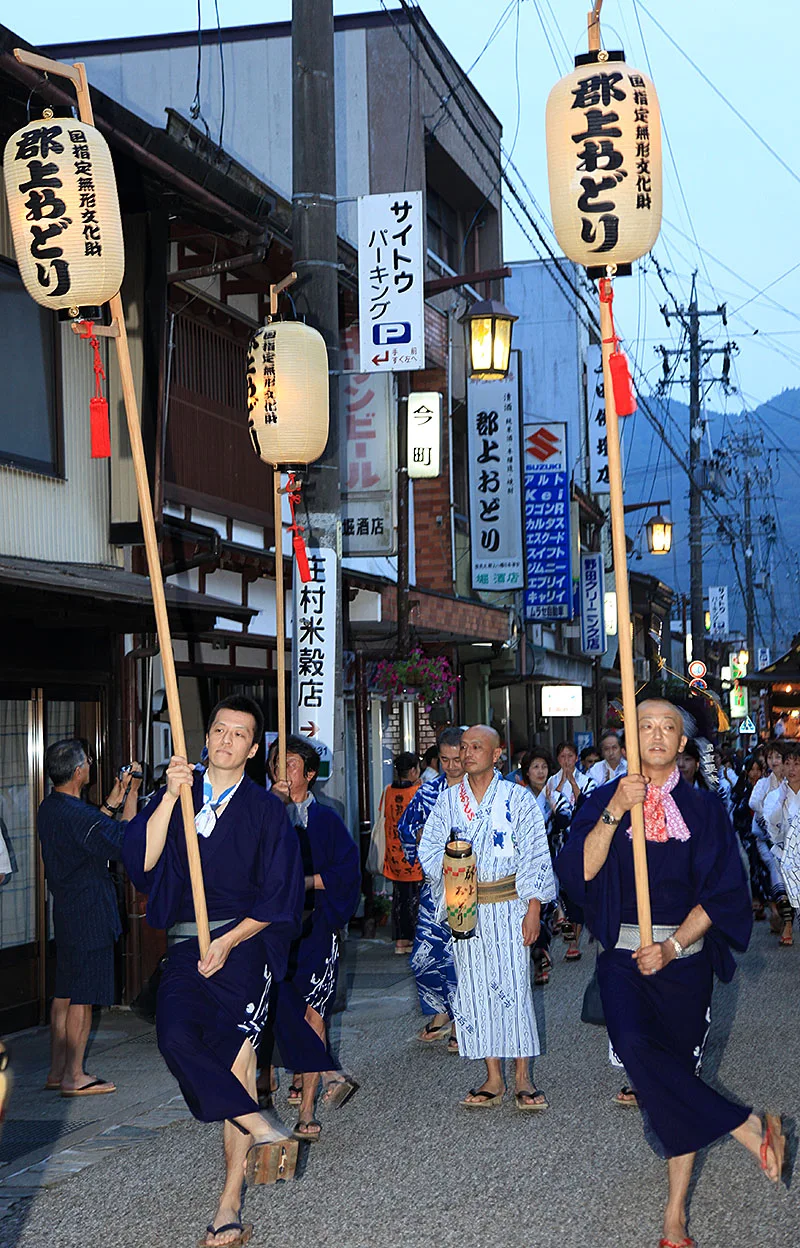
You need not learn hands, feet and turns at once. Start with the footwork, then add gestures once the pace feels familiar. It is natural to pause and watch when the tune changes. Move slowly outwards when you need a rest, leaving passageways clear. Leave the circle before filming on a phone; do not stop in the middle and walk backwards to record.
There are ten dances: Kawasaki, Harukoma, Sanbyaku, Gengen Barabara, Neko no Ko, Yatchiku, Matsusaka, Kocho Kawasaki, Gujo Jinku and Sawagi. Each has its own movements; some are steady and others faster. Start with the signature Kawasaki, then watch how others change their movements when the tune changes. The tourism association's dance introduction has descriptions and videos for each. Watch before travelling and learn more by following on site.
For guided practice, choose a regular class at the Old Government Building Memorial Hall. For an introduction to music and movements, see a demonstration at Gujo Hachiman Hakurankan. Their times and fees are separate. In 2026, regular classes used same-day ticket sales.
Do you need a yukata and wooden clogs?
No particular clothing is required; light, comfortable clothes are fine. Yukata and geta wooden clogs are common choices, and the sound of clogs striking the ground forms part of the rhythm. Change into a yukata during the day and allow walking time. For longer dancing in geta, try them first, bring plasters and change into familiar shoes if uncomfortable. Comfortable movement helps you follow the circle more than ill-fitting footwear chosen for photographs.
Outdoor summer dancing makes you sweat. Bring water and light rain protection, and choose a bag worn close to your body that does not hinder turns. If companions wear yukata, agree where to rest before leaving. When departing late, meet outside the circle first, then walk together to your accommodation or transport stop.
What is a dance certificate?
The Gujo Odori Preservation Society assesses dancers on site and may award a certificate for excellent dancing. The tourism association says the evening's set dance is displayed on the platform at about 22:00, with society members judging in the dance area. Selected dancers receive a wooden token to exchange for a certificate at the society office. It recognises dancing skill; it is not required for admission or joining the circle. On a first visit, enjoy the music and steps without blocking others in pursuit of a certificate.
Regular classes: three sessions, same-day tickets and afternoon plans
The 2026 regular classes were scheduled within the announced period of 18 July–5 September at Kawasaki Hall on the second floor of Gujo Hachiman Old Government Building Memorial Hall. Tickets were sold at the ground-floor shop till. Each session cost ¥1,100 per person, with capacity for 65; solo participants were welcome. That year, visitors bought tickets on the day by telling shop staff their chosen session and party size, paying, then going upstairs. The course calendar listed actual teaching days.
Session one, 14:30–15:20, taught Kawasaki and Gengen Barabara. Session two, 15:30–16:20, taught Harukoma and Neko no Ko. Session three, 16:30–17:20, taught Sanbyaku and a dance selected for the day. Choose the first for a signature dance, compare the second if you enjoy faster rhythms, or choose the third to practise Sanbyaku. Each is charged separately. All three cost ¥3,300 per person and occupy nearly three afternoon hours, so budget energy for the evening too.
Classes are indoors with no dress requirement; you need not bring geta specially. About ten minutes before starting, an announcement directs participants to the room. Show your ticket at the entrance. If arriving that morning, buy the ticket after lunch rather than sightseeing until just before class and then searching for the till. The 2026 conditions help distinguish two learning options: Hakurankan combines demonstrations with local exhibitions, while regular classes divide practice by dance.
Companions need not choose the same session. If one wants the old town and another wants Harukoma, meet outside the hall after session two and eat together. Agree on dances and class length before buying. If the evening venue is in a more distant neighbourhood, you still need to walk there after the afternoon course.
All-night facilities: storage, changing and rest on the transport map
The 2026 all-night transport guide listed two changing rooms, located on that year's transport map. Paid yukata hire and dressing services also operated in town. Changing rooms, hire shops and luggage storage are separate services. Before hiring, ask about collection, return, late-night return and storage of your own clothes so returning the outfit does not force an early departure. Use the luggage arrangements actually offered by your accommodation.
The organiser's 2026 information said there was no staffed luggage storage. It instead listed coin lockers at Jokamachi Plaza, the Old Government Building Memorial Hall and Machinami Koryukan, available around the clock that year. Find an empty locker that fits your bag. If possible, leave suitcases at your accommodation and bring only that night's water, phone, rain protection and other essentials.
The same notice listed a paid rest area at Hiyoshicho Chuo Community and a free one in Hachiman Primary School's gymnasium. Four baby-care stations offered breastfeeding and nappy-changing space. Hours and locations appeared on the annual transport map. Families can locate one near that evening's venue before choosing how long to stay. Rest areas provide an option outside the circle, but longer visits still need sleep and a plan for next-day travel.
The all-night events take place in summer. Official guidance warns that nights can remain hot and calls for water and rest. Plan dressing and cooling down separately: eat and change in the afternoon, prepare water before joining, then use your chosen rest area when tired. If older companions do not want to stand all night, agree where to split up and when to return. Keep the transport map on your phone so an early departure has a clear destination.
In 2026, for example, a food-stall area outside the Old Government Building Memorial Hall was due to start at about 18:30. The night market between Imamachi and Sakaemachi was due to open around 19:30–20:00, with about 11–18 food trucks and other traders. Together with existing restaurants, these provided dining options; identical stalls were not beside every dance venue. To eat before dancing starts, use stall locations and hours rather than writing only “buy dinner at the venue”. Take your rubbish away.
Parking shuttles had separate daytime and evening frequencies. In 2026, one small bus linked Hachiman Junior High School and Jokamachi Plaza from 13:00 to 19:00, leaving the school on the hour and the plaza at 45 minutes past. After 19:00, large buses ran back and forth until about 30 minutes after dancing ended. Shuttles made no intermediate stops and boarded passengers in arrival order. Check daytime intervals for afternoon sightseeing; at night, include walking to the shuttle and waiting in your return plan.
Gujo Odori history: local Bon dancing in summer streets
Gujo Hachiman Tourism Association describes a tradition of about 400 years in the castle town. Local accounts say an Edo-period lord encouraged Bon dances from across the domain to take place in the town to bring people of different social ranks together. Today, Gujo Odori remains linked to neighbourhood festival days, moving between streets, shrines and squares with one venue each night.
Gujo Odori is a nationally designated Important Intangible Folk Cultural Property of Japan. In 2022, it joined UNESCO's Intangible Cultural Heritage list as part of Japan's Furyu-odori dances. It remains an activity preserved and practised locally. Keep entrances clear and follow staff directions so the circle and the town's everyday spaces can work together.
Transport: Gujo Hachiman Station is outside the town centre
By rail, change from JR at Mino-Ota to the Nagaragawa Railway and get off at Gujo Hachiman. Official access information gives about 25 minutes on foot or 20 minutes by Mame Bus to Jokamachi Plaza. The plaza is a central transport and community hub, not a fixed nightly dance venue. Walk from there according to that evening's location.
Mame Bus loops through Gujo Hachiman Station, the Old Government Building Memorial Hall and other stops, useful for daytime access to the centre or Hakurankan. Do not assume it still operates when you leave at night. Check that day's services and include the walk from the venue to the station. Leave large bags at your accommodation before entering the dance area.
From Nagoya, Gifu and elsewhere, check highway buses and their stops for your date. Distinguish Gujo Hachiman Jokamachi Plaza from stops near the motorway interchange before buying; locations and onward connections differ. Plan access to the highway stop, the last usable departure and the walk there after leaving. If the final bus requires an early exit, aim for the first half of the evening or stay in the centre and travel next day.
Gujo City's bus information divides Mame Bus into red and blue loops. From Jokamachi Plaza, the red route goes via the Gujo General Government Building and Gujo Hachiman Station, then the municipal hospital, Old Government Building and City Hall; the blue route runs in reverse. The city gives about 50 minutes for a circuit. Even buses returning to the plaza need a direction and boarding-stop check. Singles cost ¥100 per person, under-sixes ride free, and a day pass costs ¥200. Pay when getting off. Compare whether you will ride at least twice with your walking plan.
Driving and temporary all-night transport
For 13–16 August 2026, an official free shuttle linked the temporary car park at Hachiman Junior High School with Jokamachi Plaza; frequencies are given above. Most car parks were within about 15 minutes' walk of the venue. Nagaragawa Railway also scheduled special trains for that year. Check departures for your specific travel date.
If driving, establish the walk from the car park and a late-night meeting place before leaving the car. Traffic increases during the event, and official guidance advises through traffic to use bypass roads outside the centre. Walk or use that year's shuttle after parking. If dancing until morning, arrange sleep for the driver. Rest before setting off when tired; do not combine a full night dancing with an immediate long drive.
Where to stay: start with your departure time
Central Gujo Hachiman suits first-time visitors, families and anyone wanting room breaks. Explore by day, walk to that evening's venue and return after some dancing without tying the whole night to the last bus. Check the property's actual address and distance from the venue. Gujo City covers a wide area; “Gujo” in a hotel name does not mean it is walkable from the dance.
The station area suits rail arrivals continuing by train next day, but the official walk between the station and Jokamachi Plaza is about 25 minutes. Add the venue-to-plaza distance for a more distant neighbourhood. Try the route in daylight or inspect it beforehand rather than locating bridges and junctions late at night.
Accommodation outside town suits drivers, arranged transport or visitors leaving in the first half of the evening. Include leaving the circle, walking, waiting and transfers when checking the final service. Dancing ending does not mean you can board immediately. Obon brings high accommodation demand. Once dates are set, book a room with suitable late arrival, luggage storage and next-day checkout arrangements.
Gujo Hachiman Hakurankan: see a daytime demonstration
Gujo Hachiman Hakurankan in Tonomachi introduces local culture and offers Gujo Odori demonstrations. For an evening visit, go after arriving in the afternoon to understand the platform, dances and movements before hearing live musicians and joining the circle. Outside dance dates, the museum remains an introduction to the tradition.
Its dance exhibits use diagrams and film to explain all ten dances and their history. Yukata-clad staff give live demonstrations mainly on weekends and public holidays, lasting about 15 minutes. The museum lists five times: 11:00, 12:00, 13:00, 14:00 and 15:00. Actual dates appear in a calendar published at the start of each month. With limited arrival time, choose a demonstration date first, then your bus or train into town. An ordinary opening day does not necessarily include a performance.
The museum currently lists 09:30–17:00, with last entry at 16:30 and closure from 24 December to 2 January. Admission is ¥540 from upper secondary school age, ¥320 for primary and junior secondary pupils, and free for preschool children. Combined tickets with Gujo Hachiman Castle cost ¥750 and ¥400 respectively. The museum says accessibility provision is incomplete. Contact it about routes before travelling if a companion needs assistance. Check museum information for demonstration times separately.
If also visiting Gujo Hachiman Castle, put uphill walking and museum visits in daylight and save energy for dancing. For a relaxed short participation, walk the town in the afternoon, have dinner and go to the venue. Avoid squeezing so many sights into the day that arrival becomes rushed.
Groups and tours wanting a specified demonstration book in advance. Individual visitors use the monthly calendar and daily information. This is separate from paid, dance-specific classes at the Old Government Building: demonstrations show movements with explanation; regular classes practise selected dances. For only half a day, choose one and leave time for town walks and dinner rather than missing a demonstration while moving between both.
A half-day introduction or a full night: dividing your time
With half a day and a wish for instruction, choose one regular class instead of a full museum visit. For local exhibits too, choose a Hakurankan demonstration. If doing both, put the museum in the morning or an early afternoon slot to reach session one at 14:30. Their content, hours and prices are above; decide first whether you want dance practice or exhibits.
All-night visitors should push next-day plans later. In 2026, the 13 and 16 August dances ended at 04:00 the following morning; 14 and 15 August ended at 05:00. Breakfast and checkout times affect how much sleep you can get. If returning to your room near the end, ask about late-checkout availability and fees when booking, then choose onward transport. Drivers must put sleep before driving.
Walk the castle town by day, return to the dance at night
Venues move. During daytime walks, identify the area you will use that night. In 2026, the opening festival on 11 July was outside the Old Government Building Memorial Hall, 16 July was in Kamitonomachi, 28 July in Shiroyama Park and 8 August outside Gujo Hachiman Station. These examples span streets, a hillside park and the station. Find venues afresh from the next year's schedule.
Jokamachi Plaza is at 69 Tonomachi, below the castle hill. Collect street information from its tourist office by day, then find the night's dance venue on the schedule. Normal facility hours are 08:30–17:00, with possible extensions during the dance season. Public toilets are open 24 hours. Arrive while the office is open for directions rather than looking for the counter just before dancing.
The plaza's central square normally accommodates buses and cars and becomes an event space when needed. Its facility page lists ¥520 per ordinary car per visit, with an additional night charge from 17:00 to 08:30. Compare dance-season parking with the annual transport arrangements too. A car left from daytime until the all-night dance ends crosses into night charging, so calculate the periods separately.
The free rest area and tourist office share the plaza hub, making a daytime stop possible. Changing rooms are provided only in the dance season. Check that year's locations and opening hours before arranging outfit collection. Round-the-clock toilets, indoor rest space and changing rooms are separate services; one service's hours do not apply to all of them.
Listening to the ten dances
Different tunes appear in one evening. The tourism association identifies Kawasaki as the signature dance, Harukoma as faster and Sanbyaku as easier to get wrong. Learn the beat of one before trying a second, rather than memorising ten sets of movements at once.
Agency for Cultural Affairs information says today's Kawasaki was adapted and choreographed in the Taisho period from Kocho Kawasaki, the older version. Both remain in the repertoire. When you hear similar names, watch for differences in movement and playing. Musicians perform on the central platform and dancers form a circle around it. Watching the platform's position relative to the crowd helps beginners understand how the circle moves.
The ten dances also preserve different local folk songs and movements. The Agency for Cultural Affairs calls Gujo Odori one of Japan's representative Bon dances and notes links with mountain-village songs of northern Mino. You need not memorise the history before visiting. When tunes change, watch nearby dancers and compare rhythms. On another visit, practise a tune you found less familiar before.
For the steadier Yatchiku, notice how movement connects with singing. The tourism association links its origin to late-Edo travelling performers making sounds with linked bamboo pieces at doorways in the castle town. Gengen Barabara is linked to palace attendants' ball games, with sleeve-adjusting gestures. These dance names do not make their meanings obvious. Remember the bamboo performance and ball-game images when watching official daytime demonstrations to connect names with movements.
Gujo Hachiman Tourism Association features Brent Borgundvaag's Kawasaki video. Watch the circle's steps and hand gestures, then join from the outside after reaching the venue.
Recognising gestures: Harukoma, Neko no Ko and the closing Matsusaka
The tourism association links Harukoma with Gujo's history of horse breeding. Its gestures suggest pulling reins, with strong forward movement and a faster rhythm. Watch nearby dancers raise their hands and step, then follow the beat. Compared with Kawasaki's steadier tune, it helps explain why movement changes after a musical switch. Not every fast tune is Harukoma.
Neko no Ko draws on kitten movements, linked locally to silkworm-farming households keeping cats to catch mice. Such names and gestures give children an easy introduction. The tourism association also explains Sanbyaku through farming actions such as throwing rice bundles and walking in wet paddies on field clogs. Read this background with official daytime demonstrations. At night, follow nearby dancers' direction and rhythm rather than stopping suddenly to imitate a pose.
The tourism association says Matsusaka is traditionally the evening's final dance. Visitors staying only for the first half can leave for their transport. To see the finish, arrange around that night's ending and shuttle first. Ordinary and all-night sessions differ by several hours; a familiar tune does not mean identical timings. September's closing event also has a lantern procession accompanying the platform. Treat the dance ending and later procession separately.
Sawagi features distinct clapping, which the tourism association traces to popular songs of the Genroku era. Gujo Jinku is linked to sumo songs introduced in the late Edo period, with movements drawn from entering the ring. Recognise these through hands and posture, alongside Neko no Ko's imitation and Sanbyaku's farming gestures. Watch practice videos one dance at a time, then follow whichever tune plays on site. Familiar names make choosing your next class easier.
Choose a date by the type of dance evening
Look at event names as well as weekends in the annual schedule. Gujo Odori connects with local festival days. Agency for Cultural Affairs examples include Yasaka Shrine's Tenno Festival, Tosenji's Benten Tanabata Festival and Kamimasugata's Jizo Festival. These link Bon dancing with particular neighbourhood rites. A night outside Obon also shows how dancing spreads across the summer.
In 2026, Yasaka Shrine's Tenno Festival on 16 July was in Kamitonomachi; Daijoji's Sanjubanshin Festival on 1 August was in Honmachi; Tosenji's Benten Tanabata Festival on 7 August was also in Honmachi; and the Masugata Jizo Festival on 24 August was in Kamimasugatacho. Festival name and venue are separate schedule columns. Use the venue when choosing accommodation and the festival name when reading the cultural background.
Opening and closing events offer different ends of the summer. At the 11 July 2026 opening, an odori-nagashi moving dance went from outside Juroku Bank to the Old Government Building Memorial Hall before formal dancing. The 5 September closing ran from Shinmachi to Imamachi, with a lantern procession sending off the platform at 23:00. For a future opening or closing, check whether corresponding activities are planned and their exact times, then arrange return transport after dancing and any additional procession.
Individual or group dance competitions also give spectators and participants different rhythms. At the start, watch how competitors perform the same tune, then join when general dancing opens. Families can use this time to watch the steps and let children decide whether to try. That year's schedule gives competition dates, start times and general admission times, so there is no need to guess from previous years.
A few useful answers
Is this the same event as Shirotori Odori?
Shirotori Odori and Gujo Odori in Gujo Hachiman are separate events in Gujo City, with separate schedules and venues. Confirm which dance you want before planning all-night activities or special trains, then match the stations and venues.
What should I do if it rains?
The tourism association's 2026 schedule says dancing generally proceeds in rain, but evacuation information, weather warnings and similar conditions may lead to cancellation. Check the day's announcement before leaving. Use light rain protection while resting outside the circle and watch the ground and surrounding space when dancing. If cancelled, visit Hakurankan by day to learn about the dance, rest at your accommodation that evening and travel next day according to transport conditions.
Official information and references
Sources used in this guide.
- Gujo Hachiman Tourism Association: dance schedule
- TABITABI Gujo: 2026 all-night dance transport
- Gujo Hachiman Tourism Association: dances, repertoire and certificates
- Gujo Hachiman Hakurankan: admission, hours and accessibility
- Gujo Hachiman Hakurankan: dance demonstrations
- Agency for Cultural Affairs: Gujo Odori heritage record
- Jokamachi Plaza: access
- Jokamachi Plaza: facilities and hours
- Gujo City: Mame Bus fares and red/blue routes
- Gujo City: bus routes and timetables revised April 2026
- TABITABI Gujo: 2026 regular dance classes