Autumn foliage at Gifu's Yoro Park peaks from mid-November to early December. It takes about 50 minutes to walk from Yoro Station to the waterfall. Check 2026 leaf updates, free shuttles, and parking options to plan a route via Kokozaka Slope, the kids' park, or the Site of Reversible Destiny.
- Region & Focus
- ChubuFall foliage
- Reading Scope
- 21 min read · 9 chapters · 7 Q&As
- Official Verification
- 26 official sources checkedUpdated November 22, 2026
- Key Topics
- ItinerariesSeasonsRail travel
Chapter Route Map (tap any stop)
- Late November Works Best; Check Fudo Bridge Leaf Updates First
- Climb Kokozaka Slope from Matsukaze Bridge, Then Linger in the Gorge on the Way Down
- Two Rail Transfers from Nagoya: Check Yoro Railway Departure Times
- Free Bus to Matsukaze Bridge; Mini-Shuttle Uphill to Myoken Bridge
- Driving: Pick Your Parking Lot First; Private Upper Lot Cuts the Climb
- Playgrounds First for Kids; Plan Rest Spots Before the Descent for Older Travelers
- Visiting the Site of Reversible Destiny in Fall: Save the Steep Slopes for Stronger Walkers
- The Filial Son Legend, Dango Skewers, and an Easy Lunch Break
- Half-Day from Nagoya, or Pair Daytime Yoro with Nabana no Sato at Night
- Quick Q&A
From Yoro Station, it takes about 10 minutes on foot to reach the entrance of Yoro Park and roughly 50 minutes to walk all the way to Yoro Falls. If you are coming from Nagoya with kids or older relatives, use those two walking times to decide how far to go. For gorge foliage alone, you can start at Matsukaze Bridge and turn back around Fudo Bridge, or keep climbing up Yoro Kokozaka Slope to the waterfall. Gifu Prefecture's official tourism site lists the typical viewing season as mid-November through early December, and Yoro Park's November 22, 2026 update reported about 50% color change across the grounds.
Late November Works Best; Check Fudo Bridge Leaf Updates First
If you only have one weekend to spare from Nagoya, late November is a reliable window for Yoro, with wiggle room on either side. Gifu Prefecture's official tourism guide stretches the season into early December, while Yoro Town's local data pinpoints late November as the usual peak. One tells you which weeks to target, and the other narrows down when colors tend to concentrate. To fine-tune your day trip, check the Yoro Park 2026 autumn foliage photo updates. The park began posting updates on November 13: color was only starting around Fudo Bridge on the 13th, brighter foliage appeared on the mountaintops by the 16th, overall color hit roughly 30% on the 18th, and both the November 20 and November 22 reports showed about 50% color across the park.
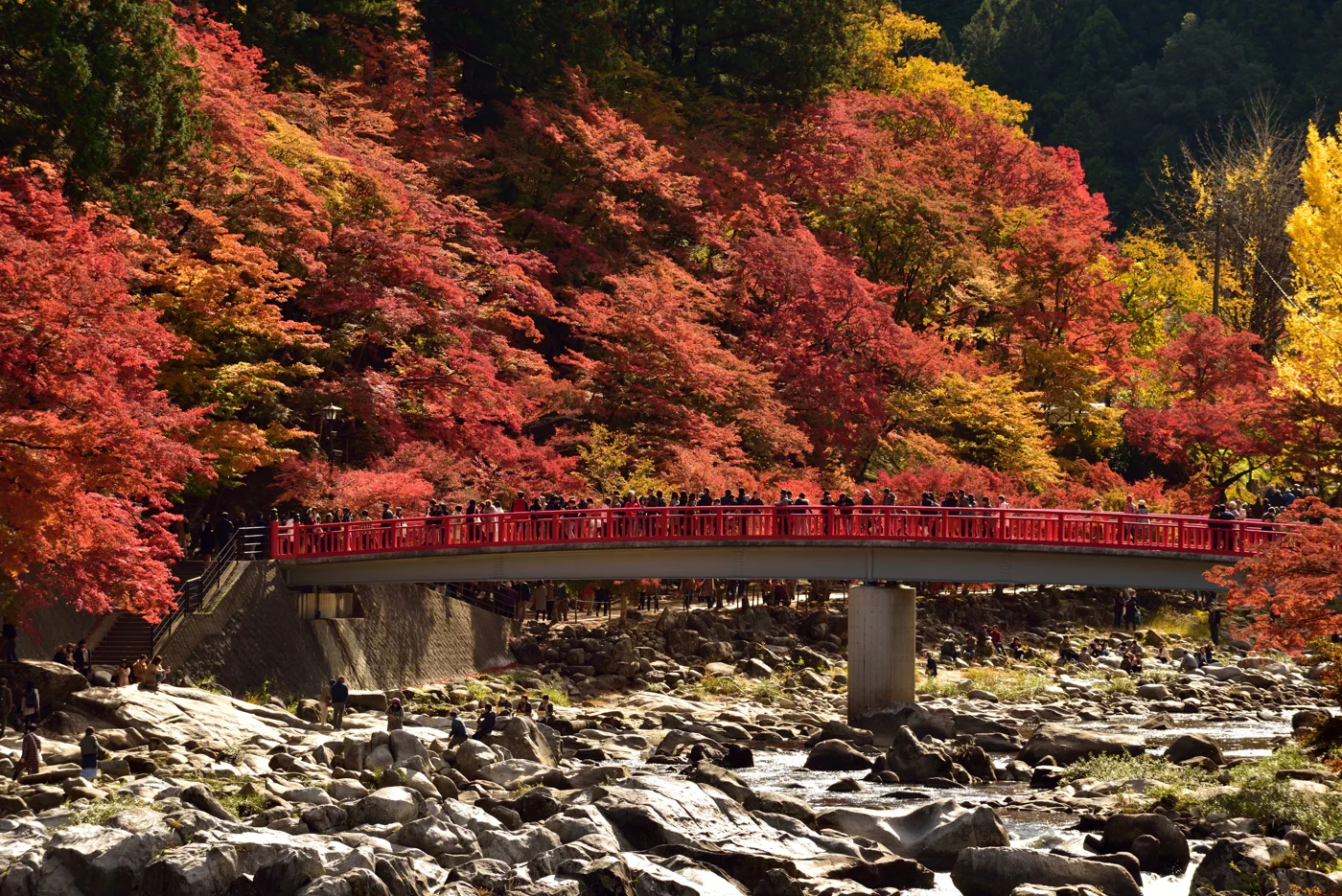
Those park photos offer a practical benchmark. Because several updates focus on the area near Fudo Bridge, it is easy to compare changes in the same spot and decide where to head once you arrive. Keep in mind that the 50% figure describes the park as a whole, while the waterfall, the gorge beneath the bridges, and the open lawns turn at different paces. If you just want an easy riverside walk, good color near the bridges makes a shorter loop worthwhile. If you are hoping to frame the waterfall with autumn branches, hike up to the falls first and save part of your photo time for the bridges on the way down rather than staking your whole trip on one shot.
The 2026 Yoro Park Momiji Festival runs from October 1 to November 30, organized around the park by the Yoro Town Tourism Association. Events such as plein-air sketching and an AR word-hunt happen on specific dates, so check the park's festival announcements and event posters to match your visit. The lawn night event on October 24-25 and the craft markets in early November have already wrapped up. If you visit during the final days of November, focus on the daytime gorge walk; in early December, use the latest leaf reports to plan the same route.
Around late-November holidays, match your travel date to the shuttle calendar. Sunday, November 29, 2026 is the final day of the season's free bus service, even though the Momiji Festival ends the following Monday. If you go on November 30, plan to walk from Yoro Station or call a taxi in advance. To save your legs with either the free bus or the mini-shuttle, both services are scheduled to run on the November 23 national holiday and the November 28-29 weekend.
Autumn foliage at Gifu's Yoro Park peaks from mid-November to early December. It takes about 50 minutes to walk from Yoro Station to the waterfall. Check 2026 leaf updates, free shuttles, and parking options to plan a route via Kokozaka Slope, the kids' park, or the Site of Reversible Destiny.
Climb Kokozaka Slope from Matsukaze Bridge, Then Linger in the Gorge on the Way Down
Treat the free Yoro Falls Entrance Parking Lot (Yoro-no-Taki Iriguchi Chushajo) as the trailhead for the waterfall walk. Managed by the park right next to Matsukaze Bridge, it also doubles as a stop for the free shuttle bus. From here to Yoro Falls is about 1.2 km; the park's attraction page estimates 30 minutes one way, while its access page lists 30 to 40 minutes. At a relaxed pace, budget over an hour just for the round-trip walk, plus extra time for photos, snack shops, or side paths. Doing the waterfall before lunch makes it easier to gauge everyone's energy for the afternoon.
The trail follows Takidani Valley downstream from the falls, with Yoro Kokozaka Slope running along the left bank of the gorge up to the viewing area. Small shops and a tourist information desk line the path, and bridges along the way offer views of the water. The park map marks seven bridges through the gorge, giving you multiple spots to look back downstream as you climb. Matsukaze Bridge anchors the start of the hike, while Fudo Bridge sits nicely on the return stretch heading back down toward the base. If a tour group stops in the middle of a bridge, step forward to a wider pull-out to take photos and keep the narrow gorge paths clear for hikers going both ways.
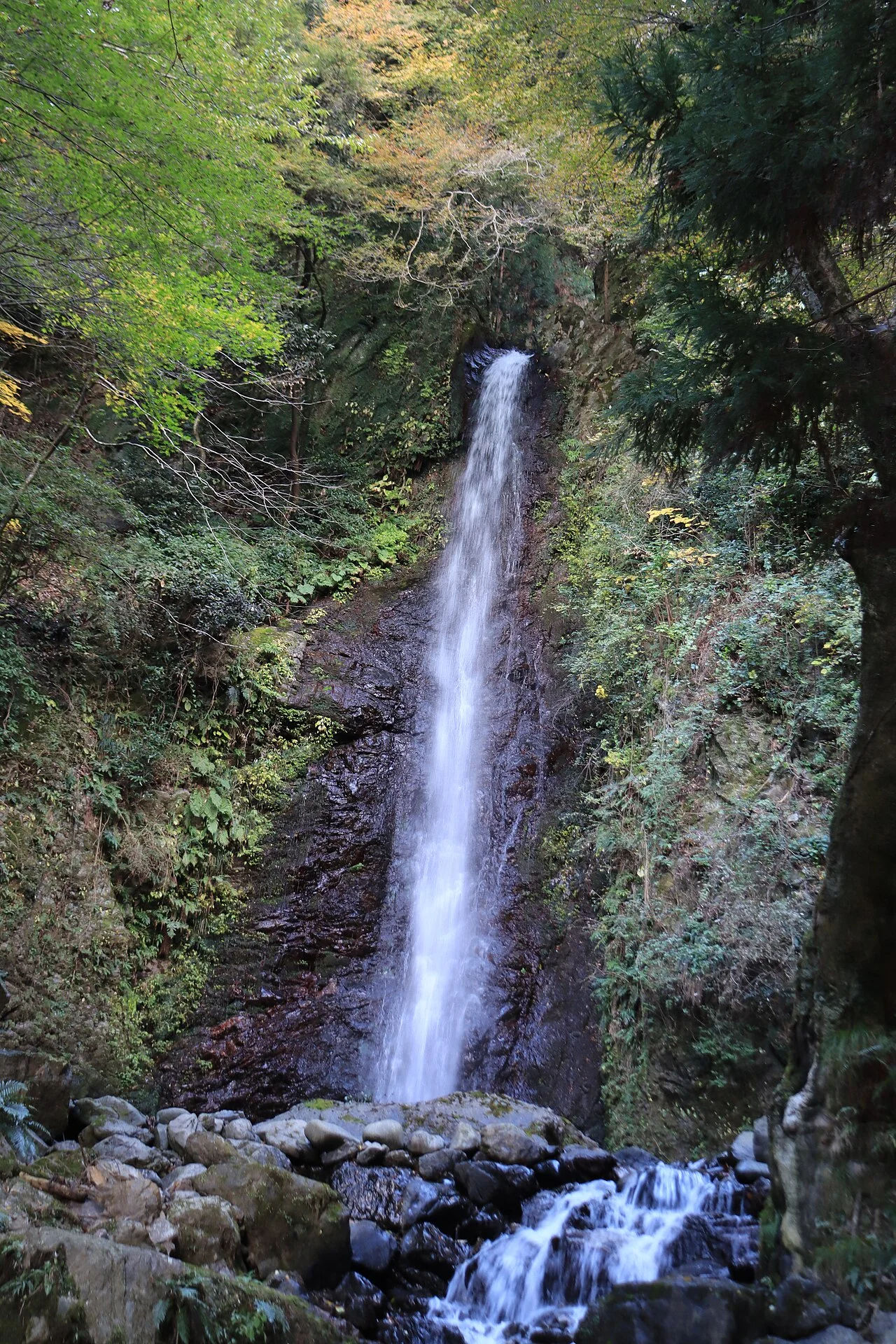
At the plaza in front of the falls, water drops roughly 30 meters high and 4 meters wide down the dark cliff face before continuing through Takidani Valley below. It is worth pausing here, where autumn foliage, dark rock, and white spray fill a single frame. On a phone, step back to a safe spot to capture the trees flanking both sides, then switch to zoom for close-ups of water hitting the rock ledges. Earlier in the season when color is still light, frame nearby branches or bridge railings in the foreground to show the transition.
If you are carrying camera gear uphill, pack light enough for the climb. Keep bridge decks and narrow sections of Kokozaka Slope clear, and wait until you reach a stable, roomy spot by the waterfall plaza before setting up for long-exposure shots. With only a phone, grab a horizontal shot of the bridges and stream on the way up, then switch to vertical framing at the falls. When a spot gets crowded, walk on to the next bridge for stream shots and loop back later. The park prohibits drones and asks visitors not to block foot traffic while taking photos.
If you still have energy on the way back, pair Yoro Shrine, Kikusui Spring (Kikusuisen), and Furogaike Pond into one detour. Kikusui Spring sits within the shrine grounds, and the pond area picks up autumn color as well. For a quieter side path, the park highlights Yoro Seseragi Kaido heading east from Myokendo Hall as a less crowded foliage walk; look for signs to Myokendo or that full trail name. Nearby is the Myoken Bridge shuttle stop, so agree on whether you mean the bridge or the hall if anyone is meeting up there.
If someone in your group tires out early, they can turn back before the next incline and wait near Matsukaze Bridge. Splitting the outing into a waterfall climb and a shorter gorge stroll gives slower walkers a clear turnaround point. Even walking a short distance past the entrance parking lot gets you bridge views of the stream and flat places to rest. When splitting up, choose a specific bridge or the Filial Piety Hometown Hall (Oyako-ko no Furusato Kaikan) as your meeting spot rather than dropping a generic map pin on Yoro Park.
The gorge trail has no streetlights, and the park notes that Kokozaka Slope is both narrow and steep. Plan your descent for daylight if you want unhurried photo stops. After rain, check the footing on wider stretches first, slow down where wet leaves cover puddles, and decide whether to keep climbing or turn back. If your shoes slip easily, someone has shaky ankles, or you are juggling a stroller and an umbrella, save the waterfall climb for dry weather. Continuing up from the Mount Yoro trailhead is a separate mountain hike; turning back at the waterfall completes the foliage walk.
Two Rail Transfers from Nagoya: Check Yoro Railway Departure Times
If you are staying near Nagoya Station and returning to the city afterward, start by looking up the JR Tokaido Main Line to Ogaki. At Ogaki, transfer to the Yoro Railway bound for Kuwana and get off at Yoro Station (posted as Yoro / Yoro Park). Travelers coming from Gifu City or Sekigahara can connect at Ogaki as well. Yoro Town lists the Ogaki-to-Yoro ride at about 25 minutes, counted from the Yoro Railway departure, so build in extra time to exit JR, walk between platforms, and wait for the transfer.
The alternative route runs from Nagoya on either the JR Kansai Main Line or the Kintetsu Nagoya Line to Kuwana, where you transfer to the Yoro Railway bound for Ogaki. Yoro Town puts the Kuwana-to-Yoro ride at about 40 minutes. This works well if you are heading to Nagashima in Mie Prefecture later in the day or staying overnight in Kuwana. Kuwana Station serves JR, Kintetsu, and the Yoro Railway; once there, follow signs for the Yoro Railway. When routing from Nagoya, check both JR Nagoya and Kintetsu Nagoya entrances ahead of time since they sit in different parts of the station complex.
Before heading out, pick a target return train on the Yoro Station timetable along with the following departure as a backup. Checking only outbound trains often leaves visitors rushing down the gorge, into restrooms, and back to the station at the last minute. If you want to stop for dango on Kokozaka Slope, start from your chosen return train and subtract the walk back from the falls. Leave cushion time for rejoining your group and taking photos, and avoid cutting it within a few minutes between a shuttle arrival at Yoro Station and a train departure.
Even if you tap an IC transit card through JR or Kintetsu, buy a paper ticket at the Yoro Railway ticket window or vending machine when transferring. The railway provides instructions for both cash and cashless ticket machines: if you pay by e-money, remember to take your printed ticket from the machine. For groups, it is fastest for one person to buy all the adult and child tickets at the machine while everyone else checks whether your platform is for Kuwana or Ogaki. If you plan to return via the opposite terminal, buy your return fare based on your actual destination.
Leaving Yoro Station, it is about a 10-minute walk to the park's base entrance area. The Yoro Railway lists a roughly 4.5 km round-trip walking course linking Kodomonokuni, the Site of Reversible Destiny, the Filial Piety Hometown Hall, and Yoro Falls, a useful benchmark against your group's usual walking pace. Simply walking from the station to the waterfall and back is listed at about 2.1 km each way on the railway's route map, before factoring in stops and uphill climbs. If you plan to walk the whole day, decide after lunch whether to add paid or hillside attractions so your return train is easier to time. When searching maps, include Gifu Prefecture and Yoro Town alongside Yoro Station, because Yoro also pulls up Yoro Valley in Chiba Prefecture.
Free Bus to Matsukaze Bridge; Mini-Shuttle Uphill to Myoken Bridge
For autumn 2026, the free shuttle bus runs on Saturdays, Sundays, and national holidays from September 12 through November 29, stopping at Yoro Station, in front of Yoro Park Kodomonokuni, and at Matsukaze Bridge. Get off at Kodomonokuni for the kids' play areas, or ride to Matsukaze Bridge to start the uphill gorge walk to the falls. It cuts out the station-to-trailhead walk completely, which helps if part of your group wants the playground while others head for the waterfall.
A second free shuttle, the Yorokan-go mini-bus, operates on Saturdays, Sundays, and national holidays through December 6, 2026, from 10:00 to 16:00. Uphill trips run from Yoro Station to Myoken Bridge, while downhill trips run from Matsukaze Bridge back to Yoro Station, with no intermediate stops allowed. If you want to ride up and stroll back down, remember Myoken Bridge going up and Matsukaze Bridge coming back. The weekend of December 5-6 is the last late-autumn window to ride the mini-shuttle after the main free bus finishes for the season.
Both free shuttle services are scheduled to resume on weekends and holidays from March 13 to March 28, 2027. On dates between the fall and spring seasons, plan on walking or taking a taxi. Yoro Station has no regular public bus routes and no permanent taxi stand out front. When you need a ride, the park lists Gifu Kintetsu Taxi at 0584-32-1135. Tell the driver clearly whether you want the lower parking lot beside Matsukaze Bridge or the upper parking lot near the falls; the taxi company notes that the upper road closes when snow or ice accumulates.
Departure times for the free bus are posted on the park shuttle schedule notice. During bad weather or heavy crowds, the mini-shuttle may run on a limited schedule or be suspended. While waiting at the station, know which entrance you can comfortably reach on foot. If someone in your group relies on transit to handle the slope, stick to the lower park grounds about 10 minutes from the station or call a taxi using the number above. Families who ride up and walk down can line up their return bridges and lunch stop along the downhill path.
| Service | Late-Autumn 2026 Schedule | Key Boarding & Drop-Off Stops |
|---|---|---|
| Free Shuttle Bus | Saturdays, Sundays & holidays, Sept 12 - Nov 29 | Yoro Station, Kodomonokuni-mae, Matsukaze Bridge |
| Yorokan-go Mini-Shuttle | Saturdays, Sundays & holidays through Dec 6, 10:00-16:00 | Uphill to Myoken Bridge; downhill from Matsukaze Bridge to Yoro Station |
Driving: Pick Your Parking Lot First; Private Upper Lot Cuts the Climb
Yoro Park's official site estimates about an hour by expressway from Nagoya, roughly 10 minutes after exiting the Tokai-Kanjo Expressway at the Yoro Interchange. From the Meishin Expressway, it is about 20 minutes from Ogaki IC and 25 minutes from Sekigahara IC. Those are highway-exit driving times, so add time for picking up a rental car in Nagoya, loading bags, and finding a space. Entering just the park street address, 1298-2 Takabayashi, often routes drivers to the lower administrative offices first; enter the exact lot name in your GPS instead.
Most visitors heading for autumn leaves and the waterfall start at Yoro-no-Taki Iriguchi Parking Lot (Yoro Falls Entrance Parking), reached by turning west at the Yoro Park East intersection off Prefectural Route 56. Parking in park-managed lots is free on a first-come, first-served basis, and this lot puts you right by Matsukaze Bridge and Kokozaka Slope. If the Site of Reversible Destiny is your first stop, Lot 2 sits conveniently next to Rakuichi Rakuza. The park recommends Lot 1 for visitors combining the waterfall and Reversible Destiny, Lot 3 for the putter golf course and tennis courts, and the Kodomonokuni Parking Lot if you are only visiting the children's area.
To skip most of the uphill hike to the falls, you can drive up to the private, paid Yoro-no-Taki Parking Lot near the top. Even after parking, there is still a short walk: the park's access page estimates about 5 minutes while the FAQ says about 10 minutes, so budget 5 to 10 minutes. The approach is a narrow mountain road, so vehicle width, comfort passing oncoming cars, and wet pavement after rain all matter. Rates and hours are set by the private operator (tel: 0584-32-0713). If you are driving a wide rental or traveling with passengers prone to carsickness, commit to the lower free lot and keep the walk along the bridges.
According to the park's hours and fees page, park-managed lots open at 9:00, with last entry at 16:15 and exit required by 17:15 (though the access page and the March park brochure still list closing as 17:00). Plan to be back at your car before 17:00, allowing time for the downhill walk from the waterfall. If you want an earlier start than 9:00 while using park parking, arrive on an early train and walk from Yoro Station instead.
Park facilities close on Tuesdays, shifting to the following day when Tuesday is a national holiday. On regular closure days, the Yoro Falls Entrance Parking Lot stays open, while Kodomonokuni, the Site of Reversible Destiny, and sports facilities are closed. Over the year-end holidays from December 29, 2026 to January 3, 2027, even the waterfall entrance lot shuts down, and Gifu's tourism page excludes New Year's from open waterfall strolling dates. Plan around those winter closure dates, and keep Tuesday visits to daytime walks along the gorge.
Playgrounds First for Kids; Plan Rest Spots Before the Descent for Older Travelers
Gifu Prefecture Kodomonokuni (Children's Land) is the easiest anchor for families traveling with kids. Admission is free and hours run 9:00 to 16:30. Toddlers ages 1 to 3 can start at the covered Sukusuku Hiroba at their own pace, while energetic kids up to age 12 have log walks and rope climbs at Boken Hiroba plus slides and swings at Wanpaku Hiroba. The park treats the children's pool and splash pad as summer-only areas, so autumn visits center on the dry playgrounds and open lawns.
This zone also includes the sloped Nobinobi Hiroba lawn, which looks out toward the Nobi Plain. It is a natural spot for a picnic or breather after the playgrounds before deciding whether kids still have energy for a gorge walk. The green-roofed Kodomo no Ie (Children's House) provides nursing rooms and indoor rest space. According to the park's family services page, multi-purpose restrooms include diaper-changing tables, but Kodomo no Ie does not supply hot water for formula, warm baby food, or lend out a microwave, so pack whatever water and snacks your baby needs before leaving Nagoya.
Starting March 20, 2026, the multipurpose hall inside Kodomo no Ie added a cushioned indoor play zone open 9:00 to 16:30 for toddlers through elementary schoolers. Shoes must come off, food and drinks are prohibited inside the play zone, and the room closes when scheduled events occupy the hall. If outdoor play structures are still damp after rain, start indoors and head out to the lawns or bridges once the ground dries. Families interested in storytelling or craft workshops should check session times, as some require advance reservation.
Stroller and wheelchair access varies by area, and the park maps multi-purpose restrooms and information desks on its family and accessibility guide. For travelers using a wheelchair or uneasy on steep descents, stick to the flat paths around Kodomonokuni and the lawn edges where turning back is easy. If your group wants to see the gorge, start by checking path conditions around Matsukaze Bridge; non-hikers can rest near the bridge and nearby shops while others continue uphill. On multi-generational trips, splitting up for an hour is much easier than waiting on steep slopes.
For a half-day family schedule, give kids plenty of playground time in the morning, then walk a short stretch up from Matsukaze Bridge if everyone still feels fresh. Conversely, if the waterfall is your top priority, tackle Kokozaka Slope in the morning and save the playgrounds for the lower grounds afterward. Just keep in mind that Kodomonokuni closes at 16:30; if playground time matters most to your kids, skip the falls and take an easy post-lunch stroll by the bridges instead.
Visiting the Site of Reversible Destiny in Fall: Save the Steep Slopes for Stronger Walkers
Yoro Tenmei Hantenchi, officially known in English as the Site of Reversible Destiny - Yoro Park, opened in 1995 right next to Kodomonokuni as a large-scale installation by Shusaku Arakawa and poet Madeline Gins. Just inside the entrance on the left sits the Memorial Hall with architectural drawings and models. The centerpiece Critical Resemblance House works like a labyrinth you can enter from multiple directions, with floor layouts mirrored on the ceiling overhead. Outside, an elliptical field of steep hills, hollows, and winding paths reveals maps of the Japanese archipelago from different angles.
Hours run 9:00 to 17:00, with last admission at 16:30. Admission is ¥850 for adults, ¥550 for high school students, ¥350 for elementary and junior high students, and free for preschoolers; elementary, junior high, and high school students must be accompanied by an adult. Coin lockers inside cost ¥100 (non-refundable), and the museum shop can hold luggage that does not fit. If you are carrying a heavy camera bag or extra kids' gear, drop the weight first before tackling the tilted ground.
The outdoor terrain features slick sloped surfaces and uneven dips, limiting where strollers and wheelchairs can safely go; ask the museum shop staff which areas are accessible. Families with young kids should start near the entrance and stay close beside children exploring the steeper mounds. Older relatives who already climbed the waterfall trail can tour the Memorial Hall, relax outside the gate, or grab an early lunch next door at Rakuichi Rakuza while others finish the field. In light rain, keep the outdoor loop brief or swap the order with indoor stops so you do not rush on slippery concrete.
If your schedule only fits one major stop, prioritize what brought you to Yoro. Travelers heading back to Nagoya for dinner do well walking the waterfall in the morning and seeing how much time remains for the art park after lunch. If you came specifically for Arakawa and Gins, enter the Site of Reversible Destiny first and limit your gorge walk to the stretch between Matsukaze Bridge and Fudo Bridge. You can also tour Reversible Destiny in the morning and check your footing at the gorge after lunch; if damp leaves stick to your soles, keep the uphill climb short.
Families with older kids who want active time on gentler slopes can head to the park's putter golf course instead. Visitors play two designated 9-hole loops for an 18-hole round, which the park estimates takes about an hour. Club and ball rentals are free, and green fees are ¥500 for adults and ¥250 for junior high students and younger (must be accompanied by a parent or guardian). Last tee-off is 16:00 and the course closes at 17:00. Skip it if you are just linking the playground with a short bridge walk, or slot it into the afternoon if everyone wants a group game.
The Filial Son Legend, Dango Skewers, and an Easy Lunch Break
You can pick up the local folklore behind the waterfall at the Filial Piety Hometown Hall (Oyako-ko no Furusato Kaikan). According to Yoro Town's legend, a dutiful woodcutter gathering firewood to support his father discovered a spring that smelled of fine sake and carried it home in a gourd. The hall screens an introductory video and displays local Yoro specialties. It makes an easy stop either climbing up or heading down, though it closes in winter, when outdoor stops shift to Yoro Shrine and the gorge bridges.
That gourd appears on Yoro Town's official emblem, which ties directly to the gourd-shaped souvenirs sold along Kokozaka Slope. If you want one more historic stop nearby, Yoro-ji Temple sits in the same area and is said by the park to have been founded by Genjo-nai, the filial son of the legend. From Kikusui Spring near the shrine, paths also connect to Furogaike Pond and the Empress Gensho Imperial Visit Monument; the town links Empress Gensho's 717 visit to the spring with the era name change to Yoro. Save this loop for the downhill walk after the falls.
Seeing Kikusui Spring from Yoro Shrine also connects the landscape to local ceremonies. According to the park's anniversary schedule, a Wakamizu-tori spring-water ritual takes place at Kikusui Spring at 10:00 on March 21, 2027, offering water to Yoro Shrine and Yoro-ji Temple, a date when the spring free shuttle is running. For autumn visitors, the shrine and spring offer a quieter pace than the main trail: taking time at one shrine and one bridge feels much more relaxed than rushing to check off the whole park map.
Keep snacks casual along Kokozaka Slope, stopping at whichever shop catches your eye for grilled dango or Yoro Cider. For a sit-down meal, put Rakuichi Rakuza Yoro at the park base before your afternoon stops; the park lists food orders from 10:00 to 16:00, with occasional weather closures, making it handy to eat before entering the Site of Reversible Destiny. If you packed bento boxes, spread out on the lawns or use designated dining areas such as the Kodomo no Ie multipurpose hall (remembering that the cushioned indoor play zone inside the hall forbids food and drink). Open flames are banned across the park, so bring ready-to-eat picnic food.
To mark the 10th anniversary of the Yoro Kokozaka Slope naming, food trucks are scheduled for March 6, 7, 13, and 14, 2027, starting at 10:00 in Parking Lot 2. Drivers heading to the Site of Reversible Destiny on those dates should follow on-site parking signs. Because the spring shuttle bus does not start until March 13, anyone arriving by train for the first weekend of food trucks on March 6-7 will need to walk from Yoro Station.
Half-Day from Nagoya, or Pair Daytime Yoro with Nabana no Sato at Night
For a half-day rail trip from Nagoya, focus on gorge photography and one uphill push. Transfer at Ogaki, then walk or ride the shuttle to Matsukaze Bridge. Walk up to the waterfall, take photos, and stroll back down with time for snacks on Kokozaka Slope. Pick either Yoro Shrine or the kids' playground to round things out, then match your descent to your planned return train or the backup departure after it. If you are catching a Shinkansen back from Nagoya later, allow generous platform-transfer time and stick to a single route inside the park. Travelers with an extra day in the city can save urban ginkgo avenues and gardens for another outing with our Nagoya autumn gardens and ginkgo route.
Families wanting an unhurried pace can easily make Yoro a full daytime outing. Moving between the waterfall, gorge bridges, and lower lawns involves steady inclines, so skipping a second city lets you sit down for lunch and enjoy one afternoon attraction without rushing. Rail travelers can time their walk back to Yoro Station from Kodomonokuni or Reversible Destiny, while drivers can park midway between their two main stops for the day. If your kids just want room to run while adults rest on a bench, staying in Kodomonokuni for the afternoon fits the day far better than racing down the highway.
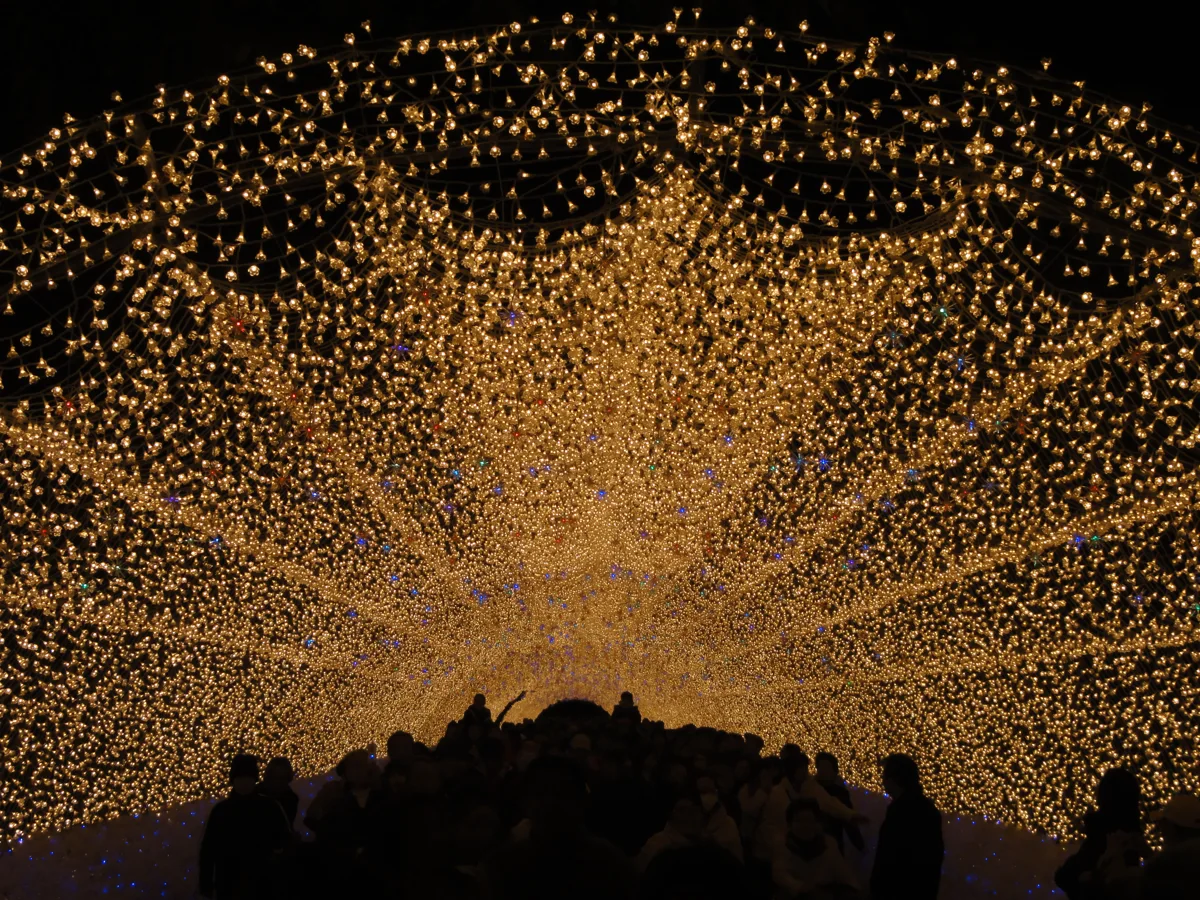
If you want to continue to Nabana no Sato in Kuwana, Mie Prefecture the same day, keep Yoro as your daytime stop and pick just one afternoon spot between Kodomonokuni and Reversible Destiny after lunch. Calculate your drive time to Nagashima from your actual parking lot and park exit, especially if you parked at the private upper lot with its narrow mountain road. Nabana no Sato's 2026-27 winter illumination runs from October 17, 2026 through May 31, 2027, closing on January 6 and 7, 2027. Since lighting and closing times shift by date, plan dinner and arrival using the official Nabana no Sato operating calendar.
You can also connect the two by rail, routing through Kuwana: ride the Yoro Railway from Yoro to Kuwana, transfer to the Kintetsu Nagoya Line to Kintetsu-Nagashima Station, and board the Mie Kotsu shuttle bus straight to Nabana no Sato. Note that direct buses from Kuwana Station to Nabana no Sato suspend service during the illumination season, so board at Kintetsu-Nagashima instead. Check the last bus back from Nabana no Sato to Kintetsu-Nagashima and evening trains to Nagoya first so you know the latest Yoro Railway departure you can catch in the afternoon. Because evening transfers run tight, splitting the two into separate days is often easier.
Another option is staying overnight in Kuwana or Nagashima for Nabana no Sato, leaving Yoro as a relaxed daytime rail trip. That takes the pressure off dinner and lets you linger through the light tunnels without worrying about the last train to Nagoya. If visiting on the evenings of December 23-25, check the seasonal illumination notice for date-specific ticket rules. For late-November travelers chasing both autumn foliage and night lights, splitting the gorge walk and evening garden across a clean schedule works best alongside our Nabana no Sato illumination guide.
A few useful answers
When is the best time to see autumn foliage at Yoro Park?
Foliage typically peaks from mid-November to early December, making late November a strong target for a day trip. On November 22, 2026, the park reported roughly 50% color overall, so check its seasonal photo updates close to your travel date.
Does it really take 50 minutes to walk from Yoro Station to Yoro Falls?
Yes. The park estimates about 50 minutes one way from Yoro Station to the waterfall, while the walk from the station to the main park entrance takes about 10 minutes. From the Yoro Falls Entrance Parking Lot to the falls is roughly 1.2 km, or 30 to 40 minutes one way before photo stops.
Are free shuttles still running in early December 2026?
The autumn free shuttle bus ends on November 29, 2026. However, the Yorokan-go mini-shuttle still runs on the weekend of December 5-6 from 10:00 to 16:00, traveling uphill to Myoken Bridge and downhill from Matsukaze Bridge back to Yoro Station.
What is the difference between the two parking lots for Yoro Falls?
The park-managed Yoro Falls Entrance Parking Lot sits beside Matsukaze Bridge, is free, and works best if you want to hike the gorge trail. The upper Yoro-no-Taki Parking Lot is privately run and charges a fee; it sits 5 to 10 minutes on foot from the falls via a narrow mountain road.
If we only have two hours in the afternoon with kids, where should we go?
Head straight to the free Gifu Prefecture Kodomonokuni (Children's Land), where toddlers ages 1 to 3 can start in the covered Sukusuku Hiroba. It stays open until 16:30, and you can add a short stroll near Matsukaze Bridge if everyone has energy left.
With older relatives, should we choose Yoro Falls or the Site of Reversible Destiny?
For autumn leaves, stick to the lower gorge around Matsukaze Bridge and Fudo Bridge and continue toward the falls only if everyone feels steady. For art and architecture, visit the Site of Reversible Destiny's Memorial Hall and entrance area, keeping in mind that the outdoor hills are uneven and wheelchair access is limited.
Is Yoro Park open on Tuesdays and over New Year's?
Park facilities close on Tuesdays (or the following day if Tuesday is a national holiday), though the Yoro Falls Entrance Parking Lot remains open on regular Tuesdays. Over the year-end holidays from December 29, 2026 to January 3, 2027, the entire park, including that parking lot, closes.
Official information and references
Sources used in this guide.
- Yoro Park 2026 Autumn Foliage Photo Updates
- Gifu Prefecture Official Tourism Guide: Yoro Park Autumn Foliage Season
- Yoro Park Momiji Festival & Kokozaka Slope 10th Anniversary Events
- Yoro Park Access & Parking Information
- Yoro Park Opening Hours & Admission Fees
- Yoro Park FAQ & Closure-Day Access
- Yoro Park Free Shuttle Bus & Yorokan-go Mini-Shuttle Schedule
- Yoro Falls & Gorge Facilities Map
- Yoro Town Official Access Guide
- Yoro Railway Walking Course: Yoro Park & Falls
- Yoro Railway Yoro Station Timetable
- Gifu Kintetsu Taxi Yoro Area Service
- Gifu Prefecture Kodomonokuni Playgrounds & Facilities
- Yoro Park Family & Accessibility Services
- Site of Reversible Destiny - Yoro Park Guide & Facilities
- Nabana no Sato 2026-27 Illumination Dates
- Nabana no Sato Illumination Operating Calendar
- Nabana no Sato Public Transit Guide During Illumination
- Yoro Park New Indoor Play Zone (Opening March 2026)
- Yoro Park Putter Golf Course
- Yoro Park Photography Rules & Visitor Guidelines
- Yoro Town History: Waterfall Legend & Era Name Change
- Yoro Town Emblem & Gourd Motif
- Yoro Town Annual Autumn Foliage Peak Reference Data
- Yoro Railway Ticket Vending Machines & Payment Guide
- Yoro Park Facility Map