Plan your Central Japan fall foliage route from Murodo in September to Korankei in November, with 2-, 3-, and 5-day itineraries, bus transfers, and night illumination return tips.
- Region & Focus
- ChubuFall foliage
- Reading Scope
- 22 min read · 8 chapters · 5 Q&As
- Official Verification
- 35 official sources checkedUpdated November 22, 2026
- Key Topics
- SeasonsItinerariesChubu & Hokuriku
Chapter Route Map (tap any stop)
- Use Your Travel Dates to Pick Which Side to Stay On
- On Tateyama Kurobe, Pick Your Entry Point Before Deciding Where to Hop Off
- Walk the Azusa River in Kamikochi, Ride the Slopes at Shinhotaka
- Spend Half a Day in Takayama's Castle Town, Save Shirakawa-go's Viewpoint for Clear Visibility
- In November at Korankei, Lock In Your Return Ride Before Staying for Night Lights
- Stay in Takayama for Two Days, Add a Night in Okuhida on Three-Day Trips
- Use Five Days for Cross-Mountain Transfers, and Limit Alpine Days to One Headline Stop
- Pad Your Transfer Windows, and Plan Luggage and Dinner Before Buying Tickets
- Quick Q&A
For high-altitude mountain foliage in late September, start at Murodo on the Tateyama Kurobe Alpine Route. By mid-to-late October, head to Kamikochi as the larch trees along the Azusa River turn gold. If you only have two days in late October or early November, base yourself in Takayama—spend one day exploring town and the next riding the bus to Shirakawa-go. Come mid-to-late November, shift your base to Nagoya for Korankei. When planning for evening illuminations, lock in your return bus first; on Japanese three-day holiday weekends in particular, you may have to leave well before the lights go out.
Use Your Travel Dates to Pick Which Side to Stay On
Once your flights are booked and lodging is still flexible, match your dates to a specific stop. The official Tateyama Kurobe Alpine Route foliage report updates station by station: Murododaira typically enters peak color around mid-September, followed by Midagahara. In October, shift your focus to the slopes below Daikanbo, Kurobedaira, and Kurobe Dam, and by late October, Bijodaira is worth considering too. Even on a single through-ticket, foliage colors change drastically from stop to stop, so book your hotel to match the elevation band where you plan to spend the most time.
For a mid-to-late October riverside walk, pick the Taisho Pond to Kappa Bridge trail in Kamikochi—stay in Hirayu if coming from Takayama, or use Matsumoto as your base from the Nagano side. If you want to combine a ropeway ride with an onsen ryokan stay on the same trip, dedicate a full day to Shinhotaka east of Takayama. Gifu Prefecture tourism data puts Shinhotaka's viewing window from early to late October as color works its way down from the summit to the base. Note the exact elevation when browsing photos, as conditions at the upper station and down in the hot spring village can differ sharply.
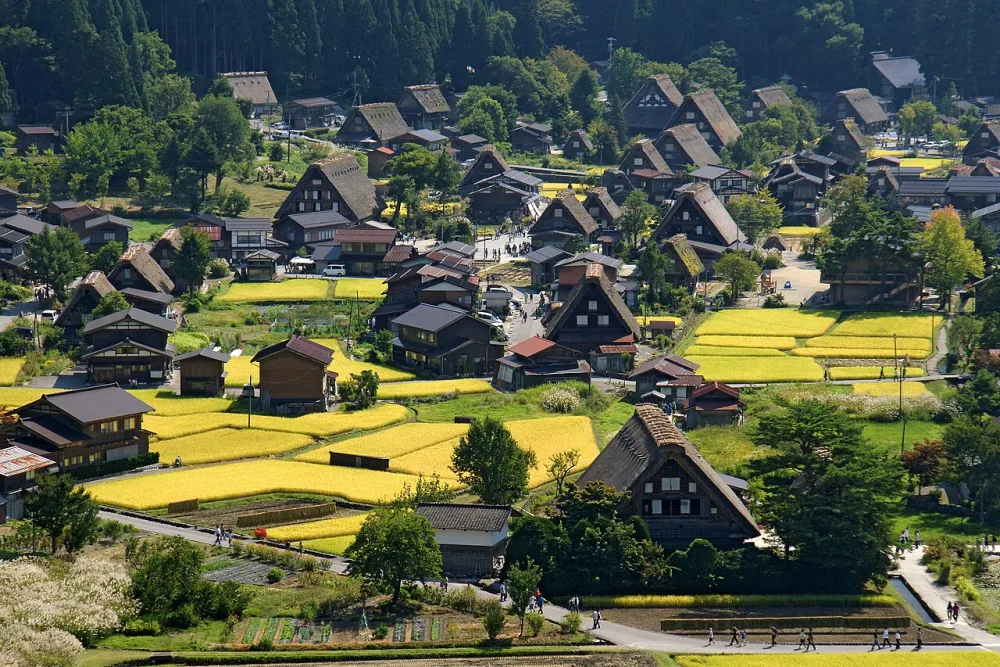
In late October and early November, Shirakawa-go and Takayama share a similar foliage window and an easy overland bus link. The Shirakawa-go Tourist Association's FAQ places typical peak color from late October to early November, while its seasonal guide extends the viewing window into mid-November. For a first booking, anchor your dates on the earlier window and decide which day to visit the village based on color updates around Ogimachi. In central Takayama, Hida-no-Sato (Hida Folk Village) and Shiroyama Park can be paired with the Old Town at different times of day.
By mid-to-late November, basing yourself in Nagoya takes the least effort. The Asuke Tourist Association lists Korankei's typical foliage season as mid-to-late November. Stroll along the Tomoe River by day, and stay for the evening lights only if you have a solid return option. Adding a night in Gero works well for a mid-trip hot spring soak before returning to Nagoya for Korankei. Note that in 2026, the Hirayu shuttle into Kamikochi closed for the season on November 15, and Murodo enters its snow-cover period in November.
| Approximate Dates | Where to Focus First | Convenient Overnight Base |
|---|---|---|
| Mid-September to early October | Murododaira, followed by Midagahara at lower elevation | Toyama or the Tateyama Station side |
| Mid-to-late October | Kamikochi larches, lower Tateyama Kurobe stations, Shinhotaka Ropeway slopes | Matsumoto, Hirayu, Takayama, or Shinano-Omachi (pick based on main stop) |
| Late October to early November | Takayama Shiroyama Park, Hida-no-Sato, and Shirakawa-go Ogimachi | Takayama |
| Mid-to-late November | Korankei's Tomoe River banks and night illuminations | Nagoya or central Toyota City |
Plan your Central Japan fall foliage route from Murodo in September to Korankei in November, with 2-, 3-, and 5-day itineraries, bus transfers, and night illumination return tips.
On Tateyama Kurobe, Pick Your Entry Point Before Deciding Where to Hop Off
At roughly 2,450 meters, Murododaira gets autumn color early. If your target is Mikurigaike Pond and the slopes around Murodo, late September is already worth making Murodo your primary stop. If you only have time for one mid-route stop in mid-October, check the official station-by-station photos and shift to the mid-mountain slopes. Riding the Tateyama Ropeway between Daikanbo and Kurobedaira gives you sweeping views of steep hillsides and Lake Kurobe—a completely different scene from walking past low alpine shrubs at Murodo. Leave extra time for trail walks after stepping off if you want close-up foliage photos.
Ascending from Toyama starts at Dentetsu-Toyama Station, where you ride the Toyama Chiho Railway to Tateyama Station before transferring to the cable car up to Bijodaira and then the highland bus. From the Nagano side, travel from Nagano or Shinano-Omachi to Ogizawa and board the electric bus to Kurobe Dam. Your ticket locks in a departure slot from either Tateyama Station or Ogizawa, so work backward to make sure your hotel transit connects in time. Keep in mind that Dentetsu-Toyama next to JR Toyama Station and Tateyama Station at the mountain base are separated by a rail ride, so both names will appear on your itinerary.
Entering from Toyama and exiting via Shinano-Omachi works best if you are switching hotels. The operator estimates 6 to 7 hours one way from Tateyama Station to Ogizawa, including an hour for lunch, and advises adding another 1 to 2 hours during busy autumn foliage holidays. That does not include the train from central Toyama to Tateyama Station or the bus down from Ogizawa. If you plan to sleep in Matsumoto that night, put the Ogizawa-to-Shinano-Omachi bus and onward train on one timetable before deciding how long to linger at Kurobe Dam. Travelers catching a long-distance train that evening are often better off staying on the far side and continuing the next morning rather than rushing the mountain.
Round-tripping from the same side also works cleanly if you keep your hotel for two nights. For early high-alpine color, the operator estimates 5 to 6 hours for a round trip between Tateyama Station and Murodo. If you are staying in Shinano-Omachi and foliage is concentrated around Kurobe Dam, an Ogizawa round trip takes about 2 to 3 hours. For travelers who want a relaxed pace at the dam or need to limit walking, this out-and-back is far easier to manage than forcing the entire crossing.
To stop at Midagahara, reserve your onward bus inside the station as soon as you step off the highland bus, then head out on the boardwalk. Every passenger on the highland bus requires a seat; if peak crowds push your onward reservation back, verify that you can still catch connections past Murodo before committing to a long walk. Some intermediate stops are drop-off only, and disembarking there voids the remaining highland bus portion of your ticket. If you only want window views of the mid-slope color, riding straight to Murodo and walking its trails makes timing your descent much simpler.
Standard WEB tickets lock in your boarding window at Tateyama Station or Ogizawa, though you will still queue with other passengers at mid-route transfers. Wait until your entry date is settled before pairing the ticket with nonrefundable lodging, as online time-slot bookings cannot be modified directly—changing dates requires canceling and rebooking. If crossing with large luggage, check the operator's baggage forwarding service for drop-off counters, pickup points, and cutoff times, and keep warm layers and medication in your daypack. Drivers leaving a car at one entrance must either return for it or book a separate vehicle relocation service.
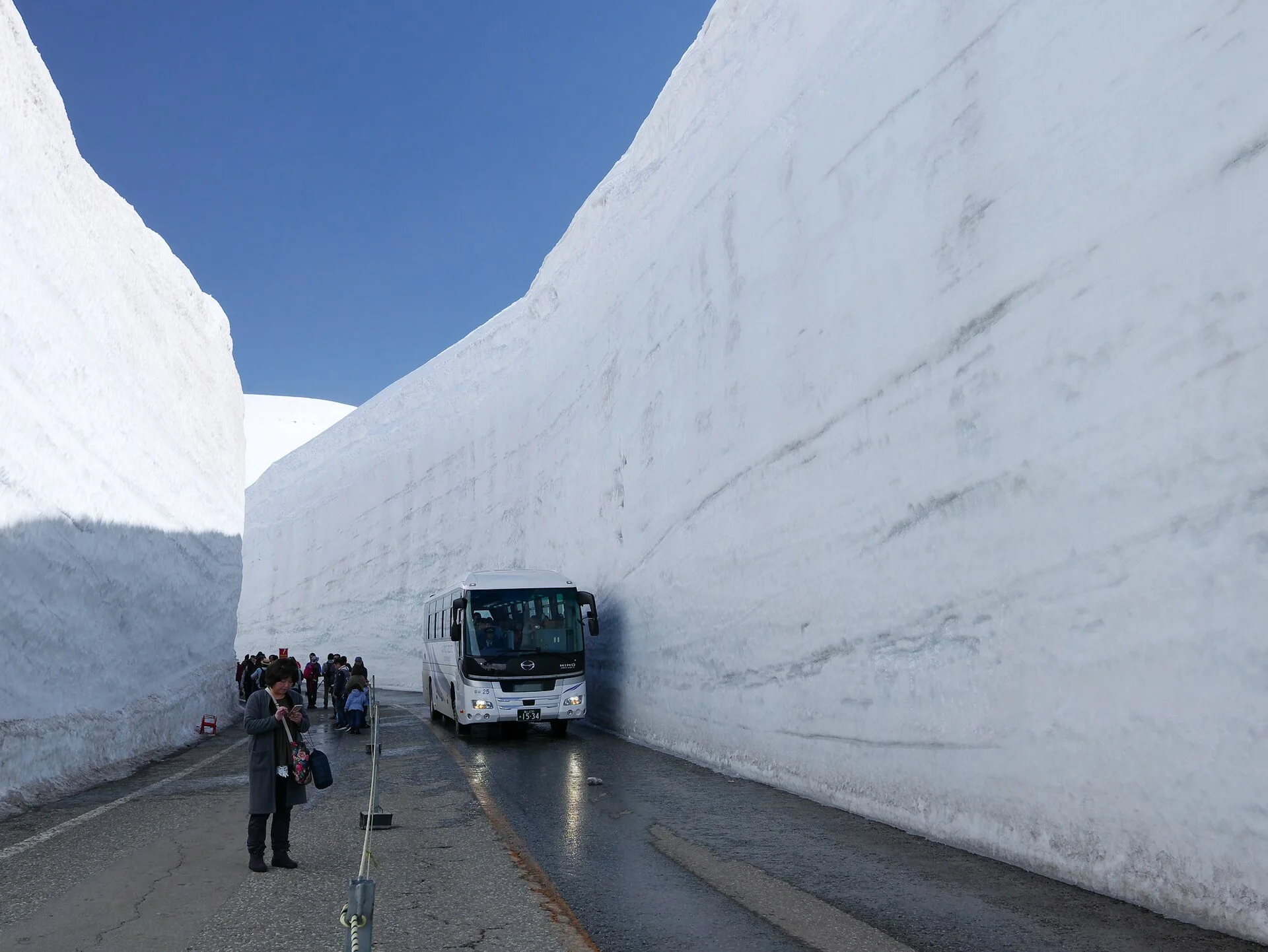
For 2026, the route operates through November 30. On November 17, the operator reported continuous snow cover at Murodo, meaning mountain walks are restricted to open areas and require snow-gripping footwear. If you are purely chasing fall leaves, use the current foliage chart to target lower elevations where color remains. When low clouds blanket the ridge while the route is still running, cut your observation deck time short and save your energy for lower sections with better visibility. Placing a Murodo-focused day in the middle of a multi-night Toyama stay gives you buffer to swap days for weather. For routing beyond the Toyama gateway, see the Hokuriku, Hida, and Tateyama Kurobe route guide.
Walk the Azusa River in Kamikochi, Ride the Slopes at Shinhotaka
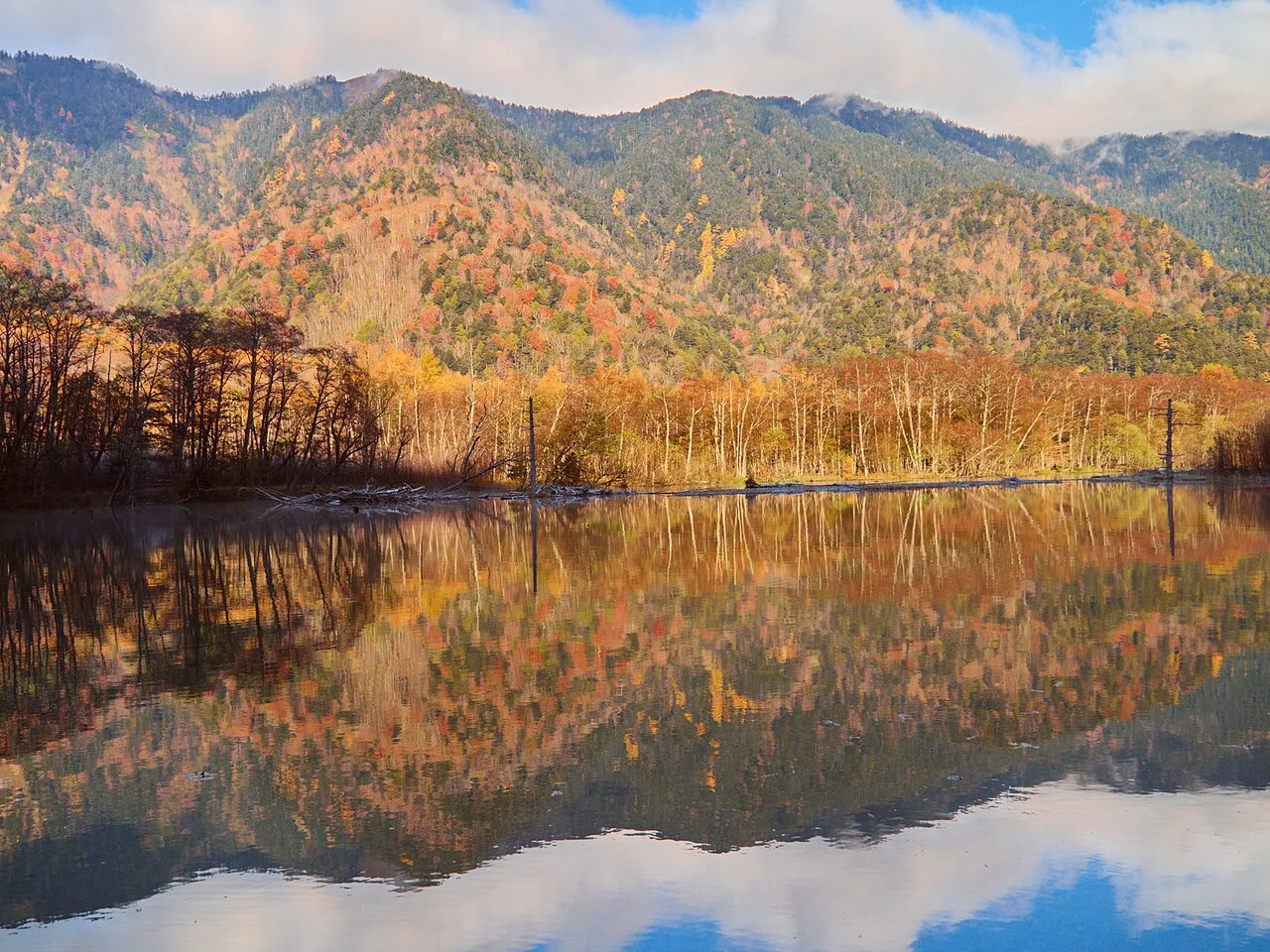
Kamikochi is best known for its golden hues. Around Taisho Pond you get still-water reflections, and following the Nature Trail past Tashiro Pond and Tashiro Marsh shifts the scenery from open water to wetlands. Continuing across Tashiro Bridge and Hotaka Bridge toward Kappa Bridge brings the Hotaka peaks and Dakesawa valley into view. Official seasonal guides place peak color from Taisho Pond to Kappa Bridge in mid-to-late October, noting that larches along the Azusa River near Tashiro Bridge typically turn yellow around mid-October.
For a scenic walk, start at Taisho Pond. Take an inbound bus that stops at Taisho Pond, view the shoreline, and walk toward the Kamikochi Bus Terminal via Tashiro Marsh and Kappa Bridge before catching your outbound bus from the terminal. Official trail guides list this Nature Trail section at roughly 4 km, or about 80 minutes of walking, not counting time for photos, rest stops, and lunch. If Kappa Bridge is packed, cross to the far side and pause in a wider clearing rather than stopping in the middle of the deck.
Families with young children or travelers protecting bad knees can simply ride to the terminal and follow the signs to Kappa Bridge. The official map puts that stretch at around 300 meters, or 6 minutes, using the same bus terminal coming and going. On a clear day, walkers with extra energy can push on to Tashiro Bridge downstream or toward Myojin upstream as a turnaround point. If you have already walked in from Taisho Pond, wait until lunch to gauge your legs and work backward from your return bus departure before adding extra distance.
From Takayama, take a Nohi Bus to Hirayu Onsen and transfer to the Kamikochi shuttle. From Matsumoto, the standard official route is the Matsumoto Electric Railway Kamikochi Line to Shin-Shimashima, connecting to a bus. Only taxis and shuttle buses may enter the valley, as private cars and motorcycles are banned year-round; drivers must park at Akandana on the Gifu side or Sawando on the Nagano side. Day-trippers should factor in locker storage, valley entry transfers, and wait times for the second bus back down. In 2026, the Hirayu shuttle ran through November 15, matching Kamikochi's closing day, while some valley lodges closed earlier.
The Nohi shuttle between Hirayu and Kamikochi uses unreserved seating, so passengers board in line at the bus stop. On autumn holiday weekends, queue early for the return trip and leave buffer at Hirayu for the connecting bus back to Takayama. On the Matsumoto side, buses between Shin-Shimashima and Kamikochi give priority to reservation holders, boarding standby riders only if seats remain. If entering from Matsumoto and exiting toward Takayama, reserve your outbound seat from Shin-Shimashima and catch the Hirayu line from Kamikochi Bus Terminal in the afternoon. When setting a meetup spot with companions, specify which direction's bus stop so no one hikes back to Taisho Pond by mistake.
Shinhotaka lets you take in sweeping forested slopes with minimal walking. Take the Nohi Bus from Takayama via Hirayu to Shinhotaka Ropeway—be careful at Hirayu not to follow the crowd transferring for Kamikochi. Ride the first ropeway stage to Nabedairakogen, walk to Shirakabadaira Station for the double-decker second stage, and ride up to Nishihotakaguchi Station at 2,156 meters. In summer and autumn, stick to the summit observation deck and open trails around the upper station. When peak color drops to the mid-mountain belt, build extra time into Shirakabadaira so you catch the clearest hillside views from the second stage.
For a bus day trip out of Takayama, check the last departure from the base station back to Takayama first, then count backward to see which ropeway cabin you must catch down. Combining both the ropeway panoramas and the Azusa River in one day requires changing buses at Hirayu with sightseeing time on both ends, making an overnight stay in Hirayu a much smarter two-day split. For an onsen ryokan night, look at Shinhotaka or Fukuji and notify the inn of your arrival time if booking dinner. Anyone heading up to Kamikochi the next morning will save an entire morning bus leg by staying near Hirayu Bus Terminal.
Spend Half a Day in Takayama's Castle Town, Save Shirakawa-go's Viewpoint for Clear Visibility
Staying near Takayama Station makes it easy to walk along the Miyagawa River and Nakabashi Bridge first thing in the morning. Around Takayama Jinya and Sanmachi, group your Old Town stroll with lunch—visit Jinya first if you plan to go inside, then continue toward Hie Shrine or the Enakogawa River. Takayama's official tourism listings put Shiroyama Park's typical foliage window from mid-October to early November, and Hie Shrine from late October to early November. Use the Miyagawa River to orient yourself in the Old Town, and time your visit to the shrines, parks, or Hida Kokubunji Temple for peak maple or ginkgo color.
With only half a day, pick either Shiroyama Park or Hida-no-Sato. Shiroyama sits within walking distance east of the Old Town; its wooded trails involve some climbing, though you can keep things light by visiting nearby Hie Shrine or walking a short stretch of the Enakogawa River. Hida-no-Sato is a short bus ride from Takayama Station, with thatched farmhouses set around a pond and wooded hillside—handy for seeing gassho-zukuri architecture, fall color, and resting in one place. Official listings place Hida-no-Sato's autumn season from late October to early November. In light rain, you can still step inside open exhibition buildings to inspect the wooden beams while avoiding slippery slopes.
Even within one city, conditions vary by site. On November 20, 2026, Takayama's official foliage report listed Hida-no-Sato, Hida Kokubunji, and Shiroyama Park as beginning to drop leaves, while higher-elevation Miboro Dam was already bare. When facing late-season conditions like that, spend the morning at Takayama Jinya and the Old Town, then check which in-town spot still holds color for the afternoon. Conversely, if town is still green in early October, keep your dining and lodging in Takayama and save sunny days for Okuhida.
To reach Shirakawa-go, most travelers ride the Nohi Bus from Takayama Nohi Bus Center to Shirakawa-go Bus Terminal, an approximately 50-minute trip according to the operator. The route mixes reservation-only departures with non-reserved buses marked on the timetable. If continuing to Kanazawa or Toyama afterward, book the two legs separately to leave half a day for walking Ogimachi. If only late-afternoon onward seats remain, stay near a Hokuriku rail hub that night and catch the Shinkansen or highway bus the next morning—autumn road delays make tight last-train connections risky.
Once off the bus, head up to the Ogimachi Castle Ruin Observation Deck immediately if visibility is clear for elevated views of the thatched roofs and valley colors. If low clouds hug the village, walk the public lanes and tour open historic houses first, keeping an eye out for clearing skies. The shuttle up to the viewpoint departs beside Hakusuien, about a 3-minute walk south from the bus terminal. Walkers hiking uphill should factor in the descent and shuttle queues, and stay in the village for photos if rain moves in. Search map apps by the deck's full name on the Ogimachi side so you do not confuse it with another viewpoint along the Hakusan Shirakawa-go White Road.
Drivers arriving by car enter the village in a different order. Park at the municipal Seseragi Park Parking Lot and cross the Deai Bridge on foot into the World Heritage hamlet. Official rates list ¥2,000 for standard cars, closing at 17:00 with last entry at 16:30. Bus riders can cross the bridge mid-stroll from the terminal, while drivers should treat the walk back across it as the end of their loop. Ogimachi is a working village with residents and farmland—keep cameras and tripods on public paths and step inside only the gassho-zukuri houses open to visitors. For a step-by-step walking order, see the Shirakawa-go Ogimachi day trip guide.
In November at Korankei, Lock In Your Return Ride Before Staying for Night Lights
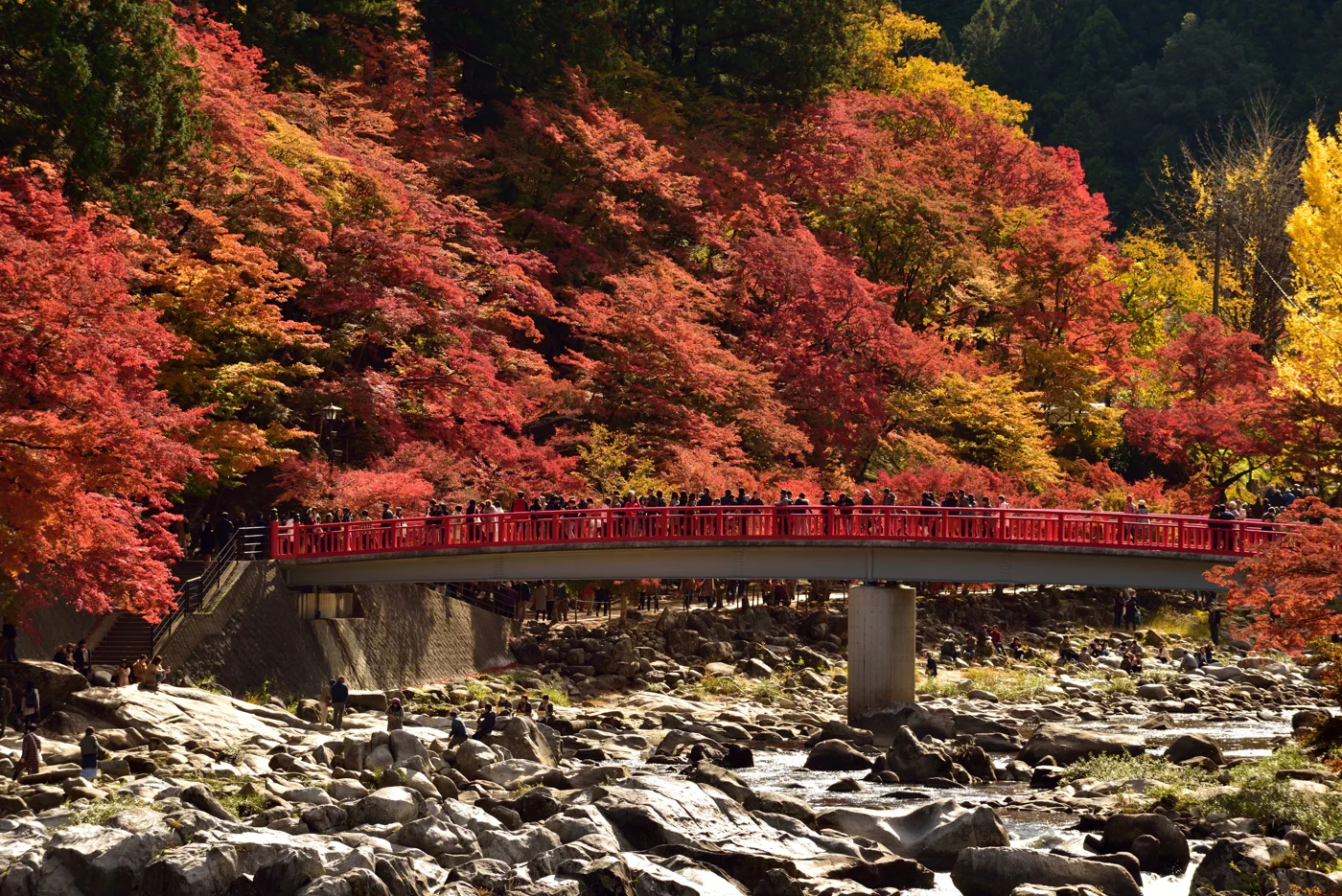
Korankei sits in Asuke-cho, Toyota City, Aichi Prefecture. By day, frame Taigetsukyo Bridge from the opposite bank of the Tomoe River before crossing toward Kojakuji Temple and Korankei Square. For an effortless flat walk, the riverbanks, bridge, and main square deliver maple foliage, the red bridge, and river views without climbing. If you want to tackle the forest stairs to Kojakuji, go before sunset and return to the river for the illuminations. All three trails leading up Mount Iimori are closed by organizers after the lights turn off.
From Nagoya, the standard tourism route uses the Subway Tsurumai Line on a direct through-train to Josui Station, followed by the Toyota Oiden Bus Sanage-Asuke Line. Check the destination display on the front of eastbound Tsurumai Line trains toward Akaike; if yours terminates at Akaike, switch there for a train bound for Toyotashi. Meitetsu buses also serve Korankei from Meitetsu Toyotashi and Higashi-Okazaki stations—choose your hub based on which rail line gets you back best. If staying for the evening lights before heading to Nagoya, read the outbound timetable column from Korankei back to the station first.
The 2026 Momiji Festival runs from November 1 to 30, illuminating Mount Iimori from sunset until 21:00. During the three-day weekend from November 21 to 23, Oiden Bus departures from Josui Station between roughly 11:00 and 18:00 terminate at Nishinakagane and do not reach Korankei, and the final return bus from Korankei to Josui departs at 18:08. If visiting on those dates, take an early morning bus in. To catch that 18:08 return, head straight for the bus stop as soon as the lights come on near the square—lining up matters more than a second lap along the river. If the queue already exceeds one busload, fall back on your pre-planned alternate route or overnight town.
On November 28 and 29, select inbound buses terminate at Asuke Ohashi, roughly a 10-minute walk from the gorge. Meitetsu Bus also runs dedicated November foliage schedules, split into two timetables before and after mid-month, and there is no direct bus from Yakusa to Korankei in 2026. Screenshot your exact travel date, stop names, and direction alongside an offline map of Asuke. If you must catch a late intercity train out of Nagoya that same night, sticking to a daytime river walk and dining back in the city is far more realistic.
If using Meitetsu Bus as your backup, open the service reduction notices alongside the timetable. On select weekends and holidays starting November 14, 2026, certain Higashi-Okazaki Line buses drop the Matsudairabashi-to-Asuke segment, and certain Toyotashi Line buses drop the Kuraike-Higashi-to-Asuke segment—meaning none of those runs reach Korankei. On a weekday evening visit, spend the afternoon in Asuke's historic merchant street and walk down the river to Taigetsukyo just before dusk so you are in place when the lights switch on.
Driving lets you stay longer after dark, at the cost of heavy highway traffic and parking queues. Event maps show permanent and temporary lots; standard cars pay ¥1,000 per entry at permanent lots, and none take advance reservations. Approaching from the Sanage Green Road Chikaraishi IC, tourism boards recommend a detour route toward the Asuke Athletic Field temporary lot. Before splitting up for photos, save the lot name, entrance, and meetup spot on everyone's phones, as the gorge has more than one red bridge. Having dinner in Asuke before driving back to Nagoya eases the rush out of town. For an in-gorge walking route, see the Toyota Korankei autumn foliage guide.
Stay in Takayama for Two Days, Add a Night in Okuhida on Three-Day Trips
For a two-day round trip from Nagoya, ride the JR Limited Express Hida up to Takayama on day one, drop your bags, walk from Nakabashi Bridge to Sanmachi, and spend the afternoon at Hie Shrine or Hida-no-Sato. On day two, catch an early Nohi Bus to Shirakawa-go, return to Takayama in the afternoon to grab your luggage, and board the train back to Nagoya. Having the bus center right next to JR Takayama Station makes luggage pickup and transfers seamless. If your return bus from Shirakawa-go runs late, finish every must-see Takayama stop on day one so day two is just bags and a meal.
Two days also works well as an open-jaw route entering via Nagoya and exiting through Kanazawa. Spend day one in Takayama, ride to Shirakawa-go on day two, and continue straight from Shirakawa-go to Kanazawa for the night. Store large suitcases before walking the village—lockers sit inside Shirakawa-go Bus Terminal alongside a nearby baggage counter, and if both fill up, the Tourist Association runs same-day storage from 8:00 to 17:00. Leave time to retrieve bags before the counter closes and your bus departs. With only enough gap between buses for lunch and boarding, skip the observation deck and stick to flat ground in Ogimachi. Note that Nohi Bus announced timetable and fare revisions for the Shirakawa-go line effective December 1, 2026, so verify the schedule matching your exact ride date if traveling around month-end.
A straightforward three-day plan uses Takayama Station as your base. Spend day one in Takayama, day two in Shirakawa-go, and day three on a round trip to Shinhotaka before departing—or swap days one and three. Keeping Takayama and Shinhotaka flexible lets you put the ropeway on the clearer weather day once your Shirakawa-go bus seats are locked in. If catching an afternoon Limited Express on day three, doing the town walk that morning keeps your departure timing tight and predictable.
For a three-day hot spring itinerary, visit Shirakawa-go on the morning of day two, return through Takayama, and continue up to Hirayu for an overnight stay in Okuhida. Spend day three at Shinhotaka Ropeway or Kamikochi before returning to Takayama—or check the Hirayu-to-Matsumoto bus if heading east next. Guests prioritizing a ryokan kaiseki dinner should catch an early afternoon bus back from Shirakawa-go, or visit Shirakawa-go on day one instead. Confirm the exact pickup bus stop and reservation window if your inn offers a shuttle.
Gero Onsen offers a gentler three-day route without climbing deep into the mountains. Both Gero and Takayama sit along the JR Takayama Main Line: ride up from Nagoya to stay in Gero on night one, take the train onward to Takayama on day two, and visit Shirakawa-go from Takayama on day three. Stroll along the Hida River in Gero's hot spring town, and ride the station bus to Gero Onsen Gassho Village to see historic farmhouses relocated from Shirakawa and Gokayama. Splitting your focus this way lets you explore farmhouse interiors in Gero and save Shirakawa-go for open valley views and streetscapes.
On a mid-to-late November three-day trip, spending two nights in Nagoya makes plenty of sense. Dedicate day one to city gardens or historic districts, day two to Korankei, and day three to local sights or an easy suburban outing. If festival cancellations or bus cuts hit on your Korankei day, simply swap it with the city day. Staying around Nagoya Station favors Shinkansen connections, while lodging near Fushimi gives you direct access to the Tsurumai Line—compare morning walking distance against where you want to get off at night.
Use Five Days for Cross-Mountain Transfers, and Limit Alpine Days to One Headline Stop
For Kamikochi in mid-October, plan a five-day route from Matsumoto to Kanazawa. Spend night one in Matsumoto, enter Kamikochi on day two to walk from Taisho Pond to Kappa Bridge, and transfer via Hirayu to Takayama. If you want an onsen night on the way, sleep in Hirayu and push Takayama to day three. Give day three's morning to Takayama's castle town and the afternoon to Hida-no-Sato or Shiroyama Park depending on foliage updates. On day four, ride from Takayama to Shirakawa-go and onward to Kanazawa, leaving day five for central Kanazawa or your Shinkansen connection.
When turning Kamikochi into a transit day, verify you have enough daylight to return to Hirayu and catch the Takayama bus. If rain moves in by noon, keep your walk to the Bus Terminal-to-Kappa Bridge loop and head to Hirayu early. On a crisp day when you want to hike to Myojin, stay overnight in Hirayu rather than gambling a valley walk and a Takayama dinner reservation on the final bus. Pack an overnight change of clothes if shipping suitcases takes until the next day. Travelers with large luggage can also drop bags in Takayama first, day-trip via Hirayu on day three, and carry bags to Shirakawa-go and Kanazawa on day four.
When focusing on Tateyama Kurobe in early October, reverse a five-day loop from Nagano into Toyama. Sleep in Shinano-Omachi on night one, enter via Ogizawa on day two to take your time along the turning mid-slopes, and ride the Toyama Chiho Railway into Toyama City. Use day three to rest in Toyama or ride the Hokuriku Shinkansen to Kanazawa. On day four, take a reserved bus from Toyama or Kanazawa via Shirakawa-go to Takayama, then explore Takayama on day five before departing for Nagoya. If you prefer seeing Takayama first and ending at Tateyama Kurobe, flip the itinerary and match your entry and exit hotels to the reverse timetable.
If you prefer staying in one hotel all five nights, use Takayama as a hub and spread central Takayama, Shirakawa-go, Kamikochi, and Shinhotaka across separate days, leaving the remaining day for Nagoya transit or Gero. You will pay for backtracking on fares, but you avoid hauling luggage in the rain. Slot your highest-altitude excursion onto the clearest forecast day and save rainy days for Takayama town. Because Shirakawa-go and mountain highways are vulnerable to road delays, travel directly to Nagoya the day before an airport departure—or take the earliest possible long-distance bus.
A five-day itinerary in late November can string together Nagoya, Korankei, Gero, Takayama, Shirakawa-go, and Hokuriku, shifting the spotlight to river gorges and hot springs. At this point in the season, Shirakawa-go is mainly about historic architecture and snowy mountain village scenery—on the afternoon of November 20, 2026, the Ogimachi viewpoint shuttle was suspended due to snow. If a Japanese three-day holiday overlaps one of your first two days, keep the city day on the holiday and save Korankei for a weekday. Riding the train from Gero to Takayama before catching a morning bus to Shirakawa-go gives you a comfortable midday window in the village.
Pad Your Transfer Windows, and Plan Luggage and Dinner Before Buying Tickets
Whenever you combine two different transit legs in one day, put the hardest-to-change departure at the top of your plan. Reserved buses from Shirakawa-go to Hokuriku, final valley shuttles, and timed-entry Tateyama WEB tickets all follow separate rules. Mountain buses departing Takayama Station use different ticket types from Kamikochi shuttles, and Shirakawa-go bus reservations live on another booking page altogether. Lock in your reserved intercity seats for your exact travel dates first, fit local trains and overnight transfer stops around them, and only then compare single fares against rail passes for the legs you will actually ride.
When riding the JR Limited Express Hida from Nagoya to Takayama, check each train's final destination and stops—some terminate at Takayama, while continuing to Toyama requires the right departure. JR Central operates the Hida as all-reserved seating during designated peak periods, so check the official calendar for your travel year. To break the trip in Gero, split your rail tickets across two days to match your ryokan shuttle schedule. If connecting to the Hokuriku Shinkansen in Toyama or Kanazawa, leave enough buffer between your bus arrival and train departure for a meal, as Nohi Bus notes that snow and parking congestion can delay buses by over two hours.
Driving yourself keeps luggage in the trunk and lets you revisit the same foliage spot at different hours. You can split Takayama, Shirakawa-go, and Okuhida across separate days while still parking at the designated lots for Kamikochi. Heading into the Hida mountains in late November requires confirming winter tire availability with your rental agency, especially if driving from Hirayu to nearby onsen villages after dark. The Shirakawa-go Tourist Association defines winter as December through April and requires snow tires throughout that period; if snow hits early, cut mountain driving short, stay near a rail station, or switch to running public transit.
Traveling with older adults or young children works best when every half-day includes a proper sit-down break. Both the Kamikochi Bus Terminal-to-Kappa Bridge stroll and the Korankei riverside path can be shortened at will. Before starting up Shiroyama's trails or the Shirakawa-go viewpoint slope, check whether everyone can handle the round-trip incline, and stay strictly within cleared paths when Murodo is snow-covered. Base-hotel days let you travel light, while hotel-transfer days work best when you drop bags at the station before sightseeing. Heading above 2,000 meters from town calls for easy-to-layer outerwear—pack a windproof shell right at the top of your daypack.
Long lunch breaks double as weather buffers. When catching an afternoon bus out of Shirakawa-go, eat in Ogimachi before heading up to the viewpoint, or stay in the village if lines look long. In Takayama, save Hida beef or hoba miso dinners for after dark so daylight hours go to trails and historic halls. During Korankei's festival, grab gohei mochi near the red bridge, and locate your return bus stop before twilight if staying for the lights. On high-mountain routes, pack water and small snacks in case long ropeway queues push lunch late.
On the morning of your trip, use official foliage photos to pick the right elevation and operator status pages to confirm what is actually running. Even sunny days can bring high winds that halt ropeways, and rain in town often means snow higher up. When mountain transit is disrupted, pivot to Takayama Jinya, open farmhouses at Hida-no-Sato, or central Kanazawa, and save the peaks for the next clear morning. If colors have simply faded, opt for a short riverside walk or low-elevation city garden, and stick to your planned dinner and onsen soak that evening.
A few useful answers
Can I see autumn foliage in both Kamikochi and Shirakawa-go in late October?
Yes, it is very doable. Larches between Taisho Pond and Kappa Bridge in Kamikochi typically turn yellow in mid-to-late October, while the Shirakawa-go Tourist Association lists late October to early November as typical peak color. Base yourself in Takayama, taking one day via the Hirayu shuttle to Kamikochi and another day by bus to Shirakawa-go.
For autumn foliage on the Tateyama Kurobe Alpine Route, is it better to enter from Toyama or Ogizawa?
If your main target is Murodo or Midagahara, entering from Toyama via Tateyama Station is more direct. If color is concentrated around Kurobe Dam, staying in Shinano-Omachi for an out-and-back trip from Ogizawa saves time. Travelers crossing the entire route should decide which side they will sleep on that night first.
How should I visit Kamikochi and Korankei if I cannot walk far?
In Kamikochi, the flat walk from the bus terminal to Kappa Bridge is roughly 300 meters and still delivers views of the mountains and Azusa River. At Korankei, stick to the Tomoe River bank, Taigetsukyo Bridge, and the main square, skipping the Kojakuji stairs and Mount Iimori trails. Note that if festival buses terminate at Asuke Ohashi, you will need to add about a 10-minute walk.
Korankei's 2026 night lights stay on until 21:00—can I stay until the end and take a bus back?
That depends on your travel date and return station. From November 21 to 23, the last Oiden Bus from Korankei back to Josui Station departs at 18:08. To stay later, look up Meitetsu Bus return departures for your exact date ahead of time, or plan to drive.
Should I stay in Hirayu, Shinhotaka, or Gero for a hot spring night?
Pick a stay near Hirayu Bus Terminal if you are heading into Kamikochi the next morning. Choose Shinhotaka if your focus is the Shinhotaka Ropeway and you want early access to the base station or a quiet evening in a hot spring hamlet. Gero works best between Nagoya and Takayama along the JR rail line if you want a walkable onsen town.
Official information and references
Sources used in this guide.
- Tateyama Kurobe Alpine Route Autumn Foliage Information and Station Live Views
- Tateyama Kurobe Alpine Route Viewing Seasons for Murodo and Daikanbo to Kurobedaira
- Tateyama Kurobe Alpine Route Station and Access Timetables
- Tateyama Kurobe Alpine Route FAQ: Travel Times, Baggage, and Operations
- Tateyama Kurobe Alpine Route 2026 Standard WEB Tickets
- Kamikochi Official Walking Trails, Distances, and Times
- Kamikochi Autumn Colors and Larch Viewing Season
- Kamikochi Official Access and Private Vehicle Restrictions
- Alpico Group Bus Reservations for Matsumoto, Shin-Shimashima, and Kamikochi
- Kamikochi 2026 Closing Date and Facility Closure Schedule
- Nohi Bus Kamikochi and Shinhotaka Boarding Information
- Nohi Bus Service Status and Seasonal Closures
- Nohi Bus Takayama, Hirayu, and Shinhotaka Line
- Nohi Bus Hirayu, Matsumoto, and Takayama Line
- Gifu Prefecture Tourism Official Shinhotaka Ropeway Autumn Foliage Guide
- Shinhotaka Ropeway Official Operating Hours, Fares, and Transfer Stations
- Shinhotaka Ropeway FAQ on High Winds and Service Suspensions
- Hida Takayama 2026 Autumn Foliage Progress Report
- Hida Takayama Official City Autumn Foliage Spots
- Hida Takayama Old Town Local Cuisine Guide
- Shirakawa-go Tourist Association Seasonal FAQ
- Shirakawa-go Tourist Association Four Seasons Highlights
- Shirakawa-go Ogimachi Map and Observation Deck Shuttle Info
- Shirakawa-go Parking, Bus, and Rail Transfer Information
- Shirakawa-go Tourist Association Large Luggage Storage Guide
- Shirakawa-go Tourist Association November 20, 2026 Observation Deck Shuttle Suspension Notice
- Shirakawa-go Tourist Association Winter Driving Information
- Nohi Bus Takayama, Shirakawa-go, Kanazawa, and Toyama Timetables
- Gero Onsen Tourist Association Gassho Village Visitor Guide
- JR Central Conventional Line Limited Express All-Reserved-Seating Periods
- Asuke Tourist Association Typical Autumn Foliage Dates at Korankei
- Asuke Tourist Association 2026 Korankei Momiji Festival and Bus Changes
- Asuke Tourist Association Gohei Mochi During Korankei Events
- Toyota City Tourism Association Korankei Momiji Festival, Parking, and Detour Map
- Meitetsu Bus 2026 Korankei Partial Route Suspension Notice