Plan Ogimachi from Takayama, Kanazawa or Toyama. Compare reserved and unreserved buses, the viewpoint shuttle's midday break, house admission, Minkaen closures, three or six hours, and a night in a gassho guesthouse.
- Region & Focus
- Takayama and Shirakawa-go
- Reading Scope
- 40 min read · 19 chapters · 4 Q&As
- Official Verification
- 27 official sources checkedUpdated November 7, 2026
- Key Topics
- ItinerariesBookingSeasons
Chapter Route Map (tap any stop)
- Choose half a day, a full day or one night in Ogimachi
- From Takayama, Kanazawa or Toyama, start with where you will go afterward
- Handle reserved buses, unreserved buses and mobile tickets separately
- Refunds, children and payment depend on the ticket you buy
- Store luggage at the terminal before walking into the village
- Divide the walk into the north, center and south
- The viewpoint is an uphill side trip: plan the descent first
- The shuttle stops at midday, with no uphill departure at 13:00
- Wada House: how a large occupied home separates its visitor areas
- Kanda or Nagase House: choose construction or household objects
- Myozenji Folk Museum: another use for gassho architecture
- Cross the bridge to Minkaen and allow a full visiting slot
- Deai Bridge and the driving entrance are separate from the bus arrival point
- Fit lunch between house visits and the uphill shuttle
- Cherry blossoms, autumn leaves and snow call for different visits
- With children or slower walkers, plan stairs and toilets first
- Trim the village route to three hours or expand it to six
- For a gassho stay, choose meals, checkout and the actual address together
- Calculate transport and admission for your actual family group
- Quick Q&A
A day in Ogimachi can combine one gassho house, a walk through the village and a viewpoint. Allow five to six hours if you also want Minkaen and a sit-down lunch. Secure your bus seat out of Ogimachi first, then choose whether to walk south from the northern terminal or take the shuttle uphill first. For an overnight stay, consider meals, checkout and the next morning's walk together. Ordinary daytime visits, gassho guesthouses and winter illumination events require different arrangements.
Choose half a day, a full day or one night in Ogimachi
With about three hours, start with one gassho house open to visitors and a walk along the main street. Add the viewpoint if visibility and shuttle times suit your visit. To see an interior, go uphill, sit down for lunch and cross the bridge to Minkaen, allow five to six hours. The tourism association's estimate of two to three hours around the village gives a sense of its size. Tickets at individual buildings, queues and meals take additional time.
For a first visit, returning to Takayama or Kanazawa the same day makes luggage easier to manage. In Takayama, leave large bags at your existing hotel; in Kanazawa, avoid checking into another property that night. If you are moving between Takayama and Hokuriku, Shirakawa-go also works as a stop en route. Buy separate tickets into and out of the village, and arrange luggage storage at the terminal. Plan your walk after securing the departing bus.
Staying overnight gives you the village's pace after dinner and the following morning. Shirakawa Village sets ordinary daytime sightseeing hours at 8:00–17:00. Evenings belong to residents and guests staying in the village. To photograph the village early in the morning, book suitable accommodation within it. If your priorities are house exteriors, interior construction and the viewpoint, a day trip covers them. There is no need to change hotels simply to add another place to your overnight itinerary.
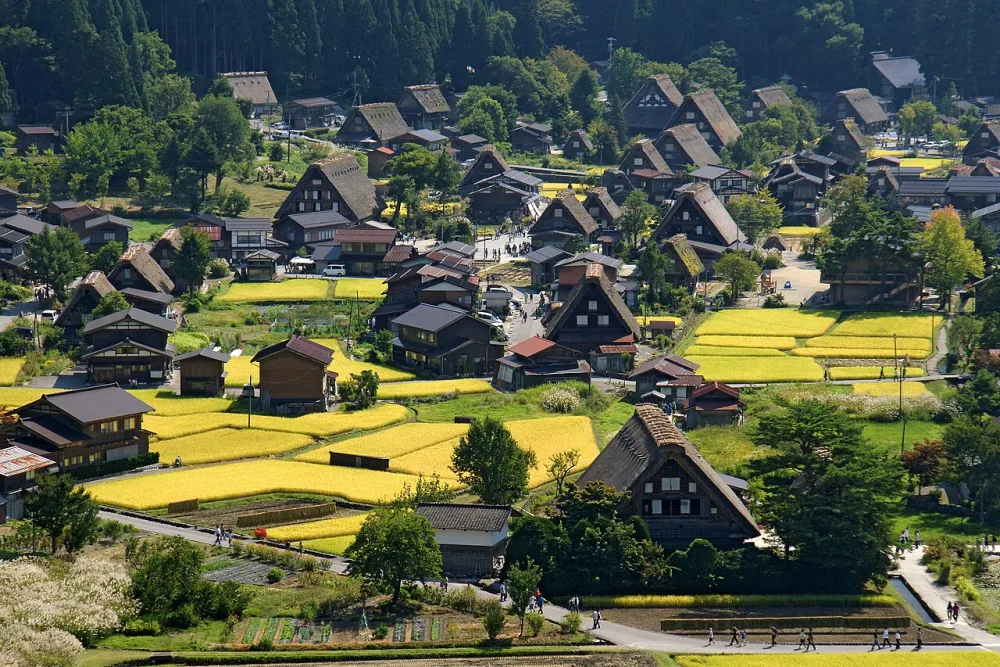
Plan Ogimachi from Takayama, Kanazawa or Toyama. Compare reserved and unreserved buses, the viewpoint shuttle's midday break, house admission, Minkaen closures, three or six hours, and a night in a gassho guesthouse.
From Takayama, Kanazawa or Toyama, start with where you will go afterward
Takayama Nohi Bus Center, beside JR Takayama Station, is the boarding point on the Takayama side. Select “Shirakawa-go (Ogimachi)” as your arrival stop. Nohi Bus gives a standard journey time of about 50 minutes from Takayama to Ogimachi; some services using local roads take longer. Buses from Kanazawa use the west exit of Kanazawa Station, separate from the east-exit sightseeing bus area. From Toyama, use the stop in front of Toyama Station. Save both the direction on your booking and the boarding map, especially where stop names are similar.
For travel through November 30, 2026, ordinary adult one-way fares are ¥2,800 from Takayama to Shirakawa-go, ¥2,800 from Kanazawa and ¥2,400 from Toyama. Elementary school children pay half fare. These routes have no ordinary round-trip discount. The new fare table effective December 1 raises Takayama–Shirakawa-go and Kanazawa–Shirakawa-go to ¥2,900 each; Toyama–Shirakawa-go stays at ¥2,400. An adult round trip from Takayama or Kanazawa therefore costs ¥5,600 through November 30 and ¥5,800 from December 1. Traveling from Takayama via the village to Toyama costs ¥5,200 and ¥5,300 respectively.
A stop en route changes the fare. An ordinary direct one-way ticket from Takayama to Toyama costs ¥3,800 through November 30, 2026, and ¥3,900 from December 1. Buying Takayama–Shirakawa-go and Shirakawa-go–Toyama separately costs ¥5,200 and ¥5,300 respectively. For a stay of several hours in Ogimachi, buy two tickets for the actual boarding and alighting points. If you have a regional pass, check the eligible buses, excluded services and reservation method for each leg before choosing between the pass and separate tickets.
Parking queues, snow and expressway closures in Shirakawa-go also affect scheduled buses. Nohi Bus states on its route page that delays can exceed two hours and departures can also be substantially late. If you must catch a Shinkansen or reach an inn for dinner that evening, choose an onward connection with room for delays. Connecting from Shirakawa-go to an international flight on departure day puts both road delays and airport deadlines into the same day.
Handle reserved buses, unreserved buses and mobile tickets separately
Start booking from the official Nohi Bus Shirakawa-go timetable. For services marked “reservation required,” secure a reservation for the exact date and route. Services without that mark board from the queue. Keep your booking record for a reserved service. For an unreserved service, arrive early at the specified stop.
Nohi's combined official timetable says reservations open one month before travel. For a November 26 journey, for example, start checking the relevant service on October 26. If the previous month has no matching calendar date, use the opening date shown in the official system. A service outside its sales window differs from a sold-out service. Check which dates are available before changing your departure or travel date, so an early search does not lead you to change your entire accommodation plan.
For two people traveling together, enter both passengers, any children and the correct stops in the same purchase. After payment, check both passengers' dates and directions. If you buy arrival and departure legs separately, complete payment or collect tickets for both as instructed. Before travel, save the order, boarding document and stop map. Reach the correct stop before departure. If tickets must be exchanged at a counter, allow time for the counter queue first.
When an unreserved bus is busy, the operator may add buses or use auxiliary seats. If the extra capacity is still full, passengers are directed to the next service. If you have an onward connection, favor a reservable departure. A possible extra bus is not a backup seat you hold. The official site also sells mobile tickets valid only on unreserved services. Before buying one, make sure the bus you want is included.
Refunds, children and payment depend on the ticket you buy
For counter-issued tickets, Nohi's combined official timetable requires changes and cancellations at the original ticket counter before the booked bus departs. The cancellation fee is ¥100. From the second change onward, have the ticket refunded and buy it again. After departure, the ticket becomes invalid and cannot be changed or refunded. A telephone call cannot replace the counter procedure. These conditions apply to counter tickets. For an online payment, keep the cancellation method and deadline shown by your booking platform.
Budget half the adult bus fare for elementary school children, and specify at purchase whether a younger child needs a seat. Long-distance buses, the viewpoint shuttle and attraction tickets define children differently. Minkaen's child rate covers elementary, junior high and senior high school students; Wada House lists only elementary school children for its child rate. A junior high student will not pay half price for every item that day.
Nohi's ordinary route buses currently do not accept transport IC cards, credit cards or mobile contactless payment on board. Its official information lists credit-card payment at Takayama Nohi Bus Center and the Shirakawa-go Bus Terminal counter, with restrictions on accepted cards. Show a prepaid electronic ticket as instructed by its platform. Carry yen in cash separately for tickets bought on site, attraction admission and the uphill shuttle. The operator does not refund daytime bus fares solely because road conditions delay the service.
Store luggage at the terminal before walking into the village
Shirakawa-go Bus Terminal is on the north side of Ogimachi, with the tourism association inside. Start here for Wada House, the viewpoint shuttle and the main street. Minkaen requires a walk south and a crossing of the Shogawa River. Before leaving the terminal, locate your departing stop and the toilets, and check your luggage collection deadline. If someone walks more slowly, agree to meet at the terminal rather than using the vague instruction “back at the village entrance.”
The terminal has coin lockers, and nearby shops also store luggage. If these are full, the tourism association offers same-day storage and collection from 8:00 to 17:00. Prices start at ¥500 for small or medium items and ¥1,000 for large items, based on size and quantity. If you are carrying suitcases between Takayama and Kanazawa, collect them before boarding and before 17:00, then join the bus queue.
The bus luggage compartment is shared. Nohi's route page says large bags may be refused if space is insufficient. Passengers normally load and unload their own bags; ask the crew if you need help. Carry power banks into the passenger cabin, not the luggage compartment below. If you send a large suitcase to your next hotel, arrange its delivery date and acceptance first. Carrying only a daypack for walking and the weather saves reorganizing your bags after storage in Ogimachi.
Divide the walk into the north, center and south
Think of Ogimachi as a north–south walking route. The terminal, Wada House and viewpoint shuttle are in the north. Continue toward the center for Kanda House and Nagase House, then south toward Myozenji Temple and Shirakawa Hachiman Shrine. Deai Bridge connects the village with the parking area and Gasshozukuri Minkaen across the Shogawa. Mark the buildings you want to enter and your departing bus time on the same tourism association walking map. It will show which side trips to save for another visit.
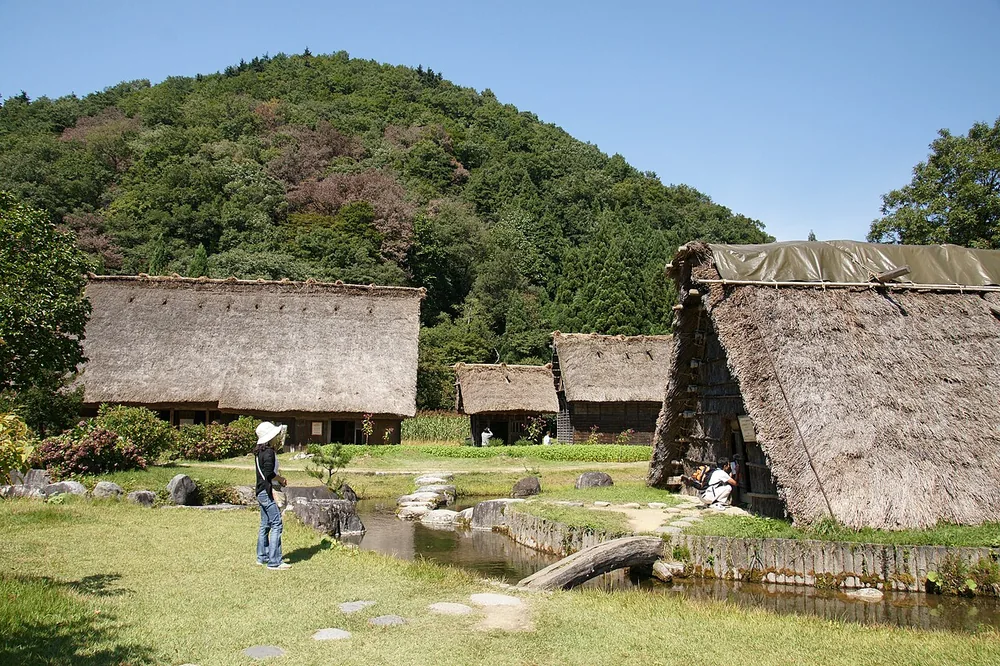
If you enter from the north, you can visit the viewpoint first, walk south, then return along the main street to the terminal. Reverse the order if you cross from the parking area. In poor weather at the viewpoint, put a house visit first and decide whether to go uphill after the clouds shift. This changes one side trip instead of sending everyone back and forth through the village for the same photograph.
The official attraction access pages give walks from the terminal of about four minutes to Wada House, seven to Kanda House, eight to Nagase House, ten to Myozenji and twelve to Minkaen. Use these times to compare distances. They exclude stops along the way. Looking at roofs, fields and shops, and eating, take much of your village time. If the southern fields are beyond your group's walking range, turn back in the center and still keep a full interior visit.
The viewpoint is an uphill side trip: plan the descent first
Ogimachi Castle Ruins Viewpoint and the privately operated Tenshukaku Viewpoint are next to each other. From above, you can see how the roofs, fields and village fit together. Private cars cannot drive directly to either viewpoint. Ordinary visitors take the paid shuttle from the village or use the designated footpath. Official SHIRAKAWA Going information gives the uphill path as about 600 meters, with a baseline of about 15 minutes each way. Walk if the weather is good and you are comfortable with slopes. If the path is icy or closed, use the shuttle or stay in the village.
Before going uphill, check SHIRAKAWA Going's service status for the day and the posted path notices. Snow, ice, visibility and road conditions affect this side trip. Follow the designated return route when restrictions apply. Taking the shuttle up and walking down can save effort, but the descent can also be slippery. Do not rely on walking down as an option in every kind of weather.
With little time left, keep your visit within the village. Waiting for the shuttle, going up and returning form one connected excursion. Checking the descent only after taking photographs can leave you caught in the midday break. With older relatives or a stroller, decide first whether everyone will go uphill. If you split up, agree to meet at the shuttle stop or terminal, so you do not search for each other at different elevations using phone locations.
The shuttle stops at midday, with no uphill departure at 13:00
The viewpoint shuttle boards beside Hakusuien, about three minutes or 200 meters south of the bus terminal. You do not transfer at the long-distance bus platforms. The adult fare is ¥300 one way, paid in cash when you get off. Elementary school children pay ¥150. Younger children without a seat travel free, and holders of a physical disability certificate pay half fare. Ordinary pets are not allowed; pet travel ended in March 2024.
Uphill services leave at :00, :20 and :40 during each of the 9:00, 10:00 and 11:00 hours. There are none during the 12:00 hour. Service resumes at 13:20, followed by 13:40, then :00, :20 and :40 during the 14:00 and 15:00 hours. The last ascent is 15:40. Downhill departures are at :10, :30 and :50 during the 9:00, 10:00 and 11:00 hours, with a 12:10 departure retained at midday. They resume at 13:30, and the last descent is 16:10. The village office's full timetable clearly shows the blank at 13:00 as well.
For example, if you go up at 11:40 and want to come down at 12:10, fit your visit and walk back to the stop within that interval. Miss it and the next bus is at 13:30. For a slower visit, eat in the village first and go up at 13:20. If your long-distance departure is around 15:00, the viewpoint usually fits better in the morning, leaving the afternoon for houses and shopping near the terminal. If the shuttle is suspended that day, remove this side trip.
Wada House: how a large occupied home separates its visitor areas
Wada House is one of Ogimachi's representative gassho houses. In the Edo period, its owners served as village heads and checkpoint officials and built their business through the saltpeter trade. It makes a useful first introduction to gassho construction. The first (ground) and second floors are open, while residents' living areas remain private. Moving from the exterior into the house and then looking over the village from upstairs connects the roof shape with the usable space, adding more than a photograph at the door.
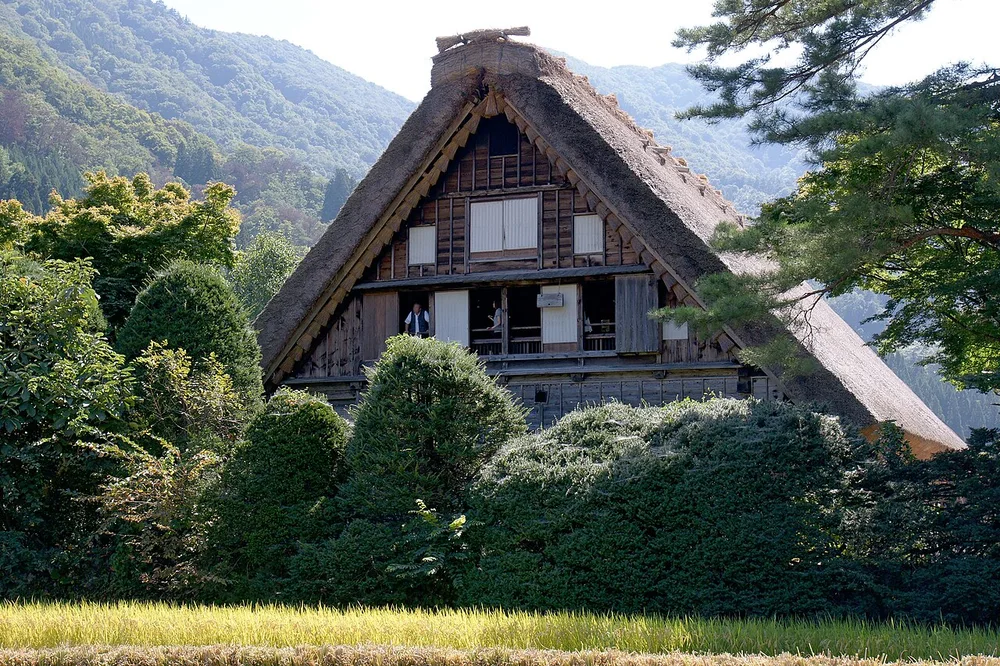
Official Wada House information lists 9:00–17:00, with irregular closing days. Adults, including junior high school students and older, pay ¥400; elementary school children pay ¥200. Payment is cash only. Japanese audio plays on the first floor and English audio upstairs, with additional QR information. If you want the explanation, allow time after entering instead of following the crowd straight up.
The fact that Wada House is still a home directly affects your route. Enter only the open areas and stay out of spaces blocked by doors or ropes. Follow the photography signs inside. When looking from upstairs, avoid keeping your camera aimed at neighbors' daily lives. If the shuttle is next, walk to its actual stop. Do not wait at Wada House's entrance for a bus that merely passes nearby.
This official Shirakawa Village film introduces Ogimachi through village scenery and residents' lives. It provides context before you enter the houses to examine their architecture.
Kanda or Nagase House: choose construction or household objects
Kanda House highlights its internal gassho structure and the former saltpeter-making area beneath the floor. Tools have QR explanations. If you want to know how such a large house is supported and what each floor was used for, add it to Wada House. If you want just one interior, prioritize actual opening hours and your route. Kanda House opens 10:00–16:00 and closes Wednesdays, except national holidays falling on a Wednesday. Adults pay ¥400 and elementary school children ¥200.
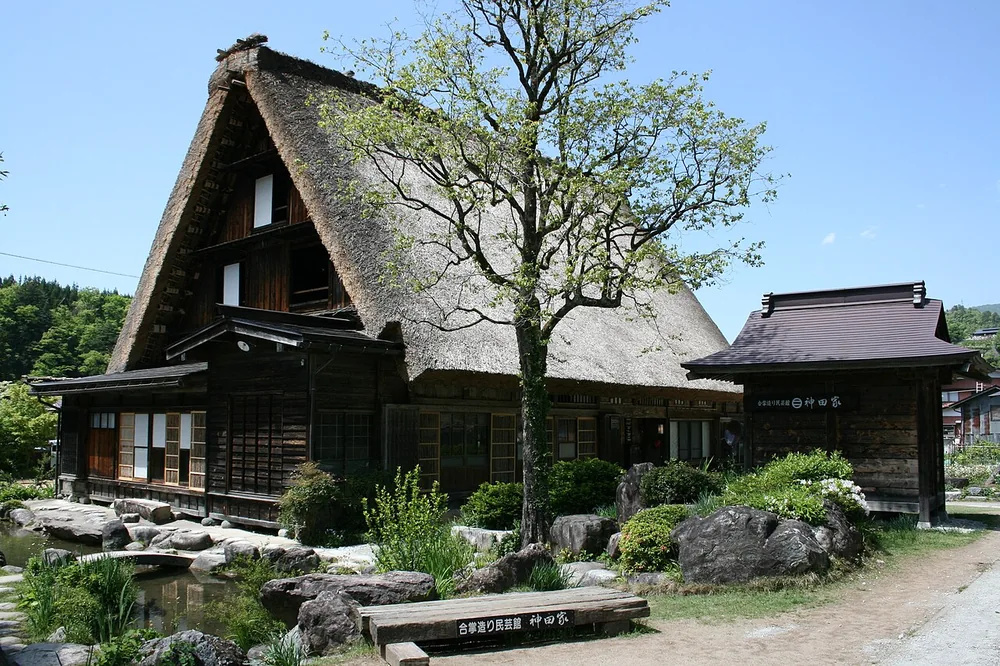
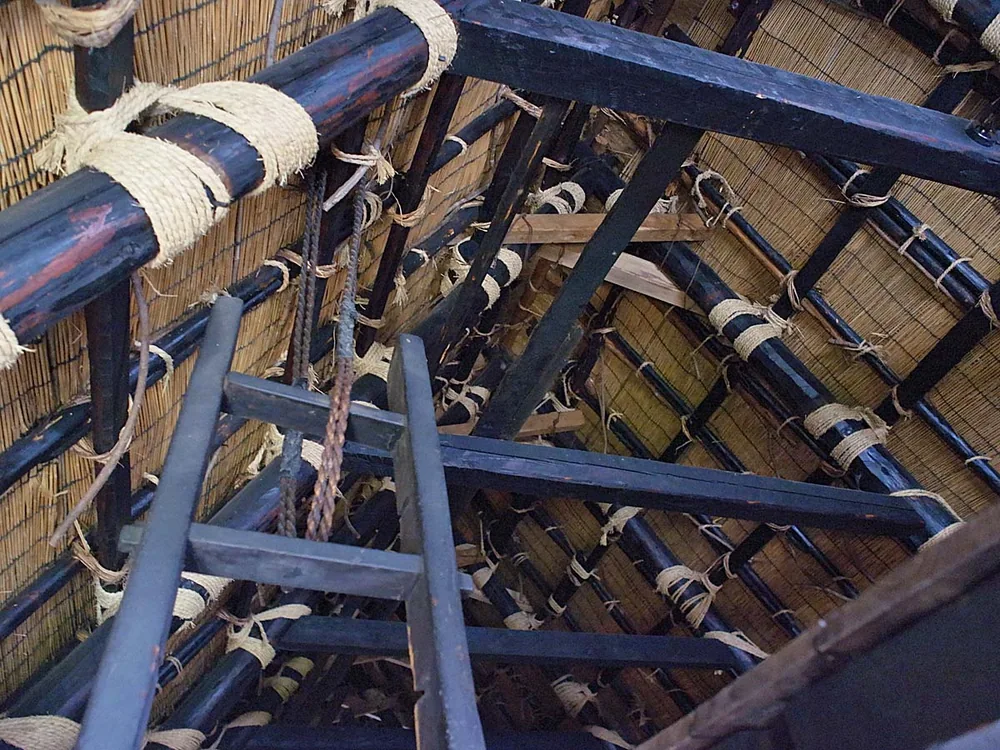
Nagase House has five levels and displays a Buddhist altar, artworks, equipment and former household objects. A film shows the roof being rethatched in 2001 through the mutual-help tradition of yui. Watching the roof work after seeing the timber structure connects the building with its maintenance. Spend time here if preservation methods interest you more than another view from a window.
Nagase House currently lists 9:00–16:00, irregular closing days, adult admission of ¥400 and child admission of ¥200, payable in cash. Hours may change over New Year. To visit both houses, remove a more distant walk so you can spend time on the objects and rethatching film.
Myozenji Folk Museum: another use for gassho architecture
Myozenji Folk Museum is in the south of the village. The temple's main hall, priests' quarters and bell tower retain gassho forms. Seeing a temple and houses on the same day shows how the same building method serves domestic and religious spaces. The museum also highlights the main hall's partition paintings by Taisuke Hamada. For an architecture-focused visit, this adds variety beyond similar house exteriors.
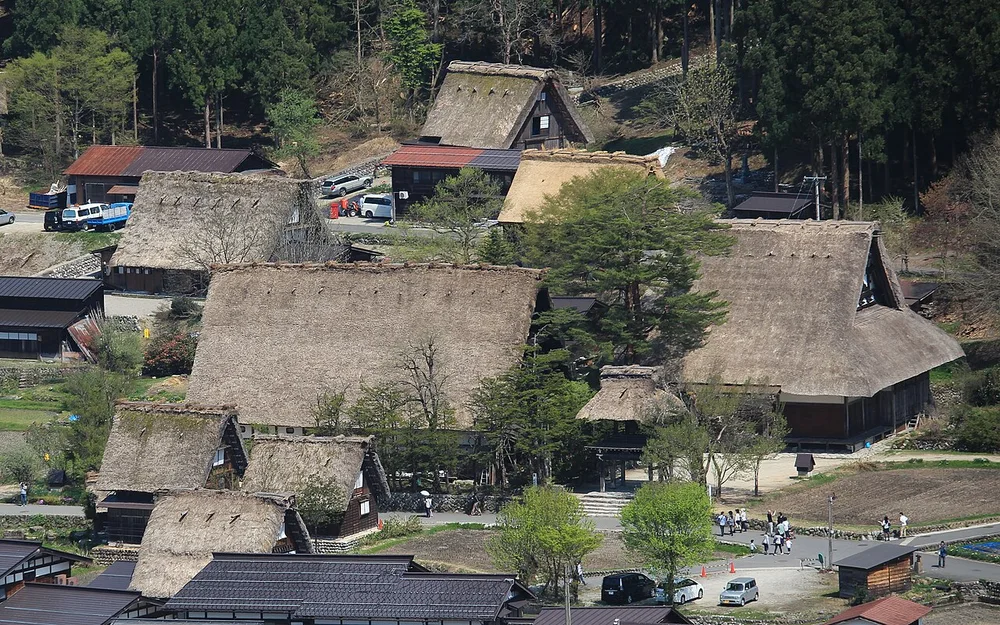
Myozenji admission is ¥400 for adults and ¥200 for elementary and junior high school students. Cash and WAON are accepted. Hours are 8:30–17:00 from April through November and 9:00–16:00 from December through March, with irregular closing days. A winter afternoon visit ends earlier than a summer one. A hearth is lit daily, letting you see how fire relates to the interior space. If you are sensitive to smoke or prefer a short visit, start in an area that suits you and adjust your time inside to how you feel.
Cross the bridge to Minkaen and allow a full visiting slot
The Gasshozukuri Minkaen open-air museum is across the Shogawa. It offers a different visit from the inhabited village, preserving relocated gassho houses alongside structures such as a watermill. In some main houses you can climb to levels beneath the roof. If buildings and old objects are your priority, make Minkaen a half-day focus. With only three hours, choose one house inside the village and save the river crossing and museum walk.
Minkaen's official visitor information lists adult admission at ¥800 and admission for elementary, junior high and senior high school students at ¥400. Preschool children enter free. Guests staying within the village can use a discount coupon issued by their accommodation: ¥700 for adults and ¥350 for children. Show it before buying tickets.
Hours are 8:40–17:00 from March through November and 9:00–16:00 from December through February. Last admission is 20 minutes before closing. Closing-day seasons differ: there is no regular closing day from April through November; from December through March, it closes Thursdays, or the preceding day if Thursday is a national holiday. March has spring opening hours but retains the Thursday closure. Last winter admission is 15:40.
Take time with the timberwork and daily-life displays. Some activities require a separate paid reservation. Once your departing bus is arranged, plan last admission, leaving the museum and crossing back to the terminal before selecting activities. Strong winds or heavy snow can cause temporary closure. A shorter village walk that day allows a fuller visit than rushing into the museum just before it closes.
Deai Bridge and the driving entrance are separate from the bus arrival point
Deai Bridge is the suspension bridge between the village and Seseragi Park Parking Lot across the river. Bus passengers arrive at the northern terminal and have already walked part of the main street when they reach it. Drivers park and cross the bridge before entering the village. Copying the same route “from the entrance” can send one group back in the wrong direction. Share a specific meeting point before visiting separate buildings, instead of relying on memories of a bridgehead or village entrance.
Shirakawa Village currently lists ordinary-car parking at Seseragi Park as ¥2,000, with hours of 8:00–17:00 and last entry at 16:30. Ordinary sightseeing vehicles must not enter the gassho village to look for parking, and private cars cannot drive to the viewpoint. Compare parking along with tolls, car rental and winter tires. For two people who can already take a bus from their accommodation, a rental car adds parking and road-condition arrangements.
The mandatory reservation system for sightseeing-bus parking from December 1, 2026 concerns large tour-coach parking. It does not turn individually purchased Nohi scheduled-bus seats into that same reservation product. Drivers, tour passengers and scheduled-bus passengers should each check their own product and entrance. Winter illumination events also require eligibility through the relevant event plan. Ordinary daytime parking or a normal bus ticket does not let you stay for the lights.
Fit lunch between house visits and the uphill shuttle
Ogimachi offers mountain vegetables, soba and Hida beef dishes, as well as small snacks. Decide whether you need a sit-down meal or a brief snack before choosing along your route. Nohi's area guide notes that many shops serve lunch only and have short hours. On a late-arriving day trip, do not leave your main meal until after the attractions close. With children, lunch before the uphill shuttle resumes at 13:20 is more comfortable than waiting at the stop at noon.
For lunch in the north, consider Hakusuien beside the shuttle stop. The tourism association's Hakusuien listing names Hida beef, Yuiuma pork, sweet-simmered rainbow trout and soba among its main dishes. Its address is Ogimachi 354, about two minutes on foot from the terminal. Eating here and walking to the shuttle differs from going south and then returning north after lunch. Choose by food and shuttle direction instead of squeezing a favorite restaurant into the final minutes before departure.
The village has no general public trash bins. Return food packaging bought in a shop to that shop, and take other rubbish away. Finish eating inside a shop where permitted or in a designated space before continuing your walk. Planning one proper meal and one short break also reduces awkward takeaway purchases, so you do not reach the terminal still needing to dispose of soup and wrappers.
Cherry blossoms, autumn leaves and snow call for different visits
The tourism association gives around April 15 as the usual cherry-blossom opening period in Ogimachi, and roughly late October to early November for autumn color. Use the village office's live viewpoint camera to see conditions in the year you travel. In spring, separate the high panorama from close views of blossoms and remaining mountain snow. In autumn, keep the ascent flexible: visit an interior while clouds pass, then add the panorama when it clears.
Summer brings fields and green mountains. Alternate walking with indoor attractions and lunch instead of spending all midday on unshaded roads. Water levels and rice growth change with farming work. For reflections, look at current images. Even without the water surface in an old photograph, public roads let you see the fields, roofs and irrigation channels. Stay out of cultivated fields.
Winter changes the walking conditions. The village recommends suitable winter boots or shoes with deeply treaded soles, along with warmth and waterproofing. The viewpoint shuttle can stop because of poor visibility, snow or ice. If the slope is unusable, keep your visit within the village and allow enough walking time back to the terminal. Book a specified event package for snowy-night illumination. Ordinary accommodation and normal buses do not automatically include viewpoint access on illumination nights.
With children or slower walkers, plan stairs and toilets first
Ogimachi is mainly explored on foot. There is no village sightseeing loop bus; the uphill shuttle serves only the viewpoint side trip. A stroller is useful on the streets, but gassho houses have their own interior routes and stairs. One adult can stay with a child or older relative on a suitable floor while others go upstairs. Use the main street that everyone can manage as your shared route, rather than requiring everyone to climb every level together.
The tourism association lends wheelchairs on days without rain or snow and accepts advance reservations. Lending stops in winter because of road conditions. It lists five wheelchair-accessible toilets in the village; mark them on a map at the terminal. If boarding a coach-style bus requires assistance, arrange it with the actual operator before travel. Nohi says these vehicles may not allow boarding while seated in a wheelchair. Usually the chair must be folded and the passenger must board independently.
The terminal also rents boots in winter, but only in sizes 23–27 cm, with three pairs per size. Reservations are unavailable, and rentals stop during events. This helps with an unexpected need. Bring children's smaller sizes or shoes requiring special support from your departure point. If your family will remove shoes for several interiors, put one in the morning and another in the afternoon, with a sit-down meal between them, instead of repeated entries without a break.
Trim the village route to three hours or expand it to six
For three hours, store luggage at the terminal, walk to Wada House and see both open floors fully. Continue through the central streets toward Kanda or Nagase House, choose a short rest stop and return to the terminal. In clear weather with the shuttle running, replace part of the central walk and break with the viewpoint. This keeps one complete interior visit and a village walk, without adding Minkaen. Return early enough to collect any stored luggage.
With five to six hours, visit the viewpoint first, descend for Wada House, then continue south to either Kanda or Nagase House. After lunch, choose Myozenji or cross Deai Bridge to Minkaen, then return to the northern terminal. You need not include both Myozenji and Minkaen. Choose the former for the temple and partition paintings, or the latter to compare multiple buildings in a museum setting. For Minkaen, cross after lunch rather than entering in the final hour.
A 7:50 departure from Takayama arrives at Shirakawa-go at 8:40; a 14:45 return arrives in Takayama at 15:35. Both services require reservations. The current timetable through November 30, 2026 and the revised timetable from December 1 both list these return-trip times, giving about six hours in Ogimachi. Handle terminal facilities on arrival, then enter Wada House or take the uphill shuttle at 9:00. Book the actual travel date and route, completing both reservations together.
If you arrive an hour later than planned, remove Minkaen or the second house first. Keep real time for lunch, waiting and returning to the terminal. If you continue to Kanazawa or Toyama that evening, replace the return bus with your specified onward service and adjust luggage collection and arrival at your new accommodation. This makes Shirakawa-go a complete stop within your journey, without spending it chasing the next ticket.
For a gassho stay, choose meals, checkout and the actual address together
One night suits travelers who want to remain after day visitors leave and walk again the next morning. Gassho guesthouse bookings through the tourism association generally open about three months ahead, with availability shown by property. First choose between Ogimachi itself and other parts of the village, then compare rooms, meals and access. Shirakawa Village includes Hirase, Iijima and other areas. An accommodation listing under Shirakawa-go does not necessarily put Wada House outside your door.
Gassho guesthouse Nodaniya is a specific example of a room-only stay. It stands opposite Shirakawa Hachiman Shrine, officially about ten minutes on foot from the terminal. Check-in is after 15:00 and checkout before 9:00. It currently accepts one group per day. The property lists ground-floor guest rooms, two shower rooms, a refrigerator, microwave and kettle. It serves no meals, permits no kitchen use and prohibits guests from bringing cooking appliances. Arrange both dinner and breakfast; a microwave is not permission to plan cooking.
Also in Ogimachi, Minshuku Rihei officially lists check-in after 14:00, checkout before 9:00 and four guest rooms. Both it and Nodaniya have early checkout. If you want more interior visits after breakfast, arrange luggage storage and start when the attractions open. Compare children's bedding, shared bathrooms, meals or room-only terms, and arrival times together to avoid late-arrival problems or searching for dinner while hungry.
For accommodation booked through the tourism association, cancel through the specified link at the bottom of the confirmation email. If the email does not arrive or the cancellation page shows a payment error, contact the association with the property name, stay date, guest name and reservation number. Cancellation charges follow the property's and plan's booking terms. Read special illumination plans separately. To continue walking after checkout, arrange storage at the accommodation or terminal and leave within ordinary daytime visiting hours.
Calculate transport and admission for your actual family group
For two adults and one elementary school child on a Takayama day trip, ordinary return bus fares through November 30, 2026 are ¥2,800 × 2 × 2 + ¥1,400 × 2 = ¥14,000. From December 1, they become ¥2,900 × 2 × 2 + ¥1,450 × 2 = ¥14,500. Wada House costs ¥400 × 2 + ¥200 = ¥1,000 for all three. The return viewpoint shuttle costs ¥1,500: ¥600 for each adult and ¥300 for the child. These transport and admission costs total ¥16,500 through November 30 and ¥17,000 from December 1. Add lunch, storage, other attractions and transport from your accommodation to Takayama Station separately.
Minkaen adds ¥800 × 2 + ¥400 = ¥2,000 for the same family. To save that amount and the bridge crossing, keep the Wada House visit already planned. Adjust the budget to what you want to see: retain another interior for construction methods, or the shuttle for the village panorama. Avoid making the family hurry continually just to increase the attraction count.
Group luggage collection, toilets, ticket presentation and boarding into the same final time slot. If you have checked into a guesthouse, return before dinner. On a day trip, leave on the bus for which you hold seats. For an onward trip through Takayama, Kanazawa or Tateyama Kurobe, read the three-to-five-day central mountain route and reconnect the wider journey around where you will actually sleep that night.
A few useful answers
Must I reserve the bus from Takayama to Shirakawa-go?
Some services require reservations; others have unreserved seating. Check the marks on Nohi's official timetable. Mobile tickets for unreserved services are valid only on specified unreserved buses and do not reserve a seat.
Does the viewpoint shuttle run at midday?
After the 11:40 uphill departure, the next is 13:20. Downhill departures include 12:10, then 13:30. The adult fare is ¥300 one way, payable in cash. The last ascent is 15:40 and last descent 16:10.
Is Minkaen open on Thursdays in March?
Minkaen closes Thursdays from December through March, or the preceding day when Thursday is a national holiday. Although March hours are 8:40–17:00, its closing days still follow the winter rule.
Does an overnight stay always include dinner and illumination access?
It depends on the actual plan. Nodaniya currently offers room-only stays, with no meals or kitchen use. Ordinary accommodation also does not automatically include winter illumination admission or viewpoint access.
Official information and references
Sources used in this guide.
- Nohi Bus: Takayama–Shirakawa-go–Kanazawa, Toyama and Takaoka timetables and fares
- Nohi Bus: combined official timetable and counter-ticket changes and refunds
- Nohi Bus: FAQs, onboard payment, unreserved seats and wheelchairs
- Shirakawa-go Tourism Association: general questions and luggage storage
- Shirakawa-go Tourism Association: walking map downloads
- SHIRAKAWA Going: viewpoint path, transport and daily updates
- Shirakawa Village: full viewpoint shuttle timetable
- Shirakawa-go Tourism Association: viewpoint shuttle and pet rules
- Shirakawa-go Tourism Association: Wada House
- Shirakawa-go Tourism Association: Kanda House
- Shirakawa-go Tourism Association: Nagase House
- Shirakawa-go Tourism Association: Myozenji Folk Museum
- Shirakawa-go Tourism Association: Gasshozukuri Minkaen introduction
- Gasshozukuri Minkaen: tickets, accommodation discounts, hours and closing days
- Shirakawa Village: residential spaces, parking and night visits
- Shirakawa-go Tourism Association: Hakusuien
- Shirakawa-go Tourism Association: seasons
- Shirakawa Village: winter
- Shirakawa-go Tourism Association: accessibility
- Shirakawa-go Tourism Association: accommodation reservations and cancellation
- Shirakawa-go Tourism Association: Nodaniya gassho guesthouse
- Shirakawa-go Tourism Association: Minshuku Rihei
- Shirakawa Village: official four-season film
- Nohi Bus: new fares from December 1, 2026
- Nohi Bus: timetable revision notice and timetable from December 1, 2026
- Nohi Bus: current carriage terms, including intermediate alighting on ordinary tickets
- Shirakawa-go Tourism Association: 2027 illumination admission and viewpoint ticket rules