Stay in Hirayu on a car-free first trip, Shinhotaka for early ropeway rides, or Fukuji, Shin-Hirayu, or Tochio for quiet ryokan soaks. Compare Takayama and Matsumoto buses, ropeway passes, and 2026–27 winter illuminations to plan an overnight itinerary.
- Region & Focus
- ChubuHotels and stays
- Reading Scope
- 15 min read · 9 chapters · 5 Q&As
- Official Verification
- 29 official sources checkedUpdated November 22, 2026
- Key Topics
- Hot springsRyokanItineraries
Chapter Route Map (tap any stop)
- Five Hot-Spring Villages: Pick Your Bus Stop First
- No Reservations Needed from Takayama; Book Ahead for Matsumoto and Shinjuku
- Shaping Your 2-Day Plan Around Day Two's Exit
- Shinhotaka Ropeway: Boarding Stations and Pass Math
- At the Top: Start on the Nishihotakaguchi Rooftop
- After Getting Off at Hirayu: Split Time Between the Falls and the Baths
- Standout Detours in Fukuji, Shin-Hirayu, and Tochio
- Match Your Winter Overnight to the Illumination You Want to See
- Splitting Days Between Kamikochi, Takayama, and Okuhida
- Quick Q&A
If it is your first visit to Okuhida and you are traveling solely by bus, Hirayu Onsen is the easiest base. Coaches from Takayama, Matsumoto, and Shinjuku all pull into Hirayu Bus Terminal, so you can drop your bags, soak right away, and catch a local bus up to the Shinhotaka Ropeway the next morning. If mountain views are your top priority, stay near Shinhotaka Onsen Station. If the overnight stay is all about a ryokan dinner, open-air baths, or winter illuminations, Fukuji, Shin-Hirayu, and Tochio each give you a distinct reason to linger. Pick one inn for the night and one extra hot-spring village to explore during the day.
Five Hot-Spring Villages: Pick Your Bus Stop First
Okuhida Onsen-go sits east of central Takayama in Gifu Prefecture and comprises five hot-spring areas: Hirayu, Fukuji, Shin-Hirayu, Tochio, and Shinhotaka. Buses depart the Nohi Bus Center beside JR Takayama Station, stop at Hirayu first, and then continue through the other four villages to the Shinhotaka Ropeway. Travelers arriving from Matsumoto also transfer at Hirayu. Booking platforms lump the entire valley under Takayama City, so if you plan to have dinner in Takayama's old town before heading into the mountains, check the last outbound bus first. If you booked a half-board ryokan stay with dinner and breakfast, check the cutoff time for evening check-in and meal service as well.
Hirayu and Shin-Hirayu are especially easy to mix up when booking a room. Hirayu's bus stop is signed Hirayu Onsen, while Shin-Hirayu is signed Shin-Hirayu Onsen—about 14 minutes apart by local bus. Fukuji has two stops: Fukuji Onsen and Fukuji Onsen-guchi. The former enters the village itself, where Mukashibanashi no Sato and the morning market are located; the latter sits out on the main highway junction. Some buses along the same route swing through Fukuji while others bypass it via Ipposui, so if your inn is inside the village, match both your outbound and return rides to stops listed in the HO40 column.
When choosing a Shinhotaka ryokan, zoom in on the map until individual bus stops appear. Shinhotaka Onsen-guchi, Nakao Kogen-guchi, Shinhotaka Onsen, and Shinhotaka Ropeway are four separate stops. The ropeway sits at the terminus, making inns within walking distance of the base station ideal for catching the first gondola up; staying up in Nakao Kogen means factoring in that extra leg to the boarding area. If a listing advertises a shuttle, confirm the exact pickup stop, departure times, and whether drop-off is available at checkout. Hauling rolling suitcases uphill for 10 to 15 minutes gets miserable fast in snow or after dark.
If you want unhurried time in the ryokan baths on both evenings, staying two nights at the same property usually pays off. You can explore outdoors if the weather is clear on your first afternoon, then save the ropeway for the best visibility window the next day. Splitting two nights across two villages makes sense if the room and kaiseki dinner are the main draw, or if you want to catch a specific village's night illumination. Before switching inns mid-day, arrange luggage storage in advance—early drop-offs and late pickups depend on each property's desk hours.
| Hot-Spring Area | Best Reason to Stay Overnight | Bus Stop & Walkability |
|---|---|---|
| Hirayu | First car-free visit, or connecting to Matsumoto, Shinjuku, or seasonal Kamikochi buses the next day | Hirayu Onsen (HO37); prioritize properties within walking distance of the terminal |
| Fukuji | Staying in a quiet village for a ryokan dinner and the next morning's market | Use Fukuji Onsen (HO40) inside the hamlet, and confirm the exact stop with your inn |
| Shin-Hirayu | Ryokan dining and soaking, plus easy winter walks to Shinsui Park | Shin-Hirayu Onsen (HO48) is the main stop; inns stretch along the main road |
| Tochio | Soaking at Kojin no Yu or seeing the Horadani Snow-Cherry Blossom illumination | Tochio Onsen (HO51); check which side of the road your stop serves |
| Shinhotaka | Reaching the ropeway before doors open, or staying in Nakao Kogen for the kamakura snow domes | Match the stop to your inn's address; the ropeway entrance is at the HO65 terminus |
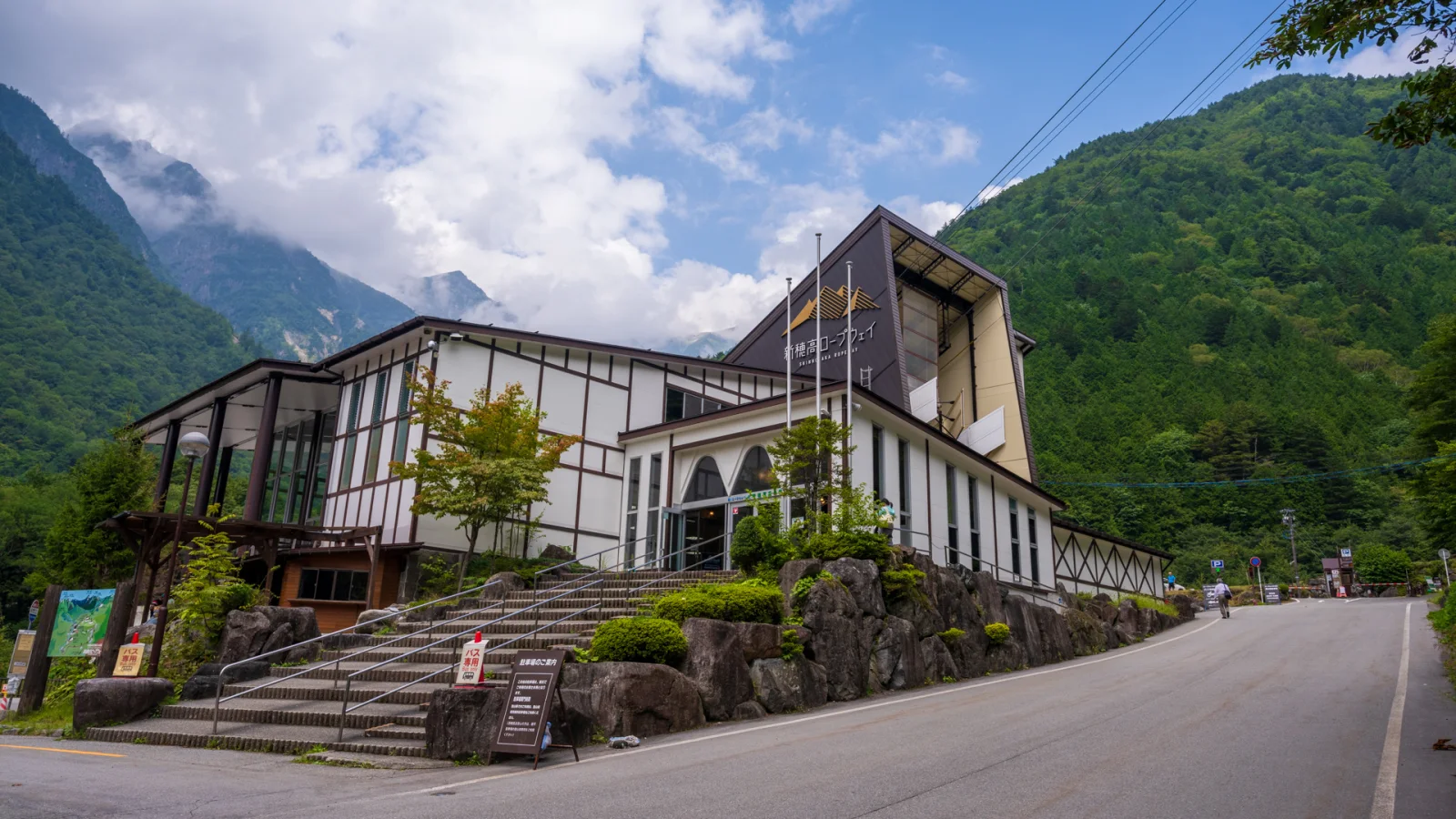
Stay in Hirayu on a car-free first trip, Shinhotaka for early ropeway rides, or Fukuji, Shin-Hirayu, or Tochio for quiet ryokan soaks. Compare Takayama and Matsumoto buses, ropeway passes, and 2026–27 winter illuminations to plan an overnight itinerary.
No Reservations Needed from Takayama; Book Ahead for Matsumoto and Shinjuku
From Takayama, board the Hirayu-Shinhotaka Line at the Takayama Nohi Bus Center right next to JR Takayama Station. On the regular year-round schedule, a 10:40 a.m. departure reaches Hirayu at 11:38 a.m. and the ropeway terminus at 12:25 p.m. Budget about an hour from Takayama to Hirayu and another 40 minutes from Hirayu to the ropeway base. One-way adult fares are ¥1,600 from Takayama to Hirayu, ¥2,200 from Takayama to the ropeway, and ¥910 from Hirayu to the ropeway. No seat reservations are taken from Takayama or Hirayu; buy tickets at the counter or vending machine at either terminal or the ropeway station before boarding, and queue early on weekends and holidays.
There is one directional exception. Nohi Bus requires passengers boarding at stops between Nakao Yakedake Tozanguchi and Shinhotaka Onsen heading toward the ropeway to reserve by phone before 6:00 p.m. JST the previous day. If you are staying along that stretch, lock in your morning inn shuttle before committing to a ropeway time. Heading back down the valley, check the bus's final destination too: some runs on the current timetable terminate at Hirayu rather than continuing all the way to Takayama, so verify whether a Takayama arrival time is listed before boarding.
Between Matsumoto and Okuhida, take the Limited Express Matsumoto Line jointly operated by Nohi Bus and Alpico. Seats are reserved by date in both directions, with bookings opening one month before travel. The scheduled ride between Hirayu and Matsumoto Bus Terminal takes about 90 minutes. If you are sleeping in Hirayu, book directly to or from Hirayu; if you are arriving from Matsumoto and continuing to Takayama after checkout, buy Matsumoto-to-Hirayu and Hirayu-to-Takayama separately. Select dates from December 29, 2026, through January 3, 2027, offer direct Shinhotaka-to-Matsumoto departures; on other winter days, ride a local bus from the ropeway back to Hirayu and transfer to the limited express. If you plan to head to Matsumoto right after a morning ropeway visit, book your afternoon limited express seat ahead of time and take an earlier local bus down.
Coming straight from Tokyo, take the Shinjuku-Takayama highway bus and get off at Hirayu. Reservations open one month before your travel date; select Busta Shinjuku as your origin and Hirayu Onsen as your destination. The roughly 4.5-hour ride suits travelers who want to sleep in the mountains on night one. If your arrival bumps up against ryokan dinner hours, head straight to the dining room and save Hirayu Great Falls for the next day. Before booking a long-distance coach back to Shinjuku or Matsumoto, pad your transfer window for walking from your inn and any local bus delays.
A Nohi Bus service notice issued on November 22, 2026, details detour routing along National Route 158 following a landslide, suspending the Shioya stop on the Hirayu-Shinhotaka Line and noting possible delays on the Takayama Line toward Matsumoto. Whenever you are connecting to a limited express train at either end, check both the bus status page and rail timetables together. Leaving one train's worth of buffer at Takayama or Matsumoto Station is far safer than cutting a mountain-road connection tight.
Shaping Your 2-Day Plan Around Day Two's Exit
For a round-trip from Takayama, catch a morning bus to Hirayu, drop your bags at your inn as arranged, and spend the afternoon walking to Hirayu Great Falls and strolling the village. If you want an extra daytime soak, head back into town before dinner for the Hirayu Folk Museum area or Hirayu no Mori. Late arrivals can keep things simple within town and step straight into their ryokan bath. Between bus rides, walks, and changing clothes, an afternoon disappears fast—protecting enough time for dinner at your inn on night one is the top priority.
On day two from Hirayu, one year-round timetable option departs at 8:40 a.m. and reaches the ropeway base at 9:16 a.m. From December through March, the first ropeway car up leaves at 9:00 a.m., making that bus a natural match for the 9:30 a.m. departure. To arrive even earlier, an 8:00 a.m. bus from Hirayu reaches the base at 8:45 a.m., provided you have coordinated an early breakfast with your ryokan. If you aim to catch the 12:55 p.m. local bus down from the terminus—scheduled to hit Hirayu at 1:28 p.m. and Takayama at 2:31 p.m.—check the return timetable beforehand, factor in gondola queues and the walk to the bus stop, and decide whether to eat on the mountain or down in the valley.
If you are exiting toward Matsumoto, spend the night in Hirayu, check out and store your bags near the terminal in the morning, ride the ropeway, and return to Hirayu to grab your luggage before boarding your reserved limited express. Taking the 12:55 p.m. bus down puts you in Hirayu at 1:28 p.m., leaving comfortable time to retrieve bags and grab a bite before a 2:55 p.m. departure to Matsumoto. Travelers staying in Fukuji who are bound for Matsumoto have two luggage options: bring bags down to Hirayu lockers in the morning before heading up the mountain, or leave them at the inn, ride a return bus that loops into Fukuji village to pick them up, and catch the next bus back to Hirayu. Branch-line routing and wait times between buses make the second option noticeably slower.
If you are riding straight from Takayama to the ropeway before afternoon check-in, coin lockers are available at Shinhotaka Ropeway Station during operating hours, as well as at Hirayu Bus Terminal and the adjacent Alps Kaido Hirayu. Travelers staying in Hirayu who need to return there for a limited express should stash large suitcases near the terminal; travelers returning directly to Takayama can leave bags at Shinhotaka and take them straight back down. Hauling oversized luggage onto the ropeway means hunting for cabin space and paying extra if it exceeds the weight limit, so pack a small daypack with warm layers, water, and valuables instead.
With only a single day trip out of Takayama, pick one focus: mountain views or hot springs. For views, ride straight from Takayama to HO65 and return from the same stop. For a soak, get off at Hirayu and pair a bathhouse with a short village walk before heading back. If your group has split interests, ride together to Hirayu, split up, and meet back at the terminal—anyone going up the ropeway can work backward from the return bus schedule. Having dinner back in Takayama beats juggling day-trip bags through two separate local bus waits.
If the ropeway is the centerpiece of your trip and skies are clear when you arrive, go up on day one. Ride directly from Takayama to the terminus with a small daypack, then head down to your inn by late afternoon. If low clouds settle in for both days, having a solid ryokan booked for night one lets you pivot effortlessly to the Fukuji morning market or Hirayu's daytime baths on day two without breaking your return ticket connections.
Shinhotaka Ropeway: Boarding Stations and Pass Math
From Shinhotaka Onsen Station (elevation 1,117 m), the first ropeway stage climbs to Nabedaira Kogen Station. You then walk over to Shirakabaira Station (about 1,308 m) to board the second stage, home to the double-decker gondolas that ascend roughly another 850 m to Nishihotakaguchi Station at 2,156 m. Stage one typically departs on the hour and half-hour, and stage two at :15 and :45, for about 25 minutes of total ride time each way excluding queues and the transfer walk. If you are pushing a stroller, using accessible routes, or browsing the shops at Shirakabaira, plan to catch the following gondola rather than rushing. Official guidance notes that wheelchair users can reach Nishihotakaguchi via elevators, ramps, and stairlifts with station staff assistance upon entry.
Checked in November 2026, standard round-trip fares for both stages are ¥3,800 for adults and ¥1,900 for elementary school students, while preschoolers ride free with an accompanying adult. Luggage exceeding 6 kg requires a separate round-trip baggage ticket at ¥1,000. From the base, buy the combined two-stage round-trip ticket. Drivers can skip stage one and ride just the second stage from Shirakabaira (¥3,700 adult round-trip) when the Nabedaira Kogen parking lot is open. In winter, Nabedaira Kogen parking closes and navigation should be set to the base lot at Shinhotaka Onsen Station—with only a ¥100 gap between the full ticket and stage-two-only, road conditions and lot closures dictate where you park.
Nohi Bus's Okuhida Marugoto Value Kippu covers unlimited local Nohi Bus rides within the designated zone plus one round-trip on both ropeway stages, with the current edition valid through March 31, 2027. The two-day pass costs ¥7,700 for adults from Takayama or ¥5,400 from Hirayu. For a classic Takayama-to-Hirayu overnight plus a ropeway round-trip and return to Takayama, individual tickets total ¥8,820 (¥1,600 x 2 + ¥910 x 2 + ¥3,800), so the Takayama pass saves ¥1,120. If you arrived in Hirayu on a separate highway bus and only need Hirayu-to-ropeway rides plus the gondola, individual tickets cost ¥5,620, meaning the Hirayu pass saves ¥220. Any onward limited express to Matsumoto is paid separately.
If the ropeway is optional on a one-night trip, hold off on buying a pass until you check operations. Once activated, passes are nonrefundable; if the ropeway suspends service, Nohi Bus states that vouchers redeemable at ropeway facilities are issued instead of cash refunds for the fare difference. Two-day and three-day validity starts on the first day you ride the bus. Pre-purchased convenience store or agency vouchers must be exchanged for physical pass tickets at the designated starting terminal, so leave time for that counter stop before an early bus. Mobile tickets are also available via Nohi Bus's website.
The operator announced a full two-stage maintenance closure from November 24 to 27, 2026, during which station shops and restaurants also close. Starting December 5, the Shirakabaira area opens the new Soyoka Footbath and Soyoka Plaza—ideal for soaking your feet on the way down after hitting Nishihotakaguchi in clear weather. Even when both stages are running, summit temperatures commonly sit 6 to 10°C colder than the base. Check the official summit webcam and operation status before leaving; if the mountain is socked in with whiteout fog, soaking near Hirayu Terminal beats waiting at the base for a clearing that never arrives.
At the Top: Start on the Nishihotakaguchi Rooftop
Nishihotakaguchi's rooftop observation deck is called ALPSCAPE. On clear days, the viewing boards help you pick out the sharp spire of Mount Yarigatake, the sweeping ridgeline of the Hotaka peaks, and Mount Kasagatake across the valley. When clouds drift in and out, spend a few minutes watching whether the mist is moving before deciding how long to wait. For a closer walk among conifers, head into the adjacent Itadaki no Mori area, choosing either the Spear Corridor or Forest Deck depending on seasonal closures. Both spots hug the station building, so anyone in your group who gets cold can wait comfortably inside the lounge.
Plan on 45 minutes to an hour at the summit, adding extra time if you walk the forest trails, sit down for a meal, or face a line for the descent. Take in the views first before deciding where to take your break: if wind cuts across the roof, warm up inside the summit station or drop down to Shirakabaira's lounge and bakery. If your window before the return bus is tight, save it for the ropeway transfer and bus queue rather than squeezing lunch into another hot-spring stop. Before boarding stage two back down, double-check the last stage-one departure as well—the two final cars leave from separate platforms.
When traveling with older relatives or young children, stick to the rooftop deck and indoor spaces by default. Navigating stairs, outdoor transfers, and gondola queues adds up quickly for a half-day outing. Bundle up before stepping out at the summit, and pack spare gloves for kids along with a small towel for footbaths in one daypack. The mountaineering trailhead toward Mount Nishihotakadake sits next to the Itadaki no Mori boardwalks; casual sightseers should stay within marked park paths and remain inside the station or open decks whenever snow accumulation or restrictions apply.
After Getting Off at Hirayu: Split Time Between the Falls and the Baths
Hirayu Great Falls plunges 64 m across a 6 m-wide rock face on the Takayama-bound side of the bus terminal. The Otaki-guchi / Camp-jo-mae stop (H36) sits closer to the trailhead, though some buses skip it; once your bags are dropped in Hirayu, you can walk out past the ski slope or catch an H36-stopping bus one way. In summer, vehicles reach the viewing plaza beneath the falls; in winter, the tourism association notes parking near the restaurant Ankiya, followed by about a 30-minute walk each way. Leave extra buffer for the walk back, photos, and slow footing on snow.
The waterfall and the village bathhouses lie in different directions. If you arrive with small children, older travelers, or rolling bags, check your luggage at the inn first before deciding on the walk. On short winter afternoons, visit the Hirayu Folk Museum and footbath park on arrival day and save the falls for morning light. The museum preserves traditional gassho-zukuri farmhouses and includes the open-air bath Hirayu no Yu, listed by the Hirayu Onsen Tourism Association as open 6:00 a.m.–9:00 p.m. in summer and 8:00 a.m.–7:00 p.m. in winter on an honor-box donation basis. If you want showers, shampoo, and a lounge to relax in afterward, opt for a full-service day-use bathhouse instead.
Near Hirayu Terminal, Hirayu no Mori draws from two distinct springs—one side pours cloudy milky-white water, the other runs clear. Day-use entry for the indoor and open-air baths is ¥700 for adults and ¥500 for ages 3 through elementary school, open 10:00 a.m. to 9:00 p.m. (last entry 8:30 p.m.). Its private iron-cauldron baths operate for day visitors from 12:00 p.m. to 3:00 p.m. (last check-in 2:15 p.m.) at ¥3,000 per group for 45 minutes, booked on-site; arriving around lunch improves your odds of getting a slot. Note that the facility announced a maintenance closure from November 30 to December 11, 2026, suspending lodging, day baths, on-site dining, and its sister restaurant Ankiya. During those dates, soak at the Hirayu Folk Museum and eat near the terminal or at your ryokan.
Next to the terminal, the Okuhida Visitor Center covers local alpine wildlife, weather, and trail conditions—handy on rainy days or between buses. Entry is free from 9:00 a.m. to 5:00 p.m., closed Wednesdays (or the following weekday if Wednesday is a national holiday). Adjacent Alps Kaido Hirayu houses souvenir shops and a dining hall; from November 16, 2026, through April 16, 2027, winter hours run 9:00 a.m.–5:00 p.m. for shops and 10:30 a.m.–3:00 p.m. for the restaurant (last order 2:30 p.m.). From December 2 through the end of March, the restaurant and takeout counter close on Wednesdays except December 30 and January 6—if you are transferring there on a winter Wednesday noon, eat elsewhere or pack a simple lunch from Takayama.
Standout Detours in Fukuji, Shin-Hirayu, and Tochio
Overnighting in Fukuji sets you up for a morning stroll at Mukashibanashi no Sato. The Fukuji Morning Market near the park entrance runs 6:30–11:00 a.m. from April 15 to November 14, and 8:30–11:00 a.m. from November 15 to April 14, selling dried Hida vegetables, miso, pickles, and local crafts. If someone in your group wants to linger longer, the grounds also include a small fossil museum and Sekido no Yu, where you can eat skewered goheimochi rice cakes beside a sunken hearth. On a day trip from Hirayu, match your morning bus to a Fukuji-routing departure, hit the market first, and pick one extra spot inside the park instead of watching the clock out on the highway.
Staying in Shin-Hirayu is mostly about enjoying your ryokan. Properties line the main road, with pleasant daytime walks along the Hirayu River to Shinsui Park and Taruma Falls. Guests staying nearby can walk to winter illuminations after dark; if your inn sits farther away, ask about shuttle service and plan both evening transport and weekday lunches ahead. For souvenir shopping, Matsumoto-bound travelers can browse during their Hirayu transfer, while Takayama-bound travelers can wait until back in the city. If Hida beef is a priority at dinner, verify whether your room plan includes it or requires an upgrade.
Along the Kamata River in Tochio, Kojin no Yu is an unstaffed riverside open-air bath with separate men's and women's pools. There are no shower stalls or washing stations—rinse off using the buckets beside the pool before stepping in. Drop about ¥300 in the collection box; hours are typically 8:00 a.m. to 10:00 p.m., opening at 12:00 p.m. on Mondays, Wednesdays, and Fridays after cleaning. Bring coins and your own towel; parents with kids can easily take turns soaking. Even though it stays open until 10:00 p.m., bus riders will need to leave earlier to catch the last ride back.
In Shinhotaka, Nakazaki Sanso Okuhida no Yu sits close to the ropeway's first stage—an easy walk after coming down off the windy summit for a soak and a meal at its diner. The tourism association lists hours as 9:00 a.m.–6:00 p.m. (last entry 5:00 p.m.) with irregular holidays; admission is ¥1,000 for adults and ¥500 for children, rising to ¥1,200 and ¥600 from December. Buses back to Takayama board right at the ropeway terminus, so lock in your return departure before deciding whether to do both lunch and a soak here or just one.
Water color and mineral scent vary sharply from village to village. The tourism association notes simple thermal, bicarbonate, sulfur, and chloride springs across the valley, and even neighboring inns in the same village can tap different sources—check each property's posted spring-quality sheet when booking. To compare two styles without overpacking your schedule, pair your ryokan's indoor shower-equipped bath with one riverside outdoor pool. Both Hirayu and Shinhotaka have transit-friendly day baths; if you cannot fit a third stop in, save that energy for a late-night soak back at your inn.
The Okuhida Yukemuri Tatsujin bath-hopping pass costs ¥1,200 and covers entry to two or three participating baths, sold at the Hirayu and Shinhotaka tourist information centers and other local counters. Before buying one, circle your target baths on the official list and verify their day-use hours. If you only plan to soak at your ryokan plus one public bath, paying cash on-site is simpler; the pass mainly pays off if you are driving between two or three specific bathhouses.
Match Your Winter Overnight to the Illumination You Want to See
Winter evening events for 2026–27 are spread across all five villages, so if you want to step out after your evening soak, choose your ryokan by walking distance to a venue. Shin-Hirayu, Tochio, and Fukuji all run nightly illuminations from late December 2026 through late February 2027. Check the walking route on your booking map and ask your inn which exit is easiest after dark; if an event is beyond walking range, confirm transport before committing. Stops that connect seamlessly by bus during the day are cut off from one another once the last bus runs.
The Hirayu Great Falls Ice Festival runs February 15–25, 2027, with illuminations from 7:00 p.m. to 9:00 p.m. and fireworks in the snow scheduled around 8:30 p.m. Even if you stay in Hirayu, allow walking time to and from the falls entrance and book an earlier dinner slot with your ryokan. Shinhotaka's Nakao Kamakura Festival runs February 1–10, 2027, from 8:00 p.m. to 9:00 p.m. on the grounds of Hakusan Shrine in Nakao Kogen; organizers note limited dedicated parking and no shuttle buses, so look for lodging right in Nakao Kogen if you want to walk inside the snow domes.
If anyone in your group feels the cold quickly, Fukuji's Aodaru illumination starts at 5:00 p.m. right near the Fukuji Onsen bus stop, letting you stroll through before sitting down to dinner at your inn—with an additional ice-path lighting event from 7:30 p.m. to 9:00 p.m. on February 4–14. Shin-Hirayu lights up Taruma Falls and Shinsui Park from 5:00 p.m. to 9:30 p.m., while Tochio's Horadani Snow-Cherry Blossom illumination stays lit from 5:00 p.m. to 11:00 p.m. In Shin-Hirayu, you can scout the park path in daylight and follow the same route to the frozen cascade after dark; Tochio's late curfew also leaves time after an unhurried dinner.
Build extra cushion into even short winter transfers. The ropeway operator notes snowfall is possible from mid-November through early April, requiring snow tires and winter gear for drivers. Bus travelers should prioritize inns within walking distance of a terminal or stop in snowy weather. Check posted bus updates before heading out, pack a small flashlight or use your phone light on dark roads, and wear boots with real grip. For riverside baths, remember you will still take a few barefoot steps between the changing shelf and the water—if older travelers worry about slipping, stick to inns with indoor baths.
Splitting Days Between Kamikochi, Takayama, and Okuhida
First-time visitors approaching Hida from Nagoya or the Hokuriku side can spend a night in central Takayama first to see Sanmachi, Takayama Jinya, or Hida no Sato, then head up into the mountains the following morning. After checking out of your city hotel, keep your mountain arrival afternoon light for your ryokan and baths. Shirakawa-go requires a separate bus leg from Takayama or another hub with direct service; if you have an early morning departure to Shirakawa-go, ride back to Takayama the afternoon before and sleep near the station. For structuring your city half-day, see our Takayama Old Town and Jinya walking guide.
Two timing details link Kamikochi directly to Okuhida. First, Nohi Bus lists the ride from Hirayu to Kamikochi Bus Terminal at roughly 30 minutes. Second is the seasonal closure: in 2026, buses run through November 15, after which Kamikochi closes for winter from November 16, 2026, until mid-April 2027—drop standard Kamikochi sightseeing from any winter Okuhida plan. During the operating season, catching an early bus from Hirayu lets you hop off at Taisho Pond and walk to Kappa Bridge, or ride straight to the terminal and pick a shorter loop based on weather and return times. Drivers coming from Takayama park at Akandana Parking Lot and switch to authorized shuttles or buses into Kamikochi.
To visit both Kamikochi and the Shinhotaka Ropeway, schedule them on separate mornings. Both branch out from Hirayu, and back-to-back wait times can eat up the middle of the day. On a tight two-day trip, you can leave Takayama early, stash bags at Hirayu, go straight into Kamikochi, return to your ryokan in the afternoon, then ride the ropeway on day two before catching a bus to Matsumoto or Takayama. If you arrive after noon on day one, two nights work much better: give Kamikochi the full middle day and save checkout day for either the ropeway or a village walk, adding buffer for holiday bus queues. In winter, swap the Kamikochi day for a half-day at Shinhotaka paired with a local village stay.
If you are changing hotels every night across Takayama, Hirayu, and Matsumoto, use Hirayu Bus Terminal as your anchor. Arriving from Matsumoto around noon leaves time for lunch at the terminal and an easy afternoon in Hirayu rather than racing for the last gondola. Heading out toward Tokyo from Takayama or Hirayu, write your departure time from Hirayu at the top of your checkout-day schedule and work backward, leaving enough margin to pick up stored bags. If this is your first half-board ryokan stay, check our first-time ryokan booking guide for tips on dinner timing and private-bath plans.
A few useful answers
For a one-night stay, is Hirayu or Shinhotaka more convenient?
Stay in Hirayu if you are connecting to Takayama, Matsumoto, Shinjuku, or seasonal Kamikochi buses. Stay near Shinhotaka Onsen Station if catching the ropeway in clear morning weather is your priority—inns in Shinhotaka are spread out, so check the actual walking distance to the ropeway entrance.
Are Fukuji Onsen and Fukuji Onsen-guchi interchangeable?
For the Fukuji Morning Market or Mukashibanashi no Sato, take a bus that stops at HO40 Fukuji Onsen. HO45 Fukuji Onsen-guchi sits out on the main highway junction. If you are staying in another area, ask your ryokan which exact stop name to use for both outbound and return buses.
Do I need reservations for buses from Takayama to Shinhotaka?
No reservations are needed from Takayama or Hirayu on Nohi Bus's Hirayu-Shinhotaka Line. However, passengers boarding between Nakao Yakedake Tozanguchi and Shinhotaka Onsen heading toward the ropeway must reserve by phone before 6:00 p.m. JST the day prior. Both the Matsumoto limited express and Shinjuku highway bus require reservations, opening one month before travel.
Can I see both the Hirayu frozen waterfall and Nakao snow domes in winter 2026–27?
Their dates do not overlap. The Nakao Kamakura Festival runs February 1–10, 2027, while the Hirayu Great Falls Ice Festival runs February 15–25, 2027. Nightly illuminations in Fukuji, Shin-Hirayu, and Tochio continue through the end of February, so you can pair one of those with whichever festival falls during your trip.
Do I have to ride both ropeway stages to get on the double-decker gondola?
The double-decker cars run on the second stage between Shirakabaira and Nishihotakaguchi. If you start from the base, buy the combined two-stage ticket. Drivers can drive up to the mid-station when Nabedaira Kogen parking is open, though winter snow closures require parking at the base.
Official information and references
Sources used in this guide.
- Okuhida Onsen-go Tourism Association: Five Hot-Spring Areas & Spring Qualities
- Nohi Bus: Takayama–Hirayu–Shinhotaka Line Timetable, Fares & Stops
- Nohi Bus: Limited Express Matsumoto Timetable, Reservations & Year-End Direct Runs
- Nohi Bus: Hirayu–Shinjuku Highway Bus & Reservations
- Nohi Bus: Service Status & Detour Notices
- Nohi Bus: Okuhida Marugoto Value Kippu Details, Fares & Terms
- Shinhotaka Ropeway: Schedule, Fares & Baggage Rules
- Shinhotaka Ropeway Official Site: Live Operations & Weather
- Shinhotaka Ropeway: FY2026 Maintenance Closure Notice
- Shinhotaka Ropeway: New Footbath & Plaza at Mid-Station
- Shinhotaka Ropeway: Facility Map, Station Floors & Timetable (PDF)
- Shinhotaka Ropeway FAQ: Accessibility, Temperature Gaps & Winter Driving
- Okuhida Onsen-go Tourism Association: Hirayu Great Falls Information
- Hirayu Onsen Tourism Association: Public Baths & Footbaths
- Hirayu no Mori: Day-Use Baths & Private Bath Rates
- Hirayu no Mori: Maintenance Closure Notice
- Gifu Prefecture Okuhida Visitor Center: Opening Hours & Information
- Mukashibanashi no Sato: Facilities, Fukuji Morning Market & Bus Stop
- Gifu Prefecture Chubu-Sangaku National Park: Shin-Hirayu & Shinsui Park
- Okuhida Tourism Association: Kojin no Yu Hours & Facilities
- Okuhida Tourism Association: Nakazaki Sanso Okuhida no Yu Day Baths
- Okuhida Tourism Association: Yumeguri Bath-Hopping Pass
- Okuhida Winter Story 2026–27: Event Dates & Venues
- Nohi Bus: Hirayu–Kamikochi Line & 2026 Operating Season
- Kamikochi Official Site: Winter Closure & Entry Notice
- Chubu-Sangaku National Park: Coin Locker Locations & Ropeway Station Hours
- Okuhida Tourism Association: Alps Kaido Hirayu Winter Dining & Shop Hours
- Okuhida Tourism Association: Fukuji Onsen Morning Market Hours
- Kamikochi Official Site: Takayama-Side Park-and-Ride (Akandana)