Plan Ogimachi from Takayama, Kanazawa or Toyama. Compare reserved and unreserved buses, the viewpoint shuttle’s lunch break, house tickets, Minkaen closures and three-hour, six-hour or overnight visits.
- Region & Focus
- Takayama and Shirakawa-go
- Reading Scope
- 40 min read · 19 chapters · 4 Q&As
- Official Verification
- 27 official sources checkedUpdated 7 November 2026
- Key Topics
- ItinerariesBookingSeasons
Chapter Route Map (tap any stop)
- Choose a half-day, a full day or a night in Ogimachi
- From Takayama, Kanazawa or Toyama, decide where you will finish
- Treat reservations, unreserved services and mobile tickets separately
- Refunds, children and payment depend on your ticket
- Store luggage at the terminal before entering the village
- Divide the walk into northern, central and southern areas
- The viewpoint is an uphill detour: plan the descent first
- The shuttle stops at lunchtime, with no uphill bus at 13:00
- Wada House: public rooms within an occupied home
- Choose Kanda or Nagase House for structure or household objects
- Myozenji Folk Museum: gassho architecture in a temple
- Cross the bridge to Minkaen and give it a full time slot
- Deai Bridge and the car entrance differ from the bus entrance
- Fit lunch between house visits and the uphill shuttle
- Cherry blossom, autumn colour and snow need different plans
- With children or slower walkers, plan stairs and toilets first
- How to trim a three-hour or six-hour village itinerary
- For a gassho stay, check meals, check-out and the actual address
- Calculate transport and admission for your actual family
- Quick Q&A
In Ogimachi, Shirakawa-go, you can visit a gassho-style house, walk through the village and reach the viewpoint in one day. Allow five to six hours if you also want Minkaen and a sit-down lunch. Secure your bus seat out of Ogimachi first, then choose whether to walk south from the northern terminal or take the shuttle uphill first. For an overnight stay, consider meals, check-out and the next morning’s walk together. Day visits, gassho guesthouses and the winter light-up each need a different plan.
Choose a half-day, a full day or a night in Ogimachi
With around three hours, prioritise one gassho house open to visitors and a walk along the main street. Add the viewpoint only if visibility and shuttle times work. Allow five to six hours to see an interior, go uphill, have a sit-down lunch and cross the bridge to Minkaen. The tourist association’s estimate of two to three hours to walk around the village gives a sense of its size. Allow extra time for ticket purchases, queues and meals.
For a first visit, a return trip from Takayama or Kanazawa makes luggage simplest. If staying in Takayama, leave large cases at your hotel; if staying in Kanazawa, you avoid checking into somewhere new that evening. Shirakawa-go also works as a stop between Takayama and Hokuriku, but you need separate tickets into and out of the village, plus luggage storage at the terminal. Set your village route after securing the departure bus.
An overnight stay gives you the quieter rhythm after dinner and the following morning. Shirakawa Village sets ordinary sightseeing hours at 08:00–17:00; evenings are for residents and guests staying in the village. To photograph Ogimachi early in the morning, book suitable accommodation there. A day trip covers house exteriors, interiors and the viewpoint, so there is no need to change accommodation simply to add another place to your overnight itinerary.
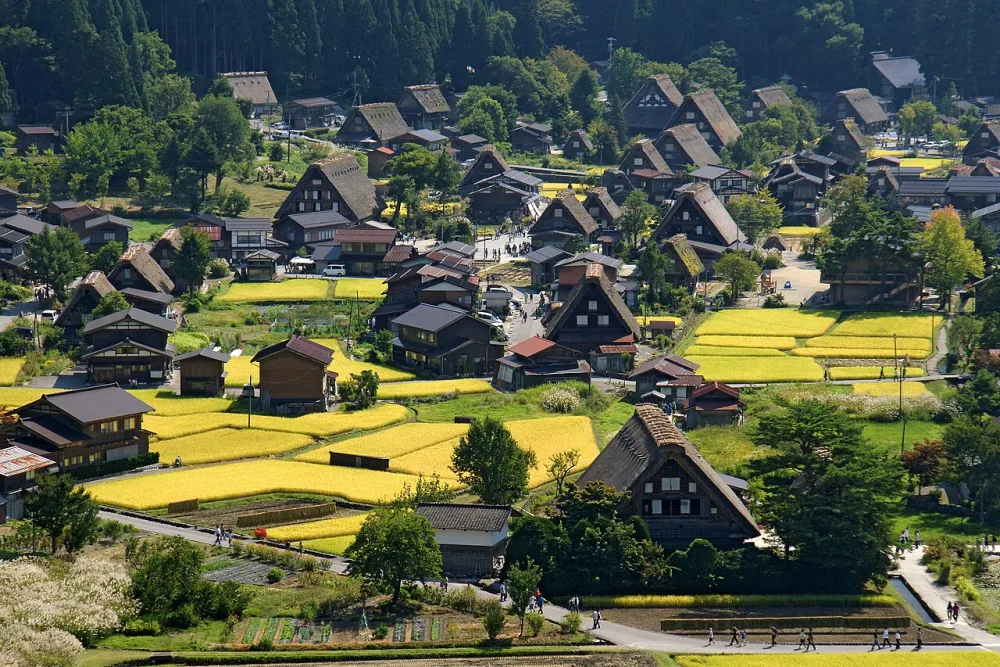
Plan Ogimachi from Takayama, Kanazawa or Toyama. Compare reserved and unreserved buses, the viewpoint shuttle’s lunch break, house tickets, Minkaen closures and three-hour, six-hour or overnight visits.
From Takayama, Kanazawa or Toyama, decide where you will finish
Takayama Nohi Bus Centre, beside JR Takayama Station, is the departure point on the Takayama side. Select Shirakawa-go (Ogimachi) as your destination. Nohi Bus gives a standard journey time of around 50 minutes from Takayama to Ogimachi; some services using local roads take longer. Kanazawa services use Kanazawa Station’s west exit, separate from the east-exit sightseeing bus routes common in the city. Toyama services use the stop in front of Toyama Station. Save the direction on your booking together with a map when stop names look similar.
For travel up to 30 November 2026, ordinary adult single fares to Shirakawa-go are ¥2,800 from Takayama, ¥2,800 from Kanazawa and ¥2,400 from Toyama. Primary-school children pay half fare; these sectors have no ordinary return discount. The fare table effective from 1 December raises Takayama–Shirakawa-go and Kanazawa–Shirakawa-go to ¥2,900 each, while Toyama–Shirakawa-go remains ¥2,400. Adult returns from Takayama or Kanazawa therefore cost ¥5,600 up to 30 November and ¥5,800 from 1 December. Entering from Takayama and continuing to Toyama costs ¥5,200 and ¥5,300 respectively.
Stopping en route changes the fare. An ordinary through single from Takayama to Toyama costs ¥3,800 up to 30 November 2026 and ¥3,900 from 1 December. Buying Takayama–Shirakawa-go and Shirakawa-go–Toyama separately costs ¥5,200 and ¥5,300 respectively. For a stop of several hours in Ogimachi, buy two tickets for the actual sectors travelled. If you have a regional pass, check eligible buses, excluded services and reservation procedures for each sector before choosing between the pass and separate tickets.
Parking queues in Shirakawa-go, snow and motorway closures also affect scheduled buses. Nohi Bus’s route page warns of delays of two hours or more, including substantial delays to departures. If you need a Shinkansen connection or must reach accommodation serving dinner that evening, choose onward travel with room for delays. Travelling from Shirakawa-go to an international flight on your departure day puts road delays and airport deadlines on the same day.
Treat reservations, unreserved services and mobile tickets separately
Start booking through the official Nohi Bus Shirakawa-go timetable. For services marked as requiring reservations, reserve the specific date and sector first. Services without that mark board in queue order. Keep your reservation record for a booked service; for an unreserved service, reach the designated stop early.
Nohi’s official consolidated timetable says reservations open one month before travel. For example, for 26 November, start checking the relevant service on 26 October. When the preceding month has no matching date, use the dates actually released in the official system. A service that is not yet on sale is different from a sold-out service. Check the selectable dates before changing your bus or travel date, rather than moving your whole accommodation plan because you searched too early.
If two people are travelling together, enter both passengers, any children and the boarding and alighting stops in the same booking. After payment, check both passengers’ dates and directions. If you book arrival and departure separately, complete payment or ticket collection for both as instructed. Save the booking, boarding document and boarding-point map before travel, and be at the correct stop before departure. If you must exchange a voucher at a counter, allow for that queue before the bus leaves.
When unreserved services are busy, the operator may provide extra buses or auxiliary seats. If the extra bus also fills, passengers are directed to the next service. If you have an onward connection, favour a reservable bus; a possible extra service is not a backup seat. The official website also sells mobile tickets valid only on specified unreserved services. Check that your intended bus is covered before buying one.
Refunds, children and payment depend on your ticket
For tickets issued at a counter, Nohi’s consolidated timetable requires changes and cancellations at the original purchase counter before the booked service departs. The cancellation fee is ¥100. A second or later change requires a refund and a new purchase. After departure, the ticket becomes invalid and cannot be changed or refunded; a phone call does not replace the counter procedure. These rules apply to counter tickets. For online payments, save the cancellation method and deadline shown by the booking platform.
Start children’s bus budgets with half fare for primary-school children, and specify whether a younger child needs a seat when booking. Long-distance bus seats, the viewpoint shuttle and admission tickets each define child eligibility differently. Minkaen’s child ticket covers primary, lower-secondary and upper-secondary pupils; Wada House lists its child rate only for primary-school children. A child at lower-secondary school will not pay half price for every part of the day.
Nohi’s ordinary route buses currently do not accept transport IC cards, credit cards or contactless mobile payments on board. The official information lists credit-card payment at Takayama Nohi Bus Centre and Shirakawa-go Bus Terminal, subject to accepted card types. Show prepaid electronic tickets as the original platform instructs. Carry yen cash for tickets bought locally, house admission and the viewpoint shuttle. The operator does not refund a daytime bus fare solely because road conditions cause a delay.
Store luggage at the terminal before entering the village
Shirakawa-go Bus Terminal is at the northern end of Ogimachi, with the tourist association inside. Walk from here to Wada House, the viewpoint shuttle or the main street. Minkaen requires a walk south and across the Sho River. Before leaving the terminal, locate your return stop, toilets and luggage collection point, and check collection times. If someone in your group walks slowly, a meeting at the terminal is clearer than simply saying “back at the village entrance”.
There are coin lockers at the terminal and luggage storage businesses nearby. When these are full, the tourist association also offers same-day storage and collection from 08:00 to 17:00. Charges start at ¥500 for small and medium items and ¥1,000 for large items, depending on size and quantity. If carrying cases between Takayama and Kanazawa, collect them before 17:00 and before joining your bus queue.
The bus luggage compartment is shared. Nohi’s route page says large luggage may be refused if there is insufficient space. You normally load and unload it yourself, but can ask the crew for help. Keep power banks with you inside the bus, not in the luggage compartment below. If forwarding large cases to your next hotel, arrange the delivery date and acceptance first. Carrying only a daypack for walking and the weather in Ogimachi is simpler than reorganising belongings after storing your case.
Divide the walk into northern, central and southern areas
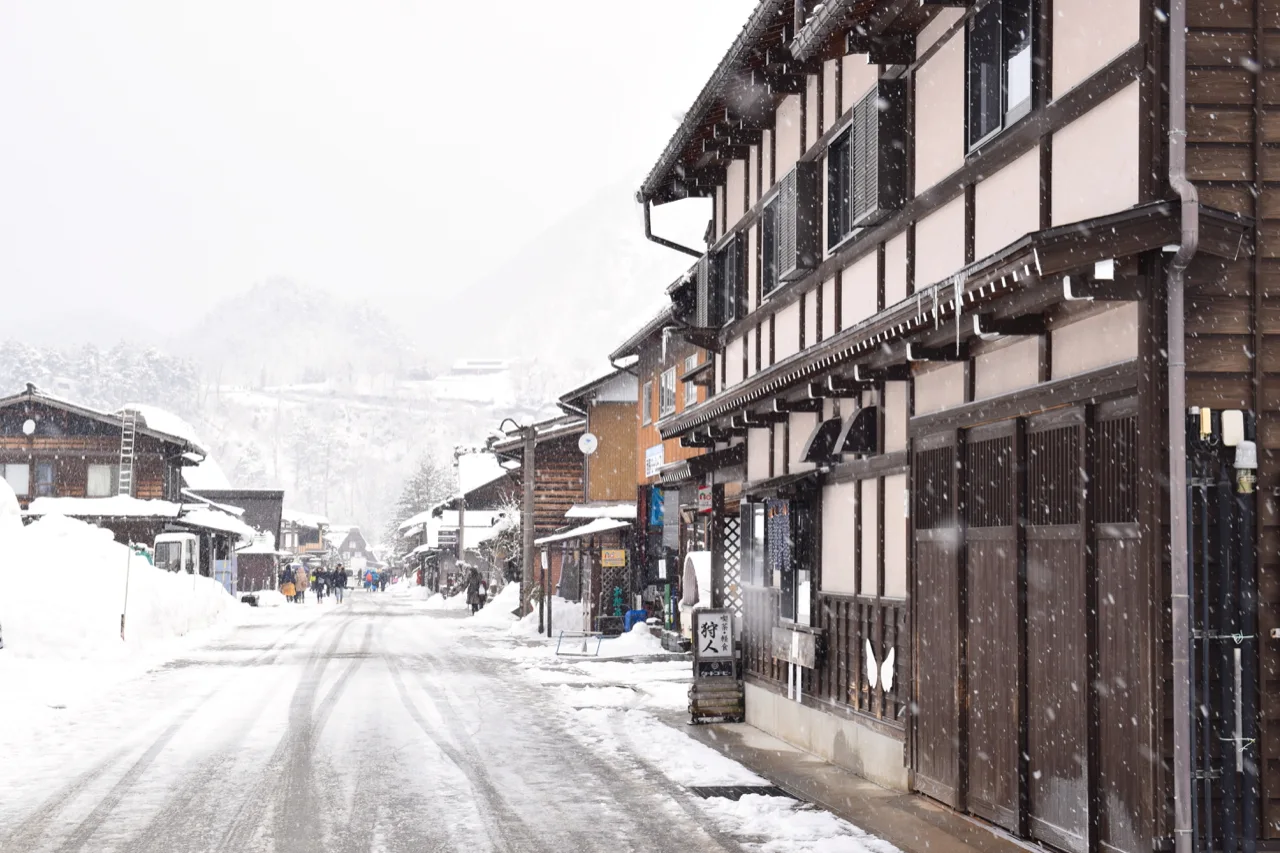
Think of Ogimachi as a north–south walking route. The terminal, Wada House and viewpoint shuttle are in the north. In the centre you can link Kanda House and Nagase House; further south are Myozenji and Shirakawa Hachiman Shrine. Deai Bridge connects the village with the car park and Gasshozukuri Minkaen across the Sho River. Mark the buildings you want to enter and your return time on the same tourist association walking map to see which detours to leave for another visit.
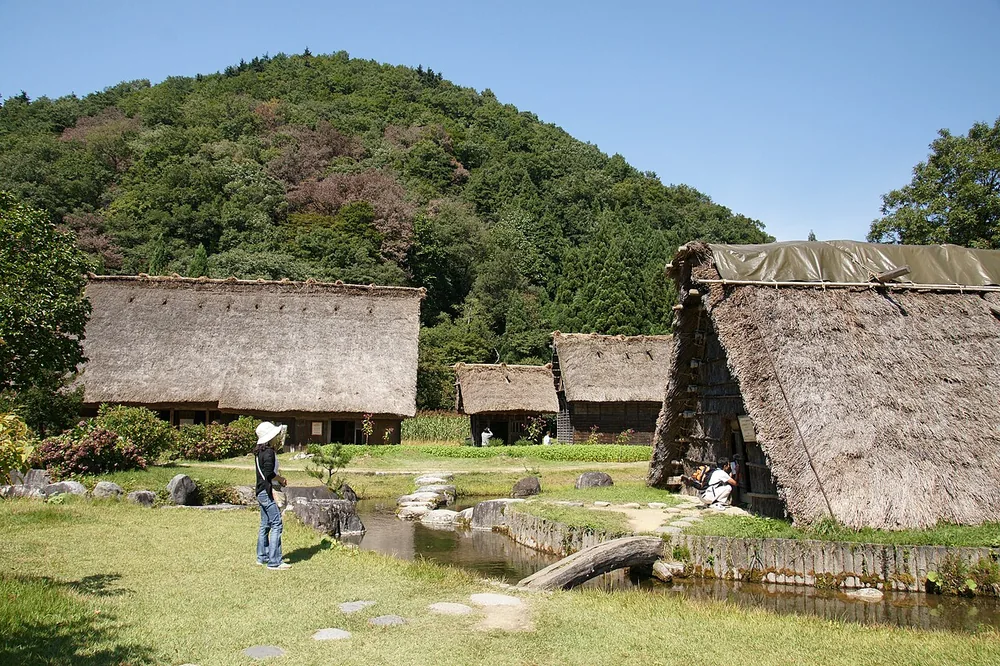
Entering from the north, you can visit the viewpoint first, walk south and return to the terminal along the main street. Reverse this if crossing from the car park. If the viewpoint weather is poor, visit a house first, then decide whether to go uphill as the cloud or mist changes. This changes one detour without making everyone repeatedly cross the village for the same photograph.
Official access pages give walks from the terminal of around four minutes to Wada House, seven to Kanda House, eight to Nagase House, ten to Myozenji and twelve to Minkaen. Use these figures to judge distance; they exclude stops. Looking at roofs, fields and shops, and eating, takes most of your time. If the southern farmland is beyond your companions’ walking range, turn back in the centre and keep time for a complete house visit.
The viewpoint is an uphill detour: plan the descent first
Ogimachi Castle Ruins Viewpoint and the privately run Tenshukaku Viewpoint are next to each other. From above, you can see how roofs, fields and the village fit together. Private cars cannot drive directly to either. Visitors take the paid shuttle from the village or use the designated walking path. The official SHIRAKAWA Going site describes an uphill path of around 600 metres, taking about 15 minutes one way. Walk if the weather is good and you are comfortable with the slope; if the path is icy or closed, take the shuttle or stay in the village.
Before going up, check SHIRAKAWA Going’s operating status for the day and the signs at the path. Snow, ice, visibility and road conditions affect this detour. Follow the designated return route when restrictions apply. Taking the shuttle up and walking down can save effort, but descents can also be slippery. Walking down is not a fixed fallback for every weather condition.
If time is short, staying in the village is the better use of it. Queuing, going uphill and returning form one continuous outing. Checking the downhill bus only after taking photographs can leave you caught by the midday gap. With older relatives or a pushchair, decide whether everyone will go up together. If splitting up, arrange to meet at the shuttle stop or terminal rather than trying to locate each other by phone at different elevations.
The shuttle stops at lunchtime, with no uphill bus at 13:00
The viewpoint shuttle leaves beside Hakusuien, around three minutes or 200 metres south of the bus terminal. It does not leave from the long-distance bus platforms. Adults pay ¥300 one way in cash when alighting. Primary-school children pay ¥150; younger children travel free without a separate seat. Holders of a physical disability certificate pay half fare. Ordinary pets cannot board; pet travel ended in March 2024.
Uphill departures are at :00, :20 and :40 during the 09:00, 10:00 and 11:00 hours. There are none during the entire 12:00 hour. Service resumes at 13:20, followed by 13:40, then :00, :20 and :40 during the 14:00 and 15:00 hours, with the last uphill departure at 15:40. Downhill buses leave at :10, :30 and :50 during the 09:00, 10:00 and 11:00 hours. The midday departure is 12:10, followed by a break until 13:30; the last is 16:10. The village office’s full timetable also clearly leaves 13:00 blank.
For example, if you go up at 11:40 and want the 12:10 down, your visit and walk back to the stop must fit within that interval. Miss it and the next departure is 13:30. For an easier pace, eat lunch in the village first and go up at 13:20. If your long-distance bus leaves around 15:00, completing the viewpoint in the morning usually works better, leaving the afternoon for houses and shopping near the terminal. Remove this detour if the shuttle is suspended that day.
Wada House: public rooms within an occupied home
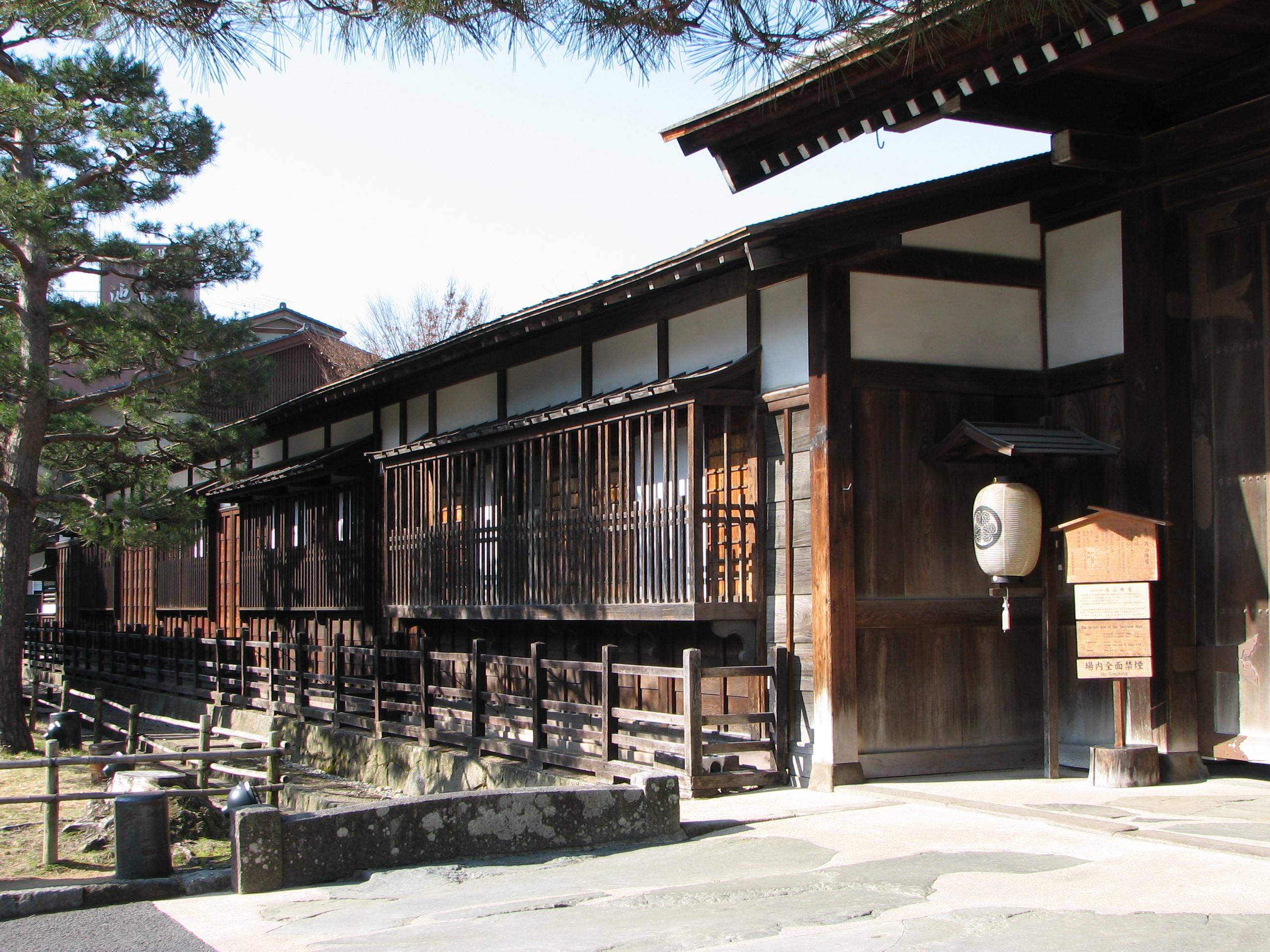
Wada House is one of Ogimachi’s representative gassho houses. In the Edo period its owners served as village headmen and checkpoint officials, and developed the family business through the saltpetre trade. It makes a useful introduction to gassho architecture. The first two storeys are open to visitors; the residents’ living quarters are private. Moving from the exterior into the house, then looking over the village from the upper floor, connects the roof shape with its usable space and gives more context than a photograph at the door.
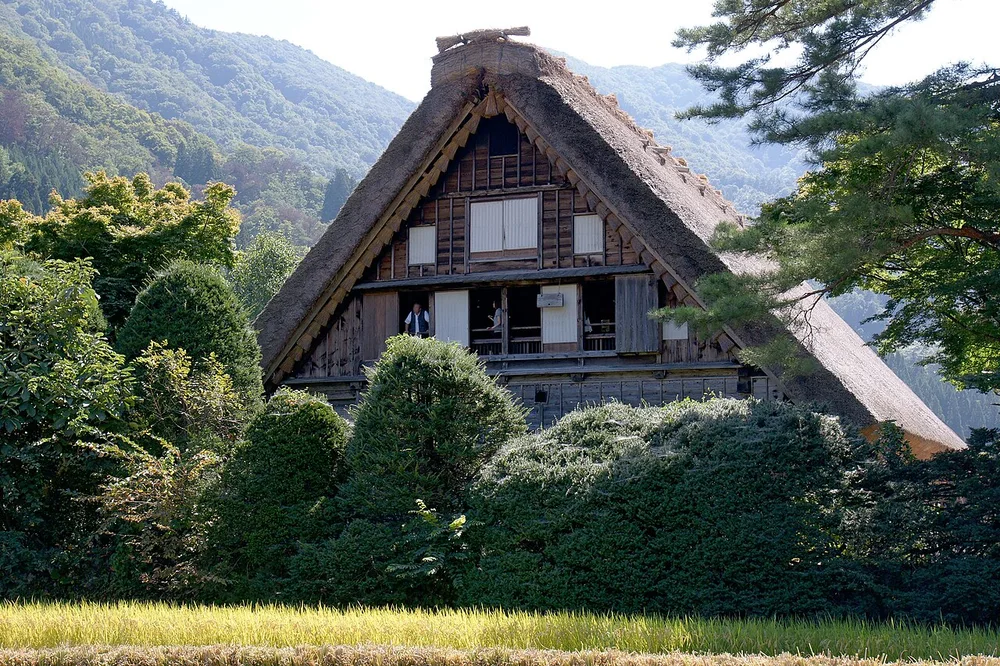
Wada House’s official information lists 09:00–17:00, with irregular closures. Admission is ¥400 for adults, including lower-secondary pupils and above, and ¥200 for primary-school children, payable in cash only. Audio introductions play in Japanese downstairs and English upstairs, with QR explanations also available. If you want to hear them, pause after entering rather than following the crowd straight upstairs.
Because Wada House remains a home, use only the public areas. Do not enter spaces closed by doors or ropes, and follow the photography signs inside. From the upstairs windows, avoid keeping your camera trained on neighbours’ daily lives. If the uphill shuttle is next, walk to its actual stop rather than waiting at Wada House’s door for a bus that merely passes nearby.
Shirakawa Village Office’s official film introduces Ogimachi through village scenery and residents’ daily lives. It provides context for the village before an interior visit.
Choose Kanda or Nagase House for structure or household objects
Kanda House highlights its internal gassho structure and the site beneath the floor used to produce saltpetre. Tools have QR explanations. Add it after Wada House if you want to understand how these large houses stand and how their floors were used. If visiting only one house, put actual opening hours and your route first. Kanda House opens 10:00–16:00 and closes on Wednesdays, but opens when Wednesday is a public holiday. Admission is ¥400 for adults and ¥200 for primary-school children.
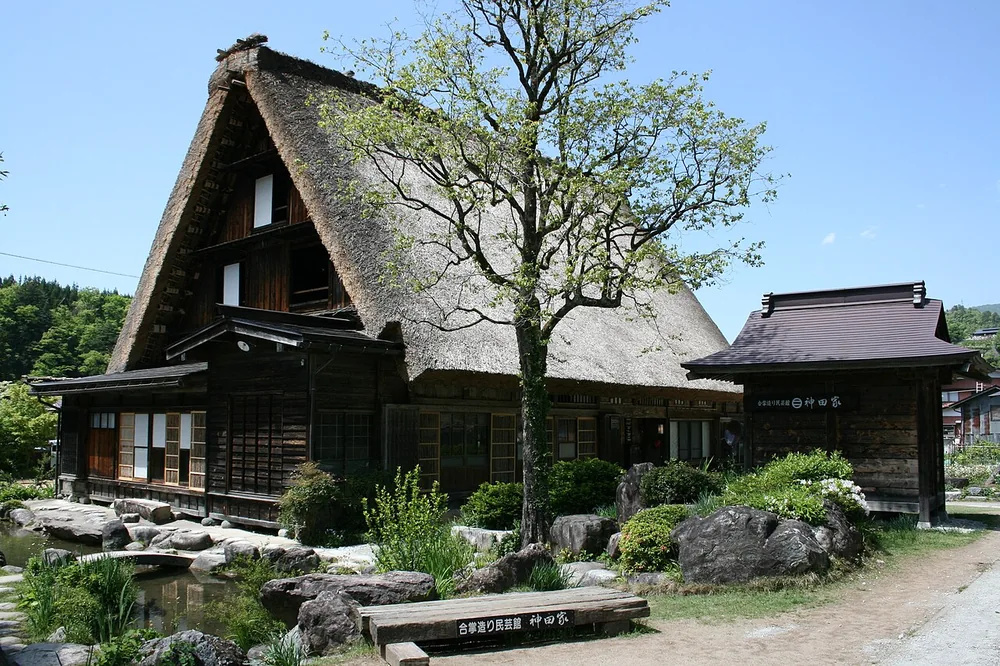
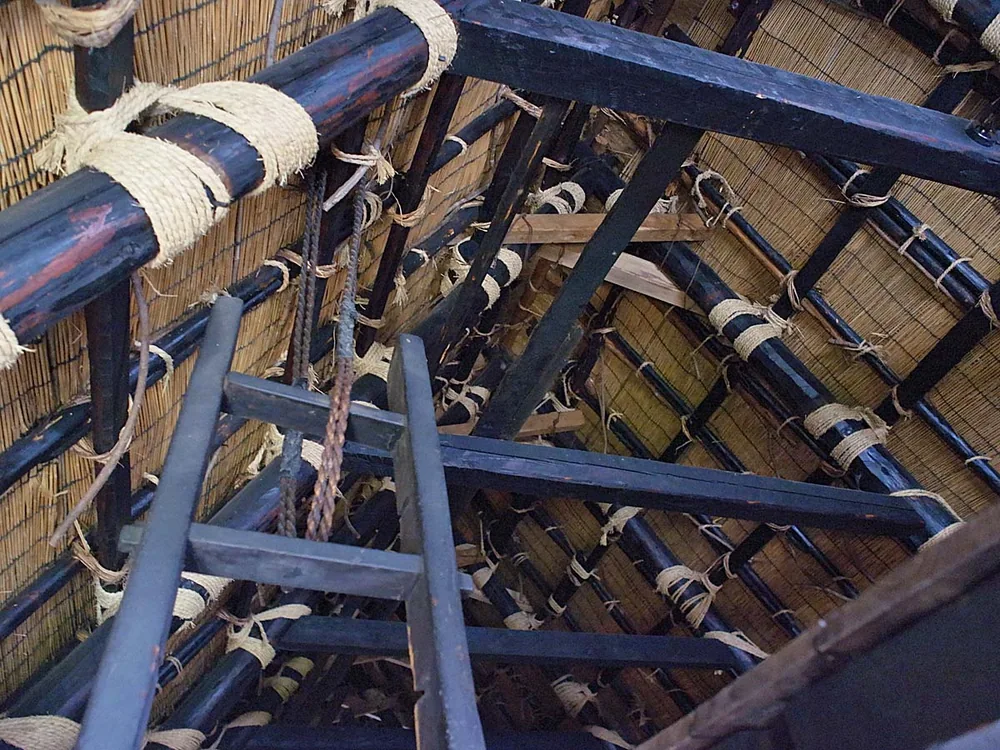
Nagase House is a five-storey gassho house displaying a Buddhist altar, artworks, equipment and old household utensils. It also shows a film of the roof being rethatched in 2001 through the mutual-help system called yui. Seeing the timber frame and then the rethatching footage connects the building with the work needed to maintain it. Allow time here if preservation methods interest you more than a particular view from a window.
Nagase House currently lists 09:00–16:00, irregular closures and cash admission of ¥400 for adults and ¥200 for children. Hours may change around New Year. To see both houses, remove a more distant walk and leave time for the objects and roof-repair film.
Myozenji Folk Museum: gassho architecture in a temple
Myozenji Folk Museum is in the south of the village. The temple’s main hall, living quarters and bell tower retain gassho-style forms. Visiting a home and a temple on the same day shows how the same building method serves domestic and religious spaces. The temple also highlights Taisuke Hamada’s paintings on the main hall’s internal partitions. If architecture interests you, this offers more variety than spending all your time at houses with similar exteriors.
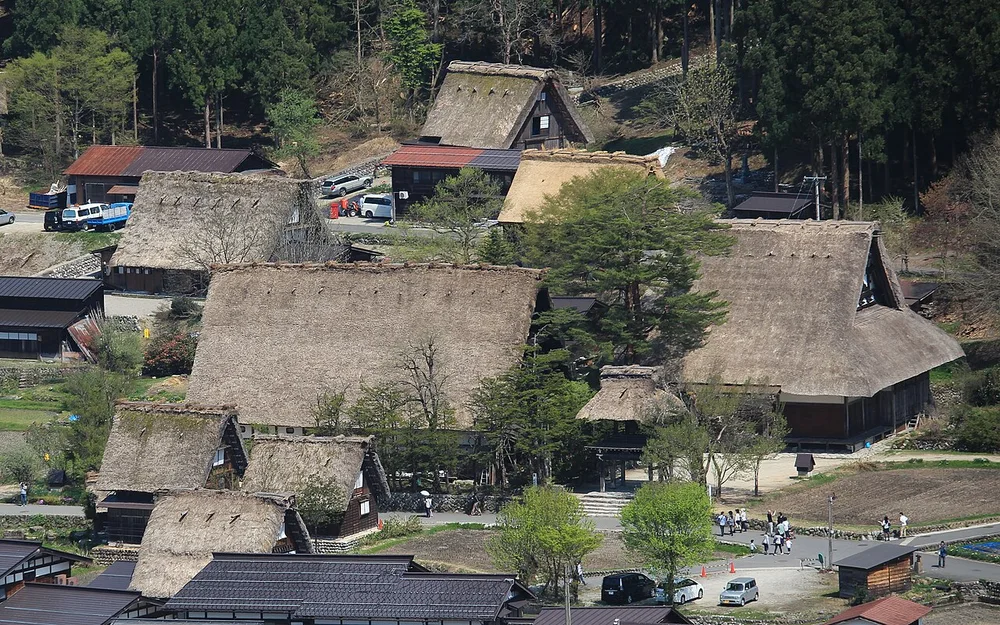
Myozenji charges ¥400 for adults and ¥200 for primary and lower-secondary pupils, accepting cash and WAON. Hours are 08:30–17:00 from April to November and 09:00–16:00 from December to March, with irregular closures. Winter afternoon visits end earlier. The hearth is lit daily, so you can see how the fire relates to the interior. If sensitive to smoke or planning a shorter visit, start in a suitable area and adjust your time inside according to how you feel.
Cross the bridge to Minkaen and give it a full time slot
The Gasshozukuri Minkaen open-air museum is across the Sho River and offers a different visit from the inhabited village. It preserves relocated gassho houses and buildings such as a watermill; in some main houses you can climb to the floors beneath the roof. Make Minkaen the focus of a half-day if you want more architecture and old household objects. With only three hours, choose one house in the village and save the river crossing and walking within the museum.
Minkaen’s official visitor information lists adult admission at ¥800, and ¥400 for primary, lower-secondary and upper-secondary pupils. Preschool children enter free. Guests staying in the village pay ¥700 for adults and ¥350 for children with a discount voucher issued by their accommodation. Show it before buying tickets.
Hours are 08:40–17:00 from March to November and 09:00–16:00 from December to February. Last admission is 20 minutes before closing. Closure months differ: there is no regular closing day from April to November; from December to March it closes on Thursdays, or on the previous day if Thursday is a public holiday. March already uses spring hours but still has Thursday closures. Winter last admission is 15:40.
Take time over timber structures and displays of daily life. Some activities require separate reservations and payment. Once you have your return bus ticket, work backwards from last admission, your departure from the museum and the walk across the bridge to the terminal before choosing an activity. Strong winds or heavy snow may cause temporary closure. A shorter village route that day gives a fuller visit than rushing into the museum just before it shuts.
Deai Bridge and the car entrance differ from the bus entrance
Deai Bridge is the suspension bridge between the village and Seseragi Park Car Park on the opposite bank. Bus passengers arrive at the northern terminal and have already walked part of the main village street by the time they reach it. Drivers park first and cross the bridge to enter. Copying the same “start at the entrance” route for both can reverse your return direction. Agree on one precise meeting place before visiting separate buildings, rather than relying on memories of a bridge end or village entrance.
Shirakawa Village currently lists ordinary-car parking at Seseragi Park at ¥2,000, with hours of 08:00–17:00 and last entry at 16:30. Ordinary sightseeing vehicles do not enter the gassho village to look for parking, and private cars cannot go up to the viewpoint. Compare parking alongside motorway tolls, car hire and winter tyres. For two travellers who can already take a bus from their accommodation, hiring a car adds parking and road-condition planning.
The “fully reserved sightseeing coach parking” system from 1 December 2026 concerns large tour-coach parking. It does not turn your Nohi scheduled-bus seat into the same type of reservation. Drivers, coach-tour participants and scheduled-bus passengers should each check their own product and entrance. Winter light-up visitors also need eligibility through the event arrangements; ordinary daytime parking or a normal bus ticket does not let you stay for the lights.
Fit lunch between house visits and the uphill shuttle
Ogimachi offers mountain vegetables, soba noodles, Hida beef dishes and small snacks. Decide whether you need a seated meal or a quick bite, then choose a place along the route. Nohi’s area information notes that many places serve lunch only and have short hours. A late-arriving day trip should not leave its main meal until after the museums close. With children, lunch before an uphill shuttle at 13:20 or later is more comfortable than waiting at the stop at midday.
For a meal in the north, consider Hakusuien beside the shuttle stop. The tourist association’s Hakusuien listing names Hida beef, Yuiuma pork, sweet-simmered rainbow trout and soba among its main dishes. Its address is 354 Ogimachi, around two minutes’ walk from the terminal. Eating here and then walking to the shuttle is a different route from going south first and returning north after lunch. Choose by food and shuttle direction instead of squeezing a preferred restaurant in just before departure.
The village has no general public rubbish bins. Return packaging from food bought in a shop to that shop, and take other rubbish away. Finish eating inside a shop where permitted or at a designated place before walking on. Planning a proper meal and a short rest also reduces awkward takeaway purchases, so you do not reach the terminal looking for somewhere to dispose of liquid and packaging.
Cherry blossom, autumn colour and snow need different plans
The tourist association gives around 15 April as Ogimachi’s usual cherry-blossom opening date, with autumn colour more likely from late October to early November. Use the village office’s live viewpoint camera to see the actual year’s conditions. In spring, separate the high-level panorama from close views of blossom and remaining mountain snow. In autumn, keep the uphill visit flexible: see an interior when cloud or mist arrives, and the full village when it clears.
Summer brings fields and green mountain scenery. Alternate walking with indoor visits and lunch rather than spending the whole midday period on exposed roads. Water levels and rice growth change with farm work, so use recent images if reflections are your aim. If the water in an old photograph is absent, you can still see fields, roofs and irrigation channels from public roads. Do not enter fields being cultivated.
Winter changes the walking conditions. The village recommends suitable winter boots or shoes with deep-tread soles, together with warmth and waterproofing. The viewpoint shuttle may stop because of visibility, snow or ice. If the slope is unusable, keep the visit within the village and allow ample walking time back to the terminal. For the snowy evening light-up, book the specified event arrangements separately. Ordinary accommodation and bus tickets do not automatically include light-up-night viewpoint access.
With children or slower walkers, plan stairs and toilets first
Ogimachi is mainly explored on foot. There is no village sightseeing loop bus; the uphill shuttle serves only the viewpoint detour. A pushchair is useful on the streets, but house visits involve indoor routes and stairs. One adult can stay with children or older relatives on a suitable floor while others climb. Use the main village street as the shared route everyone can manage, rather than expecting everyone to climb every floor together.
The tourist association lends wheelchairs on days without rain or snow, with advance reservations available. Winter road conditions suspend lending. It lists five wheelchair-accessible toilets in the village; mark them when you collect a map at the terminal. If you need help boarding a coach-style bus, arrange it with the actual operator before travel. Nohi says these vehicles may not allow passengers to board while seated in a wheelchair; passengers generally need to fold the chair and board separately.
The terminal also hires boots in winter, but has only sizes 23–27 cm, three pairs per size, with no reservations and no hire during events. This is an option for an unexpected need. Bring children’s smaller sizes or footwear with special support from your departure point. If your family will remove shoes for several house visits, place one in the morning and another in the afternoon, with a seated meal between, rather than visiting them consecutively.
How to trim a three-hour or six-hour village itinerary
For three hours, store luggage at the terminal, walk to Wada House and see both public floors. Continue along the central streets towards Kanda or Nagase House, choose a short rest stop and return to the terminal. In clear weather with a working shuttle, replace part of the central walk and rest with the viewpoint. This retains one full interior visit and a village walk, without Minkaen. Return earlier if you also need to collect luggage.
With five to six hours, start at the viewpoint, descend for Wada House, then head south to either Kanda or Nagase House. After lunch, visit Myozenji or cross Deai Bridge to Minkaen, then return to the northern terminal. There is no need to include both Myozenji and Minkaen. Choose the former for the temple and partition paintings, or the latter to compare several buildings in one museum. For Minkaen, cross after lunch rather than entering in your final hour.
One reserved-service pairing leaves Takayama at 07:50 and reaches Shirakawa-go at 08:40, returning at 14:45 and reaching Takayama at 15:35. Both the timetable valid up to 30 November 2026 and the revised timetable from 1 December list these times, giving around six hours in Ogimachi. Use the terminal facilities on arrival, then enter Wada House or take the uphill shuttle at 09:00. Select the actual travel date and sectors and complete both reservations.
If you arrive an hour later than planned, remove Minkaen or the second house first. Keep time for lunch, queuing and returning to the terminal. If continuing to Kanazawa or Toyama that evening, replace the return trip with your specified onward service and adjust luggage collection and arrival at the new accommodation. Shirakawa-go then remains a complete stop during your transfer rather than a chase after the next ticket.
For a gassho stay, check meals, check-out and the actual address
Stay overnight if you want to remain after day visitors leave and walk again the following morning. Tourist association bookings for gassho guesthouses generally open around three months ahead, with availability shown for each property. First choose between Ogimachi itself and other parts of the village, then compare room types, meals and access. Shirakawa Village includes places such as Hirase and Iijima. An accommodation listing under Shirakawa-go need not put Wada House on your doorstep.
Gassho guesthouse Nodaniya is a specific room-only example. It stands opposite Shirakawa Hachiman Shrine, officially around ten minutes’ walk from the terminal. Check-in is after 15:00 and check-out before 09:00; it currently accepts one group a day. Its listing places guest rooms on the ground floor and lists two shower rooms, a fridge, microwave and kettle. It serves no meals, permits no kitchen use and does not allow guests to bring cooking equipment. Plan both dinner and breakfast if staying here. A microwave does not make this a self-catering stay.
Also in Ogimachi, Minshuku Rihei lists check-in after 14:00, check-out before 09:00 and four guest rooms. Both it and Nodaniya have early check-out. To visit interiors after breakfast, arrange luggage storage first and set off according to museum opening times. Compare children’s bedding, shared bathrooms, meal-inclusive or room-only plans and arrival times together to avoid arriving late or searching for food while hungry.
For accommodation booked through the tourist association, cancel through the specified link at the bottom of the confirmation email. If the email has not arrived or the cancellation page shows a payment error, contact the association with the property name, stay date, guest name and reservation number. Cancellation charges follow each property’s and plan’s booking terms; read special light-up plans separately. If walking after check-out, store luggage at the property or terminal first and leave within ordinary daytime visiting hours.
Calculate transport and admission for your actual family
For two adults and one primary-school child visiting from Takayama, ordinary return bus fares up to 30 November 2026 total ¥2,800×2×2 + ¥1,400×2 = ¥14,000. From 1 December they become ¥2,900×2×2 + ¥1,450×2 = ¥14,500. Wada House admission for all three is ¥400×2 + ¥200 = ¥1,000. Return viewpoint shuttles total ¥1,500: ¥600 for each adult and ¥300 for the child. Together, this transport and admission costs ¥16,500 up to 30 November and ¥17,000 from 1 December. Add lunch, storage, other buildings and travel from your accommodation to Takayama Station.
Adding Minkaen for the same family costs ¥800×2 + ¥400 = ¥2,000. To save that amount and the crossing time, keep the Wada House visit already planned. Adjust spending to what you want to see: add an interior for construction methods, or keep the shuttle for the panorama. Do not make the family rush continuously just to increase the attraction count.
Keep luggage collection, toilets, ticket presentation and boarding in the same final time slot. If checked into a guesthouse, return before dinner; on a day trip, leave on the bus you have secured. If continuing to Takayama, Kanazawa or Tateyama Kurobe, read the three-to-five-day central mountain route and link the next stage of your trip to where you will actually sleep that evening.
A few useful answers
Must I reserve the bus from Takayama to Shirakawa-go?
Some services require reservations; others have unreserved seating. Check the markings in Nohi’s official timetable first. Unreserved mobile tickets cover only specified unreserved services and do not hold a seat.
Does the viewpoint shuttle run at lunchtime?
After the 11:40 uphill departure, the next is 13:20. Downhill buses run at 12:10 and then 13:30. Adults pay ¥300 one way in cash. The last uphill bus is 15:40 and the last downhill bus is 16:10.
Is Minkaen open on Thursdays in March?
Minkaen closes on Thursdays from December to March, or the previous day if Thursday is a public holiday. March opening hours are already 08:40–17:00, but its closing days still follow the winter rule.
Does an overnight stay always include dinner and light-up access?
It depends on the actual plan. Nodaniya is currently room-only, with no meals or kitchen use. Ordinary accommodation does not automatically include winter light-up event or viewpoint access.
Official information and references
Sources used in this guide.
- Nohi Bus: Takayama–Shirakawa-go–Kanazawa, Toyama and Takaoka timetables and fares
- Nohi Bus: consolidated official timetable and counter-ticket changes and refunds
- Nohi Bus: FAQs, on-board payment, unreserved seats and wheelchairs
- Shirakawa-go Tourist Association: general questions and luggage storage
- Shirakawa-go Tourist Association: walking maps
- SHIRAKAWA Going: viewpoint walking routes, transport and daily information
- Shirakawa Village Office: full viewpoint shuttle timetable
- Shirakawa-go Tourist Association: viewpoint shuttle and pet rules
- Shirakawa-go Tourist Association: Wada House
- Shirakawa-go Tourist Association: Kanda House
- Shirakawa-go Tourist Association: Nagase House
- Shirakawa-go Tourist Association: Myozenji Folk Museum
- Shirakawa-go Tourist Association: Gasshozukuri Minkaen introduction
- Gasshozukuri Minkaen: tickets, accommodation discounts, hours and closures
- Shirakawa Village Office: residential areas, parking and evening tourism
- Shirakawa-go Tourist Association: Hakusuien
- Shirakawa-go Tourist Association: seasons
- Shirakawa Village Office: winter
- Shirakawa-go Tourist Association: accessibility
- Shirakawa-go Tourist Association: accommodation bookings and cancellations
- Shirakawa-go Tourist Association: Nodaniya gassho guesthouse
- Shirakawa-go Tourist Association: Minshuku Rihei
- Shirakawa Village Office: official four-season film
- Nohi Bus: new fares from 1 December 2026
- Nohi Bus: timetable revision announcement and timetable from 1 December 2026
- Nohi Bus: current carriage terms, including stopovers on ordinary tickets
- Shirakawa-go Tourist Association: 2027 light-up admission and viewpoint ticket rules