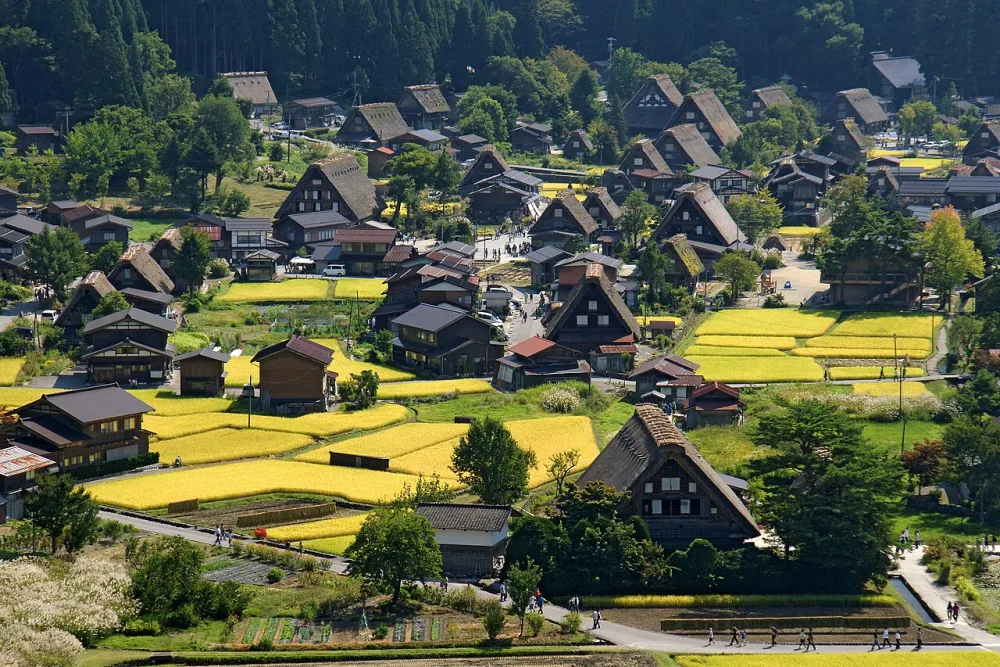
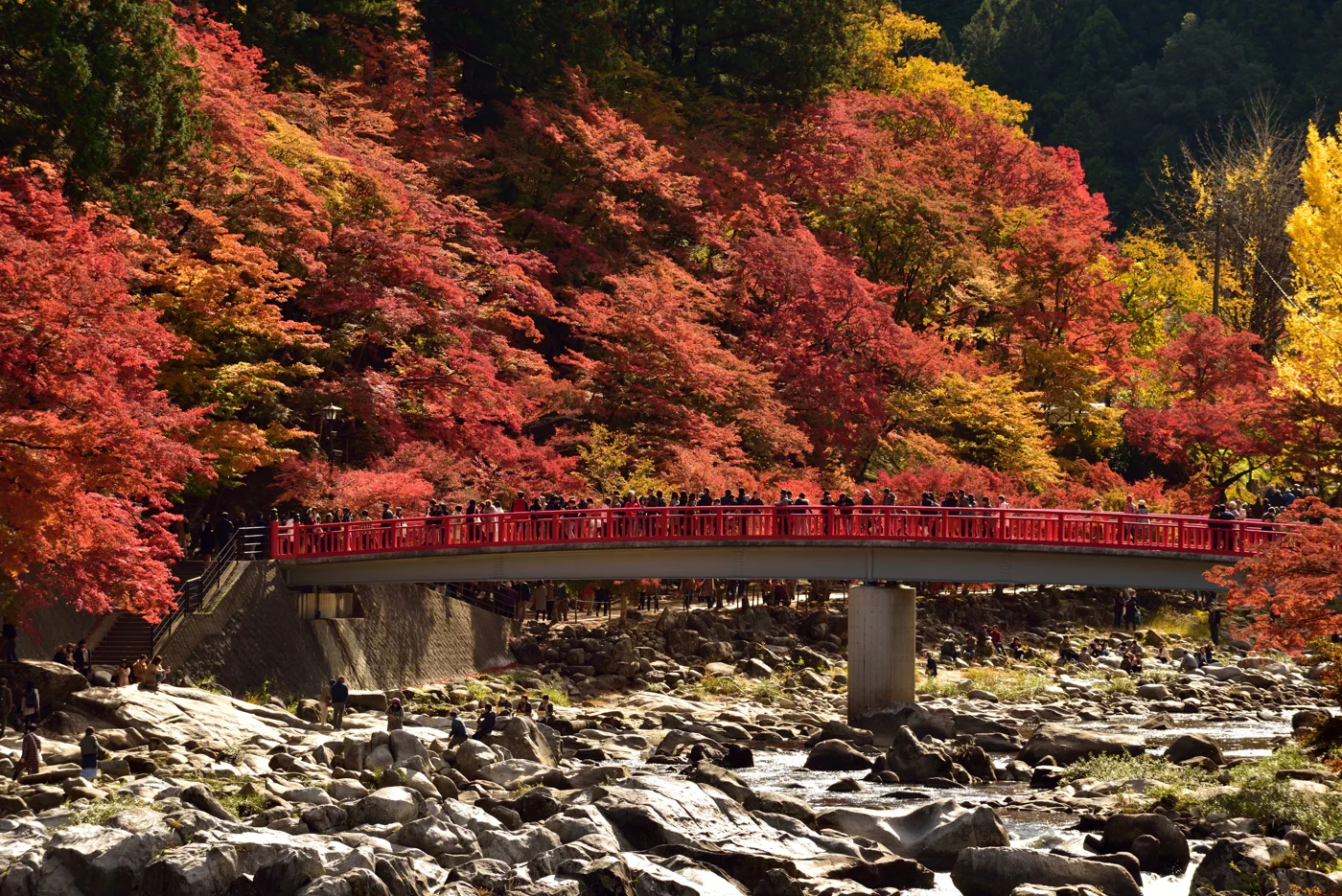
Walk from Takayama Station to Miyagawa Morning Market, Sanmachi and Takayama Jinya. Explore the government offices and rice storehouse, then choose festival floats or Hida Folk Village, with crafts, return buses and three itineraries.
- Region & Focus
- Takayama and Shirakawa-go
- Reading Scope
- 34 min read · 22 chapters · 5 Q&As
- Official Verification
- 19 official sources checkedUpdated 27 October 2026 at 20:00 GMT+8
- Key Topics
- ItinerariesTravel budgetSeasons
Chapter Route Map (tap any stop)
- Markets in the morning, festival floats or farmhouses in the afternoon
- Start at Takayama Station: leave your suitcase before walking along the Miyagawa
- Start Miyagawa Morning Market at Kajibashi, and buy what you can carry
- Walk through Sanmachi to Nakabashi, and look beyond the shopfronts
- Combine Jinya-mae Morning Market with your Jinya visit
- Entering Takayama Jinya: ¥500, a shoe bag and warm feet in winter
- The first Jinya rooms: from the large alcove to the government offices
- The residence, great hall and two Oshirasu spaces separate work from daily life
- Give the storehouse time: roof, tax rice and original objects
- Afternoon A: Sakurayama Hachimangu and the autumn festival floats
- Look at the float’s carriage, curtains and roof before its puppets
- Sakurayama Nikkokan and Higashiyama: add only what you have energy for
- Afternoon B: return to Nohi Bus Centre and use Hida-no-Sato stop S4
- At Hida Folk Village, choose a route comparing roofs and livelihoods
- From the former Nakayabu to Taguchi houses: read daily life through the floors
- The former Wakayama and Nishioka houses: sericulture and relocation beneath the roofs
- Before leaving the houses, look at a watermill, workshop or storehouse
- Craft demonstrations have places and hours; leave pottery out for now
- Omoide Taikenkan outside the village: fit a 40-minute activity around the bus
- Rain, snow and walking ability: shorten the distances between houses
- Lunch, sake breweries and shopping: stop before the afternoon routes divide
- Three itineraries, their admission costs and the parts you can drop
- Quick Q&A
With a full day in Takayama, spend the morning at the markets, Sanmachi and the Jinya, then choose festival floats or Hida Folk Village for the afternoon. The Jinya explains government work, official residences and the tax-rice storehouse; the floats hall reveals festival craftsmanship; the folk village shows sericulture, earthen floors and woodwork beneath its roofs. Choose what you want to understand, then fit the walking, lunch and journey back to the station around it.
Markets in the morning, festival floats or farmhouses in the afternoon
A day in central Takayama can connect merchant streets, a shogunate government office and festival floats on one walking route. To explore rural Hida homes as well, spend the afternoon at Hida Folk Village. The first route stays on the banks of the Miyagawa; the second requires a bus from Takayama Station. Both have enough to fill an afternoon. On a first visit, choose one so that you can enter the buildings and look around, rather than spend the day photographing façades. This itinerary starts and finishes at Takayama Station. It suits people who stayed in Takayama the night before, are staying again, or will leave in the evening. Visit Miyagawa Morning Market, Sanmachi and Takayama Jinya in the morning. Afternoon A goes to Sakurayama Hachimangu Shrine and the Takayama Festival Floats Exhibition Hall; afternoon B takes the bus to Hida Folk Village. Choose A for carving, textiles and festival mechanisms, or B for timber buildings, household tools and craft demonstrations. B involves outdoor walks between houses, so A is less demanding in heavy rain.
Even if you have already visited the gassho-style houses of Shirakawa-go, Hida Folk Village adds roofs and livelihoods from other parts of the region. You need not make traditional houses the main theme on two consecutive days. If you have just one full day in Takayama and want two different architectural experiences, the Jinya in the morning and the folk village in the afternoon make a clear comparison. Use the Takayama, Shirakawa-go and Japanese Alps itinerary for onward regional travel.
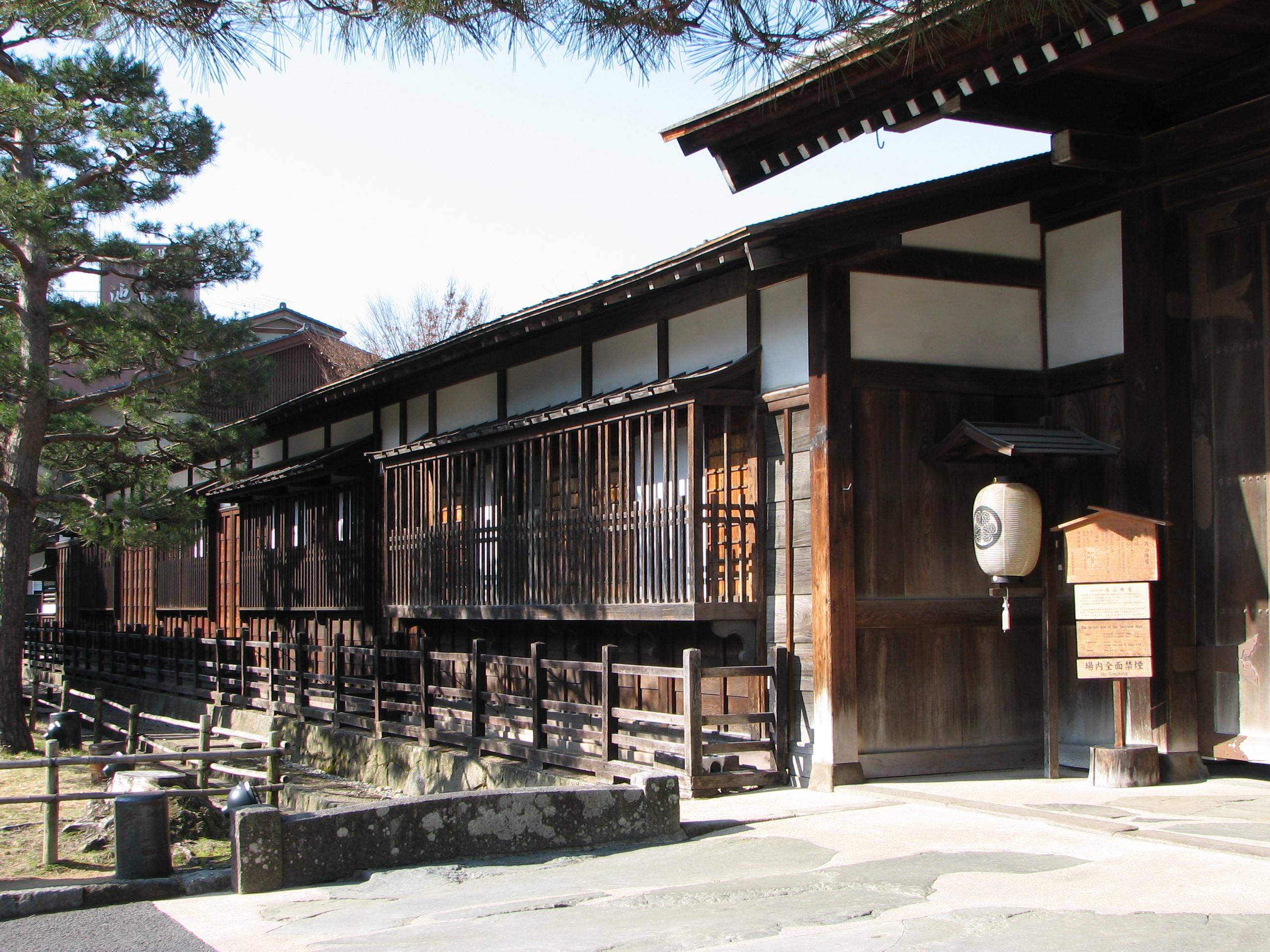
Walk from Takayama Station to Miyagawa Morning Market, Sanmachi and Takayama Jinya. Explore the government offices and rice storehouse, then choose festival floats or Hida Folk Village, with crafts, return buses and three itineraries.
Start at Takayama Station: leave your suitcase before walking along the Miyagawa
Leave Takayama Station on the east side. The Nohi Bus Centre is just to the north in front of the station. If you plan to explore the old town in the morning and Hida Folk Village in the afternoon, identify your bus departure point first. Allow about 15–20 minutes from the station area to Kajibashi Bridge, about half an hour for a slow walk through Miyagawa Morning Market, then continue through Sanmachi and across Nakabashi Bridge to the Jinya. These allowances include crossings and finding your way. Add time for shopping, photographs and rests; the map's walking time alone does not make a workable minute-by-minute schedule.
If you are staying another night, leave large cases in your room and carry water, a light jacket, cash and a shoe bag. On checkout day, arrange luggage storage at your accommodation or the station before you start. Put your evening departure point on the same map when choosing storage. If you leave by JR train or highway bus, storage near the station is convenient. If you return to old-town accommodation for an included dinner, collecting your belongings at the inn forms part of the route. See the Shirakawa-go and Takayama accommodation guide for bases and sleeping arrangements. The aim today is to avoid an extra trip across town for a suitcase in the afternoon.
If you arrive from elsewhere that morning, allow time for the toilet, luggage storage and checking your return journey. An arrival at 10:30 leaves time for one market and Sanmachi before lunch, followed by the Jinya and an afternoon in the old town. If you arrive after midday, start with lunch and the Jinya. Save the market trading for the next morning. Trying to fit a full cultural day into an arrival afternoon usually takes time away from exploring inside the buildings.
Start Miyagawa Morning Market at Kajibashi, and buy what you can carry
Miyagawa Morning Market runs along the east bank of the river between Kajibashi and Yayoibashi bridges. Sanmachi is easy to find to the south. The market's own opening information lists daily hours of 07:00–12:00, with an 08:00 start from December to March. These hours include setting up and packing away. Arrive between shortly after 08:00 and mid-morning to see the stalls; noon is the closing time.
Start with the produce. Vegetables, mountain greens, pickles, flowers and handmade folk crafts appear alongside sweets and snacks from permanent shops. Buy fresh vegetables if your room has a kitchen. If you are taking a long-distance bus that evening, ask about pickle packaging, storage temperature and opening instructions, and choose an amount that fits in your day bag. Fresh agricultural and animal products taken home across international borders are subject to entry quarantine rules. Buying food to eat at the time is the simplest option.
Keep the passage in front of stalls clear, and move closer when you want to buy. Stop to eat in a place the shop permits, then return packaging to the shop or take it away. Ask before photographing stallholders or goods at close range. A riverside stroll and grocery shopping move at different speeds. If some of your group want photographs and others want to shop, agree to meet at Kajibashi or Yayoibashi rather than gather around one stall table. Weather affects the number of traders. If there are fewer stalls that day, give the extra time to Sanmachi's shops and the Jinya.
Walk through Sanmachi to Nakabashi, and look beyond the shopfronts
From Kajibashi, return to the streets and head towards Kamisannomachi, using Sanmachi as your route to Nakabashi. Continuous eaves, latticework, narrow shopfronts and roadside water channels explain the merchant district better than a single popular sign. Walk a stretch to see how the townhouses line up, then enter a craft shop or sake brewery where you want to buy something. Stopping to queue at every shop can leave you rushing at the end.
There is value in looking at exteriors while shops are still preparing to open. Notice how latticework separates the street from the interior, how the eaves shelter the entrance, and whether the shop extends into another space at the back. Follow the designated route through any public display. Brewery work areas, residential entrances and upstairs rooms have their own access limits. An open door is a reason to look for visiting or opening signs before entering.
The red Nakabashi Bridge is an easy landmark for the two banks. Takayama Jinya and Jinya-mae Morning Market are on the west side; Sanmachi is on the east. Cross from Sanmachi to reach the square in front of the Jinya. Remember the bridge and entrance positions now, so the afternoon journey to the station or floats hall is easier. If you want to return to Miyagawa to buy something, do so on afternoon A's northbound walk. Afternoon B needs the station bus, so finish essential shopping in the morning.
Combine Jinya-mae Morning Market with your Jinya visit
Jinya-mae Morning Market occupies the square directly in front of Takayama Jinya. Its produce, pickle and flower stalls are arranged differently from those on Miyagawa's narrow riverside strip. If you have already visited Miyagawa, make a short stop to see the day's ingredients. If you want just one market and the Jinya is your main morning stop, go straight here from the station. The interest lies in seeing the market against the government-office frontage; you need not buy similar goods at every stall just to visit both named markets.
In winter, leave after 08:00, look around the market and enter the Jinya after it opens at 08:45. If you want time for your full inn breakfast, reach the square at about 09:00, then enter the Jinya and save Miyagawa for another day. Skipping a reserved breakfast to reach the market can mean spending another half-hour looking for food.
Pack anything that could leak, has a strong smell or needs refrigeration separately before removing your shoes to enter. Use the stop in the square for the toilet, umbrella and shoe-bag preparations. You can then concentrate on the rooms inside. If it is already close to 11:30 and you want a guided explanation, eat lunch first and visit in the afternoon: the Jinya does not accept requests for its free explanations between 11:30 and 13:30.
Entering Takayama Jinya: ¥500, a shoe bag and warm feet in winter
The official Takayama Jinya visitor information currently lists individual adult admission at ¥500. Admission is free for senior secondary school pupils and younger children; a student card may be required. The price changed on 1 April 2026, so use ¥500 in your budget. From April to October, it opens 08:45–17:00, with last entry at 16:30. From November to March, it opens 08:45–16:30, with last entry at 16:00. Keep last entry separate from closing time when planning an afternoon visit.
Outdoor shoes are prohibited inside. Remove them at the entrance beneath the curtain, place them in your own bag and carry them during the visit. Choose shoes that are easy to remove and secure for walking. Complicated laces chosen for photographs are less practical. In winter there are no loan slippers and no indoor heating. Thick socks and clean indoor shoes help keep feet warm; prepare these for children and older companions too.
The official estimate for a standard self-guided visit is about 30 minutes. This route allows 60–75 minutes for room functions, the garden and the rice storehouse.
The usual free Japanese-language tour takes about 50–60 minutes, with shorter versions also available. Requests are not accepted between 11:30 and 13:30, and tours may be unavailable during busy periods or events. Ask the management office about a time and leave space around lunch. Magazine, television and other reporting shoots need advance permission. For personal photographs, follow the signs in each area.
The first Jinya rooms: from the large alcove to the government offices
The official building guide divides the Jinya into working rooms, residential rooms and the tax-rice storehouse. Start at the entrance and large alcove, then look for the Oyakusho government office, Goyoba and Shoyaku-beya clerks' room. This gives the succession of tatami rooms distinct functions. The office section once had seven entrances, used according to status. As you follow today's visitor route, the scale of each entrance and the connections between rooms help explain who could go where.
The seigaiha wave design in the large alcove makes a memorable starting point. The display here is a reconstruction; the original is exhibited later in the storehouse. Remember the lines and waves so that you can compare the original. Rabbit-shaped nail covers hide nail heads on members such as the horizontal nageshi rails. Find one or two rather than turn the visit into a building-wide count. One detail fills a prominent decorative surface; the other hides on the timber fittings. Both give companions unfamiliar with Japanese history something to follow.
The Oyakusho dealt with tax collection, forest management, public works, policing and judicial matters. The Goyoba served local officials stationed in Takayama, while the Shoyaku-beya handled documents. These rooms show how Hida's forests, transport and farming became administrative work. Read the room name at the doorway, then look at its relationship with the next room. This is easier to remember than a photograph of each empty tatami room, and prepares you for the tax-rice storehouse at the end.
The residence, great hall and two Oshirasu spaces separate work from daily life
At the Senmen-no-ma, Arashiyama-no-ma, maids' room and kitchen, attention shifts to the people who lived here. The official guide identifies Senmen-no-ma as the room of the district administrator's wife, Arashiyama-no-ma as a living room, and a tea room further inside. The kitchen supplied the family's meals. These spaces adjoin the offices in the same building. Comparing their routes explains how home and work shared the premises, without first memorising every administrator's name.
The great hall held important annual ceremonies, including those at the start of the year. It consists of three connected rooms totalling 49 tatami mats. From the visitor path, see how the rooms join, then look towards the garden from the veranda to connect scale with use. The Jinya has about 40 rooms. Their tatami and edging are not all the same; the official interpretation links them to room status. Comparing two examples is enough to see the difference. Every room need not receive the same length of stop.
There are two Oshirasu spaces. One received villagers' requests and petitions; the other concerned questioning and trials. With children, start by explaining that some people came here to request official help, while others faced judgment. Then decide whether to examine the punishment instruments. The official guide says the instruments displayed at the Jinya are thought to have served as a deterrent; actual torture took place in the prison. Describe the display accordingly, rather than place every punishment in the room before you. Continue from the Oshirasu to the storehouse to connect government work with tax collection.
Give the storehouse time: roof, tax rice and original objects
The Okura storehouse held tax rice from nearby villages. It was moved from Takayama Castle's third enclosure in 1695 and now houses displays on Hida's history and culture. After learning about tax collection in the offices, you see the dedicated building that received the rice. Moving from residential rooms into a warehouse changes the scale, walls and purpose. Leave enough visiting time for this part.
The roof uses stone-weighted wooden shingles, secured with timbers and stones. The official explanation says the boards are rotated top to bottom and turned over at five-year intervals to extend their life. This is a technique you can compare with the folk village in the afternoon. Look at visible stones, boards and the roof shape before reading the explanation. It gives the building more meaning than simply an old warehouse. The Jinya's shingled roof and the thick thatch of northern Hida respond to different conditions; seeing both on the same day makes that easier to understand.
Inside, find the original seigaiha wave decoration whose reconstruction you saw at the entrance. The first display explains its original position; the later one shows the surviving material. The connection gives the visit a natural thread. Allow a few minutes to put your shoes on and sort your bags before leaving. For lunch in the old town, cross Nakabashi back to the east bank. Afternoon A then heads north; B heads west to the station. This is where the routes divide.
A 1-minute 21-second film from the Gifu Prefecture culture and arts channel. Use it alongside the room guide to see the Jinya exterior and the scale of its rooms.
Afternoon A: Sakurayama Hachimangu and the autumn festival floats
After lunch, stay in the old town and walk north through the streets on the east side of the Miyagawa to Sakurayama Hachimangu Shrine. From the Jinya area, allow about 20–30 minutes for walking and finding your way, then 45–60 minutes for the hall. You will already have walked a fair distance, so a seated tea break fits well along the way. Separate the shrine visit from the ticketed museum. Find the Takayama Festival Floats Exhibition Hall entrance first, rather than spend all your time photographing the grounds and buy a ticket just before closing.
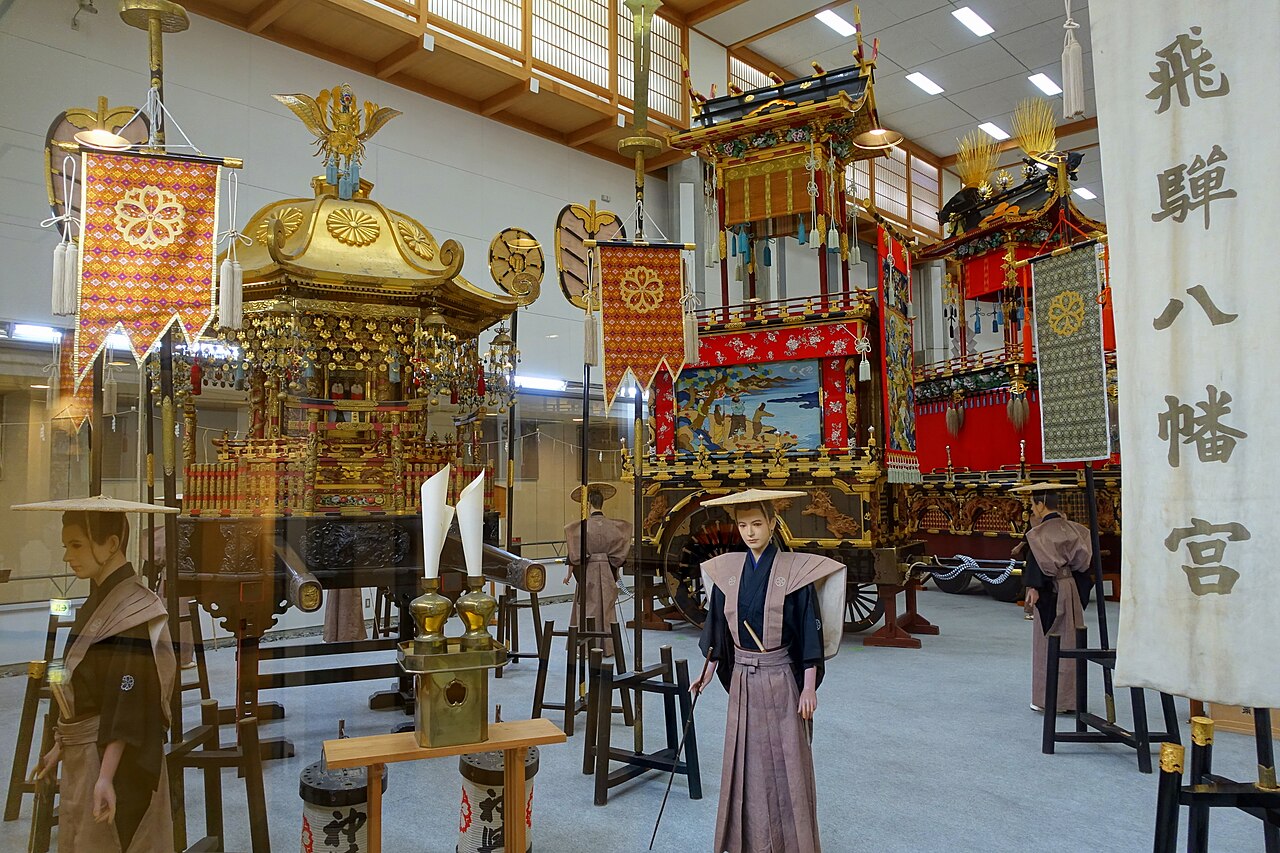
Takayama's spring festival, on 14 and 15 April, is Hie Shrine's annual festival. The autumn festival, on 9 and 10 October, belongs to Sakurayama Hachimangu. On ordinary days the hall displays actual autumn-festival floats. Its standard description is four of the eleven floats, with three rotations a year. Visit to see the preserved craftsmanship close up. For a street procession or mechanical-puppet performance, choose your dates from that season's festival programme.
The official Takayama tourism price list gives admission as ¥1,000 for adults, ¥600 for senior secondary school pupils, and ¥500 for primary and junior secondary school pupils. Opening hours are 09:00–17:00 from March to November, and until 16:30 from December to February. Budget separately for children: the Jinya's free admission through senior secondary school does not apply here. The hall publishes the current rotation dates and float names. Read that list on arrival, then choose two floats to examine closely so your time goes to exhibits actually on view.
Look at the float’s carriage, curtains and roof before its puppets
It is easy to keep looking up at the puppets and miss the float's structure. Stand back where you can see the whole float. Start with the wheels and the proportions of the base and upper tiers, move to the curtains, carvings and metal fittings in the middle, then finish with the roof and puppets. A consistent viewing order makes differences clearer than simply finding every float ornate. Companions can each choose a detail to compare instead of reading every panel together.
For example, the hall's rotation of 12 July 2026 included Kaguradai, associated with festival music and large drums; Kyuhosha, with its woven mid-level curtain; and Hojutai, whose rooftop turtle uses lacquered washi in the ikkanbari technique to reduce roof weight. These examples connect sound, textiles and weight with the float's function. If the display has changed when you visit, read the labels for the floats present. Check the list and date together to know which exhibition you are comparing.
Hoteitai's mechanical puppets involve 36 control ropes and nine operators. A still puppet gives little sense of that labour. During an ordinary exhibition visit, first understand the relationship between puppet, ropes and operators, then watch the festival footage provided in the hall. The permanent display gives close views of the forms; a performance has its own schedule and operating conditions. If children expect the puppets to move, choose between a scheduled activity and a standard exhibition visit before arriving so that a static display is not a disappointment.
Sakurayama Nikkokan and Higashiyama: add only what you have energy for
The adjoining Sakurayama Nikkokan displays a one-tenth-scale model of Nikko Toshogu, including 28 buildings such as Yomeimon Gate, the main sanctuary, worship hall and five-storey pagoda. It shifts attention from full-size floats to small architectural parts. Both involve woodwork, carving and decoration, but the viewing distance and overall composition differ. Give it time if you enjoy models or buildings. For companions who have had enough exhibits, resting in the grounds is more useful. Follow the ticket window's visiting arrangements that day, and preserve your station-return time even if another building is included in the ticket.
If you still have about an hour to spare, make a short walk towards the Higashiyama temple district, using roads near the town and the area around one temple as a turnaround point. There is no need to combine Shiroyama, the park and the entire Higashiyama Walking Course into a compulsory loop. Heading east from the floats hall adds distance because the station is west. For average walkers leaving in the evening, ending the cultural visits at Sakurayama Hachimangu and returning slowly through the Miyagawa streets makes a full day. Drop this outdoor extension in rain or when winter darkness comes early, and sit down in town or return to your accommodation sooner. A short hotel rest is more useful than another museum if someone needs frequent toilet stops or a child needs a nap. Route A can end in stages within the old town: after the floats, shrine grounds or shopping, there is a way back without having to finish a long trail.
Afternoon B: return to Nohi Bus Centre and use Hida-no-Sato stop S4
Hida Folk Village is south-west of Takayama Station. Walking there directly from the old town would make the afternoon walk longer, so this route uses the station bus. The official Nohi Bus city services page and route map place the Sarubobo Bus at stand 1 of the Nohi Bus Centre. Get off at Hida-no-Sato (飛騨の里), stop S4. The similar names Minzokukan-guchi (S2) and Hida-no-Sato-shita (S5) refer to different stops. Using S4 in both directions is easiest on a first visit.
As listed on the official site on 27 October 2026, departures from the station area include 13:00, arriving at S4 at 13:09, and 13:45, arriving at 13:54. Return options from S4 include 15:29, reaching the bus centre at 15:44, or 16:29, arriving at 16:44. Outbound services run on the hour and at 45 minutes past some hours, but return services are less frequent. Do not assume every outbound column has an equivalent return. The 13:00 bus gives about two hours for the houses. If you take the 13:45 and add a 40-minute craft activity, plan for the later return and allow time to collect luggage.
Adult village admission costs ¥700. Nohi Bus sells a ¥1,000 Hida Folk Village set ticket covering the return journey between the bus centre and village plus an admission exchange voucher. There is no child set-ticket price. Buying adult fares separately costs ¥210 twice plus admission, totalling ¥1,120, a ¥120 difference. For this return trip the comparison is simple. If you already hold a valid pass covering the bus journey, compare the cost of admission alone. Be clear about what the ticket covers so you do not add distant attractions just to use it.
At Hida Folk Village, choose a route comparing roofs and livelihoods
The official Hida Folk Village map uses Goami Pond as its central landmark. The entrance and exit are near one end of the pond, with the craft village nearby. Decide at the entrance whether to make a short circuit by the pond or add houses to the left and further inside. The official FAQ estimates about 40 minutes to an hour for looking at exteriors and making a few stops. Allow 90–120 minutes for indoor displays and demonstrations. This afternoon uses the longer visit, without trying to see all roughly 30 buildings.
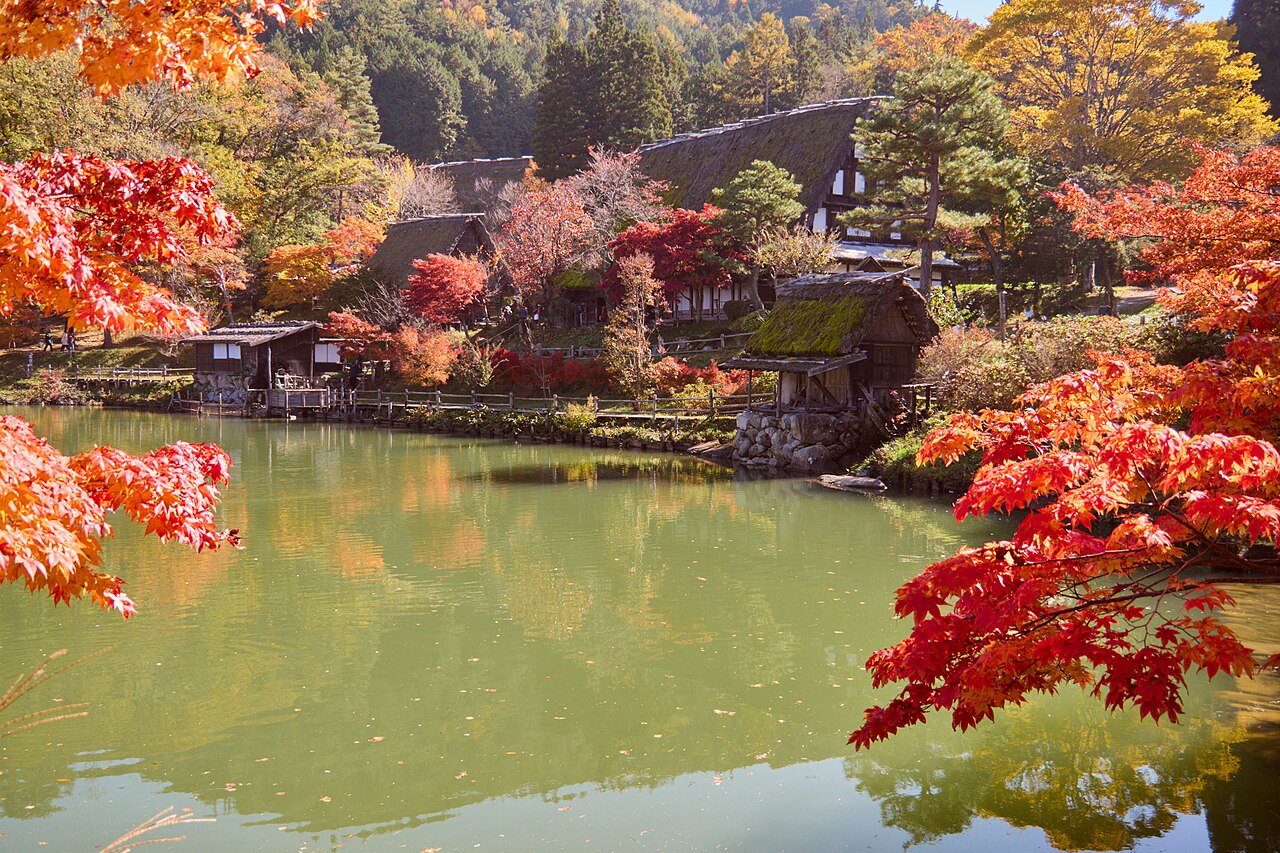
One example starts by the pond with the former Arai and Nakayabu houses, continues towards the former Taguchi and Wakayama houses, then returns via the sericulture display in the former Nishioka House. Leave the craft village near the entrance until last. This selects houses by theme. If a building is under maintenance or companions become tired, shorten the route around the pond. Map numbers locate the buildings; the day's entrance notices determine which paths and interiors you can use.
The village brings together houses moved from across Hida. It includes thatched roofs from the snowy north and wooden-shingle roofs common in the central and southern areas. Look first at shingled houses near the entrance, then at the taller thatched buildings further in. The structural contrast becomes easier to follow. Look at door positions, floors and household tools as well as roofs. House size and roof form relate to household livelihoods; those differences deserve more time than counting the buildings photographed.
From the former Nakayabu to Taguchi houses: read daily life through the floors
The former Nakayabu House is known for its doza, or earth-floor, arrangement. From the oe hearth room to the niwa work area, the original surface remained earth rather than timber flooring. From the designated viewing area, see how the floors connect and compare them with the Jinya's largely tatami-covered rooms. The differences in living and working become concrete. With children, ask where people cooked and worked before introducing periods and architectural terms.
The museum identifies the former Arai House as an example of a shingled farmhouse. Its form sits between the single-storey shingled houses of central Hida and the thatched houses of the snowy north. Look closely at the eaves and roof pitch, then at their relationship with the beams and interior. Hida houses offer different local solutions. The former Taguchi House was a large farmhouse whose occupants served for generations as village headmen. It has many rooms, two large rectangular hearths and a smaller square one, linked to uses such as village gatherings.
The former Taguchi House now has a steel-sheet roof, as does the former Ono House. The official site's wooden-shingle category specifically notes these changes. Distinguish the historical form from the material in front of you to understand changes made during preservation. Another feature of the former Ono House is its entrance: the gable-end entrance, on the short side of the rectangular building, is relatively unusual in Hida. This visible exterior difference suits a short visit or travellers who prefer not to remove their shoes repeatedly.
The former Wakayama and Nishioka houses: sericulture and relocation beneath the roofs
The former Wakayama House is linked to construction of the Miboro Dam. Its original site was to be submerged, so it was moved to Takayama in 1959 and opened as the Hida Folklore Museum before being moved again into today's Hida Folk Village. The story explains why a farmhouse left its village and became a museum exhibit. Look at its materials and assembly first, then read about the move. If you are also visiting Shirakawa-go, this helps distinguish the background of an inhabited village's preservation from a relocated-house display.
The former Nishioka House exhibits sericulture equipment. With little land for cultivation in the mountains, silkworm rearing was once an important source of income. The height of the thatched houses also relates to this work. Look first at the space the building provides, then match the tools to their tasks. This explains the upper space better than treating it as an ordinary bedroom. Use the open visitor routes and leave closed stairs alone when seeking a photograph. If stairs are difficult, the accessible floor still allows you to compare the structure and exhibits.
The hearth fires kept burning inside also help preserve the timber buildings. The official FAQ explains that smoke helps protect against insects and decay. No one lives in the main exhibition houses; makers live and work in the adjoining craft village. The distinction tells you where to study historical domestic life and where you may encounter production today. Companions sensitive to smoke can make a shorter stop at the doorway and spend more time on exterior construction and craftwork.
Before leaving the houses, look at a watermill, workshop or storehouse
Displays of life at Hida Folk Village extend outdoors and into smaller buildings. The warabi-flour hut uses water power for milling, while the karausu hut uses flowing water to drive a mortar. They offer a different view from the living quarters. Other occupational buildings on the hillside include a woodcutter's hut, sawyer's hut and charcoal-burning hut. If time is short, choose one work display on your route. Understand how power reaches the tool, then think back to the objects inside the houses.
Storehouses also served different purposes. Compare the village's plank-built storehouses, granaries and communal grain store with the Jinya's central tax-rice storehouse from the morning. Ask who stored the goods and why. Government offices, villages and households had different storage needs. Buildings that all look like small timber sheds can have distinct roles. This connects rice, timber and mountain livelihoods within half a day, without adding a long list of places you never enter.
With children, a work hut can change the pace from repeated shoe removal and indoor viewing to finding waterwheels and tools outside. Stay on designated paths near ponds and moving parts, and read signs before using an interactive exhibit. If your return bus is approaching, head straight to the entrance and organise your belongings; the craft village and shopping can be dropped. Understanding one small workshop is more rewarding than rushing into another large house at the end.
Craft demonstrations have places and hours; leave pottery out for now
Find the demonstrations by house name. The former Kobayashi House hosts ichii itto-bori yew carving; the former Naoi House has Hida lacquerware and Hida Shunkei lacquerware. The official site lists these daily, year-round, from 10:00 to 15:00. Arimichi ladle-making at the former Arai House is listed for Tuesdays and Saturdays at the same hours. Carving reveals the wood grain and material; ladle-making shows how an everyday utensil takes shape. If demonstrations are your main reason to visit, check the day's attendance and locations on arrival before deciding your house order. Do not leave every workshop until after 15:00.
The village activity list gives irregular 10:00–15:00 sessions for kumihimo braiding at the former Tomita House, with individual participation costing ¥2,500. A Hida sashiko mat costs ¥2,000 and requires a reservation; sessions are mainly on Mondays, Fridays, Saturdays and Sundays from around mid-April to November. Straw sandals and pot stands also include activities requiring reservations, unlike some small straw crafts available without booking. Arrange the date and activity with the village first, then match your afternoon buses to it and add the activity fee to admission.
The former Kontani House's pottery page still lists hand-throwing, electric-wheel and painting prices, but the same page currently states that bookings are suspended. Leave pottery out of this day's available activities. There is also an activity writing your name on a roofing board; the completed board is used in repairs to the village's cultural properties and stays for that purpose. If you want to take home something you made, the Omoide Taikenkan workshop outside the village offers easier options to arrange. Compare the two venues' prices, reservations and finished products separately.
Omoide Taikenkan outside the village: fit a 40-minute activity around the bus
The Hida-no-Sato branch of Hida Takayama Omoide Taikenkan is at 1-436 Kamiokamoto-machi, near the village bus stop. It is separate from demonstrations in the village houses. The workshop's opening information lists 10:00–16:00, last admission at 15:30, closed Thursdays, with opening during busy periods and public holidays. There is also a Yasukawa branch in the old town, closed Tuesdays. Route A visitors can consider that branch without taking a bus out of town just for a craft activity.
Standard activities need no advance reservation, and you can take the finished item away the same day. The current menu lists sarubobo doll-making at ¥2,900 for about 40 minutes. Chopsticks and a chopstick pouch at the Hida-no-Sato branch cost ¥3,300 and take about 40 minutes. Hand-roasting eight rice crackers costs ¥1,000 and takes about 15 minutes. This stop can combine making a gift with shopping. Choose rice crackers for a quicker activity; compare the sarubobo or woodwork options for a lasting object.
If you take the 13:00 bus, visit the houses until 14:30 and then start a 40-minute sarubobo activity, do not rely solely on the 15:29 return. You still need to pay, collect the work and walk to the stop. Choose the 16:29 return, or shorten the house visit and start the craft earlier. If the Hida-no-Sato branch is closed on Thursday, move the activity to another day or use an activity already booked inside the village. A 40-minute task cannot become a ten-minute extra before the bus.
Rain, snow and walking ability: shorten the distances between houses
Hida Folk Village is an open-air museum. Houses provide shelter, but you still walk outdoors between buildings, by the pond and back to the bus stop. In light rain, visit fewer houses, close your umbrella before removing shoes, and choose nearby houses and the entrance craft village. In heavy rain, or if repeatedly putting on wet shoes is unappealing, use route A's Jinya, floats hall and town rest stops. Both options have indoor visits, but A is easier to shorten into small street sections.
The village lends wheelchairs, mobility scooters and pushchairs, in limited numbers. Its FAQ states that wheelchairs and mobility scooters cannot be lent from December to March because of snow. If you depend on this equipment in winter, plan a short route you can complete with your own arrangements. Resolve the trip from the bus stop to the entrance first, then choose how much of the village to visit. Snow slows walking and shoe changes. Leave the more distant work huts out of the afternoon and keep warm layers ready for the bus wait.
The Jinya has specific level changes too: four steps lead to the entrance area. Staff can set up a ramp, which takes time and requires help from a companion; visits inside mainly use a transfer to a dedicated wheelchair. Contact the management office about entry arrangements, then decide how other museums fit into the day. One building you can fully enter is less demanding than several stops each requiring transfers, shoe removal and step arrangements. It also gives the accompanying person time to visit.
Lunch, sake breweries and shopping: stop before the afternoon routes divide
After the Jinya, sit down for lunch so you have energy for the afternoon displays. If lunch is Hida beef yakiniku or a set meal, keep morning-market snacks small. If you have already eaten plenty, choose Takayama ramen, soba or a simple lunch and save the fuller beef meal for the evening. Lunch separates the morning from the afternoon. A restaurant with seats and food that suits your group serves this day better than continuing to eat while walking.
Route A allows shop visits on the way north or back to the station. For B, finish questions about refrigeration, packaging or delivery before returning for the bus. Ask about use and care before buying woodwork or lacquerware, and check gift boxes and luggage space. Distinguish brewery tours, tastings and simple purchases. Give any tour requiring a reservation a fixed time; activities in shops entered on the day follow the shop's arrangements. Do not drive after drinking, and leave cycling to someone who has not drunk alcohol.
If you want to do laundry, bathe at your hotel or return for an included dinner, go back after the last museum. If you leave by bus or train that evening, finish shopping near the station, collect your suitcase and then enter the waiting area. A shop you like on the return walk can be the final stop. There is no need to cross back to the other bank for an ordinary street corner on a checklist.
Three itineraries, their admission costs and the parts you can drop
For a full old-town culture day, an example morning leaves the station area at 08:15, reaches Miyagawa Morning Market at 08:35, Sanmachi at 09:15, the Jinya at 10:00 and lunch at 11:15. Head towards Sakurayama Hachimangu at about 13:00, visit the floats and Nikkokan, then start returning or shopping at about 15:00. Adult admission totals ¥1,500: ¥500 for the Jinya and ¥1,000 for the floats hall. Most travel is on foot; food and shopping are extra. Drop the Higashiyama extension if walking energy is low, keeping the two museums. To take the longer Jinya tour, spend less time at the morning market.
For the folk-village day, use the same morning, return to the station after lunch and take the 13:00 bus, arriving at 13:09. Allow 90–120 minutes inside. Choose the 15:29 return for a village-only visit, or 16:29 if adding a craft activity. Adult Jinya admission at ¥500 plus the ¥1,000 village set ticket also totals ¥1,500; adding sarubobo-making brings it to ¥4,400. Add the set ticket and individual activity to see the actual difference. If your onward train or bus leaves before 16:00, drop the craft activity and take an earlier return.
A late-arrival half-day could finish luggage storage at 13:00, visit the Jinya at 13:30, Sanmachi and Nakabashi at 15:00, and return to the station at about 16:00. Fixed adult admission is ¥500. This version leaves out market trading and Hida Folk Village. If floats are your specific interest, replace the Jinya with the floats hall, walk north and then return to the station. These examples include meals, luggage collection and street crossings. Put your own JR train or highway-bus departure at the end, then work backwards to leave a full allowance for collecting luggage and waiting.
| Option | Fixed cost | Return to the station |
|---|---|---|
| Old town, Jinya and floats hall | ¥1,500 | Walk back; Higashiyama can be dropped |
| Jinya and Hida Folk Village set ticket | ¥1,500 | Depart 15:29, arrive 15:44 |
| Folk-village route plus sarubobo-making | ¥4,400 | Depart 16:29, arrive 16:44 |
| Late-arrival Jinya half-day | ¥500 | Return after Sanmachi |
A few useful answers
How much is Takayama Jinya admission now?
From 1 April 2026, individual adult admission is ¥500; senior secondary school pupils and younger children enter free. Remove your shoes inside. There is no winter heating or slipper loan, so bring a shoe bag and thick socks.
Does the Hida Folk Village set ticket include craft activities?
The ¥1,000 set ticket includes return bus travel between Nohi Bus Centre and Hida Folk Village plus an admission exchange voucher. Craft activities cost extra. Sarubobo-making at Omoide Taikenkan outside the village takes about 40 minutes and costs ¥2,900.
Are return buses from Hida Folk Village as frequent as outbound services?
The official timetable read on 27 October 2026 has fewer return services. Afternoon options from S4 include 15:29 and 16:29, reaching the bus centre at 15:44 and 16:44. Choose the return first, then fit houses and crafts around it.
Can I see a procession at the Takayama Festival Floats Exhibition Hall on an ordinary day?
Ordinary visits mainly show the actual floats on display. The spring festival is on 14 and 15 April, and the autumn festival on 9 and 10 October. Use the current festival programme for processions and mechanical-puppet performances.
Is Hida Folk Village suitable in rain?
You walk outdoors between houses, by the pond and to the bus stop. In light rain, shorten the visit to houses near the entrance and the craft village; in heavy rain, choose the old-town museums. Wheelchairs and mobility scooters are not lent from December to March because of snow.
Official information and references
Sources used in this guide.
- Takayama Jinya | Official introduction film source
- Takayama Jinya | Admission price change from 1 April 2026
- Miyagawa Morning Market | Opening information
- Takayama Jinya | Hours, admission and entry route
- Takayama Jinya | Free guided tours
- Takayama Jinya | Rooms and floor plan
- Takayama Jinya | Seigaiha waves, Oshirasu and rice storehouse
- Official Takayama tourism | Festival Floats Exhibition Hall and adjoining museum
- Nohi Bus | City timetables and set ticket
- Hida Folk Village | Site map
- Hida Folk Village | Thatched houses
- Hida Folk Village | Wooden-shingle houses
- Hida Folk Village | Traditional livelihoods and daily life
- Hida Folk Village | Visit length, equipment and hearth FAQ
- Hida Folk Village | Craft demonstrations and activity availability
- Omoide Taikenkan | Activities and prices
- Omoide Taikenkan | Branches, admission and finished items
- Sakurayama Hachimangu | Floats hall displays and craftsmanship
- Sakurayama Hachimangu | Sakurayama Nikkokan architectural models