Walk across Gero Ohashi Bridge from Gero Station to soak in footbaths and visit Kaeru Shrine. Compare admission and closures for three day-use baths, plus Gassho-mura, Onsenji Temple, and Limited Express trains from Nagoya and Takayama.
- Region & Focus
- ChubuSide trips
- Reading Scope
- 19 min read · 10 chapters · 6 Q&As
- Official Verification
- 31 official sources checkedUpdated November 22, 2026
- Key Topics
- Hot springsItinerariesRail travel
Chapter Route Map (tap any stop)
- Where to Walk After Getting Off the Train
- Which Footbath to Choose
- Choosing One Day-Use Bathhouse
- Two Combination Passes for Different Itineraries
- From Kaeru Shrine to Onsenji Temple
- Focusing on the Former Odo House at Gassho-mura
- Making Time for Crafts and Historic Interiors
- Half-Day, Full-Day, and Overnight Pacing
- Getting There from Nagoya or Takayama
- Winter Fireworks and Rainy-Day Adjustments
- Quick Q&A
Exit Gero Station and walk across Gero Ohashi Bridge first. After crossing, follow the Atanogawa River to Shirasagi Bridge, where you'll find footbaths, Kaeru Shrine, and the Onsen Museum. On a first visit, half a day is enough to linger in this district, pick one bathhouse, and grab a meal. If you also want to climb the stone steps to Onsenji Temple and explore the historic houses at Gassho-mura, plan five to six hours from morning through afternoon. The Funsenchi riverside pool on the Hida River bank is now restricted to footbaths only. For a full-body soak in hot spring water, cross the bridge to Shirasagi-no-Yu or Kur Garden Rotenburo, or save your bath for Sachino-Yu near the station before heading back.
Where to Walk After Getting Off the Train
Near the station, learn two bridge names right away: Gero Ohashi Bridge and Shirasagi Bridge. Gero Ohashi spans the Hida River, offering views of the riverside gravel bar and the ryokan lining both banks. Shirasagi Bridge crosses the Atanogawa River where it flows into the Hida River, and has a statue of Charlie Chaplin on the span. Walking from the station toward Yunoshima, you cross Gero Ohashi first and then approach Shirasagi Bridge. The two bridges sit close together on a map, so if a travel partner simply says "wait on the bridge," you could easily end up standing over different waterways.
The stone-lined pool down on the riverbank is Funsenchi. Since December 1, 2021, the tourism association has restricted it to footbaths only, and the City of Gero lists daily cleaning hours from 7:00 to 8:00. You get a full view of the river valley right from the bridge. When water levels are high, the riverbank is slick, or you're wearing snow boots that are a hassle to pull off, walking straight across the bridge deck is the fastest way over. If you want to soak your feet under a roof, head into town to Sagi-no-Ashiyu.
You only hit the two more strenuous stretches once you head beyond this central area. Onsenji Temple sits high on the hillside: starting from Jizodo Hall, you have to climb 173 stone steps, and walking back down takes time too. Gassho-mura is in the Mori district, about a 20-minute walk from Gero Station before you even start touring the grounds. With just one afternoon, pick one or the other while checking your train tickets. Climb to Onsenji if you want elevated views over the river valley and townscape. If it's raining and you still want to see traditional timber architecture, take the bus to Gassho-mura and spend your time inside the Former Odo House.
If you're staying overnight in Gero, check which bank your ryokan is on and whether the walk from the station goes uphill before deciding whether to drop bags first or start sightseeing. Staying in Yunoshima makes it easy to weave shops, footbaths, and the museum around check-in, leaving a bathhouse on the station side for just before your train the next day. To compare guest rooms, dinners, and ryokan baths, see the Gero Onsen Ryokan and Bath-Hopping Guide.
To pick up a map and settle on a bathhouse right outside the station, stop at the Gero City Tourist Information Center in front of the station, open 9:00 to 17:00, which also sells Yu-meguri Tegata bath-hopping passes. When you grab a paper map, circle the exact bathhouse you plan to use. It's easy to mix up Shirasagi-no-Yu and Sagi-no-Ashiyu: one is a paid bathhouse, while the other is a cypress footbath across from the museum. Note down the full facility name before heading into town rather than just saving "Shirasagi" on your phone.
Walk across Gero Ohashi Bridge from Gero Station to soak in footbaths and visit Kaeru Shrine. Compare admission and closures for three day-use baths, plus Gassho-mura, Onsenji Temple, and Limited Express trains from Nagoya and Takayama.
Which Footbath to Choose
Just pick one on the map that sits directly along your route. Sagi-no-Ashiyu sits across from the Onsen Museum in a covered cypress pavilion, making it easy to pair a foot soak before or after the museum. Nearby, Venus no Ashiyu sits right outside Shirasagi-no-Yu with seating arranged around a circular pool—if you're meeting friends there, you can tell at a glance whether there are open seats. Both are listed by the City of Gero as free footbaths. Stay at Funsenchi if you want Hida River views, or prioritize the covered Sagi-no-Ashiyu if you need a seat out of the rain.
If you're browsing sweets around Shirasagi Bridge, you can stop at Yuamiya Footbath along the way. Look for the semicircular soaking pool, and check the shop sign for Ontama Soft, soft-serve ice cream topped with a hot-spring egg. Heading toward Gassho-mura, look out for Geruma Footbath near the Suhoen entrance and the morning market venue. The city notes this pool uses germanium ore, so if you want to feel Gero's natural hot spring water directly, Sagi-no-Ashiyu or an indoor bathhouse gives a clearer impression.
Keep a small hand towel in an outer pocket of your backpack so you can grab it the moment you slip off your shoes and dry your toes before walking back through town. In cold weather, find a steady seat before taking your shoes off and tuck your socks into a coat pocket so you aren't standing on damp stone digging through a bag to put them back on. When sharing a circular footbath, keep shoes and bags tucked neatly by your own feet on dry pavement so others have room to step in and out. If you're with young kids, test the water temperature by hand before letting them sit next to you.
Buying a ticket to the Gero Onsen Museum also gives you access to an indoor footbath and walking bath for museum visitors. The museum requires you to have a towel to use them; if you forgot one, you can buy a towel inside for ¥250. The footbath at Gassho-mura is located inside the paid admission area. If part of your group wants a full bath while others only want to soak their feet, splitting up at the free footbath outside Shirasagi-no-Yu is the simplest option. Agree on a meetup time, and anyone waiting can browse back along the Shirasagi Bridge area.
Choosing One Day-Use Bathhouse
Shirasagi-no-Yu fits neatly into the middle of a town walk. Venus no Ashiyu sits right in front of the white Western-style building, and inside you'll find a cypress bath with windows beside the tub. Single admission is ¥470 for adults, ¥180 for elementary school students, and ¥100 for young children. Hours are 10:00 to 20:45 with last entry at 20:00; it closes on Wednesdays, or on Fridays when Wednesday is a national holiday. Payment is cash only—towels are sold at the counter, and you'll need to bring your own shampoo and body soap or buy them there.
For an open-air stone bath right next to the Hida River, go to Kur Garden Rotenburo. The facility lists cascading utase-yu waterfalls and pools at different temperatures, with a roof over the washing area and partial shelter over parts of the women's baths. Bring cash for tickets, and towels are available on site. Regular hours are 8:00 to 20:45 with last entry at 20:00, closed Thursdays. Admission is ¥800 for adults, ¥400 for elementary school students, and ¥200 for young children. If you arrive on an early train before other bathhouses open, you can soak here first and then head uphill to Gassho-mura.
Sachino-Yu sits on the station side of the river (1144 Koda), about a 10-minute walk from Gero Station, making it convenient right before heading back. Its official website currently lists single adult admission at ¥500, or ¥680 with sauna access, ¥180 for elementary school students, and ¥100 for young children. It opens at 12:00 on weekdays and 11:00 on weekends and holidays, closing at 21:00 with last entry at 20:30. Regular closures are Tuesdays and the fourth Monday of each month. Its private family baths are currently suspended, so groups splitting between the men's and women's baths should set a meeting spot outside the entrance beforehand.
When scheduling a soak, treat last entry and closing time as two separate deadlines. If you plan to catch a train around 17:00, aim to enter around 15:30 so you have time to wash, dry your hair, and walk to the station without rushing. If people in your group finish bathing at different speeds, have whoever finishes first go pick up stored luggage instead of squeezing large suitcases into a tight changing room. If your first choice is closed, Wednesday means swapping Shirasagi-no-Yu for Kur Garden, while Thursday means swapping Kur Garden for Shirasagi-no-Yu. If it's cold and your hands and feet are already damp from walking around, skip the riverbank stop and head straight to an indoor bath.
If you want to travel light with one small daypack, pack a small washcloth separately from your drying towel and bring a spare pouch for wet items. If it's your first time in a Japanese public bath, undress in the locker room and put phones and cameras away completely. Rinse off sweat and wash thoroughly at the shower stations before stepping into the tub, tie up long hair, and keep your towel folded outside the water. If you have tattoos or want your family to bathe together, look for a reservable private bath (kashikiri-buro). Since Sachino-Yu's family baths are closed, book a ryokan with a private bath before buying train tickets if that's a must-have for your group.
| Bathhouse | Adult Single Entry | Hours & Last Entry | Regular Closures |
|---|---|---|---|
| Shirasagi-no-Yu | ¥470 | 10:00–20:45, last entry 20:00 | Wednesdays (Fridays if Wed is a holiday) |
| Kur Garden Rotenburo | ¥800 | 8:00–20:45, last entry 20:00 | Thursdays |
| Sachino-Yu | ¥500 (sauna extra) | From 12:00 weekdays, 11:00 weekends/holidays; closes 21:00, last entry 20:30 | Tuesdays & 4th Monday of each month |
Two Combination Passes for Different Itineraries
If you want to learn how Gero's hot springs work before soaking in one bathhouse, check the ticket machine at the Gero Onsen Museum. A combo ticket for the museum plus Shirasagi-no-Yu costs ¥650 for adults and ¥250 for elementary school students—saving ¥220 for adults compared with buying ¥400 and ¥470 separately. For the open-air bath, the museum plus Kur Garden combo is ¥1,000 for adults and ¥450 for elementary school students. Only buy the three-facility pass (¥1,300 adults, ¥600 elementary school students) if you plan to visit both bathhouses. Combo tickets cannot be combined with other discounts, and you can use the bath entry on a different date from your museum visit.
The wooden pass sold outside local shops is the Yu-meguri Tegata. Sold by the Gero Onsen Ryokan Cooperative for ¥2,500 per pass, it lets you soak at three participating baths from the current partner list within six months of purchase. Buy it only if you want to try ryokan baths and have already checked their day-use hours. If you're only planning one soak at Shirasagi-no-Yu, a single cash ticket is all you need. The wooden pass covers designated baths only—for example, Suimeikan's listed hours are 12:00 to 14:00 on weekdays and 13:00 to 14:00 on weekends and holidays, restricted to one specific bath. If you arrive on an afternoon train, that window will already be closed, so stick to the longer-hours public bathhouses instead.
Families with children should count how many entries they will actually use. Under the Ryokan Cooperative's rules, children aged three and under bathe free. Elementary-age children (4 to 12) bathing alongside an adult use one sticker each—so one adult and one child can share a single wooden pass, consuming two of the three stamps for one bath visit. Junior high students and older count as adults. If you want to take kids to an exhibit and a single soak, the museum-plus-bath combo is cheaper, and there are free footbaths right outside if kids only want to dip their feet.
Tap each bathhouse on your map before buying a pass. On Japanese websites, "saishu uketsuke" means last entry and "kyukan" means closed for the day. A ryokan's day-use bathing ("higaeri nyuyoku") may open only one of its pools and close much earlier than public bathhouses—if you buy a pass and wait until evening to go out, far fewer options will still be open.
Adding up your small out-of-pocket costs upfront is more practical than calculating theoretical savings on a Yu-meguri Tegata. An adult visiting Gassho-mura and Shirasagi-no-Yu pays ¥1,270 total for two single tickets. Add the museum by switching the two Yunoshima stops to a combo ticket plus Gassho-mura, and the total comes to ¥1,450—plus ¥200 per person if you take the Gassho-mura bus both ways, leaving just train fares and lunch. Since a Yu-meguri Tegata is generally limited to one user at a time unless sharing with a child, two adults wanting one bath each are better off buying individual tickets.
From Kaeru Shrine to Onsenji Temple
For the frog shrine next to the Onsen Museum, search your map for Kaeru Shrine. Established in 2010, the city notes its name plays on the Japanese homophone between "kaeru" (frog) and "kaeru" (to return home safely). Including a second smaller Kaeru Shrine inside Gassho-mura, two frog shrines can show up on maps. The town shrine sits right next to the museum, while the Gassho-mura shrine requires walking into Saijiki-no-Mori. If you're only strolling around Yunoshima, set the museum as your destination and you'll walk right past the shrine entrance.
While waiting for someone to finish a footbath, step across from the wooden pavilion into the Onsen Museum. Divided into hot spring science and culture zones, it explains why thermal water rises here, how different mineral compositions form, and includes simple hands-on displays. Seeing the water chemistry exhibits first makes the "alkaline simple hot spring" signs at the bathhouses much clearer—and explains why Gero's water feels so silky on the skin. The museum opens 9:00 to 17:00 with last admission at 16:30. Admission is ¥400 for junior high students and older, ¥200 for elementary school students, and free for preschoolers accompanied by an adult. It closes Thursdays (or the following day if Thursday is a holiday), as well as December 30 and 31.
If the weather is clear and you have the energy for stone steps, climb to Onsenji Temple from Jizodo Hall. Behind the mountain gate, you can look back over both banks of the Hida River, with the bridge you just crossed and the ryokan street laid out below. According to the temple, hot spring water flows from the Yu-Yakushi Nyorai statue in front of the main hall, and the temple preserves votive ema plaques left by past bathers grateful for recovery. Pairing the modern bathhouses in town with the temple's history of why visitors came seeking healing waters connects naturally. Don't take photos while walking down the stone steps, especially after rain or when fallen leaves pile up. If you have a stroller or anyone with sore knees, sticking to the museum and Sagi-no-Ashiyu keeps everything on one flat street.
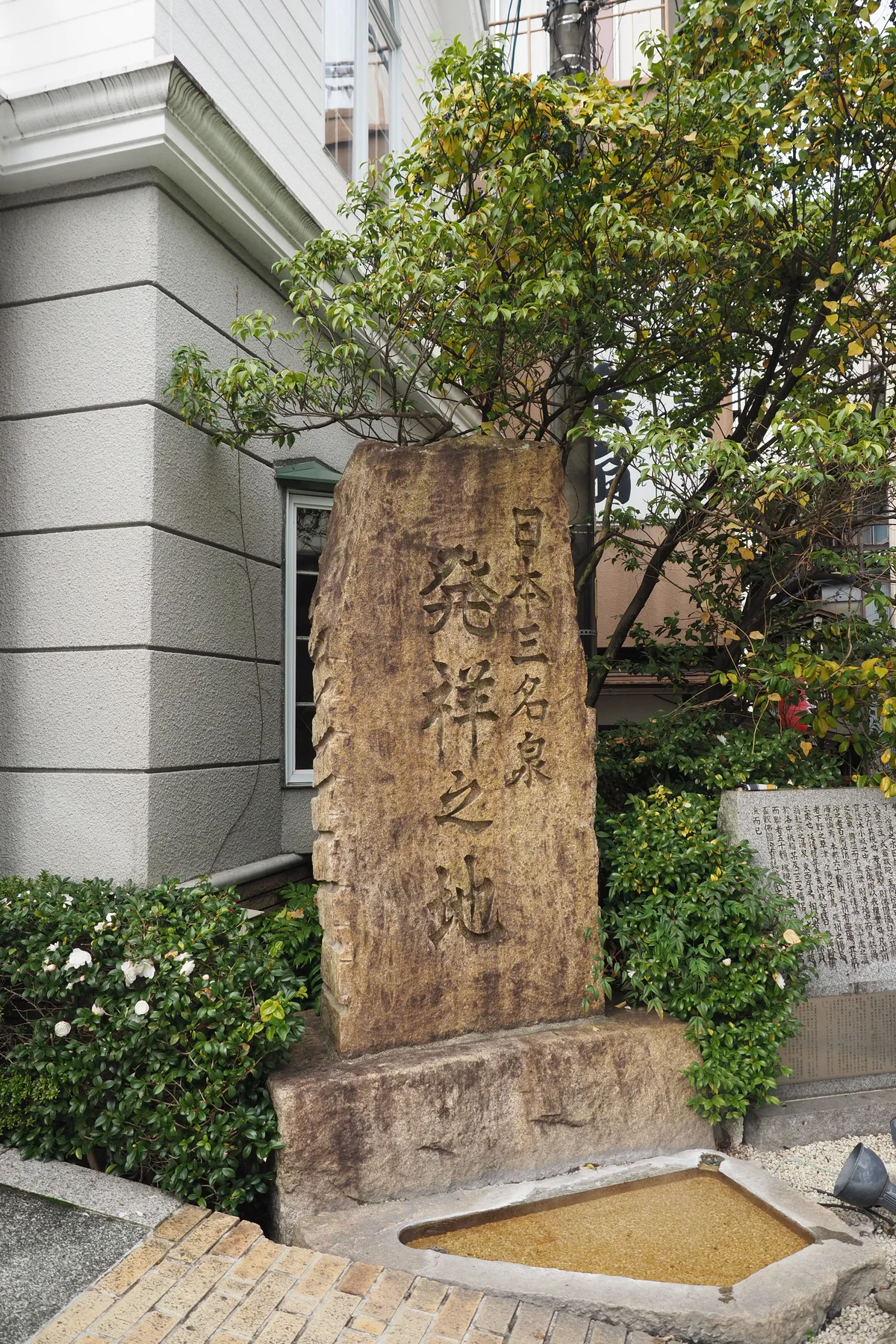
The reason so many places in town are named "Shirasagi" (white heron) goes back to Onsenji's founding legend. After the mountain spring dried up, a white heron is said to have flown down to the Hida River bank, leading villagers to a new hot spring source; the temple identifies the heron as an incarnation of Yakushi Nyorai. Walking back toward Shirasagi-no-Yu, look along the roadside for the stone monument inscribed as the birthplace of one of Japan's three great hot springs. That monument and the nearby footbaths are down in town, while the legendary Yunomine peak sits up in the hills. You can easily stop by the monument on your walk back from the museum to the bathhouse.
Focusing on the Former Odo House at Gassho-mura
Walking from Gero Station to Gassho-mura takes about 20 minutes, with an uphill stretch at the end. To skip the climb, take the Nohi Bus and get off at Gassho-mura. The current timetable lists both Gero Bus Center and Gero Ekimae stops—it takes about six minutes from the bus center and about four minutes from the station-front stop. One-way fares are ¥100 for adults and ¥50 for children. If you're coming from the Shirasagi Bridge area, you can also board at the Shirasagibashi stop. Some departures differ between weekdays and weekends. For the return ride to the station, check the second "Gassho-mura" row in the lower half of the timetable after Gero Koryu Kaikan; buses from that stop head back via Shirasagibashi and Gero Ekimae.
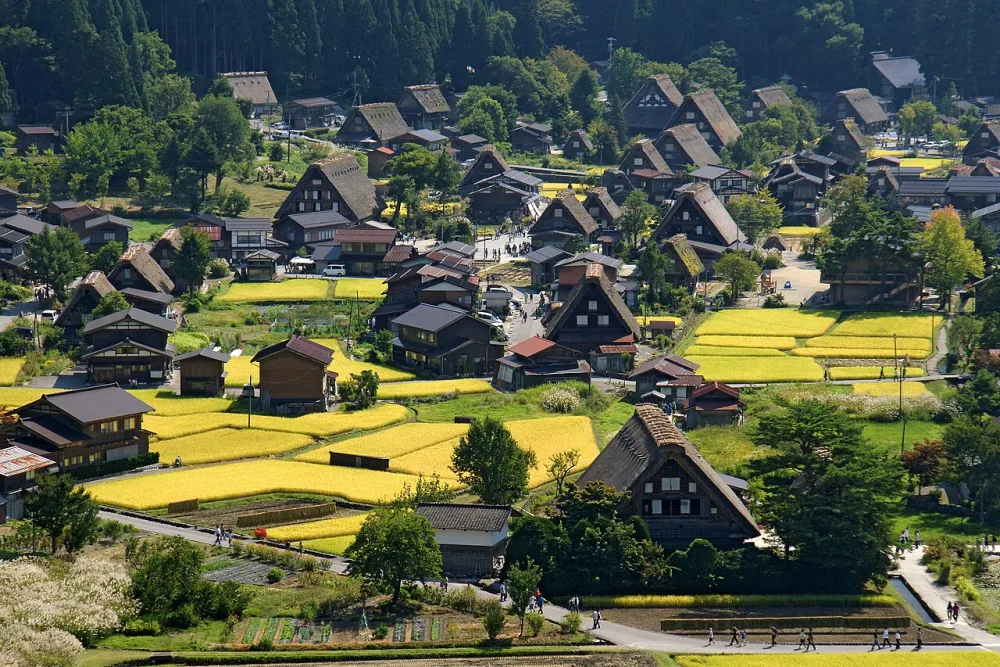
The standout building inside the village is the Former Odo House. Originally located in Miboro, Shirakawa Village, and built between 1833 and 1846, it was dismantled and relocated to Gero in 1963 after the Miboro Dam construction displaced the original settlement. Outside, take in the steep thatched roof before stepping inside and looking up to see how much open space sits beneath the rafters. Continue to the Folk Museum's farming tools and household items to picture how a family lived and worked under that roof. Seeing it alongside the other relocated houses in the village shows how buildings moved from Shirakawa-go and Gokayama were reassembled into a single settlement in Gero.
The village estimates about one hour for a standard walkthrough. Most days it opens at 8:30 with last admission at 16:30 and closing at 17:00; admission is ¥800 for high school students and adults, and ¥400 for elementary and junior high students. From December 31 to January 2, hours shift to 9:00 to 16:00. If you want to try ceramic painting or washi papermaking, check the workshop schedule at Hida Kobo before deciding which historic house to tour first. Walking from the Former Odo House into Saijiki-no-Mori takes you past a watermill hut, terraced fields, and the village's Kaeru Shrine. If you only have an hour, stick to the Gassho-no-Sato main village and Folk Museum, and skip the steeper hillside path—especially if the stone walkways are slick.
If you're also visiting Shirakawa-go Ogimachi the next day, save more of today's time for Yunoshima. Gero's Gassho-mura lets you focus quietly on relocated houses and folk tools, whereas Ogimachi is a lived-in World Heritage village where you can compare the houses against working fields and mountain slopes. If you only want one gassho-zukuri stop on your trip plus an onsen soak on the same day, Gero handles both cleanly. If you plan to shoot the full village panorama from the Ogimachi Observatory, give Shirakawa-go its own day instead of cramming bridges, temple steps, and baths right before a bus departure.
Making Time for Crafts and Historic Interiors
For a second historic structure, follow Gassho-no-Sato to the Former Toyama House Itakura (storehouse). Also relocated from Miboro in Shirakawa Village, its walls use double-layered timber planks, and the floorboards and beams of the upper level form the ceiling visible from downstairs. After seeing family living quarters in the Former Odo House, comparing them with this much smaller granary makes it easy to see how different buildings served different roles. If anyone in your group is interested in traditional architecture, spending 30 minutes on the folk tools and the Itakura storehouse is more rewarding than rushing up the hill to check off every small hut.
If you're traveling with kids and want a souvenir you can take home the same day, sarubobo doll-making at Hida Kobo takes about 20 to 30 minutes for ¥2,200, with same-day walk-up registration at the counter. Kids can pick their own fabric colors and dress the doll. Ceramic painting starts at ¥1,300 and takes 40 to 60 minutes, with finished pieces fired and shipped later for an extra postage fee. Washi papermaking takes a bit longer at 60 to 90 minutes, letting you pour colored fibers across a prepared sheet to create patterns; ¥1,500 covers three postcard-sized sheets or one shikishi square board, plus shipping. Overseas visitors planning to ship crafts should show their destination country and address on their phone before signing up to confirm available shipping options.
Visitors with older relatives or young children can borrow wheelchairs and strollers free of charge at the entrance for use in Gassho-no-Sato. That lower zone covers the Former Odo House, Folk Museum, and footbath, giving plenty to see without climbing hills. If you brought luggage uphill, Gassho-mura has coin lockers at ¥300 (small) and ¥500 (large), and oversized suitcases can be left at the ticket window for ¥500 per piece. Outside food and drinks are not permitted inside the village, so if you grabbed a bento for an early train, finish it before entering. If you're staying past midday, you can also eat at Gassho Chaya inside the grounds or head back downhill to the onsen town.
Half-Day, Full-Day, and Overnight Pacing
With only three hours, walk across Gero Ohashi from the station, pick either Sagi-no-Ashiyu or Kaeru Shrine for a quick stop, soak once at Shirasagi-no-Yu, and use the remaining time for lunch or coffee. If bathing is your top priority, do it before eating. If you still want to see Gassho-mura in three hours, take the bus straight up upon arrival, focus solely on the Former Odo House, get off at Shirasagibashi on the way down, and save time for just one footbath before heading back—trying to squeeze in the temple climb, the village, and a bathhouse in three hours turns into a nonstop sprint between two hillsides.
Using JR Central's March 2026 weekday timetable as a rough guide, you can pair the 8:43 Hida No. 3 from Nagoya with the 16:18 Hida No. 16 from Gero. Arriving around 10:15 gives you roughly six hours—plenty of time for lunch and a bath. Note that Hida No. 16 runs coupled with No. 36 bound for Osaka, so board the exact car listed on your Nagoya ticket. Head straight to Gassho-mura first while it's farthest out, return toward Shirasagi Bridge for lunch, then add either Onsenji Temple or the Onsen Museum. Picking just one leaves a clean block of time for bathing and takes you past the bridge-side souvenir shops on the walk back. If your Limited Express arrives around noon, fitting in both Onsenji and Gassho-mura gets tight; if you really want the stone-step river view, stay in Yunoshima for lunch and the temple, then soak on your way back.
Coming down early from Takayama or staying overnight in Gero lets you catch the Ideyu Morning Market just below the Gassho-mura entrance. The tourism association's 2026 schedule runs through December 5, from 8:00 to noon, with local vendors selling regional goods. On market mornings, head uphill first for the stalls, tour Gassho-mura, and come back down to town for lunch. Arriving from Takayama in the afternoon? Drop bags at your ryokan or head straight to Shirasagi-no-Yu. For lunch, look near Shirasagi Bridge for Hida beef nigiri or set meals; if you've already had Hida beef in Takayama, switch to keichan—chicken and cabbage stir-fried in savory miso-soy sauce over rice. Save shopping for miso, pickles, or local sake until after Gassho-mura so you aren't hauling glass bottles uphill.
On a clear day when you want to tackle both hillsides, climb Onsenji in the morning, schedule Gassho-mura around lunch, and save your bath for last. If people in your group walk at very different paces, let the hikers climb to the temple while others meet them outside the Onsen Museum. On holiday weekends, build in a buffer for lunch waits and don't book a timed day-use bath just 30 minutes after eating. In winter, if shaded town alleys feel icy underfoot, cover the longer walk in daylight and stick close to your ryokan after dark.
| Time in Gero | Priority Route | Optional Add-Ons |
|---|---|---|
| About 3 hours | Station → Shirasagi Bridge → One bathhouse → Gero Station | Pick one: footbath or Kaeru Shrine |
| About 5 to 6 hours | Gassho-mura → Lunch near Shirasagi Bridge → One bathhouse | Onsenji Temple or Onsen Museum |
| Overnight stay | Walk and bathe on arrival; Gassho-mura first thing next morning | Add a Hida Kobo craft workshop or seasonal evening fireworks |
Getting There from Nagoya or Takayama
From Nagoya, take the JR Takayama Main Line Limited Express Hida from JR Nagoya Station; allow about 1 hour 30 minutes to 1 hour 55 minutes. From Takayama, the Limited Express takes about 45 to 55 minutes. Both routes run direct, though Takayama-bound and Nagoya-bound trains stop at Gero at different intervals. When checking schedules, enter your overnight base and return direction first, pick your target trains, and work backward to see how much time you have for hillsides, bathing, and meals. If you're transferring off a Shinkansen in Nagoya, follow the signs for conventional JR lines and allow extra time to find your platform and handle Limited Express tickets.
Riding the Limited Express requires both a base fare ticket and a Limited Express surcharge. JR Central's ticketless Limited Express tickets can be booked via e5489—a one-way reserved ordinary-car seat surcharge between Nagoya and Gero is ¥2,390 for adults, with the base fare charged separately. For the Nagoya-to-Gero trip, you can pay the base fare with TOICA or other compatible IC transit cards under JR Central's rules; travel between Gero and Takayama is also covered under JR Central's mutual-use IC area for Gero, Takayama, and Hida-Furukawa stations. If you board at a station outside the covered IC zone, buying a paper ticket for the full route avoids exit-gate hassles. Check your ticket screen carefully: if it only shows "Limited Express Ticket," you still need to cover the base fare.
JR Central has announced that all Hida Limited Express trains will run as reserved-seat-only from December 25, 2026 through January 5, 2027. For a day trip during that period, book both outbound and return seats together and slot lunch between them; if only an early return train is left with three hours on the ground, keep your walk near Shirasagi Bridge. Travelers staying in Takayama can also check the Nohi Bus Takayama-Gero Line as a backup, which takes roughly 1 hour 30 minutes between Takayama Nohi Bus Center and Gero Ekimae or Gero Bus Center. It makes multiple local stops and some runs operate only on weekdays or weekends, so check arrival times to ensure you still have enough daylight for Gassho-mura and can make dinner back in Takayama.
If your ryokan holds luggage before check-in, drop your bags there first before crossing the two bridges. For a three-day loop linking all three destinations, spend night one in Gero after arriving from Nagoya, take the Limited Express to Takayama on day two for Takayama Old Town and Takayama Jinya, and take the Nohi Bus from Takayama Nohi Bus Center to Shirakawa-go on day three (about 50 minutes; book ahead on runs marked reservation-required). If you need to return all the way to Nagoya the same day after Shirakawa-go, treat the bus back to Takayama and the Limited Express to Nagoya as two separate legs with transfer buffer—trying to leave Gero in the morning and still tour both Takayama's old town and Ogimachi runs far tighter than it looks on a map.
If a direct Nagoya-to-Gero bus pops up in your search, check eligibility first. The Gero Onsen Ryokan Cooperative's direct shuttle is strictly for overnight ryokan guests: it departs near Nagoya Station's Taiko-dori exit at 14:00, arrives in Gero around 16:30, and leaves from behind the Gero Station Tourist Information Center at 10:30 on the return. Reservations are required at least two days ahead. From December 2026 through March 2027, fares are ¥5,000 round-trip or ¥3,800 one-way per person. Taking the outbound shuttle sets you up nicely for afternoon check-in; if you want to visit Gassho-mura and Onsenji the next day, ride the shuttle one-way and take an afternoon JR Limited Express back.
Winter Fireworks and Rainy-Day Adjustments
December fireworks shift evening dinner and bathing schedules. In 2026, regular Gero Onsen Fireworks Musical Shows are scheduled on December 5, 12, and 19 from 20:00 to 20:15, with a special Christmas Eve show on December 24 from 20:00 to 20:30. Fireworks launch along the Hida River just upstream of Gero Ohashi Bridge, and the city warns shows may be canceled for severe weather warnings or high river levels. On the three regular show dates, Kur Garden shortens hours with last entry at 18:15 and closing at 19:00. To fit in both a soak and the fireworks, move your bath to the afternoon before dinner so you have time to wait by the riverbank. If you're returning to Nagoya on a long evening train, save the fireworks for a night you're staying in Gero.
On rainy days, you can still cross from the station, just tighten the loop around covered stops. Walk via Shirasagi Bridge to Sagi-no-Ashiyu, cross the street to the Onsen Museum, and continue to the indoor bath at Shirasagi-no-Yu. On Thursdays when the museum is closed, pair Shirasagi-no-Yu with a sit-down meal and walk over to Kaeru Shrine once the rain eases. On Wednesdays when Shirasagi-no-Yu is closed, rest at the covered footbath after the museum before heading to Kur Garden. Before walking back across the bridge to the station after bathing, dry your hair thoroughly and put on dry socks.
In spring, look for cherry blossoms in Saijiki-no-Mori; in autumn, follow the same hillside paths for maple foliage. If it rains during a village visit, focus on the indoor houses of Gassho-no-Sato and warm up at the footbath before walking back down if your shoes get damp. Arriving in Gero after sunset? Take in the lit ryokan and river reflections from the bridge first, then grab dinner in town—and keep bathhouse last-entry times in mind if you plan to soak afterward. Winter river winds cut sharply, so keep bridge photo stops brief and slip back into warm shoes right after soaking your feet. Both Gassho-mura and Onsenji Temple are best saved for clear daylight the next morning.
A few useful answers
Can you walk Gero Onsen town in half a day?
In about three hours, you can walk from Gero Station to Shirasagi Bridge, stop at a footbath or Kaeru Shrine, and visit one public bathhouse. If you want to include Gassho-mura and climb to Onsenji Temple, allow five to six hours.
Can you bathe full-body in Gero Onsen's Funsenchi riverside pool?
No. Since December 1, 2021, the Funsenchi pool on the Hida River bank has been restricted to footbaths only. For a full-body hot spring soak, go to Shirasagi-no-Yu, Kur Garden Rotenburo, or Sachino-Yu.
Where is Gero's frog shrine?
In the hot spring town, Kaeru Shrine sits right next to the Gero Onsen Museum. Its name plays on the Japanese word "kaeru," meaning both frog and "to return safely." There is also a second small Kaeru Shrine inside Gassho-mura's Saijiki-no-Mori.
Can day-trippers buy hot spring combo passes in Gero?
Yes. Combo tickets for the Onsen Museum plus Shirasagi-no-Yu cost ¥650 for adults, and the museum plus Kur Garden costs ¥1,000 for adults. If you only want one bath, buying a single-entry ticket directly at the bathhouse is simplest.
How long is the walk to Gassho-mura, and what is the last entry time?
It is about a 20-minute walk from Gero Station, or you can take the Nohi Bus to the Gassho-mura stop. Regular hours have last admission at 16:30 and closing at 17:00, shifting to 9:00 to 16:00 on December 31, January 1, and January 2.
Do I need to transfer trains from Nagoya or Takayama to Gero?
No. From JR Nagoya Station or Takayama Station, the Limited Express Hida runs direct to Gero. Allow about 1 hour 30 minutes to 1 hour 55 minutes from Nagoya, and 45 to 55 minutes from Takayama. The Limited Express surcharge and base fare are charged separately.
Official information and references
Sources used in this guide.
- Gero Onsen Tourism Association | Funsenchi Restricted to Footbaths Only
- City of Gero | Funsenchi Cleaning Hours and Hot Spring Overview
- City of Gero | Free Footbaths in Gero Onsen Town
- Gero Onsen Tourism Association | Onsen Town Walking Map
- City of Gero | Tourist Information Center and Yu-meguri Tegata Sales
- Shirasagi-no-Yu | Opening Hours, Admission, and Footbath
- Kur Garden Rotenburo | Opening Hours, Admission, and Facilities
- Sachino-Yu | Day-Use Bath Hours, Admission, and Family Bath Suspension
- Japan National Tourism Organization (JNTO) | How to Enjoy Japanese Onsen
- Gero Onsen Museum | Opening Hours, Admission, and Bath Combo Tickets
- Gero Onsen Ryokan Cooperative | Yu-meguri Tegata, Bathing Hours, and Child Usage
- City of Gero | Kaeru Shrine and Local Shrines and Temples
- Onsenji Temple | White Heron Legend, Stone Steps, and Yu-Yakushi Nyorai
- Gero Onsen Gassho-mura | Village Overview, Admission, and New Year Hours
- Gero Onsen Gassho-mura | Former Odo House and Former Toyama House Itakura
- Gero Onsen Gassho-mura | Hida Kobo Workshops and Fees
- Gero Onsen Gassho-mura | Walking and Bus Access and Child Fares
- Nohi Bus | Gassho-mura Line Two-Way Timetable
- Gero Onsen Tourism Association | 2026 Ideyu Morning Market
- Gero Onsen Tourism Association | Family Activities and Local Cuisine
- JR Central | Gero Station Takayama Main Line Timetable
- JR Central | Nagoya Station Weekday Timetable Toward Gifu
- JR Central | Takayama Station Timetable Toward Gero
- JR Central | Using TOICA at Gero, Takayama, and Hida-Furukawa
- JR Central | Ticketless Limited Express Hida Surcharge Tickets
- JR Central | FY2026 All-Reserved-Seat Periods for Conventional Limited Express Trains
- Nohi Bus | Takayama-Gero Line Bus
- Nohi Bus | Takayama-Shirakawa-go Bus and Reservation Rules
- Gero Onsen Ryokan Cooperative | Direct Nagoya Bus for Lodging Guests
- City of Gero | December 2026 Fireworks Musical Show
- Kur Garden Rotenburo | Shortened Hours Notice for Fireworks Dates