Explore the Goka paper district through hosho, torinoko, flowing-sheet formation, large paper, decorative techniques and drying. Then read paper-deity traditions and the joined shrine halls beneath renewed roofs.
- Region & Focus
- Echizen City and Washi Village
- Reading Scope
- 38 min read · 19 chapters · 4 Q&As
- Official Verification
- 14 official sources checkedUpdated November 22, 2026
- Key Topics
- ItinerariesChubu & Hokuriku
Chapter Route Map (tap any stop)
- Start with what a sheet must do, then watch how it is made
- Goka is a group of production settlements, with processing and sales too
- Hosho and torinoko: compare whiteness, thickness and density
- Material differences remain in the finished surface
- Udatsu puts workplace and home under one roof
- Repeated scooping in nagashizuki builds sheet thickness
- After pressing, the drying board also shapes the surface
- Uchigumo and tobikumo: patterns made of paper fibers
- Mizutama can mean added fiber or the action of water
- Metal forms, layers and fiber outlines create more patterns
- Watermarks turn thickness into information; certificates need finishing time
- From formal documents to sliding panels, uses changed paper size
- At the Paper and Culture Museum, compare tools, samples and exhibitions
- The Kawakami Gozen legend connects the paper trade’s shared worship
- Read the complex roof from the joined main and worship halls
- Cypress bark, woodland and upper shrines connect the roof to the mountain
- Finish indoor activities before the foothill shrines
- Choose a short workshop or full nagashizuki by what you want to do
- Choose paper for something you will use
- Quick Q&A
Spend a day in Echizen Washi Village to see how paper becomes documents, painting sheets and interior material. Follow an artisan’s work at Udatsu in the morning, compare finished papers at the Paper and Culture Museum, then choose a short afternoon workshop before walking to the Okamoto and Otaki shrines. On October 28, 2026, the shrines announced completion of full roof re-covering and public access.
Start with what a sheet must do, then watch how it is made
Compare hosho for formal documents, torinoko for fine lines and patterned paper for sliding-panel surfaces. Their jobs differ, changing requirements for fibers, surface and size. Bring these uses into Udatsu, and repeated scooping at the vat has a concrete aim: a certain thickness, fiber distribution and surface.
Make artisan work at Udatsu the day’s focus. Use the Paper and Culture Museum to compare products and history, and leave a short workshop for those who want to try. Walk to the shrines in the afternoon to connect the paper deity with the same route. For tools and actions, start at Udatsu; for materials first, begin at the museum. Their combined ticket makes the order easy to adjust.
The shrines announced full cypress-bark roof renewal and public access on October 28, 2026. Include the newly repaired roofs as a focus. Museums have demonstration and reception cutoffs, so finish paper activities first and visit the shrines later. With half a day, keep both museums and worship at the foot of the mountain. Skip the optional workshop to leave full time for artisan work and paper comparisons. Roof renewal completion notice
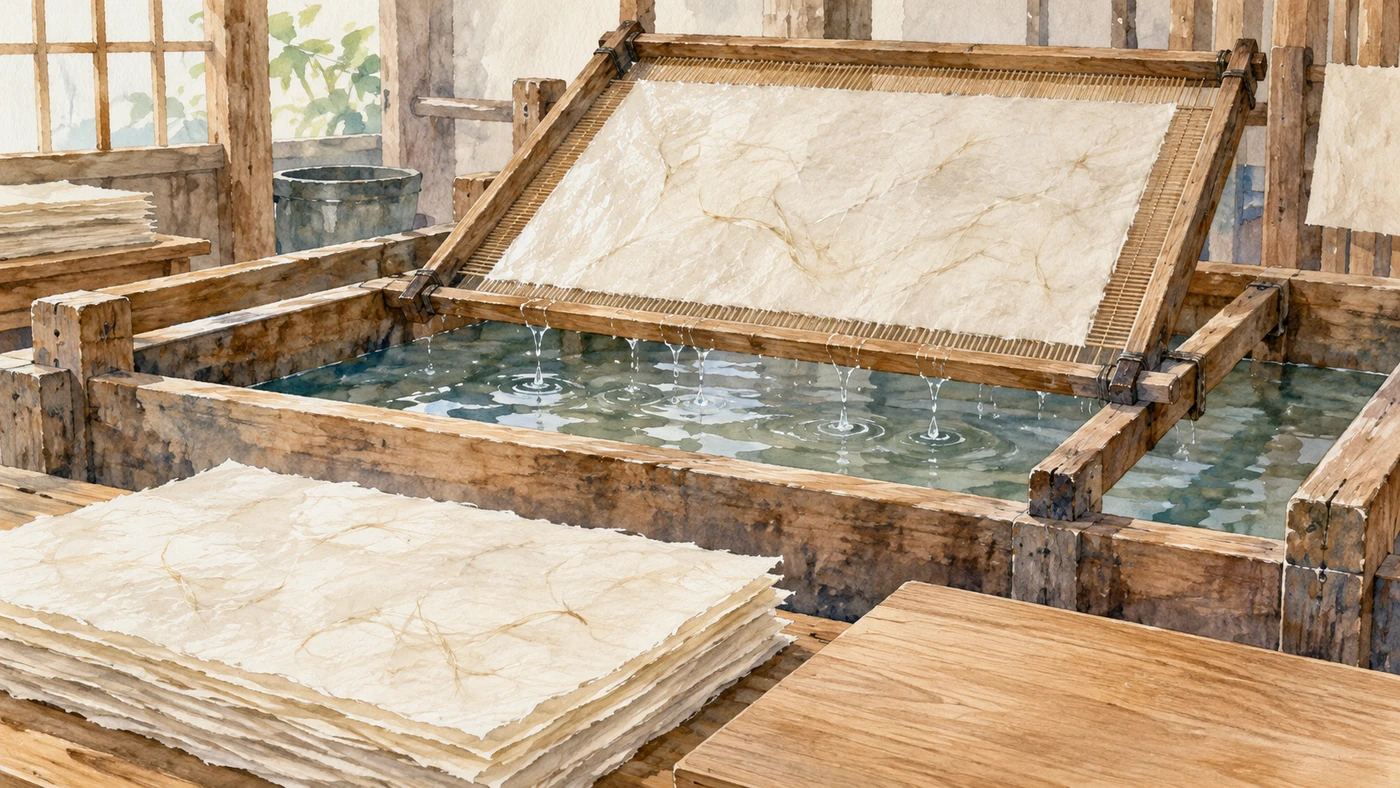
Explore the Goka paper district through hosho, torinoko, flowing-sheet formation, large paper, decorative techniques and drying. Then read paper-deity traditions and the joined shrine halls beneath renewed roofs.
Goka is a group of production settlements, with processing and sales too
Echizen washi’s core lies in Goka, Echizen City, Fukui: Oizu, Otaki, Iwamoto, Shinzaike and Sadatomo. The museum introduces the area through the Okamoto River and these five settlements. Museums cluster in Shinzaike; the shrines are in Otaki. Recognizing these names takes you from one visitor facility toward surrounding paper-producing streets.
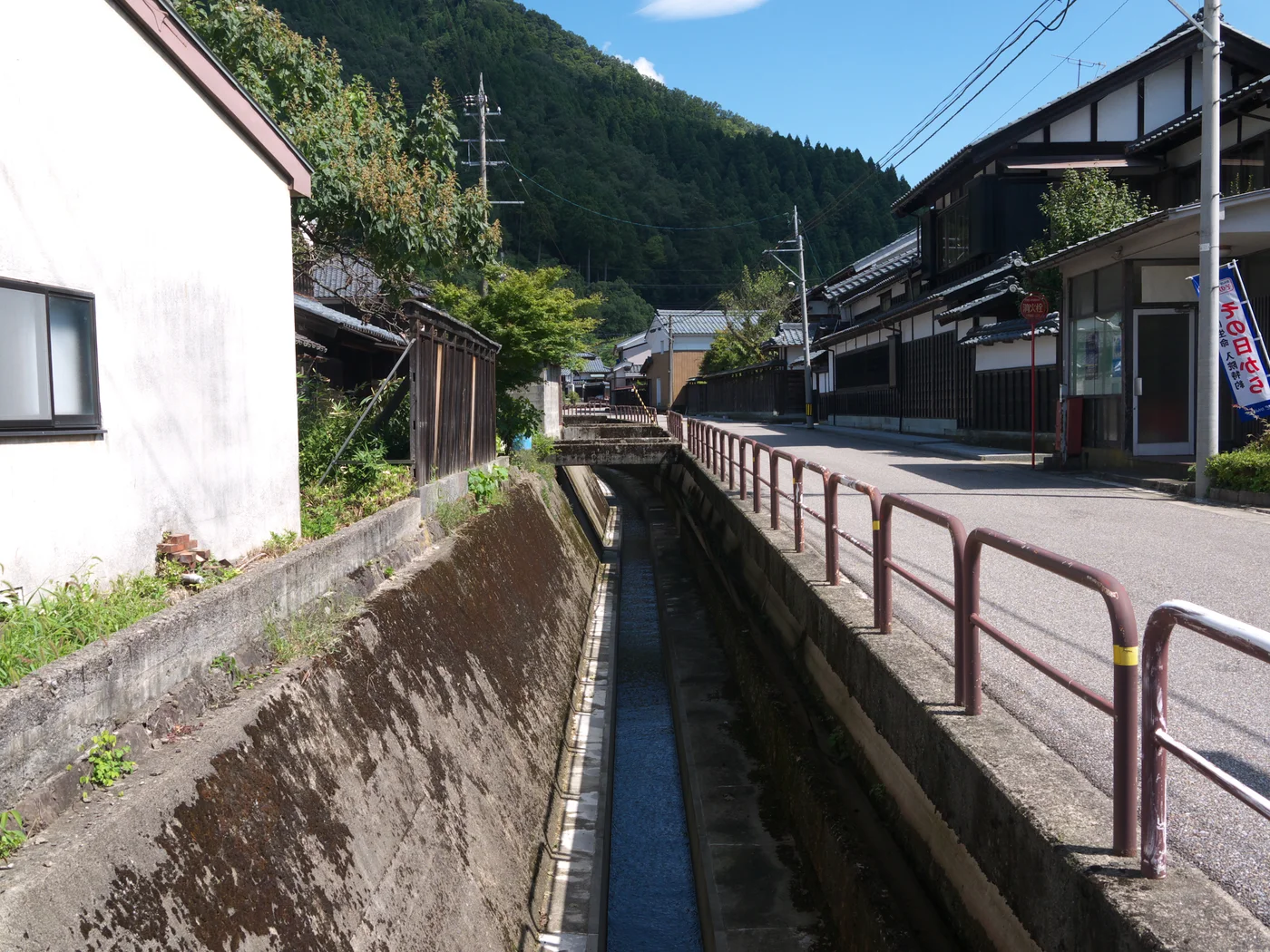
Paper mills have specialties. The city tourism association’s field report introduces large handmade sheets at Iwano Heizaburo, handmade fusuma paper at Osada, decorative komagami at Yamatsugi and both handmade and machine-made paper at Igarashi. Size, decoration, paper for small objects and production method create different strengths within one district. After seeing a paper, read maker and use rather than remembering only the broad name Echizen washi.
Paper can move from the vat to specialist processors. The same report describes Shimizu altering feel and function through crumpling and lamination, while Sugihara acts as a local wholesaler linking artisans, demand and sales. “Who made this paper?” has several answers: sheet formation, decoration, processing, planning and selling may involve different businesses.
Crumpled momigami makes the division clearer. The association records machine and hand crumpling at Shimizu. Irregular crumpling in several directions, one-direction crumpling and coarse or fine treatment leave different effects. Processing changes stiff paper into something softer. On paper objects, examine creases, softness and pattern separately, then read whether texture formed in the sheet or through later work.
Use these distinctions in displays. For clothlike softness, look for processing notes; for large interior paper, look at size and placement; for regular patterns, find the tool that formed them. A standard day follows the three public facilities, shops and shrines. Read street workshops from outside within the neighborhood. Echizen Tourism Association: producers and processes
Hosho and torinoko: compare whiteness, thickness and density
The producers’ cooperative describes hosho as thick, highly white kozo paper. Long fibers interlock into a bulky but strong sheet. A washing step called kamidashi removes non-fiber substances and relates to whiteness and texture. Look first at sheet thickness, then surface evenness, to understand the importance of overall feel in formal and ceremonial paper.
Hosho also carries documentary history. The cooperative says the term first meant a document signed and issued by a subordinate conveying a master’s instructions, then became the name of its paper. On modern labels, read material and historic use separately: one explains composition, the other social function.
Understand torinoko through pale gampi paper and its dense surface. Producer information relates its name to an eggshell-like color. Flat gampi fibers form a dense, smooth surface with less ink spread, suited to fine detail. Its difference from thick kozo goes beyond white or pale yellow to fiber form and response to ink and color.
After modern fusuma-paper development, torinoko became a broader paper name. The cooperative records its use for sliding-panel and printing papers made from different materials. Read material, handmade or machine-made method and intended use together, rather than inferring a recipe from the name. Explain whether you want kana practice, printmaking or box covering to choose paper for the actual ink, printing or adhesive. Producers’ cooperative: hosho, torinoko and changing names
Interview with Ichibei Iwano uploaded by the Echizen Tourism Association and included on its official site, accompanying this section on kozo hosho and printmaking paper uses.
Material differences remain in the finished surface
Kozo, mitsumata and gampi all supply bast fibers from plant bark, with different lengths and shapes. The cooperative gives kozo at about six to fifteen millimeters, mitsumata three to four and gampi four to five. Long kozo interlocks readily; mitsumata is fine and soft; gampi is flat. Use these differences to understand strength, density and gloss before returning to samples, rather than memorizing botanical names.
Echizen also uses hemp for Japanese painting paper, along with Manila hemp and wood pulp. The cooperative notes that beating adjustments can make Manila-hemp paper bulkier or stiffer. Processing matters even with one raw material: properties come from both material and method. Compare touch with labels to find differences relevant to your use.
Material experiments extend to food. The tourism association records that Igarashi’s Food Paper was inspired by a child in the family who spent years experimenting with banana skins, peanut skins and edamame. Food materials and hand papermaking later became stationery. Set this beside traditional plants: makers maintain established papers while testing other fibers. If corresponding products are in the shop, read material and name, then compare color and feel.
Tororo-aoi roots and noriutsugi bark provide neri for the vat water. The cooperative explains that this mucilage disperses fibers, keeps them suspended longer and helps them interlock during formation. The vat contains more than water and pulp: an auxiliary material controls fiber behavior. Udatsu’s nagashizuki workshop specifies 100% Japanese-grown kozo, a distinct plan to compare with the museum’s varied materials. Cooperative: materials and neri
Udatsu puts workplace and home under one roof
Udatsu was relocated and adapted from the papermaking home of Nishino Heiemon in Sadatomo. The museum says it is traditionally dated to 1748 and was moved in 1996–1997. A gable-end entrance and raised udatsu wall are typical of Goka papermakers’ houses. Locate work and living areas first; the house itself explains paper production within daily village life.
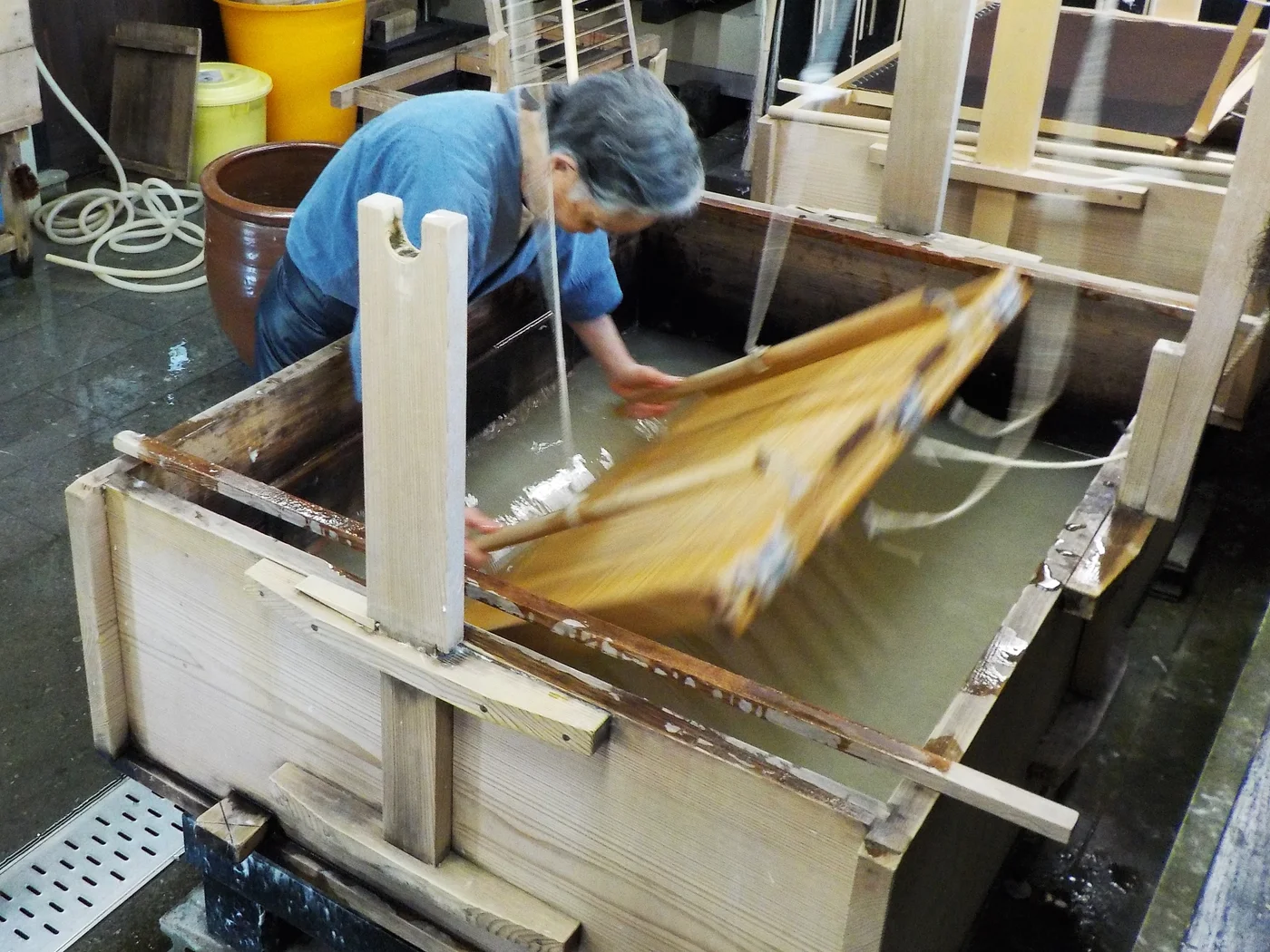
The ground floor has the artisan workplace, an earthen-floored area, boarded hearth room and tatami rooms. Move your attention from the outdoor udatsu to where wet pulp is handled, where boards are laid and how rooms divide. Upstairs hosts washi exhibitions, offering a different pace from work below. Architecture enthusiasts can leave time for the house as well as processes.
The museum reconstructed relevant tools from old documents. Artisans make naturally colored paper, with preparation, sheet formation and drying included in public work. Watch one operation through before reading tool names. Pulp comes from preparation and wet sheets proceed to drying. Follow one sheet or tool for longer to grasp the sequence, rather than photographing every position and leaving. Udatsu: house and public work
Repeated scooping in nagashizuki builds sheet thickness
Udatsu distinguishes tamezuki and nagashizuki. Tamezuki scoops pulp once with a frame fitted with metal mesh, then keeps it level with small movements. Nagashizuki uses a bamboo screen, scooping repeatedly and moving front to back and side to side until the desired thickness forms. Learn this before a demonstration: both may look in a still image like a frame lifted from water, while repetition distinguishes the process. Udatsu: tamezuki and nagashizuki
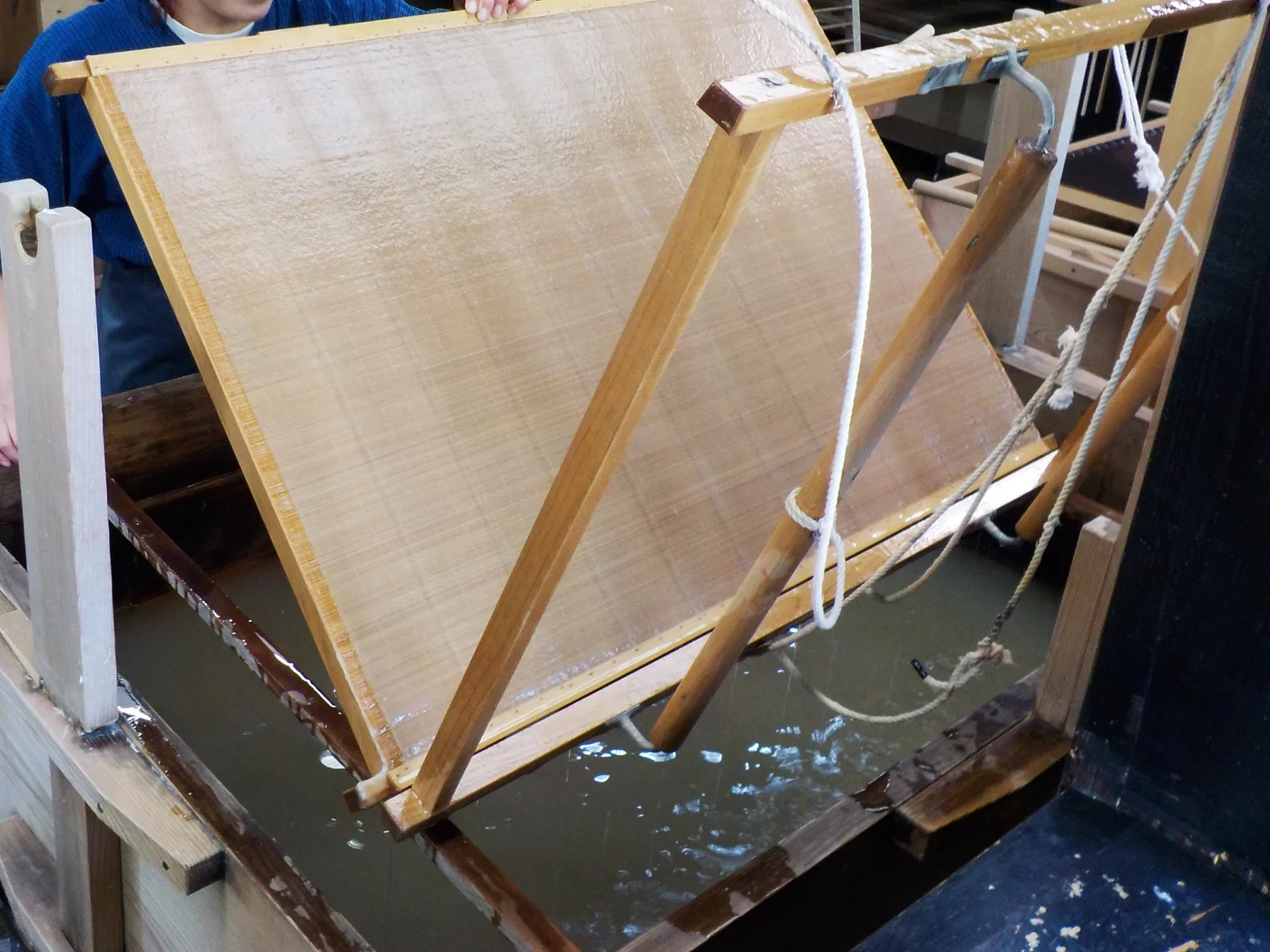
Follow a full cycle: tool enters the vat, lifts pulp, moves, then scoops again. Watch when the artisan continues and when they finish. Thickness builds through successive actions, with frame movement responding to liquid. Beyond arms, watch pulp moving inside to see the connection between gesture and surface.
Large paper makes this teamwork. At Iwano Heizaburo, the tourism association recorded teams of four or six making large sheets, spreading pulp through movements in both directions. This is a specific mill’s large-paper example. After smaller work at Udatsu, it explains the staffing needed for greater size and the different arrangements behind a full fusuma panel.
After pressing, the drying board also shapes the surface
Wet sheets must release water and dry. Udatsu includes drying among visible processes. Another detailed example is Iwano Heizaburo, where pressed sheets are applied individually to ginkgo boards and dried in a warm room. Treat the board as a tool, extending attention from vat to finished surface.
The tourism association records reasons for ginkgo: few knots, smoothness and less deformation in sunlight. Excessive drying heat can lift paper before it is fully dry, so slow drying matters. Paper, board and speed must work together. Makers attend to flatness and surface as well as removing water.
Two people at that mill finally remove dried sheets together, followed by inspection. Large paper still needs hands at this stage; decoration has passed through wetting, pressing, drying and release. Short visitor workshops use their own quick-completion process, useful for one operation. Understanding paper for painting, mounting or interiors also requires these surrounding steps.
Uchigumo and tobikumo: patterns made of paper fibers
An important feature of Echizen decorative paper is pattern formed during sheetmaking from another pulp. The cooperative explains sukikake as adding pulp called hana to an already formed base. One method uses neri and alum to gather fibers into petal-like shapes. This helps explain visible fibers in papers such as taireishi.
Fukui also formally designates Echizen washi techniques of uchigumo, tobikumo and mizutama. Its entry describes hana made by dyeing gampi paper, drying it, beating into short fibers and adding water and neri. Two people form the torinoko base; once water has drained suitably, a skilled worker applies the decorative pulp. Base and pattern are prepared separately before meeting on wet paper.
In this designated technique, uchigumo usually forms continuous clouds at the top and bottom, while tobikumo scatters cloud fragments across the sheet. Look first at concentrated ends or dispersed middle, then the boundary between clouds and base. Placement affects central writing, composition and cutting into smaller pieces.
The prefectural record currently says the designated holder position has been vacant since the third Iwano Heizaburo died in 2016. Read historic works by labeled maker, date and technique; read contemporary papers by each mill’s own names and methods. The cultural-property entry records a specific recognized technique, while shops offer a broader range. Fukui: designation and processes
Mizutama can mean added fiber or the action of water
The same name, mizutama, accompanies different methods. In the prefecturally designated technique above, decorative pulp forms droplet shapes on the base. Under rakusui and mizukiri, the cooperative describes shaking water drops from bundled straw onto wet paper. Follow the verb as well as the paper name to distinguish material added from material acted on by water.
The cooperative records modern tools such as watering cans and perforated pipes creating fine drops, swirls and lines, with metal stencils also arranging patterns. Water direction, holes and stencil position all become design tools. If relevant samples appear, compare pattern direction before finding the tool. Wet-sheet decoration can leave very different rhythms.
Papyrus House’s rakusui workshop gives a clear sequence: form paper, dye it, then shower water to create waves or dots. This bookable visitor activity has a different mechanism from the decorative-pulp dots in the cultural-property record. Choose whether you prefer the varying density left by water or arranging fibers and colors in a composition. Cooperative: decorative techniques
Metal forms, layers and fiber outlines create more patterns
Hikkake catches fibers on thin metal forms. The cooperative describes mitsumata, rayon and other fibers adhering to the metal sides outlining a pattern, then transferring to a screen or mesh and combining with a base sheet. Fibers aligned along the edges give lustrous outlines. Study how a line forms and relates to the base.
The tourism association’s Yamatsugi report places this in decorative komagami production: transfer pattern to screen, then combine with the base into a patterned sheet. Komagami can cover small paper objects, linking decoration and final use. Pattern scale and edge texture enter the finished object when paper is wrapped or cut. Think about the size you need before choosing a large sheet.
Sukiire also puts decorative fibers into paper, either mixed throughout the vat or arranged on the base. The cooperative says sukikake patterns mainly appear on the front, while hana mixed into the pulp appears on both sides. If samples may be turned, front and back offer a useful clue. A card that turns and a box face showing only one side can use different effects.
Sukikomi and sukidashi use two layers. A patterned form is attached to the screen or mesh, an upper sheet is made and combined with a base. Sukikomi shows the base color through spaces left in the upper pattern; sukidashi makes the upper pattern itself stand out. Identify which color belongs to the base to translate the names into visible layers.
Nagashikomi places a metal frame on base paper, screen or mesh, then pours dyed pulp inside. Work on screen or mesh is subsequently joined with a separately formed base. The cooperative distinguishes this from sukikake because dispersed pulp flows in, producing a mottled-cloud-like luster. Separate the metal tools’ roles: hikkake aligns fibers along edges, while nagashikomi fills a bounded area. Their pattern mechanisms differ.
Otoshikake drops separately dyed pulp onto wet paper. The cooperative lists tobikumo applied with a ladle and hiryu drawn by squeezing neri-mixed pulp from a container. Gestures remain in the sheet, unlike metal-defined outlines. Compare two similar patterns made differently, look at edges, then read technique names.
Suminagashi adds another source. The cooperative describes alternating ink and pine resin on the water with brushes, spreading concentric circles, disturbing them by blowing or fanning, then laying paper over the pattern. Compare three ways of looking: added pulp for clouds, aligned fibers for metal-form outlines and water-surface transfer for marbling. Method often reveals more than color when patterns look similar.
Watermarks turn thickness into information; certificates need finishing time
Sukashi-ire fixes letter or pattern forms to a screen or mesh. The sheet is thinner there and shows a brighter design against light. The cooperative connects it with share certificates, awards, licenses and certificates. Pattern carries identification as well as decoration. Compare ordinary surface designs with those visible clearly through light.
Papyrus House’s school certificate program also uses watermarks, explicitly shiro-sukashi: the pattern area is thinner. Custom school emblems need corresponding tools and are a different product from a visitor choosing a size and adding pressed flowers. Ask what information the paper must make visible, beyond whether it is attractive.
The graduation and completion certificate program lists about an hour for thirty people to make sheets, with completion from around three weeks and printing and shipping arrangements. The gap reveals further finishing work. A twenty- to forty-minute visitor workshop fits one papermaking action into a travel day. School certificate groups plan both creation and later delivery. Different aims need different processes.
From formal documents to sliding panels, uses changed paper size
Dated papers explain quality and use. Citing Shosoin research, the cooperative introduces the 730 Echizen provincial tax accounts: submitted as accounts, then reused on the reverse by a sutra-copying institution for records. The cited 2010 study identified mainly kozo with a little gampi and careful paper beating. Production, accounting and reuse are successive stages. History remains in the object, use traces and later fiber identification.
Hosho, torinoko and danshi served the shogunate and Fukui domain, with uses extending to official records, ceremony, painting and interior decoration. Colors and clouds were not all developed for tourism. The cooperative’s Edo holdings already include colored hosho, cloud-pattern torinoko and various decorative papers. Place historic sheets in their original uses when displayed.
Fusuma offers an easy example. The cooperative says sliding panels and screens once used joined sheets. In mid-to-late Meiji, advances in making one large sheet to cover a panel drew some makers from hosho into fusuma paper. Size opened markets and required patterns across larger surfaces. Recall teams handling a large screen to connect production scale with one interior panel.
Meiji exchanges with the Printing Bureau encouraged kyokushi and improved papers suited to Western writing and printing. Securities and award papers later created demand; machine formation, decorative komagami and digital-print paper followed. Read the history through samples, from thick document sheets to whole panel paper, stationery and interior material. Ask what need each solved at the time.
Markets also required new materials and tools. The cooperative records papermaking chemicals, beating equipment and machinery used in kyokushi and improved paper for Western printing and writing. Taisho and Showa decorative papers entered bindings, endpapers, wrapping and box coverings. Work backward from a product: what size and pattern did an endpaper need, how would a box covering be cut, and how broad a continuous design did fusuma require? More paper types answered different users’ problems.
At the Paper and Culture Museum, compare tools, samples and exhibitions
The main building’s first floor introduces Echizen washi worldwide and past and present, establishing Goka, the Okamoto River and paper-deity geography. The annex displays handmade and machine-made washi, creative fusuma paper and hanging decorations. Choose one familiar use, such as writing or sliding panels, and compare samples by that use rather than color alone.
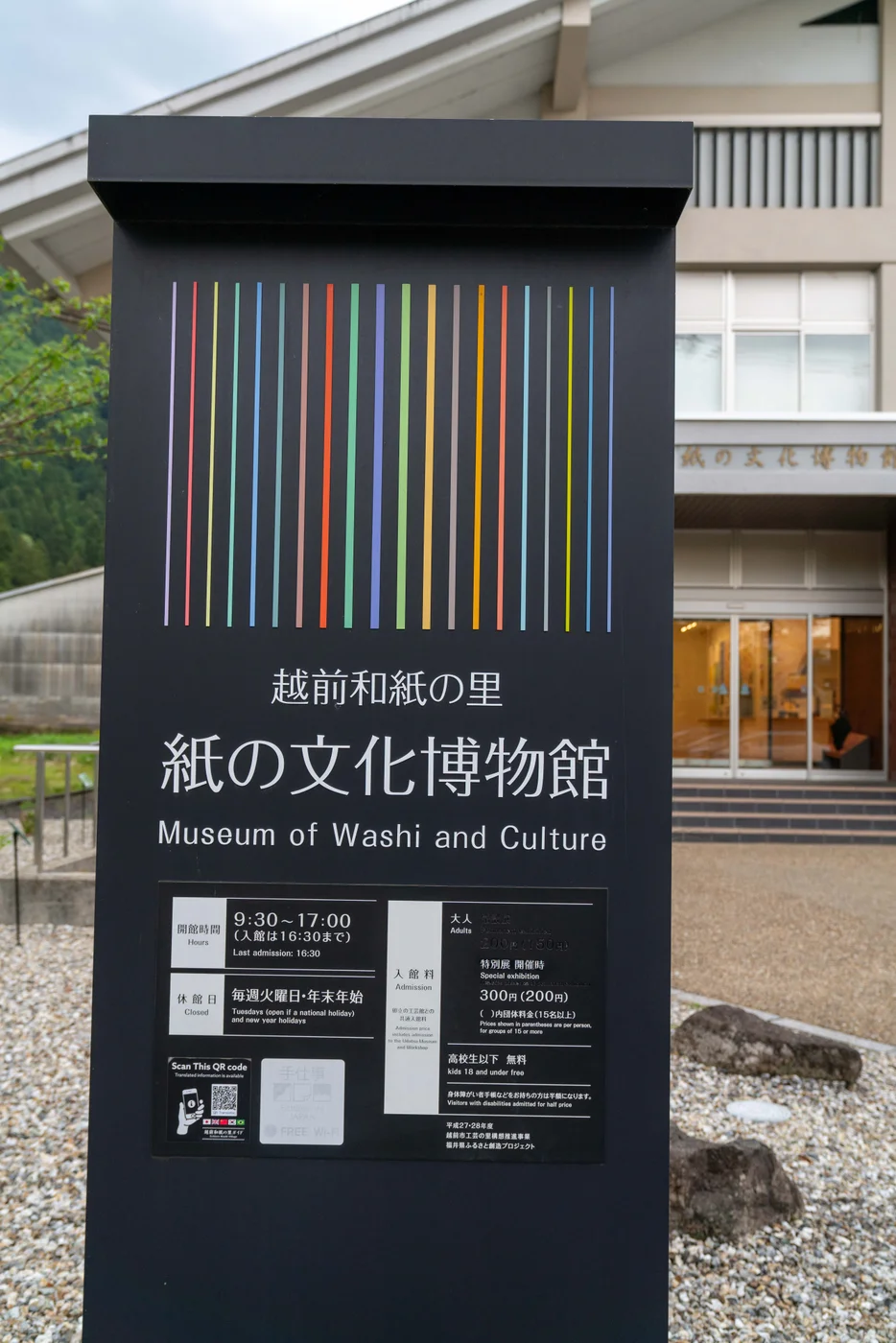
Second-floor special exhibitions cover old paper, tools and master makers. When checked in October 2026, the official homepage listed “How Echizen washi is made IV: the basics” through November 23 and “Cats dwelling in washi” through January 11, 2027. Udatsu also had Takashi Ono woodcuts from October 23 to November 30. If tools and printmaking paper interest you, include both facilities’ temporary shows.
Udatsu follows actions; the museum allows longer with finished sheets. The recommended order is to understand formation at Udatsu, then compare fusuma size, surface and patterns in the annex. Starting at the museum also suits those wanting Japanese technique names first. Choose a few clear tools and paper types to compare at the demonstration. Paper and Culture Museum: floors and displays
The Kawakami Gozen legend connects the paper trade’s shared worship
Goka tradition tells of a woman who appeared upstream about 1,500 years ago and taught villagers papermaking. Asked her name, she said only that she lived upriver, then vanished. People worshipped her as Kawakami Gozen, the paper deity at Okamoto Shrine. The cooperative uses the legend to explain origins and belief, bringing water, teaching and livelihood together.
The deity remains connected with production. The cooperative’s history says Echizen artisans went to Tokyo to research banknote paper, and a divided spirit of Kawakami Gozen was enshrined in the Printing Bureau’s papermaking department late in the Taisho era. Belief traveled beyond the district with people and techniques. The walk from museum to shrine gives paper, tools and history a shared place of worship.
Knowledge returned too. The cooperative records artisans bringing Printing Bureau knowledge back to Goka for local production, followed by teaching improved-paper methods elsewhere. Read the deity’s movement beside technical exchanges: one connects shared faith, the other materials, equipment and products. The district was a production center exchanging knowledge with other places.
Okamoto and Otaki have separate histories. Fukui’s cultural-property account says Otaki flourished as the Tendai-affiliated Daitokuzan Otakiji and in the early modern period served as a common guardian for forty-eight villages centered on Goka. Read the two shrine names through overlapping paper-deity and regional beliefs, then see how the halls jointly enshrine them.
The shrines are at 13-1 Otakicho, Echizen, about fifteen minutes’ walk from the village. Walk slowly from Shinzaike’s museums to Otaki’s foothills, turning panel names into real streets. Stop at businesses only within their public areas. At the shrines, set production observation aside for quiet worship. Official shrine introduction and access
Read the complex roof from the joined main and worship halls
The foothill halls were completed in 1843. The national designation is “Otaki Shrine main hall and worship hall,” with construction documents and drawings, designated an Important Cultural Property on May 21, 1984. Fukui records one building, its joined halls and continuous roofs. Identify the worship hall in front and higher main hall behind to establish the complex outline’s basic structure.
The main hall is nagare-zukuri with chidori and kara gables at the front. The worship hall is hip-and-gable, entered at the gable end, with a kara gable over the porch. All roofs use cypress bark. Begin with triangular chidori gables and curved kara gables, then follow their overlapping roof planes. The shrine describes mountain peaks and waves; on site, read an eave or junction at a time.
From construction documents, the prefecture names carpenters including Okubo Kanzaemon from the Eiheiji temple town. Carvings bring attention closer: the shrine introduces lions, dragons, phoenixes and plants at the front, with fully modeled Chinese-story subjects along sides and rear. After the roof, choose one carving group and locate it on the building for both large- and small-scale views. Fukui: Otaki main and worship halls
Cypress bark, woodland and upper shrines connect the roof to the mountain
Cypress-bark roofing layers hinoki bark. The shrine records cypress and beech around the upper sanctuary in the Agency for Cultural Affairs’ Furusato Cultural Property Forest program, with bark supplied to other historic buildings. The renewed roof connects to woodland and ongoing material supply. After paper fibers, roof materials show another craft relying on plants and hands.
The 2026 full renewal came thirty-six years after the 1990 works. A September city notice originally expected completion at year-end; the shrine’s October 28 notice announced completion and public access. Focus this visit on repaired halls and bark layers. Moss-covered roofs in older guides describe the pre-repair appearance.
The upper sanctuary on Mount Daitoku and foothill shrines occupy different elevations. The cooperative describes separate Okamoto and Otaki main halls above, with joint enshrinement below and festival movement of deities down the mountain. A standard washi day at the foothills connects with this sacred geography. For the upper shrines, make the mountain trail a main walking activity and reduce exhibitions and workshops accordingly.
Finish indoor activities before the foothill shrines
The three facilities generally close Tuesday and over year-end/New Year. Udatsu and Paper and Culture Museum open 9:30–17:00, admission ending 16:30; Udatsu papermaking viewing ends 16:00. Papyrus House opens 9:00–16:00, with final workshop reception 15:30, and its Washi-dokoro Echizen shop until 16:30. Choose a day all required facilities open, and put demonstrations and workshops early for an easier shrine afternoon.
For arrival around 10:00, visit Udatsu then the culture museum, allowing around two hours combined. Take an hour for lunch and rest. Return to Papyrus House around 13:30 for a basic workshop, choose paper afterward and head to the shrines around 14:30. These are suggested budgets including reading and waiting. Workshop start depends on your arrangement. Without a workshop, spend more time on samples and exhibitions.
For the Hokuriku Shinkansen, use Echizen-Takefu Station; the village lists about ten minutes by taxi or rental car. On Hapi-Line Fukui, use Takefu Station and transfer to Fukutetsu’s Nanetsu or Ikeda bus line, about thirty minutes to Washi-no-sato. Choose the station separately and save its Japanese name with the itinerary to find the correct final transport.
Bus visitors should choose the return from Washi Village to Takefu first, then work backward for leaving the shrines and walking to the stop. The shrine also gives a fifteen-minute walk from Washi-no-sato. With late arrival, drop the optional workshop first and preserve Udatsu viewing before 16:00. Complete timed indoor content before outdoor walking. Echizen Washi Village: facilities and access
Choose a short workshop or full nagashizuki by what you want to do
Papyrus House’s basic process scoops pulp with a frame, arranges pressed flowers, dyes and dewaters the sheet, then dries it for about ten minutes. Total time is around twenty to forty minutes. General visitors are asked to contact ahead; groups of fifteen or more must book. It fits a self-designed sheet into the day. First choose postcards, bookmarks or a larger usable sheet.
The price list checked in October 2026 gives shikishi size at ¥700; two postcards ¥700 or four ¥1,100; ten business cards or bookmarks ¥1,300; six nine-centimeter square coasters ¥1,100; medium sheets ¥1,300 and large sheets ¥2,500. Each price corresponds to a work specification. Companions can choose sizes they will use rather than all choosing the largest.
Rakusui costs ¥2,000 and requires booking at least two days ahead. Udatsu’s full nagashizuki uses 100% Japanese-grown kozo, requires telephone booking and costs ¥22,000 including tax for two kikuban sheets, 66 × 97 centimeters, or four masaban sheets, 44 × 55 centimeters. The first explores water patterns on wet paper; the second focuses on traditional flowing formation and larger sheets. Replan the day around the museum-arranged time for full nagashizuki.
General adult admission to the two museums is ¥300 combined, free for high-school students and younger. One adult combining museums and a ¥700 basic workshop pays ¥1,000; two adults each doing one pay ¥2,000, with meals, transport and shopping separate. The combined admission covers Udatsu and the culture museum; workshops are paid by selected plan. This keeps viewing and making costs clear. Papyrus House: works, prices and reception
Choose paper for something you will use
Back at Washi-dokoro Echizen, choose writing or painting paper, craft paper or a small object. For ink, explain your brush and use. For a box covering, compare patterns with the cutting size. Beside a light, examine pattern and fiber density through the sheet. Materials, metal forms and water seen earlier become practical selection criteria.
Write maker, material and technique on the outer packaging. These clues remain after cutting or framing. The right purchase may be a small sheet with clear fiber outlines or postcards you will write on. Choosing a use lets the distinctions learned in the production district remain useful at home.
A few useful answers
How do I get to Echizen Washi Village from the train station?
From Echizen-Takefu Station on the Hokuriku Shinkansen, it's about 10 minutes by taxi or rental car. From Takefu Station on the Hapi-Line Fukui, take a Fukutetsu bus on the Nan'etsu or Ikeda route to the Washi no Sato stop, about 30 minutes away.
Where can I watch papermaking in Echizen Washi Village, and how much is admission?
You can watch papermakers at the Udatsu Craft Museum until 4 p.m. Last entry is at 4:30 p.m. and the museum closes at 5 p.m. A ticket for Udatsu and the Paper Culture Museum costs ¥300 for adults and is free for high school students and younger children.
Do I need to book papermaking at Papyrus Hall, and how long does it take?
Papyrus Hall asks visitors to get in touch ahead of time and requires reservations for groups of 15 or more. The basic workshop takes about 20 to 40 minutes, and making two postcards costs ¥700. The water-pattern workshop costs ¥2,000 and must be booked at least two days ahead.
Can I visit Echizen Washi Village and the Okamoto and Otaki shrines in one day?
Yes. Set aside about two hours in the morning to watch papermaking at Udatsu and see the paper samples at the Paper Culture Museum. After lunch, you can make paper at Papyrus Hall, then walk about 15 minutes from the village to the Okamoto and Otaki shrines.
Official information and references
Sources used in this guide.
- Echizen Washi Village | Facilities, exhibitions and access
- Udatsu Museum | House, work, full nagashizuki and combined admission
- Papyrus House | Workshop process, 2026 prices and certificate plans
- Paper and Culture Museum | Displays, admission and hours
- Fukui Paper Industry Cooperative | District, paper types and history
- Fukui Paper Industry Cooperative | Techniques
- Fukui Paper Industry Cooperative | Materials
- Udatsu Museum | Papermaking processes
- Echizen Tourism Association | Producers and processes field report
- Fukui cultural properties | Echizen washi techniques: uchigumo, tobikumo and mizutama
- Fukui cultural properties | Otaki main and worship halls
- Okamoto and Otaki shrines | Official introduction and access
- Okamoto and Otaki shrines | October 28, 2026 roof completion notice
- Echizen City | 2026 roof works and previous repairs