Visit Fuji Safari Park in Susono, Shizuoka, to feed lions and bears from a wire-mesh Jungle Bus or spot giraffes along a woodland trail. Includes Standard and Super Jungle Bus age rules, bookings, family prices, plus return bus timetables from Mishima and Gotemba.
- Region & Focus
- Chubu
- Reading Scope
- 17 min read · 8 chapters · 6 Q&As
- Official Verification
- 24 official sources checkedUpdated 22 November 2026
- Key Topics
- ItinerariesBookingSeasons
Chapter Route Map (tap any stop)
- Where Does Admission Get You? Budget by Your Family's Ages First
- How Close Is the Jungle Bus? Side Mesh on the Standard, Overhead Mesh on the Super
- How to Book on MySAFARI: Match Bus Arrivals to Your Slot
- Self-Drive Through Seven Zones, or Walk 2.5 km Along the Forest Perimeter
- Step Out for Capybaras, Kangaroos & Ponies - Then Duck Into the Cat, Dog and Rabbit Houses
- Which Station Without a Car? Shinkansen to Mishima, Local Bus from Gotemba
- Half-Day or Full-Day? Keep Your Final Stop Flexible Before the Coach Home
- Night Safari Runs in Summer and Autumn - Plan Your Own Ride Back for Nocturnal Viewing
- Quick Q&A
As the Jungle Bus rolls into the lion enclosure, a large furry head presses up against the wire mesh towards your feeding tongs. According to the park, the animals come within roughly 20 centimetres. This 50-minute loop at Fuji Safari Park in Susono, Shizuoka Prefecture, also takes you past bears, tigers, and Bactrian camels. For a first family visit, book a bus slot first and head to the Fureai Pasture afterwards to see the capybaras. Families keen to watch giraffes at a gentler pace in the woods can set aside another half-day for the walking trail. If you are arriving by bus from Mishima or Gotemba, pick your return departure before setting off so you know how many park zones you can fit in.
Where Does Admission Get You? Budget by Your Family's Ages First
The park is split into the drive-through Safari Zone and the walk-around Fureai Zone (interaction area). A standard daytime admission ticket covers entry to Fureai Pasture and Animal Village, as well as driving your own car through the Safari Zone. The Jungle Bus, the outer woodland walking trail, and activities such as pony rides and the Cat, Dog and Rabbit houses are ticketed separately. For a family planning to feed the lions, you will have two items on your park bill - admission and bus tickets - with the Fujikyu bus fare to the gate as a third.
Standard daytime admission is ¥3,200 for high-school age and over, ¥2,000 for children aged 4 to junior-high age, and free for ages 3 and under. Seniors aged 65 and over pay ¥2,500 on presentation of valid photo ID with proof of age at the ticket booth. Through MySAFARI, the park's free membership service, digital admission tickets cost ¥2,700 for adults and ¥1,700 for children, while seniors remain ¥2,500. Member tickets must be purchased before arrival and displayed on your phone as directed by staff at the tollgate.
For two adults and an eight-year-old, MySAFARI admission totals ¥7,100, plus ¥4,500 for three Standard Jungle Bus seats, making ¥11,600 altogether. Upgrading all three to the Super Jungle Bus brings bus fares to ¥6,300, or ¥13,400 combined with entry. Adding the woodland walking trail adds another ¥1,800 for the three of you. All of these figures start at the park gate, so allow extra for your Fujikyu bus fare from the station.
Age three is the easiest tier to miscalculate. Three-year-olds enter the park for free, yet already need a ¥1,500 ticket for the Standard Jungle Bus, while the walking trail remains free for them. If you are travelling with a two-year-old and an eight-year-old sibling, the Standard bus lets the whole family ride the Safari Zone together: children under three may sit on an adult's lap free of charge, one child per adult. The Super Jungle Bus is restricted to elementary-school age and above, so groups with pre-schoolers will need to split up for that ride.
Watch the seasonal 'admission reception hours'. Standard entry runs 09:00-16:30 from 11 March to 31 October, 09:00-15:30 in November, and 10:00-15:30 from 1 December to 10 March. The park calendar shows daily opening from November 2026 through 6 December 2026, with earlier opening on selected weekends and public holidays. Winter shortens the entry window, and individual activities also have their own booking cut-offs. Unscheduled closures appear on the park's operating calendar, with road notices posted on the homepage during snowfall.
Drivers pay admission at the entrance tollgate, and parking is free. Arriving by bus or taxi, head to the information desk (Annaijo) beside the tollgate to buy or validate entry before walking towards the bus boarding area and Fureai Zone. The main gate is for vehicles, so foot passengers must check in via the information desk. Daytime admission grants single entry only; if you want to keep exploring after lunch, eat at the park restaurants or use the designated picnic and rest areas.
| Ticket | Eligibility | Price |
|---|---|---|
| Adult admission | High-school age and over | Standard ¥3,200 / MySAFARI ¥2,700 |
| Child admission | Aged 4 to junior-high age | Standard ¥2,000 / MySAFARI ¥1,700 |
| Toddler & senior admission | Aged 3 and under / 65 and over | Free / ¥2,500 |
| Standard Jungle Bus | Fare applies from age 3 | ¥1,500 per person |
| Super Jungle Bus | Elementary-school age and over only | ¥2,100 per person |
| Walking Safari | Fare applies from age 4 | ¥600 per person |
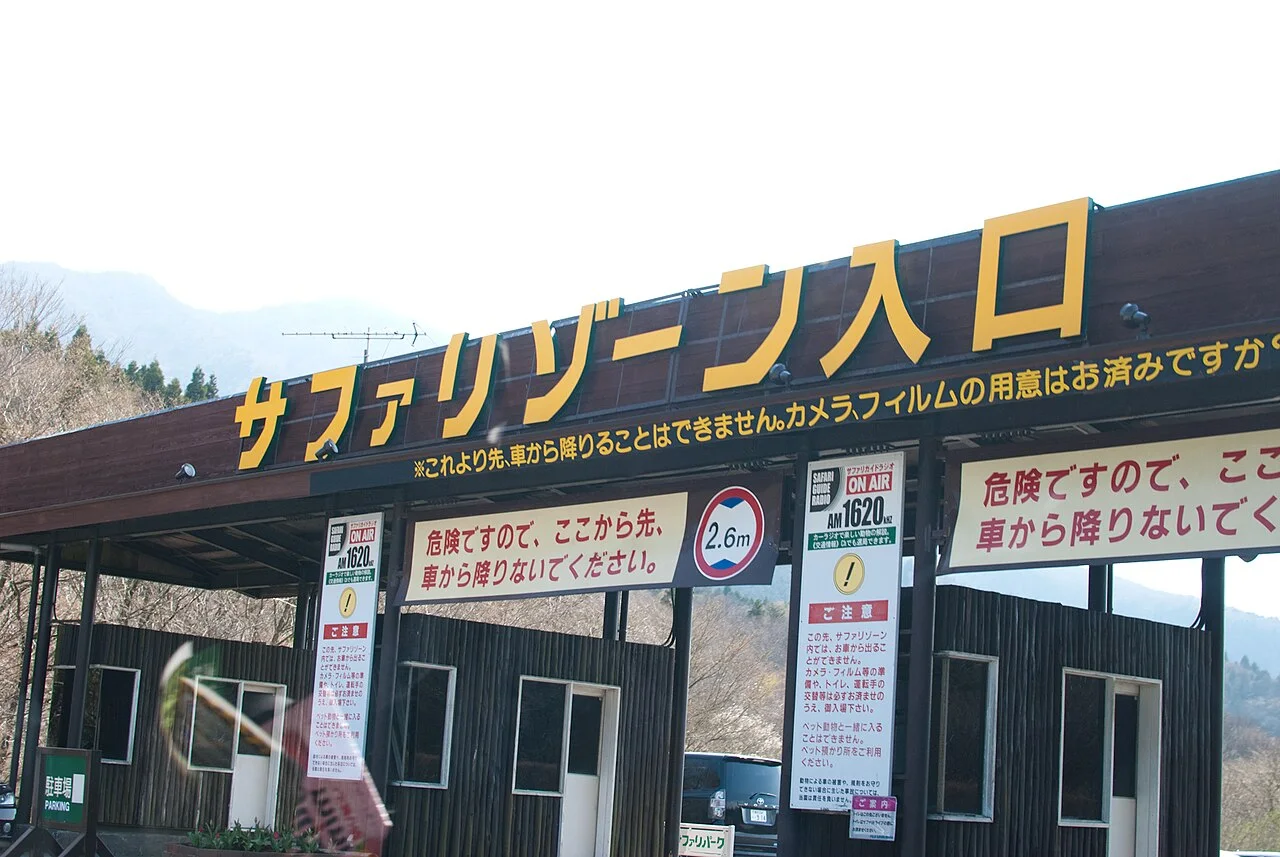
Visit Fuji Safari Park in Susono, Shizuoka, to feed lions and bears from a wire-mesh Jungle Bus or spot giraffes along a woodland trail. Includes Standard and Super Jungle Bus age rules, bookings, family prices, plus return bus timetables from Mishima and Gotemba.
How Close Is the Jungle Bus? Side Mesh on the Standard, Overhead Mesh on the Super
The Standard Jungle Bus has wire mesh down both sides and exteriors styled after lions, tigers, and other wildlife. Beyond the Safari Zone gate, it enters the bear zone first and then the lion zone. The driver provides commentary along the route and pauses at designated feeding stops. Children can focus on the tip of the feeding tongs to watch how a lion clamps onto food compared with how a camel curls its lips to pull it away - an easy contrast between carnivore and herbivore.
A Standard loop takes around 50 minutes, with listed feeding stops for bears, lions, and camels. The Super Jungle Bus runs for roughly 60 minutes with wire mesh across both the sides and the roof, letting animals climb overhead. Its feeding programme covers bears, lions, elephants, llamas, and camels. If your main goal is watching lions feed, the Standard bus already includes that stop; the extra ¥600 on the Super bus primarily buys the overhead vantage point and expanded feeding stops.
Big cats come close enough that you can hear them breathing, and first-timers may prefer just to watch at first. Adults can handle the tongs while children look out for whether an animal twitches its ears, turns its head, or locks straight onto the bus before approaching. Once the bus moves on, look together for wildlife in the next section. Leave filming until the second stop - tracking an elephant's trunk with your own eyes beats hunting for focus on a phone screen.
Both the buses and private cars follow the same Safari Zone circuit. After bears and lions come tigers, cheetahs, and elephants, followed by the general herbivore and mountain herbivore zones. Everyone can share spotting duties on board, with one person scanning tree shade and high ground while another watches for silhouettes in the grass. After spotting one zebra, challenge the kids to pick it out again by its stripe pattern in the next herd, or compare a tiger's stripes with a cheetah's spots.
On weekends, if your children are set on seeing a cheetah sprint, look for the 'Cheetah Run Plus' bus. It adds a cheetah-running viewing stop to the Standard Jungle Bus feeding route. The park schedules it at 13:20 on weekends and Japanese public holidays, running about 70 minutes at ¥2,000 for ages 3 and up, sold on the day via MySAFARI or the information desk after park entry. If you book this departure, aim for the 16:30 bus back to Mishima so you have time to finish the tour and walk to the bus stop.
Breezes blow straight through the mesh sides, and the route uses unsurfaced tracks. Buses still run in light rain, when spray can come through the openings; umbrellas are not allowed on board, so waterproofs are essential (the park sells ponchos for ¥200). Pack a windproof jacket in winter, and wear clothes that are easy to wipe down since fur, saliva, or dust can drift into the cabin - especially under the open roof mesh of the Super bus. Families with pushchairs can leave them in the buggy area beside the information desk before boarding.
The Standard bus suits younger children and families trying close-up wildlife viewing for the first time. If a child suffers from severe motion sickness, or needs snacks and a short nap in the car, driving your own vehicle gives you far more control over pacing, leaving walking time for Fureai Pasture. Use the toilets before boarding, as nobody disembarks until the loop ends. Elementary and junior-high pupils must be accompanied by at least one parent or guardian on both buses.
| Option | Duration | Viewing Style |
|---|---|---|
| Self-drive | Approx. 50-60 mins | View all 7 zones through car windows; second loops permitted along park flow |
| Standard Jungle Bus | Approx. 50 mins | Close-up feeding of bears, lions, and camels through side mesh |
| Super Jungle Bus | Approx. 60 mins | Elementary-school age and up; adds overhead roof mesh and extra feeding stops |
| Walking Safari | Approx. 90-120 mins | 2.5 km outer-perimeter trail with elevated viewing decks |
How to Book on MySAFARI: Match Bus Arrivals to Your Slot
To lock in a Jungle Bus departure, register with MySAFARI first. Once signed in, select ticket purchase, choose 'Jungle Bus' for the standard vehicle or 'Super Jungle Bus' for the mesh-roofed coach, then pick your date, departure time, and party size and pay by credit card. Advance bookings for both buses open on the 1st of the previous month and close at 12:00 JST on the day before your visit. The park has announced that January 2027 tickets for both buses are scheduled to go on sale at 12:00 JST on 1 December 2026.
Roughly 10% of Standard Jungle Bus seats are released in advance, with the remaining 90% sold on the day after you enter the park. If your preferred slot has disappeared online, arriving early gives you a solid shot at same-day availability. The Super Jungle Bus also splits inventory between advance and same-day sales, with fewer runs and different timetables on weekdays versus weekends. If the whole family wants the Super bus, pick a date you can arrive on time and book as soon as sales open - the 90% same-day quota applies only to the Standard bus.
Visitors holding MySAFARI digital admission tickets can log in and purchase same-day bus seats as soon as their entry QR code is scanned at the gate. If you paid at the booth or hold another type of admission ticket, scan the QR code provided at the entrance and follow the prompts to log in and buy. If you have trouble with mobile signal or prefer staff assistance, purchase at the information desk beside the tollgate. Make this your first stop upon arrival, before wandering into Animal Village only to realise your ideal bus has already departed.
Keep the public bus timetable open beside your screen before checking out. For example, the 10:10 coach from Mishima Station is scheduled to arrive at 10:58, leaving far too little time for an 11:00 Jungle Bus departure. For the Super Jungle Bus, allow extra time for check-in at the information desk: official guidance states desk check-in is 30 minutes before departure, while boarding-area assembly for both buses is 10 minutes before departure. Use that buffer for toilet breaks, rain gear, and loading your mobile tickets.
Advance bus tickets cannot be cancelled or refunded by the buyer more than one hour after purchase, so factor in travel from the station, park entry check-in, and the walk with children to the bus stop before committing. Early-morning drivers should also build in margin for mountain roads, tollgate queues, and parking. If a single delayed bus would wreck your itinerary, book a later Jungle Bus departure or spend your first hour at Fureai Pasture instead.
Keep your entrance receipt and mobile data connection handy once inside. For the Standard bus, walk over early to locate the Jungle Bus boarding area ('Jungle Bus Noriba') before waiting nearby, rather than handing digital tickets over to family members resting elsewhere. Timed tickets are validated on your phone screen by staff, so it is simplest for the ticket purchaser to keep the group together. If your party splits between the two bus types, message the check-in time and a lunch meeting point to the other group as soon as you buy.
Check the Japanese 'Today's Event Schedule' page when planning slots. It lists daily park events, ticket sales methods for individual experiences, and live conditions for that day. Circle activities everyone can join first, then slot in extras around them. If only afternoon buses remain when you arrive, visit the capybaras or have lunch first rather than waiting all morning at the bus bay.
Self-Drive Through Seven Zones, or Walk 2.5 km Along the Forest Perimeter
Families driving their own cars start from the Safari Zone gate and complete the circuit in roughly 50-60 minutes. Sitting lower than in a Jungle Bus gives a better view of animals' legs, paws, and tails as they cross the lane. The driver concentrates on keeping pace with the vehicle ahead and following staff instructions, while passengers handle spotting and photography. Before passing the entry gate, close all windows, lock doors, shut sunroofs, and remain inside throughout - the park specifically advises using the toilets before driving in.
The park prohibits convertibles, soft-top vehicles, trucks, motorcycles, and cars with ground clearance of 10 centimetres or less from entering the Safari Zone. Roof racks and rear-mounted luggage must also be removed beforehand; bags that will not fit inside the cabin can be left at the information desk. Eligible private vehicles may enter the Safari Zone on standard daytime admission and make repeat loops during reception hours, though repeat loops may be restricted when busy. Use the first lap to learn the layout and the second to linger where you missed something, or swap seats so the driver gets a turn looking out.
In winter, park entry and the Safari Zone keep two different clocks. From December through 10 March, standard park reception opens at 10:00, while the self-drive Safari Zone opens at 10:30. If you arrive early, park up, visit the toilets, and decide which side of the back seat gets which lookout zone. In the herbivore sections, watch for giraffes and zebras in the general herbivore zone before switching to American bison in the mountain herbivore zone - kids can guess which animals tower above the car windows before craning their necks as you pass.
The Walking Safari runs outside the perimeter fence, with its entrance on the left roughly 100 metres past the tollgate. The 2.5-kilometre woodland trail typically takes 90 to 120 minutes and costs ¥600 per person from age 4. Expect slopes, unpaved dirt tracks, observation decks, and tunnels. Along the route, the park places bone specimens and information boards so children can spot live animals and guess which creature each bone belongs to. Walking from dappled tree canopy straight out towards open grass views offers a completely different pace from scanning the plains through a car window.
About 700 metres from the trailhead sits the lion feeding point, and around the 1.5-kilometre mark stands the Giraffe Terrace - a wooden deck roughly 4 metres high that brings you closer to eye level with the giraffes. Giraffe feeding is held on weekends and Japanese public holidays; ask at the trail entrance for that day's times and work backwards to plan when you set off. Seeing a giraffe extend its long tongue from the elevated deck gives a much clearer view than rushing along the trail below.
There are no toilets along the walking trail, and neither pushchairs nor wheelchairs can navigate the uneven woodland path. Bring water, wear non-slip trainers, and use the toilets near the entrance before starting. Children aged 3 and under join free of charge, though parents should gauge their stamina. Families needing a pushchair should stick to the gentle paths of the Fureai Zone or substitute a Jungle Bus ride, and never start the two-hour walking loop just before your return coach.
For 2026, the Walking Safari opened on 14 March and runs through 30 November. In late autumn, last entry for the trail generally closes at 14:30, with opening hours posted on the daily event schedule. Through 30 November 2026, a MySAFARI combo ticket covering park admission plus the Walking Safari is available at ¥3,000 for adults, ¥2,000 for children, and ¥2,800 for seniors. During the winter operating season for daytime driving and buses, replace those two trail hours with Animal Village and the indoor animal houses.
Step Out for Capybaras, Kangaroos & Ponies - Then Duck Into the Cat, Dog and Rabbit Houses
Leaving the Safari Zone road, follow the park map towards Fureai Pasture. Here you will find red kangaroos, Bennett's wallabies, capybaras, ponies, meerkats, and red pandas. When a kangaroo pauses, you can see how its thick tail props up its body, then watch which foot it pushes off with first on the next hop. Capybaras and Patagonian maras live nearby too, giving children an easy way to compare their ears, feet, and sitting postures. This whole zone is included in standard park admission.
Scheduled feeding sessions run for animals such as red kangaroos, capybaras, chipmunks, and porcupines, usually priced at ¥100 per portion. Only park-supplied feed is permitted, with clear instructions posted at each enclosure on hand position and where to stand. If a child simply wants a close look, stand where their front paws and mouths are visible and wait for them to pause and eat. Watch water droplets clinging to a capybara's coarse fur when it climbs out of the pool, or match the kangaroo silhouettes on the signboards to the animals right in front of you.
For pony riding, look for the Pony Ride area at ¥600 per go, listed for Grade 1 elementary-school children (around age 6-7) and above, weighing under 60 kilograms. If you want to ride together, head to the Miniature Horse Cart, which costs ¥600 for one rider or ¥1,000 for two. Both activities keep their own same-day reception hours, so let children see the horses at the entrance first and choose between riding in the saddle or sitting in the cart.
Walking from the pasture into Animal Village brings you past hippos, striped hyenas, porcupines, and ring-tailed lemurs. When a hippo surfaces, point out how its eyes, ears, and nostrils sit high on its skull so it can keep almost everything else submerged. Limited-quantity special feeding tickets are also sold for hippos and other animals - check the Japanese daily schedule for 'Kaba' (hippo) if interested, and make sure the slot fits around your bus time. Animal Village includes gentle slopes, so anyone needing a breather can explore a shorter stretch and meet back at the plaza.
The three indoor animal houses are ticketed individually: ¥700 for the Dog House and ¥600 each for the Cat House and Rabbit House, charged from age 3 upwards. Entry to the Dog House and Cat House is limited to ages 3 and over. Families with younger toddlers can keep Fureai Pasture as the main group route while older members pop inside the animal houses. Once indoors, encourage children to watch the animals' movements quietly first, then interact once an animal approaches or staff give the cue.
A nursing room is located at Parking Area 1, and the park's baby and toddler FAQ maps out toilets with nappy-changing tables. Pushchairs can be hired from the Safari Shop for ¥1,000 each. Plan around nap times by picking one shared family highlight first, before lunch or a nap break. If everyone still has energy later, swing back past the pasture to see whether that resting kangaroo has moved, or visit the park's marked Mount Fuji viewpoints before heading out.
Which Station Without a Car? Shinkansen to Mishima, Local Bus from Gotemba
Arriving on the Tokaido Shinkansen at Mishima Station, walk to Bus Stop 2 at the South Exit (Mishima-eki Minamiguchi) in the morning for the Fujikyu City Bus 'Fugaku Liner' express coach. Note that the Shinkansen gates are on the North Exit side, so leave time to cross to the South Exit before departure. Under the timetable running from 11 September 2026 to 4 April 2027, only two direct Fugaku Liner buses leave Mishima South Exit for the park each morning, at 09:10 and 10:10. The 48-minute ride arrives at 09:58 and 10:58 respectively; alight at 'Fuji Safari Park', though winter destination boards may also show 'Yeti'.
Return express coaches leave the park at 13:30 and 16:30, calling at Mishima North Exit before terminating at the South Exit. The 16:30 coach reaches the North Exit at 17:20 and South Exit at 17:30, making the North Exit stop ideal for transferring straight onto the Tokaido Shinkansen. Arriving at 10:58 and catching the 13:30 return leaves roughly two and a half hours inside the park - enough for a Jungle Bus loop plus a stint in Fureai Pasture. To fit both the full Walking Safari and a Jungle Bus, plan for the 10:58 arrival and 16:30 departure, leaving buffer time to walk back to the bus stop after your final feeding session.
An additional 18:20 express route bus returns from the park via Susono Station, reaching Mishima South Exit at 19:15 as a later fallback - though note that Shinkansen travellers must still enter Mishima Station from that stop. If switching on the day, check Route E on the daily timetable and verify whether your existing ticket covers that service. During summer, the Fugaku Liner seasonal schedule added a 15:00 return coach, though that operated only from 10 July to 10 September 2026.
Outside peak summer, the annual Fugaku Liner page lists capacity-controlled seating on a first-come, first-served basis, with tickets available through Hassha O-Rai Net linked from the official site; between 10 July and 10 September 2026 it ran by advance reservation, so always verify summer rules for your travel dates. The express single fare is ¥1,500 for adults and ¥750 for children, with toddlers also charged the child fare. Fujikyu's Mishima return bus-plus-admission package is listed at ¥5,000 for adults, ¥3,500 for junior-high pupils, and ¥3,000 for elementary-school children, sold on the day at the South Exit ticket counter or in advance via Fujikyu Travel.
If changing at Gotemba Station, head to Bus Stop 4 at the Fujisan Exit (Fujisanguchi) for Fujikyu Mobility buses bound for Jurigi, Grinpa, or Yeti that stop at Fuji Safari Park. Park-listed departures from Gotemba Station are 08:30, 09:00, 11:00, 12:30, 13:55, and 15:00, each taking about 34 minutes. The 08:30 and 09:00 buses give you the best shot at same-day Jungle Bus tickets. Reaching the gate off the 11:00 bus puts you near lunchtime, ideal for eating first or browsing Fureai Pasture, whereas the 15:00 departure arrives at 15:34 - four minutes after standard admission reception closes between November and 10 March.
Listed return departures to Gotemba leave the park at 10:39, 12:04, 13:39, 15:04, 16:44, and 18:49. The 16:44 bus reaches Gotemba Station at 17:18, making it the natural anchor for a full daytime visit. The standard adult single fare is ¥880, rising to ¥1,030 from 1 December 2026 under Fujikyu Mobility's revised tariff between Gotemba Station and the park. For a return bus-plus-admission package, the operator lists ¥4,200 for adults, ¥3,100 for junior-high pupils, and ¥2,600 for elementary-school children, sold at the Fujisan Exit counter or via Fujiyama Connect.
Both station packages already include daytime park admission, so do not buy an extra MySAFARI entry ticket if using one. Jungle Bus tickets remain separate - book your transport return first, outbound bus second, and park bus slots third. Coming from central Tokyo, the Shinkansen to Mishima connects smoothly with accommodation along the Tokaido corridor, while visitors staying in or routing through Gotemba gain more frequent departures from the Fujisan Exit. Both lines climb into the hills, so avoid booking an onward Shinkansen or limited express train for the exact minute your bus is scheduled to arrive.
| Departure Stop | Sample Outbound Times | Key Return Services | Adult Single Fare |
|---|---|---|---|
| Mishima Station South Exit Stop 2 | 09:10->09:58, 10:10->10:58 | Fugaku Liner 13:30 & 16:30 from park (stops at North Exit first) | Express ¥1,500 |
| Gotemba Station Fujisan Exit Stop 4 | 08:30->09:04, 09:00->09:34, 11:00->11:34 | e.g. 15:04->15:38, 16:44->17:18 | ¥880 (¥1,030 from 1 Dec 2026) |
Half-Day or Full-Day? Keep Your Final Stop Flexible Before the Coach Home
First-time visitors travelling by public transport can split the day into one timed block and one open-ended block. Ride your pre-booked Jungle Bus in the morning, then wander through Fureai Pasture. If catching the 13:30 coach back to Mishima, fit in lunch and toilet stops before walking to the bay. With the 16:30 return, let the children finish Animal Village first, then choose the Rabbit House or Miniature Horse Cart depending on how much time remains. Putting an easy-exit stop last ensures you make the bus even if everyone lingers over the hippos.
Drivers making the Walking Safari their centrepiece can walk the woodland trail early before afternoon traffic builds on the mountain road, then return to the car for the Safari Zone loop. Kids walk happily for 90 minutes while fresh in the morning and get to rest in the car afterwards. If combining both a bus tour and the walking trail, put lunch in between so you are not tackling hills right after a bumpy ride; for afternoon bus bookings, finish the Walking Safari in the morning and eat before boarding.
To skip afternoon restaurant queues, bring a packed lunch to eat in the park's open rest areas, plaza benches, or lawns. Indoor restaurant seating is reserved for paying diners, while free rest halls are available on rainy days if you brought your own food. If buying lunch on site, locate the Safari Restaurant or takeaway kiosks on the map beforehand so you can eat straight after leaving the forest trail. The plaza in front of the restaurant is also marked on the park's Mount Fuji viewpoint map, letting you combine lunch and mountain views without doubling back.
If your group includes a toddler in a pushchair, one adult can take older children along the longer woodland trail while the other explores Fureai Pasture and the indoor houses, meeting back at the plaza for lunch. When riding together, take the Standard Jungle Bus and leave the pushchair at the information desk until you return. If older children want the Super Jungle Bus, let them ride with one adult while the pre-school group visits the ponies or capybaras in the meantime.
In overcast or wet weather, pairing a self-drive Safari Zone loop with the indoor animal houses keeps shoes and socks dry. If riding the Jungle Bus in waterproofs, keep an extra warm layer within easy reach in case drizzle turns heavier. The park sits on the slopes above Susono, roughly 15 minutes from the Tomei Expressway Susono IC and 30 minutes from the Shin-Tomei Shin-Fuji IC according to official access guidance. In winter, check the road and snow notices on the park homepage before setting off to decide whether you need winter tyres or should take the bus instead; when anti-skid restrictions apply in the Safari Zone, only cars with winter tyres or snow chains are admitted, while cars on standard tyres must switch to the paid park bus.
Let the children pick the final stop. After getting their fill of lions from the bus, they can head back to watch the capybaras wade into the water, or pick one detail from the day - an animal footprint, fur pattern, or feeding jaw - to talk about on the ride home. Plot one of the park's marked Mount Fuji viewpoints onto your walking route for extra time on clear days; if the mountain disappears behind cloud, spend that window back in the pasture instead.
Night Safari Runs in Summer and Autumn - Plan Your Own Ride Back for Nocturnal Viewing
Fuji Safari Park sells Night Safari as a separate seasonal event. In 2026, it ran nightly from 25 July to 30 August, with extra dates on weekends and Japanese public holidays from 5 to 27 September - a season that has now concluded. To plan a 2027 night visit, check the official 'News' (Oshirase) page for that year's ticket release dates before locking in your accommodation and transport home.
During the day, passing through the lion zone often means spotting where they have sprawled out to sleep. At night, everything beyond the spotlights drops into darkness, so you watch silhouettes step into the beam before picking out eyes and manes. In 2026, date-specific night tickets covered a self-drive loop as well as a guided Night Observation Bus, alongside separate night tours into Animal Village to see hippos or leopards - each requiring its own activity ticket.
For late September 2026, night admission was priced at ¥1,700 for high-school age and over and ¥1,200 for ages 4 to junior-high age. The guided night bus cost an extra ¥1,000 per person from age 3 upwards for a roughly 50-minute tour. Under that season's rules, three-year-olds entered the night park for free but required a paid seat on the night bus. Secure your date-specific entry ticket first, then select your bus slot.
Based on the late-September 2026 schedule, night admission reception ran from 17:30 to 19:30, with some night buses departing at 20:00. Daytime return buses to Mishima and Gotemba do not connect with a full night visit. Groups relying entirely on public transport will find daytime hours far easier to pair with trains and meals; anyone staying for Night Safari should arrange a rental car or pre-booked taxi back to their accommodation timed to the evening finish.
If you want to experience both day and night, give each session a clear focus. Ride the Jungle Bus in daylight to examine the lions' ears and manes up close, then return after dark to watch how they patrol and how other species react. Daytime and night sessions require separate admission tickets for their respective periods; families with pre-schoolers can take a mid-afternoon break before returning for the evening.
A few useful answers
Does a three-year-old need a ticket for the Jungle Bus?
Yes. While three-year-olds enter the park for free, the Standard Jungle Bus charges ¥1,500 from age 3 upwards. Children under 3 may ride free on an adult's lap, limited to one child per adult.
Can an eight-year-old ride the Super Jungle Bus?
Yes. The Super Jungle Bus is open to elementary-school age and above at ¥2,100 per person. Elementary and junior-high pupils must be accompanied by at least one parent or guardian.
Are there still tickets if advance Jungle Bus slots sell out?
Yes - around 90% of Standard Jungle Bus seats are held back for same-day sales. Complete your park entry first, then book via MySAFARI or at the information desk beside the tollgate.
How do I enter the park after arriving on the Fugaku Liner from Mishima?
Get off at the Fuji Safari Park bus stop and check in at the information desk (Annaijo) beside the entrance tollgate. Park buses then board from their own designated stop inside.
Can I bring a pushchair on the Walking Safari?
No. The Walking Safari follows an unpaved woodland trail unsuitable for pushchairs and takes roughly 90 to 120 minutes. Use Fureai Pasture if you have a pushchair.
Do I have to buy a park bus ticket if I am driving my own car?
No. Standard daytime admission covers driving an eligible private vehicle through the Safari Zone. Only buy a Standard or Super Jungle Bus ticket if you want to ride the wire-mesh coach and feed animals at the stops.
Official information and references
Sources used in this guide.
- Fuji Safari Park Daytime Ticket Prices & Entry Guide
- Fuji Safari Park Operating Calendar
- Fuji Safari Park Admission Hours Notice from November 2026
- Standard Jungle Bus Tickets, Feeding Stops & Boarding Guide
- Super Jungle Bus Age Limits, Advance Sales & Check-In
- Self-Drive Safari Zone Guide
- Walking Safari Route, Feeding Points & Fees
- Walking Safari 2026 Opening Date & Giraffe Terrace
- Combined Admission & Walking Safari Ticket (Until End of November 2026)
- Fureai Pasture, Indoor Animal Houses & Pony Rides
- Fureai Zone Animal Directory
- Fuji Safari Park Pushchairs, Nursing Rooms & Nappy-Changing Toilets
- Fuji Safari Park Road & Rail Access Guide
- Official Gotemba & Mishima Bus Timetables
- Fujikyu Mobility Gotemba Route Timetable
- Fujikyu Mobility Fare Revision from 1 December 2026
- Fujikyu City Bus Fugaku Liner Mishima North/South Exit Timetable & Fares
- Fujikyu Bus Return & Admission Package Tickets
- 2026 Night Safari Dates & Ticket Types
- Fuji Safari Park Today's Schedule & Same-Day Activity Sales
- Fujikyu City Bus Express Route Timetable via Susono to Mishima South Exit
- Fuji Safari Park Picnic Lunches & Rest Areas
- Fuji Safari Park Mount Fuji Viewpoints
- Cheetah Run Plus Special Bus Tour