Travel from Nagano Station, choose tickets for the Main Hall, Sanmon Gate and History Museum, plan morning prayers and wheelchair access, and learn about the Sutra Repository and 2027 Gokaicho.
- Region & Focus
- ChubuShrines and temples
- Reading Scope
- 28 min read · 17 chapters · 4 Q&As
- Official Verification
- 23 official sources checkedUpdated November 22, 2026
- Key Topics
- ItinerariesChubu & Hokuriku
Chapter Route Map (tap any stop)
- Choose the depth of your visit, then the approach
- From Nagano Station to Zenkoji
- Driving: parking locations and charges
- Which temple ticket should you buy?
- Temple history and the Zenkoji pilgrimage
- The Main Hall inner sanctuary and Kaidan Meguri
- Niomon and Sanmon: statues and a restored roof
- The Sutra Repository: revolving scripture shelves and the stone wheel outside
- The History Museum: connect objects with the gates you have seen
- The 2027 Gokaicho displays the Maedachi Honzon
- Morning prayers and the rosary blessing
- If you miss morning prayers, what happens at noon?
- Memorial and prayer applications versus ordinary worship
- Wheelchairs and companions
- Nagano Prefectural Art Museum after the temple
- Photography and routes during ceremonies
- Goshuin stamps and two half-day routes
- Quick Q&A
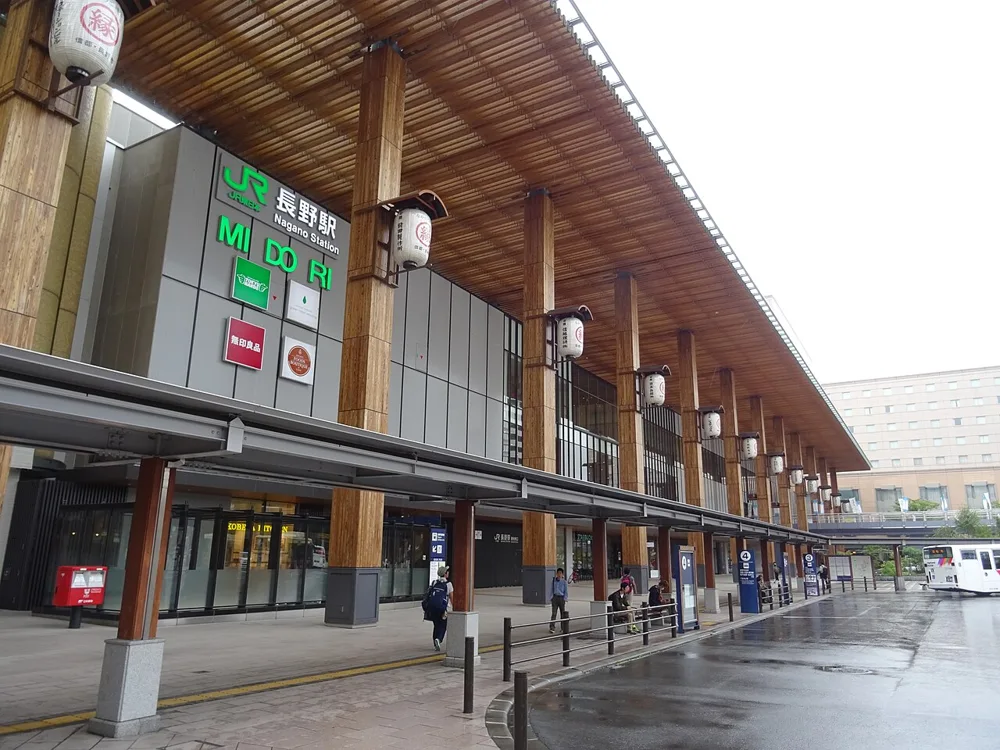
From Nagano Station, take a bus to Zenkoji or walk slowly along Omotesando. Half a day gives ample time for worship in the Main Hall’s outer sanctuary and the temple town. For the dark Kaidan Meguri passage, Sanmon Gate and History Museum, keep the daytime opening hours for the temple. Decide first whether to attend the early morning Oasaji service. Its start follows sunrise and needs a different schedule from a sightseeing day beginning at 9:00.
Choose the depth of your visit, then the approach
The temple route runs south to north. From Nagano Station’s Zenkoji Exit, pass Omotesando, Niomon Gate, Nakamise and Sanmon Gate before reaching the Main Hall. To save walking on the return, take a bus from Zenkoji Daimon. With more time, walk through the temple town back to the station, leaving meals and shopping until after worship. In snow or rain, take the bus uphill first and decide on the return walk according to conditions. This leaves more flexibility than committing to walking both ways.
Travel from Nagano Station, choose tickets for the Main Hall, Sanmon Gate and History Museum, plan morning prayers and wheelchair access, and learn about the Sutra Repository and 2027 Gokaicho.
From Nagano Station to Zenkoji
The temple access page directs visitors to buses toward Zenkoji from stop 1 at Nagano Station’s Zenkoji Exit. The temple lists about 15 minutes and ¥190 to Zenkoji Daimon, followed by about five minutes on foot to the Main Hall. Identify the stops for both directions when you arrive. Store large luggage at the station before visiting; this is easier than pulling it through Nakamise.
The bus shortens the walk but does not reach the Main Hall entrance. For companions who cannot manage slopes or steps, read the temple’s wheelchair access guidance and plan around the buildings you want to enter. The temple FAQ says free loan wheelchairs are available in limited numbers and can be reserved by phone.
The Nagano Convention & Visitors Bureau gives about 30 minutes on foot from Nagano Station’s Zenkoji Exit. The route climbs along Omotesando; add shopping and worship time. To walk only part, take the bus to Daimon, start near Niomon and choose the return according to weather and energy. Include return bus waiting time if catching a Shinkansen.
The Gururin-go city loop bus leaves stop 4 at Nagano Station’s Zenkoji Exit, passes Zenkoji Daimon and loops back. The route buses above leave stop 1. Nagano city’s loop-bus information lists ¥190 for adults and ¥100 for elementary-school children, departures from Nagano Station from 10:00 to 17:30 every 30 minutes, and about 30 minutes for a full circuit. It suits daytime city sightseeing. Arrange separate transport for early morning prayers.
Driving: parking locations and charges
The temple access page gives about 40 minutes from either Nagano Interchange or Suzaka-Nagano-higashi Interchange. Parking Lot 1 is northwest of the grounds and Lot 3 northeast. Both accept ordinary passenger cars and open 24 hours, with height limits of 2 m and 2.5 m respectively. Lot 4, west of the grounds, accepts cars, buses and motorcycles, but may be restricted to cars in busy periods. Lot 2 is reserved for temple-lodging guests; follow your lodging’s directions.
The listed passenger-car charge is ¥600 for up to two hours, then ¥300 per additional hour. Spaces cannot be reserved. The access page shows live availability for Lots 1 and 3, updated every five minutes. The temple identifies designated spaces under the Shinshu parking-permit scheme in Lots 1 and 4; display the permit at the window. The former accessible parking area east of the administration office has closed, so navigate to a current lot.
See the special access page for 2027 Gokaicho arrangements. The temple also provides crowd forecasts and live Main Hall images. For driving on a major ceremony day, choose the approach and exit using current restrictions, then plan your temple route from the parking lot.
Which temple ticket should you buy?
These prices follow temple information read on October 27, 2026. The temple ticket page lists an ¥800 adult Main Hall inner-sanctuary and Kaidan Meguri ticket, also including the History Museum. Sanmon Gate alone costs ¥800. Buying both separately totals ¥1,600, while the published ¥1,500 combined ticket lists the inner sanctuary, Kaidan Meguri, Sanmon, Sutra Repository and History Museum. The Japanese sales page also lists a ¥500 Sutra Repository ticket. For only the Main Hall and museum, the inner-sanctuary ticket is enough. To add Sanmon, the adult combined ticket saves ¥100 against those two separate tickets. Each companion can choose according to their plans.
For two adults and one elementary-school child, inner-sanctuary tickets total ¥1,700, or combined tickets ¥3,200. Additions depend on the buildings each person wants to visit. Junior- and senior-high-school students pay ¥300 each for the inner sanctuary, Sanmon or Sutra Repository, or ¥600 combined. Elementary-school children pay ¥100 for each or ¥200 combined. Preschool children enter free. Children of elementary-school age or younger must have a guardian upstairs at Sanmon. You need not decide every detail before buying: the temple says tickets are sold at each hall. Main Hall inner-sanctuary tickets are available from machines on the right after entering its front entrance.
Opening hours affect the order more than price. The Main Hall inner sanctuary opens one hour before morning prayers and closes at 16:30 in April–October, 16:15 in March and November, and 16:00 in December–February. Sanmon and the History Museum normally open 9:00–16:00. Facilities close early at 13:00 on December 31, and the inner sanctuary closes at 8:30 on December 28. On a winter afternoon, visit the inner sanctuary or Sanmon first and shop afterward, so you do not leave indoor worship until after closing.
| Ticket | Adult | Junior/senior high school | Elementary school | Includes |
|---|---|---|---|---|
| Inner sanctuary | 800 | 300 | 100 | Main Hall inner sanctuary, Kaidan Meguri, History Museum |
| Sanmon | 800 | 300 | 100 | Sanmon upper floor |
| Sutra Repository | 500 | 300 | 100 | Sutra Repository |
| Combined | 1,500 | 600 | 200 | Inner sanctuary, Kaidan Meguri, Sanmon, Sutra Repository, History Museum |
Temple history and the Zenkoji pilgrimage
The temple history describes Zenkoji as nonsectarian. It is jointly maintained and operated by Tendai’s Daikanjin and Jodo’s Daihongan. Daikanjin stands beside the bridge before Sanmon; Daihongan is on the left before Niomon. Morning services proceed in Tendai, then Jodo order. The two names on the approach reflect the temple’s organization and explain its two sects’ morning ceremonies.
For its foundation, the temple cites the statue’s traditional account in the Zenkoji Engi and separately explains that excavated roof tiles indicate a substantial temple here by the late seventh century. Legendary dates and archaeological evidence have different sources. Ikko Sanzon refers to Amida Buddha and two attendant bodhisattvas within one halo; the temple also calls this the Zenkoji-style Amida triad.
Gokaicho has its own history. After the great fire of 1700, a representative image toured other places for public display to raise money for rebuilding the Main Hall. The present practice of recurring events at set intervals developed after the start of the Meiji era. The Main Hall, rebuilt in 1707, remains a place for ceremonies and visitors and reflects this rebuilding history. After worship, the History Museum’s votive plaques and permanent-dedication display plaques connect that written history with objects.
The Main Hall inner sanctuary and Kaidan Meguri
The present Main Hall dates to 1707 and is a National Treasure. The large incense burner in front was made and donated in 1956. The temple describes offering incense and cleansing oneself with its smoke before entry. The Eko-bashira pillar stands near this area during Gokaicho; on ordinary days it is a stopping point before the hall. The hall’s plan resembles the wooden striker used for a bell, a form called shumoku-zukuri. Inside, the gejin is the outer worship space. A ticket gives access to the naijin, the inner sanctuary, for a closer view of the furnishings. Deeper still, the nainaijin is where monks chant. Ordinary visitors cannot normally enter it; during ceremonies, it opens to people who have applied for memorial or prayer services. Keep these three similar names distinct when planning and buying tickets. The Main Hall spaces and innermost sanctuary explanation describe their locations and uses.
The Ikko Sanzon Amida Nyorai enshrined at Zenkoji is an absolutely hidden image, kept in a shrine cabinet in the deepest part of the Main Hall. Kaidan Meguri follows a dark passage beneath the Ruridan altar. The temple explains that touching the “key to paradise” along it symbolizes a bond with the principal image directly above. The experience centers on moving slowly through darkness rather than viewing exhibits. If darkness is uncomfortable or walking without light is unsuitable, remain in the inner sanctuary for worship.
In the outer sanctuary, look for the Binzuru statue. The temple says this “rubbing Buddha” has been touched by visitors since being installed in 1713. A popular belief involves touching the part corresponding to one’s ailment and praying for recovery. The hall also contains the Tsumado-dai platform and an Enma statue. The temple links the platform with a Kamakura-period dancing nenbutsu tradition; drums and other ritual implements used in services remain visible. The outer and inner sanctuary guide explains these objects and their positions.
In the inner sanctuary, look above the seating toward the 25 welcoming bodhisattvas and banners and ornaments donated by believers. Moving from outer to inner sanctuary reveals different layers of the hall. For Kaidan Meguri, follow temple directions to the underground entrance. If some companions do not enter the dark passage, agree on a meeting point near the exit so each person can worship comfortably.
Niomon and Sanmon: statues and a restored roof
Approaching from Nagano Station, you reach Niomon first. The present gate was rebuilt in 1918, with guardian statues by Takamura Koun and Yonehara Unkai. Beyond it, restaurants and souvenir shops line Nakamise’s stone-paved street. Take your time here, but if arriving in the afternoon, go straight through to the Main Hall and return to shops after the paid areas. This reduces pressure from closing times. The temple grounds guide locates Niomon and Nakamise.
Sanmon stands beyond Nakamise and was built in 1750. Five doves are hidden in the characters of its Zenkoji plaque, giving it the name “dove-letter plaque.” With a Sanmon ticket, go upstairs to see Manjushri on a lion, the Four Heavenly Kings and representative images of the 88 Shikoku pilgrimage temples. The corridor looks north to the Main Hall and south along the approach toward Nagano. The upper floor is both a worship hall and a viewpoint. Allow time for its contents as well as photographs. The Sanmon and Sutra Repository guide explains their buildings and restorations.
Niomon’s guardians have an easy detail to compare. According to the temple’s placement description, the closed-mouth Ungyo is on the right and open-mouth Agyo on the left, opposite the usual arrangement. Behind them are three-faced Daikokuten and Sanbo Kojin. The temple links the latter to fire protection, as Zenkoji and earlier Niomon gates repeatedly burned. Walking through after looking only at the front misses these rear guardians. Sculpture enthusiasts can pause longer before Nakamise.
Sanmon underwent major restoration in 2002–2007. Its cypress-bark roof was returned to its original wooden-shingle form. After restoration, the upper floor reopened in 2008 following about 40 years of closure. Compare the roof from below with restored partition paintings and statues upstairs to connect exterior and interior. Sanmon requires climbing. For a level-route visit, view the plaque and building from outside and keep your paid visit for the Main Hall.
The plaque now on Sanmon is the second version, made during the Heisei restoration. The original is in the History Museum. The temple also notes a playful reading of the character zen as an ox’s face. With an inner-sanctuary or combined ticket including the museum, compare the current plaque at the gate with the old one inside.
Upstairs, ink inscriptions left by visitors from the Edo period to the early Showa era remain. The temple describes family crests, names and military-unit names among them. They are historical traces; present visitors must not write on cultural property. Observe the relationship of walls, paintings and statues before stepping into the corridor for the southern city view. Add Sanmon for sculpture and historic inscriptions. If you only want a distant city view, weigh the climb and admission before deciding.
The Sutra Repository: revolving scripture shelves and the stone wheel outside
The Sutra Repository is a building with five architectural bays on each side and a pyramidal roof dating to 1759 and designated an Important Cultural Property in 1974. The temple facilities guide describes an octagonal revolving repository at its center, holding all 6,771 scrolls of the Tetsugen Obaku edition of the Buddhist canon. Its focus on preserving scripture and devotional turning differs from Sanmon’s views, statues and partition paintings.
The temple gives the revolving repository as about 6 m high, 5 tonnes in weight and 4 m deep. It describes the belief that pushing it once clockwise gives merit equivalent to reading all the scriptures. At the entrance is a statue of Fu Dashi, traditionally credited with inventing revolving scripture repositories. A stone reincarnation tower with the words Namu Amida Butsu stands outside. The large indoor scripture structure and the stone wheel outside are different objects.
The History Museum: connect objects with the gates you have seen
Zenkoji History Museum, on the first floor of Nihon Chureiden, works after the Main Hall and Sanmon. Temple objects provide comparisons with the buildings just visited. The inner-sanctuary ticket already includes it, so you do not need a separate Sanmon or Sutra Repository ticket for museum entry.
The museum was added on Nihon Chureiden’s first floor in 1999. Along with votive plaques and permanent-dedication display plaques, the temple lists mathematical tablets, an Amida statue by the Kaikei school and a sand mandala consecrated during a visit by the 14th Dalai Lama. These span different periods and materials, bringing together pilgrimage, sculpture and Buddhist cultures. Start with two objects related to buildings you have just seen.
The first is a quarter-scale model for Niomon’s guardians. Takamura Koun and Yonehara Unkai enlarged models to make the full statues. The temple says their sculpture also incorporated Western techniques, especially in body proportions and muscles. See the full-size figures first, then the small model, to understand the process beyond memorizing the artists’ names. The second comparison is Sanmon’s old plaque and its current replacement.
At the museum entrance and exit are objects collected during the temple’s memorial visits to Saipan and Tinian. Chureiden itself commemorates the war dead. This part moves from buildings and religious history to modern war memory and is more somber. Adjust the time according to your companions’ interests.
The 2027 Gokaicho displays the Maedachi Honzon
The temple’s Gokaicho website lists the next event as April 4–June 19, 2027, a total of 77 days. It displays the Maedachi Honzon, normally kept in the treasure store and described as a representative image of the principal Buddha. The absolutely hidden principal image remains in the Main Hall. Raising its curtain during ordinary morning prayers and viewing the Maedachi Honzon during Gokaicho are different ceremonies and visits.
During Gokaicho, an Eko-bashira pillar stands before the Main Hall for visitors to touch and form a devotional bond. On an ordinary visit, see the former pillars west of Sanmon. Used pillars move there after each event and gradually return to the earth over the years. The Gokaicho explanation describes the relationship between the Maedachi Honzon and pillar.
A white Zen no Tsuna cord connects the pillar to the Main Hall, then five-colored and gold threads lead to the Maedachi Honzon’s right hand. The temple explains that touching the pillar symbolizes forming a bond with the image through this connection.
The 2022 Gokaicho was postponed from 2021 because of the pandemic; 2027 returns to the original cycle. The temple’s 2026 announcement lists the opening ceremony on April 4, Tendai’s middle-period procession on April 24, Jodo’s on May 8, the closing ceremony on June 19 and the return-transfer ceremony on June 20. Check temple event information and event-day transport for routes around ceremonies and holidays. To focus on the Main Hall with fewer crowds, use the temple’s crowd forecasts. To watch ceremonies, allow waiting time.
Zenkoji’s 2027 Gokaicho video connects the Maedachi Honzon with worship scenes. Visitors planning a Gokaicho trip can use it to learn about the image at the center of the event.
Morning prayers and the rosary blessing
Zenkoji holds daily morning prayers, led in order by Tendai and Jodo clergy. Start times change seasonally, roughly from 5:30 in summer to 7:00 in winter. Use the ceremony timetable for your date. During the service, the curtain before the principal image rises, revealing the Ruridan altar and shrine cabinet. The image itself remains hidden.
The O-juzu Chodai rosary blessing takes place as the head priest travels to and from the Main Hall. Visitors kneel along the approach and the priest touches their heads with a rosary. The FAQ says no reservation or fee is needed; wait on the approach before the Main Hall shortly before morning prayers begin. Check that day’s service time and work backward to your lodging departure. The station area suits transfers; the temple town shortens the early walk.
For a stay focused on morning prayers, temple lodging nearby reduces early travel. Nagano Station is more convenient for a next-day mountain bus or Shinkansen. See the Nagano accommodation-base comparison for rooms, bedding and meal times. Sanmon does not open until 9:00 after morning prayers, so you can return for breakfast before visiting daytime halls.
If you miss morning prayers, what happens at noon?
The daily ceremony page lists daytime services from April 15 to July 15 and September 1 to September 30: Tendai at 11:00 and Jodo at 12:00. This seasonal schedule suits station-area guests arriving later in the morning. For memorial or prayer requests, follow the application process at the Kanbosho office in advance, then enter as directed.
Outside those daytime-service periods, the temple holds a daily noon curtain-opening ceremony. To the sound of paired gongs, the curtain rises to reveal the cabinet housing the principal image. Morning prayers and this noon ritual form part of ordinary worship. The 2027 Gokaicho instead brings the Maedachi Honzon into the Main Hall for public veneration. Choose which you want to attend before fixing accommodation and arrival times.
Memorial and prayer applications versus ordinary worship
Watching morning prayers or waiting along the approach for the rosary blessing differs from applying for a memorial or prayer service. The temple says these services take place after morning prayers and during the day. To attend in person that day, follow the application process: go to Kanbosho on the left of the Main Hall front 30 minutes before the ceremony, complete the form and pay ceremony and admission fees. Gather in the inner sanctuary 15 minutes before the start, then follow the priest into the innermost sanctuary. Postal applications without personal attendance are also available, with different procedures and experience.
The temple FAQ says ordinary memorial and prayer services generally need no reservation, while service and reception times vary seasonally. For Main Hall worship and Kaidan Meguri alone, follow the ordinary ticket process. For a specific memorial or prayer request, prepare for the chosen service’s time and fee. Temple-lodging guests can ask whether their lodging handles applications, while keeping lodging, admission and ceremony fees separate.
Wheelchairs and companions
The temple directs wheelchair entry to the Main Hall via its east-side ramp. The same page explicitly says Sanmon, the Sutra Repository and Chureiden are not wheelchair-accessible. Choose tickets for the spaces each person can enter before buying a combined ticket. Main Hall worship and a temple-town walk can stand alone. Companions can visit Sanmon separately and meet at the hall or in town. Free loan wheelchairs come from the security office in limited numbers and can be reserved by phone.
The temple ticket page gives free entry to a Japanese disability-handbook holder and one companion. When reserving a wheelchair, explain your parking lot and assistance needs so the temple can help arrange east-ramp access. The administration office is 026-234-3591, normally open 9:00–16:30, or until 14:00 on December 31.
With young children, make the Main Hall and temple town the shared route, then split for the Sanmon climb according to energy. Children of elementary-school age or younger need a guardian upstairs; preschool children need no admission ticket. Kaidan Meguri is unlit. Discuss entering with children beforehand and agree on a meeting point with those staying outside.
Nagano Prefectural Art Museum after the temple
Nagano Prefectural Art Museum and its Higashiyama Kaii Gallery stand in Joyama Park east of the Main Hall. They extend Zenkoji into a half- or full-day visit. Museum hours are 9:00–17:00, last gallery entry 16:30. It normally closes Wednesdays, moving to the next weekday when Wednesday is a national holiday, and December 28–January 3. Exhibition changes can also close individual galleries. Check dates and exhibition pages for a particular work.
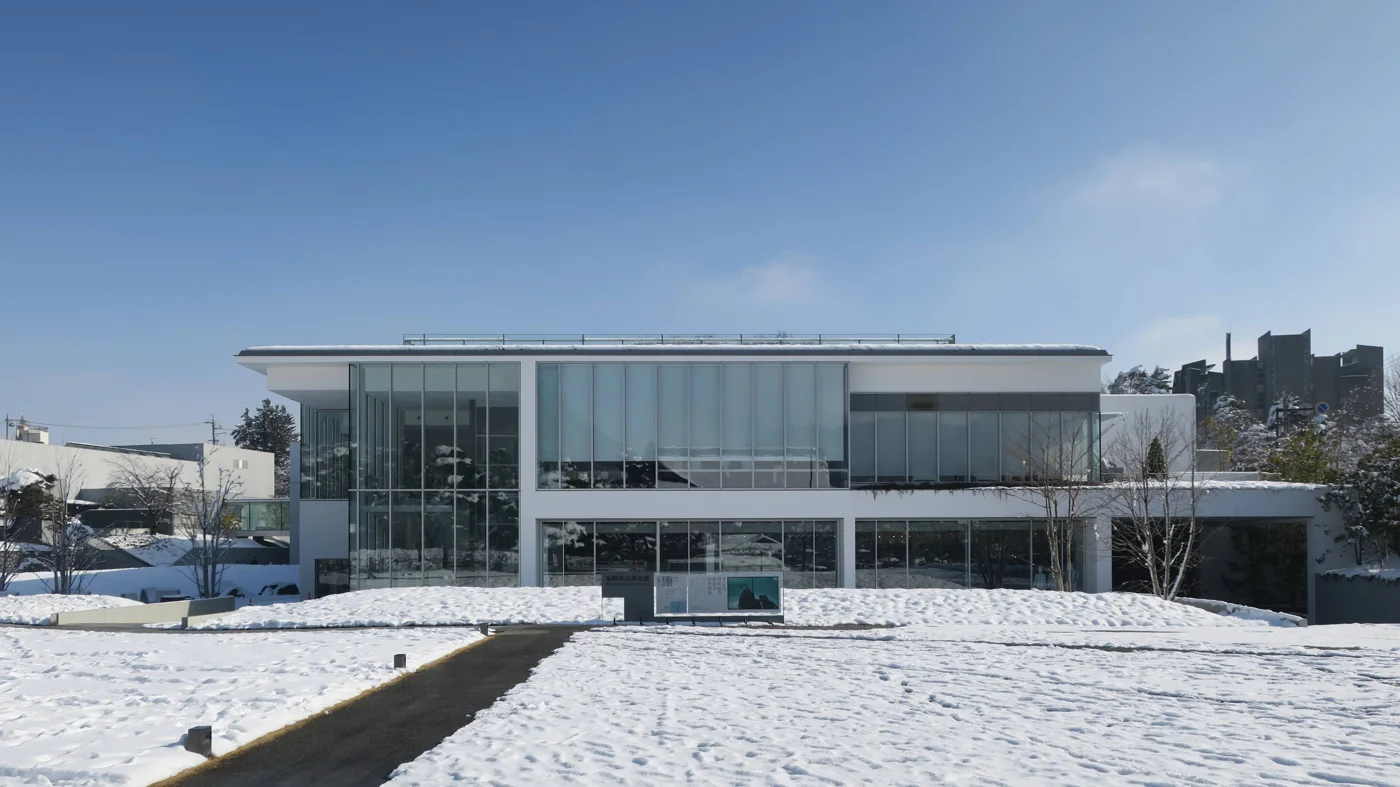
The main museum and Higashiyama Kaii Gallery normally share a collection-exhibition ticket: ¥700 for adults, ¥500 for university students and visitors aged 75 or older, and free for high-school students and younger or anyone under 18. Special exhibitions have separate prices. The museum says prices may change if one collection gallery closes for maintenance. Buy this ticket separately from Zenkoji admission; the temple’s combined ticket does not include it. For free public spaces, follow the Nagano Convention & Visitors Bureau introduction. Use the appropriate ticket for exhibition rooms.
If starting with the museum, take bus 11, 16 or 17 from stop 1 at Nagano Station’s Zenkoji Exit to Zenkoji-kita. The visitors bureau gives about 15 minutes by bus and a three-minute walk in the bus’s direction of travel. From Zenkoji Daimon, walk up the approach to the Main Hall and turn toward Joyama Park; the bureau gives about ten minutes on foot from Daimon. These stops serve different parts of the visit. Decide your sequence before choosing tickets and where to get off.
Higashiyama Kaii Gallery changes exhibitions about every two to three months. Check the current museum exhibitions for specific paintings. Sanmon and the History Museum close at 16:00; the art museum’s last gallery entry is 16:30. For both, visit the temple in the morning and leave the afternoon for art. On a closed Wednesday, use the afternoon for the temple town and Joyama Park instead.
Photography and routes during ceremonies
The Main Hall and other buildings remain active places for ceremonies, memorials and worship. The temple’s school visit application states that photography inside buildings is prohibited. Put your camera away when entering the Main Hall or another building and follow signs and staff directions. On the approach or in front of halls, leave room for walking, worship and ceremony attendance. During the rosary blessing and morning prayers, give way to the priest and visitors rather than blocking the route for photographs.
Goshuin stamps and two half-day routes
The ordinary Zenkoji goshuin is issued at Kanbosho, left of the Main Hall front, for a listed ¥500. The office normally opens 30 minutes before morning prayers and closes at 16:30, though the temple notes it may close earlier. Other halls offer their own paper stamps, some requiring that hall’s ticket. The official goshuin page gives locations, hours and year-end exceptions. Hall-specific versions are on separate paper and cannot be written directly in your stamp book. The Main Hall version is normally collected inside the hall 9:00–16:00; ask Sanmon’s ticket checker for its version, and collect Niomon’s at Kanbosho. Worship first, then collect at each location to avoid returning to Sanmon at the end.
For fewer stairs, walk from Zenkoji Daimon to the Main Hall, using the east ramp for wheelchair access, then eat and browse in the temple town. Sanmon, the Sutra Repository and Chureiden are not wheelchair-accessible, so leave them out of the shared route. Architecture enthusiasts can climb separately and meet before the Main Hall or at a town shop. If everyone wants only Main Hall worship, the inner-sanctuary ticket covers the main plan.
For a closer look at the buildings, start with Niomon’s Agyo, Ungyo and rear guardians. Enter Sanmon for Manjushri and the partition paintings, then worship in the Main Hall. Continue to the History Museum to compare the guardian model and old Sanmon plaque. Most of these paid areas are available 9:00–16:00. For an afternoon arrival, prioritize the building you most want to see and shop afterward.
Transport map: Zenkoji on Google Maps. For the bus to Nagano Station, return through the temple town to Zenkoji Daimon. To include the art museum, turn east from the Main Hall into Joyama Park, then plan the return using museum access information.
A few useful answers
How do I get to Zenkoji from Nagano Station by bus or on foot?
Take the bus from stop 1 at Nagano Station’s Zenkoji Exit. It costs ¥190 and takes about 15 minutes to Zenkoji Daimon, a 5-minute walk from the Main Hall. The uphill walk from the station along the temple approach takes about 30 minutes.
How much are Zenkoji’s inner hall and combination tickets, and what do they cover?
The ¥800 adult ticket includes the inner sanctuary, the dark passage beneath the altar, and the History Museum. The ¥1,500 combination ticket also includes the upper floor of Sanmon Gate and the scripture repository.
What time is Zenkoji’s morning service, and do I need to book the prayer-bead blessing?
The daily service follows sunrise, starting around 5:30 a.m. in summer and 7 a.m. in winter. For the free prayer-bead blessing, wait on the path in front of the Main Hall before the service. No reservation is needed.
When is Zenkoji’s 2027 Gokaicho, and what can I see?
Gokaicho runs from April 4 to June 19, 2027. Visitors can see the Maedachi Honzon, a representation of the temple’s principal Buddha, in the Main Hall and touch the ceremonial pillar outside to form a symbolic connection with the image.
Official information and references
Sources used in this guide.
- Zenkoji: access, parking and charges
- Zenkoji: wheelchair worship and ramp
- Zenkoji: morning prayers, rosary blessing and wheelchair loans
- Nagano city: Gururin-go loop bus
- 2027 Zenkoji Gokaicho: access and crowd forecasts
- Zenkoji: tickets and seasonal hours
- Zenkoji: history and beliefs
- Zenkoji: outer and inner sanctuaries
- Zenkoji: innermost sanctuary and Kaidan Meguri
- Zenkoji: visiting route
- Zenkoji: Sanmon, Sutra Repository, History Museum and Niomon
- 2027 Zenkoji Gokaicho: dates and official video
- 2027 Zenkoji Gokaicho: Maedachi Honzon and Eko-bashira
- Zenkoji: 2027 event announcement
- Zenkoji: daily ceremonies and noon curtain opening
- Zenkoji: memorial and prayer applications
- Nagano Prefectural Art Museum: facilities, prices and closures
- Nagano Convention & Visitors Bureau: art museum access
- Nagano Prefectural Art Museum: Higashiyama Kaii Gallery and exhibitions
- Zenkoji: school visits and photography rules
- Zenkoji: goshuin locations and hours
- Zenkoji: incense burner, former pillars and other facilities
- Nagano Convention & Visitors Bureau: station and Zenkoji access