Reach Zenkoji from Nagano Station by bus or on foot. Choose tickets for the inner hall, Sanmon and museum, plan morning prayers and wheelchair routes, and learn about the sutra repository and 2027 Gokaicho.
- Region & Focus
- ChubuShrines and temples
- Reading Scope
- 28 min read · 17 chapters · 4 Q&As
- Official Verification
- 23 official sources checkedUpdated 22 November 2026
- Key Topics
- ItinerariesChubu & Hokuriku
Chapter Route Map (tap any stop)
- Choose how much to visit, then plan your approach
- From Nagano Station to Zenkoji
- Driving: car parks and charges
- Which admission ticket?
- Understand the history behind a Zenkoji visit
- The Main Hall inner area and Okaidan passage
- Niomon and Sanmon: statues and a restored roof
- The sutra repository: octagonal library and stone wheel
- The history museum: connect objects seen at the gates
- 2027 Gokaicho: the Maedachi Honzon goes on view
- Morning prayers and the rosary blessing
- If you miss morning prayers: midday options
- Memorial offerings, prayers and an ordinary visit
- Wheelchair routes and companions
- After worship: Nagano Prefectural Art Museum
- Photography and movement during services
- Goshuin seals and two half-day routes
- Quick Q&A
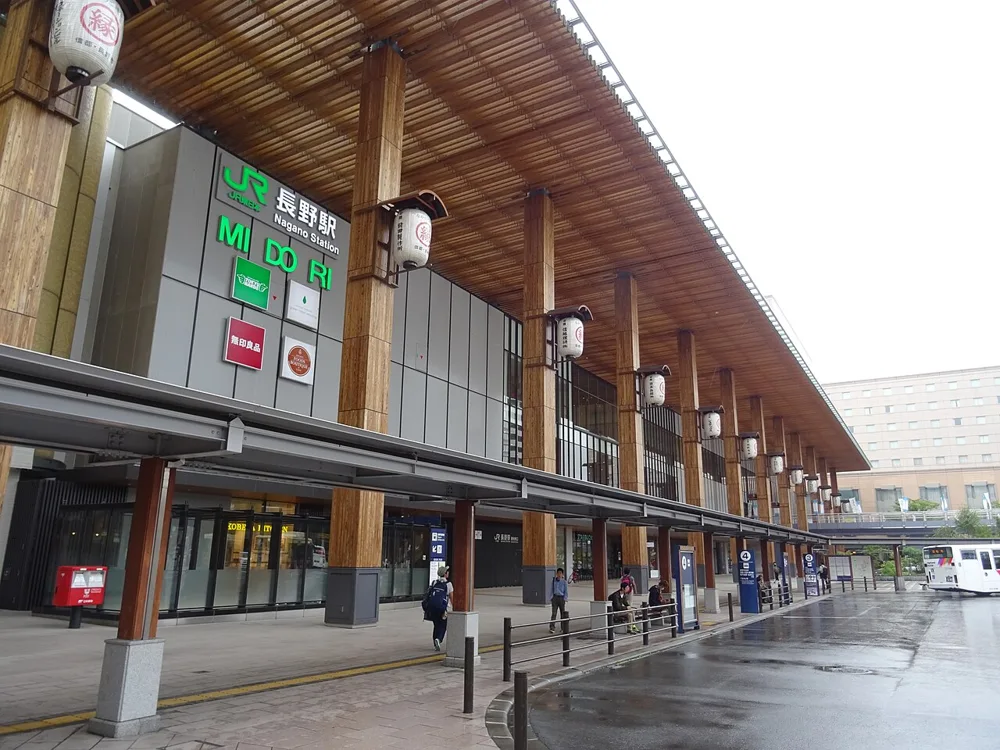
From Nagano Station, take a bus to Zenkoji or walk slowly along Omotesando. Half a day gives plenty of time for the Main Hall’s outer area and temple-town streets. For the dark Okaidan passage, Sanmon upper floor and history museum, keep the daytime opening hours for the temple. Decide first whether you want the early-morning Oasaji service. Its start changes with sunrise, unlike a sightseeing day built around a 09:00 opening.
Choose how much to visit, then plan your approach
The temple route runs from south to north. From Nagano Station's Zenkoji Exit, pass along Omotesando, through Niomon Gate, Nakamise and Sanmon Gate to the Main Hall. Save your legs on the return with a bus from Zenkoji Daimon, or walk back through the temple town with food and shopping after worship. In snow or rain, take a bus up first and decide about walking back according to conditions, rather than fixing the whole day on foot.
Reach Zenkoji from Nagano Station by bus or on foot. Choose tickets for the inner hall, Sanmon and museum, plan morning prayers and wheelchair routes, and learn about the sutra repository and 2027 Gokaicho.
From Nagano Station to Zenkoji
The temple access page directs visitors to buses towards Zenkoji from stop 1 outside Nagano Station's Zenkoji Exit. It lists about 15 minutes and ¥190 to Zenkoji Daimon, followed by about five minutes on foot to the Main Hall. Identify the stops for each direction. Store large luggage at the station before going to the temple rather than dragging it through Nakamise.
The bus shortens the walk but does not stop at the Main Hall door. If a companion cannot manage slopes or steps, read the wheelchair access guidance and plan around the halls you want. The temple FAQ describes free wheelchair loans, limited in number and reservable by telephone.
The Nagano tourism bureau gives about 30 minutes on foot from the station's Zenkoji Exit. Omotesando rises uphill; add time for shops and worship. For a partial walk, take a bus to Daimon, begin near Niomon and choose the return according to weather and energy. Include return waiting time if catching a shinkansen.
The Gururin-go city loop bus leaves stop 4 at the Zenkoji Exit, passes Zenkoji Daimon and loops back to the station. Ordinary buses towards the temple use stop 1. Nagano City's loop-bus information lists ¥190 per adult and ¥100 per primary-school child, departures from Nagano Station from 10:00 to 17:30 every 30 minutes, and about 30 minutes for a circuit. It suits daytime city visits. Arrange other transport for early-morning prayers.
Driving: car parks and charges
From Nagano Interchange or Suzaka-Nagano-higashi Interchange, the temple access page gives about 40 minutes by car. Car Park 1 is north-west of the grounds and Car Park 3 north-east. Both take ordinary passenger cars and open 24 hours. Height limits are 2 m at Car Park 1 and 2.5 m at Car Park 3. Car Park 4 to the west takes passenger cars, buses and motorcycles, though it may become passenger-car-only at busy times. Car Park 2 is restricted to temple-lodging guests; follow your lodging's instructions.
The temple lists ¥600 for up to two hours for passenger cars, then ¥300 per additional hour. Spaces cannot be reserved. The access page shows live full/available status for Car Parks 1 and 3, updated every five minutes. Accessible spaces under the Shinshu parking permit scheme are in Car Parks 1 and 4; display the permit at the window. The former disabled car park east of the administration office is no longer in use. Navigate to a current car park.
For 2027 Gokaicho transport, see the special access page. The temple also provides crowd forecasts and a live Main Hall camera. For driving on a major ceremony day, choose approach and departure directions under the current controls, then plan the order of worship after parking.
Which admission ticket?
These prices follow temple information checked on 27 October 2026. The admission page lists an adult Main Hall inner area and Okaidan ticket at ¥800, also covering the history museum. Sanmon alone is ¥800. Buying these separately totals ¥1,600; the published ¥1,500 combination ticket covers the inner hall, Okaidan, Sanmon, sutra repository and museum. The Japanese ticket page also lists the repository alone at ¥500. For the Main Hall and museum, the inner-hall ticket suffices. Add Sanmon and the adult combination costs ¥100 less than those two separate tickets. Each companion can choose according to their plans.
For two adults and one primary-school child, inner-hall tickets total ¥1,700; combination tickets for all three total ¥3,200. Choose by the halls each person wants. Junior-high- and high-school pupils pay ¥300 for each of the inner hall, Sanmon or repository, or ¥600 for the combination. Primary-school pupils pay ¥100 for each individual ticket or ¥200 combined. Preschool children enter free. Children of primary-school age and younger need a guardian on Sanmon's upper floor. You do not need to settle every detail before buying: tickets are sold at each hall, and the inner-hall ticket is available from machines just inside the Main Hall's front entrance on the right.
Time matters more than price for the order of visits. The inner hall opens one hour before morning prayers and closes at 16:30 in April–October, 16:15 in March and November, and 16:00 in December–February. Sanmon and the museum usually open 09:00–16:00. On 31 December the facilities close early at 13:00; on 28 December the inner hall closes at 08:30. Arriving on a winter afternoon, visit the inner hall or Sanmon first, then the shopping street, to reach the paid interiors before they close.
| Ticket | Adult | Junior-high / high-school pupil | Primary-school pupil | Includes |
|---|---|---|---|---|
| Inner hall | 800 | 300 | 100 | Main Hall inner area, Okaidan, history museum |
| Sanmon | 800 | 300 | 100 | Sanmon upper floor |
| Sutra repository | 500 | 300 | 100 | Sutra repository |
| Combination | 1,500 | 600 | 200 | Inner hall, Okaidan, Sanmon, sutra repository, history museum |
Understand the history behind a Zenkoji visit
The temple history describes Zenkoji as non-sectarian, jointly maintained and operated today by Daikanjin of the Tendai school and Daihongan of the Jodo school. Daikanjin stands beside the bridge before Sanmon; Daihongan is to the left before Niomon. Morning services follow the Tendai then Jodo order. Seeing both names on the approach reflects how the temple works and explains its two schools' morning services.
For the foundation, the temple cites the image's origin as told in the Zenkoji Engi, and separately explains that excavated roof tiles show a substantial temple here in the later seventh century. Legendary dates and archaeological material have distinct sources. Ikko Sanzon means Amida Buddha and two attendant bodhisattvas within one halo. The temple also calls this form the Zenkoji-style Amida triad.
Gokaicho has its own history. The temple explains that after the great fire of 1700, a representative image toured other places for public displays to raise rebuilding funds for the Main Hall. Today's pattern of holding the event every several years developed after the Meiji period. The Main Hall, rebuilt in 1707, remains a place of services and worship, as well as the result of that rebuilding history. After worship, look at votive tablets and permanent-display dedication plaques in the museum to connect the written history with objects.
The Main Hall inner area and Okaidan passage
The present Main Hall was built in 1707 and is a National Treasure. The large incense burner in front was made and donated in 1956. The temple describes offering incense before entry and purifying oneself with its smoke. This area also holds the Eko-bashira pillar during Gokaicho; on ordinary days it is a pause before entering. The hall's plan resembles a bell-striking mallet, a form called shumoku-zukuri. Inside, the gejin is the outer worship area. A ticket admits you to the naijin, or inner area, for a closer view of the furnishings. Deeper still, the nainaijin is where monks chant. Ordinary visitors cannot usually enter it; during services it opens to people who have applied for memorial offerings or prayers. Distinguishing the three similar names helps with tickets and plans. The hall layout and innermost-area explanation give their locations and uses.
The principal Ikko Sanzon Amida image is an absolutely hidden Buddha, kept in a shrine cabinet at the deepest part of the Main Hall. Okaidan follows a dark passage beneath the Ruridan altar. Touching the 'lock of paradise' along the way symbolises forming a connection with the principal image directly above. The experience is slow movement in darkness rather than looking at exhibits. If darkness is uncomfortable or unlit walking unsuitable, worship in the inner area without entering the passage.
In the outer area, look for Binzuru, popularly called the rubbing Buddha. The temple says visitors have touched this statue over the years since its installation in 1713, with a folk belief in touching the part corresponding to an ailment and praying for recovery. The hall also has the Tsumadodai platform and an Enma figure. The temple connects Tsumadodai with a Kamakura-period dancing nenbutsu tradition; drums and other ritual implements are still visible. The outer- and inner-area guide explains locations and meanings.
In the inner area, look above the seats for the 25 welcoming bodhisattvas and banners and ornaments donated by believers. Moving from outer to inner areas reveals different layers of the hall. For Okaidan, follow temple directions to the underground entrance. If companions skip the dark passage, agree on a meeting point near the exit so each person can worship in a comfortable way.
Niomon and Sanmon: statues and a restored roof
Approaching from Nagano Station, you first reach Niomon. The present gate was rebuilt in 1918, with guardian figures by Takamura Koun and Yonehara Unkai. Through it, Nakamise has food and souvenir shops on either side of the stone-paved way. Take your time here, but on an afternoon arrival go straight through to the Main Hall and return to shops after the paid areas. This keeps closing times from limiting the visit. The grounds guide locates Niomon and Nakamise.
Ahead is Sanmon, built in 1750. Five doves are hidden in the calligraphy of its Zenkoji plaque, giving it the name 'dove-character plaque'. A Sanmon ticket lets you climb upstairs to see Monju on a lion, the Four Heavenly Kings and representative images of Shikoku's 88 pilgrimage temples. From the gallery, look north towards the Main Hall and south along the approach and Nagano streets. The upper floor is a worship hall as well as a viewpoint. Allow time for its interior rather than treating it solely as a photo platform. The Sanmon and sutra repository guide explains the buildings and restoration.
One detail is easy to observe at Niomon: the temple's layout places the closed-mouth Ungyo on the right and open-mouth Agyo on the left, opposite the common arrangement. Behind them are three-faced Daikokuten and Sanbo Kojin. The temple links the latter with protection from fire, as Zenkoji and earlier Niomon gates suffered repeated fires. Walking straight through after only a front view misses these rear guardians. Allow extra time before Nakamise if sculpture interests you.
Sanmon underwent major restoration in 2002–2007. Its roof changed from cypress bark back to the original wooden shingles, called tochibuki. The upper floor reopened in 2008 after about 40 years closed. Looking at the roof from below, then the restored wall paintings and statues upstairs, connects exterior and interior. Visiting Sanmon requires a climb. If you prefer a level route, see the plaque and architecture from the front and keep paid visiting time for the Main Hall.
The current dove-character plaque is the second version, made during the Heisei restoration. The old plaque moved to the history museum. The temple also points out a playful reading of the character zen as an ox's face. With an inner-hall or combination ticket covering the museum, compare the current plaque on the gate with the old one inside.
Upstairs, ink-written names from visitors between the Edo and early Showa periods remain. The temple describes clan crests, personal names and military unit names among them. These are historical traces; visitors today must not write on cultural property. Look at how walls, paintings and statues relate before going out to the south-facing gallery. Sanmon is worth adding for sculpture and old inscriptions. If you only want a distant city view, weigh the climb and ticket cost first.
The sutra repository: octagonal library and stone wheel
The sutra repository is a square building five bays wide, with a pyramidal roof, built in 1759 and designated an Important Cultural Property in 1974. The main-facilities guide describes a central octagonal rotating library containing all 6,771 volumes of the Tetsugen Obaku edition of the Buddhist canon. Its focus is preserving scripture and the practice of turning it, distinct from Sanmon's upper-floor views, sculpture and paintings.
The temple gives the rotating library's height as about 6 m, weight about five tonnes and depth about 4 m. It describes the religious merit of pushing it clockwise once as equivalent to reading all the scriptures. At the entrance is Fu Dashi, traditionally credited with inventing the rotating library. Outside stands a stone wheel monument inscribed Namu Amida Butsu. The large indoor scripture structure and outdoor stone wheel are separate objects.
The history museum: connect objects seen at the gates
Zenkoji History Museum on the ground floor of the Japan Chureiden memorial hall fits after the Main Hall and Sanmon. Compare temple treasures with the buildings you have just seen. The inner-hall ticket already includes the museum; you do not need an extra Sanmon or repository ticket for it.
The museum opened on the memorial hall's ground floor in 1999. Besides votive tablets and permanent-display dedication plaques, the temple lists mathematical tablets, an Amida statue by the Kaikei school and a sand mandala consecrated during the 14th Dalai Lama's visit. The exhibits span periods and materials, bringing together worship history, sculpture and different Buddhist cultures. Start with two items linked to the buildings you have just visited.
First are quarter-scale models of the Niomon guardians. Takamura Koun and Yonehara Unkai enlarged models to make the full-size figures. The temple describes Western techniques in their proportions and muscles. Seeing the full figures at the gate before the small models helps explain the process better than remembering sculptors' names alone. Second is Sanmon's old plaque, for comparison with the second version now on the gate.
Near the museum entrance and exit are objects collected by the temple during memorial visits to Saipan and Tinian. Chureiden itself commemorates war dead. This moves the visit from architecture and religious history into modern war memory, with heavier material. Adjust time here to your companions' interests.
2027 Gokaicho: the Maedachi Honzon goes on view
The official Gokaicho site lists the next event as 4 April–19 June 2027, lasting 77 days. The image displayed is the Maedachi Honzon, usually kept in the treasure store and described as a representative of the principal image. The absolutely hidden principal image remains in the Main Hall. Raising its curtain during ordinary morning prayers and viewing the Maedachi Honzon during Gokaicho are different worship settings.
During Gokaicho, an Eko-bashira pillar stands before the Main Hall for visitors to touch and form a connection. On an ordinary visit, see the resting place of earlier pillars west of Sanmon. Used pillars move there after each event and gradually return to the earth. The Gokaicho introduction explains the relationship between image and pillar.
A white Zen-no-tsuna cord links the pillar to the Main Hall, then five-coloured and gold threads connect it to the Maedachi Honzon's right hand. The temple explains that touching the pillar symbolically connects visitors to the image through this cord.
The 2022 event was postponed from 2021 because of the pandemic; 2027 returns to the original cycle. The temple's 2026 announcement lists the opening grand service on 4 April, Tendai mid-period procession on 24 April, Jodo mid-period procession on 8 May, closing grand service on 19 June and return-of-image ceremony on 20 June. For holiday and ceremony access, see the temple event information and event-day transport arrangements. Use crowd forecasts if you mainly want Main Hall worship with fewer people. Include waiting time if you want a ceremony.
Zenkoji’s 2027 Gokaicho film links the Maedachi Honzon with worship scenes. If visiting for Gokaicho, use it to get to know the image at the centre of the event.
Morning prayers and the rosary blessing
Zenkoji holds morning prayers daily, led in turn by Tendai and Jodo clergy. Start times change seasonally, within the temple's approximate annual range of 05:30 in summer to 07:00 in winter. Use the service timetable before travelling. During prayers, the curtain rises to reveal the Ruridan altar and cabinet holding the principal image. The image itself remains hidden.
O-juzu chodai, the rosary blessing, takes place as the chief priest travels to and from the Main Hall. Worshippers kneel on the approach and the priest touches their heads with a rosary. The FAQ says it needs no reservation or payment. Wait on the approach before the hall shortly before morning prayers. Check that day's start, then work backwards for travel from your accommodation. Station stays suit transfers; temple-town stays shorten the early walk.
For a stay focused on morning prayers, temple lodging near the approach reduces early travel. For a next-day mountain bus or shinkansen, Nagano Station is more convenient. See the Nagano accommodation-base comparison for rooms, bedding and meal times. Sanmon opens at 09:00, so after prayers you can return for breakfast before the daytime halls.
If you miss morning prayers: midday options
The daily-services page lists daytime services for 15 April–15 July and 1–30 September, with Tendai at 11:00 and Jodo at 12:00. This seasonal arrangement suits station-based visitors arriving later in the morning. For memorial offerings or prayers, apply at the Kanbosho office before the service and follow directions inside.
Outside those daytime-service periods, the temple holds a noon curtain-opening daily. Paired ritual cymbals accompany the curtain rising to reveal the cabinet holding the principal image. Morning prayers and this noon ritual form part of ordinary visits. In the 2027 Gokaicho, the Maedachi Honzon instead moves to the Main Hall for public worship. Choose the ritual you want before deciding accommodation and arrival time.
Memorial offerings, prayers and an ordinary visit
Watching morning services or waiting for the rosary blessing differs from separately applying for memorial offerings or prayers. The temple says Main Hall memorial and prayer services take place daily after morning prayers and during the day. To attend in person that day, follow the application process: arrive at Kanbosho, left of the Main Hall's front, 30 minutes before the service, complete the form and pay the service and admission fees. Gather in the inner area 15 minutes before the start, then follow the priest into the innermost area. Postal applications without attendance are also available, with a different procedure and experience.
The temple FAQ says ordinary memorial offerings and prayers generally need no reservation, with service and reception times changing seasonally. For Main Hall worship and Okaidan alone, use normal admission tickets. For a specific memorial or prayer request, prepare for that service's time and fee. Temple-lodging guests can ask whether their lodging handles applications, keeping lodging, admission and service fees separate.
Wheelchair routes and companions
For wheelchair entry to the Main Hall, use the ramp on its east side. The same page explicitly says Sanmon, the sutra repository and Chureiden cannot be entered by wheelchair. Before buying a combination ticket, choose by the spaces each person can enter. Main Hall worship and temple-town walks can stand alone. Companions can visit Sanmon separately and meet at the hall or in town. Limited free wheelchairs are lent from the security office and can be reserved by telephone.
The admission page gives free entry to holders of a Japanese disability certificate and one companion. When reserving a wheelchair, explain your arrival car park and assistance needs so staff can help arrange access to the east ramp. Call the administration office on 026-234-3591, usually 09:00–16:30, closing at 14:00 on 31 December.
Families with young children can make the Main Hall and temple town the shared route, then split for Sanmon according to energy. Children of primary-school age and younger need a guardian upstairs, and preschoolers pay no admission. Okaidan is unlit. Discuss entering with children at the entrance and agree a meeting point with anyone staying outside.
After worship: Nagano Prefectural Art Museum
Nagano Prefectural Art Museum and the Higashiyama Kaii Gallery stand in Joyama Park east of the Main Hall, extending Zenkoji into a half- or full-day visit. Museum hours are 09:00–17:00, with last gallery admission at 16:30. It normally closes Wednesdays, moving to the next weekday for a national-holiday Wednesday, and 28 December–3 January. Exhibition changes may close individual galleries. Check dates and exhibitions for a particular work.
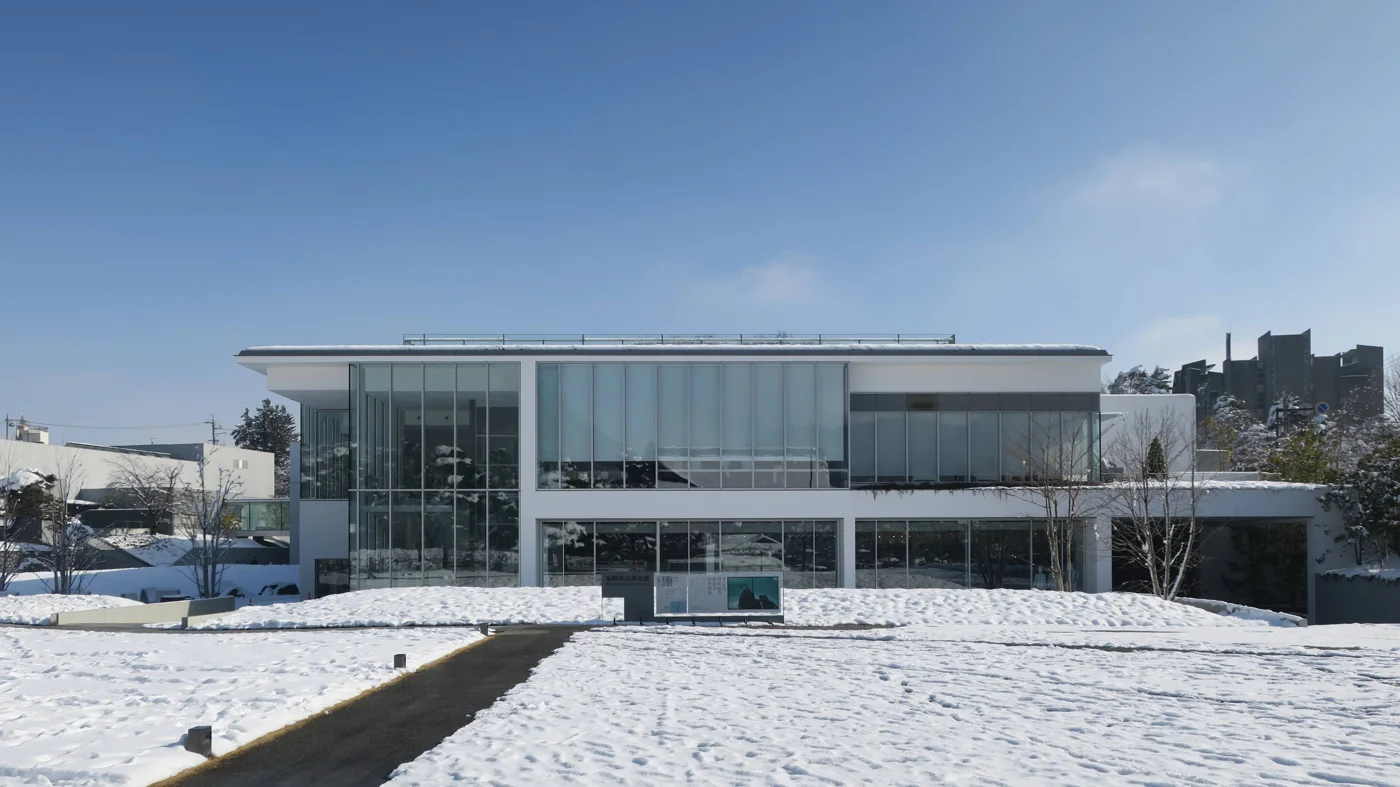
Collection exhibitions in the main building and Higashiyama Kaii Gallery normally share admission: ¥700 for adults, ¥500 for university students and people aged 75 or above, and free for high-school pupils and younger or anyone under 18. Special exhibitions set their own prices. Admission may change if one collection gallery closes for maintenance. Buy this separately from Zenkoji admission; the temple combination ticket does not include the art museum. For free areas, use the public-space suggestions in the Nagano tourism bureau guide. Use the appropriate ticket for exhibition galleries.
If starting with the museum, take bus route 11, 16 or 17 from stop 1 at Nagano Station's Zenkoji Exit to Zenkoji-kita. The tourism bureau gives about 15 minutes by bus, then about three minutes on foot in the bus's direction of travel. From Zenkoji Daimon, follow the approach to the Main Hall, then turn towards Joyama Park; the bureau gives about 10 minutes on foot from Daimon. The stops serve the approach and museum area differently. Set the day's order before choosing where to get off and buying tickets.
The Higashiyama Kaii Gallery changes displays about every two to three months. Look at its current exhibitions for a specific painting. Sanmon and the temple museum close at 16:00; the art museum's last gallery admission is 16:30. For both, the temple in the morning and art museum in the afternoon is easier. On a closed Wednesday, use the afternoon for the temple town and Joyama Park.
Photography and movement during services
The Main Hall and other halls remain places for services, memorial offerings and worship. The temple's school-visit application states that photography inside buildings is prohibited. Put cameras away inside and follow signs and staff. On the approach or outside halls, leave room for people walking, worshipping and joining services. During the rosary blessing and morning prayers, give way to clergy and worshippers rather than blocking the route for a photograph.
Goshuin seals and two half-day routes
The standard Zenkoji goshuin seal is issued at Kanbosho, left of the Main Hall's front, for the listed ¥500. The office usually opens 30 minutes before morning prayers and closes at 16:30, though it may close early. Other halls have dedicated paper seals; some require that hall's admission ticket. The official goshuin page lists locations, hours and year-end exceptions. Hall-specific versions are on paper and cannot be written directly into your seal book. The Main Hall version is usually available inside from 09:00–16:00. Ask Sanmon ticket staff for its version; the Niomon version is at Kanbosho. For several versions, worship first and collect at the right place rather than retracing the route to Sanmon at the end.
For fewer steps, walk from Zenkoji Daimon to the Main Hall, using the east ramp for wheelchair entry, then eat and browse in the temple town. Sanmon, the repository and Chureiden do not allow wheelchair access, so keep them off the group's shared route. Architecture enthusiasts can split off upstairs and meet at the hall or a shop. If everyone wants only Main Hall worship, the inner-hall ticket covers the main plan.
For more detail, start at Niomon's Agyo, Ungyo and rear guardians, then visit Sanmon's Monju and wall paintings before the Main Hall. Continue to the history museum to compare the guardian models and old Sanmon plaque. These paid areas mainly operate 09:00–16:00. With an afternoon arrival, prioritise your chosen halls and leave shopping until afterwards.
Transport landmark: Zenkoji on Google Maps. For a bus to Nagano Station, return through the temple town to Zenkoji Daimon. To include the art museum, turn east from the Main Hall into Joyama Park and use the museum's access information for the return.
A few useful answers
How do I get from Nagano Station to Zenkoji by bus or on foot?
Take the bus from stop 1 at the Zenkoji Exit of Nagano Station. It costs ¥190 and takes about 15 minutes to Zenkoji Daimon, then it’s a five-minute walk to the Main Hall. Allow about 30 minutes to walk uphill from the station along the temple approach.
How much are the inner hall and combined tickets at Zenkoji, and what do they include?
The ¥800 adult ticket includes the inner sanctuary, the dark passage beneath the altar and the History Museum. The ¥1,500 combined ticket also covers the upper floor of the Sanmon Gate and the scripture repository.
When does Zenkoji’s morning service start, and must I book the prayer-bead blessing?
The daily service follows sunrise, starting at about 5.30 am in summer and 7 am in winter. To receive the free prayer-bead blessing, wait on the path in front of the Main Hall before the service. There’s no need to book.
When is Zenkoji’s 2027 Gokaicho, and what can I see there?
Gokaicho takes place from 4 April to 19 June 2027. The Maedachi Honzon, an image of the temple’s principal Buddha, is displayed in the Main Hall. Visitors can touch the ceremonial pillar outside to form a symbolic connection with the image.
Official information and references
Sources used in this guide.
- Zenkoji: access, car parks and charges
- Zenkoji: wheelchair access and ramp
- Zenkoji: morning prayers, rosary blessing and wheelchair loans
- Nagano City: Gururin-go city loop bus
- 2027 Zenkoji Gokaicho: transport and crowd forecasts
- Zenkoji: admission and seasonal opening hours
- Zenkoji: history and beliefs
- Zenkoji: outer and inner Main Hall areas
- Zenkoji: innermost area and Okaidan
- Zenkoji: visiting route
- Zenkoji: Sanmon, sutra repository, history museum and Niomon
- 2027 Zenkoji Gokaicho: dates and official promotional film
- 2027 Zenkoji Gokaicho: Maedachi Honzon and Eko-bashira
- Zenkoji: 2027 event announcement
- Zenkoji: daily services and noon curtain-opening
- Zenkoji: memorial and prayer applications
- Nagano Prefectural Art Museum: facilities, admission and closing days
- Nagano tourism bureau: art museum access
- Nagano Prefectural Art Museum: Higashiyama Kaii Gallery and exhibitions
- Zenkoji: school visits and photography rules
- Zenkoji: goshuin locations and hours
- Zenkoji: incense burner, earlier Eko-bashira pillars and other facilities
- Nagano tourism bureau: Nagano Station and Zenkoji access