Pick Tsugaike or Hakuba Goryu for beginner lessons, Happo-One for long cruisers, and Norikura or Cortina for powder days. Compare all 10 Hakuba Valley resorts, inter-resort links, the Valley All-Mountain Pass, and Nagano winter buses.
- Region & Focus
- Nagano and Myoko Ski AreasSkiing
- Reading Scope
- 20 min read · 11 chapters · 5 Q&As
- Official Verification
- 21 official sources checkedUpdated November 22, 2026
- Key Topics
- WinterItinerariesFirst trip
Chapter Route Map (tap any stop)
- Mapping Out the 10 Resorts
- Day-One Lessons at Tsugaike or Goryu: Start at the Base
- Goryu and Hakuba47 Share One Pass—Pick Your Exit Base
- Give Happo-One a Full Day; Use Iwatake for Half-Day Split Plans
- North Valley: Long Runs at Tsugaike, Deep Snow at Norikura and Cortina
- Who Should Pick Jiigatake, Kashimayari, or Hakuba Sanosaka
- Doing the Math on the Valley Pass—and Taking Rest Days
- Getting from Tokyo to Hakuba: Book the Right Drop-Off Stop
- Work Backward from Your Return Bus Within the Valley
- Early Season, Midwinter, and March Need Different Checks
- Full Ski Days Count: 2 Nights vs. 4 Nights
- Quick Q&A
On a first trip to Hakuba, start by picking between Tsugaike Kogen and Hakuba Goryu. Tsugaike's Kane-no-naru-oka slope gives you wide room to repeat turns, while Goryu keeps rentals, lessons, and lunch in one base area. Once you're comfortable on intermediates, give a full day to Happo-One's long runs or ski the linked pair of Goryu and Hakuba47. The Hakuba Valley Ticket covers all 10 resorts at ¥11,100 for a 2026–27 adult 1-day pass. If you're sticking to one mountain or one connected pair, compare local tickets first—and check return bus schedules before buying a multi-day pass.
Mapping Out the 10 Resorts
Hakuba Valley's 10 ski resorts stretch along the foothills of the Northern Alps across Omachi City, Hakuba Village, and Otari Village. Search "Hakuba" on a map and it usually centers on Hakuba Station or Happo, leaving either end of the valley miles away. Moving south to north, you hit Jiigatake, Kashimayari, and Hakuba Sanosaka first, followed by Goryu, Hakuba47, Happo-One, and Iwatake; Tsugaike, Hakuba Norikura Onsen, and Cortina anchor the north end. When checking lodging on a map, pin your day-one base entrance, rental shop, and return bus stop together. Two hotels with "Hakuba" in the address can mean a vastly different walk in ski boots.
Two pairs let you ski directly between resorts on open, patrolled trails: Hakuba Goryu with Hakuba47, and Hakuba Norikura Onsen with Cortina. Each pair sells its own joint area pass. Crossing relies on trails, lifts, and whichever connecting runs are open that day, while each mountain keeps its own base area. Going from Happo-One to Tsugaike, or Iwatake to Goryu, means downloading to the base and catching a bus. To ski two mountains in a day, stick to a lift-linked pair rather than waiting for a second bus in ski boots.
Split Hakuba into two maps when planning. The trail map shows green runs, ski-out routes to the base, and the last gondola down. The transit map shows Nagano highway bus drop-offs, stops near your hotel, and evening buses still running after lifts close. Those two maps only connect at the base. If your group has just one full ski day, picking a meeting point everyone can actually reach matters more than counting total trails on a mountain.
| Zone | Resorts | Best For |
|---|---|---|
| South Valley (Omachi side) | Jiigatake, Kashimayari, Hakuba Sanosaka | Mellow practice slopes, family snow play, or lake-view runs |
| South Hakuba Village | Hakuba Goryu, Hakuba47 | Mixed-ability groups or linking two connected mountains in one day |
| Central Hakuba Village | Happo-One, Hakuba Iwatake | Long descents for confident skiers, or meeting non-skiers on the mountain for lunch |
| North Valley (Otari Village) | Tsugaike, Hakuba Norikura Onsen, Cortina | Repetitive beginner drills, or dedicated powder days on open steep terrain |
Pick Tsugaike or Hakuba Goryu for beginner lessons, Happo-One for long cruisers, and Norikura or Cortina for powder days. Compare all 10 Hakuba Valley resorts, inter-resort links, the Valley All-Mountain Pass, and Nagano winter buses.
Day-One Lessons at Tsugaike or Goryu: Start at the Base
Tsugaike works well for first-timers learning to stop and turn. The lower pitch of Kane-no-naru-oka is wide, giving slow skiers plenty of space to choose a line. Read the trail map in two halves: base practice zones and upper-mountain terrain. Oya-no-hara, Karamatsu, and Kane-no-naru-oka are included in Tsugaike's 2026–27 beginner area ticket at ¥5,900/day for adults and ¥4,100/day for elementary-age kids, valid only on the listed lifts. If your instructor plans to keep the class there all day, the area ticket leaves more budget for lessons. Wait until you're ready for the long gondola before comparing full-mountain passes.
If you're staying in Kamishiro or arriving on the Goryu side, you can start from either Toomi or Iimori. Escal Plaza sits at the Toomi base, while Iimori has its own Base Center. Copy down your exact meeting point before booking Goryu lessons, and rent gear on the same side—with kids especially, skipping one boot-clad transfer cuts out a lot of waiting. Goryu's official website lists approved foreign-language ski schools. Submit each student's discipline (ski or snowboard), age, and skill level upfront so group members in different classes can still meet at the same base.
Anyone working on linked turns benefits from lapping one familiar slope all day. Spend the morning with an instructor practicing stops and speed control, then take a few extra runs off the same chairlift in the afternoon. On day two, if snow conditions shift or crowds build, you already have yesterday's lines as a reference. First-time buyers often choose a mountain for the prettiest run on the map, when what you actually need is an easy green glide back to lockers and lunch once your legs get tired.
If stronger skiers in your group want to head higher, keep your meetup spot at the base. Tsugaike's Tsuganomori and Goryu's Alps-Daira both offer terrain for experienced riders—some can lap steeper runs up top while others stay in lower-mountain lessons, then everyone meets for lunch in an easy-to-spot base lodge. Agree on which lift station you'll return to, so summit wind holds or big skill gaps don't disrupt the kids' lesson schedule.
Goryu and Hakuba47 Share One Pass—Pick Your Exit Base
Hakuba Goryu and Hakuba47 share a joint area pass valid across both mountains. Ride the Telecabin from Goryu Toomi up to Alps-Daira, or take the gondola up from the Hakuba47 base; the upper connection runs past Hakuba47's Line E. Grab the official joint trail map and circle both your starting base and planned exit base. Groups who can call a taxi or hotel shuttle from either side have far more freedom. If your rental gear, car, or bags are parked at just one base, check when the return lifts close in the afternoon.
Goryu's Toomi and Iimori handle the beginner-lesson crowd, while upper Grand Prix offers a wide advanced pitch. Hakuba47's R1 runs roughly 2,500 meters at an average gradient around 22 degrees—save a fresh morning for its length and rollovers. Park riders heading into 47PARKS can pick features by the difficulty levels open that day. Beginners in your group can stay at Goryu for class, with lunch set on that original side so nobody has to force their way down an above-level connector trail just to eat together.
If you only have half a day, you can still ski Goryu on its own. Goryu's published 2026–27 joint adult 1-day pass (ages 23–64) is ¥10,000 at the ticket window, ¥9,500 bought new online, or ¥8,200 reloaded onto a compatible IC card online. Counter half-day adult tickets cost ¥8,500 (morning session ends at 13:00; afternoon session starts at 12:00). If you already hold an IC card, factor in reload pricing—arriving midday can still be cheaper on a full-day online reload. Youth tickets for ages 13–22 must be purchased in person at the counter with proof of age.
Adding night skiing requires a separate ticket and return transport. Goryu sells night passes separately, so check which base entrance and lifts are running that evening before heading out. All-mountain day passes cover daytime lifts only. If you plan to drop off daytime gear and return after dinner, ask the rental shop upfront whether the same setup covers night sessions and when gear is due back. If someone in your group is done after daytime lifts close, hold your final base meetup before the rental return cutoff to sort out gear and stored bags.
Give Happo-One a Full Day; Use Iwatake for Half-Day Split Plans
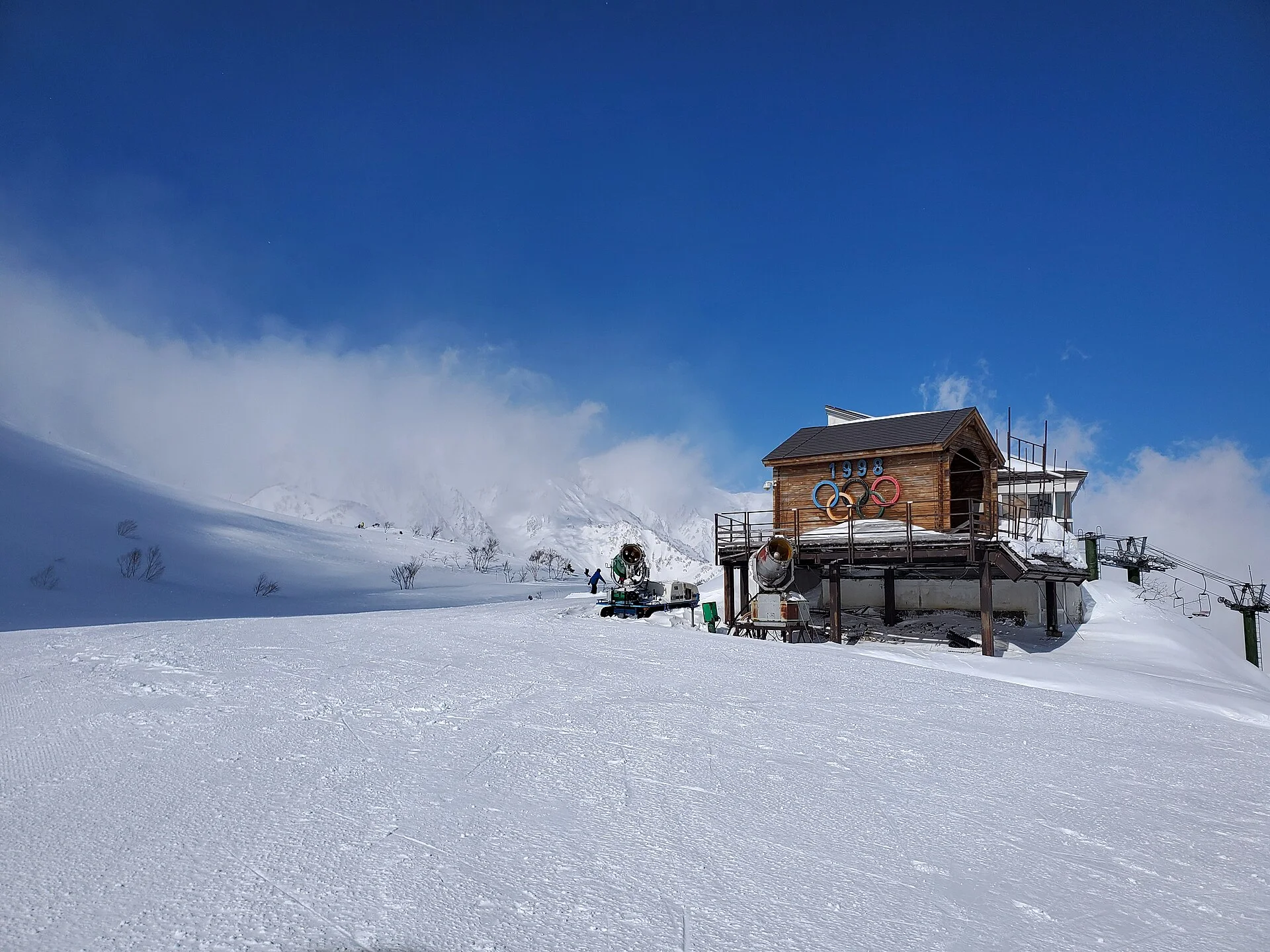
With solid speed control and clean edge changes, Happo-One is the top choice for long vertical descents. One of the 1998 Nagano Winter Olympics venues, it posts a vertical drop of 1,071 meters. The Riesen Slalom course runs roughly 3 km with shifting gradients that demand steady speed management across multiple pitches. Kurobishi adds steep slopes and moguls. Newer green-run skiers can stick to the Sakka or Nakiyama base zones even if the group is staying in Happo. The peak-season adult Happo Debut 1-day pass is ¥4,900 and covers only designated base lifts plus the Kita-One Quad; check which station everyone's pass reaches before picking a mid-mountain lunch spot.
Happo's Happo Bus Terminal, main Gondola base station, Nakiyama, and Sakka sit in separate locations. A hotel listing that simply says "near Happo" makes it easy to show up at the wrong meeting area. Guests in Wadano or near Sakka should look for Sakka lesson meeting points, while early highway-bus riders should map the walk and uphill grade from the Bus Terminal. What looks like one block on a map feels much longer dragging a ski bag across icy pavement. When arranging lodging pickups, give the exact name of your resort entrance.
Iwatake opens onto wide views of the Hakuba range. Intermediates can ski the roughly 3 km Sunny Valley course from the summit when conditions are right. Iwatake's scheduled 2026–27 winter season runs from December 18, 2026, through March 28, 2027. If part of your group just wants snow scenery, check the sightseeing route and gondola ticket for HAKUBA MOUNTAIN HARBOR and meet for lunch near the summit facilities. That lets everyone split up afterward without buying full ski passes for non-skiers. If clouds obscure the peaks, skiers can still stay on open Iwatake trails, while sightseers save Iwatake for a clearer day from the same lodging base.
Half-day schedules pair well with Iwatake and village downtime. If you're heading to an onsen or returning a rental car, pad your download time from the summit and agree on a specific return bus together. For a base-area lunch, both groups can return to the gondola base station and change out of ski boots. Because Happo-One and Iwatake aren't ski-linked, cramming both into one morning means rushing through boot swaps, gear hauling, and bus waits. Splitting long-run days and scenic days across two separate days is far calmer.
North Valley: Long Runs at Tsugaike, Deep Snow at Norikura and Cortina
Once you're comfortable on Tsugaike's base slopes, aim for a longer run on day two. Tsugaike's Han-no-ki course stretches roughly 4 km with steeper middle sections—review the trail forks with your instructor on the map beforehand to confirm a way down at your current level. The resort also operates tree-run zones with specific entry rules. Because Tsugaike combines a sprawling beginner base with real challenge up high, mixed-ability groups staying nearby only need to agree on a base-area rendezvous at the end of the day.
Hakuba Norikura Onsen Snow Resort sits in Otari Village; search "Hakuba Norikura" or "Hakuba Norikura Onsen" for buses and hotel shuttles, and keep it separate from Norikura Kogen further south in Nagano. Norikura's Highway Course offers wide terrain averaging around 25 degrees, alongside steeper and ungroomed runs. Cortina skews toward experienced powder riders—Hiedayama Course 2 reaches a 42-degree max pitch—so anyone new to deep snow should stick to open easier trails. Both mountains share a single trail map and joint area pass. Near the boundary, identify your target run and return lift before dropping in; once you cross over and ski down, it's easy to end up at the opposite base late in the day.
For 2026–27, the joint Norikura and Cortina 1-day pass is ¥6,500 for adults and ¥3,800 for elementary students. A 4-hour joint pass is ¥5,800 for adults and ¥3,500 for elementary students, starting from your first lift-gate scan. Norikura's scheduled season runs December 12, 2026, through April 4, 2027, operating only the Wakaguri side from March 22 onward. Late-March visitors hoping to ski both resorts need to check open zones alongside pass pricing; joint-pass rates, Norikura's operating dates, and whether the inter-resort link is actually open are three separate checks.
On powder days, treat the connector status as a deciding factor. If only one side is open and your car or luggage is at the other base, enter from a base with road access back. Watch live status updates by specific trail name—a connector run can stay closed even after chairs start loading. Ski patrol marks closed boundaries clearly; never duck ropes, even if tracks already cross behind them. If you're introducing kids to snow for the first time on a storm day, stick to open beginner trails at Tsugaike or Norikura.
Who Should Pick Jiigatake, Kashimayari, or Hakuba Sanosaka
Jiigatake suits skiers who want an entire morning to drill fundamentals. Its wide Echo slope lets you string together quick, repeatable laps once you find your rhythm. If you're heading back through Shinano-Omachi or staying in Omachi the night before, Jiigatake slots neatly into either end of your Hakuba trip. Holders of the Hakuba Valley Ticket need to pick up or reload their IC card at another resort first: Jiigatake accepts activated Valley passes by swapping your card for a local ticket at the window, but cannot issue or reload them as your first stop.
Families with kids not ready for skis or boards can look at Kashimayari's Family Park snow-play zone and meetup layout. Adults who want real mileage still have longer, rolling terrain like the Ippon-Buna Downhill Course. On a half-day schedule, ask the kids first whether they want lessons or snow play. Check ticket types before paying—adults skiing and kids using the play park follow separate pass rules. Grouping a south-valley stop with an Omachi arrival or departure beats backtracking from north Hakuba.
Hakuba Sanosaka works for riders who want scenic runs alongside tighter tree-lined speed control. It features courses overlooking Lake Aoki as well as steeper pitches. Save the lake-view runs for clear weather, and judge the rest of the mountain by that day's grooming and trail openings. If everyone in your group is a day-one beginner juggling young kids, choose a base where lessons and rentals sit right by the meeting area instead. Save Sanosaka for a dedicated side trip with confident skiers rather than hauling a big group across town just for the view.
Without a car and based in central Hakuba Village, pick just one south-valley resort to visit. Cross-check outbound and return rides on the same winter bus schedule, watching for similar-sounding stop names along the highway versus at the resort base. Travelers arriving from the south can ski a half-day at Jiigatake or Kashimayari before checking into central Hakuba that evening. Sort out large luggage between your arrival station and hotel first so you aren't dragging suitcases around looking for locker rooms.
Doing the Math on the Valley Pass—and Taking Rest Days
The 2026–27 Hakuba Valley Ticket costs ¥11,100 for a 1-day adult pass, ¥21,800 for 2 days, and ¥32,200 for 3 days. Child rates (ages 6–12) are ¥6,400, ¥12,500, and ¥18,100; adult pricing starts at age 13. While most resorts let kids under 6 ski free, Jiigatake and Kashimayari set the free cutoff at under 3. Individual resort age brackets vary too: Happo's peak-season youth pass (ages 6–17) is ¥4,900, junior and senior high school students should carry student ID, and Goryu's youth rate requires proof of age. Run the numbers separately for teens before tapping a card for the whole group.
You can also buy local tickets day by day across different mountains. For example, a 30-year-old paying ¥9,800 for a peak-season day at Happo-One plus ¥9,500 online for a new Goryu and Hakuba47 ticket spends ¥19,300 total—¥2,500 less than a 2-day Valley pass. If you can walk to a lift or rely on hotel shuttles, single-area tickets often win. Only compare Valley multi-day passes when you plan to bounce across different zones, adapt daily to weather, and ride the Valley shuttle each day. Families spending day one in Tsugaike's beginner zone and resting on day two can simply pay only for the days they ski.
A 2-day Valley pass is valid for any 2 days within a 4-day window from first use; a 3-day pass covers any 3 days within 6 days. Scan in for the first time on Tuesday, and your second day on a 2-day pass can be Wednesday, Thursday, or Friday—handy for skipping a storm or taking a rest day. However, boarding the Hakuba Valley Shuttle Bus counts as using one ski day even if you never ride a lift. On rest or sightseeing days when you're only riding the bus, pay the bus fare separately instead of tapping your multi-day pass. Unused days expire at the end of the validity window with no refunds or extensions.
Buying a Valley pass online for the first time gives you a pickup code and QR code. Redeem it for a physical IC card at an eligible resort ticket window or designated kiosk before trying to board the Valley shuttle. If you reload an existing IC card online, scan through a resort lift gate first to write the ticket data onto the card before riding the shuttle. Want to take the shuttle right on arrival day? Pick up your IC card at your first ski resort first. Included shuttle rides apply only to same-day Hakuba Valley Shuttle Bus service; night buses and night skiing cost extra.
Getting from Tokyo to Hakuba: Book the Right Drop-Off Stop
Taking the Hokuriku Shinkansen to Nagano Station and transferring to a bus starts with picking your exact Hakuba stop. ALPICO's 2026–27 Nagano–Hakuba winter express timetable runs December 12, 2026, through March 26, 2027, departing from Nagano Station East Exit stop #26 with both reserved and non-reserved services. Winter reserved adult one-way fares are ¥3,500 to Hakuba Happo Bus Terminal, Hakuba Station, Hakuba Goryu, Escal Plaza, or Iwatake, and ¥3,800 to Tsugaike Kogen or Hakuba Norikura. Stops vary by departure, so pick the bus serving your destination first, then match your Shinkansen train to it.
Write down exact stop names. Hakuba Goryu and Goryu Escal Plaza are two separate stops—if you're staying at the Toomi base, a bus stopping right at Escal Plaza saves hauling bags. Hakuba Station is the JR rail station, while Hakuba Happo Bus Terminal is the main Happo hub. When large groups book separately, share the exact departure time, official stop name, and post-arrival meeting spot so half the group isn't waiting at JR Hakuba while the rest went to Happo. Leave buffer time at Nagano Station to exit, find the bus bay, and load gear—reserved tickets lock you to that specific bus, and missing it means finding seats on whatever departs next.
Starting in central Tokyo near Shinjuku, ALPICO and Keio highway coaches cut out the train transfer. Their 2026–27 winter schedule runs December 5 through March 31, with daytime Shinjuku–Happo trips scheduled at just over 5 hours depending on the date and departure. Only select coaches stop at Escal Plaza, so verify your exact column on the timetable. Treat the 5-hour ride as a transit day—use the afternoon to pick up rentals, grab groceries, or arrange lodging pickup, and schedule lesson one for the next morning. Arriving early on an overnight coach? Confirm morning luggage storage with your hotel or rental shop beforehand.
Traveling with a ski or board bag? Check the carrier's baggage rules before booking and confirm piece limits and whether checked luggage rides alongside board bags. Mixing routes works too—take the Shinkansen via Nagano going in and a direct coach back to Shinjuku, booking each leg separately. Coming via Matsumoto? Check the JR Oito Line into Hakuba Station or Shinano-Omachi for local transfers. In winter snow, how far your hotel sits from the bus stop—and when they can pick you up—matters far more than saving a few miles on paper.
Work Backward from Your Return Bus Within the Valley
Hakuba's transit pages combine the Valley Shuttle, individual resort and lodging shuttles, and evening buses. Pull up the current-season valley timetable, locate the actual pickup stop on the mountain side, and trace the route back to your lodging. As of November 22, 2026, the Hakuba Valley website's shuttle page still displayed partial prior-season schedules—use the map to learn stop locations early, then lock in transfers once current operating dates and timetables go live. Intercity ALPICO Nagano winter buses and local valley shuttles run on separate schedules; never assume both follow the exact same start and end dates.
Aim for the second-to-last bus home. Valley shuttles turn riders away once full, and officials warn that late-afternoon and final buses pack out. Riding until the last chair leaves too little margin once you add downloading, returning gear, and walking from the rental shop to the stop. If your rentals are parked at a different base, either rent closer to your final meetup spot or take an earlier shuttle back to drop them off—either option beats sprinting through snow carrying skis.
If you plan to walk out for dinner, check the slope grade, street lighting, and last-bus cutoff for snowy nights near your hotel. Staying farther from the lifts can still be easy if a shuttle stops right outside your door; where buses stop early, book dinner within walking distance of your room. If your lodging includes a shuttle, ask separately about morning drop-offs, post-lesson pickups, highway-bus stops, and final-day station runs so the staff knows exactly which stop you mean.
Driving gives you the easiest north–south flexibility, provided you book winter snow tires, carry tire chains, and monitor Nagano highway road reports. During heavy storms or whiteouts, push cross-valley plans back and stay at a resort within walking distance or served by your hotel shuttle. Relying on transit for a distant resort? Verify your return connection still runs before going—a single taxi ride at the end of a ski day can save switching hotels just to ski another zone.
Early Season, Midwinter, and March Need Different Checks
In November or early December, check which specific trails are actually skiable. Goryu's November 21, 2026 update listed lifts like Toomi No. 1, the Goryu Gondola, and Alps No. 1 as running. Happo-One's November 22 opening notice opened only the Panorama zone, with base trails closed and both upload and download required by gondola. For beginners, open lower-mountain practice slopes matter far more than whether a resort's name shows "open." Before a pre-New Year lesson, confirm the school's meeting spot, adjacent chairs, and rental hours line up.
In January and February, morning checks shift to wind, visibility, and overnight snowfall. For a top-to-bottom run at Happo, verify the summit, mid-mountain connectors, and base ski-out as one unbroken chain—if any link is closed, lap a single open chair instead. Crossing from Goryu to Hakuba47 means checking live updates from both resorts. The Valley overview shows snow depths and lift status across all mountains, then drill into each resort's trail map and webcams. Mid-mountain snow depth doesn't guarantee base ski-outs are open, so confirm your download gondola or ski-back trail before heading up.
On warmer March afternoons, ski your long runs early and shift to mellow lower slopes or head back to town early. Happo-One's official spring pricing starts March 23, 2027, at ¥6,400/day for adults. Goryu and Hakuba47's spring counter 1-day pass runs from March 15 through season close at ¥9,000 for adults ages 23–64. Tsugaike's website lists a spring discount 1-day pass from March 23 through May 5 at ¥8,000 for adults. Spring multi-resort plans require checking weekly open zones, lift hours, and bus tables side by side—the Nagano–Hakuba highway bus switches schedules from March 27 even while some lifts keep spinning.
Inside Hakuba Valley, stay on open, patrolled runs and take open forks whenever you hit a closure sign. Even in-bounds tree zones may require registration and follow specific entry rules. Backcountry touring requires avalanche training and rescue gear—hire a certified local guide if you plan to go out of bounds. When storms shut down upper lifts, use half a day for an onsen, village lunch, and rest so your legs are fresh for the next clear first chair.
Full Ski Days Count: 2 Nights vs. 4 Nights
A 2-night, 3-day trip gives you only one full, uninterrupted day on the snow. After arriving in Hakuba, get your boots fitted that first afternoon, then keep day two's lessons and laps at a single home mountain. On day three, if you catch an afternoon bus out, ski a half-morning at that same base where your hotel holds luggage and rentals sit along the way. Want to give non-skiers mountain views? Swap in Iwatake on departure day, just line up luggage storage, gondola download time, and your highway bus well ahead.
With 4 nights and 5 days, block two firm ski days plus one flex day. Beginners staying near Goryu or Tsugaike can take two consecutive morning lessons, practice the first afternoon, and tackle a longer run with coach approval on afternoon two. Confident groups can start at Happo, pair Goryu and Hakuba47 the next day, and keep day three open for Iwatake or Norikura and Cortina. Central Happo bases make splitting directions easy when half the group skis south and half visits Iwatake; staying in the north valley fits two days around Tsugaike plus one trip south.
On a three-day ski stretch, keep the final day flexible. If heavy snow brings high winds, shift big-mountain plans to a clearer morning or stay low in the trees. Ski schools, hotels, and passes each set their own change cutoffs—note those deadlines when booking. Groups booking together don't need identical daily hours either; anyone skiing a half-day before watching the kids shouldn't pay for full-area day passes all week. Track rentals, lessons, and lift passes separately on your itinerary so you know what moves with you and what has to be returned to your starting base.
Before booking rooms, pick one home mountain you're happy to ski two days in a row, then decide whether to add a day trip elsewhere. Lock in lesson one, book the bus that stops right at that base, and save the return timetable on your phone. Compare pass prices and coverage last—often the best ticket is simply whichever lifts sit steps from your hotel door each morning. Still comparing ski regions across Nagano Prefecture? Continue to Nagano Ski and Onsen Base Choices.
A few useful answers
Which Hakuba ski resort is best for first-timers?
Pick Tsugaike's Kane-no-naru-oka for wide beginner slopes, or book lessons and rentals at the same base—Toomi or Iimori—at Hakuba Goryu if you need foreign-language instruction and on-site gear pickup. Staying in Happo? Look at the beginner ticket covering designated Nakiyama and Sakka lifts.
Can you ski directly between Hakuba Goryu and Hakuba47?
Yes. The two mountains connect by trail and share a joint lift pass. Check upper connector and Line E status before heading over, and leave enough time in the afternoon for the final lift needed to return to your original base.
Does riding only the shuttle bus count as a day on the Hakuba Valley Pass?
Yes. Tapping onto the Hakuba Valley Shuttle Bus uses one pass day. Pay the bus fare separately on rest days. Redeem new online purchases for a physical IC card first, and scan reloaded cards through a resort lift gate before boarding the shuttle.
From Tokyo to Hakuba, should I get off at Hakuba Station or Happo?
Use Hakuba Happo Bus Terminal if you're staying in Happo, look for buses stopping at Escal Plaza for Goryu, or book a Tsugaike departure for Tsugaike. Nagano winter express buses stop at different bases depending on the run, so pick your coach around your hotel's designated stop.
Where is the easiest place in Hakuba to meet non-skiers?
Hakuba Iwatake sells winter sightseeing gondola tickets to HAKUBA MOUNTAIN HARBOR, making it easy to meet for lunch on the mountain before non-skiers download by gondola and skiers head back down on snow.
Official information and references
Sources used in this guide.
- Hakuba Valley | Resort Footprint Across Hakuba, Otari, and Omachi
- Hakuba Valley | 10 Snow Resorts and Key Trails
- Hakuba Valley | 2026–27 All-Mountain Pass Rates, Pickup, and Shuttle Rules
- Hakuba Valley | Valley Shuttle Bus Routes and Access
- Hakuba Valley | Live Snow Conditions, Trails, and Lift Status
- Hakuba Valley | Resort Safety and Open-Boundary Rules
- Hakuba Goryu | 2026–27 Goryu and Hakuba47 Joint Pass, Half-Day, and Night Skiing Rates
- Hakuba Goryu & Hakuba47 | 2026–27 Joint Trail Map
- Hakuba Goryu | First-Timer Base Entrances, Rentals, and Ski Schools
- Hakuba Goryu | Operating Notice Starting November 21, 2026
- Happo-One | 2026–27 Lift Tickets, Happo Debut Zone, and Age Rules
- Happo-One | November 22, 2026 Season Opening Trails and Lifts
- Tsugaike Mountain Resort | 2026–27 Regular, Beginner Zone, and Spring Rates
- Hakuba Norikura Onsen | 2026–27 Norikura and Cortina Joint Pass and Season Dates
- Hakuba Norikura Onsen & Cortina | Joint Trail Map
- Hakuba Iwatake | 2026–27 Scheduled Season Dates and Live Status
- Hakuba Iwatake | Ski Lift Passes vs. Winter Sightseeing Tickets
- ALPICO | Nagano to Hakuba 2026–27 Winter Bus Timetable
- ALPICO | Nagano–Hakuba Reserved Winter Buses, Stop Fares, and Boarding Rules
- ALPICO | Shinjuku to Hakuba 2026–27 Highway Bus Timetable
- MLIT Nagano National Highway Office | Winter Road Conditions