Planning a visit to the Iga-ryu Ninja Museum in Mie Prefecture? Explore revolving walls, ninja exhibits, the Ashura Ninja Show, and Iga Railway ninja trains. Covers 2026–2027 hours, ticket prices, costume rental hours, and day-trip routes from Osaka and Nagoya.
- Region & Focus
- KansaiFamily attractions
- Reading Scope
- 15 min read · 8 chapters · 6 Q&As
- Official Verification
- 31 official sources checkedUpdated November 22, 2026
- Key Topics
- Rail travelItinerariesFirst trip
Chapter Route Map (tap any stop)
- Pick Your Show Date Before Buying Train Tickets
- Start Inside the Thatched House by Spotting What Looks Ordinary
- Pick One Highlight in Each Ninjutsu Hall
- Allow Half an Hour for Ashura and Line Up Separately for Shuriken
- From Osaka by Kintetsu or Nagoya by Direct Bus
- Ride the Ninja Train, but Plan Around Standard Timetables
- Rent Ninja Costumes for the Castle, and Leave Time to Return Them
- Two Day-Trip Blueprints Based on Your Kids' Top Priority
- Quick Q&A
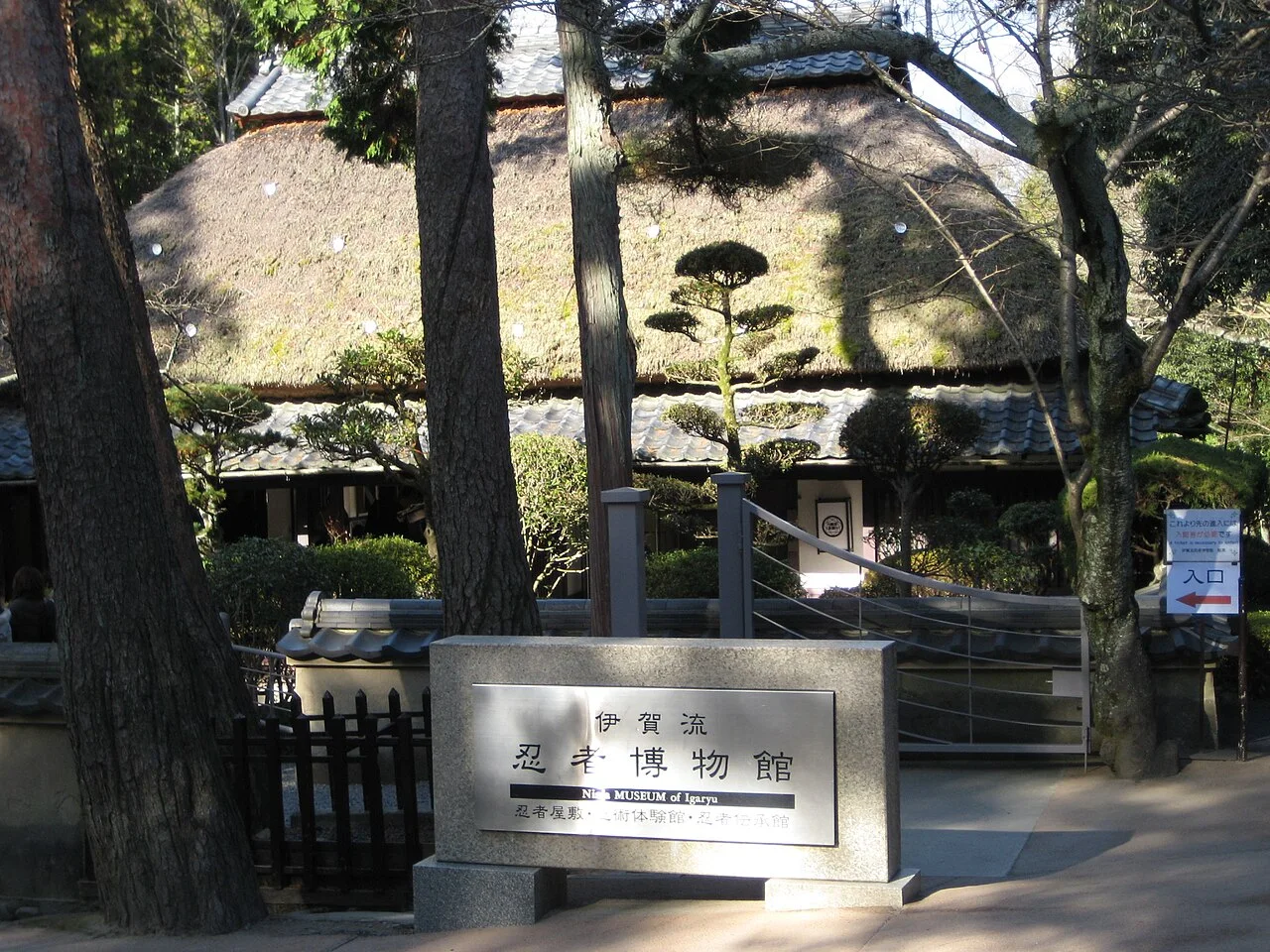
One moment a guide stands beside a wooden wall; a blink later, the room holds nothing but bare timber. That live demonstration inside a thatched farmhouse filled with trapdoors, revolving panels, and hidden staircases is the centerpiece of Mie Prefecture's Iga-ryu Ninja Museum. Families hoping to catch the Ashura Ninja Show should first pick a performance date, then ride Kintetsu from Osaka (transferring at Iga-Kambe) or take a direct highway bus from Nagoya straight to Uenoshi. With the museum, costume rentals at the Danjiri Museum, and Iga Ueno Castle clustered together, you can easily pack a live show and a castle climb into one day trip and be back in the city for dinner.
Pick Your Show Date Before Buying Train Tickets
If your family only has one must-see priority and your eight-year-old just wants to explore the trick house, any open weekday works fine. If someone in your group has their heart set on seeing Ashura perform, check the official ninja show schedule before locking in dates. On days when the museum is open but the show is dark, you can still tour the house and galleries. Rather than rushing to arrive at opening bell, aim to reach the park ahead of the first showtime that fits your schedule, leaving buffer time for tickets, walking, and lining up.
Weekday hours run 10:00–16:00, with last entry at 15:30. On weekends and Japanese national holidays, the museum stays open until 16:30, with last entry at 16:00. Regular annual closures run from December 29 through January 1; additionally, the museum will close all day on December 18, 2026 for a private event before reopening on December 19. Avoid that four-day New Year shutdown if traveling over the holidays. If you plan to rent costumes the same day, note that the Danjiri Museum follows the same December 29 to January 1 closure.
Ticketing happens in two separate steps. Buy general admission at the museum entrance, then bring that ticket to the performance hall and pay ¥600 per person for the show. Individual guests cannot reserve seats in advance; entry is strictly first-come, first-served. If the show is your child's top priority, it is worth stepping out of the exhibit halls early to check the line. Scheduling the final show of the day right before your return train leaves no backup if that slot sells out.
General admission is ¥1,000 for high school students and adults, and ¥700 for children aged 4 through junior high school. One adult and an eight-year-old seeing the show will spend ¥2,900 combined. Adding one round of shuriken throwing next to the ninja house brings the total to ¥3,200. Costume rentals, castle admission, and transit are billed separately, so listing them on their own budget lines lets each family member pick what they want to do.
Credit cards such as VISA, JCB, and AMEX are accepted at the main museum ticket booth, but the ninja show hall operates separately and does not take those cards. If your group splits up between exhibits and the show, make sure everyone holds onto their own admission ticket to regroup. The museum also allows same-day re-entry with your ticket stub, so you can step out to the castle town for lunch without paying twice.
The museum estimates 30–40 minutes for the house and galleries, plus roughly 30 minutes for the show, making 70–90 minutes a solid baseline for your visit. Use that as your minimum window when planning inbound trains. If your kids like asking questions about every gadget or need a park restroom stop beforehand, add extra cushion. Getting off the train, walking into the park, locating the entrance, and gathering before showtime all eat into the schedule faster than expected.
Learning two notations on the official calendar helps you build a smoother itinerary than just glancing at standard hours. Dates marked as no-show days have no performances at all. Dates with listed times may also note heavy group bookings or show how many seats remain for individual visitors. For example, the November 23, 2026 holiday schedule lists shows at 11:00, 13:30, and 14:45, while November 24 has no shows scheduled, making back-to-back visits feel completely different.
| Item | Price | How to Pay |
|---|---|---|
| Museum Admission | ¥1,000 (high school and up) / ¥700 (ages 4–junior high) | Purchase at the main museum ticket booth |
| Ashura Ninja Show | ¥600 per person | Pay separately at the show hall with your admission ticket; first-come, first-served |
| Shuriken Experience | ¥300 for 6 stars | Ask staff beside the ninja house; no museum ticket required if doing this alone |
Planning a visit to the Iga-ryu Ninja Museum in Mie Prefecture? Explore revolving walls, ninja exhibits, the Ashura Ninja Show, and Iga Railway ninja trains. Covers 2026–2027 hours, ticket prices, costume rental hours, and day-trip routes from Osaka and Nagoya.
Start Inside the Thatched House by Spotting What Looks Ordinary
From the outside, the thick thatched roof catches your eye first. Tucked low beneath the trees, the farmhouse feels worlds apart from the bright white castle keep towering over the same park. Once the guide leads you inside, ask your kids to point out the most ordinary-looking corner of the room. Turning the space itself into a guessing game is far more fun than spoiling the tricks on the train ride over, preserving the surprise when the wall flips.
Demonstrations cover revolving panels (donden-gaeshi), concealed staircases (kakushi-kaidan), and hidden sword compartments (katana-gakushi). Kids tend to lock their eyes on the guide the entire time, so remind them to watch the wall itself and recall what changed once you step outside. The house also features trapdoors and escape routes. The Japanese names for each mechanism appear on the museum's official guide pages, making it easy to match what you saw to the diagrams afterward.
This was a lived-in home where people cooked, sat, and stored daily items, and the museum uses those domestic details to show how ninjas guarded family knowledge. Frame it as a spatial puzzle: how do you build a home for everyday living that also hides secrets right under a guest's nose? Let your child share a guess, then head to the exhibit halls behind the house for historical context. If your kids want to solve every single trick, save one mystery to discuss over lunch instead of holding up the room for a second tour.
Both the house demonstration and the Ashura performance involve live action right in front of you, yet they reward different kinds of attention. Inside the house, the focus zooms in on a single timber panel or narrow staircase; on stage, you track a troupe's timing and choreography. If younger kids aren't drawn to loud stage action, spending extra time in the house and galleries can be just as satisfying. In a smaller group, let one child act as navigator to spot the next exhibit hall.
The museum provides English and Chinese audio explanations inside the ninja house, along with English labels on the mechanisms and Japanese-English signage in the galleries. Ask the staff at the entrance if you need Chinese audio. For kids who read English slowly, listen to a short segment in the trick house first, then match those names to the displays in the next building. Feel free to use a phone to read captions or look up terms, just step aside during live demonstrations so everyone keeps a clear view.
Expect uneven floors and stairs inside the historic house; strollers can be left with staff near the entrance gate, so bring a baby carrier for toddlers. According to the museum's accessibility notes, wheelchair users can view the interior demonstrations from the exterior veranda. Note that the elevator to the underground Ninjutsu Experience Hall closed for maintenance on June 26, 2026, with no reopening date announced yet. If someone in your group requires elevator access, call ahead at 0595-23-0311 and ask staff at the gate to map out an accessible ground-level route.
Pick One Highlight in Each Ninjutsu Hall
After leaving the house, head into the Ninjutsu Experience Hall to see real-world tools built from historic manuals. Many pieces are faithful replicas based on written records, with display cases featuring shuriken and mizugumo water-walking floats. The name "water spider" often makes kids picture an insect, so finding the actual wooden contraption and reading its plaque helps connect ancient texts to physical gear they can see up close. Let the displays spark the questions—parents don't need to memorize a glossary of ninja terms ahead of time.
The adjacent Ninja Tradition Hall sits inside a converted rice storehouse. Here the spotlight shifts from weapons and gadgets to daily life, local history, and spiritual beliefs. Look for the Ninja Mandala, which illustrates the deities and Buddhist figures revered by Iga and Koga ninjas. When viewing it with kids, start with the central figure and trace how the outer rings are arranged. Having each child pick one illustrated display to explain to the rest of the family gives them extra clues to spot during the stage show later.
Adults interested in authentic manuscripts should watch the museum's collection rotation. Classic texts like the Bansenshukai, Iranki, and Ninpiden are part of the archive and rotate onto public display by exhibition period. From October 10, 2026 through July 22, 2027, the special mini-exhibit "From Igashu to Igamono" runs in two halves: through January 24, 2027, it highlights a banner bearing the Todo clan ivy crest linked to the Siege of Osaka; from January 25 onward, the Bansenshukai takes center stage. Winter visitors can time their trip around that changeover date.
That mini-exhibit also hands parents an easy narrative thread. The museum traces how Warring States-era Iga clansmen evolved into Edo-period Iga retainers serving the Todo domain. If your family toured Osaka Castle the day before, seeing the Siege of Osaka banner ties both stops together. Later in the afternoon at Iga Ueno Castle, you will run right back into Todo Takatora in the story of its towering stone walls.
Families short on time can divide and conquer with a simple choice. Right after the trick house, curious kids asking "what does this do?" gravitate toward the gadgets in the Experience Hall, while those drawn to people's lives linger in the Tradition Hall. Have everyone pick one artifact to talk about on the ride home so the visit keeps a natural rhythm. The collection is dense enough that even half a loop gives you plenty to unpack.
Before snapping photos for your trip album, check the signs posted beside each exhibit. Photography and video are prohibited for certain artifacts and during the live ninjutsu stage show; permitted shots are limited to personal travel memories, with commercial filming or public video uploads requiring prior permission. If you want portraits in rented ninja outfits, wait until you stroll through the park or castle grounds, where thatched roofs, stone walls, and tall pines frame the shot naturally.
Allow Half an Hour for Ashura and Line Up Separately for Shuriken
Ashura is the name of the resident performance troupe, listed on the calendar as the Ninjutsu Demonstration Show. According to the museum's English guide, performers wield Japanese swords, kusarigama chain-sickles, and shuriken on stage. Kids who tour the exhibit halls beforehand will recognize several of those tools in action. Talk briefly about a favorite artifact before heading inside, then let the performers show why each weapon worked the way it did.
The indoor theater sits separately from the shuriken throwing booth next to the ninja house. As soon as you enter the museum, tell the gate staff which showtime you are aiming for and ask for directions to the hall. If your family needs to split up for restrooms and holding a spot in line, set the theater entrance as your meeting point. Keep everyone's admission tickets and the exact cash for the show fee in one easy-to-reach pocket so you can breeze through staff seating instructions.
Younger kids occasionally get nervous around real blades or fast, close-range stunts. Agree on a quiet signal before sitting down—such as squeezing a hand if it feels too intense—so you can step outside and talk about the parts they liked afterward. If one adult is managing two kids with different energy levels, keep the post-show slot flexible. You can head out right after the curtain drops for a complete morning, or double back to the galleries if the kids still want more.
Shuriken throwing is a separate paid activity run by staff beside the ninja house. The official rate is ¥300 for six real metal stars, following safety procedures guided by attendants on site. Stop by the booth to confirm wait times and child eligibility rules before paying. Even if a child decides to skip throwing and just watch, they still get the full secret-door tour inside the house and costume photos in the castle town.
Rainy days are surprisingly manageable here: the farmhouse and both exhibit halls are indoors, and Ashura performs on an all-weather covered stage. Because short outdoor walks link the buildings, pack compact folding umbrellas. Heavy rain or wind may temporarily suspend the outdoor shuriken booth. On wet days, lean into the galleries and show schedule, save castle exterior photos for a dry break, and carve out a relaxed indoor lunch outside the park to recharge.
Unlike Kintetsu Limited Express trains that let you book specific seats in advance, individual show tickets have no pre-assigned reservation window. Plan your train arrival so the whole family reaches the museum well before seating opens. If you miss your target show, pivot to the next performance listed on the calendar and browse the self-paced galleries first. If the day's final show has already started, skip rushing to closing time and spend the afternoon wandering the castle town for lunch or climbing the keep.
From Osaka by Kintetsu or Nagoya by Direct Bus
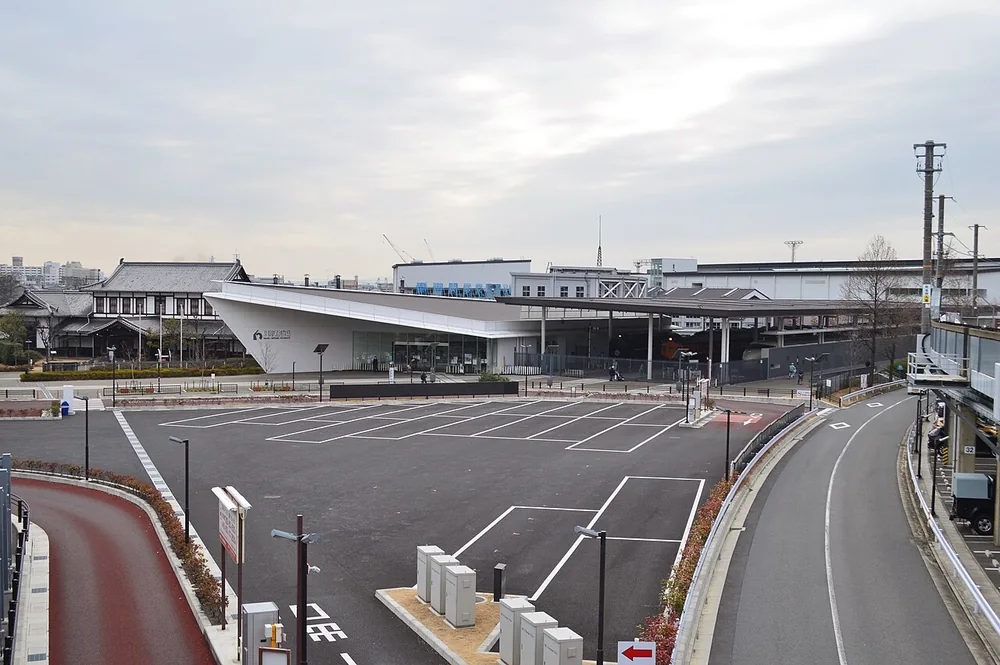
Start your route search by nailing the exact station names. The stop beside the park is Uenoshi (also nicknamed Ninja City Station). Kintetsu riders transfer to the Iga Railway at Iga-Kambe, while JR Kansai Line riders connect to the Iga Railway at Iga-Ueno. Because all three names appear on the same regional maps, screenshot your exact transfer and arrival stations before setting off. From Uenoshi Station, follow signs straight toward Ueno Park.
From central Osaka, board a Kintetsu Limited Express at Osaka-Uehommachi that stops at Iga-Kambe, then follow the Iga Railway timetable onward to Uenoshi. Under the weekday schedule introduced in March 2026, an 8:09 departure from Osaka-Uehommachi reaches Iga-Kambe at 9:11, connecting to a 9:18 Iga Railway train arriving at Uenoshi at 9:44. That gives you a 7-minute transfer; families moving at an easy pace can catch the next train at 9:44, arriving at 10:12. Travelers staying near Namba can also check departures from Osaka-Namba, just confirm Iga-Kambe is on the stop list before buying.
From Osaka-Uehommachi to Iga-Kambe, the adult base fare is ¥1,370 plus ¥920 for a regular Limited Express ticket, and ¥400 for the final Iga Railway leg—totaling ¥2,690 one-way or ¥5,380 round-trip. To trim costs, take a Kintetsu Express train that stops at Iga-Kambe instead, bringing the one-way total with the Iga Railway down to ¥1,770. Booking the Limited Express outbound makes it easy to snag side-by-side seats for snacks with kids, while the return Express often lines up nicely with afternoon departures.
Kintetsu Limited Express tickets generally go on sale at 10:30 AM JST one month prior to your travel date. If you buy a digital Limited Express ticket on your phone, remember to cover the base fare separately with a paper ticket or supported transit IC card. Keep the mobile ticket screen handy and watch for Iga Railway transfer signs inside the station. Since February 2025, the entire Iga Railway accepts transit IC cards—just tap in and out as directed. Cash and paper-ticket riders should buy the Osaka-to-Iga-Kambe segment at their starting station, then pay the Iga Railway fare separately at Iga-Kambe.
From Nagoya, the Mie Kotsu Nagoya-Ueno Highway Bus runs straight to town. Buses depart from Platform 1 on the 3rd floor of the Meitetsu Bus Center (in the former Meitetsu Department Store Men's Building) and drop you right in central Iga. One-way fares are ¥2,300 for adults and ¥1,150 for children, paid onboard with no reservation needed. On the official late-November 2026 Saturday timetable, morning buses leave at 8:55 and 10:15 before jumping to 14:25. The 8:55 bus arrives at Uenoshi at 10:41 in time for midday shows, while the 10:15 bus lands at 12:01—ideal for lunch near the station before heading into the park.
Adults planning a round-trip bus ride plus museum entry, shuriken throwing, and the Danjiri Museum can save with the Iga Ninja Liner Ticket. At ¥5,500, it beats paying ¥6,500 separately for those four items. Buy it at the Mie Kotsu counter on the 3rd floor of the Meitetsu Bus Center; it stays valid for seven days from purchase. Upon arrival in Iga, stop by the Tourist Information Center on the M2 floor of SAKAKURA BASE (the former Ueno City Hall) to redeem your admission vouchers. Note that the Ashura Ninja Show still costs extra, and there is no child version of the pass—paying separately for an eight-year-old across those four items totals ¥3,700.
You can also go all-rail from Nagoya. Catching a Kintetsu Limited Express that stops directly at Iga-Kambe connects seamlessly to the Iga Railway: ¥1,880 base fare plus ¥1,340 Limited Express surcharge plus ¥400 local fare equals ¥3,620 one-way for adults. Direct stops are limited to select departures; midday travelers can follow the museum's standard route transferring at Ise-Nakagawa onto the Kintetsu Osaka Line and then at Iga-Kambe, or compare connections via Nabari. If lower fares and zero transfers matter most, take the direct round-trip bus for ¥4,600; if riding a ninja train is on your wish list, book rail for at least one leg.
Heading home, every route starts back at Uenoshi Station. Osaka-bound riders take the Iga Railway south to Iga-Kambe and transfer toward Osaka-Uehommachi or Osaka-Namba. Nagoya bus passengers board at Uenoshi Station Bus Stop 1. On Mie Kotsu's afternoon timetable, buses depart at 14:27 and 16:37—more than two hours apart, making the 16:37 departure much better if you want time to climb the castle and return costumes. Because buses are non-reserved and can fill up, keep a backup rail route saved on your phone just in case.
Staying right next to JR Nagoya Station and want to watch the countryside along the JR Kansai Line? You can ride Nagoya to Kameyama to Iga-Ueno, then switch to the Iga Railway into Uenoshi. Check both timetables together, though, because layovers at Kameyama often erase the time saved by starting at a JR gate. The short Iga Railway hop from Iga-Ueno to Uenoshi costs ¥280 for adults and ¥140 for children. Save this scenic option for unhurried days; stick to the direct bus or Kintetsu when chasing an early show.
| Origin & Route | One-Way / Round-Trip | Travel Time to Uenoshi |
|---|---|---|
| Osaka-Uehommachi: Direct-stop Kintetsu Limited Express + Iga Railway | ¥2,690 / ¥5,380 | Approx. 90 min riding total, plus transfer wait |
| Osaka-Uehommachi: Kintetsu Express + Iga Railway | ¥1,770 / ¥3,540 | Approx. 80 min on Kintetsu, plus ~30 min on Iga Railway and transfer wait |
| Meitetsu Bus Center: Mie Kotsu Direct Highway Bus | ¥2,300 / ¥4,600 | Approx. 100–110 min direct |
| Kintetsu-Nagoya: Direct-stop Regular Limited Express + Iga Railway | ¥3,620 / ¥7,240 | Approx. 110 min riding total, plus transfer wait |
Ride the Ninja Train, but Plan Around Standard Timetables
The Iga Railway runs themed Ninja Trains in blue, pink, and green. The blue and pink cars hide sneaky ninja silhouettes across the doors, with select interiors featuring shuriken-patterned curtains, themed lighting, and ninja mannequins. The green car highlights Mie cedar wood accents and star-shaped hand straps. Hunting for hidden figures from the curtains down to the doors keeps an eight-year-old far happier than asking "are we there yet?" at every stop.
Standard railway timetables list all scheduled departures regardless of train livery. If riding a painted Ninja Train is a priority, Iga Railway advises calling Uenoshi Station at 0595-21-3231 after 17:00 the evening before your trip to confirm the next day's rolling stock. Screenshot the weekday or holiday timetable first so you can cross-check the exact departure slots they give you. If your inbound train turns out to be a standard car, stick to your museum schedule and watch the tracks in the afternoon for another chance.
Iga-Kambe and Iga-Ueno sit at opposite ends of the Iga Railway, with Uenoshi right in the middle—though some trains terminate at Uenoshi. Inbound visitors simply ride to Uenoshi regardless of direction. If you arrive via Iga-Kambe and plan to exit via JR Iga-Ueno, remember to follow northbound signs on your return. Reading the inbound and outbound columns separately on the timetable keeps transfers straightforward.
Step out of Uenoshi Station and follow signs for Ueno Park and the Iga-ryu Ninja Museum. Local tourism guides estimate a 7–10 minute walk; factor in a few extra minutes if pushing a stroller or walking with grandparents over the park's gravel paths and gentle slopes. Bus travelers should glance at the station-front bus stop on the way in so it's easy to spot later. Walking back from the costume rental hall, simply retrace your steps toward the station building.
If your kids want a full-train photo on the platform, wait until the train comes to a complete stop, take a quick shot from behind the safety line, and board first. Save the close-up door hunting until everyone has found seats. If your car happens to carry one of the ninja mannequins, challenge your kids to pick which detail—mannequin, curtain, or hand strap—looks most like real gear, then compare it to the museum artifacts later.
Rent Ninja Costumes for the Castle, and Leave Time to Return Them
For ninja costume rentals near Uenoshi Station, visit the Ninja Transformation Corner inside the Danjiri Museum. Entering both addresses into maps keeps navigation crisp: the Danjiri Museum sits at 122-4 Ueno Marunouchi, while the Ninja Museum gate is at 117 Ueno Marunouchi. Outfits cost ¥1,500 each, rented between 10:00 and 15:00 and due back by 16:00 (closing early if stock runs out). You are free to wear the costume through the park and castle grounds, while the Danjiri Museum's festival exhibition hall requires a separate ticket.
To capture family photos in ninja gear outside the thatched farmhouse, rent first thing after getting off the train. Tour the trick house in costume, then decide over lunch whether everyone still has energy for the castle climb. If only one person wants to dress up, let them wear the outfit while everyone else handles bags and camera duty. Stick to comfortable everyday sneakers underneath so kids can still walk, sit, and climb stairs easily.
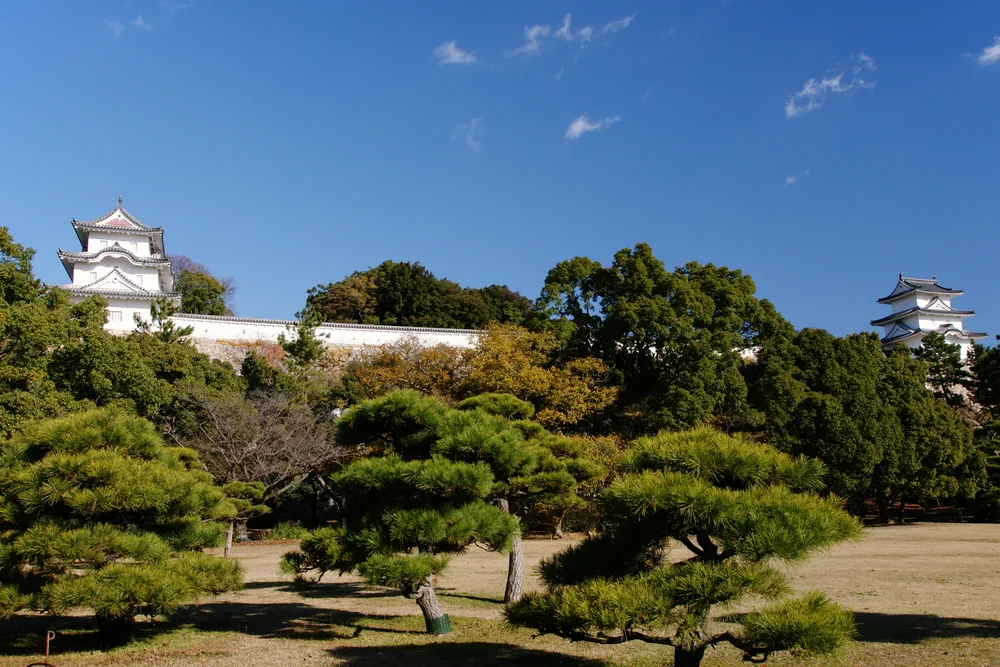
Iga Ueno Castle inside Ueno Park deserves its own block of time. Tied closely to master castle builder Todo Takatora, the current wooden keep was reconstructed in 1935. Walk along the base first so kids can crane their necks at the massive stone walls before climbing inside to watch the view open up floor by floor. The keep is open 9:00–17:00 (last entry 16:45), with admission at ¥600 for adults and ¥300 for children. Because costume returns close at 16:00, drop off your outfits first if you plan a late-afternoon ascent.
Although everything shares Ueno Park, each site uses its own entrance and ticket counter. On a classic morning-arrival day, rent outfits right after the station, tour the ninja museum, break for lunch, climb the castle, and return costumes on your way back. If you end up waiting for a later ninja show, flip the castle earlier or admire the stone walls from the park with the castle town behind you. If anyone in your group prefers skipping steep castle stairs, set a shaded meeting bench between the two museums so you can split briefly and regroup for the walk back.
Save the Danjiri Museum's festival gallery for when you have spare time. Inside, three ornate Ueno Tenjin Festival floats stand alongside recreations of the festival's Demon Procession. Kids wearing ninja outfits from the morning get a kick out of spotting which demon masks look straight out of a folktale. If you only came for costume rentals and need to catch a train, a quick snapshot outside the building is plenty—street photos are faster to time, leaving a clean walk back to Uenoshi Station right after drop-off.
Both the ninja house and the castle keep offer memorable backdrops, so let the kids vote on whether their favorite family shot goes in front of the thatched roof, the stone ramparts, or the station. Inside tight museum corridors, keep moving with the flow of visitors and save posed group shots for wide outdoor clearings. On short winter days when dusk settles early, knock out castle photos before or right after lunch and save late afternoon for indoor stops.
Want to extend your walk into the historic castle town? Starting August 2026, the museum is running a stamp rally themed around Todo Takatora and the Iga retainers. Buy the dedicated stamp book at the museum ticket counter for ¥1,000, then pay ¥200 at each of the five designated stops before claiming a completion stamp at the SAKAKURA BASE Tourist Information Center. The route weaves past local temples and shrines, making it an easy afternoon wander once your showtime is behind you.
Two Day-Trip Blueprints Based on Your Kids' Top Priority
The show-first plan fits families staying in central Osaka or around Nagoya Station who don't mind an early train after breakfast. Head straight to the museum upon arrival: if a performance starts soon, grab admission tickets and walk straight to the show hall. If that slot is full, tour the trick house first and queue for the next showtime on the calendar. Step out for lunch using your re-entry ticket, return for any galleries you missed, and spend the afternoon choosing between castle climbing or costume rentals.
The costume-first plan puts the Danjiri Museum at the very top of your morning. Suit up and snap photos along the park paths before walking into the Ninja Museum. If you aim for the 13:30 show, tour the trick house in the morning, step out for a relaxed lunch, return for the afternoon performance, and still have plenty of cushion to return outfits before 16:00. Squeeze the castle climb either before the show or right after returning costumes, and avoid starting lunch with only 30 minutes left before curtain time so nobody has to sprint back mid-meal.
Arriving late calls for a tight loop. Walk straight from Uenoshi Station to the museum, ask gate staff when the next house tour begins, browse both galleries, and stroll past the castle exterior on your way out. Rentals stop at 15:00, so swap dressing up for a relaxed park walk if you arrive later. With only an hour to spare, picking one favorite gallery artifact beats sprinting up the castle and racing back for a final show.
Two practical logistics tips make traveling with young kids much smoother. First, there are no restrooms inside the Ninja Museum itself—use the facilities beside the Ueno Park Tourist Information Center or the park rest area beforehand (a multi-purpose restroom is located at the information center). Second, the museum has no baggage lockers; stash large suitcases in the coin lockers at Uenoshi Station if stopping by between cities. Parents with infants can also ask staff about the nursing room inside the Ninja Tradition Hall.
If the transit ride already tired your kids out, trim scheduled wait times down to a single event once inside. Distances inside Ueno Park are short, so pick an easy loop everyone can handle—view the castle from the lawn and admire the Danjiri Museum from outside. While the secret doors are still fresh in your child's mind, look back from the castle terrace toward the low thatched house and tall white keep, and ask why two such different buildings stood watch in the same town.
On short winter days, set a firm return-to-station alarm on your phone right after lunch. If you are catching the 16:37 highway bus back to Nagoya and rented costumes, aim to drop off the outfits before 16:00 to allow an unhurried walk to Uenoshi Station. Kintetsu riders should anchor their afternoon around a specific Uenoshi-to-Iga-Kambe train that connects smoothly to their Limited Express. Because train departures and costume returns are fixed, treat lunch length and stone-wall wandering as your flexible buffer.
A few useful answers
Can I reserve the ninja show in advance or buy a show-only ticket?
Individual visitors buy museum admission first, then pay an extra ¥600 per person at the show hall. Seating is first-come, first-served with no advance reservations for individual travelers. Check the official ninja show schedule first to pick a performance date.
Can an eight-year-old try the shuriken throwing experience?
The activity uses real metal throwing stars provided by the museum. Check with the staff next to the ninja house regarding current availability and participation guidelines for your child before paying. It costs ¥300 for six throws, and no museum admission ticket is required if you only want to try shuriken throwing.
Do I need to understand Japanese to enjoy the trick house?
You can start by watching the live guide demonstrations. The museum provides English and Chinese audio explanations inside the ninja house, and the exhibit halls feature signage in both Japanese and English.
Which Ueno station should I get off at for the Iga-ryu Ninja Museum?
Get off at Uenoshi Station (also called Ninja City Station) on the Iga Railway in Mie Prefecture. Transfer at Iga-Kambe if coming via Kintetsu, or at Iga-Ueno if coming via the JR Kansai Line. The museum is inside Ueno Park, about a 7–10 minute walk from Uenoshi Station.
Can I rent a ninja costume directly at the museum to walk around town?
Head to the Ninja Transformation Corner inside the Danjiri Museum next to Ueno Park. Rentals cost ¥1,500 per outfit, are issued from 10:00 to 15:00, and must be returned by 16:00 (subject to availability).
Can we still visit the ninja house and see the show if it rains?
Yes. The ninja house and exhibit halls are indoors, and the Ashura Ninja Show takes place on an all-weather covered stage. Because you walk outdoors between buildings, bring a compact umbrella. The outdoor shuriken experience may pause during severe weather.
Official information and references
Sources used in this guide.
- Iga-ryu Ninja Museum | Ticket Prices, Opening Hours, and Closures
- Iga-ryu Ninja Museum | December 18 Temporary Closure Notice
- Iga-ryu Ninja Museum | Ninja Show Schedule Calendar
- Iga-ryu Ninja Museum | Individual Visits, Re-entry, and Facilities
- Iga-ryu Ninja Museum | Ninja House and Live Demonstrations
- Iga-ryu Ninja Museum | Ninja Tradition Hall and Collections
- Iga-ryu Ninja Museum | 2026–2027 Mini-Exhibit: From Igashu to Igamono
- Iga-ryu Ninja Museum | Ashura Ninjutsu Demonstration Show
- Iga-ryu Ninja Museum | Shuriken Throwing Experience
- Iga-ryu Ninja Museum | Elevator Out-of-Service Notice
- Iga-ryu Ninja Museum | Access Guide
- Kintetsu Railway | Base Fares and Limited Express Surcharges (Osaka-Namba to Kintetsu-Nagoya)
- Kintetsu Railway | Weekday Limited Express Timetable
- Kintetsu Railway | Meihan Limited Express Timetable
- Kintetsu Railway | Limited Express Ticket Sales and Base Fare Rules
- Iga Railway | Weekday and Weekend/Holiday Timetables
- Iga Railway | Adult and Child Fare Chart
- Iga Railway | Ninja Trains and Schedule Inquiries
- Iga Railway | Line-Wide Transit IC Card Acceptance
- Mie Kotsu | Nagoya to Uenoshi Station Highway Bus Schedule and Fares
- Mie Kotsu | Uenoshi Station Return Timetable and Boarding Stop
- Mie Kotsu | Highway Bus Reservations and Payment Guide
- Iga Ueno Tourist Association | Danjiri Museum and Ninja Costume Rentals
- Iga Ueno Tourist Association | Iga Ueno Castle Admission and Hours
- Mie Prefecture Tourism Federation | Walking Time from Uenoshi Station to the Museum
- Iga-ryu Ninja Museum | English Audio Guide and Stage Weapons
- Iga-ryu Ninja Museum | Castle Town Stamp Rally Event
- Iga Railway | Weekday Kintetsu and JR Transfer Timetable
- Meitetsu Bus | Meitetsu Bus Center Floors and Boarding Platforms
- Mie Kotsu | Nagoya-Ueno Highway Line Timetable and Fares
- Mie Kotsu | Iga Ninja Liner Ticket Details, Pricing, and Redemption