Planning a visit to the Iga-ryu Ninja Museum in Mie Prefecture? Explore the trick-filled Ninja House, Ninjutsu museums, Ashura Ninja Show and painted Iga Railway trains. Covers 2026–2027 opening hours, ticket prices, costume hire and day trips from Osaka and Nagoya.
- Region & Focus
- KansaiFamily attractions
- Reading Scope
- 15 min read · 8 chapters · 6 Q&As
- Official Verification
- 31 official sources checkedUpdated 22 November 2026
- Key Topics
- Rail travelItinerariesFirst trip
Chapter Route Map (tap any stop)
- Pick your show date before booking train tickets
- Inside the thatched house: spot what looks ordinary first
- One key highlight each in the two exhibition halls
- Allowing half an hour for Ashura and a separate queue for shuriken
- Kintetsu from Osaka versus the direct bus from Nagoya
- Catching the Ninja Train without derailing your schedule
- Hiring ninja outfits and climbing Iga Ueno Castle
- Two easy day-trip plans based on what excites your children most
- Quick Q&A
One moment a figure stands beside a wooden wall; in the blink of an eye, the room appears completely empty. The signature draw of the Iga-ryu Ninja Museum in Mie Prefecture is this thatched farmhouse packed with secret doors, revolving panels and hidden staircases, all demonstrated live by a guide. Families hoping to catch the Ashura Ninja Show should pick a performance date first, then take the Kintetsu line from Osaka via Iga-Kambe or a direct highway bus from Nagoya to Uenoshi. With the museum, costume hire at the Danjiri Museum and Iga Ueno Castle all clustered in the same park precinct, you can easily fit a show and a castle climb into a relaxed day trip and still be back for dinner.
Pick your show date before booking train tickets
If your family only wants to see one headline attraction—say an eight-year-old itching to explore the trick house—any open weekday works fine. If someone in your group has their heart set on the Ashura troupe, check the museum's official Ninja Show Calendar before setting your travel date. On non-performance days when the museum remains open, you can still tour the Ninja House and exhibition halls as usual. Rather than rushing to arrive at opening time, aim to reach the park well before your chosen show so you have breathing room for tickets, walking and queuing.
On weekdays, the museum opens from 10:00 to 16:00, with last admission at 15:30. At weekends and on Japanese national holidays, it stays open until 16:30, with last entry at 16:00. The museum closes annually from 29 December to 1 January; in 2026, it is also closed all day on 18 December for a private booking, reopening on 19 December. If you are planning a New Year trip, steer clear of that four-day routine closure. Note that the Danjiri Museum, where you hire ninja outfits, also closes from 29 December to 1 January.
Ticketing comes in two stages. You buy museum admission at the entrance gate, then present that ticket at the performance hall to pay an extra ¥600 per person for the show. Show entry for individual visitors is strictly first-come, first-served, with no advance seat reservations. If your children are keenest on the live performance, keep an eye on the queue even if you are mid-way through the exhibits. Leaving the show for the final slot before your train home leaves no fallback if that session fills up.
Museum admission is ¥1,000 for high school students and adults, and ¥700 for children aged four through junior high school. One adult and an eight-year-old both watching the show comes to ¥2,900; adding one shuriken throwing session beside the Ninja House brings the total to ¥3,200. Ninja costume hire, castle admission and transport are all priced separately, so keeping those three lines distinct in your budget makes it easy for everyone to pick only what they fancy.
Card networks listed by the museum—including VISA, JCB and AMEX—are accepted at the main admission counter, but not at the Ninja Show desk, where payment is handled separately. If members of your group split up between the exhibits and the queue, make sure everyone keeps hold of their own admission ticket. Re-entry is permitted on the same day with your ticket stub, so you can head out to the castle town for lunch and return in the afternoon without paying twice.
The museum estimates 30–40 minutes for the house and exhibits plus roughly 30 minutes for the show, giving a baseline visit of 70–90 minutes. That is a handy minimum when planning outward trains. If your children like asking questions about every gadget or need a toilet stop in the park before entering, build in extra buffer. Walking from the station, crossing the park, finding the gate and assembling ahead of curtain-up quietly eat into the schedule.
Learning two quick calendar labels makes planning far smoother than relying on a standard timetable. Dates marked with no performance mean no shows run that day. Scheduled slots occasionally note heavy group bookings or show how many individual seats remain available. For instance, the national holiday on 23 November 2026 lists shows at 11:00, 13:30 and 14:45, whereas 24 November has no performances—meaning two consecutive days offer completely different itineraries.
| Item | Price | How to pay or join |
|---|---|---|
| Museum admission | High school & above ¥1,000 / Ages 4 to junior high ¥700 | Buy at the museum entrance ticket counter |
| Ashura Ninja Show | ¥600 per person | Pay separately at the venue with your admission ticket; first-come, first-served |
| Shuriken experience | ¥300 for 6 throwing stars | Ask staff beside the Ninja House; no museum admission ticket required |
Planning a visit to the Iga-ryu Ninja Museum in Mie Prefecture? Explore the trick-filled Ninja House, Ninjutsu museums, Ashura Ninja Show and painted Iga Railway trains. Covers 2026–2027 opening hours, ticket prices, costume hire and day trips from Osaka and Nagoya.
Inside the thatched house: spot what looks ordinary first
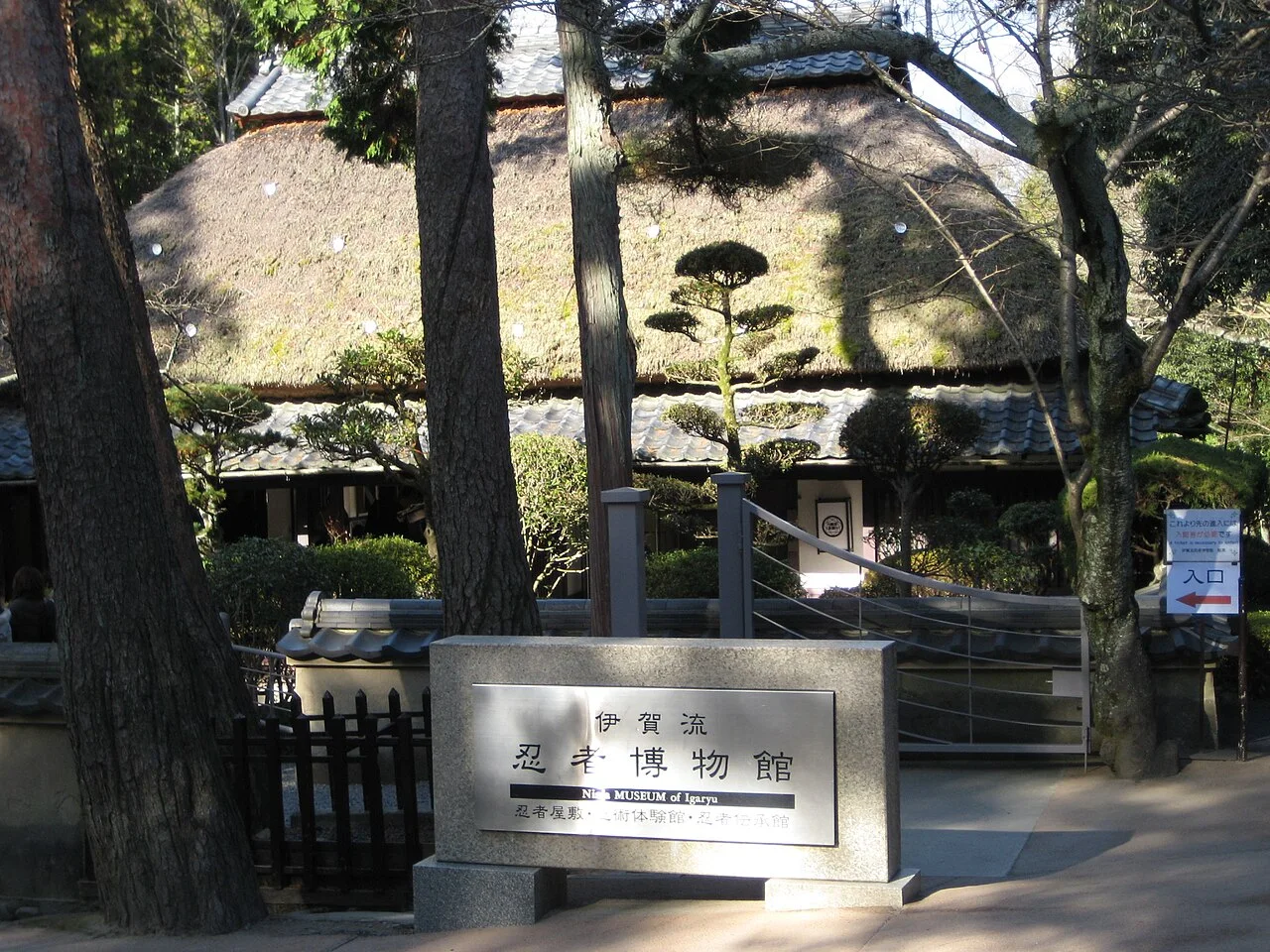
From the outside, the first thing you notice is a thick sweep of thatch sitting low beneath the trees—a sharp contrast to the gleaming white castle keep rising across the same park. Once the guide leads you inside, ask your children to point to the most ordinary-looking corner of the room. Turning the room itself into a guessing game keeps things far livelier than watching spoiler videos on the train, preserving the surprise when a wall suddenly pivots.
Demonstrations cover revolving wall panels (dondengaeshi), concealed staircases (kakushi-kaidan) and hidden sword compartments (katana-kakushi). Younger visitors tend to keep their eyes glued to the guide, so remind them to watch the wall itself and recall what changed once you step out. The house also showcases secret escape doors and routes. Japanese terms for the mechanisms appear on the museum's guide page, so you can match what you just saw against the diagrams afterwards.
People actually lived and worked in a farmhouse like this—welcoming callers, sitting down and storing belongings—and the mechanisms illustrate how ninja guarded family knowledge. Frame it as a spatial puzzle: if a house has to look hospitable at the front door while hiding rooms from guests, can you tell from the doorway? Let the children venture a guess before heading to the exhibition halls for the historical context. If someone wants to solve every trap on the spot, save one riddle for lunch rather than waiting in a crowded room for a second demonstration.
While both the house tour and the Ashura show feature live performers, they reward very different attention spans. Inside the farmhouse, the focus narrows onto a single sliding board or hidden stair; on the outdoor stage, you watch an ensemble coordinate timing and movement across the set. If a youngster finds theatrical combat loud or intimidating, spending longer in the Ninja House and exhibition halls is just as rewarding. In smaller family groups, let a child act as navigator to spot the entrance to the next building.
English and Chinese audio commentary runs inside the Ninja House, backed up by English labels on the mechanisms and Japanese-English captions in the exhibition halls. Ask staff at the entrance if you want the Chinese audio track set up. Children who are still building reading confidence can listen inside the house first, then match the names they heard to display cases in the museum halls. Use a phone to read captions aloud if needed, just step aside from the demonstration sightlines so everyone can watch the traps in action.
Because the historic house involves steep steps and uneven thresholds, pushchairs are left with staff near the ticket gate; bring a baby carrier for toddlers. According to the museum's accessibility notes, wheelchair users can view the interior from the outer wooden veranda (engawa). Note that the lift down to the underground Ninjutsu Experience Hall was suspended on 26 June 2026 with no confirmed reopening date. If anyone in your party requires step-free lift access, call the museum ahead on 0595-23-0311 and follow staff directions to focus on the ground-level house and accessible areas.
One key highlight each in the two exhibition halls
After the farmhouse, walk over to the Ninjutsu Experience Hall to see actual tools depicted in old shinobi manuals. Several pieces are replicas built directly from historical texts, alongside display cases of shuriken and mizugumo—water-walking floats whose Japanese name, literally "water spider", often makes children expect a creature until they read the placard. Seeing ideas from a centuries-old book turned into tangible objects gives youngsters plenty to talk about without parents needing to memorise technical terms in advance.
Next door, the Ninja Tradition Hall occupies a converted rice granary and shifts the focus from hardware to the people themselves—their daily lives, history and beliefs. One standout display is the Ninja Mandala, depicting deities revered by ninja of the Iga and Koga regions. When looking at the painting with children, spot the central figure first and trace how the outer rings are arranged. Letting each child pick one illustrated exhibit to explain to the rest of the family gives them something concrete to recognise during the stage show later.
Parents interested in primary texts should check the museum's collection notes. Classics such as the Bansenshukai, Iranki and Nin-hiden are listed among the holdings and rotated into public view on schedule. From 10 October 2026 to 22 July 2027, a special mini-exhibition traces the shift from the independent Iga-shu warriors to the Iga-mono retainers of the Todo clan. Part 1 runs until 24 January 2027 featuring a banner bearing the Todo ivy crest linked to the Siege of Osaka, before Part 2 takes over on 25 January focusing on the Bansenshukai—a handy date to note if travelling around New Year.
That mini-exhibition also offers an easy storyline to share with children. It contrasts the Warring States Iga-shu mercenaries with the Edo-period Iga-mono employed by the Todo domain. If you visited Osaka Castle the day before, seeing the Siege of Osaka referenced on the banner links both days together seamlessly. Later in the afternoon at Iga Ueno Castle, the museum displays introduce Todo Takatora again through the story of the fortress's towering stone walls.
If time is tight, make a quick split decision after leaving the Ninja House. Curious tinkerers who keep asking how things work will gravitate towards the tools in the Experience Hall, while young storytellers interested in how people lived will enjoy extra minutes in the Tradition Hall. Having each person choose one favourite item to share over lunch gives a brisk tour a sense of purpose. The collection is vast, so covering half a circuit thoughtfully beats rushing past every cabinet.
Before putting your camera away, check the signage beside each display case. Photography and filming are prohibited for certain artefacts and during the live ninjutsu show; general permitted shots are strictly for personal travel memories, with public video uploads or commercial shoots requiring prior permission. For portraits in hired ninja outfits, the park pathways and open ground in front of the castle keep make far better backdrops anyway, framing the thatched roof, stone walls and surrounding trees.
Allowing half an hour for Ashura and a separate queue for shuriken
Ashura is the name of the resident performance troupe, listed on the calendar as the Ninjutsu Demonstration Show. The museum's English pages highlight real katana, kusarigama chain-sickles and shuriken among the stage props. Visiting the exhibition halls before the show means children can spot weapons they already recognise from the glass cases. Give them a quick reminder of their favourite display piece beforehand and let the stage action bring its purpose to life.
The theatre sits inside the museum grounds, separate from the shuriken throwing pitch beside the Ninja House. Let ticket staff at the entrance know which showtime you are aiming for and ask for directions to the hall. If part of the family needs a toilet break while others queue, agree to regroup directly outside the show doors. Keep everyone's admission tickets and the ¥600 cash show fee in one accessible pocket before joining the line so you are ready when staff usher visitors in.
Some children find close-quarters swordplay or flying blades intense once the lights drop. Agree on a quiet hand-squeeze signal before sitting down in case anyone feels overwhelmed, and save debriefing the dramatic stunts until you are back outside in the daylight. If you are travelling solo with two children who want different things, keep the slot immediately after the show flexible. You can head straight out for lunch after the curtain falls, or loop back into the halls if everyone still has energy.
Shuriken throwing is a standalone paid activity run by staff beside the Ninja House. Officially priced at ¥300 for six stars, it uses real metal throwing stars under staff supervision. Check in at the booth on arrival to confirm the day's queue and participation rules for children before paying. Any child who prefers simply watching can still hunt for secret doors in the Ninja House and pose for costumed photos in the castle town.
On rainy days, the Ninja House and both exhibition halls remain indoors, and the Ashura show runs on a covered all-weather stage. Because moving between buildings involves stepping outside, folding umbrellas are easiest to manage. The outdoor shuriken pitch may close in severe weather. Wet forecasts are best spent touring the indoor galleries around a scheduled show, waiting for a dry spell to take photos near the castle, or enjoying an unhurried indoor lunch outside the park if performances are cancelled.
Unlike reserved Kintetsu Limited Express trains, individual show tickets offer no timed booking window. Plan your outward train so the whole family reaches the museum gate with time to spare before doors open. If a delay makes you miss your target slot, simply switch to the next showtime on the calendar and tour the galleries first. Should the final show of the day already be over, there is no need to linger until closing—head out early to explore the castle town or climb the keep.
Kintetsu from Osaka versus the direct bus from Nagoya
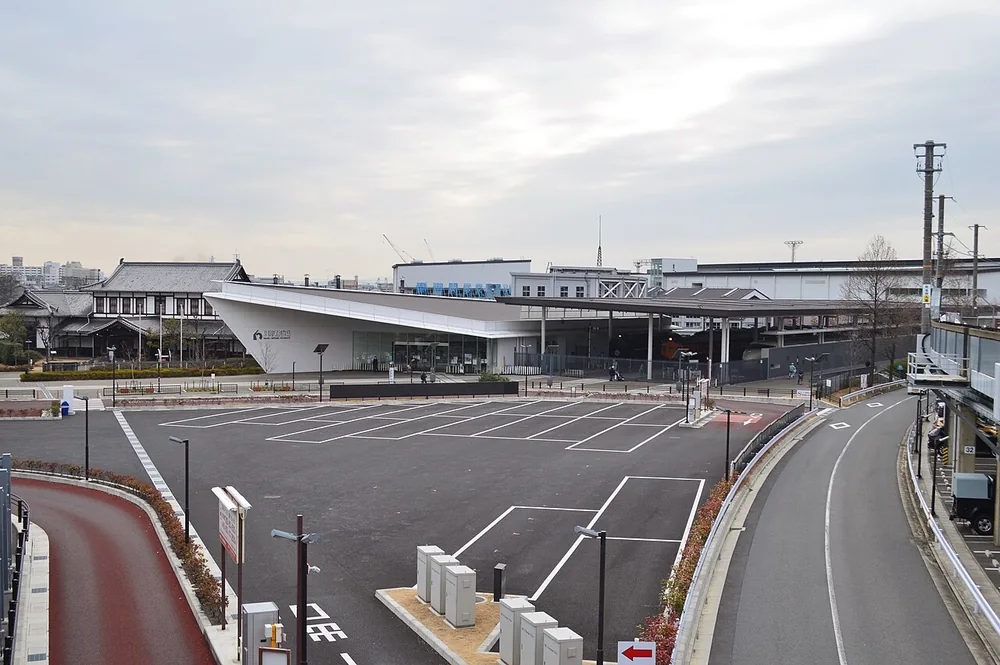
Double-check station names before searching timetables. The park's local stop is Uenoshi Station—also branded Ninja City—on the Iga Railway. Passengers changing from the Kintetsu network transfer at Iga-Kambe, while those arriving via the JR Kansai Line change at Iga-Ueno. All three names appear on regional maps, so save a screenshot showing both your transfer station and destination before setting off. From Uenoshi, signs lead straight up towards Ueno Park.
From central Osaka, board a Kintetsu Limited Express at Osaka-Uehommachi that stops at Iga-Kambe, then connect onto the Iga Railway to Uenoshi. Under the March 2026 weekday timetable revision, the 08:09 departure reaches Iga-Kambe at 09:11 for a seven-minute transfer to the 09:18 local train, arriving at Uenoshi at 09:44; if travelling slowly with children, the next train leaves at 09:44 and arrives at 10:12. Services from Osaka-Namba are also worth checking—just confirm Iga-Kambe appears on the stopping pattern before buying a Limited Express seat.
A one-way journey from Osaka-Uehommachi costs ¥1,370 for the Kintetsu base fare, ¥920 for the standard Limited Express supplement and ¥400 on the Iga Railway—¥2,690 each way, or ¥5,380 return. To keep costs down, take a Kintetsu Express train stopping at Iga-Kambe with no supplement, cutting the one-way total to ¥1,770. Taking the Limited Express outbound makes it easy to reserve adjacent seats and eat breakfast on board, while a convenient Express train works well for the trip back.
Kintetsu Limited Express tickets typically go on sale at 10:30 JST one month before your travel date. If you buy only the Limited Express supplement on your phone, remember to cover the base fare with a paper ticket or transport IC card. Keep your mobile ticket screen handy and watch for Iga Railway signage when transferring. Since February 2025, the entire Iga Railway accepts nationwide IC cards—simply tap in and out at the readers as directed. Cash or paper-ticket users can settle the adult and child Kintetsu legs at departure and pay the Iga Railway fare separately at Iga-Kambe.
From Nagoya, the Mie Kotsu Nagoya–Ueno Highway Bus offers a direct ride straight into central Iga. Buses depart from Stand 1 on the third floor of Meitetsu Bus Center (located in the former Meitetsu Department Store Men's Building). Single fares are ¥2,300 for adults and ¥1,150 for children, paid on board with no advance reservation required. On the late-November 2026 Saturday timetable, morning departures leave at 08:55 and 10:15 before jumping to 14:25. The 08:55 coach arrives at Uenoshi at 10:41 in time for a midday show; the 10:15 arrives at 12:01, ideal for lunch near the station before entering the park.
Adults planning a return bus trip plus the museum, shuriken throwing and the Danjiri Museum can save with the Iga Ninja Liner Ticket at ¥5,500, compared with ¥6,500 bought separately. Sold at the Mie Kotsu counter on the third floor of Meitetsu Bus Center, it remains valid for seven days from purchase. On arrival in Iga, exchange your voucher for attraction tickets at the Tourist Information Centre on the M2 mezzanine of SAKAKURA BASE (the former Ueno City Hall). Note that the Ninja Show still costs extra, and there is no child version of the pass—paying separately for an eight-year-old comes to ¥3,700 across the same four items.
You can also travel entirely by rail from Nagoya. Catching a Kintetsu Limited Express that stops directly at Iga-Kambe plus the Iga Railway costs ¥1,880 base fare, ¥1,340 Limited Express supplement and ¥400 local fare, totalling ¥3,620 one way. Because direct stops at Iga-Kambe are limited to select departures, daytime journeys usually follow the museum's suggested route changing at Ise-Nakagawa (or Nabari) onto the Kintetsu Osaka Line. At ¥4,600 return, the direct bus wins on price and zero transfers, though taking the train at least one way lets you ride the painted Ninja Train.
All return routes start back at Uenoshi Station. Osaka-bound travellers take the Iga Railway to Iga-Kambe and transfer onto a Kintetsu train for Osaka-Uehommachi or Osaka-Namba. Nagoya bus passengers head to Stop 1 outside Uenoshi Station; Mie Kotsu schedules afternoon returns at 14:27 and 16:37. With over two hours between coaches, aiming for the 16:37 departure gives ample time to climb the castle and return costumes. Because unreserved coach seats can fill up, keep a rail itinerary saved on your phone as a backup.
If you are staying near JR Nagoya Station and fancy scenic views along the Kansai Main Line, the rail route via Kameyama and Iga-Ueno connects onto the Iga Railway into Uenoshi. Check both timetables together carefully, as long connection waits at Kameyama can easily cancel out the time saved walking from a JR hotel. The short hop from Iga-Ueno to Uenoshi costs ¥280 for adults and ¥140 for children. Save this route for unhurried days rather than tight mornings chasing the first show.
| Departure & route | One-way / return fare | Journey time to Uenoshi |
|---|---|---|
| Osaka-Uehommachi: Kintetsu Limited Express (direct stop at Iga-Kambe) + Iga Railway | ¥2,690 / ¥5,380 | Approx. 90 mins riding time plus transfer wait |
| Osaka-Uehommachi: Kintetsu Express + Iga Railway | ¥1,770 / ¥3,540 | Approx. 80 mins on Kintetsu plus ~30 mins on Iga Railway and transfer wait |
| Meitetsu Bus Center: Mie Kotsu direct highway bus | ¥2,300 / ¥4,600 | Approx. 100–110 mins direct |
| Kintetsu Nagoya: Kintetsu Limited Express (direct stop at Iga-Kambe) + Iga Railway | ¥3,620 / ¥7,240 | Approx. 110 mins riding time plus transfer wait |
Catching the Ninja Train without derailing your schedule
Iga Railway runs three themed Ninja Trains in blue, pink and green. On the blue and pink carriages, camouflaged ninja hide within the door patterns, while certain interiors feature shuriken-patterned blinds, themed lighting and ninja figures. The green train showcases Mie-grown cedar woodgrain panelling and star-shaped grab handles. For an eight-year-old, hunting for hidden ninja from the window blinds to the doors passes the journey far faster than asking how many stops remain.
Standard timetables list all departures together regardless of carriage design. If riding a themed train is a top priority, Iga Railway asks passengers to telephone Uenoshi Station on 0595-21-3231 after 17:00 the day before travel to check operating rosters. Screenshot the weekday or holiday timetable beforehand so you can match times on the call. If your morning train turns out to be a standard carriage, stick to your museum schedule and see what pulls into the platform in the afternoon.
Iga-Kambe and Iga-Ueno sit at opposite ends of the line, with Uenoshi roughly in the middle, though some services terminate there. On the way in, any train reaching Uenoshi works fine. If you arrive from Iga-Kambe and leave via JR Iga-Ueno, check the northbound column for your return leg. Reading the top-of-column origin stations on the printed timetable avoids boarding in the wrong direction.
Outside Uenoshi Station, follow signs for Ueno Park and the Iga-ryu Ninja Museum. Local tourism boards estimate a 7–10 minute walk, though gravel paths and gentle slopes inside the park add a few minutes with a pushchair or older relatives. If you arrived by coach, glance at Stop 1 outside the station on your way out so you know where to queue later—walking back from the costume hall simply means retracing your steps towards the station building.
When photographing the full train on the platform, wait until it comes to a complete stop, take your shot from a safe waiting area, then board promptly. Save spotting the door artwork and interior details until everyone is seated. If your carriage happens to carry a ninja figure, challenge the children to pick which detail—figure, blind or star handle—looks most like a real spy tool before comparing notes with the authentic artefacts in the museum later.
Hiring ninja outfits and climbing Iga Ueno Castle
To hire ninja costumes near Uenoshi Station, head to the Ninja Transformation Studio inside the Danjiri Museum. Its street address is 122-4 Ueno Marunouchi—useful to keep distinct in your satnav from the Ninja Museum entrance at 117 Ueno Marunouchi. Hire costs ¥1,500 per outfit, issued between 10:00 and 15:00 with return required by 16:00, though the desk closes early if stock runs out. You can stroll through the park and castle grounds in costume; entry to the Danjiri Museum's festival hall requires a separate ticket.
If you want family photos in full ninja kit outside the thatched house, drop by the Danjiri Museum straight off the morning train. Tour the Ninja House afterwards and decide over lunch whether everyone still has legs for the castle climb. Families hiring just one outfit can dress whoever wants it most while everyone else acts as bag-carrier and photographer. Keep everyone in comfortable walking trainers so running up slopes and sitting on tatami stays effortless.
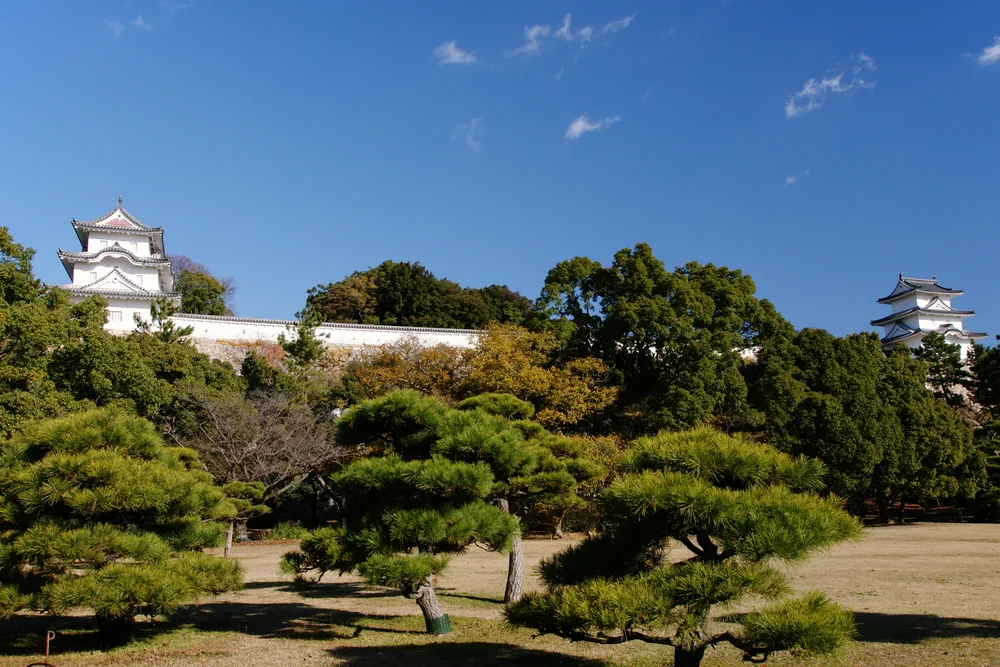
Iga Ueno Castle sits right inside the same park and deserves its own hour. Built under Todo Takatora, its wooden main keep was reconstructed in 1935. Walk along the base first so children can appreciate the sheer height of the dry-stone ramparts before climbing inside to watch the view open out floor by floor. The keep opens 09:00–17:00 (last entry 16:45), costing ¥600 for adults and ¥300 for children. Since costume return cuts off at 16:00, drop off your outfits first if you plan a late-afternoon ascent.
Although everything sits within Ueno Park, each site manages its own entrance and tickets. On a morning-to-afternoon schedule, hire costumes right after arriving, tour the museum, eat lunch, climb the castle and return outfits before the deadline. If you end up with a long wait before a Ninja Show, flip the order and tackle the castle earlier—even from the outer lawn, the towering ramparts frame classic castle-town photos. Anyone preferring not to climb steep stairs can agree on a meeting bench between the museum and the keep.
Pop inside the Danjiri Museum's exhibition hall if time allows. It displays three ornate floats from the Ueno Tenjin Festival alongside a recreated demon procession. Children who have spent the morning dressed as ninja enjoy spotting which demon masks look straight out of a folktale. If you are short on time before your coach or train, a quick snapshot outside the building is plenty—street portraits are easy to wrap up right before heading back to Uenoshi Station.
Both the thatched Ninja House and the white castle keep photograph beautifully. Let the children pick their favourite spot for the family shot—house, stone wall or station platform. Keep walking smoothly through narrow museum corridors when in costume, saving posed group shots for open spaces off the main path. In autumn and winter when daylight fades early, take outdoor castle photos around lunchtime and leave indoor cafés or train rides for late afternoon.
For families keen to wander deeper into the old castle town, a Todo Takatora and Iga-mono stamp rally launched in August 2026. Pick up the special stamp sheet at the museum counter for ¥1,000, paying ¥200 at each of five designated spots around town before collecting a final completion stamp at SAKAKURA BASE's Tourist Information Centre. Because the trail winds past local temples and shrines, pair it with an unhurried afternoon outside showtimes so you can actually enjoy the illustrations.
Two easy day-trip plans based on what excites your children most
The show-first plan suits families staying in central Osaka or around Nagoya Station who are happy to board a train straight after breakfast. Once you reach Uenoshi, head straight to the museum to buy tickets and walk to the performance hall if a show is about to start. If that session is full, explore the Ninja House first and aim for the next slot on the calendar. Step out for lunch around midday, keep your ticket stub to finish the exhibition halls afterwards, and pick either the castle or costume hire for the afternoon.
The costume-first plan makes the Danjiri Museum your first stop off the train—hire outfits, grab photos early, then stroll into the museum. Pairing this with a 13:30 Ninja Show lets you tour the Ninja House in the morning, enjoy a relaxed lunch outside, return for the afternoon performance and still hand back costumes comfortably before 16:00. Slot the castle climb either before the show or after returning your outfits, and avoid starting lunch with only half an hour left before curtain-up so nobody has to sprint mid-meal.
Arriving late in the afternoon calls for a streamlined circuit. Walk straight from Uenoshi Station to the museum, ask staff when the next Ninja House demonstration begins, follow it with both exhibition halls, then finish with an exterior stroll past the castle ramparts. Costume hire stops at 15:00, so use that hour for a park walk instead. With only an hour left before closing, focusing deeply on one favourite exhibit in the Tradition Hall feels far less rushed than sprinting up the keep and dashing back.
Two practical facilities are worth noting when travelling with children. There are no toilets inside the museum grounds themselves—use the facilities at the Ueno Park Tourist Information Centre or the park rest area next door, which also offers an accessible multi-purpose toilet. The museum has no luggage lockers either, so store large bags in coin lockers at Uenoshi Station if stopping over between cities; parents with babies can ask at the Ninja Tradition Hall about nursing space.
If little legs are already flagging from the journey, trim the afternoon down to just one timed event. Everything in Ueno Park sits close together, so you can easily shorten the walk and admire the castle keep and Danjiri Museum from outside. While the secret doors are still fresh in everyone's minds, stand beneath the castle ramparts, look across at the low thatched roof of the Ninja House, and ask your children why two buildings in the same park were designed so differently.
On shorter winter days, set an alarm on your phone over lunch for the walk back to the station. Taking the 16:37 Nagoya return bus as an example, aim to hand back hired costumes before 16:00 so you can stroll back to Uenoshi Station without rushing. For Kintetsu passengers, lock in your Uenoshi to Iga-Kambe local train first, then match the connecting Limited Express. Because train departures and costume returns are fixed, keep lunch and castle gazing flexible enough to give way when the clock ticks down.
A few useful answers
Can you book the Ninja Show in advance or buy a show-only ticket?
Individual visitors buy a museum admission ticket first, then pay ¥600 per person separately at the show venue. Entry is strictly first-come, first-served with no advance reservations for individuals. Check the official Ninja Show Calendar before travelling to confirm performance dates.
Can an eight-year-old join the shuriken throwing experience?
The experience uses real throwing stars provided by the museum. Head to the counter beside the Ninja House to check the day's availability and age or height conditions for your child; staff oversee the session. It costs ¥300 for six stars and can be tried without buying a museum admission ticket.
Do you need to understand Japanese to enjoy the Ninja House?
You can follow the guide's live demonstration visually. The museum provides Chinese and English audio explanations inside the Ninja House, and displays in the exhibition halls carry Japanese and English labels.
Which station should I get off at for the Iga-ryu Ninja Museum?
Alight at Uenoshi Station (also nicknamed Ninja City) on the Iga Railway in Mie Prefecture. Change at Iga-Kambe if coming by Kintetsu, or at Iga-Ueno if coming via the JR Kansai Line. The museum is inside Ueno Park, a 7–10 minute walk from Uenoshi Station.
Can you hire ninja costumes directly at the museum to wear around town?
Head to the Ninja Transformation Studio inside the nearby Danjiri Museum. Costume hire is ¥1,500 per outfit, issued from 10:00 to 15:00 with return by 16:00 (closing early if outfits sell out).
Can you still visit the Ninja House and watch the show if it rains?
Both the Ninja House and exhibition halls are indoors, and the Ninja Show runs on a covered all-weather stage. You will walk outdoors between buildings, so bring an umbrella. The outdoor shuriken throwing experience may be suspended in severe weather.
Official information and references
Sources used in this guide.
- Iga-ryu Ninja Museum: Admission Fares, Opening Hours & Closures
- Iga-ryu Ninja Museum: Temporary Closure Notice for 18 December
- Iga-ryu Ninja Museum: Ninja Show Calendar
- Iga-ryu Ninja Museum: Individual Visits, Re-entry & On-Site Facilities
- Iga-ryu Ninja Museum: Ninja House & Live Demonstrations
- Iga-ryu Ninja Museum: Exhibition Halls & Collections
- Iga-ryu Ninja Museum: 2026–2027 Iga-shu to Iga-mono Mini-Exhibition
- Iga-ryu Ninja Museum: Ashura Ninjutsu Demonstration Show
- Iga-ryu Ninja Museum: Shuriken Throwing Experience
- Iga-ryu Ninja Museum: Lift Suspension Notice
- Iga-ryu Ninja Museum: Access Guide
- Kintetsu Railway: Base Fares & Limited Express Supplements (Osaka-Namba to Kintetsu-Nagoya)
- Kintetsu Railway: Weekday Limited Express Timetable
- Kintetsu Railway: Meihan Limited Express Timetable
- Kintetsu Railway: Limited Express Ticket Sales & Base Fare Rules
- Iga Railway: Weekday & Holiday Timetables
- Iga Railway: Adult & Child Fare Table
- Iga Railway: Ninja Train Liveries & Schedule Enquiries
- Iga Railway: Line-Wide Transport IC Card Acceptance
- Mie Kotsu: Nagoya to Uenoshi Station Highway Bus Timetable & Fares
- Mie Kotsu: Uenoshi Station Return Timetable & Boarding Stop
- Mie Kotsu: Highway Bus Reservation & On-Board Payment Guide
- Iga Ueno Tourist Association: Danjiri Museum & Ninja Costume Hire
- Iga Ueno Tourist Association: Iga Ueno Castle Admission & Opening Hours
- Mie Prefecture Tourism Federation: Walking Time from Uenoshi Station to the Museum
- Iga-ryu Ninja Museum (English): Guide Information & Stage Props
- Iga-ryu Ninja Museum: Castle Town Stamp Rally
- Iga Railway: Weekday Kintetsu & JR Transfer Timetable
- Meitetsu Bus: Meitetsu Bus Center Floor Plan & Boarding Gates
- Mie Kotsu: Nagoya–Ueno Highway Line Timetable & Fares
- Mie Kotsu: Iga Ninja Liner Ticket Details, Pricing & Voucher Exchange