Reach Makino's metasequoia avenue from JR Makino Station. Compare the six-minute and looping buses, 2026 autumn bike-hire restrictions, the 2.4 km walk and return services for a Kyoto day trip or a night in Makino.
- Region & Focus
- KansaiAttractions
- Reading Scope
- 27 min read · 15 chapters · 4 Q&As
- Official Verification
- 14 official sources checkedUpdated 9 November 2026
- Key Topics
- ItinerariesRail travelSeasons
Chapter Route Map (tap any stop)
- A car-free day trip: take the bus first and save your walking for the trees
- Kyoto to Makino Station: choose an arrival that connects with the bus
- Bus fares and direction: ¥220, with six-minute and 26-minute journeys
- Pair the journeys: leave Makino Station at 10:00 and return in the afternoon
- Bike hire: flexible stops, but walk-in collection and return in peak autumn
- Walking from the station: plan it as a long walk
- Which section to walk: start at Pic-land and choose a turning point
- Autumn colour: usually late November to early December, in russet and brown
- Fresh leaves, summer and snow: change transport with the season
- Lunch and coffee at Pic-land: eat first, then choose extra activities
- Adding the highland baths: keep an afternoon and check Wednesday closures
- Children, older visitors and rain: bus returns and a short walk are flexible
- Keep the return bus and train clear; what to do if you miss the bus
- Whether to stay: early tree views justify a night, with different bases
- Putting it together: a half-day visit or a night, according to transport
- Quick Q&A
For a first car-free visit from Kyoto, take JR to Makino Station and the community bus to Makino Pic-land. Save your energy for walking beside the trees. Confident cyclists can hire bikes instead, but from 14 November to 13 December 2026, Makino Station accepts walk-in hire only and bikes cannot be returned at another station. Check the bus's loop direction: six minutes direct and more than 20 minutes via the highland are different journeys. A day trip is enough for daylight views and lunch. Stay a night in Makino if you want another walk early next morning.
A car-free day trip: take the bus first and save your walking for the trees
Give Makino's metasequoia avenue a full day trip from Kyoto. After reaching JR Makino Station, take the community bus to Makino Pic-land, walk the avenue, then eat or rest at the agricultural park before returning to the station in the afternoon. For a first visit focused on walking and photographs, this is the easiest way to manage energy. Confident cyclists who want to stop along the approach can replace the bus with a hired bike. Count the whole trip from leaving your Kyoto accommodation to returning there.
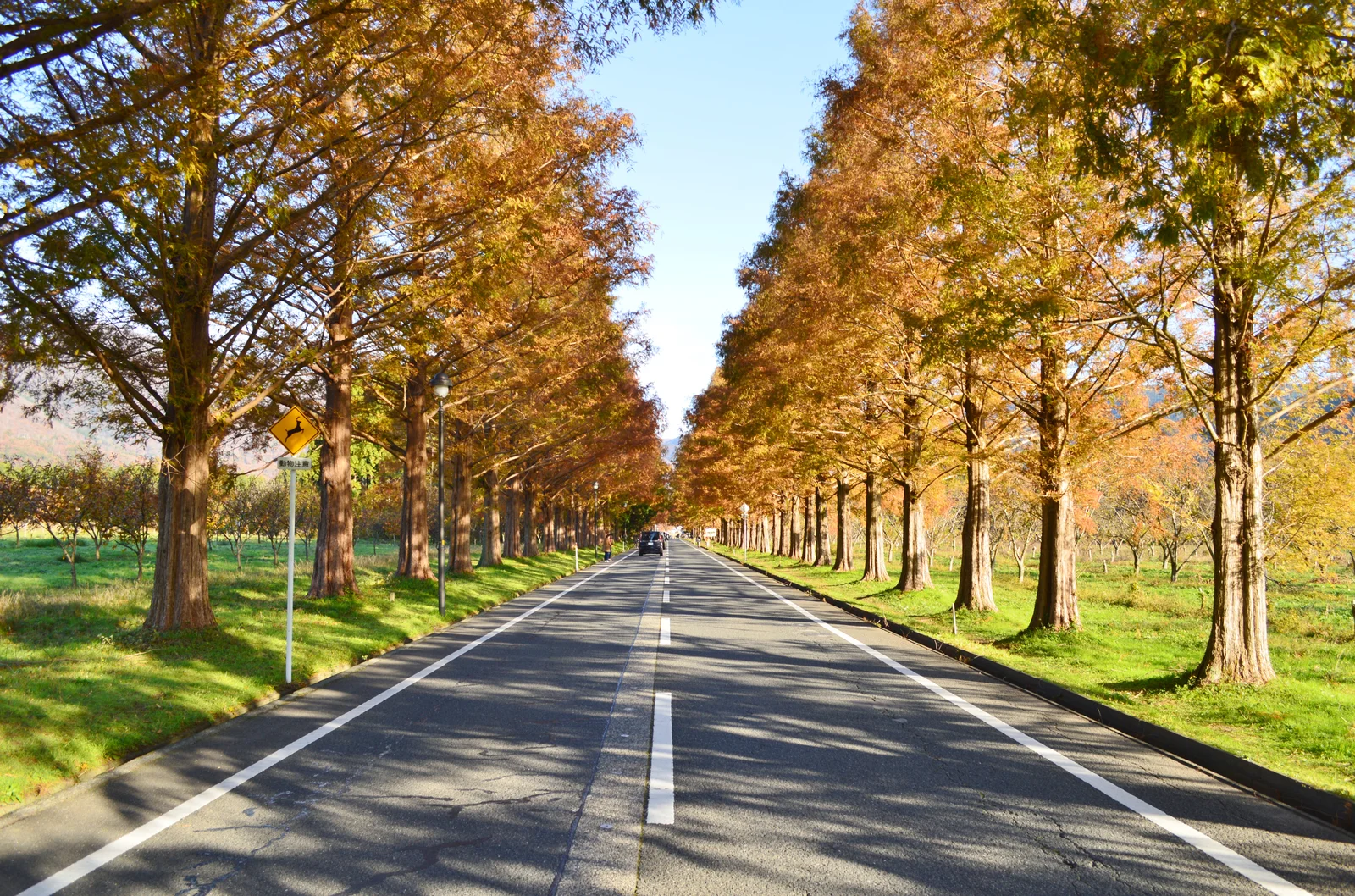
The avenue is about 2.4 km long, with roughly 500 metasequoias on both sides. It is not a forest behind an admission gate. The prefectural road runs through Makino Pic-land and continues towards Makino Highland. Pedestrians use the walking paths beside the road. Official directions say the avenue is immediately beside the bus stop. You can start walking on arrival without spending another ten minutes finding a separate entrance. The Takashima tourism association's avenue and access page explains the area.
With limited time, walk a section around Pic-land and return. Covering the full 2.4 km also means planning how to get back to the bus stop. Retracing the whole avenue is nearly 4.8 km, before food, the walk to the stop and waiting. Keen walkers can make it the main activity. With children or older companions, choose a shorter stretch first and extend it only if everyone is comfortable.
Keep Makino as the day's focus. Hachiman-bori in Omihachiman is on the other side of Lake Biwa, covered in the Omihachiman day-trip and overnight guide. Give each destination its own day for more time travelling and exploring. To keep your Kyoto base and add a day walking on the lake's western side, fit it after the Kyoto area itineraries and plan departure from your own accommodation.
Reach Makino's metasequoia avenue from JR Makino Station. Compare the six-minute and looping buses, 2026 autumn bike-hire restrictions, the 2.4 km walk and return services for a Kyoto day trip or a night in Makino.
Kyoto to Makino Station: choose an arrival that connects with the bus
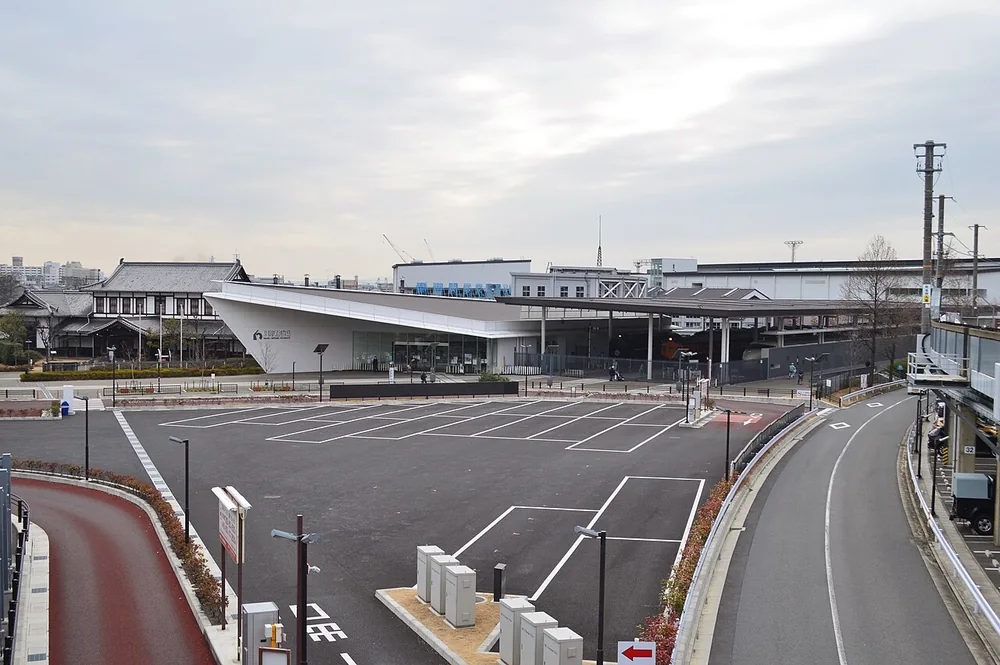
The railway destination is マキノ駅, Makino Station on the JR Kosei Line. Paste the Japanese name into searches and treat the station and Makino Pic-land as separate destinations for the last leg. A search for Makino alone can find other places or a botanical garden. Check the full train destination, transfers and stopping pattern, especially routes requiring a change at Omi-Imazu. The first train alone may not take you all the way to Makino.
From Kyoto Station, use a JR journey search for the travel date, then compare the bus times below. Accommodation in Kawaramachi or Gion adds a city journey to Kyoto Station. Breakfast, finding platforms and toilets belong in the plan, as do bike hire or waiting for the bus after arrival. One train's running time does not represent the entire journey from a Kyoto hotel to the avenue.
Day-trippers can leave large bags at their existing accommodation and carry water, an outer layer, coins and a power bank. If changing accommodation, arrange luggage storage before visiting the trees. Do not strap large cases to an ordinary hired bicycle. A plan containing only the station name and attraction photographs still needs places for luggage and a return meeting point.
Pic-land's directions say to turn right after the Makino Station ticket gates towards the bus terminal and take the Takashima community bus Makino Kogen Line. The tourist information office inside the station also handles bike hire. Make the final choice there after checking availability and weather. If a late train misses the intended bus, check the next one before choosing to walk. A short morning transfer and a long afternoon walk use different amounts of energy. Keep some flexibility after leaving the station.
Bus fares and direction: ¥220, with six-minute and 26-minute journeys
The Kokoku Bus avenue-access guide lists an adult single fare of ¥220 between Makino Station and Pic-land. IC cards and ordinary Kokoku Bus multi-ride tickets are not accepted. Bring cash and set aside ¥440 per adult for a return. The current city timetable gives a child single fare of ¥110. This community bus is charged separately from JR, so list it separately when planning rail tickets.
The Makino Kogen Line is a loop with clockwise and anticlockwise services. Clockwise from Makino Station reaches Pic-land first, in about six minutes, before continuing to the highland. Anticlockwise goes through Kaizu, Koaraji and the highland before Pic-land. For example, the 09:00 departure in the city's timetable effective 1 August 2026 arrives at 09:26. The difference affects lunch and walking time.
Show the driver マキノピックランド when boarding and check the service you chose. Remembering only a six-minute ride can make the anticlockwise route seem wrong. The longer journey is usable if you have allowed for it. Choose clockwise when you want to start walking sooner.
The examples below use Takashima City's Makino-area timetable effective 1 August 2026. The simplified timetable linked from the bus company's attraction page is dated 1 April 2025 and differs at some times. Save the newer cover and the Makino Kogen Line column. The city's current timetable index leads to the version applicable to your trip.
Pair the journeys: leave Makino Station at 10:00 and return in the afternoon
The newer timetable has daily clockwise departures from Makino Station at 10:00, 11:00 and 12:00, reaching Pic-land at 10:06, 11:06 and 12:06. The 10:00 bus allows a walk, a seated lunch and an afternoon return. All times below are local Japanese time. Pick a morning bus first, then work back to a train from Kyoto.
From Pic-land, buses towards Makino Station still take two different amounts of time. The anticlockwise 13:26 reaches the station at 13:37, about 11 minutes later. The clockwise 14:06 continues around the highland and Kaizu, returning at 14:37 after about 31 minutes. An earlier departure from Pic-land does not necessarily connect to JR sooner. Save both departure and arrival times.
For roughly three hours locally, pair arrival at 10:06 with departure at 13:26. Walk around Pic-land and have one meal without pursuing the full avenue out and back. For more photographs and longer stretches, arrive at 10:06 and leave at 14:06, then connect to a train. These illustrate different paces. If restaurant queues grow, shorten the extra walking section and keep the intended return.
Another afternoon comparison is the daily clockwise 16:06 from Pic-land, reaching Makino Station at 16:37, and the anticlockwise 16:26, also reaching it at 16:37. The first loops through the highland; the second leaves the avenue later. Choose 16:26 for 20 more minutes among the trees, or 16:06 to see more from the bus. Save the direction and arrival time together. Boarding later can still connect to the same JR train.
| Route | Departure → arrival | Direction and use |
|---|---|---|
| Makino Station → Pic-land | 10:00 → 10:06 | Clockwise, direct to the avenue |
| Makino Station → Pic-land | 09:00 → 09:26 | Anticlockwise, via the highland first |
| Pic-land → Makino Station | 13:26 → 13:37 | Anticlockwise, short return |
| Pic-land → Makino Station | 14:06 → 14:37 | Clockwise, via the highland first |
| Pic-land → Makino Station | 16:06 → 16:37 | Clockwise |
| Pic-land → Makino Station | 16:26 → 16:37 | Anticlockwise |
Bike hire: flexible stops, but walk-in collection and return in peak autumn
In dry weather, with everyone confident on a bicycle, riding avoids waiting for the bus and makes the approach part of the outing. Shiga's official Takashima cycling route gives about 20 minutes from Makino Station to the avenue café. Add hiring, checking brakes, parking and navigation. A slow ride with countryside photographs need not match the shortest riding time.
The tourism association's current hire page lists ordinary bicycles at ¥1,000 per day for users at least 150 cm tall. Collection and return at the Makino Station tourist information office are 09:00–17:00, with closure from 29 December to 3 January. For children below the height limit, choose the bus rather than depending on finding a suitable child's bike. Return formalities take time too, so aim to reach the station before 17:00.
From 14 November to 13 December 2026, Makino Station accepts no advance reservations or returns to other stations. This covers the peak autumn season, so availability is decided on arrival. A pair should not assume two suitable bikes will be available together. If either person cannot hire one, take the bus together and keep the walk. Save return bus times on your phone to make switching easier.
Bike type also changes the route. Individual hire of flat-bar sports bikes, often called cross bikes, and e-bikes currently starts at Shin-Asahi Station. E-bikes must also be returned there. They are not electric bikes available on demand at Makino Station. For half a day at Makino's avenue, an ordinary bike or bus is sufficient. Going to another station for an e-bike and riding a long way north changes the whole day's transport and physical effort.
During normal reservation periods, online bookings are accepted from one bike, no later than three days before use. A same-day no-show without contact before the start time incurs a 100% cancellation fee. Consecutive-day ordinary-bike use can be requested in the notes; e-bikes cannot be kept overnight for consecutive-day use. To keep a bike overnight, choose a type and plan that allows it. Do not extend a day hire to the following day yourself.
Walking from the station: plan it as a long walk
Walking the whole approach suits visitors who enjoy rural roads and can walk for a sustained period. After leaving the station, use walking navigation to locate Pic-land, check the route, crossings and estimated time, then decide whether to go. The approach and the avenue are separate walks. The first gets you to the trees; only then do you begin exploring, photographing and turning back along them.
The Makino Station–Pic-land walking route viewed on 27 October 2026 showed about 3.1 km and 44 minutes via Prefectural Road 287. Allow 50–65 minutes each way for stops, crossings and finding the route. Nearly an hour out, two hours walking locally and another hour back already make a half-day walk, before lunch and waiting at the station.
For a first visit with some walking, take the bus out and leave the walk back as an option for suitable weather and energy. Note the return bus on arrival at Pic-land. If tired after exploring, ride back. Walking all the way from the station at the start can leave two uncomfortable return choices: waiting tired for the next bus or repeating the long walk.
Fields, orchards and homes have their own entrances. Stay off field banks and private land rather than shortening a navigation route through them. Photograph countryside from a safe place that does not obstruct others, checking vehicle and farm-machinery movements first. Walking through villages differs from cycling or driving. Choose a route you can complete on public roads rather than pursuing the straightest line on a map.
Which section to walk: start at Pic-land and choose a turning point
After getting off the bus, use Pic-land as the shared landmark for directions and meeting, then follow the paths beside the trees. A short walk need not begin at an end of the avenue. Start with the stretch in front of you to see the rows converging into the distance. If some people photograph and others stroll, agree to meet back at Pic-land. One named landmark is clearer than somewhere beside the trees.
For a shorter outing, turn back after 20–30 minutes and see the same trees from the opposite direction. The crowns, mountains and road sit differently in the view. Reaching the far end is not required to appreciate the avenue. The return walk and photographs can give you about an hour among the trees before sitting down.
To cover the full 2.4 km, first locate both ends and the return bus stop, and allow for the journey back to your meeting point. At 3 km/h, 2.4 km takes about 48 minutes one way or 96 minutes out and back, before photography stops. If you already walked from the station, add those distances together. Taking buses both ways and doing the full local walk is easier to enjoy than walking all three stretches.
Photograph the repeating trunks, fallen leaves and orchards from the walking path. A longer lens can compress the rows from a safe position. The road still carries residents and buses. Stay out of the centre of the carriageway even when traffic briefly clears. For portraits, choose a place beside the road that leaves others room, then move on. Reach a view on the other side using a safe crossing rather than repeatedly crossing between vehicles.
Autumn colour: usually late November to early December, in russet and brown
The Takashima tourism association gives the usual autumn-colour period as late November to early December, describing brick and brown tones. Metasequoias differ from bright-red maples: green changes to yellow-brown and then deeper russet. Use that period as the main candidate, then check recent local conditions before travelling. Booking an entire trip around one highly saturated photograph can leave a large gap between the actual leaves and expectations.
Choose autumn dates in two steps. First pick a weekday within the usual period that works for transport, accommodation and leave. Before departure, read the metasequoia avenue updates linked by the tourism association and Pic-land's seasonal photographs, then decide whether to change the day. Check photograph dates and lighting together. The same trees look different in sunshine, cloud and from different directions.
If early November is your only option, focus on the tree rows, countryside and walk rather than expecting full colour before it develops. For early December, consider warmth, weather and ground conditions as well. Choose accommodation with change terms you can accept. If the visit depends on one day's leaf colour, read the cancellation cutoff and fees before paying.
Early-morning and evening light can reward a photography visit, but first arrange a workable way to reach the avenue. Bike hire opens at 09:00, so walk-in hire after a day-trip arrival cannot support sunrise photography. There is no tourist illumination along the avenue, only streetlights at night. Keep full-canopy and autumn-colour viewing in daylight. For an early walk after staying overnight, plan the actual route from your accommodation separately.
A short film of Takashima's autumn scenery, opening with autumn colour along Makino's metasequoia avenue.
Fresh leaves, summer and snow: change transport with the season
If autumn is not essential, late April to May offers fresh foliage as another main season. The yellow-green new crowns and countryside suit a slow walk. June to October brings deep green, and the tourism association describes shade along the paths. These outings make it easier to combine cycling and short roadside stops without joining the same autumn weekends.
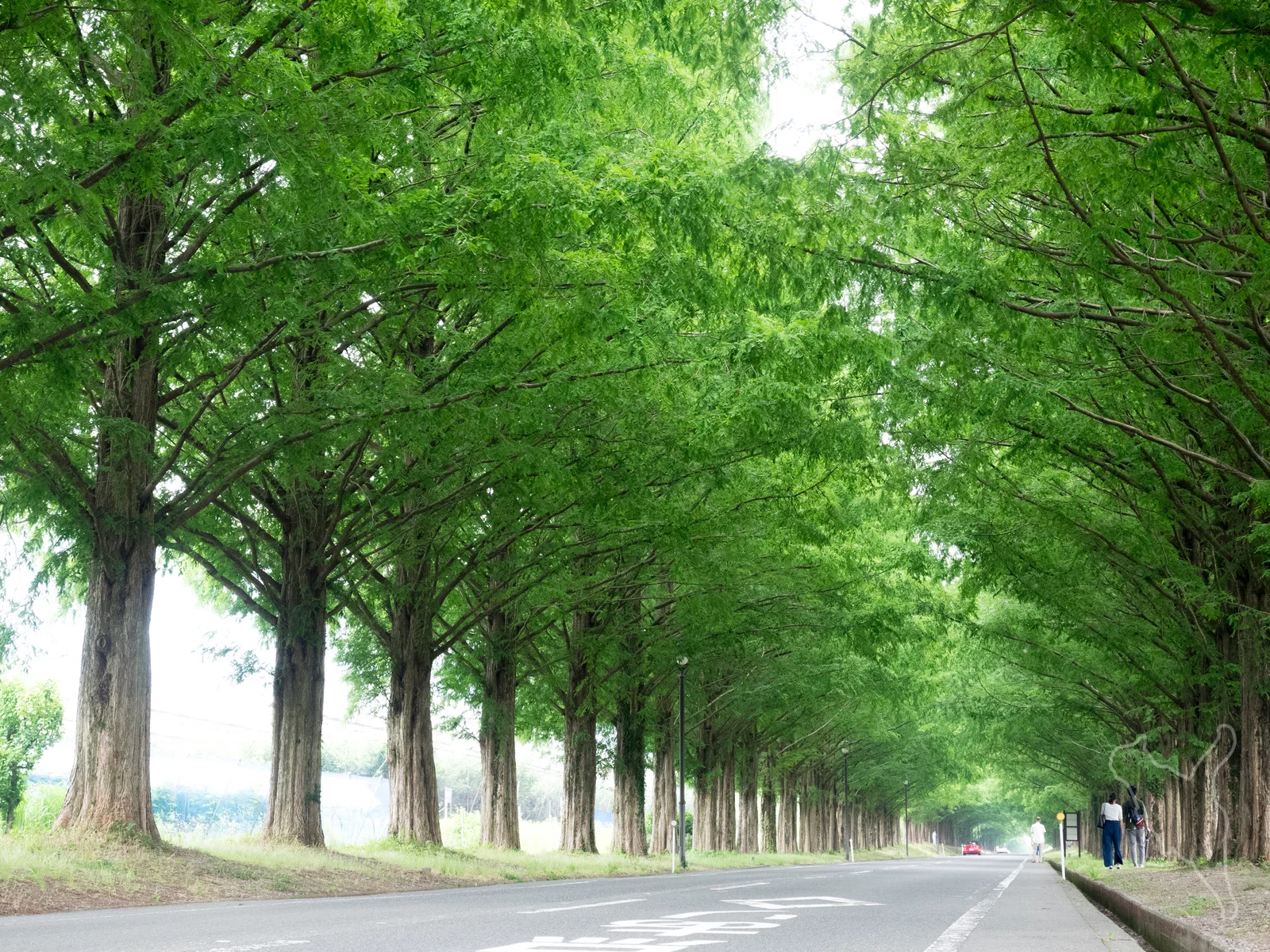
In summer, separate the station approach from the avenue walk. Prepare sun protection for unshaded stretches to and from the station, then use shaded paths at the avenue. In hot weather, take buses both ways, shorten the walk around the trees and include an indoor meal or rest. Keep water and sun protection within reach. Cyclists also need stops to drink.
Winter reveals the bare trees' shapes; snow on the branches depends on the weather. With snow or ice on the road, abandon cycling and assess whether public transport can support a short walk. Shoes must suit the ground, and bags should leave hands free for balance. Winter preparation involves more than replacing an autumn jacket with a thicker one.
For snow photographs with limited date flexibility, a Kyoto day trip is usually easier to adjust than committing early to an overnight stay. Check train and bus operations, local surfaces and weather that day before deciding. If transport is disrupted, keep the Kyoto accommodation and choose a city outing. If already staying in Makino, arrange the station journey with the accommodation rather than relying entirely on a last-minute taxi.
Lunch and coffee at Pic-land: eat first, then choose extra activities
Makino Pic-land is a visitor orchard with a café, restaurant, farm-produce sales and souvenirs. For car-free visitors, its practical role is to keep tree viewing, food and the return meeting point within one recognisable area. Walk in the morning, come back around noon to eat, then take a shorter afternoon walk. This is easier than reaching the far end before starting to look for food.
For a seated view of the trees, consider Namiki Café Metasequoia inside the park. The operator describes large windows overlooking the avenue. Namiki Shokudo Tsubame serves fuller meals. Choose a meal or coffee and dessert before deciding the length of your break. If photographs are the priority, keep lunch simple and save better light for outdoors.
Orchard harvest experiences have their own seasons and booking methods. The official list includes cherries, grapes, blueberries, chestnuts and sweet-potato digging. They are not all available together on an autumn half-day. For fruit picking, first choose an activity open on your date, buy tickets at the centre house and follow its schedule. That reduces time for walking and bus connections. Visitors coming only for the avenue need not buy a harvest activity because it is called an agricultural park.
The operator's October–December 2026 closure notice lists 4 and 11 November, though the avenue café opens separately on the 11th. December closures are the 9th, 16th, 23rd and 28th–31st. Plan public-road walking separately from park businesses. If arriving in the afternoon, decide whether there is time to eat. With long queues, have the main meal back in Kyoto. Before the bus, allow time to pack, use the toilet and reach the stop.
Adding the highland baths: keep an afternoon and check Wednesday closures
Makino Highland lies farther north beyond the avenue. Give the afternoon to Onsen Sarasa after a morning among the trees. Shiga's official cycling information lists about 40 minutes from Makino Station to the highland, compared with about 20 minutes to the avenue café. They are different destinations. With only a little over an hour left, stay around Pic-land for food and walking. Add the baths only with separate bus and station-return arrangements.
In the timetable effective 1 August 2026, the clockwise bus leaves Pic-land at 14:06 and reaches Makino Kogen Onsen Sarasa at 14:13. This follows a morning walk and lunch. Return from the same stop anticlockwise at 16:19 for Makino Station at 16:37, or clockwise at 16:13 for the same 16:37 arrival. This gives about two hours in the highland. Count changing, drying hair and walking to the stop within it to set a clear end to bathing time.
The current bathing charges are ¥850 for ages 12 and over, and ¥450 for ages three to under 12. The opening guide lists 10:00–21:00, with last admission at 20:30. Since April 2026 it closes every Wednesday; public-holiday arrangements follow the operating calendar. Day-trippers need to finish according to the bus back, rather than using the bath's 21:00 closing as their departure time.
For children wanting to swim, distinguish the baths from the swimsuit-required bade pool. The operator's notice of 15 September 2026 closes the pool from 1 October to late April the following year. Plan ordinary bathing for an autumn-foliage trip rather than buying a pool combination. Stay near the avenue for coffee and a rest, or take the bus to the highland for baths. Either makes a complete afternoon.
Children, older visitors and rain: bus returns and a short walk are flexible
For children, first check whether everyone can travel together. The association's ordinary bike hire has a minimum height of 150 cm. Families with children below that limit can take the bus and walk a section near Pic-land. Adults cycling while children walk a long way creates mismatched speeds, more meeting arrangements and a harder station return. An adult keen to see more trees can add a short side walk.
With older companions, take the morning bus, assess the ground on arrival, walk a little and return for a seat before deciding on the afternoon. The avenue's appeal is the overall rows; everyone need not reach the same endpoint. With a pushchair or wheelchair, choose the distance using actual surfaces, crossings and the help available. Start with a short out-and-back to reduce difficult retracing or rushing to a distant stop.
In light rain, keep the bus and a short walk, with non-slip shoes, rainwear that packs away and a café break. If rain obscures the ground or wind makes umbrellas hard to control, choose an indoor Kyoto outing instead. The avenue is mainly an outdoor experience. One café cannot easily replace three or four hours among the trees. Changing the day early takes less effort than reaching the station and trying to turn the whole visit indoors.
Before returning, gather everyone in one place to sort jackets, water and bags, then walk to the stop together. One person paying in the restaurant while another waits on the opposite side can leave the party separated as the bus arrives. If someone cannot stand waiting for long, choose a plan with sufficient boarding time. Keep dinner back in Kyoto somewhere easy to reach rather than adding a distant reservation.
Keep the return bus and train clear; what to do if you miss the bus
Save return services on arrival at Pic-land, including the stop, direction, departure and arrival at Makino Station. A saved 16:06 alone does not tell you whether the bus loops through the highland. A newer timetable showing the full row is more useful than one time. After eating, check your position again and allow the walk from the turning point to the stop. Waiting time begins once you reach the stop.
For afternoon light, the shorter 16:26 return is an option, reaching the station at 16:37 for JR. If you arrived after 10:00, you may not need to stay that late. If the 13:26 or 14:06 return gives you the walk and lunch you wanted, leave earlier. Choose by what you have seen, remaining energy and the next train, rather than staying to the end because you saved many photo ideas.
After missing the intended bus, read the next service's full route and arrival time. Walk back only in good weather, with energy remaining and walking navigation showing completion in daylight. If someone is tired or rain increases, wait somewhere safe for the next bus or ask a local information point about a taxi. A taxi adds cost and depends on availability. It is not a guaranteed car waiting beside the avenue.
Choose a Kyoto-bound train that actually stops at Makino. With Kosei Line disruption, check JR's official information before changing dinner or accommodation. A Kyoto day-tripper need not rush into booking a Makino room before checking possible returns. If you must catch a flight, a long-distance reserved train or an activity that cannot be delayed, move Makino to a fuller day. This leaves more room for weather and road-traffic delays.
Whether to stay: early tree views justify a night, with different bases
For daylight trees and lunch, a Kyoto day trip is enough, with luggage left at your existing accommodation. The main reason to stay is another chance to see the trees or an early walk without the morning journey from Kyoto. If both days focus on the same avenue section, decide what morning and evening add: different light, a slow walk or rest. Give the extra night a purpose.
Accommodation near Makino Station makes arrival and onward travel easier, but an early trip to the avenue still needs an approach journey. Staying beside the trees makes the morning walk easier, while dinner, luggage on arrival and the next day's station journey need planning. A map showing a room a few hundred metres from trees is only part of the decision. Check the journey from the station to the accommodation too. Walking with luggage is slower than an unencumbered stroll.
For a lakeside stay convenient to the station, the Grand Park Hotel Okubiwako Makino's official access information lists about 12 minutes on foot from Makino Station or a roughly two-minute station transfer, with arrival time advised by telephone in advance. It suits a night by the lake with time to rest. The next day's avenue visit still needs a bus or bike. For early tree views, arrange the hotel-to-avenue journey too. A station transfer is not an avenue shuttle.
For a larger family, put meals and beds before distance. Dinner-and-breakfast plans reduce going out at night, but meal times constrain photography. A room-only plan gives you meal choices, but needs a workable dinner venue and return route. Compare food costs, transfers and cancellation terms alongside the room price. Record the booked plan's cancellation deadline in Japanese local time so you know the cost of changing dates for foliage or weather.
Campers can research stays near the avenue, but car-free travel requires luggage, meals and arrival to be solved before choosing by tent appearance. A campsite visit with your own equipment and car does not translate directly to one night after a JR journey. For one early photo walk without extra equipment, indoor accommodation with arranged transfers usually leaves more time for walking.
Putting it together: a half-day visit or a night, according to transport
The bus day-trip version can begin at Makino Station at 10:00, reaching Pic-land at 10:06. Walk a section, eat lunch, then take a short walk or coffee break before the 13:26 return, arriving at the station at 13:37. About three hours and 20 minutes locally suits trees and rest. For the full longer walk, leave at 14:06 and reach the station at 14:37. Include lunch queues and photography within those four hours.
The bike version starts with hire after 09:00. Ride to Pic-land, park securely, then explore the avenue on foot. Return the bike at the station in the afternoon before taking JR. For a lakeside stop, check the return deadline and remaining energy first. If peak-season bikes are unavailable, switch directly to the bus plan and remove the cycling-dependent detours. The main tree visit still works.
For an overnight version, reach your accommodation on the first afternoon, leave bags and explore a section in daylight to learn the area. Return for the accommodation's dinner time. Walk your favourite section again next morning, then have breakfast, check out and return to the station. Arrange transfers or bus connections in advance so you can take morning photographs without worrying about luggage. In autumn and winter, leave the evening for food and rest rather than planning avenue illuminations.
Before leaving, choose portable souvenirs at Pic-land and return to the station. Cyclists should favour light items that fit securely in a basket or backpack. A basic local transport allowance is ¥440 for an adult bus return or ¥1,000 for an ordinary bike, plus JR and chosen food and accommodation. Harvest activities and baths are charged separately. To add one, take the time from a longer avenue walk or a second coffee stop.
A few useful answers
Which bus goes from Makino Station to the metasequoia avenue?
Take the Takashima community bus Makino Kogen Line to Makino Pic-land. Clockwise takes about six minutes; anticlockwise goes via the highland first, so check the full arrival time. The adult single fare is ¥220 and IC cards are not accepted.
Can I reserve a Makino Station bicycle for the 2026 autumn season?
From 14 November to 13 December, advance reservations and returns at other stations are unavailable. Ordinary bikes cost ¥1,000 per day for users at least 150 cm tall. Makino Station collection and return hours are 09:00–17:00.
When is the avenue's autumn colour?
The Takashima tourism association gives the usual period as late November to early December, with brick and brown tones. Read the official local updates before choosing a day.
Must I walk the whole 2.4 km?
No. A short out-and-back near Pic-land suits a first visit. Retracing the full avenue is nearly 4.8 km, before photography, lunch and waiting for buses.
Official information and references
Sources used in this guide.
- Takashima tourism association | Metasequoia avenue and seasons
- Takashima City | Current community bus timetable index
- Takashima City | Makino-area timetable effective 1 August 2026
- Kokoku Bus | Makino Station–Pic-land access and fares
- Takashima tourism association | Bike-hire prices and 2026 peak-season restrictions
- Official Shiga Rhythm Pedal | Takashima cycling route
- Pic-land | Station exit and bus stop
- Pic-land | Avenue café
- Pic-land | October–December 2026 closure dates
- Grand Park Hotel Okubiwako Makino | Access and station transfers
- Makino Kogen Onsen Sarasa | Charges
- Makino Kogen Onsen Sarasa | Opening and Wednesday closures
- Makino Highland | Pool closure from autumn 2026 to the following spring
- Google Maps | Makino Station–Pic-land walking route, viewed on 27 October 2026