Travel from Namba via Hashimoto and Gokurakubashi to Koyasan. Plan Danjo Garan, Kongobuji and Okunoin for a day trip or temple stay, with Nankai tickets, local buses, Ekoin bedding and meal times, and Fukuchiin gate and cancellation rules.
- Region & Focus
- KansaiShrines and temples
- Reading Scope
- 32 min read · 17 chapters · 4 Q&As
- Official Verification
- 24 official sources checkedUpdated 9 November 2026
- Key Topics
- ItinerariesWhere to stayRail travel
Chapter Route Map (tap any stop)
- A day trip covers both ends; an overnight stay gives the evening and morning to the temple
- Divide Koyasan into three areas: the station is not at the temple entrance
- Four stages from Namba: Koya Line, Gokurakubashi cable car, bus and final walk
- Take a bus from Koyasan Station; plan the return backwards from the cable car
- A two-day ticket still needs a cost comparison for a day trip
- Day-trip route: arrive early, visit the west, then leave the afternoon for Okunoin
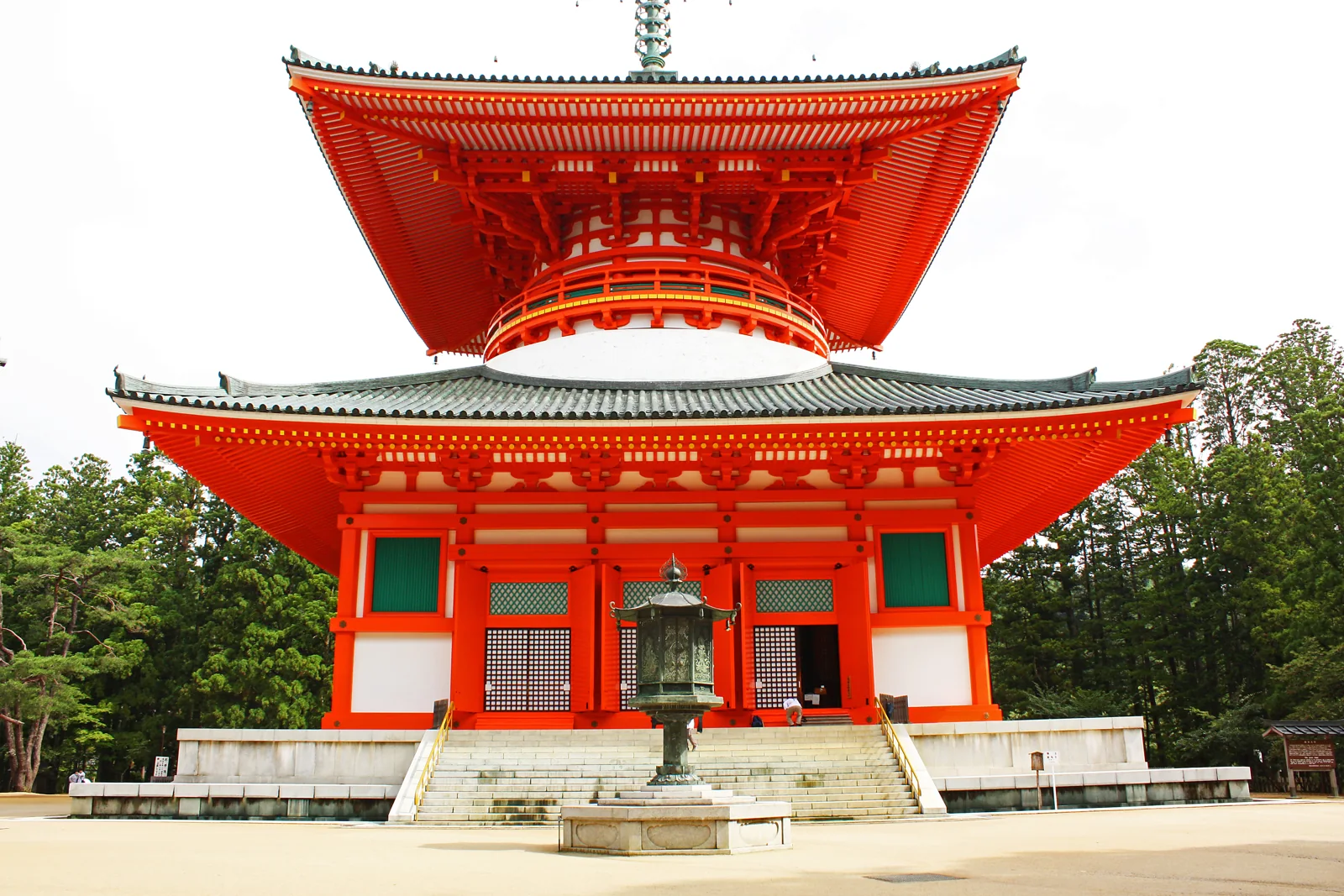
- Danjo Garan: choose separately between the grounds, Konpon Daito and Kondo
- Kongobuji: gardens and sliding-door paintings, with November room restrictions
- Okunoin: the full approach from Ichinohashi or a shorter return from Nakanohashi
- Lunch in the centre: choose a shojin meal or sesame tofu before continuing
- Overnight order: the west on day one, then Okunoin after morning prayers
- Ekoin rooms: distinguish two beds from the third guest’s futon
- Ekoin meals, baths and late arrivals: 17:30 is a practical deadline
- Fukuchiin offers gardens and hot springs, with specific gate and bathing rules
- Read cancellation terms before prices: Fukuchiin charges 100% from four days before
- Autumn leaves, illumination, rain and snow: protect daytime visits first
- Collect your luggage and connect the next journey before leaving
- Quick Q&A
For Danjo Garan, Kongobuji and Okunoin, you can leave Osaka early and return in the evening. For morning prayers and a shojin-ryori dinner at a temple lodging, keep an afternoon and the following morning on the mountain. The key difference is what sets the schedule: work backwards from the return cable car for a day trip, or from the temple dinner for an overnight stay. Decide how much time you have before choosing tickets and the order of visits.
A day trip covers both ends; an overnight stay gives the evening and morning to the temple
A Koyasan day trip suits travellers already staying in Osaka who can leave early and want a full day of temple visits and walking. Danjo Garan and Kongobuji in the west during the morning, then Okunoin in the east after lunch, is a straightforward order. Add lunch, bus waits and walks from the entrances between the three. If reaching the mountain close to noon, choose either the western temples or Okunoin rather than squeezing the whole list in before closing.
An overnight stay buys time for temple life. Arrive in the afternoon, settle in, join your chosen lodging’s activities and eat dinner. After morning prayers and breakfast, visit the other area. If you will arrive only at night and leave early next morning, staying in Osaka makes more sense than paying for time you cannot use. Shukubo are working temples. Meal times, gate hours and activities differ between them, so do not plan from the habits of an ordinary hot-spring inn.
With older relatives, young children or anyone unable to stand for long, keep the same transport route but shorten the walks. Use the shorter Nakanohashi entrance for Okunoin, and choose just one paid building in the west. For accommodation, address beds, toilets and steps into and out of the room first. If you need a fully step-free visit, obtain the specific transport and temple routes. Choose a day in Osaka instead if those routes cannot meet your needs.
| Version | Suggested order | Constraints to reserve first |
|---|---|---|
| Day trip | Western temples in the morning, Okunoin in the afternoon | Return bus, cable car and train connections |
| One temple night | Check in on the first afternoon; visit after morning prayers the next day | Individual temple dinner, gate hours and check-out |
| Shorter walks | One western interior visit plus a Nakanohashi return | Steps, path conditions and companions’ energy |
Travel from Namba via Hashimoto and Gokurakubashi to Koyasan. Plan Danjo Garan, Kongobuji and Okunoin for a day trip or temple stay, with Nankai tickets, local buses, Ekoin bedding and meal times, and Fukuchiin gate and cancellation rules.
Divide Koyasan into three areas: the station is not at the temple entrance
The cable car ends at Koyasan Station (高野山駅), north of the main temples. A scheduled bus follows the train journey. In the west, orient yourself towards Danjo Garan and Daimon. Kongobuji, Senjuinbashi and restaurants and shops occupy the centre; Okunoin’s approach, Ichinohashi and Nakanohashi lie in the east. Your lodging’s address determines the stop. Check the direction even when names look similar, especially Okunoin-guchi (奥の院口) and Okunoin-mae (奥の院前), which serve different entrances.
Danjo Garan and Kongobuji can be linked on foot; set aside a separate block for Okunoin. Going east in the morning, back to the centre for lunch and west again for another temple wastes effort. Put your fixed meal time or lodging entrance on the map first, then choose whether to walk east or west. Current local buses run from Koyasan Station through Daimon, Benten-mae and Atago-mae into the centre. Follow the current route map rather than estimating with the old Nyonindo route. Use buses for longer moves between areas and walk between the centre and west as your energy allows.
Day visitors can bring water, rainwear and necessary warm layers, leaving large cases at their Osaka accommodation once storage is confirmed. Overnight guests can bring a small one-night bag and leave it at the temple before visiting. Luggage affects not only train space but the pace of removing shoes, walking the approach and using stone steps. In a group, sort your bags before reaching the bus stop, then stand to one side to read the route together.
A film visiting Koyasan’s sights, produced by teamLab for the Kongobuji website and published on the Kongobuji Web channel.
Four stages from Namba: Koya Line, Gokurakubashi cable car, bus and final walk
From Osaka, use Nankai Railway’s Namba Station (なんば). Metro Namba, Kintetsu/Hanshin Osaka-Namba and JR Namba are in different locations. Find the route from your hotel to the Nankai gates before calculating the journey to Koyasan. Koya Line journeys to Gokurakubashi include direct trains and combinations changing at Hashimoto. Koyasan is not the railway terminus: change to the cable car after Gokurakubashi.
The current Nankai Koya Line limited-express and connection timetable is marked revised on 28 March 2026. For an early weekday arrival, Rinkan 1 leaves Namba at 07:35 and reaches Hashimoto at 08:20. Change to the 08:24 local train for Gokurakubashi at 09:02, then take the 09:09 cable car to Koyasan Station at 09:14. This example covers trains and the cable car, without the local bus; leave your hotel earlier still.
For a Koya train direct to Gokurakubashi, the current weekday Koya 1 leaves Namba at 10:00, arrives at 11:31 and connects with the 11:42 cable car, reaching Koyasan Station at 11:47. It saves the Hashimoto change but reaches the mountain later. The earlier combination with a change is more useful for all three main visits on a day trip. A 10:00 departure is easier to accept for an overnight stay with only a short western visit on day one. Read the separate weekend and public-holiday timetable rather than applying these weekday times to every date.
Rinkan ends at Hashimoto, where a local train follows; Koya goes directly to Gokurakubashi. Both require reserved-seat limited-express tickets for the actual section used. Before boarding, check the service type, departure and seat. Follow transfer signs at Hashimoto rather than staying seated because your phone still shows the Koya Line. Keep the valid ticket for the next stage handy when changing to the cable car at Gokurakubashi, then check the bus destination at Koyasan Station.
Take a bus from Koyasan Station; plan the return backwards from the cable car
The official Wakayama transport map explicitly prohibits pedestrians and ordinary vehicles on the bus-only road between Koyasan Station and Nyonindo. This rail-based day trip uses a local bus into the centre. Do not walk along the bus road or adopt an old pilgrimage trail as an improvised alternative. Hiking needs its own route, equipment and access checks, separate from this train day trip.
Check the destination and intermediate stops before boarding. Buses towards Okunoin serve the centre and east, while those towards Daimon serve the west. Save your lodging’s nearest stop together with the direction. Nankai Rinkan Bus’s stop timetables include Koyasan Station, Kongobuji-mae and Okunoin-mae. Weekdays split into school days and school holidays, with a separate weekend/public-holiday timetable. Weekday departures from Koyasan Station towards Okunoin-mae include 09:20, 09:37 and 09:54 as starting points after an early arrival. Return weekday departures from Okunoin-mae include 15:13, 15:47, 15:53 and 16:03. Compare the earlier ones for a 16:34 cable car. Read the day’s stop timetable and journey time before leaving; a departure time is not an arrival time.
For example, the current weekday return can use the 16:34 cable car from Koyasan Station, connecting at Gokurakubashi with Koya 4 at 16:47 and reaching Namba at 18:10. This suits a day trip with dinner in Osaka. Choose a bus from Okunoin or a central stop that reaches Koyasan Station early, allowing for waiting and boarding. The 16:34 time is the cable car departure, not the time to leave Okunoin.
If road congestion delays the bus, later trains do not wait simply because you hold a package ticket. With a return reserved seat already booked, keep the final temple visit shortenable. In the afternoon, drop an extra approach walk or shopping and go to the bus stop first. If you miss the planned connection, find the next combination of bus, cable car and train on the official timetables, then handle your limited-express ticket under its original terms.
A two-day ticket still needs a cost comparison for a day trip
The Koyasan World Heritage Digital Ticket combines return travel from the specified starting station to Koyasan Station, buses within the designated mountain area for two consecutive days, and selected admission and shopping discounts. From Namba, the standard version costs ¥3,980 for adults and ¥2,000 for children. The version including an outward Koya reserved seat costs ¥4,910 and ¥2,460 respectively. Add a limited-express ticket when using a limited express with the standard version. The outward limited-express version covers only the stated outward service; buy a return reserved seat separately.
Two-day validity is convenient for an overnight stay. For a day trip it is simply the product’s validity period, not a requirement to sleep on the mountain. List Nankai return travel, the cable car, buses you will use and discounts you actually want, then compare separate tickets. If you already hold another pass, subtract covered sections to avoid paying twice. Temple admission, lodging meals and accommodation each have their own charges.
Open the valid digital ticket screen on a phone with an internet connection; a screenshot cannot replace it. Follow sales rules for group purchases and the number of phones. Check the account, order and display method before departure and retain battery for the return. If people may descend separately, choose tickets under the distribution rules before payment, rather than discovering at the gates that the group’s tickets are on someone else’s phone.
If all rail, bus and discount tickets remain unused and within validity, and any specified limited express is still at least five minutes from departure at the boarding station, the purchaser can obtain a fee-free refund through the system. A multi-person order cannot be partly refunded, and distributed tickets must first be recalled. Once any component has been used, the whole package cannot receive an ordinary refund. A purchased limited express cancelled by an accident is handled under the discounted limited-express refund rules. Before buying, decide your travel date, return starting station and whether you want an outward limited express. If your trip includes Kyoto or Shirahama, this Koyasan ticket does not extend across all Kansai. For journeys between cities, see choosing tickets by your actual journeys.
If you only need local buses, compare the one-day pass: ¥1,500 for adults and ¥750 for children. Buy it at the bus office counter outside Koyasan Station for unlimited travel within its designated area on the specified day. The express Tateri route and Koya–Ryujin route cost extra. Do not buy it again if you have the two-day digital package. Single journeys accept cash or nationally interoperable IC cards. Board at the rear and leave at the front; tap an IC card on both boarding and leaving. You cannot top up on board. Pay an insufficient-balance difference in cash, not with a second IC card.
Day-trip route: arrive early, visit the west, then leave the afternoon for Okunoin
The following pace is an editorial suggestion, using the weekday connections above. After reaching Koyasan Station at 09:14, take a bus in, visit Danjo Garan first and walk to Kongobuji. Roughly 09:45–12:00 provides space for both, including walking and removing shoes. If buses have queues or companions walk slowly, retain the hall you most want to enter and view the other only from accessible outdoor areas. Do not keep pushing lunch later.
Eat near Senjuinbashi at noon, allowing a full break to sit down and use the toilet. Take an afternoon bus towards Okunoin. Start at Ichinohashi for the traditional approach, or use Nakanohashi both ways to shorten the walk. Allow about two hours for walking and worship at Okunoin rather than converting the entire visit into a map’s shortest walking time. Afterwards, return to Okunoin-mae and take your chosen bus to Koyasan Station.
For a 16:34 cable car, check the return bus around 14:00–15:00 rather than looking for the stop at the far end of the approach. If lunch ran long and you planned the full Ichinohashi route, switch to the shorter Nakanohashi option. If the western area has taken most of the afternoon, omit Okunoin and finish with Kongobuji and a short central walk. Two unhurried visits make better use of this transport day than merely reaching three entrances.
Do not start this day-trip version with an international arrival at Kansai Airport that morning. Immigration, luggage, airport transport and transfers use up the early mountain departure advantage. Stay in Osaka on arrival day and go up the next day. On a departure day, work backwards from the airline’s check-in and baggage deadlines. The multiple bus, cable car and Koya Line connections are an unsuitable final tightly timed activity before a flight.
Danjo Garan: choose separately between the grounds, Konpon Daito and Kondo
Danjo Garan’s interest lies in the religious space formed by its halls. Orient yourself at Chumon, then locate Kondo and the vermilion Konpon Daito. If you enjoy exterior architecture, leave time for a short walk around the grounds. Buy separate admissions if you want to enter for the Buddhist images and esoteric Buddhist interiors.
The temple’s current fee table lists Kondo and Konpon Daito at ¥500 each from junior-high-school age, free for primary-school children and younger. Normal hours are 08:30–17:00, with last admission at 16:30. Two adults entering both pay ¥1,000 each, or ¥2,000 in total. With only an hour before walking to Kongobuji, choose the hall you most want rather than reducing each visit to photographs to complete a set.
Photography is prohibited inside Kondo and Konpon Daito. Put your phone away before entering instead of standing at the entrance searching for interior angles online. Companions who want exterior photographs can pause in permitted areas and agree a meeting point clear of the doors. This is a religious site. The temple asks visitors to put their hands together and bow before Chumon and on entering halls. Smoking is prohibited in the sacred grounds, and pets and bicycles cannot enter. In rain, sort out wet shoes and socks before using steps and corridors.
Kongobuji: gardens and sliding-door paintings, with November room restrictions
Kongobuji as the visitor site today is separate from Danjo Garan to the west. Allow time to remove your shoes and walk slowly through its interior layout, sliding-door paintings and gardens. If your day trip includes both Kondo and Daito, about an hour here is a planning starting point. Garden enthusiasts can reduce the number of halls in the previous area and transfer time here, without expecting every companion to pass through each room at the same speed.
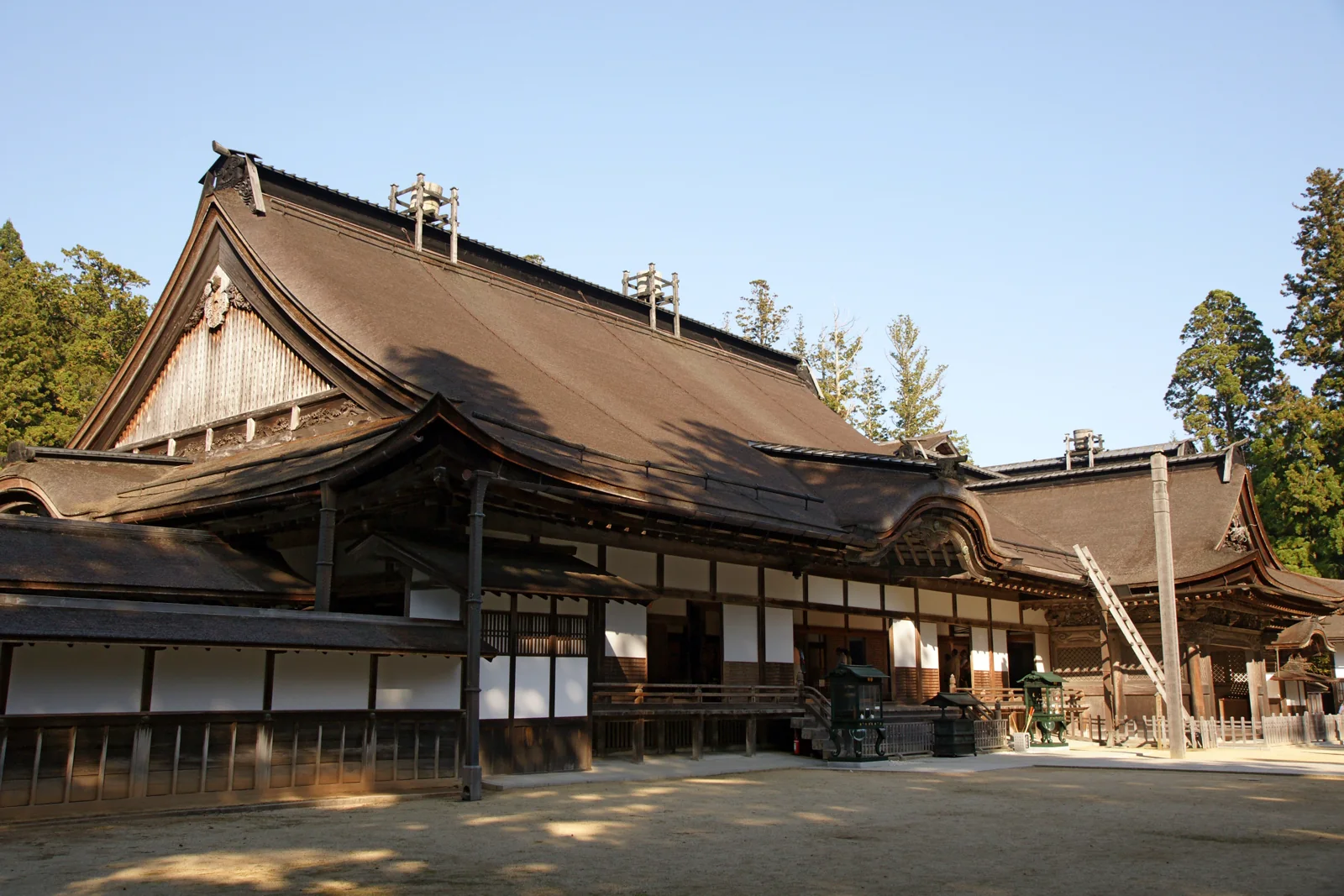
Kongobuji costs ¥1,000 from junior-high-school age, ¥300 for primary-school children and nothing for preschool children. Hours are 08:30–17:00, with last admission at 16:30. An adult choosing Kongobuji, Kondo and Konpon Daito normally pays ¥2,000 in total. The ¥2,500 combined ticket covers five specified places or activities, also including the Tokugawa mausoleum and jukai precept ceremony. Compare it only if you want those additions. Separate tickets keep the cost clear for just the three paid buildings in this guide.
The November interior restrictions announced by the temple on 21 October affect visits. On 11 November, Okuden is closed 12:00–17:00. On 13 November, Jodan-no-ma and Ohiroma are closed 10:00–12:00. On 16 November, those two rooms are again closed 10:00–12:00, and Okushoin 12:00–15:00; the Daishi Kyokai sutra-copying room is also unavailable that day. If a particular room is your priority, choose another time or date and use the table for other areas.
Temple photography rules generally prohibit photographs inside the main hall, Betsuden and Shin-Betsuden, while allowing corridors and gardens. Do not touch sliding-door paintings, mandalas or the natural cedar at the entrance. Keep passageways clear when sitting to view the garden, and do not ask others to leave to photograph an empty corridor. Follow the day’s route and do not enter rooms in use for services.
Okunoin: the full approach from Ichinohashi or a shorter return from Nakanohashi
Okunoin lies in the east, with an approach running past stone monuments and cedars towards the mausoleum. Ichinohashi is the traditional entrance and suits those who want to experience the approach from its outer to inner areas. After plenty of walking, with older companions or with less afternoon time, take the bus to Okunoin-mae and enter from the Nakanohashi car park side. The bus stops and walking distances differ, so choose the version before getting off.
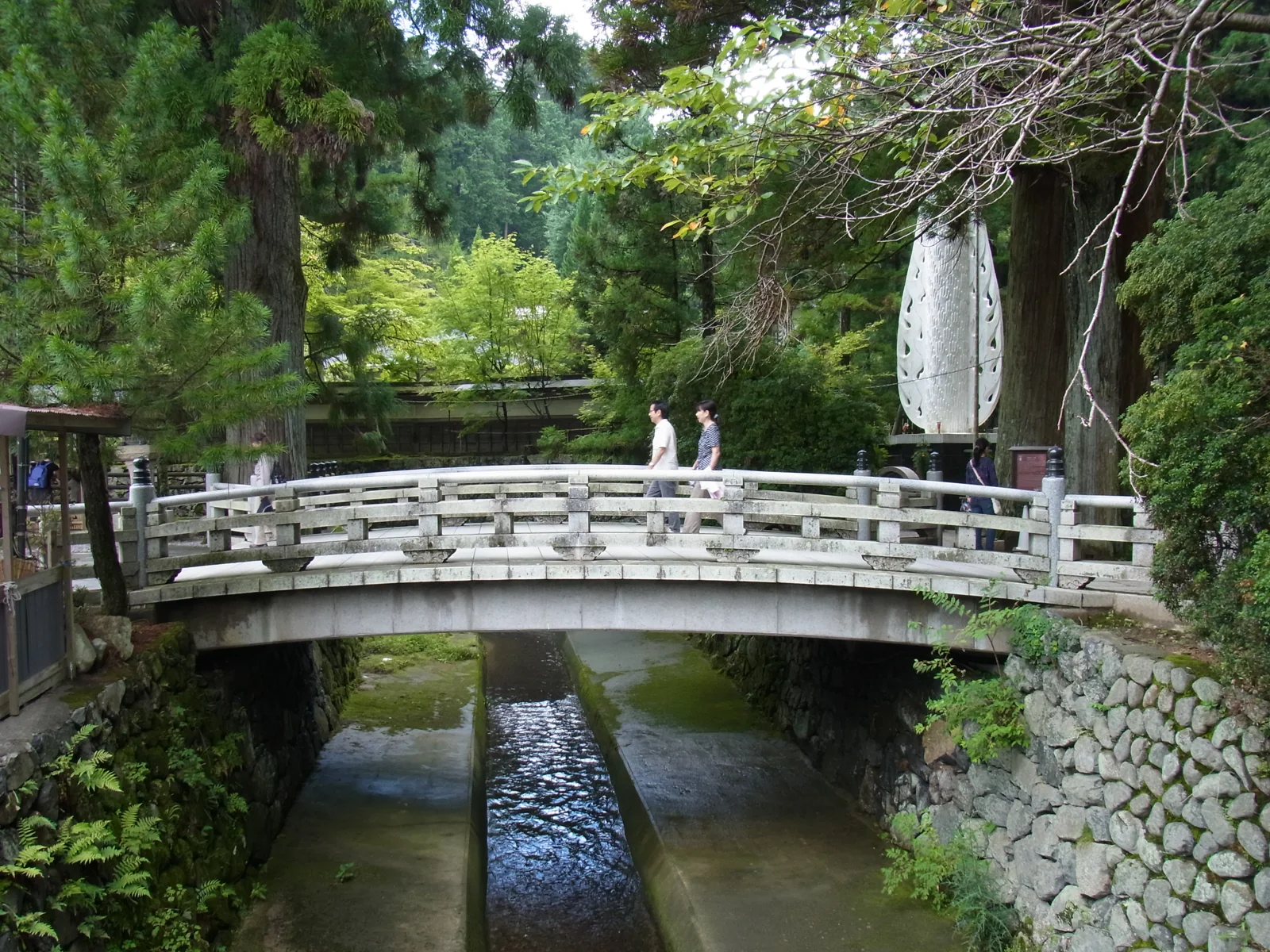
Ichinohashi to the mausoleum is about two kilometres, useful for judging your capacity. Nakanohashi shortens the approach, but you still need to walk back to the bus stop. Allow time to pause at monuments and worship rather than using only a continuous brisk walking time. Entering at Ichinohashi and leaving at Nakanohashi separates the longer outward walk from the shorter exit. A Nakanohashi return makes it easy to retrace the same route when tired.
Gobyonohashi marks a clear change in conduct. Koyasan Tourism Association’s visiting etiquette prohibits photography beyond it. Remove your hat and put your hands together before crossing, switch off your phone and keep to the left on the approach. Put the camera in your bag before the bridge. Do not aim beyond it for a test photograph or treat other people’s non-compliant pictures as permission. Ichinohashi is at the approach entrance; Gobyonohashi is near the mausoleum. Distinguish their locations and photography rules.
Torodo normally opens 06:00–17:00, with the underground worship area until 16:45. Okunoin Gokusho’s goshuin counter opens 08:00–17:00 in May–October and 08:30–16:30 in November–April. If you want a goshuin seal or memorial service arrangements, prioritise reception hours over the walk. The illuminated approach can be walked at night, but hall visits and the counter follow their separate hours. Complete the day-trip version by daylight without delaying the return for darkness.
Lunch in the centre: choose a shojin meal or sesame tofu before continuing
After the western temples, Senjuinbashi is a useful lunch stop before a bus to Okunoin. To try Koyasan’s shojin ryori in one meal, compare Hanabishi’s current menu. Tax-inclusive prices are ¥2,860 for Sanko-zen, ¥6,600 for Yoryu-zen, ¥7,700 for Mani-zen and ¥11,000 for the chef’s shojin course. Choose by budget and the time you want to spend eating. The most expensive course is not required for a Koyasan visit.
Hanabishi’s booking instructions require a meal order with weekend and public-holiday table reservations. Dishes priced ¥6,300 or more require reservations on any day. Private rooms carry a room charge of 10% of the food bill. For bookings within three days or for five or more people, contact the restaurant by telephone or enquiry form. Two Sanko-zen meals at ¥2,860 total ¥5,720, plus any drinks or private-room charges. Do not force an almost impossible afternoon admission after a reserved lunch.
For sesame tofu, consult Hamadaya’s main-shop information. It is at Koyasan 444, open 09:00–17:00 with early closing when sold out. Irregular closing days appear in the homepage calendar. It is about five minutes uphill from Odawara-dori bus stop, rather than a station shop where you collect food immediately on arrival. The shop recommends reserving by telephone and offers delivery to your temple lodging; arrange this with the shop if needed.
Carrying chilled food around Okunoin adds packaging and collection tasks. Buy it before returning or use confirmed delivery. If the lunch queue exceeds the time you can spare, choose another nearby restaurant with a clear menu and space, protecting Okunoin and your return. With dinner included at your temple, a lengthy full-course lunch is unnecessary.
Overnight order: the west on day one, then Okunoin after morning prayers
For one night, a later outward journey can work. Reach the mountain near noon, eat, leave your luggage and visit either Danjo Garan or Kongobuji before going to your lodging. Leave earlier if you want full interior visits at both; do not gain temple time by delaying check-in. Day one ends at your booked shukubo entrance. Record the nearest stop, entrance location and arrival deadline together.
Using Ekoin’s Regular plan as an example, check-in starts at 14:00. The temple asks guests joining the 16:30 Ajikan meditation to arrive by 16:00. Keep 15:00–16:00 for returning, checking in, changing shoes and finding your room. Dinner is at 17:30. Choose any evening outing according to your energy and separately booked activities.
The next morning, attend prayers at your own temple, eat breakfast, pack and check out. After the temple has agreed to store your bags, finish Okunoin. Ekoin’s example plan has morning prayers at 07:00, goma fire ritual at 07:30, breakfast at 08:00 and check-out at 10:00. Follow that morning order and put Okunoin afterwards. For an earlier descent, omit the long approach rather than travelling between the east and west around breakfast.
Fukuchiin has a different morning: prayers at 06:00, gates opening at 06:30 and check-out at 09:00. It explicitly states that guests cannot reach Okunoin’s 06:30 Shojinku food offering in time. Do not list both simultaneous religious activities as achievable. Choosing a temple also chooses a morning. If Okunoin’s dawn offering is the priority, choose accommodation by that activity and its permitted exit time rather than asking a booked temple to open early.
Ekoin rooms: distinguish two beds from the third guest’s futon
Ekoin’s accommodation page lists standard Japanese rooms of 8–12 tatami mats for one to four guests, without a private bathroom or toilet; guests use shared facilities. Compact Japanese rooms have six tatami mats for one or two people. Compare these first if budget matters and shared facilities suit you. If you need a nearby toilet at night or cannot get up from floor level, compare other rooms with clearly specified facilities.
The directly linked official Ekoin booking page explains bedding more precisely. The detached Ruri room has 40 square metres. For three guests, two use beds and the third a futon. Hisui has 50 square metres for up to four, also with two beds and futons for guests three and four. Both have a bathroom and toilet, are about a minute’s walk from the main building and have no television. A group needing three beds should not pay merely because Ruri sleeps three.
Apply the same reading to larger rooms. Tenjiku sleeps up to six, Kongo four and Gachirin six; each officially lists two beds and futons from the third guest onwards. More space gives companions room to move but does not automatically add Western beds. Consider the route to the main building in rain and meal arrangements too. Enter all adults and children for the same date, then compare room, meals, total price and cancellation terms.
An Ekoin night suits those wanting Ajikan, goma and shojin meals. Ajikan begins at 16:30, lasts about 40 minutes and is free for overnight guests, but preschool children cannot join. Families with young children can split childcare if that arrangement suits everyone. Overnight guests may freely attend the next morning’s prayers and goma. Guests uninterested in activities still need to respect the temple schedule; room and meal use follows the booked plan.
Ekoin meals, baths and late arrivals: 17:30 is a practical deadline
Ekoin’s shojin meal information states that no animal ingredients, animal stock or the five pungent vegetables are used. Dinner and breakfast are served in the room; groups of four or more use another room. Soybeans, soy sauce and miso are key ingredients. A soy allergy substantially simplifies what can be offered. Guests with wheat allergy or coeliac disease can request a gluten-free menu no later than one week before the stay.
There is only one kitchen, so a separate kitchen cannot be provided for severe allergies. If cross-contact determines whether you can eat, tell the temple the allergen and handling needed before booking, obtain its available arrangements, then decide. This is more useful than writing only “vegetarian” in the notes. Avoiding meat, avoiding soy and needing gluten-free food are three different conditions to match to each guest’s two meals.
The communal bath opens 15:00–24:00 and 06:00–09:00 the next morning. Standard Japanese-room guests can bathe during these hours. Leave phones and cameras outside this shared space and wash before entering the bath. A room with a bathroom suits those needing private bathing. For a detached room, include changing shoes and returning to the main building in preparations for dinner and prayers. A one-minute walk does not mean every person can complete arrival formalities in one minute.
Although the main website’s general introduction lists final check-in at 19:00, the Regular plan lists 17:30 as its latest check-in. It states that dinner may not be served after 17:30 for food-hygiene reasons, with no meal refund. Plan to arrive before 17:30, or by 16:00 for Ajikan. If trains are delayed, contact the temple early with your current station and estimated arrival, then follow its response. A two-meal booking does not provide dinner at any hour you arrive.
Fukuchiin offers gardens and hot springs, with specific gate and bathing rules
Fukuchiin’s accommodation information lists check-in from 15:00, final arrival at 19:00, gates closing at 21:00 and opening at 06:30, and check-out at 09:00. Return before 21:00 if walking out after dinner. These hours do not suit unrestricted pre-dawn outings. The 06:00 morning service is optional. For another morning activity, compare gate opening and check-out rather than only the walking distance on a map.
Room choices include basic Japanese rooms, garden-side Japanese rooms, Japanese rooms with toilets, and rooms with a hot-spring bathroom and toilet. Basic rooms have neither views of Mirei Shigemori’s garden nor a private toilet. Choose a garden-side type for the front or inner garden view, and a product explicitly including a bathroom for private bathing. Garden views, room toilets and private hot springs are separate choices. Filter by what you need rather than choosing only from garden photographs.
The Fukuchiin hot-spring page lists indoor baths from 15:00 to 09:00 the next day, and open-air baths and sauna 15:00–20:00. The carbonated bath is currently marked closed. The family bath is only for specified needs such as assistance or post-operative care, requires advance reservation and payment, and operates 15:00–18:00. Ordinary families wanting privacy should not treat it as a free private bath open to everyone in a queue. The temple also offers no bathing-only day visits.
Fukuchiin does not permit tattooed guests to bathe. Its lodging buildings are not barrier-free, and it officially does not accept wheelchair guests. These rules remove it as an option for some travellers. If you need a step-free room or do not meet bathing conditions, choose accommodation that can meet your needs rather than expecting an exception on arrival. Meals follow the selected plan. Lunch reservations are currently suspended, so day visitors should not list Fukuchiin as a walk-in lunch stop.
Read cancellation terms before prices: Fukuchiin charges 100% from four days before
The visible Fukuchiin cancellation table and accommodation terms charge 100% of the accommodation price for cancellation from four days before the stay through arrival day, and 100% for a no-show without notice that day. Special contracts follow their separate terms. For a Saturday stay, counting back four days already enters the charged period; do not remember this as merely “non-refundable from the day before”. Change or cancel online bookings through the original online channel. Telephone bookings are handled 09:00–20:00.
A 100% charge from four days before changes the order of booking. Settle companions, dates and mountain transport before choosing a stay that is hard to change. Put the cancellation deadline in a calendar using the local Japanese date, and save the plan page and confirmation. A platform homepage’s “cancellable” label does not say when the actual selected product starts charging. Once inside that period, shortening temple visits or changing transport has a different cost from cancelling the stay.
Ekoin’s official booking page gives the Early28 plan a cancellation-charge condition starting 90 days before arrival. Before paying for an early-booking rate, read that plan’s complete charge table, prepayment and no-show rules, then compare the Regular plan. Early booking does not mean free cancellation, and a booking made well ahead may already be in the charged period. Make the comparison before payment; Fukuchiin’s four-day table cannot substitute for this other temple’s plan.
If the Koya Line or cable car is disrupted, save the operator’s notice and contact the temple, then ask the original booking channel how changes or cancellations are handled. Transport tickets, return reserved seats and accommodation are separate contracts. A suspended leg does not automatically process every refund. Give the stay date, booking number, guest count and the section preventing arrival so the operator can reply about that specific order.
Autumn leaves, illumination, rain and snow: protect daytime visits first
Koyasan’s autumn leaves fit into the existing temple walks without adding a distant foliage route. The temple’s 14 October 2026 announcement lists special evening illumination at Kongobuji’s main gate and Jabara-michi from 20 October until the autumn leaves finish. The end depends on leaf conditions; no fixed final date is given. Add a short after-dinner walk only for an overnight stay whose dinner and gate hours allow it. Day visitors should keep their checked return connection first.
Jabara-michi illumination and the Okunoin night tour are different activities. The Okunoin tour introduced by Ekoin is run by AWESOME TOURS, meets at 19:00, lasts about two hours and needs a separate booking. It is not a free evening visit included by every temple lodging. Use the official link for the meeting point, language, price, weather and cancellation terms, and compare your lodging’s return deadline. Fukuchiin closes its gates at 21:00, so a roughly two-hour 19:00 activity does not leave time for a leisurely return afterwards.
In rain, shorten Okunoin to a Nakanohashi return and give more time to the Kongobuji rooms open that day. If your socks are soaked, change into dry ones where possible before removing shoes to enter a hall. Close wet umbrellas without dripping into worship areas. If ice or snow prevents steady footing, omit long outdoor walks and decide on an earlier descent using operating information. Do not push the return to the last service for a snow photograph.
Waiting for buses, leaving the temple at dawn and removing shoes for worship need different kinds of warmth. Bring adjustable outer layers, warm socks and grippy shoes, and avoid carrying too many bags in your hands. Check the hourly forecast and official transport information before choosing the full Ichinohashi walk. Hikers can separately plan Choishi-michi or Nyonin-michi, with their own condition and access checks. These are not shortcuts for catching transport in rain or snow.
Collect your luggage and connect the next journey before leaving
If the last day-trip stop is Okunoin, look directly for a bus from Okunoin-mae to Koyasan Station instead of returning to the centre for shopping and recalculating. For an overnight stay, first arrange collection of stored bags, then leave from the actual nearest stop. Use the toilet, charge the phone and open tickets before leaving rather than saving all preparation for the cable car entrance.
For Kyoto, Shin-Osaka or Kansai Airport the following day, identify your Nankai alighting station and transfer route first. Koyasan, Shirahama and Kumano are not one compact area: being in Wakayama does not make them short consecutive add-ons. If the next night is still in Osaka, leave the afternoon for the city, laundry or a meal. For an Arima, Kinosaki or Shirahama hot-spring stay, calculate another travel day and that evening’s dinner time.
A few useful answers
Can I see Danjo Garan, Kongobuji and Okunoin on a day trip?
Yes, if you arrive early and make the three visits the day’s focus. Visit the west in the morning and Okunoin after lunch, working backwards from the return cable car. If arriving at noon, choose the west or Okunoin.
Can I walk from Koyasan Station into the temple area?
The bus-only road from Koyasan Station to Nyonindo prohibits pedestrians and ordinary vehicles. This route uses a local bus from the station. Plan old pilgrimage trails separately as hikes, using their access status.
Does an Ekoin room for three have three beds?
Ruri has two beds and one futon for three guests. Hisui also has only two beds for four guests; the third and fourth use futons. Choose bedding by the actual room type.
Can Fukuchiin guests reach Okunoin’s 06:30 Shojinku offering?
Fukuchiin opens its gates at 06:30 and explicitly states guests cannot reach the 06:30 offering. You can attend its own 06:00 prayers and visit Okunoin after check-out.
Official information and references
Sources used in this guide.
- Nankai Railway | Koya Line limited expresses and current connections
- Nankai Railway | Koyasan World Heritage Digital Ticket
- Nankai Rinkan Bus | Local one-day pass and sales counter
- Nankai Rinkan Bus | IC cards and fare differences
- Official Wakayama Tourism | Koyasan transport map
- Koyasan Tourism Association | Worship and photography etiquette
- Nankai Rinkan Bus | Local stop timetables
- Kongobuji | Access, local map and routes
- Kongobuji | Admission fees and reception hours
- Kongobuji | Visiting etiquette and photography areas
- Kongobuji | November 2026 interior restrictions
- Kongobuji | 2026 main gate and Jabara-michi illumination
- Ekoin | Accommodation facilities and schedules
- Official Ekoin booking | Room bedding, Regular and Early28 plans
- Ekoin | Morning prayers, goma and Ajikan
- Ekoin | Shojin meals and allergies
- Fukuchiin | Accommodation, gates and rooms
- Fukuchiin | Hot-spring hours and eligibility
- Fukuchiin | Meals and lunch booking status
- Fukuchiin | Cancellation table and accommodation terms
- Hanabishi | Shojin menu
- Hanabishi | Location and reservations
- Hamadaya | Main shop hours, orders and access
- Koyasan Shingon Buddhism head temple Kongobuji | teamLab