Stay one night in Kii-Katsuura and take the Nachisan bus to Daimonzaka, Kumano Nachi Taisha, Seigantoji and Nachi Falls. Compare stops, steps and rainy-day routes, bus passes, admission, fresh tuna, Urashima transfers and harbour stays.
- Region & Focus
- KansaiShrines and temples
- Reading Scope
- 27 min read · 15 chapters · 6 Q&As
- Official Verification
- 14 official sources checkedUpdated 29 October 2026
- Key Topics
- ItinerariesRail travelFood
Chapter Route Map (tap any stop)
- Stay overnight: separate the long train journey from Nachisan
- Take the train to Kii-Katsuura, then the Nachisan bus
- Choose the right stop to avoid extra climbing
- Use the current timetable for an unhurried morning
- Bus tickets: count the journeys you will take
- Daimonzaka: how you walk the 600-metre stairway matters
- Kumano Nachi Taisha: the approach continues after the old trail
- Seigantoji and the pagoda: viewing and entering are separate choices
- Nachi Falls and Hiro Shrine: save energy for the climb back to the stop
- Rainy-day changes: keep the temple and shrines, reduce wet steps
- Fresh tuna at the harbour: check when the market closes
- Tuna bidding tours need another morning
- Where to stay: early buses or more time in the baths
- Urashima transfers and bookings: work out an early departure first
- A practical two-day route and the costs to set aside
- Quick Q&A
An extra morning makes the journey from Osaka to Nachikatsuura worthwhile. Arrive in Kii-Katsuura the previous afternoon, eat tuna by the harbour and stay overnight. The next morning, the bus to Nachisan lets you link Daimonzaka, Kumano Nachi Taisha, Seigantoji and Nachi Falls into a half-day route. Start at Daimonzaka if you want the stone stairway. If your knees struggle or there is light rain, ride to Nachisan and use the shrine approach instead. Choosing between these routes affects comfort more than choosing a camera angle.
Stay overnight: separate the long train journey from Nachisan
Kii-Katsuura lies on the south-east side of the Kii Peninsula. Kuroshio limited expresses run from Shin-Osaka, but the coastal railway covers a long distance. A same-day return squeezes the time available for Nachisan. For a first visit, I would put it towards the end of a Kansai trip, stay at least one night, visit the mountain in the morning and leave in the afternoon. Add another night for a tuna-market tour, giving the market and Daimonzaka a morning each.
There are two ways to arrange one night. Arrive early enough in the afternoon and visit Nachisan first, leaving the next morning for the market and baths. Arrive later and eat by the harbour before going uphill the next morning. Decide using your actual train arrival, that afternoon’s weather and the hotel’s dinner time. With little more than two hours left and a kaiseki dinner to return for, resting in the port town is a better use of time.
To compare Arima, Kinosaki, Shirahama and Katsuura, read the guide to Kansai hot-spring bases. Nachikatsuura combines mountain temples and shrines with harbour hot springs. If you have only a day from Osaka, nearer Arima makes better use of the time. Even from Shirahama, Katsuura is not the next neighbourhood: plan the coastal journey first. Staying in both towns is easier than commuting between them. Compare Kansai hot-spring bases · Tanabe City Kumano Tourism Bureau: Daimonzaka route.
Stay one night in Kii-Katsuura and take the Nachisan bus to Daimonzaka, Kumano Nachi Taisha, Seigantoji and Nachi Falls. Compare stops, steps and rainy-day routes, bus passes, admission, fresh tuna, Urashima transfers and harbour stays.
Take the train to Kii-Katsuura, then the Nachisan bus
Search for “Kii-Katsuura”, not just “Katsuura”, which can return Katsuura in Chiba. From Osaka, check JR West’s Kuroshio; from Nagoya, check JR Central’s Nanki limited express. Their arrivals differ. Once you choose your overnight date, select outbound and return trains. Check the destination and full journey time: a train terminating at Shirahama does not run through to Kii-Katsuura.
Kumano Gobo Nankai Bus is the main public transport to Nachisan. Uphill services from Kii-Katsuura Station are route 31, passing Nachi Station, Daimonzaka, Kumano Kodo and Nachi-no-Taki-mae before terminating at Nachisan. Downhill services to Kii-Katsuura are route 32. The main sights lie on this one bus line, making a car-free visit straightforward without a detour through Shingu.
For limited-express arrivals, Kii-Katsuura Station is the simplest accommodation and transfer base. Nachi Station is nearer the uphill road, but accommodation, dinner and luggage need separate arrangements. Moving cases just to save a few minutes on the bus is rarely worthwhile. Leave large bags at your accommodation or arrange station storage, then take a daypack uphill. Match storage hours and collection deadlines to your departure train so that retrieving bags does not use all your return buffer. Kumano Gobo Nankai Bus: Nachisan Line timetable, 1 April 2026.
Choose the right stop to avoid extra climbing
Daimonzaka is the stop for the cedar-lined stone steps. Walk uphill from here, then join the temple and shrine approach after the old path ends. Kumano Kodo stop is near the middle of Daimonzaka. Despite its broad name, it is a single stop, not a shared entrance to every pilgrimage trail. For a first walk of the full short section, Daimonzaka is the clearer choice.
Nachisan is the terminus for visitors skipping Daimonzaka and heading straight to the temple and shrine. Slopes and steps remain between the bus stop and shrine buildings; the bus only removes the cedar stairway section. Wheelchair users, or anyone who needs a handrail after a few steps, can arrange a vehicle via the shrine’s disaster-prevention road to below the shrine office, then use its lift to the fourth floor for worship. The official road charge is ¥800. This vehicle transfer needs separate arrangements and differs from the normal approach after alighting from the public bus.
Nachi-no-Taki-mae is near the entrance to Hiro Shrine. Use it for the waterfall alone, or to catch a downhill bus after visiting the upper shrines and temple. The stop is on the road and the waterfall worship area below it, so you descend steps and climb back to the stop. If you have energy for only one area, choose the upper temple and shrine or the lower waterfall. Note the return stop name before walking rather than searching uphill in the wrong direction later.
The bus operator gives typical times from Kii-Katsuura of about 20 minutes to Daimonzaka, 24 minutes to the waterfall stop and 25 minutes to Nachisan. These indicate the overall distances. Some actual services in the 1 April 2026 timetable take 26 minutes to the terminus. Use your service’s arrival column when connecting with a train. Kumano Nachi Taisha: visiting hours, steps and accessible entrance.
Use the current timetable for an unhurried morning
The timetable revised on 1 April 2026 lists an 08:25 departure from Kii-Katsuura, reaching Daimonzaka at 08:43, the waterfall stop at 08:48 and Nachisan at 08:51. The 09:05 bus reaches them at 09:23, 09:28 and 09:31. The earlier bus suits a Daimonzaka walk with longer mountain stops; the later one allows departure after breakfast. Use these times to choose your route rather than dividing every temple visit into ten-minute slots.
From Daimonzaka, allow 3–4 hours for the steps, worship, pagoda area and waterfall, including rests, photographs and walking to the bus stop. Riding directly to Nachisan reduces this to about 2–3 hours. Tanabe City Kumano Tourism Bureau gives about 30 minutes for the short Daimonzaka walking section alone. Adding the temple and shrines above and the waterfall below naturally takes much longer.
The last downhill bus in the 1 April 2026 timetable leaves Nachisan at 18:04 and Nachi-no-Taki-mae at 18:06, reaching Kii-Katsuura at 18:30. Temple and shrine reception ends around 16:30, so finish in daylight and descend earlier. For a reserved afternoon limited express, work backwards from the train departure, allowing time to collect bags, buy food and wait, then choose a downhill bus. Nachisan and the waterfall stop have different departure times a few minutes apart. Use the row for your actual stop, even if the waterfall is visible nearby.
The same timetable includes seasonal services departing Kii-Katsuura uphill at 12:40 and Nachisan downhill at 13:27, operating from 1 March to 30 November. Copying them into a winter plan leaves a longer wait. Remove them from December onwards and choose adjacent year-round services. Before travel, open the latest PDF from the operator’s Nachisan Line page and save both uphill and downhill pages to your phone. Kumano Gobo Nankai Bus: Nachisan Line timetable, 1 April 2026.
| Board at Kii-Katsuura | Daimonzaka | Nachi-no-Taki-mae | Nachisan terminus |
|---|---|---|---|
| 8:25 | 8:43 | 8:48 | 8:51 |
| 9:05 | 9:23 | 9:28 | 9:31 |
Bus tickets: count the journeys you will take
The Nachi Area World Heritage Free Pass costs ¥1,260 for adults and ¥630 for children, valid on the day of use. It includes the journey from Kii-Katsuura, with the main hop-on, hop-off area running from Nachi Station to Nachisan. It is convenient for stops at Daimonzaka, the waterfall or Fudarakusanji without paying each time. Partly used passes are non-refundable. If rain may reduce the visit to a short single journey, decide the route before buying.
The official fare table lists ¥630 for an adult one-way from Kii-Katsuura to Nachisan. A return costs ¥630 × 2 = ¥1,260, exactly the pass price. For a direct return, the pass mainly offers convenience; its flexibility is more useful with an extra stop. If walking from Daimonzaka through to the waterfall and returning to the station, compare the individual fares for the stops you will actually use. There is no need to take extra rides to justify the pass.
The ticket window outside Kii-Katsuura Station opens 08:00–10:30 and 11:30–17:00, with an hour’s break between. If your train arrives after 10:00, that gap can determine whether to buy tickets or eat first. A digital ticket is also available through the Norikae Annai app. Set up the phone purchase and ticket display before travelling uphill rather than relying on finding a signal there.
The operator’s English sightseeing page still shows the old ¥1,200 return ticket, while its dedicated Japanese ticket page lists ¥1,260. Use the current ticket page and fare table for budgeting. For single cash journeys, take a numbered ticket when boarding and pay against its number when alighting. Coins and ¥1,000 notes make this easier. With a pass, show it according to its instructions and the driver’s directions. Kumano Gobo Nankai Bus: Nachi Area World Heritage Free Pass · Kumano Gobo Nankai Bus: Nachisan Line fare table.
Daimonzaka: how you walk the 600-metre stairway matters
Daimonzaka’s best-known view is a stone stairway rising between cedars. Official information gives about 600 metres and 267 steps for the stairway itself, and about one kilometre or 30 minutes for the full short walk. These figures cover different things: the steps in photographs and the route from the stop to the road above. For someone unused to stairs, 267 steps can still raise the breathing rate.
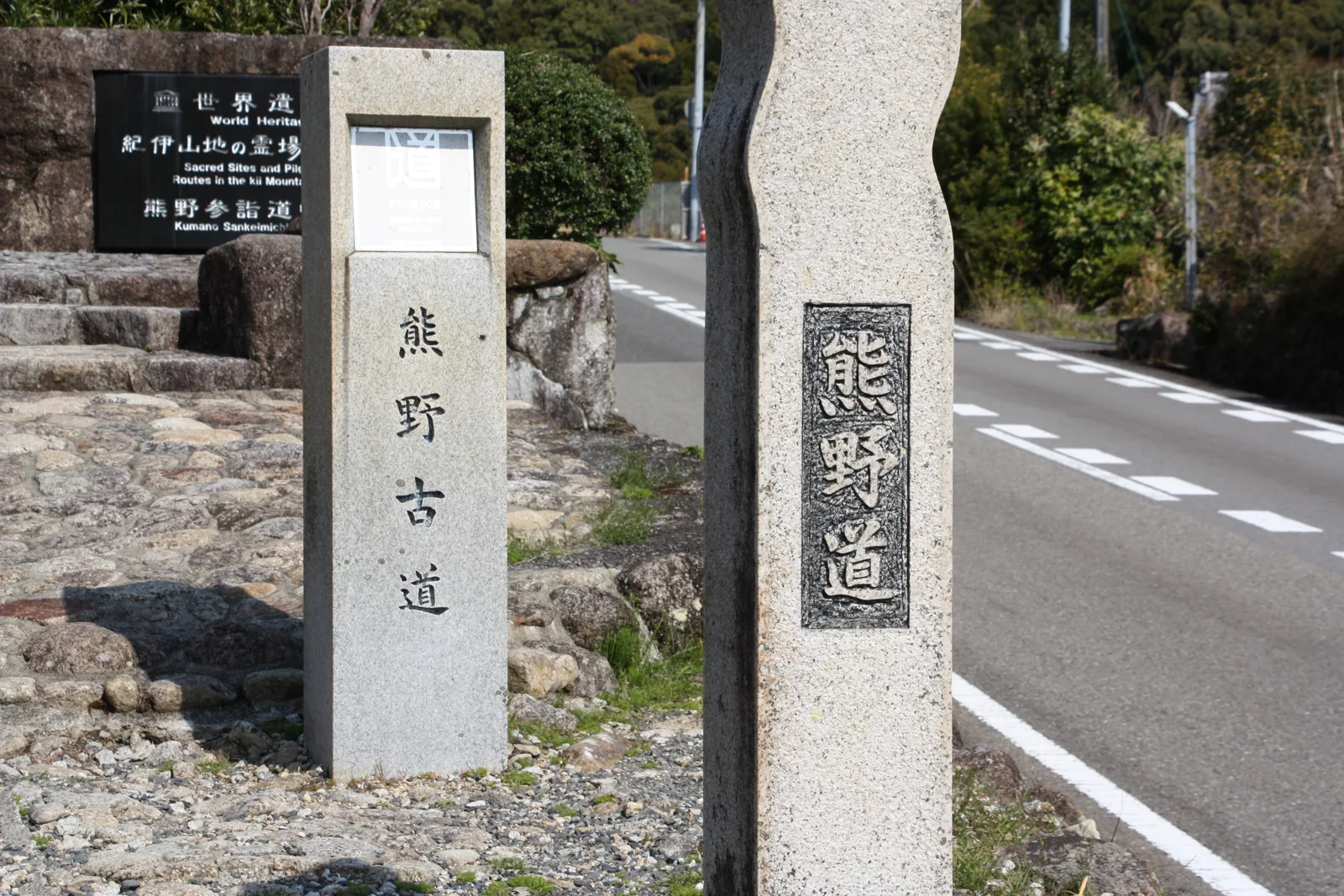
I would walk uphill. The route rises from the valley towards the temple and shrine, then continues down past the pagoda to the waterfall without repeating a section. Descending is easier on the lungs but wet steps put more demands on knees and shoe grip. Reverse the route only if your photo stop is short and you are confident descending. The Meoto Sugi cedars near the entrance already give a sense of the old trail. Anyone wanting to turn back can decide before going deeper.
There are toilets, vending machines and walking sticks to borrow around Daimonzaka car park. Adjust your pack and refill water here. A long umbrella occupies more of your hands than you may expect while handling a camera and children. A raincoat makes it easier to keep one hand free for support. Steps vary in height and width, so walking shoes with tread suit them better than smooth soles. Leave suitcases below.
This section offers a Kumano Kodo experience within a half-day visit. Mountain routes such as Ogumotori-goe and Kogumotori-goe need separate fitness, accommodation and transport planning. At signs leading into the mountains, follow your planned Nachisan, temple, shrine and waterfall route rather than treating another long hike as an extra. The short outing ends back on a road where you can catch a bus. Tanabe City Kumano Tourism Bureau: Daimonzaka route.
Kumano Nachi Taisha: the approach continues after the old trail
After Daimonzaka, you reach the area near Nachisan bus stop and the shops, with more steps ahead to the temple and shrine. Tanabe City Kumano Tourism Bureau suggests about another 20 minutes from the top of Daimonzaka to that area. It is easy to underestimate after already climbing. Sit and drink before continuing rather than pushing on because it feels close, especially while carrying a child or wearing a hot raincoat.
Kumano Nachi Taisha and Seigantoji stand beside each other and fit one visit. Start at the vermilion shrine buildings, continue to the temple, then leave towards the three-storey pagoda. The shrine above and Hiro Shrine below are separate sites. Hiro Shrine worships the waterfall itself. Finishing the upper shrine still leaves another walk requiring time and energy to the waterfall.
For more background on the beliefs, add the shrine’s treasure hall. Current official information lists 08:30–15:30, closed Wednesdays, with admission of ¥300 for adults, ¥200 for children and free for preschool children. It suits an interest in Kumano beliefs, historical documents or ritual objects. If cedars, the pagoda and waterfall are your main interests, leave the time for outdoor walking rather than entering every building to complete a list.
Reception at the main shrine and Hiro Shrine is generally 08:00–16:30, and night worship stops after sunset. Goshuin stamps and shrine items add queueing and visiting time. Agree an obvious meeting place near the shrine buildings so those waiting can rest, rather than making everyone stand at the stair entrance for each purchase. Spend your mountain time on what you want to do and reduce pressure on the return journey. Kumano Nachi Taisha: visiting hours, steps and accessible entrance · Kumano Nachi Taisha: treasure hall.
Kumano Nachi Taisha’s seasonal video shows the shrine buildings, waterfall and forest, adding landscape context to the Nachisan worship area.
Seigantoji and the pagoda: viewing and entering are separate choices
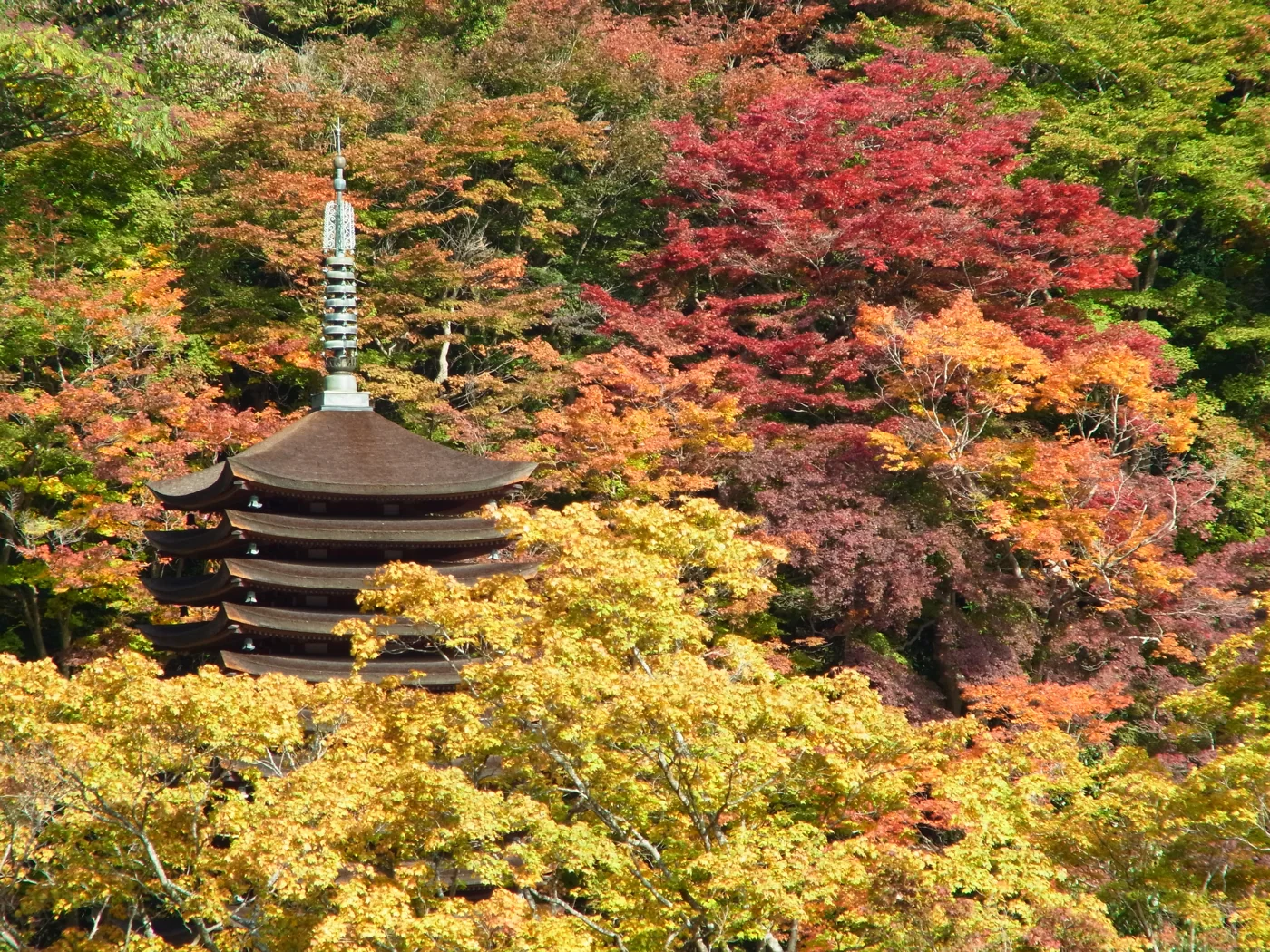
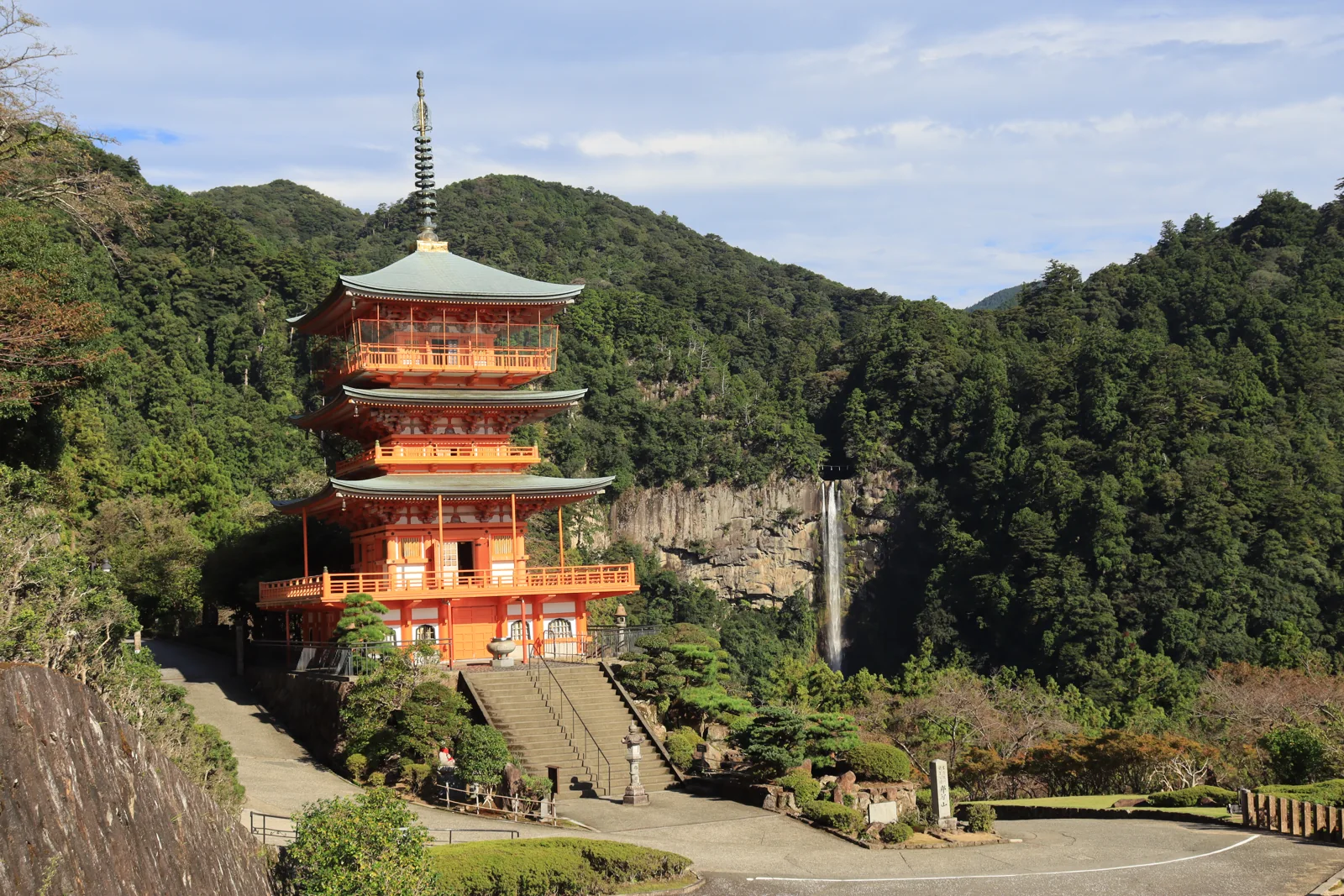
Seigantoji is the first temple on the Saigoku 33-temple pilgrimage. Its main hall beside the shrine brings temple, shrine and forest into one worship area. Visit the hall first, then continue towards the pagoda as the view opens. The red tower beside the white waterfall is a place worth slowing down at.
Entering the three-storey pagoda costs extra. The temple’s December 2024 reopening notice lists ¥500 for senior high school age and over, ¥300 for primary and junior high school pupils, and free admission for young children. It opens at 09:00, accepts final admission at 15:40 and closes at 16:00. A morning visit leaves more room under the published schedule. Afternoon arrivals should calculate the admission deadline first: returning after the waterfall can add walking and miss entry.
For a photograph of pagoda and waterfall together, first find a view from the public walking areas around the temple and tower. Entering the pagoda adds both a fee and more steps. Stand safely to one side for photographs and keep the way clear. Do not step backwards on narrow stairs for a shot. If carrying a telephoto lens, remember that its weight goes with you down to the waterfall entrance too.
Mist can hide the distant waterfall. Do not use the whole morning waiting for the full view. Worship first, then see whether it clears. If rain grows heavier, return to a stop along the bus route. When the full waterfall is hidden from above, a closer view of the water at Hiro Shrine can become the focus, provided paths and buses are operating normally. Seigantoji: grounds and visiting · Seigantoji: pagoda reopening and admission notice.
Nachi Falls and Hiro Shrine: save energy for the climb back to the stop
Descend from the pagoda area to the entrance of Hiro Shrine. The waterfall is 133 metres high. Worship faces the falls directly rather than a conventional shrine main hall. Up close, the scale of water falling from above explains its place as a centre of belief. It is quite different from the distant composition with the red pagoda.
There is a general worship area in front of the falls. For the closer frontal Otaki Haisho viewing platform, the current official page lists ¥500 for adults, ¥200 for primary and junior high school pupils and free admission for preschool children. The walk from the entrance is about three minutes each way. An older official grounds PDF still gives ¥300 for adults; budget using ¥500 on the current dedicated page. This fee is separate from pagoda admission. Decide on each independently.
Do not expect to walk freely along the water’s edge. Stay on open worship paths. Wet surfaces and spray reduce grip, so stand firmly before taking photographs, cleaning a lens or putting away a phone. With children, one adult can check the next flight of steps before everyone moves. That is easier to manage than descending while the whole group takes photographs.
Afterwards, walk uphill from the entrance to Nachi-no-Taki-mae stop. Do not start running from beside the falls when a downhill bus is nearly due. Return early to the correct roadside stop for the service you want. Wait on the side towards Kii-Katsuura; an uphill bus continues to Nachisan terminus and leaves you arranging a return. Kumano Nachi Taisha: Hiro Shrine and waterfall platform.
Rainy-day changes: keep the temple and shrines, reduce wet steps
In light rain without strong wind, and with shoes that grip, ride to Nachisan first. Visit the main shrine and Seigantoji, then continue to the waterfall if energy allows. Skipping Daimonzaka removes a long stairway while retaining the main mountain sights. Wear a raincoat and carry waterproof protection for your camera and phone. Less repeated unpacking makes walking easier.
If you find pooling water, slippery shoes or an uncomfortable companion at the Daimonzaka entrance, return to the roadside and take the bus. A brief look near the entrance can be enough; decide the length by conditions that day. Steps remain after reaching the terminus. Anyone with painful knees can choose meals, hot springs and rest in the port town instead. Bus access does not make the entire visit easy.
In heavy rain, strong wind, a typhoon or a road closure, move the mountain visit to another morning. The bus operator says services stop when safety cannot be assured during natural disasters. Even an available taxi does not establish that a route is open. Check bus operations and temple/shrine notices, then use open indoor restaurants and accommodation facilities that day.
At seasonal changes and in winter, include sunset in the plan. If an afternoon arrival in Katsuura means reaching the mountain near dusk, leave it for daylight the next day. Unlit cedar steps, closing approach shops and return transfers together magnify small delays. A short visit can skip a section; avoid making the hotel return depend on the last bus. Kumano Gobo Nankai Bus: Nachisan Line timetable, 1 April 2026 · Kumano Nachi Taisha: visiting hours, steps and accessible entrance.
Fresh tuna at the harbour: check when the market closes
Katsuura Port’s nama maguro means tuna that has not been frozen. When ordering, look beyond rice-bowl photographs to the species and cut. Akami focuses on the lean flesh’s flavour; belly cuts have more fat; mixed cuts suit a comparison. Order from that day’s menu rather than expecting a species shown online to be available daily. For those avoiding raw food, find cooked dishes or fried tuna and put dietary needs first.
The official hours for Katsuura Fishing Port Nigiwai Market are 08:00–16:00, with last food orders at 15:30. It generally closes Tuesdays, subject to calendar and event changes. This makes it better for breakfast, lunch or an early afternoon meal. If descending in the afternoon, calculate your harbour arrival. After 15:30, use other station-area or harbour restaurants rather than relying on the market for dinner.
With dinner and breakfast included at the hotel, use day-one lunch for tuna and arrive for dinner in the evening. If the train arrives in the afternoon, eat in town before check-in, leaving one less deadline before the mountain visit the next day. Room-only or breakfast plans suit those choosing their own dinner. For raw-food restrictions, allergies or children’s meals, book a plan where you can state the requirements directly rather than searching restaurant by restaurant that evening.
The market combines eating and shopping; tuna-cutting demonstrations do not run throughout every opening hour. For a particular event, use the announced session times. For a tuna meal, go during normal meal hours. Buy souvenirs on the return trip rather than taking chilled fish uphill for half a day. Shelf-stable snacks and processed products are easier for a long train journey. Katsuura Fishing Port Nigiwai Market: hours and access.
Tuna bidding tours need another morning
If port work interests you, join the Nachikatsuura Tourism Organization’s fresh-tuna market bidding tour. An accredited guide takes visitors to the second floor of the first or second auction hall. The auction uses written bids. Watch how buyers assess and bid on fish as well as the fish themselves. Expecting an observation of port work is closer to the experience than expecting a loud bidding performance.
The current activity page separates the plans. Those with breakfast or tasting require at least two adults and finish around 08:30. They do not run on Tuesdays or market closure days. The guide-only plan currently runs on Wednesdays, Thursdays and Fridays, with bookings accepted until 07:00 the previous day. The reservation system adds a 1.5% usage fee.
Save the meeting point, time, language and cancellation conditions when booking. Meal inclusions and meeting times differ between plans; do not use another experience’s schedule. If your hotel requires a transfer, map the journey to the meeting point first. A harbour stay saves more effort that morning than a sea-view room far from town.
A breakfast activity ending around 08:30 cannot connect with the 08:25 uphill bus, even before returning for bags or checkout. Choose a service at 09:05 or later and shorten the mountain route, or stay two nights. Combining the market, full Daimonzaka walk and a midday train first runs into the harbour morning schedule, not walking speed. Nachikatsuura Tourism Organization: fresh-tuna market bidding tour.
Where to stay: early buses or more time in the baths
For one night before an early mountain bus, prioritise accommodation within walking distance between Kii-Katsuura Station and the harbour. It removes a morning transfer and keeps dinner options nearby. Collecting bags before the limited express is then straightforward. Check the actual walking route from the station. Accommodation labelled Nachikatsuura covers a wide area; the same town name can still mean a separate stretch of coast.
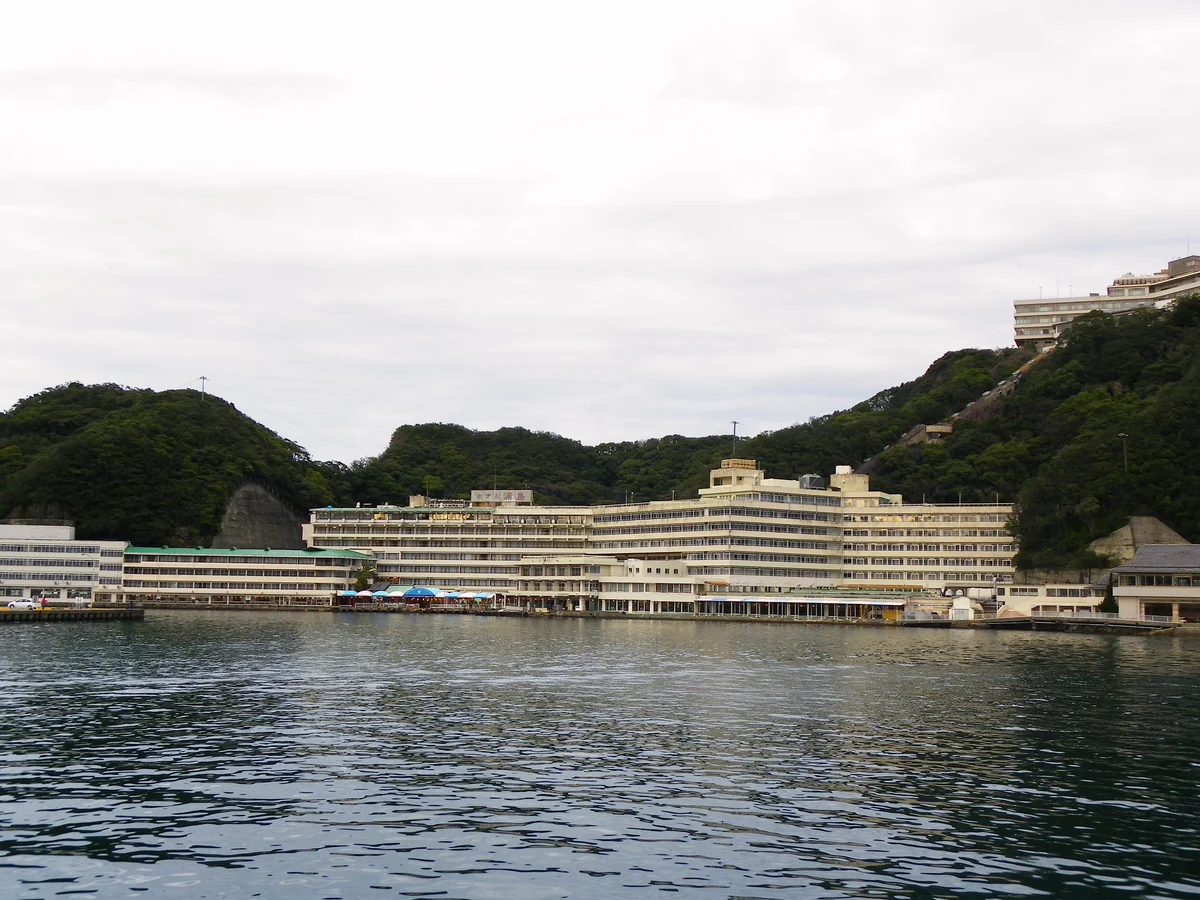
For a stay centred on hot springs, Hotel Urashima is distinctive. Cave baths including Bokido sit within a large peninsula hotel. The official route from Kii-Katsuura Station is about six minutes on foot to the Katsuura Port sightseeing pier, then the transfer boat. Normal check-in is 15:00 and checkout 10:00. Arrive in the afternoon and leave time for moving around the hotel and bathing to make use of its main features.
Urashima has rooms in several buildings. Check the dining venue and bath locations alongside the room. For three or four guests, enter every adult and child’s age before choosing occupancy and bedding. For beds, choose an explicit bed type; for Japanese-style rooms, check futon numbers. For private bathing, select a room listing an in-room bath and its water type. The cave communal baths suit guests comfortable with shared bathing; these are different services.
Harbour-side Manseiro offers another option, combining dinner with a smaller inn. Compare included meals and your departure time. Belonging to the same group does not make every bath and transfer arrangement identical. For a longer coastal trip, compare Shirahama, Arima and Kinosaki, decide how many nights to give the Kii Peninsula, then choose the room. Compare Kansai hot-spring bases · Hotel Urashima: access and transfer timetable · Manseiro: official accommodation information.
Urashima transfers and bookings: work out an early departure first
Urashima currently lists hotel boat departures at 07:20 and 07:40, then roughly every 15 minutes in the 08:00–09:00 period. Pier departures include 07:30 and 07:50. Afternoon boats leave the pier about every 15 minutes from 15:10, with the last at 18:40; the last hotel departure is 18:30. The current October 2026 timetable lists boat and bus periods separately. Save both after booking.
Shuttle buses operate during the daytime boat break and in the evening, and replace boats in poor weather or during maintenance. A market meeting before 07:20 cannot be reached using that day’s first boat. Choose a harbour hotel within walking distance, or arrange a workable earlier departure with the hotel before booking. Do not wait until that evening to find that the location conflicts with the activity.
Read cancellation conditions too. Under Urashima’s current general accommodation terms for 1–14 guests, cancellation costs 30% five days before arrival, 50% three or two days before, and 100% the day before, on the day or for a no-show. Cancelling an entire multi-night booking is calculated for each accommodation date. Save any early-booking or other special-plan conditions with the order and handle changes under that booking. If dates are undecided, compare total prices of cancellable plans rather than only the lowest nightly rate.
For dinner-and-breakfast bookings, give the expected time of arrival at the hotel, not just at the railway station. Alighting, walking to the pier, waiting for the boat and entering the hotel take time, and dinner needs room in the schedule. Compare the same date, guests and meals, including bathing tax, children’s bedding and cancellation terms in the total. Include the price difference for a cancellable plan if weather flexibility matters. Hotel Urashima: access and transfer timetable · Hotel Urashima: accommodation terms.
A practical two-day route and the costs to set aside
Arrive in Kii-Katsuura around lunchtime on day one, leave large bags at your accommodation, eat tuna by the harbour and walk around the station and port before afternoon check-in and bathing. For Urashima, enter via the sightseeing pier and leave time to move around the property before dinner. The aim is a comfortable arrival after the long journey. Keeping Nachisan for the next morning gives you control over its start time.
After breakfast on day two, take the 08:25 or 09:05 bus from Kii-Katsuura. In good weather and with enough energy, alight at Daimonzaka, then walk to the shrine, Seigantoji, pagoda exterior and waterfall. To reduce steps, stay on to Nachisan and begin at the temple and shrine. Return to the harbour, collect bags and eat before the chosen departure train. Arrange checkout-day storage and collection at check-in on day one so that you do not need to ask again that morning.
If you arrive early on a clear first afternoon, you can visit Nachisan then. Start from the terminus rather than beginning Daimonzaka late in the afternoon. Keep day two for a booked market activity and breakfast, then return to collect luggage and leave. Both orders work. Arrival time in Katsuura determines the better choice, rather than which photograph should come first.
For an adult, set aside ¥1,260 for the one-day bus pass, plus ¥500 each for entering the pagoda and waterfall platform if wanted: ¥2,260 in total. Adding the treasure hall at ¥300 makes ¥2,560. These totals cover only the listed transport and admission options. Budget long-distance rail, meals and accommodation separately. For general worship and outdoor views, keep the two ¥500 fees for a harbour lunch. Add each separately if you want a close waterfall view and the view from inside the pagoda, rather than treating them as a compulsory package. Kumano Gobo Nankai Bus: Nachisan Line timetable, 1 April 2026 · Kumano Gobo Nankai Bus: Nachi Area World Heritage Free Pass.
| Item | Yen | When it suits |
|---|---|---|
| Nachi Area Free Pass | 1,260 | Same-day return and intermediate mountain stops |
| Pagoda interior | 500 | For the interior and views from its floors |
| Waterfall worship platform | 500 | For a closer frontal waterfall view |
| Treasure hall | 300 | For objects relating to Kumano beliefs; closed Wednesdays |
A few useful answers
Does Daimonzaka end at Nachi Taisha?
The stone stairway itself is about 600 metres with 267 steps. From the top, the approach continues; official guidance suggests another 20 minutes to the temple and shrine area. Allow 3–4 hours including the temple, shrines, pagoda and waterfall.
Can I take the bus directly and skip Daimonzaka?
Route 31 to Nachisan terminus skips Daimonzaka, but slopes and steps remain to the temple and shrine. For the waterfall alone, alight at Nachi-no-Taki-mae. Steps also lead from its entrance to the worship area.
How much is the bus pass?
It costs ¥1,260 for adults and ¥630 for children, valid on the day of use. The main hop-on, hop-off area is Nachi Station to Nachisan. No refund is given after partial use. The adult Kii-Katsuura–Nachisan single fare is ¥630, so a return equals the pass price.
Is Urashima convenient for an early tuna bidding tour?
The first listed hotel boat leaves at 07:20. An earlier market meeting needs another workable transfer or a harbour hotel within walking distance. A market activity with breakfast finishes around 08:30 and cannot connect with the 08:25 uphill bus.
Is Nachisan worth visiting in rain?
In light rain with roads and buses operating normally, ride directly to Nachisan, reduce wet steps and visit the temple and shrine first. In heavy rain, strong wind or road closures, move the mountain trip to another day and eat and rest in the port town.
Do I need two nights just for Nachisan?
A short Nachisan visit fits a one-night stay. Two nights separate the two mornings if you also want a harbour activity, the full Daimonzaka walk and unhurried bathing.
Official information and references
Sources used in this guide.
- Kumano Gobo Nankai Bus: Nachisan Line timetable, 1 April 2026
- Kumano Gobo Nankai Bus: Nachisan Line fare table
- Kumano Gobo Nankai Bus: Nachi Area World Heritage Free Pass
- Tanabe City Kumano Tourism Bureau: Daimonzaka route
- Kumano Nachi Taisha: visiting hours, steps and accessible entrance
- Kumano Nachi Taisha: Hiro Shrine and waterfall platform
- Kumano Nachi Taisha: treasure hall
- Seigantoji: grounds and visiting
- Seigantoji: pagoda reopening and admission notice
- Katsuura Fishing Port Nigiwai Market: hours and access
- Nachikatsuura Tourism Organization: fresh-tuna market bidding tour
- Hotel Urashima: access and transfer timetable
- Hotel Urashima: accommodation terms
- Manseiro: official accommodation information