Choose your route from Nankai Wakayamashi or JR Wakayama Station to Wakayama Castle, Nishinomaru Garden and Kimiidera. Plan for 231 steps, free access on foot or an ¥800 return cable-car visit, with weekday JR examples, the ¥190 single fare and shorter half-day routes.
- Region & Focus
- KansaiSide trips
- Reading Scope
- 30 min read · 9 chapters · 4 Q&As
- Official Verification
- 13 official sources checkedUpdated 28 October 2026
- Key Topics
- ItinerariesRail travelTravel budget
Chapter Route Map (tap any stop)
- Choose the order from your arrival station
- How the two stations and the sights fit together
- Separate the paid castle keep from the free grounds
- A shorter walk through Nishinomaru Garden and Ohashiroka Bridge
- Kimiidera’s gate, approach and main hall: steps and rest stops
- Walking and cable-car visits: fares, entrances and the last service
- Put lunch between journeys and save Wakanoura for another visit
- Spring blossom and autumn colour: adjust time on the same route
- Full-day and half-day routes: work back from your actual return station
- Quick Q&A
For a car-free day in Wakayama, I would first distinguish the two arrival stations. Nankai Wakayamashi Station suits a castle-first route; JR Wakayama Station makes it easy to start with Kimiidera. A morning at the castle and a temple visit after lunch give you a full day of castle grounds, gardens and hillside views. If you need the cable car in both directions, visit Kimiidera first to protect its 08:30–16:30 operating window.
Choose the order from your arrival station
From Namba, take Nankai to Wakayamashi Station and start with Wakayama Castle. If you start at JR Wakayama Station, visit Kimiidera first and use the cable car in the morning if needed. Both sites involve an uphill stretch. Leave room for walking within the castle grounds, the temple steps and lunch. These two stops are enough for a first visit with average stamina.
My first choice is to arrive at Wakayamashi Station in the morning, visit the castle, then take a train from JR Wakayama Station to Kimiidera after lunch. Finish at JR Wakayama Station. This suits travellers staying in Namba who are happy to return by JR. If you have bought a Nankai return ticket, include the journey back to Wakayamashi Station. Avoid finishing at Kimiidera only to discover that your return ticket starts at the other station.
If you depend on the cable car in both directions, or arrive at JR Wakayama Station in the morning, I would reverse the order. The temple lists cable-car services from 08:30 to 16:30. Visiting the temple in the morning and the castle in the afternoon gives you more room to shorten the day. With only half a day after a late arrival, choose one site: the castle from Nankai Wakayamashi Station, or the temple from JR Wakayama Station. Kimiidera visiting and cable-car hours
If you have three days in Osaka, this trip can replace a full day in the city. Use the three-day Osaka itinerary to decide what to leave out. Wakayama suits travellers who want a castle, gardens and a hillside temple. If your companions mainly want to shop, or do not want to walk outdoors in the rain, keeping the free day in Osaka better fits their interests.
Each order has a different cost in effort. Castle first gives you a short initial walk from the Nankai station through the centre; in the afternoon, keep the temple visit within cable-car hours. Temple first deals with the longer staircase in the morning. After lunch back at the JR station, the castle can be reduced to its garden. I would choose this order for companions who feel fresh in the morning but tire later, so the group does not have to reopen the decision at the foot of the steps.
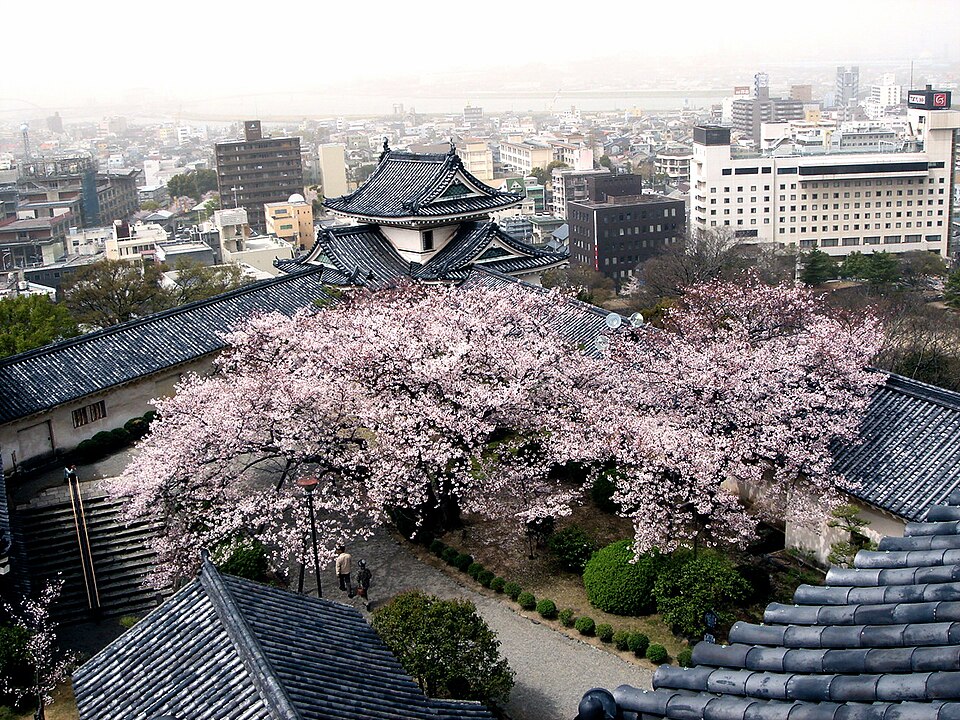
Choose your route from Nankai Wakayamashi or JR Wakayama Station to Wakayama Castle, Nishinomaru Garden and Kimiidera. Plan for 231 steps, free access on foot or an ¥800 return cable-car visit, with weekday JR examples, the ¥190 single fare and shorter half-day routes.
How the two stations and the sights fit together
Enter the full station name when searching: Wakayamashi or Wakayama. The former is the Nankai Main Line station reached from Namba. The latter is the JR interchange for the Hanwa and Kinokuni lines. They are in different locations. Wakayama Castle is in the centre, with Nankai Wakayamashi Station to its north and JR Wakayama Station to its east. Kimiidera is reached by a southbound local train from JR Wakayama Station.
The city’s official access page gives a walk of about 25 minutes west along Keyaki Odori from the central exit of JR Wakayama Station to City Hall, or about 10 minutes south from Wakayamashi Station. Both timings end at City Hall. The castle is beside it, but you still need to enter the grounds, find the path and climb to the keep. Reaching City Hall does not mean reaching the keep’s ticket office. Official city access and walking directions
You can link the castle and temple without a car. After the castle, return towards City Hall, walk east along Keyaki Odori to JR Wakayama Station, then change to the Kinokuni Line. I suggest allowing 40 minutes, including leaving the castle grounds, crossing roads, entering the station and finding the platform. This is a planning allowance. If the castle walk has tired you, take a bus to the station instead. Enter your actual boarding stop and travel date in Wakayama Bus’s official planner.
Kimiidera is the second stop from JR Wakayama Station, after Miyamae. The temple gives a walk of about 10 minutes from the station. The staircase or cable-car part starts only after you reach the temple entrance. On the return journey, follow signs for Wakayama. Do not board any Kinokuni Line train simply because it is on the same line: trains towards Kainan or Gobo continue south. Kimiidera’s official public transport directions
Buses also link the castle area and Kimiidera, but boarding points and directions vary by route. The temple’s directions say to take a Kainan-bound bus from Wakayamashi Station and get off at the Kimiidera bus stop, followed by a walk of about 10 minutes. Find the railway station and bus stop separately on the map. Write “train” or “bus” in your itinerary so you return to the correct boarding point.
For the short JR journey, I would check the service type, destination and stops on the platform. The Minoshima-bound local in this example stops at Miyamae and Kimiidera and takes six minutes. The same Wakayama timetable also lists Kuroshio limited expresses. Choose a local service confirmed to stop at Kimiidera. Boarding the next arriving train with a short-distance ticket is an easy way to make a mistake.
Waiting time affects the day more than the six-minute ride. On Friday 30 October 2026, for example, the 10:20 local to Minoshima is followed by the 11:00 local to Gobo, a 40-minute gap. The 13:30 and 14:00 departures are 30 minutes apart. If you want lunch beside the JR station, look up the next local before entering a restaurant, then choose your departure after eating. These are fixed departures, not a turn-up-and-go service. JR Wakayama’s southbound timetable for the example date
Separate the paid castle keep from the free grounds
You can spend the morning outdoors looking at roofs, stone walls and gardens. Choose the keep if you want views over the city and Kii Channel. The present Wakayama Castle keep was rebuilt in 1958. The prefecture’s official guide describes a three-storey main keep with 360-degree views. On a clear day, the climb can be the main part of the visit: looking out from inside the grounds gives a different perspective from looking at the castle across the moat. Official prefectural guide to Wakayama Castle
The keep normally opens 09:00–17:30, with last admission at 17:00, and closes from 29 to 31 December. Admission is ¥410 for adults and ¥200 for primary and lower-secondary school pupils. Two adults pay ¥820; one adult and one primary-school child pay ¥610. This is admission to the keep. You can visit the free Nishinomaru Garden separately without first buying a keep ticket.
Allow one and a half to two hours for the castle, including entering, climbing, visiting the keep or garden and returning to an exit. Castle enthusiasts can spend a whole morning here and shorten the temple visit later. With older companions, treat the keep as optional and judge their energy after the uphill approach. If you decide to climb, do it in the first part of the morning rather than after the garden and lunch.
Stone walls reward a slower walk at close range. The official guide describes different masonry methods left by successive lords, and identifies Okaguchi Gate and the northern earthen wall as Important Cultural Properties. Pick one stretch of wall and one gate to examine rather than circling the whole moat. If the keep is your priority, follow the uphill signs from your entrance. Stop for photographs where the path is wider so others can pass.
A flat site map does not show how demanding every path is. The height difference on Mount Torafusu gives the keep its views and uses leg strength. Kimiidera offers another 231 steps in the afternoon. If you only want one climb today, decide before buying the keep ticket. Climb the keep for castle views and take the temple cable car, or walk the full temple approach and keep the castle visit to its garden and outer grounds.
To visit both places while saving the cable-car fare, keep your energy for Kimiidera and visit the castle’s garden and stone walls. Skipping the adult keep ticket of ¥410 and the ¥800 return cable-car visit saves ¥1,210. Transport and meals still cost extra. If the view from the keep matters most, pay ¥410 and decide on the temple cable car according to your energy. Neither site needs to become a compulsory walking challenge.
A shorter walk through Nishinomaru Garden and Ohashiroka Bridge
Nishinomaru Garden, also called Momijidani Garden, is a pond-stroll garden worth its own time within the castle grounds. It uses the slopes of Mount Torafusu, brings the inner moat into its scenery and incorporates green Kishu stone. Water, stone and bridge views offer more variety than continually seeking distant views of the keep. For a short walk, I would prioritise this area. Official Nishinomaru Garden hours and landscape guide
The garden is free. Normal hours are 09:00–17:00, with last entry at 16:45, and it closes from 29 to 31 December. Its last entry is 15 minutes earlier than the keep’s 17:00 cutoff. In an afternoon visit, order the stops by the areas you actually want to enter. If Kimiidera takes half the day and you want to finish in the garden, treat 16:45 as the entry deadline.
Ohashiroka Bridge links Nishinomaru and Ninomaru. The banks are at different heights, so the covered bridge slopes across the water. The official garden guide also highlights its reflection. On a short visit, see how the bridge relates to the inner moat from the garden, then return to your chosen exit. This is a useful angle for architectural photographs without walking to every gate.
Allow about 30–45 minutes in the garden in place of part of the climb or a walk around the moat. This is time for looking and taking photographs. If you skip the keep, you need not reserve the same amount of time as a keep visit. To catch the 13:30 JR train after lunch, head towards the station when you finish the garden. If you want tea or more time in its corners, choose a later train and shorten the temple’s optional paid activities.
The garden also lets companions follow different paces. Those who want the keep can climb first while others stay in the garden. Agree on a specific exit and meeting time before having lunch together. “Wakayama Castle” is too broad a meeting point. Send the selected gate, garden entrance or spot beside City Hall, and keep a reachable phone to hand. Those skipping the keep then have their own visit rather than waiting as a group at the ticket office.
Kimiidera’s gate, approach and main hall: steps and rest stops
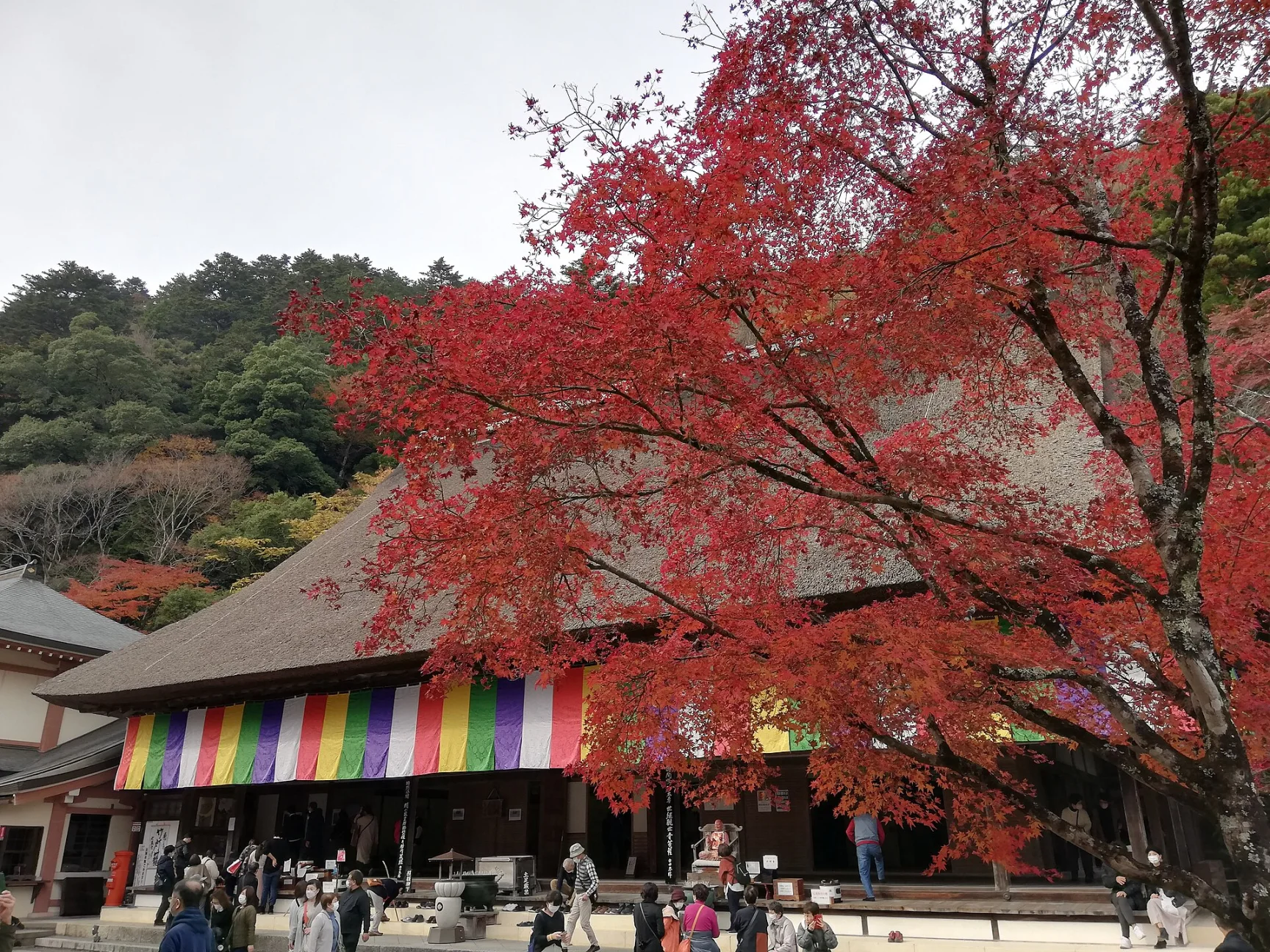
Kimiidera merits a separate train journey for its hillside setting on Mount Nagusa and views over Wakanoura. The 231 steps on the main approach give the visit a clear ascent and descent. Walk if you enjoy approaching the main hall past buildings and stone steps. If you mainly want the view, or need fewer stairs, choose the cable car from the start rather than using energy on a partial climb and turning back. Kimiidera grounds and views
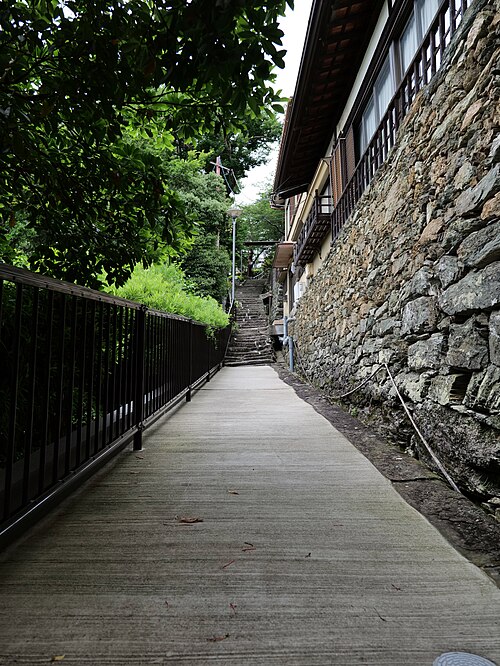
From JR Kimiidera Station, follow the temple’s directions to the entrance, then choose the walking approach or cable-car reception. Their starting points and charging arrangements differ. On the main steps, rest in stages where you do not block the path. The 231 steps cover the whole approach; reaching one landing does not mean the climb is complete. Pushchairs and large luggage are unsuitable for this stretch. A small daypack leaves your hands free for support.
At the main hall, complete your prayers before exploring the buildings and hillside views. The temple lists main-hall sutra and goshuin reception from 08:00 to 17:00, while the third-floor viewing gallery in the Butsuden opens 08:30–16:30. Fit a goshuin visit, gallery entry and cable-car descent to their individual hours. The 17:00 reception finish does not extend the other two services. Different hours for the main hall, Butsuden and cable car
Allow one and a half hours from entrance to departure for ascent, descent, prayers, views and a short rest. Give it two hours if you take many photographs or walk slowly on stairs. This fits a full visit between arrival at the JR station at 13:36, the walk to the temple and the 15:34 return train. If you first spend time eating or queuing for a goshuin, take a later return rather than squeezing both the descent and the walk to the station.
Tenku Cafe in the grounds lists normal opening on Saturdays, Sundays, Mondays and Japanese public holidays, 10:00–16:00. It sits at the top of the main stone steps and suits a seated break with a view on those days. The Friday example here places lunch and drinks before the climb and does not rely on the cafe. Keeping a hillside break separate from a full lunch avoids waiting hungry for a cafe to open. Tenku Cafe location and opening days
For a temple-first morning, take the 10:20 local to Minoshima from Wakayama, arriving at Kimiidera at 10:26. Follow the walking route above and start the visit around 10:40. Aim to return to the temple entrance around 12:10, then walk to the station for the 12:30 northbound train. This leaves roughly one and a half hours in the temple and room for lunch and the castle later. It suits a morning start at JR Wakayama Station. Official JR morning local 341M
If sitting on the hill with a view is a priority, Friday and Saturday call for different plans. On Friday, eat below the hill before visiting and returning to the station. On Saturday, fit a coffee break into Tenku Cafe’s normal hours and take a later return. To use the cafe, remove part of the castle walk. To see both the keep and garden fully, descend at the original time and eat near the JR station. The cafe, temple visit and gallery each need time; they do not all have to fit into the same 90 minutes.
Kimiidera’s chief priest Maeda introduces the stage and viewing area in the temple grounds.
Walking and cable-car visits: fares, entrances and the last service
Normal access to Kimiidera on foot is currently free. Cable-car visitors pay a temple admission charge at the lower reception plus the fare for each direction travelled. For a standard adult, admission is ¥400, ascent ¥200 and descent ¥200: ¥800 for a return visit. Quoting ¥200 as the total cost of visiting Kimiidera by cable car omits admission. Kimiidera’s official price list
For primary and lower-secondary school pupils and people aged 70 or over, admission for a cable-car visit is ¥200 and each ride is ¥100, totalling ¥400 return. The official tariff lists admission and both cable-car directions as free for a wheelchair user and one assistant. Other accompanying relatives pay their own applicable rates. The free entitlement does not cover the whole group.
An adult taking the cable car up and walking down pays ¥400 admission plus ¥200 ascent, a total of ¥600, or ¥200 less than the ¥800 return visit. Descending steps places a different demand on the body from climbing them. I would use the cable car both ways for sore knees. If your budget is tight and you are steady on stairs, the free walking visit gives you a clear route and price.
These are normal-day rates. Different rates apply from New Year’s Eve to 3 January and for Sennichi-mairi on 9 August. The cable car normally runs 08:30–16:30 and closes for three consecutive days of annual inspection around February. If you depend on it to descend, finish queuing and riding before 16:30. I suggest being back at the bottom around 15:30, leaving room to adjust for late arrivals and queues.
The Butsuden’s third-floor viewing gallery has separate entry arrangements. The cable-car tariff covers temple admission and cable-car transport. If you want the gallery, check its opening and charge at the Butsuden rather than treating ¥800 as an all-inclusive price. If the main hall and outdoor views are enough, head back after exploring the grounds without adding paid facilities merely to fill the visit.
Two adults and one child using the primary-school rate pay ¥800 × 2 + ¥400 = ¥2,000 for a return cable-car visit. The whole group visiting on foot pays ¥0. If one adult accompanies the child on the return cable car while the other walks, the cable-car portion is ¥800 + ¥400 = ¥1,200. Agree to meet at the top; the family need not all ascend the same way. The child should stay with an adult able to care for them. Agree on the return grouping before going up.
The normal return cable-car visit for someone aged 70 or over is ¥400, which is ¥400 below the standard adult ¥800. Choose the cable car according to the effort of climbing and descending. For wheelchair users, free travel for the user and one assistant addresses the price. Separately ask the temple about access from the entrance to lower reception, boarding and alighting, and movement around the main hall. Give wheelchair dimensions and assistance needs before deciding how to split the group. Any additional companions pay their own applicable rates.
| Route / ticket category | Temple admission | Cable car | Total |
|---|---|---|---|
| Normal visit on foot | 0 | No ride | 0 |
| Adult: cable car up, walk down | 400 | 200 uphill | 600 |
| Adult: return cable car | 400 | 200 up + 200 down | 800 |
| Primary/lower-secondary pupils and age 70+: return cable car | 200 | 100 up + 100 down | 400 |
| Wheelchair user and one assistant | 0 | 0 both ways | 0 |
Put lunch between journeys and save Wakanoura for another visit
On a castle-first day from Wakayamashi Station, followed by Kimiidera from JR Wakayama Station, lunch fits between leaving the castle and reaching the JR station. Eat before boarding so temple time can go to the steps and prayers. After lunch, see how much time remains before 13:30 and choose the walk or bus to the station. If a restaurant has a long queue, choose another seated option in the same direction rather than doubling back west of the castle for a famous shop.
Set a meal budget you are comfortable with and choose ramen, a set meal or something else from the day’s menus. For a group, a restaurant with enough seats and suitable food offers more rest than everyone waiting by the road with separate takeaways. Keep meal costs separate from keep admission and the cable car. To save money, first remove paid activities that do not interest you, while retaining time to sit and drink at lunch.
If you start at the JR station and visit the temple first, you can return to JR Wakayama Station for lunch before walking towards City Hall and the castle. This adds a station entry and exit, but lunch and the later walk follow a clear route through the city. If it is almost 15:00 after eating, prioritise the garden and castle exterior. Leave the keep to those who both want it and have the energy.
Save half a day for a coastal walk in Wakanoura. Seeing the coast from Kimiidera does not remove the travel to the shore, the coastal walking or the next ride. To go down to the coast today, drop either the castle or temple. Koyasan, Shirahama and Nachikatsuura need separate transport plans. Read the guides to Koyasan day trips and temple stays, onsen bases including Shirahama and two days and one night in Nachikatsuura to allocate them to other travel days.
Choose lunch and your return station together. On the castle-first version, move towards the JR station after eating and leave by JR after the temple. On the temple-first version, return to the JR station for lunch, walk towards the centre in the afternoon and finish at Nankai Wakayamashi Station. To use the same railway both ways, accept the extra journey back to your original station after the city visit. Without a return-ticket constraint, compare access from your final sight to both stations before buying the Osaka-bound ticket.
Spring blossom and autumn colour: adjust time on the same route
For spring blossom, put photography time into the existing castle and temple visits rather than adding a third blossom spot. If visiting the keep, climb first and return to lower ground for the flowers. At the temple, focus on the steps and main hall area. If queues and photography take longer, drop the Butsuden gallery or part of the castle circuit. Blossom is already on the route; another photo stop need not mean extra journeys.
In autumn, I would give Nishinomaru Garden more of the castle visit. Its official guide highlights autumn leaves. The pond, green stone and Ohashiroka Bridge fit into one short walk. Choose your date using the actual leaf conditions before departure, then arrange the order using that day’s services. Seasonal scenery in Momijidani Garden
In ordinary rain, first judge whether your footwear and companions can manage wet stone steps steadily. If still visiting Kimiidera, use the cable car both ways to reduce the long main staircase. At the castle, shorten the climb and outer circuit and retain the garden paths that are usable. Even with the cable car, there are outdoor stretches between the station, entrance and temple grounds. Handling rainwear and wet shoes also adds time.
In summer, place uphill walking early enough for your own tolerance, then decide on the second sight after a seated lunch. In winter, finish the outdoor temple visit early. The cable car’s 16:30 finish is a deadline, not a starting point for more slow wandering. Wear layers you can add or remove and carry water and essential rainwear. If wind or rain affects walking or suspends transport, move the two-site day and stay near your accommodation instead.
Full-day and half-day routes: work back from your actual return station
This castle-first example uses Friday 30 October 2026. Start at the castle around 09:30, leave the grounds around 11:30 and head to JR Wakayama Station after lunch. Take the 13:30 local to Minoshima via Miyamae, reaching Kimiidera at 13:36. The temple entrance is still about 10 minutes away on foot. Official JR outward local for this example
After visiting, take the 15:34 local from Kimiidera, arriving at Wakayama at 15:41. Aim to leave the temple entrance around 15:15. For a longer stay, the same day’s northbound timetable also lists 15:58 and 16:29 departures. If using the cable car down, complete the ride before 16:30, then walk to the station. Goshuin reception continuing until 17:00 does not mean the cable car runs until then. Official JR return local for this example
For the reverse order on Friday, use the 10:20 morning departure described above. After the temple, take the 12:30 local from Kimiidera, reaching Wakayama at 12:37. After lunch, walk along Keyaki Odori towards the castle and aim to start the garden and castle around 14:00. Enter the garden first, then decide on the keep according to your remaining energy before its last admission. To return to Namba by Nankai, head north to Wakayamashi Station after the castle. Official JR Friday return service 358M
Do not carry Friday’s entire connection plan over to Saturday. On Saturday 31 October 2026, the 12:30 local from Kimiidera reaches Wakayama at 12:38 on platform 4. Friday’s departure at the same time arrives at 12:37 on platform 5. The train details mark the services as running on Saturdays and holidays, or not running on Saturdays and holidays, respectively. One minute makes little difference to lunch followed by a city walk. For a reserved-seat onward train, recalculate transfer time using Saturday’s arrival and platform. Official JR Saturday return service 358M
JR fares between Wakayama and Kimiidera are ¥190 adult and ¥90 child each way, or ¥380 adult return. An adult visiting the keep and walking into the temple pays ¥410 + ¥190 × 2 = ¥790 for these three items. A return cable-car visit brings this to ¥790 + ¥800 = ¥1,590. These totals cover the keep, this local JR return and the chosen temple access. Budget separately for Osaka travel, other buses, meals and Butsuden gallery entry. Official JR timetable and fare search
Recalculate family costs on the same route. For two adults and one child eligible for the primary-school rate, all entering the keep and travelling between JR Wakayama and Kimiidera, with temple access on foot, the total is ¥410 × 2 + ¥200 + ¥190 × 4 + ¥90 × 2 = ¥1,960. A return cable-car visit for everyone adds ¥2,000, making ¥3,960. Meals, long-distance rail tickets and other transport are extra for adults and child alike. If the child does not want the keep, one adult can stay with them in the garden. Remove the corresponding unbought keep tickets so the budget matches who actually enters.
Wakayama Bus’s one-day pass currently costs ¥1,000 adult or ¥500 child. It covers specified local services of Wakayama Bus and Wakayama Bus Naga, excluding expressway, airport and community buses. Paper tickets are sold at designated outlets including Nankai Wakayamashi and JR Wakayama stations; a mobile version is also available. Walking to the JR station and taking the train in this example gives no reason to buy a bus pass for the two JR journeys. Compare actual single bus fares with ¥1,000 only if switching to several bus rides. Wakayama Bus day-pass coverage and sales
For half a day from Wakayamashi Station, visit the castle and garden, sit down for a meal and return to Namba from the same station. This is the easiest route to shorten. From JR Wakayama Station, make a return trip to Kimiidera and choose the steps or cable car according to your stamina. For companions who cannot manage long staircases, one proper visit and a full lunch are more rewarding than stopping only at both entrances.
Before returning to Osaka, check your actual arrival station and outward ticket. If you finish at JR Wakayama Station, plan the JR journey from there. With a Nankai return ticket, first find the connection to Wakayamashi Station, then allow time to collect luggage and reach the platform. Use full station names rather than the shared word “Wakayama” on the map. Any extra journey back to your original station also needs its own time allowance.
| Time | Location and activity | Adjustment |
|---|---|---|
| 09:30–11:30 | Wakayama Castle; divide time between keep and garden by interest | Skip the keep for less climbing |
| 11:30–13:20 | Lunch, walk to JR Wakayama Station, enter and wait | Allow 40 minutes from castle grounds to station |
| 13:30–13:36 | Wakayama → Kimiidera, local to Minoshima | Walk about 10 minutes after leaving the station |
| Around 13:50–15:15 | Temple visit and views, then return to entrance | Choose steps or cable car beforehand |
| 15:34–15:41 | Kimiidera → Wakayama, local to Wakayama | Connect towards Osaka after arrival |
A few useful answers
Are Wakayamashi and JR Wakayama the same station?
They are in different locations. Nankai trains from Namba arrive at Wakayamashi. JR local trains to Kimiidera leave from Wakayama. If your return ticket specifies Nankai Wakayamashi, allow for transport back to that station.
Is a return cable-car visit to Kimiidera only ¥400?
A standard adult pays ¥400 admission plus ¥200 up and ¥200 down, totalling ¥800. Primary and lower-secondary pupils and people aged 70 or over pay ¥400 return in total. Normal visits on foot are free. Separate rates apply from New Year’s Eve to 3 January and on 9 August.
Which should I choose for half a day: Wakayama Castle or Kimiidera?
Choose Wakayama Castle for castle grounds and gardens when starting at Nankai Wakayamashi. Choose Kimiidera for the temple approach and Wakanoura views when starting at JR Wakayama. If you need the cable car, complete both journeys within its 08:30–16:30 hours.
Can the Wakayama Bus day pass cover JR travel to Kimiidera?
JR fares are separate. For travel on 30 October 2026, the fare search gives ¥190 adult single or ¥380 return between Wakayama and Kimiidera. The adult bus pass costs ¥1,000. Compare actual fares if using several buses instead.
Official information and references
Sources used in this guide.
- Wakayama City | Public transport and walking directions to City Hall
- Official Wakayama tourism | Wakayama Castle prices and hours
- Official Wakayama tourism | Nishinomaru Garden
- Kimiidera | Visiting hours, cable car and tariff
- Kimiidera | Grounds, 231 steps and cafe
- JR West | Timetable and fare search
- JR West | Outward service 353M on 30 October 2026
- JR West | Return service 370M on 30 October 2026
- Wakayama Bus | Day-pass coverage and sales
- JR West | Morning local 341M
- JR West | Friday local 358M
- JR West | Saturday local 358M
- Kimiidera | Official temple video channel