In Kinosaki Onsen, your ryokan room key doubles as a pass to the town's public bathhouses. Compare Nishimuraya Honkan, Shogetsutei and Mikiya, check express trains from Osaka and Kyoto, learn the five-bath reality, and plan a crab-season stay.
- Region & Focus
- KansaiAccommodation
- Reading Scope
- 16 min read · 8 chapters · 7 Q&As
- Official Verification
- 8 official sources checkedUpdated 20 November 2026
Chapter Route Map (tap any stop)
- Bathhouse Rules and 2026 Reality: Five of Seven Open
- Comparing the Three Ryokan: Heritage, Forest Resort and Literary Charm
- Getting There: 2 hr 40 min Direct from Osaka, Around Five Daily from Kyoto
- Station Arrival: No Buses, No Taxis Needed
- One-Night Rhythm: Four or Five Baths and an 18:00 Dinner
- What the Official Guide Tells You to Skip: Ropeway, Onsenji and Museums
- Crab Season Half-Board: 6 November to March
- Rain and Tattoos: Two Questions Travellers Often Get Wrong
- Quick Q&A
Kinosaki Onsen runs on a remarkably straightforward premise: check into any hot-spring ryokan and your guest pass unlocks free entry to the town's public bathhouses. Slip into a yukata, step into wooden geta clogs and stroll along the willow-lined river—visiting four or five baths in an evening is the seasoned pace. Each flagship property has a distinct appeal: Nishimuraya Honkan is a Registered Tangible Cultural Property inn with centuries of pedigree, Shogetsutei sits inside a vast forest garden with private bookable baths, and Mikiya is a classic wooden ryokan in the heart of town where novelist Naoya Shiga once stayed. Direct Limited Express Kounotori trains from Osaka take around 2 hours 40 minutes, while Kyoto sees only about five direct Kinosaki trains a day—so once winter Matsuba crab season arrives, weekend reserved seats and sought-after rooms sell out fast.
Bathhouse Rules and 2026 Reality: Five of Seven Open
Kinosaki's seven public bathhouses (sotoyu) are protected under local ordinance and share the exact same sodium-calcium chloride spring, emerging at 63°C. Because the water itself is identical, what sets each bathhouse apart is its architecture and the particular blessing (goriyaku) it symbolises. When you check in, your ryokan issues a bath pass granting unlimited free entry to all open bathhouses during your stay. Day-trippers pay per bath at each entrance (¥800 for adults, ¥400 for children) or buy a Yumepa one-day pass (¥1,500 for adults, ¥750 for children; free for under-threes). Local ryokan deliberately keep their own indoor baths modest so that strolling between public bathhouses remains the main event—that town-wide rhythm is what sets Kinosaki apart from other Japanese spa towns.
Before you map out a grand seven-bath sweep, check the current 2026 operating status rather than relying on older travel blogs. Sato-no-Yu has been closed long term since April 2024, and Kou-no-Yu—the oldest of the seven—is undergoing renovation, with the official site projecting a reopening around November 2026. The remaining five bathhouses—Ichi-no-Yu, Mandara-yu, Gosho-no-Yu, Yanagi-yu and Jizo-yu—are operating as normal. Based on the September 2026 notice, five public baths are available in practice, so it pays to double-check the monthly schedule just before you travel.
Those five open bathhouses have distinct personalities, and ordering them by mood beats wandering at random. Ichi-no-Yu anchors the town centre with a striking Kabuki-theatre facade and a photogenic semi-open cave bath carved into the rock behind it. Gosho-no-Yu takes inspiration from Kyoto's Imperial Palace, pairing an open-air pool facing a cliffside waterfall—bathed in amber light at dusk—with a reputation as the bath of beauty. Mandara-yu sits slightly back from the main street in a quieter pocket, marking the spiritual spot where priest Dochi Shonin prayed for a thousand days until the hot spring surfaced. Yanagi-yu is the smallest and hottest of the five, associated with safe childbirth and fertility, while canal-side Jizo-yu resembles a hexagonal lantern and often feels like the calmest local soak in town, complete with an upstairs tatami lounge.
An easier way to remember the five when plotting your route is by what each does best. Ichi-no-Yu is the town landmark with its cave bath, Gosho-no-Yu is all about dusk light, Mandara-yu rewards a slow soak steeped in a millennium of history, Yanagi-yu is small and piping hot like a brisk espresso, and Jizo-yu is the peaceful neighbourhood favourite where you can unwind on upstairs tatami afterwards. Pouring the very same spring water into five contrasting spaces and times of day creates five completely different experiences—that is the genius of Kinosaki's system.
Opening hours generally run from 07:00 to 23:00, with last entry 30 minutes before closing. Ichi-no-Yu, Gosho-no-Yu and Jizo-yu open at 07:00 for early risers, whereas Yanagi-yu and Mandara-yu do not open their doors until 15:00. Under the September 2026 weekly closure roster, Jizo-yu closes on Mondays, Ichi-no-Yu and Mandara-yu on Wednesdays, and Gosho-no-Yu and Yanagi-yu on Thursdays. Ask your ryokan front desk for the current week's closure chart at check-in so you never turn up to a locked door.
The Edo-period tradition of bathhouse talismans (nyuto tegata) adds a playful treasure-hunt feel to an evening stroll. Kinosaki's official guide pairs each bath with a specific blessing—exam success, good matches or safe childbirth—so picking three or four themes that matter to you before setting off gives your walk a pleasant sense of ritual.
Two practical details help enormously when travelling with children. A child's Yumepa day pass costs ¥750 and under-threes enter free, though you will want to watch water temperatures and pool depths: scorching-hot Yanagi-yu is usually too intense for young children, whereas spacious Ichi-no-Yu and Jizo-yu are far more comfortable for families. Better still, all seven Kinosaki bathhouses welcome guests with tattoos, so tattooed family members can bathe together without fuss.
Keep a few shared Japanese bathhouse manners in mind before stepping in: never dip your towel into the bathwater, tie long hair up neatly and wash all soap and shampoo thoroughly off before entering the pool. When tying your ryokan yukata, always fold the left side over the right, then step out onto the flagstones in clattering geta clogs—those small rituals weave visitors into the cadence of the town. First-timers should skim the official etiquette checklist beforehand to avoid any awkwardness.
Once you jot down the opening times and weekly rest days for the five operating bathhouses, planning around your arrival day becomes effortless: skip Jizo-yu on Mondays, Ichi-no-Yu and Mandara-yu on Wednesdays, and Gosho-no-Yu and Yanagi-yu on Thursdays. Aim for the 15:00 openings of Yanagi-yu and Mandara-yu on your arrival afternoon, and save one of the 07:00 openers for the next morning. Closure days can shift slightly month to month, so treat the notice board in your ryokan lobby on check-in day as the final word.
If you are unsure how to pace an overnight stay, the official model timetable works almost without fail: arrive in town at 14:00 to check in, slip into a yukata for your first bath at 15:00, browse canal-side snacks from 16:00 to 17:30, sit down for kaiseki dinner promptly at 18:00, stroll under the lanterns for evening baths afterwards, catch your final soak before 22:00, then wake at 06:45 for a 07:00 morning bath, breakfast at 08:00 and an unhurried 10:30 check-out.
Winter adds one unforgettable scene to the mix: fine snow settling on tiled eaves and trailing willow branches as white steam drifts off the bathhouse roofs into crisp air. Matsuba snow crab season overlaps with peak snowfall, so visiting in January or February pairs snowscapes with crab feasts. Just watch for icy cobbles after dark—borrow non-slip winter footwear from your ryokan rather than risking traditional wooden geta on frozen stones.
In Kinosaki Onsen, your ryokan room key doubles as a pass to the town's public bathhouses. Compare Nishimuraya Honkan, Shogetsutei and Mikiya, check express trains from Osaka and Kyoto, learn the five-bath reality, and plan a crab-season stay.
Comparing the Three Ryokan: Heritage, Forest Resort and Literary Charm
Founded during the Ansei era, Nishimuraya Honkan is Kinosaki's flagship heritage ryokan and a Registered Tangible Cultural Property. Pure Japanese timber architecture, tranquil inner gardens, attentive okami hospitality and winter kaiseki showcasing Matsuba snow crab and Tajima beef come together seamlessly—ideal if staying in a century-old landmark inn is the centrepiece of your trip.
Sister property Nishimuraya Hotel Shogetsutei sits at 1016-2 Yushima inside a sprawling 165,000-square-metre forest garden roughly 2 km from the main street, linked by a complimentary shuttle bus. Rooms are divided between the Garden Wing and Moon Wing, including suites with private open-air baths and the special Kaigetsu suite. Its large communal bathhouse, Gekka-no-Yu, equips both men's and women's sides with four facilities—an indoor hot-spring bath, an open-air bath, a cold plunge and a sauna—alongside three distinct private bookable open-air baths (Mori no Kashikiri Roten): Japanese-style Gingetsu, Balinese-style FU-RO and Chinese-style Rinsen. Direct bookings on the official site regularly feature up to ¥22,000 off per room plus a ¥2,000 in-house voucher, making it a strong fit for travellers prioritising spacious rooms and resort facilities.
Mikiya claims prime real estate right in the centre of the hot-spring street and has preserved its traditional Japanese character since opening in the early Edo period. Novelist Naoya Shiga convalesced here and wrote his celebrated short story At Kinosaki (Kinosaki ni te), and literary greats such as Yasunari Kawabata also numbered among its guests, staying in elegant wooden rooms overlooking a classic Japanese garden. Rather than competing on sprawling facilities, Mikiya sells unbeatable location: step out the front door in a yukata and you are immediately on the bath-hopping circuit, perfect for visitors putting public baths and street strolls first.
Put side by side, the three divide the territory neatly. If you want generous rooms, varied baths and someone else to handle your luggage during crab season, Shogetsutei's free shuttle erases that two-kilometre gap. If hopping between bathhouses morning and night is your priority, central Mikiya is the natural pick. If heritage timber architecture and refined kaiseki matter most, Nishimuraya Honkan is irreplaceable. With two nights to spare, splitting your stay between Honkan and Shogetsutei gives you both old-world heritage and forest-resort comfort.
Should you settle on Shogetsutei, booking direct on the official website usually delivers the sharpest value. Alongside a best-rate guarantee, two-person rooms often include up to ¥22,000 in plan savings and a ¥2,000 resort credit. You can rotate through all four bathing zones in Gekka-no-Yu on site, and among the three private forest baths, Japanese-style Gingetsu books out fastest—reserve your slot as soon as your room is confirmed. Dinner options split between full kaiseki and a la carte dining, so lock in a full Matsuba crab course when booking if that is what you came for.
Choosing Mikiya calls for realistic expectations of a historic wooden building. Every open bathhouse lies within an easy stroll of its front gate, and the corridors still carry the quiet literary atmosphere of Naoya Shiga's era. By the same token, soundproofing, staircases and modern in-room conveniences cannot match a purpose-built resort hotel; weigh that carefully if you are travelling with toddlers or are a light sleeper.
All three properties appear on international booking platforms as well as their own websites, though official direct bookings more reliably carry exclusive plans and best-rate guarantees. Throughout the Matsuba crab season from November onwards and on autumn foliage weekends, sought-after rooms at Nishimuraya Honkan and Shogetsutei routinely sell out at least a month ahead. When comparing rates, match identical dates, guest counts and meal plans before weighing location, baths and cuisine.
One logistical quirk at Shogetsutei deserves early attention: walking 2 km back from town on a winter night in a thin yukata and geta is brisk at best, so whether you head into the main street after dinner hinges on the last shuttle bus. Photograph the shuttle timetable when you check in and keep both options open—linger in Gekka-no-Yu or ride into town—then decide on the night depending on weather and energy.
Mobility varies markedly across the three stays if you are travelling with older relatives or guests with limited mobility. Nishimuraya Honkan and Mikiya sit on the flat main street with virtually step-free walks to nearby bathhouses, whereas Shogetsutei requires boarding the shuttle to reach town, though its interior corridors are wider and more modern. Because entrance steps and accessibility features also differ across the seven public bathhouses, email or call ahead about wheelchairs or pushchairs—Kinosaki's long-established inns handle those requests thoughtfully.
Finally, watch out for meal-plan traps on major booking platforms. Some third-party listings display tempting rates for heritage ryokan that turn out to be bed-and-breakfast only, leaving out the crucial Matsuba crab kaiseki dinner. Because crab grades and course inclusions vary dramatically in winter, cross-checking every dish on the ryokan's official website is far more reliable than chasing headline prices on aggregator sites.
| Ryokan | Positioning | Best For |
|---|---|---|
| Nishimuraya Honkan | Registered Tangible Cultural Property inn; Matsuba crab and Tajima beef kaiseki | Travellers making the heritage inn experience the main event |
| Nishimuraya Hotel Shogetsutei | 165,000 sq m forest garden, four-zone communal bath, private open-air baths | Visitors seeking resort space and varied room types |
| Mikiya | Traditional wooden ryokan in the heart of the hot-spring street | Guests prioritising bath-hopping and town strolls |
Getting There: 2 hr 40 min Direct from Osaka, Around Five Daily from Kyoto
The most straightforward way from Osaka is the JR Limited Express Kounotori, departing Osaka Station's surface platforms and running direct to Kinosaki-Onsen Station in roughly 2 hours 40 minutes. Total fare including a reserved seat is around ¥5,080, with most services calling at Shin-Osaka, Fukuchiyama, Wadayama and Toyooka. Travellers holding an eligible JR Pass can reserve seats free at a ticket office or machine; during crab-season weekends seats sell briskly, so book as soon as your dates are fixed.
From Kyoto, board the direct Limited Express Kinosaki, which takes about 2 hours 20 minutes and costs roughly ¥4,800–¥5,000 with a reserved seat. Direct departures are sparse—around five trains a day, clustered in the morning, midday and early evening. When timings do not line up, the standard fallback is a San-in Main Line limited express to Fukuchiyama Station for a connection, adding 20–40 minutes to the journey; afternoon connections at Fukuchiyama can be thin, so verify timetables before boarding.
If your itinerary covers both Osaka and Kyoto, a one-way loop—arriving from Osaka and departing to Kyoto, or vice versa—avoids backtracking completely. Ride the Kounotori straight up to Kinosaki and take the Kinosaki straight back to Kyoto the next day. Should the Kounotori sell out completely, you still have three reliable backups: the Hamakaze limited express via the San-in route, cheaper Hankyu or Zentan express buses that take about an hour longer, or a rail transfer via Fukuchiyama.
One insider tip for the northbound Kounotori: pick a reserved seat on the right-hand side of the train. Past Toyooka, the line traces the Maruyama River valley, and sharp-eyed passengers sometimes spot wild Oriental white storks along the banks. Trolley service is virtually non-existent on this route, so pick up ekiben lunchboxes and drinks in Osaka Station's underground food halls before boarding. Note too that the line operates on an all-reserved-seat basis—seats vanish quickly on winter weekends, so do not leave ticket purchases to chance at the station.
Out of Kyoto's roughly five daily direct trains, the late-morning departure is the sweet spot, pulling in mid-afternoon right on cue for a 14:00 check-in. Missing it and transferring at Fukuchiyama costs close to an hour—often eating straight into your first dusk soak. Kyoto-based travellers should anchor their day around that direct train first and plan everything else around it.
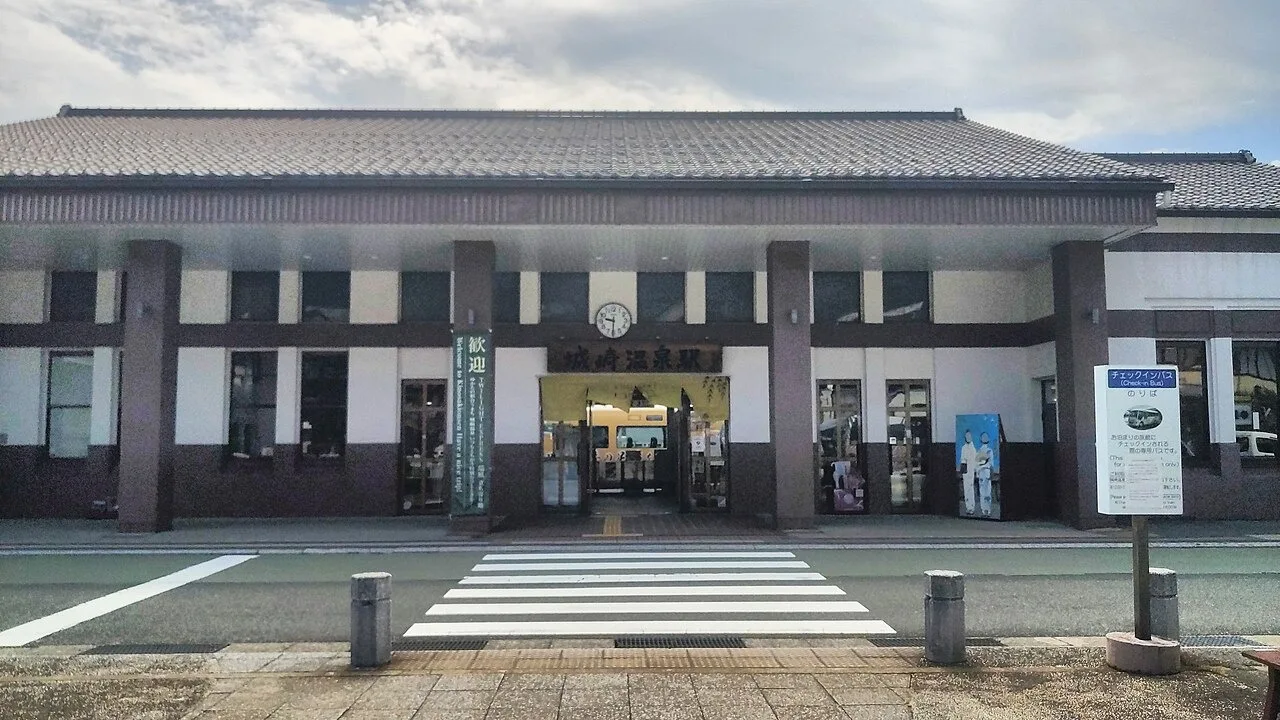
After more than two hours on the rails, Kinosaki-Onsen Station rewards you immediately. Compact and unhurried, it opens through the ticket gates straight onto the willow-lined main street—an instant transition into a hot-spring town that is increasingly rare across Japan. Drop your large bags at the station luggage delivery counter and step out hands-free into the crisp river breeze.
It also helps to understand how Japanese limited-express fares add up: that ¥5,080 figure combines the base fare ticket with the reserved-seat express surcharge, and the Kyoto Kinosaki service follows the same structure. Under all-reserved seating, a basic fare ticket alone will not let you board. If your Kansai trip spans more than two long-distance rail legs, a regional JR West pass with complimentary seat reservations usually wins on value; otherwise, check JR West's website early for advance-purchase discounts.
If return rail seats are sold out in peak season, do not waste time queuing on the platform for unreserved seating—all-reserved operations mean there are no unreserved carriages left to stand in. Switch straight to Hankyu or Zentan highway buses: they take about an hour longer than the train, yet once you hold a seat, departure and arrival times are predictable—a much calmer safeguard if you are catching a flight or onward Shinkansen later that day.
Trying to dash straight to Kinosaki on the same day you land at Kansai International Airport is usually rushed and exhausting. Routes from the airport into Namba or Osaka Station are detailed in our Kansai Airport transfers guide; in practice, spending your first night in Osaka or Kobe and catching a morning limited express north leaves you fresh for afternoon bath-hopping.
The final stretch from the station could scarcely be simpler, with most main-street ryokan within a 15-minute walk. The in-station luggage delivery desk stays open until early evening; if you arrive on a late train after it closes, coin lockers bridge the gap. Shuttle policies vary by property—central heritage inns like Mikiya generally expect guests to walk rather than running a bus—so check with your ryokan when booking.
Station Arrival: No Buses, No Taxis Needed
Kinosaki-Onsen Station opens straight onto the main strip, putting almost every ryokan within a 5–15 minute walk—you will not need a local bus or taxi for your entire stay. Inside the station sits a ryokan luggage delivery counter: for a few hundred yen per bag, staff courier your suitcases directly to your inn while you wander into town unencumbered. On busy crab-season weekends, avoiding hauling a 28-inch suitcase over cobbles and past willow-shaded crowds is money well spent.
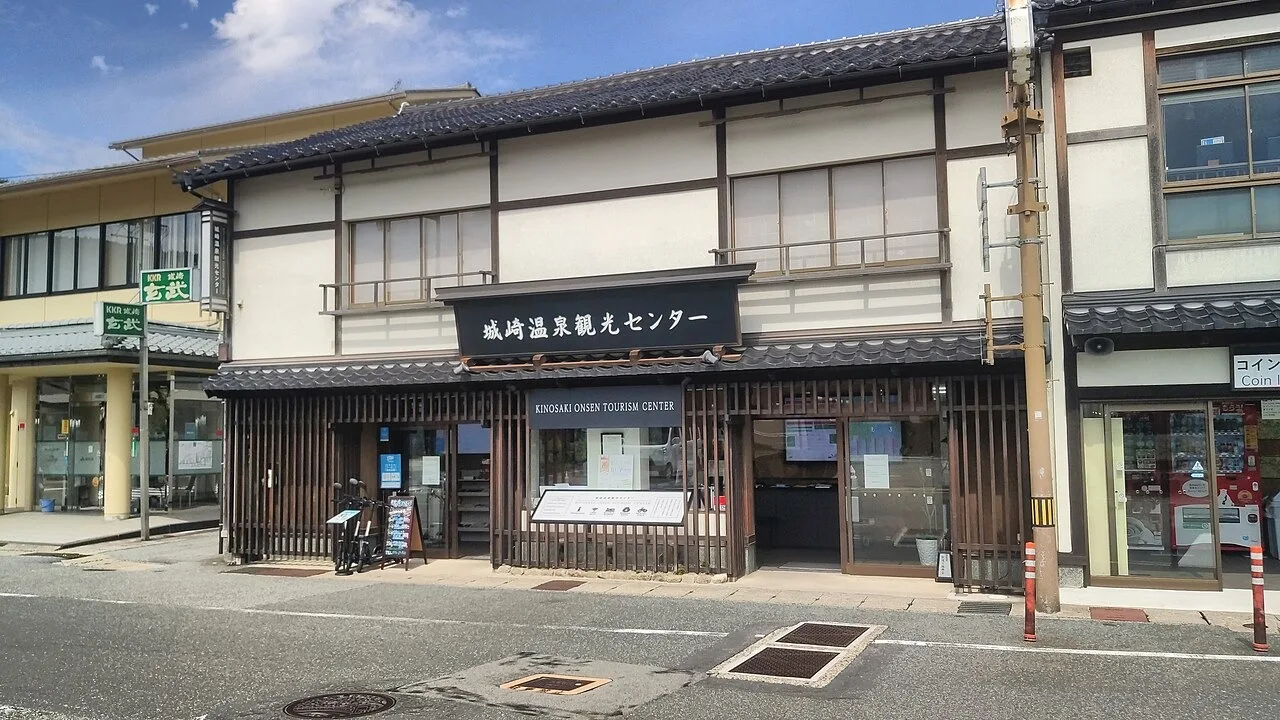
Timing your arrival makes the whole stay breathe. Kinosaki's official itinerary sets 14:00 arrival and post-10:00 departure the next day as the ideal bookends. Checking in at 14:00 gives you plenty of time to change into a yukata, collect your bath pass and snap a photo of the weekly closure chart before Yanagi-yu and Mandara-yu open at 15:00.
Whatever you do, resist booking an early-morning train home. That first 07:00 soak is when the main street is quietest and the air sharpest—the official guide calls this morning bath the very reason Kinosaki's overnight model exists. Returning for a leisurely Japanese breakfast and picking up souvenirs along the main street before a 10:30 check-out rounds off the stay properly.
If you would rather skip the delivery fee, the station has coin lockers, though bays big enough for large suitcases are scarce and often fill completely on crab-season afternoons. Using the luggage desk is far safer than gambling on an empty locker—and the walk from station to ryokan doubles as an easy orientation lap to confirm dinner timing and bath closures before slipping into your yukata.
One-Night Rhythm: Four or Five Baths and an 18:00 Dinner
For an effortless one-night half-board stay, follow this proven timeline: reach town at 14:00 to check in, warm up at 15:00 in newly opened Mandara-yu or Yanagi-yu, then spend 16:00 to 17:30 browsing the main street for snacks such as hot-spring eggs and freshly fried crab croquettes—just leave room for dinner. Booking your ryokan dinner for 18:00 is the single most important scheduling choice of the evening: a full kaiseki feast easily runs 90 minutes to two hours, and starting any later squeezes your post-dinner lantern stroll and late baths.
How many public baths should you fit into one night? Four or five is the sweet spot for both skin and stamina; trying to force all seven into a single evening is what the official guide playfully calls the classic rookie mistake. Prioritise Gosho-no-Yu and Ichi-no-Yu during dusk light, note that every bathhouse stops admitting guests at 22:30 ahead of a 23:00 close, and save quiet canal-side Jizo-yu before 22:00 as your nightcap—or skip one bath altogether and spend ten minutes leaning on a stone bridge railing in the cool evening breeze watching reflections on the water, which the official itinerary calls Kinosaki's true signature experience.
During the November-to-March Matsuba crab season, build in even more breathing room. Multi-course crab dinners take longer to pick through and savour, making an 18:00 seating essential and leaving time for at most two relaxed baths afterwards. Set a 06:45 alarm for a 07:00 morning soak, sit down to breakfast at 08:00 and check out at 10:30 to capture the best of an overnight stay without rushing.
There is no need to hunt down specific pins for that 16:00–17:30 snack walk. Crack and peel boiled onsen tamago at the spring-egg hut, and look for crisp crab-cream croquettes in the display cases of main-street sozai delicatessens. Queues stay short along both sides of the street, letting you graze on the walk between bathhouses without spoiling your appetite for 18:00 kaiseki.
Shape the rest of the evening around your own sleep habits. Night owls can leave Jizo-yu until just before 22:00 and linger by the canal lanterns on the walk home; early sleepers can enjoy two post-dinner baths and turn in comfortably, picking up one of the 07:00 openers—Ichi-no-Yu, Gosho-no-Yu or Jizo-yu—the next morning. As long as you knock off 15:00 openers Yanagi-yu and Mandara-yu on arrival afternoon, you will not miss a single open bathhouse.
What the Official Guide Tells You to Skip: Ropeway, Onsenji and Museums
Kinosaki's official itinerary offers an unusually candid piece of tourist advice: overnight guests on a one-night stay should skip the Kinosaki Ropeway, Onsenji Temple and museums. Riding the ropeway for mountain and temple views is scenic, yet wedging it into a tight 24-hour bath schedule eats up an hour of queue and transit right in the finest dusk light—save Onsenji and local history museums for a two-night stay or dedicated half-day visit. Furthermore, the Kinosaki Literary Museum (KINOBUN) is temporarily closed from September 2026, so leave it off your list altogether.
Dropping extra sightseeing leaves a crisp seven-step checklist: first bath at 15:00, street grazing from 16:00 to 17:30, dinner at 18:00 sharp, a lantern stroll plus two evening baths, final soak before 22:00, ten quiet minutes on a bridge railing, and a 06:45 wake-up for the 07:00 morning bath. Stick to those seven moments and nothing dilutes the unhurried pace a hot-spring town is meant to deliver.
That ten-minute pause on the bridge is the easiest thing for schedule-driven travellers to skip—and the hardest to replace. Dressed in yukata and geta with nowhere left to rush, watching warm yellow lanterns ripple across the canal costs nothing, yet delivers an atmosphere no self-contained mega-resort hotel can imitate.
Crab Season Half-Board: 6 November to March
From the lifting of the Matsuba snow crab ban on 6 November right through March, Kinosaki enters its liveliest months of the year. Across those five months, half-board ryokan menus put freshly prepared snow crab centre stage: kaiseki spreads at Nishimuraya Honkan and Shogetsutei pair Matsuba crab with Tajima beef, marching through sweet crab sashimi, charcoal-grilled legs, crab hotpot and rich finishing zosui rice porridge. Because weekend rooms and limited-express seats tighten in lockstep, stick to one iron rule: lock in your ryokan first, then reserve your train seats immediately.
Crab-season rates look less daunting once you break down what drives the price. Half-board price gaps come down almost entirely to crab portion grades (whole live crab, extra Tajima beef) and room tier (such as Shogetsutei's suites with private open-air baths), while town-wide bath-hopping remains free for overnight guests; on top of that, simply budget your reserved rail fare or backup coach ticket. Groups of three or more sharing a room should verify maximum occupancy and extra-futon charges before booking to avoid surprises at check-out.
If anyone in your party has a shellfish allergy or simply dislikes crab, Kinosaki still delivers a memorable feast. Tajima beef kaiseki, plump winter oysters and local seasonal vegetables are readily available across ryokan dining rooms and town eateries—just flag dietary needs when booking or select a Tajima beef plan. Keeping lunch light with a seafood rice bowl or soba noodles on the main street lets you save your appetite and dining budget for the evening kaiseki.
Snow crab is not confined to formal ryokan dining rooms either. Kinosaki's official crab-season guide tracks opening dates and offerings from 6 November onwards, and daytime visitors will spot grilled crab legs, crab onigiri rice balls and crab soup at main-street eateries and takeaway counters—ideal for grazing on foot without making a separate food detour.
Mornings bring their own culinary pleasures beyond the ryokan breakfast table. Several cafés and local diners along the main street lift their noren curtains shortly after 07:00, so guests emerging from an early bath can grab piping-hot yudofu (simmered tofu) or hand-pressed rice balls to enjoy beside the quiet canal—a ritual many repeat visitors cherish.
Travellers on a tighter budget do not have to miss out either. Main-street diners and stalls sell individual bowls of crab zosui and charcoal-grilled crab legs à la carte, allowing day-trippers or room-only and B&B guests to pair a ¥1,500 Yumepa bath pass with casual crab bites for a lighter take on the season. What the full half-board supplement buys is private-room or dining-hall kaiseki service, whole live-crab preparation and traditional okami hospitality—pick whichever balance suits your trip.
Rain and Tattoos: Two Questions Travellers Often Get Wrong
Rain—the worry that nags most travellers before departure—barely disrupts Kinosaki. With the bathhouses clustered only steps apart, carrying one of your ryokan's traditional umbrellas along the willow-lined canal actually adds quiet atmosphere. If a heavy downpour hits and you want shorter walks, prioritise landmark Ichi-no-Yu with its cave bath and dusk-friendly Gosho-no-Yu alongside whichever bath sits closest to your inn; save your ryokan's indoor bath for right before bed rather than letting rain cancel your public-bath plans.
On tattoos—the other hurdle that makes many visitors hesitate over Japanese hot springs—Kinosaki offers the clearest welcome in the country. Official guidance states explicitly that all seven public bathhouses welcome tattooed guests with no cover-up stickers required and no segregated hours. Anyone who usually skips communal bathing in Japan can include Kinosaki in a Kansai itinerary without second thoughts.
Between baths and crab courses, readers of modern Japanese literature can weave in a gentle walking trail. Naoya Shiga set his short story At Kinosaki in this very town, and the official guide maps out literary monuments and historic sites—including Mikiya and Nishimuraya Honkan—across a compact town footprint ideal for reading as you stroll.
After a couple of soaks, you may be surprised how warm you stay once you step back out into winter air. Because every bathhouse draws from the same 63°C sodium-calcium chloride source (each tuned to a different temperature, from brisk Yanagi-yu to lingering Mandara-yu), the mineral-rich salt water leaves an invisible insulating film on the skin—the secret behind strolling in a cotton yukata on a snowy night.
Even on a tight schedule—arriving around dusk and leaving early next morning—Kinosaki is still worth the detour. Check in, enjoy dinner, slip into one flagship bathhouse at night and catch a 07:00 soak before departing: that compact 'one night bath, one morning bath' loop still captures the essence of the town. Day visitors passing through without staying overnight can simply buy single-entry tickets or a Yumepa day pass.
Outside winter, every season brings a distinct mood. Winter snow and Matsuba crab remain the classic pairing, yet spring cherry blossoms along the canal, fresh early-summer greenery and autumn mountain foliage each have their own official seasonal routes. In midsummer, when midday heat makes hot baths feel heavy, concentrate your bathing at dawn and late evening and spend the afternoon along the neighbouring Tajima coast.
Set Kinosaki alongside Japan's other marquee spa towns and its real differentiator is town-wide collaboration. For the same spend that elsewhere buys a stay tucked inside a single large hotel complex, Kinosaki gives you an entire evening of wandering between canal bridges and wooden bathhouses in a yukata—an easy first choice in Kansai for pure hot-spring street atmosphere.
To make the final ryokan call simple: choose Nishimuraya Shogetsutei for a vast forest garden, varied rooms and private bookable baths; choose Nishimuraya Honkan for Registered Tangible Cultural Property heritage and refined crab kaiseki; choose Mikiya to put main-street strolling and bath-hopping front and centre. Because every overnight guest enjoys free access to the same public bathhouses, separating where you sleep from which baths you visit makes the choice effortless.
Fitting Kinosaki into a wider Kansai trip is equally straightforward. Less than three hours out of Osaka Station, it slots neatly into nights three or four alongside an Osaka three-day itinerary or a Kyoto stay—and if you are heading further west along the San-in coast, the same railway continues cleanly onwards to Tottori Sand Dunes and Yonago without doubling back.
Finally, keep one booking rule in mind across the seasons: during November-to-March crab season and autumn foliage weekends, prime rooms at both Nishimuraya properties routinely sell out a month ahead, and smaller Mikiya goes even faster—secure your room before reserving limited-express seats. Outside peak dates, midweek availability stays relaxed enough for spontaneous bookings year-round.
A few useful answers
Do you have to pay extra to visit Kinosaki's public bathhouses?
Overnight ryokan guests receive a bath pass at check-in giving unlimited free entry to all open public bathhouses during their stay. Day-trippers can pay per visit (¥800 for adults, ¥400 for children) or buy a Yumepa one-day pass (¥1,500 for adults, ¥750 for children; free for under-threes).
Are all seven public bathhouses open?
According to the September 2026 official notice, Sato-no-Yu has been closed since April 2024 and Kou-no-Yu is under renovation (scheduled to reopen around November 2026). Five bathhouses are operating normally: Ichi-no-Yu, Mandara-yu, Gosho-no-Yu, Yanagi-yu and Jizo-yu. Each closes one fixed day a week, so pick up the current schedule at your ryokan front desk.
How do you get to Kinosaki Onsen from Osaka?
Take the JR Limited Express Kounotori from Osaka Station direct to Kinosaki-Onsen Station (about 2 hours 40 minutes, around ¥5,080 including a reserved seat; most services stop at Shin-Osaka). Covered JR Pass holders can reserve seats free. On crab-season weekends seats sell out fast, with the Hamakaze limited express, Hankyu or Zentan express buses, or a transfer at Fukuchiyama as backups.
Is it easy to visit from Kyoto?
The direct Limited Express Kinosaki runs roughly five times a day from Kyoto in about 2 hours 20 minutes (¥4,800–¥5,000 with a reserved seat). If timings do not suit, take a limited express to Fukuchiyama and transfer, adding 20–40 minutes. When visiting both cities, travelling out from Osaka and returning to Kyoto avoids backtracking.
How should I choose between Nishimuraya Honkan, Shogetsutei and Mikiya?
Pick Nishimuraya Honkan for century-old heritage architecture and Matsuba crab kaiseki; choose Nishimuraya Shogetsutei for a 165,000-square-metre forest garden, varied rooms, four-zone communal baths and a free shuttle; or pick Mikiya for a traditional wooden inn right on the main street where novelist Naoya Shiga once stayed.
How many public baths can you comfortably visit in one night?
Four to five bathhouses is the ideal pace for a single night—trying to cram in all seven is the classic mistake the official guide warns against. Last entry is at 22:30 ahead of a 23:00 close, so booking your ryokan kaiseki dinner for 18:00 preserves plenty of time for an evening stroll and soak.
Are tattoos allowed in Kinosaki's public bathhouses?
Yes. All seven public bathhouses in Kinosaki welcome guests with tattoos directly—official guidance confirms there is no need for cover-up stickers and no restricted bathing hours.
Official information and references
Sources used in this guide.
- Kinosaki Onsen Guide | Public Bath System, Spring Water and Snow Crab Season
- Kinosaki Onsen Guide | Seven Bathhouses (Features, Hours, Closures and Fares)
- Kinosaki Onsen Guide | 1-Night Itinerary (14:00 Arrival, 4–5 Baths, Dinner)
- Kinosaki Onsen Guide | Osaka to Kinosaki Transport
- Kinosaki Onsen Guide | Kyoto to Kinosaki Transport
- Kinosaki Onsen Tourist Association | Public Bathhouses and Bath Passes
- Nishimuraya Hotel Shogetsutei | Official Site (Rooms, Communal Baths, Private Baths)
- Nishimuraya Honkan | Official Site (History, Cultural Property, Kaiseki)