Check into any ryokan in Kinosaki Onsen and your room key doubles as a free pass to the town's public bathhouses. Compare Nishimuraya Honkan, Shogetsutei, and Mikiya, plan limited express trains from Osaka and Kyoto, and map a winter snow crab half-board stay around the five currently open baths.
- Region & Focus
- KansaiHotels and stays
- Reading Scope
- 16 min read · 8 chapters · 7 Q&As
- Official Verification
- 8 official sources checkedUpdated November 20, 2026
Chapter Route Map (tap any stop)
- Bathhouse Rules and 2026 Status: Five Open Baths
- Three Ryokan Compared: Heritage Inn, Forest Resort, and Literary Classic
- Getting There: 2 Hours 40 Minutes Direct from Osaka, Five Trains Daily from Kyoto
- Station Arrival Flow: No Transfers, No Taxis Needed
- One-Night Pacing: Four to Five Baths and an 18:00 Dinner
- What the Official Guide Tells You to Skip: Ropeway, Temple, and Museums
- Winter Crab Season Half-Board: November 6 Through March
- Rainy Days and Tattoos: Two Questions People Get Wrong
- Quick Q&A
Kinosaki Onsen runs on one simple premise: check into any local ryokan and your guest pass unlocks free entry to every open public bathhouse in town. Slip into a cotton yukata, step out in wooden geta sandals along the willow-lined canal, and hit four or five baths over a single evening. The town's flagship inns cover three distinct styles—Nishimuraya Honkan for registered cultural heritage prestige, Shogetsutei for sprawling forest grounds and private baths, and Mikiya for literary history right in the heart of the main street. Direct Limited Express Kounotori trains take about 2 hours and 40 minutes from Osaka, while direct Kinosaki trains from Kyoto run roughly five times a day—so once winter crab season hits, lock in both your ryokan and reserved seats early.
Bathhouse Rules and 2026 Status: Five Open Baths
Protected by local ordinance, all seven public bathhouses (sotoyu) in Kinosaki draw from the same 63°C sodium-calcium chloride spring. Every soak delivers the same mineral water, with each house distinguished by its architecture and traditional blessing (goriyaku). Overnight ryokan guests receive a free pass at check-in good for unlimited re-entry to all open bathhouses throughout their stay. Day-trippers pay per entry at each door (¥800 adults, ¥400 children) or pick up the Yumepa 1-day pass (¥1,500 adults, ¥750 children; free for children under 3). Local inns intentionally keep their in-house baths modest so town-wide bath-hopping remains the main event.
Before mapping your route, update your notes for 2026 instead of trusting older guides that chase all seven baths. Sato no Yu has been closed long-term since April 2024, and Kou no Yu—the oldest of the seven—is undergoing renovation with reopening targeted for around November 2026. The other five bathhouses—Ichi no Yu, Mandara Yu, Gosho no Yu, Yanagi Yu, and Jizo Yu—are operating normally. Based on the September 2026 schedule notice, five baths are open in practice; double-check that month's operating status before you travel.
Those five active bathhouses vary widely in mood, so ordering them by preference beats wandering at random. Ichi no Yu anchors the center of town with a kabuki-theater facade and a dramatic semi-open cave bath carved into the rock behind it. Gosho no Yu channels Kyoto Imperial Palace architecture, looking onto a hillside waterfall that turns amber at dusk and earning its reputation as the bath of beauty. Set slightly back from the main drag, Mandara Yu marks the spring said to have welled up after Priest Dochi's thousand-day prayer and suits a quiet soak. Yanagi Yu is the smallest and hottest pool, associated with fertility and safe childbirth, while canal-side Jizo Yu resembles a hexagonal lantern and offers one of the calmest corners in town plus an upstairs tatami lounge.
An easy shorthand makes route planning click into place: Ichi no Yu is the town showpiece and cave view, Gosho no Yu is all about late-afternoon light, Mandara Yu is for lingering in a thousand years of history, Yanagi Yu hits hot and compact like a quick espresso, and Jizo Yu is the low-key local favorite where you can zone out upstairs on tatami afterward. Pouring the exact same spring water into five distinct rooms and times of day creates five completely different moods.
Standard operating hours run roughly from 7:00 to 23:00, with last entry 30 minutes before closing. Ichi no Yu, Gosho no Yu, and Jizo Yu open at 7:00 for early risers, whereas Yanagi Yu and Mandara Yu open at 15:00. Under the September 2026 weekly rotation, Jizo Yu closes Mondays, Ichi no Yu and Mandara Yu close Wednesdays, and Gosho no Yu and Yanagi Yu close Thursdays. Grab the current week's closure sheet at ryokan check-in so you never walk up to locked doors.
Kinosaki's wooden bathing pass tradition dates back to the Edo period and adds a light scavenger-hunt feel to your walk. The official town guide pairs each bathhouse with a specific blessing—academic success, romance, or safe childbirth—so picking three or four priorities beforehand gives your evening route a natural thread.
If you are traveling with kids, keep two practical details in mind. Child 1-day passes cost just ¥750 and kids under 3 bathe free, while inside the bathhouses water depth and temperature differ sharply: scalding-hot Yanagi Yu is tough on small children, so stick to roomier, gentler pools like Ichi no Yu and Jizo Yu. Better yet, all seven bathhouses welcome tattooed visitors, meaning family members with ink can bathe together without hassle.
Before stepping into any public pool, stick to basic Japanese bathhouse etiquette: never dip your towel in the bathwater, tie long hair up, and rinse all soap off thoroughly before soaking. Wear your ryokan yukata with the left side folded over the right, and enjoy the crisp clatter of wooden geta along the stone-paved canal. First-timers will find it helpful to skim the official etiquette checklist once so everything feels natural on arrival.
Keep the opening hours and weekly closures handy to read your stay at a glance: skip Jizo Yu on Monday, Ichi no Yu and Mandara Yu on Wednesday, and Gosho no Yu and Yanagi Yu on Thursday. Plan on the three 7:00-opening baths for the next morning, and hit Yanagi Yu and Mandara Yu right after their 15:00 opening on your arrival afternoon. Since closure days can shift slightly by month, treat the schedule posted in your ryokan lobby as final.
If you want a foolproof one-night template, the official timetable flows effortlessly: arrive and check in at 14:00, slip into a yukata for your first bath at 15:00, graze on canal-side street snacks from 16:00 to 17:30, sit down for kaiseki dinner at 18:00, stroll under the lanterns with an evening soak afterward, squeeze in a final bath before 22:00, wake at 6:45 for a 7:00 morning dip, eat breakfast at 8:00, and check out unhurried at 10:30.
Winter brings one of Kinosaki's signature scenes: light snow dusting tiled eaves and drooping willows while white steam drifts off bathhouse roofs into crisp night air. Peak snow overlaps with Matsuba snow crab season in January and February, letting you pair snowscapes with crab feasts—just remember that stone lanes turn icy after dark, so borrow non-slip winter footwear from your ryokan rather than risking traditional wooden geta on frozen pavement.
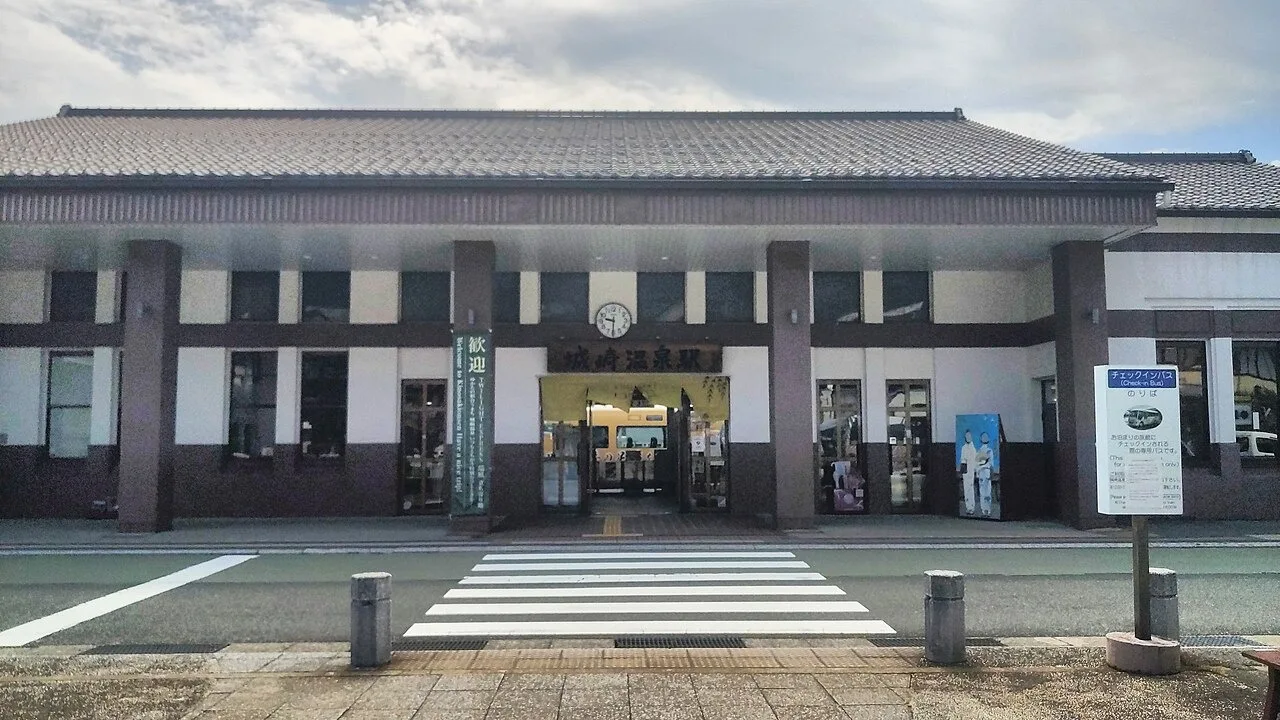
Check into any ryokan in Kinosaki Onsen and your room key doubles as a free pass to the town's public bathhouses. Compare Nishimuraya Honkan, Shogetsutei, and Mikiya, plan limited express trains from Osaka and Kyoto, and map a winter snow crab half-board stay around the five currently open baths.
Three Ryokan Compared: Heritage Inn, Forest Resort, and Literary Classic
Founded during the Ansei era in the mid-19th century, Nishimuraya Honkan is Kinosaki's flagship Registered Tangible Cultural Property inn. Classic wooden architecture, a serene inner courtyard, attentive okami hospitality, and winter kaiseki anchored by Matsuba snow crab and Tajima beef all work in concert, making it ideal when the historic ryokan stay itself is the main reason for your trip.
Sister property Nishimuraya Hotel Shogetsutei sits back at Yushima 1016-2 inside a sprawling 40-acre (50,000-tsubo) forest garden roughly 2 kilometers from the main street, linked by a free shuttle bus. Rooms span the Niwa-no-Mune and Tsuki-no-Mune wings, alongside suites with private open-air baths and the signature Keigetsu room. Both men's and women's sides of the Gekka no Yu grand bath include an indoor spring pool, outdoor bath, cold plunge, and sauna, complemented by three reservable private forest baths (Mori no Kashikiri Roten): Japanese Gingetsu, Balinese FU-RO, and Chinese Rinsen. Direct bookings on the official site frequently include up to ¥22,000 off per room plus a ¥2,000 in-house credit, appealing to travelers prioritizing spacious rooms and resort facilities.
Mikiya commands a prime spot right in the center of the hot spring street and has kept its classic Japanese-inn layout since the early Edo period. Author Naoya Shiga stayed here long-term while recovering and wrote his famed story "At Kinosaki" ("Kinosaki nite"), with Yasunari Kawabata among other literary guests; traditional wooden rooms wrap around a quiet Japanese garden. Rather than competing on sprawling amenities, Mikiya sells unbeatable doorstep convenience for stepping out in a yukata to tour the baths.
Put side by side, the three divide cleanly by travel style. If you want roomy accommodations and full on-site bath facilities during crab season without hauling bags, Shogetsutei's free shuttle erases the two-kilometer gap. If waking up steps from the bathhouses and shops comes first, choose central Mikiya. For tangible cultural heritage and refined kaiseki, nothing replaces Nishimuraya Honkan—and on a two-night trip, splitting one night at Honkan and one at Shogetsutei gives you both old-world charm and forest resort space.
If you decide on Shogetsutei, booking direct usually delivers the best value. Alongside a best-rate guarantee, two-guest packages often bundle up to ¥22,000 in promotional savings and a ¥2,000 resort credit. You can rotate through all four pools at Gekka no Yu on-site—and since Japanese-style Gingetsu is the first of the three private forest baths to fill up, reserve your slot as soon as you book your room. Dining splits between kaiseki halls and an a la carte restaurant, so lock in a full Matsuba crab course at booking time if that is why you are coming.
Booking Mikiya calls for realistic expectations about a century-old wooden building. Every open bathhouse lies within an easy stroll of the front gate, and the halls preserve the quiet literary mood of Shiga's era, but soundproofing, staircase layouts, and modern in-room conveniences cannot match a contemporary resort hotel. Weigh that trade-off carefully if you are traveling with toddlers or light sleepers.
All three properties list rooms on both their official websites and international booking platforms, though direct sites more reliably carry exclusive packages and best-rate guarantees. On weekends from November through crab season and peak autumn foliage, popular rooms at Nishimuraya Honkan and Shogetsutei routinely sell out a month or more ahead. When comparing rates, always match exact dates, guest counts, and meal inclusions before weighing location, baths, and menu tiers.
One logistical wrinkle at Shogetsutei deserves early attention: walking two kilometers back to the forest grounds in a thin yukata and geta on a winter night is no fun, so whether you head back downtown after dinner hinges on the last shuttle departure. Snap a photo of the shuttle timetable at check-in and keep both options open—lingering at Gekka no Yu on-site or riding back into town—then decide after dinner based on weather and energy.
Accessibility also differs markedly if you are traveling with older relatives or anyone with limited mobility. Nishimuraya Honkan and Mikiya sit on flat main-street terrain with virtually no hills to nearby bathhouses, whereas Shogetsutei requires boarding the shuttle into town even though its interior hallways are wider and more modern. Steps and barrier-free layouts vary from bathhouse to bathhouse as well, so email or call ahead about wheelchairs or strollers; Kinosaki's veteran inns handle mobility requests thoughtfully.
Finally, watch for a classic booking-platform meal trap: several international OTAs advertise headline rates for heritage inns that include breakfast only, making them look dramatically cheaper than the official site until you click through and realize the flagship snow crab kaiseki dinner is missing. Because crab course grades and add-ons vary sharply in winter, cross-checking every dish on the ryokan's own website is far safer than trusting aggregator starting prices.
| Ryokan | Positioning | Best For |
|---|---|---|
| Nishimuraya Honkan | Registered Tangible Cultural Property heritage inn; kaiseki with Matsuba crab and Tajima beef | Travelers making the historic ryokan stay itself the centerpiece |
| Nishimuraya Hotel Shogetsutei | 40-acre forest garden, four-zone grand bath, private open-air baths | Guests wanting resort grounds and diverse room types |
| Mikiya | Traditional Japanese ryokan in the center of the hot spring street | Travelers prioritizing sotoyu hopping and street strolls |
Getting There: 2 Hours 40 Minutes Direct from Osaka, Five Trains Daily from Kyoto
The cleanest route from Osaka is the JR Limited Express Kounotori from Osaka Station's ground-level platforms, reaching Kinosakionsen Station directly in about 2 hours and 40 minutes for roughly ¥5,080 with a reserved seat. Most departures also call at Shin-Osaka, Fukuchiyama, Wadayama, and Toyooka. Eligible JR Pass holders can book reserved seats free at ticket offices or machines—and during crab-season weekends, reserving as soon as your dates lock is essential.
From Kyoto, take the direct Limited Express Kinosaki, which runs about 2 hours and 20 minutes for roughly ¥4,800 to ¥5,000 reserved. Only around five direct trains operate each day across morning, midday, and early evening. When those departures do not line up, take a San'in Main Line limited express to Fukuchiyama Station and transfer there, adding 20 to 40 minutes of wait time; afternoon connections out of Fukuchiyama thin out, so verify your timetable before boarding.
If your trip pairs Osaka and Kyoto, an open-jaw rail loop—riding the Kounotori up from Osaka and returning straight to Kyoto on the Kinosaki, or the reverse—cuts out any backtracking. Should the Kounotori sell out completely, you still have three solid backups: the Limited Express Hamakaze via the San'in route, cheaper Hankyu or Zentan highway buses that take roughly an hour longer, or a Fukuchiyama transfer.
Heading north on the Kounotori, grab a reserved seat on the right side of the train: past Toyooka the tracks trace the Maruyama River valley, where sharp eyes sometimes spot wild Oriental white storks. Because onboard snack carts rarely run on this line, pick up bento boxes and drinks in Osaka Station's underground concourse before boarding. Keep in mind too that the route is 100% reserved-seating, so hoping to buy a last-minute ticket at the station on a crab-season weekend is asking for trouble.
Out of Kyoto, the prize among the five daily direct trains is the late-morning departure, which rolls into Kinosaki around mid-afternoon and lines up cleanly with standard 14:00 ryokan check-in. Missing that train and routing via Fukuchiyama burns nearly an extra hour and eats straight into your first evening bath window, so anchor your Kyoto day around that departure first.
After more than two hours on the rails, Kinosakionsen Station wipes away travel fatigue the moment you step off. The compact station opens straight out onto willow trees and the head of the hot spring street—a zero-transfer arrival that has grown rare among major Japanese onsen resorts. Drop heavy bags at the station luggage counter and step straight into the cool river breeze hands-free.
Understanding Japanese express fares helps when pricing routes: ¥5,080 combines the base distance ticket with the reserved limited express surcharge, and the Kyoto train works the same way. Because all seats are reserved, a base fare ticket alone will not let you board. If your Kansai itinerary hits more than two long-distance stops, an eligible JR West regional pass with free seat reservations usually comes out ahead; otherwise, watch JR-West's online portal for advance discount fares.
If your return train shows sold out during peak season, do not wait around on the platform hoping for an unreserved car—there are none on all-reserved services. Pivot immediately to Hankyu or Zentan highway buses: they take about an hour longer than rail, but booked seats depart and arrive reliably, giving you far better peace of mind if you need to catch a flight or long-distance Shinkansen later that day.
Trying to push straight from an international arrival at Kansai Airport to Kinosaki on day one usually means a rushed, exhausting sequence of transfers. Our Kansai Airport transfers guide breaks down the train links into Namba and Osaka; in practice, spending your first night in Osaka or Kobe and catching a morning train north leaves your afternoon fresh for the bathhouses.
The final stretch from the station could hardly be easier, with most main-street ryokan within a 15-minute walk. Note that the station's luggage delivery desk closes in the early evening, so late arrivals will need coin lockers instead. Shuttle pickups also depend on the property—central heritage inns like Mikiya rely on walking and run no buses—so confirm logistics right after booking.
Station Arrival Flow: No Transfers, No Taxis Needed
Kinosakionsen Station faces straight down the main street, putting nearly every ryokan within a 5- to 15-minute walk and removing any need for local buses or taxis. Just inside the station sits a luggage delivery counter that shuttles suitcases straight to your inn for a few hundred yen—well worth it on crowded crab-season weekends so you are not wrestling a 28-inch spinner across cobblestones and willow-lined sidewalks.
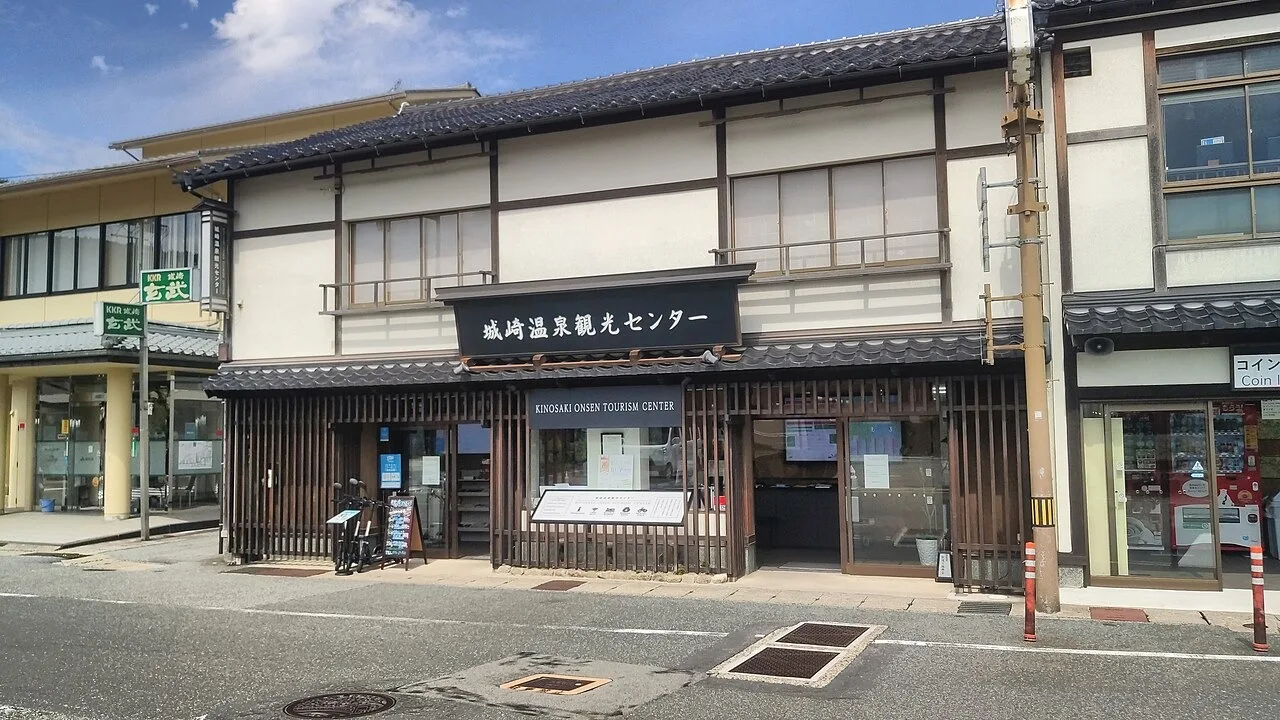
Timing your arrival makes the whole stay breathe easier, which is why the official itinerary pegs 14:00 arrival and a post-10:00 departure the next day as the sweet spot. Checking in at 14:00 gives you time to change into a yukata, pick up your bathhouse pass, and snap the weekly closure sheet just in time for Yanagi Yu and Mandara Yu to open at 15:00.
Resist booking an early morning train out the next day. When the first three bathhouses open at 7:00, the main street is at its quietest and the morning air is razor-crisp—a morning dip the official guide calls the very reason Kinosaki's stay model exists. Follow it with an unhurried ryokan breakfast and souvenir browsing along the main drag before checking out at 10:30.
If you skip luggage delivery, coin lockers are available at the station, though oversized compartments are scarce and vanish quickly on peak-season afternoons. Relying on the delivery desk beats gambling on an open large locker, and the short walk to your ryokan doubles as an effortless orientation before dinner time and bath closures dictate the rest of your afternoon.
One-Night Pacing: Four to Five Baths and an 18:00 Dinner
To enjoy a half-board stay without rushing or missing the highlights, follow this clock: arrive and check in at 14:00, hit Mandara Yu or Yanagi Yu right as they open at 15:00 to warm up, then spend 16:00 to 17:30 strolling the main street for snacks like onsen tamago eggs and fresh-fried crab croquettes without spoiling your appetite. Treat an 18:00 ryokan dinner reservation as non-negotiable—a full kaiseki spread takes 90 minutes to two hours, and pushing dinner later squeezes your window to wander the lantern-lit canal afterward.
How many baths belong in one night? Four to five hits the sweet spot for both stamina and skin; trying to force all seven into a single evening is what the official guide calls a "classic mistake." Prioritize Gosho no Yu and Ichi no Yu for dusk light, keep in mind that final entry across all baths is 22:30 ahead of a 23:00 close, and wind down before 22:00 at quiet canal-side Jizo Yu—or skip one soak altogether to spend 10 minutes leaning on a willow-lined bridge watching reflections, the moment the official guide calls Kinosaki's true signature experience.
During Matsuba crab season from November through March, build even more slack into the schedule. Multi-course crab dinners take time to shell and savor, making an early dinner slot mandatory and leaving room for roughly two relaxed post-dinner baths. Set an alarm for 6:45 to catch the 7:00 morning opening, sit down for breakfast at 8:00, and check out at 10:30 to pack the full rhythm cleanly into one overnight.
That 16:00 to 17:30 snack stroll needs zero rigid pins on a map. Peel a hot-spring egg right outside the onsen tamago shop and grab crab cream croquettes from the deli counters along the main street; lines move fast at both spots on opposite sides of the road, letting you graze along your walk to the bathhouses while keeping plenty of room for 18:00 kaiseki.
After dinner, tailor the night to your sleep schedule. Night owls can save Jizo Yu for just before 22:00 and linger on a canal bridge on the walk home; early sleepers can enjoy two unhurried evening baths and save morning-opening Ichi no Yu, Gosho no Yu, or Jizo Yu for 7:00 the next day, while locking in afternoon-only Yanagi Yu and Mandara Yu on day one so nothing gets skipped.
What the Official Guide Tells You to Skip: Ropeway, Temple, and Museums
Kinosaki's official itinerary guide offers a piece of candor rarely seen in tourism brochures: if you are only staying one night, skip the Kinosaki Ropeway, Onsenji Temple, and the museums. Riding up to overlook the temple and valley is scenic, yet waiting for cabins and riding both ways steals an entire prime dusk hour from your bathhouses—save the temple and local history stops for a two-night stay or dedicated half-day outing. Note too that the Kinosaki Literature Museum (KINOBUN) is temporarily closed starting September 2026, making it an easy skip.
Trimming extra sightseeing sharpens the core overnight checklist to seven essentials: a 15:00 first soak, 16:00 to 17:30 street snacks, an 18:00 dinner seating, a lantern walk with two evening baths, your final bath before 22:00, 10 unhurried minutes on a canal bridge, and a 6:45 wake-up call for the 7:00 morning dip. Following that short list preserves the unhurried pace of a hot spring town instead of turning it into a checklist sprint.
Of those seven moments, those 10 minutes on the bridge railing are the easiest for busy travelers to rush past. Standing in a yukata and geta with no schedule in hand, watching warm lanterns ripple across the dark canal, costs nothing and delivers the town-wide atmosphere no walled-in megahotel can copy.
Winter Crab Season Half-Board: November 6 Through March
From the opening of Matsuba snow crab season on November 6 through March, Kinosaki hits its liveliest stretch of the year. Half-board ryokan menus put fresh-cooked snow crab front and center across those five months, with Nishimuraya Honkan and Shogetsutei pairing Matsuba crab with Tajima beef through sashimi legs, charcoal grilling, hot pot, and finishing zosui rice porridge. Because ryokan rooms and JR reserved seats tighten in lockstep on winter weekends, stick to one iron rule: book your room first, then reserve train seats immediately afterward so neither end falls through.
When pricing crab season, look past the headline total to see what drives the numbers. Half-board price gaps reflect crab volume and grade—whole live crab or extra Tajima beef—plus room category such as suites with private open-air baths, while town-wide sotoyu hopping stays completely free for overnight guests. Simply budget train or bus fares on top, and if three or more guests plan to share one room, verify maximum occupancy and extra-futon fees with the inn before booking.
If someone in your party has a shellfish allergy or simply dislikes crab, Kinosaki still delivers plenty at the table. Tajima beef kaiseki, plump winter oysters, and seasonal local vegetables are widely offered across ryokan dining rooms and town eateries—just note dietary needs when booking or pick a Tajima beef plan. Keeping lunch light with a seafood rice bowl or soba downtown lets you save appetite and budget for dinner.
Snow crab season reaches well beyond private ryokan dining rooms. Kinosaki's official crab season page tracks dining schedules once the fishery opens on November 6, and daytime cafes and takeout counters along the main street serve grilled crab legs, crab onigiri, and crab soup so you can snack between baths without booking a separate food tour.
Mornings bring another pleasant dining bonus beyond your ryokan breakfast. Several cafes and neighborhood diners along the main street slide open their curtains from 7:00 onward, so early bathers stepping out of a 7:00 soak can pick up warm yudofu tofu or handmade rice balls to eat quietly along the canal—a routine many repeat visitors cherish.
For tighter budgets that skip a pricey full crab kaiseki package, town streets offer an easy workaround. Main-street diners and takeout stalls sell a la carte crab zosui porridge and charcoal-grilled crab legs, letting day-trippers or guests on room-only and breakfast-only plans pair the ¥1,500 Yumepa pass with casual crab dishes at a fraction of the cost. What the higher half-board rate buys is a private dining room, live crab preparation, and full okami hospitality—pick whichever matches your trip.
Rainy Days and Tattoos: Two Questions People Get Wrong
Wet weather rarely spoils a Kinosaki stay. With the bathhouses spaced just steps apart, walking under a ryokan paper umbrella or long umbrella along the willow canal adds its own quiet mood. In a real downpour, trim your loop to main-street anchor Ichi no Yu, dusk-lit Gosho no Yu, and whichever bath sits closest to your inn, then cap the night in your ryokan's indoor bath—no need to write off sotoyu hopping just because it is raining.
On tattoos—the hurdle that keeps many travelers out of Japanese hot springs—Kinosaki offers the clearest welcome in the country. Official town guidelines state plainly that tattooed guests are welcome at all seven public bathhouses, with no cover-up stickers required and no restricted time slots, making Kinosaki an effortless fit for any Kansai itinerary.
Between baths and crab meals, readers of modern Japanese literature can trace a compact literary walk through town. Naoya Shiga set his short story "At Kinosaki" here, and the official guide plots a walkable map of literary monuments and historic sites linking Mikiya and Nishimuraya Honkan right alongside the bathhouses.
After stepping out of a few pools, you may be surprised how warm you stay even in winter wind. Every bathhouse taps the same 63°C sodium-calcium chloride spring—tuned hotter at bracing Yanagi Yu and gentler for long soaks at Mandara Yu—and the trace mineral salt film left on your skin locks in heat, which is the physical secret behind strolling snowy streets in a cotton yukata.
Even on a tight schedule—rolling in near dusk and catching an early train out—Kinosaki is still worth the detour. Check in, enjoy dinner, soak in one signature bathhouse that night, and catch one more right at the 7:00 morning opening to capture the town's core rhythm; on a quick daytime stopover, single-entry tickets or the Yumepa 1-day pass keep things flexible.
Outside winter, every season reshapes the town cleanly. Snow and Matsuba crab define winter, cherry blossoms frame the willows in spring, fresh greens soften early summer, and forested hills turn red and gold in autumn—each mapped in the official seasonal guides. During hot midsummer days, time your soaks for early morning and late night while spending bright afternoon hours out along the nearby Tajima coast.
Set alongside Japan's other marquee onsen towns, Kinosaki stands apart through sheer collective town design. For the same nightly budget that buys an isolated megahotel and its indoor grand bath elsewhere, Kinosaki gives you an entire evening living like a temporary local—wandering canal bridges and wooden storefronts in a yukata—making it Kansai's clearest pick for classic hot-spring-town atmosphere.
Boiling the ryokan choice down to essentials makes booking straightforward: pick Nishimuraya Shogetsutei for 40-acre gardens, varied room types, and private forest baths; pick Nishimuraya Honkan for historic cultural-property character and refined snow crab kaiseki; or pick Mikiya to put main-street strolling and bath-hopping front and center. Because every overnight guest gets unlimited free sotoyu access anyway, you can choose your bed independently of which baths you plan to visit.
Slotting Kinosaki into a broader Kansai trip takes little effort. Sitting under three hours from Osaka, it drops smoothly into night three or four alongside three days in Osaka or a Kyoto stay—and for anyone continuing west along the San'in coast, Kinosaki connects directly along the same rail corridor toward the Tottori Sand Dunes and Yonago with zero backtracking.
Keep one seasonal booking rule in mind before finalizing dates: for November-to-March crab season and autumn foliage weekends, prized rooms at both Nishimuraya properties regularly vanish a month out and smaller Mikiya fills even sooner, so lock in your inn before buying limited express tickets. Off-peak weekdays stay far looser, leaving plenty of last-minute openings across all four seasons.
A few useful answers
Do you have to pay extra for the public bathhouses?
No, not if you stay overnight. Your ryokan provides a bathhouse pass covering unlimited free entry to all open public baths during your stay. Day-trippers pay per bath at the entrance (¥800 adults, ¥400 children) or buy the Yumepa 1-day pass (¥1,500 adults, ¥750 children; free for children under 3).
Are all seven public bathhouses open?
As of the September 2026 official notice, five of the seven bathhouses are operating normally: Ichi no Yu, Mandara Yu, Gosho no Yu, Yanagi Yu, and Jizo Yu. Sato no Yu has been closed long-term since April 2024, and Kou no Yu is under renovation with reopening slated for around November 2026. Each open bathhouse also closes one fixed day per week, so grab the current weekly schedule at check-in.
How do you get to Kinosaki Onsen from Osaka?
Ride the JR Limited Express Kounotori directly from Osaka Station to Kinosakionsen Station in about 2 hours and 40 minutes (around ¥5,080 with a reserved seat; most trains also stop at Shin-Osaka). Eligible JR Pass holders can reserve seats for free. During crab-season weekends, seats sell out quickly; backups include the Limited Express Hamakaze, Hankyu or Zentan highway buses, or transferring at Fukuchiyama.
Is it convenient to visit from Kyoto?
Yes, though direct service is limited. The JR Limited Express Kinosaki runs direct from Kyoto in about 2 hours and 20 minutes (¥4,800 to ¥5,000 reserved), with roughly five departures a day. If those times do not fit, take a limited express on the San'in Main Line and transfer at Fukuchiyama, adding 20 to 40 minutes. An open-jaw route arriving from Osaka and departing to Kyoto eliminates backtracking.
How should you choose between the three ryokan?
Pick Nishimuraya Honkan for historic Registered Tangible Cultural Property architecture and top-tier snow crab kaiseki. Choose Nishimuraya Hotel Shogetsutei for sprawling forest grounds, varied room categories, a four-zone grand bath, and free station shuttles. Book Mikiya if you want a classic wooden inn right in the center of the main street for effortless bath-hopping.
How many bathhouses can you visit in one night?
Aim for four to five bathhouses in a single night—trying to cram all seven into one evening is something the official guide calls a classic mistake. Since last entry is 22:30 and doors close at 23:00, booking an 18:00 kaiseki dinner leaves plenty of time for an evening lantern stroll and one or two post-dinner soaks.
Are tattoos allowed in the public bathhouses?
Yes. All seven public bathhouses in Kinosaki welcome tattooed guests with no cover-up patches or restricted bathing hours, making it one of the most tattoo-friendly hot spring towns in Japan.
Official information and references
Sources used in this guide.
- Kinosaki Onsen Guide — Public Bath System, Spring Water, and Crab Season
- Kinosaki Onsen Guide — The Seven Bathhouses (Features, Hours, Closures, and Fees)
- Kinosaki Onsen Guide — 1-Night Itinerary (14:00 Arrival, 4 to 5 Baths, Dinner)
- Kinosaki Onsen Guide — Osaka to Kinosaki Access
- Kinosaki Onsen Guide — Kyoto to Kinosaki Access
- Kinosaki Onsen Tourist Association — Public Baths and Bathing Pass
- Nishimuraya Hotel Shogetsutei — Official Site (Rooms, Grand Baths, Private Open-Air Baths)
- Nishimuraya Honkan — Official Site (History, Cultural Property, Kaiseki)