How to navigate Goryokaku Tower's two observation decks, pair a visit with Goryokaku Park and the Hakodate Magistrate's Office, and plan for the April 2027 ticket price increase. Includes tram walking routes, parking tips, and separate schedules for the tower, park, and winter illuminations.
- Region & Focus
- HakodateAttractions
- Reading Scope
- 21 min read · 15 chapters · 13 Q&As
- Official Verification
- 13 official sources checkedUpdated November 22, 2026
- Key Topics
- ItinerariesHokkaido
Chapter Route Map (tap any stop)
- Just a Stroll, or the Full Five-Pointed Star?
- Current Fares vs. April 2027 Rates: Plan by Visit Date
- Observatory 2F: Start at the Scale Model Before Hitting the Windows
- Why the Fort Stands Here: Reading the Port and Office Together
- Observatory 1F: Glass Floor, Global Forts, and a Quick Break
- The Tower Is 107 Meters Tall—The Decks Are Not
- Three Separate Entrances: Tower, Park, and Magistrate's Office
- Arriving by Tram: Expect a Walk After Your Stop
- Driving and Parking: Skip the Tour Bus Lot
- Spring Blossoms and Winter Lights: Never Reuse Last Season's Dates
- Window Glare, Rain, and Fog: Checking Visibility Before You Pay
- Planning for Kids, Heights, and Slower Walkers
- Mapping Out a Half-Day: Exhibits First or Blossoms First
- Cafes and 2F Dining: No Need to Bundle Everything With a Deck Ticket
- Connecting Goryokaku With the Rest of Hakodate
- Quick Q&A
Strolling Goryokaku at ground level lets you follow the moat beneath earthen ramparts and trees, while heading up Goryokaku Tower reveals all five bastions at once. First-time visitors should budget about an hour for the tower's observation decks and history exhibits before deciding whether to walk the grounds or tour the Hakodate Magistrate's Office. This guide maps out a half-day visit from the decks down, keeping park hours, tower ticketing, and winter illuminations on their own separate schedules.
Just a Stroll, or the Full Five-Pointed Star?
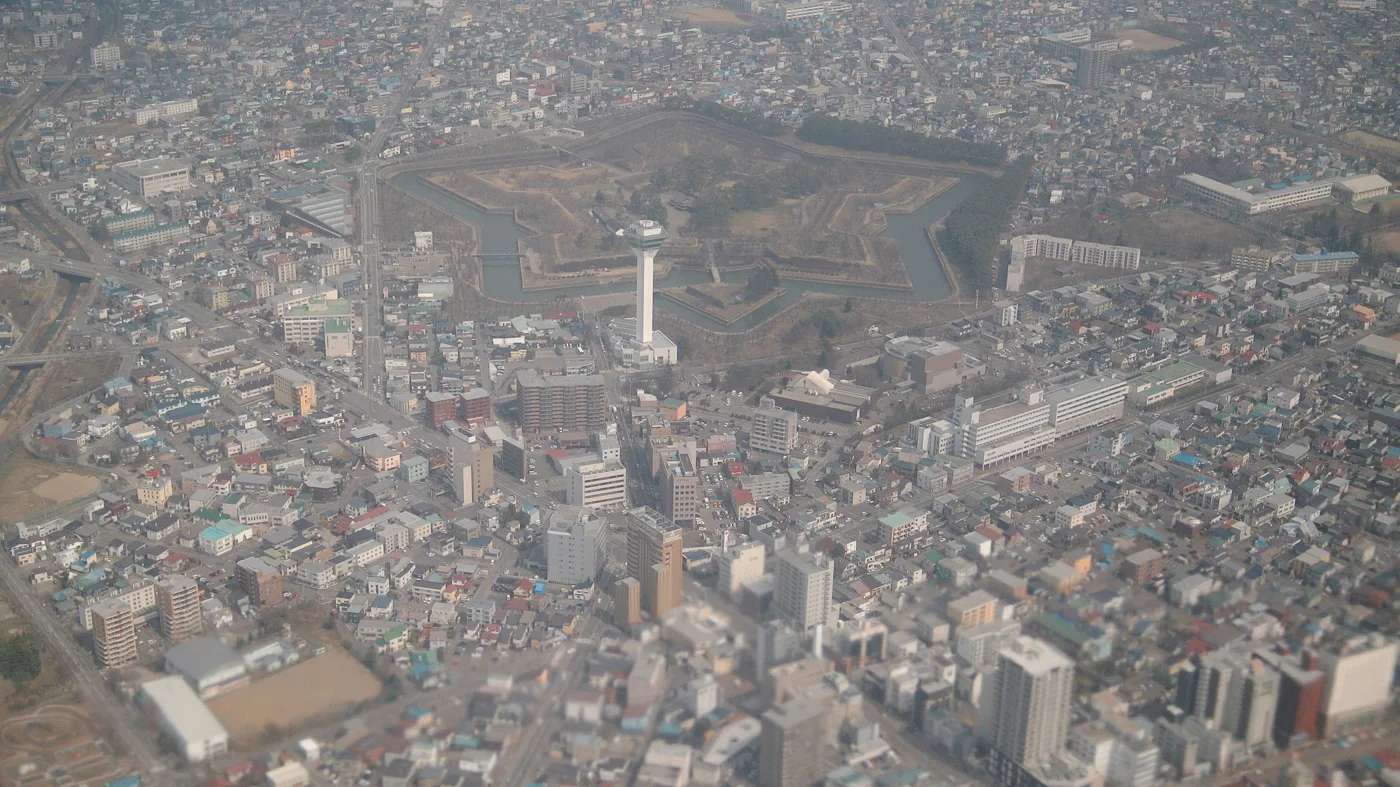
Goryokaku Park and Goryokaku Tower sit side by side as two distinct experiences. The park puts you inside the historic fortifications at ground level, while the tower lifts you to observation decks at 90 m and 86 m above the street. If you simply want a shaded walk along the moat, stay in the park; if you want to see the full star shape and compare it against a scale restoration model, add the tower. Both options stand on their own, and you do not need a tower ticket to make the trip worthwhile.
Heading up the tower first is an easy way to get your bearings. Once you spot the moat, bridges, and central hall from the windows, you can pick the exact section of the park you want to walk afterward. Conversely, starting in the park works better if you have come specifically for cherry blossoms or want kids to burn off energy outdoors first. Base the order on your group and the weather rather than forcing a rigid loop that makes you backtrack.
The tower offers more than window views. Its restoration model, historical panels, dioramas, and exhibit on star forts around the world explain why the fort looks the way it does. Anyone curious about late-Edo history should budget real reading time here. If you only have fifteen minutes before catching a train, skip the rushed ticket purchase and save the tower for another day.
How to navigate Goryokaku Tower's two observation decks, pair a visit with Goryokaku Park and the Hakodate Magistrate's Office, and plan for the April 2027 ticket price increase. Includes tram walking routes, parking tips, and separate schedules for the tower, park, and winter illuminations.
Current Fares vs. April 2027 Rates: Plan by Visit Date
According to the official Goryokaku Tower ticket page, current general admission is ¥1,200 for adults, ¥900 for junior and senior high school students, and ¥600 for elementary school students, with preschool children admitted free. Discounts are available for groups of 30 or more and visitors presenting an eligible disability certificate, which covers the holder plus one companion. Because these age brackets differ from Hakodate City Tram child fares, calculate transit and admission budgets separately.
A scheduled price revision takes effect on April 1, 2027, raising standard fares to ¥1,500 for adults, ¥1,130 for junior and senior high school students, and ¥750 for elementary school students. Group rates will adjust to ¥1,350, ¥1,010, and ¥680, and disability discount rates to ¥750, ¥560, and ¥380. The notice also specifies that preschool children must be accompanied by a guardian and that tickets are valid for a single entry with no re-entry. If you want both daylight and sunset views, cover them in one continuous visit rather than expecting to leave in the morning and return on the same ticket.
Standard operating hours are 9:00 AM to 6:00 PM year-round, with observation deck ticket sales closing at 5:50 PM. Treat 5:50 PM strictly as the purchase cutoff, not a recommended arrival time; anyone hoping to read the exhibits or wait for changing light needs to arrive earlier. Check the tower's notices beforehand in case special operating hours apply on your travel date.
For a family of two adults and one elementary school child, standard tower admission totals ¥3,000 before the hike and ¥3,750 afterward, a ¥750 increase. That figure covers tower entry only and excludes transit, parking, meals, or admission to the Hakodate Magistrate's Office. Keeping paid attractions and free park walks in separate columns makes it easy to drop one item if energy fades or the weather turns.
Observatory 2F: Start at the Scale Model Before Hitting the Windows
Observatory 2F, sitting 90 m above ground, houses the Goryokaku History Corridor and a 1/250 scale restoration model of the fort as it looked upon completion. Use the model to map out the central magistrate's office, earthen ramparts, and waterways before turning to the windows to see what stands today. Keep in mind that not every structure on the model still exists to walk through in the park—noticing what changed is half the reason to linger on this floor.
Approach the model with one specific question: why the office sits surrounded by walls, which side handles access, or how the five protruding bastions connect. Walking to the window with a single focus helps everything stick far better than photographing every display and trying to decode it at home. If your group has mixed interest in history, have each person pick one landmark on the model and spot it together from the glass.
Panels on the same level trace Goryokaku's timeline starting from Commodore Perry's arrival, paired with 16 miniature dioramas and interactive info screens. History buffs can follow the timeline panels while visual learners focus on the dioramas, without forcing everyone to move at the same pace. Because the deck is fully enclosed, you can alternate between window views and exhibits instead of queuing behind one another at the same spot.
This floor also features a tactile model and a seated bronze statue of Hijikata Toshizo. Only touch displays explicitly marked for hands-on use and leave the rest alone. Note that the Hijikata statue stands inside the paid tower deck, not out on the park footpaths, so make sure you buy a ticket if seeing it is a priority.
When matching the model to the real landscape, do not worry about capturing all five star tips in a single sweep. Pick one recognizable bridge on the model, trace where it leads inside the moat, and find that same entry point through the window before looking for the magistrate's office and canals. If you walked the park first, work backward to locate the exact path you just took. Using the model as a spatial key turns it into a practical map rather than an isolated museum piece.
Why the Fort Stands Here: Reading the Port and Office Together
The tower's official history overview ties Goryokaku's origins directly to the opening of Hakodate Port. Because the Tokugawa shogunate's original government office sat close to the harbor and town center, officials planned a new inland complex with outer defenses for security, living conditions, and administration. Goryokaku was not built solely for the later Battle of Hakodate; separating why it was constructed from how it was later fought over keeps the timeline straight.
Designer Takeda Hisaburo modeled the earthen ramparts after European bastion forts, beginning construction in 1857 before the new magistrate's office moved in during 1864. Looking down at the star's jagged angles from 2F, then visiting the global star-fort exhibit on 1F, places Hakodate within a wider architectural tradition. If you only commit one milestone to memory, anchor on the 1864 completion and relocation, then trace the conflict that followed.
The 1868-1869 Battle of Hakodate marks a distinct chapter in the site's story. The tower displays cover the rival factions, commanders, and engagements in detail, while walking the grounds later lets you spot physical terrain and buildings tied to that era. You do not need to imagine a battle scene behind every cherry tree—let the surviving earthworks and reconstructed hall speak to their own periods.
The site continued evolving long after the war ended. Once the original office was dismantled, the grounds saw military use and even natural ice harvesting in the moat before opening as a public park in 1914 and earning Special Historic Site status in 1952. That later history explains why remnants, reconstructions, and everyday neighborhood strolls coexist here today. Looking for clues from administration, war, and civic park life prevents treating the entire landscape as a frozen 1864 time capsule.
Observatory 1F: Glass Floor, Global Forts, and a Quick Break
Observatory 1F sits at 86 m and holds the glass floor panels, gift shop, and Observatory Cafe. Visitors uneasy with heights can stay back from the edge—stepping onto the glass floor is completely optional. With kids, clarify upfront where it is fine to stand and where walkways need to stay clear instead of coaxing reluctant children onto the glass for a photo.
The Star Forts of the World exhibit explores how similar polygonal fortifications developed across different countries. After studying Goryokaku's layout upstairs, you can compare silhouettes down here to see how shared defensive geometry shaped castles elsewhere. Even casual visitors can follow the visual comparisons without memorizing battles or commanders.
The Observatory Cafe currently operates from 9:30 AM to 5:30 PM, closing 30 minutes before the tower. Build coffee time into the middle of your deck visit rather than saving it for the last few minutes before 5:30 PM. Cafe drinks and gift shop purchases are billed separately from your admission ticket.
The Tower Is 107 Meters Tall—The Decks Are Not
Official tower specifications list the current structure, opened on April 1, 2006, at 107 m to the tip of the lightning rod and 98 m in building height, with observation decks at 90 m and 86 m. When guidebooks cite "107 meters," remember that figure measures the full height of the spire, not where visitors stand.
The original tower opened in December 1964 to mark the centennial of Goryokaku's completion before being replaced by today's structure. Beyond framing the park from above, the current tower echoes the fort with a pentagonal observatory and a star-shaped cross-section. Pairing exterior shots from the plaza with downward views from inside gives your half-day album both perspectives.
While the elevator ride takes only about 30 seconds, the full trip upstairs takes longer. Buying tickets, waiting in line, organizing bags, and reading displays all add time—especially during peak cherry blossom season, when 30 seconds tells you nothing about your actual schedule. If you have a strict dinner or train reservation afterward, set a hard exit time before stepping into the ticket line.
Three Separate Entrances: Tower, Park, and Magistrate's Office
A free park walk, a paid tower ascent, and a tour of the Hakodate Magistrate's Office each operate with their own entrances and hours. Visitors planning only a park stroll can still decide on the spot to go up the tower, whereas anyone set on touring the magistrate's office needs to check its closing schedule separately rather than assuming it matches the tower's 6:00 PM cutoff.
The Hakodate Magistrate's Office charges separate admission, so do not budget for Goryokaku thinking only the tower costs money. Adding the hall requires its own ticket line and indoor time; sticking to the moat and park paths makes for a shorter, free alternative. Companions with different interests can split up and agree on a clear meeting point afterward.
Today's building is a partial restoration completed in 2010, recreating part of the 1864 complex that was dismantled in 1871 using traditional materials and joinery. The tower reveals how the compound fits together from above, while stepping inside the hall lets you examine tatami rooms and timber framing up close. If you visit both, treat them as complementary halves of the same architectural story.
You do not need to walk the entire park perimeter to get a feel for it. After coming down from the tower, pick one stretch of moat or earthen wall you spotted from above and turn back whenever your legs say enough—a practical approach with strollers, older travelers, or icy winter paths. Choosing one specific section rather than forcing a full loop keeps lunch and onward transit on track.
Admission to the Magistrate's Office is ¥500 for adults, ¥250 for students and children, and free for preschoolers, with discounted rates for groups of 20 or more. Hours run 9:00 AM to 6:00 PM (last admission 5:45 PM) from April through October, shortening to 9:00 AM to 5:00 PM (last admission 4:45 PM) from November through March, with year-end closures from December 31 to January 3. On a winter afternoon, tour the Magistrate's Office first before its earlier cutoff, then walk over to the tower.
Visitors must remove their shoes inside the Magistrate's Office using provided shoe bags; food and drinks are prohibited, and there is no luggage storage, meaning large suitcases may not be allowed inside. Families should handle snacks and coat checks before entering, and anyone using tower coin lockers needs to factor locker retrieval into their walking route so you are not turned away at the hall door hauling bags.
The inner park enclosure inside the moat opens from 5:00 AM to 7:00 PM from April through October and 5:00 AM to 6:00 PM from November through March, separate from surrounding grounds. If you exit the tower close to the enclosure's closing time, shorten your walk or stick to outer paths rather than assuming the inner gates stay open all evening. Park management lists four restrooms on site, and the one inside the moat closes along with the inner enclosure—worth noting for late-afternoon visits with kids.
Tower materials list the moat perimeter at roughly 1.8 km and the designated historic site perimeter at about 3 km, so check a map before assuming every "full lap" covers the same distance. If you spent the morning climbing slopes in Motomachi, a single riverside stretch here may be plenty; if you want the full outer loop, pad extra time for photo stops and benches. Park signs also ask joggers and exercise walkers to move counterclockwise, so step aside out of the lane when taking photos or checking your phone.
Arriving by Tram: Expect a Walk After Your Stop
To reach Goryokaku Tower by Hakodate City Tram, ride to Goryokaku-koen-mae and walk about 10 minutes to the entrance. The tram stop does not drop you at the front door, so factor both wait times and outdoor walking speed into your schedule. Also note that JR Goryokaku Station is a separate rail station elsewhere in the city—staying near Hakodate Station does not mean taking a JR train there is faster.
According to official Hakodate City Tram fares, the adult ride from Hakodate-ekimae to Goryokaku-koen-mae is ¥270, paid when exiting, with IC transit cards accepted. Although the tower's access page still lists an outdated ¥230 fare, follow the city transit authority's current rate. If you only plan a round trip to Goryokaku, compare two single fares against any other rides on your itinerary before buying a day pass.
The tower's access page also details the Route 5 Goryokaku Tower-mae shuttle running from November 9, 2026 through March 31, 2027: ¥300 from Hakodate-ekimae and ¥400 from Hakodate Airport, dropping visitors roughly a one-minute walk from the tower. Hakodate Bus operates the timetable with suspensions over the year-end and New Year holidays, and tram-only one-day passes are not valid on this bus.
If you have bulky luggage, drop it at your hotel before heading out for a walk. If you do use the coin lockers inside the tower, remember you cannot retrieve bags once the building closes at 6:00 PM—do not head to the Bay Area for dinner planning to pick up suitcases afterward. Travelers heading straight to the airport should budget extra time to collect bags, walk to the bus stop, and wait for pickup.
Tower coin lockers cost ¥300 for a small compartment (40 x 44 x 57 cm) and ¥500 for a large one (83 x 44 x 57 cm). Measure your suitcase including protruding handles before committing to a size, and keep daily essentials out or accessible via small bags so you are not repacking in the lobby. Everything still has to be collected before the tower locks up for the day.
Driving and Parking: Skip the Tour Bus Lot
Goryokaku Tower has no dedicated parking lot for regular passenger cars. Its access page directs drivers to nearby paid lots—such as those around the Hakodate Hall of Arts and Goryokaku Tourist Parking—listing rates at ¥200 for the first hour and ¥100 per 30 minutes thereafter. Save a pin for your chosen lot in advance and walk from there rather than circling for spaces just before ticket sales close.
The 30-space tour bus parking area, priced at ¥1,000 per bus with no reservations allowed, follows separate rules and is off-limits to private cars. If your hotel includes parking, leaving the car behind and taking the tram can save hassle; weigh total family fares, walking distance, and luggage handling rather than comparing parking rates alone.
Once parked in a nearby lot, you can cover the tower and park entirely on foot without moving the car between stops. If your group splits up between museum browsing and outdoor walking before driving to the next destination, pick a clear meetup time and return to the same exit so the driver is not circling the block.
The tower's address is 43-9 Goryokaku-cho, Hakodate, and its phone number is 0138-51-4785. Share both "Goryokaku Tower" and the street address when booking a taxi or asking your hotel front desk to call one so the driver does not head to JR Goryokaku Station by mistake.
Spring Blossoms and Winter Lights: Never Reuse Last Season's Dates
During cherry blossom season, pick either a ground-level walk under the trees or the aerial view from the tower first based on crowd flow and light. Because bloom timing shifts every spring, check updates from Goryokaku Park management before locking in a day. Visitors staying two nights in Hakodate can save Goryokaku for whichever half-day brings clearer skies instead of forcing every outdoor stop onto arrival day.
The winter Goryoshi no Yume illumination lights up the moat, not the tower's operating clock. In the tower's concluded 2025-2026 winter notice (December 1, 2025 through February 28, 2026), moat lighting ran until 7:00 PM while the tower itself still closed at 6:00 PM. Always check those two schedules independently rather than assuming light-up hours extend last entry.
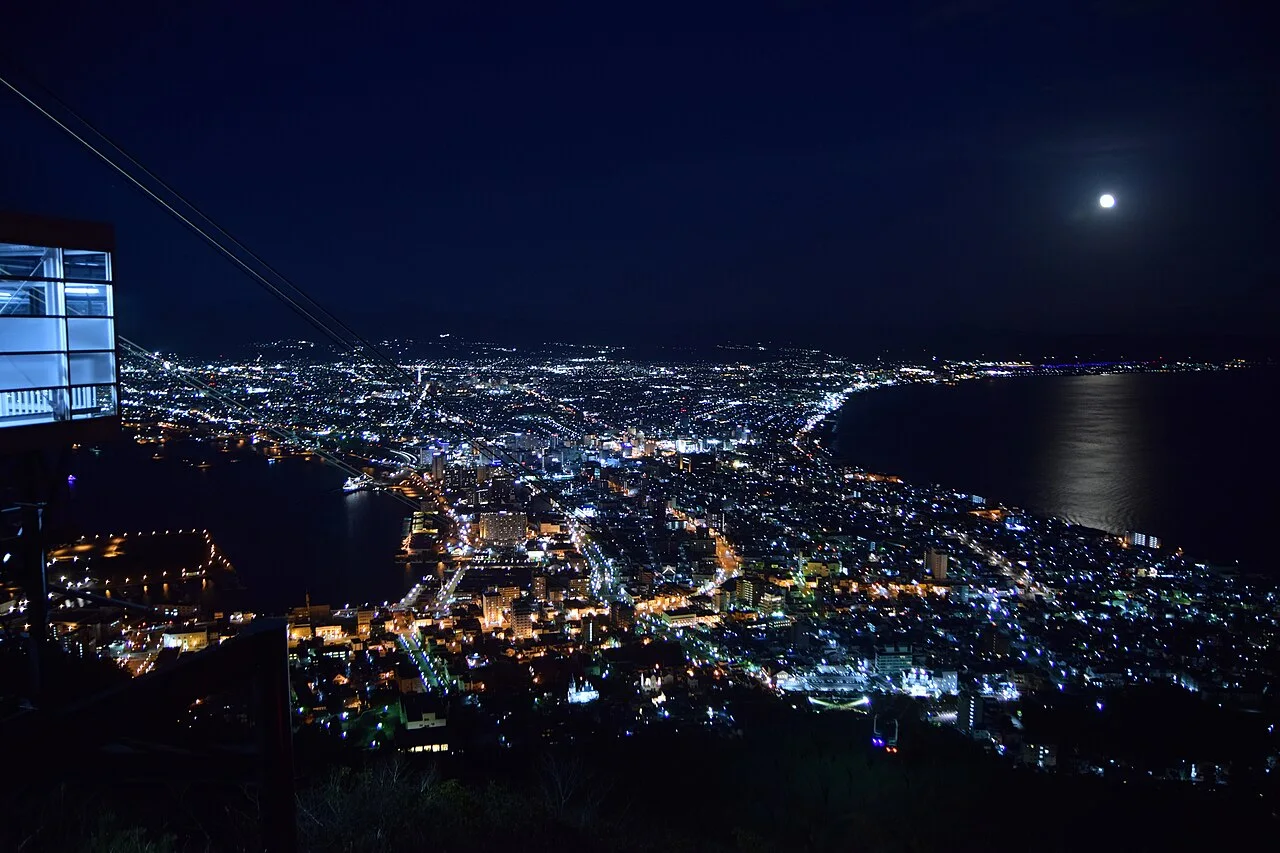
If your upcoming winter trip falls before new event dates are announced, plan a daytime tower ascent paired with a short park loop, then decide later whether to add an evening moat walk once official lighting hours publish. Mt. Hakodate's city night view operates on its own weather and transit schedule—if you only have one evening in town, pick the view that matters most rather than cramming both into one night.
Window Glare, Rain, and Fog: Checking Visibility Before You Pay
Indoor lighting reflects heavily on the observation deck glass, so angle your camera close to the pane and shield it from bright signs behind you before shooting. Take a moment to look with your own eyes and pick a few clear angles rather than camping in front of one window or pressing against the glass across every section.
Coastal fog, low cloud cover, and heavy rain can blur the view, even down into the fort right below the tower. If seeing the crisp star outline is your primary reason for going up, check the live street-level ceiling and visibility before buying a ticket. If you already wanted to see the 1/250 model and historical displays, the indoor galleries still hold plenty to explore on a wet day.
Follow posted gallery rules when photographing the models—skip extra flash rigs and only touch designated tactile exhibits. Pairing a photo of a specific bridge or hall on the model with a shot of the same spot through the window gives you a clear comparison later. Let companions who just want the panorama head straight to the glass while history readers catch up at their own speed.
Planning for Kids, Heights, and Slower Walkers
Keep visits with young kids concrete: challenge them to spot the magistrate's office on the scale model, find that same roof out the window, and pick a favorite diorama scene. That approach turns the deck into a hands-on game without requiring background lessons on 19th-century politics. Step away for a break as soon as attention fades rather than turning every display panel into homework.
Visitors with a fear of heights can stay comfortably back from the floor-to-ceiling windows and skip the 1F glass floor completely. Agree on a bench or cafe meetup spot before companions go looking for window angles so nobody feels pressured to hold a camera over the edge. Knowing where each person is happy to pause makes the visit work far better than trying to keep everyone glued together.
For strollers and slower walkers, pay close attention to the outdoor segments: the 10-minute walk from the tram stop, the approach into the park, and the return walk—plus slower footing on snowy or slushy winter sidewalks. If someone in your group tires easily, keep the tower visit intact and trim the park stroll to a short loop near the entrance.
Visitors using wheelchairs or needing mobility assistance should contact the tower in advance regarding entrances, elevators, and on-site support, noting your equipment and party size. While the tower offers elevators and tactile models indoors, your full trip still depends on street crossings and park path conditions from your tram or bus stop, so plan your walking distance accordingly.
Mapping Out a Half-Day: Exhibits First or Blossoms First
For a history-focused half-day, start at the tower to see the scale model and both observation decks, walk out to the exact section of the park you spotted from above, and finish at the Hakodate Magistrate's Office if time and interest hold. That sequence builds a big-picture map before zooming in on details, and saving lunch until afterward keeps you from rushing past the exhibits for a table.
For a cherry blossom and photography outing, start in the park along your chosen stretch of moat and decide later whether to buy tower tickets. If the blooms at eye level already delivered what you came for and your group is ready to rest, wrap up with lunch nearby; if you want the aerial perspective too, head up before the afternoon cutoff. Late-afternoon visitors should pick whichever site—the park enclosure or the tower—matters most before its gates close.
How long your half-day runs depends on whether you enter the Magistrate's Office, read every panel, and sit down for a meal. Roughly an hour in the tower plus 30 to 60 minutes for a short park walk makes a realistic baseline before adding ticket lines and lunch—just a planning estimate, not a fixed rule. If your schedule slips, drop one stop cleanly instead of cutting into rest breaks or your trip to the station.
When timing your departure, separate leaving the observation deck from arriving back at the tram stop. Shopping on 1F or 2F, retrieving coin-locker bags, and rounding up your group all happen after you step out of the elevator, followed by traffic lights and tram waits outside. If you have a dinner reservation, an intercity train, or a Mt. Hakodate ropeway slot next, count backward from that hard deadline and trim the Magistrate's Office or a long park lap to protect your core tower visit.
Cafes and 2F Dining: No Need to Bundle Everything With a Deck Ticket
The Observatory Cafe on 1F and the restaurants on the lower 2F floor occupy separate spaces. Grab a coffee with a view during your observation deck loop, or head down to the lower floors and surrounding streets for a full meal—do not assume every restaurant inside the tower building looks out over the star fort.
The tower's 2F floor guide lists Japanese restaurant Shunka, Gotoken Hakodate Curry EXPRESS, gelato shop MILKISSIMO, and the Ueki Soetsu Gallery. Treat these as convenient post-tower meal or rest stops billed separately from admission, and verify each shop's current serving hours rather than assuming they match the tower's 9:00 AM opening.
If part of your group wants to skip paying for the observation decks, they can browse the park or lower-level shops and meet everyone downstairs afterward. That beats buying extra tickets just so everyone can sit in the same cafe. Pick a specific storefront or entrance as your rendezvous point—saying "meet under the tower" often leaves half the group at the park bridge and the other half by the tram street.
Splitting up between 2F dining and the upper decks also works well for differing paces. Slow exhibit readers can linger upstairs while anyone ready for a break heads down to grab a table or snack, setting a rough lunch window beforehand. If a popular restaurant has a long wait, choose between eating there or taking more time in the exhibits instead of shuttling back and forth to check the line.
Connecting Goryokaku With the Rest of Hakodate
Goryokaku sits inland on the eastern side of town, separate from the Motomachi slopes, Bay Area warehouses, and Mt. Hakodate. First-timers can easily pair a daytime Goryokaku visit with an afternoon move toward the Bay Area or Motomachi; if you are staying at a Yunokawa hot spring ryokan with dinner included, wrap up early enough to check in and eat without squeezing in an extra night view.
For help choosing which neighborhood to stay in, weighing tram passes, and timing Mt. Hakodate's night view, continue to our Hakodate neighborhoods and night views guide. Together with this Goryokaku deep dive, you can slot the fort into your broader itinerary without rebuilding your whole trip from scratch.
If you only have one daytime window in Hakodate, prioritize the single experience you care about most and leave a free, unticketed stroll for the end. Should fog or rain roll in, pivot to the tower's indoor exhibits or save the ascent for another trip—ending the half-day relaxed and on time for your train or hotel beats checking off every box.
A few useful answers
How much are Goryokaku Tower tickets?
Through March 31, 2027, standard admission is ¥1,200 for adults, ¥900 for junior and senior high school students, and ¥600 for elementary school students. Starting April 1, 2027, rates rise to ¥1,500, ¥1,130, and ¥750, respectively. Preschool children enter free (guardian accompaniment required under the new rules). Group and disability discounts are detailed in the pricing section above.
What are the opening hours and last ticket sales time?
The tower generally opens from 9:00 AM to 6:00 PM, with observation deck ticket sales ending at 5:50 PM. Arrive well before the cutoff if you want time to read the historical exhibits and view the scale model. Tower closing hours and winter illumination schedules are separate.
Does Goryokaku Tower have parking for regular cars?
No. The tower does not operate a lot for general passenger cars, so drivers should use nearby paid parking lots. The 30-space tour bus parking area (¥1,000 per bus) is strictly for tour buses, not passenger vehicles.
How long is the walk from Goryokaku-koen-mae tram stop?
The tower lists the walk from the Goryokaku-koen-mae tram stop as roughly 10 minutes. Because the stop is not directly at the entrance, factor in tram wait times, street crossings, and your group's walking pace. Also note that JR Goryokaku Station is in a different location.
Should I visit the tower or the park first?
Go up the tower first if you want to get your bearings on the layout before walking the grounds, or start in the park if your priority is cherry blossoms or outdoor time. Since the tower, park, and Magistrate's Office are separate visits, plan an order that avoids backtracking.
Are Goryokaku Park and the Hakodate Magistrate's Office free?
Walking through Goryokaku Park is free, while the tower requires a paid ticket. However, the Hakodate Magistrate's Office inside the park also charges separate admission, so do not treat the tower as the only paid attraction on the grounds. Check its hours, ticket prices, and visit duration independently.
What is the difference between the two observation decks?
Observatory 2F (90 m) houses the Goryokaku History Corridor, a 1/250 restoration model, 16 dioramas, and a seated bronze statue of Hijikata Toshizo. Observatory 1F (86 m) features glass floor panels, an exhibit on star forts around the world, a gift shop, and the Observatory Cafe.
Is the tower still worth visiting in rain or fog?
Rain, sea fog, and low clouds can obscure the view, even of the fort directly below. If your main goal is taking photos of the star shape, check visibility on site before buying a ticket. If you are mainly interested in the scale models and history exhibits, the indoor displays still make the trip worthwhile.
Can I visit in the morning and re-enter at sunset on the same ticket?
No. The April 2027 ticket revision explicitly states that tickets are valid for a single entry with no re-entry. Do not assume you can leave in the morning and return at dusk on the same ticket; if you want to see changing light, plan a single continuous visit.
Does the Goryokaku Winter Illumination keep the tower open late?
No. The illumination event and tower operating hours run on separate schedules. During the concluded 2025-2026 winter season, moat lights stayed on until 7:00 PM while the tower still closed at 6:00 PM. Always check the current season's official announcements rather than relying on past dates or hours.
Is the Hijikata Toshizo statue inside the park?
The seated bronze statue discussed in this guide is inside Goryokaku Tower on Observatory 2F. If you are looking for it, head into the paid observation deck rather than searching the park pathways.
Do children have to walk on the glass floor?
No. The glass floor is just one feature on Observatory 1F and is completely optional for visitors with a fear of heights. Families can easily skip it and focus on the restoration model, dioramas, and window views instead.
Is the observation deck 107 meters high?
No. The 107 m figure measures up to the lightning rod, while the building itself stands 98 m tall. The two visitor observation decks sit at 90 m and 86 m above ground, which are the figures to use when comparing views with other towers.
Official information and references
Sources used in this guide.
- Goryokaku Tower Official Pricing and Hours
- Goryokaku Tower April 2027 Admission Price Revision Notice
- Goryokaku Tower Observatory 2F Guide
- Goryokaku Tower Observatory 1F Guide
- Goryokaku Tower Facility Specifications and Overview
- History of Goryokaku - Goryokaku Tower Official Site
- Goryokaku Tower Access and Parking Information
- Goryokaku Tower 2F Floor Guide
- Hakodate City Tram Official Fare Table
- Goryokaku Park Management Information (Hakodate Housing and Urban Facility Corporation)
- Hakodate Magistrate's Office Visitor Information
- Hakodate Magistrate's Office Architecture and Restoration Overview
- 2025-2026 Goryoshi no Yume Winter Illumination Notice (Concluded)