Take JR from Hakodate to Onuma Park. Choose your return train, then plan a half or full day with 15–50-minute walks, a cruise and lunch. Includes October 2026 cruise fares, local and limited express train costs, autumn and winter options, and shorter routes for poor weather.
- Region & Focus
- Hakodate
- Reading Scope
- 24 min read · 13 chapters · 5 Q&As
- Official Verification
- 12 official sources checkedUpdated October 27, 2026
- Key Topics
- Rail travelItinerariesSeasons
Chapter Route Map (tap any stop)
- Allow four to five hours in Onuma, then choose how far to walk
- Use Onuma-Koen Station, and check the route of local trains
- Choose a preferred return train and one acceptable backup
- Change the day or return train before your reserved departure
- Learn the turn back to the station on your way to the plaza
- Try the 15-minute Oshima trail to check your footing and energy
- Take the island circuit for more bridges and small islands
- Ask about the next 30-minute cruise before buying lunch
- Eat around the plaza and station, and plan to finish snacks that day
- Look for October leaves and waterbirds, and read the full event year
- In winter, combine a short snow walk with one operating activity
- Shorten the day for rain, wind or low cloud without rushing
- Leave the day schedule open until you have chosen your tickets
- Quick Q&A
For a day trip from Hakodate to Onuma, choose a return JR train first. Then fit in a short lakeside walk, lunch and one activity on the water. The park plaza is about five minutes on foot from Onuma-Koen Station. Start with the 15-minute Oshima trail to check your energy and the ground conditions. Add the island circuit or a cruise if the weather allows.
Allow four to five hours in Onuma, then choose how far to walk
The best reason to visit Onuma from Hakodate is an unhurried day by the lake. From Onuma-Koen Station, go to the park plaza for views of the lake and Mount Komagatake, then take a short trail. Extend the walk if you enjoy the bridges between islands and the paths are suitable, or add a cruise. Allow four to five hours on site so there is room for lunch and the walk back to the station. This is a suggested visit length. The official 15- or 50-minute trail times cover just one activity within it.
If you only have two hours, visit the plaza and take the Oshima trail, then eat something near the station. This is easier than fitting in both a cruise and the island circuit. With a full day, walk in the morning, sit down for lunch and choose one water activity in the afternoon. Onuma gives you time to stop and look at the water, woods and bridges. You do not need a ticketed activity in every time slot.
If your companions mainly want shopping or indoor exhibitions, or the forecast shows prolonged wind and rain, exchange this day with a day in Hakodate. Most lakeside activities are outdoors, and cruises also depend on the weather. Keeping a day flexible usually takes less work than booking several activities and canceling them one by one. If you have a dinner reservation in Hakodate, work back from the time you need to reach Hakodate Station, rather than starting with the last train out of the park.
This trip starts and ends at Onuma-Koen Station. It suits travelers staying several nights in Hakodate who want to leave their luggage there. If you need a Shinkansen connection or a long-distance train toward Sapporo that day, arrange the full rail journey before deciding on a stop here. Large bags restrict movement between the islands. Leave them at your Hakodate accommodation or confirmed luggage storage, and carry water, a jacket and a camera.
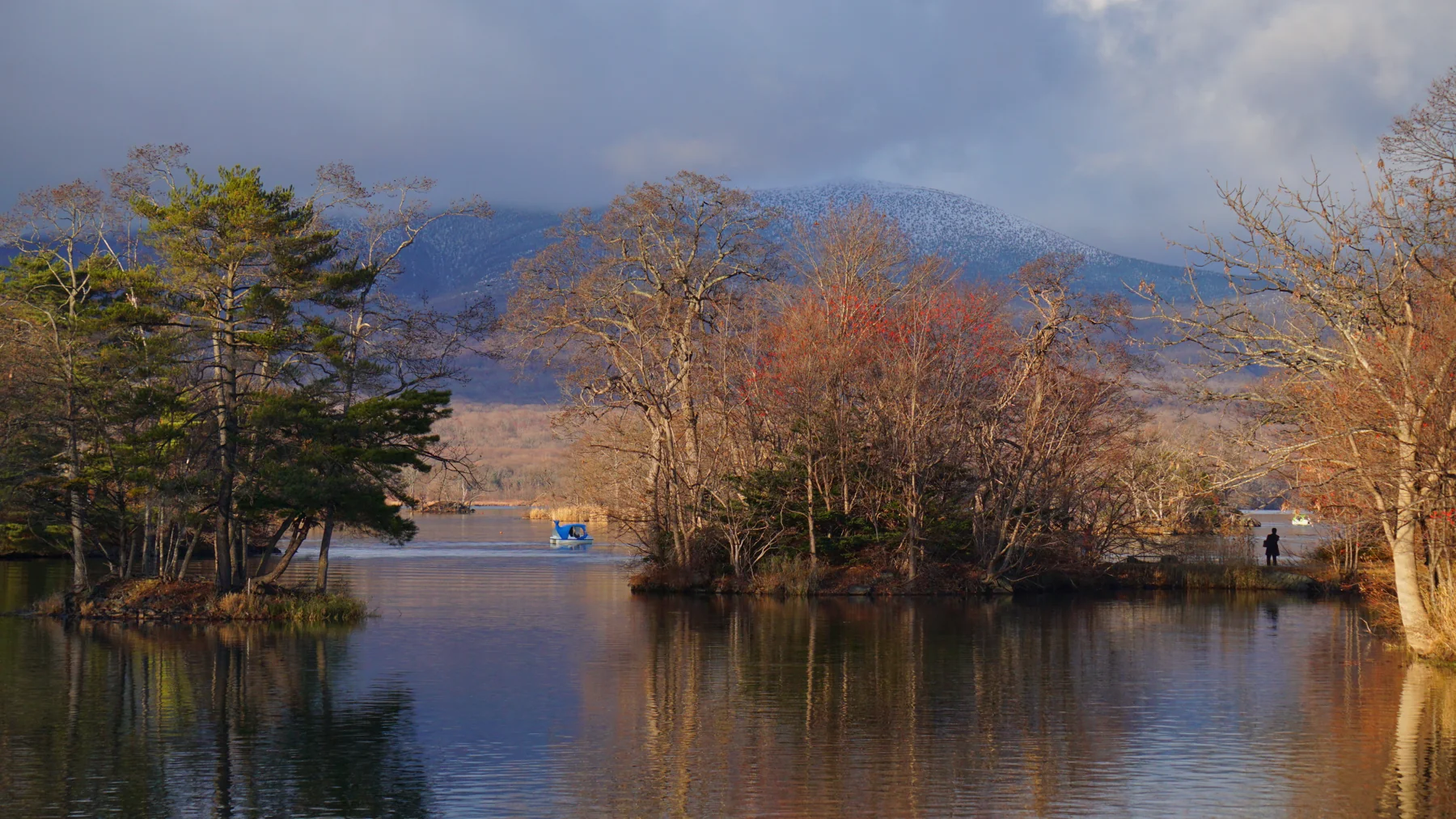
Take JR from Hakodate to Onuma Park. Choose your return train, then plan a half or full day with 15–50-minute walks, a cruise and lunch. Includes October 2026 cruise fares, local and limited express train costs, autumn and winter options, and shorter routes for poor weather.
Use Onuma-Koen Station, and check the route of local trains
Enter “Onuma-Koen” in the JR journey planner; its Japanese name is 大沼公園駅. Onuma is a separate station. Do not get off early simply because you see “Onuma” when traveling from Hakodate. Use the full station name in map searches too, so your arrival point, walking entrance and return ticket refer to the same place. The park plaza is near Onuma-Koen Station, which makes it an easy starting point for a loop through the short trails and shopping street.
The Hakodate Main Line has different routes in this area. Even if a local train's destination is Mori or Oshamambe, open its full stop list and check that it includes Onuma-Koen. A northbound direction and the Hakodate Main Line name are not enough to select a train. For limited express services, also choose a departure that stops at Onuma-Koen. Save the train number and travel date on your phone, then compare them with the platform display.
In JR Hokkaido's official search on October 27, 2026, the adult one-way local fare was ¥680. A limited express reserved seat cost ¥1,840 in total: a ¥680 base fare and a ¥1,160 reserved-seat limited express charge. Two adults making a round trip by local train pay ¥680 × 2 journeys × 2 people = ¥2,720. Using the limited express reserved seats under those search conditions throughout costs ¥1,840 × 2 × 2 = ¥7,360. The difference is ¥4,640. Compare that with the travel time you save and your plans for the day.
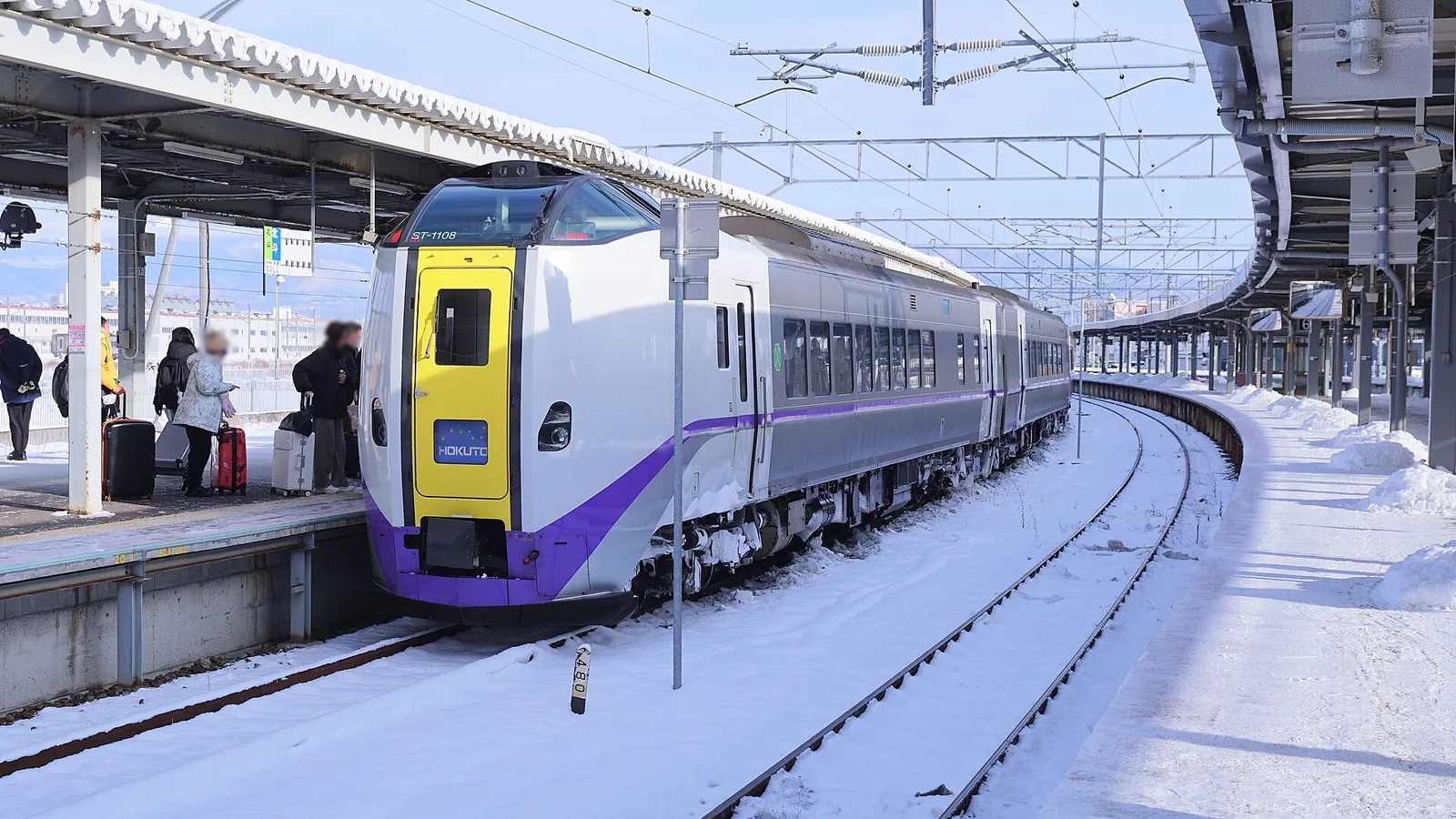
Outbound examples for the search date included Hokuto 5, 08:56–09:24; Hokuto 7, 10:05–10:33; and Hokuto 9, 10:45–11:13. Each took 28 minutes from Hakodate. A local service ran 11:15–11:54 and took 39 minutes. These are actual examples found for that date. Search again for your travel date and put your chosen services into the itinerary. In particular, do not expect local trains to run as often as city trams. JR Hokkaido timetable and fare search.
Choose a preferred return train and one acceptable backup
For an Onuma day trip, checking the return journey first is more useful than choosing the outward train first. Open JR Hokkaido's official timetable and fare search. Set Onuma-Koen as the departure, Hakodate as the arrival and enter your travel date. Work back from your preferred dinner or hotel arrival time. Note your first choice, then check when the next train reaches Hakodate. If the gap is long, stop afternoon activities earlier.
The official search for October 27, 2026 showed Hokuto 10 at 14:16–14:40, a local train at 14:35–15:15, Hokuto 12 at 15:43–16:08 and Hokuto 14 at 16:48–17:13. Compare the local service if you want to be back in Hakodate after 15:00. For more afternoon time in Onuma, look at reserved seats on the 15:43 or 16:48 departures. Note both the departure from Onuma-Koen and the arrival in Hakodate to see how much time remains before dinner.
You can choose a local train in one direction and a limited express in the other. If you can leave early but have a fixed afternoon appointment, use the limited express for the return. If you want to adjust the afternoon to your walking pace, first compare local train intervals and remaining limited express seats. Add the actual ticket costs for each leg. Doubling the cheapest one-way fare does not mean you have bought the full round trip.
All Hokuto seats require reservations. Families who want to sit together should book the return seats first. Read the purchase screen to see whether both the base-fare ticket and limited express ticket are included. Follow the same sales channel's collection or ticket-display instructions. Pass holders should check their pass coverage and reserved-seat rules before choosing dates, so a short ride does not trigger unnecessary use of a multi-day pass.
You can write “back at the station area about 20 minutes before departure” in the itinerary, then work back from the final activity. This 20 minutes is a planning allowance for walking, organizing belongings and finding the platform. Add more time if you need to buy or collect tickets, or someone walks slowly. You still need to walk to the station after leaving the boat. A cruise end time is not a JR boarding time.
Ticket facilities at Onuma-Koen Station also affect the plan. JR Hokkaido's September 1, 2026 information lists a staffed ticket office open 09:00–17:10, with no reserved-seat ticket machine or remote-assisted ticket machine. Hakodate's staffed office is open 06:30–19:00. If you need to collect reserved-seat tickets or make changes, do this in Hakodate before departure. For a late return train, do not leave ticket purchases or changes until after the office closes. These are ticket-office hours, separate from train operating hours. JR Hokkaido timetable and fare search.
Change the day or return train before your reserved departure
If the weather makes you want to change days, first check the name of the product you bought. JR Hokkaido's general ticket rules allow one free change to an unused ticket within its validity period, with any fare difference paid or refunded. Changes to reserved tickets must be completed before the specified train leaves your boarding station. For an online discount product or package, open that product's rules and the original purchase channel. Match the date, train and ticket collection status.
An unused general base-fare ticket refunded within its validity period has a ¥220 handling fee. The fee for a reserved-seat limited express ticket is ¥340 until two days before travel. From the previous day until departure, it is 30% of the limited express charge, with a ¥340 minimum. Base-fare and limited express tickets are handled separately. Do not deduct only one fee from the combined limited express price. Cancel at the office early or through the original purchase channel. Deleting an itinerary note on your phone does not refund the ticket.
For example, the ¥1,840 adult one-way total consists of a ¥680 base fare and ¥1,160 reserved-seat limited express charge. Refunding both unused general tickets at least two days before travel incurs ¥220 + ¥340 = ¥560 in fees. If you only change the return train and keep the same journey, use the change rules instead. Discount tickets, special products and used tickets follow their own conditions.
If you miss Hokuto, the original reserved seat cannot be refunded. JR rules allow standing travel on a later limited express that day, and use of an unoccupied seat when one is available. Your family's original adjacent seats will no longer be secured. If a trail is taking longer than expected, drop extra walking and return to the station. If you know you will miss the train and it has not yet departed, handle the change first. The extra wait after missing a train is often longer than the extra stretch of trail.
If JR services are canceled or heavily delayed on your travel day, read JR's notice for that situation, then contact the original purchase channel. Canceling voluntarily because of poor weather and cancellation of the train itself are handled differently. Keep your tickets and order details. Explain whether the outward ticket has been used, which leg needs changing, and whether you are returning to Hakodate or connecting onward. This helps the office handle the correct journey at once. JR Hokkaido ticket change rules.
Learn the turn back to the station on your way to the plaza
The official walking guide gives an entrance route of about five minutes and 400 meters. With Onuma-Koen Station behind you, pass Numanoya on your left. Turn left at the traffic lights just beyond it, into the lane closed to cars, and head toward the park plaza entrance and boat landing. Following this route to the lake first helps you place the station, shops and activity center in relation to each other.
Use the restroom, refill water and collect a map on arrival. This is easier than looking for facilities on an island. Tourist information, restaurants, souvenir shops and cruise services cluster around the plaza, making it a useful family meeting point. If companions split up for photos and rest, choose an exact meeting spot in the plaza and agree on the time to return to the station.
You do not need to head for the farthest bridge as soon as you see the lake. Find a spot in the plaza where you can look toward Mount Komagatake without blocking others. If cloud covers the mountain, look at the nearby islands, water and tree reflections instead. Check the mountain view on arrival if it matters most to you, and return if the cloud clears. This gives you more time than rushing to take pictures just before your train.
Buy snacks and supplies when you follow the same route back to the station. If taking food to Hakodate, check storage instructions and when it may sell out. If eating by the lake, take the packaging away with you. You pass through the shopping street in both directions. Shopping after the trails saves carrying another bag over the bridges.
Try the 15-minute Oshima trail to check your footing and energy
The official reference time for the Oshima trail is 15 minutes. It passes the “A Thousand Winds” monument and offers relatively open views. First-time visitors and groups with children or older adults can start here, then decide on lunch and the next activity back at the plaza. A short route preserves rest time and lets you see how everyone handles the surface and temperature.
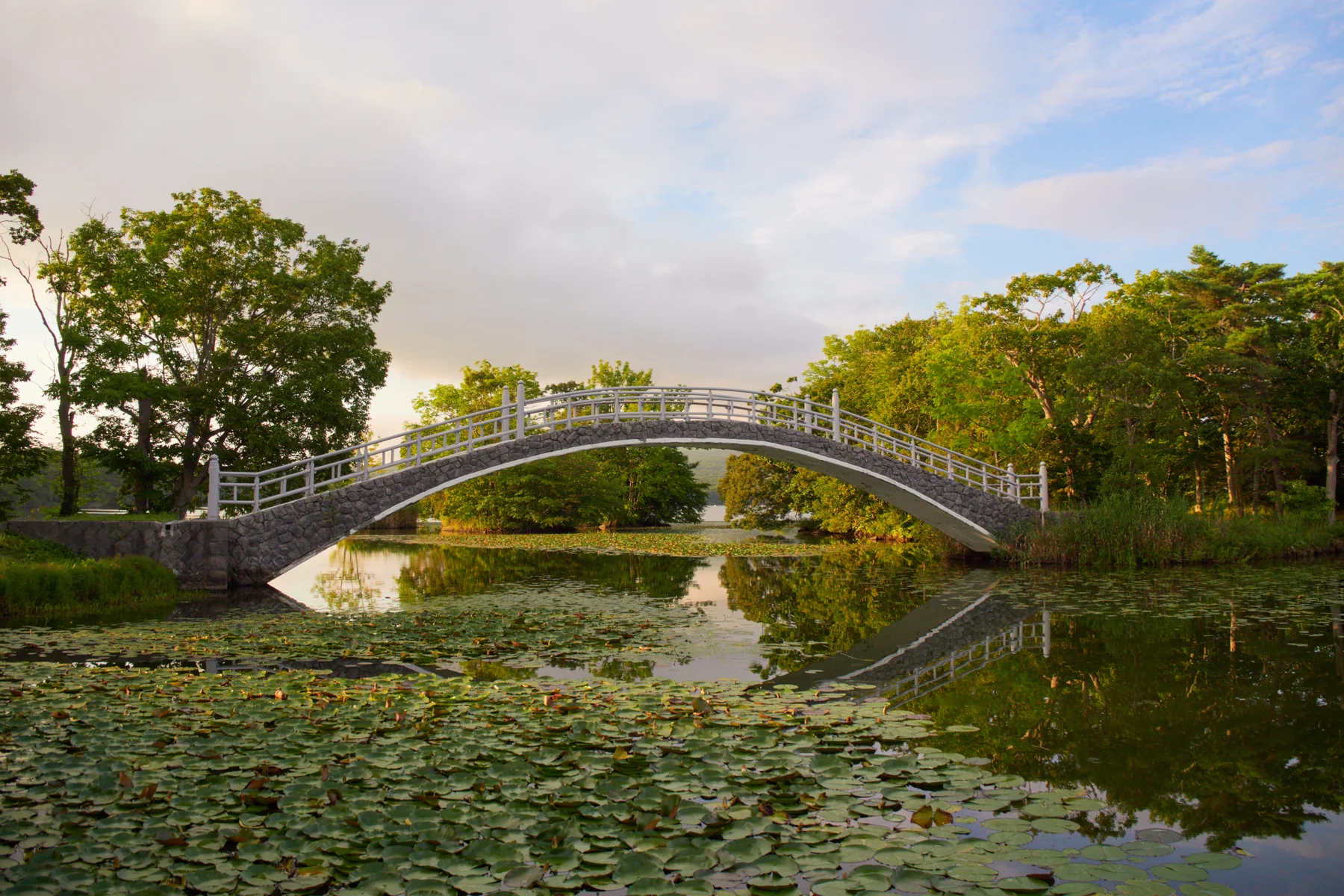
Do not treat 15 minutes as a speed the whole family must achieve. Lake views, group photos and helping a child adjust their shoes all add time. Slow down on wet leaves, ice or slippery bridge surfaces. If your footing already feels uncertain, make this the day's main walk and return to the plaza for food. There is no need to make finishing a 50-minute route the goal.
If bringing a stroller or mobility aid, show tourist information a map of the sections you plan to use. Ask about bridge surfaces, level changes and accessible entrances. The plaza and paths between islands can have different access conditions. Sending one adult ahead to inspect the surface is easier than taking everyone and their bags to a narrow bridge and turning back. In winter, choose your walking area according to snow clearance, ice and closures on site.
Put the camera away for the first short stretch. When you want to stop, stand where others can pass, then take out your equipment. Let oncoming walkers pass on bridges. These short trails suit slow observation of aquatic plants. Walking with your eyes fixed on a screen can make you miss changes in level beside a bridge and block people behind you.
| Route | Reference time | Suggested plan |
|---|---|---|
| Oshima trail | 15 minutes | See the lake and A Thousand Winds monument, then decide on more walking at the plaza |
| Forest Path | 20 minutes | A short woodland walk |
| Island circuit | 50 minutes | More bridges and islands, with ample time to return to the station |
| Sunset Konuma Trail | 25 minutes | Another quiet walk, also suitable in daylight |
Take the island circuit for more bridges and small islands
The official island circuit takes about 50 minutes and forms a loop over bridges between small islands. If the weather is stable, your shoes suit the ground and you have enough time to return to the station, it takes you farther than a short walk from the plaza. Before setting off, find your starting point, direction and intended return point on the map. Water and woods can look similar in different directions. Relying on the appearance of one bridge can be confusing.
Allow time for photos and rests in addition to the 50 minutes. Bird photography, waiting for the wind to drop or capturing reflections can keep you at one corner for a while. Set a time to stop going farther and start returning to the plaza. Tell everyone what will be enough for the day, rather than hurrying them only when the return train is near.
If you want to shorten the walk, use the on-site map and open-route signs to find the way back. Do not cross grass or look for shortcuts along the lake edge. Before entering the next section, decide whether to turn back. This is more reliable than estimating the station distance in a straight line halfway through. Phone maps help locate you; use trail closure notices and local signs to decide which paths are open.
The Forest Path is listed at 20 minutes and Sunset Konuma Trail at 25 minutes. They offer alternatives to Oshima and the island circuit. Choose the Forest Path for woodland, or one complete short trail if time is limited. “Sunset” in the name does not mean you must wait until dusk. In autumn and winter, finishing in daylight makes it easier to retain light and time for the train back to Hakodate.
Ask about the next 30-minute cruise before buying lunch
If you do not want to spend the whole afternoon walking, add Onuma Godo Yusen's island sightseeing cruise. Official local information updated in October 2026 lists ¥1,460 for adults and ¥730 for ages 6–12. Junior and senior high school students pay the adult fare. One preschool child travels free per adult. Two adults and one eight-year-old pay ¥1,460 × 2 + ¥730 = ¥3,650. One additional preschool child who meets the free-travel condition does not change that total.
The cruise takes about 30 minutes. In October, services start at 09:00 and run roughly every 40 minutes. At the landing, check the next departure and that day's operation. Include ticket purchase, assembly and disembarkation time before deciding whether to eat or sail first. If departure is close, going to buy tickets together makes child tickets and meeting up easier than splitting the family between a restaurant queue and the pier.
November services may run without a fixed schedule. The 2026 season is scheduled to end in late November. If the boat is your main activity, call the operator on 0138-67-2229 to ask about your date. Asking after a morning walk still lets you fit lunch around actual departures. If you have a fixed afternoon JR train, choose only a cruise that leaves enough time after disembarkation for an easy walk to the station.
A boat gives views of islands and woods from the water, while trails show the lake from bridges. Companions with limited energy can combine a short trail and cruise. They do not need to finish the full island circuit before taking the boat with the same theme. In strong wind, cold or a service suspension, put the boat budget toward food and rest. The lakeside walk you have already taken still makes a worthwhile Onuma outing.
Eat around the plaza and station, and plan to finish snacks that day
For a car-free day, food around the park plaza and station shopping street connects most easily with the trails and trains. Check seating, the day's menu and waiting time before choosing a restaurant. If a cruise or return train is approaching, have a meal you can finish comfortably. Save a restaurant with a queue for your evening in Hakodate, so the family does not have to rush to the platform carrying food.
Numanoya is on the route from the station to the park. Its Onuma dango make a snack before or after a walk. The official local shop page lists 08:30–18:00, closing early when sold out. Check supplies when you pass in the morning, and buy a preferred flavor while it is available. If you will walk afterward, buy an amount you can finish that day and carry properly. Do not treat the boxed sweets as room-temperature souvenirs that will keep for several days.
Current shop information lists a small box at ¥480 and a large box at ¥800, the revised prices from August 1, 2025. Options pair red bean paste with soy sauce, or sesame with soy sauce. The sesame version is sold only in small quantities at the main shop. Two people having snacks before lunch can share a small box. Larger groups can compare quantities and choose a large one, rather than starting with one box per person. If you want sesame, pass the shop soon after arrival. If it has sold out, choose another flavor or skip the purchase to avoid a special afternoon return.
A family can eat after the short trail, sit down and choose the afternoon plan together. Those wanting more bridges can walk farther; those needing rest can stay near the plaza; or everyone can cruise together. This pause helps when children are hungry, older adults need a seat or the weather suddenly turns cold. It also avoids searching for food facilities midway along a trail.
Bring a bottle of water and a little food that is easy to pack away, especially on an early or late train. Do not feed wildlife that approaches. Pack up wrappers and scraps and take your rubbish away. Eat before photographing birds so you do not have to walk while managing food and a camera at the same time.
An official local introduction from October 2026 lists hot drinks such as coffee and light meals at the boathouse VESSEL beside the pier. It also lists a heated wheelchair-accessible restroom and changing table. Families with young children can change diapers and warm up here before waiting for the boat. Travelers needing accessible facilities can use this named location when planning rests. Restroom accessibility, boat boarding and access to a particular trail are separate needs. Tell the operator how you move when booking a boat or activity.
Look for October leaves and waterbirds, and read the full event year
You can see Onuma's autumn colors from the plaza, island trails or a boat. Choose according to whether you want close views of leaves, distant scenery or water. The official seasonal guide lists October for autumn leaves. Color varies by species and the year's progress. Keep several things to observe: shoreline plants and visiting birds as well as leaves. You do not need to spend the day chasing a reference photo filled with red.
The official homepage had updated autumn foliage information and news of swans arriving at Lake Konuma in October 2026. Bring binoculars and observe from existing paths, letting the birds move freely. Do not pursue them into grass, approach nesting areas or use food to attract them. If birds are far away, viewing the whole lake with the naked eye often suits a family better than circling the shore for a close photograph.
Autumn night events require a separate return plan. If you see “autumn leaves” or “Halloween,” read the year and date, then check extended boat operation, admission and JR return services. Once you are back in Hakodate after daytime sightseeing, an old night-event photograph does not mean an event is running that evening. For a daytime walking trip, return to the station before sunset and keep your original evening plans in Hakodate.
Mount Komagatake forms an important backdrop to lake views, but climbing it has separate volcanic access controls. The official homepage posted a notice on October 4, 2026 that the Akaigawa trail gate was closed and the volcanic alert level was 2. Keep this trip within open lakeside sightseeing areas, following current official notices and controls on site. Check dedicated mountain access information if you want to climb. Do not simply extend a park walk into a mountain ascent.
Onuma cruise operator’s “The four seasons of Onuma Quasi-National Park” shows seasonal changes in the lake and vegetation, useful for comparing views from short lakeside walks and the boat.
In winter, combine a short snow walk with one operating activity
The station area, lake edge and bridges in winter have very different conditions from summer photographs. Before leaving, check JR services and local snow, and pack for grip, waterproofing and warmth. Try walking near the plaza on arrival. Increase distance only if the surface is suitable. If someone needs support to keep their balance, limit the walk to a distance they can return from safely, and retain time for indoor rest and the station.
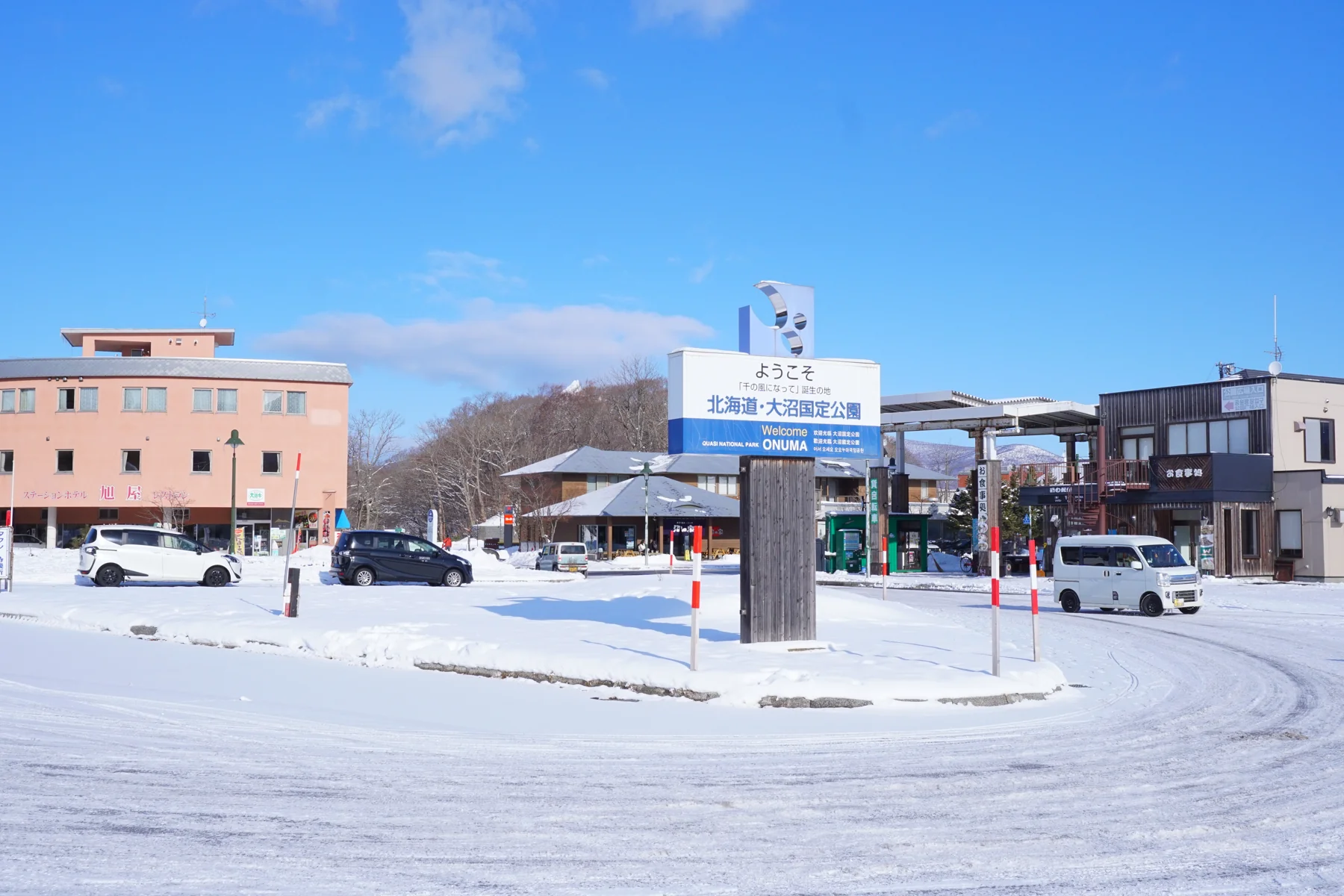
The official seasonal guide lists winter activities such as ice fishing for wakasagi and snowmobiling. Opening depends on lake conditions and seasonal operator announcements. Between the late-November end of boat services and the start of ice activities, the trip may focus on shore walks. Choose one winter experience with published dates, meeting point and prices, then add a short walk. Do not list every seasonal activity as certain to be available that day.
Different parts of the frozen lake have different management arrangements. For ice activities, use the operator's designated entrance, area and equipment, and follow staff directions. Seeing people on the ice does not give access to other unopened areas. Stay on open paths for snow photographs. You can frame ice and distant mountains from the shore without stepping onto the lake.
If clothing gets wet or hands and feet become cold, return to a place to rest before adding another trail. Bring spare gloves and socks for children, and bag wet items. Change into dry clothing before waiting for the train so the ride is comfortable. In winter, choose a return time you can manage. Use JR's information that day if services are disrupted, and avoid adding afternoon activities far from the station.
Shorten the day for rain, wind or low cloud without rushing
If low cloud hides the mountain but paths remain easy to walk, take a short lakeside route and focus on islands, bridges and woods. If wind makes the open shore uncomfortable, shorten your stay there and return to the plaza for lunch. If rain increases, paths flood or closure signs appear, return to the station area. Do not look for side trails merely to complete the route.
It is easiest to change plans before leaving Hakodate. Move Onuma to a day with a steadier forecast and spend the original day indoors or on short neighborhood walks in Hakodate. If already in Onuma, check the next possible return trains first. You do not need to buy another weather-dependent activity just because you have arrived. If your return is reserved, read its change conditions and check available seats before making changes. Do not miss the time to act while sitting in a restaurant.
Separate the outdoor day into essentials and options. Keep reaching the lakeside, a short walk and returning to the station as essentials. Make the boat and second trail optional. Add them if conditions improve and remove them if conditions worsen. This plan accommodates different energy levels and makes leaving early easier for the family, without treating one omitted trail as a failed day.
If companions form faster and slower walking groups, meet at the plaza or a confirmed open restaurant. Agree on an exact time and route to the station. Charge phones and save maps and train details for offline reading. Tell the other group if leaving early. Do not keep walking and waiting at bridges or junctions. On busy weekends, use a specific meeting point rather than “where we took that photo.”
Leave the day schedule open until you have chosen your tickets
For a day out during a multi-night Hakodate stay, start with five parts: outward train, short walk, lunch, one extra activity and return train. Arrive around 09:00–10:00, learn the area and take a short walk. Sit down at midday, then choose a boat or the island circuit. This is a sample sequence to fit around tickets. Fill in actual times from your travel-date JR search and the pier's schedule that day.
Using the limited express example arriving at 10:33, reach the plaza and Oshima trail around 11:00, consider a cruise after lunch, then add walking according to the return time. With the local train example arriving at 11:54, have lunch first, then choose a short trail and one activity. Do not give the later arrival the same workload as a morning already spent by the lake. For every hour less on site, remove optional activities first and keep meals and station return time.
If you have a fixed dinner but do not want two limited express legs, take a local train out and limited express back. At the same-day one-way fares of ¥680 and ¥1,840, return transport for two adults costs (¥680 + ¥1,840) × 2 = ¥5,040. Add ¥2,920 for two cruise tickets for ¥7,960 in total. That is ¥2,320 more than local trains plus the boat and ¥2,320 less than limited express trains plus the boat. First check whether the outward local train makes lunch too late and whether the return reserved seat fits your stay. Use the price difference as the final comparison.
For two adults using local trains both ways, transport is ¥2,720. Add two adult cruise tickets at ¥2,920 for known spending of ¥5,640. Add food at actual menu prices. Using the limited express reserved seats above throughout costs ¥7,360 for transport plus ¥2,920 for the boat, totaling ¥10,280. Deduct ¥2,920 if walking without the cruise. Listing transport and paid activities separately shows what you spend to save time or reduce walking.
If you still need to reach a hotel, collect luggage or make a ryokan dinner after returning to Hakodate, add that journey after “arrive in Hakodate.” For evening plans, read Hakodate night views and seasonal itineraries. To compare accommodation routes, see where to stay around Hakodate Station, the bay and Yunokawa. Connect the return to the door you actually need to reach, so you are not planning the final leg only after arriving at the station.
A few useful answers
Which station should I use for Onuma Park?
Use JR Onuma-Koen Station, which is separate from Onuma Station. Check the full stop list even for local trains to confirm they run via Onuma-Koen.
How much more is the limited express from Hakodate to Onuma-Koen?
The official search on October 27, 2026 showed an adult local one-way fare of ¥680. A limited express reserved seat cost ¥1,840, including the ¥680 base fare and ¥1,160 limited express charge. Round trips for two adults cost ¥2,720 and ¥7,360 respectively.
Which trail suits a short walk?
Start with the Oshima trail, officially listed at 15 minutes, then decide at the plaza whether to walk farther. The island circuit is listed at 50 minutes. Allow extra time for photos, rests and returning to the station.
How much is the Onuma cruise, and how long does it take?
Official local information for October 2026 lists ¥1,460 for adults and ¥730 for ages 6–12, for about 30 minutes. One preschool child travels free per adult. November departures may be irregular; the 2026 season is scheduled to end in late November.
Can I walk directly onto the frozen lake in winter?
Use the operator-designated entrance and open area for ice activities, following instructions that day. For snow photographs from shore, stay on open paths. Choose an activity with published seasonal dates and a meeting point, then add a short walk.
Official information and references
Sources used in this guide.
- Official Onuma guide | Park plaza and nature trails
- JR Hokkaido | Timetable and fare search
- JR Hokkaido | All-reserved Hokuto services
- JR Hokkaido | Station ticket offices and machines
- JR Hokkaido | Ticket change rules
- JR Hokkaido | Refund rules
- Official Onuma local information | October 2026 cruises and VESSEL
- Onuma Godo Yusen | Scheduled sightseeing cruises
- Official Onuma local information | Numanoya
- Official Onuma guide | Lakeside seasons
- Official Onuma guide | Park use and nature protection
- Official Onuma guide | Foliage, swans and mountain access notices