Take Hakodate City Tram Line 2 to Yachigashira and walk 20 minutes to Cape Tachimachi. Covers 2026–2027 winter road closures, tram fares, the coastal walk, plus pairings with Yachigashira Onsen, Motomachi, and the Bay Area.
- Region & Focus
- HakodateAttractions
- Reading Scope
- 23 min read · 9 chapters · 7 Q&As
- Official Verification
- 27 official sources checkedUpdated November 22, 2026
- Key Topics
- First tripRail travelWinter
Chapter Route Map (tap any stop)
- Check the Front Destination Sign Before Boarding at Hakodate Station
- How to Walk the 20-Minute Route from Yachigashira to the Cape
- Driving in Winter 2026–2027: Keep These Two Road Closures Separate
- Where to Look for the Cliffs, Honshu, and Omori Beach
- Ishikawa Takuboku's Grave, the Yosano Monument, and the Literature Museum
- Warm Up at Yachigashira Onsen or Visit the Museum at Aoyagicho
- Pairing the Cape with Mt. Hakodate Ropeway on the Same Day
- How to Connect Motomachi or the Bay Area with Only Half a Day
- Staying Near Hakodate Station vs. the Bay Area: Which Walk Is Better to Skip?
- Quick Q&A
For ocean views at Cape Tachimachi, ride Hakodate City Tram Line 2 from Hakodate-Ekimae to the Yachigashira terminal and walk roughly 20 minutes. Allow 60 to 90 minutes for the round-trip walk from the tram stop plus time on the headland. From November 9, 2026, at 16:00, the municipal road to the cape closes to vehicles for winter—tentatively through late March 2027—though pedestrians can still walk in. Save clear daylight hours for the Tsugaru Strait, then pair the return trip with a soak at Yachigashira Onsen or head off at Jujigai for Motomachi and the Bay Area.
Check the Front Destination Sign Before Boarding at Hakodate Station
Exit JR Hakodate Station and walk to the Hakodate-Ekimae tram stop (DY17) outside the station plaza for Line 2 bound for Yachigashira. Lines 2 and 5 share tracks through downtown; Line 5 shows "Hakodate Dock-mae" on the front destination sign and turns toward Suehirocho and Omachi after Jujigai. If you're staying near Hakodate Station, waiting for a tram marked "Yachigashira" is the simplest way straight there. From Goryokaku-Koen-Mae or Yunokawa, catch Line 2 heading in the same direction.
Walking over from the Bay Area, board from the Yachigashira-bound platform at Jujigai (DY20). The tram passes Horaicho (Y24) and Aoyagicho (Y25) before terminating at Yachigashira (Y26). Aoyagicho sits right by Hakodate Park, so first-timers often get off a stop too early when they spot photos of the park. Both the cape and Yachigashira Onsen start from the terminal. On the return trip, board at Yachigashira and get off at Jujigai for the ropeway base station or Kanemori Red Brick Warehouse, or stay on to Hakodate-Ekimae to reach your hotel or transfer to JR trains.
If you accidentally board Line 5, get off at Jujigai and transfer to Line 2—it's the designated tram transfer stop. With a transit IC card (one per rider), tap on and off on both trams and the second ride charges only the fare difference. Paying cash? Take a numbered boarding ticket (seiriken) when entering the first tram, tell the driver your destination when exiting at Jujigai, pay the full fare through to Yachigashira, and ask for a transfer slip. On the second tram, take another numbered ticket on boarding and drop both that ticket and the transfer slip into the fare box when you get off.
In map apps, search DY17 and Y26 to match the exact stops, and check the municipal transit bureau's Yachigashira timetable for your return—weekday and weekend/holiday schedules differ. Because both lines share the stop at Hakodate-Ekimae, two trams arriving back-to-back won't both head to Yachigashira. If your group arrives at different times, meet at the Yachigashira tram stop rather than trying to coordinate at the cape entrance on a map; anyone arriving later has a clear terminal landmark to aim for.
Traveling with a wheelchair or stroller? The Hakodate City Tram operations page publishes separate weekday and weekend/holiday timetables for low-floor trams. Match your direction and departure stop to the day's schedule, then plan around those runs. The transit bureau notes that regular step-entry cars may be substituted during vehicle maintenance. If step-free boarding is essential, ask the tourist information desk inside the station about that day's low-floor runs before deciding between Yachigashira and indoor stops downtown.
Tram fares are distance-based. One-way from Hakodate-Ekimae to Yachigashira is ¥270 for adults and ¥140 for children; from Jujigai to Yachigashira, it's ¥250 for adults and ¥130 for children. Board through the rear door and exit at the front. Compatible IC cards such as Suica, PASMO, and Kitaca save you from fumbling for coins, while cash riders pay when exiting. Adult fares apply from junior high school age up; each paying rider may bring up to four preschool children for free—split ages carefully when budgeting for a family.
Staying near Hakodate Station and just riding out to the cape and back costs ¥540 round-trip for an adult. Adding a stop at Jujigai to walk Motomachi and the Bay Area before riding back from Suehirocho to Hakodate-Ekimae totals ¥770 across three rides. Both itineraries cost less than the ¥800 adult 1-day tram pass. The pass only pulls ahead if you take another ride later for dinner or Goryokaku. The child 1-day pass is ¥400—exactly the same as paying single child fares on that three-ride loop.
The 1-day tram pass comes in paper and mobile versions and stays valid until the last tram of that calendar day. If you'll also ride the next morning, compare the 24-hour mobile pass (¥1,130 adult, ¥570 child), which starts the clock at activation. The 24-hour pass only pays off across two calendar days—for instance, visiting Yachigashira and the Bay Area on a winter afternoon, then riding out to Goryokaku and back the next morning. Both passes cover city trams only; Mt. Hakodate Ropeway tickets are separate.
Combining city trams with Hakodate Bus on the same day? There is a joint 1-day mobile pass covering trams and designated bus zones for ¥1,600 (adult) or ¥800 (child). Add the tram pass price to your expected bus fares before buying. It only makes sense if you're actually taking buses or want to avoid walking in bitter wind to stops farther from the tram line. For a first visit sticking to Hakodate-Ekimae, Yachigashira, and Motomachi, a single funded IC card is plenty.
Take Hakodate City Tram Line 2 to Yachigashira and walk 20 minutes to Cape Tachimachi. Covers 2026–2027 winter road closures, tram fares, the coastal walk, plus pairings with Yachigashira Onsen, Motomachi, and the Bay Area.
How to Walk the 20-Minute Route from Yachigashira to the Cape
Step off the tram, set your map destination to Cape Tachimachi, walk through Yachigashira's residential streets toward Sumiyoshicho, and follow the uphill road out to the headland. Grab a screenshot of the Yachigashira inset on Hakodate's official sightseeing map—it marks the onsen, the Ishikawa Takuboku family grave, and the cape on one grid. All three sit in the same neighborhood, with separate entrances for the bathhouse and the cemetery. Typing just "Mt. Hakodate" into navigation can route you to the Motomachi ropeway station or another trailhead instead.
The approach runs past houses first, then enters the cemetery; keep walking past the Ishikawa Takuboku family grave until the road opens onto the headland. Take your time in clear weather, and watch the bends during seasons when cars are allowed up. If you hear a vehicle approaching, step onto a wide shoulder and let it pass. Slower walkers should gauge the return descent before reaching the cemetery—every uphill stretch has to be walked back down the same way.
Hakodate's official tourism site estimates 20 minutes from Yachigashira tram stop, while the local convention bureau lists about 15 minutes. Budget 20 minutes each way on your first visit, measured from the tram stop—not including exiting JR platforms, waiting for a tram, or stopping at the grave. Add extra buffer if you're taking photos, walking in snow, or using trekking poles. Allow 25 to 40 minutes at the tip if you want to take in both directions and read the monuments, and keep tram wait times outside that window so lunch or your next museum visit doesn't get squeezed.
The main viewpoints sit right at the tip of the cape. If someone in your group doesn't want to walk all the way across the grassy slope, agree to meet on the approach side of the plaza while others walk out to the railings. A brisk round-trip from the tram stop with 15 minutes of ocean views takes about 55 minutes. With young kids and a stop at the family grave, build in extra rest time. Almost all the walking effort is on the approach road in and out; skipping a couple of photo spots on the cape itself barely shortens the walk.
Walk back to Yachigashira along the same road. From the cape, Omori Beach looks like a straight shot toward Yunokawa, tempting some visitors to treat it as a coastal shortcut. For Takuboku Park or a soak in Yunokawa, return to the tram or main city streets and connect from there—it keeps your timing predictable. Keep Cape Tachimachi and Mt. Hakodate Ropeway Sanroku Station as separate map pins, too. If part of your family stayed in the Bay Area, meet at Jujigai or outside a museum so nobody climbs the hill unnecessarily while others wait across town.
Admission to the cape is free, and the tourism association lists it as open 24 hours. For a first visit, plan your walk in daylight—especially from November onward, when you'll want enough light left for the slope between the cemetery and the houses. Public restrooms are on site, and Hakodate tourism listings note the seasonal Hamanasu kiosk in summer. Outside summer, pick up water and snacks downtown and plan to eat after walking back down to Yachigashira.
Driving in Winter 2026–2027: Keep These Two Road Closures Separate
According to Hakodate City, winter vehicle restrictions around Cape Tachimachi begin on November 9, 2026, at 16:00, closing Municipal Roads Yachigashira Line 12 and Line 17 from 16 Sumiyoshicho via Cape Tachimachi to 4 Yachigashira-cho. The city lists late March 2027 as the tentative end date, depending on snowfall. If a brief opening is scheduled for the spring equinox (Higan) cemetery visits, the city plans to announce it separately in mid-March. For late-winter trips, build your itinerary around the tram and only drive up once the seasonal opening is confirmed.
Pedestrians can still walk the restricted stretch all winter. Rental-car drivers should leave their vehicle at their hotel or a legal downtown lot and ride the tram in. Keep clear of cemetery entrances, the turnaround near the cape, and residential driveways along the road. Taxis follow the same vehicle ban; if you're booking a ride, set the pickup or drop-off near Yachigashira tram stop and walk the final slope. When the road is open to cars, the cape has 40 free standard parking spaces (plus 10 bus spaces noted by the tourism bureau), following the posted one-way traffic flow.
Planning to drive up Mt. Hakodate on the same day? Check the separate schedule for the Mt. Hakodate summit road. That road closes for winter on November 9, 2026, at 11:00 and is tentatively set to reopen on April 12, 2027, at 11:00—different dates and times from the cape's municipal road. If you have a two-day car rental and plan to visit the cape on Day 1 and see the night view on Day 2, note both access rules separately. Take the ropeway for winter night views; while the summit road is closed, mountain buses, taxis, and private cars are all barred from driving up.
Watch for refrozen meltwater on the walk back down. If the climb already feels strenuous, or if you see sheets of hard ice or feel your soles slipping, turn back toward Yachigashira. Find a sheltered spot out of the wind to zip up your collar and put on gloves before reaching the headland, so your hands are ready for your camera at the tip. Families with strollers should put Hakodate Park or the onsen first in winter and save the cape for a dry, high-traction day—a vehicle barrier gate only means cars are banned, not that the slope has been cleared.
Early-spring trips often bring patchy snow alongside bare pavement. Don't judge traction on the cemetery slope by how Motomachi's hills looked earlier that day. Shifts in sunlight, snowpack, and uphill-versus-downhill footing change everything under smooth soles. Set a firm turn-back time so you're off the slope well before dark. The later in the day you start, the smarter it is to swap the cape for a waterfront walk instead.
| Road Section | Closure Starts | Tentative Reopening | How to Get There |
|---|---|---|---|
| Municipal roads around Cape Tachimachi | November 9, 2026, at 16:00 | Tentatively late March 2027 | Ride the tram to Yachigashira, then walk |
| Mt. Hakodate summit road | November 9, 2026, at 11:00 | Tentatively April 12, 2027, at 11:00 | Take the ropeway from the Motomachi base station |
Where to Look for the Cliffs, Honshu, and Omori Beach
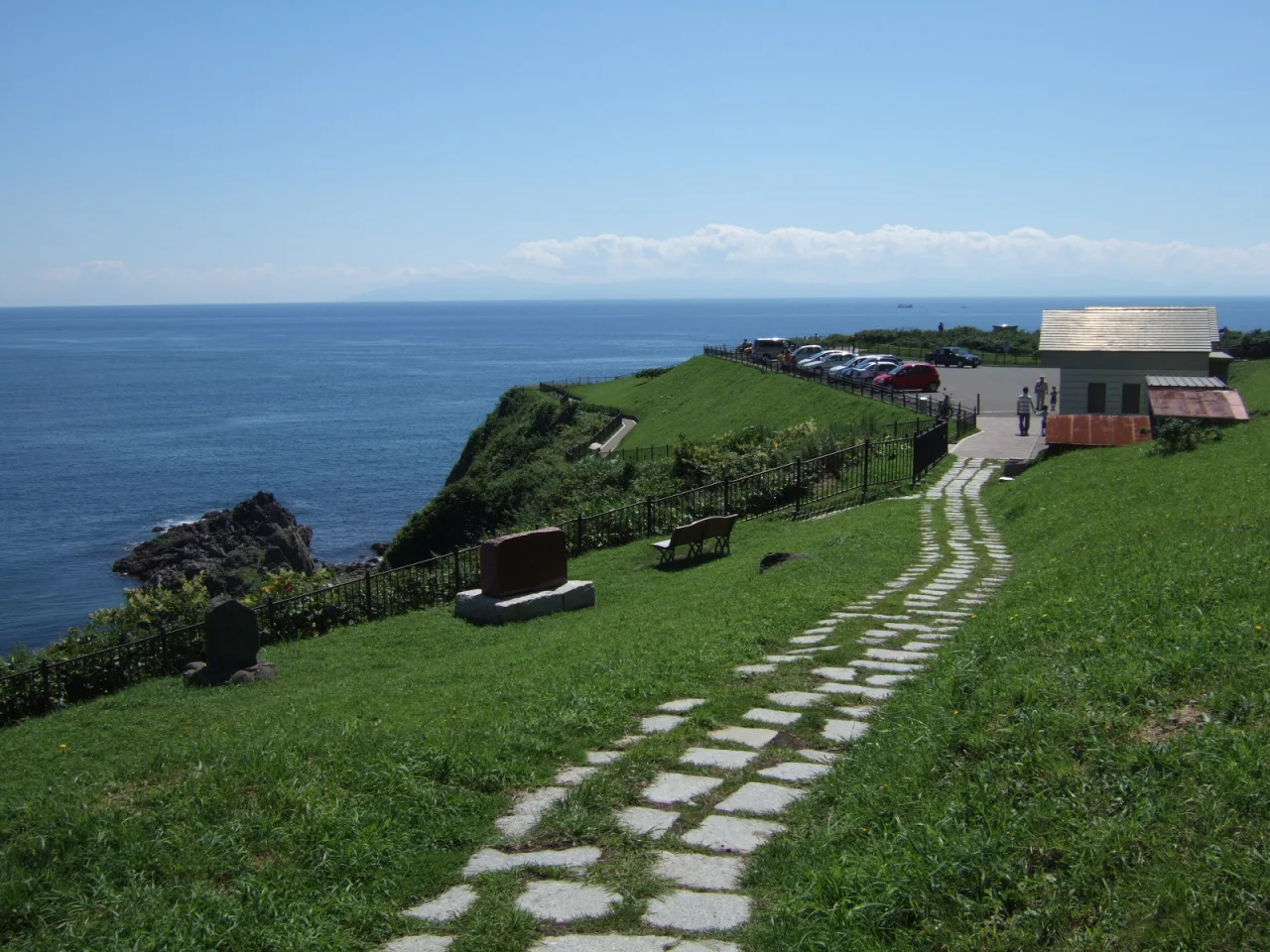
Cape Tachimachi sits on the southeastern tip of Mt. Hakodate, framed by sea cliffs rising roughly 30 meters above the water. Look south across the Tsugaru Strait first; on clear days, you can make out Aomori's Shimokita and Tsugaru peninsulas on the far shore. Pivot north and northeast along the railing toward the city side to see Omori Beach sweeping all the way out to Yunokawa. Even when coastal fog hides Honshu, the rocky shore and sandy curve below often remain sharp enough to reward a short stay.
One corner of the plaza holds Hamanasu Park, named for the pink hamanasu (rugosa roses) that bloom here in summer. To frame the flowers, sea, and distant coast in one shot, find a lower dip in the grassy slope along the marked path to pull the foreground and horizon together. In gusty winds, shooting handheld is far easier to steady than setting up a tripod on the path, and you should wait for a sheltered spot before swapping lenses. Stay inside the railings when photographing the cliffs and surf, shifting angles as you move to the next overlook.
Stone quarried around Cape Tachimachi was used in parts of Goryokaku's fortress walls. Hakodate's official guide notes that the rock here contains plagioclase and hornblende, giving it a distinct striped texture. If you're visiting the cape in the morning and Goryokaku the next day, inspect the exposed cliff rock up close before looking at the star fort's masonry. The headland also carries coastal defense history—an Edo-period artillery battery once watched for foreign ships here, followed by Meiji-era fortifications—so look out over the shipping lane and the mountain's flank with that vantage in mind.
The season dictates your layers and daylight hours, while cloud cover, fog, and precipitation decide whether Honshu appears across the strait. Save the cape for the clearest day of your trip if you want distant coastal shots. Under low cloud ceilings, pair the cape with an indoor stop in the same half-day so you can cut the headland short if visibility drops. When the sea view is crisp but the wind is howling, take in the panorama from the first open railed overlook and head back instead of wandering the grass for extra angles.
Ishikawa Takuboku's Grave, the Yosano Monument, and the Literature Museum
On the way out to the cape, you'll pass the Grave of the Ishikawa Takuboku Family. According to Hakodate's official tourism site, the current monument was rebuilt in 1926 and holds the ashes of eight family members. It faces north and is shaped like a shogi piece—one official explanation notes it was modeled after the Russo-Japanese border markers along Sakhalin's 50th parallel. Since this stretch is an active cemetery, keep pathways and grave access clear while you pause. After reading the inscription, stay on the same road up to the headland, where the open coastline is much easier to take in.
Near the cape stands the Yosano Hiroshi and Akiko Poetry Monument, erected in 1957 to honor Kenzo Okada, a key figure in founding the Hakodate museum. To tell the two poems apart on site, look for Hiroshi's verse mentioning Ikuu Miyazaki and Cape Tachimachi, while Akiko's tanka weaves in Takuboku's manuscripts. Where the cemetery grave speaks to family ties, this monument highlights literary friendships. If companions only came for the ocean view, have them wait at the main plaza so nobody feels rushed at the stones.
Hakodate's tourism guide records one theory tracing the name "Tachimachi" to a Japanese rendering of the Ainu word pius—meaning a rocky perch where fishers waited with harpoons for fish to swim close. Standing at the cliff edge with that origin story in mind, compare the rugged surf and currents here with Hakodate Port's docks on the other side of town. The Bay Area tells the story of merchant ships and brick warehouses; Cape Tachimachi's name and old battery site tell the story of life facing the open strait.
Coming primarily for Takuboku? Pair the walk with an afternoon visit to the Hakodate City Museum of Literature in Suehirocho, about a 1-minute walk from the Suehirocho tram stop. The second floor is dedicated to Ishikawa Takuboku, while the first covers other Hakodate writers. Admission is ¥300 for adults and ¥150 for students and children; hours are 9:00 to 19:00 from April to October and 9:00 to 17:00 from November to March, closed December 31 to January 3. In winter, lock in your museum entry before closing and save the cemetery and cape for midday daylight, tackling both only if your schedule has breathing room.
To avoid an extra tram ride between Yachigashira and the literature museum, exit at Jujigai and walk through town to Suehirocho; in heavy rain or with slower walkers, transfer at Jujigai following the tram system's transfer rules onto Line 5 bound for Hakodate Dock-mae, which reaches Suehirocho at the very next stop. If you're also visiting the Old Public Hall of Hakodate Ward, pick up the two-site combo ticket at either venue (¥500 adults, ¥250 students and children). For the literature museum alone—especially with less than an hour left in the afternoon—stick with a single-site ticket.
Deeply interested in Takuboku and heading to Yunokawa anyway? Save Takuboku Park along Omori Beach for another day. Located in Hinodecho, it's a 1-minute walk from the Takuboku Shokoen-mae bus stop. A seated statue of the poet looks out with the sandy beach behind it, framing Omori Beach and Mt. Hakodate in a single view that mirrors the coastline you saw from the cape. Note that the adjacent Hijikata & Takuboku Roman-kan has closed, so save your indoor literary time for the Suehirocho museum.
Warm Up at Yachigashira Onsen or Visit the Museum at Aoyagicho
Yachigashira Onsen sits about a 5-minute walk from the Yachigashira tram stop at 20-7 Yachigashira-cho. Hakodate's official sightseeing listing puts hours at 6:00 to 22:00 (last entry 21:00), closed the second Tuesday of each month. Entry is ¥490 for adults, ¥150 for ages 7–12, ¥70 for ages 3–6, and free under age 3. Nothing beats soaking here after facing the wind on the cape—pack dry socks and a change of clothes so you can step out refreshed. If you're catching a JR train later, keep changing, walking back to the tram, and waiting time outside your soak window.
The baths feature iron-rich, reddish-brown spring water across indoor pools of varying temperatures, plus an outdoor bath shaped like the five-pointed star of Goryokaku. A first-floor lounge works well as a meeting spot for split groups. Older travelers who want to warm up early can head straight to the onsen while others walk the cape, then regroup back at the bathhouse. Since men's and women's baths are separate, agree on a lobby meetup time before heading in. Even if rain scrubs your cape walk, you can still ride Line 2 straight from Hakodate Station just for the soak and back.
Still have energy after the round-trip walk? Ride one stop back to Aoyagicho and walk roughly 7 minutes through Hakodate Park's main gate to the Hakodate City Museum. Its collection spans coins excavated from the Shinori Site, early treaty-port and Battle of Hakodate artifacts, and regional geology and wildlife specimens. It pairs naturally with the headland's geology, especially when you have just an hour or two—enough for a single museum, but not a full loop up Motomachi's hills.
Last admission at the Hakodate City Museum is 16:30 from April to October and 16:00 from November to March, with doors staying open 30 minutes past last entry. Permanent collection tickets (cash only) are ¥100 for adults and ¥50 for students and children, with free admission on Sundays during regular exhibition runs. Special exhibitions cost ¥300 for adults, ¥200 for university and high school students, and ¥100 for elementary and junior high students. Regular closures fall on Mondays, the last Friday of each month, and December 29 to January 3, plus certain national holidays and exhibition changeover schedules—so don't assume it's an automatic year-end rainy-day backup.
If kids want flat ground to unwind after the cape, put Hakodate Park next on the list. First opened in 1879, the park contains the historic former museum building and a small pay-per-ride amusement area. On rainy days, check signage at the park gates before promising rides; if you're strictly looking for indoor shelter, follow the museum signs straight across the park and watch last-entry times. On sunny days, you can easily do both the cape and the park, just break up the two outdoor stretches with lunch so kids get a real rest instead of marching straight on to Motomachi.
Pairing the Cape with Mt. Hakodate Ropeway on the Same Day
Returning from Yachigashira to Jujigai, walk up Nambu-zaka Slope to the Mt. Hakodate Ropeway base station—about 7 minutes according to the convention bureau, plus time to buy or scan tickets. The cabin reaches the summit in around 3 minutes. While Cape Tachimachi looks straight out to sea from near water level, the summit reveals Hakodate's narrow hourglass isthmus pinched between Hakodate Bay and the Tsugaru Strait. If you have both afternoon and evening in town, explore Motomachi first and ride up later; if you only have daytime hours left and the strait is clear, prioritize the cape first.
The ropeway operator runs winter hours from October 1 to April 19: normal first ascent at 10:00, last ascent at 20:30, and last descent at 21:00. From April 20 to September 30, normal last ascent is 21:30 and last descent is 22:00. Fall maintenance and road restrictions can shift hours, so check the operator's daily service status before heading up for night views. If you need a tram afterward, count backward from a descent that leaves margin for the return ride rather than staying up until the final cabin.
Ropeway fares are ¥1,800 round-trip for adults (¥900 children), or ¥1,200 one-way (¥600 children). Advance digital tickets are round-trip only, valid for 90 days from purchase, and cost the same as walk-up tickets. You can queue directly at the ticket gate with your phone's QR code—though during peak crowds, advance ticket holders still wait in the same boarding line. If you're visiting over New Year's and waiting for one clear evening to go up, hold off on buying until you check summit visibility and same-day operations rather than committing weeks ahead when booking your hotel.
Before climbing Nambu-zaka Slope, check the ropeway's live summit webcam to see whether low clouds have swallowed the city lights—the camera sits right at the top, making it the best go/no-go check before you head up the hill. If twilight is your priority, arrive at the base station early and book dinner for after you come back down; if you just want the illuminated night view, eat in the Bay Area first and ride up within operating hours once the city lights are on.
How to Connect Motomachi or the Bay Area with Only Half a Day
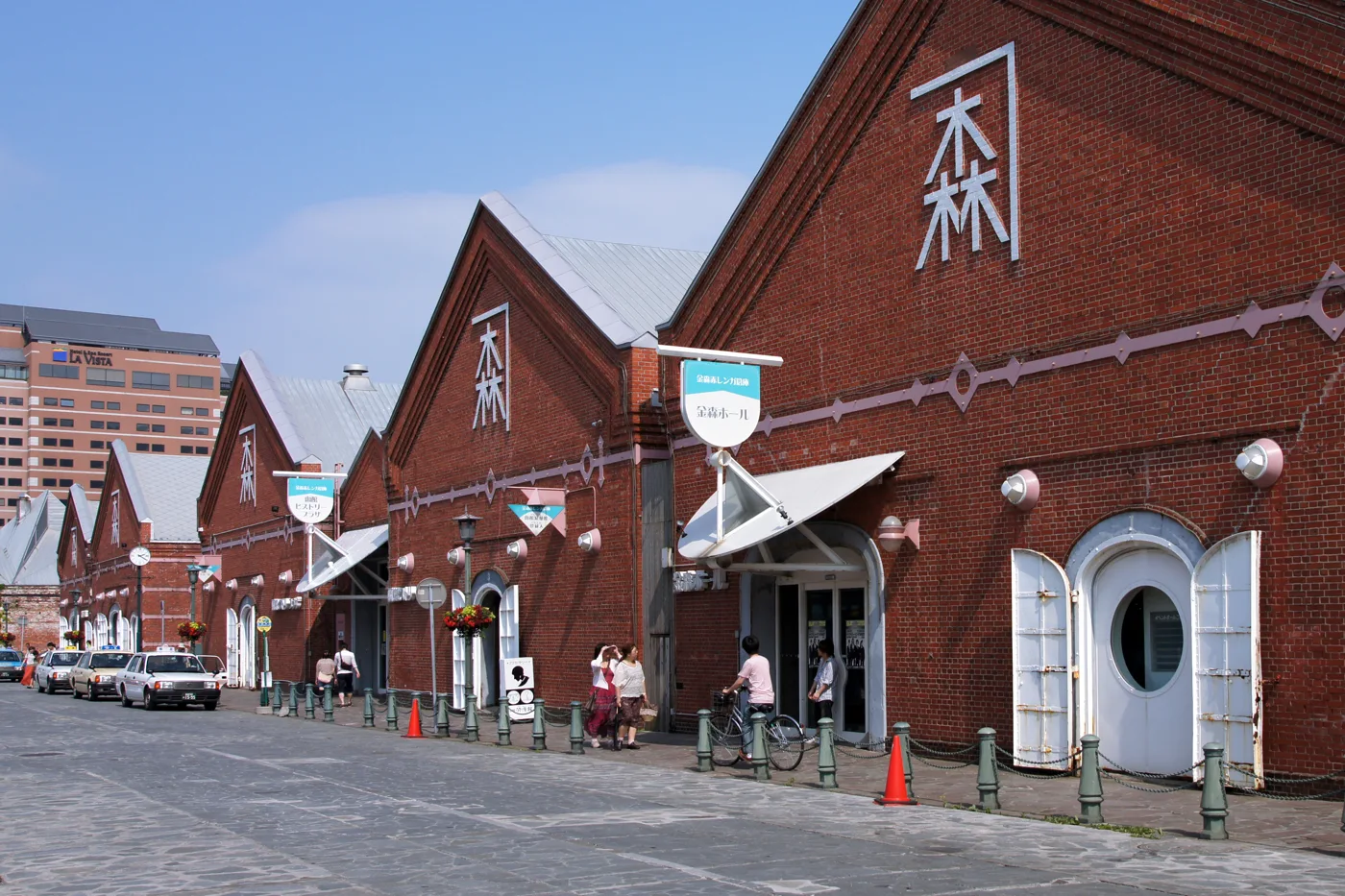
On a clear morning with only half a day to spare, ride the tram from Hakodate-Ekimae to Yachigashira, walk the cape, then take the tram back to Jujigai and have lunch in the Bay Area. From Jujigai, a short walk toward the harbor brings you to Kanemori Red Brick Warehouse, where shops generally open from 9:30 to 19:00 and restaurants keep their own hours. If you have other plans in the afternoon, return straight to the station from the waterfront after lunch—it saves you the climb up to the Old Public Hall and the walk back down Motomachi.
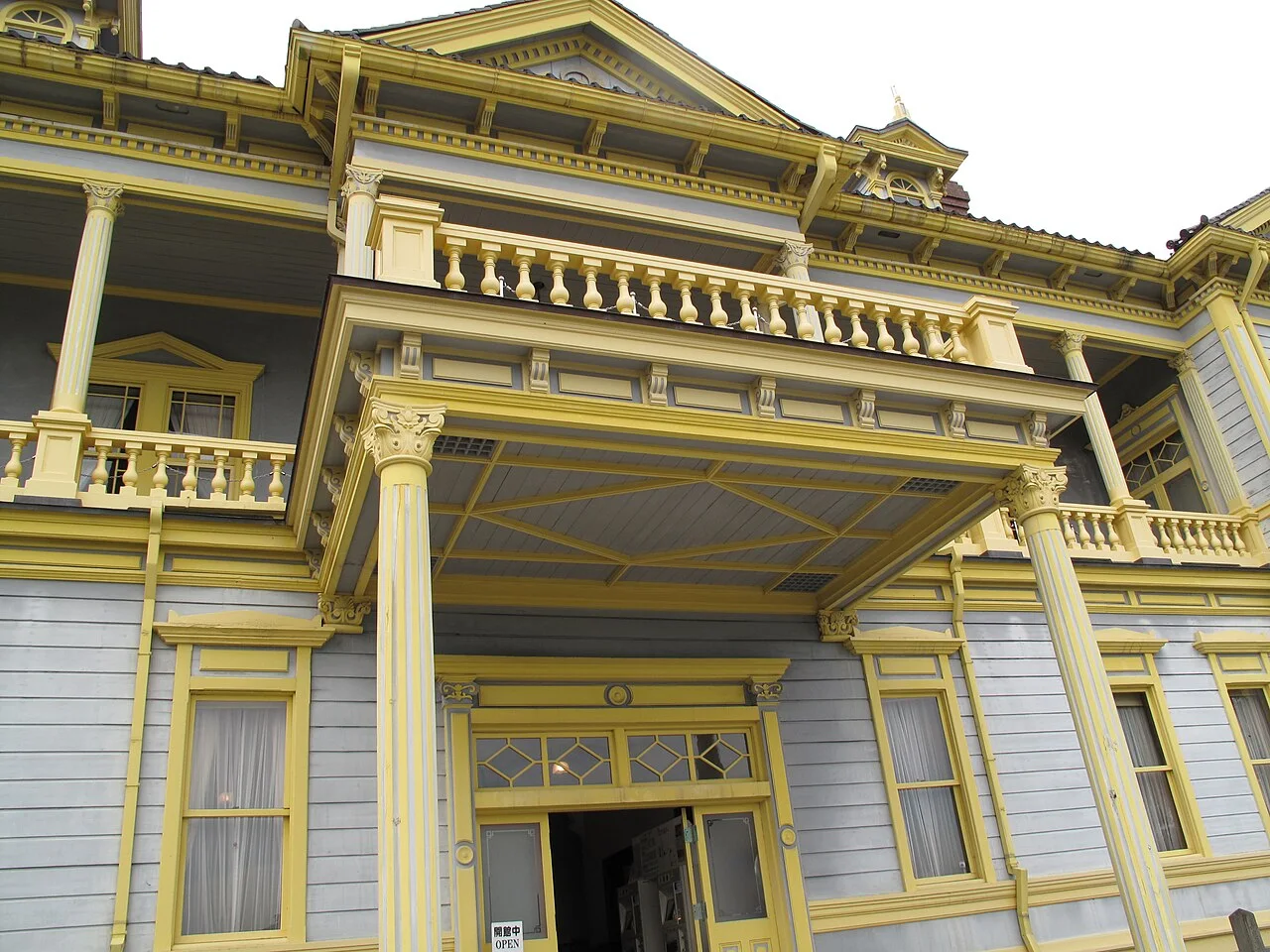
When steady rain stretches from morning into afternoon, duck inside the Old Public Hall of Hakodate Ward first and save Motomachi's streets for a break in the weather. It's about a 7-minute walk from Suehirocho tram stop, or a 3-minute walk from the Kokaido-mae Hakodate Bus stop if you'd rather skip part of the hill. Winter hours run 9:00 to 17:00 (last entry 16:30), with closures from December 31, 2026, to January 3, 2027, plus January 26, 2027. Single admission is ¥300 for adults, ¥150 for students and children, and free for preschoolers.
Though both sit in Motomachi, the Old Public Hall and the Former British Consulate of Hakodate offer very different experiences. The Public Hall is a Western-style building reconstructed after the 1907 fire for civic gatherings and the chamber of commerce, crowned by a grand upstairs ballroom. The Consulate, entered at 33-14 Motomachi, features a restored consul's office, treaty-port exhibits, and a tearoom. From October 1 to December 31, 2026, a section of the grounds walkway on the west side of the Consulate is closed for construction, so follow posted signs after walking up from Suehirocho. Covering both requires extra hillside walking; in pouring rain without a combo pass, pick the one that interests you more.
Planning a late-afternoon visit to the Public Hall between April 1 and October 31? Pay attention to the day of the week: it stays open until 18:00 Tuesday through Friday, and until 19:00 on Saturdays, Sundays, and Mondays, with last entry always 30 minutes before closing. That changes how you sequence a half-day. On weekends you can linger by the strait first and still make the Public Hall afterward, whereas in winter an early-afternoon museum visit often makes more sense while saving the cape for another half-day.
Climbing Motomachi from Jujigai with older travelers? Choose just one historic building and leave afterward from Suehirocho tram stop. If time is tighter still, ride straight back to Hakodate Station from Yachigashira and save Motomachi for the next day. The Public Hall, Museum of Literature, Former British Consulate, and Museum of Northern Peoples share multi-site discount tickets—worth it if you're sure you'll visit two or more—while the Hakodate City Museum in Aoyagicho uses its own separate ticket. Pin exact building names before setting out so you don't climb the wrong end of the slope in the rain.
Visiting in December? Pair a daytime cape walk with the 2026 Hakodate Christmas Fantasy along the waterfront, running December 1–25. Set around the Red Brick Warehouse, the floating Christmas tree lights up around 18:00 alongside fireworks. On opening night it illuminates at 18:00; on all other nights it lights from 16:30, dims briefly at 17:45, and relights from 18:00 to 22:00. Admission is free, and the venue is about a 7-minute walk from Jujigai tram stop. If you also want the Mt. Hakodate night view that evening, lock in one fixed time slot and move the other earlier or to the next day so a ropeway line doesn't make you miss the tree lighting.
New Year's trips call for a different wet-weather backup. The Hakodate City Museum closes starting December 29, while the Public Hall and Museum of Literature close from December 31 through January 3. If you're spending half a day around Yachigashira during those dates, walk the cape and ride the tram line by day, then pair it with open cafes, restaurants, or warm indoor stops based on each venue's year-end holiday hours. On travel days with luggage, collect your bags from your hotel and head straight to the station rather than doubling back down the hill in the evening.
Staying Near Hakodate Station vs. the Bay Area: Which Walk Is Better to Skip?
For an overnight stay with rail connections, staying beside Hakodate Station keeps your bags and train platform in the same spot. JR Inn Hakodate sits right next to the station, with standard check-in at 15:00 and check-out by 10:00. The hotel holds luggage on both check-in and check-out days: drop your bags at the desk if you arrive early, catch the Yachigashira-bound tram right out front, and take the same line back on departure day so you don't haul suitcases twice before boarding your JR train or airport bus. It's the easiest setup if you have an early train out and need tight control over station timing.
If night views, warehouse strolling, and waterfront dinners anchor your trip, base yourself in the Bay Area—properties like La Vista Hakodate Bay sit right beside the Red Brick Warehouse and feature top-floor communal baths and open-air rotenburo pools. By day, hop straight onto the Yachigashira tram at Jujigai, then come back to warm up before heading out for dinner. With a breakfast-inclusive rate, walk the cape after eating; if you'd rather catch clear morning visibility first, leave enough cushion to retrieve your bags—especially on the day you depart from JR Hakodate Station. Choosing between the two areas usually comes down to whether you'd rather shorten your walk home along the harbor at night or your final trip to the train station.
Where you sleep also shapes your rainy-day pivot. Station-area guests caught in bad weather can stash luggage indoors, turn Yachigashira into a pure onsen trip, and wait out the schedule near the station. Bay Area guests can move Motomachi's indoor sights or the Red Brick Warehouse earlier in the day, then hop back on Line 2 at Jujigai for Yachigashira if the skies clear. For a wider look at room types, open-air baths, and whether Yunokawa belongs in your plans, see our comparison of Hakodate hotel areas and onsen stays.
A few useful answers
Do I need a ticket or reservation for Cape Tachimachi?
No—Cape Tachimachi is free to visit and open without reservations. A seasonal kiosk operates in summer, and while the road closes to vehicles in winter, pedestrians can still walk in.
Which Hakodate city tram line goes there?
Take Line 2 bound for Yachigashira and ride to the terminal stop (Y26). Adult one-way fares are ¥270 from Hakodate-Ekimae and ¥250 from Jujigai.
Can I drive to Cape Tachimachi during the 2026–2027 winter?
No. Municipal roads around the cape close to vehicles starting November 9, 2026, at 16:00, with late March 2027 set as the tentative reopening target. Pedestrians can still pass; rental-car drivers should park downtown and ride the tram.
How much time should I allow for the round-trip?
Starting and ending at the Yachigashira tram stop, budget roughly 40 minutes total walking time plus 20 to 40 minutes on the cape, not counting tram wait times. Add extra cushion when taking your time through the cemetery or walking in snow.
What direction does Cape Tachimachi face?
Looking south takes in the Tsugaru Strait—with Honshu's Shimokita and Tsugaru peninsulas visible in clear weather—while looking north and northeast traces the coastline along Omori Beach toward Yunokawa.
Can I take the Mt. Hakodate Ropeway directly from Cape Tachimachi?
No, the ropeway base station is in Motomachi. Walk back to Yachigashira, ride the tram to Jujigai, and walk up Nambu-zaka Slope to the base station.
Where can I soak in an onsen near the cape?
Yachigashira Onsen is about a 5-minute walk from the Yachigashira tram stop. Admission is ¥490 for adults; hours are 6:00 to 22:00 (last entry 21:00), closed the second Tuesday of each month.
Official information and references
Sources used in this guide.
- Hakodate Official Tourism | Cape Tachimachi Access, Name Origin, Monuments, and Facilities
- City of Hakodate | Cape Tachimachi 2026–2027 Winter Vehicle Restrictions
- Hakodate Convention and Visitors Bureau | Cape Tachimachi Views, Parking, and Visiting Info
- City of Hakodate | City Tram Single-Ride and Zone Fares
- City of Hakodate | City Tram Routes, Stop Numbers, and Timetables
- City of Hakodate | Jujigai Tram Transfers and Payment Guide
- City of Hakodate | City Tram 1-Day and 24-Hour Passes
- City of Hakodate | Hakodate Sightseeing Map
- Hakodate Official Tourism | Grave of the Ishikawa Takuboku Family
- Hakodate Official Tourism | Omori Beach and Takuboku Park
- City of Hakodate | Hakodate City Museum of Literature: Takuboku Exhibit, Fares, and Closures
- Hakodate Official Tourism | Yachigashira Onsen Fees, Last Entry, and Holidays
- City of Hakodate | Hakodate City Museum Hours and Admission
- Hakodate Housing and Urban Facilities Public Corporation | Hakodate Park
- Mt. Hakodate Ropeway | Operating Hours and Fares
- Mt. Hakodate Ropeway | FY2026 Mt. Hakodate Summit Road Closures
- Mt. Hakodate Ropeway | Advance Ticket Validity and Boarding Guide
- Mt. Hakodate Ropeway | Summit Live Webcam
- Hakodate Convention and Visitors Bureau | Access to Mt. Hakodate Ropeway Base Station
- Old Public Hall of Hakodate Ward | Hours, Admission, Year-End and Temporary Closures
- Kanemori Red Brick Warehouse | Shop Operating Information
- Hakodate Official Tourism | 2026 Hakodate Christmas Fantasy
- JR Inn Hakodate | Check-In, Check-Out, and Luggage Storage FAQ
- Kyoritsu Resort | La Vista Hakodate Bay Facilities and Onsen
- Former British Consulate of Hakodate | Facilities, Construction, and Year-End Hours
- City of Hakodate | Former British Consulate of Hakodate Opening-Port Memorial Hall
- Kyoritsu Resort | La Vista Hakodate Bay Access and Area Map