Entry to the Old Public Hall of Hakodate Ward is ¥300, a 7-minute walk from Suehirocho tram stop. Covers 2026–2027 winter closures, Meiji dress and hakama rental rates, Motomachi slope routes, and rainy-day museum pairings.
- Region & Focus
- HakodateAttractions
- Reading Scope
- 23 min read · 11 chapters · 5 Q&As
- Official Verification
- 21 official sources checkedUpdated November 22, 2026
- Key Topics
- ItinerariesNeighborhoodsWinter
Chapter Route Map (tap any stop)
- When to Arrive: Hours, Closures, and Costume Timing
- ¥300 Single Ticket vs. Multi-Museum Combo Passes
- Getting There from Hakodate Station, the Bay Area, or Goryokaku
- Two Bus Options and Drop-Offs to Skip the Climb
- Inside the Hall: From the Billiard Room to the Second-Floor Balcony
- Costume Salon: Western Dresses, Hakama, or Outdoor Strolls
- Connecting the Public Hall, Hachiman-zaka Slope, and the Churches
- Which Combo Museum Fits a Rainy Day
- Snow, Footwear, and Indoor Stairs
- Photo Order: Facade, Harbor Views, and Family Portraits
- Where to Head Next: Choosing Your Downhill Route
- Quick Q&A
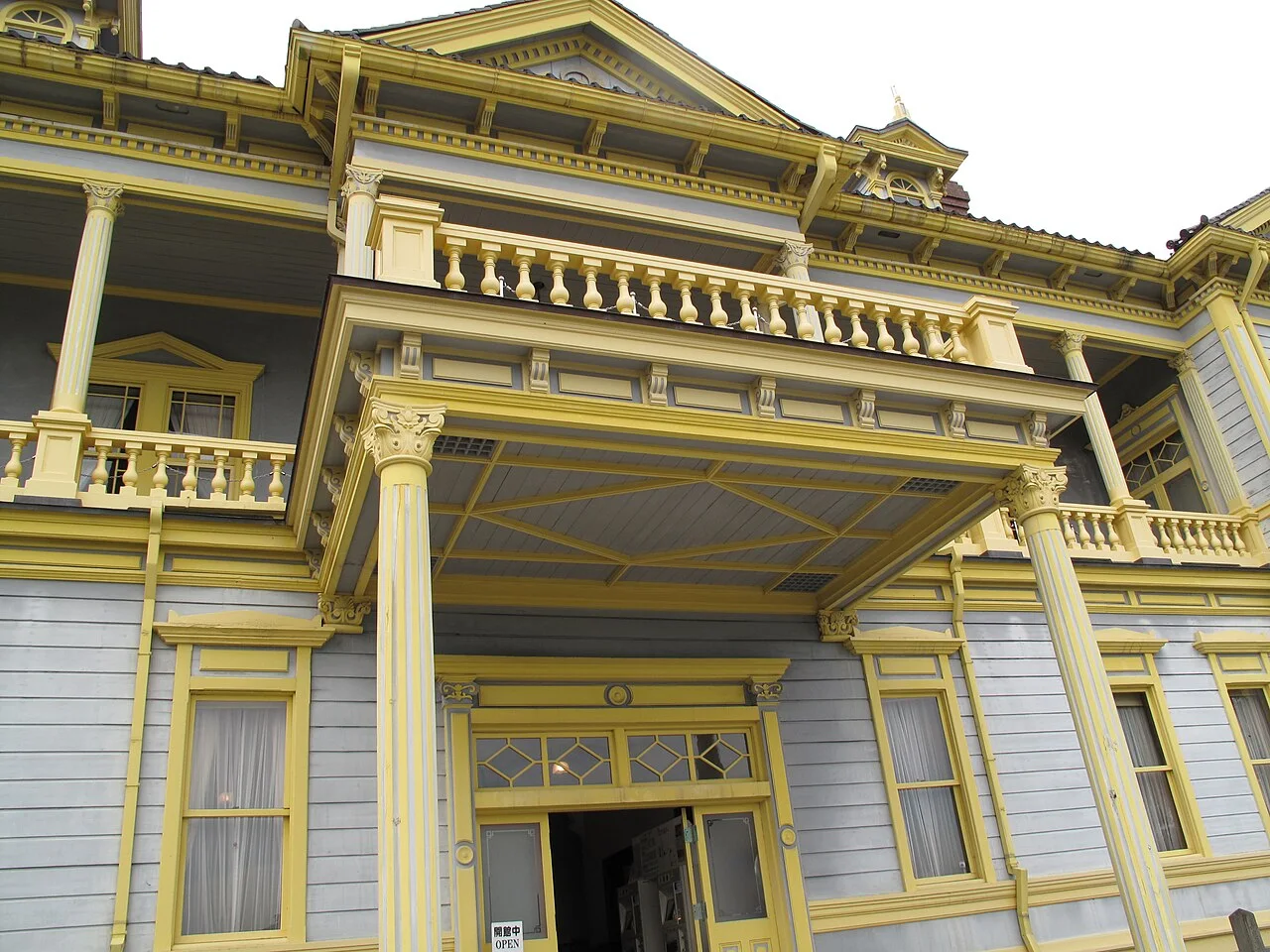
At the top of Motoi-zaka Slope in Motomachi stands the Old Public Hall of Hakodate Ward. It is roughly a 7-minute uphill walk from the Suehirocho tram stop, taking you straight to its blue-gray clapboard facade and pale yellow columns before stepping inside to reach the second-floor balcony overlooking Hakodate Port. Standard admission is ¥300 and covers Meiji-era furniture, the former Chamber of Commerce offices, and the main assembly hall. Give yourself two hours if you only want to see the hall and Hachiman-zaka Slope, or set aside half a day to try on Meiji-style attire, browse the exhibits, and continue to the churches and bay area. In winter when streets get icy, take a bus or taxi to the upper side of the hill and pick a clearer slope on the way down.
When to Arrive: Hours, Closures, and Costume Timing
The hall treats April 1 through October 31 as its summer season, operating 9:00–18:00 Tuesday to Friday and 9:00–19:00 Saturday to Monday. From November 1 through March 31, hours are 9:00–17:00 daily. Last entry is always 30 minutes before closing, meaning you need to arrive by 17:30 or 18:30 in summer and 16:30 in winter. If your evening ends at the Kanemori Red Brick Warehouse or dinner nearby, you can visit the hall later in the afternoon. If costume rental is your main goal, aim for a daytime slot instead, since the rental counter closes earlier than the building itself.
For the 2026–2027 New Year period, the hall closes from December 31 through January 3, plus a full-day maintenance closure on January 26, 2027. Travelers spending only two nights in Hakodate over New Year's should fit the hall in on arrival day or the following morning if arriving by December 30. Anyone in town from January 1 to January 3 can still stroll around Motomachi Park and the nearby slopes to view the exterior. To step inside the assembly hall or rent period attire, push your Hakodate dates back by a day.
For the building alone, budget 40 to 60 minutes to change into slippers, tour both floors, and take in the balcony view. Walking in at 16:15 in winter leaves enough time for a look at the first-floor history display and the second-floor main hall, though arriving before 15:30 gives you room to read the wall panels and watch the restoration videos. Going right at opening is an easy way to avoid bottlenecks, especially in a group where everyone moves at a different pace and you want an unhurried transition to lunch.
In winter, the public hall opens an hour before the costume salon. If you want group photos in Meiji attire, tour Motomachi Park and the exterior facade before 10:00, head inside to change once the counter opens, and read the exhibits after returning your outfit. Visitors skipping costumes can enter straight at 9:00. Whenever the hall closes for New Year's or maintenance, the costume salon, commemorative photo counter, gift shop, and cafe close with it. The hall has also announced that Cafe Jujiya will close for winter from December 28 through March 31, 2027, so plan warm drinks or lunch at the consulate or down in the bay area during those months.
Entry to the Old Public Hall of Hakodate Ward is ¥300, a 7-minute walk from Suehirocho tram stop. Covers 2026–2027 winter closures, Meiji dress and hakama rental rates, Motomachi slope routes, and rainy-day museum pairings.
¥300 Single Ticket vs. Multi-Museum Combo Passes
Single-hall admission is ¥300 for adults, ¥150 for students and school-age children, and free for preschoolers. Groups of 20 or more paying together through one representative receive a discounted rate of ¥240 for adults and ¥120 for students and children. When budgeting for a family, calculate preschoolers, students, and adults separately: junior high school students qualify for the student ticket at the hall, yet pay adult fares on the city tram and adult rates for Western dresses at the costume salon.
Combo passes cover four sites: the Old Public Hall of Hakodate Ward, the Old British Consulate of Hakodate, the Hakodate City Museum of Literature, and the Hakodate City Museum of Northern Peoples. Two adults adding the neighboring consulate on Motoi-zaka Slope would pay ¥600 each separately, versus ¥500 each on a two-site pass, saving ¥200 between them. Three-site adult passes cost ¥720 and four-site passes cost ¥840, while student and school-age passes run ¥250, ¥360, and ¥420 for two, three, or four sites. Decide how many venues you want before paying—all four are walkable from one another, and bigger passes save more money if you leave enough time to read.
If you are sticking to the public hall, Motomachi Park, and church exteriors, a single-site ticket is plenty. If you plan to stop for afternoon tea at the Old British Consulate, budget time and money for tea separately, since the two-site pass only covers the paid exhibition rooms. Anyone renting costumes must also pay the public hall admission first before paying the salon separately. In unpredictable weather, starting with a two-site pass for the hall and one backup museum your group likes gives you more flexibility than buying all four upfront, leaving room to pivot to Hachiman-zaka Slope or the waterfront if the sky clears.
Comparing the two Western-style mansions by theme, the public hall highlights how Meiji-era local society adapted Western architecture for civic life, while the consulate centers on the port opening, diplomacy, and consular life. Since the consulate sits lower down Motoi-zaka Slope, visiting both on the same day works naturally from either the top or the bottom of the hill. To catch the nearby churches in good daylight, start at the public hall, walk along the hillside to Hachiman-zaka Slope and the churches, and save the literature or northern peoples museum at the foot of the slope if you still have time.
| Ticket Type | General (Adult) | Students & School-Age Children |
|---|---|---|
| Single Hall | ¥300 | ¥150 |
| 2-Site Combo Pass | ¥500 | ¥250 |
| 3-Site Combo Pass | ¥720 | ¥360 |
| 4-Site Combo Pass | ¥840 | ¥420 |
| Single Hall Group (20+ people) | ¥240 / person | ¥120 / person |
Getting There from Hakodate Station, the Bay Area, or Goryokaku
Exit JR Hakodate Station to the Hakodate Ekimae tram stop in the station plaza and board Line 5 bound for Hakodate-Dock-mae, getting off at Suehirocho. City transit guidance estimates the trip at roughly 16 minutes total, including a 7-minute walk from the stop, for a ¥250 adult one-way fare. Line 2 bound for Yachigashira also stops along the platform and passes Jujigai, but the two lines split past Jujigai, so wait directly for Line 5 if you want Suehirocho. From the Goryokaku-Koen-Mae area, the one-way adult tram fare to Suehirocho or Jujigai is ¥290.
Once off the tram, follow signs for Motoi-zaka Slope or Motomachi Park and walk uphill. The Old British Consulate and the Perry Monument sit along the same slope, making easy orientation landmarks. For an early start at the public hall, walk past the consulate up to the top edge of the park to enter, then catch the consulate and harbor views on the walk back down Motoi-zaka for the shortest out-and-back loop. For more streetscape scenery, walk along the hillside from the hall to Hachiman-zaka Slope and the churches, then descend via Daisan-zaka or Nijukken-zaka.
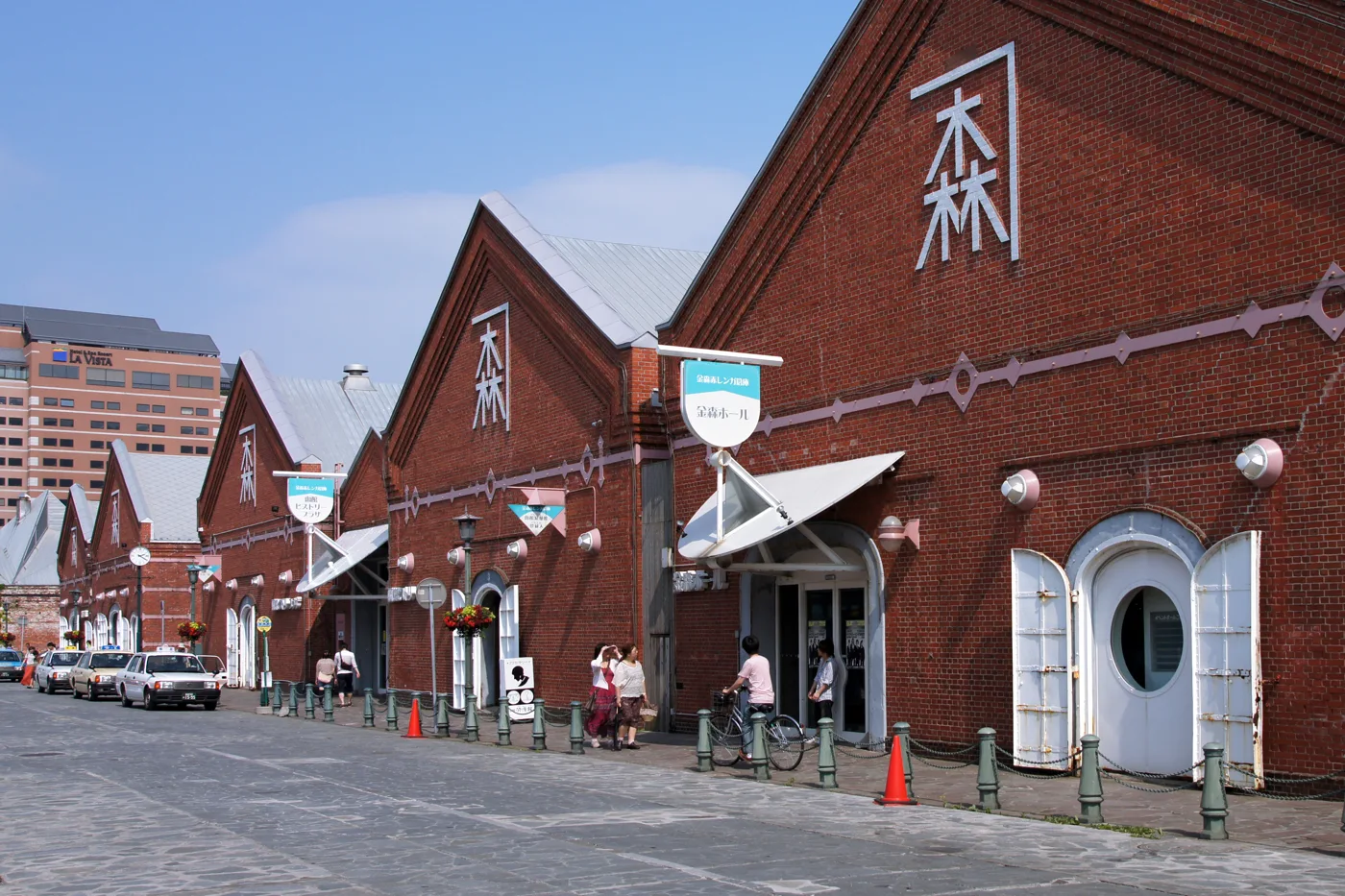
Suehirocho also connects easily with the Kanemori Red Brick Warehouse. Guests staying near the warehouses can walk along the bay toward Motoi-zaka Slope and only climb once inside Motomachi, avoiding a trip back to Hakodate Station just to catch a tram. If you are pushing a stroller or someone in your group has knee trouble, take a bus or taxi up the hill and choose an easier slope down later in the day. Staying near Hakodate Station makes the return simple from either Jujigai or Suehirocho, and you can leave bags at the hotel for a half-day outing on checkout afternoon. For neighborhood trade-offs and transit access, see the Hakodate hotel area comparison.
Both the city tram and Hakodate Bus accept nationwide IC transit cards. A simple round trip between Hakodate Ekimae and Motomachi totals ¥500 on the tram, which is cheaper than the ¥800 adult 1-day tram pass. The day pass only pulls ahead on multi-leg days—for instance, Hakodate Ekimae to Suehirocho (¥250), onward to Goryokaku-Koen-Mae (¥290), and back to Hakodate Ekimae (¥270), totaling ¥810. If you might take a bus uphill instead, add up your planned rides first. Note that the 1-day tram pass covers trams only; Hakodate Bus sells its own separate passes.
Two Bus Options and Drop-Offs to Skip the Climb
City guidelines point to the Hakodate Bus bound for Koryuji Temple, which drops you at Kokaido-mae about a 3-minute walk from the entrance. Alternatively, take the sightseeing loop bus Route 3 (Motomachi & Bay Area Shuttle) from bay 4 at Hakodate Ekimae and get off at Motomachi Park-mae. Route 3 loops past the Hakodate Morning Market, waterfront hotels, and red brick warehouses before climbing through Jujigai, the ropeway station, Motomachi, and the Old British Consulate to the park. Trams are faster from JR Hakodate Station early in the morning, while Route 3 saves transfers if you are staying along the bay.
From November 9, 2026 through March 31, 2027, Hakodate Bus sightseeing routes run on a winter timetable, with Route 3 priced at ¥250 for adults and ¥130 for children. Winter notices include route maps and timetables in case peak-season events trigger detours. Because Route 3 runs in a loop, boarding at the park to return to Hakodate Station takes you via Tohama Pier, the bay area, and waterfront hotels. If you have a dinner reservation or a JR train to catch, walking down Motoi-zaka to the tram or calling a cab from outside the hall is faster.
By taxi from JR Hakodate Station, the city estimates about a 10-minute ride—worth considering for three or four people traveling with a stroller to skip the steepest climb. Drivers heading into Motomachi should note the hall has no dedicated parking lot; the closest paid spaces are at the Motomachi Sightseeing Parking Lot. If you plan to browse the Kanemori Red Brick Warehouse or have dinner downhill afterward, parking near the bay saves you from moving the car twice.
Inside the Hall: From the Billiard Room to the Second-Floor Balcony
After the Great Hakodate Fire of 1907 destroyed the town hall and Chamber of Commerce, the replacement Old Public Hall of Hakodate Ward was completed in September 1910, combining Chamber offices and reception spaces on the first floor with community gathering rooms. According to the hall, roughly ¥50,000 of the approximately ¥58,000 construction cost was donated by local merchant Teppei Soma. Knowing that history makes it clear why the layout pairs intimate reception parlors with a grand hall large enough for concerts. Designated a National Important Cultural Property in 1974, the building reopened on April 26, 2021 following a major preservation restoration.
Change out of your street shoes at the first-floor entrance and start in the Billiard Room, which once held two pool tables and now houses display panels explaining how the 1907 fire led to the 1910 building. Continue to the former Small Dining Room for video screenings; if you want to see how a wooden cultural property is restored, the tourism association highlights the preservation documentary shown inside. Families split between photo-takers and history readers can meet at the foot of the stairs before heading up together to the main hall and harbor view.
One wing preserves the Imperial Bedroom, Sitting Room, and Dining Room with restored period furniture in its original arrangement. In 1911, the future Emperor Taisho stayed in the newly finished hall while visiting Hokkaido as Crown Prince, and the plumbing and bathing fixtures installed for his stay are part of the tour route. Kids tend to spot the differences right away—from the clawfoot Western bathtub and domed bathroom ceiling to the exposed brass frame of the bed.
Inside the roughly 6-meter-high main hall—once a venue for concerts and lectures—look from one end of the room to the other and notice the tall side windows and hardwood floors that let staff rearrange seating for different events. On the second-floor balcony, look for the leaf-carved column capitals before peering past the railing over the Motomachi slopes, Hakodate Port, and, on clear days, the Yokotsu Mountains. The central porte-cochere and balcony shoot best from below for close-up trim details, while stepping back into the open space in front frames the symmetrical facade and gable together.
If you are pressed for time with just 30 minutes before a train, go straight to the main hall and balcony, then spend your last few minutes in the first-floor Billiard Room. For the full architectural story, start in the ground-floor exhibits, head upstairs, and finish with the restoration panels before stepping out. The exterior was repainted in later years until a Showa-era survey uncovered the original blue-gray and yellow palette. Keeping those two original colors in mind helps you spot the paint transitions along window frames, railings, and eaves instead of leaving with only a single wide shot from the park.
Costume Salon: Western Dresses, Hakama, or Outdoor Strolls
Inside the building, Hakodate Haikara Ishokan rents Meiji-style day dresses, evening gowns, and Japanese hakama outfits. A 30-minute indoor Western dress rental costs ¥3,500 for junior high schoolers and adults, or ¥2,500 for elementary schoolers and younger, with optional hair accessories or props for ¥1,000. Indoor Japanese attire also runs 30 minutes at ¥4,500 per person for both adults and children, covering arrow-feather yagasuri kimono patterns, hakama, or student-style shosei outfits with Japanese hairpins and small accessories included. Sizing starts at age 3, though the shosei style is not available for children. Because Japanese attire costs ¥2,000 more than a child's Western dress, check the dress racks together first if your kids have no strong preference for hakama.
To wear rental attire outside into Motomachi Park or in front of the hall, choose the outdoor Japanese attire plan available from May through October for ¥8,000 per person (60 minutes), usable outdoors only or combined with indoor photos. Outdoor boots or setta sandals cost an extra ¥2,000 to rent, and the salon suspends outdoor plans in rain, snow, or poor weather. Standard indoor Western and Japanese plans stay inside the public hall, where 30 minutes across the main hall, tall windows, and open galleries already provide plenty of backdrops. The extra time and fee for an outdoor plan only pay off if everyone in your group wants open-air street shots.
Rental fees are cash-only and do not include hall admission. Outfits are arranged by size for you to pick your style, with no try-ons and no hair or makeup services offered under salon rules. Staff help fasten back zippers and hard-to-reach closures, and your timer starts once you are dressed. Factor in extra time for picking an outfit, lining up, changing, and returning items—block 60 to 90 minutes on your schedule for a 30-minute rental, and book meals after you finish the building. If you have a fixed train departure, tour the first floor first and skip the rental if the counter queue eats into your buffer.
From April through October, the salon runs 9:00–17:00 with last intake at 16:00; for the 2026–2027 winter season, hours are 10:00–16:00 with last intake at 15:00. It closes every Tuesday and Wednesday in January and February, and pauses daily from 12:00 to 13:00 on open days during those two months. Since the public hall may be open on a Tuesday morning when the salon is closed, plan to tour the exhibits instead or shift your costume day. Walk-ins are taken first-come, first-served and intake may close early when busy or booked by groups; larger parties wanting a dedicated slot should submit the group booking form on the salon's website.
Your rental card lists your return time, so shoot your must-have group portraits first and spend leftover minutes by the nearest windows or staircase. Keep cameras put away inside the changing area and gift shop, and save wide exterior facade shots for after you exit into the park. Eating, drinking, and smoking are restricted in rental outfits aside from necessary hydration—have children use the restroom and grab a snack beforehand so your entire rental window goes to exploring and photos.
Connecting the Public Hall, Hachiman-zaka Slope, and the Churches
To stay up on the hillside, exit the public hall and follow the upper road toward Hachiman-zaka Slope, an easy 6-minute walk on Hakodate's official Motomachi route. From the top of Hachiman-zaka, tree-lined rows and historic facades frame a straight drop down to the harbor, with the church district just a little farther along. Motoi-zaka and Hachiman-zaka play different roles: Motoi-zaka leads up to the public hall and consulate, while Hachiman-zaka gives you that clean linear vista straight to the sea. Pause at the top for photos before heading on toward the churches so you don't end up climbing back up from the bottom.
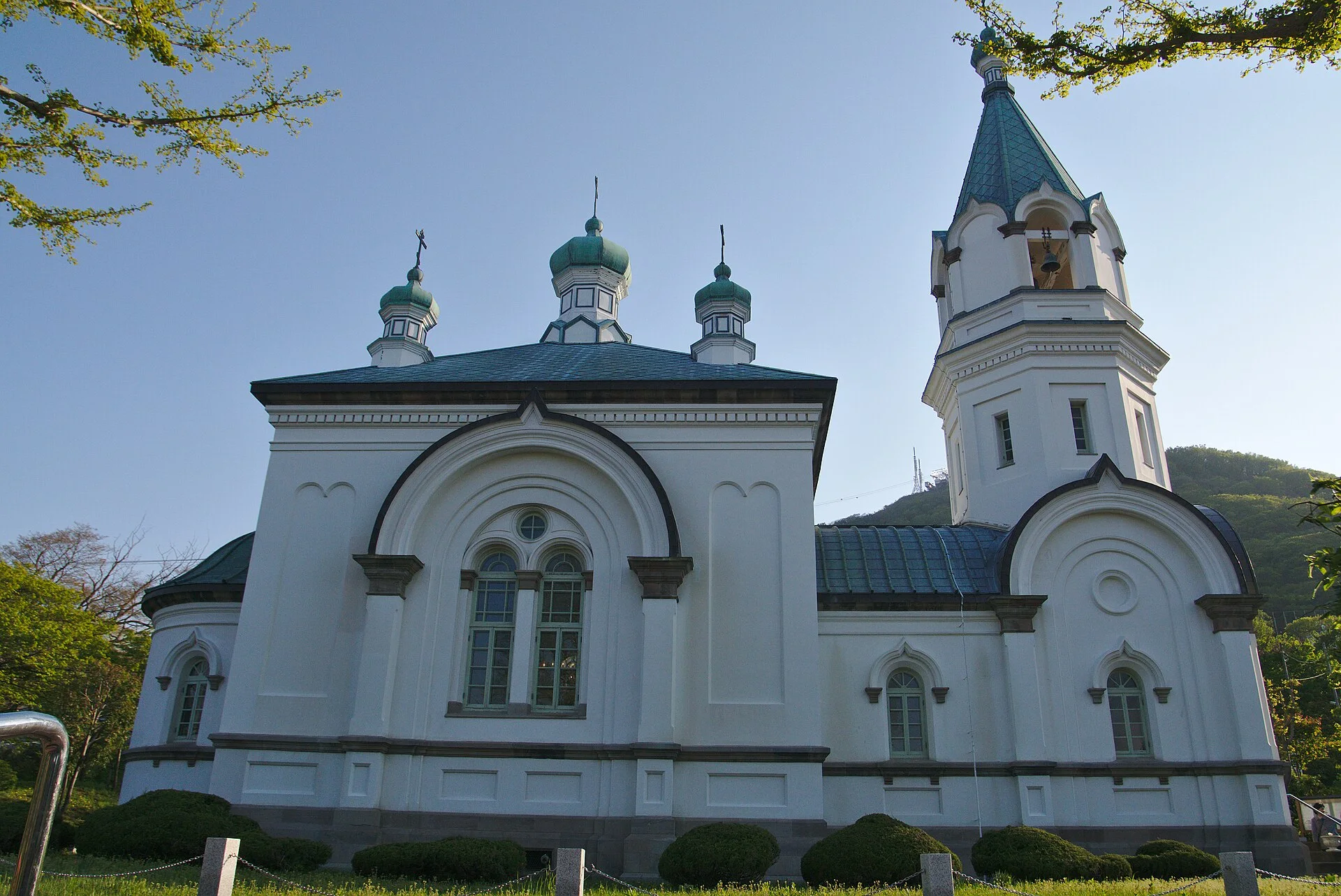
About two minutes past Hachiman-zaka Slope stands the Hakodate Orthodox Church, easy to spot by its white walls, green roofs, and bell tower (the current sanctuary dates from 1916). Continue toward Daisan-zaka Slope for the pointed spire of the Motomachi Catholic Church and the cross-shaped roofline of Hakodate St. John's Church. All three sit close together for an easy exterior loop on foot, while stepping inside depends on each church's opening hours and service schedule. If your group only wants street photos here, put that saved time into the public hall interior or a coffee stop downhill.
A relaxed morning itinerary starts at Suehirocho, gives roughly an hour inside the public hall, continues across Motomachi Park to Hachiman-zaka Slope and the churches, and descends toward Jujigai or Meiji-kan. Hakodate's official Motomachi walking course from Suehirocho to Jujigai covers about 1.5 km and takes 2 to 3 hours including museum stops. Add a costume rental or the consulate exhibits and the loop naturally stretches past midday, landing you in the bay area a bit later. If you have a fixed lunch reservation, stick to church exteriors and browse the waterfront shops afterward.
With only a single morning before a train, center your visit on the public hall and Motomachi Park and go up and down via Motoi-zaka without pushing all the way to Jujigai. If you plan to tie in Mt. Hakodate at night, heading from the hall toward the churches puts you right on track for the Mt. Hakodate Ropeway lower station at 19-7 Motomachi. When sunset lines up with the evening queue, keep track of your wait time—and if you need to pick up luggage before leaving town, store bags near your morning departure point rather than backtracking from Jujigai through Motomachi.
Which Combo Museum Fits a Rainy Day
In light rain, walk straight down Motoi-zaka Slope from the public hall to the Old British Consulate of Hakodate. Built in 1913—three years after the public hall—the surviving building recreates consular offices alongside exhibits linking Commodore Perry's arrival to the port's opening. Architecture fans can stick to just this short two-stop stretch and follow it with an unhurried afternoon tea at or near the consulate. In warmer months, the consulate garden is part of the visit; if a downpour rules out the lawn, spend that extra time inside the port-opening galleries.
If you prefer a quiet indoor museum to read at your own pace, make the Hakodate City Museum of Literature your second stop. Head back down Motoi-zaka toward Suehirocho tram stop, where both the literature museum and the Hakodate City Museum of Northern Peoples sit along the tram street. The literature museum focuses on Takuboku Ishikawa and writers tied to the port city, while the Northern Peoples museum showcases Ainu and other northern cultures' clothing and everyday tools—a sharp contrast to the trade history at the public hall. If your companions have seen enough historic mansions, pairing the hall with Ainu crafts keeps the day varied.
To fit three venues into one day, start at the public hall on the hillside, stop for a meal as you head down, and hit the literature and northern peoples museums along the tram line below—picking your closing order based on closing times and which tram stop you want afterward. When traveling with older relatives or young kids who tire of going in and out of buildings, shelter in the public hall and consulate during the heaviest rain and take a tram or taxi straight back to the hotel. Even between adjacent museums, the walk from door to door is exposed to the hill wind, so raincoats keep a group moving more smoothly than wrestling umbrellas.
Mid-December visitors using combo passes need to watch maintenance closures. The Northern Peoples museum closes December 8 and December 12–19, 2026, while the Literature museum closes December 14, 2026—so on a rainy December 14, pair the public hall with the Old British Consulate for a two-site pass. In January 2027, the Literature museum closes January 13 (head to the Northern Peoples museum instead), and you can visit the Literature museum on January 20. On regular winter days, both downhill museums close at 17:00, so if you reach the public hall in the afternoon, pick just one museum below to avoid rushing.
When heavy rain and sea wind hit at the same time, swap the church walk for indoor shopping at the Kanemori Red Brick Warehouse along the bay. Low winter clouds often cut off visibility from Mt. Hakodate and the upper slopes, whereas the waterfront still offers close-up views of the harbor and lit warehouses—with an easy tram ride back from Jujigai after dinner. To map out your afternoon between Motomachi and evening viewpoints, check the Hakodate city and seasonal night guide for nighttime transit options.
Snow, Footwear, and Indoor Stairs
Motomachi slopes mix car lanes, sidewalks, and shop entrances, and plowed snow often leaves patches that look like wet black asphalt until you step onto thin black ice. Stick to cleared pedestrian paths, and swap the longest climbs and descents for a bus or taxi whenever traction feels sketchy. Both Motoi-zaka and Hachiman-zaka drop toward the lower harbor district; after taking photos at the top in winter, follow the flatter upper ridge streets to your next stop to skip an icy descent. Tackle steep slopes before sunset while you can still read the pavement, and switch to motorized rides on steep shortcuts after dark.
Street shoes come off at the entrance—slippers are provided, though the hall notes uneven thresholds and steep staircases inside and lets guests with unsteady footing or children skip the slippers. Remove snow cleats or crampon-style traction covers before stepping inside and pack them away. Bring well-fitting socks for kids, and keep one hand free for the stair rail when moving between floors. Consolidate folding umbrellas, bags, and coats before the threshold so you aren't blocking the entryway queue while juggling gear.
Strollers are stored by staff at the entrance foyer, meaning little ones must walk or be carried inside. Diaper-changing tables are available in the first-floor women's restroom and the accessible multi-purpose restroom. Parents with toddlers can tour the first-floor Billiard Room and check the restrooms before deciding whether to tackle the stairs, or take turns going up to the balcony while one adult rests downstairs. Even if stairs are off the table, reaching the entrance from Motomachi Park still rewards you with the facade and harbor view, letting non-climbers pair the ground-floor rooms with the park.
The building has no air conditioning and modest winter heating. Dress in light layers during early winter so you can peel off heavy coats indoors, and visit early in the morning during midsummer before stopping somewhere cold for drinks. The hall designates the first-floor Large Dining Room as a seated water-drinking area alongside an occasional cafe space on select operating days—note that room when touring with older relatives so part of the group can rest there while others visit the second floor.
Photo Order: Facade, Harbor Views, and Family Portraits
The exterior deserves two distinct angles: one from Motomachi Park showing how the hall anchors the top of the slope, and a second directly out front framing the pale yellow columns and second-floor railings. On overcast days, bright white sky can wash out exposure—frame tighter between the columns or include more of the painted clapboard wall to bring out the blue-gray and yellow tones. For harbor scenery, pair one wide panorama from the public hall's balcony with one street-level perspective down Hachiman-zaka Slope to capture how the mansion sits above the city.
Casual photography and video are welcome along the public tour route, except inside the gift shop and costume salon. Leave tripods packed away indoors, and make sure nobody leans over the balcony railing for a shot. If you want group portraits in rental attire inside the main hall, pick a spot along the tall side windows or a room corner where everyone fits without blocking the walkway, and pause when other visitors pass through. Remember that the rental clock starts once you are dressed, so dial in your camera settings before changing rather than keeping your group waiting at every doorway.
Commercial, anniversary, and wedding shoots follow the hall's photography guidelines, with dedicated written rules posted for wedding photography. For multi-generational family trips where someone only wants a single group shot outdoors, take it in front of the hall before splitting up inside, then grab a second harbor-backdrop shot in Motomachi Park after returning costumes. Because Hachiman-zaka's viewpoint meets an active roadway, shoot from the sidewalk edge and keep space clear for pedestrians while taking turns.
Where to Head Next: Choosing Your Downhill Route
With only an afternoon left to soak up Hakodate's port-opening streets, walk down Motoi-zaka Slope past the Old British Consulate and continue past Suehirocho to the Kanemori Red Brick Warehouse. That single downhill line links the public hall's facade, diplomatic exhibits, and historic waterfront brick warehouses without backtracking. Ending at the warehouses makes it easy to browse shops, grab dinner nearby, and hop on the tram back to your hotel. If Goryokaku is on tomorrow's schedule, keeping this half-day strictly inside Motomachi and the bay area saves an extra cross-town transit leg.
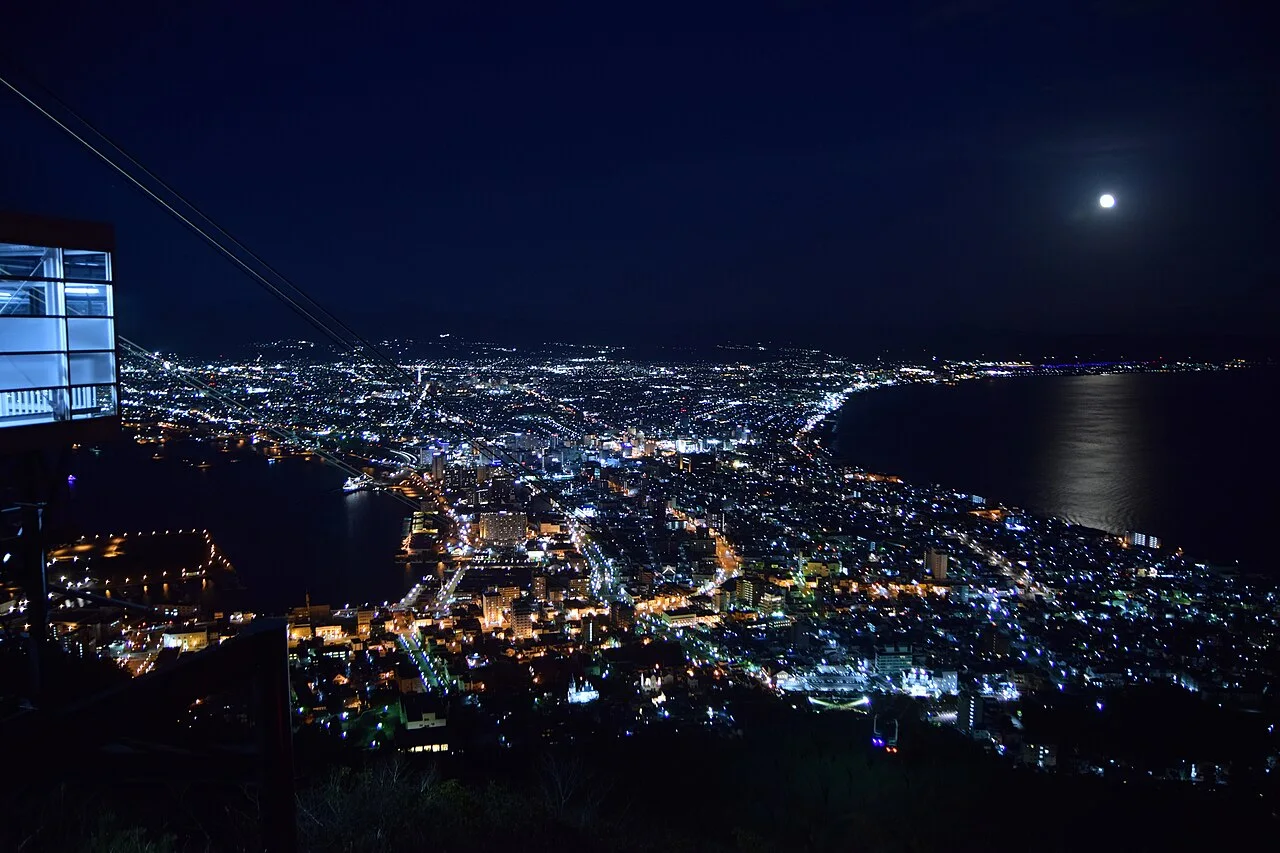
For a one-day Hakodate sprint, cover the station area or Goryokaku in the morning, head up to the public hall in the afternoon, walk past the churches to the Mt. Hakodate Ropeway lower station, and finish with the night view. Note that the winter Mt. Hakodate summit bus is not running for the 2026 winter season, and Ropeway Shuttle Bus Line 2 suspends service whenever the ropeway stops operating. Official regular adult ropeway fares are ¥1,800 round-trip and ¥1,200 one-way—take a round-trip ticket when riding up and down in winter. Check the summit live camera before lining up; if low clouds block the panorama, stay down along the bay instead.
Travelers staying near the waterfront can let the weather dictate the order of the day. If the morning opens clear over the harbor, climb Motoi-zaka right away and still have time for Goryokaku in the afternoon; if it is raining, ride up to the public hall and consulate first and save the bayfront for after dinner. Arriving in Hakodate around dusk? Push the public hall to the next morning and stick to dinner and a stroll by the warehouses on night one. If you are transferring from Sapporo and aiming for same-day entry, add tram wait time and the uphill walk onto your JR arrival time—an arrival around 14:00 usually leaves enough room before closing, though winter costume intake stops at 15:00, making the next morning much better if you want to dress up.
A few useful answers
How do I get to the Old Public Hall of Hakodate Ward?
From Hakodate Ekimae in front of JR Hakodate Station, take tram Line 5 bound for Hakodate-Dock-mae to Suehirocho and walk about 7 minutes uphill. Alternatively, take the Hakodate Bus bound for Koryuji Temple to Kokaido-mae and walk about 3 minutes.
How late is the public hall open in winter?
From November through March, the hall stays open until 17:00 with last admission at 16:30. It is closed December 31, 2026 through January 3, 2027 for New Year's, and all day on January 26, 2027 for maintenance.
Does the costume salon accept credit cards?
No, Hakodate Haikara Ishokan accepts cash only, and rental fees are separate from hall admission. A 30-minute indoor Western dress rental costs ¥3,500 for junior high schoolers and adults or ¥2,500 for elementary schoolers and younger; 30-minute indoor Japanese attire is ¥4,500 per person.
Is the costume salon open on winter Tuesdays?
The salon closes on Tuesdays and Wednesdays throughout January and February, and pauses daily from 12:00 to 13:00 on open days in those two months. Last intake in winter is 15:00.
Can I leave a baby stroller at the public hall?
Yes, staff store strollers in the entrance foyer. Inside, expect door thresholds and steep staircases; diaper-changing tables are located in the first-floor women's restroom and the accessible multi-purpose restroom.
Official information and references
Sources used in this guide.
- Old Public Hall of Hakodate Ward | Hours, Admission, and Access
- Old Public Hall of Hakodate Ward | Winter Opening Hours Notice (November 2026 - March 2027)
- City of Hakodate | Old Public Hall of Hakodate Ward Facilities & Access
- Old Public Hall of Hakodate Ward | Floor Guide
- Old Public Hall of Hakodate Ward | History of the Public Hall
- Old Public Hall of Hakodate Ward | Visitor FAQ
- Old Public Hall of Hakodate Ward | Photography Guidelines
- Old Public Hall of Hakodate Ward | Costume Salon Hours, Intake, and Outdoor Rules
- Hakodate Haikara Ishokan | Current Price List and Terms of Use
- Hakodate Haikara Ishokan | Rental Process
- Hakodate City Tram | Section Fares
- Hakodate City Tram | 1-Day Passes and Combo Tickets
- Hakodate Bus | 2026-2027 Winter Sightseeing Routes
- Hakodate Bus | Motomachi & Western District Bus Stops
- Hakobura (Hakodate Official Travel Guide) | Motomachi Walking Course
- City of Hakodate | Old British Consulate of Hakodate
- Hakodate Foundation for Culture and Sports | Hakodate City Museum of Literature
- Hakobura (Hakodate Official Travel Guide) | Hakodate City Museum of Literature Exhibits
- Hakodate Foundation for Culture and Sports | Hakodate City Museum of Northern Peoples
- Mt. Hakodate Ropeway | Operating Hours and Fares
- Hakobura (Hakodate Official Travel Guide) | City Museums and Museum of Northern Peoples