The Mt. Hakodate Ropeway costs ¥1,800 round-trip for adults. Compare the ropeway, mountain bus, and winter night tour bus, time your ascent around sunset, and plan dinner and your tram ride back.
- Region & Focus
- HakodateAttractions
- Reading Scope
- 16 min read · 10 chapters · 5 Q&As
- Official Verification
- 28 official sources checkedUpdated November 22, 2026
- Key Topics
- First tripItinerariesWinter
Chapter Route Map (tap any stop)
- Go Up Before Sunset, or Wait Until Later?
- Trams and Buses to Sanroku Station
- Buying Ropeway Tickets and Checking Last Departures
- Skipping the Ropeway Line? Check If the Summit Road Is Open
- 2026-2027 Winter Road Closure, Maintenance & the Night View Bus
- Check the Live Camera and Wait Times Before Going Up
- Navigating the Rooftop Deck, Plaza & Isaribi Park
- Eat First in Summer, View First in Winter: Adjusting by Season
- Getting Back to Hakodate Station, the Bay Area, or Yunokawa
- Low-Level Alternatives for Fog, High Winds, or Snow
- Quick Q&A
If it is your first time seeing the Mt. Hakodate night view and you want to watch dusk fade as the city lights flicker on, reach the summit before sunset. If you only care about seeing the full carpet of lights, heading up roughly an hour after the night view forms is usually much more relaxed than chasing sunset. The ropeway is ¥1,800 round-trip for adults and takes about 3 minutes from Sanroku Station to the summit. With the summit road closed to vehicles for winter from November 9, 2026 through April 12, 2027, build your transit plan around the ropeway first and then decide how you will reach its base.
Go Up Before Sunset, or Wait Until Later?
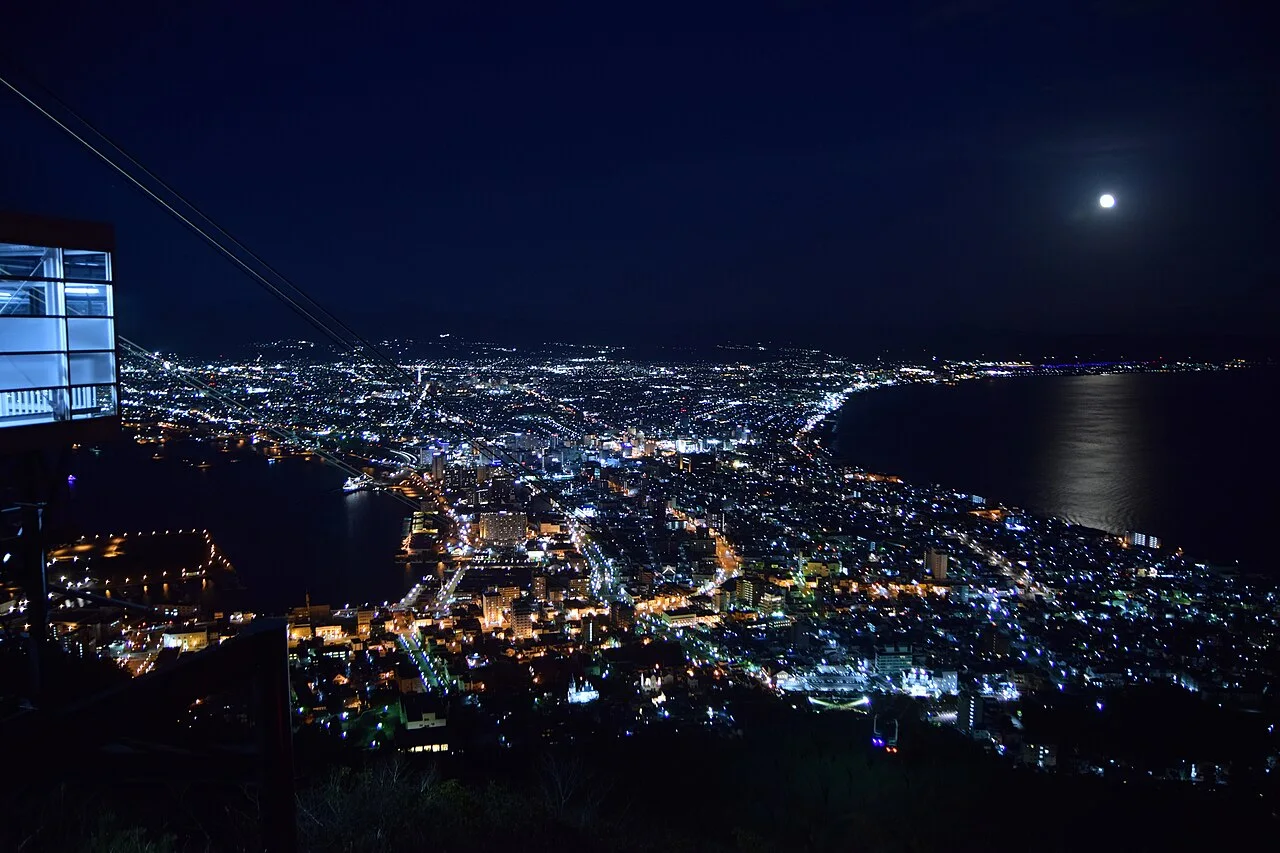
Looking down toward the city from the 334-meter summit, Hakodate Bay sits to your left and the Tsugaru Strait to your right, squeezing the urban grid into a narrow waist between two coastlines. That hourglass shape is easiest to read in daylight, the sea and sky still separate cleanly right after dusk, and later on the illuminated streets trace the outline even more sharply. To catch all of those light transitions in one visit, treat sunset as the time you want to already be standing at the top. Schedule meeting up with family, walking up the hill, or buying tickets before that.
Hakodate's official tourism site pegs the start of the full night view at about 20 to 30 minutes after sunset. Using the ropeway's posted schedule for November 22, 2026 as an example, sunset is around 16:12 and full night view conditions begin around 16:42. If you want photos of the city shifting into dusk, aim to arrive at Sanroku Station around 15:00, since boarding lines can start forming roughly an hour before sunset. Being inside the cabin means missing part of the transition, so if streets are already dimming while you are still in line, shift your goal to the full night view.
If you just want the blanket of lights, have dinner in the bay area first and aim for Sanroku Station around 17:45, sticking with that same November example. According to the operator, cabins and observation decks typically thin out about an hour after the night view sets in compared with the initial dusk rush. Winter gets dark early, leaving plenty of viewing time even with a later ascent. In summer, sunset comes much later; if dinner stretches toward 21:00, work backward from your target downward departure so you leave enough buffer to walk to the summit boarding platform without rushing.
Visitors chasing changing sky colors should anchor their schedule to sunset, while anyone wanting less standing around should anchor to their downward trip. The later approach usually works better if your accommodation includes dinner, someone in your group gets cold easily, or you have an early train the next morning. Decide in advance how many minutes you are willing to wait in line, then make the final call at the base using the live wait-time updates. If you switch to eating first at the last minute, note your latest turnaround time before leaving the base so dinner does not eat up your remaining round-trip window.
The Mt. Hakodate Ropeway costs ¥1,800 round-trip for adults. Compare the ropeway, mountain bus, and winter night tour bus, time your ascent around sunset, and plan dinner and your tram ride back.
Trams and Buses to Sanroku Station
After arriving at JR Hakodate Station, walk to the Hakodate-Ekimae tram stop and board Route 2 bound for Yachigashira or Route 5 bound for Hakodate Dock-mae, getting off at Jujigai, which both lines serve. The fare is ¥210 for adults and the ride takes about 10 minutes. From Jujigai, it is roughly a 10-minute walk uphill to Mt. Hakodate Ropeway Sanroku Station at 19-7 Motomachi, Hakodate. Walking up from Jujigai via Nanbuzaka Slope gets steeper the closer you get to the base station. If you are carrying luggage or walking on refrozen snowmelt, build in extra time based on your group's pace.
To skip the uphill climb, afternoon and evening Route 2 shuttle buses depart from Bus Stop 4 at the JR Hakodate Station bus terminal, costing ¥280 one-way for adults and reaching Ropeway-mae in about 11 minutes. Schedules shift by operating season; the 2026-2027 winter timetable runs from November 9 through March 31. If you plan to take this bus back to the station at night, check the return stop timetable first, as the ropeway descent and the bus back to Hakodate Station run on separate schedules.
In winter, Route 2 does not depart Hakodate Station until 16:50, arriving at Sanroku at 17:01, and the last return bus leaves the base at 19:35, reaching Hakodate Station at 19:46. That timetable has two practical consequences. In early December, if you want to catch dusk around 16:00, take the tram or a taxi on the way up. If you head up later, decide upfront whether you need that last shuttle back and allow time to queue for the downward ropeway. If you miss it, you can walk back down to Jujigai for the tram or grab a taxi; taking Route 2 just from Jujigai up to Sanroku costs ¥250 for adults and ¥130 for children.
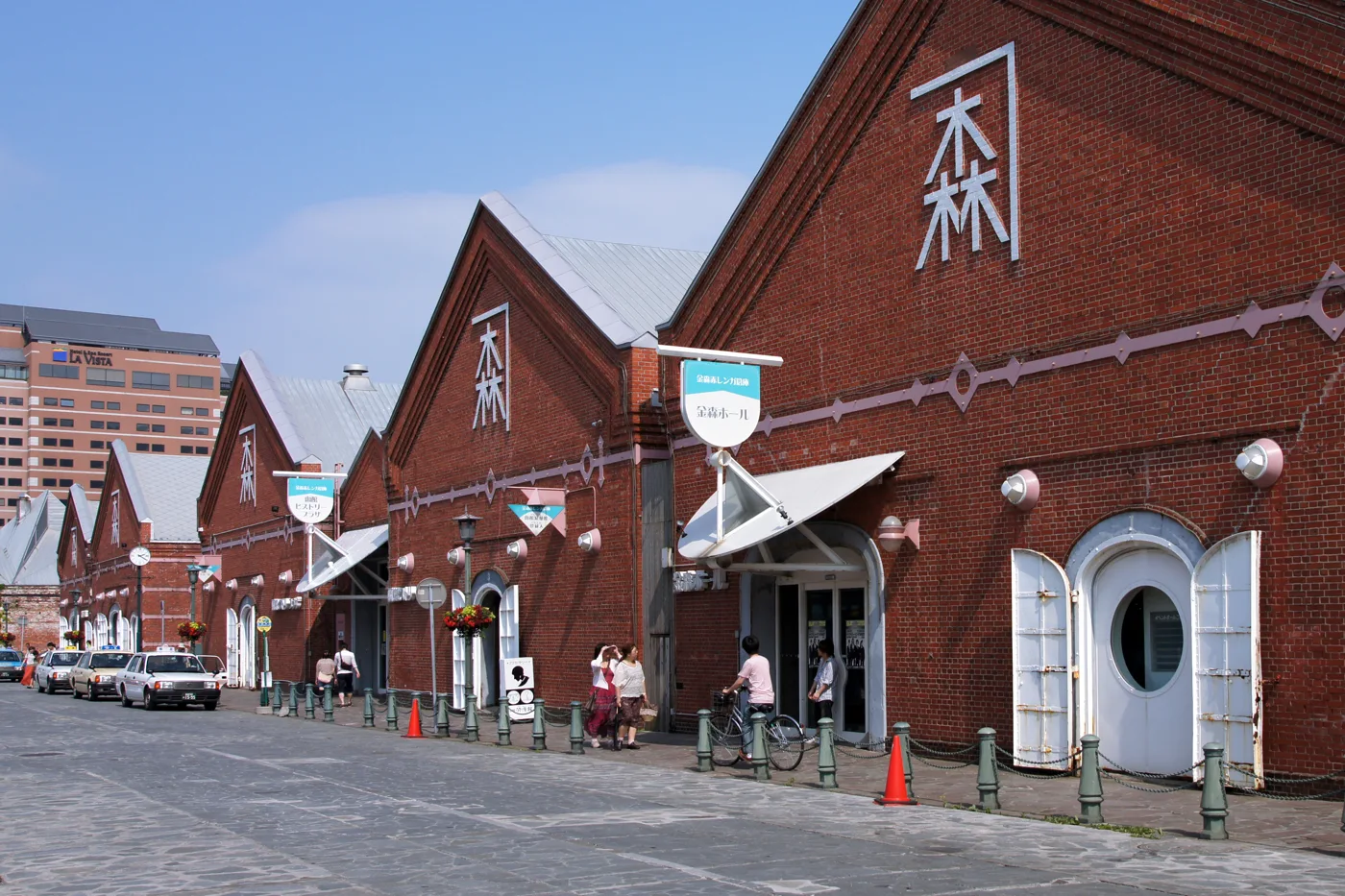
If you are exploring Motomachi during the day, look at Route 3, the Motomachi & Bay Area Shuttle. It also leaves from Bus Stop 4 at Hakodate Station, taking about 15 minutes to reach Ropeway-mae for ¥250 per adult. Riding this up lets older travelers start at the top of the slope and stroll downhill through Motomachi's historic streets afterward. If you are waiting until night to go up, touring the waterfront first works nicely too: walking from the Kanemori Red Brick Warehouse toward Jujigai flows naturally, and you can hop on a bus at the foot of the hill if needed. Both Route 2 and Route 3 drop off right at Sanroku Station for the ropeway transfer.
Combined 1-day or 2-day tram-and-bus passes are valid on both Routes 2 and 3, as are compatible transit IC cards. Because several sightseeing routes share Bus Stop 4 outside the station, check the route number and destination sign on the front of the bus before boarding. If you flag down a bus along the way near Hakodate Meiji-kan or Jujigai, ask the driver "Ropeway-mae?" before getting on so you do not mix up the base shuttle with a seasonal route headed all the way to the summit.
| Option | Drop-off Point | Fare & Travel Time |
|---|---|---|
| City Tram Route 2 or 5 | Jujigai, then ~10 min walk to Sanroku Station | ¥210, ~10 min by tram |
| Hakodate Bus Route 2 | Ropeway-mae | ¥280, ~11 min |
| Hakodate Bus Route 3 | Ropeway-mae | ¥250, ~15 min |
| Mt. Hakodate Mountain Bus (Route 1) | Mt. Hakodate summit (suspended in winter) | ¥700, ~30 min in smooth traffic |
Buying Ropeway Tickets and Checking Last Departures
If you plan to ride the ropeway both ways, buy a round-trip ticket. Standard adult fares (junior high school age and older) are ¥1,800 round-trip and ¥1,200 one-way; elementary school children are ¥900 round-trip and ¥600 one-way. Infants aged 0 to 2 ride free. Each adult may bring one preschool child aged 3 or older for free, with any additional preschool children charged the child fare. A family of two adults and one elementary student pays ¥4,500 round-trip for the ropeway, plus whatever transit you use to reach the base. At the Sanroku ticket counter, general visitors can pay by credit card or compatible transit IC cards.
When you are sure you will take the ropeway both ways, you can buy round-trip e-tickets via Webket, valid for 90 days from purchase. Once your confirmation email arrives, distribute the QR codes to everyone in your party. If only one person has a phone, print out each QR code ahead of time or exchange them for paper tickets at the station vending machine. E-tickets scan directly at the ticket gate, though you still join the same boarding line during busy periods. If you just arrived in Hakodate, cannot see the summit clearly, and have a flexible schedule, waiting until you check visibility and your group's energy at the station is just as easy.
Regular service starts at 10:00 with departures roughly every 15 minutes, increasing to every 5 to 10 minutes during peak crowds. From April 20 through September 30, the final ascent is typically at 21:30 and the final descent at 22:00; from October 1 through April 19, the final ascent is typically at 20:30 and the final descent at 21:00. Ticket gating closes 1 minute before departure. In autumn and winter, if you are aiming for the 20:30 final ascent, the operator requires ticket purchases to be completed by 20:28 at the latest. That leaves very little time at the top, so go up earlier if you want to reach the rooftop deck, take photos, or use the elevator with older companions.
The 3-minute ride time only covers the cabin moving between stations. If you have dinner reservations or a train to catch later, check the live upward and downward wait times on the official website first. Going down also requires walking from the viewing deck to the boarding platform, then walking back to Jujigai or waiting for a bus at the base. It is completely normal on the same evening for the ride up to be smooth while the ride down backs up. Families with kids should locate the departure lobby as soon as they reach the summit before stepping outside, giving anyone who wants to head in early a clear meeting spot.
Skipping the Ropeway Line? Check If the Summit Road Is Open
When the summit road is open and the mountain bus is running, you can take Route 1 directly from Bus Stop 4 outside JR Hakodate Station to the summit for ¥700 per adult and ¥350 per child. It passes through the bay area and Jujigai, taking around 30 minutes without traffic. Despite having multiple stops along the way, the uphill bus is pickup-only en route, and the downhill bus from the summit is drop-off-only. Boarding at JR Hakodate Station gives you a much better shot at getting on than waiting at busy mid-route stops, and on the way down you can choose an exit stop close to your hotel or restaurant, including La Vista Hakodate Bay-mae.
Route 1 accepts Hakodate Bus's dedicated Kanpass 1-day pass and compatible transit IC cards. Note that combined city tram-and-bus 1-day or 2-day passes do not cover the mountain bus, so you must pay separately. A round-trip bus fare for adults totals ¥1,400, or during the open road season you can ride the bus one way and the ropeway the other for ¥1,900 combined across two single tickets—just ¥100 more than a round-trip ropeway ticket. That split works well if you want a direct bus ride from Hakodate Station to the summit and plan to walk from Sanroku into Motomachi or the bay area afterward, as long as you align your tickets and descent timing so you do not have to double back.
Evening road restrictions also depend on vehicle type. Under Hakodate City's 2026 notice, private cars and rental cars are prohibited from driving up the summit road from 17:00 to 22:00 between April 17 and September 30, and from 16:00 to 21:00 between October 1 and November 8. Even if you drive up earlier in the afternoon, you must drive back down before the restriction window begins, as parking at the summit is not allowed during restricted hours. Authorized commercial buses and taxis may still use the road when it is open. If you plan to drive a rental car up in 2027, check the city's annual road-regulation calendar and verify both the spring reopening date and evening cutoff hours separately.
If driving into Motomachi, set your GPS to the Mt. Hakodate Sanroku Tourist Parking Lot and transfer to the ropeway at the base. The operator's parking map lists two lots near Sanroku, starting at ¥300 for the first hour and ¥150 for each additional 30 minutes, and neither lot allows cars to wait in line at the entrance for a space to open. If arriving at peak night-view hours with older passengers, drop them off at a legal pullover instead of circling narrow streets for parking, or take transit straight from your hotel to the base. On your first visit, save the summit lot and the Sanroku lots separately in your maps app so you pick the right destination for that day's rules.
2026-2027 Winter Road Closure, Maintenance & the Night View Bus
Hakodate City's scheduled winter closure for all vehicles runs from 11:00 on November 9, 2026 until 11:00 on April 12, 2027. During this window, neither the mountain bus, tour buses, nor taxis can take passengers to the summit, though taxis can still drop off at Sanroku Station. Hakodate Bus's winter notice confirms Route 1 is suspended for the season while Route 2 runs in tandem with ropeway operations. If high winds force the ropeway to suspend service, Route 2 will not get you up the mountain either, so pivot straight to Motomachi or the bay waterfront.
While the city's vehicle closure notice allows pedestrians on the road, separate construction closures apply to hiking trails. Hakodate City lists the Shiomiyama trail as closed from October 26 through early December 2026, parts of the Old Mountain Trail closed from early November through December 28, and localized work on several other paths. If you want to hike in winter, plan it as a daytime trek using the city's trail construction map to pick open sections, and wear gear suited for snow and ice. For a first-time night view visit, taking the ropeway both ways makes timing far easier; if you find a long descent queue after viewing, stay inside the station and follow staff instructions.
The ropeway's 2026 statutory maintenance shutdown ran from October 20 through November 8. Normally travelers can use the mountain bus or taxis while the road is open during maintenance, but on November 8 snow forced the road to close and the summit observatory stayed shut all day. When planning a late-autumn trip, cross-check the ropeway maintenance schedule, road notices, and that day's observatory status together. For autumn 2027, consult the operator's annual maintenance notice before locking in your dates.
If you want pickup from Yunokawa Onsen or designated hotels near Hakodate Station, look into the reservation-only Hakodate Yakei-go Night View Bus. Per the operator's schedule, starting November 9, 2026 the tour switches to riding the ropeway up the mountain, and from January 2027 onward it operates only on select dates. Booking the winter tour bundles hotel pickup, commentary, and illuminated Motomachi street views into one trip; if the ropeway suspends for weather, follow that day's tour adjustment notice. Check your boarding and drop-off stops before booking, as selecting Yunokawa Onsen on either end triggers the Yunokawa fare tier. If you are staying in the bay area and want full control over how long you stay at the top, buying regular ropeway tickets yourself is usually simpler.
The winter brochure lists fares of ¥3,000 for adults and ¥2,000 for children from the Hakodate Station area, and ¥4,000 for adults and ¥2,500 for children from Yunokawa Onsen. At Hakodate Station, the Yakei-go boards at Bus Stop 12 at 19:25, separate from Stop 4 used by local city routes. According to the brochure, the tour does not run from December 30, 2026 through January 3, 2027, and from January 4 through March 31 operates on Fridays, weekends, national holidays, and the days before holidays—double-check the exact calendar dates when booking. During the Christmas event period, the tour includes a drive-by view of the festival site from the bus window, so plan separately if you want to be on the ground for the 18:00 fireworks.
Hakodate Bus's second-half fiscal 2026 notice states that if zero reservations are received by three days before an operating date, that departure is canceled. On days confirmed to run, bookings can be made online via DohNa!! until noon the day of departure, and by phone afterward. If the night view is your top priority, pick your date and stops early. No refunds are issued for passenger cancellations or if bad weather blocks the summit view once the bus has departed. If you have two available nights and the forecast looks unstable, taking the ropeway independently makes it much easier to switch evenings.
Check the Live Camera and Wait Times Before Going Up
Even when it is dry at street level, low clouds can still blanket the summit. Before heading to Jujigai, open the live camera on the ropeway's official website and check whether both coastlines are visible. If the shorelines are crisp despite distant haze, you will still get a clear city silhouette. If the feed shows mostly white fog and you have a second evening in town, shift your visit to the other night. When patchy clouds are drifting past, watch the stream for a few minutes and decide based on how long you are willing to wait at the top.
That same status page lists live upward and downward wait times alongside crowd levels for both the rooftop observation deck and Isaribi Park. Hakodate City's congestion map also displays conditions at nearby spots like Jujigai. When you are short on time, verify visibility on the live feed first, then factor in queue and return travel time. If the view is clear but the rooftop deck is packed, heading to Isaribi Park or delaying your ascent is far more practical than switching to another access route at the last minute.
The operator's crowd guide identifies roughly an hour before sunset as the point when lines start building. About 30 minutes after sunset, once the full night view appears, the building and rooftop hit peak congestion, with peak wait times exceeding 30 minutes going up and over an hour coming down. Use these published peak patterns to see where your evening schedule has wiggle room. If you have a 19:00 dinner reservation and are still at the summit at 17:45 while the downward wait shows one hour, either join the return queue right away or move your reservation early.
When it rains, check ropeway operations and summit visibility separately. If the operations box shows a suspension due to high winds or other conditions, stay indoors and switch to a backup plan. If the ropeway is running normally and the live feed still shows the coastlines, visitors who only want the night lights can wait until dark before walking to the platform, cutting down time spent exposed outside. If you are pressed for time, skip waiting for clouds to clear and enjoy the waterfront lights at ground level, where your return trip is much easier to predict.
Navigating the Rooftop Deck, Plaza & Isaribi Park
The classic panoramic view is from the rooftop observation deck, which frames both coastlines in a single sweep. The ropeway cables stretching down the mountainside, the harbor on the left, and the darker sea add natural depth to the frame. If you want to photograph the transition from sunset to city lights, orient yourself as soon as you reach the roof. The sun sets in a different direction from the main city panorama, so leave yourself room to move between railings rather than staying locked in one spot.
When the roof gets crowded, drop down to the 2nd-floor Summit Plaza or head out from the 1st floor to the Isaribi Park viewing area. The official site tracks crowd levels separately for the rooftop deck and Isaribi Park, making it easier to pick a spot with breathing room for your group. As people ahead of you step away, you can ease closer to the rail. Because the lights spread along the curving bay, even angled side views let you frame the harbor or the ropeway station in the foreground. If companions start getting cold, designate the departure lobby as your meetup point so photographers can step back outside alone.
Inside the summit building, the 1st floor houses the departure lobby, information desk, coin lockers, and a nursing room. The 2nd floor has a sit-down restaurant, souvenir shop, takeout counter, and accessible restroom, while the 3rd floor features a tea lounge. The restaurant keeps its own dining hours and seating rules; if you want to dine overlooking the night view, pick a meal slot on the restaurant page first and plan your ascent around it. For a quick hot drink, check the takeout counter's closing time rather than assuming it stays open until the final ropeway down.
Wheelchair users can take the elevator at Sanroku Station to the boarding platform and transfer via the summit elevator to the rooftop deck, with station staff available at both ends to assist. Accessible restrooms are located on the 1st floor at Sanroku and the 2nd floor at the summit, with nursing rooms on the 3rd floor at Sanroku and the 1st floor at the summit. When Jujigai's uphill slope is covered in snow, taking the shuttle bus or a taxi to Sanroku avoids a tough outdoor push. On busy nights, ask staff about the route as soon as you enter so you can hit restrooms, elevators, and the easiest-access viewing area smoothly.
To capture the coastlines on a smartphone, take a wide-angle shot while there is still twilight in the sky before zooming in on the brighter downtown core. Tuck your elbows against your torso when tapping the shutter instead of holding your phone out over the railing. When shooting through glass, step close, cup a hand beside your lens to block interior reflections, and leave a tiny gap between the lens and the pane. In winter, pack your camera or phone inside your bag before stepping back into warm indoor air to minimize condensation on a cold lens. When the deck is packed, stick to handheld shots—leaving walkway space matters more than setting up a full-size tripod.
If a child falls asleep while waiting, ask staff ahead of time which elevator to use so whoever is carrying them has less walking to do. Both Sanroku and the summit flag wait times of 20 minutes or longer as the threshold where queues may spill outdoors. Pack gloves and hats near the top of your bag so you can put them on right before stepping outside. Traveling with a pet requires a carrier or pet stroller that fully encloses the animal's body inside both stations and on the ropeway, while certified guide dogs, service dogs, and hearing dogs are permitted to accompany their handlers.
Eat First in Summer, View First in Winter: Adjusting by Season
Winter evenings arrive early. Seasonal data on Hakodate's tourism site puts sunset around 16:05 on December 1, shifting to about 16:50 by February 1 and 17:30 by March 1. Copying a December timetable later in winter can put you at the summit way too early. Once your travel dates are set, build your schedule off the daily sunset and night-view times shown on the live camera page. For winter twilight views, pair a daytime walk through Motomachi's historic buildings—starting from the Old Public Hall of Hakodate Ward toward Sanroku—and head up before dusk.
In July, couples or small groups focused purely on the illuminated skyline can eat an early dinner first and time their ropeway ride around that day's late sunset. If you want the full transition from daylight to dark, eat before sunset and take care of water and restroom stops as soon as you reach the top so you are not scrambling right as the sky dims. Sea fog can roll in after dark and obscure everything except the nearest harbor shore; if that happens, stroll the waterfront after coming down and keep a second evening open as a backup.
In autumn, daylight fades noticeably earlier week by week, and the ropeway switches to its shorter winter hours on October 1—keeping the same fixed dinner time across early and late autumn produces completely different results. Early October often lets you catch dusk before dinner, while late-autumn trips need to be scheduled around the annual multi-week maintenance shutdown. During spring's transition from winter closure to road reopening, anchor your itinerary to the ropeway schedule first and verify whether Route 1 is running before assuming an open road means mountain buses are operating.
Winter winds at the summit are brisk, making a warm hat, gloves, and grippy shoes far more useful than carrying an extra camera lens. Layers that feel fine walking around town lose heat quickly when you stand still on the rooftop waiting for dusk. Duck back indoors between short stints outside until the street lights reach full brightness. With older travelers, young kids, or anyone sensitive to the cold, go up after dark has already settled so you are not compounding outdoor waiting time for the lights with the wait for a downward cabin.
Getting Back to Hakodate Station, the Bay Area, or Yunokawa
If you are staying near JR Hakodate Station, reaching Sanroku Station before 19:35 in winter lets you catch the Route 2 bus back, or you can walk down to Jujigai and ride a Yunokawa-bound tram to Hakodate-Ekimae. Check the weekday or weekend timetable first, and verify the destination sign on the approaching tram covers your stop. If your summit queue runs close to the final ropeway, decide your backup ride from Sanroku to your hotel ahead of time; because you still have to wait, walk, or take a taxi from the base, avoid booking a tight JR train transfer right afterward.
Visitors staying near the Kanemori Red Brick Warehouse can walk down from Sanroku through Jujigai straight toward the harbor. That gives you an easy pace for dinner while the waterfront and streets are still lit up. Do any souvenir shopping before heading up the mountain, as Kanemori's retail shops generally close at 19:00 while restaurants keep separate hours. If part of your group stays down at the harbor, pick a clear meeting point like the Meiji-kan or a specific main entrance at Kanemori—and specify which side of the building—or meet indoors if it is snowing so early arrivals have a warm place to sit.
If you are staying in Yunokawa Onsen on a half-board plan, work backward from your ryokan's dinner service window. The tram ride from Jujigai toward Yunokawa takes roughly 30 minutes and costs ¥260 for adults, plus walking time to your inn. Coming down during the post-sunset rush usually bottlenecks at the summit descent line. If your ryokan enforces a strict kaiseki dinner start time, either schedule Mt. Hakodate for a night without included dinner, or choose an early winter viewing slot right after dark and keep a taxi option in mind for the ride back.
For a one-night stay, plan backward from where you sleep. If you are by the station with an early train out, leave large bags at the hotel and bring a daypack to Motomachi. If you are staying by the harbor, combine the summit and bay area into one walkable loop and choose a return route matched to your group's walking stamina. If you want an unhurried hot-spring dinner, check meal times first before deciding whether to visit the mountain on your arrival night or the next evening. When choosing a hotel near the tram line, check our Hakodate hotel area comparison to pick a base with an easy ride home.
Low-Level Alternatives for Fog, High Winds, or Snow
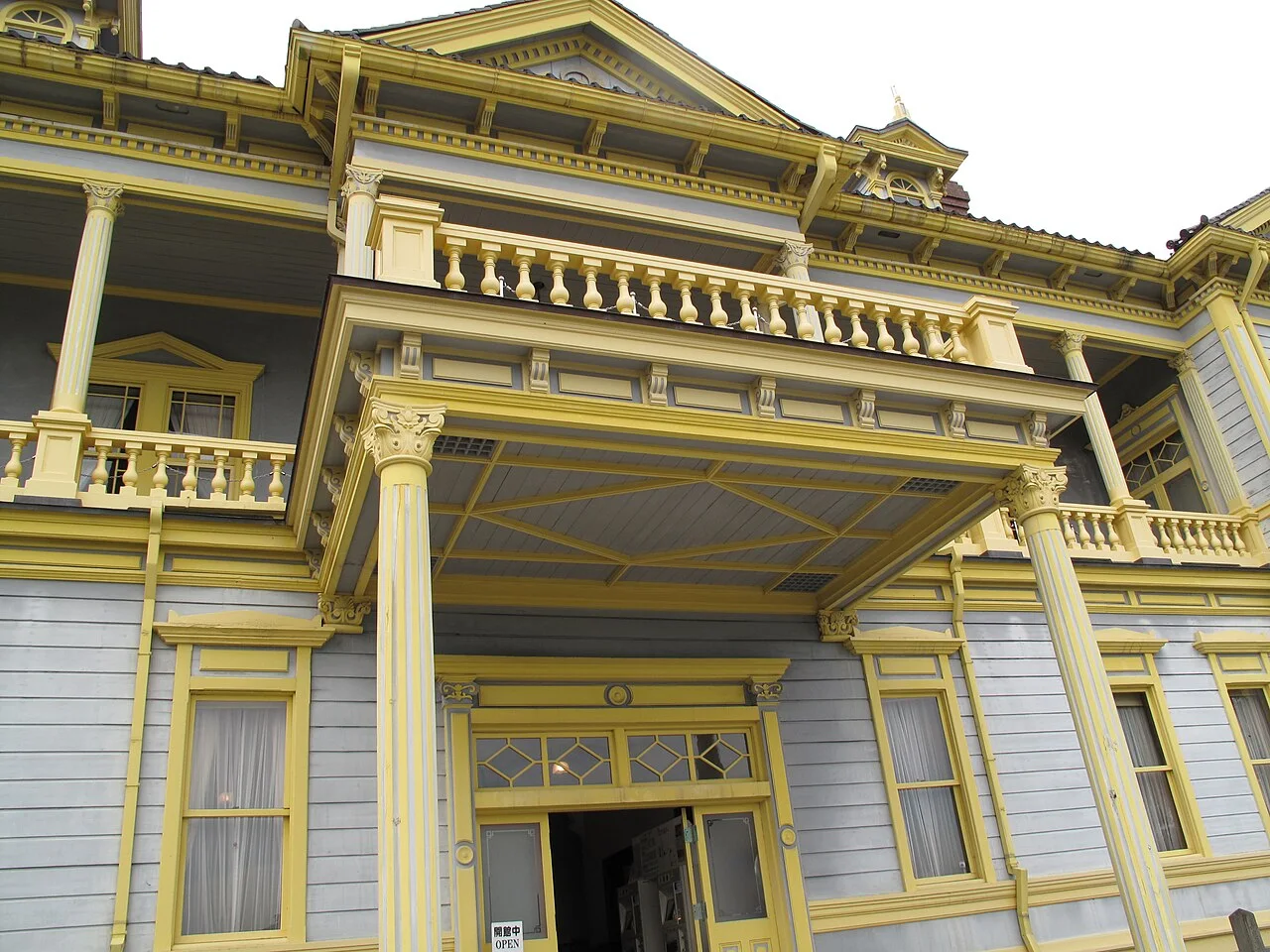
If low clouds settle in early while you still have daylight, head to the Old Public Hall of Hakodate Ward to see its preserved halls and period furnishings. From November through March, it is generally open 9:00 to 17:00; if you make the call later in the evening, go straight down to the bayfront instead. Earlier in the day, pick a short Motomachi walking stretch such as Hachimanzaka Slope, where looking down from the top frames the street running straight toward Hakodate Bay. When snow or ice makes the full hill slippery, cut the slope short, return to Jujigai, or catch Route 3 toward the warehouses; Motomachi sits close enough to Sanroku that you can explore the lower streets while waiting to see if the summit clears.
From December 1 through December 25, 2026, Hakodate Christmas Fantasy sets up a floating Christmas tree on the water beside the red brick warehouses. To catch the 18:00 tree lighting and fireworks, give that evening to the bay area first. If you only want to see the lit tree, the display stays illuminated until 22:00 during the festival, making it feasible to fit both the summit and the harbor into one night. On windy evenings, check the event's daily lighting and fireworks status and keep dinner in the bay area to avoid unnecessary backtracking.
If you finish exploring Motomachi during the day and the sky clears in the afternoon, riding up while daylight remains lets you clearly pick out Midori-no-shima, the piers, and how the city stretches into the distance. Going up early saves you another uphill walk after dark and leaves time to browse the bay area afterward. When you only have one night in town and rain looks ready to worsen, an earlier daylight ascent is still rewarding—and once back at sea level, you can look across the illuminated warehouses toward the same harbor you just viewed from above.
With two nights in Hakodate, head up on arrival night whenever visibility and transit conditions look solid. On your second evening, explore another district such as Goryokaku or seasonal illuminations by following our Hakodate city and seasonal night-view itineraries. If the summit is completely socked in on night one, enjoy dinner near the station or harbor and use the live camera the next afternoon to adjust, prioritizing anyone in your group catching a night train or an onsen dinner. The summit delivers the big sweep, while the bayfront warehouses still trace Hakodate's harbor silhouette up close, letting you shift spots as the sky changes.
When you are down to your final night and strong winds close or chill the summit, even harbor walkways get cold fast. To salvage an evening out, duck into the warehouse shopping halls, a restaurant, or a cafe first and step out to the water during a calmer break in the weather. If your bags are stored at Hakodate Station, pick a final stop within easy walking distance of your ride back. And if you have an early start the next morning, having a relaxed dinner at the foot of the mountain beats waiting roadside hoping suspended service resumes.
A few useful answers
What is the best time to see the Mt. Hakodate night view?
To watch dusk fade into night, allow buffer time for queues and reach the summit before sunset. To skip the worst lines and just see the full city lights, aim for roughly an hour after the night view forms and verify the last ropeway departure.
How much are Mt. Hakodate Ropeway tickets?
Adult tickets are ¥1,800 round-trip and ¥1,200 one-way; elementary school children are ¥900 round-trip and ¥600 one-way.
Can taxis or the mountain bus reach the summit in winter?
During the winter road closure, neither taxis nor the Route 1 mountain bus can go to the summit. Taxis and the Route 2 shuttle bus can still drop off at Sanroku Station at the base of the ropeway.
Do I need to reserve Mt. Hakodate Ropeway tickets in advance?
You can buy tickets at Sanroku Station on arrival or purchase round-trip e-tickets in advance on Webket. E-tickets scan directly at the gate, though you still join the regular boarding line.
Is the Mt. Hakodate Ropeway wheelchair accessible for the night view?
Yes. You can take the elevator at Sanroku Station to board in a wheelchair, then transfer to the summit elevator to reach the rooftop observation deck; station staff can assist on both ends.
Official information and references
Sources used in this guide.
- Mt. Hakodate Ropeway Operating Hours, Last Departures & Fares
- Mt. Hakodate Ropeway Webket E-Tickets
- Mt. Hakodate Ropeway Live Operations, Visibility & Sunset Times
- Mt. Hakodate Ropeway Peak Crowd & Congestion Guide
- Mt. Hakodate Ropeway Base Access & Parking Information
- Mt. Hakodate Summit & Sanroku Facility Floor Guide
- Mt. Hakodate Ropeway Accessibility Services
- Hakodate City Summit Road Night Restrictions & Winter Closure
- Hakodate City FY2026 Mountain Trail Construction Notices
- Hakodate City Tram Station Timetables
- Hakodate Bus Mt. Hakodate Route Boarding Information
- Hakodate Bus Routes & Fares from JR Hakodate Station
- Hakodate Bus 2026-2027 Winter Operations Notice
- Hakodate Yakei-go Night View Bus FY2026 H2 Schedule & Booking
- Mt. Hakodate Ropeway 2026 Statutory Maintenance Closure
- Mt. Hakodate November 8, 2026 Temporary Closure Notice
- Hakobura (Hakodate Tourism) Mt. Hakodate Access Guide
- Hakobura (Hakodate Tourism) Winter Sunset & Night View Times
- Hakobura (Hakodate Tourism) Live Congestion Map
- Old Public Hall of Hakodate Ward Visitor Information
- Hakobura (Hakodate Tourism) 2026 Hakodate Christmas Fantasy
- Hakodate Bus Route 2 2026-2027 Winter Shuttle Timetable
- Hakodate Yakei-go Winter Brochure, Fares & Boarding Stops
- Kanemori Red Brick Warehouse Official Opening Hours
- Mt. Hakodate Ropeway & Elevation Overview
- Mt. Hakodate Ropeway Assistance Dog & Pet Policy
- Hakobura (Hakodate Tourism) Nanbuzaka Slope Guide
- Hakodate Bus Route 1 Fares & Autumn 2026 Timetable