The Mount Hakodate Ropeway costs ¥1,800 return for adults. Compare the ropeway, summit bus and winter Yakei-go bus, work backwards from sunset to time your arrival at Sanroku Station, and plan your descent, dinner and tram back.
- Region & Focus
- HakodateAttractions
- Reading Scope
- 16 min read · 10 chapters · 5 Q&As
- Official Verification
- 28 official sources checkedUpdated 22 November 2026
- Key Topics
- First tripItinerariesWinter
Chapter Route Map (tap any stop)
- Go Up Before Sunset or Wait Until Later?
- Trams and Buses to Sanroku Station
- Buying Ropeway Tickets and Checking Last Departures
- Skipping Ropeway Queues: Check Whether the Summit Road Is Open
- Winter Road Closures, Maintenance and the Yakei-go Bus (2026–2027)
- Deciding at the Base: Check the Live Webcam and Queue Times First
- On the Summit: Rooftop Deck, Plaza and Isaribi Park
- Eat First in Summer, View First in Winter: Adapting to the Sky
- Getting Back to Hakodate Station, the Bay Area or Yunokawa
- When Fog, High Winds or Snow Roll In: Low-Level Alternatives
- Quick Q&A
If it is your first time seeing the Mount Hakodate night view and you want to watch dusk fade as the streetlights flicker on one by one, be on the summit before sunset. If you only want the full sea of lights, going up about an hour after the night view settles in is usually far less rushed than chasing sunset. The ropeway costs ¥1,800 return for adults and takes around 3 minutes from Sanroku Station to the summit. From 9 November 2026 to 12 April 2027, the summit road is closed for winter; if you are relying on public transport, build your plan around the ropeway first and then choose how to reach the base station.
Go Up Before Sunset or Wait Until Later?
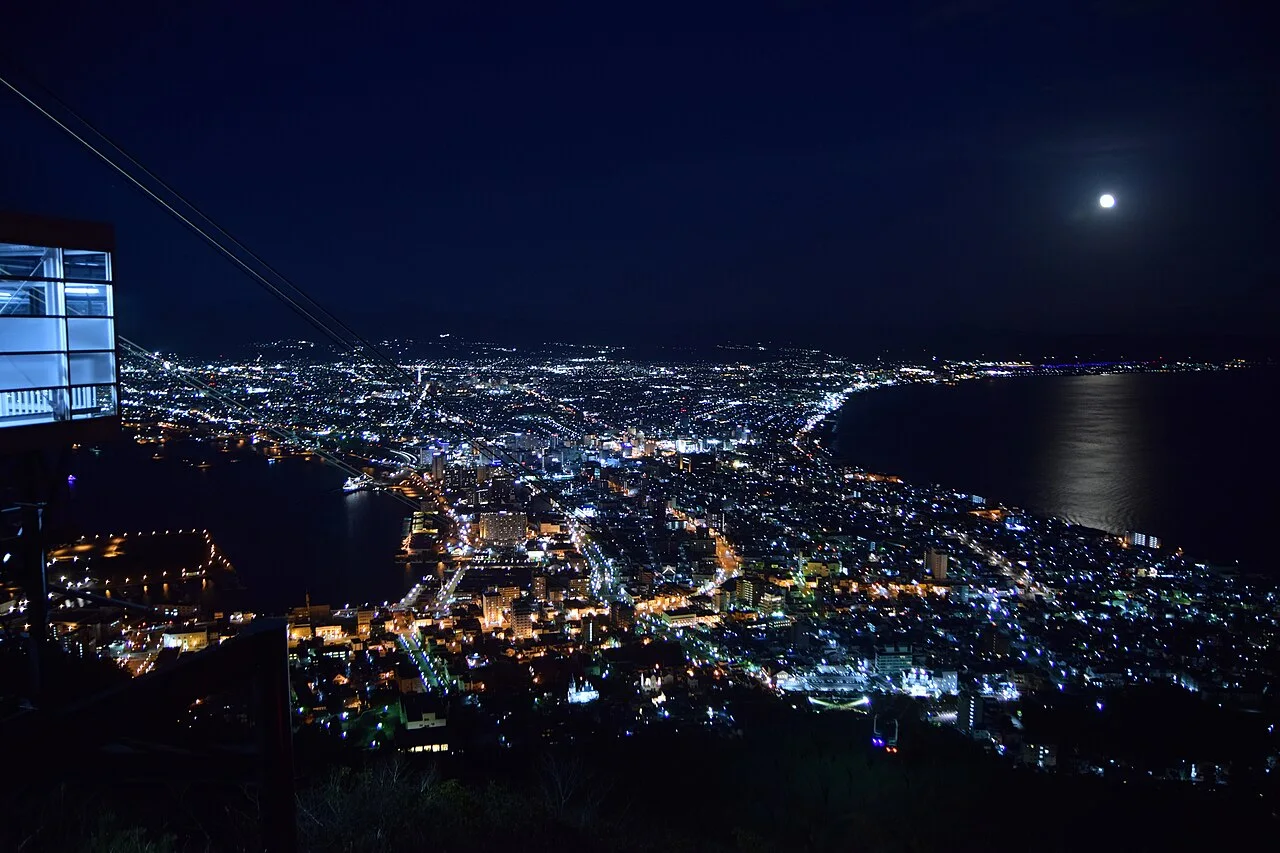
Looking out towards the city from the 334 m summit, Hakodate Bay lies to your left and the Tsugaru Strait to your right, with the city wedged across the narrowest neck between the two coastlines. The outline is easiest to read by day; at dusk the sea and sky are still distinct, and shortly afterwards the lit streets trace that hourglass shape even more sharply. To catch all of these light phases in sequence, treat sunset as the time you are already standing on the summit. Put meeting up with family, walking the slopes or buying tickets ahead of that.
The Hakodate City tourism website places the start of the night view around 20 to 30 minutes after sunset. Taking 22 November 2026 on the ropeway website as an example, sunset is around 16:12 and full night view begins at roughly 16:42. To photograph the darkening city, use around 15:00 at Sanroku Station as your starting anchor, as queues can begin forming roughly an hour before sunset. Riding inside the cabin means missing part of the transition; if the streets are already darkening while you queue, switch your goal to the full night view instead.
If you only want the sea of lights, dine in the Bay Area first and aim for Sanroku Station around 17:45 (following that November example). The operator notes that roughly an hour after the night view forms, both the cabins and the observation deck are usually quieter than right at dusk. In winter it gets dark early, leaving plenty of viewing time even if you head up later. In summer, when sunset is late, if dinner runs close to 21:00, work backwards from your intended descent and leave enough time on top to walk comfortably to the platform.
Those chasing the twilight transition should lock in sunset first; those keen to spend less time standing around should lock in their descent time first. If your accommodation includes dinner, someone in your group feels the cold, or you have an early train the next morning, the second approach usually works better. Decide in advance how many minutes you are willing to queue, then use the live waiting-time feed once you reach the base. If you decide at the last minute to eat first, note down your absolute cut-off time before leaving the base area so dinner does not leave you short of a full return window.
The Mount Hakodate Ropeway costs ¥1,800 return for adults. Compare the ropeway, summit bus and winter Yakei-go bus, work backwards from sunset to time your arrival at Sanroku Station, and plan your descent, dinner and tram back.
Trams and Buses to Sanroku Station
After arriving at JR Hakodate Station by train, walk to the Hakodate-Ekimae tram stop and take Line 2 (for Yachigashira) or Line 5 (for Hakodate-Dock-Mae), getting off at Jujigai where both lines share a stop. The adult fare is ¥210 and the ride takes about 10 minutes. From Jujigai, walk roughly 10 minutes to Mt Hakodate Ropeway Sanroku Station (19-7 Motomachi). Heading uphill from Jujigai onto Nanbu-zaka Slope, the gradient steepens as you near the base station. Allow extra walking time for your group's pace if you are carrying luggage or if melting snow has refrozen underfoot.
To skip the uphill walk, Hakodate Bus Route 2 runs an afternoon and evening shuttle from Stand 4 at JR Hakodate Station Bus Terminal, taking around 11 minutes to Ropeway-Mae for ¥280 adult single. Timetables change by operating season; the 2026–2027 winter timetable applies from 9 November to 31 March. If you plan to take it back to the station at night, check the return stop timetable first, as the summit-to-base ropeway and the base-to-station bus run on separate schedules.
Under the winter timetable, Route 2's first departure from Hakodate Station is not until 16:50, arriving at Sanroku at 17:01; the last return bus from Sanroku to the station departs at 19:35, arriving at 19:46. That schedule has two practical consequences. In early December, if you want to catch the 16:00 twilight, take the tram or a taxi on the way up. If you head up later, decide beforehand whether you need that last shuttle and time your descent accordingly. If you miss it, walk down from Sanroku Station to Jujigai for the tram or take a taxi. A Route 2 ride from Jujigai to Sanroku costs ¥250 for adults and ¥130 for children.
If you are exploring Motomachi earlier in the day, look for Route 3 (the Motomachi & Bay Area Loop Bus). It also departs from Stand 4 at Hakodate Station, taking about 15 minutes to Ropeway-Mae for ¥250 adult. That lets older travellers start at the top and stroll downhill through Motomachi's streets. If you are waiting until dark to ride up, wandering the harbourfront and Red Brick Warehouses towards Jujigai makes a natural walk, and you can hop on a bus at the foot of the hill if needed. Both Routes 2 and 3 drop off at Sanroku Station for the ropeway.
Shared 1-day and 2-day tram-and-bus passes are valid on Routes 2 and 3, as are compatible IC transport cards. Stand 4 at the station serves several sightseeing routes, so check the route number and destination display on the front of the bus. If boarding mid-route outside Meiji-kan or at Jujigai, confirm "Ropeway-Mae" with the driver before getting on so you do not confuse a base shuttle with a seasonal route heading all the way to the summit.
| Option | Drop-off point | Fare & journey time |
|---|---|---|
| Tram Line 2 or 5 | Jujigai (then ~10-minute walk to Sanroku Station) | ¥210, ~10 minutes by tram |
| Hakodate Bus Route 2 | Ropeway-Mae | ¥280, ~11 minutes |
| Hakodate Bus Route 3 | Ropeway-Mae | ¥250, ~15 minutes |
| Mt Hakodate Summit Bus Route 1 | Mount Hakodate summit (suspended in winter) | ¥700, ~30 minutes in clear traffic |
Buying Ropeway Tickets and Checking Last Departures
If you plan to take the ropeway both ways, buy a return ticket. Adult fares (junior high school age and above) are ¥1,800 return and ¥1,200 single; primary school children pay ¥900 return and ¥600 single. Children aged 0 to 2 travel free. Each adult may bring one preschool child aged 3 or over free of charge; additional preschool children pay the child fare. Two adults and one primary school child pay ¥4,500 return on the ropeway, plus any transport to Sanroku Station. Credit cards and compatible IC transport cards are accepted at the Sanroku ticket counter.
Once you are certain you will ride the ropeway both ways, you can buy a Webket return e-ticket, valid for 90 days from purchase. Forward the individual QR codes from your confirmation email to everyone in your party. If only one person has a smartphone, print the QR codes in advance or exchange them for paper tickets at the station machines. E-tickets scan straight at the gate, though you still join the standard boarding queue during busy periods. If you have just arrived in Hakodate, cannot tell whether the summit is clear and have a flexible schedule, buying at the station once you check visibility and energy levels is straightforward.
Regular service starts at 10:00, running roughly every 15 minutes and shortening to every 5 to 10 minutes at peak times. From 20 April to 30 September, the last ascent is normally 21:30 and the last descent 22:00; from 1 October to 19 April, the last ascent is normally 20:30 and the last descent 21:00. Ticket barriers close one minute before departure. If you are aiming for the 20:30 autumn/winter last ascent, the operator requires ticket purchases to be completed by 20:28. That leaves limited time on top, so go earlier if you also want to reach the rooftop deck, take photos or use the lifts with older relatives.
The 3-minute ride only covers the time the cabin is moving. If you have evening plans, check the live up-and-down waiting times on the official website first. Going down also means walking from your viewpoint to the platform, then walking from Sanroku to Jujigai or waiting for a bus. It is completely normal on the same day for the ride up to be effortless and the queue down to be long. Families with children should locate the departure hall as soon as they reach the summit so anyone wanting to head down early has a clear meeting point.
Skipping Ropeway Queues: Check Whether the Summit Road Is Open
When the summit road is open and the climbing bus is running, Hakodate Bus Route 1 runs directly from Stand 4 at JR Hakodate Station to the Mount Hakodate summit for ¥700 adult and ¥350 child. It passes through the Bay Area and Jujigai, taking about 30 minutes without congestion. Despite the long list of stops, the uphill service only picks up passengers and the downhill service from the summit only drops off. Boarding at the station gives you a better chance of getting on than waiting at busy intermediate stops; on the way back, pick a downhill drop-off near your hotel or restaurant—services stop at La Vista Hakodate Bay-Mae.
Route 1 accepts Hakodate Bus's dedicated Kanpass 1-day ticket and compatible IC transport cards. Shared tram-and-bus 1-day or 2-day passes are not valid on the summit bus, so you will need to pay separately. A return by bus costs ¥1,400 for adults; during open road periods you can also take the bus one way and the ropeway the other for ¥1,900 combined—just ¥100 more than a return ropeway ticket. That split works well if you want a direct ride from Hakodate Station to the summit and plan to walk down through Motomachi or the harbour afterwards. Check both tickets and the descent timetable in advance so you do not end up back where you started unnecessarily.
Evening traffic restrictions vary by vehicle type. Under Hakodate City's 2026 notice, private and rental cars are banned from the summit road between 17:00 and 22:00 from 17 April to 30 September, and between 16:00 and 21:00 from 1 October to 8 November. Even if you drive up earlier, you must come back down before the restriction begins, as parking at the summit is not permitted during restricted hours. Authorised commercial buses and taxis may still use the road while it is open. If you plan to drive a rental car up in 2027, check that year's Hakodate City road regulation chart for both the reopening date and the evening entry cut-offs.
If driving to Motomachi, set your satnav to Mt Hakodate Sanroku Tourist Car Park and take the ropeway from the base. The operator's parking map lists two base car parks starting at ¥300 for the first hour plus ¥150 per 30 minutes thereafter, and queuing at the entrance for spaces is prohibited at both. When arriving at peak night-view hours with older passengers, drop them off at a legal kerbside spot rather than circling narrow lanes, or take a taxi or bus from your hotel straight to the base. On your first visit, save Mt Hakodate Summit Car Park and the base car parks separately so your navigation matches your actual plan.
Winter Road Closures, Maintenance and the Yakei-go Bus (2026–2027)
Hakodate City's full winter vehicle closure runs from 11:00 on 9 November 2026 until 11:00 on 12 April 2027 (scheduled). Summit buses, sightseeing coaches and taxis cannot take passengers to the summit during this period, though taxis can still drop off at Sanroku Station. Hakodate Bus's winter notice confirms Route 1 is suspended for the season while Route 2 follows ropeway operations. If high winds force the ropeway to suspend service, Route 2 cannot get you up the mountain either, so switch to Motomachi or the Bay Area instead.
Pedestrians are permitted on the closed road notice, though mountain footpaths have separate maintenance closures. Hakodate City lists the Shiomiyama route as closed from 26 October to early December 2026, part of the Old Climbing Path closed from early November to 28 December, and partial works on other trails. Anyone hiking in winter should do so in daylight, check the city's trail works map for open sections and wear gear suited to packed snow and ice. For first-time visitors after night views, taking the ropeway both ways makes timing far easier to control. If you finish viewing and find a long queue, wait indoors and follow staff instructions.
The ropeway's 2026 statutory maintenance shutdown ran from 20 October to 8 November. Normally visitors could take the summit bus or a taxi while the road remained open, yet on 8 November snow forced a road closure and the observatory shut all day. When planning a late-autumn trip, check the ropeway maintenance schedule, road notices and daily observatory status together. For an autumn 2027 visit, consult that year's maintenance announcement before locking in dates.
For pick-ups from Yunokawa Onsen or selected hotels near Hakodate Station, consider the advance-booking Hakodate Yakei-go tour bus. The operator states that from 9 November 2026 the tour switches to using the ropeway to reach the summit, operating only on designated dates from January 2027. Booking a winter coach bundles hotel transfers, guiding and views of Motomachi into one outing; if the ropeway is suspended, refer to the tour's contingency notice. Check your pick-up and drop-off points before booking, as selecting Yunokawa Onsen at either end triggers the Yunokawa fare tier. If you are staying in the Bay Area and want full control over how long you stay on top, buying a standalone ropeway ticket is usually simpler.
The winter brochure lists ¥3,000 adult / ¥2,000 child from the Hakodate Station area, and ¥4,000 adult / ¥2,500 child from Yunokawa Onsen. From Hakodate Station, the Yakei-go departs from Stand 12 at 19:25—distinct from Stand 4 used by local buses. Per the brochure, it does not operate from 30 December 2026 to 3 January 2027, and from 4 January to 31 March runs on Fridays, weekends, public holidays and eves of public holidays; verify your exact date against the calendar when booking. During the Christmas event period, the Yakei-go also includes the waterfront venue from the bus window, so plan separately if you want to get off for the 18:00 fireworks.
Hakodate Bus's 2026 second-half notice specifies that any departure with zero bookings three days prior will be cancelled. On operating days, bookings via DohNa!! stay open until noon on the day, after which you must telephone to enquire about seats. If the night view is the centrepiece of your trip, lock in your date and stops early. No refunds are issued for passenger cancellations or if poor weather blocks the summit view after departure. If you have two nights in town and the forecast looks changeable, riding the ropeway independently makes it far easier to swap evenings.
Deciding at the Base: Check the Live Webcam and Queue Times First
Even when it is dry at street level, the summit can sit inside low cloud. Before heading to Jujigai, open the live webcam on the ropeway website and check whether both coastlines are visible. If the shores are clear with distant haze, you will still get the city's silhouette. If the feed shows nothing but white mist and you have two evenings in Hakodate, move the trip to the other night. When patchy cloud is drifting past, watch the feed for a few minutes and decide against how long you are prepared to wait on top.
The same page displays live ascending and descending wait times, along with crowd levels for the rooftop observatory and Isaribi Park. Hakodate City's congestion map tracks surrounding spots such as Jujigai as well. If you are short on time, confirm visibility on the webcam first, then add the current queue and return travel time. If the view is clear but the rooftop deck is packed, heading to Isaribi Park early or delaying your ascent is more practical than switching to another hill route at the last minute.
The operator's crowd guidance flags roughly one hour before sunset as the point when queues begin building. About 30 minutes after sunset, once the night view sets in, the building and rooftop hit peak crowding—wait times can exceed 30 minutes going up and over an hour coming back down. Use those benchmarks to stress-test the rest of your evening. If you have a 19:00 dinner reservation and are still on the summit at 17:45 with an hour-long descent queue posted, join the line straight away or push back your table early.
In rain, check ropeway operations and summit visibility separately. If the status bar shows a suspension due to strong winds or weather, stay indoors and rearrange the rest of your evening. If cabins are running and the webcam shows clear coastlines, visitors purely after the lit cityscape can wait until full dark before walking to the platform, cutting down time spent outside. If you are pushed for time, skip waiting for clouds to clear and stroll along the harbour for close-up reflections instead, keeping your journey back predictable.
On the Summit: Rooftop Deck, Plaza and Isaribi Park
The classic panorama is from the rooftop observatory, taking in both coastlines at once. The ropeway cables stretching down the slope, the harbour to the left and the darker stretches of sea add depth to the frame. If you are staying from sunset through to full illumination, pick your vantage point as soon as you reach the roof. The sun sets in a different direction from the main city view, so leave yourself room to move between sides rather than staying fixed to one section of railing.
When the rooftop is crowded, head down to the second-floor summit plaza or step out from the first floor to the Isaribi Park viewing area. The official website lists separate crowd indicators for the rooftop and Isaribi Park, making it easier to pick a spot with breathing room for your group. As people step away from the front, you can move up slightly from behind. Because the lights stretch along the curve of the bay, even side angles work well if you frame the harbour or ropeway station in the foreground. If anyone in your group gets too cold, agree to meet in the departure hall while photographers stay out a little longer.
Inside the summit building, the first floor houses the departure hall, information desk, coin lockers and a nursing room. The second floor has a restaurant, souvenir shop, takeaway counter and accessible toilets, and the third floor has a tea lounge. The restaurant keeps its own dining hours and reservation setup—if you want a sit-down meal overlooking the view, check its sitting times first and time your ascent around your booking. For a quick hot drink, check the takeaway counter's closing time rather than assuming it stays open until the last ropeway down.
Wheelchair users can take the lift at Sanroku Station to the boarding platform and transfer at the summit to another lift up to the rooftop observatory; station staff at both ends can assist. Accessible toilets are on the first floor at Sanroku and the second floor at the summit, with nursing rooms on the third floor at Sanroku and the first floor at the summit. In snow, taking a shuttle bus or taxi from Jujigai to Sanroku saves pushing a wheelchair uphill outdoors. On busy evenings, ask staff for the step-free route on arrival and clear toilets, lifts and platform access before heading to the easiest viewing deck.
To capture the coastlines on a phone, take a wide-angle shot while there is still ambient dusk light before switching to expose for the brighter streets. Tuck your elbows in before tapping the shutter so your phone never extends past the railing. When shooting through glass, step close and cup your hands to block side reflections while leaving a tiny gap between lens and pane. In winter, put cameras back inside your bag before stepping into heated rooms to reduce condensation on cold glass. Skip tall tripods when the deck is packed; handheld shots keep walkways clear.
If young children fall asleep while waiting, ask staff which lift to use so whoever is carrying them has less walking to do. At both the base and summit, the operator flags waits of 20 minutes or more as likely to spill into outdoor queues. Pack gloves and hats near the top of your bag so you can put them on as soon as you step outside. Pets are only allowed inside Sanroku, summit facilities and the ropeway cabins if fully enclosed in a carrier or pet buggy. Certified guide dogs, service dogs and hearing dogs are welcome alongside their owners.
Eat First in Summer, View First in Winter: Adapting to the Sky
Winter evenings arrive early. Seasonal data from the Hakodate City tourism website puts sunset around 16:05 on 1 December, shifting to roughly 16:50 on 1 February and 17:30 by 1 March. Copying a December schedule later in the winter will get you up there too early. Once your dates are set, build your timetable from that day's sunset and night-view estimate on the webcam page. For a winter sunset view, put Motomachi's historic buildings in the early afternoon—walking from the Old Public Hall of Hakodate Ward towards Sanroku—then ride up before dark.
In July, if you simply want the illuminated cityscape, have a light early dinner first and match your ropeway ride to that evening's sunset. If you want the full dusk sequence, eat before sunset and use the toilets and grab water as soon as you reach the summit rather than hunting for facilities as light fades. Sea fog can roll in after dark, sometimes leaving only the closer harbourfront visible from the top. Enjoy the Bay Area lights after coming back down, and keep the next evening in reserve for a second try if your schedule allows.
Autumn light fades noticeably earlier week by week, and the ropeway switches to its autumn/winter timetable on 1 October; keeping dinner at the same fixed hour produces very different evenings in early versus late autumn. Early October often lets you catch dusk before dinner, whereas late-autumn trips need planning around that year's multi-week maintenance shutdown. In spring, as the winter road closure ends, anchor your plan to the ropeway calendar first and double-check whether Route 1 buses have resumed before assuming the summit road opening means buses are running.
On windy winter nights, a warm hat, gloves and grippy shoes matter more than carrying an extra lens. Clothes that feel warm enough walking at sea level chill quickly while standing still on an exposed roof. Spend short spells outside and step back indoors until more streetlights come on. If you are travelling with older relatives, small children or anyone who feels the cold, aim for a post-dark ascent so you do not combine waiting for dusk with waiting in the descent queue.
Getting Back to Hakodate Station, the Bay Area or Yunokawa
Staying near JR Hakodate Station, you can catch the Route 2 bus back if you reach Sanroku before 19:35, or walk down to Jujigai and take a Yunokawa-bound tram to Hakodate-Ekimae. Check whether the weekday or weekend timetable applies, and verify the tram's destination sign covers your stop. If you are still queueing near the last descent on top, have a backup plan ready for getting from Sanroku to your hotel. Once back at the base, you still have to wait for transport, walk or hail a taxi—do not cut it fine before a late JR train departure.
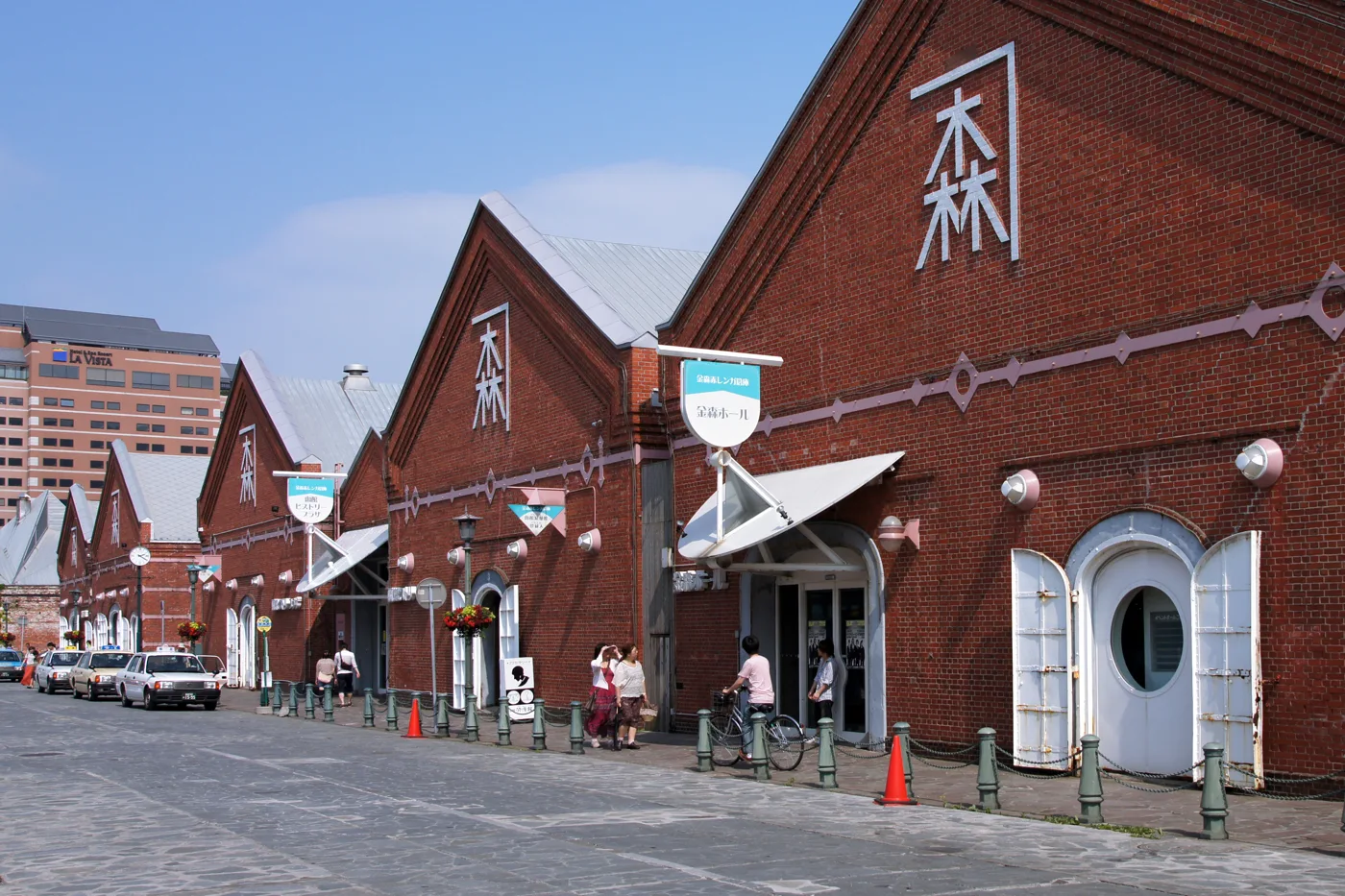
Staying around the Kanemori Red Brick Warehouses, stroll back down via Jujigai towards the waterfront. That makes for a relaxed dinner afterwards while the streets and harbour are still lit. Shop before heading up the mountain if you want souvenirs, as retail shops inside the Red Brick Warehouses generally close at 19:00 while restaurants keep separate hours. If part of your group stayed in the Bay Area, agree on an unmistakable meeting point—such as a specific entrance to Meiji-kan or the Red Brick Warehouses—and choose an indoor spot in wind or snow so whoever arrives early can sit comfortably.
If you are staying at a Yunokawa ryokan with half-board dinner, work backwards from your meal sitting time. The tram from Jujigai to Yunokawa takes about 30 minutes (¥260 adult), plus a walk to your accommodation. Coming down during the peak post-sunset window often hits the longest queue on the mountain. If your ryokan has a strict kaiseki dinner start time, either move Mount Hakodate to an evening without included dinner, pick an earlier full-dark window before dining in winter, or factor in a taxi back to save time.
For a single-night stay, plan backwards from where you sleep. If you are by the station with an early train next day, leave heavy bags at the hotel and carry a small pack around Motomachi. If you are by the harbour, group the summit and Bay Area into one walking loop and choose a descent method that matches how far your group can walk back. In Yunokawa, prioritise dinner times and decide whether arrival night or the following evening fits best. When choosing a base near tram stops, check our Hakodate hotel areas comparison for an easier late-night return.
When Fog, High Winds or Snow Roll In: Low-Level Alternatives
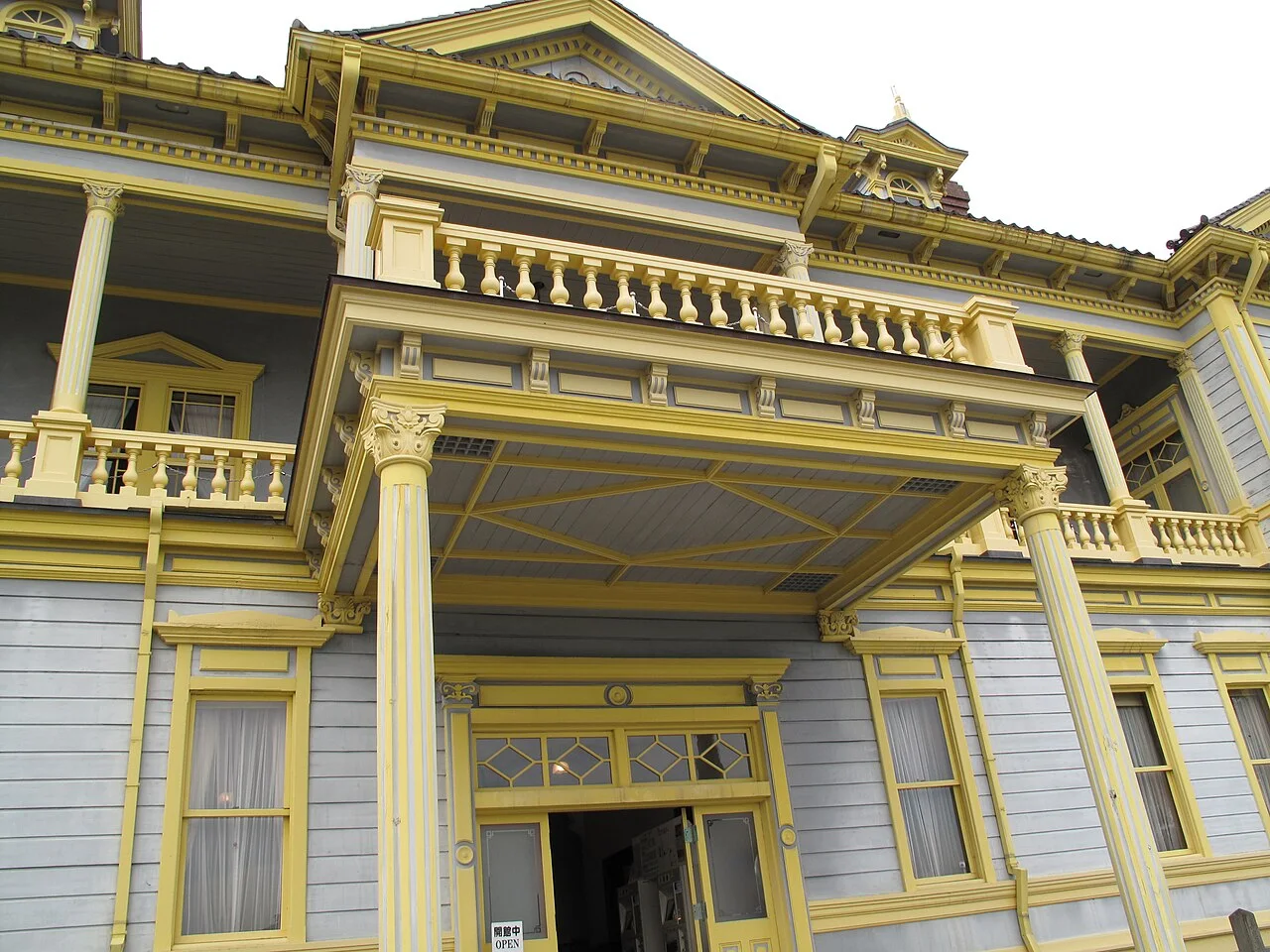
If low cloud settles early while you still have daylight, visit the Old Public Hall of Hakodate Ward to see its preserved main hall and period furnishings. From November to March it generally opens 09:00 to 17:00; if it is already late afternoon when you call off the summit, head straight for the waterfront instead. Earlier in the day, walk a short stretch of Motomachi—looking down Hachimanzaka Slope gives a direct view of the street running down to Hakodate Bay. When snow or ice makes the hills slippery, cut the uphill walking short, drop back to Jujigai or hop on Route 3 towards the warehouses; because Motomachi and Sanroku are so close, you can explore the lower slopes first and go up if the sky clears.
From 1 to 25 December 2026, Hakodate Christmas Fantasy floats a giant Christmas tree on the water beside the Red Brick Warehouses. If you want the 18:00 tree lighting and fireworks, give that evening to the Bay Area first. If you only want to see the lit tree, it stays illuminated until 22:00 during the festival, leaving room to combine the summit and waterfront on the same night. On windy evenings, follow that day's official lighting and fireworks announcements and stay in the Bay Area for dinner to avoid an unnecessary trip up and back.
If you finish Motomachi early and the afternoon turns clear, consider going up while daylight remains: from above, you can trace how Midorino Island, the piers and the wider city sit against the bay. Going up early saves climbing the hill again after dark and leaves time for shopping back at the warehouses. If you only have one night in town and worsening rain is forecast, catching the daytime panorama is far better than getting rained out later—and once back down, you can admire the lit warehouses beside the very harbour you just looked over.
With two nights in Hakodate, take the ropeway on your arrival evening if visibility and transport look good. You can save Goryokaku or seasonal winter illuminations for the second night using our Hakodate city and seasonal nights itinerary. If the first evening is completely socked in, dine by the station or harbour and reshape the next afternoon around the live webcam, locking in timings first for anyone with a night train or ryokan dinner. The summit offers the sweeping view, while the warehouses and waterfront give you Hakodate's harbour silhouette up close—making it easy to shift plans as the weather moves.
If it is your final evening and strong winds hit the summit, the harbourfront boardwalks can chill just as fast. To keep a chance of seeing the lights, settle inside the warehouse shops, a restaurant or your hotel and step outside to the seafront during a calmer spell. If your bags are stored at Hakodate Station, finish somewhere within easy walking distance of the terminal. Anyone with an early start the next morning will have a much smoother night eating at sea level and heading back rather than waiting roadside for a suspended service to resume.
A few useful answers
What is the best time to visit Mount Hakodate for the night view?
To see dusk turn to night, allow time for queues and reach the summit before sunset. To queue less and go straight for the full sea of lights, aim for roughly an hour after the night view settles in, checking against the last departure time.
How much is a Mount Hakodate Ropeway ticket?
Adults pay ¥1,800 return or ¥1,200 single; primary school children pay ¥900 return or ¥600 single.
Can taxis or summit buses reach the top in winter?
During the winter summit road closure, neither taxis nor Route 1 summit buses can drive to the summit. Taxis and Route 2 shuttle buses can still take you to Sanroku Base Station.
Do I need to book the ropeway in advance?
You can buy tickets on site at Sanroku Station or purchase a Webket return e-ticket online. E-tickets scan directly at the ticket barrier, and you join the standard boarding queue.
Is the Mount Hakodate Ropeway wheelchair accessible?
Yes. Take the lift at Sanroku Station to board in a wheelchair, then transfer to the summit lift on arrival to reach the rooftop observatory. Station staff are available to assist.
Official information and references
Sources used in this guide.
- Mt Hakodate Ropeway operating hours, last departures and fares
- Mt Hakodate Ropeway Webket advance e-tickets
- Mt Hakodate Ropeway live operations, visibility and sunset times
- Mt Hakodate Ropeway peak crowd guidance
- Mt Hakodate Ropeway base access and car park information
- Mt Hakodate summit and base facility floor guide
- Mt Hakodate Ropeway accessibility services
- Hakodate City summit road evening restrictions and winter closure
- Hakodate City FY2026 mountain footpath works notice
- Hakodate City Tram timetable by stop
- Hakodate Bus Mount Hakodate route boarding guide
- Hakodate Bus routes and fares from JR Hakodate Station
- Hakodate Bus 2026–2027 winter operations notice
- Hakodate Yakei-go FY2026 second-half schedule and reservations
- Mt Hakodate Ropeway FY2026 statutory maintenance notice
- Mount Hakodate temporary closure notice for 8 November 2026
- Hakodate City Official Travel Guide: Mount Hakodate access
- Hakodate City Official Travel Guide: winter sunset and night view
- Hakodate City Official Travel Guide: live congestion map
- Old Public Hall of Hakodate Ward visitor information
- Hakodate City Official Travel Guide: 2026 Hakodate Christmas Fantasy
- Hakodate Bus Route 2 2026–2027 winter shuttle timetable
- Hakodate Yakei-go winter brochure, fares and boarding stand
- Kanemori Red Brick Warehouse official opening hours
- Mt Hakodate Ropeway overview and elevation data
- Mt Hakodate Ropeway assistance dog and pet policy
- Hakodate City Official Travel Guide: Nanbu-zaka Slope
- Hakodate Bus Route 1 fares and autumn 2026 timetable