Adult entry to the Old Public Hall of Hakodate Ward is ¥300, a seven-minute walk from Suehirocho tram stop. Includes 2026–2027 winter closures, Meiji dress and hakama rental prices, Motomachi slope routes, and nearby indoor stops for rainy days.
- Region & Focus
- HakodateAttractions
- Reading Scope
- 23 min read · 11 chapters · 5 Q&As
- Official Verification
- 21 official sources checkedUpdated 22 November 2026
- Key Topics
- ItinerariesNeighbourhoodsWinter
Chapter Route Map (tap any stop)
- When to Arrive: Opening Hours and Costume Timing
- Single Entry at ¥300 vs Multi-Site Passes
- Getting There from Hakodate Station, the Bay Area or Goryokaku
- Two Bus Options and Drop-Off Points to Skip the Climb
- Inside the Hall: From the Ground-Floor Billiard Room to the Balcony
- Costume Studio: Dresses, Hakama or Outdoor Strolls
- Linking the Hall, Hachimanzaka Slope and the Churches in Half a Day
- Where to Spend Your Pass on a Rainy Day
- Snow, Footwear and Indoor Stairs
- How to Sequence Shots of the Hall, Harbour and Family
- Choosing Your Downhill Route After the Visit
- Quick Q&A
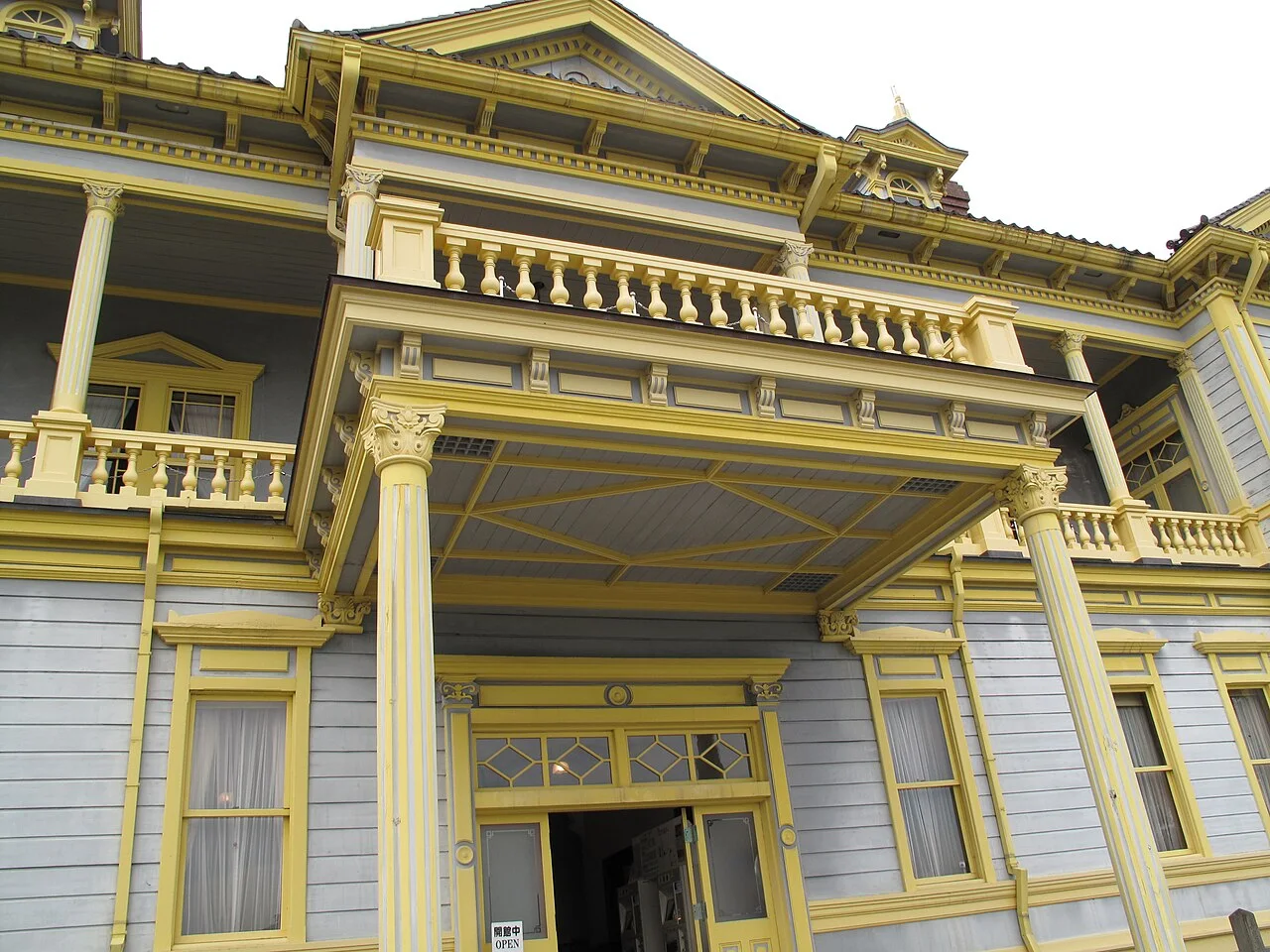
The Old Public Hall of Hakodate Ward sits at the top of Motoizaka Slope in Motomachi. From Suehirocho tram stop, it is roughly a seven-minute walk uphill: take in the blue-grey facade and pale yellow columns before stepping inside and out onto the upper balcony overlooking Hakodate Port. Standard adult admission is ¥300, covering Meiji-era furnishings, the former Chamber of Commerce rooms and the Grand Hall. Allow two hours if you only want to see the hall and Hachimanzaka Slope, or half a day if you plan to try on Meiji-style attire, browse the exhibitions, and continue past the churches down to the bay area. In winter, when pavements turn icy, take a bus or taxi up to the top of the ridge and pick an easier route down on foot.
When to Arrive: Opening Hours and Costume Timing
The hall operates on summer hours from 1 April to 31 October: 9:00–18:00 Tuesday to Friday, and 9:00–19:00 Saturday to Monday. From 1 November to 31 March, it opens daily from 9:00–17:00. Last admission is 30 minutes before closing in every season—17:30 or 18:30 in summer, and 16:30 in winter. If you are ending your walk at the Kanemori Red Brick Warehouse or heading straight for dinner, you can visit the hall later in the afternoon. However, if costume rental is your main goal, aim for a daytime slot: the rental counter closes earlier than the main building.
Over the 2026–2027 New Year period, the hall closes from 31 December to 3 January, and will also close all day on 26 January 2027 for facility maintenance. Visitors staying two nights over New Year who arrive on or before 30 December can fit the hall in on arrival day or the next morning. If your itinerary runs from 1 to 3 January, you will only be able to see the exterior from the Motomachi slopes. Motomachi Park and the surrounding hills still make a pleasant outdoor walk, but anyone hoping to see the Grand Hall or rent costumes should shift their Hakodate dates by a day.
For a standard visit without costumes, allow 40–60 minutes to change into indoor slippers, tour both floors of galleries and step out onto the balcony. Entering at 16:15 in winter gives you just enough time for a look at the ground-floor history exhibition and the upstairs Grand Hall. To read the wall panels and watch the restoration videos properly, arrive by 15:30. Coming right at opening time works particularly well if your group wants to linger in different rooms at their own pace without rushing off for lunch.
In winter, the hall opens an hour earlier than the costume studio inside. If you want group photos in period dress, stroll through Motomachi Park and admire the exterior before 10:00, then enter when the rental desk opens and save the exhibition rooms for after you return the outfits. Visitors who only want to see the architecture can enter at 9:00. Whenever the hall closes for New Year or maintenance, the on-site costume studio, souvenir photography, shop and cafe close with it. The hall has also announced that Cafe Jujiya will close for winter from 28 December 2026 to 31 March 2027, so plan warm drinks or lunch at the Former British Consulate or down in the bay area instead.
Adult entry to the Old Public Hall of Hakodate Ward is ¥300, a seven-minute walk from Suehirocho tram stop. Includes 2026–2027 winter closures, Meiji dress and hakama rental prices, Motomachi slope routes, and nearby indoor stops for rainy days.
Single Entry at ¥300 vs Multi-Site Passes
Single admission is ¥300 for adults and ¥150 for students and school-aged children; pre-school children enter free of charge. Groups of 20 or more paying together through a single representative receive discounted rates of ¥240 for adults and ¥120 for students and children. When travelling as a family, keep the age brackets separate in mind: junior high school students qualify for the student rate at the public hall, yet pay the adult fare on the Hakodate City Tram, and Western-style dress rentals treat junior high age as the start of the adult tier.
The joint passes cover four venues: the Old Public Hall of Hakodate Ward, the Former British Consulate of Hakodate, the Hakodate City Museum of Literature and the Hakodate City Museum of Northern Peoples. Two adults deciding on the spot to add the neighbouring consulate on Motoizaka Slope would pay ¥600 each separately, versus ¥500 each on a two-site pass—a combined saving of ¥200. Three-site and four-site adult passes cost ¥720 and ¥840 respectively, while student and school-child rates are ¥250 (two sites), ¥360 (three sites) and ¥420 (four sites). Decide how many venues you want before paying: all four are within walking distance, and larger passes save more, provided you leave enough time for the exhibitions.
If you are only visiting the public hall, Motomachi Park and the exteriors of nearby churches, a single-site ticket is all you need. If you plan to stop for afternoon tea at the Former British Consulate, budget time and money for tea separately, as the two-site pass only covers entry to the paid exhibition rooms. Costume renters must also pay for public hall admission on top of the studio fee. In changeable weather, picking the public hall plus one other indoor site your companions genuinely want to see gives you more flexibility than buying a four-site pass upfront, leaving room to head for Hachimanzaka Slope or the waterfront if the skies clear.
Comparing the two Western-style landmarks, the public hall shows how Meiji-era local society adopted European forms for civic architecture, while the consulate focuses on the treaty port opening, diplomacy and consular life. Since the consulate sits lower down Motoizaka Slope, you can easily visit both from either the top or the bottom of the hill. If you prefer to see the church district in daylight, start at the public hall, follow the hillside over to Hachimanzaka Slope and the churches, and save the Literature Museum or the Museum of Northern Peoples down the hill for later if time permits.
| Ticket Type | Adult | Student & Schoolchild |
|---|---|---|
| Single Site | ¥300 | ¥150 |
| 2-Site Pass | ¥500 | ¥250 |
| 3-Site Pass | ¥720 | ¥360 |
| 4-Site Pass | ¥840 | ¥420 |
| Single Site Group (20+) | ¥240 per person | ¥120 per person |
Getting There from Hakodate Station, the Bay Area or Goryokaku
Exit JR Hakodate Station to the tram stop in the station forecourt, Hakodate-Ekimae, and board Route 5 bound for Hakodate Dock-mae, getting off at Suehirocho. Official Hakodate City transport guidance estimates around 16 minutes in total, including roughly a seven-minute walk after alighting, for a ¥250 single adult fare. Route 2 trams bound for Yachigashira also serve the same boarding platform and pass through Jujigai before branching off, so wait specifically for Route 5 if you want to alight at Suehirocho. From Goryokaku-Koen-Mae, the adult tram fare to Suehirocho or Jujigai is ¥290 each way.
After getting off the tram, look for signs to Motoizaka Slope or Motomachi Park and walk uphill. The Former British Consulate and the Perry Arrival Monument stand along the same slope and make useful landmarks. To reach the public hall early in the day, skip the consulate on the way up, continue to the upper edge of the park and enter the hall; you can then visit the consulate and waterfront on the way back down Motoizaka Slope for a compact out-and-back loop. For a wider streetscape walk, continue along the hillside from the hall to Hachimanzaka Slope and the churches before descending via Daisanzaka or Nijukkenzaka Slope.
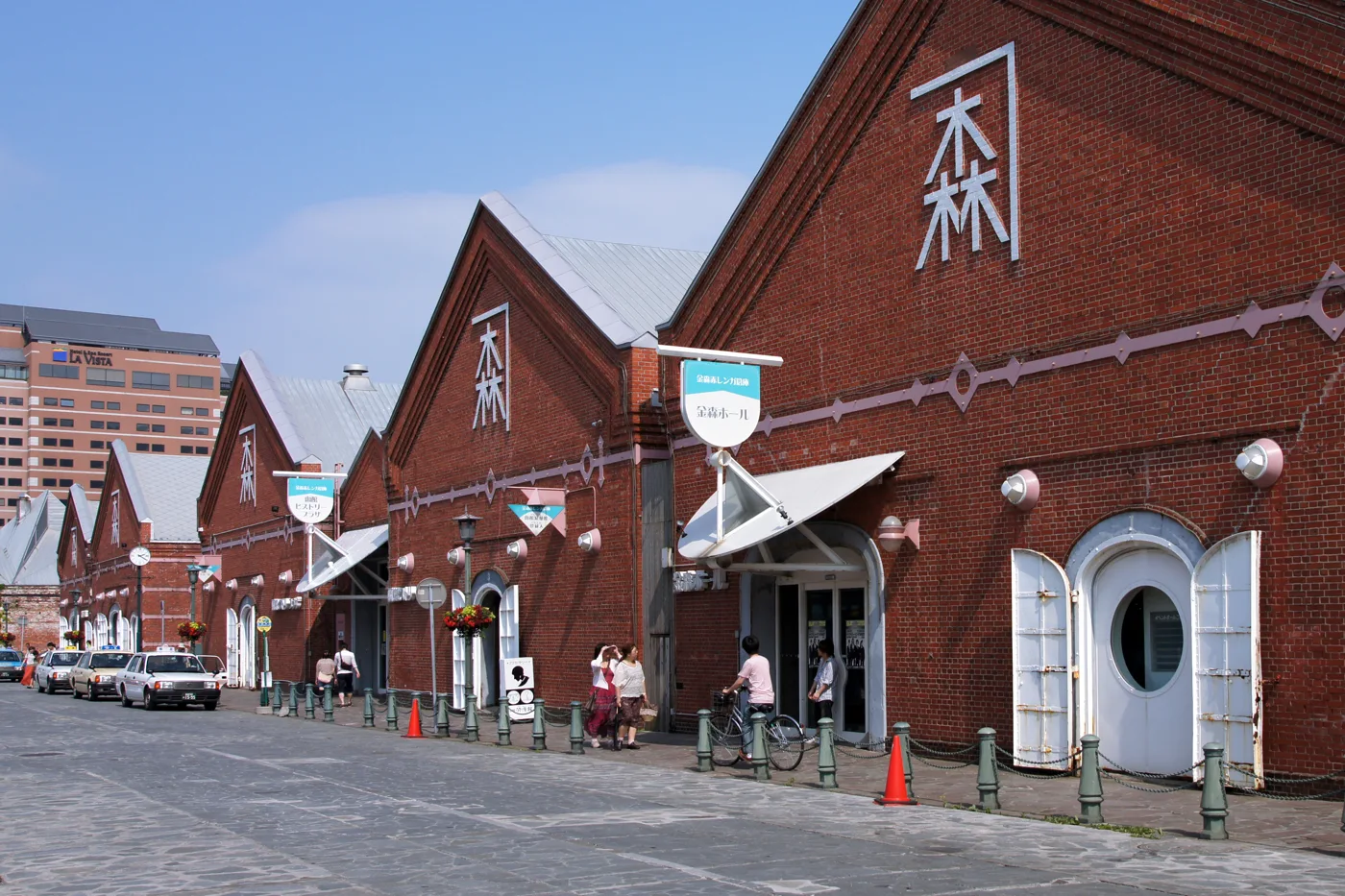
Suehirocho also connects easily with the Kanemori Red Brick Warehouse district. Guests staying near the warehouses can walk along the bay towards Motoizaka Slope and only climb once they reach Motomachi, saving a trip back to Hakodate Station. If you have a pushchair or someone in your party has sore knees, take a bus or taxi up the hill and decide later which slope gives the easiest walk back to the bay. Staying around Hakodate Station makes the return simple via Jujigai or Suehirocho, letting you leave luggage at your hotel for an easy half-day stroll after check-out; see our comparison of Hakodate hotel areas for more on base locations and connections.
Both the Hakodate City Tram and Hakodate Bus accept nationwide IC travel cards. A simple return tram trip between Hakodate-Ekimae and Motomachi costs ¥500 total, which is cheaper than the ¥800 adult one-day tram pass. The day pass only begins to pay off on multi-stop itineraries—for instance, Hakodate-Ekimae to Suehirocho (¥250), then out to Goryokaku-Koen-Mae (¥290) and back to Hakodate-Ekimae (¥270), totalling ¥810. If you might take a bus uphill instead, price each leg individually; the tram day pass covers the tram network only, while Hakodate Bus sells its own passes.
Two Bus Options and Drop-Off Points to Skip the Climb
Hakodate City lists a direct Hakodate Bus service bound for Koryuji Temple, stopping at Kokaido-mae just a three-minute walk from the entrance. Alternatively, take the Route 3 Motomachi-Bay Area Loop Bus from platform 4 outside JR Hakodate Station and alight at Motomachi-Koen-mae. Route 3 loops past Hakodate Morning Market, waterfront hotels and the Red Brick Warehouses before passing Jujigai, the ropeway base station, Motomachi and the Former British Consulate on its way to the park. From the station, the tram gets you there sooner, whereas visitors already staying in the bay area along the loop route avoid changing services on Route 3.
From 9 November 2026 to 31 March 2027, Hakodate Bus operates its winter sightseeing timetable, with Route 3 priced at ¥250 for adults and ¥130 for children. Seasonal notices publish route and timetable adjustments during peak-season events and diversions. Because Route 3 is a loop, boarding at Motomachi Park for the return to Hakodate Station takes you back via Higashihama Pier, the bay area and waterfront hotels. If you have a restaurant booking or a JR train to catch, walk down Motoizaka Slope to the tram or call a taxi directly outside the hall.
A taxi from JR Hakodate Station takes roughly 10 minutes according to city estimates. For groups of three or four, or families with a pushchair, sharing a single cab uphill skips the steepest stretch entirely. If you are driving, note that the public hall has no dedicated car park; the closest paid spaces are at the Motomachi Tourist Car Park. Drivers planning to shop or dine around the Kanemori Red Brick Warehouse afterwards are better off parking down in the bay area once, rather than moving the car back and forth around Motomachi.
Inside the Hall: From the Ground-Floor Billiard Room to the Balcony
After the great Hakodate fire of 1907 destroyed the town hall and Chamber of Commerce, the rebuilt Old Public Hall of Hakodate Ward was completed in September 1910. The ground floor housed Chamber of Commerce offices and reception rooms alongside community gathering spaces. According to hall records, local merchant Teppei Soma donated ¥50,000 of the roughly ¥58,000 construction cost. Knowing this background makes immediate sense of why the building combines formal reception parlours with a Grand Hall big enough for concerts. Designated an Important Cultural Property in 1974, the building reopened on 26 April 2021 after a major preservation and restoration project.
Remove your shoes at the ground-floor entrance and start in the Billiard Room. Originally fitted with two billiard tables, it now holds historical display tables that neatly explain the link between the 1907 fire and the 1910 completion. Continue into the former Small Dining Room to watch video footage, including restoration records documenting how historic timber architecture is conserved. If some of your party want photos while others want to read the displays, agree to meet at the foot of the stairs before heading up together to the Grand Hall and harbour views.
One wing preserves the Imperial suite—the Bedroom, Audience Room and Imperial Dining Room—with restored period furniture set back into the original living quarters. In 1911, the future Emperor Taisho stayed in the newly completed hall while travelling through Hokkaido as Crown Prince, and the plumbing and bathing facilities installed for his visit remain part of the tour. Visiting with children, the claw-foot Western bathtub, domed bathroom ceiling and exposed brass bedframes offer an immediate visual contrast with modern homes.
The upstairs Grand Hall, with a ceiling roughly six metres high, hosted concerts and lectures. Stand at one end to take in the proportions of the tall side windows and timber floorboards, and it is easy to picture rows of chairs set out for a performance. Out on the balcony, look at the foliate capitals atop the columns before taking in the view across the slopes of Motomachi to Hakodate Port and, in clear weather, the Yokotsu Mountain Range. For photographs, the central porte-cochere and balcony reward upward close-ups of architectural detail, while the open space in front of the facade captures the full symmetry and gable.
If you only have half an hour before a train, head straight up to the Grand Hall and balcony, then spare a few minutes for the Billiard Room on the way out. With more time, follow the ground-floor rooms upstairs and finish by reading the restoration notes. The exterior has been repainted in the past, until Showa-era repairs uncovered the original blue-grey and yellow colour scheme. Bearing those two pigments in mind as you look back at the door frames, balustrades and eaves reveals far more paintwork detail than a single wide shot from the park.
Costume Studio: Dresses, Hakama or Outdoor Strolls
Inside the building, the Hakodate Haikara Costume Hall rents Meiji-style dresses, evening gowns and Japanese hakama outfits. A 30-minute indoor dress session costs ¥3,500 for junior high school students and adults, and ¥2,500 for primary school children and younger, with hair accessories and extras available for ¥1,000. Indoor Japanese attire is also 30 minutes at ¥4,500 per person across all ages, offering yagasuri arrow-feather patterns, hakama or scholar-style shosei outfits complete with hair ornaments and small accessories. Sizes start from age three, though children cannot select the shosei style. As kimono outfits cost ¥2,000 more than the children's dress tier, consider browsing the dress racks first if younger travellers have not set their hearts on hakama.
To step outside into Motomachi Park and in front of the hall, choose the outdoor Japanese attire package available from May to October at ¥8,000 per person for 60 minutes, usable both outdoors and inside the building. Outdoor boots or setta sandals cost an extra ¥2,000, and outdoor sessions are suspended in rain, snow or poor weather. Standard indoor dress and kimono packages cover the public hall itself, where 30 minutes is plenty of time to pose in the Grand Hall, by the tall windows and across the open galleries. Paying extra for the outdoor option only makes sense if everyone in your group specifically wants street-level Motomachi photos.
Costume rental is cash-only and requires a separate hall admission ticket. Outfits are arranged by size for selection, with studio guidelines noting no try-ons and no hair or make-up service; staff fasten back zips and hard-to-reach ties, and the clock starts only once you are dressed. Factor in extra time for choosing an outfit, queueing, changing and returning items: budget 60–90 minutes in your schedule for a 30-minute rental, and book meals for after your visit if you still want to browse the exhibitions afterwards. If you are on a tight train schedule, tour the ground floor first and skip the rental if the queue exceeds your window.
From April to October, the costume studio opens 9:00–17:00 with last orders at 16:00; for the 2026–2027 winter season, hours are 10:00–16:00 with a 15:00 cut-off. In January and February, the studio closes on Tuesdays and Wednesdays and pauses between 12:00 and 13:00 on all other open days. Because the public hall itself may open on Tuesday mornings while the costume studio is shut, switch to a building-only visit or pick another day. Individual guests are served on a walk-in basis and registration may close early during busy periods or group bookings; larger parties wishing to dress together can reserve a slot through the studio's official group form.
Your rental card lists the exact return time, so take your must-have group photos first before using remaining minutes at the nearest windows or landings. Put cameras away inside the changing area and souvenir shop, and save wide shots of the facade from the park until after you leave. Studio rules prohibit eating, drinking and smoking while wearing rented attire, aside from necessary sips of water. When visiting with children, make sure everyone has had a snack and used the toilet before getting changed.
Linking the Hall, Hachimanzaka Slope and the Churches in Half a Day
To stay up on the hillside, follow the lane behind and alongside the hall towards Hachimanzaka Slope—roughly a six-minute walk along Hakodate's official Motomachi route. From the top of the slope, rows of trees and timber buildings frame a straight vista down to the harbour, with the churches just a short distance ahead. Motoizaka and Hachimanzaka offer distinct perspectives: Motoizaka leads up to the public hall and consulate, while Hachimanzaka delivers the classic straight-on view towards the sea. If you plan to visit the churches afterwards, take your slope photos from the top rather than walking all the way down and climbing back up.
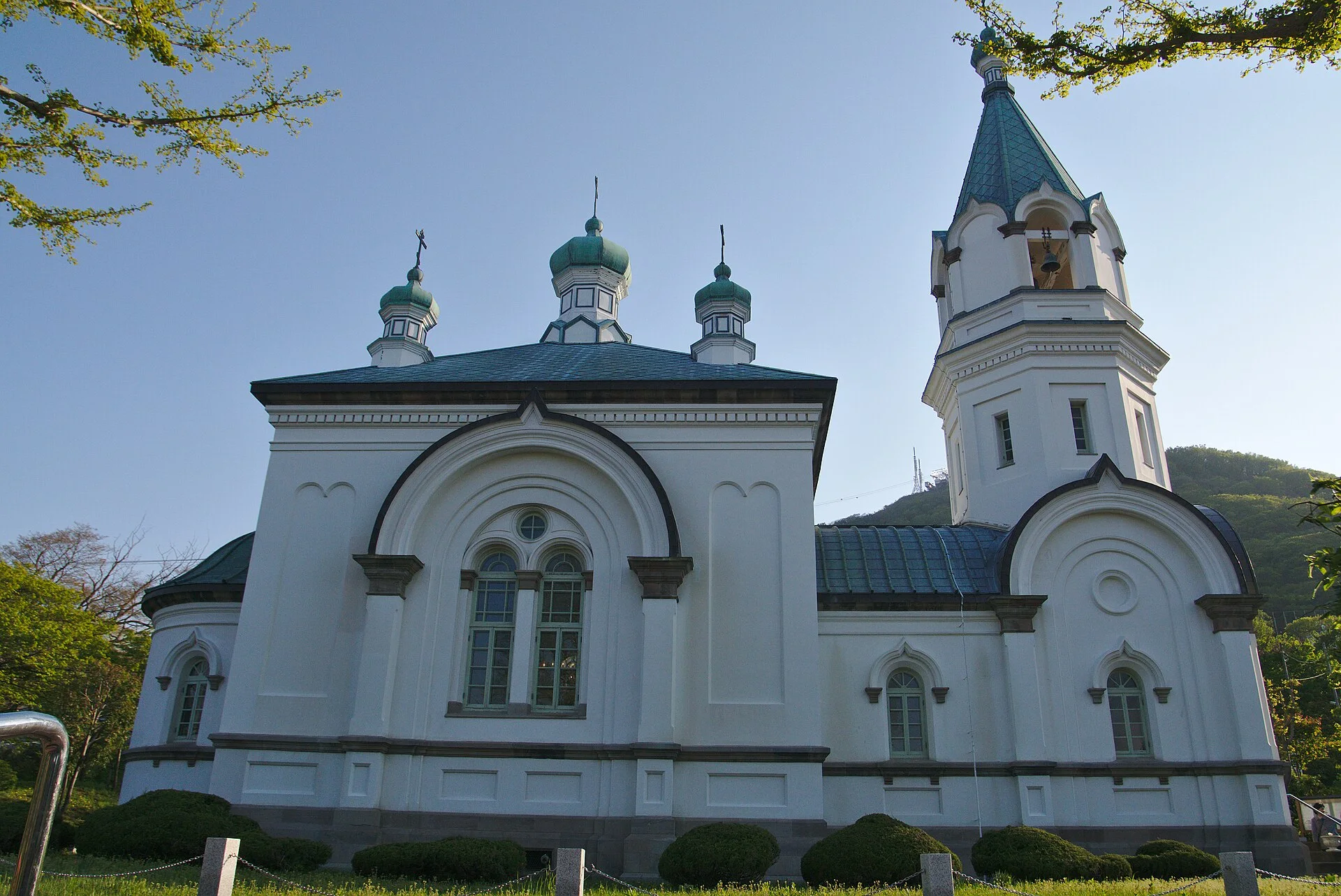
About two minutes past Hachimanzaka Slope stands the Hakodate Orthodox Church, easily spotted by its white walls, green roof and bell tower; the present sanctuary dates from 1916. Continuing towards Daisanzaka Slope brings you to the pointed spire of Motomachi Catholic Church and the cross-shaped roofline of Hakodate St John's Church. All three sit close together, making their exteriors easy to take in along a single stroll, while interior access depends on each church's opening and service hours. If companions prefer street photography over interiors, save indoor time for the public hall or a cafe stop down the hill.
For a relaxed morning, get off at Suehirocho, spend around an hour inside the public hall, walk from Motomachi Park to Hachimanzaka Slope and the churches, and then head downhill towards Jujigai or Hakodate Meijikan. Hakodate's official Motomachi walking route from Suehirocho to Jujigai covers roughly 1.5 km and takes two to three hours including museum stops. Adding costume rental or the consulate exhibition pushes the schedule later, making a late arrival at the bay area feel natural; if you have a timed restaurant booking, view the churches from outside and head down to the waterfront shops in the afternoon.
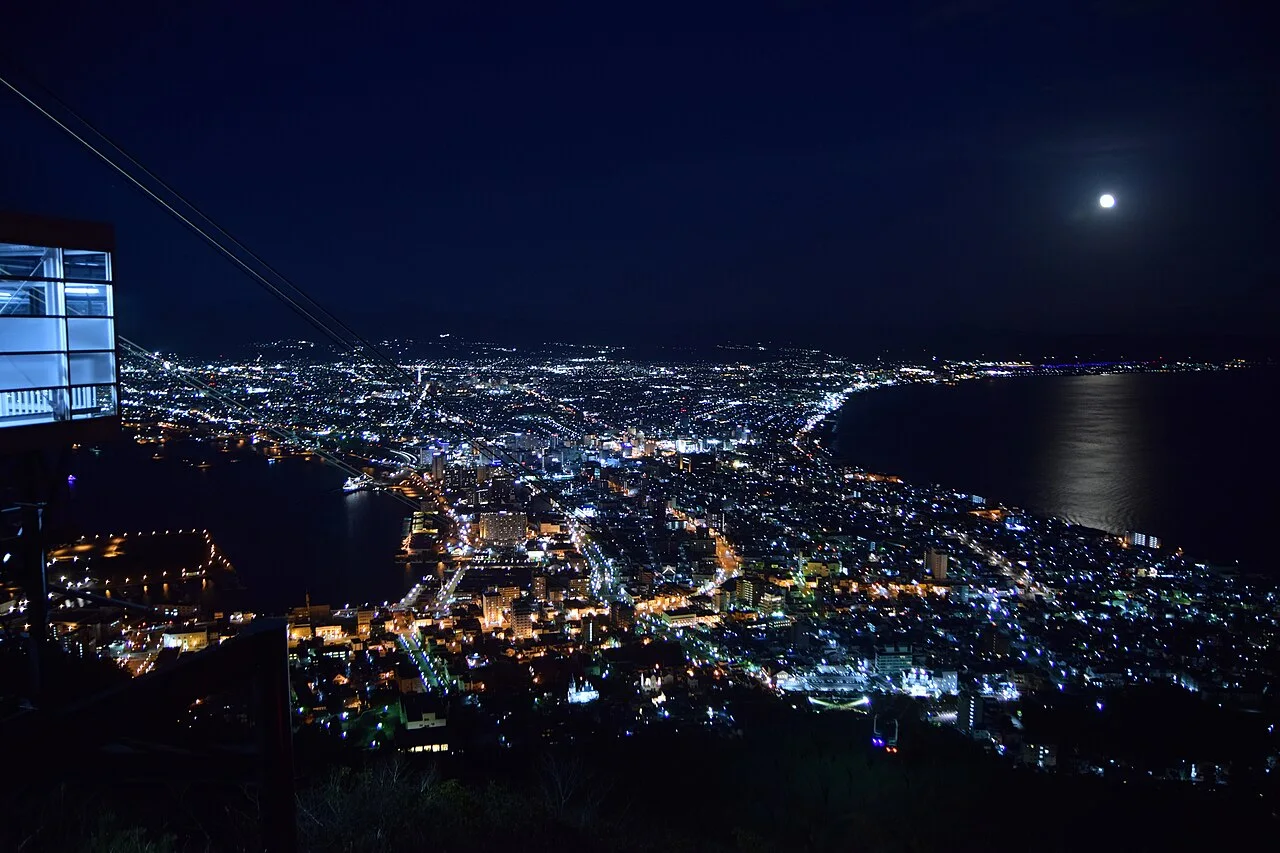
With only one morning and a train to catch, focus on the public hall and Motomachi Park, returning straight down Motoizaka Slope rather than walking all the way to Jujigai. If you are staying on for Mount Hakodate's night view, heading from the hall towards the churches puts you right on course for the Mount Hakodate Ropeway lower station at 19-7 Motomachi. When sunset coincides with peak ropeway queues, check how much buffer you have at the base station—especially if you need to collect bags from your hotel, so store luggage somewhere along your route rather than doubling back from Jujigai.
Where to Spend Your Pass on a Rainy Day
In light rain, walk straight down Motoizaka Slope from the public hall to the Former British Consulate of Hakodate. Built in 1913, three years after the public hall, the present building recreates consular offices alongside exhibitions tracing Commodore Perry's arrival and the opening of the port. Architecture enthusiasts can link these two neighbours with minimal outdoor walking and settle in for an unhurried afternoon tea near the consulate. In warmer months the consulate garden forms part of the visit, though in heavy rain you can simply spend longer in the port-opening galleries.
If you prefer a quiet indoor museum for reading and browsing, make the Hakodate City Museum of Literature your second stop. Head down Motoizaka Slope towards Suehirocho tram stop, where both the Literature Museum and the Hakodate City Museum of Northern Peoples sit along Tramway Street. The Literature Museum focuses on the life and work of poet Takuboku Ishikawa and Hakodate's literary heritage, ideal for visitors curious about how writers depicted the port city. The Museum of Northern Peoples displays clothing and everyday tools of the Ainu and other northern cultures—a refreshing contrast after Meiji-era Western architecture.
To visit three sites in one day, start at the public hall on the hillside, walk down for lunch, and split the afternoon between the Literature Museum and the Museum of Northern Peoples along the main road. Choose your final stop based on closing times and whichever tram stop suits your onward trip. Travelling with older relatives or young children who would rather not keep ducking in and out of buildings, save the public hall and consulate for the heaviest downpour and head straight back to your hotel afterwards. Remember that even between adjacent museums you are still walking along exposed hillside streets, so waterproof coats are easier to manage in sea winds than umbrellas.
In mid-December, check maintenance closures before buying a multi-site pass. The Museum of Northern Peoples closes on 8 December and from 12 to 19 December 2026, while the Literature Museum closes on 14 December 2026; if it rains on 14 December, pair the public hall with the Former British Consulate on a two-site pass. In January 2027, the Literature Museum closes on 13 January (pair with Northern Peoples instead), and on 20 January you can visit the Literature Museum as usual. On regular winter days, both museums close at 17:00, so afternoon visitors coming down from the hall will have the most unhurried time if they pick just one.
When strong sea winds bring driving rain, swap the church walk for indoor browsing inside the Kanemori Red Brick Warehouse. If low winter cloud blocks the summit view from Mount Hakodate and shrinks visibility from the hillside, the waterfront still offers close-up reflections across the harbour and lit brick warehouses, with an easy tram ride back from Jujigai after dinner. For planning a full afternoon between Motomachi sights and evening views, check our Hakodate city and seasonal night-view itineraries.
Snow, Footwear and Indoor Stairs
Motomachi's slopes combine vehicle lanes, pavements and shop entrances, and after snowfall patches that look like bare black tarmac often turn out to be black ice. Stick to cleared pavements, and if footing feels uncertain, replace the longest climbs and descents with a bus or taxi. Both Motoizaka and Hachimanzaka slopes drop down towards the port; in winter, after taking photos from the top, walk along the upper ridge road towards your next stop to skip part of the icy descent. Daylight makes surface conditions easier to judge, while after dark it is safer to take main vehicle routes than steep pedestrian shortcuts.
You must take off outdoor shoes at the entrance; indoor slippers are provided, though official guidance notes uneven thresholds and steep staircases inside, allowing unsteady walkers or children to explore in socks without slippers if preferred. Remove snow grips or crampons before stepping inside. Pack well-fitting socks for children, and keep one hand free for the handrail when using the stairs. Compact folding umbrellas, bags and coats before reaching the doorway so you are not juggling bulky gear over the historic thresholds while others queue behind you.
Pushchairs must be left with staff in the entrance vestibule, meaning little ones will need to be carried, worn in a sling or walk inside. Baby-changing tables are located in the ground-floor women's toilet and the accessible toilet. Families with toddlers can tour the ground-floor Billiard Room and use the facilities before deciding whether to go upstairs, or split up briefly so one adult visits the balcony while another rests downstairs. Even if stairs are not feasible for someone in your group, reaching the hall from the park for the exterior, port views and ground-floor displays still makes a rewarding short visit.
The historic building has no air conditioning and modest winter heating. Dress in light layers during early winter so coats are easy to slip off and carry, and visit early in the morning in peak summer before stopping for cold drinks elsewhere. The hall designates the ground-floor Large Dining Room as a resting spot where visitors may sit and drink water, alongside a separate cafe space with its own operating calendar. Point this room out early if older companions want to sit down while others tour the Grand Hall, giving everyone an easy meeting point.
How to Sequence Shots of the Hall, Harbour and Family
Two exterior angles capture the hall best: one from the park side to show its setting at the crest of the hill, and one straight in front of the entrance framing the pale yellow pillars and upstairs balustrade. On overcast days, bright white sky can wash out exposure, so frame tighter between the columns or include more of the painted timber facade to bring out the colour contrast. For harbour views, the hall's balcony offers a wide panorama while Hachimanzaka Slope gives dramatic street-level perspective—taking one shot at each shows how the building sits above the town.
Photography and video are permitted along the public tour route, except inside the shop and costume studio. Tripods are not allowed indoors, and visitors on the balcony must not lean out over the railing. For group shots in period costume inside the Grand Hall, pick a spot beside the tall windows or in a corner where everyone fits without blocking the walkway, and pause briefly when other visitors pass through. Set up camera settings before getting dressed, as the 30-minute timer starts once outfits are on, saving your group from waiting at every room.
Commercial, anniversary and wedding shoots follow specific studio and hall rules, with written guidelines provided for wedding photography. If someone in your family simply wants one outdoor group photo, take it in front of the hall before splitting up inside, then stroll into Motomachi Park after returning costumes for a final shot with the port behind you. Because Hachimanzaka's classic viewpoint meets a live road, stay on the pavement edge and leave space for pedestrians to pass while taking turns.
Choosing Your Downhill Route After the Visit
If you only have part of an afternoon to soak up Hakodate's port-era streetscape, descend Motoizaka Slope past the Former British Consulate and continue from near Suehirocho to the Kanemori Red Brick Warehouse. The public hall's roofline, the consulate galleries and the brick waterfront warehouses form a single continuous downhill walk. Ending at the warehouses works neatly for browsing shops and having dinner before catching the tram back to your hotel; if you are visiting Goryokaku the next day, keeping this entire half-day within Motomachi and the bay saves an extra cross-town ride.
For a full-day Hakodate loop, spend the morning around Hakodate Station or Goryokaku, visit the public hall in the afternoon, continue through the church district to the ropeway base station and finish with the night view. Note that the Mount Hakodate summit bus does not operate during the 2026 winter season, and the Route 2 ropeway shuttle stops running whenever the ropeway is suspended. Standard adult ropeway fares are ¥1,800 return and ¥1,200 single; in winter, buy a return ticket from the base station. Check the summit live camera before heading up—if low cloud hides the view, stay down along the bay instead.
Travellers staying near the waterfront can let the weather set the pace. On a bright morning with clear harbour views, climb Motoizaka Slope early so you still have time for Goryokaku in the afternoon; in rain, take transport up to the public hall and consulate first and leave the bay until after dinner. If you arrive in Hakodate around dusk, save the hall for the next morning and spend your first evening dining and strolling around the Red Brick Warehouses. Arriving from Sapporo by JR train and hoping to visit the same day? Add tram waiting time and the uphill walk to your arrival time: reaching Hakodate around 14:00 JST usually leaves time before closing, though winter costume rental stops at 15:00 JST, so move dress-up plans to the following morning.
A few useful answers
How do you get to the Old Public Hall of Hakodate Ward?
From Hakodate-Ekimae tram stop outside JR Hakodate Station, take Route 5 bound for Hakodate Dock-mae to Suehirocho, then walk roughly seven minutes uphill. Alternatively, take a Hakodate Bus bound for Koryuji Temple and alight at Kokaido-mae, about a three-minute walk away.
What are the winter closing times for the public hall?
From November to March, the hall closes at 17:00 with last admission at 16:30. It is closed from 31 December 2026 to 3 January 2027 for New Year, and all day on 26 January 2027 for maintenance.
Can you pay by card for costume rental?
No, the costume studio accepts cash only, and rental fees are separate from hall admission. Indoor 30-minute dress sessions cost ¥3,500 for junior high school students and adults (¥2,500 for primary school age and under), while indoor Japanese attire is ¥4,500 per person.
Does the costume studio open on Tuesdays in winter?
In January and February, the costume studio closes on Tuesdays and Wednesdays, and pauses between 12:00 and 13:00 on all other open days. Last registration is at 15:00 daily during winter.
Can you leave a pushchair at the public hall?
Yes, staff look after pushchairs in the entrance vestibule. Note that the historic building has raised thresholds and steep stairs; baby-changing tables are available in the ground-floor women's and accessible toilets.
Official information and references
Sources used in this guide.
- Old Public Hall of Hakodate Ward — Opening Hours, Admission and Access
- Old Public Hall of Hakodate Ward — 2026–2027 Winter Opening Hours Notice (1 November to 31 March)
- City of Hakodate — Old Public Hall of Hakodate Ward Facilities and Access
- Old Public Hall of Hakodate Ward — Interior Guide
- Old Public Hall of Hakodate Ward — History of the Public Hall
- Old Public Hall of Hakodate Ward — Visitor FAQs
- Old Public Hall of Hakodate Ward — Photography and Filming Guidelines
- Old Public Hall of Hakodate Ward — Costume Studio Hours, Registration and Outdoor Rules
- Hakodate Haikara Costume Hall — Current Price List and Terms of Use
- Hakodate Haikara Costume Hall — Rental Procedure
- Hakodate City Tram — Fare Zones and Single Fares
- Hakodate City Tram — One-Day Passes and Combined Tickets
- Hakodate Bus — 2026–2027 Winter Sightseeing Routes
- Hakodate Bus — Motomachi and Western District Bus Stops
- Hakobura (Hakodate Official Travel Guide) — Motomachi Walking Route
- City of Hakodate — Former British Consulate of Hakodate
- Hakodate City Culture and Sports Promotion Foundation — Hakodate City Museum of Literature
- Hakobura (Hakodate Official Travel Guide) — Hakodate City Museum of Literature Exhibits
- Hakodate City Culture and Sports Promotion Foundation — Hakodate City Museum of Northern Peoples
- Mount Hakodate Ropeway — Operating Hours and Fares
- Hakobura (Hakodate Official Travel Guide) — City Museums and Museum of Northern Peoples