Walk up Daisan-zaka from Jujigai in Hakodate's Motomachi district to visit the Orthodox, Catholic and St John's churches before heading to Hachiman-zaka for harbour views. Covers opening hours, winter closures and the descent to Suehiro-cho.
- Region & Focus
- HakodateAttractions
- Reading Scope
- 20 min read · 11 chapters · 5 Q&As
- Official Verification
- 31 official sources checkedUpdated 22 November 2026
- Key Topics
- First tripNeighbourhoodsWinter
Chapter Route Map (tap any stop)
- Climbing Daisan-zaka from Jujigai to Minatogaoka-dori
- Timing Your Visit by Day and Season for Interior Access
- What to See at Hakodate Haristos Orthodox Church
- The Spire and Carved Wooden Altars of Catholic Motomachi Church
- St John's Church: A Cross Visible Right from the Street
- Harbour Views from Hachiman-zaka and Church Perspectives on Chacha-nobori
- Add Two Hours Along Minatogaoka-dori for the Old Public Hall and British Consulate
- Wet Weather, Prams and Wheelchairs: Tackle the Steepest Stretch First
- Splitting Winter Illuminations and Church Interiors Across Two Visits
- Tram Fares, Passes and Winter Loop Bus Stops
- Only One Morning to Spare? Where to Base Yourself to Save Time
- Quick Q&A
Step off the Hakodate City Tram at Jujigai and walk uphill along Daisan-zaka towards the mountain for about 10 minutes to spot the spire of the Catholic Motomachi Church first. A few steps further on, the green domes of Hakodate Haristos Orthodox Church and the cross-shaped roof of Hakodate St John's Church come into view. If you only want to admire the exteriors and cut across to Hachiman-zaka, allow around an hour. To step inside the sanctuaries, weekday mornings and Sunday afternoons follow different schedules. Two of the churches also have different winter closure periods, so pick the one that is open inside before deciding whether to continue to the Old Public Hall and the waterfront.
Climbing Daisan-zaka from Jujigai to Minatogaoka-dori
Exit JR Hakodate Station and board the Hakodate City Tram at the Hakodate-Ekimae stop just outside. Both Route 2 (bound for Yachigashira) and Route 5 (bound for Hakodate-Dokku-mae) pass through Jujigai. The two lines split after Jujigai, so you will need Route 5 if you are heading for Suehiro-cho or Omachi. A single adult fare from Hakodate-Ekimae to Jujigai is ¥250, and for the outbound leg you can simply hop on whichever tram arrives first.
Once off the tram, head uphill along Daisan-zaka towards the mountain. With the sea behind you and the street rising steadily, the spire soon peeks out above the rooftops. Follow the slope up to reach the Catholic Motomachi Church at 15-30 Motomachi first. Both the Orthodox Church and St John's Church sit near the top of Daisan-zaka; searching your map for 'Hakodate Haristos Orthodox Church' and 'Hakodate Sei Yohane Church' (or St John's Church) makes all three entrances far easier to pinpoint than simply entering 'Motomachi'. Official estimates put the walk from Jujigai to the church quarter at around 10 minutes, and the city cites 15 minutes for St John's Church on its own.
After the churches, cut across along Minatogaoka-dori towards the Old Public Hall of Hakodate Ward. The top of Hachiman-zaka lies along the way, so you can pause at the junction for the harbour view before continuing to the Public Hall at the top of Motoi-zaka. Doing it this way means you only tackle one main uphill climb from Jujigai. If you plan to have lunch by the waterfront, walk down Motoi-zaka past the Old British Consulate after the Public Hall. If Hachiman-zaka is your main stop and you have plans elsewhere afterwards, drop straight down Hachiman-zaka to Suehiro-cho and save the Public Hall for another visit.
If anyone in your group struggles with steep gradients, take a taxi from Hakodate Station straight to whichever upper entrance you want to see first. Asking the driver for 15-30 Motomachi drops you neatly by the Catholic Church, while 11-13 Motomachi puts you right at the Public Hall. Both the church quarter and the Public Hall sit along the lower flank of Mount Hakodate, with the Public Hall at the top of Motoi-zaka and the Old British Consulate lower down. Which building you climb to first from the harbour determines how much uphill walking you have left.
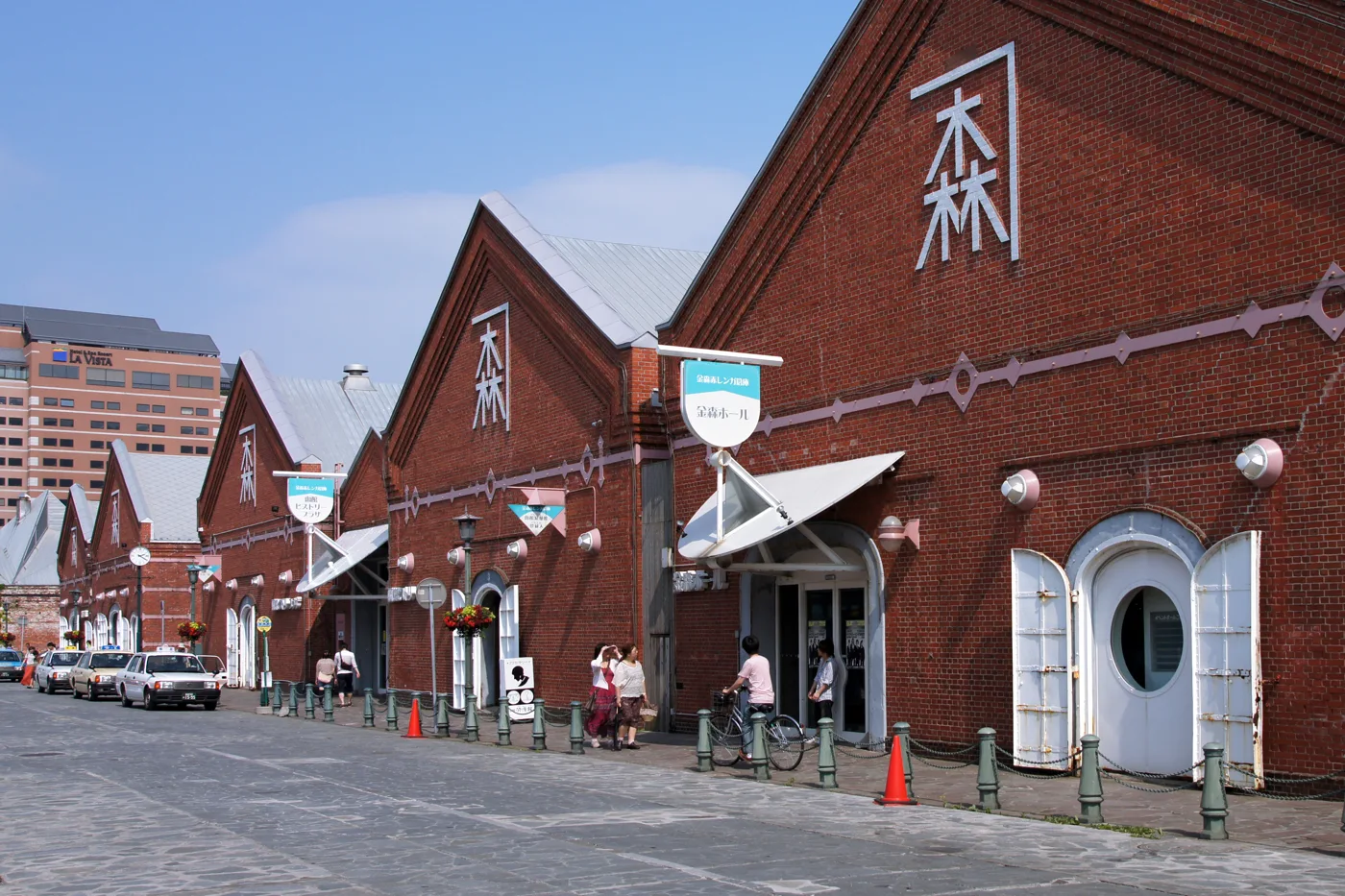
Walking in from the Kanemori Red Brick Warehouse, you can stroll along the waterfront to the foot of Hachiman-zaka. Climbing straight up Hachiman-zaka puts the harbour panorama ahead of the churches, whereas walking flat towards Jujigai first lets you approach the Catholic Church from the front up Daisan-zaka. If you have already had lunch in the bay area, finish your walk by descending to Suehiro-cho to catch the tram. That saves a detour back to the waterfront and keeps your walking energy for the slopes.
Walk up Daisan-zaka from Jujigai in Hakodate's Motomachi district to visit the Orthodox, Catholic and St John's churches before heading to Hachiman-zaka for harbour views. Covers opening hours, winter closures and the descent to Suehiro-cho.
Timing Your Visit by Day and Season for Interior Access
To see the most church interiors in a single walk, aim for a weekday after 10:00 between 29 April and 3 November. Start at the Orthodox Church, then continue at your own pace to the Catholic Church and St John's Church. There is plenty of time for breakfast near Hakodate Station beforehand, rather than rushing to Jujigai and cramming the uphill climb into the opening minutes. In early spring or late autumn, when temperatures drop or the wind picks up, you can easily adjust how long you linger between churches.
On Sundays, shared visiting hours shift to the afternoon. The Catholic Church does not open to visitors until 12:00, and general admission at the Orthodox Church begins at 13:00. If you arrive in Motomachi in the morning, walk up Motoi-zaka from Suehiro-cho to see the Old Public Hall and Hachiman-zaka first, then visit the Catholic Church at 12:00 and the Orthodox Church afterwards. Anyone with a midday restaurant booking can simply arrive in Motomachi after 13:00 so interior visits are not split in two.
Several closure periods overlap from late December into early January. St John's Church has already ended its general interior visiting season, the Orthodox Church suspends general admission from 25 December, and the Catholic Church closes for interior viewing from 30 December to 5 January. Over New Year, the Old Public Hall is also closed from 31 December to 3 January. Spend daylight hours admiring the church exteriors and Hachiman-zaka on those dates, then head down to the waterfront for open cafes and shops when you want somewhere warm to linger.
Signs reading 'haikan' or 'kengaku' at the entrance indicate general sightseeing, whereas 'reihai', 'misa' or 'kito' signal a religious service. The Orthodox Church welcomes anyone to join prayers quietly, while the 11:00 Sunday and New Year's Day Masses at the Catholic Church are reserved for worshippers. Before stepping inside with children, finish and pack away drinks outside, switch phones to silent, and remind everyone to keep voices low. If a service is underway inside, step back outside to the public pavement and continue along your route to the next stop.
| Church | General visiting hours | Closures & admission |
|---|---|---|
| Hakodate Haristos Orthodox Church | Mon–Fri 10:00–17:00 (until 16:00 in Nov, Dec & Mar); Sat 10:00–16:00; Sun 13:00–16:00 | Closed to general visitors 25 Dec–end of Feb. Donation: ¥200 adults, ¥100 junior high students, free for primary school age and under |
| Catholic Motomachi Church | Mon–Sat 10:00–16:00; Sun 12:00–16:00 | Closed 30 Dec–5 Jan and during church services. Free general admission |
| Hakodate St John's Church | Listed by Hakodate City tourism as 29 Apr–3 Nov, 10:00–16:00 | Interior access limited to announced season; subject to temporary closures |
What to See at Hakodate Haristos Orthodox Church
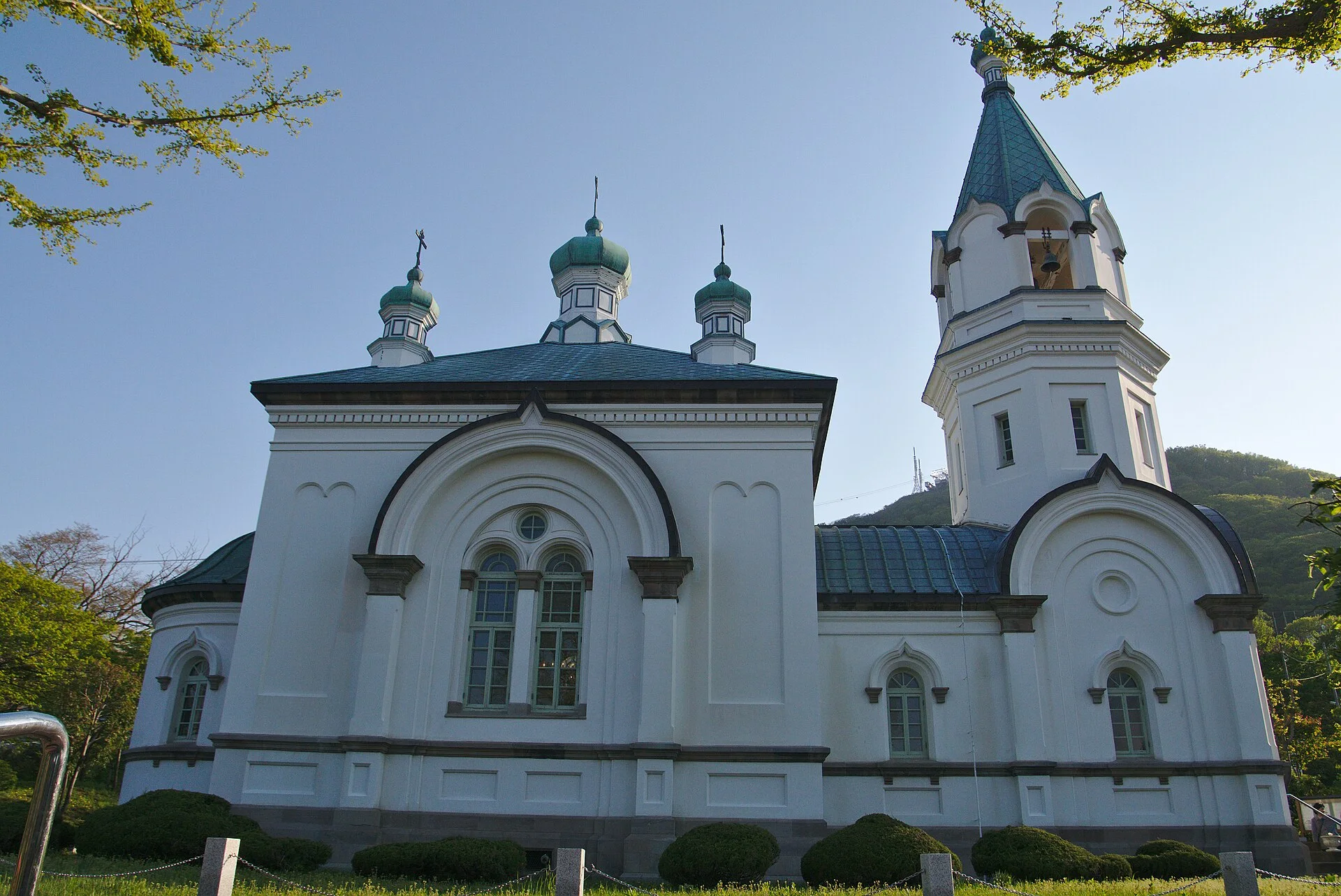
The Orthodox Church stands at 3-13 Motomachi. Look up first for the octagonal bell tower at the front, then follow the white walls along to the crown-like cluster of small roof domes. Six smaller turrets each carry a cross over verdigris green copper roofing. From the side, a single wall layers arched mouldings and windows of varying sizes while the bell tower tapers skyward beside them. Taking in this flank before walking over to the Catholic Church makes the structural and stylistic contrast far clearer than snapping distant roof shots.
The site began as the Russian Consulate, with its attached chapel built in 1860. St Nicholas, who arrived in Hakodate the following year, launched the Orthodox mission in Japan from here before moving on to Tokyo. After the original chapel burnt down in the great fire of 1907, the current second-generation church was completed in 1916 and designated a National Important Cultural Property in 1983 along with its iconostasis. Even from the street, the white-plastered brick walls and copper roof panels stand out clearly.
Inside, look up into the high dome before focusing on the iconostasis—the screen bearing icons that separates the sanctuary from the nave. Both the iconostasis and several of the icons came from Russia, directing the congregation's gaze very differently from the wooden wall reliefs inside the Catholic Church. If you want to know more about the icons or worship practices, ask the attendant on duty. Photography rules are strict: you must ask permission before taking any photographs inside the sanctuary.
Published visiting hours are Monday to Friday 10:00–17:00, closing earlier at 16:00 in November, December and March, Saturday 10:00–16:00, and Sunday 13:00–16:00. General admission is suspended from 25 December to the end of February, and the church also closes to sightseers during funerals or special services while regular prayer continues. The suggested donation is ¥200 for adults, ¥100 for junior high school students, and free for primary school children and younger, so keep loose coins handy before climbing the slope.
Locals affectionately nickname the church 'Gangan-dera' after its ringing bells, which were selected in 1996 among Japan's 100 Soundscapes by the Environment Agency. Hakodate City links the chimes to Saturday evening and Sunday morning worship: the regular schedule lists Vespers at 17:00 on Saturdays and the Divine Liturgy at 10:00 on Sundays, with weekly services confirmed in the church's monthly bulletin. On Saturdays, you can tour both interiors before 16:00 and stay uphill to hear the bells; on Sundays, listen from the lower slopes in the morning and return for interior viewing after lunch, or move on to your next district.
The Spire and Carved Wooden Altars of Catholic Motomachi Church
Walking up Daisan-zaka brings you to the Catholic Motomachi Church right by the foot of Chacha-nobori. From the street below, its pointed bell tower is easier to spot above the roofs than the Orthodox Church's domes. Look for the weathervane atop the main spire, then trace the pointed Gothic arches of the doors and windows across the facade. In October 2024, a later side extension on the left of the church was removed, so if your printed guidebook uses older photos, orient yourself by the main bell tower and front entrance.
Archival photos and drawings kept by the church trace its origins back to 1859, when French missionaries set up a small chapel inside Shomyo-ji temple. The present Gothic church was rebuilt after the 1921 fire, reusing sections of the original brick walls, foundations and glass. The church's official website displays fire-blackened ruins alongside later photographs, including early post-fire interiors laid with tatami mats. Checking those historical images beforehand makes the surviving stonework beneath the pews and around the side windows far more rewarding to spot.
Inside, take time over the main and side altars before following the carved wooden Stations of the Cross along both side walls. Depicting 14 scenes of the Passion, these reliefs—like the altars—were gifted to the parish by Pope Benedict XV. If you only have time for one church interior, pick Motomachi Church for Gothic arches and woodcarvings, or the Orthodox Church for icons, domes and the iconostasis. The parish website also publishes photos of the altars and carvings, which you can compare comfortably once back downhill.
General admission to the Catholic Church is free: Monday to Saturday 10:00–16:00, and Sunday 12:00–16:00. It closes to visitors from 30 December to 5 January, as well as during weddings, funerals and other services. To avoid crossing paths with the Sunday congregation leaving Mass, step through the gate after midday opening. When photographing the exterior, keep the sloped pavement clear and give worshippers room to walk down once Mass ends.
St John's Church: A Cross Visible Right from the Street
Hakodate St John's Church sits at 3-23 Motomachi. As you approach, look for the white cross set into the wall, then step to a corner where two facades meet so you can see the brown roof wings extending in four directions. Only the Mount Hakodate Ropeway or higher vantage points reveal the full cross shape of the roof from above, yet comparing the gables and roof planes from two street angles still makes the geometry clear. Next door stands the 2006 rectory with tall vertical windows and a gabled roof, bringing the scale of the street back to domestic proportions.
British missionary Walter Dening arrived in Hakodate in 1874 and established Hokkaido's first Anglican mission. The original chapel was built at the foot of Motoi-zaka in 1878, before fires prompted several rebuilds and relocations. The current church dates from 1979 and conceals a curved, dome-like ceiling beneath its striking roof. If you have already been inside the other two churches, stepping in here lets you see how four relatively low exterior walls support such a soaring interior vault.
Hakodate City's tourism site lists general interior access from 29 April to 3 November, 10:00–16:00, though the church may close temporarily for parish events. From 4 November onwards, treat it as an exterior stop on your Motomachi walk. When you are short on time, pausing on the street to take in the white wall cross and visible roofline before continuing towards Hachiman-zaka works well without hunting for another entrance.
Harbour Views from Hachiman-zaka and Church Perspectives on Chacha-nobori
From Suehiro-cho tram stop, it is about a 1-minute walk to the foot of Hachiman-zaka, though you need to climb the slope for the classic elevated view over the port. Arriving from the churches along Minatogaoka-dori brings you straight to the top junction instead. Turn your lens towards the harbour to frame the Seikan Ferry Memorial Ship Mashu Maru moored at the quay: a wide-angle lens captures the cobbled slope and avenue of trees, while zooming in from the pavement brings the ship forward.
Chacha-nobori continues uphill from the top of Daisan-zaka towards the mountainside. Official walking notes put it about 5 minutes past the upper end of Daisan-zaka—a stone-paved lane barely one car wide at its narrowest point. In dry weather with good-grip shoes, it is worth walking up a short stretch to turn back and see how the church roofs line up against the port below. Because the lane hugs narrow alleys and church gates, wait to let others pass if people are already stopped ahead taking photos.
Traffic still uses Hachiman-zaka. Hakodate City has posted multilingual notices along both sides reminding visitors to stay on the pavements or the pedestrian area at the top, and never to step onto private driveways, the Nishi High School access road or school grounds. For group shots, have someone frame the photo from the same side pavement. Keep compact tripods tucked close in front of you and fold them away when the slope gets busy. Residents, students and delivery vans share both the top and bottom of the hill, so choosing a safe spot to stand matters more than chasing an extra angle.
When low cloud hangs over the bay, rushing between both upper viewpoints yields little reward. Check straight away whether the harbour is visible down Hachiman-zaka; if fog swallows the ship, spend your time admiring the arched windows, gables and eaves along the church flanks instead. On bright days focused on street photography, check whether the opposite pavement gives a cleaner shot whenever buildings shadow one side. Since each church faces a different direction, simply switch to another facade, move to the next church, or head towards the Public Hall if one wall is backlit.
To see how Hakodate's slopes shaped the town grid, walk past St John's Church to Nijukken-zaka. Widened to around 36 metres as a firebreak after devastating blazes, its rooftops open out far more dramatically than Daisan-zaka's. Beside the slope stands the Shinshu Otani-ha Hakodate Betsuin temple, a 1915 reinforced-concrete hall undergoing conservation repairs scheduled through December 2028. From here you can walk straight back down to Jujigai or continue downhill past Hakodate Meiji-kan—handy if you came up via Hachiman-zaka and prefer not to retrace your steps.
Add Two Hours Along Minatogaoka-dori for the Old Public Hall and British Consulate
Hakodate City's 1.5-kilometre model Motomachi walking course runs from Suehiro-cho to Jujigai and takes roughly 2 to 3 hours with interior visits. It climbs Motoi-zaka to the Old Public Hall first, then crosses via Hachiman-zaka to the churches. Starting from Jujigai instead puts the churches at the start of the morning—ideal if you want to fit sanctuary visits in before lunch. If you would rather open with port-opening history before looking at church architecture, simply reverse the loop and follow the city's sequence.
At the Old Public Hall of Hakodate Ward, Motoi-zaka stretches straight down to the harbour below. Built in 1910 after the 1907 fire destroyed the earlier assembly hall and chamber of commerce, it lets you tour the grand civic hall and read the geometry of the slope from the second-floor balcony. This is the standout interior for period windows, columns, furniture and balcony views. If you only have time for one paid museum and prefer diplomatic history and treaty-port documents, save your ticket for the Old British Consulate further down.
Admission to the Old Public Hall is ¥300 for adults and ¥150 for students. From November to March it opens 9:00–17:00 (closed 31 December–3 January); from April to October it opens 9:00–18:00 Tuesday to Friday and stays open until 19:00 Saturday to Monday, with last entry 30 minutes before closing. If you plan to rent period costumes for photos at the in-house dress salon, factor that into your schedule: trying on outfits eats directly into the time left for Motoi-zaka and the Consulate, which matters most if you have a train to catch later.
Lower down Motoi-zaka, the Old British Consulate—completed in 1913 and in service until 1934—houses a restored consul's office and exhibitions on Hakodate's opening to foreign trade. Single entry is ¥300 for adults and ¥150 for students, or you can buy a two-facility joint ticket covering both the Public Hall and the Consulate for ¥500 adults / ¥250 students (three- and four-facility passes also include the Hakodate City Museum of Northern Peoples and the Museum of Literature). If you only care about how both buildings sit on the slope, viewing their exteriors keeps your time free for streetscapes.
On rainy days, pick one building as your indoor base: the Public Hall offers grand rooms and exhibits, while the Old British Consulate combines port-opening displays with a tearoom. If the rain eases, head straight from the Public Hall towards Hachiman-zaka to keep your walking on the upper contour; if you start at the Consulate, check the weather on the way out before deciding whether to climb up or drop down to the waterfront. Anyone visiting both should buy the joint ticket upfront. In the longer daylight months from April to October, both stay open late enough (19:00 at the Consulate, and 18:00–19:00 at the Public Hall) to slot in after the churches.
Motomachi Park sits right beside Motoi-zaka, and if you have time it is worth walking over to the Former Hokkaido Government Hakodate Branch Office for the terrace view out to sea. This ridge once held the Hakodate Magistrate's Office, and looking at the park alongside the Public Hall still shows how hillside government buildings overlooked the port streets below. When the top of Hachiman-zaka is crowded, this terrace makes a calmer harbour viewpoint. For a half-day stroll with older relatives, the park also works well as a flat meeting point while others pop into the museums instead of waiting on steep pavements or stairs.
Wet Weather, Prams and Wheelchairs: Tackle the Steepest Stretch First
With a pram or wheelchair, the main challenge is gradients and entrance thresholds rather than distance: two short blocks on a map can hide a sharp climb. The easiest way to cut out uphill pushing is to take a taxi straight to your first church or the Public Hall, stay along the upper Motomachi contour, and call another cab from the top when finished. If you prefer to walk downhill, pick a slope with clear sightlines and break for food in the bay area. Chacha-nobori is both steep and narrow, so with wheels it is much easier to head straight along Minatogaoka-dori from the top of Daisan-zaka than to chase that higher angle.
Hakodate City's Motomachi accessibility page lists entrance and facility details for each landmark. It notes steps and corridor handrails at the Orthodox Church, with no toilets inside; wheelchair users needing assistance should contact the church in advance so staff can help. The Old Public Hall has an internal lift and entry ramps, making it the strongest choice if your group wants one step-free interior. Planning your first toilet stop around the Public Hall or the waterfront is especially helpful when travelling with toddlers or anyone needing frequent breaks.
Walking downhill in winter requires extra care: zebra crossings, kerbs and stone slab joints get far more slippery on a gradient than on flat ground. Hachiman-zaka's pavements are heated, yet once you turn onto side streets, snow and black ice call for slower steps and hands out of coat pockets for balance. Agree to meet companions at major junctions rather than having anyone backtrack up a steep hill. On a full afternoon outdoors, schedule a warm indoor stop before the descent so chilled hands and feet do not slow your footing.
In heavy rain, splitting the outing into two focused halves works best: cover whichever churches are practical along the upper ridge, then head down to the bay area for lunch or the Kanemori Red Brick Warehouse. Bear in mind that the warehouses span several separate buildings, so moving between shops and restaurants still means stepping outside briefly—if the downpour intensifies, stay in one building for lunch before deciding whether to cross to another. If you want unhurried time with Motomachi's architecture, move the outdoor walk to the following morning and pick one exhibition hall at the same elevation to avoid going up and down slick slopes.
Splitting Winter Illuminations and Church Interiors Across Two Visits
From 1 December 2026 to 28 February 2027, Hakodate Winter Lights illuminates Hachiman-zaka and Kaiko-dori daily from sunset until 22:00. Along Hachiman-zaka, tree-lined slopes frame the lit harbour below, while the Kaiko-dori stretch runs from in front of Hakodate Meiji-kan to the foot of Nijukken-zaka. According to Hakodate City, sunset falls around 16:07 on 1 December, 16:16 on 1 January and 16:51 on 1 February—giving you roughly 44 extra minutes of daylight by early February before dinner.
To combine churches and illuminations on the same day, visit whichever sanctuaries are open in the afternoon, walk over to Hachiman-zaka, and head down towards Suehiro-cho or the bay area once dusk settles. Because the Orthodox Church suspends general admission from 25 December and the Catholic Church closes from 30 December to 5 January, use daylight hours during that holiday window to study the window frames and rooflines before focusing on the lit streets after dark. If you already have a dinner reservation by the bay, take your photos before eating so you do not have to climb back up from the waterfront afterwards.
If you are only coming for the lights, hop off the tram at Suehiro-cho right by the foot of Hachiman-zaka and walk up only if the wind is calm and the footing looks clear. To capture the harbour view at dusk, take a taxi to the top of Hachiman-zaka in the late afternoon and stroll down after the lights switch on. For the tram back to the station, board a Yunokawa-bound tram at Suehiro-cho (via Hakodate-Ekimae) or walk from the bay area to Jujigai. If you plan to look at the lights after dinner, save the Suehiro-cho station pin, last-tram times and your route back to the hotel on your phone first, and work backwards from the 22:00 lights-out time.
From 1 to 25 December, the waterfront also hosts the Hakodate Christmas Fantasy around the Red Brick Warehouses. If you want to see both in one evening, start with the Hachiman-zaka lights at the top and walk down to the sea. If you are heading up Mount Hakodate instead, walking from the churches straight to the Ropeway lower station flows naturally, leaving Hachiman-zaka for another morning or the walk back if you still have the legs for it. On windy evenings with poor summit visibility, staying in Motomachi and the bay area still gives you two rewarding illuminated stretches.
Tram Fares, Passes and Winter Loop Bus Stops
Riding the tram from Hakodate-Ekimae to Jujigai and returning from Suehiro-cho costs ¥250 per adult each way (¥500 total), or ¥130 per child (primary school age) each way. If you continue on to Goryokaku after Motomachi, the fare from Jujigai to Goryokaku-Koen-mae is ¥290 for adults, and ¥270 back to Hakodate-Ekimae. Those three rides add up to ¥810, so an ¥800 one-day tram pass only saves ¥10—it really starts paying off once you add a fourth leg such as Yunokawa.
The 1-Day Tram Pass costs ¥800 for adults and ¥400 for children and covers unlimited rides until the last tram of the day, at the same price whether bought as a scratch-off paper ticket or a mobile pass. Paper passes can be bought from the driver when the tram stops; simply scratch off the correct year, month and day before showing it as you alight. On standard trams, board through the centre door and exit at the front (on single-door models, both board and exit at the front). Nationwide IC travel cards work smoothly to Jujigai, and if paying cash, remember the fare box does not give change—use the change machine at the front first.
Hakodate Bus Route 3 (the Motomachi & Bay Area Shuttle) departs from Bus Stop 4 at Hakodate-Ekimae, which is separate from the tram stop. Operating on its winter timetable from 9 November 2026 to 31 March 2027, it lets you hop off at Ropeway-mae or Motomachi for ¥250 adults / ¥130 children. Winter departures from Hakodate-Ekimae run at 09:00, 09:40, 10:20 and 11:00 in the morning, and 14:20, 15:00, 15:40 and 16:20 in the afternoon. If the midday gap does not suit your timing, take the tram up Daisan-zaka or hail a taxi to an upper gate; note that on the winter route, the Motomachi bus stop is past the Ropeway station and still leaves a walk to the Old Public Hall.
On a half-day outing, you do not have to stick to one form of transport. Take the bus up to the higher Motomachi stop to save your legs for the streets and churches, then walk down to the bay area and ride the tram back. After winter illuminations, rely on the tram for your return, as winter shuttle buses finish long before the lights go out. When mixing buses and trams, pay per ride—the tram-only pass does not cover buses, though travellers making heavy use of Hakodate Bus as well can compare the ¥1,600 combined 1-day tram and designated-zone bus pass.
If you are travelling with a pram or wheelchair, Hakodate City's tram timetable pages mark low-floor tram departures for weekdays as well as weekends and public holidays. When checking station schedules, Jujigai is stop DY20 and Suehiro-cho is D21. If the gap between low-floor trams is longer than your companions would comfortably wait outdoors, pick your exact departure while still at your hotel or restaurant before heading to the stop.
Only One Morning to Spare? Where to Base Yourself to Save Time
To stay close to the waterfront, HakoBA Hakodate right at the foot of Hachiman-zaka is a handy landmark base. One of its buildings is a converted 1932 bank, putting you steps from the bottom of Hachiman-zaka and making it easy to stroll back after dinner by the bay. Staying here lets you tackle Daisan-zaka and the churches fresh in the morning while keeping evenings flat around the bay area and Suehiro-cho—or even nip back out for a second shot of Hachiman-zaka once the rain clears.
If you have an early JR train or are wheeling luggage on arrival or departure day, JR Inn Hakodate sits right beside JR Hakodate Station—just turn right out of the ticket gates and follow the hotel signs to the entrance. Spending your final morning in Motomachi after check-out keeps the tram hop between Jujigai and Suehiro-cho short and makes collecting your bags effortless. For room types, rates and public-bath details across different districts, see our Hakodate hotel area comparison. Cutting even a few extra blocks off a winter walk with suitcases makes a bigger difference than any shortcut between sights.
When your train leaves before noon, keep to the compact loop of Jujigai, Daisan-zaka, the three churches and Hachiman-zaka, then drop straight down to Suehiro-cho for the tram back to the station. Only add the Old Public Hall or the Old British Consulate if you are catching an afternoon train, and plan lunch either near the waterfront or close to the station. There are plenty of historic buildings worth lingering over here, so keeping an easy downhill exit back to the tram is the surest way not to cut things fine.
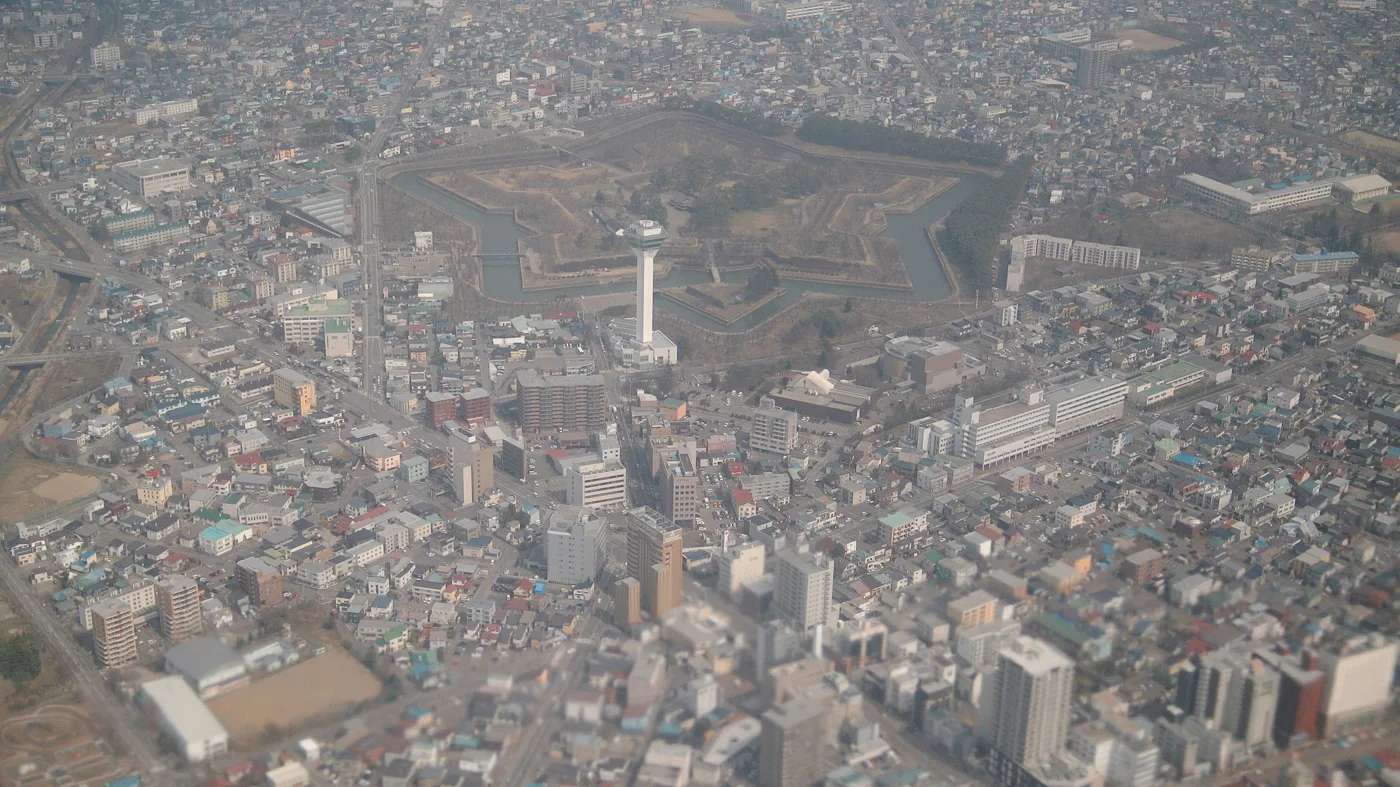
With two days, splitting the sights is even simpler. Both Motomachi's churches and Goryokaku are daytime highlights, so in winter you can dedicate one day to Motomachi's interiors and another to the star-shaped fortress from Goryokaku Tower. If combining both on one day, visit the church interiors in the morning, wrap up the hillside loop before noon, and ride the tram from Jujigai to Goryokaku-Koen-mae. Should heavy rain hit Motomachi, shift costume photos and indoor museum stops into that afternoon and save the outdoor walk for the next morning.
A few useful answers
Which tram stop is best for Hakodate's Motomachi churches?
Get off the Hakodate City Tram at Jujigai and walk uphill along Daisan-zaka for about 10 minutes to reach the church quarter. If you prefer to start at the Old Public Hall of Hakodate Ward, take Route 5 (bound for Hakodate-Dokku-mae) to Suehiro-cho and walk up Motoi-zaka.
What is the best time on a Sunday to visit both church interiors?
During regular visiting seasons, the Catholic Motomachi Church opens at 12:00 on Sundays and Hakodate Haristos Orthodox Church opens at 13:00. Aim to enter the Catholic Church at 12:00 and walk over to the Orthodox Church after 13:00. Note that the Orthodox Church closes to general visitors from 25 December to the end of February.
Do the Motomachi churches charge an admission fee?
Admiring the exteriors from the street is free. General admission inside the Catholic Motomachi Church is also free, while Hakodate Haristos Orthodox Church asks for a donation of ¥200 for adults and ¥100 for junior high students (free for primary school age and under).
When are the Hachiman-zaka 2026–27 winter illuminations held?
Hakodate Winter Lights on Hachiman-zaka and Kaiko-dori is scheduled from 1 December 2026 to 28 February 2027, running daily from sunset until 22:00, free of charge.
Is a 1-day tram pass worth buying just for Motomachi and the bay area?
Taking the tram from Hakodate-Ekimae to Jujigai and returning from Suehiro-cho costs ¥500 total for an adult, so single fares work out cheaper for most Motomachi and bay-area walks. The ¥800 1-Day Tram Pass only makes sense if you take four or more rides on the same day, such as adding Goryokaku or Yunokawa.
Official information and references
Sources used in this guide.
- Hakodate International Tourism and Convention Association | Motomachi Churches & Minatogaoka-dori
- Hakodate Haristos Orthodox Church | Worship & Visiting Hours
- Hakodate Haristos Orthodox Church | Church History
- Hakodate Haristos Orthodox Church | Monthly Service Bulletin
- Hakodate City Official Travel Guide | Haristos Orthodox Church, Bells & Facilities
- Catholic Motomachi Church | Visiting & Mass Notices
- Catholic Motomachi Church | Sunday Visiting Hours & Free Entry Notice
- Catholic Motomachi Church | Historical Church Photographs
- Hakodate City Official Travel Guide | Catholic Motomachi Church & Papal-Gifted Altars
- Nippon Sei Ko Kai Hokkaido Diocese | Hakodate St John's Church
- Hakodate City Official Travel Guide | St John's Church Interior Visiting Season
- Hakodate City Official Travel Guide | Hachiman-zaka Harbour Views & Photography Guidelines
- Hakodate City Official Travel Guide | Chacha-nobori Slope
- Hakodate City Official Travel Guide | Motomachi 1.5 km Walking Course
- Hakodate City Official Travel Guide | Motomachi Park & Former Hokkaido Government Branch Office
- Hakodate City Official Travel Guide | Motomachi Accessibility Information
- Hakodate City Official Travel Guide | Old Public Hall & Accessibility Facilities
- Old Public Hall of Hakodate Ward | Opening Hours & Joint Tickets
- City of Hakodate | Old British Consulate Opening Hours & Admission
- Hakodate City Official Travel Guide | 2026–27 Hachiman-zaka & Kaiko-dori Winter Illuminations
- Hakodate City Official Travel Guide | 2026 Hakodate Christmas Fantasy
- Hakodate City Official Travel Guide | Kanemori Red Brick Warehouse
- Hakodate City Transportation Bureau | Tram Routes
- Hakodate City Transportation Bureau | Station Timetables & Low-Floor Tram Schedule
- Hakodate City Transportation Bureau | Tram Zone Fares
- Hakodate City Transportation Bureau | 1-Day Tram & Combined Tram-Bus Passes
- City of Hakodate | How to Ride City Trams and Route Buses
- Hakodate Bus | 2026–27 Sightseeing Route Winter Operation
- Hakodate Bus | 2026–27 Winter Shuttle Bus Timetable & Fares
- HakoBA Hakodate | Former Bank Building at the Foot of Hachiman-zaka
- JR Inn Hakodate | Access from Hakodate Station Ticket Gates