About a 1-minute walk from JR Hakodate Station. Covers seasonal hours, Ekini Market live squid fishing prices and holidays, how to pick a kaisendon shop, coin lockers, New Year's planning, and Bay Area walking routes.
- Region & Focus
- Hakodate
- Reading Scope
- 20 min read · 10 chapters · 7 Q&As
- Official Verification
- 25 official sources checkedUpdated November 22, 2026
- Key Topics
- FoodItinerariesFirst trip
Chapter Route Map (tap any stop)
- Three Signs to Spot Outside Hakodate Station
- Opening Hours and When to Arrive for Breakfast
- Live Squid Fishing at Ekini Market and How Pricing Works
- Comparing Seafood Rice Bowls Using Posted Menus
- Reading Price Tags: Eat Here or Take Away
- Kelp, Produce, and Souvenirs at Morning Market Square
- Planning Your Exit: Trains, Coin Lockers, and Parking
- Walking From Breakfast to the Bay Area and Motomachi
- Handling Rain, Snow, New Year's, and Family Visits
- Picking the Right Market for Today's Breakfast
- Quick Q&A
Hakodate Morning Market sits about a 1-minute walk from JR Hakodate Station. For a first visit, aim to arrive around 8:00 AM and head straight to Ekini Market to check the live squid fishing board, or grab breakfast at Donburi Yokocho. Stalls start opening at 5:00 AM from May through December and at 6:00 AM from January through April. Squid fishing runs on its own schedule and closes early if boats cannot land catch or daily supplies sell out. Treat a seafood rice bowl here as your main meal, then continue on foot toward the Bay Area or loop back to the station for your train.
Three Signs to Spot Outside Hakodate Station
The station-front morning market spreads across several market halls and surrounding streets in Wakamatsu-cho. Along the block you will pass shops selling fresh seafood, produce, and dried goods, plus sit-down diners tucked into the lanes. Donburi Yokocho Market, closest to the station, is the easiest place to start for breakfast. Signs reading Ekini Market or Asaichi Ekini point to the live squid fishing hall, while Hakodate Asaichi Hiroba (Morning Market Square) combines a farmers' market with a food court under one roof. If you walk into the wrong hall, the others are just steps away. Keep the Japanese building names saved on your phone so you can point to them if you need directions.
When you have a single goal, navigate straight to that building. Use 9-15 Wakamatsu-cho for Donburi Yokocho, 9-19 Wakamatsu-cho for Ekini Market, and 9-22 Wakamatsu-cho for Morning Market Square. Those three official hall names also make much better meeting points than a vague "market entrance." If part of your group stops to take photos outside the station while others walk ahead to scout diners, picking a vague corner leaves everyone backtracking across intersections. Whenever your group needs to stay together, agree to meet outside the first market hall you plan to enter or right past the JR ticket gates.
Following the market association's map lets you loop cleanly: scan the menus lined up outside Donburi Yokocho, walk into Ekini Market to see the squid pond and seafood stalls, and finish at Morning Market Square's farm stands. Retail shops also line the outer streets, Asaichi Odori and Asaichi Nakadori. On a tight schedule, knock out your top priority before browsing the side streets. A classic time trap is comparison-shopping a dozen stalls up and down the block only to realize half your group is already starving. If you spot a diner that can seat everyone right away, take the table.
The layout reflects how the district grew. According to the market federation's history, local farmers began selling vegetables outside Hakodate Station after World War II before the market moved to its current site. Today one end of the block is packed with station-side seafood diners while farmers still bring produce into Morning Market Square on the other. Hokkaido's official tourism site counts roughly 250 shops across both indoor stalls and street-front stores. Setting aside time to browse produce, soup-stock kelp, and dried goods shows you a very different side of the market than grabbing a rice bowl and heading straight back to the train.
About a 1-minute walk from JR Hakodate Station. Covers seasonal hours, Ekini Market live squid fishing prices and holidays, how to pick a kaisendon shop, coin lockers, New Year's planning, and Bay Area walking routes.
Opening Hours and When to Arrive for Breakfast
The Hakodate Morning Market Cooperative Federation lists district-wide reference hours from 5:00 AM past 2:00 PM between May and December, and from 6:00 AM past 2:00 PM between January and April. While the market operates year-round, each shop sets its own opening time, last order, and days off. For instance, the Ekini Market association lists the hall as open from 6:00 AM to 2:00 PM, whereas Shokudo Nibankan inside lists 8:00 AM to 2:00 PM. Early birds arriving at 5:00 AM can browse the street-level shops already open, but if you have a specific sit-down restaurant in mind, check that shop's own opening hour first.
Around 8:00 AM is the sweet spot for building your morning plan. If you are staying near the station and do not mind an early alarm, you can easily fit in both squid fishing and a sit-down breakfast. For groups mixing early risers with late sleepers, meeting after 9:00 AM still leaves plenty of time for a meal and one market hall. On weekends or holidays when a line forms outside a popular diner, read the waitlist rules posted by the door before queuing. Some shops require the whole group to stand in line, while others have you write your name down and stay within earshot. When time is tight, taking an open table next door usually beats splitting up and regrouping later.
If you arrive closer to noon, pick an open restaurant that is still seating guests first and save souvenir shopping for afterward. For specific items like sea urchin or a certain fish, the daily specials board by the door tells you far more than old photos online. A sign reading urikire means an item is sold out, while honjitsu shuryo can mean either that dish or the entire shop is done for the day. Flip to the photo page of the menu and ask "Kore wa mada arimasu ka?" ("Is this still available?"). If you want to try live squid fishing late in the morning, walk past the tank first to see whether they are still taking anglers before committing to a wait.
The federation's "past 2:00 PM" guideline is only a broad district benchmark. Many restaurants stop taking orders earlier, while Hakodate City's tourism site lists Morning Market Square as open until around 3:00 PM, with individual stalls keeping their own schedules. If your train arrives in the afternoon, focus on dropping luggage and exploring the Bay Area instead, and save the morning market for the next day. Trying to squeeze the market in right off an afternoon train usually means dragging suitcases past closing shutters, especially when staying near the station gives you a wide-open morning the following day. Plan your train tickets around a morning market breakfast after an overnight stay whenever possible.
Live Squid Fishing at Ekini Market and How Pricing Works
Head into Ekini Market and look for Ganso Katsu-ika Tsuribori (the Original Live Squid Fishing Pond). Staff hand you a pole at the edge of the tank, and once you hook a squid, they clean and slice it into sashimi on the spot. Because the fishing and eating are part of one continuous sequence, the person holding the rod does not have to be the one eating the whole plate. If a family just wants one child to try catching a squid, ask about the price per squid and where you can sit to share it. Tuck away loose handbags and scarves while waiting, follow staff directions on where to stand, and step clear when passing the rod so the next group has room. Water splashes around the tank, so having one adult accompany a young child while everyone else waits in the aisle keeps things smooth.
Both the Ekini Market association and Hakodate City's tourism site list standard hours from 7:00 AM to 2:00 PM, noting that hours shift by season and the pond closes early whenever the day's squid run out. Prices fluctuate daily with the catch, with updates shared on the operator's official social media accounts. Because pricing is marked as jika (market price), ask "Kyou wa ippai ikura desu ka?" ("How much is one squid today?") before your turn if you are budgeting breakfast and the activity together. Here, ippai refers to one whole squid. If you receive an Ekini Market shopping discount voucher after paying, the operator notes it is valid only on the same day inside Ekini Market—check the value and participating stalls before heading out if you plan to pick up dried seafood.
The operator's site splits the seasonal catch into two rough windows: yariika (spear squid) from January to May, and maika or surumeika (Japanese flying squid) from June to December. That calendar is only a guide, though—what is swimming in the tank depends entirely on that morning's landing. Hakodate City's tourism listing also counts rough-weather fishing halts as closed days. Once you are near the station, check the notice board at the hall entrance or right by the pond. If you are traveling specifically for one species of squid, call Ekini Market at 0138-22-5330 before setting out, then adjust your morning around what came in.
If you arrive to find a sign reading honjitsu kyugyo (closed today) or kanbai (sold out) and still want fresh squid, head to Donburi Yokocho for ika sashi (squid sashimi) or ika somen (squid sliced into noodle-thin strips). Anyone who only eats cooked food should scan menus for yaki or ika-yaki (grilled squid). Note that shiokara is fermented salted squid, so if someone wants a hot, cooked breakfast, look for grilled fish, hot soup, or ramen instead. When family members are already hungry, get seated at a diner first and browse the dried-seafood stalls afterward once everyone has eaten.
No reservations are generally needed for the squid pond. Regular closed days include the third Wednesday of January through June, October, and November, plus December 31 through January 4. If you are visiting over New Year's, cross the pond off your calendar right away and plan around open diners or another morning of your trip. In the same area, Hakodate City's tourism site also highlights a mini aquarium—check its separate opening hours and closed days if you want to pair it with breakfast for kids.
Comparing Seafood Rice Bowls Using Posted Menus
Donburi Yokocho's cooperative site publishes a full directory covering seafood diners, sushi counters, ramen shops, and retail stalls. If you are squeezing in a meal before a train, use the menus posted outside each storefront to narrow down your picks. Check for the toppings you want first, then look for half-size bowls or cooked alternatives for anyone skipping raw fish. When a line stretches down the walkway, read the price board from the side before deciding whether it is worth the wait.
Inside the single Donburi Yokocho hall, you can compare opening times, dishes, and payment methods side by side. A June 2026 listing on the hall's site notes that Ikkatei Tabiji opens at 6:00 AM and is cash-only; its signature live dancing squid bowl is ordered based on daily availability and market price. Ikura-tei opens at 6:00 AM in summer and 7:00 AM in winter on an irregular schedule, accepts credit cards and PayPay, and serves tendon (tempura rice bowls) and grilled black cod set meals alongside seafood bowls. For pairs where one person wants salmon roe and the other prefers cooked food, spots with both donburi and teishoku set meals solve the problem immediately. If you only have a credit card on you, checking the door signs lets you rule out cash-only shops before queuing.
On Japanese menus, uni is sea urchin, ikura is salmon roe, hotate is scallop, and kani is crab. A sanshokudon is a three-topping bowl, which may come as a fixed trio or let you pick your own. Look for okonomi if you want to ask which toppings can be combined, whereas omakase usually means the chef chooses—if there is one item you definitely want, name it directly. Sea urchin fans should compare the price of an all-uni bowl against a two-topping bowl with uni. To find out which crab goes on top, ask "Nan no kani desu ka?" ("What kind of crab is this?") rather than guessing from the photo's color.
When someone in your group has their heart set on sea urchin or crab, put the budget toward that topping. Two people eating breakfast together can have one person order their dream bowl while the other picks something completely different—say, salmon roe and scallops for one and a grilled fish set meal for the other—then check whether sharing or ordering a side of sashimi is allowed. If you are traveling with toddlers, check before sitting down whether you can order plain steamed rice, cooked dishes, or hot soup on the side; snapping a photo of the Japanese menu outside helps if part of your group has already gone in to rest.
When comparing prices, check portion sizes and whether miso soup and side dishes are included. A photo labeled mini on an outdoor board marks a small bowl, so do not compare a mini bowl at one shop against a regular-size set with soup at the next. You can preview each restaurant's specialties through Donburi Yokocho's directory or browse the market federation's dining guide to see the range of dishes available. Always treat the menu posted at the door that morning as final, and ask how many portions remain if you are eyeing a daily special or limited item.
Freshness and origin are two separate checks. The morning market brings in seafood from southern Hokkaido and beyond, so if you specifically want local Hakodate or Hokkaido catch, look for signs reading Hakodate-san or Hokkaido-san, or specific port names written on the board. Start by asking "Sanchi wa doko desu ka?" ("Where is this from?"). If different toppings on the same bowl come from different regions, focus on the origin of the ingredient you care about most. When supply is tight, ordering whatever sashimi or shellfish the shop recommends that morning often beats waiting at another restaurant down the row.
Reading Price Tags: Eat Here or Take Away
Before picking out whole fish or crab, check the pricing unit on the sign. Ichibi and ippai usually mean one whole fish, squid, or crab, while other items are priced per 100g or by total weight. With shell-on crab and shellfish, what parts are included on the scale directly affects the bill. Ask the vendor to point to the exact crab you are buying, state the tax-inclusive total, and confirm any extra charges for shelling, prep, or ice packs. If two signs both just say kani, ask which crab species each one is and whether it is already cooked so you know how much work awaits back at your room.
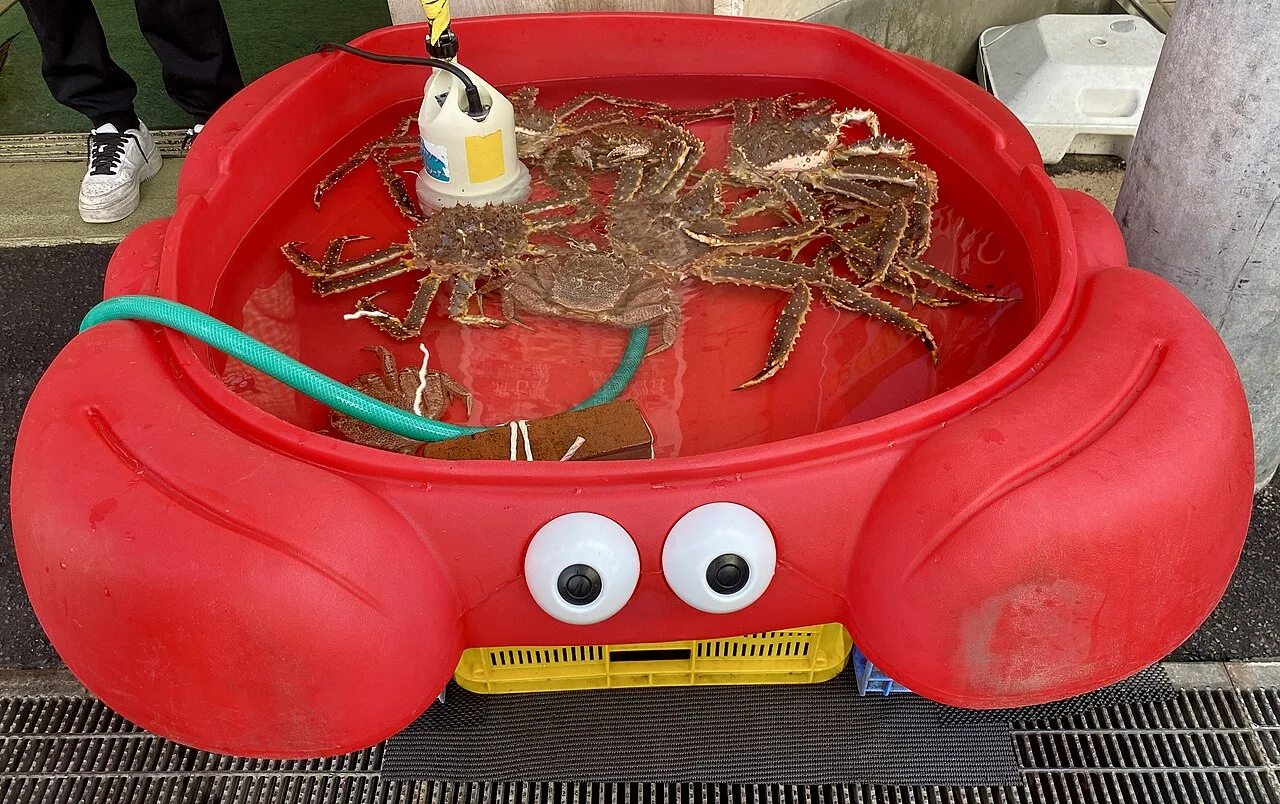
After admiring the live tanks, decide whether you want to eat one prepared serving on the spot or buy a whole crab to take back. For a whole crab, "Ippai ikura desu ka?" asks the price per crab, and "Choridai wa betsu desu ka?" asks whether cooking or prep is charged separately. If you only want a taste, head to a diner for grilled crab legs, crab donburi, or crab soup, where the menu price is fixed per dish. Fans of rich crab tomalley should look for kanimiso—some dishes serve the crab meat and tomalley roasted right in the shell. If you plan to share, ask how many people a portion feeds and whether crackers or picks come with it so you are not stuck with only chopsticks.
In sit-down diners, sashimi on the menu is ready to eat as a meal. At retail stalls, check the package label carefully: fish or shellfish meant to be eaten raw will say sashimi-yo or namashoku-yo, while anything marked kanetsu-yo must be cooked. If you have more sightseeing ahead and no refrigerator at hand, ordering a single cooked dish or small grilled plate on the spot is far easier than hauling a box of raw seafood around town. Travelers staying in an apartment with a kitchen can tell the vendor how much they need for dinner and ask for pre-cut fillets or a pack ready to drop straight into a pot.
When two people are browsing separate stalls, one can note the product and origin while the other asks how it is prepared. If you want to eat what you buy inside the hall, stick to stalls with dine-in seating and ask "Koko de taberaremasu ka?" ("Can we eat this here?"). Sit-down diners reserve their tables for paying restaurant guests, and common seating areas have their own rules—do not assume the tables outside a neighboring shop are open to outside food. Sizing your order to what you can finish or scheduling a pickup time before leaving beats hunting for a place to eat in the aisle.
Keep some Japanese yen in bills and coins ready. Ekini Market's association page notes that some stalls accept credit cards, so look for card decals by the counter and ask before ringing up. If you buy both dried goods and chilled items at the same stall, ask for separate bags so damp cold packs do not soak paper packaging or your clothes. Note the shop name after paying so you can match receipts to items or find your way back easily. When street-front stalls are still unloading morning deliveries, step to the side while reading labels or taking photos to leave room for hand trucks.
Kelp, Produce, and Souvenirs at Morning Market Square
Turn down the market-signed street into Hakodate Asaichi Hiroba (Morning Market Square), where a farmers' direct market (sanchoku-ichi), specialty shops, and a food court share one hall. Start at the sanchoku-ichi section for local produce, then take your time comparing packaged dried goods along the specialty stalls. Hakodate City's tourism site notes that back in the building's former Oshima Dome days, local farmers flipped wooden apple crates upside down to serve as tables—a direct-from-the-farm tradition the market still keeps alive. Exploring here feels completely different from inspecting seafood tanks, with seasonal fruit, house-made pantry items, and hot food court bowls just steps away.
If you want one southern Hokkaido staple you can actually cook with at home, go for Hakodate makombu (true kelp). According to Hakodate City, the coast stretching from the Tsugaru Strait to Funka Bay produces thick, wide-leafed makombu prized for soup stock. Pre-cut packs labeled dashi kombu pack flat into luggage for making broth at home. If you like kelp sprinkled over rice balls, noodles, or clear soup, look for finely shaved tororo kombu, or ask at stalls carrying gagome kombu whether they stock shredded packs meant for mixing straight into rice. When buying kelp as a gift, snap a photo of the Japanese cooking instructions on the back so the recipient knows how to use it.
Some bags print "Hokkaido" or "Hakodate" in huge letters on the front, so always flip the package over to read the ingredient and raw-material origin lines—the manufacturer's address only tells you where it was processed. Ask by both item and origin if you are hunting for kelp from Minami-Kayabe. Say "Dashi ni tsukaitai desu" if you want it for broth, or ask "Sono mama taberaremasu ka?" ("Can this be eaten as is?") for ready-to-eat snacks. When comparing two bags at different prices, check the net weight first, then see whether one is unseasoned, seasoned, or split into individually wrapped portions.
Match your souvenir choices to your cold-chain setup for the rest of the trip. If you are boarding a train to another city and switching hotels that night, stick to shelf-stable goods with full ingredient and origin labels on the outer bag. Chilled roe, pickled seafood, and fresh items are best saved for the end of the day when you have a hotel fridge, or eaten right away. Asking a stall to hold an order only delays pickup; if you have to carry items all day, tell the vendor your pickup time and travel plan so they can pack them appropriately.
If you plan to ship packages to a hotel elsewhere in Japan, confirm first that your hotel accepts chilled or frozen deliveries and have the shop write the arrival date on the shipping slip. For international shipping, ask the vendor which countries they can ship to, the shipping fee, and the carrier method, then check your destination country's customs and food-import rules before buying. Items going into your checked or carry-on luggage are subject to your home country's agricultural, meat, and seafood import restrictions—keep original sealed packaging and full ingredient labels intact so customs officers can verify what is inside at arrival. Keeping original labels on gifts also lets friends see the exact product name and best-by date.
Planning Your Exit: Trains, Coin Lockers, and Parking
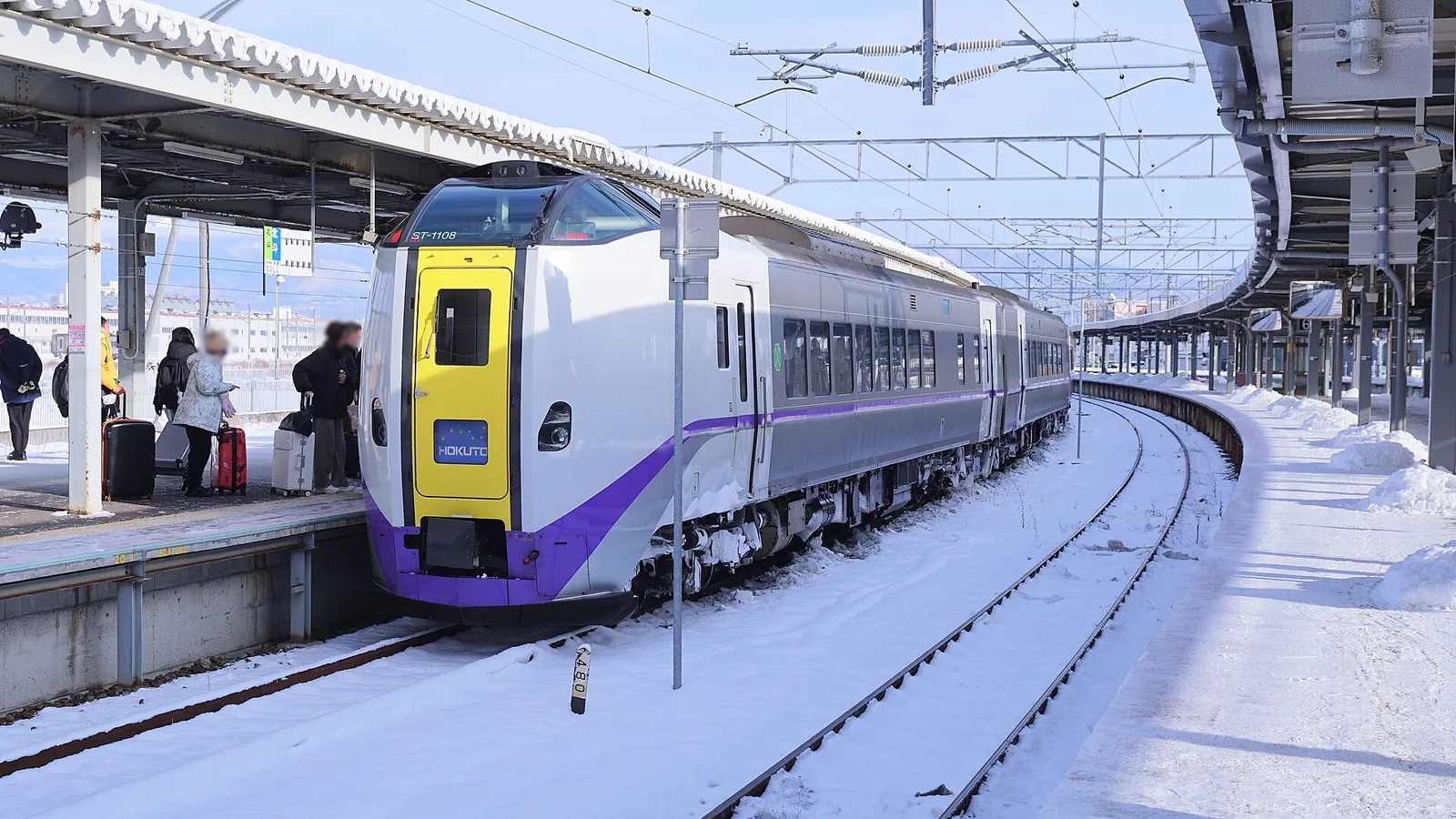
From JR Hakodate Station, the market federation's access page puts the walk at about 1 minute. If you take the streetcar, get off at Hakodate Ekimae and walk about 2 minutes; the Hakodate Airport shuttle bus drops you at the Hakodate Ekimae Bus Terminal, also about 2 minutes away. Travelers arriving on the Hokkaido Shinkansen should double-check the station names on their ticket: bullet trains stop at Shin-Hakodate-Hokuto, which requires a transfer into downtown Hakodate Station next to the market. See our Sapporo to Hakodate train route for transfer details.
If you have checked out of your hotel with luggage and are departing from JR Hakodate Station, lock your bags inside the station first so you walk out in a loop. According to a June 2026 check by the Hakodate International Tourism and Convention Association, coin lockers on the station's second floor operate from 6:00 AM to 10:00 PM and take cash or transit IC cards. Donburi Yokocho also has lockers—its official site listed large lockers at ¥500 and small at ¥300 as of April 2026. Measure your suitcase including the wheels before committing, and factor in the time to go upstairs and locate your locker bank before boarding. Small groups should keep bags in the same locker area rather than scattering across different floors.
When large station lockers fill up, bus travelers can check the waiting room at the Hakodate Ekimae Bus Information Center, which the tourism association lists as open for same-day, cash-only luggage storage from 7:00 AM to 11:00 PM. Donburi Yokocho's lockers are likewise cash-only and open from 4:00 AM to 10:00 PM, two hours earlier than the JR station's second floor. If you are heading straight to Hakodate Airport after exploring the waterfront, look into coin lockers and pickup hours at the Kanemori Red Brick Warehouse so you do not have to backtrack to the station. Keep everyone's passports, tickets, and warm layers with you before locking your main bags away.
With only about 45 minutes before your train and luggage in tow, subtract station transit time first and keep the market to one quick breakfast or a single pre-decided bag of dried goods. With roughly 90 minutes, stow your bags, grab a meal, and then judge the lines before adding Ekini Market or Morning Market Square. If breakfast takes longer than expected, handle any last-minute shopping at a single stall closest to the station. Always work backward from your train departure time, leaving buffer minutes for retrieving bags or waiting for travel companions to pay.
Drivers should tell apart Hakodate Asaichi Ekimae Parking and Hakodate Asaichi Parking in their navigation app. According to the market federation's access page, both lots charge a standard rate of ¥100 per 20 minutes, and spending at least ¥2,200 at a single participating shop earns 60 minutes of validated parking—receipts from multiple shops cannot be combined. Keep your parking ticket with you and show it at checkout at an eligible store. If you plan to spend several hours walking around the Bay Area after breakfast, compare parking locations near the waterfront first, as moving the car after eating can save a long walk back to the station.
Walking From Breakfast to the Bay Area and Motomachi
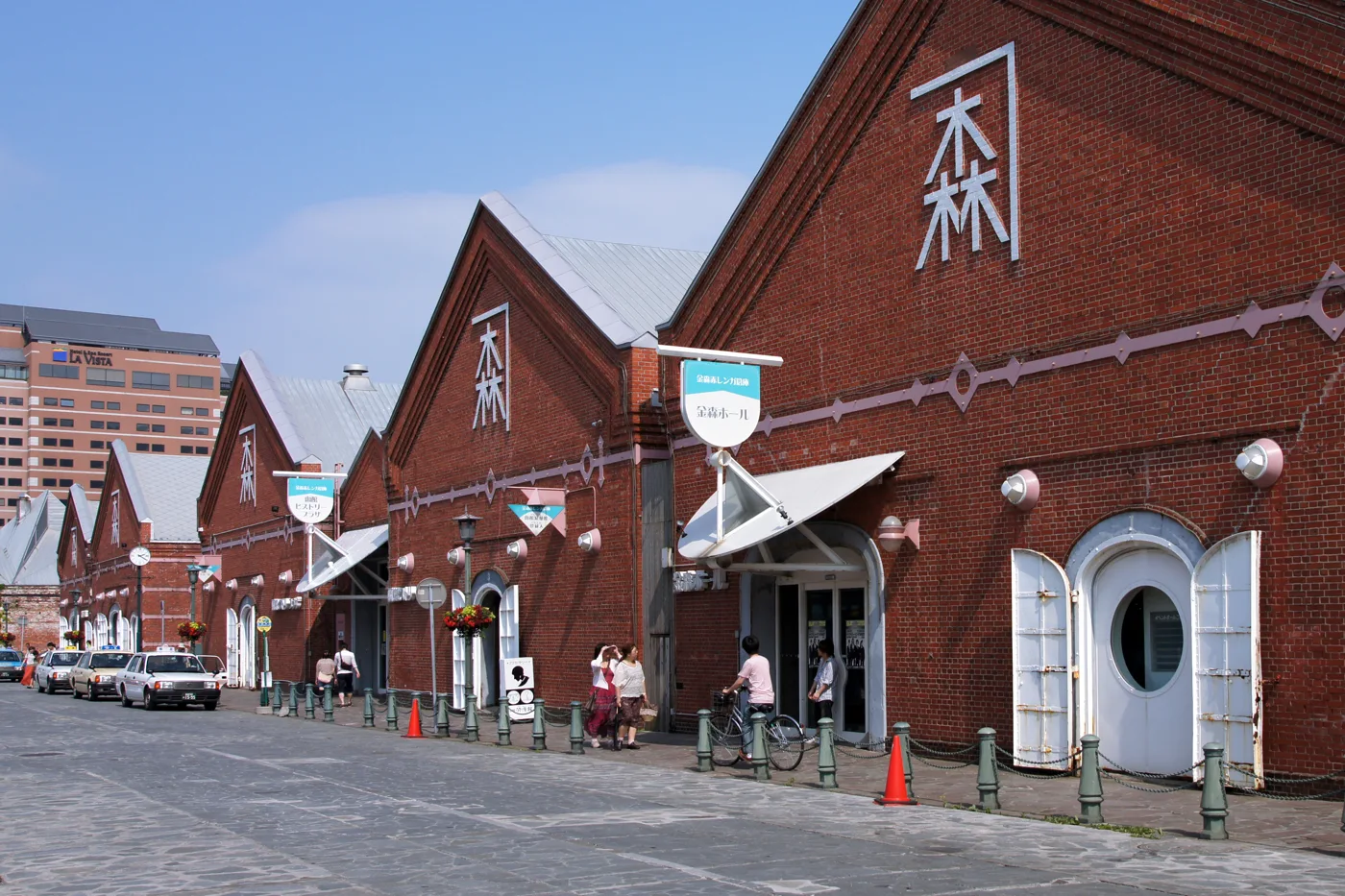
If you arrived in Hakodate the night before, make the morning market your first stop after waking up, then walk toward the Kanemori Red Brick Warehouse. Kanemori's official site estimates a 15-minute walk from JR Hakodate Station, which is a fair baseline from the adjacent market, though side-street detours, snowy sidewalks, and photo stops will stretch the walk. Finish breakfast early and you can stroll along the waterfront past the brick warehouses before the shops inside open. Dropping any chilled market purchases back at a nearby hotel fridge first lets you walk the port empty-handed.
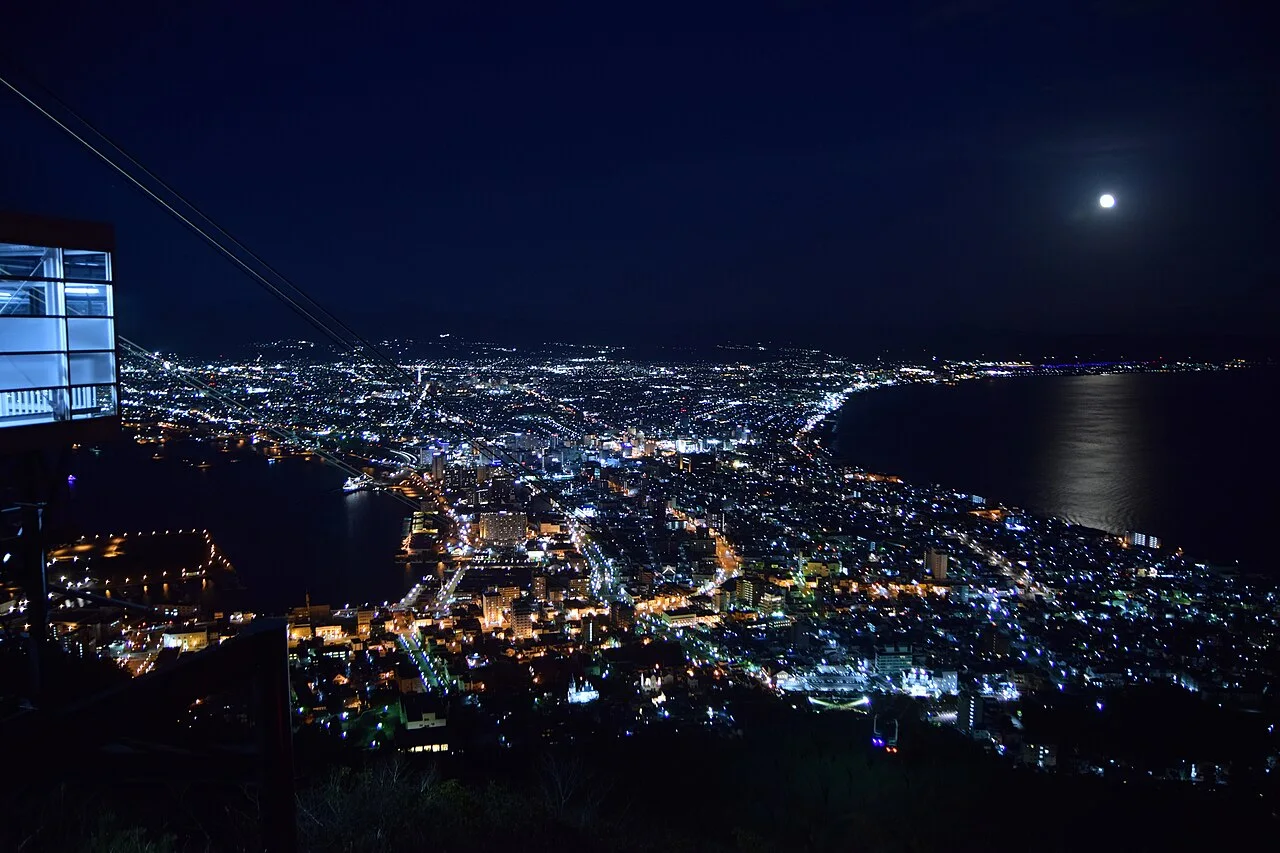
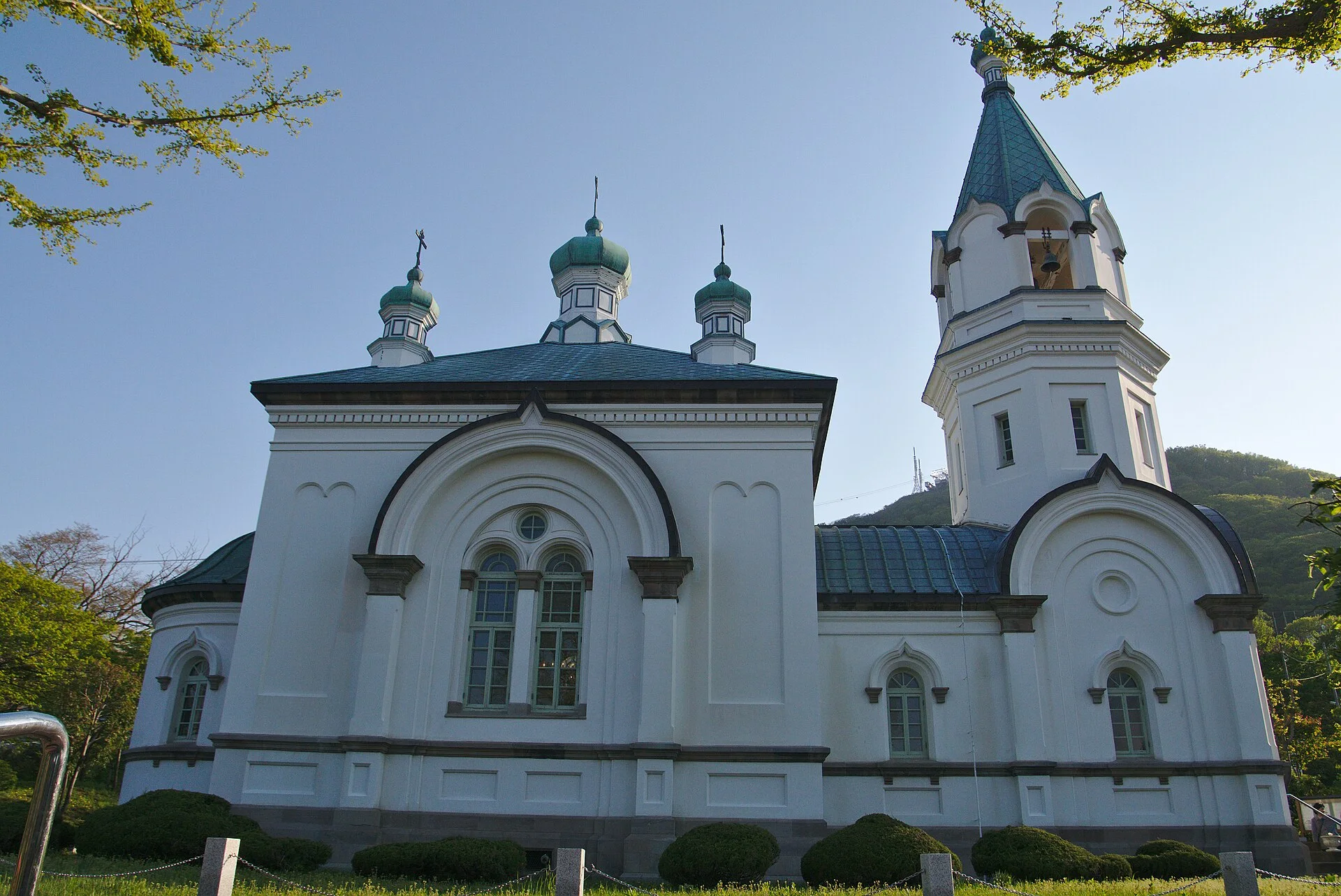
If everyone still has energy after the warehouses, keep walking toward Jujigai and up the slopes into Motomachi. Separate the flat waterfront stretch from the uphill climb when estimating time—if older relatives are along, hop on the streetcar to Jujigai, pick either the port or Motomachi for that leg, and build in a cafe break. For churches and historic slopes, continue with our Hakodate Motomachi churches guide. Check mountaintop visibility and evening transit before heading up later in the day; anyone tying in the Mount Hakodate Ropeway should work backward from the Mount Hakodate night view guide to time when to leave Motomachi.
Two-day trips usually split one of two ways. If you arrive in the afternoon on day one, cover the Bay Area or night view that evening and save the morning market for day two before catching your next train—this works especially well if you stay near the station or are continuing toward Sapporo. If you have two full days in Hakodate, pair the morning market with a half-day around Jujigai and the waterfront, and save another half-day for Goryokaku. Coming into town from a Yunokawa hot-spring inn where breakfast is already included? Eat at your ryokan, then visit one market hall around midday for seasonal seafood lunch. Compare bases in our Hakodate hotel areas and onsen comparison.
When you finish breakfast before waterfront shops open, walk from the station toward the pier to see the exterior of the Seikan Ferry Memorial Ship Mashumaru before following the harbor to the warehouses. The Mashumaru preserves one of the ferries that once linked Honshu and Hokkaido across the Tsugaru Strait; check its opening hours separately if you want to tour inside. On freezing mornings when someone in your group needs to warm up right after eating, duck into a station-front cafe for hot drinks until Bay Area stores open. On a tight day trip arriving near noon, hitting two market halls plus Motomachi will crowd the evening ropeway—eat at the market, stroll the waterfront, and decide at Jujigai whether to climb the hill or head straight for the ropeway base.
Handling Rain, Snow, New Year's, and Family Visits
When winter wind and snow hit outside the station, duck straight into Donburi Yokocho first and save Ekini Market or Morning Market Square until after you have eaten. Each hall offers indoor stalls and dining, though you still have to step onto open streets to move between buildings. Wear shoes with solid grip and watch for icy patches and delivery carts along the curb. In heavy rain, take the streetcar toward the Bay Area or duck back to a station-area hotel to swap wet socks before heading out again. Staying between the station and the market lets you split the morning into two easy loops with a warm break indoors.
With a stroller or someone who tires quickly, treat your breakfast spot as the whole group's anchor point. Ask staff for help at entry steps, and if people want to browse different stalls, split up to shop and agree to meet after eating. Hakodate City's tourism listing notes that Morning Market Square has accessible restrooms and baby-changing tables. Let kids' appetites dictate the order—eat as soon as they are hungry, then stop by Ekini Market afterward to see if live squid are in stock. When queuing or picking up food, park strollers only where staff indicate so indoor aisles stay clear for diners and carts.
Over the 2026–2027 New Year's holiday, treat the market district, individual restaurants, and the squid pond as three separate schedules. As of November 22, 2026, the market federation's public notices had not posted an individual shop roster for the year-end holiday. Between December 31 and January 4, assume the squid fishing pond is closed per its published holiday schedule and build your morning around open diners and a harbor walk instead. If you have a specific restaurant in mind over the holidays, show them the Japanese shop name along with your date and arrival time and ask "Ichigatsu futsuka no asa wa eigyo shite imasu ka?" ("Are you open on the morning of January 2?"), while keeping a nearby backup spot on hand.
When booking a station-front stay over the New Year's period, choosing a hotel breakfast leaves the morning market as a flexible stroll before check-out. If you are staying near the station or Bay Area and walking everywhere, lock down a confirmed breakfast spot first and pick afternoon stops within easy tram or walking distance. Looking for another fish market? Hakodate Jiyu Ichiba (Hakodate Free Market) in Shinkawa-cho generally closes on Sundays, while the Hakodate City Fisheries Regional Wholesale Market in Toyokawa-cho keeps its own market calendar and closes December 31 through January 4. Over New Year's, your best bet for an open morning diner is checking the Wakamatsu-cho morning market block.
Picking the Right Market for Today's Breakfast
If you are staying near the JR station, need luggage lockers before departing, or want to try squid fishing, start at Hakodate Morning Market. Whether you have 30 minutes or two hours, breakfast stays in the same compact block, and you can easily tack on the squid pond or Morning Market Square. If your route already puts you on the streetcar toward Yunokawa and you want to see where local chefs and residents shop for fresh fish, make a separate stop at Hakodate Jiyu Ichiba in Shinkawa-cho. It sits in the opposite direction at 1-2 Shinkawa-cho and does not lie along the station-to-Bay-Area walk.
Fitting both Hakodate and Sapporo's markets into one Hokkaido trip comes down to what you want to eat. In Hakodate, focus on station-side squid and kaisendon, buying whole seafood only if you plan to cook. In Sapporo, breakfast plans usually depend on where you are staying and shopping, as downtown markets and the Curb Market require different transit—see Sapporo markets and food routes. If you only have room for one big market breakfast on the trip, save it for whichever city gives you an unhurried morning that connects cleanly to your next stop.
Both the morning market and the wholesale market sit near the water, so check the street address carefully before navigating. Morning market stalls sell retail portions, whereas the Toyokawa-cho wholesale market centers on trade auctions, with Hakodate City separately listing information for the on-site diner Uoichitei. Save your shopping for fish and kelp at Hakodate Morning Market or Hakodate Jiyu Ichiba, and only head to the wholesale market to eat if Uoichitei's hours and closed days fit your morning. Finishing breakfast and strolling straight on to the Kanemori warehouses or Motomachi slopes makes for a much smoother morning than hopping between multiple fish markets before noon.
A few useful answers
What time does Hakodate Morning Market open?
The market district generally opens around 5:00 AM from May to December and around 6:00 AM from January to April, staying open past 2:00 PM. Individual shops set their own opening and last-order times, so around 8:00 AM is a reliable arrival time for a first visit.
Where do you fish for live squid, and how is it priced?
Head inside Ekini Market to Ganso Katsu-ika Tsuribori (the Original Live Squid Fishing Pond). Fishing is billed at market price, with daily updates shared through the operator's official social channels. Once you hook a squid, staff clean and slice it into sashimi on the spot.
Is the live squid fishing pond open over New Year's?
According to Hakodate City's official tourism site, the live squid fishing pond is closed from December 31 through January 4. It is also closed on the third Wednesday of January through June, October, and November.
How do you walk to the morning market from JR Hakodate Station?
The market sits just west of the station, about a 1-minute walk away. Look for Donburi Yokocho Market if you want breakfast right away, or set your map to Ekini Market for squid fishing.
What can someone eat if they do not eat raw fish?
Check the menus at Donburi Yokocho or the Morning Market Square food court for grilled fish set meals, ramen, and other cooked dishes. On Japanese menus, look for words like yakizakana (grilled fish), teishoku (set meal), or ramen.
Is the market worth visiting in rain or snow?
Yes. You can browse indoor stalls and dine inside Donburi Yokocho, Ekini Market, or Morning Market Square, though moving between buildings requires stepping onto the street. In heavy rain or snow, stick to the building closest to the station, and keep in mind that squid fishing may close if rough seas halt fishing boats.
Can you store luggage before exploring the market?
Yes. Coin lockers are available on the second floor of JR Hakodate Station and inside Donburi Yokocho. If you are leaving by train, storing bags inside the station makes it easy to grab your luggage and head straight through the ticket gates.
Official information and references
Sources used in this guide.
- Hakodate Morning Market Cooperative Federation | Seasonal Opening Hours
- Hakodate Morning Market Cooperative Federation | Operational Notices
- Hakodate Morning Market Cooperative Federation | District Map
- Hakodate Morning Market Cooperative Federation | Access and Parking
- Hakodate Morning Market Cooperative Federation | Market History
- Hakodate City Official Travel Guide | Hakodate Morning Market
- Hokkaido Tourism Organization | Hakodate Morning Market Overview
- Ekini Market Association | Market, Fishing Pond, and Diner Hours
- Ekini Market Association | Live Squid Fishing Pricing and Seasonal Species
- Hakodate City Official Travel Guide | Live Squid Fishing Pond and Closed Days
- Hakodate City Official Travel Guide | Morning Market Mini Aquarium
- Hakodate City Official Travel Guide | Morning Market Square and Facilities
- Donburi Yokocho Market | Shop Directory
- Donburi Yokocho Market | Ikkatei Tabiji Hours, Menu, and Payment Methods
- Donburi Yokocho Market | Ikura-tei Hours, Menu, and Payment Methods
- Donburi Yokocho Market | 2026 Coin Locker Notice
- Hakodate International Tourism and Convention Association | 2026 Coin Locker Information
- Kanemori Red Brick Warehouse | Access and Walking Times
- Kanemori Red Brick Warehouse | On-Site Services and Luggage Storage
- Hakodate International Tourism and Convention Association | Bay Area Walking Map
- City of Hakodate | Seikan Ferry Memorial Ship Mashumaru
- City of Hakodate | Hakodate Makombu Kelp
- Hakodate International Tourism and Convention Association | Hakodate Jiyu Ichiba (Free Market)
- City of Hakodate | Fisheries Regional Wholesale Market Calendar
- Taipei Customs, Customs Administration, Ministry of Finance | Passenger Rules for Bringing Agricultural, Livestock, Aquatic, and Food Products