Shuzenji Onsen is a historic Izu hot spring town founded by Kobo Daishi in 807. Its 21 Katsura River accommodations range from 400-year-old Kikuya and Arai Ryokan (with 15 Registered Cultural Properties) to private-villa Asaba and the 6-room all-inclusive Shonoya. This guide covers how to choose a ryokan, Hakoyu public bath and free footbaths, the five-bridge walk, Shuzen-ji Temple, and rail transfers via Mishima.
- Region & Focus
- Izu and Atami
- Reading Scope
- 14 min read · 7 chapters · 4 Q&As
- Official Verification
- 10 official sources checkedUpdated 20 November 2026
- Key Topics
- Where to stayHot springsChubu & Hokuriku
Chapter Route Map (tap any stop)
- The Town's Foundations: Tokko no Yu and the Founding Legend
- Choosing Your Stay: Heritage Ryokan, Secluded Hideaways, Private Villas, or Budget
- Two Heritage Icons: Arai Ryokan and Yukairo Kikuya
- Secluded Hideaways and Private Villas: Yagyu no Sho, Asaba, Oni no Sumika, and Shonoya
- Public Baths and Day Visits: Hakoyu Fares, Hours, and Closure Dates
- Walking Routes: Five Bridges, the Bamboo Grove, and Shuzen-ji Temple
- Transport and Itineraries: Mishima Transfers and Crossing Izu
- Quick Q&A
Shuzenji Onsen sits tucked inside a wooded valley in central Izu. According to legend, the monk Kobo Daishi struck the riverbed rock with his vajra pestle in 807 (Daido 2), bringing forth warm mineral water; the hot spring quarter grew up along the Katsura River valley, linked by five bridges each associated with a romantic blessing, with the Bamboo Forest Path and Shuzen-ji Temple just a few minutes' stroll away. Compared with Izu's coastal resorts, Shuzenji's accommodation landscape has far greater depth: 400-year-old Kikuya, Arai Ryokan with 15 National Registered Tangible Cultural Properties, the Relais & Châteaux private-villa icon Asaba, and the 6-room all-inclusive Shonoya are all clustered along the banks of the same narrow valley. While Atami serves as a bustling rail-hub spa and Ito leans towards seaside holidays, Shuzenji preserves the quiet atmosphere of a mountain-river retreat, making it the natural counterpoint when you want to trade Izu's coast for the hills. This guide organises the 21 officially listed properties into four clear categories while verifying Hakoyu's public bath fares and maintenance closures, the exact spots for both free footbaths, Shuzen-ji Temple's opening hours, and Sunzu Line connections from Mishima, giving you a seamless route for heritage ryokan, bathhouse hopping, and the five-bridge stroll.
The Town's Foundations: Tokko no Yu and the Founding Legend
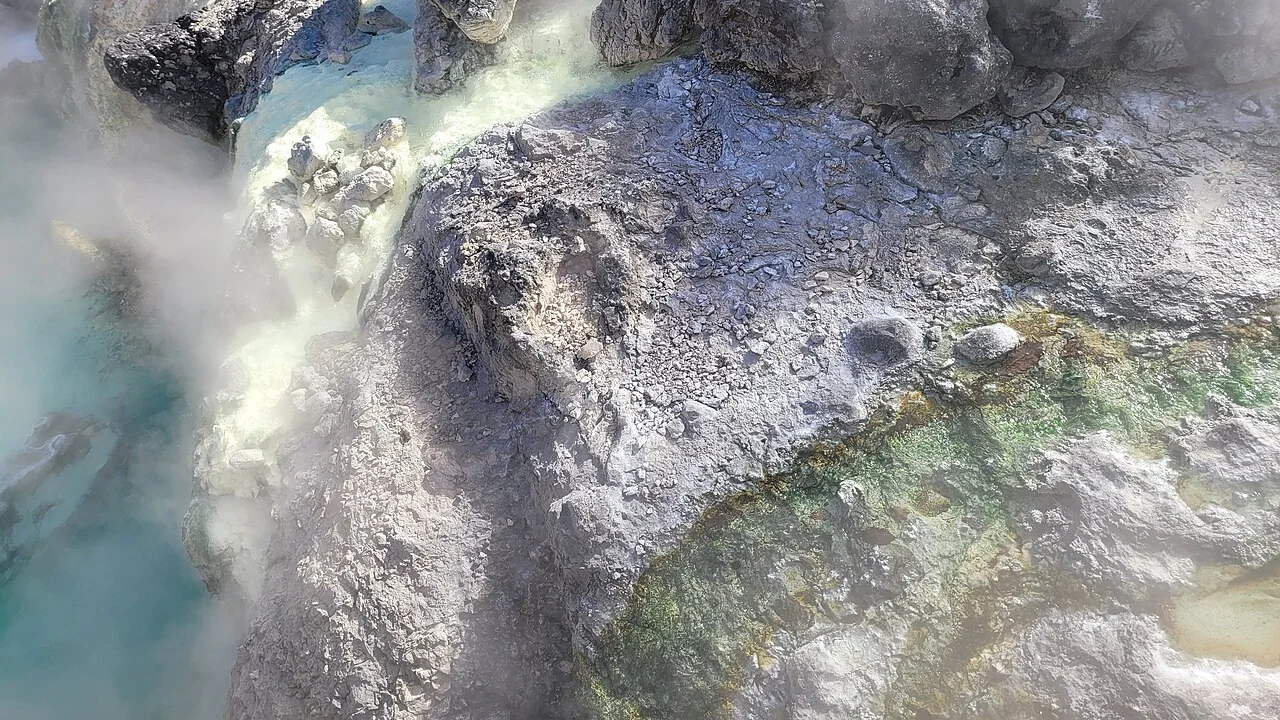
Shuzenji Onsen centres on the Katsura River, officially designated the "Shuzenji River (commonly known as the Katsura River)". Thermal water wells up straight through the riverbed rock at Tokko no Yu, which local authorities call "the birthplace of Shuzenji Onsen". As the story goes, in 807 (Daido 2) Kobo Daishi (Kukai) saw a boy washing his ailing father with cold stream water and struck the rock with his ritual tokko pestle, summoning a warm spring. That founding legend appears on nearly every information board in town, while the river's name comes from the tale that his katsura-wood walking staff, brought back from Tang China, took root right here in the soil.
Online guides often describe Tokko no Yu as a place to soak your feet or bathe, but it is strictly for viewing: neither full bathing nor foot-soaking is permitted. The official walking guide puts it plainly as "hand baths, footbaths, and Tokko no Yu for viewing only". For an actual free soak, step just alongside to two spots: Kawarayu Footbath in the pocket park on the north side of Tokko no Yu, which seats six and runs from 05:00 to 23:00; and River Terrace Sugi no Yu inside Tokko no Yu Park, seating ten with a modern Japanese timber deck, tables, and chairs. Resting tired feet in steaming water while looking across at the rock outcrop of Tokko no Yu is the most effortless way to ease into town.
Historically, seven public bathhouses lined the riverbank, yet by the late 1940s only Tokko no Yu survived and the town's bathhouse-hopping tradition faded until the opening of the new public bath, Hakoyu. Consequently, Shuzenji's bathing culture revolves primarily around ryokan grand bathhouses, supplemented by Hakoyu and the footbaths. Unlike towns such as Naruko or Gero that are built around public bath crawls, your choice of inn—and the quality of its own baths—carries far more weight here; full fare and closure details for Hakoyu follow in section five. The entire onsen quarter occupies one compact, walkable valley where ryokan, public baths, temples, and bamboo groves overlap within a tight radius, making which property you pick far more consequential than which neighbourhood you choose.
Several riverside landmarks are worth marking on your mental map early. Shigetsuden, the oldest wooden structure on the Izu Peninsula, was built by Hojo Masako in memory of her son Minamoto no Yoriie and holds two stars in the Michelin Green Guide; the Bamboo Forest Path, likewise awarded two stars, lies just a few minutes' turn off the river into a tunnel of green stalks. Inside Shuzen-ji Temple, the purification fountain (chozuya) is particularly unusual: warm spring water, rather than cold mountain water, pours from the dragon's mouth beneath an inscription reading "Keikoku Reisen Taishi no Yu" ("Katsura Valley Sacred Spring, Grand Master's Bath"). Staying in the valley puts all of these within a few minutes on foot.
Both free footbaths carry their own slice of local history. Kawarayu Footbath occupies the site of the former Kawarayu communal bathhouse, discovered in 1884 (Meiji 17), now turned into an informal riverside pocket park; Sugi no Yu's contemporary terrace lets you bring along a takeaway coffee and soak as if the street were your own sitting room. Keep an eye out for smaller details along the way too: the spring at Kumano Gongen Shrine is certified safe for drinking, the temple approach features the Oyukake Chigo Daishi statue over which visitors ladle hot spring water, and the hillside behind Okunoin holds the thousand-year-old "Katsura Daishi" tree—tying Kobo Daishi's legacy together in a single loop.
Shuzenji Onsen is a historic Izu hot spring town founded by Kobo Daishi in 807. Its 21 Katsura River accommodations range from 400-year-old Kikuya and Arai Ryokan (with 15 Registered Cultural Properties) to private-villa Asaba and the 6-room all-inclusive Shonoya. This guide covers how to choose a ryokan, Hakoyu public bath and free footbaths, the five-bridge walk, Shuzen-ji Temple, and rail transfers via Mishima.
Choosing Your Stay: Heritage Ryokan, Secluded Hideaways, Private Villas, or Budget
The Shuzenji Onsen Tourist Association directory lists 21 properties, spanning everything from ¥150,000-a-night detached villas down to Hostel Knot. Before comparing individual rooms, divide the list into four distinct tiers: historic heritage ryokan prized for architecture and cultural heritage (Kikuya and Arai Ryokan); secluded hideaways tucked into bamboo groves or hillsides (Yagyu no Sho and Oni no Sumika); private-villa and all-inclusive sanctuaries (Asaba and Shonoya); and budget or business-friendly stays (Kinpukuso, Onsenyado Mizuguchi, Hostel Knot, and ITJ Base Shuzenji).
Each tier delivers a markedly different experience. Heritage ryokan excel in layered wooden architecture and atmospheric bathhouses, ideal for first-time visitors wanting classic Izu hot spring character in one stay. Secluded hideaways have very few rooms, quiet grounds, and attentive service, making them perennial favourites for anniversaries and milestone trips. Private-villa and all-inclusive stays dedicate entire spaces to a single party, offering unmatched privacy and flexibility for multigenerational families. Budget stays keep room costs low so you can spend your money on day-use baths, cafes, and dining around town.
Geographically, the 21 properties sit closer together than first-time visitors expect. Shuzen-ji Temple, Tokko no Yu, the five bridges, and the Bamboo Forest Path all lie within minutes of one another, and most inns fall inside that walkable core; the main distinction is simply "riverside" versus "hillside". Riverside properties such as Katsuragawa and Kikuya open directly onto views of the valley stream, whereas hillside addresses towards Asaba and Yagyu no Sho retreat into leafy stillness. Checking how many minutes' walk a property sits from Tokko no Yu is far more practical than memorising minor district names.
The tourist association website does not publish room rates, so you must check exact tariffs via each property's website or by telephone. Still, the categories signal clear price bands: main-wing heritage inns and mid-range hotels sit in the middle, detached villas and whole-building buyouts occupy the top end, and hostels provide the lightest entry point. Peak demand hits during November's autumn foliage and the spring blossom season, when popular heritage inns book out well ahead on weekends and public holidays—much like leading onsen towns across Japan.
The budget and mid-range tiers are surprisingly varied once you look closely. For low-cost stays right inside the valley, five properties stand out: Kinpukuso tucked behind Shuzen-ji Temple's rear approach; 70-year-old Onsenyado Mizuguchi offering simple room-only (sudomari) lodgings; Hostel Knot, three minutes on foot from Shuzen-ji Temple and two minutes from the Bamboo Forest Path; ITJ Base Shuzenji, a hostel with an adjoining cafe just 30 seconds' walk from Hie Shrine; and family-run Minshuku Fukui. Mid-range options are equally diverse: AKARI et KAORI completed a full rebrand in September 2023; Goyokan caters strongly to female travellers with eight distinct room designs; Izu Marriott and Hotel Laforet Shuzenji offer resort stays oriented towards Mt Fuji views; Hotel Breezbay draws guests with its cave bath; Hotel Takitei blends Japanese and Western comforts; and Hanakomichi houses its own soba noodle shop and hashed-beef rice restaurant. For such a compact valley, the accommodation range runs remarkably deep.
Narrowing down the shortlist is straightforward. Cut the field to two or three candidates using the four tiers, then ask three practical questions in order: how many minutes' walk is it to Tokko no Yu, does it offer a grand bathhouse or private reservable baths, and is an elaborate kaiseki dinner central to your trip. The property where those three answers intersect is almost always the right match. Leave online review scores until last to double-check housekeeping and service consistency, rather than starting with ratings and getting lost in noise.
Matching by travel party works just as cleanly. Solo travellers or budget-conscious guests get the lowest nightly spend at Hostel Knot or ITJ Base Shuzenji paired with public baths. Couples gravitate towards secluded hideaways or heritage ryokan, weaving in the five love-blessing bridges and Hie Shrine by day. Families of four do best aiming for free private baths (Kikuya has four, Katsuragawa offers seven varieties) and spacious 54 m² rooms. Three-generation groups gain the most comfort and freedom at Asaba's standalone villa Hitotsuya or larger resort hotels where older relatives and children can move at different paces. Along this single stretch of the Katsura River, every style of group has a clear frontrunner.
Two Heritage Icons: Arai Ryokan and Yukairo Kikuya
Founded in 1872 (Meiji 5), Arai Ryokan is one of Shuzenji's quintessential historic inns, with 15 structures across its grounds designated National Registered Tangible Cultural Properties. Its grand bathhouse, the Tenpyo Daiyokudo, evokes the austere timber grandeur of the Nara-Asuka period and is fed by free-flowing, unrecycled natural spring water (gensen kakenagashi)—a standard proudly advertised by most Shuzenji ryokan thanks to the valley's abundant flow. Literary giants Natsume Soseki and Shimazaki Toson both stayed here, and strolling the wooden corridors feels like wandering through a living architectural museum. With 15 heritage buildings scattered around landscaped gardens, walking from your room to the dining hall feels like touring an estate of historic pavilions—a compound scale that single-building renovations simply cannot replicate.
Yukairo Kikuya turns 400 years of history into a layout built for wandering between baths. Covered wooden corridors ("yukairou") loop through the property, linking multiple bathing rooms so guests in yukata can drift from soak to soak without stepping outside; alongside the chrysanthemum-crested Kikumon Kikuburo, four complimentary private baths require no fixed time-slot booking—if one is vacant, you simply step inside and lock the door. In the main wing, 11 Japanese-style rooms with anterooms (54 m², sleeping two to four guests) come non-smoking with two 105 cm-wide Japanese beds, giving families of four generous floor space inside a historic inn. Literary heritage appears here too: the room where Natsume Soseki convalesced is still preserved as "Soseki no Ma". Guests with larger budgets can upgrade to the detached Soan suites with private open-air baths, or the Mizu no Kataribe annex and Kaze no Kataribe wing opened in 2021 (Reiwa 3), pairing heritage warmth with contemporary comfort.
Choosing between the two comes down to which atmosphere you want to collect. If staying inside a cluster of Registered Cultural Properties and experiencing century-old timber pavilions appeals most, Arai Ryokan's 15-building estate stands alone. If endless bath-hopping under one roof is your priority, Kikuya's bathhouse corridors plus four free private baths deliver an unbeatable structural advantage—effectively compressing an entire town's onsen crawl inside a single inn. Both sit right inside the riverside walking circle only minutes from Tokko no Yu, so pick your preferred style first and compare seasonal room plans on their official websites afterwards.
A third property frequently mentioned in the same bracket is Sora Togetsuso Kinryu. Set within sprawling 15,000-tsubo garden grounds, it also served as a filming location for the hit Japanese television drama *The Full-Time Wife Escapist*, giving it extra appeal for drama fans. Whether you favour vast landscaped grounds or historic wooden architecture comes down to where you want your stay's centre of gravity to sit.
Secluded Hideaways and Private Villas: Yagyu no Sho, Asaba, Oni no Sumika, and Shonoya
Surrounded tightly by bamboo groves, Yagyu no Sho exemplifies the classic hidden onsen sanctuary, with just 15 guest rooms across the entire estate. Low room count naturally keeps both the bathhouses and dining spaces hushed and uncrowded, and that unbroken stillness is its greatest luxury. Oni no Sumika carries forward the prestige of "Shuzenji's Big Three" inns, spacing guests apart in detached villa pavilions that guarantee true privacy—one building per party. Both properties remain top choices for milestone birthdays, engagements, and anniversary trips.
For sheer historical depth, nothing rivals Asaba. Tracing its origins to 1489 (Entoku 1) as a temple lodging (shukubo), it has been passed down through the Asaba family for more than five centuries and today belongs to Relais & Châteaux. Its Gekkeiden Noh stage—relocated from Tokyo—has hosted "Shuzenji Geijutsu Kiko" Noh and kyogen performances for nearly 40 years, making the chance to watch live Noh inside a hot spring ryokan extraordinarily rare anywhere in Japan. The property holds just 10 rooms, each individually named and configured, from the flagship 220 m² Hanare Tenko (three tatami living rooms of 12.5, 4, and 12.5 mats plus wide veranda and terrace) through Moegi (152 m²), Hagoromo (126 m²), and Asagi (111 m²) down to the 52 m² Kocho, all fed by free-flowing natural spring water. Check-in starts at 14:30 with a leisurely 11:30 check-out—the most generous schedule in the valley.
Added to the tourist association's official directory in October 2026, Shonoya is Shuzenji's newest arrival. With just six guest rooms, it operates on an all-inclusive model covering meals and drinks within the room rate, removing every decision about dinner courses or bar tabs—ideal for travellers who want to switch off completely. Pairing micro-scale exclusivity with all-inclusive ease makes Shonoya one of the most talked-about newcomers in Shuzenji's hospitality scene.
Each of these four small properties has an unmistakable personality: choose Asaba for five centuries of heritage and its Noh stage, Yagyu no Sho for bamboo-fringed calm and attentive service, Oni no Sumika for detached-villa privacy, and Shonoya for an effortless all-inclusive retreat. Because room counts are tiny, autumn foliage dates and spring weekends sell out fast, so book as soon as your dates firm up. Keep in mind too that intimate inns run on tighter dining and bath schedules; expect a couple of extra emails or phone confirmations ahead of arrival—a small trade-off for personal hospitality far beyond what large hotels can provide.
Public Baths and Day Visits: Hakoyu Fares, Hours, and Closure Dates
Following a major refurbishment, the public bathhouse Hakoyu reopened on 7 November (as updated on the tourist association site in October-November 2026). Current admission is ¥700 for adults (junior high school age and above), ¥400 for children (primary school), and ¥350 for Izu City residents, local workers, and guests staying at local accommodations. Note an official ordinance notice: under an Izu City bylaw revision, a ¥400 rate will apply from April 2027 (Reiwa 9), though the announcement has not yet specified which ticket tier it covers, so check signage on arrival or the official website closer to the date. Standard hours run 10:00-21:00 (last entry 20:30), while the second Thursday of every month is a pipe-cleaning day when doors open late at 15:00; scheduled temporary closures for the 2026-2027 season fall on 12 November and 10 December 2026, plus 14 January, 11 February, and 11 March 2027.
Right beside Hakoyu stands Gyokoro, a free 12-metre observation tower looking out across the tiled rooftops of the onsen quarter and the river valley below. The bathhouse also connects to a dark chapter of Kamakura-period history: legend holds that Minamoto no Yoriie—eldest son of shogun Minamoto no Yoritomo—bathed in these waters after being exiled to Shuzenji, before ultimately being assassinated here. Soaking in the refurbished timber bathhouse and then following the History Course to Yoriie's tomb ties Shuzenji's thermal waters and feudal drama neatly together. For day-trippers or ryokan guests eager to try another spring, ¥700 for Hakoyu is an essential stop along the valley walk.
Beyond Hakoyu, two other day-use bathing options welcome non-staying visitors. Katsuragawa opens its spacious grand bathhouse to day guests from 11:30 to 16:00, neatly sidestepping the morning and evening rush of overnight guests (its signature seven free private baths remain reserved for staying guests throughout the day). Meanwhile, Mizunosato Maruku Ryokan—established in 1922 (Taisho 11)—offers timed one-hour day-use bathing for ¥1,500 alongside its footbath lounge, "Tenn.". Hourly day-use pricing is uncommon across Japan, making it remarkably easy to slot a proper ryokan soak and a drink at the footbath lounge into a tight itinerary.
Finally, do not overlook the two free riverside footbaths (Kawarayu 05:00-23:00 and Sugi no Yu): ideal for warming your toes on an early-morning stroll, filling the gap before ryokan breakfast, or unwinding in the evening breeze after dinner with zero bookings or fees. Spanning ¥700 at Hakoyu, ¥1,500 timed ryokan bathing, and ¥0 footbaths, Shuzenji covers every price point even on a half-day visit. If you stay two nights, spend night one in your own inn's bathhouse, visit Hakoyu or a day-use ryokan the following afternoon, and sample your inn's remaining baths on night two to compare the subtle feel of the valley's waters.
Walking Routes: Five Bridges, the Bamboo Grove, and Shuzen-ji Temple
Five bridges span the Katsura River, each carrying its own romantic blessing. Listed in order along the valley, their official names and themes are Togetsu Bridge (also called Misomebashi, for finding a good match), Kokei Bridge (Akogarebashi, for romantic success), Katsura Bridge (Musubarebashi, for fertility and children), Kaede Bridge (Yorisoibashi, for marriage), and Takishita Bridge (Yasuragibashi, for marital harmony); note that the second bridge uses a variant character spelling on official Japanese maps, so searching in romanised form (*Kokeibashi* or *Kokei Bridge*) avoids missing results. Following the tourist association's 60-minute "Koi no Yorisoi Course" from Togetsu Bridge in front of Shuzen-ji Temple across all five bridges to Shigetsuden and Hie Shrine captures every blessing alongside vermilion railings and river reflections. The association maps three official routes in all: the full 60-minute "Koi no Yorisoi Course" (Shuzen-ji Temple, Five Bridges, Shigetsuden, Hie Shrine), the 30-minute "Akogare" loop, and the 40-minute "Yasuragi" route. Staying overnight lets you split them effortlessly—tackle the 30-minute loop at dusk on arrival day, then complete the full 60-minute temple-and-bridge circuit the next morning.
History-minded walkers should switch to the official "History Course" (Rekishi Course). Covering roughly 2.5 km in around two hours, it links the graves of Minamoto no Yoriie and Minamoto no Noriyori, grounding your stroll in the tragic fate of the Kamakura-era Minamoto brothers in Izu. Shigetsuden and the Bamboo Forest Path sit directly along the trail, finishing beneath the twin Wedded Cedars (Meoto Sugi) at Hie Shrine. Travellers staying two nights or longer with an appetite for deeper exploration can also take on the four-hour "Three Renge Hoju Stones" route, connecting three carved sacred jewel stones in the hills around town.
Right at the centre of the valley stands Shuzen-ji Temple, the literal heart of the town. Founded as a Soto Zen temple by Kobo Daishi in 807 (Daido 2)—the very year the hot spring opened—it briefly shifted to Rinzai Zen during the Kencho era before burning down in 1409 and being rebuilt under Hojo Soun as a Soto Zen temple once more. Temple grounds open from 05:00 to 17:00 with free admission; the temple office and Treasure Hall open 08:30-16:30, with Treasure Hall tickets priced at ¥300 for adults and ¥200 for children. Note that the temple has no visitor car park.
November 2026 brings a rare special viewing (gokaicho): from 1 to 30 November 2026 (Reiwa 8), the Treasure Hall opens 09:00-16:00 to display the principal Dainichi Nyorai statue sculpted by Jikkei and donated by Hojo Masako. Normally kept hidden from public view, its unveiling makes a November visit especially memorable. One handy search tip before you go: in Japanese, the temple's official name uses a slightly different middle kanji character from the town's name (though both are pronounced *Shuzenji*), so searching in English as *Shuzenji* or *Shuzen-ji* ensures you catch results for both.
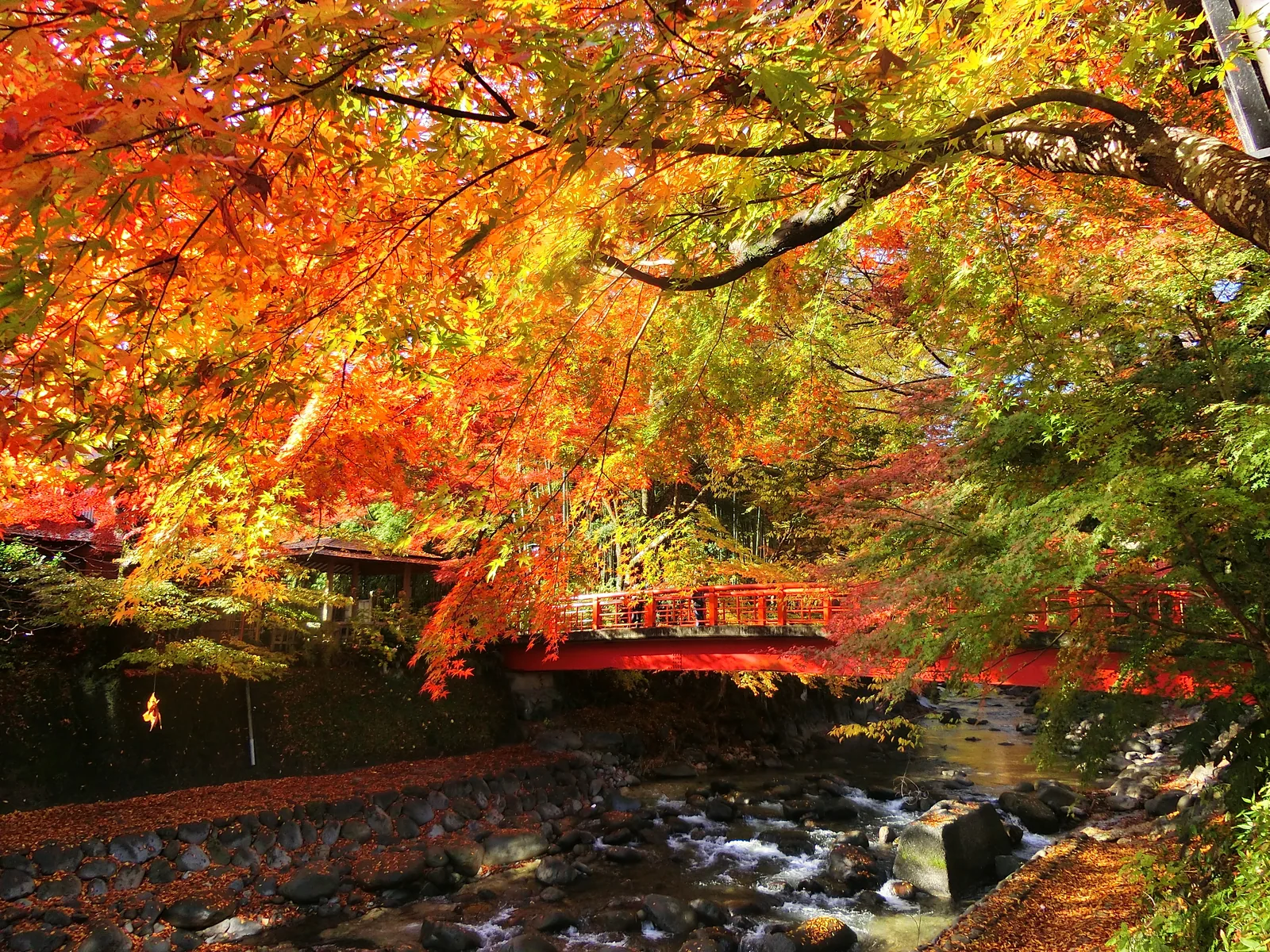
The most rewarding daily rhythm when staying in town starts at 05:00 as Shuzen-ji Temple opens, letting you visit the precincts in near-solitude before soaking at the riverside footbaths ahead of breakfast. Spend the morning strolling the five bridges and the Bamboo Forest Path, take an afternoon dip at Hakoyu or your inn's bathhouse, and walk back along the stream towards Shigetsuden at dusk. Over a two-night stay, that loop never feels repetitive. Come autumn, maples along Katsura Bridge turn the gorge scarlet—highlighted on Izu City's dedicated seasonal foliage page—so both rooms and prime dawn or golden-hour photography spots on Katsura Bridge reward early planning.
Transport and Itineraries: Mishima Transfers and Crossing Izu
Rail access into Shuzenji relies on the Izuhakone Railway Sunzu Line. The 19.8 km ride from Mishima Station to Shuzenji Station costs ¥550 for adults and takes roughly 32 to 33 minutes according to official municipal and tourist timetables, so budgeting 30 to 35 minutes works well. As a major Shinkansen stop, Mishima is the standard transfer point from Tokyo; the 12-station line passes Mishima-Hirokoji, Mishima-Tamachi, Nirayama, Izu-Nagaoka, and Ohito before terminating at Shuzenji, doubling as a scenic local spine through central Izu if you fancy hopping off along the way.
Because the Sunzu Line is a regional private railway, trains run less frequently than Tokyo's JR commuter lines and wrap up earlier at night. If you plan to eat dinner around Mishima Station before heading into the valley, check the last-train timetable before sitting down; direct Limited Express Odoriko departures are equally limited, so getting into the habit of checking timetables before early starts or late returns saves unnecessary stress.
To avoid hauling heavy suitcases across platforms at Mishima, take the direct Limited Express Odoriko straight to Shuzenji Station—roughly 2 hours 06 minutes from Tokyo Station, 1 hour 58 minutes from Shinagawa, 41 minutes from Atami, and 26 minutes from Mishima—for the price of a limited express supplement. From Shuzenji Station, catch a Shin-Tokai Bus (a different operator from West Izu's Tokai Bus) for 7 to 10 minutes to the final Shuzenji Onsen stop, or hop in a taxi for around 10 minutes (local dispatch numbers: Izuhakone Kotsu on 0558-72-1811 and Terayama Taxi on 0558-72-2129).
Drivers leave the Tomei Expressway at Numazu IC or the Shin-Tomei Expressway at Nagaizumi-Numazu IC, continuing via the Izu-Jukan Expressway, Izu-Chuo Road, and Shuzenji Road (the latter two are toll roads) for a roughly 30-minute drive. Between Shuzenji Station and the onsen quarter lies a gentle 3 km uphill gradient, and local services make covering it effortless: drop bags at the station's IZUPON same-day luggage delivery counter to walk straight into town hands-free, rent a Harenohi Cycle shared bike, or ride an electric tuk-tuk offered at half price to staying guests.
Travellers approaching Izu from Shizuoka's Shimizu side can also take the Suruga Bay Ferry: the crossing from Shimizu Port to Toi Port takes 65 minutes, followed by roughly a 40-minute drive straight into Shuzenji Onsen—bypassing Numazu traffic while turning the transfer into a scenic cruise. For most travellers, Mishima and Atami remain the primary rail gateways into Izu, where a Shinkansen-to-Sunzu transfer or direct Odoriko covers virtually every route, leaving the ferry best suited to itineraries already anchored around Shimizu.
There are two straightforward ways to fit Shuzenji into a wider Izu trip. For a purely restorative hot spring escape, book two consecutive nights in Shuzenji and alternate unhurried valley walks with long bath sessions. For a full peninsula loop, use Shuzenji as your central-valley base: enter via Mishima on day one, continue towards Ito or Shimoda on day two, and head north out of Atami on day three—pairing rail and bus legs smoothly with Izu and Atami seasonal stays. Once inside the onsen town, everything happens on foot; transport only matters when entering the valley or moving on across the peninsula.
Timing your month matters just as much as picking your inn. November brings the valley's most dramatic colour as maples blaze across Katsura Bridge; spring's fresh greenery and summer's cool river breezes have quieter charms, while winter offers crisp stillness and far easier bookings. Keep an eye on Izu City's autumn foliage updates and the tourist association's seasonal bulletins before locking in dates—choosing the right week often shapes both room rates and atmosphere even more than upgrading your room.
A few useful answers
Can you bathe in Tokko no Yu at Shuzenji Onsen?
No. Tokko no Yu is strictly for viewing, with neither full-body bathing nor foot-soaking permitted. Two free footbaths sit right next to it instead: Kawarayu Footbath (north of Tokko no Yu, seating 6, open 05:00-23:00) and River Terrace Sugi no Yu (inside Tokko no Yu Park, seating 10). For a proper soak, head to the Hakoyu public bathhouse (adults ¥700; open 10:00-21:00, opening at 15:00 on the second Thursday of each month) or book an overnight ryokan with its own grand bathhouse.
How do you choose where to stay in Shuzenji Onsen?
Start by dividing the 21 listed stays into four tiers: heritage inns (400-year-old Kikuya, or Arai Ryokan with its 15 Registered Cultural Properties and Tenpyo Grand Bathhouse), secluded hideaways (15-room Yagyu no Sho, or detached-villa Oni no Sumika), exclusive private-villa and all-inclusive stays (Asaba, founded in 1489 as a temple lodging with its own Noh stage, or 6-room all-inclusive Shonoya), and budget options (such as Kinpukuso and Hostel Knot). Main sights lie within a few minutes' walk, so the real choice is between riverside and hillside settings. Rates are not listed on the tourist association site, so check each property's official website directly.
How do you reach Shuzenji Onsen from Tokyo or Mishima?
Transfer at Mishima Station onto the Izuhakone Railway Sunzu Line (30-35 minutes, ¥550) to Shuzenji Station, then take a Shin-Tokai Bus (7-10 minutes) directly to the onsen town. Alternatively, ride the Limited Express Odoriko straight to Shuzenji Station without changing (about 2 hours 06 minutes from Tokyo Station, or 1 hour 58 minutes from Shinagawa). Drivers can take the Tomei Expressway to Numazu IC and follow the Izu-Jukan Expressway (about 30 minutes). At Shuzenji Station you will also find IZUPON same-day luggage delivery, shared bicycles, and electric tuk-tuks offered at half price to staying guests.
Can you enjoy the hot springs in Shuzenji without staying overnight?
Yes. The public bathhouse Hakoyu charges ¥700 for adults and ¥400 for children (under an Izu City ordinance revision, a ¥400 rate takes effect from April 2027, though the exact ticket category should be checked on official notices at the time). It opens 10:00-21:00 (last entry 20:30), opening at 15:00 on the second Thursday of each month for maintenance, and has scheduled temporary closures on 12 November and 10 December 2026, plus 14 January, 11 February, and 11 March 2027. Other day-use options include Katsuragawa's grand bathhouse (11:30-16:00), one-hour timed bathing at Mizunosato Maruku Ryokan (¥1,500), and the two free footbaths.
Official information and references
Sources used in this guide.
- Shuzenji Onsen Tourist Association | Onsen Meguri (Tokko no Yu, Footbaths, and Hakoyu Fares & Closures)
- Shuzenji Onsen Tourist Association | Stay (Directory of 21 Accommodations & Official URLs)
- Shuzenji Onsen Tourist Association | Koi no Hashi Meguri Official Pamphlet (Five Bridges & Three Walking Routes)
- Shuzenji Onsen Tourist Association | Hakoyu Public Bath Current Status (7 November Reopening & April 2027 Ordinance Revision)
- Izu City Tourist Association | Access (Mishima to Shuzenji ~33 Min, Bus ~7 Min, and Direct Odoriko Timetable)
- Shuzen-ji Temple | Official Website (History, Grounds Hours 05:00-17:00, Free Entry, and November 2026 Special Unveiling)
- Izuhakone Railway | Regular Fares (Mishima to Shuzenji ¥550, Revised 16 March 2024)
- Asaba | Official Website (Founded 1489 as Shukubo, Gekkeiden Noh Stage, 10 Rooms, Check-in 14:30 / Check-out 11:30)
- Yukairo Kikuya | Rooms (54 m² Main-Wing Suites, Soseki no Ma, and 4 Free Private Baths)
- Katsuragawa | Official Website (7 Free Private Baths and Day-Use Grand Bathhouse 11:30-16:00)