Founded in 807 by Kobo Daishi, Shuzenji Onsen lines the Katsura River with 21 stays, from 400-year-old Kikuya and 15-building landmark Arai Ryokan to all-inclusive Seinoya. Covers ryokan types, Hakoyu public bathhouse, free footbaths, five bridges, Shuzenji Temple, and Mishima train transfers.
- Region & Focus
- Izu and Atami
- Reading Scope
- 14 min read · 7 chapters · 4 Q&As
- Official Verification
- 10 official sources checkedUpdated November 20, 2026
- Key Topics
- Where to stayHot springsChubu & Hokuriku
Chapter Route Map (tap any stop)
- Hot Spring Basics: Tokko-no-yu and the Founding Legend
- How to Pick a Stay: Historic Ryokan, Secluded Inns, Exclusive Villas, or Budget Stays
- Two Historic Icons: Arai Ryokan and Yukairo Kikuya
- Secluded Hideaways & Whole-Villa Stays: Yagyu-no-sho, Asaba, Oni-no-sumika, and Seinoya
- Public Baths & Day-Use Soaks: Hakoyu Fares and Closure Dates
- Walking Routes: Five Bridges, Bamboo Grove, and Shuzenji Temple
- Getting There & Itineraries: Mishima Transfers and Crossing Izu
- Quick Q&A
Tucked into a forested valley in central Izu, Shuzenji Onsen traces its origins to 807 (Daido 2), when Kobo Daishi is said to have struck riverbed rock with his vajra pestle to summon thermal water. The town unfolds along the Katsura River, crossed by five bridges tied to prayers for love and within a few minutes' walk of the Bamboo Grove Path and Shuzenji Temple. Compared with other Izu spa towns, Shuzenji's lodging lineup runs unusually deep along a single valley: 400-year-old Kikuya, Arai Ryokan with 15 Nationally Registered Tangible Cultural Property buildings, Relais & Châteaux member Asaba, and the 6-room all-inclusive Seinoya all share the same riverbanks. Where Atami is a busy rail-hub resort and Ito leans coastal, Shuzenji keeps the quiet pulse of a mountain gorge, making it the natural inland counterbalance to an Izu beach itinerary. Below, we group all 21 properties listed by the local tourism association into four clear tiers, verify Hakoyu bathhouse fares and closure days, pinpoint both free footbaths, map out Shuzenji Temple hours, and break down Izuhakone Railway transfers from Mishima so you can plan an effortless stay-and-stroll loop.
Hot Spring Basics: Tokko-no-yu and the Founding Legend
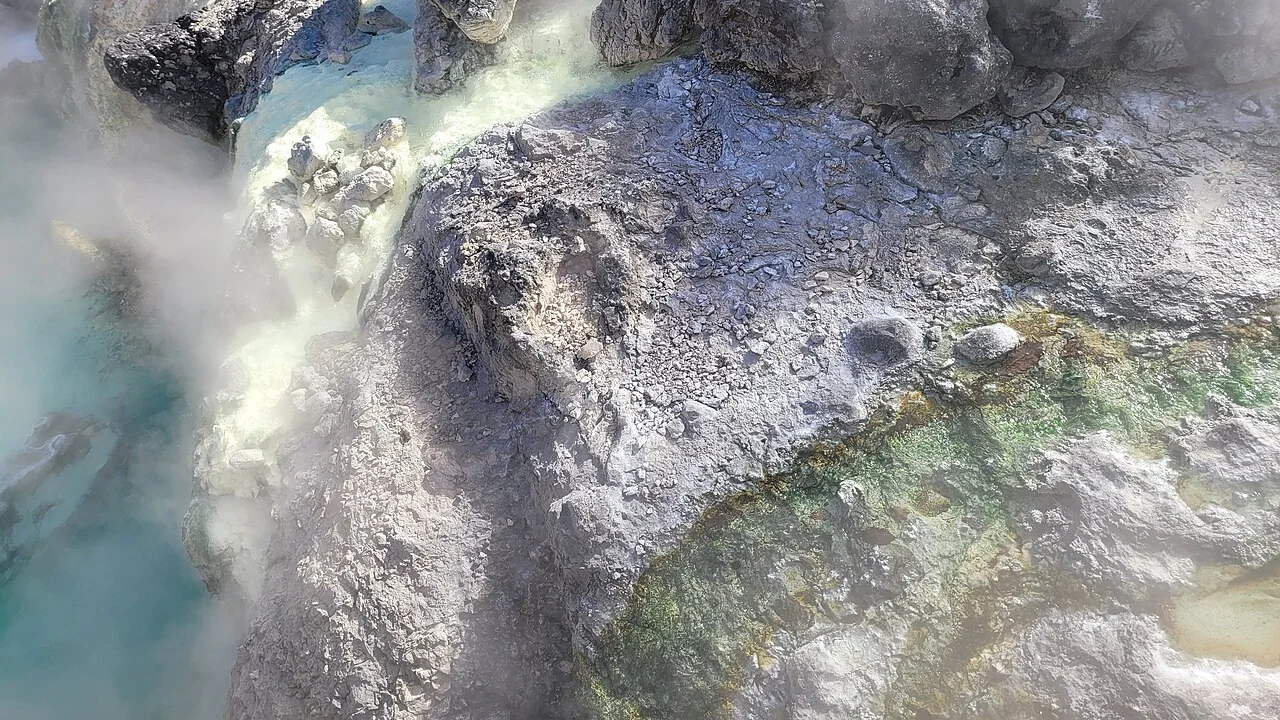
Shuzenji Onsen is anchored by the Katsura River—officially named the Shuzenji River, though almost universally called the Katsura. Thermal water wells straight out of the riverbed bedrock at Tokko-no-yu, officially designated as the birthplace of Shuzenji Onsen. According to legend, in 807 (Daido 2), the monk Kobo Daishi (Kukai) watched a young boy washing his ailing father with cold stream water and struck the rock with his ritual vajra pestle (tokko), bringing forth warm healing water. That founding story appears on trail plaques all across town, and the river itself takes its name from the legend that the katsura-wood staff he brought back from Tang China took root when he planted it here.
Online posts frequently describe Tokko-no-yu as a bath or footbath, but in reality it is strictly for viewing—you cannot step into the water or soak your feet there. The official town walking guide states explicitly that hand and foot soaking belong elsewhere, while Tokko-no-yu is sight-only. For a free soak, step just a few yards away to two public footbaths: Kawarayu Footbath in the pocket park on the north side of Tokko-no-yu (seating 6 at a time, open 5:00 AM-11:00 PM), and River Terrace Sugi-no-yu inside Tokko-no-yu Park (seating 10, with a modern Japanese terrace, tables, and chairs). Resting tired feet in hot mineral water while looking across at the steaming rock basin of Tokko-no-yu is the quintessential way to arrive.
At one time, seven public bathhouses lined the riverbanks, though by the late 1940s and early 1950s only Tokko-no-yu remained, pausing the local bath-hopping culture until the modern Hakoyu bathhouse was built. As a result, Shuzenji's bathing culture centers on ryokan grand baths, supplemented by Hakoyu and the footbaths—very different from public-bath-driven towns like Naruko or Gero. That makes each inn's own bathing facilities carry far more weight when choosing where to book; full Hakoyu ticket and closure details follow in Section 5. Because the entire valley forms one compact walking loop—putting ryokan, bathhouses, temples, and bamboo groves all within minutes of each other—picking the right property matters much more than picking a neighborhood.
Several riverside landmarks are worth marking right away. Shigetsuden, the oldest surviving wooden structure in Izu, was built by Hojo Masako in memory of her son Minamoto no Yoriie and holds two Michelin Green Guide stars; equally two-starred, the Bamboo Grove Path sits just a quick turn off the riverbank. Inside Shuzenji Temple, even the purification basin pours hot spring water instead of cold from its dragon spout, inscribed as Katsuradani Reisen Daishi-no-yu—a rare feature among Japanese temples. Stay anywhere in the hot spring quarter and every one of these stops is only minutes away on foot.
Both free footbaths carry local history of their own. Kawarayu Footbath occupies the site of the original Kawarayu communal bath discovered in 1884 (Meiji 17), now reimagined as an unhurried riverside pocket park; Sugi-no-yu sets out terrace tables where you can sip coffee while soaking your feet as if the whole valley were your living room. Along the same stroll, keep an eye out for the certified drinkable spring at Kumano Gongen Shrine, the Oyukake Chigo Daishi statue along the Shuzenji Temple approach, and the 1,000-year-old Katsura Daishi katsura tree behind Okunoin—each tying back to Kobo Daishi's footprint in the valley.
Founded in 807 by Kobo Daishi, Shuzenji Onsen lines the Katsura River with 21 stays, from 400-year-old Kikuya and 15-building landmark Arai Ryokan to all-inclusive Seinoya. Covers ryokan types, Hakoyu public bathhouse, free footbaths, five bridges, Shuzenji Temple, and Mishima train transfers.
How to Pick a Stay: Historic Ryokan, Secluded Inns, Exclusive Villas, or Budget Stays
The Shuzenji Onsen Tourism Association lists 21 accommodations spanning everything from ¥150,000-a-night detached villas to hostels like Hostel Knot. Before comparing rooms, split the list into four practical categories: heritage ryokan prized for historic architecture (Kikuya and Arai Ryokan), secluded hillside and bamboo-ringed hideaways (Yagyu-no-sho and Oni-no-sumika), exclusive villa and all-inclusive retreats (Asaba and Seinoya), and budget or business stays (Kimpukuso, Onsenyado Mizuguchi, Hostel Knot, and ITJ Base Shuzenji).
Each tier delivers a fundamentally different trip. Historic ryokan win on multi-building wooden architecture and patina-rich baths, ideal for first-timers wanting classic Izu spa atmosphere in one stay. Secluded hideaways keep room counts low and service intimate, making them favorites for anniversaries and milestone trips. Whole-villa and all-inclusive stays give one group undivided space, maximizing privacy and pacing for multi-generational families. Budget stays trim lodging costs to the bone so you can spend on public baths, food, and wandering the valley.
Geographically, the 21 stays sit closer together than first-time maps suggest. Shuzenji Temple, Tokko-no-yu, the five bridges, and the bamboo grove all lie within a few minutes' walk of one another, and most inns sit right inside that loop. The real split is simply riverside versus hillside: properties near Katsuragawa and Kikuya open onto river views, while hillside properties toward Asaba and Yagyu-no-sho tuck into quiet greenery. Measuring walking minutes to Tokko-no-yu is far more useful than memorizing local sub-district names.
Because the tourism association's directory does not post room tariffs, you will need to check individual property websites or call directly for exact rates. Still, each category maps cleanly to a price tier: main-wing historic inns and mid-range hotels sit in the middle, detached pavilions and whole-building rentals anchor the top end, and hostels keep entry costs low. Peak demand hits during autumn foliage and spring blossoms, when flagship historic ryokan book out well ahead on weekends and holidays—much like Japan's other top onsen towns.
Budget and mid-range options offer surprising depth once you look closer. On the value end, Kimpukuso hides behind Shuzenji Temple's back approach, 70-year-old Onsenyado Mizuguchi keeps things simple with room-only (sudomari) stays, Hostel Knot sits 3 minutes on foot from Shuzenji Temple and 2 minutes from the Bamboo Grove Path, cafe-equipped ITJ Base Shuzenji is a 30-second walk from Hie Shrine, and Minshuku Fukui offers warm family-run hospitality. In the mid-range, AKARI et KAORI completed a full rebrand in September 2023, Goyokan draws women travelers with eight distinct room styles, Izu Marriott Hotel Shuzenji and Resort Hotel Laforet Shuzenji focus on Mt. Fuji resort views, Breezbay Shuzenji Hotel features a signature cave-rock bath, Hotel Takitei blends Japanese and Western layouts, and Hanakomichi houses its own soba restaurant and hayashi beef rice dining room. For such a compact valley, the range is remarkably broad.
Narrowing your shortlist takes three straightforward questions. Once you pick two or three candidates by category, ask: how many minutes on foot to Tokko-no-yu, does it offer a grand bath or private kashikiri baths, and is multi-course ryokan dinner central to your trip? Where those three answers intersect is almost always your best match. Save online reviews for last to double-check housekeeping and service details rather than sorting the entire town by star ratings from the start.
Matching by travel party makes the choice even clearer. Solo and budget-focused travelers get the lowest nightly spend at Hostel Knot or ITJ Base Shuzenji paired with public baths. Couples gravitate toward secluded inns or historic ryokan, linking daytime walks across the five bridges and Hie Shrine. Families of four do best with free private baths—Kikuya offers four and Katsuragawa offers seven—plus spacious 54 sq m rooms. Three-generation groups get the smoothest pace in Asaba's standalone villa Hitotsuya or larger resort-style properties. On both banks of the Katsura River, every group size has a natural fit.
Two Historic Icons: Arai Ryokan and Yukairo Kikuya
Founded in 1872 (Meiji 5), Arai Ryokan is one of Shuzenji's signature heritage properties, with 15 structures designated as Nationally Registered Tangible Cultural Properties. Even the name of its Tenpyo Grand Bathhouse evokes the classic poise of Japan's Asuka era, fed by free-flowing source water (gensen kakenagushi)—a benchmark proudly advertised across most Shuzenji ryokan, speaking to the valley's abundant spring volume. Literary giants Natsume Soseki and Shimazaki Toson both stayed here, and walking its wooden corridors feels like touring a living architectural museum. With 15 buildings scattered across landscaped gardens, strolling from guestroom to dining hall feels like crossing a historic village—a sense of scale no single renovated hotel block can match.
Yukairo Kikuya turns 400 years of history into a walkable bath-hopping layout. A continuous wraparound bath corridor (yukairo) links bathing pavilions throughout the inn so guests in yukata can wander from pool to pool; beyond its chrysanthemum-crested Kikuburo bath, four free private (kashikiri) baths operate on a first-come, no-reservation basis whenever a room is vacant. In the main wing, 11 non-smoking "Japanese-style rooms with antechamber" measure a generous 54 sq m for two to four guests and include two 105-cm-wide Japanese beds, giving families room to spread out inside a classic ryokan. Literary history lives here too: the room where Natsume Soseki recuperated is still preserved as Soseki-no-ma. Guests with larger budgets can upgrade to the detached Soan rooms with private open-air baths, or the newer Mizu no Kataribe and Kaze no Kataribe wings opened in 2021 (Reiwa 3).
Choosing between the two comes down to which hallmark you want most. If sleeping inside a cluster of Registered Cultural Properties and wandering century-old wooden garden halls appeals most, Arai Ryokan's 15-building estate stands alone. If you want non-stop variety indoors, Kikuya's bath corridor and four free private baths deliver an unmatched structural edge—essentially condensing an entire onsen-hopping street under one roof. Both sit within a few minutes' walk of Tokko-no-yu, so settle on the experience you prefer first, then compare seasonal packages on their official sites.
A third name often weighed in the same tier is Sora Togetsuso Kinryu. Known for its vast 15,000-tsubo (roughly 49,500 sq m) garden and recognizable as a filming location for the popular Japanese drama The Full-Time Wife Escapist, it appeals strongly to drama fans and garden strollers alike. Whether you prioritize expansive grounds or historic timber heritage sets the tone of the stay.
Secluded Hideaways & Whole-Villa Stays: Yagyu-no-sho, Asaba, Oni-no-sumika, and Seinoya
Ringed tightly by bamboo groves, Yagyu-no-sho is the quintessential Shuzenji hideaway with just 15 guestrooms. That low room count keeps both the dining spaces and grand baths remarkably quiet, and utter stillness is its greatest asset. Oni-no-sumika carries the pedigree of Shuzenji's historic "Big Three" inns, spacing guests apart in standalone detached villas that ensure one-party-per-building privacy. Both properties are perennial favorites for milestone birthdays and anniversaries.
For pure historical depth, Asaba stands at the pinnacle. Originating in 1489 (Entoku 1) as a temple lodging (shukubo) and run by the Asaba family for more than five centuries, it is today a member of Relais & Châteaux. Its Gekkeiden Noh stage—relocated from Tokyo—has hosted Noh and Kyogen performances under the Shuzenji Geijutsu Kiko program for nearly 40 years, offering the exceedingly rare chance to watch live Noh theater inside a hot spring inn. Only 10 rooms exist, every bath fed by 100% free-flowing spring water: layouts range from the flagship 220 sq m Hanare Tenko (combining 12.5-tatami, 4-tatami, and 12.5-tatami rooms with a wide veranda and terrace) through Moegi (152 sq m), Hagoromo (126 sq m), and Asagi (111 sq m) down to Kocho (52 sq m). A 2:30 PM check-in and 11:30 AM check-out give guests the longest stay window in town.
Newly added to the tourism association directory in October 2026, Seinoya brings a fresh face to the valley. With just six rooms operating on an all-inclusive basis, meals and drinks are built straight into the nightly rate—removing any decisions over where to dine or how to order drinks, a welcome fit for travelers who want zero logistical friction. Pairing ultra-low room counts with an all-inclusive model marks Shuzenji's newest hospitality trend.
Each of these four intimate inns carries a clear personality: pick Asaba for five centuries of history and its Noh stage, Yagyu-no-sho for bamboo silence and high-touch service, Oni-no-sumika for detached-villa privacy, and Seinoya for effortless all-inclusive ease. Because room counts are tiny, autumn leaf and spring blossom windows sell out fast. Expect a bit more pre-trip coordination too—limited dining and bath capacity means personalized meal times and soaking schedules are often confirmed once or twice by phone or email beforehand, a small trade-off for tranquil, tailored hospitality.
Public Baths & Day-Use Soaks: Hakoyu Fares and Closure Dates
Following major renovations, the public bathhouse Hakoyu reopened on November 7 (per the tourism association's October-November 2026 update). Current admission is ¥700 for adults (junior high school and older) and ¥400 for children (elementary school), with a ¥350 discount rate for Izu residents, local workers, and guests staying overnight in town. Note a municipal ordinance notice: starting in April 2027 (Reiwa 9), a revised ¥400 fare will take effect, though the notice does not specify which ticket category changes, so verify posted rates onsite or online before entering. Hakoyu is open 10:00 AM-9:00 PM (last entry 8:30 PM), except on the second Thursday of each month—scheduled partial-closure days when doors open at 3:00 PM. Additional temporary closures for 2026-2027 fall on November 12 and December 10, 2026, plus January 14, February 11, and March 11, 2027.
Attached to Hakoyu stands the free 12-meter Gyokuro observation tower, where a quick climb after your bath rewards you with sweeping views over tiled rooftops and the river valley. The bathhouse also ties into Kamakura-period history: legend holds that Minamoto no Yoriie—eldest son of shogun Minamoto no Yoritomo, exiled to Shuzenji and later assassinated here—used to bathe in this spring. Soaking in the refreshed wooden bathhouse for ¥700 before following the History Course to Yoriie's tomb connects Shuzenji's hot springs directly to its feudal drama.
Two other day-use (higaeri) baths welcome non-overnight visitors. Katsuragawa opens its expansive public bathhouse to day guests from 11:30 AM to 4:00 PM, neatly sidestepping peak morning and evening hours for overnight guests (its seven signature free private baths remain reserved primarily for staying guests). Nearby, Mizunosato Marukyu Ryokan—founded in 1922 (Taisho 11)—offers an uncommon ¥1,500 one-hour day-use soak paired with its Tenn. footbath salon, making it easy to slot a crisp spa break and a drink into a tight afternoon schedule without booking a room.
Finally, do not overlook the two free riverside footbaths—Kawarayu (5:00 AM-11:00 PM) and Sugi-no-yu—which require no reservations and sit steps from the water. Whether warming up on an early stroll, filling the gap before breakfast, or winding down after dinner, they are the most effortless way to enjoy the valley's mineral water. Ranging from ¥0 footbaths to ¥700 at Hakoyu and ¥1,500 hourly ryokan dips, Shuzenji rewards even a half-day visit; on a two-night stay, alternate your own inn's baths with Hakoyu or a daytime ryokan soak to sample different pools along the river.
Walking Routes: Five Bridges, Bamboo Grove, and Shuzenji Temple
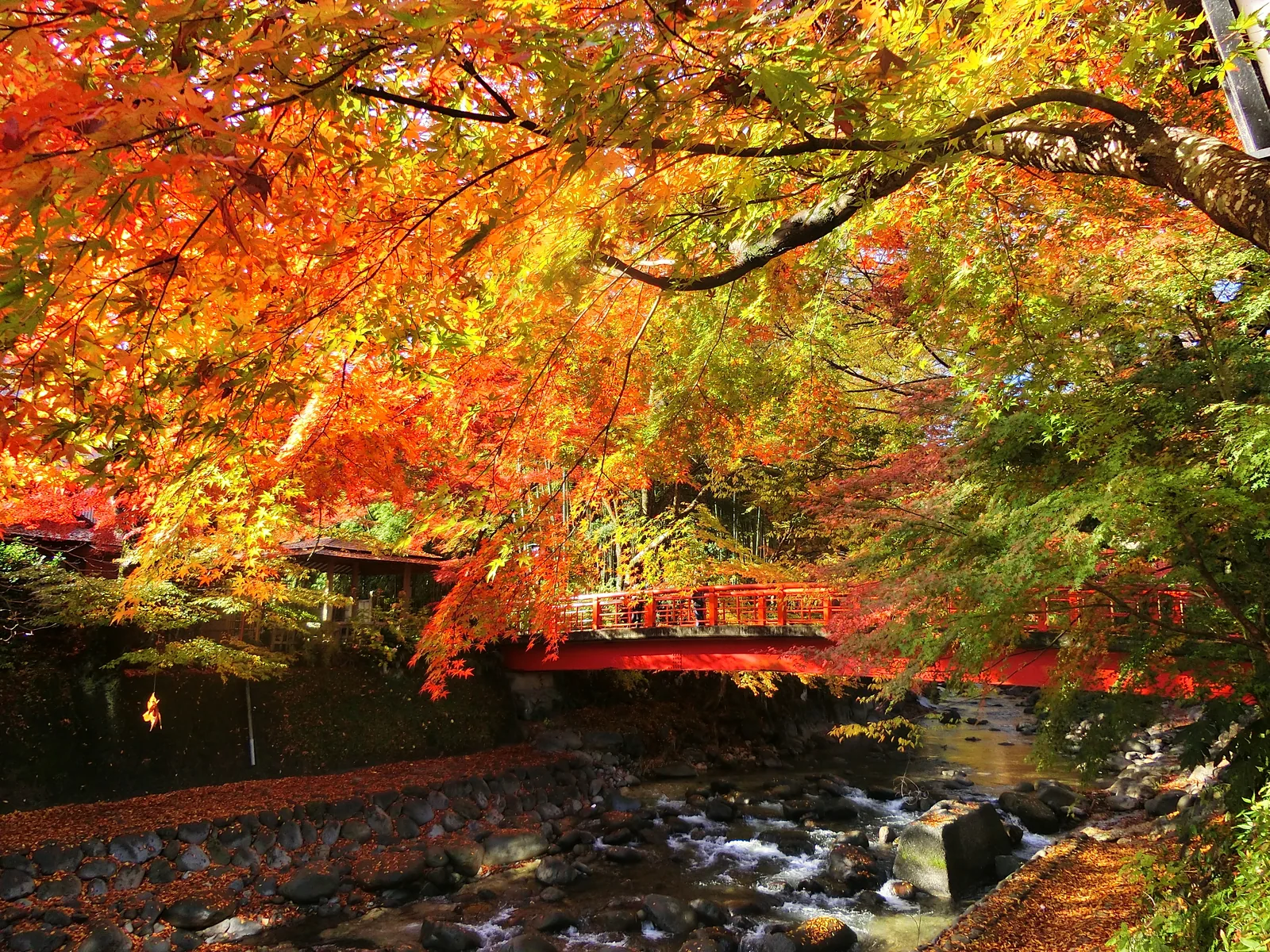
Five bridges span the Katsura River, each linked to a distinct romance blessing: Togetsukyo Bridge (nicknamed Misome Bridge, for good matches), Kokeikyo Bridge (Akogare Bridge, for love fulfilled), Katsura Bridge (Musubare Bridge, for children), Kaede Bridge (Yorisoi Bridge, for marriage), and Takishita Bridge (Yasuragi Bridge, for marital harmony). Note that Kokeikyo Bridge uses an older Japanese variant of its middle kanji on official signs, so keep alternate spellings in mind if a map search misses it. Following the bridges downstream from Togetsukyo in front of Shuzenji Temple leads smoothly to Shigetsuden and Hie Shrine, delivering classic views of vermilion railings reflected in the water. The tourism association maps three walks: the 60-minute Koi no Yorisoi Course (Shuzenji Temple, five bridges, Shigetsuden, and Hie Shrine), the 30-minute Akogare loop, and the 40-minute Yasuragi loop. Stay two nights to sample the short evening loop on day one and the full 60-minute circuit the next morning.
History-minded walkers can switch to the official History Course, a roughly 2.5-kilometer, two-hour route passing the tombs of brothers Minamoto no Yoriie and Minamoto no Noriyori alongside Shigetsuden, the Bamboo Grove Path, and the towering Husband-and-Wife Cedars at Hie Shrine. For travelers staying two nights or longer who want to explore further afield, the advanced four-hour Renge Hoju Three Stones route links three jewel-carved stone markers scattered around the valley.
At the heart of the valley stands Shuzenji Temple, where the town's story began. Founded as a Soto Zen temple in 807 (Daido 2) by Kobo Daishi—the exact year the hot spring emerged—it shifted to Rinzai Zen during the Kencho era, burned in 1409 (Oei 9), and was rebuilt under Hojo Soun as Soto Zen. Temple grounds open from 5:00 AM to 5:00 PM with free admission; the temple office and Treasure Hall open 8:30 AM-4:30 PM (Treasure Hall entry ¥300 adults, ¥200 children; the temple has no parking lot).
November 2026 brings a rare sacred viewing (gokaicho): from November 1 to November 30, 2026 (Reiwa 8; Treasure Hall open 9:00 AM-4:00 PM), the temple unveils the Dainichi Nyorai statue sculpted by Jikkei and donated by Hojo Masako, a principal image normally closed to public view. One helpful search tip when looking up local listings: the temple's official Japanese name uses the character for Zen while the town and hot spring district use the character for virtue, though both are pronounced Shuzenji—so search specifically for Shuzenji Temple alongside Shuzenji Onsen.
Overnight guests settle easily into an unhurried daily rhythm: visit Shuzenji Temple at 5:00 AM as the gates open in crisp morning quiet, warm up at a free footbath before breakfast, wander the five bridges and bamboo grove mid-morning, soak at Hakoyu or your ryokan in the afternoon, and stroll to Shigetsuden by sunset. Even over two nights, the circuit never feels repetitive. Come autumn, maples along Katsura Bridge blaze crimson—featured prominently on Izu City's official foliage pages—making early room bookings essential and turning dawn and dusk at the bridge into prime hours for photographers.
Getting There & Itineraries: Mishima Transfers and Crossing Izu
By rail, the main artery into Shuzenji is the Izuhakone Railway Sunzu Line. The 19.8-kilometer ride from Mishima Station to Shuzenji Station costs ¥550 for adults and takes roughly 33 minutes according to Izu City's timetable or 32 minutes per the tourism association—budgeting 30 to 35 minutes covers it cleanly. Because Mishima is a major Tokaido Shinkansen stop from Tokyo, most rail travelers transfer there onto the 12-station Sunzu Line, passing Mishima-Hirokoji, Mishima-Tamachi, Nirayama, Izu-Nagaoka (a hot spring area in its own right), and Ohito along the way.
Remember that the Sunzu Line is a regional private railway with fewer departures and earlier last trains than major JR city lines. If you plan to have dinner around Mishima Station before heading into the valley, verify the last train time before sitting down; direct Limited Express Odoriko departures are similarly limited, making timetable checks a smart habit.
To avoid hauling heavy bags across platforms at Mishima, take the direct Limited Express Odoriko straight to Shuzenji Station—about 2 hours 6 minutes from Tokyo Station, 1 hour 58 minutes from Shinagawa, 41 minutes from Atami, or 26 minutes from Mishima (limited express surcharge applies). Outside Shuzenji Station, catch a Shin-Tokai Bus (operated by Shin-Tokai Bus, separate from West Izu's Tokai Bus) for 7 to 10 minutes to the Shuzenji Onsen terminus, or take a 10-minute taxi (local dispatch: Izuhakone Kotsu at 0558-72-1811; Terayama Taxi at 0558-72-2129).
Drivers can exit the Tomei Expressway at Numazu IC or the Shin-Tomei Expressway at Nagaizumi-Numazu IC and follow the Izu-Jukan Expressway, Izu-Chuo Expressway, and Shuzenji Road (the latter two are toll roads) for roughly 30 minutes. From Shuzenji Station to the hot spring district is a gentle three-kilometer climb supported by convenient local options: same-day luggage delivery via IZUPON right outside the station so you can explore hands-free, Harenohi Cycle bike shares, and electric tuk-tuks offered at half price to overnight guests.
Coming from the Shizuoka-Shimizu side offers a scenic maritime shortcut via the Suruga Bay Ferry: 65 minutes across the bay from Shimizu Port to Toi Port, followed by about a 40-minute drive to Shuzenji Onsen without looping around Numazu. For most travelers arriving from Tokyo or along the Shinkansen corridor, Mishima and Atami remain the primary gateways—either Shinkansen plus Sunzu Line or a direct Odoriko train—while the ferry makes the most sense if your route already passes through Shimizu.
Shuzenji fits into an Izu Peninsula trip in two clean ways. For pure unwinding, book two consecutive nights and alternate lazy walks with long soaks. For a wider peninsula loop, use Shuzenji as your central base: enter via Mishima on day one, continue to Ito or Shimoda on day two, and head north out of Atami on day three—combining rail and bus connections with our Izu and Atami seasonal stays guide. Once you reach the hot spring street, everything is walkable; transit only matters getting in and out of the valley.
Finally, timing your trip makes a dramatic difference. Late autumn turns Katsura Bridge and the valley maples bright red for Shuzenji's most photogenic weeks, spring brings fresh greenery, summer stays breezy beside the river, and winter offers deep quiet with far easier room availability. Check the tourism association's seasonal foliage updates before locking in dates—picking the right week shapes both scenery and room prices even more than switching hotels.
A few useful answers
Can you soak in Tokko-no-yu at Shuzenji Onsen?
No. Tokko-no-yu is strictly for viewing and is neither a bathing pool nor a footbath. Two free footbaths sit right beside it: Kawarayu Footbath (on the north side of Tokko-no-yu, seating 6, open 5:00 AM-11:00 PM) and River Terrace Sugi-no-yu (inside Tokko-no-yu Park, seating 10). For a full soak, head to the Hakoyu public bathhouse (¥700 adults, open 10:00 AM-9:00 PM, opening at 3:00 PM on the second Thursday of each month) or book an overnight ryokan with its own grand baths.
How should you choose a place to stay in Shuzenji Onsen?
Start by narrowing the 21 properties into four styles: historic ryokan (400-year-old Kikuya; Arai Ryokan with 15 Nationally Registered Tangible Cultural Property buildings and its Tenpyo Grand Bathhouse), secluded hideaways (15-room Yagyu-no-sho; detached-pavilion Oni-no-sumika), exclusive and all-inclusive retreats (Asaba, founded in 1489 with an onsite Noh stage; 6-room all-inclusive Seinoya), and budget stays (Kimpukuso, Hostel Knot, and others). Because major sights are only minutes apart on foot, the main difference is riverside versus hillside atmosphere. The tourism association does not list room rates, so check each property's official website directly.
How do you get to Shuzenji Onsen from Tokyo or Mishima?
Transfer at Mishima Station to the Izuhakone Railway Sunzu Line for Shuzenji Station (30-35 minutes, ¥550), then ride a Shin-Tokai Bus for 7-10 minutes to the Shuzenji Onsen terminus. You can also take the direct Limited Express Odoriko straight to Shuzenji Station (about 2 hours 6 minutes from Tokyo Station or 1 hour 58 minutes from Shinagawa) to skip transferring. By car from Numazu IC via the Izu-Jukan Expressway, the drive takes about 30 minutes. At Shuzenji Station, you will find IZUPON same-day luggage delivery, bike rentals, and electric tuk-tuks at half price for overnight inn guests.
Can day-trippers soak in Shuzenji's hot springs without staying overnight?
Yes. Hakoyu public bathhouse charges ¥700 for adults and ¥400 for children (under a municipal ordinance update, a revised ¥400 fare takes effect from April 2027—check official notices for which ticket tier applies). It is open 10:00 AM-9:00 PM (last entry 8:30 PM), opening at 3:00 PM on the second Thursday of each month, with scheduled closures on November 12 and December 10, 2026, and January 14, February 11, and March 11, 2027. Day visitors can also soak at Katsuragawa's grand bath (11:30 AM-4:00 PM), Mizunosato Marukyu Ryokan (¥1,500 per hour), and the two free riverside footbaths.
Official information and references
Sources used in this guide.
- Shuzenji Onsen Tourism Association | Onsen Meguri (Tokko-no-yu, Footbaths, Hakoyu Fares & Closure Days)
- Shuzenji Onsen Tourism Association | Stay Guide (21 Accommodations & Official Property URLs)
- Shuzenji Onsen Tourism Association | Five Bridges of Love Official Brochure (Blessings & Three Walking Courses)
- Shuzenji Onsen Tourism Association | Hakoyu Public Bathhouse Status (Nov 7 Reopening & April 2027 Ordinance Revision)
- Izu City Tourism Association | Access Guide (Mishima to Shuzenji ~33 min, Bus ~7 min, Direct Odoriko Schedule)
- Shuzenji Temple | Official Website (History, Gates 5:00 AM-5:00 PM, Free Grounds Entry, Nov 2026 Gokaicho)
- Izuhakone Railway | Regular Fares (Mishima to Shuzenji ¥550, Revised March 16, 2024)
- Asaba | Official Website (1489 Shukubo Origins, Gekkeiden Noh Stage, 10 Rooms, 2:30 PM Check-In / 11:30 AM Check-Out)
- Yukairo Kikuya | Rooms Page (Main Wing 54 sq m 11 Rooms, Soseki-no-ma, 4 Private Baths)
- Katsuragawa | Official Website (7 Free Private Baths, Day-Use Grand Bath 11:30 AM-4:00 PM)