Atami is 45–50 minutes from Tokyo by Shinkansen. Compare a station bathhouse, ryokan day baths, oceanfront Fuua, and a family pool—plus 2026–2027 fireworks logistics.
- Region & Focus
- Izu and Atami
- Reading Scope
- 21 min read · 11 chapters · 6 Q&As
- Official Verification
- 32 official sources checkedUpdated November 22, 2026
- Key Topics
- Hot springsRyokanBooking
Chapter Route Map (tap any stop)
- Getting to Atami from Tokyo and Where to Start
- How to Choose Between Four Day-Use Baths
- Traveling with Kids, Booking Private Baths, or Minimizing Stairs
- Soak Your Feet at the Station and Follow Atami's Seven Springs Toward Ginza
- Taking a Separate Bus to Hashiriyu in Izusan
- Atami Marine Fireworks 2026–2027 Dates and Viewing Spots
- Catching the Train Back to Tokyo After the Fireworks
- Where to Stay in Atami: Working Back from Room Type and Next-Day Plans
- Half-Day Budget and Sample Schedules
- Pairing Winter Baths with Atami Baien Plum Garden
- Continuing to Ito or Catching the Ferry to Hatsushima
- Quick Q&A
For a half-day hot spring trip, Atami is 45 to 50 minutes from Tokyo on the Tokaido Shinkansen Kodama, and the shopping arcades start right outside the station. For a quick soak, head to Tahara Yokujo in front of Atami Station; for ocean views, give a full afternoon to Fuua down by the harbor. After a Marine Fireworks show, expect a steep uphill walk back to the station and queues at the ticket gates. Staying overnight buys enough breathing room to watch the full show, linger over dinner, and soak afterward—just verify before booking whether a room offers fireworks views or an in-room hot spring bath, as those are often two very different room types.
Getting to Atami from Tokyo and Where to Start
From Tokyo or Shinagawa Station, the easiest train to catch is the all-stops Tokaido Shinkansen Kodama. Select Hikari trains also stop at Atami, so search with Atami as your destination to see every option; Nozomi trains skip it. Travelers coming from Ueno or northern Tokyo on a tighter budget can catch a Ueno-Tokyo Line through-train onto the Tokaido Main Line to Atami. Local trains take about 110 minutes, though, so leaving Tokyo in the afternoon can eat into ryokan day-bath windows.
Coming off the Shinkansen platform, follow the exit signs through the Shinkansen transfer gate out to the station plaza. Ieyasu no Yu and the station shopping arcades sit right on this side, along with buses toward the coast, Atami Baien, and Izusan. Overnight visitors should drop luggage at their hotel or stash bags at the station first, keeping a small daypack with a towel, dry clothes, and return tickets. Leaving the station is downhill all the way, so realizing at the beach that you forgot something means a steep climb back up.
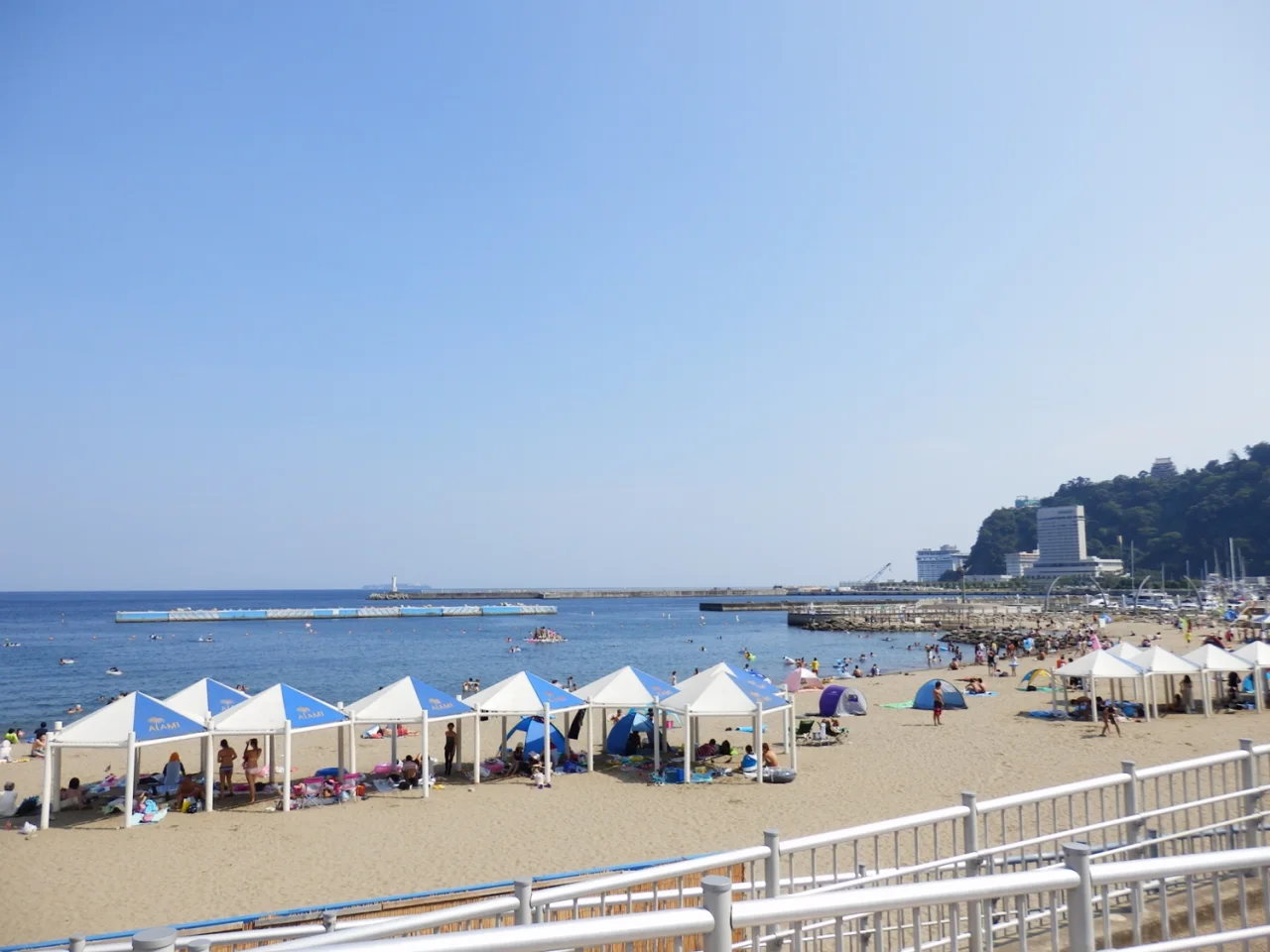
Walking downhill from Atami Station takes about 15 minutes to Atami Sun Beach and 20 minutes to Nagisa Shinsui Park—good benchmarks for your outbound trip. If you have a train to catch later, wait at the Shinsui Park or Ginza bus stops for the ride back up. Catching a bus bound for Atami Port / Korakuen from Stand 7 at the station also lets you skip the downhill walk. With older companions, start uphill at Kinomiya or Atami Baien, walk down toward Ginza-dori and the beach, and bus back to Atami Station rather than climbing uphill from the shore to the shrine.
If you only have two or three hours, Tahara Yokujo and Ieyasu no Yu are right by the station, keeping meals and souvenir shopping in one compact zone. Staying until dusk lets you stroll down through the arcades, have lunch around Ginza-dori, soak at a ryokan, and finish on the sand. Fuua sits farther south in the harbor district and merits a full afternoon on its own for entry, changing, soaking, lounging, and getting back to the train. Trying to cram Baien, Sun Beach, and Fuua into one half-day usually squeezes out bath time first.
Atami is 45–50 minutes from Tokyo by Shinkansen. Compare a station bathhouse, ryokan day baths, oceanfront Fuua, and a family pool—plus 2026–2027 fireworks logistics.
How to Choose Between Four Day-Use Baths
Atami Ekimae Onsen Bathhouse (Tahara Yokujo) at 8-16 Taharamotocho is about a 1-minute walk from the station. Admission is ¥500 for junior high students and up and ¥200 for elementary students; it opens 14:00 to 21:00 (last entry 20:30) and closes Wednesdays. This small neighborhood bathhouse works best right before your train home—bring a small towel and dry clothes, eat and browse first, then bathe once it opens. If you only have a morning layover, use the plaza footbath instead, as Tahara Yokujo isn't open yet.
Yuyado Mikan no Ki sits between the waterfront and Ginza-dori, roughly a 10-minute walk from Atami Station. Day bathing costs ¥1,250 including tax and bathing tax, running 13:30 to 19:00 (last entry 18:00). Small towels cost ¥330 to buy, and bath towels rent for ¥440. The ryokan uses its own thermal spring source and has an open-air bath, though there is no day-use lounge—day guests leave after bathing. Call 0557-81-1533 before heading down to confirm availability, as day entry stops when the inn is busy; if it's full, you can catch a bus straight to the port area instead.
For ocean views, choose Ocean Spa Fuua at Atami Bay Resort Korakuen. Its open-air infinity standing bath faces Sagami Bay, alongside scenic indoor baths and spacious lounges. Entry runs 10:00 to 21:00 until closing at 22:00, with no advance reservations for general admission. Weekday rates are ¥3,080 for junior high students and up and ¥2,310 for ages 4 through elementary school, plus ¥150 bathing tax for adults. Base tickets include loungewear and towels, letting you soak, relax in loungewear, and change back before leaving—a far more leisurely pace than a small public bathhouse.
Fuua's scenic sauna is closed for renovations until mid-December 2026; the natural-source open-air bath reopened on October 17, and the infinity standing bath remains open throughout the work. Starting on the reopening date, adult base admission on weekends, national holidays, and designated days rises from ¥3,410 to ¥3,630 (both plus ¥150 bathing tax), while weekday base rates stay the same. Scheduled 2027 closure dates are January 5–6, May 26, June 29–30, and December 14–15. On closed days, pivot to Marine Spa Atami or walk back to Ginza-dori for a ryokan bath.
Fuua's weekday After 5 ticket (after 17:00) is ¥2,310 for adults, and After 8 (after 20:00) is ¥1,110, both plus bathing tax. After 8 covers bathing and towels only, with no access to the 3rd- and 4th-floor lounge areas. Both evening discounts are suspended on Atami Marine Fireworks Festival nights, when even late arrivals pay the standard rate. In winter, go during daylight to enjoy the sea view from the outdoor bath; on regular weekdays using After 8, coordinate your return shuttle and train times in advance rather than chasing the low ticket price alone.
Marine Spa Atami fits families who want kids to play in the water while adults soak. Tourism association listed general rates are ¥1,360 for adults, ¥680 for elementary and junior high students, ¥420 for ages 3 through preschool, and ¥310 for under age 3. Standard hours are 10:00 to 19:00 (last entry 18:30), usually closed Thursdays, with seasonal summer and New Year schedules. Inside are heated pools, a waterslide, and hot spring baths—pack swimsuits for the pool, then change in the locker room before entering the baths. Buses from Atami Station Stands 6 or 7 reach the Marine Spa Atami stop in about 10 minutes.
| Facility | Standard Adult Fare | Best For |
|---|---|---|
| Atami Ekimae Onsen Bathhouse (Tahara Yokujo) | ¥500 | Storing bags by the station and soaking before heading back to Tokyo |
| Yuyado Mikan no Ki | ¥1,250 (incl. bathing tax) | Soaking in a private ryokan spring after lunch near Ginza-dori |
| Ocean Spa Fuua | ¥3,080 weekdays (+ ¥150 bathing tax) | Ocean-view open-air bathing and spending an afternoon in the lounge |
| Marine Spa Atami | ¥1,360 | Families combining heated kids' pools with hot spring baths |
Traveling with Kids, Booking Private Baths, or Minimizing Stairs
Fuua does not admit infants or toddlers ages 0 to 3. Children ages 4 through elementary school must be accompanied by a same-sex parent and may not use the infinity standing bath, natural-source open-air bath, scenic sauna, or bedrock bath. Guests under 18 require a guardian aged 20 or older. The infinity standing bath also enforces a 135 cm height minimum, and anyone with tattoos or body paint is barred from entry. Check which zones each person can use if your group wants to stick together—if kids mainly want pool time, spending the afternoon at Marine Spa is much easier than splitting up inside Fuua.
Couples and families who want to bathe together should search for "kashikiri-buro" (private reservable baths) with dedicated time slots. Near the station, Yuyado Ichibanchi offers both day-use communal baths and private open-air baths. Communal day bathing runs 13:00 to 17:00 (last entry 16:00, subject to early cutoff when full), while its private open-air baths—Kan'ichi no Yu and Omiya no Yu—require booking an available date and slot under the ryokan's day-use plans. Unlike per-person communal entry, private baths combine a rental charge with admission; Yuyado Ichibanchi lists an extra ¥1,600 entry fee per day visitor. Solo bathers looking for a quick soak generally save money at the station communal bath.
When booking a private bath, check the slot length and capacity limit before matching it to your Shinkansen trains. If you're dropping bags off first, build in round-trip transit time to and from the ryokan, and factor in meal time if you plan to eat before catching your return train. For travelers who need to limit stairs, ask the front desk whether elevators run all the way from guestrooms to the bath floor and whether tubs have grab bars; if prioritizing a single room feature, pick a bathroom your companions can enter on their own.
Soak Your Feet at the Station and Follow Atami's Seven Springs Toward Ginza
Ieyasu no Yu is a free footbath on the Atami Station plaza, reopened on September 1, 2026, operating from 9:00 to 16:00. The city notes that spring flow tapers off in the afternoon and water temperatures cool down. For warmer water in winter, stop by as soon as you step off the train, keeping spare socks and a foot towel in an outer bag pocket. Early arrivals can soak their feet before browsing the arcades; if you return to the station after 16:00, head straight to Tahara Yokujo instead.
Walking from Heiwa-dori and Nakamise-dori by the station down to Ginza-dori takes you past storefronts from several different eras. Pick up dried seafood and street snacks near the station, then wait until Ginza-dori for a sit-down lunch. Afterward, detour to Oyu Geyser in Kamijuku-cho—right beside the entrance to Yuzen Shrine—before continuing downhill to the water. This route shows you how hot springs shaped the old town before reaching the beachfront hotels and sand; bathers can peel off to a ryokan while non-bathers stroll along the coast to meet up at the same spot.
Once a natural erupting geyser, Oyu is now a city-designated cultural property using artificial pumping to recreate its historic spouts. City schedules list eruptions every 5 minutes or so for 3 minutes between 8:00 and 19:00, free to watch. A short walk away is Ozawa no Yu, where the tourism association notes visitors steam eggs over rising spring vents. Visiting Oyu and Ozawa no Yu illustrates two distinct uses of Atami's old street springs, with Yuzen Shrine nearby for spring history—for actual bathing, stick to the day-use facilities listed above rather than hunting down bathhouses by the Seven Springs names.
Atami Sun Beach and Nagisa Shinsui Park sit right next to each other, making an easy waterfront walk south along the promenade. For a shorter ryokan loop, walk the beach and head back up to Ginza-dori to eat. You can also continue down the harborfront to Marine Spa or Fuua, then take a bus back to the station to save energy. Mark bathhouse exits and return bus stops on your map ahead of time so you can walk straight to the stop once you finish soaking.
Taking a Separate Bus to Hashiriyu in Izusan
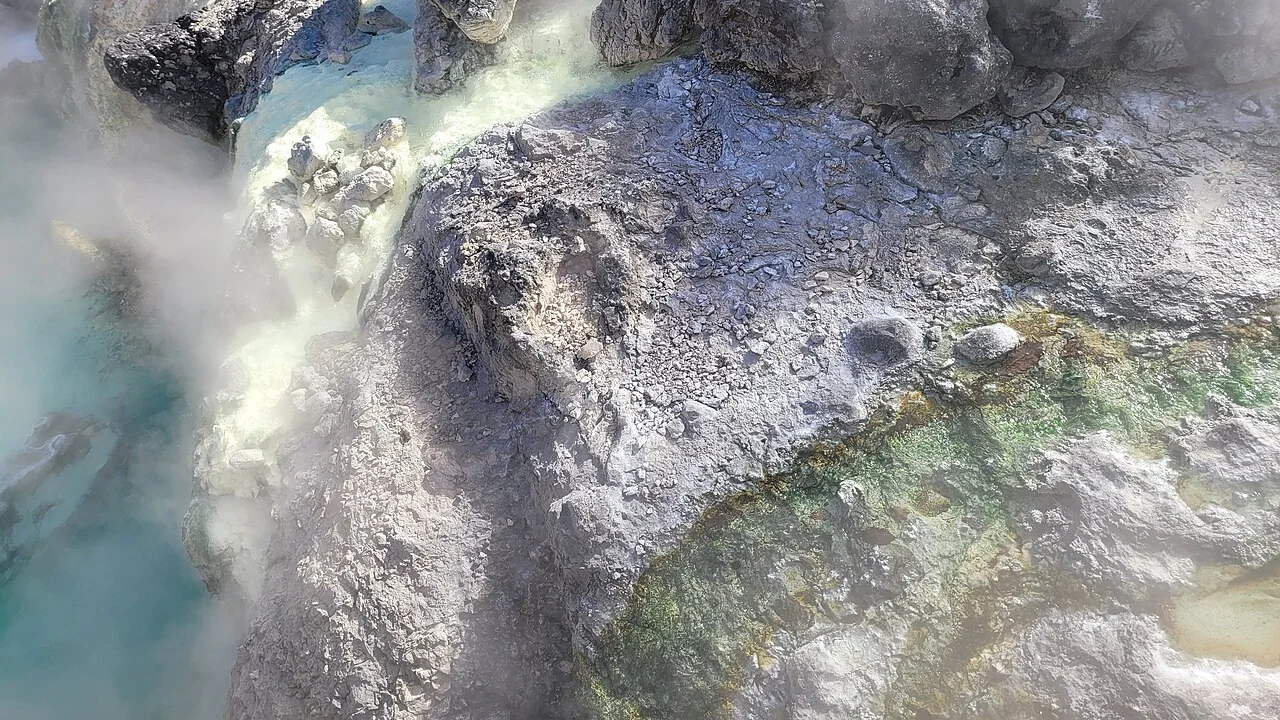
Hashiriyu in Izusan is about 5 minutes by bus from Atami Station toward Izusan or Yugawara—get off at Aizomebashi and walk roughly 10 minutes. It is open 9:00 to 17:00 with no parking. The tourism association describes it as a horizontal cave spring about 5 meters deep where 70°C thermal water gushes forth. Hashiriyu is for sightseeing only, so plan bathing elsewhere. Make this round-trip your first stop out of the station before heading downtown for lunch and check-in, rather than detouring over from Ginza-dori close to closing time.
The name Hashiriyu comes from hot water rushing out of the mountainside toward the shore, and the spring was historically tied to Izusan Shrine. Check elevation changes on a map before combining both sites—let the bus carry you uphill, then decide whether to walk toward the coast after visiting the shrine. On a half-day centered on bathing, stay downtown for Oyu Geyser and Ozawa no Yu and skip both bus rides. Guests overnighting in Izusan can save Hashiriyu for the next morning and spend the hours before dinner at their ryokan.
Atami Marine Fireworks 2026–2027 Dates and Viewing Spots
Per Atami City announcements as of November 22, 2026, remaining 2026 shows fall on November 23, December 6, and December 25, with an added show on February 21, 2027. Announced 2027 dates also include April 18 and 29; May 23; June 6; July 19 and 25; August 5, 15, 18, and 24; September 20; October 3 and 24; November 7; and December 5 and 19. Shows run 20:15 to 20:40 in July and August, and 20:20 to 20:40 on the other dates above. Events proceed in rain, so wearing a raincoat takes up far less room in viewing areas than an umbrella.
Atami Sun Beach (about 15 minutes downhill from Atami Station) suits viewers who want a wide bay panorama. To get closer to the launch zone, walk farther south to Nagisa Shinsui Park (about 20 minutes downhill), divided from the beach side into Zones 1, 2, and 3. Official 2026 information listed no paid viewing seats, though in July and August 2026 the seaside of Zone 2 and Zone 3 were reserved for guests of participating hotels holding inn-issued ground mats. For summer 2027 dates, check the tourism association event page for that year's access zones and hotel plans so you can decide at booking whether to watch outside or from your room.
Wheelchair users should look first at Zone 1 of Shinsui Park, where the tourism association sets up a wheelchair viewing area near the Sun Beach end. Soft beach sand is tough going, so paved promenades make far better sense for wheelchairs and strollers. Sound echoes strongly off the bay near the launch area; anyone sensitive to loud booms can stand near an easy walkway exit or book a room with a confirmed view so they can decide whether to step outdoors. When splitting up for food or restrooms, pick a fixed landmark on the landward side rather than a viewing zone whose entry rules could shift.
To fit dinner, bathing, and fireworks into one night, decide first where you will watch after eating. Ocean-view room guests can reserve an early dinner and return upstairs; waterfront walkers should bathe and dine first, then stroll down to the beach. If not eating at a ryokan, dine around Ginza-dori—it sits close to the beach and makes switching restaurants easy if a line forms. If it rains on fireworks night, keep shopping and bathing on the same side of town to avoid wet cross-town trips.
Catching the Train Back to Tokyo After the Fireworks
The fireworks end at 20:40. Walking from Sun Beach back to Atami Station is an uphill climb, and the city warns that ticket gates back up once the show lets out. Choose reserved Shinkansen seats with enough cushion for packing rain gear, climbing the hill, and waiting in station queues. Buses can also crawl in traffic, so if you're up for the walk, review the organizer's return walking map beforehand and follow crowd marshals. Official dispersal maps also split local-line and Shinkansen riders—check which side to line up on as you reach the station plaza.
Taking December 25, 2026 as an example, JR East's December weekday timetable lists Tokyo-bound Kodama trains at 21:02, 21:26, and 22:02. The 21:02 train leaves only 22 minutes after the finale. To watch the entire show from Shinsui Park and walk uphill afterward, look at the 21:26 train (arriving in Tokyo at 22:12) or the 22:02 train (arriving at 22:48). If you have children in tow or need to pick up luggage from a hotel first, subtract bag-pickup time from that gap before buying tickets.
Open JR East's Tokyo-bound timetable for Atami Station, toggle between weekday and weekend/holiday schedules for your travel date, and click individual trains to verify arrival times. Book tickets ahead, and give your whole party enough time to regroup, visit restrooms, and pass through two sets of ticket gates together. If you still need a late subway or JR transfer after reaching Tokyo, check those last connections as well. Travelers heading south toward Ito or Shimoda are directed by organizers to board the Ito Line at Kinomiya Station using the official exit map.
The free Korakuen shuttle back to Atami Station takes about 10 minutes in normal traffic. Standard published evening departures from the resort leave at 20:40, 21:40, and 22:20, picking up at the station rotary right outside the ticket gates in front of McDonald's. Seating is limited, and catching it after watching from Sun Beach requires walking south to the harbor area first. If no late train fits cleanly back to Tokyo, choose a different fireworks date or spend the night in Atami so you can enjoy the evening waterfront without watching the clock.
Where to Stay in Atami: Working Back from Room Type and Next-Day Plans
Staying near the station works best if you're using Atami as a one-night stopover before an early Shinkansen back to Tokyo, west to Mishima, or onto the Ito Line. Tsuki no Sumika Atami Juraku Hotel is one station-area option, listed by the local ryokan association as roughly a 3-minute walk, offering private open-air baths, select rooms with open-air baths, and in-room dining plans. If traveling with older family members and wanting dinner in your room, filter for half-board with in-room dining, then check bed counts and latest dinner start times. If you'd rather eat out later around Ginza-dori, room-only or breakfast-only plans leave your evening free.
Around the coast and harbor, verify exact room category names if fireworks views matter. Atami Korakuen Hotel notes that all guestrooms in the Tower Building face the fireworks. In AQUA SQUARE, choose an Ocean View Room or Universal Room for balcony views, whereas Courtyard Rooms face inward. Families hoping to bathe nearby should review hotel communal bath hours alongside Fuua's age restrictions. Some hotel packages include one Fuua admission per guest while others do not, so confirm whether that perk is stated on your booking before comparing rates.
Staying near Kinomiya or up on the hillside lets you settle straight into an in-room bath or communal onsen after check-in. About a 5-minute walk from Kinomiya Station, Fufu Atami has natural hot spring open-air baths in every main-building room and arranges station pickups when booked in advance, making it ideal for guests planning to spend most of their stay indoors. If heading down to the coast for evening shopping or fireworks, ask the hotel about return shuttles, since walking uphill at night takes longer than straight-line map distances suggest. Staying out in Izusan also means factoring round-trip downtown transit into your fireworks dinner plans.
When comparing prices, switch search totals to the full room rate for your exact headcount. Japanese booking pages often display per-person rates rather than per-room totals—applying a two-person per-guest quote to a solo trip underestimates cost, and child counts require exact ages plus meal and bedding selections. A room labeled as having an open-air bath ("rotenburo-tsuki kyaku-shitsu") isn't necessarily fed by natural spring water unless room details specify "onsen" or "gensen." If a hotel only lists a panoramic communal bath, look separately for private bath bookings. On fireworks nights, note your exact room type, dinner cutoff, and cancellation deadline right beside the confirmation.
Atami charges a municipal accommodation tax of ¥200 per guest per night (exempt for elementary school students and younger) plus a bathing tax generally set at ¥150 per person per day (one day charged per overnight stay; exempt for children under 12 and 12-year-olds still in elementary school). For two adults staying one night and subject to both taxes, that adds ¥700 total. Add locally collected taxes onto room rates before weighing dinner or private-bath upgrades.
If morning bathing is central to your stay, leave plenty of time after breakfast and check bath hours before checkout. Atami Korakuen Hotel checkout is 11:00 in the Tower Building and 10:00 in AQUA SQUARE. AQUA SQUARE guests holding a Fuua pass can check out, leave luggage with the hotel, visit Fuua when it opens at 10:00, and take an afternoon shuttle to Atami Station. On Fuua's scheduled closure dates, plan your morning soak in the hotel's own communal bath instead.
Half-Day Budget and Sample Schedules
Based on Smart EX non-reserved ordinary-car fares from Tokyo to Atami at ¥3,740 one way (¥7,480 round-trip), adding a ¥500 soak at Tahara Yokujo brings the transport-and-bath baseline to ¥7,980; swapping in weekday base admission at Fuua with its ¥150 bathing tax brings it to ¥10,710 before meals and local buses. Starting April 2026, the EX Hayatoku 1 adult one-way fare on Hikari and Kodama non-reserved seats is ¥3,390, sold from 0:00 JST six days prior until 23:30 JST the night before travel. Seats are limited, and the discount is blacked out from December 25, 2026 through January 5, 2027.
With a full day to spare and a dinner budget in mind, take the Tokaido Main Line outbound and the Shinkansen home—or ride an early Shinkansen down, bathe in the afternoon, and take a slower local train back when your evening is free. Smart EX Shinkansen tickets cover only the Shinkansen stations, so local JR rides inside Tokyo cost extra. For a non-fireworks weekday half-day from Tokyo, pick your return time and dinner spot first so saving one fare doesn't strand you waiting for shops to open.
A half-day bath run works well starting with lunch near the station or Ginza-dori, walking past Oyu Geyser to the beach, soaking at Yuyado Mikan no Ki in the afternoon, and catching a bus back to the station. In rain, swap the beach walk for Kiunkaku, a historic former ryokan preserving Japanese-style rooms, Western salons, and gardens—adult entry is ¥610, open 9:00 to 17:00 (last entry 16:30), normally closed Wednesdays (open on national holidays) and December 26–30. On rainy Wednesdays, anchor your day around Fuua's lounges or Marine Spa's indoor pools instead of waiting out the weather by the coast.
For an overnight trip, check in during the afternoon, take a first soak before dinner, watch the fireworks and unwind back in your room, then bathe again in the morning. From a coastal hotel, drop bags at checkout before visiting Kinomiya Shrine or Atami Baien; if staying near Kinomiya, leave luggage at the ryokan, tour the shrine or garden, and swing back to pick it up. When continuing toward Ito, you can board the Ito Line directly at Kinomiya Station. If time after checkout is tight, limit the morning to Kinomiya Shrine so breakfast, your morning soak, and train transfers stay relaxed.
Pairing Winter Baths with Atami Baien Plum Garden
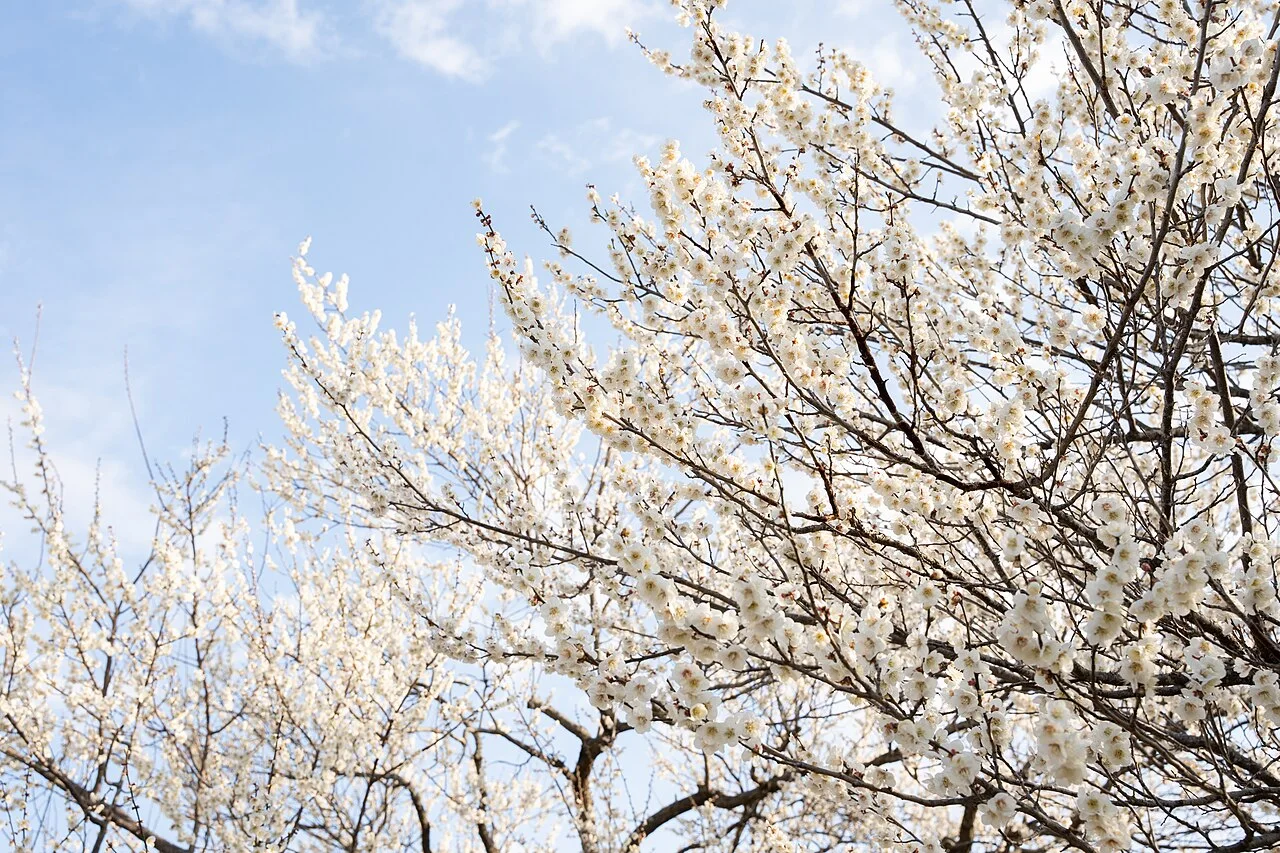
The 83rd Atami Baien Plum Festival runs from January 9 to March 7, 2027. Paid entry applies from 8:30 to 16:00 at ¥300 general admission, ¥100 for Atami overnight guests and residents, and free for junior high students and younger—ask your hotel front desk about overnight guest vouchers. Atami Baien is roughly a 10-minute walk from JR Kinomiya Station or a 15-minute bus ride from Atami Station toward Ainohara Danchi to the Baien stop. Early-, mid-, and late-blooming varieties stagger the season; check the tourism association's bloom updates for full park peak bloom.
To combine Kinomiya Shrine and Atami Baien in one day, take the bus to Baien first and walk toward Kinomiya Station afterward. Kinomiya Shrine is about 5 minutes on foot from the station, or reachable from Atami Station on buses bound for Jukkoku Pass or the Nishiyama Loop to the Kinomiya Jinja-mae stop. After walking the gardens, pause around the shrine before heading downhill toward Ginza-dori. December 6, 2026 is both the final day of the Baien Autumn Leaves Festival and a Marine Fireworks night—visit the garden early and move down to the coast for the afternoon and evening so you don't backtrack uphill.
For winter ocean views from an outdoor bath, arrive at Fuua in the afternoon and finish before sunset. If staying outdoors on the waterfront for fireworks later, keep a towel, jacket, and windproof hat in an outer pocket so you aren't waiting in damp layers after bathing. In summer, swim first and save a Ginza-dori or harbor bathhouse for later, packing a separate pouch for wet swimwear. For ideas on pairing Atami Castle, the MOA Museum of Art, or Sun Beach, see our Atami attractions and transit guide.
Continuing to Ito or Catching the Ferry to Hatsushima
To continue down the east coast of Izu the next day, ride the JR Ito Line from Atami or Kinomiya to Ito and pick just one base for your ryokan stay. For the Jogasaki Coast, connect at Ito onto the Izukyu Line toward Izu-Kogen and keep coastal walks in daylight. With heavy luggage, stay in Atami on your arrival night and move to an Ito ryokan the next day rather than squeezing checkout, coastal hikes, and a fireworks trip home into a single day. For how terrain and seasons differ across nearby hot spring hubs, see seasonal stays across Izu and Atami.
Ferries to Hatsushima Island take about 30 minutes from Atami Port, with regular round-trip tickets sold on-site for ¥2,900 adults and ¥1,450 elementary students (no advance booking needed for general passengers). From Atami Station Stand 7, take a bus bound for Atami Port / Korakuen to the Atami-ko stop right by the ticket office; from Stand 6, take a bus toward Ajiro Asahi-cho to Marine Spa Atami (Atami-ko Iriguchi) and walk over. Check operator timetables for a return sailing that connects smoothly with a bus back to the station. Give Fuua and ferry plans separate windows—if sea conditions disrupt sailings, shift straight to downtown baths or Kiunkaku rather than heading out to the port first.
A few useful answers
How do you get to Atami Onsen from Tokyo?
Take the Tokaido Shinkansen Kodama from Tokyo Station to Atami in 45 to 50 minutes; select Hikari trains also stop there. For a lower fare, ride a direct Tokaido Main Line local train in about 110 minutes.
Which day-use onsen is closest to Atami Station?
Atami Ekimae Onsen Bathhouse (Tahara Yokujo) is about a 1-minute walk from the station, open 14:00 to 21:00 (last entry 20:30), closed Wednesdays, and ¥500 for junior high students and up. In the morning, you can use the free Ieyasu no Yu footbath outside the station from 9:00.
Do you need tickets for the Atami Marine Fireworks Festival?
Both Atami Sun Beach and Nagisa Shinsui Park offer free viewing areas. Official 2026 guidance listed no paid seating, though select summer zones were reserved for guests staying at participating accommodations.
Can toddlers use the hot springs or pools in Atami?
For children under 4, prioritize Marine Spa Atami and check its toddler admission and pool rules. Ocean Spa Fuua does not admit ages 0 to 3, and children from age 4 through elementary school must be accompanied by a same-sex parent and cannot enter designated zones such as the infinity standing bath.
Can you bathe at Hashiriyu in Izusan?
No—Hashiriyu is a hot spring cave viewing site open 9:00 to 17:00. Ride a bus from Atami Station toward Izusan or Yugawara to Aizomebashi, then walk about 10 minutes. Plan actual bathing at downtown day-use bathhouses or an Izusan ryokan.
Which rooms at Atami Korakuen Hotel have fireworks views?
All guestrooms in the Tower Building face the fireworks. In AQUA SQUARE, Ocean View Rooms and Universal Rooms offer fireworks views from their balconies.
Official information and references
Sources used in this guide.
- Atami City | 2026 and 2027 Marine Fireworks Festival Schedules
- Atami City Tourism Association | Fireworks Viewing Areas, Wheelchair Spaces, and Exit Routes
- Atami City Tourism Association | Sun Beach and Shinsui Park Fireworks Viewing Guide
- JR East | Atami Station Timetable
- JR East | December 2026 Weekday Shinkansen Timetable from Atami to Tokyo
- JR Central | Atami Station Map
- Smart EX | Non-Reserved Ordinary Car Fare Table
- Smart EX | EX Hayatoku 1 Sales Windows and Eligible Trains
- Smart EX | EX Hayatoku 1 Fare Table Effective April 2026
- Smart EX | Hayatoku Fare Blackout Dates
- Atami City Tourism Association | 2026 Events and Day-Use Onsen Guidebook
- Yuyado Mikan no Ki | Hot Springs and Day-Use Bathing
- Ocean Spa Fuua | Hours, Admission, and Entry Rules
- Ocean Spa Fuua | 2026 Scenic Sauna Renovation and Rate Update
- Atami Bay Resort Korakuen | Free Shuttle from Atami Station
- Atami City Tourism Association | Marine Spa Atami Fares and Access
- Atami City | Marine Spa Atami Bus Stops
- Yuyado Ichibanchi | Private Open-Air Baths and Day-Use Notice
- Atami City Tourism Association | Ieyasu no Yu Footbath Reopening and Hours
- Atami City | Oyu Geyser Eruption Schedule
- Atami City Tourism Association | Ozawa no Yu
- Atami City Tourism Association | Izusan Hashiriyu and Aizomebashi Access
- Atami Onsen Ryokan Cooperative | Tsuki no Sumika Atami Juraku Hotel
- Atami Korakuen Hotel | Room Fireworks Views and Fuua Packages
- Atami City | Municipal Accommodation Tax
- Atami City | Bathing Tax
- Atami Onsen Ryokan Cooperative | Fufu Atami Guestrooms and Access
- Atami City Tourism Association | Kiunkaku and Year-End Closures
- Atami City Tourism Association | 2027 Atami Baien Plum Festival
- Atami City Tourism Association | 2026 Atami Baien Autumn Leaves Festival
- Kinomiya Shrine | Access and Visitor Information
- Hatsushima Regular Ferry | Fares, Schedules, and Atami Port Buses