How to plan a day trip to Atami from Tokyo, linking the MOA Museum of Art, Kinomiya Shrine, and seaside shopping streets, plus Hatsushima ferry schedules, the Atami Castle ropeway, and 2027 sakura and fireworks dates.
- Region & Focus
- Izu and Atami
- Reading Scope
- 21 min read · 10 chapters · 5 Q&As
- Official Verification
- 33 official sources checkedUpdated November 22, 2026
- Key Topics
- ItinerariesFirst tripSeasons
Chapter Route Map (tap any stop)
- Atami Day Trip: Put Fixed-Hours Stops Before Lunch
- Getting From Tokyo to Atami: Check Bus Platforms and Stops First
- MOA Museum of Art: Time Your Visit for the Red and White Plum Blossoms
- Kinomiya Shrine to Atami Ginza: Giant Camphor Trees and Old Hot-Spring Lanes
- Sun Beach to Nagisa Shinsui Park: Pick Your Exit Before Turning Back
- Atami Ropeway to Atami Castle: Separate Fares and Last Rides
- Hatsushima Day Trip: Plan Around an Earlier Return Ferry
- 2027 Atami Cherry Blossoms, Plum Festival, and Marine Fireworks Dates
- Rain, Closures, or Canceled Ferries: The Smoothest Backup Stops
- Day-Trip Onsen or Overnight Stay: Decide by Return Train and Dinner
- Quick Q&A
For a first-time day trip to Atami, take the morning bus up to the MOA Museum of Art, then spend the afternoon walking from Kinomiya Shrine down through Atami Ginza, the Itogawa River, and the waterfront—linking the hillside galleries all the way to the bay. Heading to Hatsushima? Put the ferry first and save the morning and lunch for the island. The Atami Ropeway climbs from Atami Port up to Atami Castle, making it an easy add-on to a coastal walk, with the last downhill car at 5:30 PM. If you are visiting in winter for early blossoms or fireworks, you can time your trip to the announced 2027 dates.
Atami Day Trip: Put Fixed-Hours Stops Before Lunch
On a first day trip from Tokyo, save the morning for a stop with set opening hours, then leave the afternoon for neighborhoods you can shorten on the fly. The cleanest combo links the MOA Museum of Art, Kinomiya Shrine, and a downtown stroll. Ride the bus from Atami Station up to the museum in the morning, head back down to the station, grab lunch either near the station or downtown, and start your afternoon walk from Kinomiya toward the sea. Giving yourself two unhurried hours for Ginza, Itogawa, and the beach beats doubling back to Atami Station before and after lunch.
The station and the coast look close on a map, but the walk runs down a steady slope. Across town, Atami Castle sits atop Mount Hachiman above the harbor, opposite the MOA Museum of Art. To see two different coastal panoramas in one day, come down from the museum, have lunch, head straight to Atami Port, and ride the ropeway up to the castle. Save Kinomiya Shrine for another visit so you still have time to walk the waterfront or wait out passing clouds at the summit. If you are staying near the beach, walk Shinsui Park first and catch the ropeway right by the port to skip an extra trip back to the station.
If you only have half a day in and out of Atami Station, pick a single track. Art lovers can take the bus from Platform 8 up the hill and browse Nakamise Street back at the station. First-timers focused on streetscapes can ride the JR Ito Line to Kinomiya, visit the shrine, walk downhill through Atami Ginza, and take a bus back to Atami Station from the coast. If you need to catch a train before 4:00 PM, turn back around Itogawa or Sun Beach and save the south end of Shinsui Park and Atami Port for next time.
Traveling with a stroller or older relatives? Let the bus handle the uphill climbs. When reading maps along the coast, keep two destinations distinct: search for Sun Beach (San Bichi) for the sand, and Atami Port for ferries, since a long stretch of Shinsui Park separates them. If your group splits up to explore, set a named meeting spot—such as the station-front footbath, the Ginza bus stop, or the tourist information center—so anyone walking the bay has a clear rendezvous point.
| What You Want to Do | Where to Start | How to Connect the Afternoon |
|---|---|---|
| See the museum and old streets | Take the morning bus up to the MOA Museum of Art | Ride to Kinomiya, then walk downhill through Ginza, Itogawa, and the beach |
| Walk the beach and ride the ropeway | Sun Beach to Nagisa Shinsui Park | Take the ropeway up from Atami Port and return downtown before dinner |
| Stroll Hatsushima and eat seafood | Go straight from Atami Station to Atami Port | Catch an earlier afternoon ferry back to Atami and spend the evening downtown |
| See winter blossoms or fireworks | Visit Atami Plum Garden, MOA, or Kinomiya in the morning | Head to Itogawa or the waterfront in the evening, leaving time to get back to the station |
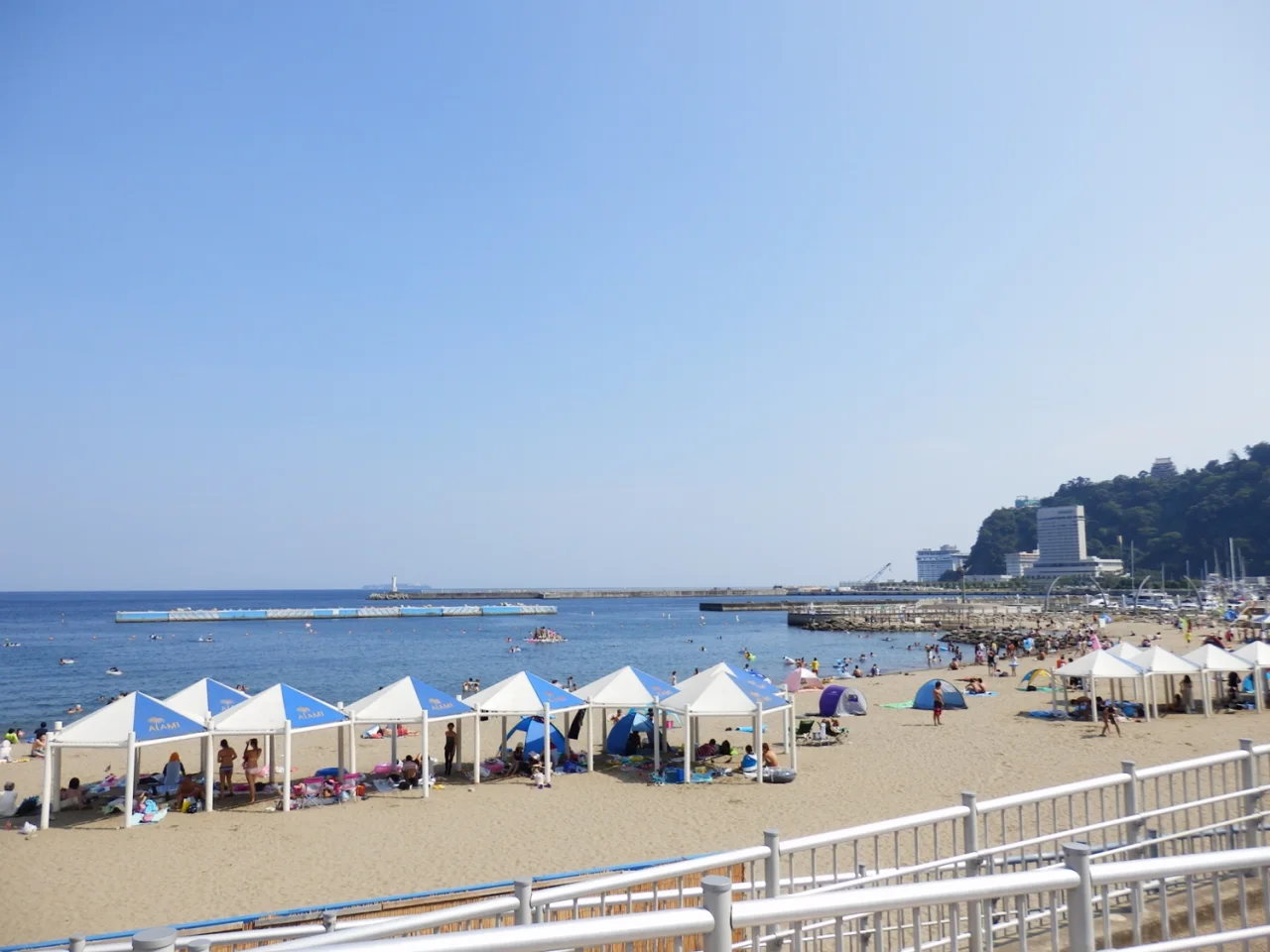
How to plan a day trip to Atami from Tokyo, linking the MOA Museum of Art, Kinomiya Shrine, and seaside shopping streets, plus Hatsushima ferry schedules, the Atami Castle ropeway, and 2027 sakura and fireworks dates.
Getting From Tokyo to Atami: Check Bus Platforms and Stops First
From Tokyo, the Tokaido Shinkansen takes about 35 to 40 minutes on a Hikari train (only on services that stop at Atami) and 45 to 50 minutes on a Kodama. The local JR Tokaido Main Line takes about 1 hour 50 minutes, a solid trade-off if you are staying downtown and want to save on fare. Continuing south to Ito or Izu Kogen afterward? The JR Ito Line also departs from Atami Station. Drop your luggage at your overnight hotel first and save the downtown walk for check-in or check-out day, since rolling bags up and down Atami's hills gets tiring fast.
Both Shinkansen and local JR trains arrive at Atami Station. Exit to the bus terminal in the station plaza, where buses to major sights gather: Platform 8 serves the MOA Museum of Art, and Platform 7 serves Atami Port and Korakuen. The ferry operator also lists Platform 6 Ajiro Asahicho departures via Omiya no Matsu—get off at Marine Spa Atami (Atami Port Entrance) and walk to the pier. Multiple routes can share one platform, so check the destination sign on the front of the bus before boarding, and look for the stop on the opposite side of the street heading back to Atami Station.
For Kinomiya Shrine, ride the JR Ito Line local train one stop from Atami to Kinomiya (about 3 minutes), then walk roughly 5 minutes to the shrine. If you just missed a train, buses from the station plaza toward Jukkokutoge or the Nishiyama Loop also stop at Kinomiya Shrine right in front of the entrance. Transferring straight from the Shinkansen to the Ito Line lets you start your walk at Kinomiya and save Atami Station's two covered shopping arcades for the trip home, grabbing souvenirs right before boarding. If you store bags in a locker outside the station first, budget a few extra minutes to walk back through the ticket gates.
The Yu-Yu Bus sightseeing loop suspended all service indefinitely starting October 11, 2025, so connect sights using regular city buses, JR trains, and taxis. If you are following older guides that loop MOA, Kinomiya, and the port on that sightseeing bus, simply use Atami Station as your transfer hub instead. Buses back to Atami Station wait outside the MOA terminal, where you can change to another city route. Visitors heading to the beach and those catching a ferry can ride the same port-bound bus and just get off at their respective stops.
On fireworks nights, book your return train in advance, especially if you have a transfer at Shinagawa or Tokyo. Select Tokaido Shinkansen reserved seats on Smart EX can be requested roughly a year ahead, with your specific train, departure time, and seat number confirmed about a month before travel. When picking a departure, factor in the uphill walk from the waterfront and the time needed to clear the station gates. If you want breathing room, book a later train, eat dinner before the fireworks, and walk back along the same route after the finale.
MOA Museum of Art: Time Your Visit for the Red and White Plum Blossoms
From Platform 8 outside Atami Station, catch a bus bound for MOA Museum of Art (MOA Bijutsukan) and ride about 7 minutes to the last stop. Given the steep elevation gain from the station, taking the bus is the standard approach. The museum is open 9:30 AM to 4:30 PM (last entry at 4:00 PM) and closes Thursdays (open on national holidays) plus exhibition changeover dates. Individual visitors do not need timed reservations. Admission is ¥2,000 for adults, ¥1,400 for high school and university students with ID, and free for junior high students and younger.
The escalator tunnel climbs roughly 48 meters over 200 meters to Moore Square, taking about 10 minutes from bottom to top, with a stop along the way to take in the Circular Hall's kaleidoscopic dome. Once inside, tour the current exhibition first; bay views open up from the main building's lookout windows and the first-floor cafe overlooking downtown Atami. Give yourself 1.5 to 2 hours for the ascent, main galleries, and a short break. Arrive early or travel with dedicated art fans, and you can add the outdoor gardens too. If you are catching an afternoon ferry, pick up catalogs at the first-floor shop, ride the escalators back down to the bus stop, and allow time to transfer through Atami Station.
If anyone in your group prefers to skip the long escalator ride when arriving by taxi, ask the driver for the MOA Museum Main Building Entrance (Honkan Iriguchi) and check with museum staff on site for step-free routes open that day. If everyone enters via the bus terminal escalator entrance, floor maps at both the escalator lobby and main building mark lockers and restrooms so you can stow bags before viewing the galleries. Remember that going up from the bus stop and coming back down takes around 20 minutes round-trip.
Viewing Ogata Korin's National Treasure screen, Red and White Plum Blossoms, requires matching your trip to its annual exhibition window. In 2027, the Commemorative Masterworks Exhibition runs January 9 to February 24. Over the New Year holiday (October 23, 2026 to January 3, 2027), the gallery features Buddhas of Izu Part 1, followed from February 26 to April 2, 2027 by Hokusai's Thirty-Six Views of Mount Fuji. Pick the earlier run for Korin or spring for woodblock prints, and check the museum calendar before booking hotels so you do not land on an exhibition changeover closure.
When looking at Korin's screen, start with the swirling stream down the center before tracing the plum trunks and branches on either side. To pair the painting with real blossoms on the same trip, choose a flower spot after leaving the museum: Atami Plum Garden on the Kinomiya side requires a bus ride or walk from Kinomiya Station, while the Itogawa Promenade near Ginza showcases early-blooming Atami cherry trees. Staying downtown for two days lets you put the museum and the plum garden on separate days so indoor gallery time is not squeezed by sunset or peak-bloom crowds.
On rainy days, the museum's indoor route works seamlessly on its own; on misty days, see the main galleries before checking the cafe view or gardens. Arriving right at last entry leaves only about 30 minutes, so shift the museum to the morning if you want to see the grounds and architecture as well. If some people in your group are not interested in art, they can browse the station arcades for lunch and meet you back at Atami Station when your bus pulls in.
Kinomiya Shrine to Atami Ginza: Giant Camphor Trees and Old Hot-Spring Lanes
Search for Kinomiya Shrine for the entrance, or take the JR Ito Line to Kinomiya Station. The shrine office is open 9:00 AM to 5:00 PM, with prayer applications closing at 4:30 PM. Enter under the main torii gate, follow the approach path, pay your respects at the main hall, and continue along the side path to Okusu, a sacred camphor tree over 2,000 years old whose massive roots and trunk fill the frame. If you have time, walk past the main hall to see the tree properly rather than stopping after a quick photo at the entrance.
The main approach from the front entrance up to the sanctuary includes stairs. The shrine's official website provides guidance for wheelchair users and visitors with limited mobility—you can be dropped off near the torii gate and ask staff for the step-free detour. If your group arrives on different trains or buses on a weekend, the main torii is the easiest landmark to meet at before walking in together. Compact rain gear is also much easier to manage than large umbrellas on crowded, narrow paths.
Walking downhill from Kinomiya toward town, you can string together Yuzen Shrine and the Oyu Geyser before stepping into Atami Ginza. One of Atami's historic Seven Hot Springs, Oyu now vents steam automatically roughly every 5 minutes, making it a quick stop. This downhill walk gives you a far better feel for the old spa town than taking a cab straight from the shrine to the port. If you have an early dinner before fireworks, head straight from Kinomiya to Ginza or Itogawa and save the side alleys around the hot-spring sources for another time.
Nakamise Street and Heiwa-dori sit right beside Atami Station, ideal for grabbing a quick lunch before an early train or buying onsen manju steamed buns on your way out. Atami Ginza sits farther down the slope near Itogawa and Nagisa Shinsui Park. For dried seafood, fish set meals, or classic kissaten coffee shops, stroll from Ginza down toward the river to compare menus. When ordering simmered alfonsino (kinmedai nitsuke), check whether the price covers a whole fish or a fillet, and whether rice and sides are included. Buying pastries with short shelf lives in the morning? Check the best-by date on the box—if you still have a few days left on your Japan trip, save souvenir shopping for your return leg.
If weekend lunch lines near the station stretch too long, head up to the museum first and eat around Ginza on your way back down. Anyone already at the port can eat on Hatsushima instead. When you have two places left to fit into the late afternoon, tackle the one with a hard closing time first: tour Kiunkaku before it shuts, then leave Itogawa for its evening illuminations. If your group just wants to shop, walk from Ginza to the beach, catch a bus back to the station, and use your remaining time for souvenirs.
Sun Beach to Nagisa Shinsui Park: Pick Your Exit Before Turning Back
Atami Sun Beach curves along the northern half of the downtown bay, easy to spot by its pale sand and gentle arc. You can walk down from Atami Station through Sakimicho, or hop on a station-front bus that stops at Sun Beach to skip the slope. Just south of the sand lie Nagisa Shinsui Park and Moon Terrace, and continuing toward Atami Port brings you past the yacht harbor. If you simply want to sit by the water, the stretch from the sand to Moon Terrace is plenty—walking all the way to the port adds noticeably more distance.
To swim in summer, stick to the lifeguarded swimming zone and follow posted flags and announcements to leave the water if sea conditions deteriorate. Outside swimming season, the waterfront is at its best for an unhurried walk after shopping or before dinner. Families letting kids play in the sand should leave time to rinse off and board a bus near Sun Beach rather than hauling tired kids across all of Shinsui Park to find a ride back. After sunset, the bayfront lights up, offering a completely different perspective from the morning view high above at MOA.
The Itogawa River empties into the sea right below Ginza, so its promenade connects smoothly with a coastal walk. On windy days, walk down from the shopping street for a quick look at the water before ducking back into the sheltered lanes. If you want more time along the shore, walk south from Sun Beach to Shinsui Park and decide there whether to catch a bus or soak in an onsen. Both ends are easy to start from, though your return bus stop depends on where you finish. Visitors who prefer flat terrain can stroll a short section of the promenade and take a bus back up from near Ginza or Sun Beach.
For photos of the skyline and bay, look south from the northern end of Sun Beach first, then walk to the park for a reverse angle back toward the harbor and hills. Staying on land also lets you duck quickly back into Ginza or indoors if the weather shifts. On fireworks nights, choose a viewing spot where you can stand comfortably without blocking stairs, corners, or walkways. Agree on a specific bus stop or street corner with your family beforehand so regrouping in the dark is much easier than trying to match landmarks in photos.
Atami Ropeway to Atami Castle: Separate Fares and Last Rides
The lower terminal of the Atami Ropeway sits right next to Atami Port. From Atami Station, take a Platform 7 bus bound for Atami Port or Korakuen and get off at Korakuen, or walk south along the waterfront promenade. The first uphill cable car departs at 9:30 AM, the last uphill car leaves at 5:00 PM, and the final downhill car leaves at 5:30 PM, running roughly every 10 minutes for a 3.5-minute ride. Adult fares (junior high school and older) are ¥500 one-way or ¥900 round-trip; children ages 4 through elementary school pay ¥300 one-way or ¥500 round-trip, and children under 4 ride free.
At the summit, Umisora Terrace looks straight out over the harbor, while Atami Castle is about a 5-minute walk from the upper ropeway station. Built in 1959 as a sightseeing castle keep, Atami Castle houses exhibits on Japanese castles and an observation deck. It is open 9:00 AM to 5:00 PM (last entry at 4:30 PM), with admission at ¥1,200 for adults, ¥650 for elementary and junior high students, and ¥500 for ages 3 to 6. A combo ticket with the adjacent Trick Art Museum costs ¥2,000 for adults. Ropeway tickets are sold separately, and the child age brackets differ—something families with 3-year-olds tend to notice at the ticket window.
If you only want the coastal view, a brief stop on the summit terrace on a clear day is enough before heading back down. If you plan to tour the castle exhibits, factor in wait times for both cable cars and visit the lower station in the afternoon before dinner. Also watch the gap between closing times: riding up at 5:00 PM leaves only the terrace open, since castle entry ends at 4:30 PM. On fireworks nights, the roughly 8:20 PM launch is long after the 5:30 PM last downhill car, so stay down on the waterfront where you can walk back toward the station.
The ropeway operator has scheduled maintenance closures on December 15, 2026, January 18 to 22, 2027, and February 16, 2027. Even on clear holiday mornings, strong winds can halt cable car operations. If the ropeway closes and you still want to visit the castle, consider taking a taxi or driving up from town; if you just wanted the sea view, stay along the bay. Families who already bought Trick Art Museum tickets can still ride up by road to visit both, while anyone without advance tickets can pivot to indoor spots near the port.
Hatsushima Day Trip: Plan Around an Earlier Return Ferry
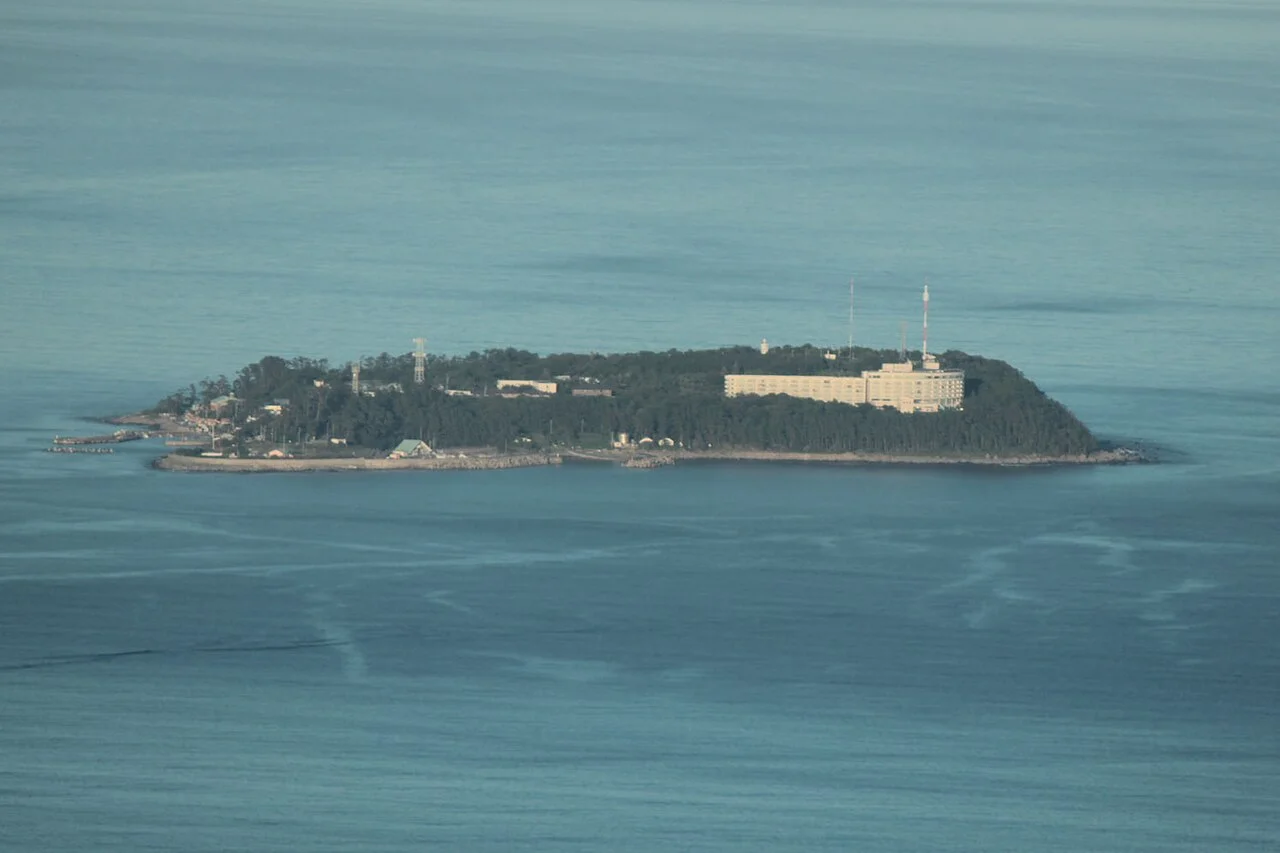
The ferry from Atami Port to Hatsushima Port takes about 30 minutes. As listed on the ferry operator's official Japanese site in November 2026, round-trip fares are ¥2,900 for adults (junior high school and older) and ¥1,450 for elementary school students. Round-trip tickets are sold at Atami Port, and general passengers do not need reservations. Ferry tickets do not include island attractions, so budget separately for meals, the lighthouse, and paid activities. The bus from Atami Station to the port takes about 15 minutes, plus extra time to walk to the ticket counter and board. Coming from Tokyo, note both your target bus and the following backup bus, then pick your sailing based on when they reach the pier.
During the vessel's periodic inspection from November 4 to December 24, 2026, the route operates 7 round-trips per day. For instance, you can take the 10:40 AM ferry from Atami (arriving around 11:10 AM), eat an early seafood lunch by the harbor, walk out toward Hatsuki Shrine or the Hatsushima Lighthouse, and catch the 3:20 PM or 4:40 PM sailing back. If you do not depart Atami until noon, the window is tighter, so keep lunch and a short harbor stroll first—that timing still drops you back on the mainland early enough for the coastal blocks, with backup sailings if an earlier boat fills up.
With wider gaps between sailings on the reduced schedule, two to three hours on the island is ideal for a harbor meal and a moderate walk. Hatsushima's casual restaurants cluster around the pier, several run by local fishing families; if you skip raw fish, look for grilled, simmered, or cooked seafood dishes. Heading inland involves gentle hills, and climbing the Hatsushima Lighthouse takes extra time on the stairs. The lighthouse generally opens 10:00 AM to 12:00 PM and 1:00 PM to 4:00 PM, with last entry 20 minutes before each closing time (¥300 for junior high and older). Plan to go right after lunch, and if you arrive past 3:40 PM, enjoy a coastal walk instead.
Boats run at fixed capacity on busy days, so arriving late in the queue can bump you to the next sailing. If you hold reserved Shinkansen seats back to Tokyo, book a return ferry earlier than the last boat and leave margin for docking, riding the bus up to the station, and walking to the platform. In rough weather, delays, or cancellations, check the ferry operator's service status first; if you are still downtown, swap in Kiunkaku or the MOA Museum of Art. If sailings change while you are still at Atami Station, you can simply walk over to Platform 8 and ride up to MOA.
Once back in Atami from Hatsushima, the easiest next stop is Nagisa Shinsui Park or an early dinner near the harbor. Fitting both the MOA Museum and the island into a single day trip often bottlenecks around getting up and down the hill, transferring buses, and buying boat tickets. Put the port first if seafood lunch on Hatsushima is your priority, or save the island for the next morning if the museum is your main goal. Staying overnight gives you the flexibility to swap days based on sea conditions and enjoy both without rushing.
2027 Atami Cherry Blossoms, Plum Festival, and Marine Fireworks Dates
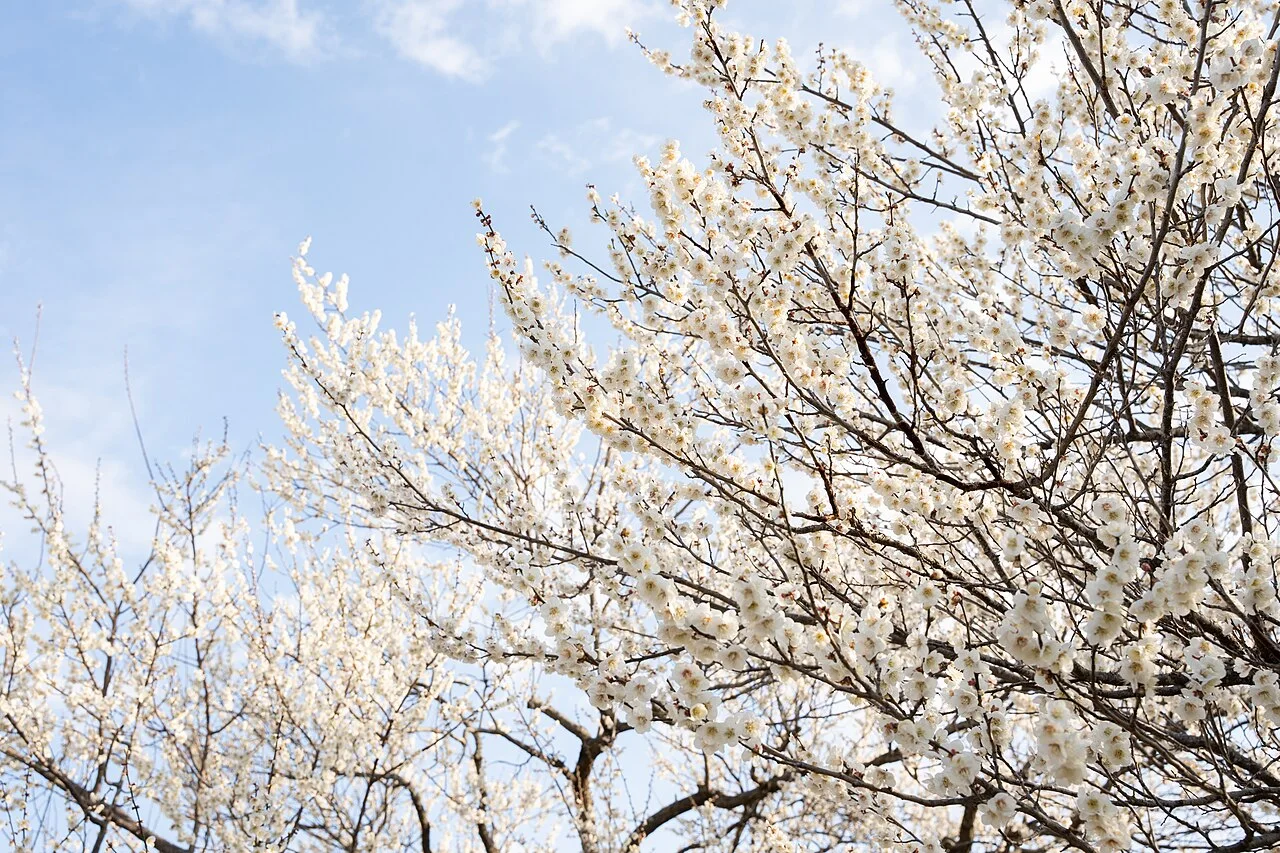
The 2027 Itogawa Cherry Blossom Festival is scheduled for January 9 to February 7 along the 300-meter Itogawa Promenade bordering Ginza-cho and Chuo-cho, where 58 Atami-zakura trees are illuminated nightly from 5:00 PM to 11:00 PM. It is about a 20-minute walk from Atami Station, or a quick bus ride via Omiya no Matsu to the Ginza stop. Look down at the blossoms from the bridges by day, or book dinner near Ginza and stroll under the lit trees at night. Check official bloom updates before picking your date, since the festival runs longer than peak bloom on any single tree.
The 2027 Atami Plum Garden Plum Festival runs January 9 to March 7, with paid admission from 8:30 AM to 4:00 PM: ¥300 for adults, ¥100 for guests staying at accommodations in Atami City, and free for junior high students and younger. From Atami Station Platform 1, take a bus bound for Ainohara Danchi for about 15 minutes to Baien, or walk roughly 10 minutes from JR Kinomiya Station. Want to see both blooms in one day? Visit the plum garden in the morning, have lunch downtown, and walk Itogawa in the evening after the lights come on. If you only want one flower stop, Itogawa sits closer to the sea, while the plum garden is better for a full daytime stroll.
Late-2026 city fireworks dates include November 23, December 6, and December 25, followed by a winter show on February 21, 2027. Atami's fiscal 2027 fireworks calendar then runs from April 18 into winter, including July 19 and 25; August 5, 15, 18, and 24; and December 5 and 19. Shows normally run 8:20 PM to 8:40 PM, shifting 5 minutes earlier to 8:15 PM in July and August. Before buying train tickets, read the city's multi-year schedule carefully and separate February 2027 from fiscal 2027 so you lock in the exact evening you want.
Prime viewing stretches along Sun Beach and Nagisa Shinsui Park. If you are catching a train back from Atami Station, end your walk toward the Sun Beach side so you have a shorter uphill climb afterward. On warm summer evenings, eat dinner in Ginza before heading down early for a spot; in winter, wait until closer to showtime to cut down on standing in coastal wind. For July and August shows, the tourism association publishes traffic control maps—essential reading if you are driving in or out.
The city closes the launch area from noon on fireworks days, so follow on-site detours if you are coming back from Atami Port during the afternoon. After the finale, city notices warn of heavy crowding at the Atami Station ticket gates, so leave extra time to queue for the platforms. Rather than waiting in the station crush, you can pause for a drink in Ginza; if you already have a reserved train, watch near the station-bound exit of the bayfront so you do not have to cross all of Shinsui Park through the crowd.
The February 21, 2027 fireworks show overlaps with both the Plum Festival and the MOA Korin exhibition, making it easy to pair one daytime highlight with an early downtown dinner before walking to the water. Note that the Itogawa Cherry Blossom Festival wraps up earlier on February 7. Comparing January and February weekends, pick January to combine Atami-zakura with the museum, or pick a fireworks night if the evening show is your priority. Booking a ryokan with dinner included? Align your seating time with the 8:20 PM launch before deciding whether to watch from your room or down on the beach.
Rain, Closures, or Canceled Ferries: The Smoothest Backup Stops
When ferries or the ropeway suspend service, Kiunkaku in Showacho is the easiest indoor swap near the waterfront—about a 10-minute walk from Atami Ginza, or a short ride from Atami Station Platform 1 or 2 to the Kiunkaku-mae stop. Hours are 9:00 AM to 5:00 PM (last entry 4:30 PM), with admission at ¥610 for adults, ¥360 for junior high and high school students, and free for elementary school students and younger. It closes Wednesdays (open on national holidays) and December 26 to 30 for year-end holidays. Grab lunch nearby in the rain, leaving enough time to explore the historic interiors before closing.
Kiunkaku began as a private Japanese-style villa in 1919, later gained Western-style wings, and operated as a ryokan after World War II. Focus on the traditional woodwork, tokonoma pillars, and lattice windows in the Japanese rooms, then seek out the fireplace nook, Roman-style bath, and stained glass in the Western wings. In wet weather, follow the covered indoor route and enjoy the garden from the tatami rooms overlooking it. Architecture buffs should allow at least an hour and push lunch slightly later so there is no rush comparing the different eras of construction.
On Wednesdays when Kiunkaku is closed, head to the MOA Museum of Art; on Thursdays when MOA is closed, pair Kiunkaku with Atami Ginza. If you like locking in plans before arriving, you can also reserve a timed visit online to the Former Hyuga Villa (Kyu Hyuga-ke Atami Bettei), featuring a basement interior designed by Bruno Taut within walking distance of the station. Because entry is strictly by advance online booking, build the rest of your day around that slot, or fall back to the station arcades and other open museums if your preferred time is full.
When strong coastal winds hit without rain, stick to the inland walk from Kinomiya to Ginza for lunch and historic buildings instead of waiting exposed on the pier with kids or older travelers. If a sudden downpour hits, hop straight onto a bus back to Atami Station for covered souvenir shopping and dining. With an hour or less left before a reserved Shinkansen, staying near the station keeps your wrap-up simple and lets you save port-side hot springs for another trip.
When group members want different activities, art and architecture fans can tour Kiunkaku while others stroll through Shimizucho toward the coast, meeting up later for a shared meal in Ginza. Anyone carrying swimwear can also check daily public access at city-run Marine Spa Atami right at the port entrance, which connects smoothly back to Atami Station on flat-route buses. Because coastal leisure spots and historic villas sit so close together, you can wait out a passing shower and pivot within the same neighborhood.
Day-Trip Onsen or Overnight Stay: Decide by Return Train and Dinner
With only half an hour before your train, soak your feet at Ieyasu no Yu right in front of Atami Station. The free footbath operates 9:00 AM to 4:00 PM, and a vending machine beside it sells small drying towels for ¥200. If you have afternoon plans, stop by when you first arrive so you do not miss it after the water is drained. For a full bath, pick a facility open to non-staying day-trippers—Atami City's official day-use onsen directory breaks options down by downtown and outlying areas so you can choose one along your route.
Finishing your day near the port? Ocean Spa Fuua next to Atami Korakuen is open 10:00 AM to 10:00 PM (last entry 9:00 PM) with no reservation required. Standard weekday adult admission is ¥3,080 plus ¥150 bathing tax, which includes loungewear and towels. Note that discounted evening entries after 5:00 PM and 8:00 PM are suspended on fireworks days, and guests with tattoos, body paint, or tattoo stickers are not permitted to enter. It is closed January 5 and 6, 2027, so if a New Year trip falls on those dates, choose another day-use bath near the station or your hotel.
Stay near Atami Station if you need an early Shinkansen, plan to catch the Platform 8 bus to MOA first thing, or want to grab stored luggage and board quickly. Stay around Ginza or Sun Beach if you want to walk seamlessly between dinner, Itogawa's lit cherry blossoms, and fireworks—just allow extra time for the uphill return to the station at the end. Stay near Atami Port or Korakuen for effortless access to morning Hatsushima ferries and the ropeway, with a pleasant bayfront walk north to Ginza after dinner. If you know you are catching an early boat to Hatsushima the next morning, a night by the port saves a bus transfer and makes buying tickets stress-free.
When scheduling a ryokan dinner, map out meal times alongside fireworks, night blossoms, and final bath hours on one timeline. Fireworks end at 8:40 PM: downtown overnight guests can stroll straight back to their hotel, while Tokyo day-trippers still face the uphill walk to the station. Want to watch the show from your room? Book a plan that explicitly guarantees a fireworks view and verify the exact room type and viewing angle. Stretching Atami into a two-day trip—exploring town the first morning before heading on to Shuzenji or Ito on day two—fits smoothly with our Izu and Atami seasonal and overnight itineraries.
A few useful answers
How should I plan a one-day trip to Atami from Tokyo?
Take the morning bus from Atami Station Platform 8 up to the MOA Museum of Art, then visit Kinomiya Shrine in the afternoon and walk downhill through Ginza, Itogawa, and the beach. If you are going to Hatsushima, save the morning and lunch for the island and catch an earlier afternoon ferry back to explore downtown.
Do the same ropeway and bus go to both Atami Castle and the MOA Museum of Art?
No. Reach the MOA Museum of Art by bus from Atami Station Platform 8, and reach Atami Castle via the Atami Ropeway from beside Atami Port up Mount Hachiman. To visit both in one day, ride the bus back from MOA to Atami Station and transfer to a port-bound bus.
How much is the round-trip ferry to Hatsushima, and do I need to book ahead?
According to the ferry operator's official Japanese schedule, round-trip tickets are ¥2,900 for junior high students and older, and ¥1,450 for elementary school students. General passengers can buy tickets at Atami Port without advance reservations; during the November 4 to December 24, 2026 vessel inspection period, boats run 7 round-trips daily.
When do Atami's 2027 cherry blossom and plum blossom festivals end?
The Itogawa Cherry Blossom Festival runs January 9 to February 7, 2027, with nightly illuminations from 5:00 PM to 11:00 PM. The Atami Plum Garden Plum Festival runs January 9 to March 7, 2027, with festival hours from 8:30 AM to 4:00 PM. They take place near Ginza and near Kinomiya Station, respectively.
Where can I go in Atami if it rains?
The MOA Museum of Art typically closes Thursdays and Kiunkaku typically closes Wednesdays, though both open on national holidays. If wind or waves disrupt ferries and the ropeway, head to Kiunkaku if you are already near the port or Ginza, or take a Platform 8 bus from Atami Station up to the MOA Museum of Art.
Official information and references
Sources used in this guide.
- MOA Museum of Art Hours, Admission, and Reservations
- MOA Museum of Art FAQ and Access
- MOA Museum of Art 2027 Exhibition Schedule
- MOA Museum of Art Current Exhibitions
- MOA Museum of Art Escalators, Circular Hall, and Entrance Layout
- MOA Museum of Art Bus Entrance to Main Building Floor Map
- Kinomiya Shrine Access and Office Hours
- Kinomiya Shrine Visitor Route Guidance
- Atami City Tourism Association: Kinomiya Downhill Half-Day Route
- Atami City Tourism Association: Station Shopping Arcades, Sun Beach, and Shinsui Park
- Atami City Tourism Association: Sightseeing Loop Bus Suspension Notice
- Smart EX: One-Year Advance Reserved Seat Requests
- Atami Ropeway Operating Hours
- Atami Ropeway Fares and Age Brackets
- Atami Ropeway 2026–2027 Maintenance Closures
- Atami Castle Admission, Combo Tickets, and Access
- Atami City Tourism Bureau: Atami Castle History and Facilities
- Hatsushima Ferry Fares, Winter Inspection Schedule, and Atami Port Access
- Atami City Tourism Association: Hatsushima Lighthouse
- Atami City Tourism Association: Hatsushima Walks and Harbor Dining
- Atami City Tourism Association: 2027 Itogawa Cherry Blossom Festival
- Atami City Tourism Association: 2027 Atami Plum Garden Plum Festival
- Atami City: Fiscal 2026 and 2027 Marine Fireworks Dates
- Atami City Tourism Association: Marine Fireworks Viewing and Traffic Controls
- Kiunkaku Opening Hours and Admission
- Kiunkaku Bus Access from Atami Station
- Kiunkaku Architecture and Ryokan History
- Atami City: Former Hyuga Villa Reservation Guide
- Atami City: Station-Front Ieyasu no Yu Footbath Hours
- Atami City: Day-Use Hot Spring Facilities Directory
- Ocean Spa Fuua Hours, Fares, and Entry Rules
- Atami Municipal Marine Spa Atami Access
- Atami Sun Beach Swimming Rules and Safety Information