How to plan an Atami day trip from Tokyo: combine the MOA Museum of Art, Kinomiya Shrine and seafront shopping streets, plus Hatsushima ferry times, the Atami Castle ropeway, and 2027 cherry blossom and fireworks dates.
- Region & Focus
- Izu and Atami
- Reading Scope
- 21 min read · 10 chapters · 5 Q&As
- Official Verification
- 33 official sources checkedUpdated 22 November 2026
- Key Topics
- ItinerariesFirst tripSeasons
Chapter Route Map (tap any stop)
- Plan your Atami day trip around your top morning priority
- Getting from Tokyo to Atami: check bus stops and drop-offs first
- MOA Museum of Art: time your visit around the Red and White Plum Blossoms
- Kinomiya Shrine to Atami Ginza: ancient camphor tree and old spa streets
- Sun Beach to Nagisa Water Park: pick your exit before walking the bay
- Atami Castle ropeway: check separate fares and last descent times
- Hatsushima day trip: plan around an earlier return ferry
- 2027 Atami cherry blossoms, plum blossoms and sea fireworks dates
- Rain, museum closures or cancelled ferries: the smoothest swaps
- Day-use onsen or overnight stay: let your return train and dinner decide
- Quick Q&A
For a first day trip to Atami, take a morning bus up to the MOA Museum of Art, then spend the afternoon walking from Kinomiya Shrine down through Atami Ginza, the Itokawa promenade and the seafront—taking you smoothly from the hillside gallery to the harbour. If you want to visit Hatsushima, put the ferry first and keep your morning and lunch for the island. The Atami Castle ropeway rises from beside Atami Port and pairs easily with a coastal walk, with the last descent at 17:30. In winter, you can time your visit around the announced 2027 cherry blossom, plum blossom and fireworks dates.
Plan your Atami day trip around your top morning priority
On a first day trip from Tokyo, give the morning to one sight with fixed opening hours, then save the afternoon for neighbourhoods you can easily shorten as you go. The cleanest pairing links the MOA Museum of Art, Kinomiya Shrine and a town walk. Take a morning bus from Atami Station up to the museum, ride back down to the station, have lunch near the station or in town, and walk from Kinomiya down towards the sea in the afternoon. Leaving two hours for Ginza, the Itokawa riverfront and the beach is far more comfortable than backtracking up to Atami Station before and after lunch.
The station looks close to the coast on a map, but the walk involves a steady hill. Atami Castle, the town's other hilltop viewpoint, sits on Mount Hachiman beside the harbour—on the opposite side of town from the MOA Museum of Art. If you want both coastal panoramas in one day, come down from the museum, have lunch, then head straight to Atami Port for the ropeway up to Atami Castle. Save Kinomiya Shrine for another trip so you have time to stroll along the seafront or wait for clouds to clear at the summit. If you are staying near the coast, you can walk Nagisa Water Park first and catch the ropeway beside the port, saving yourself an extra trip back to the station.
With only half a day starting and ending at Atami Station, pick one focus. If you want exhibitions, take the bus from stop 8 up the hill and browse the Nakamise arcade back by the station afterwards. If you simply want a first taste of the town's streets, ride the Ito Line to Kinomiya, visit the shrine, follow the downhill slope through Atami Ginza and take a bus back from the seafront to Atami Station. If you need to be on a train before 16:00, turn back once you reach Itokawa or Sun Beach, leaving the southern end of the water park and Atami Port for next time.
If you are travelling with a pushchair or older relatives, let the bus handle the uphill climbs. When reading maps along the bay, keep two distinct destinations clear: search for Sun Beach for the sands, and Atami Port for ferries—a long stretch of Nagisa Water Park separates them. If your group plans to split up, agree on a named landmark such as the station-front footbath, the Ginza bus stop or the tourist information centre so anyone walking the bayfront has an unmistakable meeting point.
| What you want to do | Where to start | How to connect the rest of the day |
|---|---|---|
| Art gallery and old streets | Morning bus up to the MOA Museum of Art | Head to Kinomiya and walk downhill via Ginza, Itokawa and the coast |
| Beach stroll and ropeway views | Sun Beach to Nagisa Water Park | Ride up from beside Atami Port and return to town before dinner |
| Hatsushima walk and seafood lunch | Head straight from Atami Station to Atami Port | Catch an earlier afternoon ferry back and keep the evening for town |
| Winter blossoms or fireworks | Pick one morning stop: Plum Garden, MOA or Kinomiya | Head to Itokawa or the seafront later, leaving time to get back to the station |
How to plan an Atami day trip from Tokyo: combine the MOA Museum of Art, Kinomiya Shrine and seafront shopping streets, plus Hatsushima ferry times, the Atami Castle ropeway, and 2027 cherry blossom and fireworks dates.
Getting from Tokyo to Atami: check bus stops and drop-offs first
From Tokyo on the Tokaido Shinkansen, Hikari services stopping at Atami take about 35 to 40 minutes, while Kodama services take about 45 to 50 minutes—note that only selected Hikari trains stop here. The JR Tokaido Main Line takes around 1 hour 50 minutes and suits travellers staying within town who are happy to trade journey time for a lower fare. If you are continuing south to Ito or Izu-Kogen, the JR Ito Line also departs from Atami Station. Leave heavy luggage at your overnight accommodation further south and explore Atami on check-in or check-out day, as tackling the hills without suitcases is much easier.
Both the Shinkansen and local trains arrive at Atami Station. Step outside to the bus terminal in the station square, where routes to the main sights cluster together. Stop 8 serves the MOA Museum of Art, while stop 7 has buses towards Atami Port and Korakuen. The ferry operator also notes Ajiro Asahicho services from stop 6 via Omiya no Matsu—alight at Marine Spa Atami (Atami-ko Iriguchi) and walk to the pier. Since different routes can share a bay, check the destination display on the front of the bus before boarding, and look for the stop on the Atami Station-bound side for the return journey.
For Kinomiya, take a local train on the JR Ito Line one stop from Atami (about 3 minutes), then walk around 5 minutes to the shrine. If you have just missed a train, buses bound for Jikkoku Pass or on the Nishiyama loop leave from outside the station and stop right by the entrance at the Kinomiya Shrine stop. Travellers transferring straight from the Shinkansen to the Ito Line can begin their walk at Kinomiya and save the two shopping arcades outside Atami Station for the return leg, picking up souvenirs right before boarding. If you store bags in station lockers first, allow time to walk back through from the luggage area to the platforms.
The Yu-Yu-Bus sightseeing loop suspended all services indefinitely from 11 October 2025, so itineraries now rely on regular local buses, JR trains and taxis. Older guides that link MOA, the shrine and the port on a single sightseeing loop can easily be adapted by using Atami Station as your hub. Buses back to Atami Station depart right outside the MOA terminus, where you can change onto regular town routes. Visitors heading for the beach and ferry passengers can ride the same bus and simply alight at the beach or port stop respectively.
On fireworks nights, book your return train in advance, especially if you have an onward connection at Shinagawa or Tokyo. On Smart EX, selected Tokaido Shinkansen reserved seats can be requested roughly a year ahead, with exact train, departure time and seat numbers confirmed around one month before travel. Factor in the uphill walk from the seafront and station ticket gates when choosing a departure. If you want extra breathing room, book a slightly later train, eat dinner before the display and follow your planned route back up to the station afterwards.
MOA Museum of Art: time your visit around the Red and White Plum Blossoms
Take a bus bound for the MOA Museum of Art from stop 8 outside Atami Station; the ride takes about 7 minutes to the terminus. Because of the steep climb from the station, going by bus is the practical choice. The museum opens from 09:30 to 16:30 (last entry 16:00) and usually closes on Thursdays, opening on public holidays and closing additionally during exhibition changeovers. Individual visitors do not need timed reservations. General admission is ¥2,000, high school and university students pay ¥1,400 with valid student ID, and junior high school students and younger enter free.
From the escalator entrance up to Moore Square is roughly 200 metres with an elevation gain of about 48 metres, taking around 10 minutes by escalator. Pause along the way in the Circular Hall to look up at the dome. Inside the main building, start with the current exhibition; sea views open out from the main lobby overlook, and you can also look across Atami from the first-floor cafe area. Allow 1.5 to 2 hours to ride up from the entrance, see the main galleries and take a break. If you arrive early or everyone in your group loves exhibitions, add time for the outdoor gardens. If you are catching an afternoon ferry, pick up a catalogue in the first-floor shop, head back down via the entrance escalators and allow time to bus back to Atami Station to connect with the port line.
If anyone in your party cannot manage the long escalators and you plan to take a taxi, ask the driver for the MOA Museum of Art Main Building Entrance and confirm step-free routes available on the day with museum staff. If everyone rides the escalators from the bus terminus, floor maps at both the escalator entrance and main building mark lockers and toilets, so you can stow bags before entering the galleries. Remember when timing your visit from the bus stop that riding up and returning to the entrance takes about 20 minutes combined.
Ogata Korin's National Treasure folding screens, Red and White Plum Blossoms, are only shown during limited viewing periods. In 2027, the Commemorative Masterpieces Exhibition runs from 9 January to 24 February; if you are visiting over the New Year period, the exhibition from 23 October 2026 to 3 January 2027 focuses on Buddhist statues of Izu (Part 1). Hokusai's Thirty-Six Views of Mount Fuji follows from 26 February to 2 April 2027. If your travel dates are flexible, pick the earlier window for Korin or spring for the woodblock prints—and check the museum calendar for closure days between exhibitions before booking accommodation.
When viewing Korin's screens, start with the swirling stream at the centre before tracing the plum trunks and branches on either side. If you want to see real blossoms on the same trip, pick a viewing spot once you leave the galleries. Atami Plum Garden on the Kinomiya side requires a bus ride or a walk from Kinomiya Station, whereas the Itokawa riverfront near Ginza is lined with early-blooming Atami-zakura cherry trees. If you are staying in town for two days, split the museum and the plum garden across separate days so daylight and bloom timing do not rush your gallery visit.
On a rainy day, the museum's indoor route still works smoothly on its own; if mist rolls in, prioritise the main galleries before stopping at the cafe or outdoor garden. Arriving right at last entry leaves only about 30 minutes, so shift the visit to the morning if you want to see the gardens and exterior architecture too. If people in your group have different levels of interest in art, those skipping the galleries can look for lunch around the station and meet up when the return bus arrives from the museum.
Kinomiya Shrine to Atami Ginza: ancient camphor tree and old spa streets
Navigate on foot to Kinomiya Shrine using its name, or take the JR Ito Line to Kinomiya Station. The shrine office is open from 09:00 to 17:00, and anyone requesting formal prayers should reach the counter by 16:30. Enter through the main torii gate, follow the approach path past the main hall, and continue along the lane beside it to the Great Camphor Tree (Okusu). Over 2,000 years old, its roots and trunk fill your field of view. If you have time, walk past the main hall to see the tree properly rather than snapping a photo at the gate and rushing straight on.
The main approach up to the sanctuary includes steps. The shrine's official website provides guidance for visitors with reduced mobility and wheelchair users—you can be dropped off near the torii gate and ask staff for the step-free detour. On busy weekends, if your group arrives in separate cars or buses, the main torii gate is the easiest landmark to spot; early arrivals can wait near the entrance before walking up together. A compact folding umbrella or raincoat is also far easier to manage on crowded narrow paths than a full-sized umbrella.
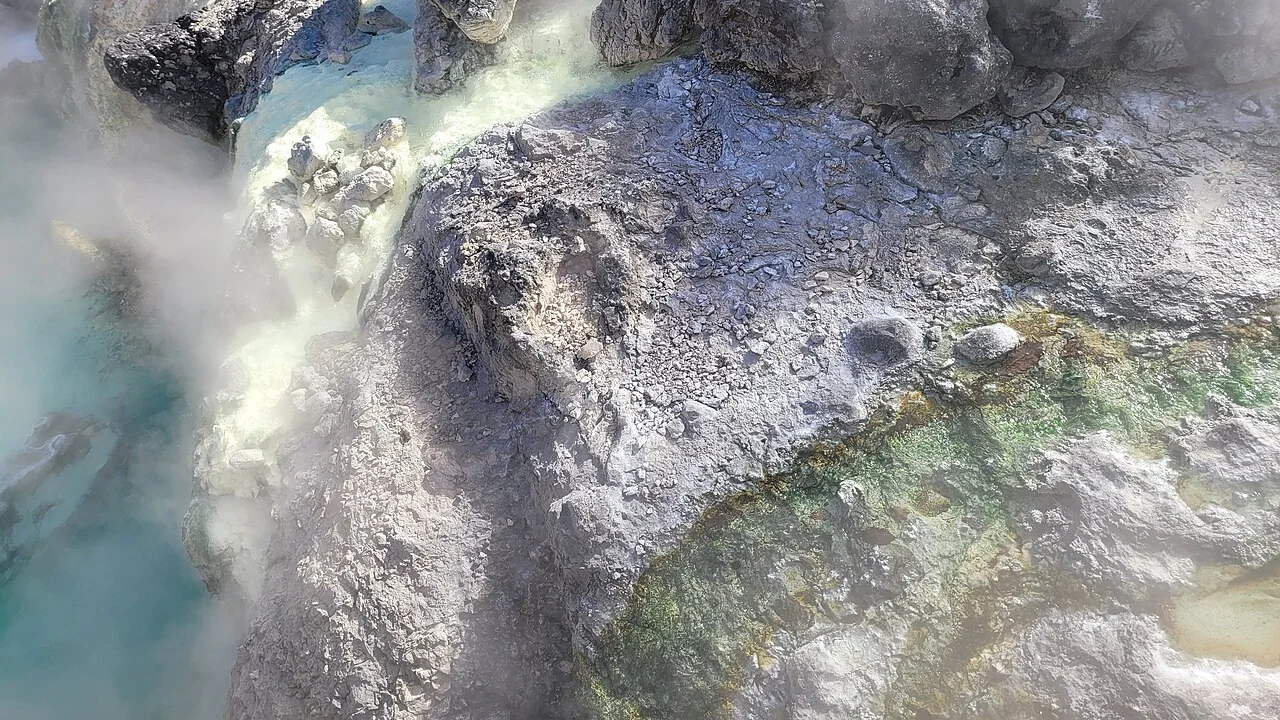
Walking downhill from Kinomiya towards the town centre lets you link Yuzen Shrine and the Oyu Geyser before stepping into Atami Ginza. Oyu is one of Atami's Seven Springs, with an artificial geyser display erupting roughly every five minutes—easy to fit in as a brief stop. This route gives a much richer feel for the old hot-spring quarter than taking a taxi straight from the shrine to the port in the south. If you have an early dinner before fireworks, head straight from Kinomiya to Ginza or Itokawa and save the side alleys around the hot-spring sources for when you have spare time.
Right outside the station, Nakamise and Heiwa-dori are two covered arcades ideal for catching an early train, grabbing a quick lunch or picking up steamed onsen manju before departure. Atami Ginza sits further down the slope, closer to Itokawa and Nagisa Water Park. Head towards Ginza and down to the river to browse dried-fish shops, seafood set meals and classic kissaten coffee houses. When ordering simmered alfonsino (kinmedai), check whether the price covers a whole fish or a fillet and whether rice and side dishes are included. If you buy perishable sweets in the morning, check the best-before date on the packet—if you still have several days of travel ahead before heading home, it makes even more sense to leave shopping until the return leg.
If station-front restaurants have long weekend queues at midday, visit the museum first and head straight to Ginza for lunch on the way down. Anyone already at the port for a ferry can save lunch for Hatsushima. If you have two stops left in the afternoon, tackle the one with an earlier closing time first: enter Kiunkaku before it shuts, and leave Itokawa for its evening illuminations. If your companions only want to shop, walk from Ginza down to the beach and ride a bus back up to the station with time left for souvenirs.
Sun Beach to Nagisa Water Park: pick your exit before walking the bay
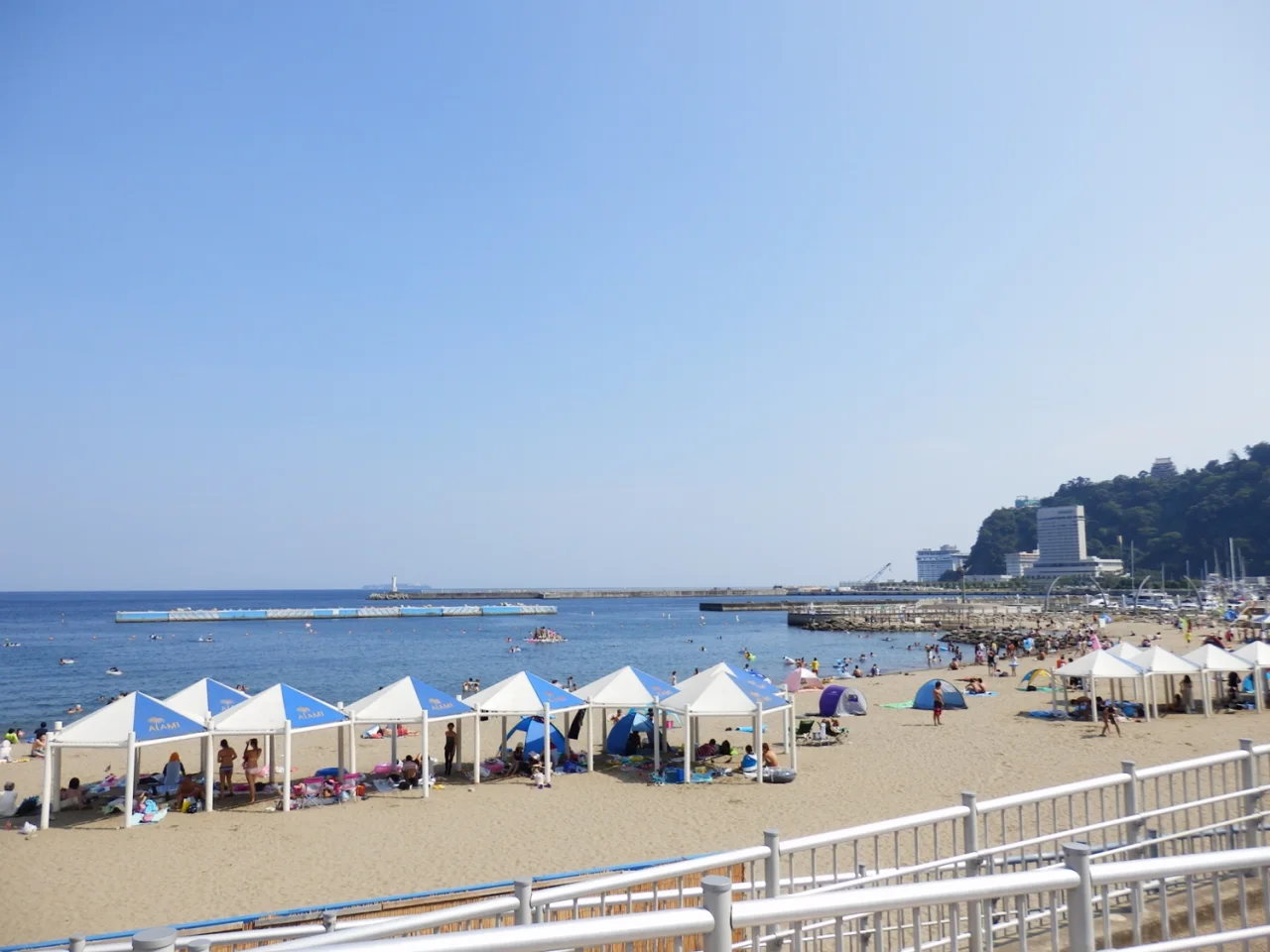
Sun Beach (Atami Sun Beach) curves along the northern side of the bay, unmistakable for its pale sand and gentle arc. You can walk down from Atami Station via Sakimicho, or board any bus outside the station that passes Sun Beach to skip the descent. South of the sand, the promenade continues into Nagisa Water Park and Moon Terrace, then past the yacht marina towards Atami Port. If you just want to sit by the water, stopping between the beach and Moon Terrace is plenty—continuing to the port adds a noticeable walk.
In summer, swim only within the lifeguarded zones, and follow flag signals and loudspeaker announcements to leave the water if conditions turn unsafe. Outside the bathing season, the seafront is better suited to a gentle stroll, especially to rest after shopping or fill time before dinner. Families whose children have been playing in the sand should allow time to rinse off and catch a bus near Sun Beach rather than walking the entire length of the water park hoping to find a ride back. After sunset, the bayfront is illuminated, offering a completely different atmosphere from the morning view down from the MOA Museum of Art.
The Itokawa river meets the sea right by Ginza, tying the riverfront promenade cleanly into a coastal walk. If the wind picks up, step out towards the shore for a quick look before ducking back into the covered streets for cafes and shops; if you want a longer seaside walk, head south from Sun Beach to the water park and decide there whether to take a bus or visit a bathhouse. Either starting point works smoothly, though your return bus stop depends on where you finish. Travellers who prefer to save their legs can enjoy the flat stretch along the water and catch a bus from near Ginza or Sun Beach to avoid the climb back.
For photos of the town and bay, start from the northern end of Sun Beach looking south, then switch angles once you reach the park to frame the harbour and hillside together. Staying on the main waterfront also makes it easy to duck back into Ginza or move indoors if the weather turns. On fireworks nights, choose a viewing spot with firm footing and clear walkways, staying well clear of staircases and tight corners. Agree on a specific bus stop or street corner with your family beforehand—regrouping at night is far easier than trying to match landmarks from phone photos.
Atami Castle ropeway: check separate fares and last descent times
The lower station of the Atami Ropeway sits right beside Atami Port. From Atami Station, take a bus from stop 7 bound for the port and Korakuen, getting off at Korakuen; if you are walking south along the waterfront, you can also reach the base station on foot. The ropeway runs roughly every 10 minutes with a 3.5-minute ride: the first ascent is at 09:30, the last ascent at 17:00, and the last descent at 17:30. Adults (junior high school age and above) pay ¥500 one way or ¥900 return; children aged 4 through primary school pay ¥300 one way or ¥500 return; under-4s ride free.
At the top, Umisora Terrace looks directly over the bay; to see the exhibits inside Atami Castle, walk about 5 minutes from the upper ropeway station. Built in 1959 as a sightseeing keep, Atami Castle houses exhibits on Japanese castles alongside its observation deck. It opens from 09:00 to 17:00 (last entry 16:30). Admission is ¥1,200 for adults, ¥650 for primary and junior high school students, and ¥500 for ages 3 to 6; a joint ticket with the neighbouring Trick Art Museum costs ¥2,000 for adults. Note that ropeway tickets are sold separately and the two attractions use different child age brackets—something parents with three-year-olds often run into.
If you only want coastal views in clear weather, a short spell on the summit terrace is enough before heading back down; if you plan to tour the castle interior, factor in waiting and riding times and arrive at the base station in the afternoon before dinner. Watch the gap between last-entry and last-ropeway times too: riding up at 17:00 leaves only the observation terrace, as castle admission has already closed. On fireworks nights, the 20:20 display starts long after the final ropeway descent, so watching from the seafront makes walking back to the station much simpler.
The operator has scheduled maintenance closures on 15 December 2026, 18–22 January 2027 and 16 February 2027. Even on bright holiday mornings, strong winds can suspend ropeway operations; if it closes and you still want to reach Atami Castle, consider taking a taxi or car straight up by road, or simply stay along the bay if you are mainly after sea views. Families who already hold Trick Art Museum tickets can still ride straight up the hill together, while unbooked itineraries can easily pivot to indoor spots around the port.
Hatsushima day trip: plan around an earlier return ferry
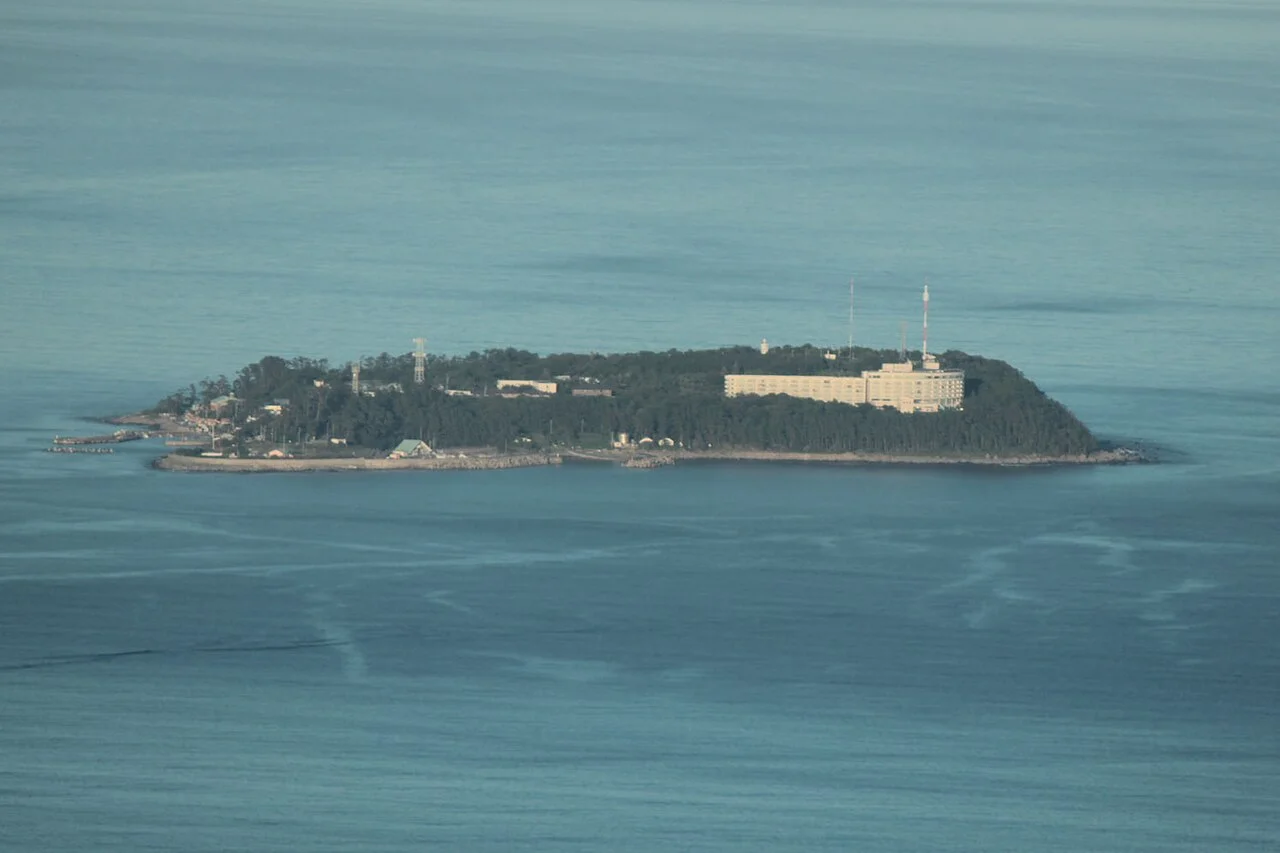
The ferry from Atami Port to Hatsushima Port takes about 30 minutes. As of November 2026, the operator's Japanese schedule lists return fares at ¥2,900 for adults (junior high school age and above) and ¥1,450 for primary school children; tickets are sold at Atami Port and reservations are not required for standard sailings. Ferry fares do not cover paid attractions on the island, so budget separately for meals, the lighthouse and any paid facilities. The bus from Atami Station to the port takes roughly 15 minutes, plus walking time to the ticket counter and pier. If you are coming down from Tokyo, note both your target bus and a backup departure, then pick your sailing based on when those buses reach the port.
During the vessel's regular inspection period from 4 November to 24 December 2026, sailings drop to 7 round trips a day. Taking the 10:40 departure from Atami puts you on the island around 11:10—ideal for an early harbourfront lunch before walking towards Hatsuki Shrine or the lighthouse, then catching the 15:20 or 16:40 return ferry from Hatsushima. If you catch a 12:00 sailing instead, time is tighter, so prioritise lunch and a stroll near the harbour. Returning on an afternoon sailing still leaves time to wander Atami's seafront streets, and gives you a later backup boat if an earlier departure fills up.
When the timetable is reduced, gaps between sailings mean a two-to-three-hour stay fits neatly around a harbour meal and a walk. Restaurants cluster around Hatsushima Port, several of them run by local fishing families, with cooked fish and hot dishes available if you do not eat raw seafood. Walking inland involves noticeable climbs, and visiting the lighthouse means tackling stairs up and down. The lighthouse normally opens from 10:00 to 12:00 and 13:00 to 16:00, with last entry 20 minutes before each closing time; admission is ¥300 for junior high school age and above. Head up straight after lunch, and if you arrive past 15:40, stay along the coastal path instead.
On busy days, ferries have a strict passenger cap, so joining the queue late can push you onto the next sailing. If you hold a reserved Shinkansen ticket back to Tokyo, aim for a ferry earlier than the final sailing and work backwards from docking, the bus to the station and ticket-gate queues. If rough seas, timetable changes or cancellations hit, check the operator's live service updates first: if you are already in town you can switch to Kiunkaku or the MOA Museum of Art, and if you are still at Atami Station you can simply hop on bus 8 up to the gallery.
Back on the mainland from Hatsushima, Nagisa Water Park or a harbourside dinner flows most naturally. Trying to fit both the hilltop museum and the island into a single day trip often bottlenecks around the climb to MOA, the bus back to the station, transferring to the port and buying ferry tickets. If an island seafood lunch is the priority, head straight to the port on arrival; if seeing the museum collection matters more, save Hatsushima for the next morning's boat. Staying overnight makes a real difference, letting you swap days based on sea conditions and give both sights unhurried time.
2027 Atami cherry blossoms, plum blossoms and sea fireworks dates
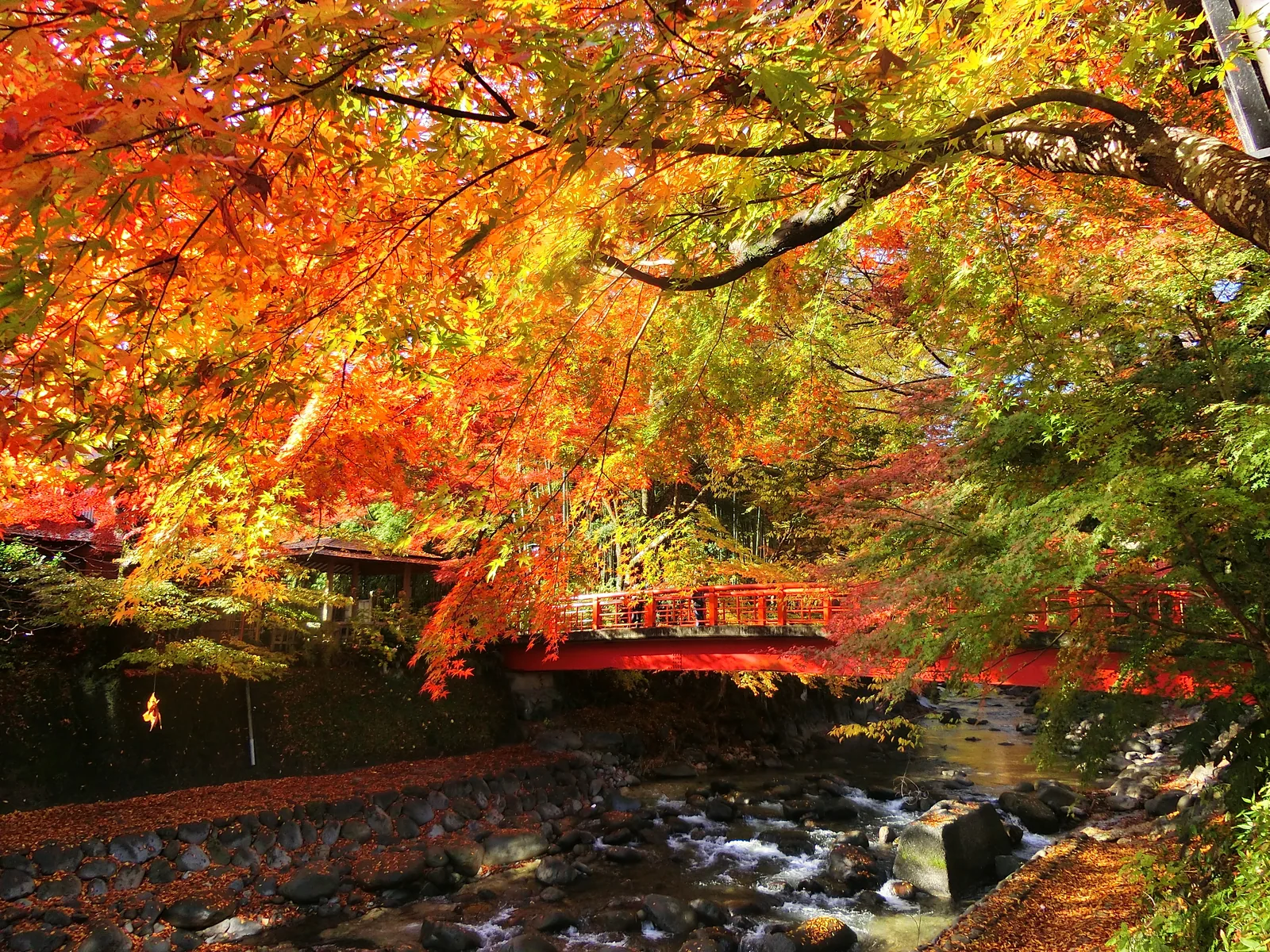
The Itokawa Cherry Blossom Festival is scheduled for 9 January to 7 February 2027 along roughly 300 metres of the Itokawa promenade between Ginza-cho and Chuo-cho, where 58 Atami-zakura trees are lit up every evening from 17:00 to 23:00. It is around a 20-minute walk from Atami Station, or a short ride on a bus via Omiya no Matsu to the Ginza stop. In daylight you can admire the branches from the bridges; for evening illuminations, have dinner in Ginza beside the river and stroll straight out under the blossoms. Check official bloom updates when picking your date, as the festival spans longer than peak bloom on any single tree.
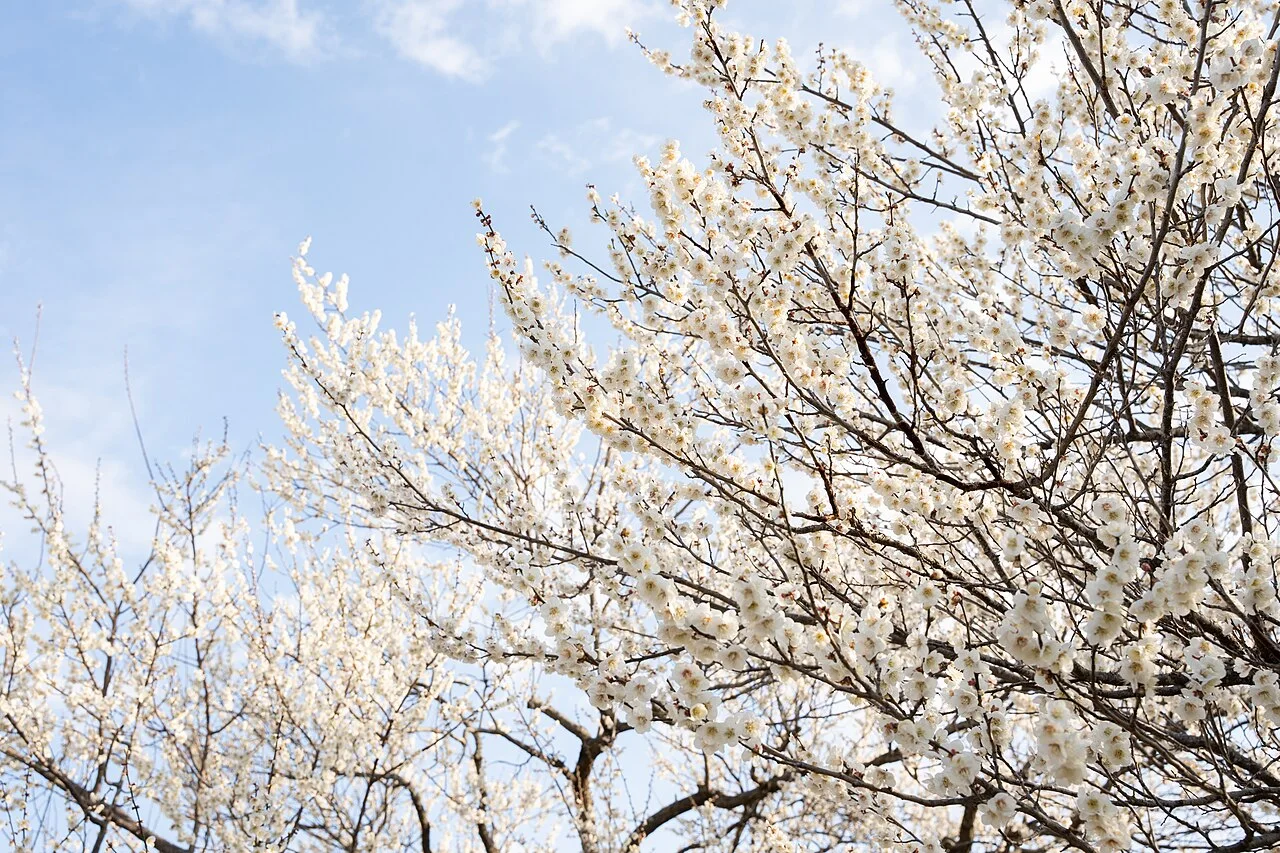
The Atami Plum Garden Plum Festival runs from 9 January to 7 March 2027. Entry is charged between 08:30 and 16:00 at ¥300 for general visitors, ¥100 for guests staying at accommodation in Atami city, and free for junior high school students and younger. Buses from stop 1 at Atami Station bound for Ainohara Danchi reach the Baien stop in about 15 minutes, or you can walk around 10 minutes from JR Kinomiya Station. To catch both blossoms in one day, visit the plum garden in the morning, return to town for lunch, head to Itokawa and return after dark for the lights. If you prefer less walking, pick one: Itokawa sits closer to the seafront, while the plum garden rewards a dedicated daytime stroll.
Through the end of 2026, remaining city-listed fireworks dates fall on 23 November, 6 December and 25 December, followed by a winter display on 21 February 2027. For the 2027 fiscal year, dates run from 18 April into winter, including 19 and 25 July; 5, 15, 18 and 24 August; and 5 and 19 December. Displays normally run from 20:20 to 20:40, starting earlier at 20:15 in July and August. Before buying train tickets, check the city's cross-year schedule carefully and separate February 2027 from fiscal 2027 so you book for the exact evening you intend.
Sun Beach and Nagisa Water Park are the main public viewing areas. If you are returning to Atami Station afterwards, walk from the water park towards Sun Beach before the finale so you are already positioned for the uphill walk to the station. On warm summer evenings, head to the shore after dinner in Ginza; in winter, arrive closer to showtime so you spend less time waiting in the coastal wind. For July and August displays, the tourism association publishes traffic control maps—essential reading if you are driving and planning your exit route.
The city closes the launch area around midday on fireworks days, so anyone returning from Atami Port during the afternoon should follow local detour signs. Once the finale ends, the city warns that Atami Station's ticket gates get heavily congested, so allow extra queuing time to reach the platforms. If you plan to stop for a drink near the bay while crowds thin out, Ginza is an easy place to wait; if you already have a train booked, pick a viewing spot on the station side of the bay so you do not have to cross the entire water park against the crowd.
The 21 February 2027 fireworks overlap with both the Plum Festival and the MOA Museum of Art's Korin exhibition—making it easy to pick one daytime anchor, eat early in town and walk down to the shore. By then, the Itokawa Cherry Blossom Festival will already have closed on 7 February. When choosing between January and February weekends, go in January to combine cherry blossoms with indoor exhibitions, or shift your overnight stay to a fireworks date if the display is your top priority. If your ryokan stay includes an in-house dinner, align your seating time with the 20:20 fireworks and decide whether to watch from your room or down on the beach.
Rain, museum closures or cancelled ferries: the smoothest swaps
When ferries or the ropeway stop for weather, shifting your port-side hours to Kiunkaku involves the least backtracking. Located in Showacho, it is a 10-minute walk from the Ginza arcade, or a bus ride from stop 1 or 2 at Atami Station to Kiunkaku-mae. Opening hours are 09:00 to 17:00 (last entry 16:30), with admission at ¥610 for adults, ¥360 for junior and senior high school students, and free for primary school children and younger. It closes on Wednesdays (opening on public holidays) and for year-end from 26 to 30 December. On a wet day, have lunch nearby first and still leave enough time before closing to tour all the connected buildings.
Kiunkaku began as a 1919 villa with traditional Japanese rooms, later gaining Western-style wings and operating as a ryokan after the war. For traditional joinery, look at the alcove pillars and window lattices in the Japanese wing; if you prefer European-inspired interiors, seek out the Gyokkei room's fireplace nook, the Roman-style bath and the stained glass. When rain falls, stick to the indoor walkways and admire the garden from the rooms facing it. Architecture buffs should allow over an hour and eat a later lunch so there is time to compare the different eras of expansion.
On Wednesdays when Kiunkaku closes, the MOA Museum of Art is usually open; on Thursdays when the museum closes, pairing Kiunkaku with Ginza works cleanly. If you prefer to lock in an indoor booking before leaving the station, you can also reserve the Former Hyuga Villa, within walking distance, to see Bruno Taut's underground interior design. Because the villa requires advance online booking, set your slot first and build surrounding plans around it; if slots are full on the day, fall back on the station arcades or other open venues.
When sea winds gust hard without rain in town, follow the Kinomiya-to-Ginza route instead, eating along the sheltered inner streets and admiring older buildings rather than taking children or older travellers out to an exposed pier. If heavy rain suddenly sets in, hop straight on a bus back to Atami Station for covered dining and souvenir shopping. With only an hour before a pre-booked Shinkansen, staying near the station keeps the end of the day stress-free—leave a harbourfront hot-spring soak for the following day.
If members of your group want different things, those keen on interiors can tour Kiunkaku while others walk along Shimizucho towards the seafront, meeting up later in Ginza for a shared meal. Anyone who packed swimwear can check same-day pool and spa availability at municipal Marine Spa Atami right at the port entrance, with flat bus links back to Atami Station. Because coastal leisure and historic villas sit close together, you can wait out a passing shower and switch plans without leaving the neighbourhood.
Day-use onsen or overnight stay: let your return train and dinner decide
If you have just half an hour before your train, the free Ieyasu no Yu footbath on the station square is the easiest stop. It opens from 09:00 to 16:00, and small towels are sold in a vending machine alongside for an official price of ¥200. Anyone with an afternoon schedule can soak on arrival instead, before the bath drains for the day. For a full-body soak, choose one of the day-use baths listed by Atami City as open to non-staying guests, picking whichever district fits naturally at the end of your route.
If your day ends near the harbour, consider Ocean Spa Fuua beside Atami Korakuen. Open from 10:00 to 22:00 (last entry 21:00) with no reservation needed, standard weekday adult admission is ¥3,080 plus ¥150 bathing tax, including loungewear and towels. Discounted entry plans after 17:00 and 20:00 are suspended on fireworks days, and the facility states that visitors with tattoos, body paint or tattoo stickers cannot enter. Note that it closes on 5 and 6 January 2027—if your New Year break falls on those dates, pick another day-use bath closer to your hotel or the station.
Staying near Atami Station suits travellers catching an early Shinkansen the next day, boarding the bus at stop 8 for the museum, or collecting stored luggage right before departure. Staying around Ginza or Sun Beach puts dinner, Itokawa's illuminated blossoms and fireworks all within easy walking distance—just remember to allow time for the uphill walk back to the station at the end. Staying near Atami Port and Korakuen places you steps from the morning ferry and ropeway, with an easy coastal walk north to Ginza after dinner. If you already know you are taking an early boat to Hatsushima the next morning, a night by the port saves a bus transfer and lets you buy tickets without rushing.
When booking a ryokan dinner slot, put dinner times, fireworks, illuminated blossoms and final bath entry hours on the same timeline. Fireworks finish at 20:40, so guests staying in town can wander back to their inn afterwards, whereas day trippers returning to Tokyo still face the uphill climb to the station. If you want to watch fireworks from your room, book an accommodation plan that explicitly states fireworks visibility and check the specific room type and orientation. To turn Atami into a two-day trip—spending the first morning in town before heading to Shuzenji or Ito on day two—compare seasonal and overnight routes in Izu and Atami to plan your onward journey.
A few useful answers
How should I plan an Atami day trip from Tokyo?
Take a morning bus from stop 8 outside Atami Station to the MOA Museum of Art, then spend the afternoon at Kinomiya Shrine and walk downhill through Ginza, Itokawa and the seafront. If you want to visit Hatsushima, give the morning and lunch to the island and catch an earlier return ferry to explore town afterwards.
Do Atami Castle and the MOA Museum of Art share the same ropeway?
No—reach the MOA Museum of Art by bus from stop 8 at Atami Station, whereas the ropeway up Mount Hachiman to Atami Castle departs from beside Atami Port. If you visit both in one day, take the bus back from the museum to Atami Station and transfer towards the port.
How much is the Hatsushima return ferry and do I need to book ahead?
According to the ferry operator's Japanese page, return tickets cost ¥2,900 for junior high school age and above and ¥1,450 for primary school children. Tickets are bought at Atami Port and reservations are not required for standard passengers; during the vessel inspection period from 4 November to 24 December 2026, 7 round trips operate daily.
What are the 2027 dates for Atami's cherry blossom and plum blossom festivals?
The Itokawa Cherry Blossom Festival runs from 9 January to 7 February 2027 with nightly illuminations from 17:00 to 23:00. The Atami Plum Garden Plum Festival runs from 9 January to 7 March 2027, with paid entry from 08:30 to 16:00. The two venues sit near Ginza and Kinomiya Station respectively.
Where can I go in Atami if it rains?
The MOA Museum of Art usually closes on Thursdays and Kiunkaku usually closes on Wednesdays, though both open on public holidays. If wind or waves cancel ferries and the ropeway, head to Kiunkaku near Ginza if you are already by the port, or take bus 8 from Atami Station straight up to the MOA Museum of Art.
Official information and references
Sources used in this guide.
- MOA Museum of Art: opening hours, admission and ticketing
- MOA Museum of Art: FAQs and access
- MOA Museum of Art: 2027 upcoming exhibitions
- MOA Museum of Art: current exhibition
- MOA Museum of Art: escalators, Circular Hall and entrance layout
- MOA Museum of Art: floor map from bus entrance to main building
- Kinomiya Shrine: access and shrine office hours
- Kinomiya Shrine: visitor route guide
- Atami City Tourism Association: Kinomiya downhill half-day route
- Atami City Tourism Association: station arcades, beach and water park
- Atami City Tourism Association: Yu-Yu-Bus service suspension notice
- Smart EX: booking reserved seats up to one year in advance
- Atami Ropeway: operating hours
- Atami Ropeway: fares and age brackets
- Atami Ropeway: 2026-2027 maintenance closure notice
- Atami Castle: admission, joint tickets and access
- Atami City Tourism Bureau: Atami Castle construction year and facilities
- Hatsushima ferry: fares, winter inspection timetable and Atami Port access
- Atami City Tourism Association: Hatsushima Lighthouse
- Atami City Tourism Association: Hatsushima walks and harbourfront dining
- Atami City Tourism Association: 2027 Itokawa Cherry Blossom Festival
- Atami City Tourism Association: 2027 Atami Plum Garden Plum Festival
- Atami City: 2026 and fiscal 2027 sea fireworks dates
- Atami City Tourism Association: sea fireworks viewing and traffic control
- Kiunkaku: opening hours and admission
- Kiunkaku: bus access from Atami Station
- Kiunkaku: architecture and ryokan history
- Atami City: Former Hyuga Villa booking procedure
- Atami City: Ieyasu no Yu station-front footbath hours
- Atami City: day-use hot spring facilities
- Ocean Spa Fuua: hours, admission and entry rules
- Atami Municipal Marine Spa Atami: access and pool-onsen facilities
- Atami City: Sun Beach swimming rules and safety information