Atami is 45 to 50 minutes from Tokyo by Shinkansen. Compare the station-front public bath, ryokan day visits, sea-view Fuua and a family thermal pool, then plan a half-day or overnight stay around fireworks dates, trains and room types.
- Region & Focus
- Izu and Atami
- Reading Scope
- 21 min read · 11 chapters · 6 Q&As
- Official Verification
- 32 official sources checkedUpdated 22 November 2026
- Key Topics
- Hot springsRyokanBooking
Chapter Route Map (tap any stop)
- Getting from Tokyo to Atami and Where to Start
- How to Choose Between Four Day-Use Onsen
- Travelling with Children, Private Baths or Step-Free Access
- Foot Soaks by the Station and Atami's Seven Springs Around Ginza
- Taking a Bus Out to Hashiriyu in Izusan
- 2026–2027 Atami Marine Fireworks Dates and Viewing Spots
- Getting Back to Tokyo After the Fireworks: Allow Time for the Uphill Walk and Queues
- Where to Stay in Atami: Working Backwards from Room Type and Next-Day Plans
- Half-Day Budget and How to Pace Your Hours
- Winter Plum Blossoms and Daytime Sea Views
- Continuing to Ito or Catching the Ferry to Hatsushima
- Quick Q&A
Atami makes an easy hot-spring half-day trip: the Tokaido Shinkansen Kodama takes around 45 to 50 minutes from Tokyo, dropping you straight at the shopping arcades. For a quick soak, head to Tahara Bathhouse right outside Atami Station; for sea views, set aside an afternoon for Fuua down at the harbour. After the marine fireworks, you face an uphill walk back to the station and queues at the ticket gates. If you want to watch the whole display, have an unhurried dinner and soak afterwards, staying overnight is far more comfortable. Before booking, decide whether you want fireworks views from your room or a private hot-spring bath in your room, as those are rarely the same room category.
Getting from Tokyo to Atami and Where to Start
From Tokyo or Shinagawa Station, the simplest Shinkansen option is the all-stops Kodama on the Tokaido Shinkansen. Selected Hikari services also call at Atami, so search with Atami as your destination to see which trains stop; Nozomi services pass straight through. If you are staying in Ueno or north of Tokyo Station and want to keep fares down, look for Ueno-Tokyo Line through trains onto the Tokaido Main Line to Atami. Local trains from Tokyo take around 110 minutes, so setting off in the afternoon can eat into the short daytime entry window at ryokan baths.
From the Shinkansen platforms, follow the exit signs through the Shinkansen transfer gates and out onto the station-front plaza. Ieyasu-no-Yu and the covered shopping arcades sit on this side, as do bus stops for the seafront, Atami Plum Garden and Izusan. Overnight guests with luggage should drop bags at their hotel or use station lockers first, keeping a small daypack with a towel, dry clothes and return tickets. The streets drop steadily downhill from the station, so having to trudge back up from the beach for something you forgot means a steep extra climb.
Walk downhill for about 15 minutes from Atami Station to reach Atami Sun Beach, or around 20 minutes to Nagisa Shinsui Park; both times are useful for estimating the outward walk. If you have a train to catch in the afternoon, catch an uphill bus from Shinsui Park or Ginza instead. Bus stand 7 outside the station runs towards Atami Port and Korakuen, saving the downhill walk. If you are travelling with older relatives, start uphill at Kinomiya Shrine or the Plum Garden, walk down towards Ginza-dori and the seafront, and take a bus back to Atami Station rather than climbing up to the shrine after the beach.
With only two or three hours in town, stick to Tahara Bathhouse and Ieyasu-no-Yu by the station so meals and souvenirs stay in one area. If you are staying until early evening, stroll down through the shopping arcades for lunch around Ginza-dori, soak at a ryokan bath and finish along the beach. Fuua sits further south at the harbour and merits a dedicated afternoon once you factor in check-in, changing, bathing, lounging and the ride back to the station. Trying to cram the Plum Garden, Sun Beach and Fuua into the same half-day usually squeezes your time in the water.
Atami is 45 to 50 minutes from Tokyo by Shinkansen. Compare the station-front public bath, ryokan day visits, sea-view Fuua and a family thermal pool, then plan a half-day or overnight stay around fireworks dates, trains and room types.
How to Choose Between Four Day-Use Onsen
Atami Ekimae Onsen Bathhouse (Tahara Bathhouse), at 8-16 Tawaramoto-cho, is roughly a one-minute walk from the station. Admission is ¥500 for junior high school students and adults, and ¥200 for primary school children. It opens from 14:00 to 21:00 (last entry 20:30) and closes on Wednesdays. This compact neighbourhood bathhouse works best right before your train home: pack a small towel and a change of clothes, eat and browse the arcades first, then drop in once it opens. If you only have a morning gap between trains, use the station-front foot bath instead, as Tahara Bathhouse will still be closed.
Yuyado Mikan no Ki sits between the seafront and Ginza-dori, about a 10-minute walk from Atami Station. Day-use bathing costs ¥1,250 (including consumption tax and bathing tax), running from 13:30 with last entry at 18:00 and departure by 19:00. Face towels cost ¥330 to buy and bath towels ¥440 to hire. Fed by its own private spring, the inn includes an open-air bath, though day visitors leave straight after soaking as there is no day-use lounge. Call 0557-81-1533 before walking down to check same-day availability, as day entry stops when overnight occupancy is high; if it is full, you can hop straight onto a harbour bus from the station.
For open sea views, choose Ocean Spa Fuua at Atami Bay Resort Korakuen. Its open-air standing bath faces Sagami Bay, alongside panoramic indoor baths and spacious relaxation lounges. Entry runs from 10:00 to 21:00, closing at 22:00, with no advance booking required for standard admission. Weekday rates are ¥3,080 for junior high students and adults, and ¥2,310 for children aged four through primary school, plus ¥150 bathing tax for adults. Standard admission includes loungewear and towels, letting you soak, change into loungewear to rest, and change back before leaving – a very different pace from a small public bathhouse.
Fuua's panoramic sauna is closed for refurbishment until reopening in mid-December 2026; the spring-fed open-air bath resumed service on 17 October, and the open-air standing bath remains open throughout the works. From the reopening day, weekend, public holiday and peak-day adult standard admission rises from ¥3,410 to ¥3,630 (plus ¥150 bathing tax in both cases), while weekday standard rates stay unchanged. Announced maintenance closures in 2027 fall on 5–6 January, 26 May, 29–30 June and 14–15 December. If your visit lands on a closure day and you still want a coastal soak, switch to Marine Spa Atami or head back towards Ginza-dori for a ryokan bath.
On weekdays, Fuua offers After 5 entry from 17:00 at ¥2,310 and After 8 entry from 20:00 at ¥1,110 for adults, both plus bathing tax. After 8 covers bathing and towels only, excluding access to the third- and fourth-floor relaxation lounges. Both evening discounts are suspended on Atami Marine Fireworks Festival dates, meaning late arrivals still pay the full standard rate. In winter, go in daylight if you want to see the ocean from the outdoor bath; if you plan to use After 8 on a regular weekday, check the last shuttle and train times back to the station rather than looking solely at the ticket price.
Marine Spa Atami suits families where children want water play and adults still want a proper hot-spring soak. Tourist association rates list general admission at ¥1,360 for adults, ¥680 for primary and junior high pupils, ¥420 for ages three to pre-school, and ¥310 for under-threes. Standard hours are 10:00 to 19:00 (last entry 18:30), usually closed on Thursdays, with seasonal extensions in summer and over New Year. The complex combines heated pools, water slides and hot-spring baths: bring swimwear for the pool zone, then change before entering the separate hot-spring baths. Buses from stands 6 or 7 at Atami Station take about 10 minutes to the Marine Spa Atami stop.
| Facility | Standard Adult Fare | Best Fit For |
|---|---|---|
| Atami Ekimae Onsen Bathhouse (Tahara Bathhouse) | ¥500 | Leaving bags by the station and soaking before heading back to Tokyo |
| Yuyado Mikan no Ki | ¥1,250 (incl. bathing tax) | Soaking in a private ryokan spring after lunch near Ginza-dori |
| Ocean Spa Fuua | ¥3,080 weekdays (+ ¥150 bathing tax) | Sea-view open-air bathing and a whole afternoon lounging indoors |
| Marine Spa Atami | ¥1,360 | Families combining heated swimming pools for children with hot-spring baths |
Travelling with Children, Private Baths or Step-Free Access
Children aged three and under are not admitted to Fuua. Children aged four through primary school must be accompanied by an adult of the same sex and cannot use restricted facilities including the open-air standing bath, spring-fed open-air bath, panoramic sauna or heated stone spa; visitors under 18 require a guardian aged 20 or older. The open-air standing bath also has a 135 cm minimum height rule, and tattoos or body paint are not permitted anywhere in the facility. Check what every member of your group can actually use before going; if children mainly want to swim, an afternoon at Marine Spa keeps everyone together far more easily than splitting up inside Fuua.
Couples or families wanting a bath to themselves should look for kashikiri-buro (reservable private baths) with dedicated time slots. Near the station, Yuyado Ichibanchi offers both day-use communal baths and private open-air baths. Its communal bath runs from 13:00 to 17:00 (last entry 16:00, closing early when full). Two private open-air baths, Kanichi-no-Yu and Omiya-no-Yu, must be booked through eligible day-use packages on set dates and times. Unlike per-person communal baths, private baths factor in both the room hire fee and a per-person facility charge – Yuyado Ichibanchi lists a ¥1,600 per-person admission fee for day visitors – so solo travellers wanting a short soak usually save by using a station-front public bath.
Before booking a private bath, check the slot duration and maximum capacity, then align them with your Shinkansen times. If you need to drop luggage at a hotel first, build in the return walk between the station and your accommodation, and factor in dinner time if you plan to eat before catching your train. Where anyone in your party needs to minimise stairs, ask reception whether lifts connect rooms to the baths and whether grab rails are fitted beside the tubs. If you can only prioritise one room feature, pick a bathroom your companion can enter and leave independently.
Foot Soaks by the Station and Atami's Seven Springs Around Ginza
Ieyasu-no-Yu is a free foot bath on the plaza outside Atami Station, reopening on 1 September 2026 with daily hours from 09:00 to 16:00. City guidance notes that spring flow tapers off in the afternoon, lowering the water temperature. In winter, stop here straight off the train while the water is warmer, keeping spare socks and a small foot towel in an outer pocket. Early arrivals can soak their feet before browsing the arcades; if you return to the station after 16:00, switch to Tahara Bathhouse instead.
Walking down from Heiwa-dori and Nakamise-dori by the station towards Ginza-dori takes you past shops from several eras. The station arcades are handy for dried seafood and takeaway snacks, while sit-down lunches are better left until you reach Ginza-dori. After eating, detour to Oyu Geyser in Kamijuku-cho – right beside the entrance to Yuzen Shrine – before continuing downhill to the sea. That sequence shows you how hot springs sit inside the old town streets before opening onto the modern resort strip and beach, and lets bathers peel off into a ryokan while non-bathers stroll along the shore to meet up later.
Once a natural erupting geyser, Oyu is now a city-designated cultural property recreated with timed bursts. Atami City lists free viewing from 08:00 to 19:00, with eruptions lasting roughly three minutes every five minutes. A short walk away, Ozawa-no-Yu is noted by the tourist association for its steam vents used to cook onsen eggs. Seeing Oyu and Ozawa-no-Yu gives a clear sense of two traditional spring uses in town, with nearby Yuzen Shrine filling in the spring history. When you are ready to bathe, follow the opening hours of the day-use baths listed above rather than hunting down all seven historic springs expecting bathhouses at each.
Down on the coast, Atami Sun Beach and Nagisa Shinsui Park run seamlessly along the bay, making an easy waterfront stroll heading south. For a shorter loop from a coastal ryokan, walk the beach and turn back up towards Ginza-dori for dinner. You can also follow the harbour promenade all the way to Marine Spa or Fuua and take a bus back up to the station when your legs tire. Pin your bathhouse exit and the uphill bus stop on a map before heading in so you can walk straight out to catch the ride.
Taking a Bus Out to Hashiriyu in Izusan
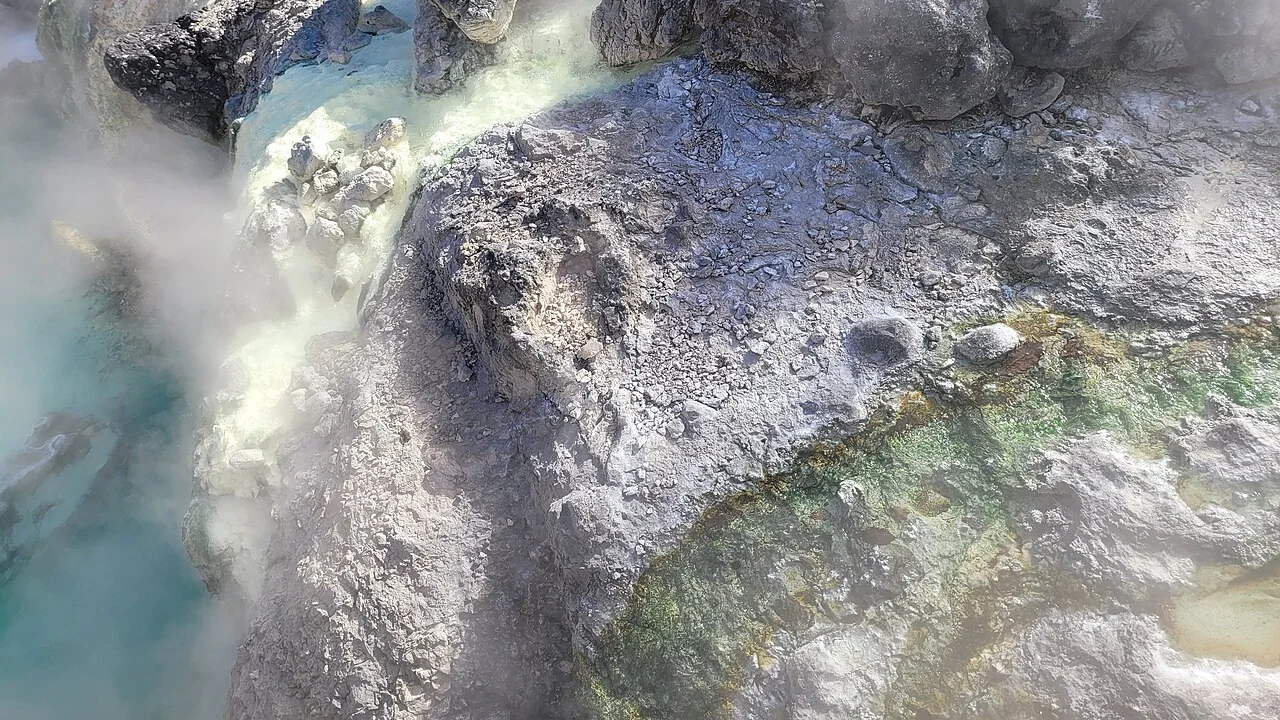
Hashiriyu in Izusan requires a separate bus ride: take a bus bound for Izusan or Yugawara from Atami Station for about five minutes to Aizomebashi, then walk roughly 10 minutes. It is open from 09:00 to 17:00 with no car park. This horizontal tunnel spring extends about five metres into the hillside, with water emerging at around 70°C, and is strictly a sightseeing spot rather than a place to bathe. Put this excursion first when starting from the station, then return to central Atami for lunch and your bath so you are not rushing out from Ginza-dori just before closing time.
Hashiriyu takes its name from scalding spring water that once rushed down the slope from the mountain to the sea, historically revered as a sacred source linked to Izusan Shrine. To combine both, check the elevation contours before deciding your order: let the bus carry you uphill, visit the shrine and walk down towards the coast if you have the energy. On a half-day trip focused on bathing, staying in central Atami for Oyu Geyser and Ozawa-no-Yu saves two bus rides. Overnight guests staying in Izusan can leave Hashiriyu for the following morning and spend the pre-dinner hours in their ryokan baths.
2026–2027 Atami Marine Fireworks Dates and Viewing Spots
According to Atami City announcements as of 22 November 2026, remaining 2026 displays take place on 23 November, 6 December and 25 December, with an added winter date on 21 February 2027. Announced 2027 dates continue on 18 and 29 April, 23 May, 6 June, 19 and 25 July, 5, 15, 18 and 24 August, 20 September, 3 and 24 October, 7 November, and 5 and 19 December. July and August displays run from 20:15 to 20:40 JST, while all other listed dates run from 20:20 to 20:40 JST. Shows go ahead in rain, so pack waterproofs rather than an umbrella to save space in the viewing areas.
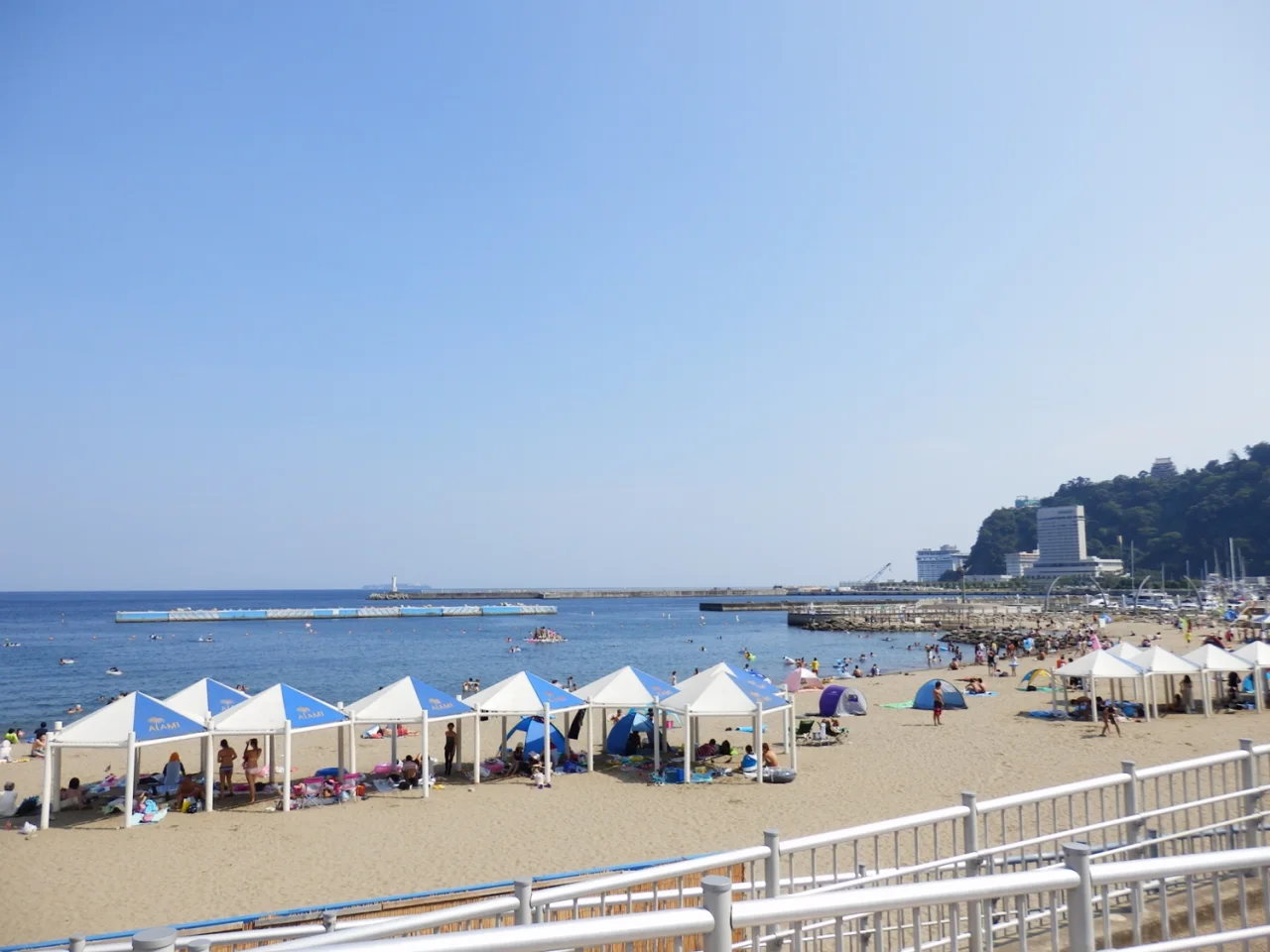
Atami Sun Beach gives a wide panorama across the bay and lies about 15 minutes downhill from Atami Station. To stand closer to the launch site, walk slightly further south to Nagisa Shinsui Park, about 20 minutes downhill from the station, divided from the beach end into Sectors 1, 2 and 3. Organisers offered no paid spectator seating in 2026, though in July and August 2026 the seafront side of Sector 2 and Sector 3 were reserved for guests of participating hotels holding inn-issued ground mats. For summer 2027 dates, check the tourist association event page for that year's zoning and hotel plans so you can decide when booking whether to watch from the shore or your room.
Wheelchair users should aim for Sector 1 of Shinsui Park, where the tourist association provides a designated wheelchair viewing space near Sun Beach. Soft sand makes paved promenades far easier for pushchairs and wheelchairs than sitting down on the beach. Because reverberations across the bay are loud near the launch area, anyone sensitive to noise should stay along an easily exited footpath or book a room with confirmed harbour views so they can choose whether to step outside. If your group splits up for food or toilets, pick a clear landmark on the landward side rather than an unannounced seating sector.
When fitting dinner, bathing and fireworks into a single evening, decide first where you want to be when the sky lights up. Guests in sea-view rooms can book an early dinner and walk back upstairs before showtime; those watching from the promenade should soak first, eat next and stroll down to the shore. If you are skipping ryokan dining, eat around Ginza-dori near the beach so you can easily switch restaurants if queues build up. On rainy fireworks nights, keep shopping and bathing on the same side of town to avoid extra walks in the wet.
Getting Back to Tokyo After the Fireworks: Allow Time for the Uphill Walk and Queues
The display finishes at 20:40 JST. Returning to Atami Station from Sun Beach means an uphill walk, and the city warns that ticket gates become heavily congested after the finale. Book reserved Shinkansen seats with generous slack for packing away rain gear, climbing the hill and queueing at the station. Buses can slow in post-fireworks traffic, so if you can manage the walk, check the official post-event walking route beforehand and follow marshals on the night. Official dispersal maps also separate queues for local JR lines and the Shinkansen, so check which lane you need before joining the line.
Take the 25 December 2026 display as an example: JR East's December weekday timetable lists Tokyo-bound Kodama departures at 21:02, 21:26 and 22:02 JST. The 21:02 leaves only 22 minutes after the finale, making 21:26 (arriving Tokyo at 22:12) or 22:02 (arriving 22:48) far more realistic if you are watching until the end from Shinsui Park and walking uphill. If you are travelling with children or collecting luggage from a hotel first, subtract that detour from the post-fireworks window before choosing a train.
Check JR East's Tokyo-bound timetable for Atami Station, switch between weekday and weekend/holiday schedules for your travel date, and click each service to confirm arrival times. Buy tickets ahead of time, and if a whole family is returning together, leave margin for regrouping, toilet stops and clearing two sets of ticket gates. If a late arrival into Tokyo requires an onward Underground or JR connection to your hotel, verify those last-train times too. Spectators staying towards Ito or Shimoda are directed along official dispersal routes towards Kinomiya Station for the JR Ito Line.
The free Korakuen shuttle bus takes around 10 minutes to reach Atami Station under normal traffic. Standard published evening departures leave the resort at 20:40, 21:40 and 22:20, picking up at the station outside the ticket gates by the right-hand roundabout in front of McDonald's. Seating is capped, and anyone watching from Sun Beach must first walk south towards the harbour to board. If no convenient Tokyo-bound train fits your schedule, pick another fireworks date or stay the night in Atami so you can linger along the waterfront without watching the clock.
Where to Stay in Atami: Working Backwards from Room Type and Next-Day Plans
Staying near the station suits travellers using Atami as a one-night stopover before catching an early Shinkansen back to Tokyo or west to Mishima, or changing onto the Ito Line. Tsuki no Sumika Atami Juraku Hotel is one station-front option – listed by the local ryokan association as roughly a three-minute walk – offering private open-air baths, selected rooms with open-air baths and in-room dining plans. If travelling with older relatives who prefer dinner served in the room, filter for half-board plans with in-room dining and double-check bed configurations and the latest dinner seating time. Travellers planning a late supper around Ginza-dori have more freedom with room-only or bed-and-breakfast rates.
Around the seafront and harbour, confirm the exact room category name if you want fireworks views. Atami Korakuen Hotel specifies that all rooms in its Tower Wing face the fireworks, whereas in AQUA SQUARE only Ocean View Rooms and Universal Rooms have balcony views while Courtyard Rooms face inland. Families wanting effortless bathing nearby should check both the hotel's communal bath hours and Fuua's age rules together. Some accommodation packages include one Fuua admission per guest while others exclude it, so verify whether Fuua entry is explicitly listed on your plan before comparing prices.
Up around Kinomiya or on the hillsides, you can check in and dedicate the afternoon to an in-room hot spring or the communal baths. About a five-minute walk from Kinomiya Station, Fufu Atami equips every room in its main building with a natural hot-spring open-air bath and arranges station transfers on request, suiting guests who plan to spend long stretches indoors. If you intend to head down for evening shopping or the fireworks, ask in advance about return shuttle options, as walking back uphill at night takes longer than straight-line map distances suggest. Staying out in Izusan also means factoring round-trip transport into central Atami around dinner.
When comparing rates, toggle totals to show the entire room for your actual party size. On Japanese booking pages, '1-meisama' means per person while '1-shitsu' means per room – applying a per-person twin-share rate to a solo stay will understate the price – and children must be entered with exact ages plus meal and bedding preferences. Rooms labelled 'rotenburo-tsuki kyakushitsu' include an open-air tub, though you should look for 'onsen' or 'gensen' in the room details if you specifically want natural hot-spring water rather than heated tap water. If a property only advertises a 'tenbo daiyokujo' (panoramic communal bath), look separately for private-bath hire plans; on fireworks nights, keep a single note of your exact room name, last dinner start time and cancellation deadline.
Atami levies an accommodation tax of ¥200 per guest per night (exempt for primary school children and younger) alongside a standard bathing tax of ¥150 per adult per day (charged as one day for a one-night stay, exempt for children under 12 and 12-year-olds still in primary school). For two adults sharing one night where both taxes apply, that adds ¥700 in total. Add any pay-at-property taxes to the headline room rate before weighing up dinner or private-bath upgrades.
If your main goal is a morning soak after waking up, leave buffer time after breakfast and check when baths close before check-out. Atami Korakuen Hotel sets check-out at 11:00 in the Tower Wing and 10:00 in AQUA SQUARE. Guests in AQUA SQUARE with a Fuua benefit can check out at 10:00, leave bags with the hotel, step into Fuua when it opens at 10:00 and catch an afternoon shuttle to Atami Station; on scheduled Fuua closure days, rely on the hotel's own communal baths instead.
Half-Day Budget and How to Pace Your Hours
Taking Smart EX unreserved Shinkansen fares between Tokyo and Atami as a baseline (¥3,740 each way, ¥7,480 return), adding a ¥500 soak at Tahara Bathhouse brings the core trip to ¥7,980, while swapping to weekday standard admission at Fuua plus ¥150 bathing tax comes to ¥10,710 – both before meals and local buses. If you qualify for the EX Hayatoku 1 discount fare (¥3,390 one-way for adults from April 2026 on unreserved Hikari or Kodama seats), tickets go on sale from 00:00 six days before travel until 23:30 the night before, subject to seat quotas and blacked out from 25 December 2026 to 5 January 2027.
With a full day to spare and dinner higher on your priority list, take the Tokaido Main Line local train down and save the Shinkansen for the return leg. Alternatively, ride the Shinkansen down early, bathe in the afternoon and take a slower local train back in the evening. Remember that Smart EX Shinkansen tickets cover only the Shinkansen station pair, so connecting JR lines within Tokyo cost extra. For a straightforward weekday half-day without fireworks, fix your return train and dinner spot first rather than cutting one-way rail costs only to arrive before shops open.
A half-day bathing itinerary works neatly around lunch: eat near the station or along Ginza-dori, wander the backstreets to Oyu Geyser and the beach, soak at Yuyado Mikan no Ki in the afternoon and catch a bus back up to the station. In wet weather, swap the coastal walk for Kiunkaku, a preserved historic ryokan with Japanese and Western wings plus gardens (¥610 adults; 09:00–17:00, last entry 16:30; usually closed Wednesdays unless a public holiday, plus 26–30 December). On a rainy Wednesday, base your day around Fuua's indoor lounges or Marine Spa's indoor pools rather than waiting out showers along the seafront.
An overnight stay flows best with an afternoon check-in, an initial pre-dinner soak, a quiet return to your room after the fireworks and another soak the next morning. From a seafront hotel, leave your bags at reception before taking a bus up to Kinomiya Shrine or the Plum Garden on day two; if staying near Kinomiya, leave luggage at your inn while sightseeing nearby before collecting it. Heading onwards to Ito? Board the Ito Line directly at Kinomiya Station without backtracking unless you need lockers. If time after check-out is tight, pick Kinomiya Shrine alone so breakfast, a morning bath and your onward train remain unhurried.
Winter Plum Blossoms and Daytime Sea Views
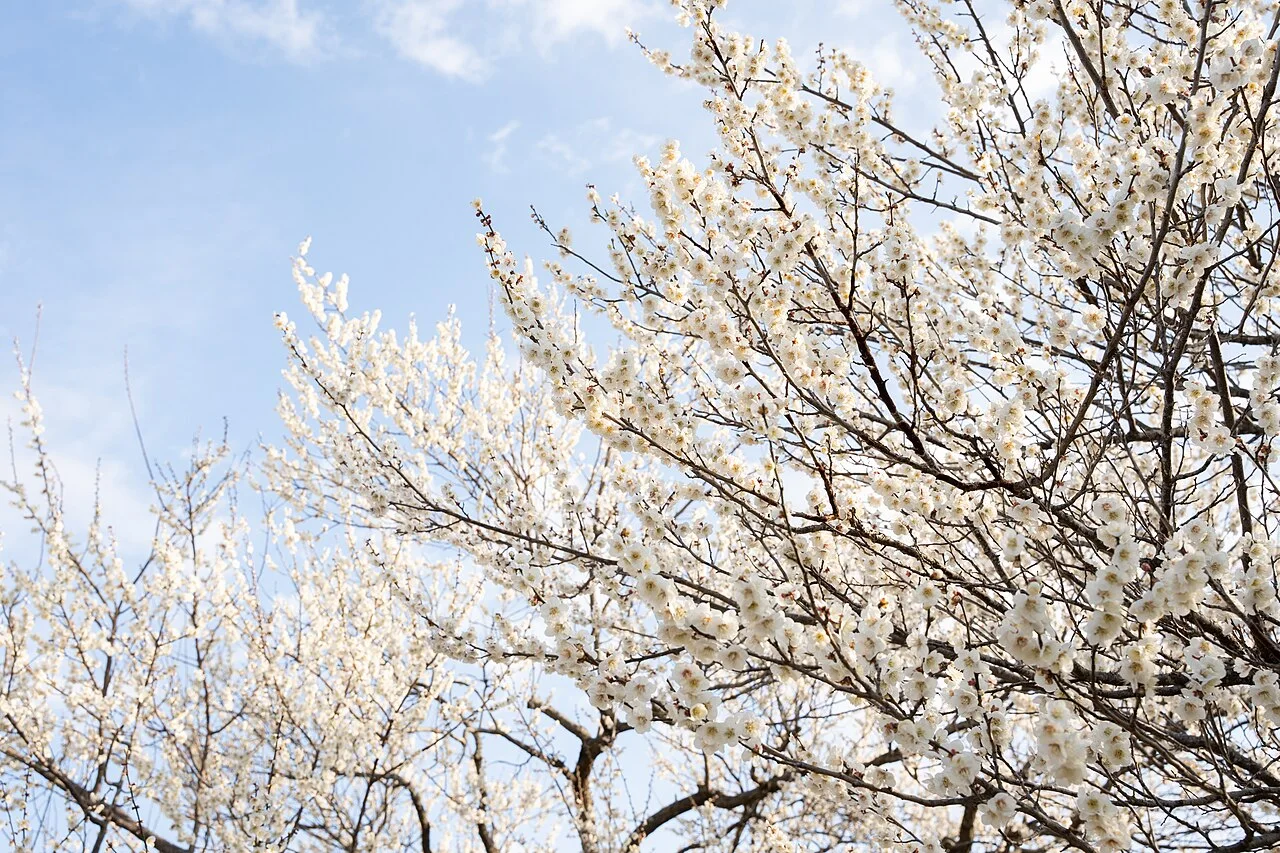
The 83rd Atami Plum Garden Plum Festival runs from 9 January to 7 March 2027. During the festival, paid admission applies from 08:30 to 16:00 at ¥300 general entry, ¥100 for local residents and overnight guests in Atami, and free for junior high school pupils and younger – ask hotel reception about guest discounts beforehand. The garden sits about a 10-minute walk from JR Kinomiya Station, or roughly 15 minutes by bus from Atami Station on services bound for Ainohara Danchi, alighting at Baien. With early-, mid- and late-blooming varieties planted across the grounds, look for 'zentai migoro' (peak bloom across the garden) on the tourist association's blossom updates.
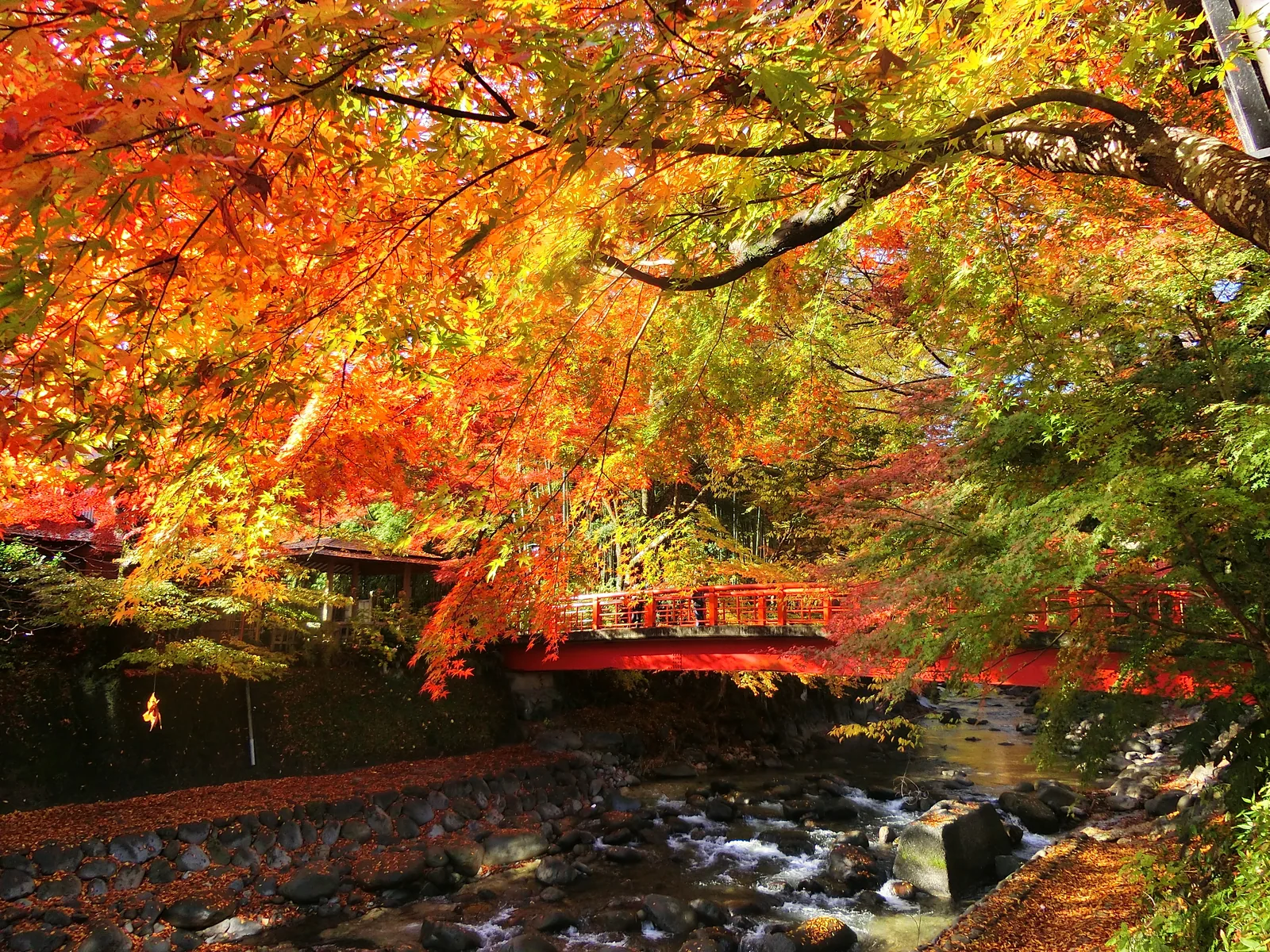
To pair Kinomiya Shrine and the Plum Garden in one day, take the bus to the garden first and walk down towards Kinomiya Station. Kinomiya Shrine is roughly a five-minute walk from the station, and is also served by buses from Atami Station towards Jukkoku Pass or on the Nishiyama loop stopping at Kinomiya Jinja-mae. After strolling through the garden, pause near the shrine before walking downhill towards Ginza-dori. Note that 6 December 2026 marks both the final day of the Plum Garden Autumn Foliage Festival and an evening fireworks display; visit the garden early and stay down by the coast through the afternoon and evening so you do not have to climb back inland.
For winter ocean views from an open-air bath, enter Fuua in early afternoon and leave before sunset. If you plan to wait on the promenade for fireworks later, pack a dry towel, warm coat and windproof hat in an accessible outer bag so you are not standing in sea breezes wearing damp layers. In summer, if you want a swim before bathing, choose an afternoon bath near Ginza-dori or the harbour and bring a separate waterproof pouch for wet swimwear. For ways to add Atami Castle, the MOA Museum of Art or Sun Beach, see our Atami attractions and transport guide.
Continuing to Ito or Catching the Ferry to Hatsushima
To continue south along the east coast of Izu the next day, take the JR Ito Line from Atami or Kinomiya to Ito, choosing either Atami or Ito for your hot-spring inn. For the Jogasaki Coast, connect onto the Izukyu Line towards Izu-Kogen and schedule coastal walks in daylight. With heavy luggage, staying your arrival night in Atami and shifting bases to Ito the next day leaves far more breathing room than checking out of Atami, hiking the Izu coast and trying to catch a fireworks return train all on one day. For terrain and seasonal differences across nearby spa towns, read our seasonal stays guide for Izu and Atami.
Hatsushima lies about 30 minutes by ferry from Atami Port. Standard return fares on the Hatsushima ferry bought on the day are ¥2,900 for adults and ¥1,450 for primary school children, with no advance booking needed for general passengers. Take bus stand 7 from Atami Station towards Atami Port and Korakuen to the Atami-ko stop right by the ticket office, or a stand 6 bus bound for Ajiro Asahimachi to Marine Spa Atami (Atami-ko Iriguchi) and walk over. When checking ferry timetables, pick an island return sailing with comfortable margin for the bus up to the station. Keep Fuua and the ferry in separate time blocks – if rough seas cancel sailings, pivot smoothly to town bathhouses or Kiunkaku without wasting a trip to the pier.
A few useful answers
How do I get to Atami Onsen from Tokyo?
Take the Tokaido Shinkansen Kodama from Tokyo Station to Atami in around 45 to 50 minutes; selected Hikari trains also stop there. For a cheaper ride, take a direct Tokaido Main Line local train to Atami, which takes about 110 minutes.
Which day-use onsen in Atami is closest to the station?
Atami Ekimae Onsen Bathhouse (Tahara Bathhouse) is roughly a one-minute walk from the station. It opens at 14:00 (last entry 20:30, closed Wednesdays), costing ¥500 for junior high students and adults. In the morning, you can use the free Ieyasu-no-Yu foot bath outside the station from 09:00.
Do I need tickets for the Atami Marine Fireworks Festival?
Atami Sun Beach and Nagisa Shinsui Park offer free viewing areas. Organisers provided no paid seating in 2026, though designated waterfront sectors in summer were reserved for guests of participating hotels.
Can young children bathe or swim at Atami's day-use spas?
For children under four, prioritise Marine Spa Atami and check its toddler pool and entry rules. Ocean Spa Fuua does not admit children aged zero to three, and children aged four through primary school must be accompanied by a same-sex adult and cannot use restricted areas such as the open-air standing bath.
Can you bathe at Hashiriyu in Izusan?
No – Hashiriyu is a hot-spring source cave open for sightseeing from 09:00 to 17:00. Take a bus bound for Izusan or Yugawara from Atami Station to Aizomebashi and walk about 10 minutes. Plan your soak separately at a central day-use bathhouse or an Izusan ryokan.
Which rooms at Atami Korakuen Hotel have fireworks views?
All guest rooms in the Tower Wing face the fireworks. In AQUA SQUARE, Ocean View Rooms and Universal Rooms have balcony views of the display.
Official information and references
Sources used in this guide.
- Atami City | Marine Fireworks Festival 2026–2027 Schedule
- Atami City Tourism Association | Fireworks Viewing Areas, Wheelchair Access & Dispersal Routes
- Atami City Tourism Association | Beach & Shinsui Park Fireworks Viewing Guide
- JR East | Atami Station Timetable
- JR East | December 2026 Weekday Shinkansen Timetable from Atami to Tokyo
- JR Central | Atami Station Map
- Smart EX | Unreserved Seat Fare Table
- Smart EX | EX Hayatoku 1 Sales Hours & Eligible Trains
- Smart EX | EX Hayatoku 1 Fare Table from April 2026
- Smart EX | Hayatoku Exclusion Dates
- Atami City Tourism Association | 2026 Events & Day-Use Onsen Guidebook
- Yuyado Mikan no Ki | Hot Springs & Day-Use Bathing
- Ocean Spa Fuua | Opening Hours, Fares & Entry Rules
- Ocean Spa Fuua | 2026 Panoramic Sauna Refurbishment & Fare Update
- Atami Bay Resort Korakuen | Free Shuttle Bus from Atami Station
- Atami City Tourism Association | Marine Spa Atami Fares & Access
- Atami City | Marine Spa Atami Bus Stops
- Yuyado Ichibanchi | Private Open-Air Baths & Day-Use Notice
- Atami City Tourism Association | Ieyasu-no-Yu Foot Bath Reopening & Hours
- Atami City | Oyu Geyser Eruption Schedule
- Atami City Tourism Association | Ozawa-no-Yu
- Atami City Tourism Association | Izusan Hashiriyu & Aizomebashi Access
- Atami Onsen Ryokan Association | Tsuki no Sumika Atami Juraku Hotel
- Atami Korakuen Hotel | Room Fireworks Views & Fuua Packages
- Atami City | Accommodation Tax
- Atami City | Bathing Tax
- Atami Onsen Ryokan Association | Fufu Atami Rooms & Access
- Atami City Tourism Association | Kiunkaku & Year-End Closures
- Atami City Tourism Association | 2027 Atami Plum Garden Plum Festival
- Atami City Tourism Association | 2026 Atami Plum Garden Autumn Foliage Festival
- Kinomiya Shrine | Access & Visiting Information
- Hatsushima Ferry | Fares, Timetables & Atami Port Bus