Deciding where to base yourself in Kumamoto? Compare Kumamoto Station, Torichosuji and Sakuramachi, alongside transfers, evening meals and booking rules for Aso Station, Uchinomaki Onsen, Kurokawa Onsen and Takachiho, with two- to four-day itineraries.
- Region & Focus
- Kumamoto
- Reading Scope
- 22 min read · 12 chapters · 5 Q&As
- Official Verification
- 22 official sources checkedUpdated 22 November 2026
- Key Topics
- Where to stayBookingHot springs
Chapter Route Map (tap any stop)
- Start Your First Night Around Arrival Time and Station
- Three City Bases in Kumamoto, Seen from the Hotel Door
- Save Your Final Night for the Airport Bus or Early Shinkansen
- Using the Trams and Visiting Kumamoto Castle on a Multi-Night City Stay
- What Each Saves You: Outside Aso Station vs Uchinomaki Onsen
- One Night in an Onsen Town: Uchinomaki or Kurokawa?
- Staying in Takachiho Depends on the Hour You Want
- How to Split Nights Across Two- to Four-Day Trips
- Check Dinner Rules Before Comparing Half-Board Ryokan Rates
- Travelling with Children, Older Relatives or Three or More Cases
- Where to Return Hire Cars and Store Bags Without One
- Which Night to Book First—and What Changes Cost
- Quick Q&A
On a first visit to Kumamoto, if you want to see Kumamoto Castle, browse the shopping arcades and walk back to your hotel after dinner, base yourself in Torichosuji. If you are arriving on a late Shinkansen or catching an early JR train after check-out, staying near Kumamoto Station's Shirakawa Exit is far simpler. Only think about moving bags from the second night onwards. Stay outside Aso Station if you are heading up the mountain the next morning, or choose Uchinomaki if you want a ryokan dinner after visiting the volcano. If you would rather spend an entire afternoon hopping between baths, save that night for Kurokawa. As for Takachiho, the usual reasons to stay overnight are the evening Kagura performance or reaching the gorge at first light.
Start Your First Night Around Arrival Time and Station
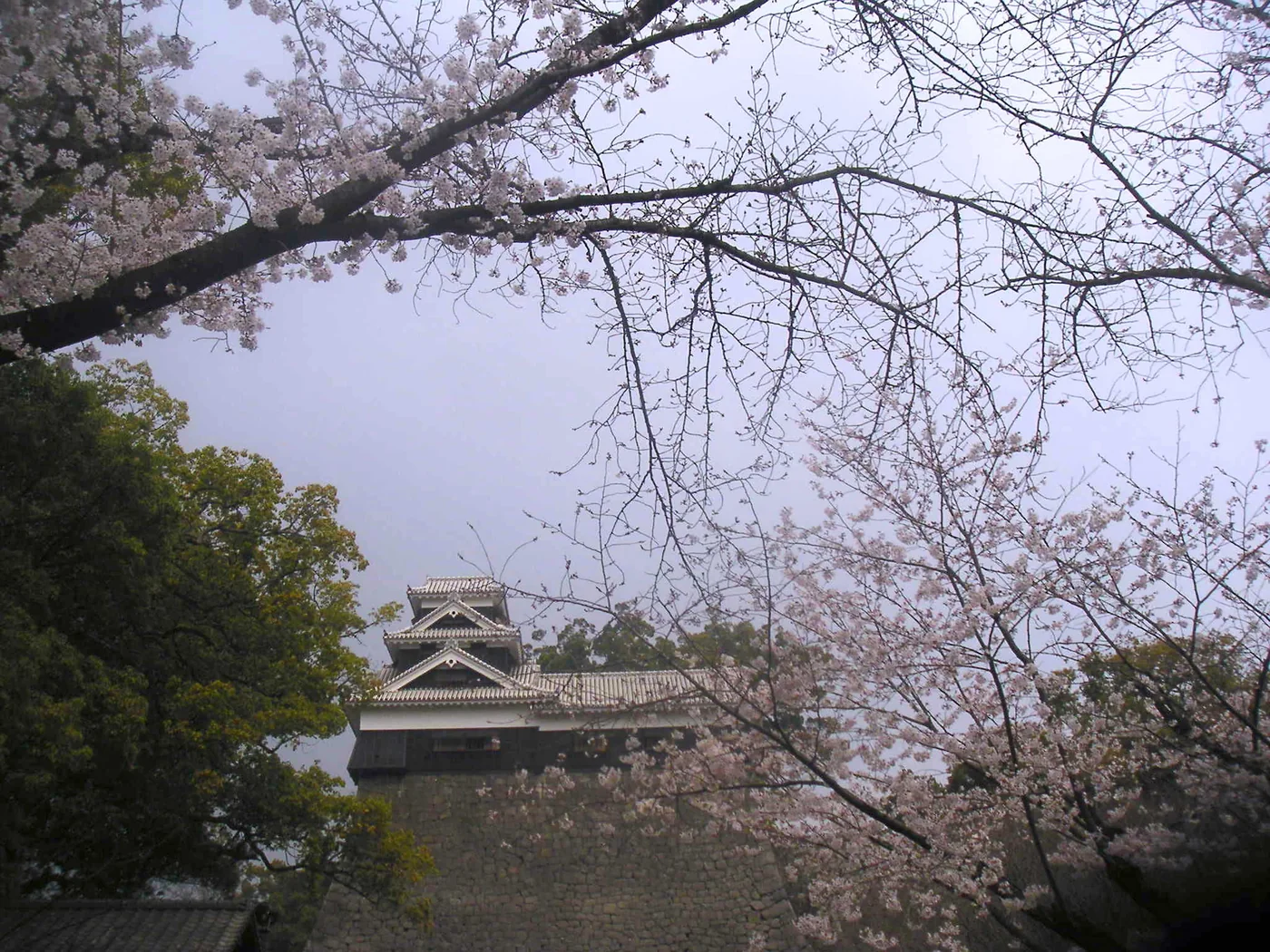
If you are riding the Shinkansen into Kumamoto from Hakata, jot your arrival time down beside the booking page before deciding. When you reach the station with barely enough time for dinner and plan to catch an early train towards Aso the next morning, staying around Kumamoto Station is the easiest fit. If you arrive in the afternoon and have at least half a day for the city afterwards, drop your cases in Torichosuji so dinner and the next day's walk to Kumamoto Castle both begin at your hotel door. When room rates are close, judge by how far you will walk on arrival and check-out days rather than how near a pin looks to the castle on a map.
Sakuramachi and Hanabatacho suit travellers arriving and departing by coach or bus. If you take the airport bus from Aso Kumamoto Airport into the city and need to board another coach at Sakuramachi Bus Terminal the next morning, look along the stretch from the terminal towards Karashimacho and Shinshigai. Torichosuji also has buses and trams, though dragging large suitcases means factoring in crossings, platform exits and finding the hotel entrance. Groups of three or four planning to take taxis should check where the main door sits and whether cars can pull up outside: entrances inside covered shopping arcades often face a completely different street from the kerb.
A two-day, one-night trip means staying in one place; only when you leave on day three do you have a second night to allocate. Landing in the evening on day one or departing before noon on the final day eats up a full daylight block. When counting nights, write down your flight landing, Shinkansen arrival, final connecting bus and ryokan check-in deadline side by side. Looking only at 'four days' makes it easy to treat arrival and departure days as full days, leaving you scrambling to choose between visiting Aso, moving on to Takachiho or sitting down for a proper meal.
| Area | Best for the evening | Simplest next-morning departure |
|---|---|---|
| Torichosuji, Kamitori and Shimotori | Dining out and browsing arcades, then walking back to your room | Walking to Kumamoto Castle in the morning, then taking the tram towards Suizenji |
| Hanabatacho, Sakuramachi and Karashimacho | Arriving by airport bus or staying near Shinshigai | Departing from Kumamoto Sakuramachi Bus Terminal |
| JR Kumamoto Station | Late arrivals, early starts or travelling with large suitcases | Boarding the Shinkansen or JR Hohi Main Line |
| In front of Aso Station | Early mountain buses or coaches bound for Takachiho the next day | Walking straight out to the Aso Station bus stop |
| Uchinomaki Onsen | Checking in early for a ryokan dinner after visiting the volcano and grasslands | Driving out or taking a bus back to Aso Station first |
| Kurokawa Onsen | Spending the afternoon bath-hopping and strolling along the valley | Continuing towards Yufuin and Oita, or travelling directly to and from Fukuoka |
| Central Takachiho | Watching the evening Kagura performance at Takachiho Shrine after dinner | Walking the gorge early in the morning, then returning to the bus centre |
Deciding where to base yourself in Kumamoto? Compare Kumamoto Station, Torichosuji and Sakuramachi, alongside transfers, evening meals and booking rules for Aso Station, Uchinomaki Onsen, Kurokawa Onsen and Takachiho, with two- to four-day itineraries.
Three City Bases in Kumamoto, Seen from the Hotel Door
Torichosuji tram stop sits between the Kamitori and Shimotori shopping arcades. If you want to browse shops, pick a restaurant on the spur of the moment or pop back to your room mid-afternoon, start searching between Kamitoricho and the Shimotori entrance. Hotel Nikko Kumamoto stands in Kamitoricho, and its official site quotes roughly 20 minutes by tram from Kumamoto Station—a useful benchmark for the first leg after arriving, on top of waiting for a tram, leaving the station and crossing the road. If people in your group want to split up for dinner or shopping, Torichosuji also makes it straightforward to meet back at the hotel on foot.
Sakuramachi Bus Terminal sits right in the city centre, with the neighbouring Hanabatacho and Karashimacho stops serving as good map anchors. If your hotel's main entrance lies inside Shinshigai's covered arcade, you will stay out of the rain when wheeling luggage. REF Kumamoto, for instance, notes on its official site that its entrance is inside the arcade—about a one-minute walk from Karashimacho tram stop—so cars cannot pull up to the door and drivers must use a partner car park before walking in. Details like this matter far more than a vague 'minutes from the station' claim when deciding where older relatives or pushchairs should be dropped off.
Around Kumamoto Station, distinguish carefully between the Shirakawa Exit and the Shinkansen Exit. The Shirakawa Exit connects directly to trams, local buses and AMU PLAZA Kumamoto. THE BLOSSOM KUMAMOTO sits above the adjoining station building; following the hotel's own directions from the Shirakawa Exit leads straight to a dedicated ground-floor lift up to the ninth-floor lobby. Check nearby hotels the same way and count how many roads you have to cross between exit and entrance. On a one-night stay before an early train, avoiding an extra transfer with cases is worth more than having one extra restaurant outside.
For stays of two nights or more, the upside of Torichosuji or Sakuramachi is walking home after dinner and having a breather in your room during the day. If horsemeat cuisine is on your list, plan it for the city night: book the restaurant you actually want first, then pick your hotel by the walk back. For families whose members want different things for dinner, look a short turn off the main Shimotori or Shinshigai drags so everyone can grab food and regroup in the room. Light sleepers should check which way rooms face and ask for a courtyard or rear-facing room when rates are similar.
Save Your Final Night for the Airport Bus or Early Shinkansen
If you are flying out of Aso Kumamoto Airport, staying near Sakuramachi on your last night keeps things tidy. Sanko Bus lists journey times of around 45 minutes between the airport and Sakuramachi on the special rapid airport service, around 50 minutes on regular airport buses to Sakuramachi, and roughly 60 minutes to Kumamoto Station. Boarding is first-come, first-served; if a coach fills up, you wait for the next departure. When booking, work backwards from airline check-in to find when you must reach the boarding bay with your bags. For early flights, compare the room rate plus a pre-booked transfer or taxi rather than the room alone. If you are connecting via Hakata to Fukuoka Airport, choose between Kumamoto Station and Hakata depending on your first morning train.
Even if breakfast is included in the rate, check whether you will still be there when the dining room opens. If you leave before service starts, compare the price gap against picking up breakfast the evening before. When staying in Sakuramachi, walk the route from your hotel to the terminal the night before and note the exact boarding floor and entrance. From Kumamoto Station for an early Shinkansen, double-check in advance whether you are collecting paper tickets or scanning a QR code at the barriers. Groups of three or four in separate rooms should agree to meet in the lobby rather than knocking on doors or retrieving stored bags from different desks at the last minute.
Using the Trams and Visiting Kumamoto Castle on a Multi-Night City Stay
Tram Line A stops at Kumamoto Station, Hanabatacho, Torichosuji and Suizenji Park; to return towards Kumamoto Station from the centre, look for Line A in the station-bound direction. Shared platforms also serve Line B, which runs to Kami-Kumamoto. A single adult ride costs ¥200, while a one-day tram pass costs ¥500 on a smartphone or ¥700 as a paper ticket—both valid exclusively on the city trams. On fares alone, if you walk between the castle and the arcades and only take the tram out to Suizenji and back, two single rides total ¥400. A mobile day pass pays off from three rides upwards, and the paper version from four. Showing a valid same-day tram pass at Kumamoto Castle lowers the adult admission to the group rate of ¥640: two tram rides plus castle entry comes to ¥1,140 with a mobile pass, still ¥60 cheaper than two single fares plus the standard ¥800 ticket.
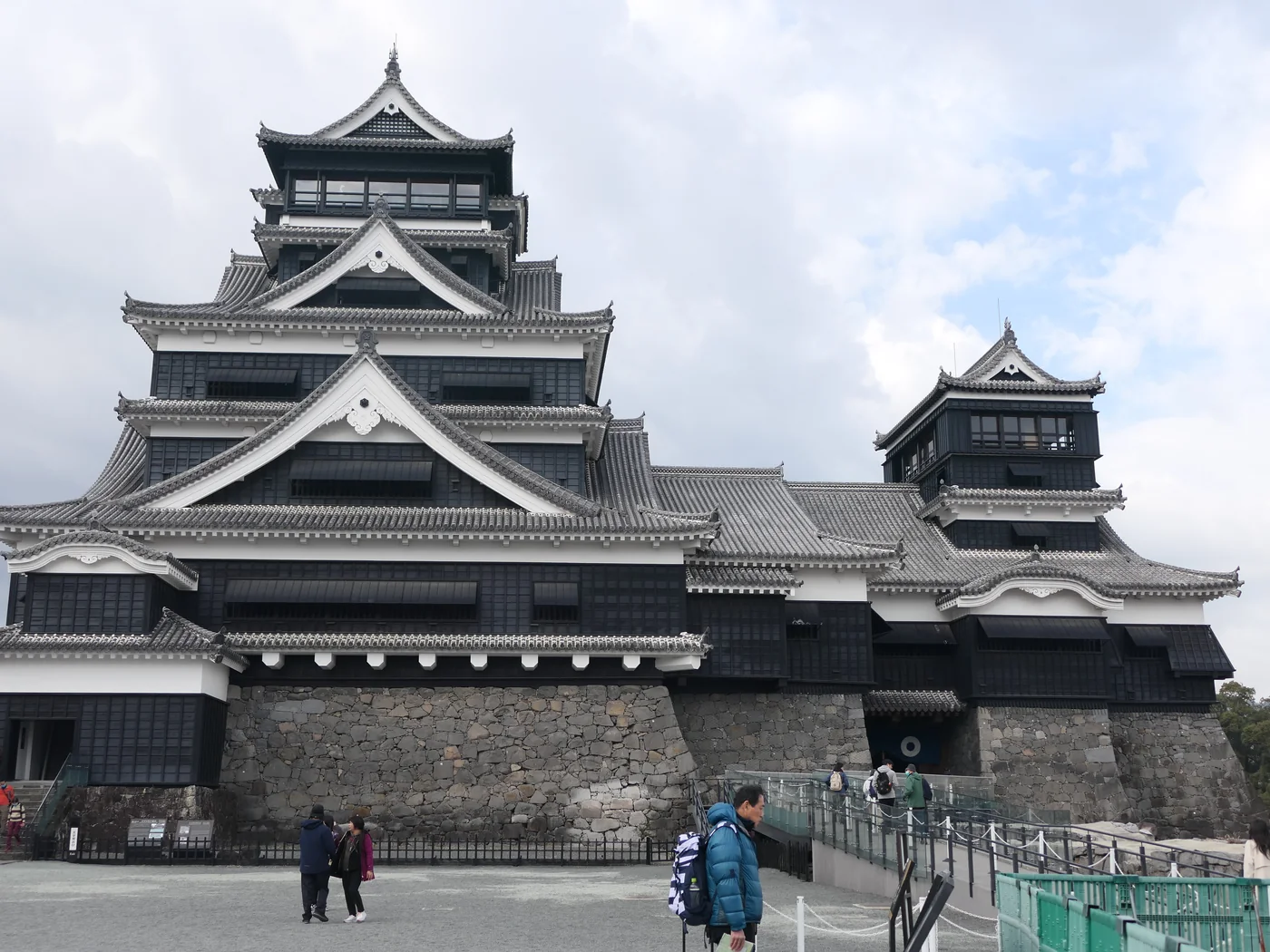
If you hope to fit Kumamoto Castle into your arrival day, look straight at last admission. From September to June, the castle normally opens at 09:00, with last entry at 16:00 and closing at 17:00. In July and August, hours usually extend until 19:00 with last entry at 18:00, though the Ninomaru Ticket Office still stops selling tickets at 16:00. On weekdays, entry and exit are via the South Gate. If an afternoon train leaves you dropping bags at the hotel first, moving the castle to the following morning is much less rushed than racing the ticket cutoff. Keep the evening around Josaien and the shopping arcades for dinner and a stroll, and set aside a proper half-day using Kumamoto Castle entrances, slopes and walking routes.
What Each Saves You: Outside Aso Station vs Uchinomaki Onsen
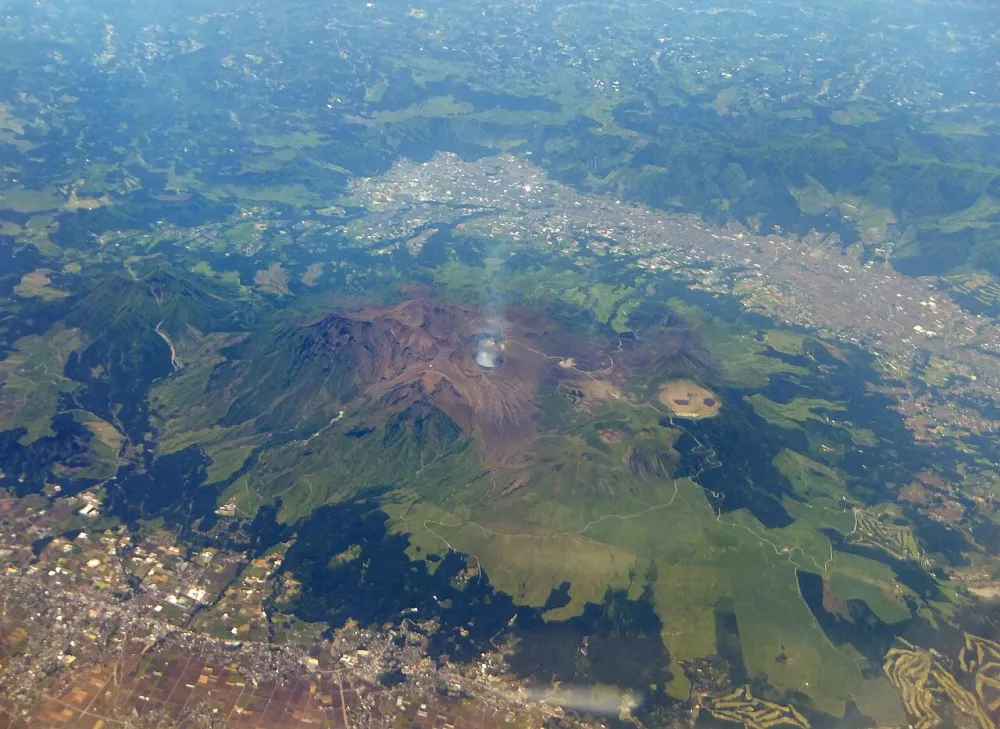
Without a car, Aso Station is the simplest springboard for heading up the mountain in the morning. Arrive from Kumamoto on the JR Hohi Main Line and transfer to the Aso Mountaineering Line bus bound for Kusasenri Aso Volcano Museum-mae or Aso-sanjo Terminal. Sanko Bus does not specially time its mountain departures to connect with every JR train or other coach. Staying beside the station lets you finish breakfast calmly before picking a departure and sort out luggage storage before boarding. Before booking, check the property's exact street address and walking route to the Aso Ekimae bus stop—listings tagged under Aso City can be scattered near entirely different stations.
Heading to Uchinomaki for hot springs means treating the ryokan as a separate destination. Uchinomaki Station is the JR stop, whereas the Uchinomaki Onsen town sits elsewhere, so check the bus stop named by your ryokan rather than assuming they are next door. Sozankyo, for example, instructs guests arriving at JR Aso Station to take the bus towards Uchinomaki Onsen, alight at Shokokai-mae and walk roughly two minutes. When travelling with suitcases, map the entire journey from Aso Station to the ryokan entrance along with the next morning's return bus. If you plan to rely on taxis, book both legs in advance—especially the morning pick-up—because having a room reservation does not guarantee an available cab at the door.
Drivers should check where the ryokan's car park entrance sits first, then trace the next day's direction of travel. If your two-day plan covers Kusasenri, Aso Shrine and the Miyaji approach, staying in Uchinomaki places dinner on the northern foothills neatly in the middle: schedule your main sightseeing for morning and midday on day one, then drive down to the ryokan in the afternoon. If you head on to Takachiho or return a hire car at the airport the next morning, set your satnav from the ryokan car park to the rental branch or bus stop so the route accounts for leaving the hot-spring lanes, plus extra margin for loading bags, refuelling and drop-off checks.
Treat Nakadake Crater, Aso-sanjo Square and Kusasenri as separate stops. As of 22 November 2026, Aso City notices state that the Asosan Park Road is closed, crater viewing is suspended and Sanko Bus's crater shuttle is not running. You can still plan an overnight stay around Kusasenri or Aso Shrine, though Kusasenri remains subject to road and weather restrictions—check Aso Mountaineering Line service updates and Aso City advisories before setting out. If fog or road controls intervene, switch the morning to Aso Shrine and the Miyaji approach while keeping your evening meal slot at the ryokan. Travellers heading up the mountain can read Aso volcano and Kusasenri transport before deciding between a station hotel and an onsen inn.
One Night in an Onsen Town: Uchinomaki or Kurokawa?
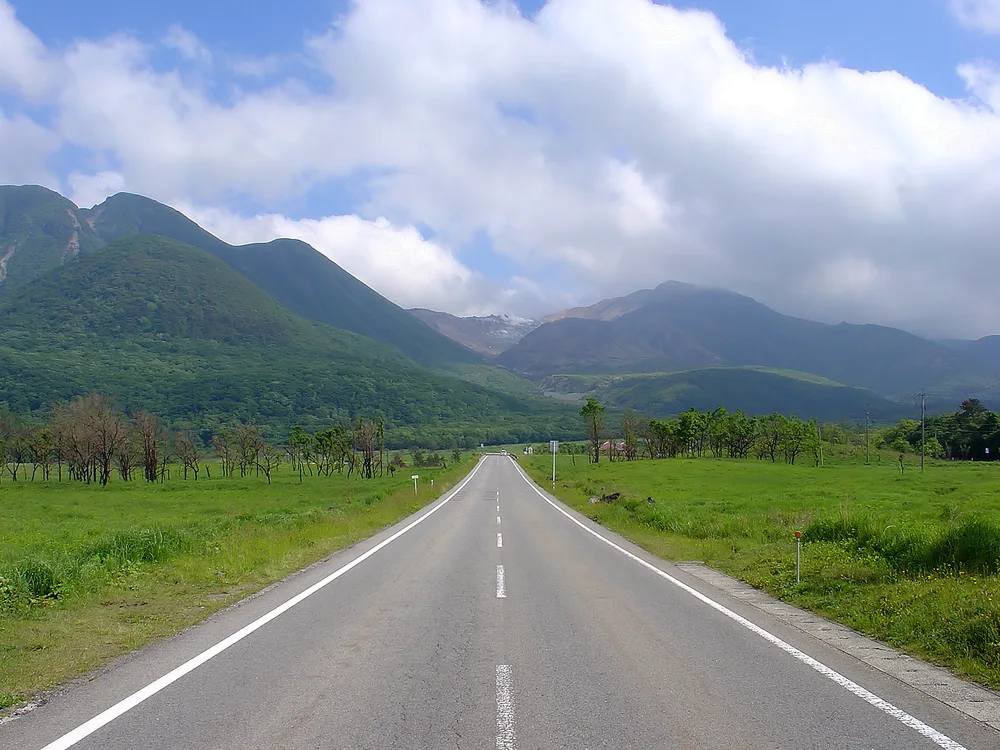
If you want to sightsee around Aso by day and return for a single relaxing soak at night, stay in Uchinomaki. If you also want to wander a valley hot-spring lane and try different ryokan baths the following morning, look to Kurokawa. Although Kurokawa—in Minamioguni Town north of Aso City—often appears in general 'Aso accommodation' searches, booking there adds a bus or drive away from Aso Station. Bus travellers can check Kyushu Odan Bus services linking Kumamoto, Aso Station, Kurokawa Onsen and Yufuin, making sure to verify the next day's onward coach before buying tickets. Coming straight from Hakata, compare the direct highway bus from Fukuoka to Kurokawa instead.
Kurokawa Onsen's Nyuto Tegata onsen pass costs ¥1,500 for adults and remains valid for six months from the date of purchase. Under the official rules, it covers three outdoor baths at participating ryokans, and one of the pass's stickers can alternatively be exchanged for a designated item at participating shops. Always check each inn's day-visitor bathing hours before setting out: many open in the morning, close for cleaning and reopen later in the afternoon, so a late check-in can leave you with time only for your own ryokan's bath. To visit several, drop your bags at your inn or near the village entrance, pick bathhouses linked by an easy walk and head back in time for dinner. If you would rather unwind in your room, prioritise an inn with strong private or in-house baths and decide the next morning whether to buy the pass.
Without a car, look closely at the walk from the Kurokawa Onsen bus stop to your ryokan's front door. Inns down in the centre of the gorge make it easy to stroll along the river after dinner. If yours sits on the outskirts or up a steep slope, send your bus arrival time, check the final shuttle pick-up and confirm the meeting point in advance, and arrange the morning drop-off back to the bus stop too. Groups of four do not all need to agree on the same bathhouse route: keen bath-hoppers can walk a circuit while anyone who dislikes the cold or steep paths heads straight back to the ryokan bath before everyone reunites for dinner.
Kurokawa works especially well as a midpoint stop if your route continues towards Yufuin or Beppu. If you are returning from Takachiho to Aso and changing buses for Kurokawa, put both timetables and the transfer buffer on a single sheet and only book a half-board dinner plan if you can reach the inn before kitchen cut-off. During peak season, if Kurokawa only has outlying rooms left while Uchinomaki still offers good transport access, meals and bed types that suit you, take the onsen night in Uchinomaki. Conversely, when bath-hopping is the whole point of the trip, arrive early in Kurokawa, enjoy a second soak the next morning and push your next stop slightly later.
Staying in Takachiho Depends on the Hour You Want
Takachiho lies in northern Miyazaki Prefecture. If you want to watch the evening Kagura dance at Takachiho Shrine, the town centre is the easiest base without a car: pin Takachiho Bus Centre, your dinner spot and the shrine on a map, then see where hotels sit in between. Hotel Solest Takachiho, for instance, lists an eight-minute walk to the bus centre and roughly five minutes to the shrine on its access page. Staying close to the gorge suits travellers who want to walk down at dawn; before booking, check the gradient between the hotel and the actual gorge path entrance, plus how you will get back up at night and haul suitcases to the bus centre.
Performances normally take place in Takachiho Shrine's Kagura Hall from 20:00 to 21:00 JST, costing ¥1,000 per person with free entry for primary-school children and younger. There are no shows on 31 December or 1 January, and regular nightly performances are paused during the Kagura Festival on 22 and 23 November. When booking a room, line up dinner and show arrival on a single timeline: on a half-board plan, ask the inn when dinner begins and how long service lasts so you can walk over afterwards. If you arrive late, book room-only with late check-in and settle dinner before reaching town. To attend one of the seasonal hamlet Yokagura gatherings instead, arrange night-time transport around that venue's address.
From central Kumamoto, look for the limited express Takachiho-go coach bound for Nobeoka. Sanko Bus's sample outbound timetable departs Kumamoto Sakuramachi at 09:22 and reaches Takachiho Bus Centre at 12:19. Miyazaki Kotsu's timetable effective 1 November 2026 shows the return Sanko Bus leaving Takachiho at 16:57 and arriving at Sakuramachi at 19:50. On a day trip using those coaches, you have time for lunch and one headline activity; if you want to stay for the 20:00 Kagura, book a night in town and reserve the following day's return coach. Factor in the steep walk or shuttle wait down to the gorge when counting backwards to your departure from the bus centre—pick either rowing or the scenic mini-train first, and save the other for the next morning if staying over.
Travellers already staying in Aso have a second option. Sanko Bus's Asochiho-go runs from Aso Station to Takachiho Bus Centre; on the October 2026 timetable, the 12:23 departure arrives at 14:31 and the 16:00 departure arrives at 18:08. Taking the midday coach leaves time to drop bags and dine before Kagura; if you leave Aso later, pick a restaurant within walking distance of your accommodation and check last-order times in advance. If you stay until the next afternoon, compare taking a coach straight back to Kumamoto against returning to Aso Station. Check seat availability for your travel date on both long-distance routes early, and let the hardest-to-replace booking—whether train, coach or reserved gorge boat—dictate which day you check out.
How to Split Nights Across Two- to Four-Day Trips
On a two-day, one-night first trip, keep your single night in central Kumamoto. Stay in Torichosuji if you can tour the castle on day one's afternoon, or at Kumamoto Station if you need an early JR train the next morning. With enough daylight on day two, you can head out to Kusasenri in Aso and return to Kumamoto for your onward train. If you depart before noon on day two, fit Kumamoto Castle into day one—adding at most a stroll through the arcades—and leave the second morning for packing. Alternatively, spend that single night purely on hot springs: transfer by bus from Hakata or Kumamoto to Kurokawa on day one and return the next day, saving the castle for another trip. Only spend your one night on a half-board ryokan if you can arrive early enough to enjoy it.
On a three-day, two-night trip, two patterns work well. If you dislike repacking every day, stay both nights in the same city hotel: dedicate one full day to an Aso round trip, use the remaining half-day for the castle and return to familiar streets each evening. To experience a ryokan dinner, spend night one in the city and night two in Uchinomaki, returning from Aso to Kumamoto on day three. If you have an afternoon flight or a fixed long-distance train on day three, calculate the full door-to-door journey from the mountain ryokan to the airport or station before committing night two outside the city. With a convenient morning bus, you can linger over breakfast; if you must catch an earlier departure, ask whether an earlier breakfast is possible or switch to room-only.
A three-day, two-night itinerary can also put night two in Takachiho. Spend night one in Kumamoto, catch the morning limited express coach to Takachiho for the gorge or mini-train in the afternoon, and stay in town overnight. Keep the following morning for a final walk or breakfast before boarding a return coach to Kumamoto. Trying to connect from Takachiho straight to an evening flight the same day locks check-out, highway coach and airport check-in together tightly, so leave plenty of buffer for road delays even when the timetable technically connects. If you need to be back in Kumamoto the next morning, sleep in the city instead and save Takachiho's evening attractions for a longer trip.
With four days and three nights to link city and mountains, you can sleep in central Kumamoto on night one, Uchinomaki or Aso Station on night two, and central Takachiho on night three before returning to Kumamoto on day four. If night two centres on bath-hopping in Kurokawa, spending night three at Kumamoto Station or continuing towards Yufuin cuts out an awkward cross-mountain transfer. Fitting Kusasenri, Kurokawa and Takachiho into one trip is technically doable, yet every afternoon gets clipped by the next check-in window. Ask yourself where you most want to dine and wake up on night three—the answer usually chooses between Kurokawa and Takachiho. Anyone determined to combine all three can check routing along a combined Kumamoto, Aso and Takachiho itinerary.
If you are using Fukuoka as your base and only want to ride the Shinkansen from Hakata to see Kumamoto Castle, keep your Hakata hotel and return there for dinner as planned. Trying to see Aso by day and also enjoy a half-board ryokan dinner from Fukuoka eats away the afternoon and still leaves a long trip back after eating; for that combination, stay in central Kumamoto first and give one night to Aso. When comparing rail or bus tickets against hotel costs, multiply fares by the number of travellers and count the transit time back from Hakata Station to your hotel to see how much hassle keeping one base really saves.
Check Dinner Rules Before Comparing Half-Board Ryokan Rates
On the same travel date, a city hotel often quotes per room, whereas an onsen ryokan usually prices half-board plans per guest. Always run a search through to the pre-payment summary using identical dates, adult and child counts, and room numbers, adding consumption tax, accommodation tax, bathing tax, meals and parking. Compare a room-only rate only after adding dinner out for two and the return bus or taxi fare. When travelling with children, enter exact ages, whether they need their own bedding and whether they want children's meals—check occupancy limits and breakfast surcharges before trusting the headline minimum rate.
From 1 July 2026, Kumamoto City levies an accommodation tax of ¥200 per paying guest per night, including children whose stay incurs a charge. For two adults and two paying children staying two nights, that adds ¥1,600 in total. If your booking confirmation says taxes are payable on arrival, note that figure in an unpaid-extras column. When checking rates in Uchinomaki or Kurokawa, check the local municipality's rules and the booking breakdown carefully, including any separate onsen bathing tax. On trips where every night is in a different town, separate subtotals stop you overlooking charges settled at the front desk.
Mountain ryokans usually operate fixed dinner sittings. At Sozankyo in Uchinomaki, for instance, the published latest dinner start is 19:30, and guests checking in after 18:00 must notify the property beforehand—a very different reality from arriving at Aso Station at 19:30 expecting to call a cab. If you plan to visit a museum or viewpoint on the day you change hotels, write down the latest time you are willing to leave your final stop and plan intermediate stops backwards from the inn's dinner rules. When your coach arrives too late, switching to bed-and-breakfast or room-only and picking up dinner beforehand is far safer than pinning everything on one tight connection.
An in-room bath, a communal public bath and a bookable private bath (kashikiri-buro) work very differently in practice. If you want to bathe together with young children or family, verify that listing photos match your exact room type, whether the tub is indoor or semi-open-air, whether it uses natural hot-spring water or ordinary heated tap water, and how private baths are reserved. If you want a soak before dinner, allow time after key handover for stowing bags, changing and walking to the bathhouse. When paying more for a higher-tier half-board room, spend the upgrade on features you will genuinely use—proper beds for getting up at night, a bathroom with seating or an earlier dining sitting for children.
If you are worried about finding suitable food outside, state dietary restrictions and children's needs in full when booking. Mountain inns have strict cut-off dates for menu changes: for food allergies, list specific ingredients and the degree of cross-contamination avoidance required, and wait for written confirmation of what the kitchen can prepare before paying. Travellers who prefer dining out should filter hotels by the walk from dinner spots and compare restaurant last-order times against check-in. In Takachiho, if you are attending evening Kagura on arrival, pick a central hotel or an inn with clearly timed dinner service so searching for a table never costs you the performance.
Travelling with Children, Older Relatives or Three or More Cases
For families staying in Kumamoto City, work backwards from daytime nap times. If children need a midday rest while you still want to see Kumamoto Castle and the arcades, base yourself near Torichosuji. With a pushchair, check the route from the tram stop or station exit to the hotel lobby for stairs and slopes. When visiting Aso, keep an afternoon for Kusasenri and the lower slopes, sticking to the fenced paths around the horse pastures and grasslands. Pack spare clothes in a daypack so a sudden downpour simply shifts your afternoon to lunch along the Miyaji shrine approach before heading back to your pushchair and main bags at the inn.
When travelling with older relatives, ask early whether they need a western-style bed edge to sit on when rising, how far they can comfortably walk, and whether grab rails or a shower stool are helpful at night. Compare western beds and lift access before room views. Older ryokans may have steps between the lift landing and room doors, or require crossing between wings to reach the dining room—asking separately about drop-off access, room entry, bathroom layout and restaurant access gets clearer answers. Takachiho Gorge involves steep elevation changes: anyone walking down during the day still needs stamina for the climb back up or budget for a taxi, and it pays to check the night-time turns back from Kagura beforehand.
For three generations travelling together, booking two adjoining or nearby rooms often provides two sets of beds and bathrooms more smoothly than squeezing into one large family room. Put light sleepers in a quiet rear-facing room, house parents and children in the other, and meet in the dining room for dinner. If a mountain ryokan needs to seat everyone at one table or place two rooms on the same floor, send both booking names and dates together in advance rather than asking at check-in. When hiring a private van, declare passenger numbers, child seats, pushchairs and exact suitcase dimensions upfront so the vehicle is sized for the luggage—and agree an alternative pick-up spot if cars cannot stop outside the hotel door.
Where to Return Hire Cars and Store Bags Without One
If your first full day stays within central Kumamoto, wait until the following morning to collect a hire car and save a night's parking fee and city traffic. If you do drive on night one while staying near the arcades, check whether the hotel's partner car park enforces early morning exits, allows in-and-out privileges, and how far it sits from the entrance—on REF Kumamoto's site, for example, some partner lots permit unlimited re-entry during a stay while others end the session as soon as you drive out. When comparing rental quotes, check one-way drop-off fees across prefectures, branch opening hours and whether you need a shuttle after returning the car to reach the Shinkansen or airport.
In winter, plan drives to Kurokawa and Aso so every mountain leg finishes before sunset. The Kurokawa Onsen Ryokan Association warns of potential snow and icy roads from December to March: confirm winter tyres or chains and passable routes with your rental company, aim to reach your inn in the afternoon, and leave margin for stops or detours. During heavy snowfall or black ice, switch to operating buses or stay in the city—turning night two into a city stay and making a daytime excursion only when weather clears is far easier if your rooms and tickets carry flexible terms.
If you are staying at the same Kumamoto hotel before and after a mountain side trip, ask whether they can hold large suitcases between the two bookings so you can travel up into the hills with an overnight pack and collect your cases on return. Relying solely on lockers around Aso Station means having a back-up if large compartments are full or too narrow—a station-front hotel avoids that gamble. If you are continuing directly from Kurokawa or Takachiho to another prefecture without returning to Kumamoto, confirm whether your next hotel accepts couriered luggage (takkyubin), how many days transit takes and what essentials to pack in hand luggage while cases travel ahead, keeping children's spare clothes with you at all times.
Which Night to Book First—and What Changes Cost
Book the hardest-to-replace night first. Whether that is a specific guestroom in Kurokawa, two same-floor twin rooms in Uchinomaki or a walkable stay for Takachiho Kagura, lock in that date's availability before scheduling buses or car hire around it. City rooms are far easier to swap within the same neighbourhood. For weekends, public holidays or trips with older relatives, reserve a suitable plan as soon as you find one inside a free-cancellation window. Because rates shift with dates, meal plans and headcount, compare two candidate weekends using identical search settings rather than relying on an average nightly price.
Save every cancellation deadline in your phone calendar—separately for rooms, dinners, highway coaches and tours. Under Sozankyo's standard published terms, for example, cancellations three to two days before check-in incur a 20% fee, one day before incurs 50%, and same-day cancellations or no-shows incur 100%, with separate rules for peak dates such as New Year. For holiday or New Year stays, record the exact cut-off date and time shown on your confirmation. If city hotels and mountain ryokans are booked through different platforms, file each confirmation email and contact number separately so you know immediately whom to message if one night has to drop.
Keep a back-up plan between your transport and hotel bookings. If Nakadake Crater closes while you are booked in Uchinomaki, you can switch the day to Aso Shrine and the Miyaji approach without touching your ryokan or dinner reservation. Only if both railways and roads around Aso are disrupted by weather do you need to consider moving back to Kumamoto—and before cancelling, verify replacement room availability, the old inn's penalty cut-off and where next-day transport actually departs from. When plans shift with less than 24 hours' notice, contact the hotel first to report a late arrival or cancellation, then tidy up smaller bookings afterwards: protect the night where you know you can arrive safely and still sit down for dinner.
A few useful answers
On a first trip to Kumamoto, should I stay near Kumamoto Station or Torichosuji?
Stay in Torichosuji if you want to visit the castle, browse the shopping arcades and walk back after dinner. Choose Kumamoto Station if you arrive on a late Shinkansen or need an early JR departure. Pick Hanabatacho, Sakuramachi or Karashimacho if you rely on the airport bus or depart from Sakuramachi Bus Terminal the next morning.
Can I stay at Uchinomaki Onsen without a hire car?
Yes. You can connect from JR Aso Station via local buses towards Uchinomaki Onsen, a pre-booked taxi or a ryokan shuttle where offered. Check the exact bus stop named by your ryokan, and if you plan to take a mountain bus or coach to Takachiho the next morning, map out the return bus to Aso Station at the same time.
For a one-night onsen stay, should I choose Uchinomaki or Kurokawa?
Choose Uchinomaki if your daytime focus is the Aso grasslands and shrine and you want to settle in for a ryokan dinner in the evening. Choose Kurokawa—and arrive early—if you want to stroll a valley town, visit multiple baths with the Nyuto Tegata pass or continue towards Yufuin the next day. If you arrive late, save your bath-hopping for the following morning.
Do I need to stay overnight in Takachiho?
If you only want to visit the gorge or ride the scenic mini-train, a day trip from Kumamoto is workable. Stay in central Takachiho if you want to see the 20:00 Kagura performance or walk the gorge early the next morning. Without a car, check both the night-time walk back from the shrine and the morning walk to the bus centre.
Do I need to change hotels on a three-day, two-night Kumamoto trip?
If you prefer leaving your luggage in one room and making a day trip to Aso on day two, keep both nights in central Kumamoto. Switch to Uchinomaki, Kurokawa or Takachiho on night two only if you specifically want an onsen ryokan with dinner or evening Kagura—and if you have an early flight on day three, stay your final night somewhere with straightforward airport access.
Official information and references
Sources used in this guide.
- Sanko Bus — Airport Limousine Bus between Aso Kumamoto Airport, Sakuramachi and Kumamoto Station
- Kumamoto City — Accommodation Tax Start Date, Scope and Rates
- Kumamoto City Transportation Bureau — Tram Route Map, Boarding Guide and Single Fares
- Kumamoto City Transportation Bureau — One-Day Tram Pass
- Kumamoto Castle — Opening Hours, Last Admission and Gates
- JR Kyushu — Kumamoto Station Layout Map
- Hotel Nikko Kumamoto — Access
- REF Kumamoto — Entrance, Station Access and Partner Car Parks
- THE BLOSSOM KUMAMOTO — Route from Shirakawa Exit to Hotel Entrance
- Sanko Bus — Aso Mountaineering Line Timetable and Fares
- Aso City — Crater Viewing and Asosan Park Road Notices
- Sanko Bus — Mount Aso Crater Shuttle Suspension Notice
- Sozankyo — Uchinomaki Onsen Bus Stop and Access
- Sozankyo — Dinner Hours, Late Check-In Notice and Cancellation Terms
- Kurokawa Onsen Tourism Association — Access from Kumamoto, Aso, Fukuoka and Yufuin
- Kurokawa Onsen Ryokan Association — Nyuto Tegata Onsen Pass
- Kurokawa Onsen Ryokan Association — Winter Mountain Roads and FAQs
- Sanko Bus — Limited Express Timetable between Kumamoto, Takachiho and Nobeoka
- Miyazaki Kotsu — Takachiho-go Timetable (Effective 1 November 2026)
- Sanko Bus — Asochiho-go Timetable and Fares between Aso Station and Takachiho
- Takachiho Town Tourism Association — Takachiho Kagura Times, Admission and Closed Dates
- Hotel Solest Takachiho — Walking Access from Takachiho Bus Centre