Follow the south entrance route past the two styles of stone wall and Kuragari Passage, then explore the keep's Kato, Hosokawa, modern history and earthquake restoration displays. Compare a two-hour visit with half a day, with Josaien closures, guides, luggage, lifts and rest stops.
- Region & Focus
- Kumamoto
- Reading Scope
- 33 min read · 18 chapters · 6 Q&As
- Official Verification
- 18 official sources checkedUpdated 27 October 2026
- Key Topics
- ItinerariesBookingNeighbourhoods
Chapter Route Map (tap any stop)
- Choose two hours for the main route, or half a day for restoration
- Plan Josaien by facility in October 2026
- Use the south entrance for the round trip; use the north when open
- Two styles of wall and successive masugata: shape before defence
- Why restoration takes time: every stone has an original position
- Kuragari Passage: place the palace and keep in their separate roles
- The basement anagura: find the well before the first-floor model
- The second-floor Hosokawa period: storage and the lord's visits
- The third floor: from the fire of 1877 to rebuilding in 1960
- The fourth floor: connect restoration films with the work outside
- Pass through the fifth floor; compare old and new views on the sixth
- Uto Turret and Iidamaru: distinguish walls from the buildings above
- A two-hour visit: walkway, two main exhibition floors and the view
- A three- to four-hour route: guides, stones and exhibition floors
- Guides and the app: outdoor explanations, independent reading inside
- Josaien extras: choose what you can use that day
- Sort luggage, lifts and breaks before the climb
- Photograph the exterior; follow the signs for indoor exhibits
- Quick Q&A
The most rewarding part of Kumamoto Castle is the connection between the special viewing route and the keep's exhibitions. Look at the stone walls and work sites first. Inside, follow the castle's construction, fire, rebuilding and earthquake restoration, then return outdoors to pick out the details. Allow two hours from the south entrance and back, or half a day with a guide and Ninomaru. Josaien currently offers food, shops and tourist information; leave the temporarily closed Wakuwakuza experiences out of the itinerary.
Choose two hours for the main route, or half a day for restoration
For a first visit, use the south entrance to the special opening area for both arrival and departure. Keep the elevated viewing route, keep exhibitions and Josaien in one part of your day. Allow about two hours inside the castle if you want to study the models and films. For stone walls, architecture and restoration, allow three to four hours, with lunch at Josaien afterwards. These times reflect how closely you look; add queues, guide meeting time and travel across the city separately. Both routes include the keep. The difference is how long you spend with the displays and whether you examine the outdoor details again on the way back.
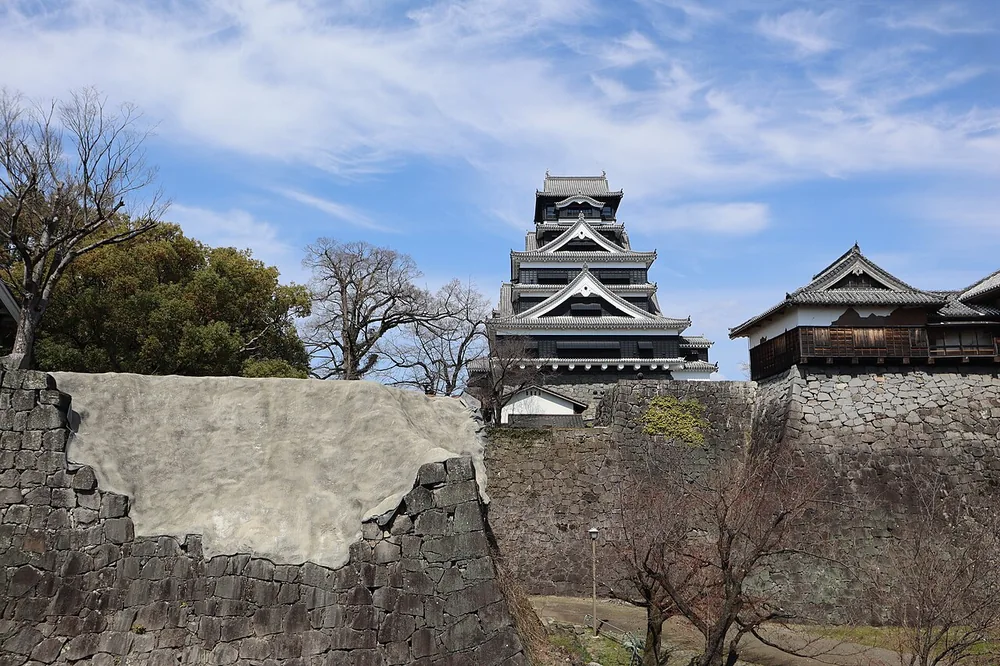
The order of a visit works well: first see the damaged and partly restored castle from the elevated route, then enter the keep to learn how it was built, burnt down and rebuilt. Finally, compare that history with the view outside. If you head straight for the sixth floor, the walls and construction shelters can become little more than scenery. The first-floor construction model and fourth-floor earthquake restoration displays explain the changes in level, barriers and stones you have just passed.
With young children, give more time to the well, building models and views outside. Explore one or two subjects that interest them, then follow the route through the other floors.
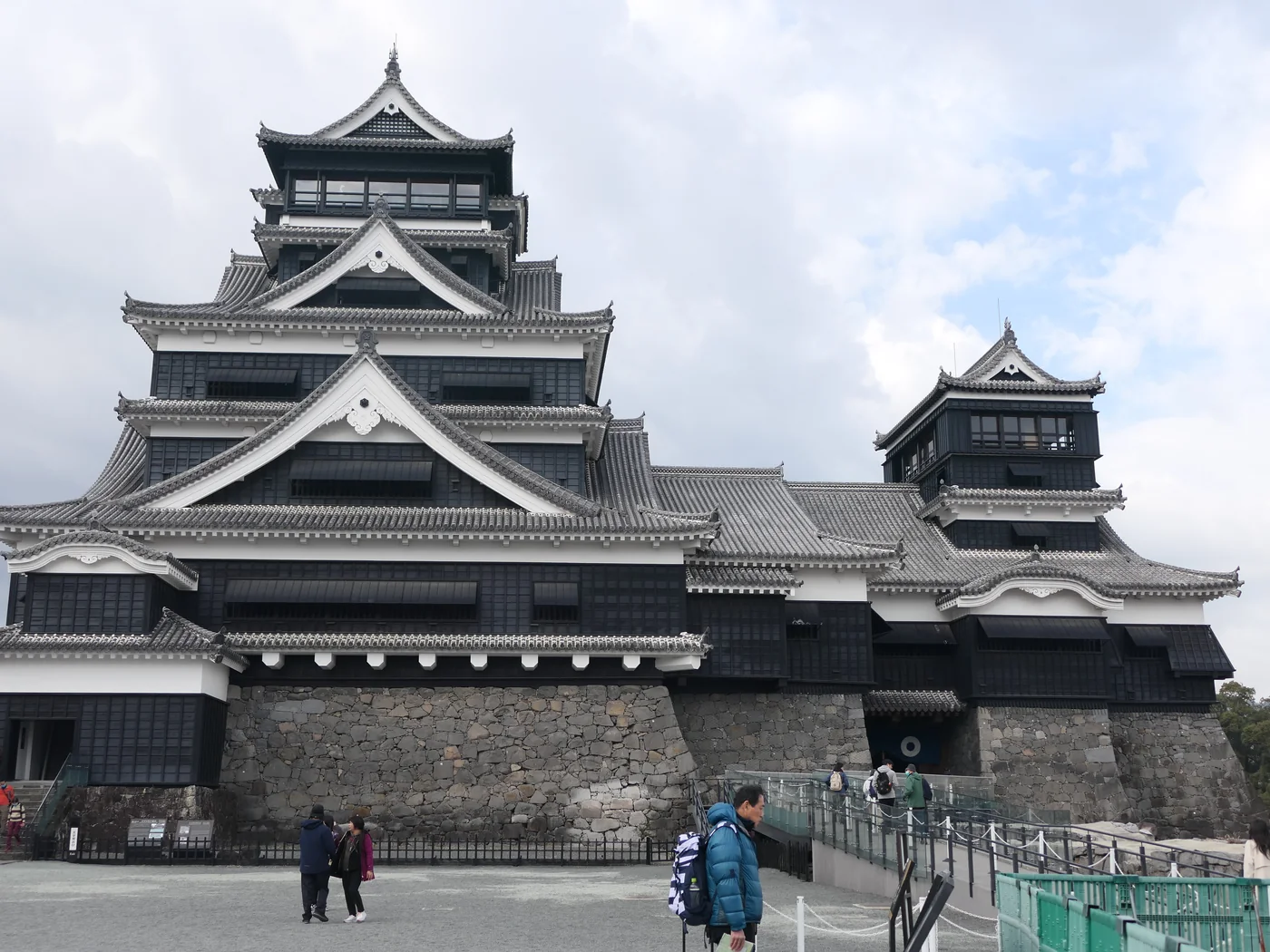
Follow the south entrance route past the two styles of stone wall and Kuragari Passage, then explore the keep's Kato, Hosokawa, modern history and earthquake restoration displays. Compare a two-hour visit with half a day, with Josaien closures, guides, luggage, lifts and rest stops.
Plan Josaien by facility in October 2026
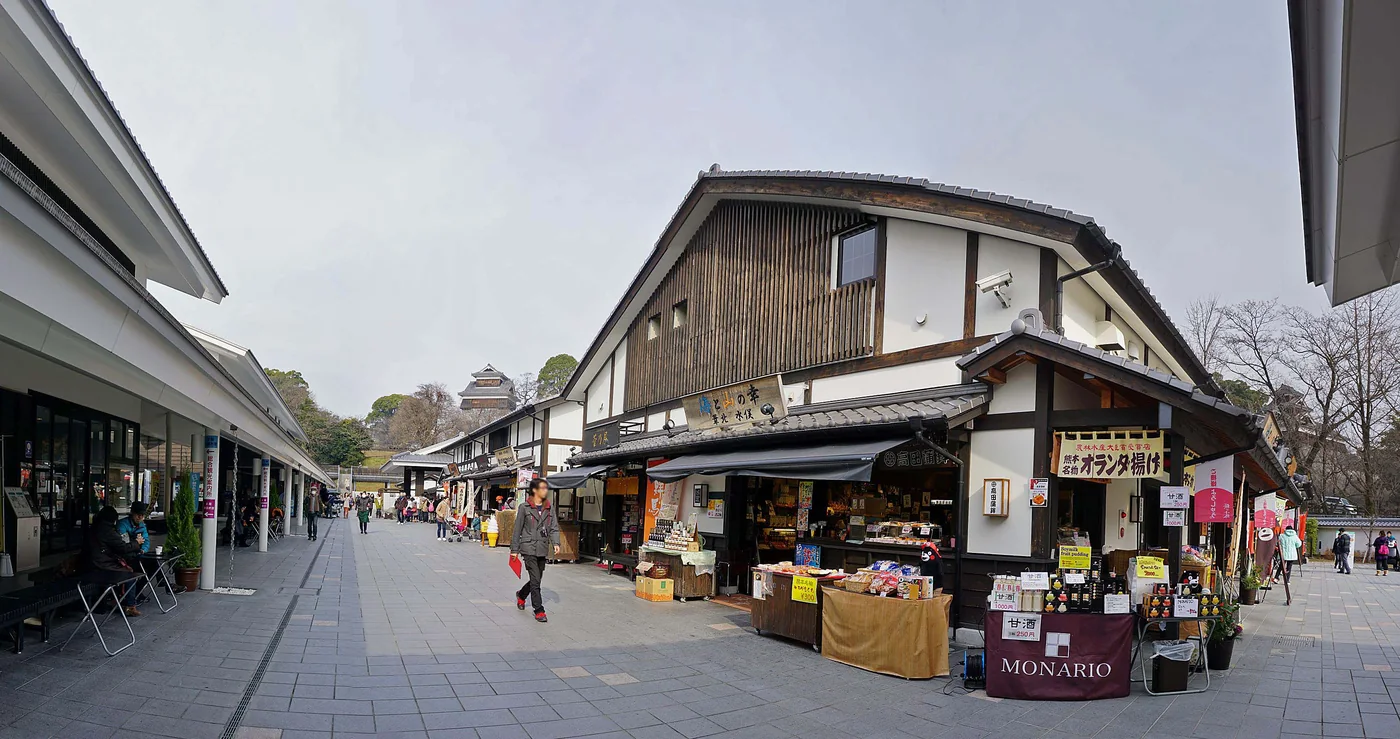
The notice on facilities around Kumamoto Castle, last updated on 18 September 2026, lists the castle as operating normally. Sakura-no-koji and the Josaien Tourist Information Centre are also open as usual. Kumamoto Castle Museum Wakuwakuza is temporarily closed, and the multipurpose exchange facility on the information centre's second floor is unavailable. Plan for the castle, walks outside, food, shopping and tourist information. Leave Wakuwakuza's VR, costume dressing and hands-on displays out of this visit.
The autumn 2026 Shiro Akari event runs from 2 October to 1 November. After two evenings were cancelled because of a typhoon, the castle's announcement states that evening opening resumes on 27 October, with last admission at 20:00 and closing at 21:00. Plan the evening visit dates separately from the opening status of individual Josaien facilities.
Treating Josaien as a single building that opens or closes all at once can lead to the wrong decision about both lunch and exhibitions. On arrival, use the open tourist information centre for maps and meeting arrangements, then head up to the castle. If your group splits up, this is a clear meeting point. Waiting in the food and shopping area below the castle is easier than meeting at the keep entrance inside the paid area.
Use the south entrance for the round trip; use the north when open
From the south side of the castle, cross Miyukibashi Bridge and walk up Miyukizaka to the south entrance, then follow the blue south route. The official visitor map and admission rules distinguish the entrances clearly: on weekdays, enter and leave through the south entrance. Both south and north entrances can be used on Saturdays, Sundays and public holidays; works can also affect the north entrance. Using the south as the shared start and finish keeps weekday plans, arrangements with children and meetings below the castle consistent.
The route to the keep starts after the south entrance ticket check. Josaien below the castle, the Ninomaru area and the square in front of the keep occupy different parts of the map. Anyone leaving early can decide near the south entrance, before entering the paid area, to stay below the castle. Once inside, follow the public route back to the south entrance. This decision point lets companions who only want an outdoor walk split off early and makes it easy to walk downhill for a meal after the keep.
If you arrive from Ninomaru, first locate the Ninomaru ticket office and the south and north entrances. You can buy tickets at Ninomaru, then enter through whichever entrance is open that day. The free shuttle links Josaien, the area in front of the south entrance and Ninomaru Car Park. It runs daily from 9:00 to 17:00, roughly every 10–15 minutes, with the final departure from Ninomaru. For the keep alone, get off near the south entrance. For a distant view from Ninomaru first, stay on to the car park and continue on your chosen route.
Two styles of wall and successive masugata: shape before defence
The south route first takes you alongside the stone walls. At the two styles of stone wall, marked on the official map as Niyo-no-ishigaki, compare their profiles and slopes from a distance, then look closely at how the stones fit together. The distant view shows height and curves; the close view reveals stone shapes, joints and horizontal courses. Looking both ways makes the differences easier to see than simply hunting for the biggest stone. Children can choose two stones of similar size and compare which wall has squarer faces and more regular rows.
The Kumamoto Castle Research Centre's stone-wall guide explains that earlier walls used stones of varied shapes in less regular arrangements. Later stones were squared before use, producing clearer horizontal rows. Apply this distinction on site to see how the castle was built and repaired in stages. The materials and lines in a wall tell more than a single construction date.
The official map also marks successive masugata, defensive enclosures with repeated turns. From the elevated walkway, look at the bends and changes in level of the old route. As you move along the public path, look back at the way the walls enclose each turn to understand the defensive layout. Ground enclosed by the map's green line is restricted; stay on the blue south route. The modern walkway crosses the levels of the original roads. Read these two routes separately to understand the positions of the historic castle and today's visitor path.
The official Kumamoto Castle special-opening guide uses this video of the two styles of stone wall. Compare the slopes, stones and arrangement of the two walls.
Why restoration takes time: every stone has an original position
The large stones visible on a wall form only its outer layer. The official children's guide divides the structure into facing stones, smaller backing stones, and earth further inside. Together, these layers support the raised ground. Shaking can make the backing stones settle and push against the outer stones, causing bulges or collapse. Keep this cross-section in mind when looking at exposed work sites. The thickness behind the wall and its backing stones help explain why restoration involves more than rebuilding the visible face.
The Kumamoto Castle Research Centre's article on stone-wall restoration describes how staff first find pre-earthquake photographs, number fallen stones and measure where they landed. They recover the stones individually, photograph and examine them, then compare evidence to identify each original position. Old photographs may be angled or obscured by trees, so records of where stones fell provide important clues. The stones laid out and numbered on site belong to this process of identification.
Another article in the series, Investigations accompanying stone-wall restoration, explains that recovery and surveying alternate. Each stone is measured, photographed on all sides and checked for reuse. Sections that remain standing but are badly deformed may also need dismantling and rebuilding. Restoration combines cultural-property records with structural safety. At a work site, look for whether the team is investigating, dismantling or rebuilding, rather than judging progress solely by whether a wall looks complete.
These records describe methods used after the 2016 earthquake and help explain heritage engineering. For today's walking route, use the current public-access map. Observe active work sites from the public walkway and leave the stones, supports and working areas to the construction and research teams. Looking at the same wall on the way back can connect the fourth-floor films with the work outside.
Kuragari Passage: place the palace and keep in their separate roles
The south route continues towards the Honmaru area, with Kuragari Passage marked as a highlight on the official map. The Honmaru Palace's formal entrance was underground. This stone-lined passage runs beneath the palace floor, an unusual arrangement within Kumamoto Castle's palace architecture. As you pass through, notice the vertical relationship between passage and building, then look back at the entrance. This space turns the palace shown on a flat map into a three-dimensional building.
The castle introduction lists Honmaru Palace and the Shokun-no-ma room as closed to entry pending restoration. The palace, reconstructed in 2008, was damaged in 2016: the Shokun-no-ma floor subsided and plaster fell from the main hall walls. The visit therefore follows public passages and externally visible areas. If you hoped to see richly decorated rooms, focus on the keep's models and displays instead. The day's route does not include the palace interior.
The keep and palace served different purposes. The keep exhibitions cover weapons storage, defensive construction and successive rebuilding. The palace relates to reception, ceremony and domain administration. Remembering their separate positions helps avoid treating every large room as the lord's everyday living space. After leaving Kuragari Passage, shift your attention from the castle roads to the keep interior.
The basement anagura: find the well before the first-floor model
The keep entrance is in the small keep's basement, known as the anagura. The official floor guide uses surviving walls, a well and other remains to present this space's Edo-period use as a kitchen. Slow down here. It is easy to focus on keeping up with the queue at the entrance, yet this is where the stone base, water storage and daily needs become visible. Find the well first, then look at the keep above it to connect the tall exterior with the supplies needed inside.
The first floor moves to the Kato period. A large model explains Kato Kiyomasa's castle construction, river works and the formation of the castle town. Kumamoto Castle was completed on the Chausuyama plateau in 1607. Study the relationship between the plateau, castle and town. Find the large and small keeps, then locate the palace and passage area you have just walked through. Using familiar positions for orientation is easier than trying to read every label at once.
For architectural detail, compare the model's keep exterior with the chidori-hafu gables, kara-hafu gables and anti-climbing iron spikes, shinobi-gaeshi, on the small keep's stone base listed in the official introduction. After studying the indoor model, you will have features to find in the square outside. Children can each choose one detail to locate later, giving the model a practical purpose during the visit.
The first floor also has films including The Indomitable Castle and The Impregnable Castle. On a two-hour visit, choose one according to your interest in construction or defence. On a longer visit, treat the models and films as two explanations of the same floor's subject and allow time to stop and watch. Keep entrances and main routes clear while reading or watching so other visitors can continue into the keep.
The second-floor Hosokawa period: storage and the lord's visits
On the second floor, projections onto models show how the Hosokawa family continued developing the castle and town. Other themes include the keep's use as an armoury and the lord's visits to the castle. After the first-floor defensive model, this floor raises the next question: how did the castle function when there was no fighting? Weapons, arrival ceremonies and town administration show it as a place used over a long period.
Old room names in the keep include the Firearms Room, Armour Room and Arrow Room, all linked to weapons and equipment storage. Look for how room names correspond to uses. Storage, management and defence occupied a large part of the keep, which explains why understanding it means looking beyond lavish rooms. Castle enthusiasts can spend longer here connecting the building's structure with its use.
The Hosokawa family succeeded the Kato family in Kumamoto, extending the castle's history into Edo-period government and culture. For companions unfamiliar with the families, treat the first two floors as separate questions: who established the castle town, and how was it managed later? Models and projections provide a clearer starting image than a chronology of names. Distinguishing the earlier and later periods is enough to follow the next floor.
The third floor: from the fire of 1877 to rebuilding in 1960
The third floor moves into the Meiji period and beyond: military control of the castle, the Satsuma Rebellion and loss of the keep to fire, the 1889 Kumamoto earthquake, and reconstruction in 1960. Stop here to understand the age of the building in front of you. The large and small keeps burnt down in 1877, shortly before the Satsuma Rebellion began. Today's keep exterior belongs to the steel-framed reinforced-concrete reconstruction of 1960, repaired again after the 2016 earthquake.
Separating construction, fire, rebuilding and earthquake restoration helps place the walls, upper buildings and indoor displays in their respective periods. Kumamoto Castle contains surviving Edo-period stonework and buildings alongside modern reconstructions. Materials in the same castle photograph can differ greatly in age. The third floor explains this transition, especially for visitors whose starting question was simply how many centuries old the castle is.
You need not study the whole Satsuma Rebellion before continuing upstairs. On a short visit, focus on why the keep disappeared and how it was rebuilt. If modern history interests you, spend more time on military control and the 1889 earthquake. Remember 1960 before leaving this floor: it helps identify the modern building being repaired when you reach the fourth-floor account of the 2016 damage.
The fourth floor: connect restoration films with the work outside
The fourth floor covers Showa- and Heisei-period repairs and reconstruction, damage from the 2016 Kumamoto earthquake, and restoration of the keep. Use models and films to follow the sequence of works. Fallen roof tiles and shachihoko ornaments, damage to the building frame and collapsed foundation walls each needed different treatment. The official restoration record lists work starting in 2017, rebuilding of the large keep's stone base in 2018, rebuilding of the small keep's base and completion of the large keep's exterior in 2019, and completion of keep restoration in 2021.
The keep was prioritised among the castle's restoration projects. The reopened indoor exhibitions are themselves part of that achievement. The path outside may pass work at very different stages. This floor helps separate them: exterior buildings, stone walls, walkable routes and exhibition access each involve distinct work. Spend longer here if you want to reconsider the work sites near the entrance and the stone-wall cross-section.
There is also a digital register of Fukko Joshu, supporters of the castle's recovery. If engineering is your main interest, start with the repair models and films, then decide whether to read the names. If you have supported the recovery yourself, make it a main stop. Allocate time according to your interests rather than giving every floor the same number of minutes.
Pass through the fifth floor; compare old and new views on the sixth
The keep runs from the basement to the sixth floor. The official floor plan lists the fifth floor as a passage, with the main exhibition themes on floors one to four. On reaching the sixth floor, first find the direction you walked from. Locate the square in front of the keep, the palace site and the city beyond. From above, the relationship between the winding route, castle plateau and urban area is clearer than on a map at ground level.
The official Kumamoto Castle app offers audio and subtitles for the permanent keep exhibitions in Japanese, English, Mandarin, Cantonese and Korean. On the sixth floor, its AR function overlays photographs taken from the keep in the early Meiji period on today's view. Install the app before entering and bring headphones so you can compare the views at the observation floor. Free Wi-Fi is available inside the castle; allow download time during a break.
Use the old photographs to spot changes. Look first for open spaces that remain around the castle, then at how today's streets extend beyond them. Move to another side after viewing one direction and leave room by the windows for other visitors. On a short visit, stay long enough to recognise your route. On a deeper visit, set aside a separate period for photograph comparisons and the view. If visibility is poor, spend the time with the indoor models instead of waiting at the observation floor.
Uto Turret and Iidamaru: distinguish walls from the buildings above
Uto Turret stands north-west of the keep. This multi-level turret survives from the castle's early construction period. With three roof tiers, five storeys and a basement, its scale has earned it the name Third Keep. The official special-opening guide records full dismantling and restoration beginning in 2022, with completion planned for 2032. From the public route today, focus on the original building's position and the ongoing restoration. Locate the construction shelter in relation to the keep before approaching; when you look back across the square, both fit into the same castle map.
The restoration record dated December 2025 states that Uto's five-storey turret has been dismantled for conservation since 2022, with dismantling of the adjoining turret's stone walls starting in 2024. This timeline explains the shelters and dismantled state. Use it to understand the process, and use the day's public-access map for where you can walk. Visitors who knew the castle before the earthquake can compare it here and see how different projects progress at different rates.
Iidamaru lies south of the Honmaru and was important to southern defence. Its five-storey turret was reconstructed in wood in 2005. After the 2016 earthquake, it was left standing on its corner stones alone, remembered as the miraculous single stone wall. The official introduction records completion of the stone-wall restoration in 2024; the restoration page lists work on the five-storey turret from 2025. From the walkway, identify the stone base first, then the building works above. This separates what is complete from what remains in progress.
Ninomaru Square offers a distant view of the layout west of the keep, while the square in front of the keep suits a closer view of the large and small towers. For both distances, visit Ninomaru before entering or after leaving the paid area. Avoid repeated climbs for the same exterior photograph. The September 2026 traffic-restriction notice still lists restrictions towards Kato Shrine, so base the longer route on formally open areas and Ninomaru.
A two-hour visit: walkway, two main exhibition floors and the view
Use the Josaien Tourist Information Centre as your meeting point below the castle. Walk up Miyukizaka to the south entrance, follow the special viewing route, and stop at the two styles of wall and Kuragari Passage before entering the keep. Allow about two hours from the south entrance and back if you want to read the displays. Add queues, meals below the castle and city travel separately.
Inside, look at the well and walls in the anagura, study the large first-floor model and the fourth-floor 2016 earthquake and restoration displays. Read selected material on floors two and three as you follow the route, then use the sixth-floor view to locate the places you walked through. This works well for a first visit: the first floor explains how the castle was built, the fourth how it is being repaired, and the outdoor route joins the two. If modern history interests you more, move some fourth-floor time to the third.
After leaving the keep, take a short break near the Honmaru Rest Area, then follow the public south route downhill to Josaien for food or to meet your companions. On the outward walk, focus on positions. On the return, stop at just one new detail you understood from the exhibition. If children are tired, go straight down. Seeing the models, the keep view and one stretch of stone wall clearly already gives the morning a useful focus.
A three- to four-hour route: guides, stones and exhibition floors
Get a visitor map below the castle first. If a free scheduled tour suits your timing, follow it to the front of the keep, then explore the interior yourself. One possible allocation is 45–60 minutes for the uphill walk and outdoor explanations, about 90 minutes for the keep displays, and another 45–60 minutes for a break, exterior views and the return. This suits visitors who enjoy reading closely. Set aside lunch separately rather than squeezing the whole afternoon against closing time.
On the first walk in, study the two styles of wall and successive masugata, keeping two questions in mind: what supports the wall from behind, and why does the route turn? The basement and first floor explain the building base and overall form. The second covers use; the third distinguishes fire from rebuilding; the fourth shows post-earthquake works. The sixth places your walk in the wider city. Back outside, compare the part that interested you most to connect the displays with the site.
Add Ninomaru outside the paid visit. On weekdays, leave through the south entrance and follow the map towards Ninomaru Square and Ninomaru Rest Area. When the north entrance opens on holidays, use the day's exit route to reduce backtracking. Ninomaru Rest Area has a castle model and photograph panels, useful for reviewing what you have seen while seated. Collect castle seals or commemorative stamps here too, rather than doubling back just before entering the keep.
Companions with a general interest in castles can head downhill after the keep while those reading in depth stay at Ninomaru, with a later meeting at Josaien. Splitting up after the shared main visit avoids waiting on every floor. Put any additional museum in another part of the day; the route and keep at Kumamoto Castle can fill half a day.
Guides and the app: outdoor explanations, independent reading inside
Kumamoto City's official tourism website lists free scheduled volunteer tours from Josaien via the south entrance to the front of the keep, lasting about 45 minutes. Departures from Josaien Tourist Information Centre are at 9:30, 10:30, 11:30, 12:30, 13:30 and 14:30. Register at the departure point before the start; tour groups are excluded. The 29 September 2026 announcement from Kumamoto Yokatoko Annaijin no Kai confirms that normal morning and afternoon scheduled tours resume in October. A morning tour helps establish the layout before the first-floor model, then leaves time for independent reading inside.
For a specific time or subject, use the general guide application. Book at least three days ahead by form, email or fax. Each guide takes up to 15 people, with a ¥2,200 guide transport fee payable on the day. Contact the organisation by 16:00 the previous day to cancel. The charge is per guide; castle admission is separate. State your interest in stone-wall restoration, your companions' walking ability and the meeting point so the proposed arrangements fit your visit.
Guides and tour leaders may not give live group explanations inside the keep. Use the panels, films and official app there. Visitors wanting Chinese audio or subtitles can choose the app's Mandarin or Cantonese options; request your language from the guide organisation for foreign-language volunteer services. A clear handover from outdoor guiding to independent indoor viewing lets companions adjust their own time according to interest.
Josaien extras: choose what you can use that day
Sakura-no-koji at Josaien is the food and shopping area. Paid castle admission and Wakuwakuza exhibitions are separate products. While Wakuwakuza is temporarily closed, choose castle-only admission and buy food or shop at individual Sakura-no-koji businesses. Cultural displays, activities and lunch each take time even when they share a location. Eat before climbing if you are already hungry, or visit the castle while you have more energy in the morning and sit down after descending.
Standard individual castle admission is ¥800 for upper secondary school age and above, ¥300 for primary and lower secondary school pupils, and free for preschool children. During Wakuwakuza's temporary closure, choose castle-only admission and use the time originally intended for VR or costume dressing for the keep displays and outdoor tour.
For online tickets reached through the official site, the electronic ticket goes to your registered email address. Show the QR code on your phone or a printed ticket at entry. The official terms state that purchases cannot be cancelled, changed to another date or refunded. If long-distance travel or weather may affect your date, include buying on arrival in your plan. Commemorative stamps are at the south and north ticket offices. North entrance access still depends on holiday opening and works; use the counter you pass before leaving.
Sort luggage, lifts and breaks before the climb
Wheeled luggage cannot be taken into the keep, and the paid area has no large luggage lockers. The official options are paid lockers in front of Ninomaru Rest Area or Josaien Tourist Information Centre. With large cases, leave them at your hotel or station first and approach the castle with a light bag. Bringing a suitcase as far as the south entrance still leaves storage to arrange before entering the keep; doing this below the castle saves a return trip.
Pushchairs are permitted in the grounds. The keep's three priority lifts serve wheelchair and pushchair users and their companions, as well as people who find stairs difficult. Tell staff at the keep entrance. Power-assisted wheelchairs can be borrowed free at the south ticket office. Numbers are limited, reservations are not accepted, and they are not lent in rain. A companion must assist with pushing; staff do not provide assistance. Use is within the special opening area; ask at collection if you want to use one at Josaien. Arrange the outdoor wheelchair at the south entrance, then explain your lift needs to staff when entering the keep.
Honmaru Rest Area is in front of the keep, inside the paid area, with regular hours of 9:00–16:30. Ninomaru Rest Area is outside the paid area and lists 9:00–17:00. Use the former after the keep and the latter on the Ninomaru extension to avoid a long walk just for a break. Eating is prohibited in the paid area; drinks with lids are allowed. Save meals for Josaien or a city restaurant after descending. If you need a meal halfway through the exhibitions, you must leave the visitor route first.
Normal hours from September to the following June are 9:00–17:00, with last admission at 16:00 and last keep entry at 16:30. In July and August the grounds close at 19:00, with last admission at 18:00 and last keep entry at 18:30. The castle closes on 29 December. Start the three- to four-hour visit in the morning or around midday so you have time to read before last keep entry. Apply any date-specific extended hours or early closure to match your pace to the time available.
Photograph the exterior; follow the signs for indoor exhibits
Different photography rules apply outdoors in the paid grounds and inside the keep. The current official visitor guide restricts indoor photographs and video to personal records. Exhibits may not be reproduced and distributed or used commercially, and visitors are asked to avoid posting them on social media. Tripods and selfie sticks are prohibited indoors, as is filming or photographing exhibits and videos marked as restricted. For travel photographs, focus on the keep exterior and castle views from the public route. Use your eyes and the app for the indoor displays.
Before stopping for a photograph on the walkway, check behind you and find a position that leaves the route clear. Leave space by the windows on the observation floor too. If a restoration detail interests you, note the floor or display subject and continue reading on the official restoration pages after your visit.
A few useful answers
How long should I allow for Kumamoto Castle?
Allow about two hours from the south entrance and back for the walkway, main keep displays and sixth floor. For a guided tour, closer reading on each floor and Ninomaru, allow three to four hours. Add lunch and city transport separately.
Can I use the north entrance on weekdays?
The general official rule is south entrance only on weekdays, with the north entrance available on Saturdays, Sundays and public holidays. Works can also affect access. Plan a weekday visit around returning to the south entrance.
Can I enter Honmaru Palace now?
The official introduction lists Honmaru Palace and Shokun-no-ma as closed pending restoration. Plan around the public walkway, keep and externally visible areas.
Can I use Wakuwakuza's VR or costume dressing now?
The facilities notice, last updated on 18 September 2026, lists Wakuwakuza as temporarily closed. Sakura-no-koji and Josaien Tourist Information Centre are open as usual. Leave the paid experiences out and plan for the castle, food and shopping at Josaien.
Can wheelchair or pushchair users visit the keep?
Pushchairs are allowed in the grounds. The keep's lifts serve wheelchair and pushchair users and their companions, and people who find stairs difficult. Tell staff at the entrance. Free power-assisted wheelchairs require help from a companion, cannot be reserved and are not lent in rain.
Can I cancel an online castle ticket or change its date?
The official terms state that purchases cannot be cancelled, changed to another date or refunded. Show the electronic QR code sent by email, or a printed ticket, at admission.
Official information and references
Sources used in this guide.
- Kumamoto Castle | Visitor information
- Kumamoto Castle | Special-opening highlights
- Kumamoto Castle | Introduction
- Kumamoto Castle | Restoration status as of December 2025
- Kumamoto Castle Research Centre | Exploring the stone walls
- Kumamoto Castle Research Centre | Towards recovery, no. 19: stone-wall restoration
- Kumamoto Castle Research Centre | Towards recovery, no. 23: investigations accompanying stone-wall restoration
- Kumamoto Castle | Opening status of nearby facilities following the 2026 Kumamoto earthquake, as of 18 September
- Kumamoto Castle | Traffic restrictions lifted around Hyakken Stone Wall
- Kumamoto Castle | Free shuttle bus service resumes
- Kumamoto City Tourism Guide | Volunteer guides
- Kumamoto Yokatoko Annaijin no Kai | Home
- Kumamoto Yokatoko Annaijin no Kai | Guide applications
- Kumamoto Castle | Access, parking and area map
- Kumamoto Yokatoko Annaijin no Kai | Normal scheduled tours resume in October (29 September 2026)
- Kumamoto Castle | Japanese special-opening leaflet (September 2025)
- Kumamoto Castle | History
- Kumamoto Castle | Evening opening resumes on 27 October