Walk past cherry blossom and white walls on Nagabei-dori to Josaien and Ninomaru. Compare free walks with ¥800 castle entry, and plan the south entrance, free shuttle, family and wheelchair routes, luggage storage and a two-hour or half-day visit.
- Region & Focus
- Kumamoto
- Reading Scope
- 32 min read · 19 chapters · 4 Q&As
- Official Verification
- 13 official sources checkedUpdated 9 November 2026
- Key Topics
- ItinerariesTravel budgetKyushu
Chapter Route Map (tap any stop)
- For blossom alone, you can save the ticket money for lunch
- Ticket costs: ¥1,900 for two adults and a primary school child
- From Kumamoto Station, get off on the riverside first
- Late March to early April: choose varieties with the official blossom map
- Nagabei-dori: begin with blossom, water and the white wall
- Turn towards Josaien below Miyukizaka for lunch and visitor information
- Eat and shop at Josaien; Wakuwakuza is currently closed
- The free shuttle connects Josaien, the south entrance and Ninomaru
- Ninomaru Square: leave time for castle views and being outdoors
- Blossom with the keep: choose a distant view or building detail
- Adding paid entry: normal spring last admission is 16:00
- The special viewing walkway shows the height of the stone walls
- Inside the keep: make the top floor a definite stop
- Pushchairs and wheelchairs: rest below, use priority lifts inside
- Eat below the castle and store luggage before entering the keep
- A two-hour outdoor route: Nagabei, Josaien, then decide about going uphill
- A half-day castle route: put lunch between two walks
- In rain or sparse blossom, focus on stone walls and castle lines
- Driving: ¥400 for the first two hours of car parking
- Quick Q&A
For cherry blossom with a castle view, stroll along Nagabei-dori and see the keep from Ninomaru. Add paid entry if you want to follow the special viewing walkway and enter the keep. Starting beside the tram route and river, this itinerary uses Josaien for lunch and meeting up. Choose a two-hour outdoor walk or a half-day castle visit, with pushchairs, wheelchairs, luggage storage and the journey home included in the plan.
For blossom alone, you can save the ticket money for lunch
There are two very different ways to enjoy cherry blossom at Kumamoto Castle. A walk beside the Tsuboi River’s long wall and around Ninomaru Square focuses on flowers and castle views from outside. Buying a ticket for the special viewing walkway and keep adds an interior visit with changes in level. Start with the outer route if you enjoy photographing flowers, have preschool children or need to catch transport that afternoon. Add the paid area for stone walls and castle remains under restoration, allowing a whole morning or afternoon.
This route runs from Kumamotojo-Shiyakushomae tram stop along Nagabei-dori to Josaien, then towards Ninomaru Square or the south entrance. The route gradually climbs from river to castle. With food and visitor information at Josaien, you can decide there whether to continue uphill. If travelling as a pair, choose a priority each: one might want blossom photos and the other the keep. Divide riverside and castle into separate parts, with a meal between.
For the keep’s floors, castle history and restoration work, read our Kumamoto Castle keep and restoration viewing guide. On a blossom day, let the flowers, your energy and departure time shape the route, with time set aside for being outdoors in spring.
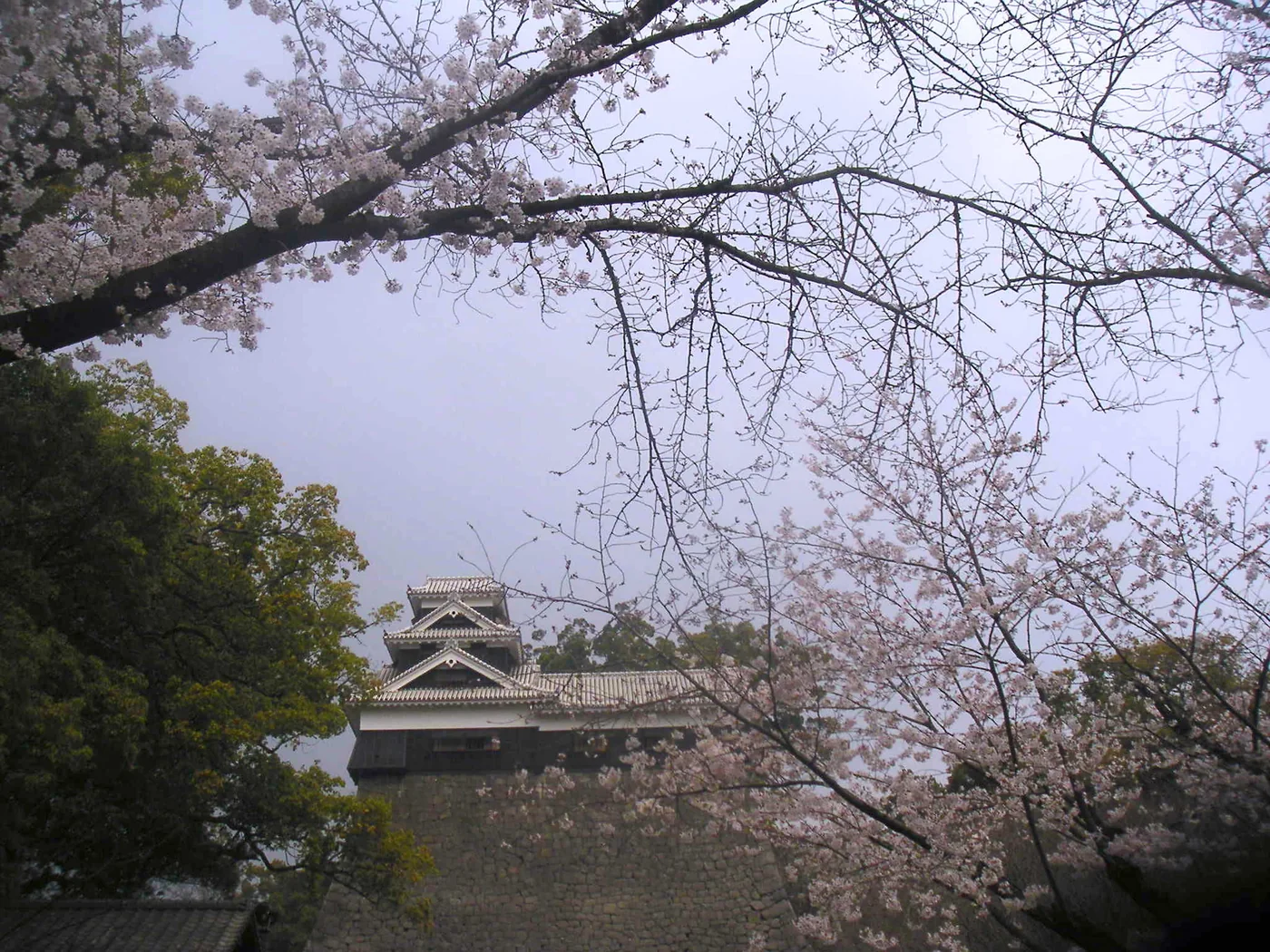
Walk past cherry blossom and white walls on Nagabei-dori to Josaien and Ninomaru. Compare free walks with ¥800 castle entry, and plan the south entrance, free shuttle, family and wheelchair routes, luggage storage and a two-hour or half-day visit.
Ticket costs: ¥1,900 for two adults and a primary school child
The Kumamoto Castle visitor information lists ¥800 for senior high school age and above, ¥300 for primary and junior high school pupils, and free entry for preschool children. Two adults and one primary school child pay ¥1,900 in total; two adults with a preschool child pay ¥1,600. This pays for the castle’s internal walkway and keep. The Nagabei-dori riverside walk and Josaien shopping area can be planned separately.
If eating, blossom and family photos are the main priorities, leave paid entry to those keen to go inside. When splitting up, meet beside the Josaien tourist information centre and write the time clearly on your phones. Those staying below can eat while the castle visitors focus on the walkway and exhibits. A facility with a clear sign is easier to find than “the biggest cherry tree”. Electronic tickets are date-specific. A QR code is emailed after purchase and can be shown on a phone or printed. Purchases cannot be cancelled, moved to another date or refunded. Buy ahead if the date is fixed and you will definitely enter. If you are still walking outside and will decide according to the children’s energy, buy after choosing the route. Budget separately for transport and food, especially for a same-day Shinkansen return trip, when admission is only a small share of the day’s cost. Frequent visitors can compare the ¥1,600 adult annual pass, valid for one year from issue. Against standard adult tickets, it starts saving money on the third visit. Applications are taken at the Ninomaru ticket office from 8:45 to 16:00 and require a photograph of the holder for the card, so it suits adults with several return visits planned.
From Kumamoto Station, get off on the riverside first
From JR Kumamoto Station, take tram Route A towards Kengunmachi and get off at Kumamotojo-Shiyakushomae. The Kumamoto city tourism guide gives about 20 minutes for this ride. It is a convenient starting point for the long wall. The castle stands above the city: seeing the keep from the tram does not mean you have reached the entrance, so allow walking time after alighting.
If arriving at Sakuramachi Bus Terminal, Josaien is a better first stop than the riverside. Pick up a map at the information centre, eat something, then walk uphill or take the free shuttle. From a central hotel, you could walk towards Hanabatacho tram stop, use Josaien for lunch and rest, then return along the long wall to Shiyakushomae. Either direction works; the choice is whether to eat or photograph riverside blossom first.
On a day trip from Kumamoto Station, reserve the return journey as its own part of the day. Waiting at tram platforms, crossing roads and collecting hotel luggage all use the gap after sightseeing. With a booked Shinkansen, set departure from the castle early enough for a full transport buffer. Finish at Nagabei or Josaien near the tram route to avoid another climb for a photograph.
Late March to early April: choose varieties with the official blossom map
The Japan National Tourism Organization’s Kumamoto Castle introduction places cherry blossom season from late March to early April. On a spring Kyushu trip, plan Kumamoto city for this period and leave your blossom day for riverside and castle grounds. Choose accommodation with easy tram access and somewhere to rest afterwards. For a one-night stay, walking Nagabei on arrival afternoon and entering the castle next morning separates outdoor and indoor visits.
The city also publishes a Kumamoto Castle cherry blossom map and variety guide, listing mountain cherry, Somei Yoshino, Oshima cherry, weeping cherry, Kanzan, Gyoiko and Ukon. For a closer look, choose one or two varieties on the city map, then follow open paths nearby. Comparing drooping branches, petal layers and colours gives more variety than taking the same distant shot of every tree.
A cherry tree in one corner of Ninomaru bears both red and white flowers. In May 2026 the city announced its public-vote name, Yasohime. Save the city page’s tree and flower photos if you want another detail to look for. Japanese maps write Ninomaru as 二の丸, with separate labels for the square, car park and ticket office. Use the full facility name when meeting someone or taking the shuttle.
Nagabei-dori: begin with blossom, water and the white wall
Nagabei-dori follows the Tsuboi River from near the Kato Kiyomasa statue below Miyukizaka to the city hall area. The city describes the long wall as about 242 metres. Across the river, its white wall, black lower boarding and stone base fit into a frame with the water. When looking for spring blossom, first include some wall and branches, then decide whether to show the whole river. Distant buildings also place the castle beside everyday city life.
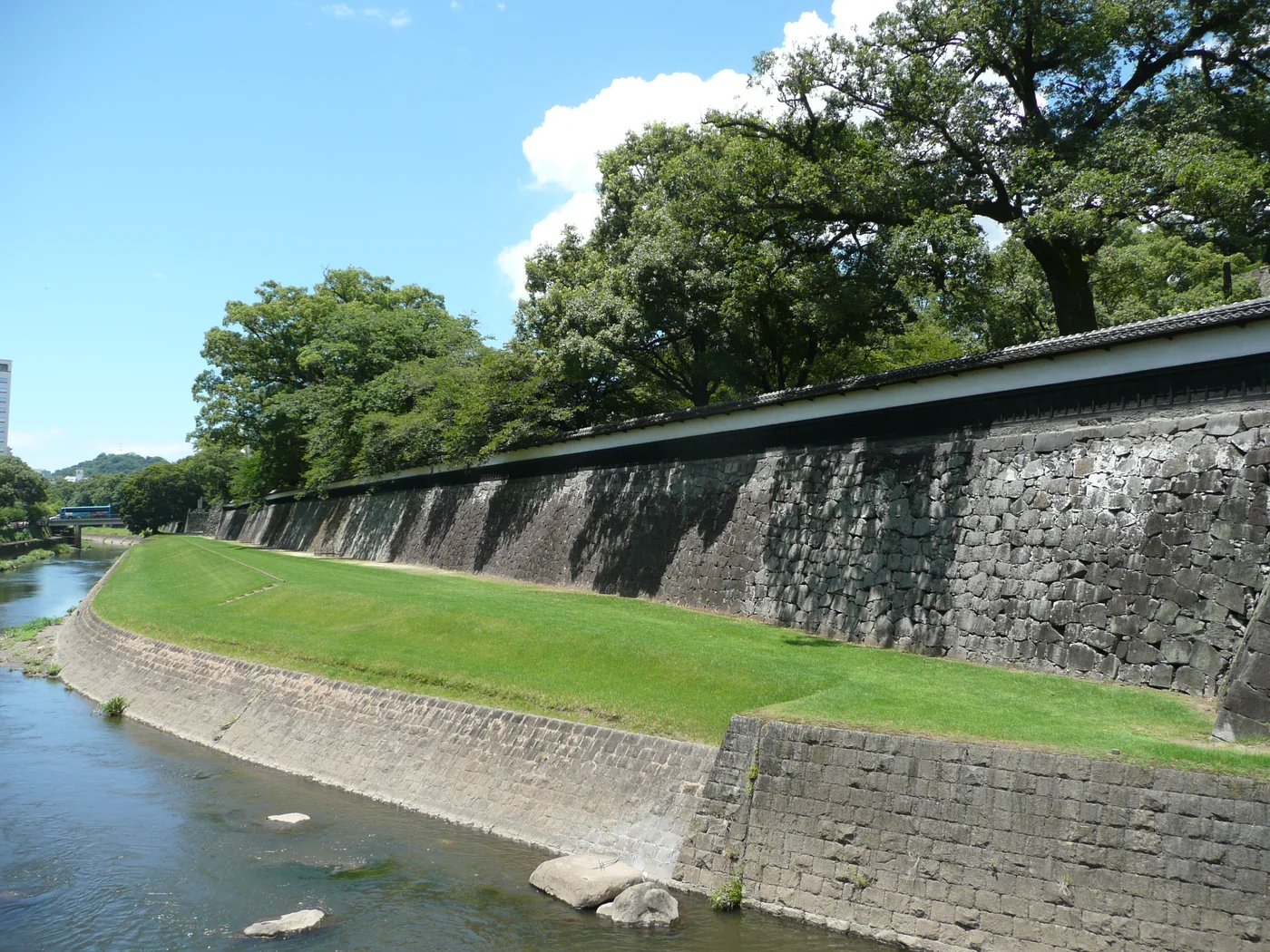
Take your time along the river. Step out of the walking line before stopping for a branch you like. Faster walkers can wait at the next clear junction rather than searching back through a crowd. On a phone, use branches in the foreground and stone walls behind to create depth even with fewer flowers. For reflections, look down at the water, choose a spot and wait for people to leave the frame.
The city’s official Nagabei-dori introduction recommends it for blossom walks and notes benches along the way. This can be the main outing for visitors who do not want to cover the whole castle: walk a short stretch, sit down, then eat at Josaien. With older relatives, separate riverside and castle visits. Everyone can first see blossom on the gentler city streets, then decide how far uphill to go.
Turn towards Josaien below Miyukizaka for lunch and visitor information
Near the Kato Kiyomasa statue, turn towards Sakura-no-baba Josaien. At the foot of the castle, its food, gifts and information services make a useful break after scattered stops. After riverside photos, use the toilets, drink and eat lunch before deciding about tickets. This chance to organise bags below the castle is especially helpful with a pushchair.
Miyukizaka has road and pedestrian routes. Follow open footpaths and local crossing signals. Before climbing, locate the south entrance, Josaien and Ninomaru on the map. Knowing which side you need makes it easier to choose walking or the shuttle. A navigation destination of simply “Kumamoto Castle” may end somewhere inside the castle grounds. Use “Sakura-no-baba Josaien” for food and the south entrance for admission. The Josaien tourist information centre makes a fixed meeting point. Put the meeting time, return tram stop and ticket holder in one message. Whether someone wants only lunch or Ninomaru castle photos, splitting and meeting here is easier than finding an exit inside the castle. Bus travellers can also organise their next journey during the break.
Eat and shop at Josaien; Wakuwakuza is currently closed
The dining and shopping area of Sakura-no-baba Josaien is called Sakura-no-koji, with Kumamoto food and local products. Schedule a seated lunch before or after entering the castle. For snacks, find somewhere to stop and finish eating before the paid area. Your hands will then be free for tickets, helping children and taking photographs on the special viewing walkway.
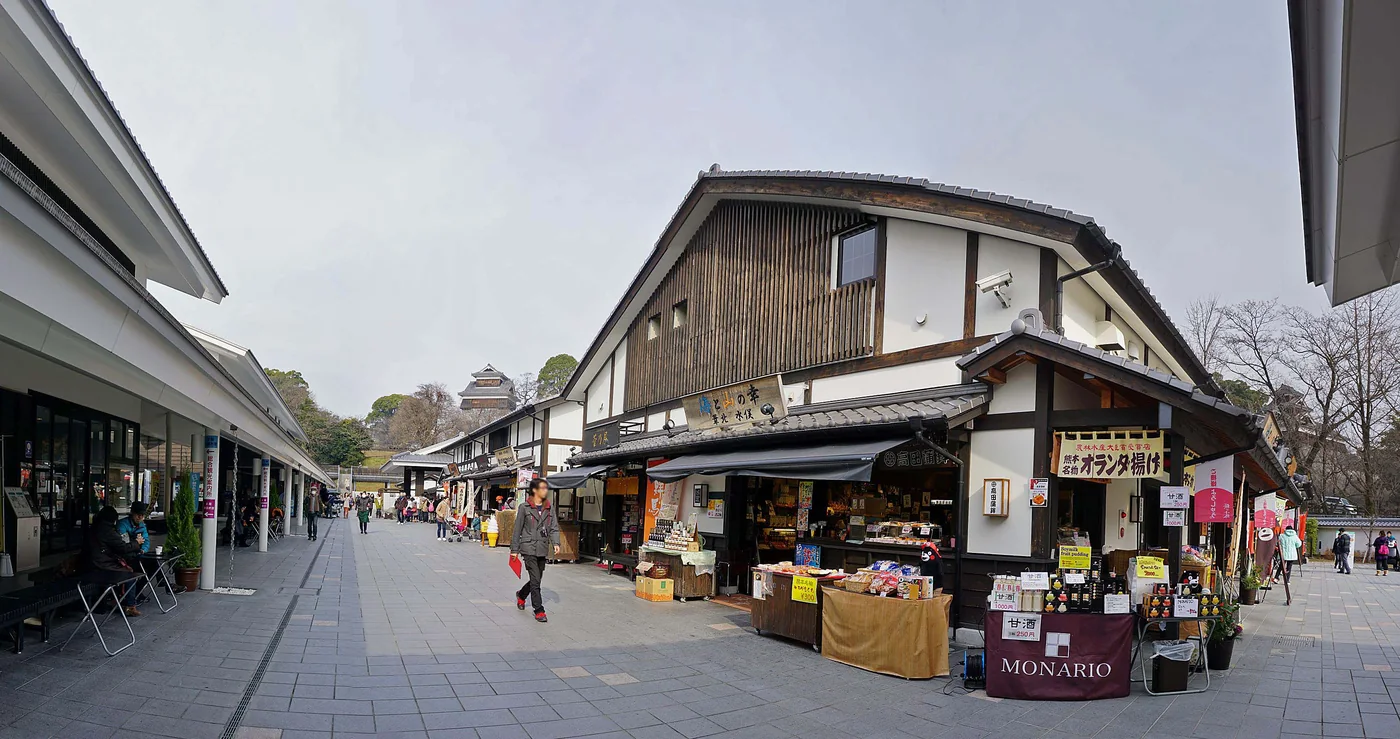
The notice on facilities around Kumamoto Castle dated 18 September 2026 lists Josaien’s restaurant and shopping area and tourist information centre as operating normally. Kumamoto Castle Museum Wakuwakuza is temporarily closed, as is the information centre’s second-floor multipurpose space. Base indoor breaks on dining and information services, and choose castle-only admission.
If everyone wants different food, first decide how long to sit for this meal, then split up to buy it. A mix of full meals and constant snacking can fragment an afternoon meant for blossom. Keep lunch as a defined break and buy souvenirs before leaving so you carry one less bag uphill. Chilled food or easily crushed items are also easier to buy just before returning to the hotel.
The free shuttle connects Josaien, the south entrance and Ninomaru
The free castle shuttle links Josaien, the stop in front of the south entrance and Ninomaru car park. It runs from 9:00 to 17:00, about every 10–15 minutes, with the last Ninomaru departure at 17:00. Stops and service details appear on the official access page, which can be read together with the August 2026 notice restoring the Josaien–Ninomaru route. Its main use is connecting rest stops below the castle with the upper grounds.
For Ninomaru first, eat at Josaien and ride uphill, saving your walking for the flowers. If entering the castle, alight in front of the south entrance. Tired groups can ride back to Josaien before walking towards the tram. With children, even using the shuttle one way changes the day’s effort: walk slowly up and ride back, or reverse the order.
The shuttle finishes at 17:00, and normal spring visiting hours also end in the early evening. Afternoon arrivals should see their priorities uphill first, then descend to Josaien to eat. If you only want to explore below, there is no need to go uphill just for a free ride. Leave boarding space at stops and confirm the destination together so some people do not get off at the south entrance while others continue to Ninomaru.
Ninomaru Square: leave time for castle views and being outdoors
Ninomaru Square and the paid viewing area in front of the keep are separate stops. At the square, frame the black-and-white keep behind trees, lawns and your companions. Inside the castle, the walkway and keep give closer views of the buildings. Photographers may want time for both distances. For a family walk, Ninomaru is also a natural turning point.
The open space invites a slower pace. Choose a visible area in which to accompany children who want to move around. If older relatives want to sit, keep the group nearby while photographers walk out and back. A blossom outing can stop at every tree yet leave little time to look at the castle. On reaching Ninomaru, first find a view containing both trees and keep, take a group photo, then walk separately. It gives everyone a shared moment. The city’s spring Kumamoto Castle Festival guide lists Ninomaru as a food and stage-event venue. On event days, stages, stalls and crowds affect how you use the square. For quiet flower photography, start at Nagabei; for performances, stay longer in the square. Use that year’s event page for dates and sessions.
Blossom with the keep: choose a distant view or building detail
Branches in front and the keep behind make an obvious composition. First look at the distance between them, then decide whether to zoom in. A phone’s wide-angle view includes the surroundings; a closer frame highlights roof tiles and branches. If blossom is high up, step back and photograph upwards rather than pulling branches down. People can stand beside the tree with its crown above their heads.
The riverside, Ninomaru and the keep area offer different backgrounds. Nagabei gives a horizontal wall and water, the square a fuller castle view, and the paid area the relationship between the main and smaller keeps and stone walls. Two types of picture give enough variety, leaving time to sit and enjoy the flowers. If your camera bag is heavy, choose a lens in advance to reduce stops for sorting equipment.
When the paid area outside the keep is crowded, tripods and selfie sticks obstruct movement; both are prohibited inside the keep. For exterior photographs, find a stable place where you can put the camera away quickly and leave the main path clear. Before companions change poses, check whether someone needs to pass. Move aside afterwards so others can continue their walk.
Adding paid entry: normal spring last admission is 16:00
From September through the following June, normal castle hours are 9:00–17:00, with last admission at 16:00 and last entry to the keep at 16:30. Ninomaru ticket sales end at 16:00 year-round. On a blossom day, enter in the earlier afternoon so the walkway, exhibits and climb each have time. Rushing in for the last half-hour can turn the visit you wanted into a hurried walk towards the exit.
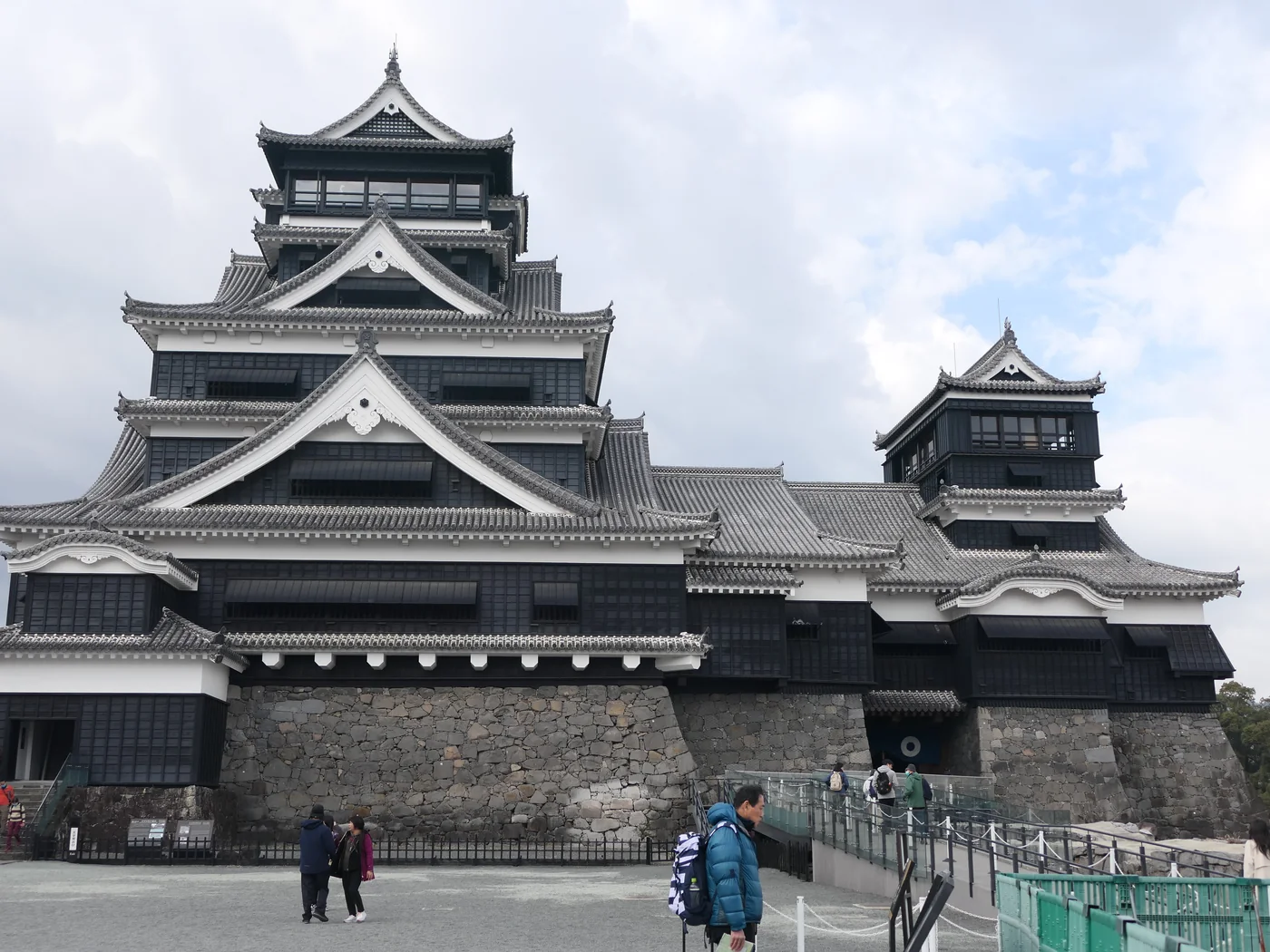
Weekday entry and exit use the south entrance; weekends and Japanese public holidays normally open both south and north entrances. This blossom route connects Josaien with the south entrance, making rest and food easy to find afterwards. The access notice of 17 September 2026 lists restrictions beside Hyakken Stone Wall as lifted and Sannomaru No. 2 car park as reopened, while restrictions towards Kato Shrine remain. This route uses Josaien and the south entrance, with open paths or the shuttle for Ninomaru.
Have your phone QR code ready before the gate and organise children’s tickets together, leaving your other hand free for a handrail or pushchair. Follow the viewing direction inside, stopping for photos in wider spaces. If using the indoor visit to shelter from rain, place it near lunch: riverside in lighter rain, castle in heavier rain. Your onward transport out of the city still sets the time to turn back.
The special viewing walkway shows the height of the stone walls
The attraction is more than reaching the keep. The special viewing walkway passes through the castle and gives different heights from which to see stone walls, turrets and restoration sites. Notice how new and old stonework, slopes and buildings above connect. Views on the climb differ greatly from the long wall seen across the river. If architecture and engineering interest you, stop several times here to understand the castle rather than simply climb its tower.
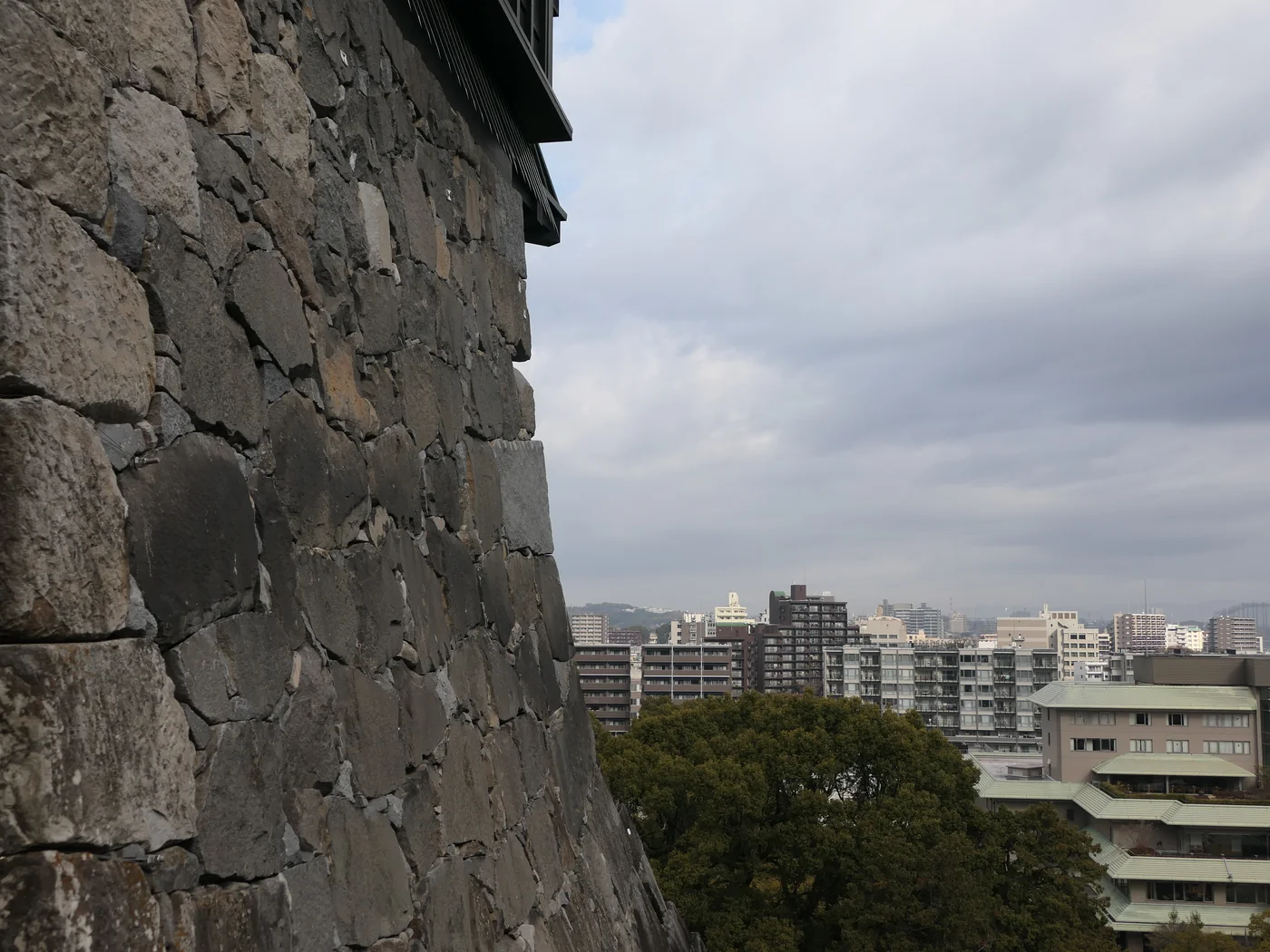
The Two-Style Stone Wall is one subject in the official special-opening video series. Different wall structures can be seen together. Watch the short film, then look for differences in lines and slopes from the walkway. With children, ask which part is steeper or where stone sizes change. Keep the observation on objects in front of you rather than explaining the whole construction history at once.
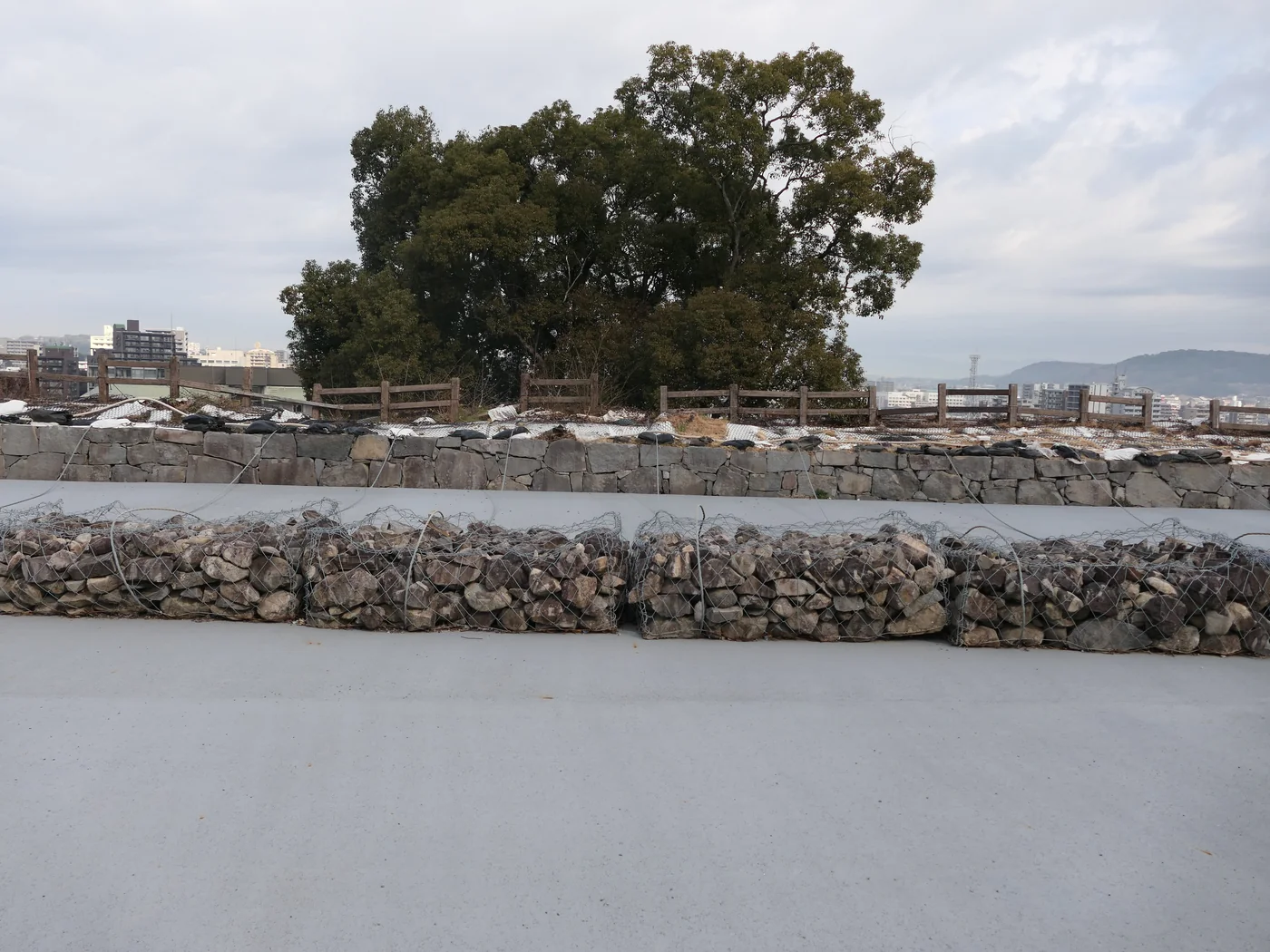
Include cordons, stones and buildings when photographing restoration areas to remember their state during your visit. Stay on the visitor route and step aside when stopping so pushchairs and wheelchairs can pass. For more on restoration stages, read the Kumamoto Castle special opening introduction afterwards and connect your observations with the official explanation.
Introduction to the Two-Style Stone Wall in Kumamoto Castle’s special-opening video series.
Inside the keep: make the top floor a definite stop
Spring blossom and keep exhibits call for different attention: outdoors you pause at branches, indoors at dates, models and panels. To see both, choose a subject before entering, such as stone-wall restoration or the castle’s relationship with Kumamoto’s streets. Let that question guide you inside. Spend longer at relevant displays and adjust the pace elsewhere to your energy.
If you want the viewing floor, make the ascent a planned stop from the start. With children, agree to go up for the city view and then towards the exit. Adults keen on the displays can meet family back at Josaien. Time outdoors in spring already takes energy. Carry fewer unused items and keep a hand free for the rail rather than sorting shopping bags beside stairs.
Photographs and videos of exhibits inside the keep are for personal records only. The operator prohibits uploading exhibit images to social media or reusing them. Use the exterior and city views as your main travel-sharing images. To revisit history later, note display titles, take an official leaflet or read the official guide. An album of the city through the windows, your companions and outdoor blossom also records the day’s route.
Pushchairs and wheelchairs: rest below, use priority lifts inside
Pushchairs are allowed in the grounds. Three priority lifts in the keep serve wheelchair and pushchair users, assistants and people unable to use stairs. Tell staff your needs at the keep entrance and follow their guidance. A pushchair full of coats, snacks and shopping bags is harder to manoeuvre into lifts. Sort it at Josaien and take only what you need during the visit.
Free power-assisted wheelchairs require operation with help from a companion. They are unavailable in rain and cannot be reserved. This suits visitors with assistance already arranged who need help on the climb. Plan around a distance your companion can accompany you throughout: one stretch at Nagabei and Josaien, then choose Ninomaru or the paid area after a rest. For discomfort with heights or long walkways, waiting below and visiting in groups is practical. Wheelchairs, pushchairs and photographers share the route; keep a continuous passage clear. Stop in wider places for maps or children’s coats. Agree on a named meeting facility when splitting up so carers can decide calmly whether to turn back early. Use the shuttle from the south entrance to Josaien on return, saving energy for the tram stop or onward vehicle.
Eat below the castle and store luggage before entering the keep
Eating and drinking are prohibited in the paid area, although lidded drinks may be carried. Have lunch, snacks and foods needing unpacking in suitable places such as Josaien; carry a bottle of water with a lid on the walkway. With children who get hungry quickly, eat before entry, visit a manageable stretch and have another snack after leaving the paid area.
Wheeled luggage is prohibited in the keep, and there are no coin lockers inside the paid area. The official guide lists paid lockers in front of Ninomaru Rest Area and Josaien tourist information centre. Store luggage before climbing if arriving from the station with suitcases. On a hotel-change day, if the hotel is on your return route, leave bags there first to avoid an extra collection detour.
Leaving shopping until the end helps too. Snacks, boxes and fragile items occupy your hands on slopes. Note the shops you want before entry and buy when back at Josaien. If eating separately, keep the meeting point near the information centre so luggage collection, souvenirs and departure can happen in one stretch.
A two-hour outdoor route: Nagabei, Josaien, then decide about going uphill
With two hours, use Nagabei-dori as the main route. From Kumamotojo-Shiyakushomae, walk along the river and photograph white walls and branches for about 40 minutes. Turn to Josaien for another 40 minutes of food, gifts and rest, leaving the balance to walk back to the tram. This is a sample time allocation; adjust stops to the views you want.
If your companions keep taking photos, shorten Josaien to a brief rest. For a seated lunch, choose only a short riverside stretch. If time and energy remain at Josaien, you can take the shuttle to Ninomaru and move your departure time. With fixed onward transport after two hours, save that extra for another visit and return to the streets after the walk, enjoying the final riverside stretch without hurry.
This short route suits an arrival afternoon or departure morning. Leave luggage at the hotel or storage point and carry only a camera, water and coat. Make the long wall reflected in the water your final photograph, then continue towards the tram stop. The visit naturally rejoins the tram, a city lunch or your next train.
A half-day castle route: put lunch between two walks
With half a day, start with a morning Nagabei walk, eat at Josaien, then enter the paid area through the south entrance. A sample allocation is about 1½ hours for riverside and lower grounds, a separate hour for lunch, and 1½–2 hours for the castle route and keep. Separating indoors and outdoors lets tired walkers sit before deciding how much of the afternoon exhibition to see.
If the keep is the priority, reverse the order: enter through the south entrance in the morning, descend for lunch at Josaien, then walk Nagabei in the afternoon. This reduces pressure from last admission and makes the riverside walk easier to shorten according to energy. With toddlers, make lunch a clear rest point, after which one adult can rest with children while another continues taking photos.
Good blossom can easily fill the half-day. Dinner in the city centre is usually easier to time than leaving the castle and immediately heading to Aso or Takachiho. For a mountain itinerary, put the castle on a city hotel day and leave next morning. See transport choices for Kumamoto, Aso and Takachiho to give city walking and long-distance travel their own full stretches.
In rain or sparse blossom, focus on stone walls and castle lines
In rain, shorten Nagabei to a stretch near the tram stop, photograph water and white walls, then rest at Josaien. If entering the castle, use the heavier rain for the keep. Otherwise, make the day about food below the castle and walking in town. Grippy footwear and rain gear that frees your hands are more useful than another spare lens and make helping children on slopes easier.
With sparse branches, the river’s horizontal lines, sloping stone walls and roof tiles still give clear subjects. Photograph a small branch close up with a softer castle behind, or take the whole building from the square with people in the frame. Changing the aim from “a sea of pink” to “castle and spring together” makes worthwhile stops easier to find. If companions came only for blossom, poor weather can mean less walking uphill and more lunch and city time. Architecture enthusiasts can spend longer on the special walkway, looking at stone patterns and restoration sections. Both groups can meet again at Josaien, choosing their own interests as the weather changes.
Driving: ¥400 for the first two hours of car parking
Kumamoto Castle car parks charge ¥400 for the first two hours for a standard car, then ¥200 for each extra hour. Four full hours in the same car park cost ¥800, plus admission, food and fuel. Families driving can estimate a half-day stay, then adjust for whether they enter the castle. A two-hour Nagabei and Josaien walk also makes parking costs easier to plan.
The official access table lists castle-side car parks including Ninomaru as open 8:00–18:30 from September through the following June, with last entry at 17:30. Josaien’s standard-car parking is open 8:00–22:30, last entry 21:30. Choose by where you will finish. Visiting the upper castle before eating at Josaien leaves a different final climb from walking the river first and ending at Ninomaru to collect the car.
With older relatives or toddlers on a blossom day, agree on a facility where everyone will wait before the driver fetches the car. Others can stay at a clearly named information centre or agreed spot while the driver follows road and parking routes. If staying in town and driving to Aso only next day, consider hiring the car on departure day and using trams and walking for the castle.
A few useful answers
Do I need a castle ticket just to see cherry blossom?
Plan the outdoor walks at Nagabei-dori, Josaien’s shopping area and Ninomaru separately. Buy castle admission for the special viewing walkway inside and the keep. It costs ¥800 for senior high school age and above, ¥300 for primary and junior high school pupils, and is free for preschool children.
Which tram stop is best for a blossom walk?
For Nagabei-dori first, use Kumamotojo-Shiyakushomae. For food or the free shuttle first, approach Josaien from the Hanabatacho side. From Kumamoto Station, take Route A towards Kengunmachi, then follow your riverside or Josaien route.
Can I take a pushchair into the keep?
Pushchairs are allowed in the grounds. The keep’s three priority lifts serve wheelchair and pushchair users, assistants and others who need them. Explain your needs to staff at the entrance. A free shuttle also connects Josaien, the south entrance and Ninomaru.
What is the latest admission for an afternoon visit?
From September through the following June, normal last admission is 16:00, last entry to the keep 16:30, and closing 17:00. Enter in the earlier afternoon for both walkway and exhibits. The free shuttle runs until 17:00, with the last Ninomaru departure at 17:00.
Official information and references
Sources used in this guide.
- Kumamoto Castle: hours, prices, electronic tickets and visitor services
- Kumamoto Castle: access, free shuttle and parking table
- Kumamoto Castle: area and visitor maps
- 18 September 2026: operating status of facilities around Kumamoto Castle
- August 2026: free Josaien–Ninomaru shuttle restored
- 17 September 2026: lifted and continuing access restrictions
- Kumamoto City: Kumamoto Castle Nagabei-dori
- Kumamoto City: Sakura-no-baba Josaien
- Kumamoto City: Kumamoto Castle and tram access
- Kumamoto City: spring Kumamoto Castle Festival
- Kumamoto Castle: special opening and stone-wall viewing
- Japan National Tourism Organization: Kumamoto Castle and spring blossom season
- Kumamoto City: blossom locations, varieties and Yasohime naming vote result