Walk from the cherry blossoms and white walls of Nagabei-dori to Josaien and Ninomaru. Compare a free stroll with ¥800 castle admission, with South Entrance access, free shuttles, stroller and wheelchair routes, luggage storage and two-hour or half-day plans.
- Region & Focus
- Kumamoto
- Reading Scope
- 32 min read · 19 chapters · 4 Q&As
- Official Verification
- 13 official sources checkedUpdated November 9, 2026
- Key Topics
- ItinerariesTravel budgetKyushu
Chapter Route Map (tap any stop)
- For blossoms alone, save the ticket budget for lunch
- Ticket costs: two adults and an elementary-school child pay ¥1,900
- From Kumamoto Station, get off on the riverside first
- Late March to early April: choose blossom varieties from the official map
- Start beside the river at Nagabei-dori, with water and white walls
- Turn toward Josaien below Miyukizaka for lunch and visitor information
- Eat and shop at Josaien; Wakuwakuza is currently closed
- The free shuttle links Josaien, the South Entrance and Ninomaru
- Leave time at Ninomaru Square for castle views and outdoor rest
- Photograph blossoms with the keep: choose a wide view or building details
- Adding paid entry: normal spring last admission is 16:00
- The special viewing walkway reveals the height of the stone walls
- Inside the keep, make the top floor a clear stop
- Strollers and wheelchairs: rest below the castle and use priority elevators inside
- Eat below the castle and store luggage before entering the keep
- A two-hour outdoor route: long wall, Josaien and an optional climb
- A half-day castle route: lunch between two walks
- In rain or sparse bloom, look at stone walls and castle lines
- Driving: ordinary cars cost ¥400 for the first two hours
- Quick Q&A
For cherry blossoms with castle views, stroll along Nagabei-dori and look toward the keep from Ninomaru. Add paid admission if you want the special viewing walkway and the keep itself. This route starts beside the tram line and river, with Josaien as a lunch and meeting point. Choose a two-hour outdoor walk or a half-day castle visit, with room for strollers, wheelchairs, luggage storage and the journey back.
For blossoms alone, save the ticket budget for lunch
There are two very different ways to see cherry blossoms at Kumamoto Castle. A walk beside the Tsuboi River’s long wall and through Ninomaru Square focuses on flowers and castle views outside the paid area. A ticket adds the special viewing walkway and keep, with changes in elevation. Start with the outer route if you like flower photography, have preschool children or need to catch a train later. Add the paid area for stone walls and castle remains under restoration, allowing a full morning or afternoon.
The route here runs from Kumamotojo-Shiyakusho-mae tram stop to Nagabei-dori and Josaien, then toward Ninomaru Square or the South Entrance. The climb gradually increases from riverbank to castle. Food and visitor information are concentrated at Josaien, making it a useful place to decide whether to continue uphill. If two people have different priorities, split the day: riverbank blossoms for one, the keep for the other, with a meal between them.
For a complete visit to the keep’s floors, castle history and restoration work, see the Kumamoto Castle keep and restoration guide. On a blossom day, let the flowers, your energy and departure time shape the route, with time for spring outdoors.
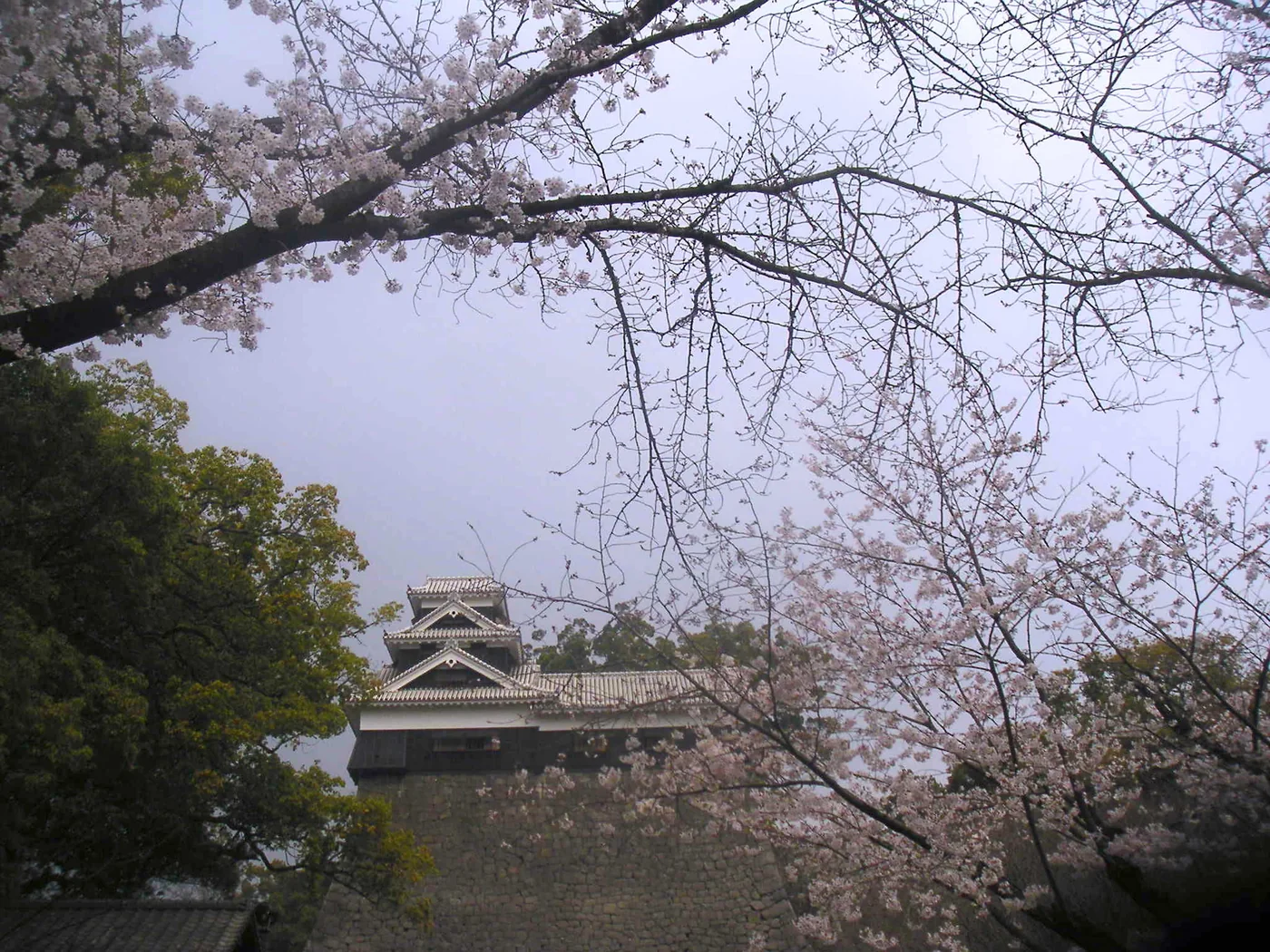
Walk from the cherry blossoms and white walls of Nagabei-dori to Josaien and Ninomaru. Compare a free stroll with ¥800 castle admission, with South Entrance access, free shuttles, stroller and wheelchair routes, luggage storage and two-hour or half-day plans.
Ticket costs: two adults and an elementary-school child pay ¥1,900
The Kumamoto Castle visitor guide lists admission at ¥800 for high-school age and above, ¥300 for elementary and junior-high school students, and free for preschool children. Two adults and one elementary-school child pay ¥1,900. Two adults and a preschool child pay ¥1,600. This covers the castle walkway and keep. Plan the Nagabei-dori riverside walk and Josaien shopping area separately.
If the family mainly wants food, flowers and group photos, leave paid castle entry to those who want it. Meet beside Josaien’s tourist information center and write the time clearly on your phone. Some can eat below the castle while others focus on the walkway and exhibits. A facility with a clear sign is easier to find than “the biggest cherry tree.” Electronic tickets are date-specific. A QR code arrives by email after purchase and can be shown on a phone or printed. Tickets cannot be canceled, moved to another date or refunded after purchase. Buy ahead if the date and castle visit are fixed. If you will decide based on the children’s energy after the outer walk, choose your route before buying. List transport and meals separately, especially on a Shinkansen day trip, when admission is only a small part of the total. Frequent visitors can compare the ¥1,600 adult annual pass, valid for one year from issue. Against standard adult tickets, savings begin on the third visit. Apply at the Ninomaru ticket office from 8:45 to 16:00. The card requires a photograph of the holder, making it suitable for adults with several return visits planned.
From Kumamoto Station, get off on the riverside first
From JR Kumamoto Station, take tram line A toward Kengunmachi and get off at Kumamotojo-Shiyakusho-mae. The Kumamoto City tourism guide gives about 20 minutes for the tram journey. This is a convenient start for the long wall. The castle stands uphill: seeing the keep from the tram does not mean you have reached the entrance. Allow walking time after getting off.
If you arrive at Sakuramachi Bus Terminal, Josaien is a better first stop than the riverbank. Collect a map at the information center, eat, then walk uphill or take the free shuttle. From a downtown hotel, you can also walk toward Hanabatacho tram stop, use Josaien for lunch and rest, and return along the long wall to Shiyakusho-mae. Both directions work. Choose based on whether you want food or riverside photos first.
On a day trip from Kumamoto Station, reserve the return journey separately. Waiting at the tram platform, crossing streets and collecting luggage from a hotel all use the time after you leave the attraction. For a booked Shinkansen, set a castle departure time with a proper transport buffer. Finish near the tram at the long wall or Josaien so you do not climb back uphill for one last photograph.
Late March to early April: choose blossom varieties from the official map
The Japan National Tourism Organization’s Kumamoto Castle introduction places cherry-blossom season from late March to early April. For a spring Kyushu trip, schedule Kumamoto city during this period and devote the blossom day to the riverbank and castle. Choose accommodation with easy tram access and somewhere to rest after viewing. With one night, walk the long wall on arrival afternoon and visit the castle the next morning to separate outdoor and indoor visits.
The city also provides a Kumamoto Castle cherry-blossom map and variety guide. It lists yamazakura, Somei Yoshino, Oshima, weeping cherry, Kanzan, Gyoiko and Ukon, among others. Choose one or two varieties from the city map, then use open routes to reach them. Compare drooping branches, petal layers and colors rather than taking the same distant photograph of every tree.
A cherry tree in one corner of Ninomaru produces red and white flowers. In May 2026, the city announced the name “八十姫” selected by public vote. If varieties interest you, save the city page’s tree and flower photographs to look for an extra detail on your walk. Japanese maps write Ninomaru as “二の丸,” with separate labels for the square, parking and ticket office. Use full facility names for meetings and shuttle stops to make directions clear.
Start beside the river at Nagabei-dori, with water and white walls
Nagabei-dori follows the Tsuboi River from near the Kato Kiyomasa statue below Miyukizaka toward City Hall. The city describes the long wall as about 242 m long. Across the river, its white surface, black lower boards and stone base can share the frame with the water. For spring photographs, start with some wall and a branch, then decide whether to include the full river. Buildings in the distance also show how close the castle is to everyday city streets.
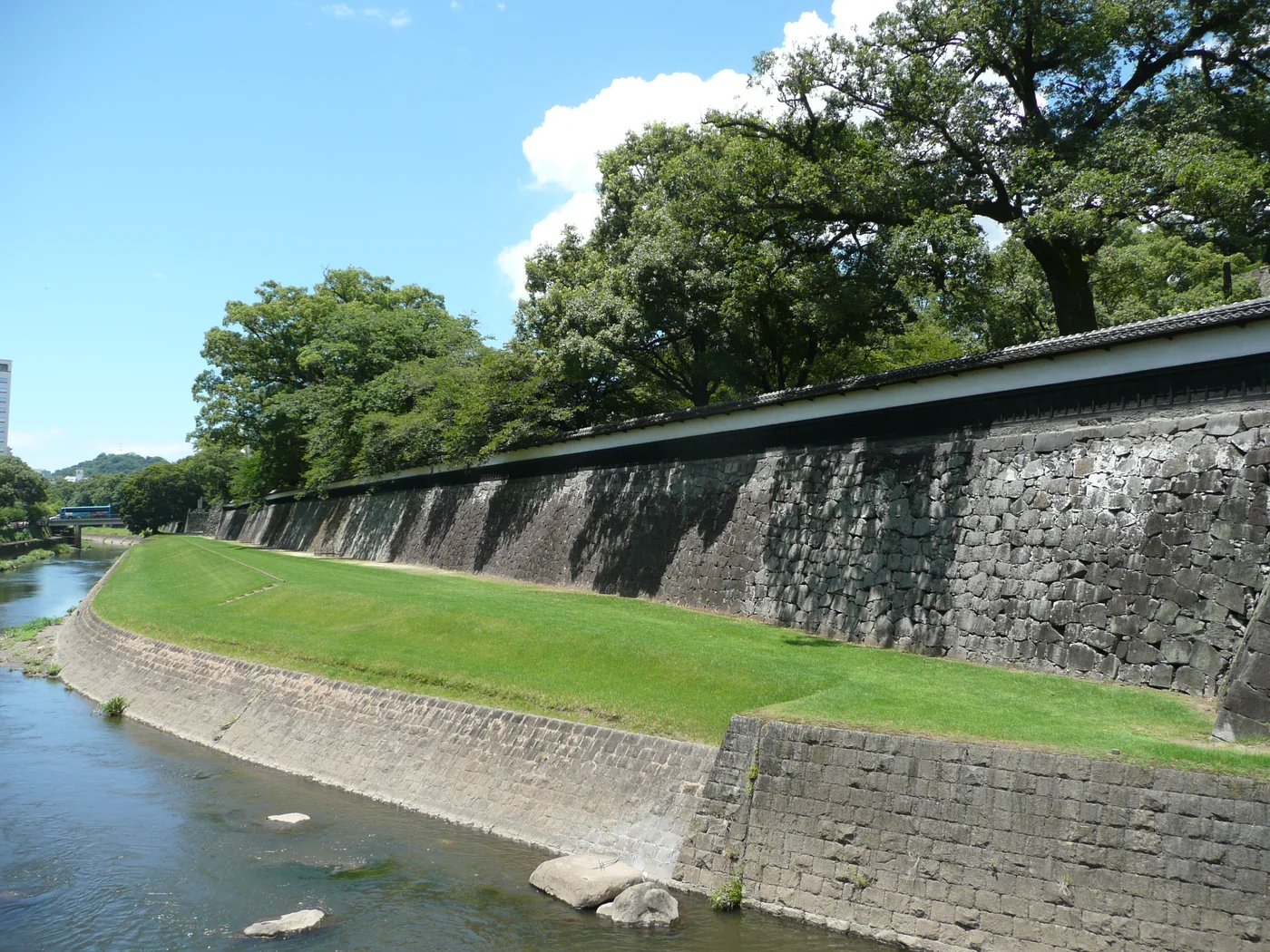
The riverbank suits a slow walk. Step aside to keep the path clear before photographing a branch you like. Faster walkers can wait at the next clear junction rather than searching back through the crowd. With a phone, place branches in the foreground and the stone wall behind them for depth even with fewer flowers. For reflections, look down toward the water, choose a position and wait for people to leave the frame.
The city’s official Nagabei-dori guide lists it as a blossom walk and notes benches along the way. This stretch can be the main outing if you do not want to cover the whole castle: walk a little, sit down, then eat at Josaien. With older family members, separate the riverbank from the castle climb. See flowers on gentler city streets first, then decide how high to go.
Turn toward Josaien below Miyukizaka for lunch and visitor information
Near the Kato Kiyomasa statue, turn toward Sakuranobaba Josaien. At the foot of the castle, it brings food, gifts and visitor information together for a proper break after scattered stops. After riverside photographs, use the toilets, drink and have lunch before deciding on tickets. This chance to organize bags below the castle is especially useful with a stroller.
Miyukizaka has road and pedestrian routes. Follow open paths and traffic signals at crossings. Before climbing, locate the South Entrance, Josaien and Ninomaru on the map. Knowing which side you need makes it easier to choose walking or the shuttle. A navigation destination of simply “Kumamoto Castle” may end within the castle grounds. Use “Sakuranobaba Josaien” for food and the South Entrance for paid admission. Josaien’s tourist information center is a clear fixed meeting point. Put the meeting time, return tram stop and ticket holder in one message. If some want lunch and others want Ninomaru castle photos, splitting and meeting here is easier than finding an exit inside the castle. Bus travelers can also use the break to prepare the next journey.
Eat and shop at Josaien; Wakuwakuza is currently closed
The food and shopping area at Sakuranobaba Josaien is called Sakura-no-koji, with Kumamoto food and local products. Put a sit-down lunch before or after the castle visit. If buying snacks, find somewhere to stop and finish them before entering the paid area. Your hands will then be free on the special viewing walkway for tickets, children or photographs.
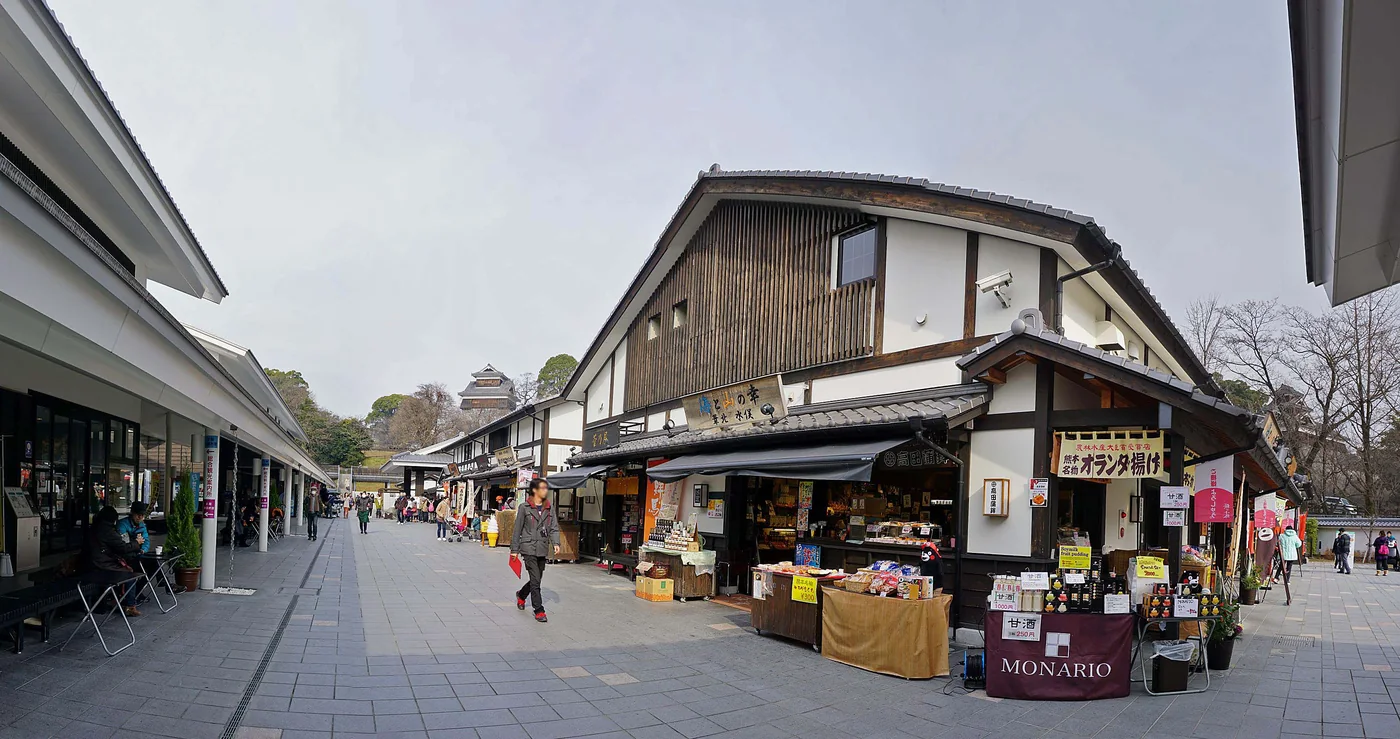
The castle-area operating notice dated September 18, 2026 lists Josaien’s restaurants, shops and tourist information center as open normally. Kumamoto Castle Museum Wakuwakuza is temporarily closed, as is the multipurpose space on the information center’s second floor. Plan indoor breaks around dining and information services, and choose the standalone Kumamoto Castle admission ticket.
When everyone wants different food, first agree how long the meal will last, then buy separately. One person having a full meal while another buys snacks throughout the walk can break the blossom afternoon into fragments. Keep lunch as one fixed block and buy gifts before leaving, so you carry one less bag uphill. Refrigerated or easily crushed food is also easier to buy just before returning to the hotel.
The free shuttle links Josaien, the South Entrance and Ninomaru
The castle’s free shuttle connects Josaien, the stop in front of the South Entrance and Ninomaru Parking Lot. It runs from 9:00 to 17:00, about every 10–15 minutes, with the last Ninomaru departure at 17:00. See the official access page for stops and services, alongside the August 2026 notice restoring the Josaien–Ninomaru route. Its main use is to connect a rest stop below the castle with the upper grounds.
For Ninomaru first, eat at Josaien and ride uphill, saving your walking for the flowers. For paid castle entry, get off in front of the South Entrance. If everyone is tired afterward, return to Josaien before walking to the tram. Even a one-way shuttle changes a family’s energy budget: walk slowly up and ride back, or reverse the order.
Shuttle service ends at 17:00, around the end of normal spring visiting hours. If you arrive in the afternoon, finish your upper-castle priorities first and go down to Josaien to eat. If you only want the lower area, there is no need to go uphill just for a free ride. Keep boarding space clear while waiting, and confirm the destination together so some do not get off at the South Entrance while others ride on to Ninomaru.
Leave time at Ninomaru Square for castle views and outdoor rest
Ninomaru Square and the paid area in front of the keep are different stops. From the square, the black-and-white keep can sit behind trees, grass and your companions in a photograph. Inside the castle, the walkway and keep offer closer architectural views. Photographers may want both distances. For a family mainly interested in a stroll, Ninomaru is also a useful turnaround point.
Slow down in this outdoor space. If children want to move around, agree on a visible area and accompany them. If older relatives want to sit, keep the group nearby while photographers come and go. A blossom walk can stop under every tree yet leave little time to look at the castle. At Ninomaru, first find a view with both tree and keep, take a group photograph, then wander separately. The city’s spring Kumamoto Castle Festival guide lists Ninomaru as a food and stage-event venue. Stages, stalls and crowds affect how you use the square on event days. For quiet flower photos, walk the long wall first; for performances, spend longer here. Use the dates and sessions on that year’s event page when adding an event to your plan.
Photograph blossoms with the keep: choose a wide view or building details
Cherry branches in front of the keep make a straightforward composition. First judge the distance between them, then decide whether to zoom. A phone’s wide lens keeps the surroundings; zooming emphasizes roof tiles and flowers. When flowers are high, step back and angle upward instead of pulling a branch down. For portraits, stand beside the tree with its canopy above the group.
The riverbank, Ninomaru and keep each offer different backgrounds. At the long wall, use the horizontal wall and water. At the square, leave room for the full castle view. Inside the paid area, show the relationship between the large and small keeps and their stone bases. Two kinds of view give enough variety, leaving time to sit with the flowers. If your camera bag is heavy, choose a lens in advance to reduce stops for changing equipment.
In a crowded paid area outside the keep, tripods and selfie sticks obstruct movement; both are prohibited inside the keep. For exterior photos, find somewhere steady where you can put the camera away quickly and leave the main path clear. Before changing a pose, check for people passing behind. Step aside when finished so the castle view and other visitors’ walks remain enjoyable.
Adding paid entry: normal spring last admission is 16:00
From September through the following June, normal castle hours are 9:00–17:00, with last admission at 16:00 and last entry to the keep at 16:30. The Ninomaru ticket office stops sales at 16:00 year-round. To enter the keep on a blossom day, arrive early in the afternoon so the walkway, exhibits and climb each have time. Rushing in during the last half-hour can turn the visit into a walk straight toward the exit.
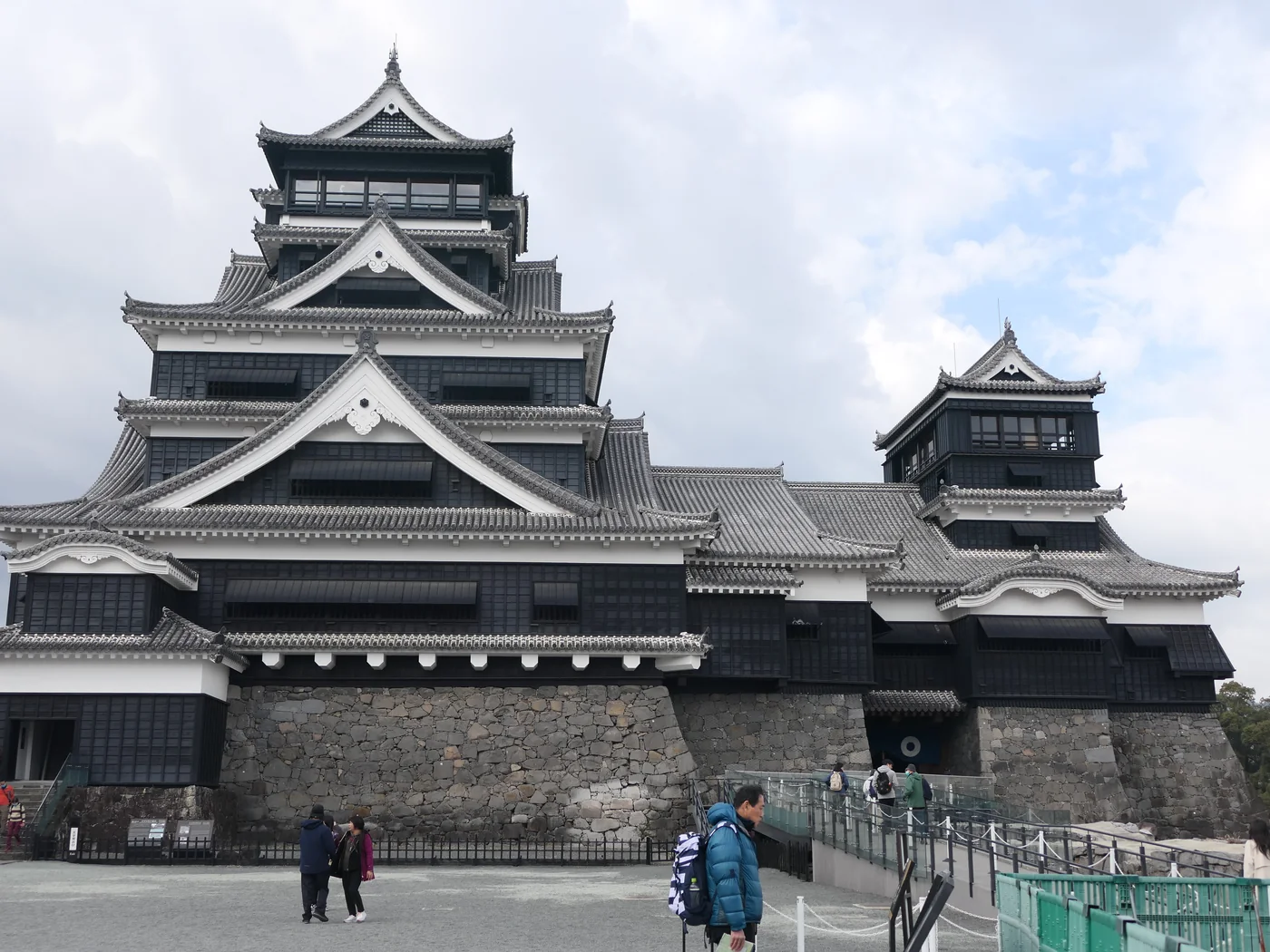
On weekdays, entry and exit use the South Entrance. Weekends and Japanese holidays normally open both south and north entrances. This blossom route uses the South Entrance to connect with Josaien’s food and rest stops. A September 17, 2026 access notice lists restrictions lifted beside Hyakken Stone Wall and Sannomaru No. 2 Parking Lot reopened, with restrictions still toward Kato Shrine. Follow the Josaien–South Entrance route here, using open paths or the shuttle for Ninomaru.
Prepare the phone QR code and children’s tickets before the gate, leaving your other hand free for a rail or stroller. Follow the viewing direction inside and stop for photographs in wider areas. To use the indoor visit as a rain break, place it around lunch: riverbank in lighter rain, castle in heavier rain. Your onward bus or train still sets the turnaround time.
The special viewing walkway reveals the height of the stone walls
Entering the keep is only part of the appeal. The special viewing walkway passes through the castle at different heights, overlooking stone walls, turrets and restoration work. Look at the joins between old and new stones, slopes and buildings above. The uphill views differ greatly from the long wall seen across the river. Architecture and engineering enthusiasts can stop several times here to understand the castle rather than simply climb a tower.
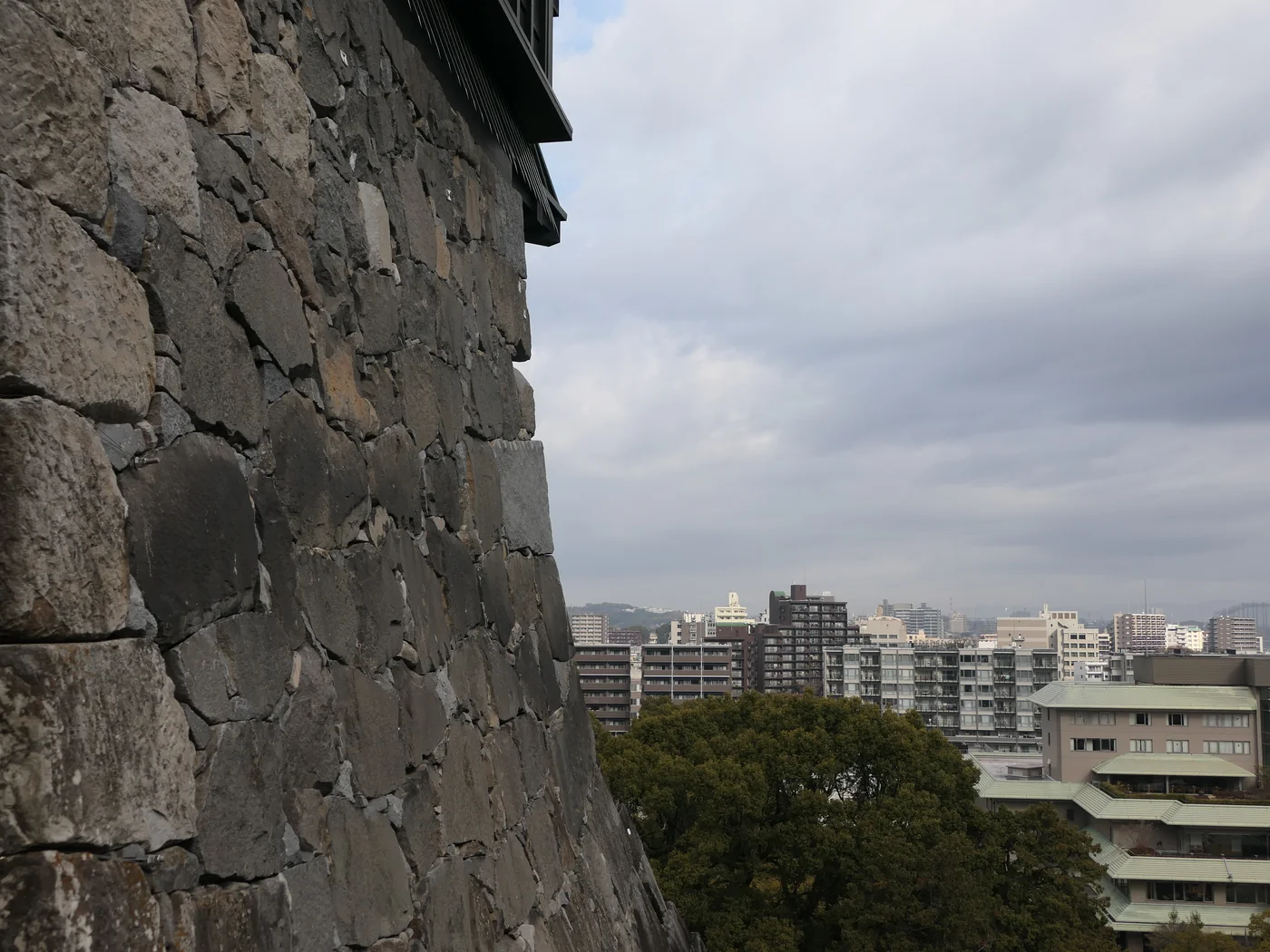
The “two-style stone walls” are one subject in the official special-opening video series. Different stone-wall structures meet in one place. Watch the short film, then find the changes in lines and slopes from the walkway. With children, look for the steeper section or a change in stone size, keeping the question tied to what they can see rather than explaining the whole building history at once.
Photograph boundary ropes, stones and buildings together to record the restoration state you saw. Stay on the visitor walkway and move aside when stopping so strollers and wheelchairs can pass. For more detail on restoration stages, read the Kumamoto Castle special-opening guide after your visit and compare its explanations with the details you noticed.
An introduction to the two-style stone walls in Kumamoto Castle’s special-opening video series.
Inside the keep, make the top floor a clear stop
Spring flowers and keep exhibits call for different attention: outdoors you stop at branches; indoors at dates, models and panels. If you want both, choose a question before entering, such as stone-wall repair or the castle’s relationship with Kumamoto’s streets. Let it guide your visit and spend longer at relevant displays, adjusting the other floors to your energy.
If you want the observation floor, treat the climb as a planned stop from the start. Tell children you will go up to see the city below, then move toward the exit. Adults keen on exhibits can agree to meet the rest of the family at Josaien. Outdoor spring walking already uses energy. Carry fewer unused items and keep a hand free for rails rather than sorting shopping bags beside stairs.
Photographs and video of exhibits inside the keep are for personal records only. The castle prohibits uploading exhibit images to social media or reusing them. Use the building exterior and city views for travel posts. To revisit the history later, note panel titles, take an official leaflet or read the official introduction. Keep your shared album focused on city views through windows, your companions and outdoor flowers.
Strollers and wheelchairs: rest below the castle and use priority elevators inside
Strollers are allowed in the castle grounds. Three priority elevators in the keep serve wheelchair and stroller users, their helpers and people unable to use stairs. Explain your needs to staff at the keep entrance and follow their directions. A stroller full of coats, snacks and shopping bags is harder to move in and out of elevators. Sort it at Josaien first, keeping only what the visit needs.
Free power-assisted wheelchairs require help from a companion. They cannot be reserved, and loans stop in rain. This service suits travelers who already have assistance and need help with the uphill effort. Base the route on a distance your companion can help you complete: one section at the long wall and Josaien, then choose Ninomaru or the paid area after a rest. Waiting below the castle and visiting in groups is practical for anyone uncomfortable with heights or long walkways. Wheelchairs, strollers and photographers share the route. Keep a continuous passage clear. Stop in wider places to check a map or put on a child’s coat. Agree where groups will meet so caregivers can decide calmly whether to turn back early. Use the shuttle from the South Entrance to Josaien on the return, saving energy for the tram or onward transport.
Eat below the castle and store luggage before entering the keep
Eating and drinking are prohibited in the paid area; drinks in lidded containers may be carried. Have lunch, snacks and food that needs unpacking at Josaien or another suitable dining place. A capped bottle of water is enough to carry along the walkway. With children who get hungry quickly, eat before admission and choose a castle route they can complete, then have another snack after leaving the paid area.
Wheeled luggage is prohibited in the keep, and there are no coin lockers inside the paid area. Official information lists paid lockers in front of the Ninomaru rest area and Josaien tourist information center. Store luggage before climbing if you arrive from the station with a suitcase. On a hotel-change day, a hotel on your return route may also store bags first, reducing a later detour to collect them.
Leave shopping until the end too. Snacks, boxes and fragile gifts use your hands on slopes. Before entry, note the shops you want and buy on your return to Josaien. If the group eats separately, keep the meeting point near the information center so luggage collection, gifts and departure can happen together.
A two-hour outdoor route: long wall, Josaien and an optional climb
With only two hours, make Nagabei-dori the main route. From Kumamotojo-Shiyakusho-mae, walk along the river and photograph white walls and flower branches for about 40 minutes. Turn toward Josaien for another 40 minutes of food, gifts and rest, using the remaining time to return to the tram. This is a sample allocation; adjust stops for the photographs you want.
If your companions keep taking photos, make Josaien a brief break. If someone wants a sit-down lunch, walk only a short riverside section. At Josaien, extra time and energy could allow a shuttle to Ninomaru, with a revised departure time. With a fixed connection after two hours, save that addition for another visit and return directly to the city. You can then enjoy the final riverbank stretch without worrying.
This short route suits an arrival afternoon in Kumamoto or a morning before departure. Leave luggage at the hotel or storage and carry only a camera, water and a jacket. Save one final photograph for the long wall’s reflection, then walk toward the tram. The route connects naturally to city lunch, the tram or your next departure.
A half-day castle route: lunch between two walks
With half a day, start with the long wall in the morning, eat at Josaien and enter the paid area through the South Entrance. Allow roughly 1½ hours for the riverbank and lower castle area, a separate hour for lunch, and 1½–2 hours for the walkway and keep. Separate indoor and outdoor time so tired walkers can sit down before deciding how many exhibits to see in the afternoon.
If the keep matters most, reverse the order: enter through the South Entrance in the morning, eat at Josaien afterward and walk the long wall in the afternoon. The castle visit then faces less pressure from evening admission cutoffs, and you can shorten the riverside walk as needed. With toddlers, use lunch as a clear rest point. One adult can rest with them afterward while another continues taking photos.
When the flowers are appealing, the half-day can fill naturally. Dinner downtown is usually easier to manage than rushing straight from the castle to Aso or Takachiho. For a mountain route, put the castle on a city-hotel day and leave the next morning. See transport choices for Kumamoto, Aso and Takachiho, giving city walks and long journeys their own time.
In rain or sparse bloom, look at stone walls and castle lines
In rain, shorten Nagabei-dori to a small stretch near the tram. Photograph the river and white wall, then rest at Josaien. If entering the castle, put the keep visit in the wetter part of the day. Otherwise, switch to food below the castle and a city walk. Shoes with grip and rain gear that frees your hands are more useful than another spare lens, especially when helping children on slopes.
With sparse blossoms, the river’s horizontal lines, sloping stone walls and roof tiles still make clear subjects. Photograph one small flowering branch close up with a softer castle view behind it, or take the full building from the square with people in the frame. Changing the aim from “all pink” to “castle and spring together” makes it easier to find worthwhile stops. If your companions came only for blossoms, reduce uphill walking in bad weather and spend longer over lunch and downtown. Architecture enthusiasts can use the special walkway to study stone patterns and restoration areas. Both groups can meet at Josaien, each finding something of interest as the weather changes.
Driving: ordinary cars cost ¥400 for the first two hours
Kumamoto Castle parking charges ordinary cars ¥400 for the first two hours, then ¥200 for each additional hour. A full four hours in one car park costs ¥800, plus castle admission, meals and fuel. Driving families can estimate a half-day first, then adjust for whether they will enter the castle. A two-hour long-wall and Josaien route makes parking costs easier to control.
The official access table gives castle-side car parks such as Ninomaru hours of 8:00–18:30 from September through the following June, with last entry at 17:30. Josaien’s ordinary-car parking area opens 8:00–22:30, with last entry at 21:30. Choose based on your final stop. Visiting the upper castle before eating at Josaien creates a different uphill finish from starting at the river and collecting the car at Ninomaru.
With older relatives or young children on a blossom day, choose a final meeting facility before the driver collects the car. Others can wait at a clear information-center sign or agreed location while the driver follows road and car-park routes. If you stay downtown and need a car only for Aso the next day, rent it on the day you leave the city and visit the castle by tram and on foot.
A few useful answers
Do I need a Kumamoto Castle ticket just to see cherry blossoms?
You can plan outdoor walks at Nagabei-dori, Josaien’s shopping area and Ninomaru separately. Buy castle admission for the special viewing walkway and keep: ¥800 for high-school age and above, ¥300 for elementary and junior-high students, and free for preschool children.
Which tram stop is best for the blossom walk?
For Nagabei-dori first, get off at Kumamotojo-Shiyakusho-mae. For food or the free shuttle first, walk toward Josaien from the Hanabatacho side. From Kumamoto Station, take line A toward Kengunmachi, then follow your chosen riverside or Josaien route.
Can I take a stroller into the keep?
Strollers are allowed in the grounds. The keep has three priority elevators for wheelchair and stroller users, helpers and other eligible visitors. Explain your needs to staff at the entrance. A free shuttle also links Josaien, the South Entrance and Ninomaru.
What is the latest afternoon admission time?
From September through the following June, normal last admission is 16:00, last entry to the keep is 16:30 and closing is 17:00. Arrive earlier in the afternoon for both walkway and exhibits. The free shuttle runs until 17:00, with the last Ninomaru departure at 17:00.
Official information and references
Sources used in this guide.
- Kumamoto Castle: hours, fees, electronic tickets and visitor services
- Kumamoto Castle: access, free shuttle and parking table
- Kumamoto Castle: area and visitor maps
- September 18, 2026: operating status of facilities around Kumamoto Castle
- August 2026: Josaien–Ninomaru free shuttle restored
- September 17, 2026: lifted and continuing access restrictions
- Kumamoto City: Kumamoto Castle Nagabei-dori
- Kumamoto City: Sakuranobaba Josaien
- Kumamoto City: Kumamoto Castle and tram access
- Kumamoto City: spring Kumamoto Castle Festival
- Kumamoto Castle: special opening and stone-wall viewing
- Japan National Tourism Organization: Kumamoto Castle and spring blossom season
- Kumamoto City: blossom locations, varieties and the red-and-white cherry tree naming vote