Wondering where to stay in Kumamoto? Compare Kumamoto Station, Torichosuji, and Sakuramachi, plus transfer, dinner, and booking differences across Aso Station, Uchinomaki Onsen, Kurokawa Onsen, and Takachiho—with 2- to 4-day itineraries.
- Region & Focus
- Kumamoto
- Reading Scope
- 22 min read · 12 chapters · 5 Q&As
- Official Verification
- 22 official sources checkedUpdated November 22, 2026
- Key Topics
- Where to stayBookingHot springs
Chapter Route Map (tap any stop)
- Start With Your First Night's Arrival Time and Point of Entry
- Three Downtown Kumamoto Bases, Seen From the Hotel Door
- Save Your Final Night for the Airport Bus or an Early Shinkansen
- Getting Around by Streetcar and Visiting Kumamoto Castle
- Aso Station vs. Uchinomaki Onsen: Which Ride Each Saves You
- Choosing Between Uchinomaki and Kurokawa for an Onsen Night
- Match Your Takachiho Stay to the Time of Day You Want There
- How to Split Nights Across 2- to 4-Day Trips
- Check Dinner Rules First on Half-Board Plans, Then Compare Rates
- Traveling With Kids, Seniors, or Three or More Suitcases
- Where to Handle Rental Car Returns and Bag Storage
- What to Book First—and What Changes Will Cost
- Quick Q&A
If it is your first trip to Kumamoto and you want to see Kumamoto Castle, browse the shopping arcades, and walk back to your hotel after dinner, stay around Torichosuji. If you are arriving on a late Shinkansen or catching an early JR train after checkout, staying near Kumamoto Station's Shirakawa Exit saves hassle—and you only need to decide whether to move your bags starting on night two. If you are heading up Mount Aso from Aso Station the next morning, stay right by the station; if you want a ryokan dinner after visiting the volcano, stay in Uchinomaki. If you want an entire afternoon of hot-spring hopping, save that night for Kurokawa. As for Takachiho, the best reason to stay overnight is to catch the evening kagura performance or walk the gorge early the next morning.
Start With Your First Night's Arrival Time and Point of Entry
If you are taking the Shinkansen into Kumamoto from Hakata, jot down your arrival time right next to the hotel booking page. When you only have time for dinner on arrival and want an early train toward Aso the next morning, staying around Kumamoto Station is the easiest setup. If you arrive in the afternoon and have at least half a day for the city tomorrow, drop your bags around Torichosuji so you can walk to dinner tonight and to Kumamoto Castle in the morning. When room rates are close, let your arrival and checkout walks decide—that is far more practical than measuring how close a hotel looks to Kumamoto Castle on a map.
Sakuramachi and Hanabatacho work best if you arrive or depart by bus. If you ride the airport limousine bus in from Aso Kumamoto Airport and need to catch another bus from Kumamoto Sakuramachi Bus Terminal the next day, search between the terminal, Karashimacho, and Shinshigai. Torichosuji also has buses and streetcars, though rolling large suitcases means factoring in street crossings, exiting the station, and locating the hotel entrance. For groups of three or four planning to take taxis, check the exact main entrance and drop-off zone in advance: doors inside covered shopping arcades and curb space where cars can actually stop are often on opposite sides.
A two-day, one-night trip means one base; staying until day three gives you a second night to allocate. Landing or arriving at night—or leaving before noon on your final day—eats up an entire daytime block. When counting nights, write down your flight landing time, Shinkansen arrival, last connecting bus or train, and hotel check-in window together. Thinking of a trip simply as "four days" makes it easy to treat arrival and departure days as full days, leaving you scrambling at the last minute to choose between visiting Aso, relocating to Takachiho, or sitting down for a proper meal.
| Area | Best Evening Fit | Easiest Next-Morning Move |
|---|---|---|
| Torichosuji, Kamitoori, and Shimotoori | Dining and shopping downtown, then walking back to your room | Walking to Kumamoto Castle in the morning, then taking the streetcar to Suizenji |
| Hanabatacho, Sakuramachi, and Karashimacho | Arriving by airport bus or staying near Shinshigai | Departing directly from Kumamoto Sakuramachi Bus Terminal |
| JR Kumamoto Station | Late arrivals, early departures, or heavy luggage | Boarding the Shinkansen or the JR Hohi Main Line |
| Aso Station Area | Catching the mountain bus or a Takachiho bus the next day | Walking straight to the bus stop in front of Aso Station |
| Uchinomaki Onsen | Checking in early for a ryokan dinner after visiting the volcano and grasslands | Driving out or taking a short ride back to Aso Station |
| Kurokawa Onsen | Afternoon onsen-hopping and strolling along the valley | Continuing toward Yufuin/Oita or heading straight to or from Fukuoka |
| Central Takachiho | Attending the evening kagura dance at Takachiho Shrine after dinner | Walking the gorge at dawn before returning to the bus center |
Wondering where to stay in Kumamoto? Compare Kumamoto Station, Torichosuji, and Sakuramachi, plus transfer, dinner, and booking differences across Aso Station, Uchinomaki Onsen, Kurokawa Onsen, and Takachiho—with 2- to 4-day itineraries.
Three Downtown Kumamoto Bases, Seen From the Hotel Door
Torichosuji streetcar stop sits right between the Kamitoori and Shimotoori shopping arcades. If you want to browse shops, pick from plenty of dinner spots, or pop back to your room midday, start your search from Kamitoori-cho down to the Shimotoori entrance. Hotel Nikko Kumamoto, located in Kamitoori-cho, lists a reference ride of about 20 minutes by streetcar from Kumamoto Station on its website—a handy baseline for your first leg in town, plus extra minutes for waiting, exiting the stop, and crossing the street. If people in your group want to split up for dinner or shopping, Torichosuji also makes it easy for everyone to walk back to the hotel on their own.
Sakuramachi Bus Terminal sits right in the city center, making nearby Hanabatacho and Karashimacho stops good anchor points on the map. If your hotel's front door opens inside Shinshigai's covered arcade, you will stay out of the rain when rolling bags. REF Kumamoto, for example, notes on its site that its entrance sits inside the arcade about a 1-minute walk from Karashimacho streetcar stop; cars cannot pull up to the door, so drivers use a partner parking garage and walk over. Details like that matter far more for elderly travelers or strollers than a generic "X minutes from the station" claim.
When searching near Kumamoto Station, distinguish between the Shirakawa Exit and the Shinkansen Exit. The Shirakawa Exit connects directly to streetcars, buses, and AMU PLAZA Kumamoto. THE BLOSSOM KUMAMOTO sits above the adjacent station building; following the hotel's directions out the Shirakawa Exit leads to a dedicated ground-floor entrance with an elevator to the 9th-floor lobby. Use that same lens to check other nearby hotels—count how many street crossings separate the station exit from the hotel door. For a one-night stay ahead of an early train, avoiding one extra luggage transfer beats having one more restaurant nearby.
For stays of two nights or more, the payoff of Torichosuji or Sakuramachi is walking back after dinner and having an easy midday rest stop. If horse-meat sashimi or local Kumamoto cuisine is on your list, save it for a city night: book the exact restaurant you want first, then pick your neighborhood based on the walk back to your room. For families with different cravings, pick a hotel tucked one block off the main Shimotoori or Shinshigai strip so everyone can grab their own takeout and bring it upstairs. Light sleepers should check window orientation too, and ask for a quiet back-facing room when rates are similar.
Save Your Final Night for the Airport Bus or an Early Shinkansen
If you fly out of Aso Kumamoto Airport, staying near Sakuramachi on your last night keeps things simple. According to Sanko Bus reference times, the express airport bus takes about 45 minutes between the airport and Sakuramachi, while standard airport buses take about 50 minutes to Sakuramachi and about 60 minutes to Kumamoto Station. Buses board first-come, first-served, and if one fills up you wait for the next. Pick a hotel based on when you can get your bags to the boarding platform, counting backward from airline check-in. For early flights, compare the room rate plus a pre-booked transfer or taxi rather than looking at room rates alone. If you are transferring via Hakata to Fukuoka Airport, choose Kumamoto Station or Hakata for your last night based on your first morning train.
Before booking a breakfast-included rate, check whether you will actually be around when the dining room opens. If you leave before breakfast service starts, put that price difference toward picking up breakfast items the night before. Staying in Sakuramachi? Walk from the hotel to the bus terminal the night before to confirm the exact boarding floor and entrance. Leaving by Shinkansen from Kumamoto Station? Confirm in advance whether you need to pick up paper tickets or scan a QR code at the gate. If three or four of you are in separate rooms, pick a lobby meeting time so nobody wastes morning minutes knocking on doors or retrieving stored bags from different counters.
Getting Around by Streetcar and Visiting Kumamoto Castle
Streetcar Line A serves Kumamoto Station, Hanabatacho, Torichosuji, and Suizenji Park—look for Line A signs when heading back to Kumamoto Station from downtown. Shared platforms also carry Line B toward Kami-Kumamoto. A single adult ride costs ¥200, while a 1-day streetcar pass costs ¥500 on mobile or ¥700 for a paper ticket (valid on streetcars only). If you walk between the castle and the shopping arcades and only ride the streetcar round-trip to Suizenji, two single fares total ¥400. On fares alone, the mobile pass pays off from three rides and the paper pass from four. However, showing a same-day streetcar pass at Kumamoto Castle cuts adult admission to the ¥640 group rate: two rides plus castle entry with a mobile pass comes to ¥1,140, still ¥60 cheaper than two single fares plus the regular ¥800 ticket.
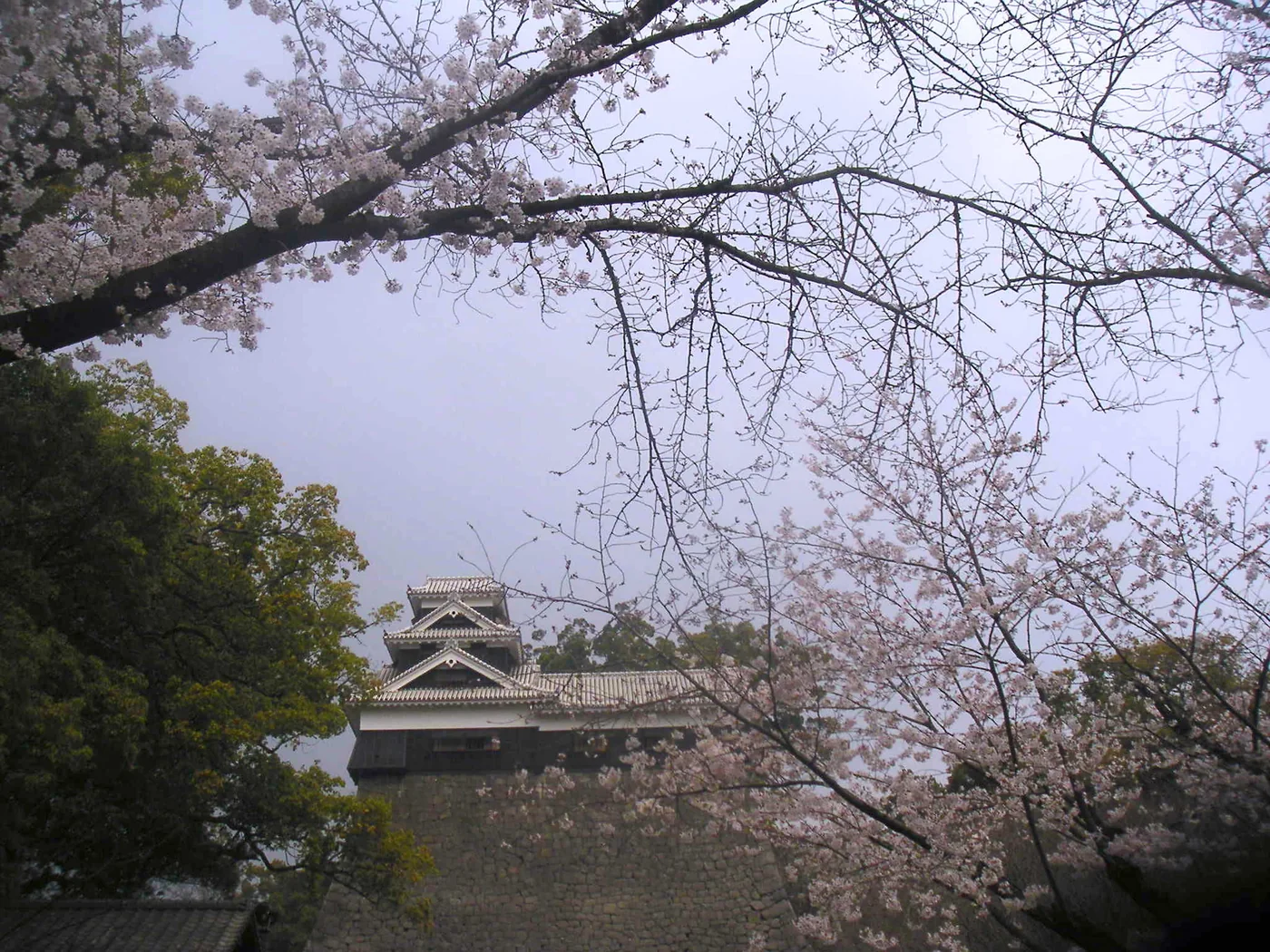
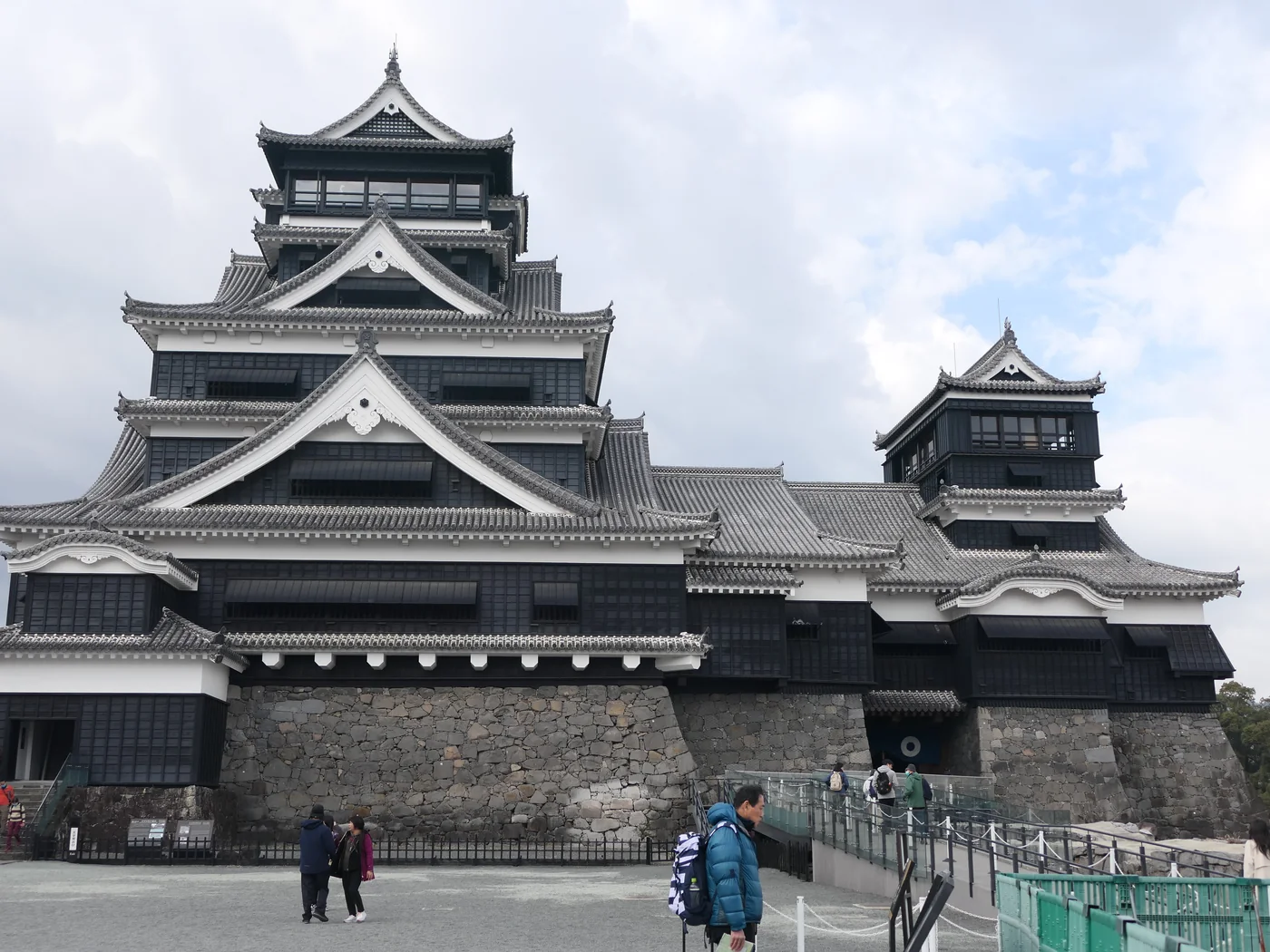
To fit Kumamoto Castle into your arrival day, work backward from last entry. From September through June, the castle generally opens at 9:00, stops admitting visitors at 16:00, and closes at 17:00. In July and August, hours typically extend to 19:00 with last entry at 18:00, though the Ninomaru ticket booth still stops selling tickets at 16:00. On weekdays, enter and exit via the South Gate. If you arrive in the afternoon and still need to drop luggage at your hotel, saving the castle for the next morning is far smoother than racing the ticket cutoff. Leave the evening for strolling around Josaien and the arcades, and set aside a dedicated half-day for Kumamoto Castle's entrances, slopes, and walking route.
Aso Station vs. Uchinomaki Onsen: Which Ride Each Saves You
Without a car, staying near Aso Station is the cleanest launchpad for heading up the mountain in the morning. Take the JR Hohi Main Line from Kumamoto to Aso Station, then transfer to the Aso Mountain Line bus bound for Kusasenri Aso Volcano Museum-mae or Asosanjo Terminal. Sanko Bus mountain schedules are not timed specifically to meet JR trains or other buses. Staying by the station lets you finish breakfast calmly before picking a departure, and deal with luggage before boarding. Check the actual street address and walking route to the "Aso-ekimae" bus stop before booking—properties listed under "Aso City" in search results can be scattered near completely different train stations.
Treat an Uchinomaki hot-spring ryokan as its own destination. "Uchinomaki Station" on the JR line and the Uchinomaki Onsen town are two different places, so always check which bus stop your ryokan specifies for transfers. Sozankyo, for example, instructs guests to take a Uchinomaki-bound bus from JR Aso Station, get off at "Shokokai-mae," and walk about two minutes. If you are traveling with luggage, look up the entire chain from Aso Station to the ryokan door, plus the return bus back to the station next morning. If relying on taxis, pre-arrange both ways—especially your morning pickup—because having a room reservation does not guarantee a cab will show up on demand.
Drivers should locate the ryokan's parking entrance first, then map out the next day's direction. If your loop covers Kusasenri, Aso Shrine, and the Miyaji approach across two days, an Uchinomaki stay puts a northern-foothill ryokan dinner neatly in the middle. Hit your top sightseeing priority on day one morning or midday, then head to the ryokan in the afternoon. If you are driving on to Takachiho or returning a rental car at the airport the next morning, set your navigation start point to the ryokan parking lot and end point to the rental branch or bus stop so the map includes the drive out of the hot-spring town—then add buffer for loading bags, refueling, and car return.
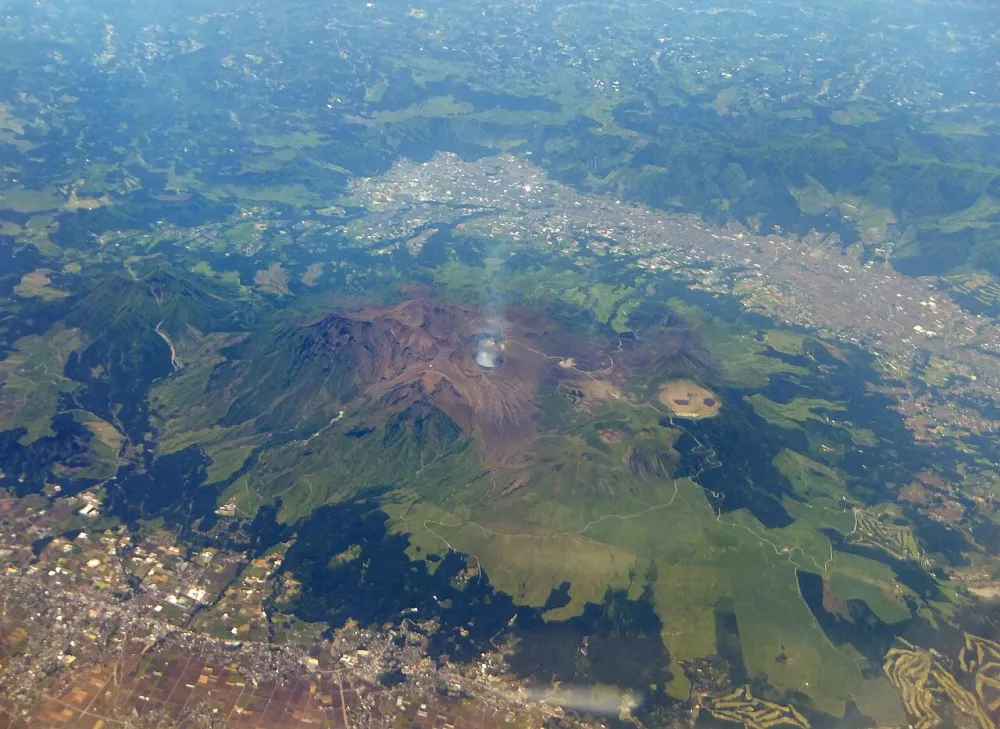
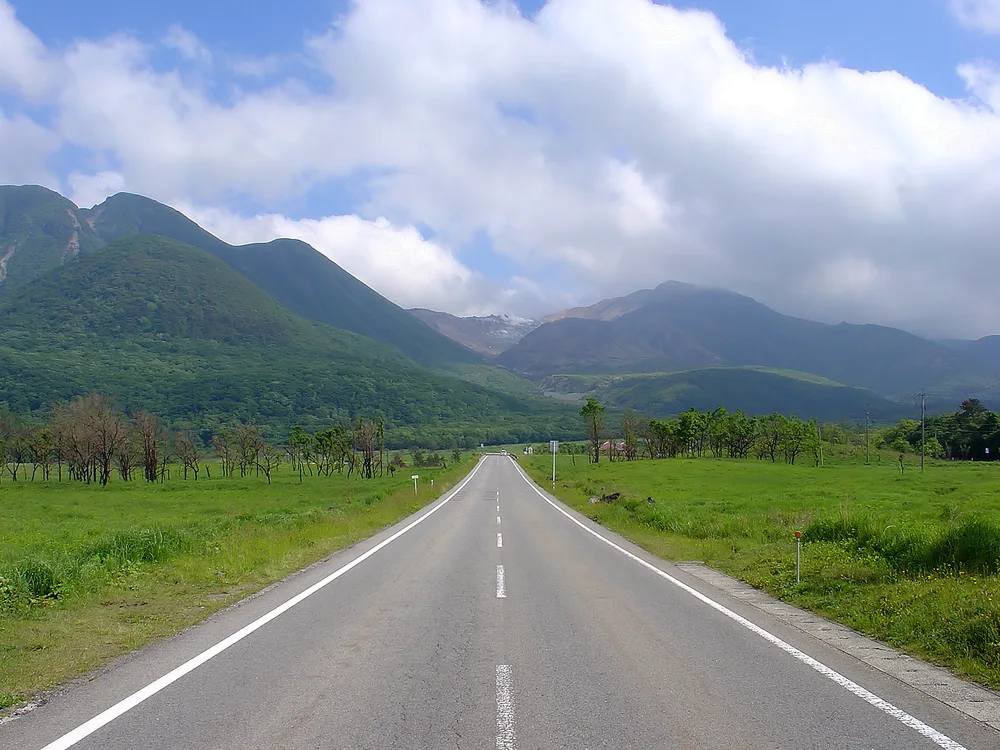
Keep Nakadake Crater, Asosanjo Plaza, and Kusasenri separate when planning. As of November 22, 2026, Aso City has announced that the Asosan Park Road is closed, crater visits are suspended, and Sanko Bus's crater shuttle is also not running. Even so, you can still base your stay around Kusasenri or Aso Shrine. Kusasenri itself is also subject to road and weather conditions, so check Aso Mountain Line operating updates and Aso City notices before heading out. If fog rolls in or roads close, pivot your morning to Aso Shrine and the Miyaji approach while keeping your original ryokan dinner slot. Check getting to Mount Aso and Kusasenri before deciding whether to stay by the station or in the onsen town.
Choosing Between Uchinomaki and Kurokawa for an Onsen Night
If you want to sightsee around Aso by day and soak in a hot bath at night, choose Uchinomaki. If you also want to wander a wooded valley hot-spring village the next morning and try multiple bathhouses, look at Kurokawa. Although both appear in searches for "Aso hotels," Kurokawa sits north of Aso City in Minamioguni Town, meaning any Kurokawa booking adds another bus or driving leg beyond Aso Station. Bus travelers should check Kyushu Odan Bus schedules connecting Kumamoto, Aso-ekimae, Kurokawa Onsen, and Yufuin—and verify the next morning's onward bus before buying tickets. Coming straight from Hakata? Compare the direct Fukuoka–Kurokawa highway bus as well.
Kurokawa Onsen's wooden bath-hopping pass (nyuto tegata) costs ¥1,500 for adults and is valid for six months from the date of purchase. Official rules allow entry to three outdoor baths at participating ryokans, or swapping one sticker for a designated item at participating shops. Before setting out, check each ryokan's day-visitor hours—many open for one morning block, close for cleaning, and reopen in the afternoon, so arriving late can leave only your own inn available. To soak at several spots, drop bags at your ryokan or near the town entrance, pick baths within easy walking distance, and return for dinner. If you prefer staying put in your room, choose a property with a great private or in-house bath first, and decide the next morning whether a pass is worth buying.
Without a car, zoom in on the walk between the "Kurokawa Onsen" bus stop and your ryokan entrance. Picking an inn in the central valley makes it easy to stroll along the river after dinner. If you book a property on the outskirts or up a hill, send your bus arrival time, check the hotel's latest shuttle pickup window, and confirm the meeting spot in advance—and book the morning ride back to the bus stop too. In a group of four, not everyone has to agree on the same outside bath: let bath-hoppers walk the valley while anyone who dislikes the cold or steep paths enjoys the inn's own baths, then meet back up for dinner.
If your route continues toward Yufuin or Beppu, Kurokawa fits naturally as a midpoint overnight. Coming from Takachiho back through Aso to catch a bus to Kurokawa? Put both bus legs and transfer windows on one sheet, and only book a half-board (dinner-and-breakfast) plan if you can reach the inn before dinner service cuts off. During peak seasons, if only remote Kurokawa rooms remain and Uchinomaki still has a room matching your transit, meals, and bedding needs, spend your onsen night in Uchinomaki. Conversely, if hot springs are the main reason for the trip, arrive early in Kurokawa, fit in a second soak, and leave later the next morning.
Match Your Takachiho Stay to the Time of Day You Want There
Takachiho sits in northern Miyazaki Prefecture. If you want to watch the evening kagura performance at Takachiho Shrine, staying in central town is the most practical option without a car. Pin three points on your map—Takachiho Bus Center, your dinner spot, and the shrine—then see where your hotel falls. Solest Takachiho Hotel, for instance, lists about an 8-minute walk from the bus center and about a 5-minute walk to the shrine on its access page. Staying closer to the gorge suits travelers who want to walk down early the next morning; before booking, check the slope between the hotel and the actual gorge trailhead, and plan both the walk back at night and how you will haul luggage to the bus center.
Performances generally run from 20:00 to 21:00 JST at Takachiho Shrine's Kagura-den, priced at ¥1,000 per person (free for elementary school students and younger). Regular performances are dark on December 31 and January 1, as well as November 22–23 during the Kagura Festival. Put dinner and show admission on the same timeline when booking. On a half-board rate, ask the inn when dinner starts and how long it takes so you finish in time to walk to the shrine. Arriving late? Book a room-only plan with flexible late check-in and line up a dinner spot before you arrive. If you are attending seasonal village Yokagura instead, arrange nighttime transport using the specific venue address.
From downtown Kumamoto, look for the limited-express "Takachiho-go" bus bound for Nobeoka. Sanko Bus's sample outbound run leaves Kumamoto Sakuramachi at 09:22 and reaches Takachiho Bus Center at 12:19. Miyazaki Kotsu's timetable (revised November 1, 2026) lists the Sanko Bus return departure from Takachiho at 16:57, arriving back at Sakuramachi at 19:50. Doing that as a day trip leaves time for lunch and one main activity. To see the 20:00 kagura, stay overnight and book the next day's return bus. Because you still have uphill walks or local shuttles after getting off at the bus center, work backward from departure times—and if you want both gorge rowing and the scenic open-top mini train, pick one for day one and save the other for day two.
Travelers already staying in Aso have a second link: Sanko Bus's "Asochiho-go" runs from Aso-ekimae to Takachiho Bus Center. On the October 2026 timetable, the 12:23 bus arrives at 14:31, and the 16:00 bus arrives at 18:08. Taking the midday bus gets you in early enough to drop bags, eat dinner, and make kagura comfortably. If you prefer leaving Aso later, choose a dinner spot within walking distance of your hotel and verify last order. Staying until the next afternoon? Compare returning straight to Kumamoto versus looping back to Aso Station. Both long-distance bus routes require checking seat availability for your travel date; since trains, buses, and reserved rowboats each run on fixed clocks, let the hardest-to-replace reservation dictate which day you check out.
How to Split Nights Across 2- to 4-Day Trips
For a two-day, one-night first visit, keep that single night in downtown Kumamoto. Stay in Torichosuji if you can tour the castle on day one afternoon, or by Kumamoto Station if you have an early JR departure the next morning. With enough time on day two, you can visit Aso's Kusasenri and return to Kumamoto for your onward train. If you leave before noon on day two, move Kumamoto Castle to day one (adding at most a short arcade stroll) so day two is just packing up. Alternatively, dedicate the entire overnight to hot springs: take a bus from Hakata or Kumamoto to Kurokawa on day one and return day two, saving Kumamoto Castle for another trip—just make sure you can arrive early enough for a half-board stay to be worth it.
A three-day, two-night trip offers two clean layouts. If you hate repacking, stay both nights at the same downtown hotel, spend one full day doing an Aso round-trip, use the remaining half-day for the castle, and return to a familiar neighborhood each evening. If you want a ryokan dinner experience, spend night one downtown and night two in Uchinomaki, returning from Aso to Kumamoto on day three. Whenever you have an afternoon flight or fixed long-distance train on day three, calculate the full transit time from your mountain inn to the airport or station before committing night two to the mountains. If a convenient morning bus works, you can linger over breakfast; if only an earlier bus gets you there, ask whether early breakfast is possible or switch to room-only.
Three days and two nights can also put night two in Takachiho. Spend night one in Kumamoto, catch the morning express bus to Takachiho, spend the afternoon in the gorge or on the mini train, and sleep in central Takachiho. Keep day three morning for a walk or meal before taking a bus back to Kumamoto. Trying to connect directly from Takachiho to a same-day evening flight chains checkout, long-distance buses, and airport check-in together—even if schedules align on paper, leave cushion for road delays and check-in cutoffs. If you need to be in Kumamoto by morning on day three, stay in Kumamoto on night two and save Takachiho's evening activities for another trip.
To link city and mountains on a four-day, three-night trip, try night one in downtown Kumamoto, night two in Uchinomaki or by Aso Station, night three in central Takachiho, and returning to Kumamoto on day four. If Kurokawa bath-hopping is the centerpiece of night two, consider spending night three near Kumamoto Station or continuing toward Yufuin to cut out extra cross-mountain transfers. While it is technically possible to cram Kusasenri, Kurokawa, and Takachiho into one loop, every afternoon gets cut short by the next inn's check-in deadline. Ask yourself where you most want to eat dinner and wake up on night three—that usually decides between Kurokawa and Takachiho. If you are set on hitting all three, check the Kumamoto, Aso, and Takachiho route guide to line up the legs.
If Fukuoka is your base and you only want to ride the Shinkansen from Hakata to see Kumamoto Castle, keep your Hakata hotel and head back there for dinner afterward. Trying to visit Aso by day and enjoy a ryokan dinner from Fukuoka, however, eats up your late afternoon and still leaves a long trip back after eating—that pairing works far better with a night in downtown Kumamoto followed by a night in Aso. When comparing train passes or tickets, multiply the fare by everyone in your party and include the local transit time back to your Hakata hotel to see how much friction staying put actually saves.
Check Dinner Rules First on Half-Board Plans, Then Compare Rates
For the same date, a city hotel often quotes a per-room total for two guests, whereas hot-spring ryokans frequently quote per-person rates that vary with headcount. Run searches with identical dates, exact adult and child counts, and the true number of rooms right through to the pre-payment screen, adding consumption tax, accommodation tax, bathing tax, meals, and parking. For a room-only rate, add dinner for two and round-trip transit before comparing it with a half-board (two-meal) plan. When traveling with kids, enter their ages, whether they need their own beds, and whether they need kids' meals—check occupancy caps and breakfast fees before trusting the lowest headline rate.
Starting July 1, 2026, Kumamoto City collects an accommodation tax of ¥200 per paying guest per night, including children who are charged a lodging fee. For two adults and two paying children staying two nights, that adds ¥1,600. If your booking confirmation says taxes are payable at the property, list that amount in an unpaid-at-check-in column. When switching searches to Uchinomaki or Kurokawa, calculate local taxes based on the municipality and the booking's fee breakdown, and include the separate hot-spring bathing tax charged by onsen inns. Keeping separate subtotals for each night makes it obvious which plans require extra cash at the front desk.
Mountain ryokans enforce strict dinner seating windows. At Uchinomaki's Sozankyo, for example, the hotel states that the latest dinner start is 19:30 and guests checking in after 18:00 must notify the property in advance—very different from spotting a 19:30 cutoff and assuming you can call a cab from Aso Station at 19:15. If you plan to visit a museum or viewpoint on your hotel-transfer day, write down the latest hour you are willing to leave your final stop and let the ryokan's dinner rules govern any detours. When bus arrivals run too late, switch to breakfast-only or room-only and pick up dinner beforehand instead of gambling the whole evening on one bus connection.
An in-room tub, a shared public bathhouse, and a bookable private bath (kashikiri-buro) work very differently in practice. If you are traveling with toddlers or want to soak together as a family, verify that listing photos match your exact room type, whether the tub is indoor or semi-open-air, whether it uses natural hot-spring water or heated tap water, and how private baths are reserved. Hoping to bathe before dinner? Factor in time after check-in to drop bags, change into yukata, and walk to the baths. When upgrading a half-board room, put your budget into features you will definitely use—Western beds that are easy to get out of at night, a bathroom with a shower stool, or a meal plan that lets young kids eat early.
If dining outside the ryokan is not practical, state dietary restrictions and kids' food needs clearly when booking. Mountain inns have their own prep lead times; for food allergies, list the exact ingredients and how strictly cross-contact must be avoided, and wait for the property to confirm what it can accommodate before paying. If you prefer eating out, filter hotels by the walk to dinner spots and check restaurant last-order times against your arrival hour. When catching evening kagura on arrival night, pick central Takachiho or a property that explicitly includes dinner so you do not burn showtime hunting for an open restaurant.
Traveling With Kids, Seniors, or Three or More Suitcases
For families staying in downtown Kumamoto, work backward from nap time. If kids need a midday rest between touring Kumamoto Castle and browsing the arcades, base yourself near Torichosuji. Pushing a stroller? Check the exact path from the streetcar platform or station exit to the hotel lobby for ramps and stairs. Heading to Aso? Set aside an afternoon for Kusasenri and the mountain foothills, staying strictly inside posted fences around horses and pastures. Pack a change of clothes in your daypack so a sudden downpour simply turns into a food stop along the shrine approach before heading back to the ryokan with the stroller and bags on schedule.
Before booking for older relatives, ask whether they need to sit on the edge of a bed to stand up, how far they can walk comfortably, and whether grab bars or a shower chair are needed at night. Prioritize Western beds and elevators ahead of room views. Historic or older inns may still have a few steps after getting off the elevator, or require walking between buildings to reach the dining hall. Ask separately about four specific spots—drop-off curb, room entrance, bathroom, and dining room—so the staff can give clear answers. Takachiho Gorge involves real elevation change; even if someone handles the downhill walk by day, budget time for the uphill return or a taxi. You can also preview the route and turns back to your hotel after evening kagura on the map beforehand.
For three-generation trips, booking two separate rooms is often easier than hunting for one large family room, giving everyone two sets of beds and two bathrooms. Put light sleepers in a quiet back-facing room and parents with kids in the other, then meet up for meals. If you want a single dining table or rooms on the same floor at a ryokan, email both reservation names and dates right after booking to request adjacent seating—far easier than asking at check-in. When hiring a private van, share your headcount, child-seat requirements, stroller, and exact suitcase dimensions up front so the operator assigns the right vehicle, and agree on a nearby pickup point if cars cannot stop in front of your hotel.
Where to Handle Rental Car Returns and Bag Storage
If day one is strictly downtown Kumamoto, wait until day two morning to pick up your rental car—you skip first-night parking fees and city driving. If you are staying by the shopping arcades on night one with a car already, check whether the hotel's partner garage requires early morning departure, allows in-and-out privileges, and how far it is from the hotel door. REF Kumamoto's partner lots, for example, include both garages that allow re-entry during your stay and lots where each exit closes out the parking ticket. When comparing rental quotes, also check one-way drop-off fees, branch opening hours, and whether returning the car leaves you with an extra shuttle ride to the Shinkansen or airport.
Heading to Kurokawa or Aso in winter? Map out driving legs you can finish before sunset. The Kurokawa Onsen Ryokan Association warns that snow accumulation and icy roads are possible from December through March. Check winter-tire equipment and passable routes with your rental agency, plan an afternoon arrival, and leave buffer for stops or detours. During heavy snow or ice, switch to operating buses or stay in downtown Kumamoto. A simple backup is moving night two back to the city and doing a weather-permitting day trip—choosing refundable rooms and tickets makes that pivot painless.
If you stay at the same Kumamoto hotel before and after a mountain side trip, ask whether they can hold large suitcases between the two reservations. Once confirmed, pack small overnight bags for the mountains and reclaim your main luggage on checkout day. Relying on lockers around Aso Station instead? Have a backup plan in case lockers are full or too small for big rollers—traveling with large suitcases is much easier when staying at a station-front hotel. Continuing straight from Kurokawa or Takachiho into another prefecture without returning to Kumamoto? Confirm with your next hotel whether they accept couriered luggage (takkyubin), how many days delivery takes, and keep essentials in a carry-on until bags arrive. Parents can keep spare kids' clothes in their own bag to take the pressure off waiting for a suitcase.
What to Book First—and What Changes Will Cost
Lock in the hardest-to-replace night first. Whether that is a specific Kurokawa room, two same-floor Western-bed rooms in Uchinomaki, or a central Takachiho stay within walking distance of kagura, check availability for that night before scheduling buses or rental cars around it. City hotels are far easier to swap within the same district. For weekends, holidays, or trips with seniors, grab a suitable room as soon as you find one with free cancellation. Because rates swing by date, meal plan, and occupancy, comparing two weekends under identical search settings tells you far more than memorizing a generic average rate.
Save every cancellation cutoff date in your phone calendar—separately for rooms, dinners, long-distance buses, and activities. Under Sozankyo's standard published policy, for instance, cancellation fees are 20% three to two days before check-in, 50% the day before, and 100% on the day of arrival or for a no-show, with separate terms for New Year's and other peak dates. For New Year's or holiday stays, record the exact cutoff date and time shown on your booking plan. If you book your Kumamoto city hotel and mountain ryokan on different platforms, file confirmation emails and contact numbers separately so you know immediately whom to contact if you drop a night.
Leave a Plan B between your transit and lodging bookings. If you stay in Uchinomaki hoping to see the crater and the crater closes, you can pivot to the Miyaji approach without touching your ryokan or dinner reservation. Only when both Aso's railways and roads are hit by severe weather does it make sense to consider moving your stay back to Kumamoto. Before switching, check whether the replacement hotel has rooms, when the original inn's cancellation fee kicks in, and where the next day's buses run. With less than 24 hours to go, notify your hotel first about a late arrival or cancellation before unwinding smaller bookings—whenever plans shift, protect the night where you can reliably arrive and still make dinner.
A few useful answers
For a first trip to Kumamoto, should I stay near Kumamoto Station or Torichosuji?
Stay in Torichosuji if you want to visit Kumamoto Castle, browse the shopping arcades, and walk back after dinner. Choose Kumamoto Station if you arrive on a late Shinkansen or need an early JR train the next morning. Pick Hanabatacho, Sakuramachi, or Karashimacho if you rely on the airport bus or depart from Sakuramachi the next day.
Can I stay in Uchinomaki Onsen without a rental car?
Yes. You can connect from JR Aso Station via a Uchinomaki-bound bus, a pre-booked taxi, or a ryokan shuttle if offered. Check the exact bus stop your inn specifies, and plan your return bus back to Aso Station if you are catching the mountain bus or Takachiho bus the next morning.
If I only have one night for an onsen ryokan, should I pick Uchinomaki or Kurokawa?
Choose Uchinomaki if your daytime focus is the Aso grasslands and shrine and you want dinner at the inn in the evening. Choose Kurokawa—and arrive early—if you want to stroll the valley, bath-hop with a nyuto tegata pass, or continue toward Yufuin the next day. If you check in late and still want to bath-hop, plan your first outside bath for the next morning.
Do I need to stay overnight in Takachiho?
If you only want to visit Takachiho Gorge or ride the scenic mini train, you can do it as a day trip from Kumamoto. Stay in central Takachiho if you want to see the 20:00 kagura performance or walk the gorge early the next morning. Without a car, compare the evening walk back to your hotel and the morning walk to the bus center.
Do I need to switch hotels on a 3-day, 2-night Kumamoto trip?
If you want to leave luggage in one room and visit Aso as a day trip on day two, keep both nights in downtown Kumamoto. Switch hotels on night two to Uchinomaki, Kurokawa, or Takachiho only if you want an onsen ryokan dinner or evening kagura. If you have an early flight on day three, make sure your final night gives you an easy route to the airport.
Official information and references
Sources used in this guide.
- Sanko Bus | Airport Limousine Bus Between Aso Kumamoto Airport, Sakuramachi, and Kumamoto Station
- Kumamoto City | Accommodation Tax Effective Date, Eligible Guests, and Rates
- Kumamoto City Transportation Bureau | Streetcar Route Map, Riding Guide, and Single Fares
- Kumamoto City Transportation Bureau | Streetcar 1-Day Pass
- Kumamoto Castle | Opening Hours, Last Entry, and Gates
- JR Kyushu | Kumamoto Station Map
- Hotel Nikko Kumamoto | Access
- REF Kumamoto | Entrance, Station Access, and Partner Parking
- THE BLOSSOM KUMAMOTO | Access from Shirakawa Exit to Hotel Entrance
- Sanko Bus | Aso Mountain Line Timetable and Fares
- Aso City | Crater Viewing and Asosan Park Road Notices
- Sanko Bus | Asosan Crater Shuttle Suspension Notice
- Sozankyo | Uchinomaki Onsen Bus Stop and Access
- Sozankyo | Dinner Hours, Check-in Notice, and Cancellation Policy
- Kurokawa Onsen Tourism Association | Access from Kumamoto, Aso, Fukuoka, and Yufuin
- Kurokawa Onsen Ryokan Association | Bath-Hopping Pass (Nyuto Tegata)
- Kurokawa Onsen Ryokan Association | Winter Mountain Roads and FAQ
- Sanko Bus | Express Bus Timetable from Kumamoto to Takachiho and Nobeoka
- Miyazaki Kotsu | Takachiho-go Timetable (Effective November 1, 2026)
- Sanko Bus | Asochiho-go Timetable and Fares Between Aso Station and Takachiho
- Takachiho Tourist Association | Takachiho Kagura Schedule, Admission, and Closed Dates
- Solest Takachiho Hotel | Walking Access from Takachiho Bus Center