Use Aso’s official restriction map to choose an approach. Compare Kusasenri and Sanjo Square, museum floors and family costs, bus stopovers, shared parking tickets and alternatives at the foot of the mountain.
- Region & Focus
- Aso and Kurokawa Onsen
- Reading Scope
- 32 min read · 14 chapters · 6 Q&As
- Official Verification
- 22 official sources checkedUpdated 27 November 2026
- Key Topics
- ItinerariesRail travelTravel budget
Chapter Route Map (tap any stop)
- Make Kusasenri the destination while the crater is closed
- Read the outer restriction boundary before the crater zones
- At Kusasenri, walk first or go indoors first?
- How the museum’s three floors fit into a visit
- Family costs depend on age and the indoor visit you want
- Morning buses: stay at Kusasenri or visit the terminus first
- Arriving around midday: which stop should you leave out?
- Fares for two stopovers and choosing a downhill bus
- Shared parking tickets are separate from the road towards the crater
- A 45-minute path connects Kusasenri’s east trailhead with Furubochu
- Give Mount Kishima or Mount Eboshi its own hiking time
- A foothill alternative: the Grassland Learning Centre’s north entrance
- Finish beside Aso Station at the roadside station
- Change the affected part of the day when conditions change
- Quick Q&A
With the Aso crater closed to visitors, Kusasenri’s grassland and the Volcano Museum can still fill a day. To see another part of the mountain, add Sanjo Square when the restrictions in force allow access. First distinguish the crater, Sanjo Square and Kusasenri. Then use bus arrival times, your companions’ stamina and your return direction to choose one stop, two stops or a visit at the foot of the mountain.
Make Kusasenri the destination while the crater is closed
The Aso Volcano Disaster Prevention Council shows volcanic alert level 2 and first-stage restrictions, with entry prohibited within about one kilometre of the crater. Access to Sanjo Square resumed on 2 September. While crater restrictions are in force, plan Kusasenri grassland and Aso Volcano Museum, adding Sanjo Square if the weather and time allow.
For a first visit using public transport from Kumamoto, make Kusasenri the main stop. Alight at “Kusasenri Aso Kazan Hakubutsukan-mae” for the grassland, indoor displays and rest facilities in one place. After lunch, decide when to descend according to everyone’s energy. Sanjo Square suits visitors who want to see the outer landforms of Nakadake and are willing to take another bus segment. Under these restrictions, the extra stop gives a different view of the mountain.
Driving changes the choice. A same-day shared ticket covers the two car parks, giving more flexibility. But if your companions only want a grassland walk, one stop can fill half a day. If you want to climb Mount Kishima or Mount Eboshi, make the hike the day’s main activity and give lower priority to displays, lunch and another mountain. Grassland walks, summit hikes and crater visits have different starting points. Choosing one suits your time on the mountain better than trying to include every place with a similar name.
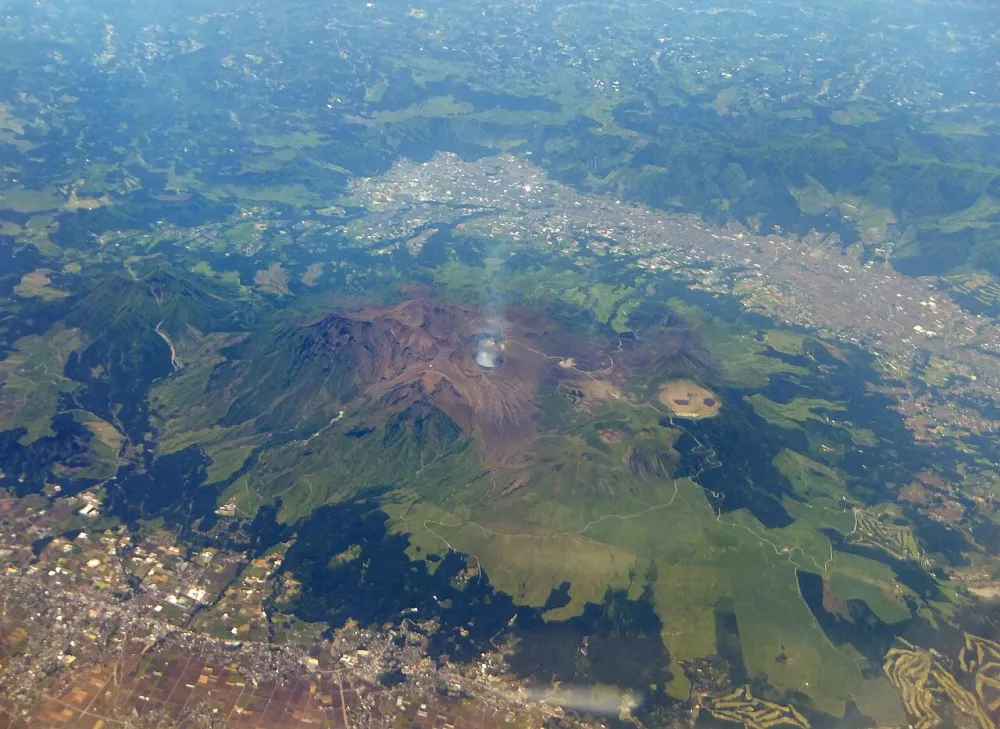
Use Aso’s official restriction map to choose an approach. Compare Kusasenri and Sanjo Square, museum floors and family costs, bus stopovers, shared parking tickets and alternatives at the foot of the mountain.
Read the outer restriction boundary before the crater zones
The official crater area map shows the first restriction line, permanently closed areas, Sanjo Square car park and the Aso-san Park Road leading towards the crater. Start by finding the car park where you will arrive, then trace the park road and compare it with the restriction notice in force. Under first-stage restrictions, stop at accessible Sanjo Square and leave out the road towards the crater.
The grey-hatched permanently closed area is a separate boundary. The road commonly called the “Mount Car Road”, between the Sanjo Square west entrance and Sensuikyo east entrance, lies inside it. The official guidance expressly prohibits using it as a hiking route. Two entrances appearing to connect on a map do not provide a cross-mountain itinerary. Visitors without a car should also plan to return along their original bus route.
The enlarged crater map identifies zones B1, B2, C and D. B1 and B2 are crater-rim areas for looking into the crater. C is the crater plaza for views of Nakadake’s outer wall and other landforms. D looks towards Kusasenri, Mount Kishima and Mount Eboshi. This map explains what each zone offers; the overall restrictions determine whether you can reach it that day. Apply the approximately one-kilometre crater exclusion area first. The “crater plaza” in zone C is different from Sanjo Square outside it.
When crater viewing resumes, choose a route using the zones open that day. Volcanic activity and wind direction can lead to immediate restrictions, with announcements and attendants directing movement. Official rules prohibit crater visits by people with asthma, bronchial disease, heart disease or those feeling unwell. Those companions can choose museum and grassland activities directly, leaving out the crater.
At Kusasenri, walk first or go indoors first?
The bus stop name identifies the destination: “Kusasenri Aso Kazan Hakubutsukan-mae” serves Kusasenri and the museum. Drivers should navigate to Kusasenri car park. On arrival, identify the return bus stop, public toilets and museum entrance before entering the grassland. After the walk, you can return to the same waiting area to rest.
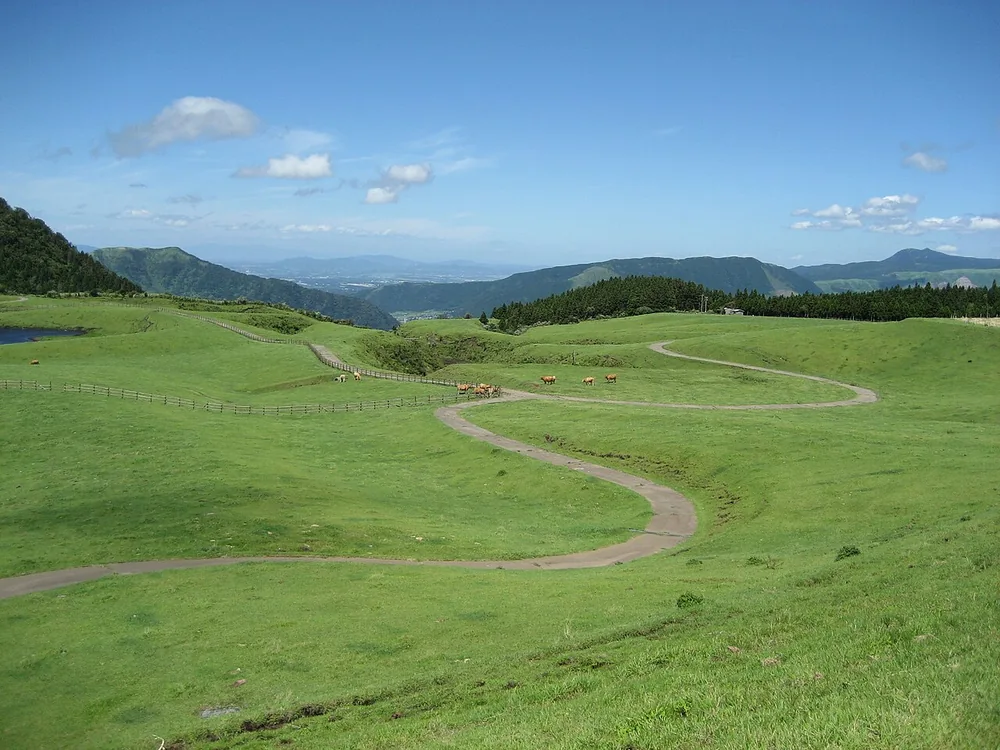
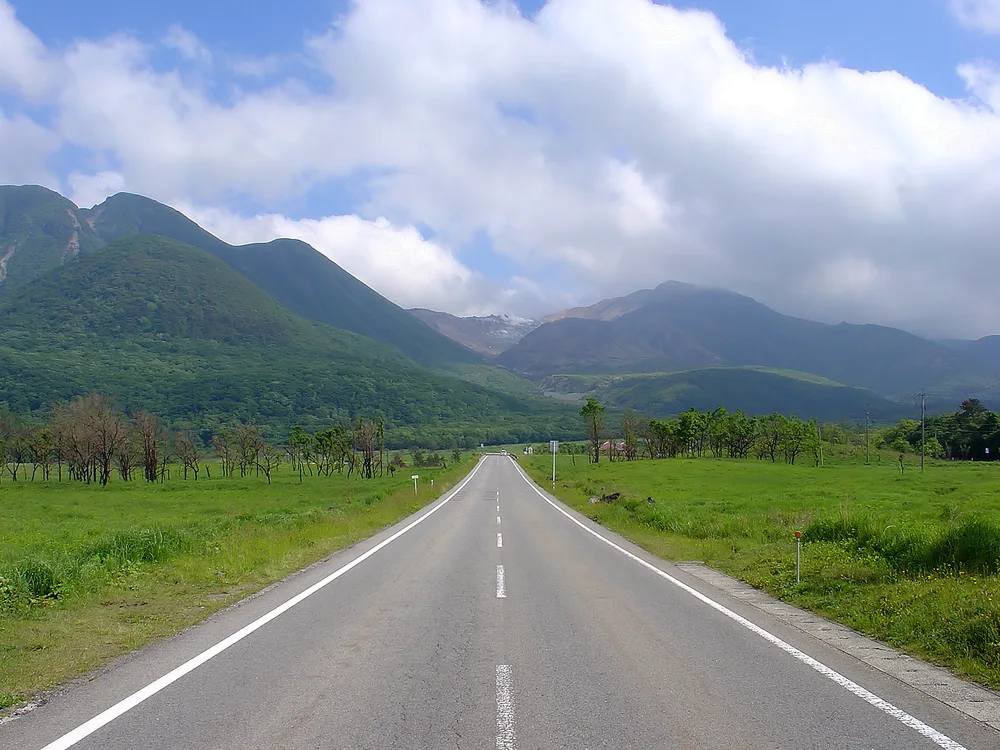
In clear weather, start with a permitted grassland entrance and choose a distance you can comfortably retrace. Kusasenri has a central pond and views towards Nakadake. Its undulating ground, pond edges and surrounding slopes offer different angles. Take group photographs near the entrance first, then walk further in at an easy pace. Families with pushchairs can base themselves near paved areas and buildings, with those able to walk on grass taking turns on short walks.
The Kusasenri guide from Michi-no-Eki Aso gives specific rules for grazing horses: do not approach, touch or feed them, or frighten them with sudden movements or loud noise. Watch from a distance, with adults accompanying children. For horse riding, use the staffed led-riding reception and let staff arrange it. Grazing horses and supervised riding are different activities.
If the grass is wet, the wind strong or children already tired, go to the ground-floor visitor centre first. Deal with coats, muddy soles and toilets, look at the displays, then decide whether to enter the paid museum. This order lets you shorten the visit in one place: take only a brief outdoor walk while retaining substantial indoor content, without finding another means of transport to leave.
Aso Volcano Museum’s springtime Kusasenri footage shows flowers, grass and slopes at close range. It offers a look at the walking scenery for visitors planning an easy stroll after alighting.
How the museum’s three floors fit into a visit
The Aso Volcano Museum floor guide lists ticketing, information, the Aso Sanjo Visitor Centre and a shop on the ground floor (1F). Paid museum displays begin on the floor above (2F). The Aso Sanjo Visitor Centre is free and introduces mountain scenery, plants, animals and nature information. Start on the ground floor to understand the terrain, ask about routes or let companions rest indoors.
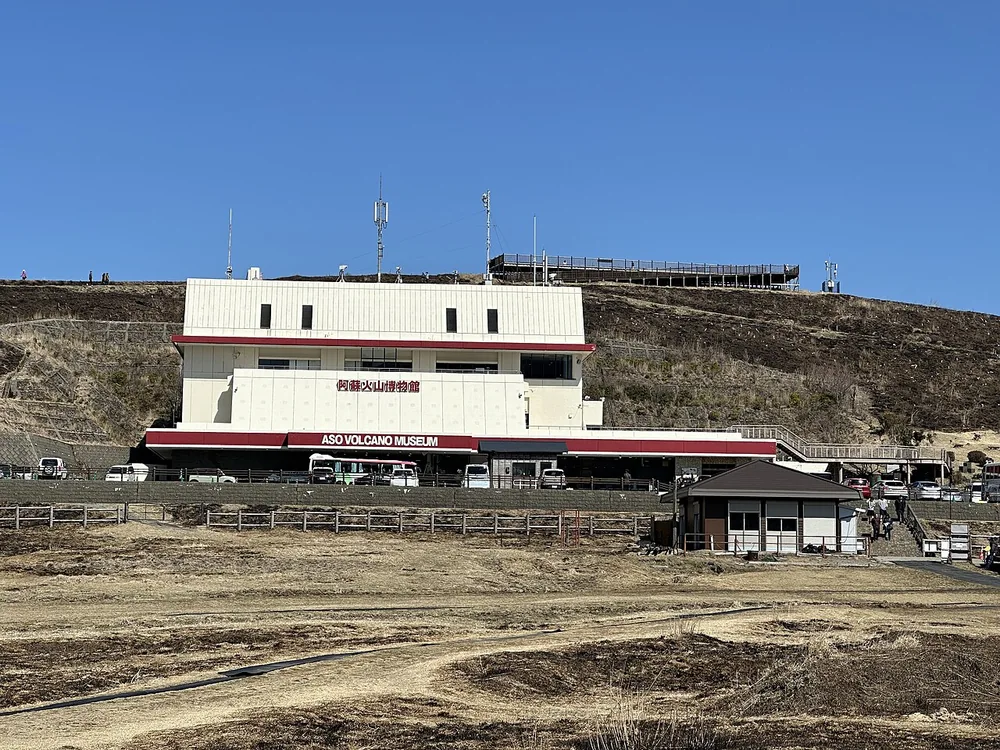
The “Sanjo”, or mountain-top, name can suggest the visitor centre is at the bus terminus. In fact, this free centre is on the museum’s ground floor beside Kusasenri. Alight at Kusasenri for grassland walking and hiking advice. The mountain terminus serves Furubochu and Sanjo Square. Use the distinct names when waiting for buses or navigating.
The next floor has permanent displays on Aso and world volcanoes, grasslands, animals and local culture, plus a live projection of the Nakadake crater. On a first visit, look at the terrain model before the crater images. Locate Kusasenri, the central cones and the outer caldera rim, then observe the crater with those bearings in mind. The live images also provide indoor crater observation while entry is closed.
The five-screen theatre on the top floor (3F) shows two films: about 17 minutes exploring volcanic eruptions and about 18 minutes exploring Aso culture. Subtitles are available in English, Korean, Chinese and French. The website gives a basic schedule on the hour and half-hour, adjusted on site for reservations. Check that day’s screenings on entry and select one before browsing the displays, rather than finishing just after a film has started.
With school-age children, the eruption film can connect the models and crater projection. For the relationship between people and grassland, choose the culture film. Both films add about 35 minutes of viewing, plus the gap between screenings and time in the displays. The top-floor viewing area overlooks Kusasenri and Nakadake but closes in bad weather. Leave it for the end when conditions are good.
The museum suggests about 40–50 minutes for an ordinary visit. Allow an hour and a half if you want to study models, watch a complete film and use the viewing area. Re-entry after buying a ticket suits visitors who want to see displays, go out for lunch or a walk, then return for a film.
Family costs depend on age and the indoor visit you want
Standard museum admission is ¥1,300 from junior-high-school age, ¥650 for primary-school pupils, ¥1,100 for people aged 65 or over, and ¥350 for children aged four or over who have not yet started school. Two adults with one primary-school pupil total ¥3,250; two adults with one pre-school child aged at least four total ¥2,950. Choose this paid visit separately from the free ground-floor visitor centre.
For three generations travelling together, two adults, one person aged 65 or over and one primary-school pupil totalled ¥4,350 at standard rates. If the older relative preferred to rest in the free ground-floor area, the other three could enter the paid museum for ¥3,250. Let family members choose content that interests them and agree to meet on the ground floor, balancing depth of visit with walking stamina.
For a tighter budget or children with little interest in lengthy displays, make the grassland, free visitor centre and lunch the core visit. If children like volcanoes, models or films, give the paid museum a continuous block of time. The difference is the content and way you spend the visit. Let interests decide rather than buying admission simply to fill a gap before the next bus.
Opening hours are 09:00–17:00, with last admission at 16:30. The museum closes for maintenance on 14 January and 14 July each year. Families arriving in the afternoon should prioritise the film or displays they want, reducing the outdoor walk to an easy return route. Last admission and the bus departure downhill are different deadlines; bus users usually finish earlier.
Lunch can sit between the outdoor walk and indoor displays. Meals, toilets, changing clothes and bus waiting take different amounts of time with children of different ages. A seated meal is more useful than rushing to buy snacks at two separate sights. For a bus trip uphill, leave large luggage at your base or use storage whose hours fit your plans. Carry only the day’s clothing, water and personal items for the Kusasenri walk.
Morning buses: stay at Kusasenri or visit the terminus first
The Sanko Bus Aso mountain route currently links to a timetable revised on 11 May 2026, shared by weekdays, weekends and holidays. For a visit focused on Kusasenri, take the 10:25 from Aso Station, arriving at 10:51. Walk in the morning, eat lunch and visit the museum, then take the 14:30 downhill to reach Aso Station at 14:58. That provides about three and a half hours on the mountain.
This allows one grassland walk, a meal and a museum visit. Shorten the walk if you want to sit through a film without rushing. Back at Aso Station, you can visit the roadside station or wait for the train you have actually booked to Kumamoto. Buses and JR trains run to separate timetables, so allow waiting and station-entry time after the bus arrives.
To visit both Sanjo Square and Kusasenri, stay on the 10:25 bus to the mountain terminus at 11:00. Take the return at 11:55, reaching Kusasenri at 12:00. Visit the accessible square near the terminus first, then keep lunch, grassland and museum for the afternoon. This follows a straightforward direction back towards Aso Station.
The 55 minutes between 11:00 arrival and 11:55 departure suit a short look around Sanjo Square and a rest. With the crater closed under these restrictions, no time is needed for a crater shuttle. If wind or visibility makes a stay unsuitable, take the 11:05 downhill bus if you can. If it has already left, wait in permitted facilities and the square for the 11:55.
Going to the terminus first adds one stopover and another boarding. It suits those willing to exchange some waiting time for two viewpoints. If companions feel the cold, you have young children or the square has limited appeal, alight at Kusasenri directly.
Arriving around midday: which stop should you leave out?
For a later arrival at Aso Station, the 11:50 bus reaches Kusasenri at 12:16. Choose lunch or a film first according to the screening schedule. After an afternoon walk, the 14:55 downhill bus reaches Aso Station at 15:23. For a longer stay, leave Kusasenri at 15:45 and reach the station at 16:13. These give two useful afternoon lengths without automatically staying for the last bus.
If you leave at 12:45 and arrive at 13:11, choose either grassland plus museum or grassland plus a longer lunch. Adding Sanjo Square brings more waiting, boarding and return connections, often squeezing indoor display time. A first-time visitor usually gets a more complete visit by staying at Kusasenri.
The 14:10 from Aso Station arrives at 14:36, leaving only about an hour before the 15:45 downhill bus. That suits a brief grassland walk and the free visitor centre. If you choose the paid museum, give it most of the time and keep the outdoor look short. The final uphill bus, arriving at Kusasenri at 15:01, suits a purposeful short stop, without a hike or a two-stop return trip.
If companions are already tired on reaching Aso Station, eating at the adjacent roadside station, browsing local products and returning to Kumamoto also makes a complete half-day. Going uphill uses time on ascent and descent; staying at the foot leaves the remainder for meals and rest. Choose afternoon activities you can actually complete rather than squeezing the morning route into a rushed miniature.
Fares for two stopovers and choosing a downhill bus
Sanko’s fare table revised on 1 October 2025 lists an ordinary adult single fare of ¥1,000 from Aso Station to either Kusasenri or the mountain terminus, and ¥330 between Kusasenri and the terminus. A simple Kusasenri return therefore costs ¥2,000. Going first to the terminus, stopping there, travelling to Kusasenri for another stop, then returning to Aso Station totals ¥2,330 at ordinary segment fares.
The extra ¥330 buys a separate stay in each place. Passing Kusasenri without alighting differs from getting off and taking a later bus. Pay according to the actual start and end of each ride. Pass holders should use their pass’s route coverage; the ordinary fare total helps compare whether a pass is worthwhile.
With a reserved train, dinner deadline or companions prone to travel sickness, use the 14:30 or 14:55 from Kusasenri as the main options, arriving at Aso Station at 14:58 or 15:23. For longer on the grassland, the 15:45 reaches the station at 16:13. The last bus leaves at 16:35 and arrives at 17:03, a later option for those without an important booking immediately afterwards.
The corresponding departures from the mountain terminus are five minutes earlier: 14:25, 14:50, 15:40 and 16:30. If you finish at Sanjo Square, wait at the terminus; if you have returned to Kusasenri, use the Kusasenri stop. Keep your final photo stop, toilet visit, bus stop and queue within the on-site route on the correct side, reducing last-minute crossings of the road.
Sanko also explicitly warns that crowding may prevent boarding the service you want. Allow enough time to take one later service before an important connection rather than making the last bus your only option. If you miss your intended service, use the next actual arrival time to adjust later bookings and end the mountain visit where you are.
Shared parking tickets are separate from the road towards the crater
When driving, navigate to the place you will actually park: Kusasenri car park or Aso Sanjo car park beside Sanjo Square. Whether you approach from Aso Station or Minamiaso, align the return with your accommodation direction. Stop for roadside scenery only where parking is legal, and let the driver park before everyone looks together.
The Natural Parks Foundation’s Aso branch lists ¥500 for an ordinary car, ¥200 for a motorcycle and ¥2,000 for a bus. That payment allows one use of each of the Kusasenri and Aso Sanjo car parks on the same day. Keep the receipt or shared ticket available to show at the second site. Group the activities at each car park together to make use of one stop at Kusasenri and one at Sanjo Square.
Aso-san Park Road is a separate road from Sanjo Square towards the crater, outside the shared parking arrangement. With entry prohibited within about one kilometre of the crater, omit it from the driving route. When reading parking charges, establish whether the payment serves Sanjo Square or a crater visit further in, so you calculate the right item.
For a hike, park at the car park serving the trailhead and tell companions which one you will return to. For a family walk, staying at Kusasenri until the grassland, lunch and museum are finished saves repeated packing and unpacking. Move the car only if you want to add Sanjo Square, making the difference a short drive and a second stop.
A 45-minute path connects Kusasenri’s east trailhead with Furubochu
The Aso Sanjo Visitor Centre hiking information lists the Kusasenri–Furubochu walking route between Kusasenri car park’s east trailhead and Furubochu trailhead. The ends are about 1,137 and 1,140 metres above sea level. It is a paved path with some undulation but relatively gentle overall terrain, listed at about 45 minutes one way. Furubochu car park is the end formerly called Aso Sanjo car park, linking the two bus-stop areas.
To walk instead of taking the bus between the stops, start at Kusasenri, use the designated path to Furubochu and take the downhill bus from the mountain terminus. Add time to find the trailhead, rest and reach the bus stop rather than fitting the listed 45 minutes into the final gap before departure. Use the formal walking-path entrance and turn back if a closure notice is posted.
Drivers need to account for the car’s location. If parked at Kusasenri, walk back from Furubochu along the same path: about 90 minutes walking in total, plus rests. Alternatively, take the mountain-route bus from Furubochu to Kusasenri for an ordinary adult single fare of ¥330, collect the car and finish the mountain visit.
This route suits people who enjoy grassland and slopes without wanting a summit climb. With young children, slower walkers or wind and rain affecting walking, stay near the Kusasenri entrance and travel between the two places by bus. Both Kusasenri and Furubochu car parks have flushing public toilets. Use them at the start before taking the designated path to the other end.
Give Mount Kishima or Mount Eboshi its own hiking time
For a summit view, choose one mountain from the same Kusasenri base. The visitor centre lists the Mount Kishima summit route from Kusasenri car park’s east trailhead at about 35 minutes up and 25 down. A gentler paved section leads to closely spaced paved steps. The summit is about 1,326 metres, with views of Nakadake, Takadake and surrounding old craters. Paving does not remove the effort of steps and descent.
Mount Eboshi starts at the Kusasenri trailhead. The western route takes about 60 minutes up and 55 down; the eastern route about 65 up and 50 down. The summit is about 1,337 metres. After the grassland, the route becomes a sloping dirt trail, for which the visitor centre recommends at least low-cut hiking shoes. If you stop often for photographs, add rests and grassland time to the roughly two hours of walking.
Without a car, both mountains can be reached from the Kusasenri bus stop, returning there for the bus after the hike. Use toilets and prepare water before setting out. The visitor centre says there are no water points or toilets on these trails and recommends carrying a portable toilet. Submit a hiking plan in advance through the Kumamoto Prefectural Police website or YAMAP, or complete and deposit a form at the trailhead box. Return to Kusasenri for food and the bus afterwards.
Kumamoto Prefecture’s hiking information updated on 2 September 2026 still listed Mount Eboshi’s Yunotani and Tarutama routes as closed. The Sunasenri, Hinoo Ridge and crater east viewpoint routes for Takadake and Nakadake were also impassable. The prefecture prohibited hiking by people with asthma, bronchial disease, heart disease or those feeling unwell; the visitor centre also asked pregnant women and infants or young children not to hike. Those companions should choose indoor activities. If you smell strong volcanic gas while hiking, move away from the crater or turn back. If you develop symptoms, immediately move somewhere the gas is not blowing.
A foothill alternative: the Grassland Learning Centre’s north entrance
If mountain roads or weather make the ascent unsuitable, drivers can visit the Aso Grassland Conservation Centre in Ozato, Aso City. Its Grassland Learning Centre and Grassland Information Centre explain grassland ecology, controlled burning, grazing, grass cutting and the relationship between people and land. Entry is free, opening is 09:00–17:00, and it closes over the New Year period. Official access information puts it about ten minutes’ drive or six kilometres from Aso Station, suitable for an indoor foothill visit.
The renovation notice for August to the end of November 2026 said the exhibition hall remained in use while scaffolding surrounded the building. Entry moved to the north side, behind and to the left of the car park, with some areas closed. Follow the construction route to that entrance, keep children close and avoid works-vehicle access areas when crossing the car park.
Aso’s grasslands are tied to grazing, grass cutting and controlled burning. Displays explain why the grassland has not gradually become forest and how grass serves as feed and an agricultural resource. They add context for visitors who initially only wanted photographs. After seeing them, a later clear-weather Kusasenri walk can draw attention to slopes, grass conditions and animal husbandry as well as distant mountains.
Without a car or arranged transport, this site six kilometres away needs a separate return journey. If you merely miss an uphill bus, staying near Aso Station is more direct. For a taxi, use the correct Grassland Learning Centre entrance for both drop-off and collection, and agree the return trip. An alternative day centred on indoor displays suits rain or children who need less long-distance walking.
Finish beside Aso Station at the roadside station
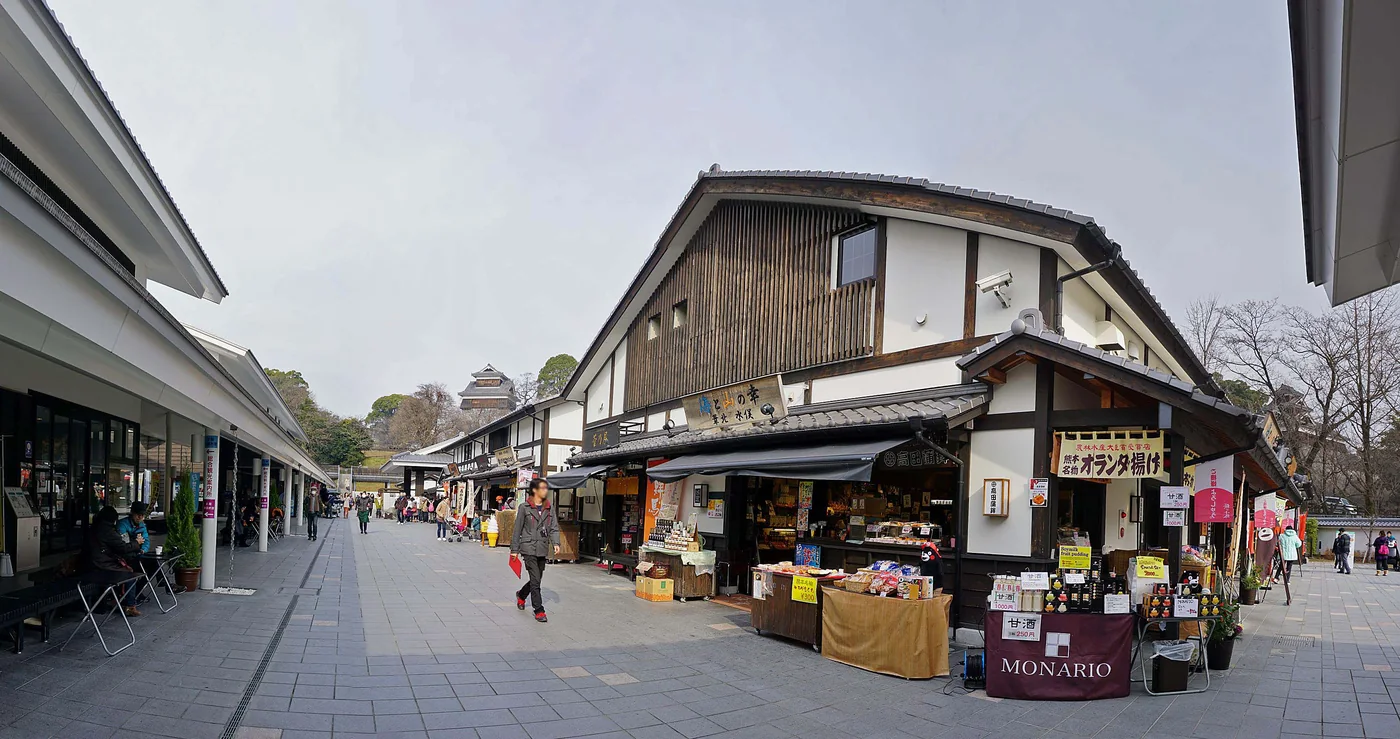
Michi-no-Eki Aso stands beside Aso Station. Its website lists 09:00–18:00 opening, subject to seasonal changes, with local boxed meals, products and sweets. Aso City’s visitor-products guide also lists an indoor rest area where purchased boxed meals can be eaten. It suits a seated meal after descending, before going to the platform, with no extra local bus ride.
If you have a reserved train, stay on the Aso Station side for departure and use only spare time for shopping and food. Look at that day’s offerings for akaushi beef or takana rice. If you intend to queue at an Uchinomaki restaurant, allow separate return transport and waiting time rather than treating it like buying a boxed meal beside the station. Chasing a popular restaurant after an afternoon descent can tighten an otherwise relaxed return.
If the mountain is inaccessible all day, visitors without a car can eat near the station, browse local products and return to Kumamoto earlier, saving energy for tomorrow. Drivers can visit the Grassland Learning Centre, then eat and restock at the roadside station before leaving towards their accommodation. Choose the version your transport allows you to complete directly.
Change the affected part of the day when conditions change
If first-stage restrictions remain and mountain transport is operating normally before departure, use Kusasenri as the main visit, adding Sanjo Square according to interest. If restrictions expand so the square is inaccessible, remove it, the connecting walk and related rides, retaining only Kusasenri and facilities that the announcements allow you to reach. If the mountain bus route is shortened, wait at the stops actually served uphill and downhill.
If Kusasenri itself is unsuitable to reach, replace the whole ascent. Drivers can choose the Grassland Learning Centre and roadside station; visitors without a car can eat by Aso Station or return to Kumamoto. Do not detour to Sensuikyo or search for entrances along closed roads merely to see the mountain. A calm visit on another day is more useful than moving between closed approaches.
If fog arrives after you reach Kusasenri and you already have museum tickets, shift time to models, crater projections and films, keeping the outdoor walk brief. Before buying tickets, you can rest in the free visitor centre and consider the next downhill bus. If Sanjo Square is windy but Kusasenri is better, return there early while keeping the planned downhill service. Only the division of time between the stops needs to change.
If buses stop or road restrictions begin, first follow the operator and on-site staff’s directions, then revise arrival times for restaurants, trains and accommodation.
A few useful answers
Can I visit the Aso crater now?
Official information shows alert level 2 and first-stage restrictions, with entry prohibited within about one kilometre of the crater. Sanjo Square is accessible; Kusasenri and Aso Volcano Museum are options for the day.
Are Kusasenri and Aso Sanjo Square the same bus stop?
They are separate stops. The Aso mountain route serves Kusasenri Aso Kazan Hakubutsukan-mae before the Aso Sanjo terminus. If you alight and take another bus, the ordinary adult single fare between Kusasenri and the terminus is ¥330.
Does Aso Volcano Museum have a free area?
The Aso Sanjo Visitor Centre on the ground floor is free. The permanent displays and live crater projection on the floor above, and films on the top floor, are part of paid museum admission. Standard adult admission is ¥1,300; primary-school pupils pay ¥650.
Do drivers pay twice to park at Kusasenri and Sanjo Square?
The Natural Parks Foundation’s shared ticket costs ¥500 for an ordinary car and allows one use of each car park that day. The Aso-san Park Road fee towards the crater is separate; that crater section is closed under the stated restrictions.
Where can I go without a car if rain prevents the ascent?
Eat and browse local products at the roadside station beside Aso Station, then return to Kumamoto by train. The Grassland Learning Centre is about six kilometres from Aso Station and needs separate return transport. Drivers can more easily include it in a foothill alternative day.
Is the Aso Tozan Line 1-Day Pass worth buying for Sanjo Plaza and Kusasenri, and does it include the crater shuttle?
Yes, whenever you stop at both. Point-to-point fares from Aso Station to Sanjo Terminus, Kusasenri and back total ¥2,330, while the digital Aso Tozan Line 1-Day Pass on the Kyushu MaaS “my route” app costs ¥2,000 for adults (¥1,000 children), saving ¥330. The Aso Crater Shuttle (¥700 one-way) is excluded from this pass and does not operate while the 1 km crater restriction is in effect.
Official information and references
Sources used in this guide.
- Aso Volcano Disaster Prevention Council | live crater restrictions
- Aso Volcano | crater map and permanently closed road
- Aso Volcano | detailed crater-zone map
- Aso Volcano | eligibility and volcanic-gas rules for crater visits
- Aso Volcano Museum | admission, opening and closures
- Aso Volcano Museum | floors and film times
- Aso Volcano Museum | exhibitions and experiences
- Aso Volcano Museum | free visitor centre
- Sanko Bus | current Aso mountain-route timetable and fare links
- Sanko Bus | Aso mountain-route timetable dated 11 May 2026
- Sanko Bus | Aso mountain-route fares dated 1 October 2025
- Natural Parks Foundation, Aso branch | shared parking ticket
- Michi-no-Eki Aso | Kusasenri and horse rules
- Aso Sanjo Visitor Centre | trailheads and hiking data
- Kumamoto Prefecture | hiking information updated 2 September 2026
- Aso Grassland Conservation Centre | facilities and opening
- Aso Grassland Conservation Centre | grassland management and use
- Grassland Learning Centre | 2026 works and north entrance
- Aso Grassland Conservation Centre | drive from Aso Station and address
- Michi-no-Eki Aso | location, opening and access
- Aso City | local-products centre and roadside-station dining space
- Wikimedia Commons | Aso aerial photograph author, date and licence