Start at the main-gate bus stop and choose a three-hour route or a four- to five-hour visit. Compare views of penguins, seals, polar bears, hippos and red pandas, with seasonal slopes, lunch, pushchairs and breaks to warm up.
- Region & Focus
- Asahikawa
- Reading Scope
- 32 min read · 20 chapters · 4 Q&As
- Official Verification
- 19 official sources checkedUpdated 27 October 2026 at 00:00 GMT+8
- Key Topics
- ItinerariesWinterTravel budget
Chapter Route Map (tap any stop)
- Know the three gates, and finish at your bus or transfer gate
- On a hillside, save energy by avoiding repeated journeys
- From the main gate, give penguins, seals and polar bears a full visit
- Penguin House: make time for the underwater tunnel and land view
- Seal House: the column tank, main tank and outdoor fishing-harbour setting
- Polar Bear House: distinguish the pool from the land enclosure
- Use red pandas as the short route's furthest point: look up at the bridge, then through the window
- Combine hippos and giraffes; make the Hippo House the winter priority
- Add orangutans and Hokkaido small animals only if you want another climb
- The free east-gate shuttle covers one section of slope
- Four to five summer hours: choose one direction beyond the central three houses
- A two- to three-hour route: keep four viewpoints and leave out the upper circuit
- Winter opening lasts five hours: include breaks to warm up and the descent
- Replace part of the visit when adding a penguin walk
- Choose one feeding talk, and arrive before it begins
- Eat along your route: the centre and east gate serve different plans
- With young children: seasonal pushchair loans and four nursing-room locations
- Wheelchairs, toilets and illness: ask for help at the entrance
- Budget for the actual family, with your own lunch allowance
- Choose the last house towards your exit, then return to Asahikawa for dinner and luggage
- Quick Q&A
If you take the local bus from Asahikawa Station to Asahiyama Zoo, plan to return to the main gate for your bus, then decide how far to climb towards the east gate. Penguins, seals and polar bears are grouped along the first part of the main-gate route, so even two or three hours allow unhurried viewing. Allow an afternoon too for orangutans, Hokkaido small animals and hippos. In winter, alternate outdoor walks with indoor observation and breaks to warm up, and spend waiting time on the animals you most want to see.
Know the three gates, and finish at your bus or transfer gate
The official zoo map places the main gate below the Penguin House, the west gate at the outer edge near the Seal and Hippo houses, and the east gate above the Hokkaido small-animal area. The Asahikawa Station-bound local bus stop is outside the main gate. If arriving by bus, identify the gate and waiting area when you get off and leave from the same side. There is no need to add an outside walk just to follow an east-gate route designed for drivers.
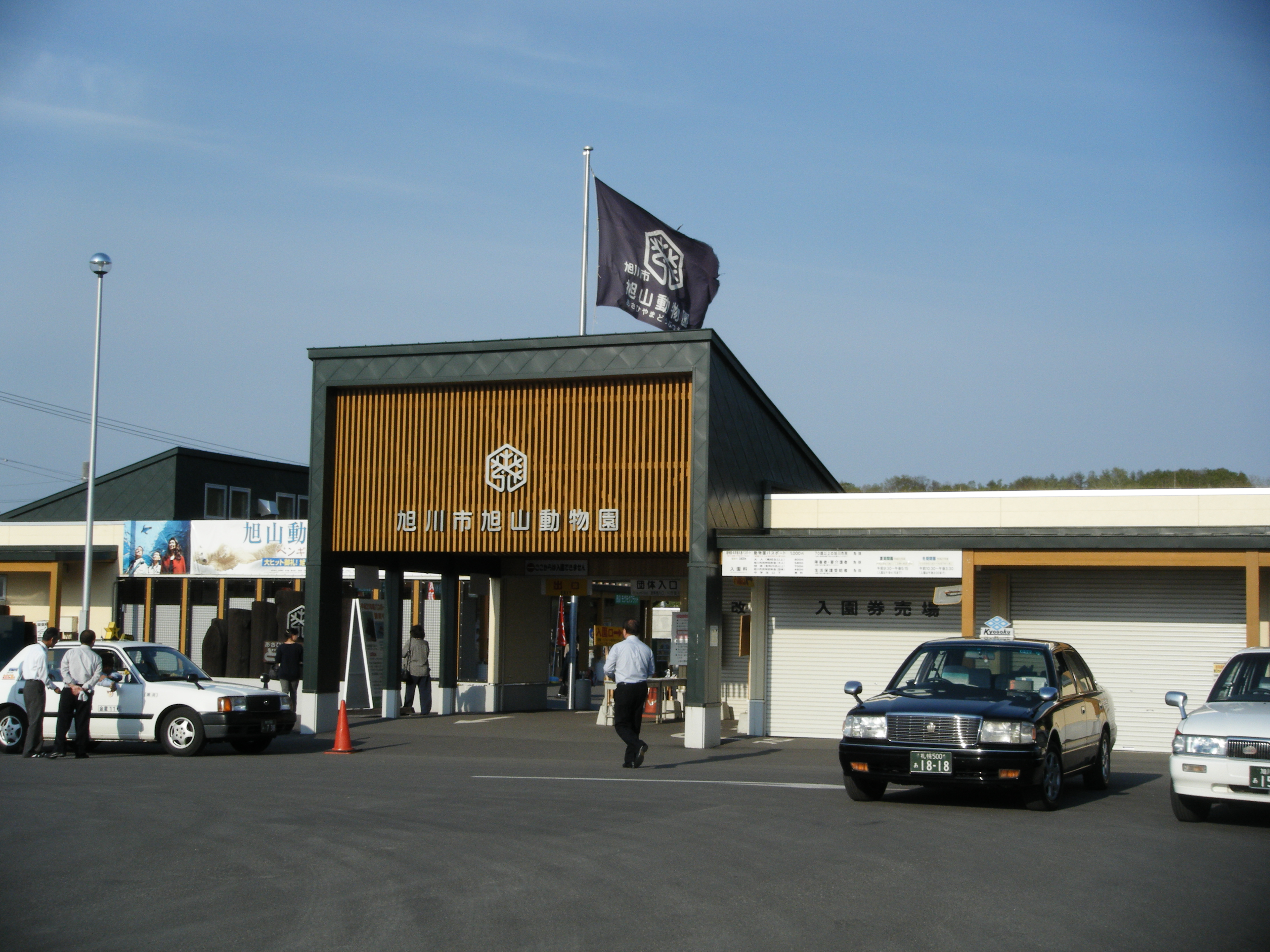
The east gate suits transfers with an agreed drop-off and pickup there, and serves the east-gate car park. Entering here brings you first to steps and the sloping alternative alongside them, passing the Hokkaido small-animal area. Lower down, the route reaches orangutans, gibbons and other houses. The west gate is near the lower zoo and suits people parked nearby or with a west-gate pickup. Choose your gate according to where today's vehicle will be. The zoo FAQ recommends an anticlockwise circuit from each gate. Use that as a starting point, taking only a section if you have a pushchair, limited walking ability or a fixed pickup. Consider entrances, lockers and meeting points together. Entering east and leaving through the main gate needs the driver's agreement to change pickup location. If your car is at the east gate, you still need to return there.
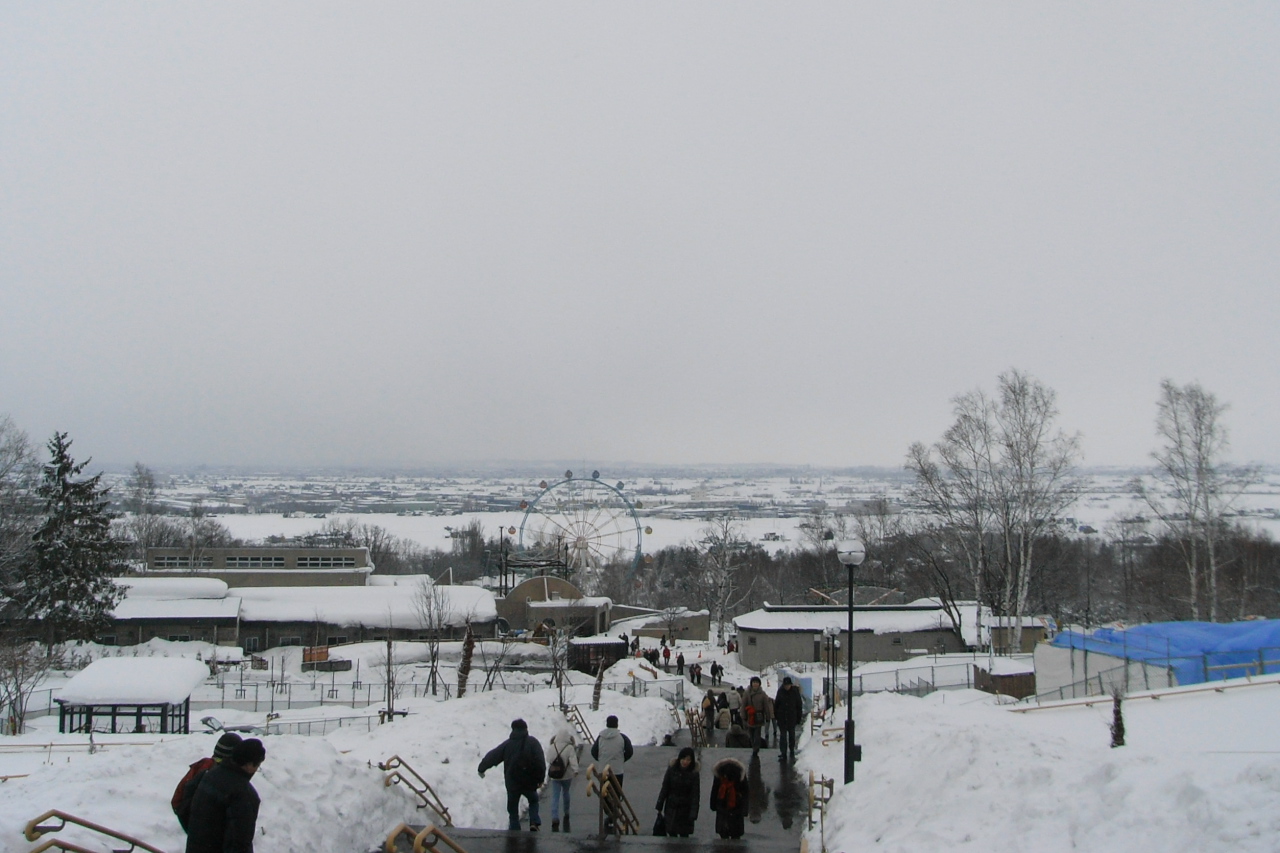
Start at the main-gate bus stop and choose a three-hour route or a four- to five-hour visit. Compare views of penguins, seals, polar bears, hippos and red pandas, with seasonal slopes, lunch, pushchairs and breaks to warm up.
On a hillside, save energy by avoiding repeated journeys
Asahiyama Zoo is built on a hillside. From the main gate, you progress through the penguin, seal and polar-bear area, with another change in level towards the orangutans and east gate. The official Hokkaido small-animal guide calls the path beside the east-gate steps Yukkuri Road, the slow route. It avoids steps and has exhibits along the slope, but climbing still takes effort and someone must control a pushchair's speed downhill.
On a first bus visit, use the free central rest area beside the Seal House as a midway point. Explore the main-gate side, sit down for something to eat, then decide how far uphill to go. If an older companion's knees are already struggling, turn back after the Polar Bear House. For red pandas, extend to that enclosure and then return. Choosing one house as the furthest point is easier to adjust than promising to cover the whole zoo.
Allow five to ten minutes between neighbouring houses and 15–20 minutes between areas. If queues or snowy paths take longer, deduct time from the next optional area. Follow house names and junction signs: locate the next house, then choose the direction for the east or main gate. Phone maps help locate the three gates and bus stop; use the zoo map for steps, seasonal closures and exhibit entrances.
| Arrival | Route inside the zoo | Finish |
|---|---|---|
| Local bus from Asahikawa Station | Main gate—penguins—seals—polar bears; extend as energy allows | Main-gate bus stop |
| Only two to three hours | Three central houses, plus either red pandas or hippos | Main gate |
| East-gate transfer | Check slopes and shuttle first, then head to the centre | East-gate meeting point |
| Winter family sensitive to cold | Alternate central houses with rest areas; hippos as an extension | Exit for the booked transport |
From the main gate, give penguins, seals and polar bears a full visit
After the main gate, follow the main path past the flamingo area and towards Totori Village to reach the Penguin House. The official map marks the flamingos and Totori Village as not on display in winter. In winter, use this stretch to learn the return route, sort gloves and read notices rather than wait at empty exhibits. Near the Penguin House, check the entrance, exit and visitor flow before choosing your first viewpoint.
Give the Penguin, Seal and Polar Bear houses separate time. Spend most of the first hour on penguins and seals, then half an hour on polar bears and a nearby rest stop. If one entrance has a queue, visit its neighbour and return rather than cross the zoo. These exhibits let you compare movement on land and underwater. For children visiting for the first time, that gives clearer observations than briefly identifying many different animals.
Before leaving the Seal House, locate the free central rest area on level 1 and the Central Cafeteria on level 2. They fit lunch or a break to warm up later.
Use the toilet, drink water and put coats on before continuing towards the polar bears and red pandas. If your planned departure is close, head towards the main gate from here. This junction gives the short and full routes a shared first half, with one easy family meeting place.
An official Asahiyama Zoo film released in 2023, showing animals through the seasons and different ways to observe them.
Penguin House: make time for the underwater tunnel and land view
The Penguin House has an underwater tunnel with views around you. Watch how penguins change direction, turn and propel their bodies, looking above and to both sides as well as straight ahead. The same animal's outline and apparent speed change as it passes different positions. Keep moving with the visitor flow while others take photographs, leaving viewing space for people behind.
Back at the land view, watch standing, walking and the transition in and out of the water. Give children one small question: which part of the body changes direction first underwater, and how do the steps differ on land? Let them point something out, then give parents a turn, without forming a circle in the passage. The contrast between tunnel and land is enough for a full visit to this house.
Use the same approach in winter even when no penguin walk is scheduled. If a walk takes place, read its time and route and move outdoor waiting into that period; visit the house before or after it. If a child wants another look at swimming, give that time here and drop a later branch. This preserves what they enjoy without rushing away to chase the next talk.
Seal House: the column tank, main tank and outdoor fishing-harbour setting
The Seal House's Marine Way is a column tank showing seals moving up and down underwater. In crowds, keep moving along the passage and watch how a passing seal fits through the narrow space. If none appears on your first pass, watch the main tank, then judge whether visitor flow allows another circuit. Waiting too long near the entrance can reduce the whole house to one photograph.
The main tank gives a fuller side view, letting you follow a seal swimming towards you, turning and leaving. The column draws attention to vertical movement; the main tank shows a continuous sequence. Together they explain the display design. With smaller children, find a window position they can approach without blocking the passage, then give others a turn. Keep children off barriers and avoid tapping the glass to attract seals.
The outdoor area evokes a Hokkaido fishing harbour, with a small fishing boat and wave-breaking blocks. After the underwater view, look at the relationship between resting space and the water surface. The zoo guide describes seabirds and other elements presenting Hokkaido's coastal environment together. Look beyond the seals to the pool's surroundings. Finish with a seat in the rest area before deciding whether to eat centrally or continue elsewhere.
Polar Bear House: distinguish the pool from the land enclosure
The Polar Bear House has two exhibit areas: one with a large pool and another land enclosure separated by a moat. First identify which side you are viewing, then find the bear. If no bear is swimming, try the land side rather than spend the whole visit waiting for a dive.
The land area also has the Seal's Eye viewing capsule, described by the zoo as a seal's perspective. If it requires a queue, decide how long you are willing to wait. Ordinary viewing areas still give older companions or young children ample observation. The capsule and pool offer different viewpoints. Explore the one that interests you most, then use the other side to complete your understanding of the space.
Yasuragi-no-Mori rest area is behind the Polar Bear House. The zoo lists a nursing room, heating and cooling, and washing facilities. If the first two houses have already taken over an hour, make this the first longer rest. Agree on a meeting time so those wanting more bear viewing can return while those feeling cold rest. Always leave an adult with young children. Afterwards, continue towards red pandas or follow the now-familiar route back past seals and penguins to the main gate.
Use red pandas as the short route's furthest point: look up at the bridge, then through the window
The official map places the red-panda enclosure further in, beyond the polar-bear and big-cat area. To add a land animal to the main underwater exhibits, make this your short route's furthest point, then return along the familiar main path to the centre. Leave out the full upper circuit towards the east gate. A first visit of only three hours can then add another type of observation while retaining return time.
The red-panda enclosure has two spaces: a suspension-bridge side and a close viewing area with projecting windows. The bridge is about 3.5 metres high and leads to a tree opposite. Look up at the bridge and trunks first for animals moving, pausing or sleeping, then use the window to see resting and feeding. Looking only at ground level misses the enclosure's distinctive height.
With children, compare this with the Penguin House: penguins turn underwater while red pandas balance on trunks and a bridge. One question answerable from what you can see is enough. Give a few extra minutes to the side a child enjoys. If no animal is on the bridge, start at the close window, then use the remaining time for rest instead of waiting below for it to appear.
Combine hippos and giraffes; make the Hippo House the winter priority
From the central area, head towards the west gate and event hall for the Hippo House and giraffe enclosure. They are adjacent on the official map, and the Hippo House guide states that they connect underground. In summer, look at outdoor body shape and height first, then go below for another perspective. Afterwards, the paths near the west gate lead back towards the main gate for another short-route ending.
The Hippo House indoor pool is about three metres deep. Watch the relationship between the underwater body, limbs and rising or sinking. Begin at a view covering much of the pool, locate the hippo, then change angle slowly to observe movement. Remaining underwater and walking are both worth watching. Leaving after a head photograph misses the purpose of the underground view: seeing the rest of the body.
The giraffe enclosure offers views at head height and near the feet, with feeding equipment drawing attention to the long tongue and feeding movement. An underground platform in the Hippo House also gives a low view of giraffes through glass. The official map lists giraffes as not displayed in winter. In snow season, use this section for indoor hippo viewing and a nearby rest, without repeatedly looking for a giraffe entrance. In summer, reserve the underground and outdoor views within one period.
Add orangutans and Hokkaido small animals only if you want another climb
To continue deeper into the zoo, follow open-route signs from near the red pandas towards the Hokkaido animal displays, chimpanzees and orangutans. Decide after lunch, when energy is easier to judge. If the morning went on seal queues or bear viewing, shorten the upper section. If your family particularly likes primates, leave the central area earlier to give them time. Starting towards the east gate in the last half-hour leaves little room for these houses.
The Orangutan House has an outdoor summer tower about 17 metres high. The indoor space is about seven metres high, with climbing holds, hammocks and ropes. In summer, compare high movement with the ground below. In winter, focus on indoor gripping, climbing and resting places. The indoor and outdoor spaces have different viewing content, so include the season when choosing your route.
The slope beside the east-gate steps leads to the Hokkaido small-animal area. Exhibits include Ezo raccoon dogs, Ezo mountain hares, red foxes, martens and Ezo flying squirrels. The flying-squirrel house reverses day and night. Let your eyes adjust in the darker viewing space, find the animals quietly and keep the flash off. Make this a destination if Hokkaido wildlife interests you. If you mainly need to return to the main gate, turn back after the orangutans and retain rest time on the way.
The free east-gate shuttle covers one section of slope
The zoo visitor guide lists a free minibus between the east gate and the Spider Monkey and Capybara House, about every ten minutes year-round, with possible weather suspensions. The official map shows a blue dotted line between the east gate and lower boarding point, with blue dots at each end. If entering east and saving energy for the centre, find this shuttle first. Then decide whether to walk through the small-animal area on the slope or head directly lower down.
For local-bus arrivals returning through the main gate, consider which section the shuttle would save. It helps if you have reached the orangutans and still want to eat at the east gate or catch an accommodation transfer there. If you do not need the east gate, staying in the central and west-gate areas often removes that climb altogether.
If a companion uses a wheelchair, cannot board steps or has a large pushchair, tell staff on entry. Check that day's vehicle and boarding method, then follow the advised shuttle or walking route. Ask about connections between east-gate building floors and the zoo paths at the same time. If the shuttle is suspended, drop the east-gate detour. With a booked east-gate pickup, leave distant exhibits earlier and return slowly along open slopes.
Four to five summer hours: choose one direction beyond the central three houses
For an example summer visit starting inside at 09:30, give 09:30–10:50 to penguins and seals, 10:50–11:30 to polar bears and a rest, and 11:30–12:15 to lunch. These periods include movement between neighbouring houses and short waits. If queues have taken much of the time, keep a favourite house for another look after lunch and shorten the rest. The 09:30 start is an in-zoo example; match your actual arrival and travel date to the operator's timetable separately.
After 12:15, choose between two directions. For body size and underwater movement, give about an hour to hippos and giraffes, including the underground view, then return towards the main gate via west-side paths. For climbing and tree activity, choose red pandas, orangutans and Hokkaido small animals, allowing about an hour and a half with movement and rest, then return through the centre. The latter has more climbing. At the orangutans, decide whether to add the small-animal area.
Start working towards the exit at about 14:00, leaving time for a rest near TOTORI, souvenirs or another penguin visit. If staying until 15:00, give the extra time to one of that day's talks or another look at a house rather than add another attraction on Asahikawa's outskirts. A four- to five-hour visit differs from a three-hour circuit because it makes room for a seated meal and sustained observation.
A two- to three-hour route: keep four viewpoints and leave out the upper circuit
Enter and leave through the main gate. Start with the penguin underwater tunnel, the seal main and column tanks, then the polar-bear pool or land area. Use the first hour and a half for these three houses, then sit down for 20 minutes. With another 40 minutes to an hour, revisit a child's favourite or extend to red pandas. Keep time before reaching the main gate for clothing, the toilet and the bus wait.
If your group prefers hippos, make the post-polar-bear extension westwards, see the indoor hippo pool and return to the main gate. Add giraffes only if time permits in summer; concentrate on hippos in winter. Choose one extension direction. This saves the cross-zoo movement from red pandas to primates, the east-gate slope and the return to the centre. For a brief stop, it explains exhibit differences better than a photograph in every area.
If a child is tired, an older companion has leg pain or snow boots are wet, finish sightseeing at the free central rest area, rest and head straight for the main gate. The penguin and Totori Village direction, familiar from arrival, provides return landmarks without new junctions to work out. Leave the last house 20–30 minutes before your chosen bus for the descent, clothing and waiting. Slower walkers should cut time from the extension and leave earlier.
Winter opening lasts five hours: include breaks to warm up and the descent
The official calendar gives standard winter hours of 10:30–15:30, last entry 15:00, for 11 November–29 December 2026 and 2 January–7 April 2027. The zoo is closed 4–10 November 2026 and 30 December–1 January. A full winter opening day is only five hours. Plan about four hours of houses and rests, leaving the rest for entry preparations, snowy paths and departure.
One option gives 10:30–11:40 to penguins and seals, 11:40–12:20 to lunch and warming up, 12:20–13:10 to polar bears, and 13:10–14:00 to either red pandas or hippos, then returns slowly towards the exit after 14:00. If a penguin walk runs that day, replace one viewing period and drop the extension house, keeping lunch and breaks to warm up. The indoor Hippo House and central rest area fit the same lower route, making it useful for families who feel the cold.
Keep hats, gloves and slip-resistant footwear usable throughout. Deal with wet shoes or cold fingers in a rest area first. When entering buildings, put removed gloves and coats in the same bag and put them back on before leaving, rather than stop to sort them on a slope. The official map marks paths closed in snow. Follow on-site closures instead of crossing barriers for a direct summer route. Families using pushchairs or wheelchairs should arrange snow travel and care before departure.
Replace part of the visit when adding a penguin walk
The penguin-walk season from 18 December 2025 to March 2026 has ended. On 27 October 2026, the readable official walk notice still concerned that previous snow season. For 2026–2027 travel, plan the ordinary winter exhibit route first, then add a walk when the zoo announces that season's start and sessions. Winter opening and enough snow to form a walk route begin at different times. November visitors should choose their priority houses first.
The general official map draws the walk between the Penguin House and event-hall area. The previous season's notice described a total distance of about 500 metres. On the day, read the marked viewing areas and route, then choose a section convenient from your current house. After seeing the penguins pass once, remain outside the boundary. Do not follow the group across zoo paths or reserve a front-row space with a camera bag. Place children where they can see in front of an accompanying adult, without pushing others for a view.
If waiting and viewing take 40 minutes, remove that amount from the afternoon extension. There is no need to chase both morning and afternoon sessions in winter. Choose one, then continue ordinary house visits. The zoo prohibits entering the walk route, touching penguins, throwing snow and flash photography. Turn flash off before taking photographs. If the activity is cancelled, return to underwater and land observation at the Penguin House, eat at the planned time and continue the normal route back to the main gate.
Choose one feeding talk, and arrive before it begins
Boards at the gates and near the support centre list keeper explanations such as Mogu-mogu Time feeding sessions and Naruhodo Guide talks. Read that day's houses and times on entry, mark the one you most want, then arrange other viewing. The website has a daily-activities entry point, while gate boards supply on-site exhibit adjustments. An old dated screenshot is unsuitable for planning the whole following day.
If the seal talk falls within your planned central-house period, shorten penguin viewing slightly and reach the talk area five to ten minutes early. If the orangutan session is your priority, head uphill directly after lunch and leave polar bears for the return. These are movement examples; take actual start times from that day's board. Leave at least 15–20 minutes between areas, longer according to your pace in snow.
At the venue, find a place where you can hear without blocking the passage and listen to what staff say is happening. Stay a few minutes afterwards to connect the explanation with the animals' actions. If two sessions are close together but at opposite ends of the slope, choose one. Use the saved time for information panels or quiet family observation. Chasing sessions means repeated climbs and easily displaces lunch and children's rests.
Eat along your route: the centre and east gate serve different plans
The zoo lists Museum Cafe ASAHIYAMA near the main gate, FOOD BASE CAFE TOTORI opposite Totori Village, the Central Cafeteria on the Seal House's level 2, FarmZoo near the west gate, and Kamui Chikap on the east gate's level 2. For a main-gate local-bus visit focused on the three central houses, eat near the main gate or centre. Use the east-gate restaurant as a final stop if you already have a transfer there. Climbing to the east gate just for lunch and then returning to the seals adds an unnecessary descent and climb.
The Asahiyama Zoo Club shop guide lists bread, flaky cream-roll pastries and drinks at TOTORI, and soft-serve ice cream and light meals at Komorebi-no-Oka SHOP. Distinguish cafeterias and restaurants for a seated full lunch from snack counters. For your own sandwiches and hot drinks, use a free zoo rest area. Different operators run shops and food outlets, so read the day's menu and available items before ordering.
The zoo FAQ permits your own food in rest areas and outdoors.
Food and drink are prohibited inside exhibit houses. Take away rubbish from your own meal and share rest-area seating; avoid reserving an entire table while visiting animals for an hour. In winter, have hot drinks while seated and put them away before the next house. Use the same rest stop for water, nappy changes or feeding to make the next part easier.
With young children: seasonal pushchair loans and four nursing-room locations
The zoo provides 70 free loan pushchairs across the gates, first come, first served during summer opening, with no reservations. Loans stop when weather or paths are unsuitable. Winter families need their own suitable travel and care arrangements rather than depend on a pushchair at the gate. Sledges are prohibited and cannot be used to carry children into the zoo. In summer, include uphill paths and downhill control when bringing your own pushchair.
Nursing rooms are inside the main-gate Museum Shop ASAHIYAMA, beside TOTORI, in the free central rest area alongside the Seal House, and at Yasuragi-no-Mori behind the Polar Bear House. The central location lists two private rooms, a changing table, electric kettle and microwave. Yasuragi-no-Mori lists a cot, basin, hot water, heating and cooling. Choose one you will pass and head there before feeding is due, rather than cross the zoo after a child is exhausted and crying.
Two adults with a young child can divide tasks at the central rest area: one handles feeding and changing while the other buys lunch or takes an older child briefly to a nearby exhibit, then everyone meets in the same place. Follow house signs for pushchair parking. Keep immediate warm clothing and nappies ready in the day bag, with other belongings together. The short route still ends with a bus wait and journey. As nap time approaches, drop the last house for a calmer departure.
Wheelchairs, toilets and illness: ask for help at the entrance
Free wheelchair loans are also summer-only and first come, first served. The zoo lists 24, including four with electric assistance, plus three mobility scooters, one at each gate. Numbers are limited and reservations unavailable. If you cannot move around without equipment, arrange essential aids before departure, then ask staff for a usable route that day. Options for reducing level changes include the central area, open slopes or the east-gate shuttle according to your needs.
Distinguish toilets outside and inside the grounds. The main-gate exterior toilets and west-gate eco-toilets before ticket inspection have no multifunction accessible toilet. The official guide identifies facilities inside the west gate, in front of the Big Cat House, beside Monkey Mountain, in front of the event hall and on east-gate floors. The Animal Information Exhibition Hall toilets are not adapted for accessibility either. If you need multifunction facilities, choose the next destination on entry rather than assume every toilet symbol has the same equipment.
Visitor Information near the Penguin House provides zoo and local information and handles lost property, lost children and illness. The zoo lists nursing staff on duty there. Make sure companions know the name and location. If a child becomes separated, leave one adult at the original place while another asks staff for help. If an older companion feels dizzy, persistently cold or has difficulty walking, rest nearby and seek help, cancel later houses and adjust return transport to their condition.
Budget for the actual family, with your own lunch allowance
General adult admission is ¥1,000, with free admission for junior secondary school pupils and younger children. Current local-bus fares from Asahikawa Station are ¥670 adult and ¥340 child each way. For two adults and one primary-school child eligible for the bus child fare, return travel and admission total ¥5,360. Setting your own ¥1,000 lunch allowance for each of three people makes a basic day budget of ¥8,360. This is a planning allowance for food, adjustable with a packed lunch or different meals.
For two adults and two primary-school children paying child bus fares, return transport is ¥4,040 and admission ¥2,000, totalling ¥6,040. Add the same lunch allowance for four and one ¥400 locker to reach ¥10,440. A locker is needed only if luggage has not been left at your accommodation. Calculate each person's fare and admission separately for differing ages and eligibility, then add drinks and shopping.
Leaving to find a cheaper lunch requires another admission on return: the zoo does not allow re-entry. Eat a packed meal in a rest area if that is your choice. Admission tickets generally cannot be refunded or changed to another type. Multiple tickets bought together online require the party to enter together. Set the date, closure checks and party size before buying. For annual passes and one-night, two-day tickets, see the Asahikawa and central Hokkaido base guide. One ordinary visit does not need several different ticket products.
Choose the last house towards your exit, then return to Asahikawa for dinner and luggage
For a weekday example on 27 October 2026, the operator's summer timetable lists bus 47 from Asahikawa Station stand 6 at 09:10, reaching the zoo at 09:49. A return leaves at 15:10 and reaches the station at 15:50. This gives about five hours inside, with departure from the last house towards the main gate at about 14:40. For an earlier city return, take the 14:10, arriving at 14:50, and use a shorter route after lunch. These services belong to the operator's current summer timetable through 3 November. Replan snow-season travel with the timetable for your date.
Photograph the return stop when you arrive, then check the destination and queue position again on departure. For an onward JR train, add time after bus arrival for getting off, collecting luggage and entering the station. The bus reaching Asahikawa does not mean an immediate train connection. A two- to three-hour zoo route suits an earlier return; a four- to five-hour route leaves dinner in central Asahikawa, with time for children to change shoes and sort warm clothing before eating.
If your accommodation transfer uses the east gate, finish near the orangutans, Hokkaido small animals or shuttle boarding point. Work back from the agreed pickup to decide when to leave the three central houses, allowing for slopes and waiting. Compare station-area and central-city accommodation connections in the Asahikawa accommodation guide. Establish the actual arrival and return gates, then place your priority animals along the route.
A few useful answers
Which gate should I use with the bus from Asahikawa Station?
The local-bus stop is on the main-gate side. Start with penguins, seals and polar bears, then leave through the main gate. For a transfer using the east gate in both directions, finish towards that gate.
What can I see in three hours at Asahiyama Zoo?
Enter and leave through the main gate. Keep penguins, seals and polar bears, rest centrally, then extend towards either red pandas or hippos. Leave out the east-gate slope and upper circuit.
Can I borrow a pushchair or wheelchair in winter?
The zoo lends pushchairs and wheelchairs only during summer opening, first come, first served, without reservations. Arrange essential mobility aids and care for snow season yourself.
Can I bring lunch into Asahiyama Zoo?
You can eat your own food in rest areas and outdoors, but not in exhibit houses. Take away rubbish from your food. Re-entry is not allowed.
Official information and references
Sources used in this guide.
- Official zoo map: three gates, shuttle, houses and winter exhibit closures
- Official visitor guide: loans, nursing rooms, rest areas and shuttle
- Official FAQ: slopes, anticlockwise visits and bringing food
- Official opening calendar
- Official tickets, refunds and changes
- Official access and station stand 6
- Penguin House underwater tunnel
- Seal House tanks and outdoor area
- Polar Bear House: two exhibit settings
- Red-panda suspension bridge and viewing windows
- Hippo House indoor pool
- Giraffe enclosure and underground view
- Orangutan House summer and winter spaces
- Hokkaido small-animal area and east-gate slope
- Current-year news and previous-season penguin-walk notice
- Zoo visiting and food rules
- Zoo food-outlet locations
- Asahikawa Denkikidou: current bus timetable, dates and fares
- Asahiyama Zoo Club: TOTORI and shop food offerings